Chart Color Schemes
est. as @ -- *
2021 Census | -- people
Sales Activity
Curious about local property values? Filter the chart to assess the volume and appreciation (including resales) trends and regional comparisons, or scroll to the map below view this information at an individual property level.
Find a Recent Sale
Sales Detail
Population
Jandakot has shown very soft population growth performance across periods assessed by AreaSearch
As of November 2025, Jandakot's population is estimated at around 3,174, reflecting an increase of 641 people since the 2021 Census. The 2021 Census reported a population of 2,533 in the suburb. This growth, representing a 25.3% increase, was inferred from AreaSearch's resident population estimate of 2,732 following examination of the latest ERP data release by the ABS (June 2024), along with an additional 177 validated new addresses since the Census date. This results in a density ratio of 196 persons per square kilometer, indicating significant space per person and potential room for further development. Jandakot's growth rate exceeded both national (8.9%) and state averages, marking it as a regional growth leader. The primary driver of population growth was overseas migration, contributing approximately 64.0% of overall population gains during recent periods.
However, all drivers including natural growth and interstate migration were positive factors. AreaSearch is adopting ABS/Geoscience Australia projections for each SA2 area, released in 2024 with a base year of 2022. For areas not covered by this data and to estimate growth post-2032, AreaSearch utilises the growth rates by age cohort provided by the ABS in its latest Greater Capital Region projections (released in 2023, based on 2022 data). Looking ahead, a population increase just below the median of national statistical areas is expected for Jandakot. Based on aggregated SA2-level projections, the suburb is expected to grow by 257 persons to reach 2041, reflecting an overall decrease of 5.8% over the 17-year period.
Frequently Asked Questions - Population
Development
Residential development activity is slightly higher than average within Jandakot when compared nationally
AreaSearch analysis of ABS building approval numbers, allocated from statistical area data, indicates that Jandakot has experienced around 9 dwellings receiving development approval annually over the past 5 financial years. This totals an estimated 49 homes. In FY-26 so far, 42 approvals have been recorded. Over these 5 years, there has been an average of 1.9 new residents per year per dwelling constructed.
Supply and demand appear well-balanced, creating stable market conditions. The average construction value of new homes is $532,000, which is somewhat higher than regional norms, reflecting quality-focused development. This financial year, $37.3 million in commercial approvals have been registered, suggesting robust local business investment. Relative to Greater Perth, Jandakot records markedly lower building activity, at 62.0% below the regional average per person.
This scarcity of new homes typically strengthens demand and prices for existing properties. However, building activity has accelerated in recent years. All new construction has been comprised of detached houses, preserving the area's low density nature and attracting space-seeking buyers. With around 120 people per approval, Jandakot reflects a developing area. Population is expected to remain stable or decline, potentially reducing pressure on housing and creating opportunities for buyers.
Frequently Asked Questions - Development
Infrastructure
Jandakot has strong levels of nearby infrastructure activity, ranking in the top 30% nationally
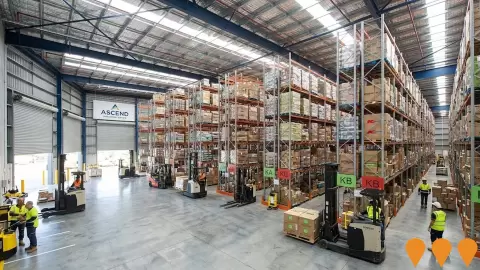
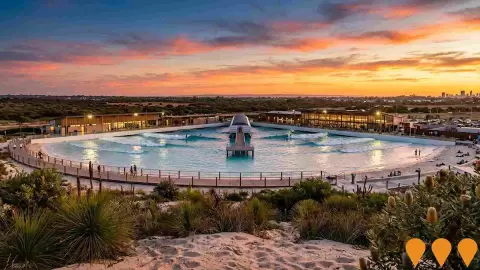
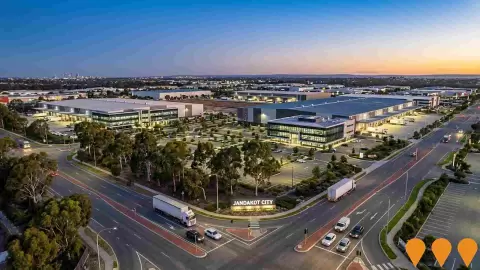
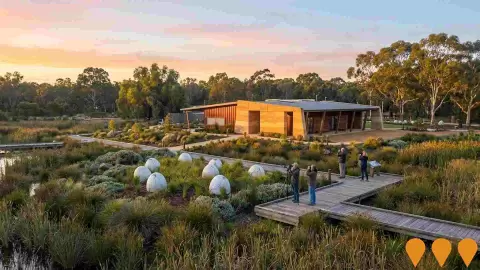
Changes to local infrastructure significantly influence an area's performance. AreaSearch identified 34 projects likely impacting the area. Key projects include ASCEND Industrial Estate at Jandakot Airport, Cockburn Wetlands Precinct Redevelopment, Treeby Village, and Perth Surf Park. The following list details those most relevant.
Professional plan users can use the search below to filter and access additional projects.
INFRASTRUCTURE SEARCH
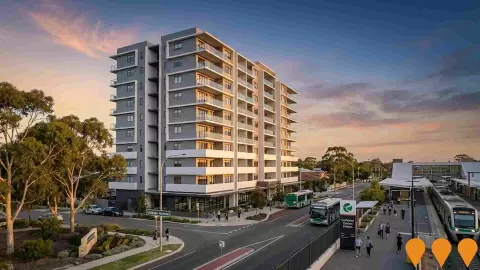
Denotes AI-based impression for illustrative purposes only, not to be taken as definitive under any circumstances. Please follow links and conduct other investigations from the project's source for actual imagery. Developers and project owners wishing us to use original imagery please Contact Us and we will do so.
Frequently Asked Questions - Infrastructure
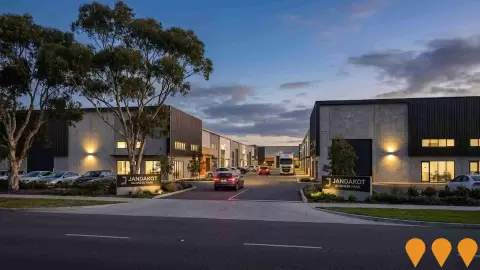
ASCEND Industrial Estate at Jandakot Airport
A major 62-hectare industrial and logistics precinct located within Jandakot Airport, offering unrivalled connectivity to Roe Highway and Kwinana Freeway. The estate features flexible lot sizes, custom warehousing solutions, and 5-star Green Star rated facilities with significant solar and battery storage integration. Key tenants include Amazon, Kmart, Aldi, HelloFresh, and Marley Spoon.
Treeby Primary School (Future)
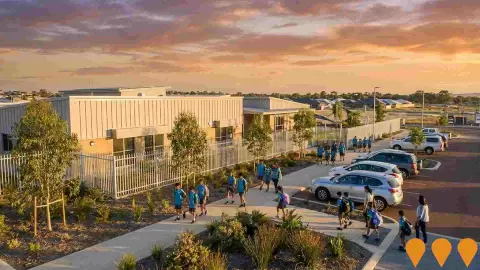
Planned public primary school within Calleya Estate to serve the growing Treeby and surrounding community.
Jandakot Hall, Anning Park and Old Jandakot Primary School Master Plan
Master plan for consolidating sporting and community facilities at Jandakot Hall, Anning Park, and the heritage-protected Old Jandakot Primary School to improve utilisation, add gender-diverse changerooms, storage, and potentially a district-level tennis facility amid high-density growth. The project is listed as one of 26 major infrastructure proposals in the City of Cockburn's adopted Community Infrastructure Plan 2024-2041, which will guide long-term investment. Funding will be sought from internal resources, external grants, and partnerships, with project delivery times to be included in the City's Corporate Business Plan.
Calleya Estate by Stockland
Large master-planned residential community in Treeby featuring over 2,000 homes, parks, future primary school site, and integrated retail and community facilities.
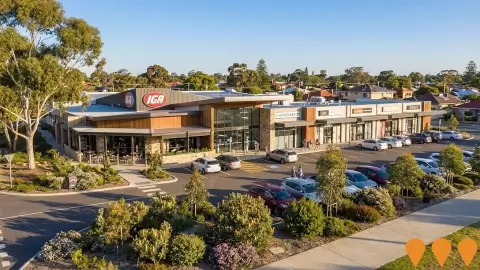
Treeby Village
Future neighbourhood retail centre within Calleya Estate including supermarket, specialty stores, medical centre, and childcare facility.
Provence Estate
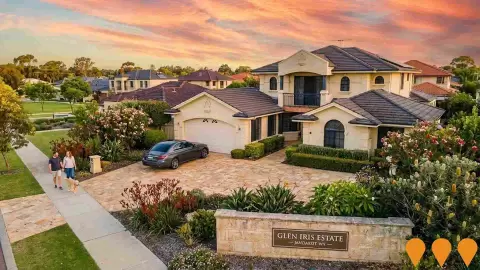
Premium residential estate in Treeby featuring large lots, landscaped parks, and proximity to future amenities within the growing Treeby community.
Stockland Bull Creek Shopping Centre Upgrade
Major upgrade and expansion of Bull Creek Shopping Centre (sold by Stockland to Silverleaf Investments in 2022 for $78 million). Includes new retail spaces, dining options, improved accessibility and modernized facilities.
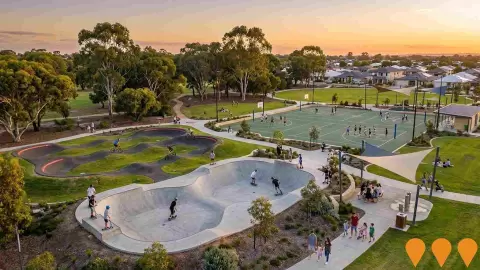
Prinsep Park Development
Redevelopment of Prinsep Park on the former Glen Iris Golf Course site to provide active open space and recreation infrastructure such as a skate park, pump track, and outdoor courts. This is identified as an infrastructure proposal in the City of Cockburn's adopted Community Infrastructure Plan 2024-2041, to address population growth from nearby residential expansions.
Employment
AreaSearch analysis of employment trends sees Jandakot performing better than 90% of local markets assessed across Australia
Jandakot has a skilled workforce with essential services sectors well represented. The unemployment rate was 2.1% in the past year, with an estimated employment growth of 5.2%.
As of June 2025, there were 1,696 residents in work and the unemployment rate was 1.7% lower than Greater Perth's rate of 3.9%. Workforce participation was at 68.4%, compared to Greater Perth's 65.2%. The key industries of employment among residents are health care & social assistance, education & training, and retail trade. Notably, education & training has a particularly high concentration with employment levels at 1.3 times the regional average.
However, accommodation & food services have limited presence with 4.6% employment compared to the regional average of 6.8%. There are 4.0 workers for every resident in Jandakot, indicating it functions as an employment hub attracting workers from surrounding areas. In the year to June 2025, employment levels increased by 5.2%, while labour force increased by 5.8%, causing a rise in unemployment rate of 0.6 percentage points. For comparison, Greater Perth recorded employment growth of 3.7% and labour force growth of 3.8%, with an increase in unemployment rate of 0.1 percentage points. Jobs and Skills Australia's national employment forecasts from Sep-22 suggest potential future demand within Jandakot. These projections indicate national employment will expand by 6.6% over five years and 13.7% over ten years, with growth rates differing significantly between industry sectors. Applying these industry-specific projections to Jandakot's employment mix suggests local employment should increase by 6.3% over five years and 13.3% over ten years.
Frequently Asked Questions - Employment
Income
Income metrics indicate excellent economic conditions, with the area achieving higher performance than 75% of national locations assessed by AreaSearch
AreaSearch's latest postcode level ATO data for financial year 2022 shows Jandakot's median income among taxpayers is $61,643. The average income in the area is $73,578. Nationally, this is very high compared to Greater Perth's median of $58,380 and average of $78,020. Based on Wage Price Index growth of 14.2% since financial year 2022, current estimates would be approximately $70,396 (median) and $84,026 (average) as of September 2025. Census 2021 income data shows household incomes rank exceptionally at the 85th percentile ($2,349 weekly). Income brackets indicate that 32.1% of locals in Jandakot fall into the $1,500 - 2,999 category, which mirrors the metropolitan region where 32.0% occupy this bracket. Jandakot demonstrates considerable affluence with 38.3% earning over $3,000 per week. After housing costs, residents retain 87.7% of income, reflecting strong purchasing power and the area's SEIFA income ranking places it in the 8th decile.
Frequently Asked Questions - Income
Housing
Jandakot is characterized by a predominantly suburban housing profile, with above-average rates of outright home ownership
In Jandakot, as per the latest Census, 98.6% of dwellings were houses with 1.3% being semi-detached, apartments or other types. This compares to Perth metropolitan area's 81.2% houses and 18.8% other dwellings. Home ownership in Jandakot stood at 41.0%, with mortgaged dwellings at 46.6% and rented ones at 12.4%. The median monthly mortgage repayment was $2,167, above Perth metro's average of $1,950. Median weekly rent in Jandakot was $445 compared to Perth metro's $370. Nationally, Jandakot's mortgage repayments were higher at $2,167 versus Australia's average of $1,863, and rents were also higher at $445 compared to the national figure of $375.
Frequently Asked Questions - Housing
Household Composition
Jandakot features high concentrations of family households, with a higher-than-average median household size
Family households constitute 84.7% of all households, consisting of 42.5% couples with children, 32.3% couples without children, and 8.7% single parent families. Non-family households comprise the remaining 15.3%, with lone person households at 14.1% and group households making up 1.3% of the total. The median household size is 2.9 people, which is larger than the Greater Perth average of 2.6.
Frequently Asked Questions - Households
Local Schools & Education
Educational achievement in Jandakot places it within the top 10% nationally, reflecting strong academic performance and high qualification levels across the community
University qualification levels in Jandakot stand at 28.0%, slightly below the Australian average of 30.4%. Bachelor degrees are most prevalent at 18.9%, followed by postgraduate qualifications (5.7%) and graduate diplomas (3.4%). Vocational credentials are held by 36.7% of residents aged 15 and above, with advanced diplomas at 12.9% and certificates at 23.8%.
Educational participation is high, with 25.7% of residents currently enrolled in formal education. This includes 8.6% in secondary education, 8.2% in primary education, and 5.7% pursuing tertiary education. Alta-1 College - Cooper Road Campus serves Jandakot but has no current enrollments. Secondary students primarily attend one school within Jandakot, while primary students typically use schools in neighboring areas due to the lack of local educational services.
Frequently Asked Questions - Education
Schools Detail
Nearby Services & Amenities
Transport
Transport servicing is good compared to other areas nationally based on assessment of service frequency, route connectivity and accessibility
The analysis of public transportation in Jandakot shows that there are currently 14 operational transport stops, all serving bus routes. These stops are covered by six different routes, offering a total of 1048 weekly passenger trips combined. The accessibility to these services is considered moderate, with residents on average being located 523 meters away from the nearest stop.
On average, there are 149 trips made per day across all routes, which amounts to roughly 74 weekly trips per individual stop.
Frequently Asked Questions - Transport
Transport Stops Detail
Health
Jandakot's residents are extremely healthy with both young and old age cohorts seeing low prevalence of common health conditions
Analysis of health metrics shows strong performance throughout Jandakot.
Both young and old age cohorts have low prevalence of common health conditions. The rate of private health cover is very high at approximately 56% of the total population (~1,790 people). The most common medical conditions are arthritis and mental health issues, impacting 6.8% and 6.2% of residents respectively. Seventy-two point three percent declared themselves completely clear of medical ailments, compared to 72.9% across Greater Perth. Twenty point five percent of residents are aged 65 and over (650 people), higher than the 14.8% in Greater Perth. Health outcomes among seniors are particularly strong, performing even better than the general population in health metrics.
Frequently Asked Questions - Health
Cultural Diversity
Jandakot was found to be more culturally diverse than the vast majority of local markets in Australia, upon assessment of a range of language and cultural background related metrics
Jandakot, as per the data from June 2021, had a higher level of cultural diversity compared to most local markets. It was recorded that 16.6% of its population spoke a language other than English at home and 37.9% were born overseas. Christianity was found to be the predominant religion in Jandakot, with 56.6% of people identifying as such.
However, Buddhism showed an overrepresentation in Jandakot compared to Greater Perth, making up 3.7% versus 1.8%. In terms of ancestry, the top three groups were English at 28.5%, Australian at 21.6%, and Other at 9.6%. There were notable differences in the representation of certain ethnic groups: South African was overrepresented at 2.9% compared to the regional average of 1.1%, Polish at 1.1% versus 0.7%, and Italian at 5.4% against a regional figure of 6.6%.
Frequently Asked Questions - Diversity
Age
Jandakot hosts an older demographic, ranking in the top quartile nationwide
Jandakot's median age is 44, higher than Greater Perth's figure of 37 and the national norm of 38. The 65-74 age group constitutes 12.0% of Jandakot's population compared to Greater Perth, while the 35-44 cohort makes up 12.3%. Post the 2021 Census, younger residents decreased the median age by 1.2 years to 44. The 25 to 34 age group grew from 10.4% to 12.6%, and the 75 to 84 cohort increased from 4.9% to 6.8%. Conversely, the 55 to 64 cohort declined from 15.4% to 12.9%, and the 45 to 54 group dropped from 15.1% to 12.8%. By 2041, Jandakot's age composition is expected to shift notably. The 85+ cohort is projected to grow by 128%, adding 69 residents to reach 123. Those aged 65 and above will comprise all of the projected growth, while both the 0 to 4 and 5 to 14 age groups are expected to decrease in number.