Kalbarri

Suburb (SAL)

Rest of WA / Mid West

Updated 24 Feb 2026 ABS 2021 SAL50709
Chart Color Schemes
Loading map data ...
Suburb (SAL) Boundary Analysis

This analysis uses Suburbs and Localities (SAL) boundaries, which can materially differ from Statistical Areas (SA2) even when sharing the same name.

SAL boundaries are defined by Australia Post and the Australian Bureau of Statistics to represent commonly-known suburb names used in postal addresses.

Statistical Areas (SA2) are designed for census data collection and may combine multiple suburbs or use different geographic boundaries. For comprehensive analysis, consider reviewing both boundary types if available.

0 People

est. as @ -- *

2021 Census | -- people

Land Area
--
Land Area
Population Density
--
Density
Unemployment Rate
--
Unemployment
Development
--
Resi Approvals
Get My Report

Sales Activity

Table Chart PROFILE FAQ

Curious about local property values? Filter the chart to assess the volume and appreciation (including resales) trends and regional comparisons, or scroll to the map below view this information at an individual property level.

Find a Recent Sale
Type Specified (1) | Limit 50

Sales Detail

Population

Table Chart PROFILE FAQ

Kalbarri is positioned among the lower quartile of areas assessed nationally for population growth based on AreaSearch's assessment of recent, and medium term trends

Based on analysis of ABS population updates for the broader area, as of Nov 2025, Kalbarri's estimated population is around 1,517. This reflects an increase of 39 people since the 2021 Census, which reported a population of 1,478. The change is inferred from AreaSearch's estimate of the resident population at 1,499 following examination of the latest ERP data release by the ABS in June 2024, along with an additional 3 validated new addresses since the Census date. This level of population equates to a density ratio of 10.9 persons per square kilometer. Population growth was primarily driven by overseas migration contributing approximately 77.0% of overall population gains during recent periods.

AreaSearch is adopting ABS/Geoscience Australia projections for each SA2 area, released in 2024 with 2022 as the base year. For areas not covered, AreaSearch utilises growth rates by age cohort provided by the ABS in its latest Greater Capital Region projections released in 2023 based on 2022 data. Moving forward, demographic trends suggest a population increase just below Australia's regional median, with Kalbarri expected to increase by 88 persons to 2041, reflecting a gain of 4.6% over the 17 years.

Frequently Asked Questions - Population

What is the latest population estimate for the suburb of Kalbarri?
Total population for the suburb of Kalbarri was estimated to be approximately 1,517 as at Nov 25. This is based upon an estimated resident population of 1,499 from the ABS up to June 2024.
How has the population in the suburb of Kalbarri changed since 2021?
The suburb of kalbarri has added approximately 39 people and shown a 2.64% increase from the 1,478 people recorded at the 2021 Census period.
What is the population density in the suburb of Kalbarri?
The population density in the suburb of Kalbarri is estimated at 10 persons per square kilometer based on the latest population estimate.
How much has the population grown over the past 10 years in the suburb of Kalbarri?
Over the past 10 years, the population in the suburb of Kalbarri has shown a compound annual growth rate of -0.2% per annum.
What are the main drivers of population growth in the suburb of Kalbarri?
Population growth in the suburb of Kalbarri is driven by: Overseas migration (77.0%), Natural increase (23.0%), Interstate migration (0.0%). The primary driver is Overseas migration, contributing 77.0% of overall population gains.

Development

Table Chart PROFILE FAQ

Residential development activity is lower than average in Kalbarri according to AreaSearch's national comparison of local real estate markets

Kalbarri has averaged approximately 5 new dwelling approvals annually over the past five financial years, from FY-21 to FY-25. This totals an estimated 26 homes. In FY-26 so far, 3 approvals have been recorded.

On average, around 0.1 new residents arrive per year for each new home approved in Kalbarri during the past five financial years. This suggests that supply is meeting or exceeding demand, offering greater buyer choice and supporting potential population growth above projections. The average expected construction cost value of new dwellings in Kalbarri is $373,000, slightly above the regional average. Compared to the Rest of WA, Kalbarri shows 18.0% lower construction activity per person.

However, it ranks among the 74th percentile of areas assessed nationally. Building activity has accelerated in recent years, reflecting market maturity and possible development constraints. Recent building activity consists entirely of standalone homes, preserving Kalbarri's low density nature and attracting space-seeking buyers. Interestingly, developers are building more traditional houses than the current mix suggests at Census (81.0%), indicating strong demand for family homes despite density pressures. With approximately 167 people per approval, Kalbarri reflects a low-density area. Future projections estimate that Kalbarri will add around 70 residents by 2041, based on the latest AreaSearch quarterly estimate. With current construction levels, housing supply should adequately meet demand, creating favourable conditions for buyers while potentially enabling growth that exceeds current forecasts.

Frequently Asked Questions - Development

How many dwelling approvals have occurred in the suburb of Kalbarri recently?
Dwelling approval activity in the the suburb of Kalbarri area has seen 18 residential approvals over the past two financial years, based on AreaSearch's SA2 aggregation method. The suburb of Kalbarri's current population of 1,517 has been supported by 5 approvals on average over recent years.
How does the suburb of Kalbarri's development activity compare to the broader region?
The suburb of Kalbarri has seen 0.35 approvals per 100 people in recent years, compared to 0.55 approvals in the broader region. This means that one dwelling has been approved for every 166 people in the suburb of Kalbarri, compared to one for every 195 in the broader region.
Is the suburb of Kalbarri keeping up with housing demand?
With the population expected to increase by 70 people by 2041, around 35 new dwellings will be necessary. Recent approval levels appear more than sufficient to meet these forecasts, considering the census average of 2.0 persons per dwelling. This suggests that population growth may exceed trend projections in the coming years, supported by a robust housing supply.
What has been the trend in development approvals over the past five years in the suburb of Kalbarri?
Looking at development activity over the past five years, the suburb of Kalbarri's approval levels have been significantly above the yearly average of 5, indicating strong recent growth in development activity.
How many dwellings will be needed to accommodate future population growth in the suburb of Kalbarri?
The population in the suburb of Kalbarri is expected to grow by 70 people by 2041, necessitating approximately 35 new dwellings. This calculation is based on the current census average of 2.0 persons per dwelling in the area.
How does recent development compare to population growth in the suburb of Kalbarri?
Over the past five years, the suburb of Kalbarri has seen 26 residential approvals while population has remained stable or declined, indicating potential market oversupply.
Are there opportunities for residential developers in the suburb of Kalbarri?
With dwelling approval activity running at an average of 5 approvals per year and a population of 1,517, the market appears to be adequately supplied relative to projected housing demand in recent years, suggesting that developers should have a longer-term approach when considering new projects. With the population expected to increase by 70 people by 2041, around 35 new dwellings will be necessary. Recent approval levels appear more than sufficient to meet these forecasts, considering the census average of 2.0 persons per dwelling. This suggests that population growth may exceed trend projections in the coming years, supported by a robust housing supply.

Infrastructure

PROFILE FAQ

Kalbarri has limited levels of nearby infrastructure activity, ranking in the 9thth percentile nationally

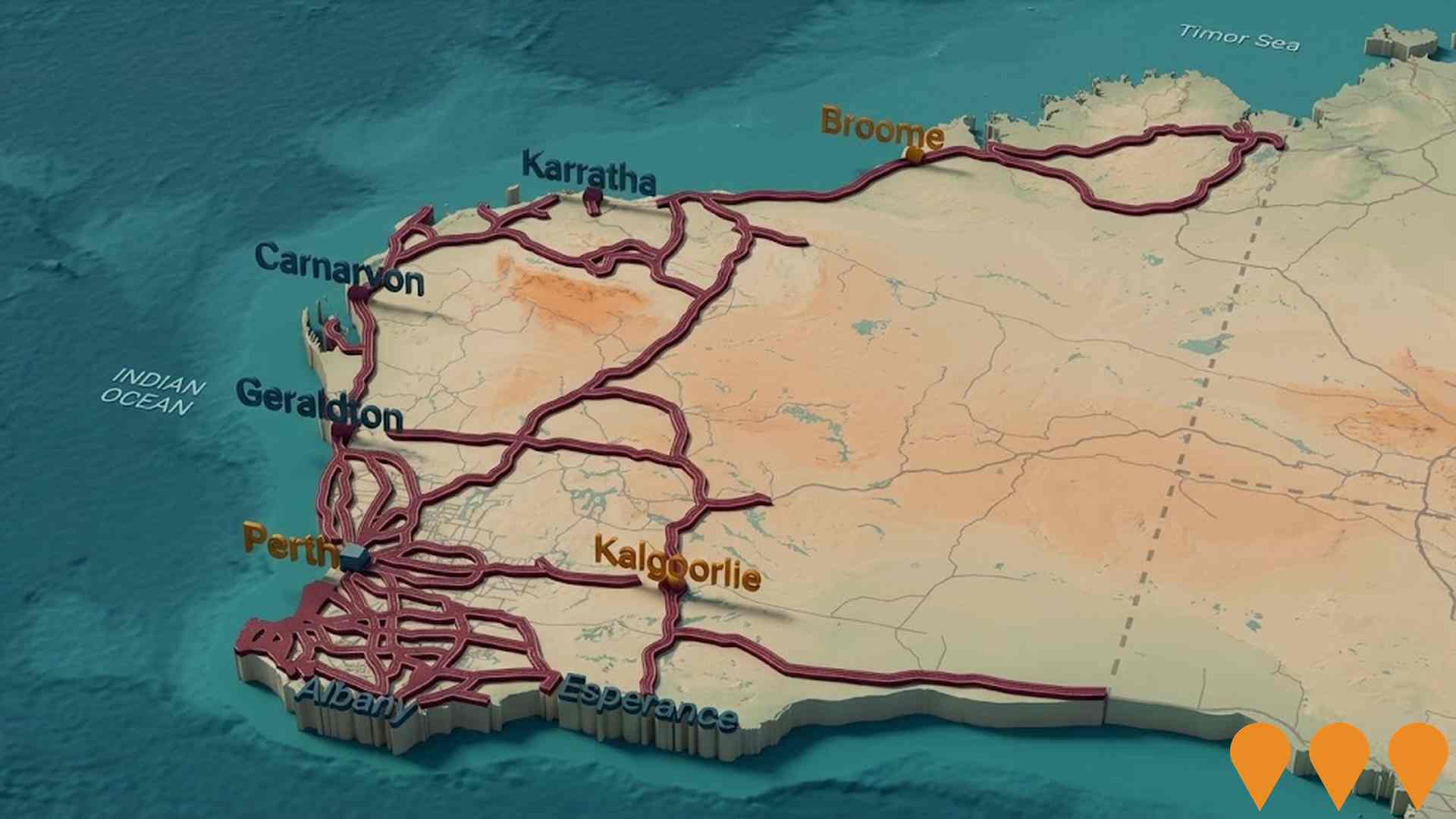
No changes can significantly affect an area's performance like alterations to local infrastructure, major projects, or planning initiatives. AreaSearch has identified zero projects that are expected to impact this region. Notable projects include WA Police Satellite Technology Upgrade, Regional And Rural Wa Road Network Safety Improvements, WA Regional Digital Connectivity Program (WARDCP), and Western Australia Coastal Hazards Adaptation. The following list details those likely to be most relevant.

Professional plan users can use the search below to filter and access additional projects.

INFRASTRUCTURE SEARCH

All Selected

AI Generated Denotes AI-based impression for illustrative purposes only, not to be taken as definitive under any circumstances. Please follow links and conduct other investigations from the project's source for actual imagery. Developers and project owners wishing us to use original imagery please Contact Us and we will do so.

Frequently Asked Questions - Infrastructure

What are some of the major infrastructure and planning changes likely to influence the suburb of Kalbarri?
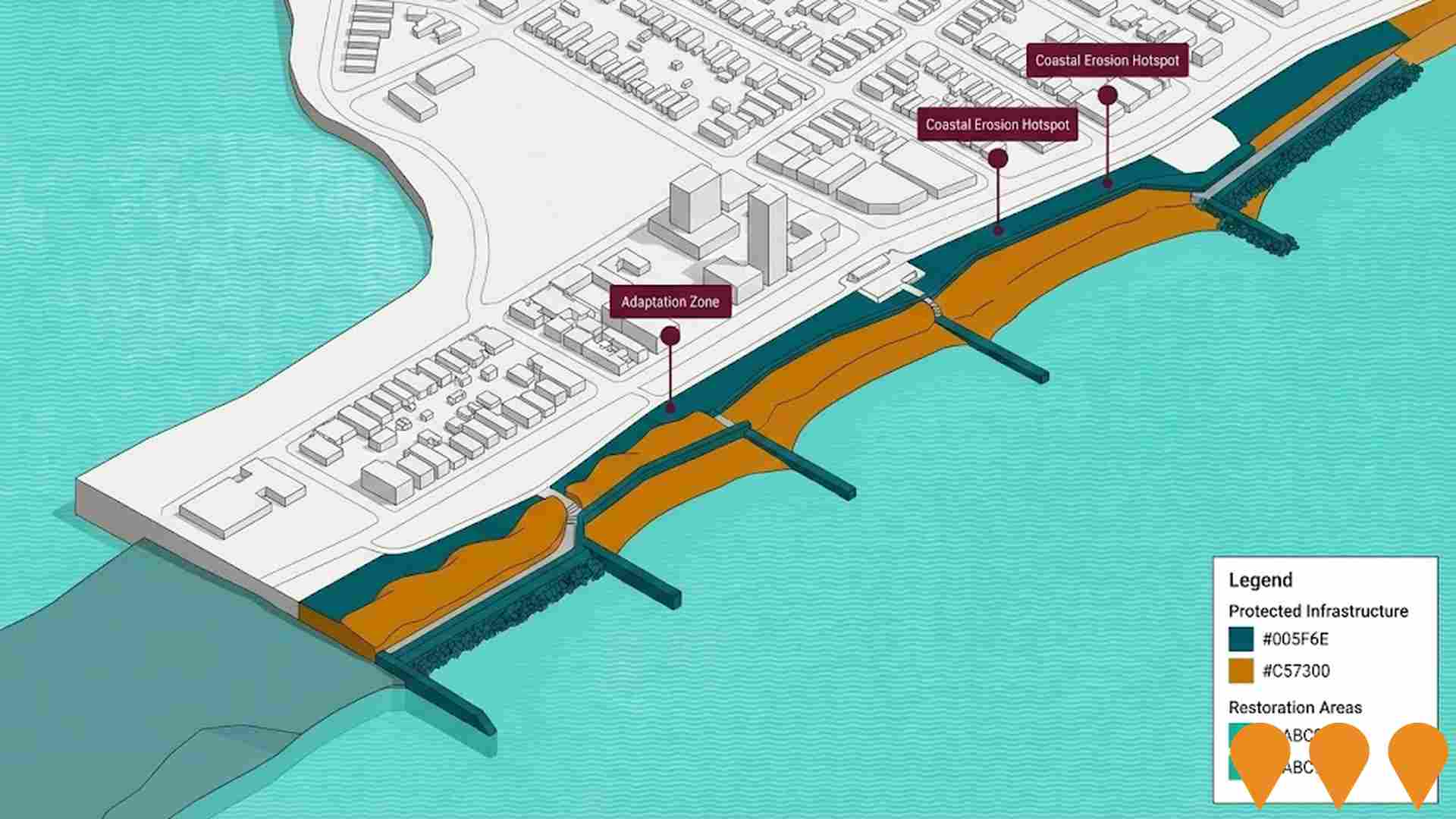
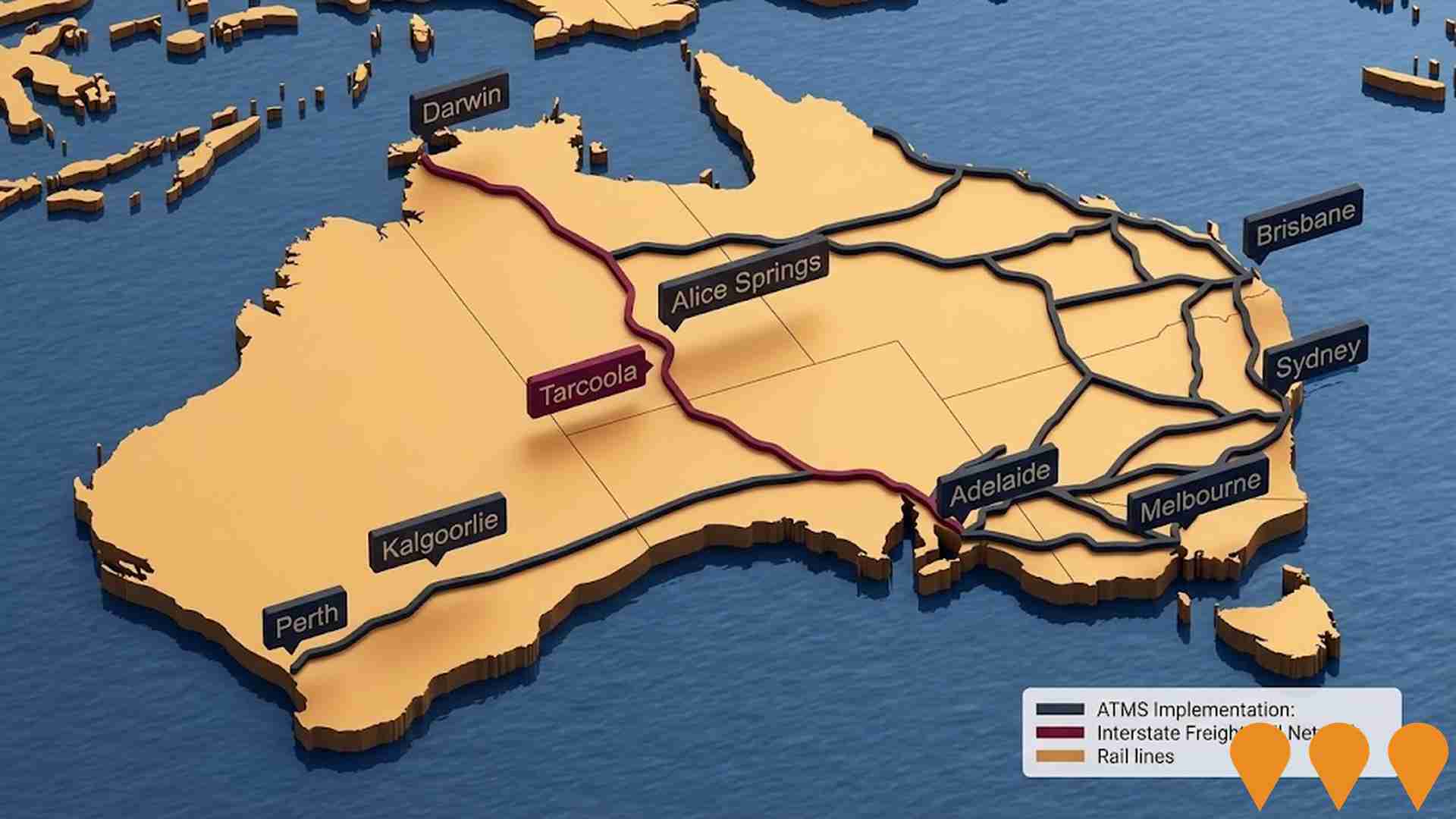
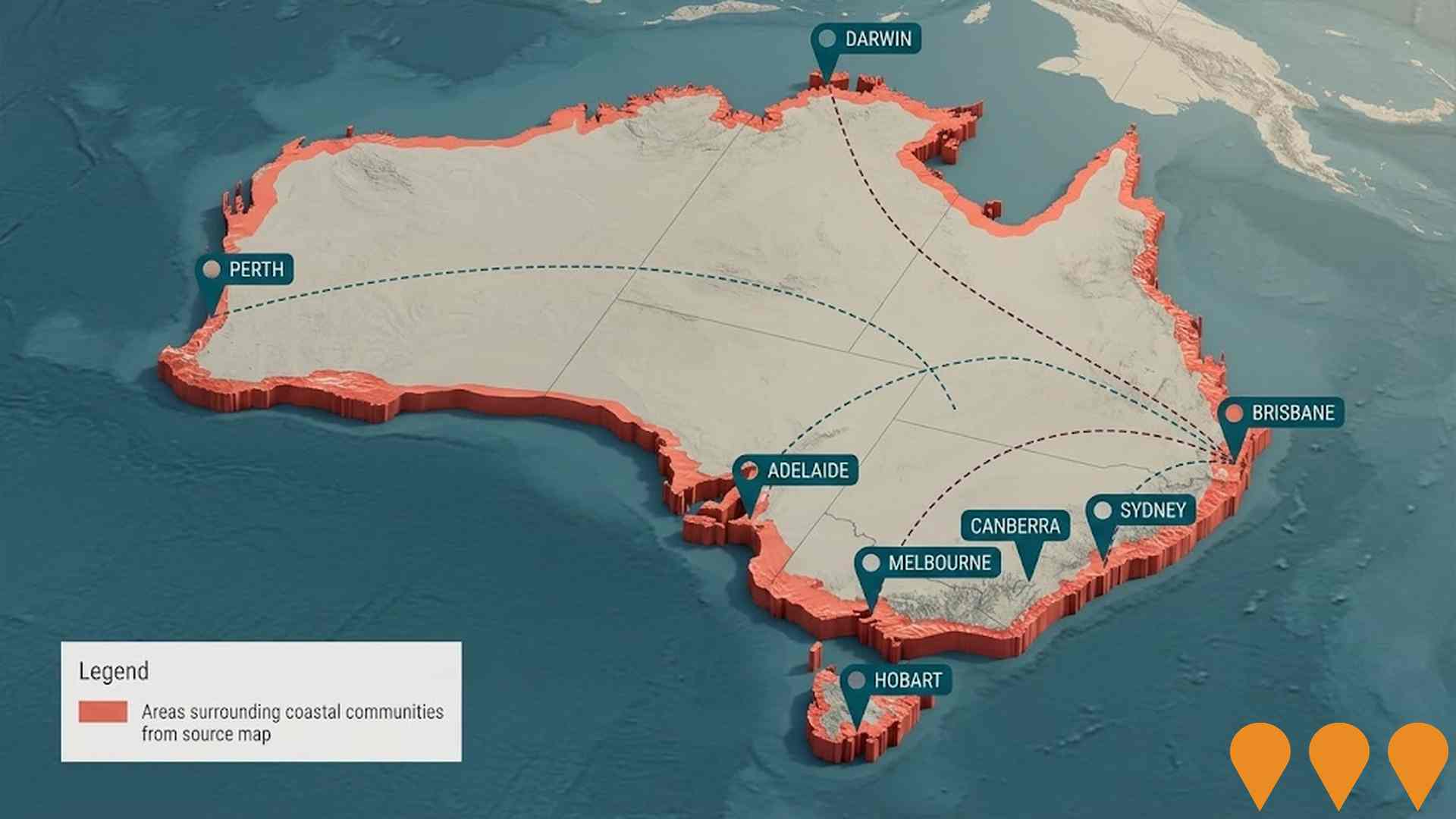
Key infrastructure and planning changes likely to influence the suburb of Kalbarri include: WA Police Satellite Technology Upgrade (Completed); Regional And Rural Wa Road Network Safety Improvements (Proposed); WA Regional Digital Connectivity Program (WARDCP) (Construction); Western Australia Coastal Hazards Adaptation (Proposed); and Resources Community Investment Initiative (Construction). These projects represent significant developments that will shape the area's future infrastructure landscape.
What types of infrastructure projects are impacting the suburb of Kalbarri?
Infrastructure development impacting the suburb of Kalbarri spans multiple sectors including Transport & Logistics, Telecommunications, and Environmental & Disaster Management, among others.
What is the scale of infrastructure investment impacting the suburb of Kalbarri?
While specific investment values are not publicly disclosed for all projects impacting the suburb of Kalbarri, the area shows active development across multiple infrastructure categories within the broader region.
How does the suburb of Kalbarri's infrastructure development compare to other areas?
Infrastructure development activity impacting the suburb of Kalbarri currently ranks below national averages at the 9thth percentile.
Resources Community Investment Initiative
Category: Communities
Stage: Construction | Est. Comp: 2035
Source / Links: Link 1   Link 2  

A $750 million partnership between the Western Australian Government and seven major resource companies (Rio Tinto, BHP, Woodside Energy, Chevron Australia, Mineral Resources, Fortescue, Roy Hill) to co-fund community, social and regional infrastructure projects across regional Western Australia, with strong focus on the Pilbara, Goldfields, Kimberley, Mid West and Gascoyne.
Communities

Enabling Infrastructure for Hydrogen Production
Category: Energy
Stage: Planning | Est. Comp: N/A
Source / Links: Link 1   Link 2  

Australia has completed the National Hydrogen Infrastructure Assessment (NHIA) to 2050 and refreshed its National Hydrogen Strategy (2024). The programmatic focus has shifted to planning and enabling infrastructure through measures such as ARENA's Hydrogen Headstart and the Hydrogen Production Tax Incentive (from April 2025). Round 2 of Hydrogen Headstart consultation occurred in 2025. Collectively these actions aim to coordinate investment in transport, storage, water and electricity inputs linked to Renewable Energy Zones and priority hubs, supporting large-scale renewable hydrogen production and future export supply chains.
Energy

Enabling Digital Health Services for Regional and Remote Australia
Category: Health & Medical
Stage: Planning | Est. Comp: 2033
Source / Links: Link 1   Link 2  

National initiative to expand and improve digital health access for people in regional and remote Australia. Focus areas include enabling telehealth and virtual care, upgrading clinical systems and connectivity, supporting secure information exchange, and building workforce capability in digital health, aligned with the Australian Government's Digital Health Blueprint and Action Plan 2023-2033.
Health & Medical

National EV Charging Network (Highway Fast Charging)
Category: Transport & Logistics
Stage: Construction | Est. Comp: 2025
Source / Links: Link 1   Link 2  

Partnership between the Australian Government and NRMA to deliver a backbone EV fast charging network on national highways. Program funds and co-funds 117 DC fast charging sites at roughly 150 km intervals to connect all capital cities and regional routes, reducing range anxiety and supporting EV uptake.

Transport & Logistics

Bulk Water Supply Security
Category: Environmental & Disaster Management
Stage: Planning | Est. Comp: N/A
Source / Links: Link 1   Link 2  

Nationwide program led by the National Water Grid Authority to improve bulk water security and reliability for non-potable and productive uses. Activities include strategic planning, science and business cases, and funding of state and territory projects such as storages, pipelines, dam upgrades, recycled water and efficiency upgrades to build drought resilience and support regional communities, industry and the environment.

Environmental & Disaster Management

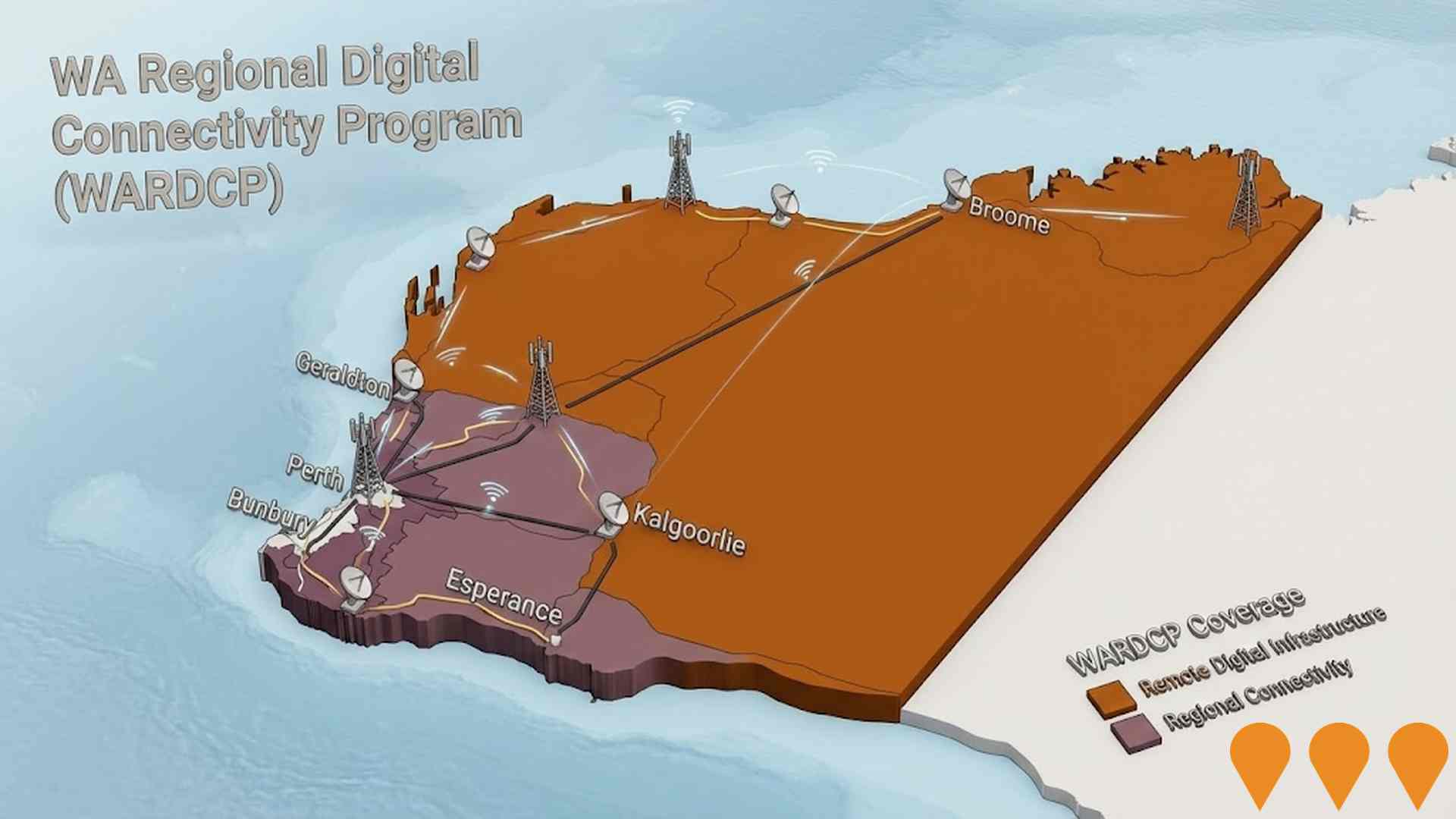
WA Regional Digital Connectivity Program (WARDCP)
Category: Telecommunications
Stage: Construction | Est. Comp: N/A
Source / Links: Link 1   Link 2  

Statewide co-investment program delivering new and upgraded mobile, fixed wireless and broadband infrastructure to improve reliability, coverage and performance for regional and remote Western Australia. Current workstreams include the Regional Telecommunications Project, State Agriculture Telecommunications Infrastructure Fund, and the WA Regional Digital Connectivity Program (WARDCP).
Telecommunications

Network Optimisation Program - Roads
Category: Transport & Logistics
Stage: Proposed | Est. Comp: N/A
Source / Links: Link 1   Link 2  

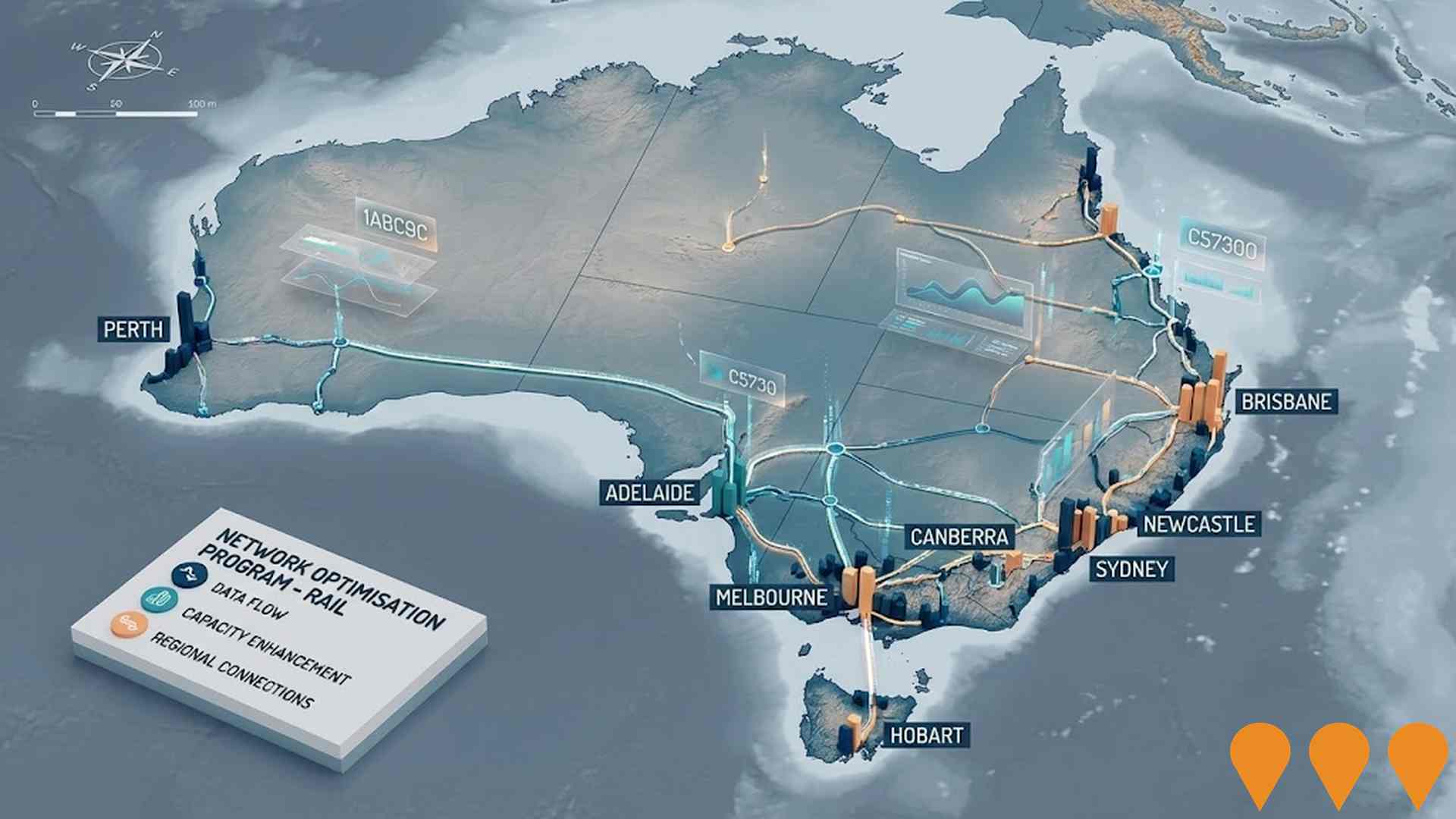
A national program concept focused on improving congestion and reliability on urban road networks by using low-cost operational measures and technology (e.g., signal timing, intersection treatments, incident management) to optimise existing capacity across major city corridors.

Transport & Logistics

WA Police Satellite Technology Upgrade
Category: Telecommunications
Stage: Completed | Est. Comp: N/A
Source / Links: Link 1   Link 2  

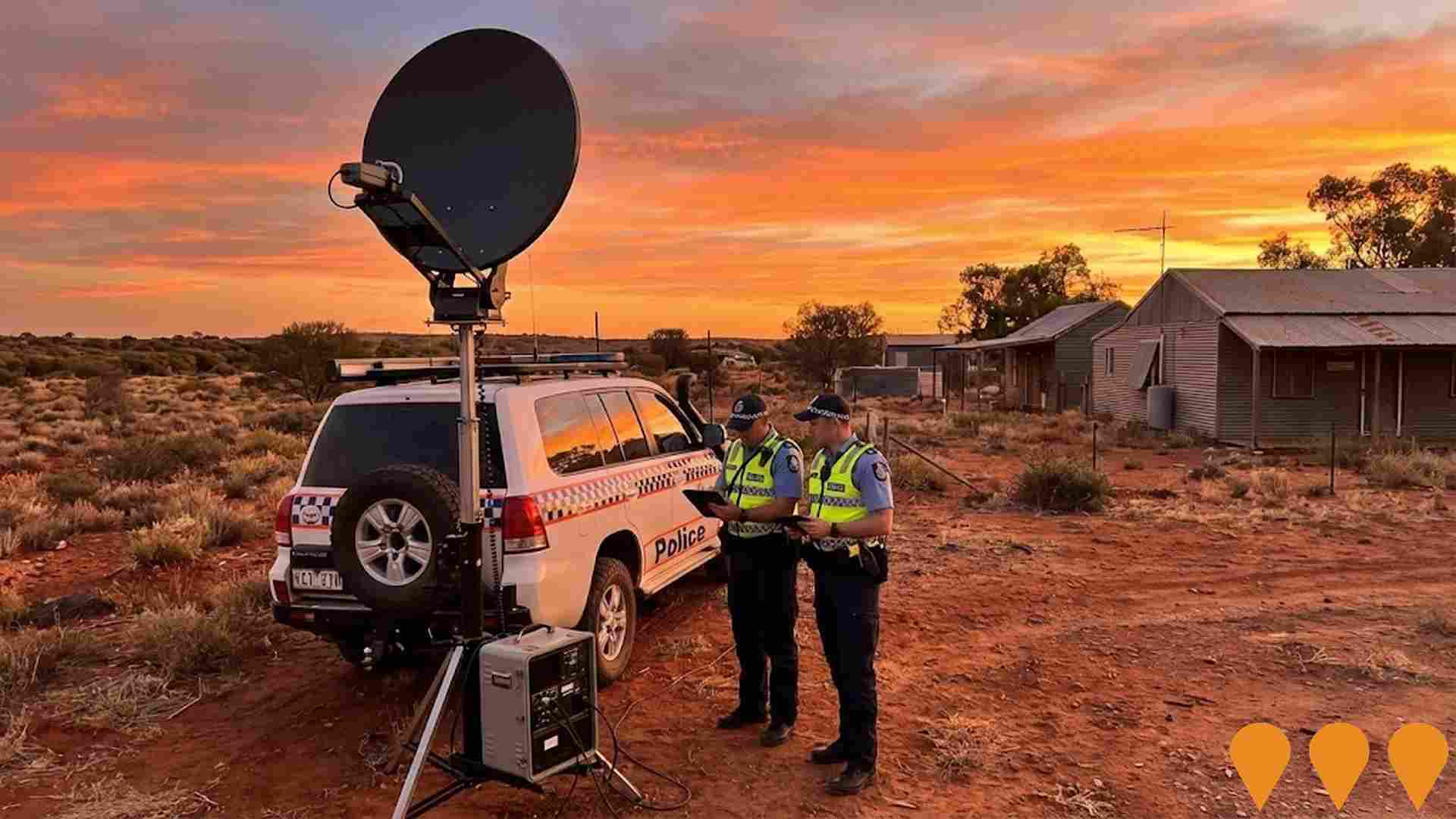
World-first integration of low Earth orbit satellite technology with police communications providing high-speed internet coverage across WA. Jigalong was part of 12-week trial with other remote communities.
Telecommunications

Employment

Table Chart PROFILE FAQ

The employment environment in Kalbarri shows above-average strength when compared nationally

Kalbarri has a balanced workforce with both white and blue collar jobs, prominently featuring tourism and hospitality sectors. Its unemployment rate is 2.6%.

Over the past year, employment stability was relative. As of September 2025742 residents are employed while the unemployment rate is 0.7% lower than Rest of WA's rate of 3.3%. Workforce participation lags at 50.3%, compared to Rest of WA's 59.4%. Key industries include accommodation & food, construction, and agriculture, forestry & fishing.

The area specializes in accommodation & food with an employment share 3.4 times the regional level. Health care & social assistance is under-represented at 6.5% compared to Rest of WA's 11.9%. Local employment opportunities appear limited based on Census working population vs resident population comparison. Over a 12-month period, employment and labour force remained stable by 0.0%, leaving unemployment flat. In contrast, Rest of WA experienced employment growth of 1.4% and labour force growth of 1.2%, with a 0.2 percentage point drop in unemployment. Jobs and Skills Australia's national employment forecasts from May-25 suggest potential future demand within Kalbarri. National employment is forecast to expand by 6.6% over five years and 13.7% over ten years, but growth rates differ significantly between industry sectors. Applying these projections to Kalbarri's employment mix suggests local employment should increase by 5.3% over five years and 11.3% over ten years.

Frequently Asked Questions - Employment

What is the employment situation in the suburb of Kalbarri?
As of September 2025, the suburb of Kalbarri has approximately 742 employed residents with an unemployment rate of 2.6%. This very low unemployment rate indicates a tight labour market with strong demand for workers. Employment performance is above the national median, showing positive labour market dynamics.
How does the suburb of Kalbarri's unemployment rate compare to the broader region?
As of September 2025, the unemployment rate in the suburb of Kalbarri stands at 2.6%, which is 0.7 percentage points below Rest of WA's rate of 3.3%. This lower unemployment rate suggests stronger local employment conditions. For comparison, the national unemployment rate is 4.1%.
What are the major employment sectors in the suburb of Kalbarri?
The employment landscape in the suburb of Kalbarri is dominated by several key sectors. The largest employers are accommodation & food (24.1% of employment), construction (12.2%), and agriculture, forestry & fishing (9.3%). Other significant employers include retail trade and mining.
How has employment changed recently in the suburb of Kalbarri?
Over the past year to September 2025, the suburb of Kalbarri has experienced stable employment levels while the labour force remained stable. As a result, the unemployment rate has remained stable. By comparison, Rest of WA saw employment increased and its unemployment rate dropped.
What is the workforce participation rate in the suburb of Kalbarri?
The workforce participation rate in the suburb of Kalbarri is 50.3%, which represents the proportion of working-age residents who are either employed or actively seeking work. This moderate participation rate suggests some residents may face barriers to workforce entry. The local rate trailing the Rest of WA average of 59.4%, suggesting potential for increased workforce participation.
Which industries are over-represented in the suburb of Kalbarri's employment market?
The suburb of kalbarri shows notable specialization in accommodation & food, which employs 24.1% of the local workforce compared to 7.1% regionally. With a local vs regional employment ratio of 3.4, this represents a significant industry cluster that likely serves markets beyond the local area. The area also shows above-average employment in 2 other sectors, contributing to a distinctive economic profile.
What are the employment growth prospects for the suburb of Kalbarri?
Based on Jobs and Skills Australia projections applied to the suburb of Kalbarri's industry mix, employment is expected to grow by 5.3% over the next five years and 11.3% over ten years. This compares to national growth expectations of 6.6% over five years. Steady growth is anticipated across multiple sectors, providing diverse employment opportunities.
How does the job market in the suburb of Kalbarri compare nationally?
The suburb of kalbarri's employment market shows above-average performance nationally, placing in the top half of areas assessed. Employment indicators suggest healthy labour market conditions relative to other regions. Recent job advertisement trends show the broader employment region saw a 12.6% decline, ranking 18.0th out of 37 regions nationally.
What employment opportunities exist for skilled workers in the suburb of Kalbarri?
Skilled workers will find selective opportunities in the suburb of Kalbarri, with knowledge-based sectors representing 14.9% of local jobs. Key sectors for skilled workers include education & training (7.7%), health care & social assistance (6.5%), and professional & technical (0.7%). With projected employment growth of 5.3% over five years, demand for skilled workers is expected to remain strong.

Income

Table Chart PROFILE FAQ

Income figures position the area below 75% of locations analysed nationally by AreaSearch

AreaSearch's aggregation of ATO data for financial year 2022 shows Kalbarri had a median taxpayer income of $48,415 and an average income of $63,851. These figures are slightly below the national averages of $57,323 (median) and $71,163 (average). Adjusting for Wage Price Index growth of 14.2% from financial year 2022 to September 2025, estimated incomes would be approximately $55,290 (median) and $72,918 (average). According to the 2021 Census, Kalbarri's household, family, and personal incomes rank between the 8th and 17th percentiles nationally. Income distribution data indicates that 27.5% of Kalbarri's population falls within the $400-$799 income range, contrasting with regional levels where the $1,500-$2,999 bracket leads at 31.1%. After housing costs, 85.3% of income remains, ranking at the 11th percentile nationally.

Frequently Asked Questions - Income

What is the median taxable income in the suburb of Kalbarri?
Based on Wage Price Index adjustments to September 2025, the estimated median taxable income in the suburb of Kalbarri is approximately $55,290. The official ATO data from FY-22 recorded a median of $48,415.
What is the average taxable income in the suburb of Kalbarri?
Based on Wage Price Index adjustments to September 2025, the estimated average taxable income in the suburb of Kalbarri is approximately $72,918. The official ATO data from FY-22 recorded an average of $63,851.
How does the median taxable income in the suburb of Kalbarri compare to the region?
Based on Wage Price Index adjustments to September 2025, the estimated median taxable income in the suburb of Kalbarri is approximately $55,290 compared to $65,463 in Rest of WA. The official ATO data from FY-22 shows $48,415 and $57,323 respectively.
How does the average taxable income in the suburb of Kalbarri compare to the region?
Based on Wage Price Index adjustments to September 2025, the estimated average taxable income in the suburb of Kalbarri is approximately $72,918 compared to $81,268 in Rest of WA. The official ATO data from FY-22 shows $63,851 and $71,163 respectively.
What are the main income cohorts in the suburb of Kalbarri according to the 2021 Census?
As per the 2021 Census, the income bracket containing the largest proportion (~27.5% / 417 persons) of the suburb of Kalbarri's population is the $400 - 799 cohort.
How do the main income cohorts in the suburb of Kalbarri compare to the region?
The largest income cohort in the suburb of Kalbarri is the $400 - 799 group, representing about 27.5% of the population. In comparison, Rest of WA's largest income cohort is the $1,500 - 2,999 group, representing 31.1% of its population, according to the 2021 Census.
What is the median household income in the suburb of Kalbarri according to the 2021 Census?
The 2021 Census data indicates that the median household income in the suburb of Kalbarri is $1,122/wk.
What is the median family income in the suburb of Kalbarri according to the 2021 Census?
According to the 2021 Census, the median family income in the suburb of Kalbarri is $1,427/wk.
What is the median personal income in the suburb of Kalbarri according to the 2021 Census?
The 2021 Census shows that the median personal income in the suburb of Kalbarri is $640/wk.
How does the suburb of Kalbarri's income rank nationally?
The suburb of Kalbarri's income level is slightly lower than average on a national basis according to the latest ATO data aggregated by AreaSearch for FY-22. The suburb of Kalbarri's median income among taxpayers is $48,415 and the average income stands at $63,851, which compares to figures for Rest of WA's of $57,323 and $71,163 respectively. Based on Wage Price Index growth of 14.2% since FY-22, current estimates would be approximately $55,290 (median) and $72,918 (average) as of September 2025.
What is the disposable income in the suburb of Kalbarri?
The estimated disposable income in the suburb of Kalbarri is $4,148 per year according to AreaSearch analysis.
How does the suburb of Kalbarri's disposable income compare to the region?
The suburb of kalbarri's disposable income is $4,148 compared to $6,025 for Rest of WA, based on AreaSearch analysis.

Housing

Table Chart PROFILE FAQ

Kalbarri is characterized by a predominantly suburban housing profile, with above-average rates of outright home ownership

Kalbarri's dwelling structures, as per the latest Census, consisted of 80.8% houses and 19.2% other dwellings (semi-detached, apartments, 'other' dwellings). This compares to Non-Metro WA's 87.5% houses and 12.5% other dwellings. Home ownership in Kalbarri stood at 46.8%, with mortgaged dwellings at 24.9% and rented ones at 28.3%. The median monthly mortgage repayment was $1,600, higher than Non-Metro WA's average of $1,517. The median weekly rent in Kalbarri was $258, compared to Non-Metro WA's $250. Nationally, Kalbarri's mortgage repayments were lower at $1,600 versus Australia's average of $1,863, and rents were substantially below the national figure of $375.

Frequently Asked Questions - Housing

What percentage of homes are owned vs rented in the suburb of Kalbarri?
In the suburb of Kalbarri, 46.8% of homes are owned outright, 24.9% are owned with a mortgage, and 28.3% are rented.
What percentage of dwellings in the suburb of Kalbarri are houses?
According to the latest data, 80.8% of dwellings in the suburb of Kalbarri are houses.
What percentage of dwellings in the suburb of Kalbarri are apartments or units?
In the suburb of Kalbarri, 0.0% of dwellings are apartments or units, with an additional 13.2% being semi-detached dwellings.
What is the level of outright home ownership in the suburb of Kalbarri?
Outright home ownership in the suburb of Kalbarri stands at 46.8%, compared to 37.1% in Rest of WA.
What is the median monthly mortgage repayment in the suburb of Kalbarri?
The median monthly mortgage repayment in the suburb of Kalbarri is $1,600, compared to $1,517 in Rest of WA.
What is the median weekly rent in the suburb of Kalbarri?
The median weekly rent in the suburb of Kalbarri is $258, compared to $250 in Rest of WA.
What is the distribution of rental prices in the suburb of Kalbarri?
In the suburb of Kalbarri, 6.2% of rentals are $0-149/week, 73.6% are $150-349/week, 17.4% are $350-649/week, 0.0% are $650-949/week, and 2.8% are $950+/week.
What is the average monthly housing cost in the suburb of Kalbarri?
The aggregate monthly housing cost in the suburb of Kalbarri is $714, which represents the average monthly cost across all housing types.
What percentage of income do residents spend on housing in the suburb of Kalbarri?
In the suburb of Kalbarri, households with mortgages typically spend 32.9% of their income on mortgage repayments, while renters spend 23.0% of their income on rent.
How crowded are homes in the suburb of Kalbarri?
The average persons per bedroom ratio in the suburb of Kalbarri is 0.7, indicating the level of household density.
How does housing affordability in the suburb of Kalbarri compare to the region?
Housing affordability in the suburb of Kalbarri shows mortgage holders spending 32.9% of income on repayments (vs 24.1% regionally), while renters spend 23.0% of income on rent (vs 17.2% regionally).
What types of dwellings are most common in the suburb of Kalbarri?
The dwelling mix in the suburb of Kalbarri consists of 80.8% detached houses, 13.2% semi-detached dwellings, 0.0% apartments, and 6.0% other dwelling types.
What is the weighted average housing cost based on tenure mix in the suburb of Kalbarri?
Given the tenure profile of the area, the weighted average monthly housing cost is approximately $715. This accounts for outright owners paying no housing costs, mortgage holders paying $1,600/month, and renters paying $1,117/month.
How affordable is housing in the suburb of Kalbarri relative to local incomes?
Housing in Kalbarri consumes approximately 14.7% of median household income ($4,858 monthly), indicating costs are highly affordable. The generally accepted benchmark is that housing should not exceed 30% of household income.
How do proposed developments compare to existing housing types in the suburb of Kalbarri?
Recent development applications in Kalbarri show attached dwellings contributing 0% of approvals compared to 19% of existing stock, while detached houses represent 100% of applications versus 81% of current dwellings. This suggests development patterns consistent with existing housing mix. The area shows minimal growth in housing density compared to other Australian locations.

Household Composition

Table Chart PROFILE FAQ

Kalbarri features high concentrations of lone person households, with a lower-than-average median household size

Family households account for 66.6% of all households, including 19.6% couples with children, 41.0% couples without children, and 5.4% single parent families. Non-family households make up the remaining 33.4%, with lone person households at 31.9% and group households comprising 1.5%. The median household size is 2.1 people, which is smaller than the Rest of WA average of 2.4.

Frequently Asked Questions - Households

How many households are in the suburb of Kalbarri?
As of the 2021 Census, the suburb of Kalbarri had 557 households. Based on population growth patterns, this has grown by approximately 2.7% to an estimated 572 households today.
What is the typical household size?
The median household size in the suburb of Kalbarri is 2.1 people. This compares to 2.4 in Rest of WA and reflects the area's household composition mix.
What types of households are most common?
Family households dominate at 66.6% of all households. The remaining households consist of lone person households (31.9%), group households (1.5%), and other household types (0.0%).
How are families structured in the area?
Among the 370 family households, 19.6% are couples with children, 41.0% are couples without children at home, and 5.4% are single parent families. This mix shapes local demand for schools, family services, and housing types.
How does the suburb of Kalbarri compare to regional household patterns?
Compared to Rest of WA, the suburb of Kalbarri shows distinct household patterns. This higher proportion of single-person households drives demand for smaller dwellings and different community services.
What is the average family size?
Families in the suburb of Kalbarri have an average of 1.9 children, slightly below the Rest of WA average of 2.0. This influences local demand for child-related services and larger family homes.
What are the marriage patterns in the suburb of Kalbarri?
Marriage patterns reveal 46.7% of the adult population are currently married, while 32.2% have never married. This compares to 45.2% married and 35.6% never married across Rest of WA.
How significant are single-person households?
Single-person households represent 31.9% of all households in the suburb of Kalbarri, similar to the regional average of 28.9%. This affects demand for smaller dwellings and single-person accommodation.
Are shared living arrangements common?
Group households (unrelated people sharing) account for 1.5% of households, well below the Rest of WA average of 2.5%. This low rate suggests limited student or young professional shared accommodation.
Loading household composition data...

Local Schools & Education

Table Chart PROFILE FAQ

Kalbarri faces educational challenges, with performance metrics placing it in the bottom quartile of areas assessed nationally

The area's university qualification rate is 12.6%, significantly lower than Australia's average of 30.4%. Bachelor degrees are the most common at 9.0%, followed by postgraduate qualifications (2.2%) and graduate diplomas (1.4%). Vocational credentials are prevalent, with 44.6% of residents aged 15+ holding them, including advanced diplomas (9.1%) and certificates (35.5%). Educational participation is high, with 25.2% of residents currently enrolled in formal education.

This includes 10.0% in primary education, 8.1% in secondary education, and 1.6% pursuing tertiary education.

Frequently Asked Questions - Education

What percentage of people in the suburb of Kalbarri have university qualifications?
12.6% of people aged 15 and over in the suburb of Kalbarri have university qualifications, compared to 15.1% in the broader region.
What percentage of people in the suburb of Kalbarri have no formal qualifications?
42.9% of people aged 15 and over in the suburb of Kalbarri have no formal qualifications, compared to 41.9% regionally.
How does the suburb of Kalbarri's education level compare to national averages?
The suburb of kalbarri ranks in the 24th percentile nationally for education based on AreaSearch's analysis of qualification and performance metrics.
What types of qualifications are most common in the suburb of Kalbarri?
The most common qualifications in the suburb of Kalbarri are: Certificate (35.5%), Advanced Diploma (9.1%), Bachelor Degree (9.0%).
What proportion of the suburb of Kalbarri's population is currently attending educational institutions?
25.2% of the population in the suburb of Kalbarri is currently engaged in formal education, with 10.0% in primary school, 8.1% in secondary school, 1.6% at university.
What is the ICSEA score for schools in the suburb of Kalbarri?
The average ICSEA (Index of Community Socio-Educational Advantage) score for schools in the suburb of Kalbarri is 977, indicating below-average socio-educational advantage compared to the national average of 1000.
How many schools are located within the suburb of Kalbarri?
There are 1 schools within the suburb of Kalbarri, with a combined enrollment of approximately 198 students.
What types of schools are available in the suburb of Kalbarri?
The suburb of kalbarri includes 1 combined school.

Schools Detail

Nearby Services & Amenities

PROFILE FAQ

Transport

Table Chart PROFILE FAQ

Transport servicing is very low compared to other areas nationally based on assessment of service frequency, route connectivity and accessibility

Transport analysis shows one active transport stop operating within Kalbarri. It offers a mix of bus services. Two individual routes service this stop, collectively providing six weekly passenger trips.

Transport accessibility is rated as limited, with residents typically located 2389 meters from the nearest transport stop. Service frequency averages zero trips per day across all routes, equating to approximately six weekly trips per individual stop.

Frequently Asked Questions - Transport

How many public transport stops are in Kalbarri?
There are 1 public transport stops within the suburb of Kalbarri.
How frequent are the transport services in Kalbarri?
the suburb of Kalbarri has 6 weekly trips across 2 routes, averaging 0 trips per day.
How far are residents from public transport in Kalbarri?
On average, residential properties are 2389 meters from the nearest transport stop.

Transport Stops Detail

Health

Table Chart PROFILE FAQ

Health performance in Kalbarri is lower than average with common health conditions somewhat prevalent across both younger and older age cohorts

Kalbarri faces significant health challenges with common health conditions prevalent across both younger and older age cohorts.

The rate of private health cover in Kalbarri is approximately 53%, which is higher than the average SA2 area. The most common medical conditions are arthritis and mental health issues, impacting 10.9% and 7.3% of residents respectively. Sixty-six point seven percent of residents declare themselves completely clear of medical ailments, compared to 66.8% across Rest of WA. Kalbarri has a higher percentage of residents aged 65 and over at 27.4%, with 415 people in this age group compared to the Rest of WA's 18.3%. Health outcomes among seniors are strong, performing better than the general population in health metrics.

Frequently Asked Questions - Health

How many people in the suburb of Kalbarri have private health insurance?
Around 52.5% of people in the suburb of Kalbarri are covered by private health insurance, which compares to 53.7% in the broader region of Rest of WA.
What percentage of the population requires ongoing medical assistance in the suburb of Kalbarri?
In the suburb of Kalbarri, 4.5% of the population is identified as requiring ongoing medical assistance. This figure is slightly different from the regional average, where 5.1% of people in Rest of WA require similar assistance.
How prevalent is asthma in the suburb of Kalbarri?
5.9% of people in the suburb of Kalbarri are diagnosed with asthma. In comparison, 7.8% of the population across Rest of WA is affected by asthma.
What percentage of people have diabetes in the suburb of Kalbarri?
Diabetes affects 4.5% of the the suburb of Kalbarri population, while in the surrounding region, 5.5% of people are diagnosed with diabetes.
What is the percentage of people with heart disease in the suburb of Kalbarri?
4.2% of people in the suburb of Kalbarri have heart disease. Across the region of Rest of WA, 4.1% of the population is affected by heart disease.
How does the suburb of Kalbarri compare to the region in terms of overall private health coverage?
In the suburb of Kalbarri, 52.5% of the population are estimated to have private health insurance. Comparatively, Rest of WA sees an estimated private health coverage rate of 53.7%.

Cultural Diversity

Table Chart PROFILE FAQ

Kalbarri ranks below the Australian average when compared to other local markets across a number of language and cultural background related metrics

Kalbarri's cultural diversity was found to be below average, with 82.7% of its population being Australian citizens, born in Australia (80.6%), and speaking English only at home (96.1%). Christianity is the predominant religion in Kalbarri, comprising 42.2% of people. However, Buddhism appears overrepresented compared to the rest of WA, with 2.0% versus 1.0%.

In terms of ancestry, the top three groups are English (37.3%, regional average 30.7%), Australian (29.0%), and Scottish (9.2%). Notable divergences include New Zealanders at 0.8% in Kalbarri compared to 0.6% regionally, Germans at 4.2% versus 2.7%, and Russians at 0.3% versus 0.1%.

Frequently Asked Questions - Diversity

What is the level of cultural diversity in the suburb of Kalbarri?
Kalbarri was found to be below average in terms of cultural diversity, with 82.7% of its population being citizens, 80.6% born in Australia, and 96.1% speaking English only at home.
What is the most common religion in the suburb of Kalbarri?
The main religion in Kalbarri was found to be Christianity, which makes up 42.2% of people in Kalbarri. However, the most apparent overrepresentation was in Buddhism, which comprises 2.0% of the population, compared to 1.0% across Rest of WA.
What are the top countries of origin in the suburb of Kalbarri?
In terms of ancestry (country of birth of parents), the top three represented groups in Kalbarri are English, comprising 37.3% of the population, which is substantially higher than the regional average of 30.7%, Australian, comprising 29.0% of the population, and Scottish, comprising 9.2% of the population. Additionally, there are notable divergences in the representation of certain other ethnic groups: New Zealand is notably overrepresented at 0.8% of Kalbarri (vs 0.6% regionally), German at 4.2% (vs 2.7%) and Russian at 0.3% (vs 0.1%).
How does the percentage of people born overseas compare to the regional average?
19.4% of the the suburb of Kalbarri population was born overseas, compared to 15.6% regionally.
What percentage of the the suburb of Kalbarri population speaks a language other than English at home?
3.9% of the population in the suburb of Kalbarri speaks a language other than English at home, compared to 7.6% in the wider region.
How many people in the suburb of Kalbarri identify as Australian Aboriginal?
2.6% of the the suburb of Kalbarri population identifies as Australian Aboriginal, compared to 6.9% in the region.
What is the citizenship status of the population in the suburb of Kalbarri?
82.7% of the the suburb of Kalbarri population holds citizenship, compared to 83.2% in the wider region.

Age

Table Chart PROFILE FAQ

Kalbarri ranks among the oldest 10% of areas nationwide

Kalbarri's median age is 52, which exceeds the Rest of WA figure of 40 and is above Australia's median age of 38. Compared to the Rest of WA average, Kalbarri has a notably higher proportion of people aged 65-74 (17.8%) while those aged 5-14 are under-represented (8.4%). This concentration of people aged 65-74 is significantly higher than the national figure of 9.4%. Between 2021 and present, the proportion of people aged 25 to 34 has increased from 8.6% to 9.6%, while the proportion of those aged 55 to 64 has decreased from 20.2% to 18.9%. By 2041, demographic projections indicate significant shifts in Kalbarri's age structure. The number of people aged 25 to 34 is projected to increase by 95 (65%) from 145 to 241. Conversely, population declines are projected for those aged 85+ and 65 to 74.

Frequently Asked Questions - Age

What is the median age in the suburb of Kalbarri?
According to the latest data, the median age in the suburb of Kalbarri is 52 years.
How does the suburb of Kalbarri's median age compare to broader areas?
At 52 years, Kalbarri is 12 years older than the Rest of WA average (40 years) and 14 years older than the national average (38 years).
What age groups are over-represented in the suburb of Kalbarri?
The most over-represented age group in the suburb of Kalbarri compared to the Rest of WA region is the 65 - 74 group, making up 17.8% of the population.
What age groups are under-represented in the suburb of Kalbarri?
The most under-represented age group in the suburb of Kalbarri compared to the Rest of WA region is the 5 - 14 group, making up 8.4% of the population.
Are there age groups with notable population variances?
Yes, certain age groups in the suburb of Kalbarri show significant variance compared to the Rest of WA region. The most over-represented age groups are 65-74 year-olds (17.8% vs 10.8%) and 55-64 year-olds (18.9% vs 13.1%). The most under-represented age group is 5-14 year-olds (8.4% vs 12.9%).
What is the percentage of children (0-14 years) in the suburb of Kalbarri?
The percentage of children aged 0-14 years in the suburb of Kalbarri is 12.3%.
What is the percentage of older people (65+ years) in the suburb of Kalbarri?
The percentage of people aged 65 and over in the suburb of Kalbarri is 27.4%.

Nearby Areas