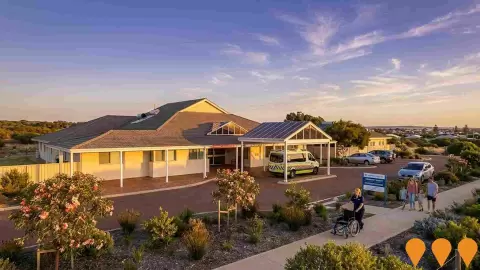
You are viewing the free Snapshot. Dashboard puts rankings, rents, projects and services on one screen, and Full adds every chapter with charts and maps. Dashboard and Full are included with AreaSearch Operator and Pro, or unlocked by the area's Area Expert. You need to log in to open them.
Wonthella is located 373 kilometres north-northwest from Perth CBD. AreaSearch estimates the suburb of Wonthella had a population of around 1,781 as of Aug 2026, based on aggregated SA2-level ERP counts, released yearly, and national address file data updated each quarter. This is an increase of 70 people (4.1%) since the 2021 Census, when the population was 1,711 people. The area has moderate population expansion, alongside an above-average renting population, low average household size, notable retail trade and elevated utilities employment, affordable housing options, and above-average children per family.
Residents are somewhat older than the typical Australian area, with a median age of 43, and households are largely made up of lone people. The area has a typically lower education level and lower-quartile income levels. Geraldton, in Western Australia, is known for sandy beaches, wildflower displays and ocean views, with outdoor activities including snorkeling, windsurfing and fishing.
Read the analysisShow less
Download a free snapshot of Wonthella or order the area report
Free with an AreaSearch account. Pro is not needed.Free. Built in your browser.
The analysis, national rankings and who lives there.
About Wonthella
Wonthella is located 373 kilometres north-northwest from Perth CBD. AreaSearch estimates the suburb of Wonthella had a population of around 1,781 as of Aug 2026, based on aggregated SA2-level ERP counts, released yearly, and national address file data updated each quarter. This is an increase of 70 people (4.1%) since the 2021 Census, when the population was 1,711 people. The area has moderate population expansion, alongside an above-average renting population, low average household size, notable retail trade and elevated utilities employment, affordable housing options, and above-average children per family.
Residents are somewhat older than the typical Australian area, with a median age of 43, and households are largely made up of lone people. The area has a typically lower education level and lower-quartile income levels. Geraldton, in Western Australia, is known for sandy beaches, wildflower displays and ocean views, with outdoor activities including snorkeling, windsurfing and fishing.
Read the analysisShow less
Estimated resident population by year (ABS, not Census counts): 1,928 in 2006 and 1,772 in 2025. The dashed segment ends at the AreaSearch estimate for Aug 2026: 1,781 (ABS June 2025 base).
Each bar and spoke is a national percentile; the dashed ring is the typical area. 99th = higher than 99 in every 100 neighbourhood-sized areas across Australia (ABS SA2 areas). Higher means more of the measure, not necessarily better. Orange marks the top three measures where a higher percentile is better; not Age, Housing or Housing Cost.
AreaSearch's development drivers ranking sees a low level of activity in Wonthella, placing the area among the bottom 18% of areas assessed nationally.
An assessment of population growth drivers in Wonthella reveals an overall ranking slightly below national averages considering recent, and medium term trends.
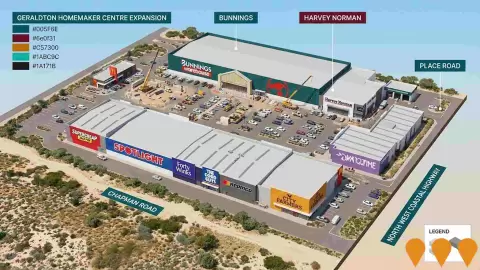
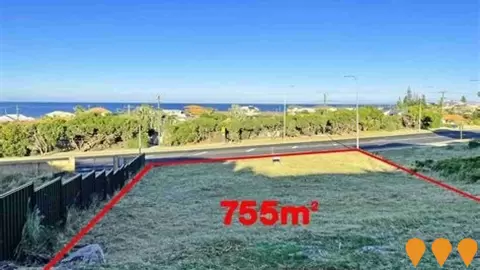
A 30 million dollar expansion of the Geraldton Homemaker Centre on North West Coastal Highway that effectively doubles the precinct to 38,471 square metres of floor space across two parallel buildings.
Est. value $30M · completion 2027 · Residential Development
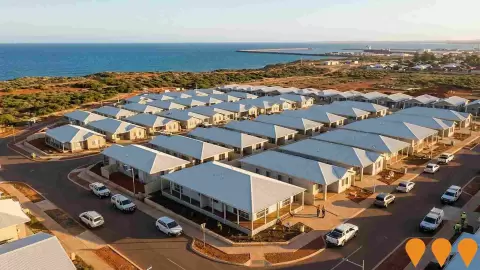
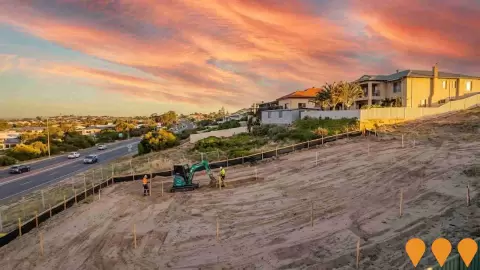
Fenix Resources is developing a $30 million quality worker accommodation village in Geraldton comprising 60 homes to attract and house key personnel amid regional housing constraints. Construction of the residential development is actively underway, supported by the company's expanding local operations.
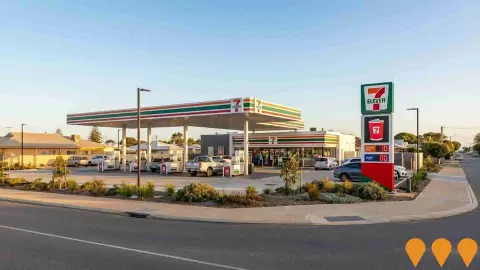
Development of a 7-Eleven service station and convenience store at Lot 203 (179) Durlacher Street, Geraldton, on the southern portion of the Rigters IGA site. The 193 square metre store includes six refuelling bays, a fuel canopy, eight car parking bays, pylon signage, landscaping, and 24/7 operations.
Est. value $4M · completion 2027 · Sports & Recreation
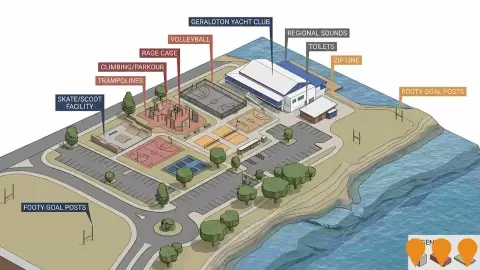
Redevelopment of the Youth Precinct on the Geraldton Foreshore, covering approximately 7,353 square metres of public open space on the site of the ageing existing precinct. The upgrade will deliver a skatepark, trampolines, a parkour course, a zipline, shaded seating areas, swings, and a renewed Rage Cage, along with lighting and CCTV.
Construction
Geraldton Port Maximisation Project (PMaxP)
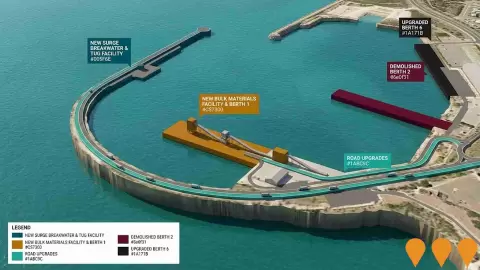
Est. value $350M · completion 2027 · Ports, Marinas, Fisheries & Aquaculture
A transformative $350 million infrastructure project to future-proof the port and drive economic growth in the Mid West. Key elements include a new $52 million bulk materials handling facility, a surge protection breakwater awarded to MGN Civil, and port access road upgrades being delivered by Civcon Civil and Project Management.
Est. value $192M · Completed 2026 · Health & Medical
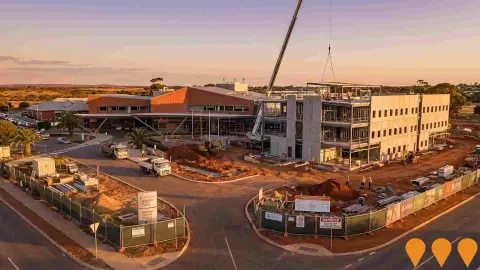
The $192 million redevelopment of Geraldton Health Campus reached practical completion in mid-2026, delivering an expanded emergency department, a new intensive care unit and high dependency unit, an integrated mental health service, and an increased capacity of 25 additional beds.
Est. value $5M · Completed 2025 · Residential Development
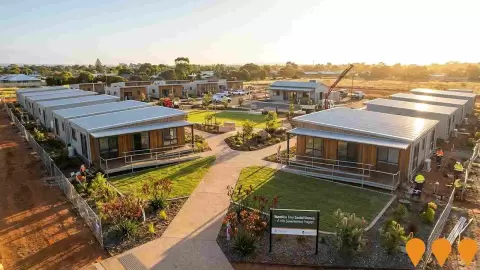
Construction of 16 turnkey modular tiny homes in Wandina, Geraldton, designed to gold Livable Homes standard for seniors in need of social housing. Prefabricated at Summit Modular's Canning Vale facility and installed on site in just seven months.
Local Development Plan and detailed design guidelines for residential lots created from Lots 219 and 220 Brand Highway, Mount Tarcoola. The plan has been adopted by the City of Greater Geraldton and prescribes additional requirements to the Residential Design Codes, including building envelopes, setbacks, height limits, noise and bushfire mitigation…
Proposed
Moreton Bay Estate
Est. completion 2028 · Residential Development
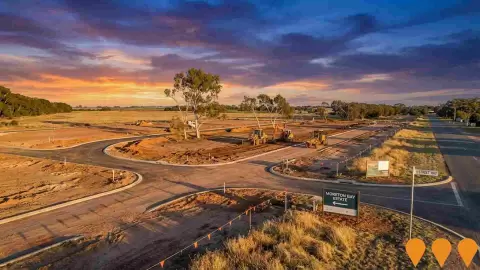
Moreton Bay Estate is a residential land development proposed along Brand Highway in Dongara, Western Australia, offering residential lots for sale. The project expands the local housing supply and contributes to the residential development landscape of the Shire of Irwin.
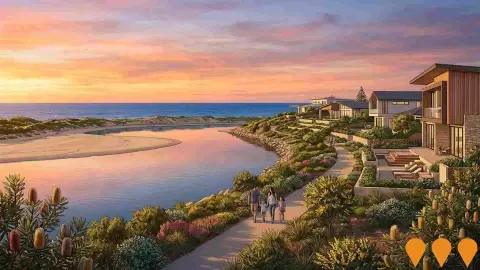
The Retreat Estate is a premium waterside residential community situated between Dongara and Port Denison, offering generous house and land packages ranging from 700 to 900 square metres. Developed by LWP Property Group, the project provides a coastal lifestyle within walking distance of the Indian Ocean, Irwin River, and local marina boardwalks.
The $9.86 million redevelopment of the Dongara Health Centre, completed in June 2023, involved significant upgrades to the emergency department and residential aged care facility.
Projects around Wonthella
Images marked AI impression are illustrative only and not photographs of the project; follow the project links for actual imagery. Original imagery? Contact us.
Estimated completion year of the 7 projects in and around the area that are not yet completed and have one: 2026 1, 2027 4, 2028 1, 2029 1. 2 have no completion year.
Development applications
AreaSearch has tracked 2 substantial development applications lodged in and around Wonthella over the period covered (about 2.4 years), none in the last 12 months. Coverage varies by council.
Status of the 2 tracked applications: 2 approved, 0 under assessment, 0 other (refused, withdrawn or no status).
Tracked by AreaSearch, in and around the area, period covered (about 2.4 years)
Tracked, last 12 months
0
Tracked by AreaSearch, in and around the area
ABS building approvals
2.0 per 1,000 people
ABS building approvals
25th percentile nationally
Average approvals a year
4
ABS building approvals
10th percentile nationally
Applications approved
2
Tracked by AreaSearch, in and around the area, period covered (about 2.4 years)
Questions about development in Wonthella
How many dwelling approvals have occurred in the suburb of Wonthella recently?
Dwelling approval activity in the suburb of Wonthella area has seen 8 residential approvals over the past two financial years, based on AreaSearch's SA2 aggregation method. The suburb of Wonthella's current population of 1,781 has been supported by 4 approvals on average over recent years.
What is the outlook for development in Wonthella?
The long-run outlook for development is part of AreaSearch Operator and Pro. Log in to see the forecast detail in Full.
What has been the trend in development approvals over the past five years in the suburb of Wonthella?
Looking at development activity over the past five years, the suburb of Wonthella's approval levels have been significantly below the yearly average of 4, showing a notable downturn in recent development.
How does recent development compare to population growth in the suburb of Wonthella?
Over the past five years, the population in the suburb of Wonthella has grown by approximately 18 people, while 18 residential approvals were recorded. This equates to a ratio of 1.0 people added for each new dwelling approval. This low ratio indicates housing supply is outpacing population growth, potentially creating market oversupply.
Questions about infrastructure in Wonthella
What are some of the major infrastructure and planning changes likely to influence the suburb of Wonthella?
Key infrastructure and planning changes likely to influence the suburb of Wonthella include: Geraldton Homemaker Centre Expansion (Construction); Youth Precinct Redevelopment Project (Construction); Geraldton Green Connect Project (Planning); Meru Waste Management Facility Gas Flaring System Project (Construction); and Geraldton Airport Microgrid Project (Completed). These projects represent significant developments that will shape the area's future infrastructure landscape.
What types of infrastructure projects are impacting the suburb of Wonthella?
Infrastructure development impacting the suburb of Wonthella spans multiple sectors including Communities, Sports & Recreation, and Communities, Precincts & Urban Renewal, among others.
What is the scale of infrastructure investment impacting the suburb of Wonthella?
Infrastructure investment analysis indicates targeted investment in infrastructure improvements that will benefit the local area, with a notable concentration of investment within the immediate the suburb of Wonthella vicinity.
How does the suburb of Wonthella's infrastructure development compare to other areas?
Infrastructure development activity impacting the suburb of Wonthella currently ranks below national averages at the 28th percentile.
03People
Population, age, income, work, education and more.
99th = higher than 99 in every 100 neighbourhood-sized areas across Australia (ABS SA2 areas). Higher means more of the measure, not necessarily better.
Population in Wonthella
Data: Aug 2026 estimate, from the ABS June 2025 base
An assessment of population growth drivers in Wonthella reveals an overall ranking slightly below national averages considering recent, and medium term trends.
Population in Wonthella: key figures
Measure
Value
Source and date
National percentile
Population
1,781
AreaSearch estimate, Aug 2026, from the ABS June 2025 base
Growth since 2021 Census
+4.1%
AreaSearch estimate, Aug 2026, against the 2021 Census
32nd percentile nationally
Population density
480 per km²
AreaSearch estimate, Aug 2026, from the ABS June 2025 base
42nd percentile nationally
Average yearly growth, 2020 to 2025
+0.2%
ABS estimated resident population series to June 2025
Average yearly growth, 2015 to 2025
+0.2%
ABS estimated resident population series to June 2025
Show 5 more population figuresShow fewer
Population in Wonthella: key figures, continued
Measure
Value
Source and date
National percentile
Population at the 2021 Census
1,711
2021 Census
Residents added since the 2021 Census
70
AreaSearch estimate, Aug 2026, against the 2021 Census
Average yearly growth, 2022 to 2025
-0.3%
ABS estimated resident population series to June 2025
Population growth, 2024 to 2025
-0.3%
ABS estimated resident population series to June 2025
Land area
3.71 km²
AreaSearch boundary analysis
Questions about population in Wonthella
What is the latest population estimate for the suburb of Wonthella?
Total population for the suburb of Wonthella was estimated to be approximately 1,781 as at Aug 2026. This is based upon an estimated resident population of 1,772 from the ABS up to June 2025.
How has the population in the suburb of Wonthella changed since 2021?
The suburb of Wonthella has added approximately 70 people and shown a 4.09% increase from the 1,711 people recorded at the 2021 Census period.
What is the population density in the suburb of Wonthella?
The population density in the suburb of Wonthella is estimated at 480 persons per square kilometre based on the latest population estimate.
Show all 5 questionsShow fewerHow much has the population grown over the past 10 years in the suburb of Wonthella?
Over the past 10 years, the population in the suburb of Wonthella has shown a compound annual growth rate of 0.2% per annum.
What are the main drivers of population growth in the suburb of Wonthella?
Population growth in the suburb of Wonthella is driven by: Overseas migration (100.0%), Natural increase (0.0%), Interstate migration (0.0%). The primary driver is Overseas migration, contributing 100.0% of overall population gains.
Age in Wonthella
Data: Aug 2026 estimate, from the ABS June 2025 base
Wonthella hosts a notably older demographic compared to the national average.
Age in Wonthella: key figures
Measure
Value
Source and date
National percentile
Median age
42 years
ABS estimated resident population age profile (June 2025), scaled to the Aug 2026 AreaSearch estimate
72nd percentile nationally
Aged 65 and over
18.9%
ABS estimated resident population age profile (June 2025), scaled to the Aug 2026 AreaSearch estimate
Children under 15
17.4%
ABS estimated resident population age profile (June 2025), scaled to the Aug 2026 AreaSearch estimate
Aged 15 to 34
26.8%
ABS estimated resident population age profile (June 2025), scaled to the Aug 2026 AreaSearch estimate
Aged 25 to 64
51.1%
ABS estimated resident population age profile (June 2025), scaled to the Aug 2026 AreaSearch estimate
Show 11 more age figuresShow fewer
Age in Wonthella: key figures, continued
Measure
Value
Source and date
National percentile
Median age at the 2021 Census
43 years
2021 Census
Aged 0 to 4
6.6%
ABS estimated resident population age profile (June 2025), scaled to the Aug 2026 AreaSearch estimate
Aged 5 to 14
10.8%
ABS estimated resident population age profile (June 2025), scaled to the Aug 2026 AreaSearch estimate
Aged 15 to 24
12.5%
ABS estimated resident population age profile (June 2025), scaled to the Aug 2026 AreaSearch estimate
Aged 25 to 34
14.3%
ABS estimated resident population age profile (June 2025), scaled to the Aug 2026 AreaSearch estimate
Aged 35 to 44
11.7%
ABS estimated resident population age profile (June 2025), scaled to the Aug 2026 AreaSearch estimate
Aged 45 to 54
11.6%
ABS estimated resident population age profile (June 2025), scaled to the Aug 2026 AreaSearch estimate
Aged 55 to 64
13.5%
ABS estimated resident population age profile (June 2025), scaled to the Aug 2026 AreaSearch estimate
Aged 65 to 74
10.8%
ABS estimated resident population age profile (June 2025), scaled to the Aug 2026 AreaSearch estimate
Aged 75 to 84
6.7%
ABS estimated resident population age profile (June 2025), scaled to the Aug 2026 AreaSearch estimate
Aged 85 and over
1.4%
ABS estimated resident population age profile (June 2025), scaled to the Aug 2026 AreaSearch estimate
Questions about age in Wonthella
What is the median age in the suburb of Wonthella?
AreaSearch estimates the median age in the suburb of Wonthella at 42 years as at August 2026. That is down from the 2021 Census figure of 43 years, with AreaSearch updating the age profile for population change recorded since the Census.
How does the suburb of Wonthella's median age compare to Regional WA and Australia?
At an estimated 42 years as at August 2026, Wonthella is 2 years older than the Regional WA 2021 Census average (40 years) and 4 years older than the national Census average (38 years).
What age groups are over-represented in the suburb of Wonthella?
On AreaSearch estimates updated to August 2026, the most over-represented age group in the suburb of Wonthella compared to the Regional WA region is the 15 - 24 group, making up 12.5% of the population.
Show all 7 questionsShow fewerWhat age groups are under-represented in the suburb of Wonthella?
On AreaSearch estimates updated to August 2026, the most under-represented age group in the suburb of Wonthella compared to the Regional WA region is the 35 - 44 group, making up 11.7% of the population.
Are there age groups with notable population variances?
No, the age distribution in the suburb of Wonthella is broadly in line with Regional WA.
What is the percentage of children (0-14 years) in the suburb of Wonthella?
AreaSearch estimates children aged 0-14 years at 17.4% of the population in the suburb of Wonthella as at August 2026.
What is the percentage of older people (65+ years) in the suburb of Wonthella?
AreaSearch estimates people aged 65 and over at 18.9% of the population in the suburb of Wonthella as at August 2026.
Income in Wonthella
Data: ATO FY 2024 and 2021 Census
Income figures position the area below 80% of locations analysed nationally by AreaSearch.
Income in Wonthella: key figures from ATO taxation data (annual)
Measure
Value
Source and date
National percentile
Median taxable income (ATO)
$56,418 a year
ATO FY-24, annual
38th percentile nationally
Average taxable income
$70,569 a year
ATO FY-24, annual
Income in Wonthella: key figures from the 2021 Census (weekly income)
Measure
Value
Source and date
National percentile
Census household income / week
$1,061
2021 Census, weekly
5th percentile nationally
Census personal income / week
$615
2021 Census, weekly
13th percentile nationally
High-income households
6.6%
2021 Census
Census family income / week
$1,503
2021 Census, weekly
Low-income households
37.6%
2021 Census
Questions about income in Wonthella
What is the median taxable income in the suburb of Wonthella?
Based on Wage Price Index adjustments to June 2026, the estimated median taxable income in the suburb of Wonthella is approximately $60,390. The official ATO data from FY-24 recorded a median of $56,418.
What is the average taxable income in the suburb of Wonthella?
Based on Wage Price Index adjustments to June 2026, the estimated average taxable income in the suburb of Wonthella is approximately $75,537. The official ATO data from FY-24 recorded an average of $70,569.
How does the median taxable income in the suburb of Wonthella compare to Regional WA?
Based on Wage Price Index adjustments to June 2026, the estimated median taxable income in the suburb of Wonthella is approximately $60,390 compared to $67,299 in Regional WA. The official ATO data from FY-24 shows $56,418 and $62,873 respectively.
Show all 12 questionsShow fewerHow does the average taxable income in the suburb of Wonthella compare to Regional WA?
Based on Wage Price Index adjustments to June 2026, the estimated average taxable income in the suburb of Wonthella is approximately $75,537 compared to $83,842 in Regional WA. The official ATO data from FY-24 shows $70,569 and $78,328 respectively.
What are the main income cohorts in the suburb of Wonthella according to the 2021 Census?
As per the 2021 Census, the weekly household income bracket containing the largest proportion of the suburb of Wonthella's households (~28.7% / 211 households) is the $1,500 - 2,999 cohort.
How do the main income cohorts in the suburb of Wonthella compare to Regional WA?
The largest weekly household income cohort in the suburb of Wonthella is the $1,500 - 2,999 group, representing about 28.7% of households. In comparison, Regional WA's largest household income cohort is the $1,500 - 2,999 group, representing 31.1% of its households, according to the 2021 Census.
What is the median household income in the suburb of Wonthella according to the 2021 Census?
The 2021 Census data indicates that the median household income in the suburb of Wonthella is $1,061/wk.
What is the median family income in the suburb of Wonthella according to the 2021 Census?
According to the 2021 Census, the median family income in the suburb of Wonthella is $1,503/wk.
What is the median personal income in the suburb of Wonthella according to the 2021 Census?
The 2021 Census shows that the median personal income in the suburb of Wonthella is $615/wk.
How does the suburb of Wonthella's income rank nationally?
AreaSearch's latest postcode level ATO data for FY-24 reveals that income in the suburb of Wonthella is slightly lower than average on a national basis, with the median assessed at $56,418 while the average income stands at $70,569. This contrasts to Regional WA's figures of a median income of $62,873 and an average income of $78,328. Based on Wage Price Index growth of 7.04% since FY-24, current estimates would be approximately $60,390 (median) and $75,537 (average) as of June 2026.
What is the disposable income in the suburb of Wonthella?
The estimated disposable income in the suburb of Wonthella is $3,817 per year according to AreaSearch analysis.
How does the suburb of Wonthella's disposable income compare to Regional WA?
The suburb of Wonthella's disposable income is $3,817 compared to $6,025 for Regional WA, based on AreaSearch analysis.
Employment in Wonthella
Wonthella has seen below average employment performance when compared to national benchmarks.
Employment in Wonthella: key figures
Measure
Value
Source and date
National percentile
Unemployment rate
4.4%
ABS and DEWR labour data, compiled by AreaSearch
Workforce participation
57.8%
ABS and DEWR labour data, compiled by AreaSearch
Employed residents
807
ABS and DEWR labour data, compiled by AreaSearch
Daytime population
2,419
AreaSearch estimate of residents and workers present on a weekday
Labour force
844
ABS and DEWR labour data, compiled by AreaSearch
Questions about employment in Wonthella
What is the employment situation in the suburb of Wonthella?
As of March 2026, the suburb of Wonthella has approximately 807 employed residents with an unemployment rate of 4.4%. This healthy unemployment rate suggests a well-functioning labour market. Employment indicators are below the national average, suggesting room for improvement.
How does the suburb of Wonthella's unemployment rate compare to Regional WA?
As of March 2026, the unemployment rate in the suburb of Wonthella stands at 4.4%, which is 0.9 percentage points above Regional WA's rate of 3.5%. This higher unemployment rate may indicate local labour market challenges. For comparison, the national unemployment rate is 4.2%.
What are the major employment sectors in the suburb of Wonthella?
The employment landscape in the suburb of Wonthella is dominated by several key sectors. The largest employers are health care & social assistance (16.9% of employment), retail trade (14.6%), and construction (9.6%). Other significant employers include accommodation & food and education & training.
Show all 8 questionsShow fewerHow has employment changed recently in the suburb of Wonthella?
Over the past year to March 2026, the suburb of Wonthella has experienced employment growth, with total employment increasing while the labour force increased. As a result, the unemployment rate has fallen. By comparison, Regional WA saw employment decreased and its unemployment rate rose.
What is the workforce participation rate in the suburb of Wonthella?
The workforce participation rate in the suburb of Wonthella is 57.8%, which represents the proportion of working-age residents who are either employed or actively seeking work. This moderate participation rate suggests some residents may face barriers to workforce entry. The local rate trailing the Regional WA average of 65.4%, suggesting potential for increased workforce participation.
Which industries are over-represented in the suburb of Wonthella's employment market?
The suburb of Wonthella shows notable specialisation in retail trade, which employs 14.6% of the local workforce compared to 8.6% across Regional WA. This concentration suggests the area has developed competitive advantages in this sector. The area also shows above-average employment in 1 other sectors, contributing to a distinctive economic profile.
What is the outlook for employment in Wonthella?
The long-run outlook for employment is part of AreaSearch Operator and Pro. Log in to see the forecast detail in Full.
How does the job market in the suburb of Wonthella compare nationally?
The suburb of Wonthella's employment market shows below-average performance in national comparisons. While employment opportunities exist, the area faces more challenges than many other regions. Recent job advertisement trends show the broader employment region saw a 3.5% decline, ranking 30th out of 37 regions nationally.
Education in Wonthella
Data: 2021 Census
Wonthella faces educational challenges, with performance metrics placing it in the bottom quartile of areas assessed nationally.
Education in Wonthella: key figures
Measure
Value
Source and date
National percentile
Bachelor qualifications
8.0%
2021 Census
5th percentile nationally
Postgraduate qualifications
1.6%
2021 Census
10th percentile nationally
University qualifications
10.2%
2021 Census
Vocational qualifications
34.7%
2021 Census
94th percentile nationally
Graduate diploma or certificate
0.6%
2021 Census
3rd percentile nationally
Show 6 more education figuresShow fewer
Education in Wonthella: key figures, continued
Measure
Value
Source and date
National percentile
Advanced diploma or diploma
8.1%
2021 Census
9th percentile nationally
No post-school qualification
47.0%
2021 Census
Residents attending an educational institution
25.5%
2021 Census
Residents attending university or other higher education
1.6%
2021 Census
6th percentile nationally
Residents attending primary school
9.3%
2021 Census
33rd percentile nationally
Residents attending secondary school
9.2%
2021 Census
77th percentile nationally
Questions about education in Wonthella
What percentage of people in the suburb of Wonthella have university qualifications?
10.2% of people aged 15 and over in the suburb of Wonthella have university qualifications, compared to 17.6% in Regional WA.
What percentage of people in the suburb of Wonthella have no formal qualifications?
47.0% of people aged 15 and over in the suburb of Wonthella have no formal qualifications, compared to 40.5% in Regional WA.
How does the suburb of Wonthella's education level compare to national averages?
The suburb of Wonthella ranks in the 4th percentile nationally for education based on AreaSearch's analysis of qualification and performance metrics.
Show all 8 questionsShow fewerWhat types of qualifications are most common in the suburb of Wonthella?
The most common qualifications in the suburb of Wonthella are: Certificate (34.7%), Advanced Diploma (8.1%), Bachelor Degree (8.0%).
What proportion of the suburb of Wonthella's population is currently attending educational institutions?
25.5% of the population in the suburb of Wonthella is currently engaged in formal education, including 9.3% in primary school, 9.2% in secondary school, 1.6% at university (all shares of total residents).
What is the ICSEA score for schools in the suburb of Wonthella?
The average ICSEA (Index of Community Socio-Educational Advantage) score for schools in the suburb of Wonthella is 881, indicating below-average socio-educational advantage compared to the national average of 1000.
How many schools are located within the suburb of Wonthella?
There are 1 schools within the suburb of Wonthella, with a combined enrollment of approximately 338 students.
What types of schools are available in the suburb of Wonthella?
The suburb of Wonthella includes 1 primary school.
Households in Wonthella
Data: 2021 Census
Wonthella features high concentrations of lone person households and single parent families but relatively few family households, with a smaller average household size than Regional WA.
Households in Wonthella: key figures
Measure
Value
Source and date
National percentile
Median household size
2.1 people
2021 Census
11th percentile nationally
Lone-person households
41.1%
2021 Census
96th percentile nationally
Couples with children
17.3%
2021 Census
8th percentile nationally
Couples without children
22.6%
2021 Census
17th percentile nationally
One-parent families
14.4%
2021 Census
85th percentile nationally
Show 5 more households figuresShow fewer
Households in Wonthella: key figures, continued
Measure
Value
Source and date
National percentile
Group households
2.5%
2021 Census
42nd percentile nationally
Households at the 2021 Census
734
2021 Census
Estimated households
764
AreaSearch estimate, Aug 2026
Family households
55.5%
2021 Census
7th percentile nationally
Average children per family
1.9 per family
2021 Census
84th percentile nationally
Questions about households in Wonthella
How many households are in the suburb of Wonthella?
As of the 2021 Census, the suburb of Wonthella had 734 households. Based on population growth patterns, this has grown by approximately 4.1% to an estimated 764 households today.
What is the typical household size?
The average household size in the suburb of Wonthella is 2.1 people. This compares to 2.5 in Regional WA and reflects the area's household composition mix.
What types of households are most common?
Family households dominate at 55.5% of all households. Non-family households consist of lone person households (41.1%), group households (2.5%), and other household types (0.8%).
Show all 9 questionsShow fewerHow are families structured in the area?
Of the 407 family households, couples with children account for 17.3% of all households, couples without children at home 22.6%, and single parent families 14.4%. This mix shapes local demand for schools, family services, and housing types.
How does the suburb of Wonthella compare to household patterns in Regional WA?
Compared to Regional WA, the suburb of Wonthella shows distinct household patterns. Lone person households are notably over-represented at 41.1% (versus 27.4% in Regional WA). Conversely, family households are under-represented at 55.5% compared to 69.8% in Regional WA. This higher proportion of single-person households drives demand for smaller dwellings and different community services.
What is the average family size?
Families in the suburb of Wonthella have an average of 1.9 children, matching the Regional WA average of 1.9. This influences local demand for child-related services and larger family homes.
What are the marriage patterns in the suburb of Wonthella?
Marriage patterns reveal 32.9% of the adult population are currently married, while 43.1% have never married. This compares to 46.4% married and 35.8% never married across Regional WA.
How significant are single-person households?
Single-person households represent 41.1% of all households in the suburb of Wonthella, higher than the average for Regional WA of 27.4%. This affects demand for smaller dwellings and single-person accommodation.
Are shared living arrangements common?
Group households (unrelated people sharing) account for 2.5% of households, slightly below the Regional WA average of 2.8%.
Cultural diversity in Wonthella
Data: 2021 Census
Wonthella ranks below the Australian average when compared to other local markets across a number of language and cultural background related metrics.
Cultural diversity in Wonthella: key figures
Measure
Value
Source and date
National percentile
Born overseas
14.7%
2021 Census
27th percentile nationally
Speak another language at home
8.4%
2021 Census
37th percentile nationally
English only at home
91.6%
2021 Census
63rd percentile nationally
Australian citizens
85.4%
2021 Census
43rd percentile nationally
Born in Australia
85.3%
2021 Census
72nd percentile nationally
Aboriginal and Torres Strait Islander residents
7.7%
2021 Census
93rd percentile nationally
Questions about cultural diversity in Wonthella
What is the level of cultural diversity in the suburb of Wonthella?
Wonthella was found to be below average in terms of cultural diversity, with 85.4% of its population being citizens, 85.3% born in Australia, and 91.6% speaking English only at home.
What is the most common religion in the suburb of Wonthella?
Christianity is the most commonly reported religion in Wonthella, at 46.8% of people, although more residents (49.5%) reported no religion. However, the most apparent overrepresentation was in Islam, which comprises 1.3% of the population, compared to 0.8% across Regional WA.
What are the top countries of origin in the suburb of Wonthella?
In terms of ancestry (country of birth of parents), the top three represented groups in Wonthella are Australian, comprising 30.5% of the population, English, comprising 29.2% of the population, and Australian Aboriginal, comprising 7.7% of the population. Additionally, there are notable divergences in the representation of certain other ethnic groups: Maori is notably overrepresented at 1.2% of Wonthella (vs 1.0% across Regional WA), Filipino at 1.8% (vs 1.2%) and New Zealand at 0.8% (vs 0.9%).
Show all 7 questionsShow fewerHow does the percentage of people born overseas compare to Regional WA?
14.7% of the suburb of Wonthella population was born overseas, compared to 19.8% across Regional WA.
What percentage of the suburb of Wonthella population speaks a language other than English at home?
8.4% of the population in the suburb of Wonthella speaks a language other than English at home, compared to 9.7% in Regional WA.
How many people in the suburb of Wonthella identify as Australian Aboriginal?
7.7% of the suburb of Wonthella population identifies as Australian Aboriginal, compared to 6.1% in Regional WA.
What is the citizenship status of the population in the suburb of Wonthella?
85.4% of the suburb of Wonthella population holds citizenship, compared to 82.8% in Regional WA.
04Place
Housing, health, transport, local services and the reports on them.
Housing in Wonthella
Data: 2021 Census
Wonthella is characterized by a predominantly suburban housing profile, with a higher proportion of rental properties than Regional WA.
Housing in Wonthella: key figures
Measure
Value
Source and date
National percentile
Rented homes
44.8%
2021 Census
84th percentile nationally
Owned outright
29.4%
2021 Census
37th percentile nationally
Detached houses
80.9%
2021 Census
40th percentile nationally
Median mortgage repayment
$1,300 a month
2021 Census, monthly
20th percentile nationally
Owned with a mortgage
25.7%
2021 Census
16th percentile nationally
Show 5 more housing figuresShow fewer
Housing in Wonthella: key figures, continued
Measure
Value
Source and date
National percentile
Semi-detached, terrace and townhouses
12.6%
2021 Census
65th percentile nationally
Median weekly rent paid, 2021 Census
$230
2021 Census, weekly
10th percentile nationally
Median rent as a share of median household income
21.7%
2021 Census, ratio calculated by AreaSearch
60th percentile nationally
Median mortgage repayment as a share of household income
28.3%
2021 Census, ratio calculated by AreaSearch
82nd percentile nationally
People per bedroom
0.7 per bedroom
2021 Census
23rd percentile nationally
Questions about housing in Wonthella
What percentage of homes are owned vs rented in the suburb of Wonthella?
In the suburb of Wonthella, 29.4% of homes are owned outright, 25.7% are owned with a mortgage, and 44.8% are rented.
What percentage of dwellings in the suburb of Wonthella are houses?
According to the latest data, 80.9% of dwellings in the suburb of Wonthella are houses.
What percentage of dwellings in the suburb of Wonthella are apartments or units?
In the suburb of Wonthella, 6.6% of dwellings are apartments or units, with an additional 12.6% being semi-detached dwellings.
Show all 12 questionsShow fewerWhat is the level of outright home ownership in the suburb of Wonthella?
Outright home ownership in the suburb of Wonthella stands at 29.4%, compared to 34.1% in Regional WA.
What is the median monthly mortgage repayment in the suburb of Wonthella?
The median monthly mortgage repayment in the suburb of Wonthella is $1,300, compared to $1,560 in Regional WA.
What is the average monthly housing cost in the suburb of Wonthella?
The aggregate monthly housing cost in the suburb of Wonthella is $780, which represents the average monthly cost across all housing types.
What percentage of income do residents spend on housing in the suburb of Wonthella?
In the suburb of Wonthella, households with mortgages typically spend 28.3% of their income on mortgage repayments, while renters spend 21.7% of their income on rent.
How crowded are homes in the suburb of Wonthella?
The average persons per bedroom ratio in the suburb of Wonthella is 0.7, indicating the level of household density.
How does housing affordability in the suburb of Wonthella compare to Regional WA?
Housing affordability in the suburb of Wonthella shows mortgage holders spending 28.3% of income on repayments (vs 22.5% in Regional WA), while renters spend 21.7% of income on rent (vs 16.6% in Regional WA).
What types of dwellings are most common in the suburb of Wonthella?
The dwelling mix in the suburb of Wonthella consists of 80.9% detached houses, 12.6% semi-detached dwellings, 6.6% apartments, and 0.0% other dwelling types.
How affordable is housing in the suburb of Wonthella relative to local incomes?
Housing in Wonthella consumes approximately 17.0% of median household income ($4,594 monthly), indicating costs are highly affordable. The generally accepted benchmark is that housing should not exceed 30% of household income.
How do proposed developments compare to existing housing types in the suburb of Wonthella?
Development activity remains minimal in this area with fewer than 5 recent applications recorded.
Health in Wonthella
Data: ATO FY 2024 and 2021 Census
Health performance in Wonthella is well below the national average with prevalence of common health conditions notable across both younger and older age cohorts.
Health in Wonthella: key figures
Measure
Value
Source and date
National percentile
Private health cover
53.3%
ATO FY 2024, private health cover
50th percentile nationally
No long-term health condition
59.5%
2021 Census
8th percentile nationally
Need help with daily activities
5.8%
2021 Census
58th percentile nationally
No long-term health condition, under 65
68.3%
2021 Census
6th percentile nationally
Three or more long-term health conditions, under 65
2.4%
2021 Census
84th percentile nationally
Questions about health in Wonthella
How many people in the suburb of Wonthella have private health insurance?
Around 53.3% of people in the suburb of Wonthella are covered by private health insurance, which compares to 56.4% in Regional WA.
What percentage of the population requires ongoing medical assistance in the suburb of Wonthella?
In the suburb of Wonthella, 5.8% of the population is identified as requiring ongoing medical assistance. By comparison, 4.6% of people in Regional WA require similar assistance.
How prevalent is asthma in the suburb of Wonthella?
9.6% of people in the suburb of Wonthella are diagnosed with asthma. In comparison, 7.2% of the population across Regional WA is affected by asthma.
Show all 6 questionsShow fewerWhat percentage of people have diabetes in the suburb of Wonthella?
Diabetes affects 6.1% of the suburb of Wonthella population, while in Regional WA, 4.6% of people are diagnosed with diabetes.
What is the percentage of people with heart disease in the suburb of Wonthella?
4.6% of people in the suburb of Wonthella have heart disease. Across Regional WA,3.6% of the population is affected by heart disease.
How does the suburb of Wonthella compare to Regional WA in terms of overall private health coverage?
In the suburb of Wonthella, 53.3% of the population are estimated to have private health insurance. Comparatively, Regional WA sees an estimated private health coverage rate of 56.4%.
Transport in Wonthella
Transport servicing is moderate compared to other areas nationally based on assessment of service frequency, route connectivity and accessibility.
Transport in Wonthella: key figures
Measure
Value
Source and date
National percentile
Transport access
44 out of 100
AreaSearch transport analysis of timetable data
44th percentile nationally
Public transport stops
22
Public transport timetable (GTFS) data, compiled by AreaSearch
22nd percentile nationally
Weekly public transport trips
120
Public transport timetable (GTFS) data, compiled by AreaSearch
11th percentile nationally
People per public transport stop
81
Public transport timetable (GTFS) data, compiled by AreaSearch
Public transport routes
4
Public transport timetable (GTFS) data, compiled by AreaSearch
Show 2 more transport figuresShow fewer
Transport in Wonthella: key figures, continued
Measure
Value
Source and date
National percentile
Vehicles per dwelling
1.1 per dwelling
2021 Census
Working residents who worked from home
2.9%
2021 Census, taken during COVID-19 restrictions
Questions about transport in Wonthella
How many public transport stops are in Wonthella?
There are 22 public transport stops within the suburb of Wonthella.
How frequent are the transport services in Wonthella?
The suburb of Wonthella has 120 weekly trips across 4 routes, averaging 17 trips per day.
How far are residents from public transport in Wonthella?
On average, residential properties are 166 metres from the nearest transport stop.
Everyday services near Wonthella
From the typical resident, the nearest child care centre is 384 m away and the nearest supermarket 446 m.
48percentile
National percentile for access to everyday services
Child care
384 m
Supermarket
446 m
School
622 m
GP
1.1 km
Pharmacy
1.2 km
Distance from the typical resident to the nearest of each service. Every bar starts at 0 m. The nearest is orange.
Public transport 22 stops nearby, 120 weekly trips, access rating 44 out of 100.
Amenities in Wonthella: key figures (distances from the typical resident)
Measure
Value
Source and date
National percentile
Amenity score
48 out of 100
AreaSearch proximity analysis
48th percentile nationally
Nearest child care
384 m
AreaSearch proximity analysis, from the typical resident
Nearest supermarket
446 m
AreaSearch proximity analysis, from the typical resident
Nearest school
622 m
AreaSearch proximity analysis, from the typical resident
Nearest fitness centre
850 m
AreaSearch proximity analysis, from the typical resident
Show 7 more amenities figuresShow fewer
Amenities in Wonthella: key figures (distances from the typical resident), continued
Measure
Value
Source and date
National percentile
Nearest GP
1.1 km
AreaSearch proximity analysis, from the typical resident
Nearest pharmacy
1.2 km
AreaSearch proximity analysis, from the typical resident
Nearest shopping centre
1.2 km
AreaSearch proximity analysis, from the typical resident
Nearest dentist
1.3 km
AreaSearch proximity analysis, from the typical resident
Nearest bank
1.5 km
AreaSearch proximity analysis, from the typical resident
Nearest government service
1.6 km
AreaSearch proximity analysis, from the typical resident
Nearest hospital
2.6 km
AreaSearch proximity analysis, from the typical resident
Sector reports for operators and developers in Wonthella
Sector reports that go deeper on these services: child care, medical, retail, aged care and specialist disability accommodation (SDA). There are 2 long day care centres with 154 places in Wonthella, about 0.6 children aged 0-4 per place.
Child care providers
2
Places
154
Children per place
0.6
Resident children aged 0-4 per long day care place (2021 Census). Australia: 2.1.
Short silent previews of sample pages. Sector reports are ordered for a catchment you draw, not for the suburb as a whole.
05Reports and tools
Order a report and find more tools.
Order a report for Wonthella
An area report on Wonthella is built to order and emailed to you.
Ordered reports
Built to order, sent by email
Base report: a location analysis and demographic profile of Wonthella, always included.
Child Care demand and supply, if you add it.
Your files: PDF, Word, Excel data or a PowerPoint presentation.
The other sector reports are ordered on a custom catchment: draw your own area to add them. The order window shows the estimate before you place the order.
Where the figures come from, downloads and nearby areas.
Development
AreaSearch's development drivers ranking sees a low level of activity in Wonthella, placing the area among the bottom 18% of areas assessed nationally.
Tracked applications2in and around the area, period covered (about 2.4 years)
Tracked, last 12 months0in and around the area
ABS building approvals2.0per 1,000 people25th
Infrastructure
Wonthella has emerging levels of nearby infrastructure activity, ranking in the 28th percentile nationally.
No headline figures are reported for this area.
Sales & rents
Median rent in Wonthella is $452 a week, +4.0% over 12 months to Sep 2026.
Median rent$452a week+4.0% over 12 months to Sep 2026
Population
An assessment of population growth drivers in Wonthella reveals an overall ranking slightly below national averages considering recent, and medium term trends.
Population1,781+4.1% since 2021 Census32nd
Average yearly growth, 2020 to 2025+0.2%ABS resident estimates
Population density480per km²AreaSearch estimate, Aug 202642nd
Age
Wonthella hosts a notably older demographic compared to the national average.
Median age42yearsAreaSearch estimate, Aug 202672nd
Children under 1517.4%AreaSearch estimate, Aug 2026
Aged 65 and over18.9%AreaSearch estimate, Aug 2026
Income
Income figures position the area below 80% of locations analysed nationally by AreaSearch.
Median taxable income$56,418a yearATO FY-24, annual38th
Census household income / week$1,0612021 Census, weekly5th
High-income households6.6%2021 Census
Employment
Wonthella has seen below average employment performance when compared to national benchmarks.
Unemployment rate4.4%Labour force, Mar 2026
Workforce participation57.8%
Employed residents807Labour force, Mar 2026
Education
Wonthella faces educational challenges, with performance metrics placing it in the bottom quartile of areas assessed nationally.
University qualifications10.2%2021 Census
School advantage index (ICSEA)8814th
Households
Wonthella features high concentrations of lone person households and single parent families but relatively few family households, with a smaller average household size than Regional WA.
Median household size2.1people2021 Census11th
Lone-person households41.1%2021 Census96th
Couples with children17.3%2021 Census8th
Cultural diversity
Wonthella ranks below the Australian average when compared to other local markets across a number of language and cultural background related metrics.
Born overseas14.7%2021 Census27th
Speak another language at home8.4%2021 Census37th
Housing
Wonthella is characterized by a predominantly suburban housing profile, with a higher proportion of rental properties than Regional WA.
Rented homes44.8%2021 Census84th
Owned outright29.4%2021 Census37th
Detached houses80.9%2021 Census40th
Health
Health performance in Wonthella is well below the national average with prevalence of common health conditions notable across both younger and older age cohorts.
Private health cover53.3%ATO FY 202450th
No long-term health condition59.5%2021 Census8th
Need help with daily activities5.8%2021 Census58th
Transport
Transport servicing is moderate compared to other areas nationally based on assessment of service frequency, route connectivity and accessibility.
Transport access44out of 10044th
Public transport stops2222nd
Weekly public transport trips12011th
Amenities
Amenity provision was found to be in line with the typical area assessed nationally by AreaSearch, based on counts and proximity analysis.
Amenity score48out of 10048th
Sources and notes
Wonthella has an estimated 1,781 residents, up 4.1% since the 2021 Census, with 12 projects tracked in the area around Wonthella.
Latest estimate as at Aug 2026; other figures from the 2021 Census, ATO FY-24 and AreaSearch estimates where labelled. Updated 15 Oct 2026.
Sources: ABS Census 2021, ABS estimated resident population, ATO taxation statistics, state rental bonds and property sales records where published, and AreaSearch analysis for Wonthella.
Data and method for Wonthella
Data currency
Refreshed . Rents to Sep 2026, population and age estimated to Aug 2026 and taxable income FY 2024. Housing, households and cultural diversity are from the 2021 Census (next update with the 2026 Census results).
Infrastructure projects and development applications also include sites in the surrounding area, and are labelled as such. Other sections were compiled 15 Oct 2026 from sources that update on their own cycles; "See the evidence" lists each source and its cycle.
2 dated for this area, within 12 months
1 dated for this area, older
3 2021 Census measures
8 compiled with this profile
Suburb boundaryFigures are for the suburb boundary shown (ABS 'Suburbs and Localities'). Some sites report a larger statistical area with the same name.Learn more
SAL boundaries are defined by Australia Post and the Australian Bureau of Statistics to represent commonly-known suburb names used in postal addresses.
Statistical Areas (SA2) are designed for census data collection and may combine multiple suburbs or use different geographic boundaries. For a complete picture, consider both boundary types where available.
See the evidencesources, cycles and method for all 14 sections
Main sources: ABS, Geoscience Australia, GNAF, ATO, State governments, Valuer General, Rental Board and Infrastructure Australia.
Cross-check us. The Census baseline for this boundary is at ABS 2021 Census QuickStats (SAL51635). QuickStats reports 2021 only; the figures on this page are more current wherever the ledger shows a later date.
Common questions about this page
How do Wonthella suburb boundaries differ from Statistical Areas?
This page uses Suburbs and Localities (SAL) boundaries (suburb-style geography). SAL represents commonly-known suburb names used in addresses, while Statistical Areas (SA2) are designed for census and statistical reporting. Even when sharing the same name, SAL and SA2 boundaries often cover different geographic areas with different populations.
Where does the data on this Wonthella page come from?
AreaSearch compiles this page from official and industry sources, including ABS, Geoscience Australia, GNAF, ATO, State governments, Valuer General, Rental Board and Infrastructure Australia, then calculates statistics for the boundary shown, and ranks, growth rates and benchmarks itself. Property sales come from the state valuation authority, rents from state rental bond lodgements, development applications from council and state planning portals, school data from ACARA, and public transport from state transport departments. Infrastructure projects and development applications also include sites in the surrounding area, labelled as such.
Is the Wonthella data on this page just from the 2021 Census?
No. Most of this page is built beyond the Census. Dated for this area: population (Aug 2026), age profile (Aug 2026) and income (FY 2024). Compiled with this profile from sources that publish on their own cycles: development and approvals, property sales and rents, infrastructure projects, employment, education, transport, health and services and amenities. Only housing, households and cultural diversity remain wholly Census-based, because no more current small-area dataset exists for those measures.
Wonthella statistics: population, income, housing and more
Key demographics and figures for Wonthella from the 2021 Census, ATO taxpayer data and AreaSearch estimates and analysis. Each topic has its own table of key figures beside the section it belongs to, and each row names its source and date. The percentile compares Wonthella with every neighbourhood-sized area across Australia (ABS SA2 areas): a higher percentile means more of that measure than most, not necessarily better.