Chart Color Schemes
This analysis uses Suburbs and Localities (SAL) boundaries, which can materially differ from Statistical Areas (SA2) even when sharing the same name.
SAL boundaries are defined by Australia Post and the Australian Bureau of Statistics to represent commonly-known suburb names used in postal addresses.
Statistical Areas (SA2) are designed for census data collection and may combine multiple suburbs or use different geographic boundaries. For comprehensive analysis, consider reviewing both boundary types if available.
est. as @ -- *
2021 Census | -- people





Sales Activity


Curious about local property values? Filter the chart to assess the volume and appreciation (including resales) trends and regional comparisons, or scroll to the map below view this information at an individual property level.
Find a Recent Sale

Sales Detail
Population
Johnston lies within the top 10% of areas nationally in terms of population growth performance according to AreaSearch analysis of short and medium-term trends
Analysis of ABS population figures and addresses validated by AreaSearch since the Census indicates the suburb of Johnston has an estimated population of 2,822 as of May 2026. This represents a gain of 436 people (18.3%) from the 2,386 residents recorded in the 2021 Census. The estimate is drawn from an AreaSearch figure of 2,818 residents, which was calculated using the ABS June 2025 ERP data and subsequent address validation. This population size results in a density of 1,085 persons per square kilometer, which aligns with typical benchmarks across AreaSearch locations. The 18.3% expansion rate in the suburb of Johnston since the 2021 census outpaced the national rate of 9.3% and the state average, positioning it as a regional growth leader. This expansion was driven mostly by interstate arrivals, who accounted for approximately 67.0% of the overall population increases, though natural growth and overseas migration also made positive contributions.
AreaSearch incorporates regional SA2 projections released by the ABS and Geoscience Australia in 2024, utilizing 2022 as its baseline. For locations missing from this dataset, and to project trends beyond 2032, growth rates by age cohort from the latest 2023 ABS Greater Capital Region projections (based on 2022 data) are applied. Given these anticipated demographic trends, substantial expansion is projected for top-quartile statistical areas across Australia, with the suburb of Johnston expected to add 644 residents by 2041 based on compiled SA2 data, representing a total increase of 22.7% over the 16 years.
Frequently Asked Questions - Population
Development
Recent residential development output has been above average within Johnston when compared nationally
According to building approval figures from the ABS compiled by AreaSearch, Johnston has averaged approximately 4 annual residential approvals, totaling 21 homes over the 5 financial years from FY-21 to FY-25, alongside 22 approvals during FY-26 so far. Because an average of 16.7 people moved to the area for every new home completed over the 5 financial years from FY-21 to FY-25, construction has fallen well short of demand, which typically intensifies buyer competition and exerts upward pressure on prices. Newly built properties average $454,000 in value, which shows developers are concentrating on high-end, premium housing. Furthermore, commercial approvals stand at a nominal one thousand dollars this financial year, reinforcing a nearly exclusive focus on residential developments.
Additionally, all recent housing construction has consisted of free-standing houses, preserving the traditional suburban layout and focusing on spacious properties suitable for families. New building projects show a higher concentration of detached homes than the 58.0% recorded at the Census, indicating that demand for family housing remains strong even as density pressures grow. There are approximately 265 people for every dwelling approval, showing potential for future expansion.
Looking forward, Johnston is projected to add 640 residents by 2041, according to the latest quarterly estimates from AreaSearch. If current building rates do not accelerate, housing supply could fall short of this demographic growth, potentially intensifying buyer competition and driving up residential property values.
Frequently Asked Questions - Development
Development applications around Johnston
Loading development applications…
| Lodged | Address | Description | Type | Distance | Status |
|---|
SOURCE: Planning portals and council registers, compiled by AreaSearch. Distance & bearing measured from the suburb midpoint.
Infrastructure
Johnston has limited levels of nearby infrastructure activity, ranking in the 14thth percentile nationally
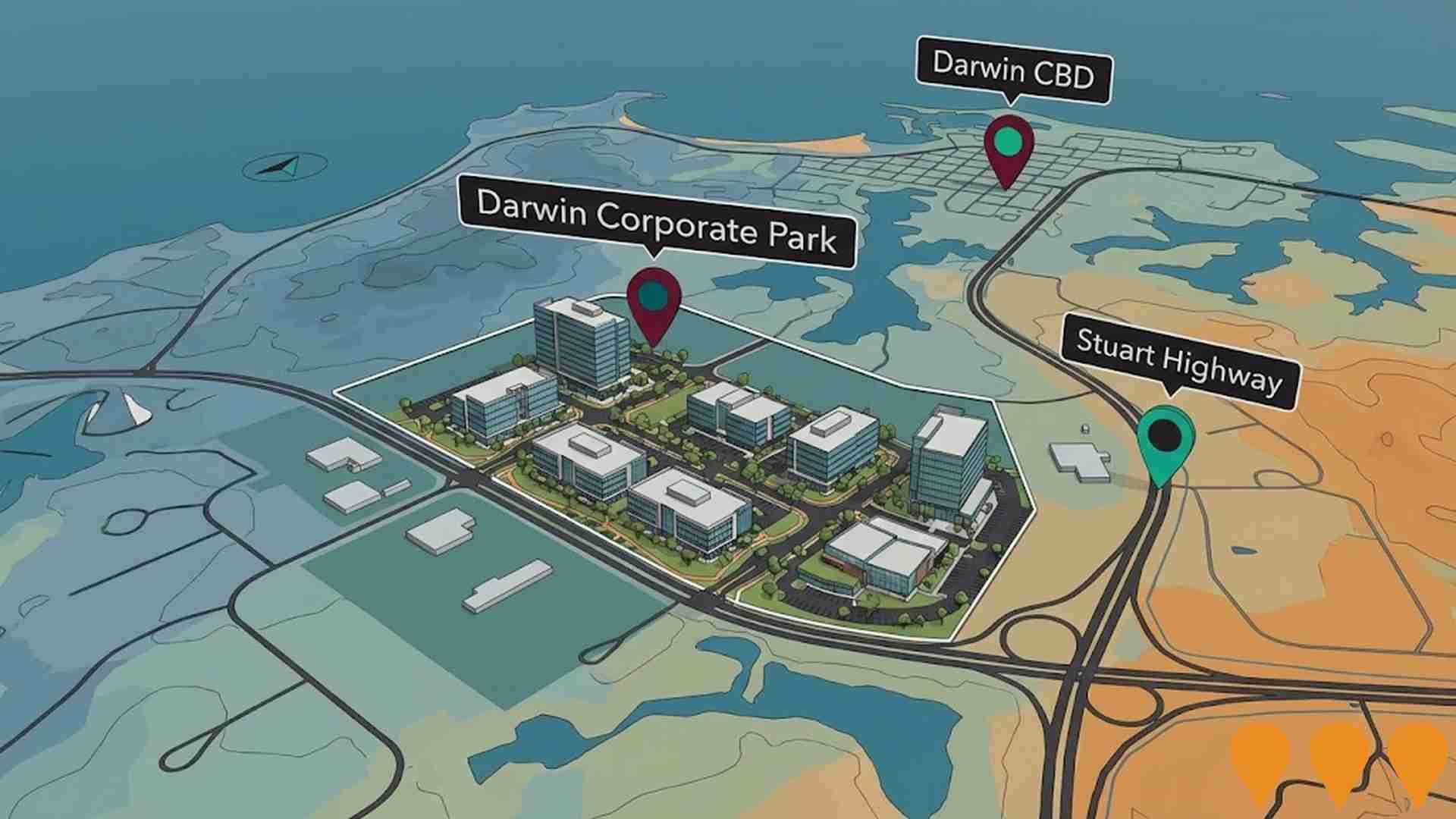
Local infrastructure projects, regional planning, and development schemes play a major role in shaping market trends. AreaSearch has identified no projects that are expected to impact this locality. Major projects of note in the wider region include the Darwin to Palmerston Mass Transit Corridor, the Hudson Creek Power Station, the Marine Industry Park, and the Darwin Corporate Park, with the details of the most relevant ones provided below.
Professional plan users can use the search below to filter and access additional projects.
INFRASTRUCTURE SEARCH
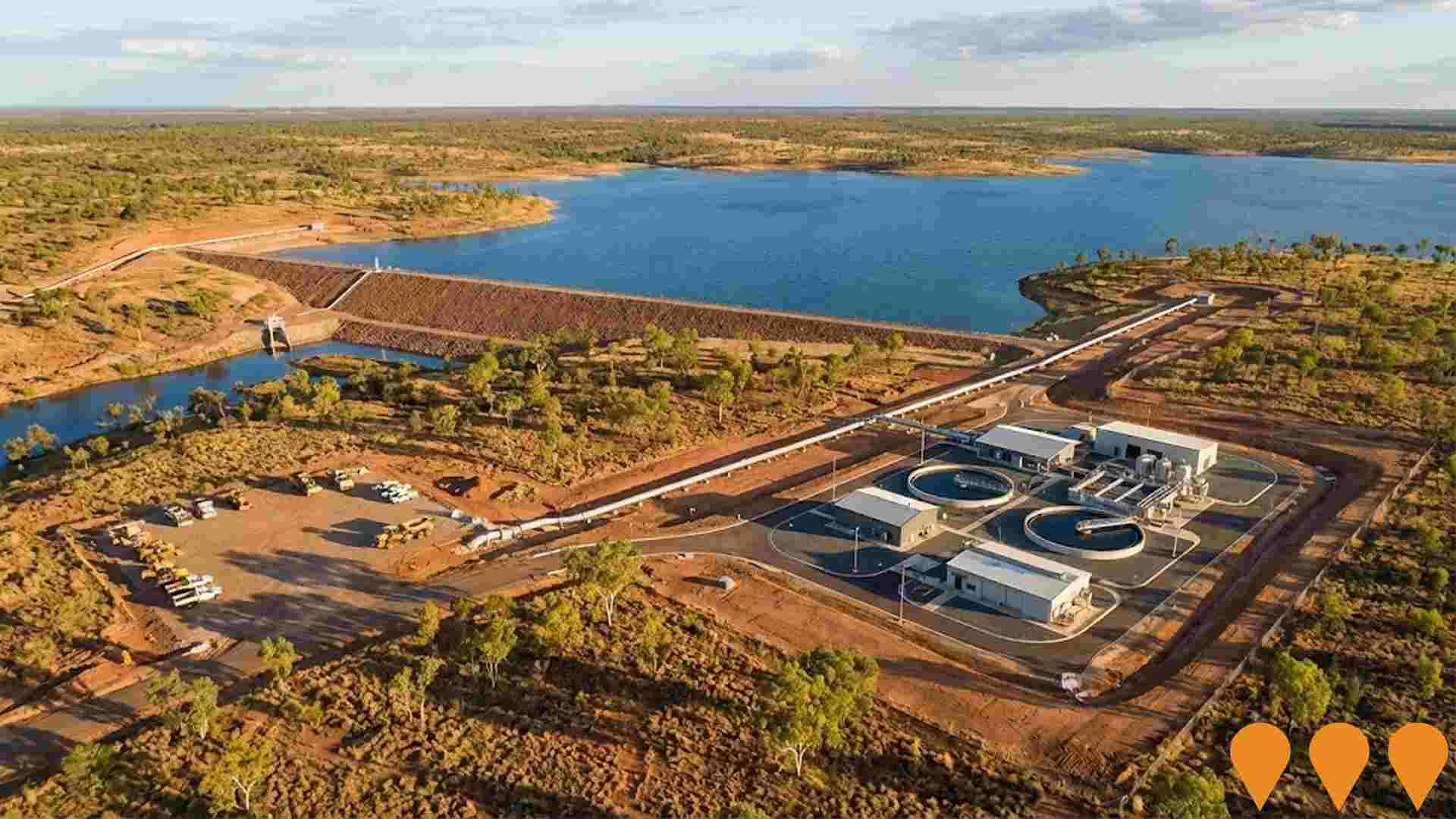
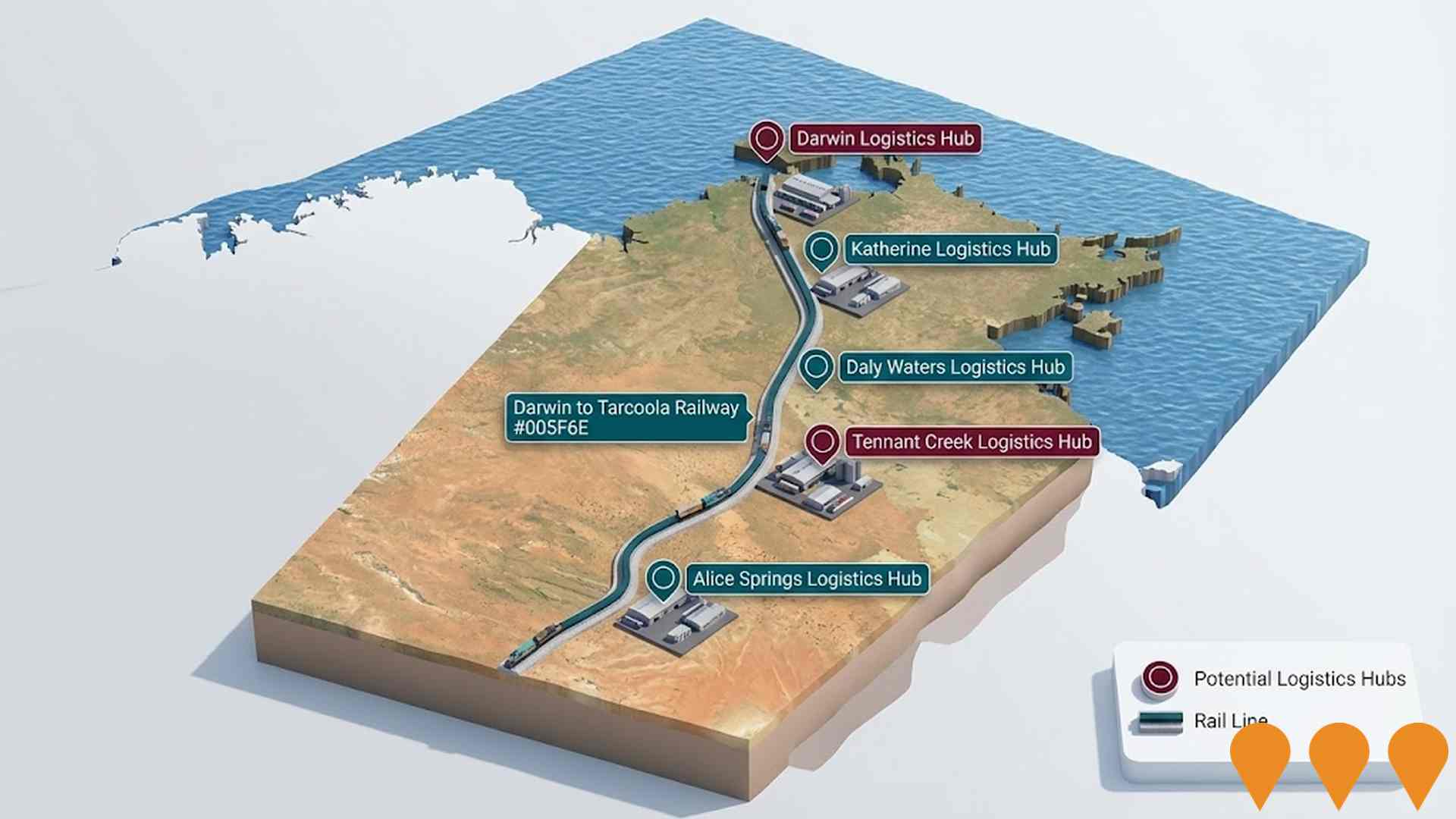
 Denotes AI-based impression for illustrative purposes only, not to be taken as definitive under any circumstances. Please follow links and conduct other investigations from the project's source for actual imagery. Developers and project owners wishing us to use original imagery please Contact Us and we will do so.
Frequently Asked Questions - Infrastructure
Enabling Digital Health Services for Regional and Remote Australia
A national digital infrastructure program under the Digital Health Blueprint 2023-2033 designed to provide equitable healthcare access for regional and remote Australians. The initiative is currently rolling out the 'Share by Default' legislative framework, which mandates the uploading of pathology and diagnostic imaging reports to My Health Record starting July 2026. Current 2026 milestones include the launch of the Digital Health Implementer Hub to accelerate software conformance and the implementation of the National Allied Health Digital Uplift Plan to integrate allied health practitioners into the national digital ecosystem.

Australia-Asia PowerLink (AAPowerLink)
SunCable's AAPowerLink is a large renewable generation, battery storage and HVDC transmission project in the Northern Territory. The project has major environmental approvals from the Northern Territory and Australian governments, conditional Singapore approval to import 1.75 GW from 2035, Indonesian subsea permits, a Singapore-Australia cross-border electricity trade framework and a 70-year Indigenous Land Use Agreement for Powell Creek. It is being staged to supply industrial customers in the Barkly region from the late 2020s, Darwin from the early 2030s, and Southeast Asia from the mid-2030s, with final investment decision targeted for 2027.

Desert Springs Octopus Renewable Energy Program
Majority Indigenous-owned developer pursuing a near-term pipeline of grid-connected solar and battery projects along the Darwin-Katherine Electricity System, with potential to expand into wind and green hydrogen. Partnership includes Octopus Australia with Larrakia Nation and Jawoyn Association to deliver utility-scale renewable energy and community benefit sharing.

Darwin to Palmerston Mass Transit Corridor
A long-term strategic concept to reserve a rapid transit corridor between Darwin CBD and Palmerston, broadly along the Stuart Highway. The Darwin Regional Transport Plan 2018 identifies the potential for future bus rapid transit or light rail along established public transport routes as the region grows toward a longer term population of 250,000. There is no funded project, no business case, and no formal Stage 1 scope. The concept has been raised periodically in public debate (2014, 2017, 2020) but has not progressed beyond corridor preservation consideration. Current NT Government public transport activity is focused on bus network reform rather than rail. The notional valuation here is indicative only and based on comparable Australian light rail builds.

National EV Charging Network (Highway Fast Charging)
Partnership between the Australian Government and NRMA to deliver a backbone EV fast charging network on national highways. Program funds and co-funds 117 DC fast charging sites at roughly 150 km intervals to connect all capital cities and regional routes, reducing range anxiety and supporting EV uptake.

Hudson Creek Power Station
12MW natural gas-fired power plant, NT's first privately owned grid-connected gas generation facility. Features 25% lower emissions than average NT gas generators. Part of dual project with Batchelor Solar Farm, creating 162 construction jobs and providing vital grid stability to Darwin-Katherine network.

Marine Industry Park
Marine and offshore industries servicing hub at East Arm, Darwin. Stage 1 planning approval is secured for a purpose-built industrial subdivision near the new Darwin Ship Lift, with expressions of interest open for serviced lots. Existing common-user facilities include an all-tide barge ramp (first point of entry) and a secure hardstand supporting storage and fabrication activities.

Darwin Renewable Energy Hub
Northern Territory Government proposal to co-locate up to six utility-scale solar farms (total 180-210 MW) with a battery energy storage system on 940 ha of Crown Land west of Finn Road, feeding the Darwin-Katherine grid. Site identified for industry in regional land use plans; consultation held to February 28, 2025 and environmental assessment processes are underway.

Employment
AreaSearch analysis reveals Johnston significantly outperforming the majority of regions assessed nationwide
Johnston is characterized by a skilled labor force with strong representation in public service sectors, and an unemployment rate of only 2.2%, based on AreaSearch compilation of regional statistics. As of March 2026, working residents total 1,527, with the unemployment rate sitting 1.3% below the Greater Darwin average of 3.5%, and labor participation matches the regional benchmark of 72.7% closely. Census records show that only 4.0% of the workforce worked from home, though this figure reflects the influence of pandemic lockdowns.
Local jobs are heavily concentrated in public administration & safety, health care & social assistance, and construction. Public administration & safety is highly specialized here, capturing a share 1.2 times higher than the broader region. Conversely, technical and professional roles are underrepresented, accounting for only 4.3% of the workforce compared to 5.8% across Greater Darwin. Comparison of the Census local job numbers against the total resident workforce indicates that this residential suburb offers few employment options within its own boundaries.
AreaSearch evaluation of SALM and ABS data for the year ending March 2026 shows the local labor force contracted by 3.7% and employment fell by 4.4%, leading to a rise in unemployment of 0.7 percentage points. During the same timeframe, Greater Darwin experienced a 0.4% increase in employment, a 0.8% expansion in the labor force, and a 0.3 percentage point rise in unemployment. National forecasts published by Jobs and Skills Australia in May-25 provide additional context on future labor demand. These five and ten-year projections have been applied to the local workforce structure to model potential changes. Nationally, employment is predicted to grow by 6.6% over five years and 13.7% over ten years, with performance varying widely by sector. Applying these trends to the local industry mix yields a projected employment increase of 6.1% over five years and 12.9% over ten years, which is a weighted estimate for illustration and excludes local population growth projections.
Frequently Asked Questions - Employment
Income
Income metrics indicate excellent economic conditions, with the area achieving higher performance than 75% of national locations assessed by AreaSearch
Based on ATO statistics for the 2023 financial year compiled by AreaSearch, Johnston taxpayers recorded a median income of $64,981 and an average income of $69,969. This is slightly above the national average, though it compares to a median of $66,956 and an average of $77,199 in Greater Darwin. Factoring in Wage Price Index growth of 9.41% since the 2023 financial year, current estimates would be approximately $71,096 for median and $76,553 for average incomes as of March 2026. According to the 2021 Census, household, family, and individual incomes in Johnston are highly ranked, placing in the 81st to 90th national percentiles. The largest income bracket contains 40.0% of residents earning between $1,500 and $2,999 weekly, representing 1,128 individuals, which is comparable to the 36.7% average for the region. Household financial capacity is highlighted by the 30.6% of households earning more than $3,000 weekly, which supports solid consumer activity. High housing costs take up 18.7% of income, yet solid overall earnings keep disposable income in the 76th percentile, and the SEIFA index ranks the area in the 6th decile.
Frequently Asked Questions - Income
Housing
Johnston displays a diverse mix of dwelling types, with a higher proportion of rental properties than the broader region
At the latest Census, housing types in Johnston consisted of 58.1% free-standing houses and 41.9% other dwelling options like townhouses and apartments, compared to 63.5% houses and 36.5% other options across the Darwin metro area. Home ownership in Johnston stood at a low 3.0%, with the remaining properties occupied by residents with a mortgage (33.5%) or renting (63.5%). The median monthly mortgage payment was $2,400, which is higher than the Darwin metro median of $2,100, whereas the median weekly rent was $370, compared to Darwin metro's $385. Nationally, Johnston's mortgage costs are higher than the Australian median of $1,863, while rents remain below the national median of $375.
Frequently Asked Questions - Housing
Household Composition
Johnston features high concentrations of group households and family households, with a higher-than-average median household size
Families make up 78.1% of all households, consisting of 39.9% couples with children, 21.4% couples without children, and 15.6% single parents. Single-person dwellings make up 17.3% of the remaining 21.9% of non-family households, while group households account for 5.0%. The median household size is 2.9 people, which exceeds the Greater Darwin average of 2.6.
Frequently Asked Questions - Households
Local Schools & Education
Educational attainment in Johnston aligns closely with national averages, showing typical qualification patterns and performance metrics
Educational attainment levels in Johnston are lower than regional averages, with 24.1% of residents aged 15+ holding a tertiary degree compared to 31.3% in the broader SA4 region. Bachelor degrees are the most common qualification at 16.2%, followed by postgraduate degrees at 5.6% and graduate diplomas at 2.3%. Vocational training is highly represented, with 41.8% of residents aged 15+ holding technical credentials, consisting of advanced diplomas at 11.6% and certificates at 30.2%.
Education enrollment rates are high, with 36.6% of the population attending school or university. This is split between 14.3% in primary school, 8.7% in high school, and 5.5% in higher education courses.
Frequently Asked Questions - Education
Schools Detail
Nearby Services & Amenities
Transport
Transport servicing is moderate compared to other areas nationally based on assessment of service frequency, route connectivity and accessibility
Public transport services in Johnston include 7 active transit stops offering bus connections. These stops are serviced by 15 separate routes, providing a total of 1,062 passenger trips weekly. Transport access is rated favorably, with residents living an average of 234 meters from the nearest stop. The suburb is mostly residential, meaning most workers commute elsewhere, with private cars remaining the primary choice for 93% of travelers. Households own an average of 1.4 vehicles. A minor 4.0% of the workforce worked from home, according to 2021 Census data, which was likely affected by pandemic conditions.
Transit services average 151 daily trips across all routes, which translates to approximately 151 weekly trips for each stop.
Frequently Asked Questions - Transport
Transport Stops Detail
Health
Health performance in Johnston is lower than average with common health conditions somewhat prevalent across the board, though to a considerably higher degree among older age cohorts
Analysis of mortality statistics and chronic disease trends by AreaSearch shows that Johnston faces notable health struggles, with standard medical conditions common across all demographics and especially high among older cohorts, while the proportion of residents with private health insurance is high at roughly 54% of the population, which equals approximately 1,536 people. This compares to 57.8% in Greater Darwin.
Asthma and mental health conditions are the most prevalent illnesses, affecting 7.8% and 6.5% of residents respectively, whereas 79.0% of the population reported no chronic conditions, compared to 77.1% in Greater Darwin. The working-age population is generally healthy with minimal chronic conditions. Residents aged 65 and older make up 4.8% of the population, representing 135 people, which is lower than the Greater Darwin average of 11.0%. Health indicators for these older residents show some difficulties, though they are lower than national averages.
Frequently Asked Questions - Health
Cultural Diversity
The level of cultural diversity witnessed in Johnston was found to be above average when compared nationally for a number of language and cultural background related metrics
Johnston shows higher levels of cultural diversity than most local areas, with 25.9% of residents born outside Australia and 25.7% speaking a non-English language at home. Christianity is the primary religion, followed by 40.1% of the population. Hinduism represents the most notable overrepresentation relative to regional norms, accounting for 4.1% of residents compared to 4.2% across Greater Darwin.
The top ancestral backgrounds in Johnston are Australian at 24.8%, English at 19.8%, and Other at 14.2%. Differences emerge in other ethnicities, with Filipino residents overrepresented at 4.8% of the population compared to 3.8% regionally, Australian Aboriginal residents at 8.8% compared to 7.0% regionally, and Hungarian residents at 0.4% compared to 0.1% regionally.
Frequently Asked Questions - Diversity
Age
Johnston hosts a very young demographic, ranking in the bottom 10% of areas nationwide
The median age of 29 in Johnston is below the Greater Darwin average of 34 and younger than the national median of 38. The 15 - 24 age bracket is overrepresented at 16.6%, while the 55 - 64 age group is underrepresented at 4.4% compared to Greater Darwin. Post-2021 Census statistics show the 45 to 54 cohort grew from 8.9% to 11.2% and the 15 to 24 cohort rose from 14.9% to 16.6%. Meanwhile, the 25 to 34 group fell from 21.3% to 18.1% and the 0 to 4 demographic decreased from 10.9% to 7.8%. By 2041, age structures are expected to shift, with the 45 to 54 demographic projected to grow by 51%, adding 160 people to reach a total of 477.