Chart Color Schemes
This analysis uses ABS Statistical Areas Level 2 (SA2) boundaries, which can materially differ from Suburbs and Localities (SAL) even when sharing similar names.
SA2 boundaries are defined by the Australian Bureau of Statistics and are designed to represent communities for statistical reporting (e.g., census and ERP).
Suburbs and Localities (SAL) represent commonly-used suburb/locality names (postal-style areas) and may use different geographic boundaries. For comprehensive analysis, consider reviewing both boundary types if available.
est. as @ -- *
ABS ERP | -- people | --
2021 Census | -- people
Sales Activity
Curious about local property values? Filter the chart to assess the volume and appreciation (including resales) trends and regional comparisons, or scroll to the map below view this information at an individual property level.
Find a Recent Sale
Sales Detail
Population
An assessment of population growth drivers in Lake Munmorah - Mannering Park reveals an overall ranking slightly below national averages considering recent, and medium term trends
Based on AreaSearch's analysis, Lake Munmorah - Mannering Park's population is around 11,217 as of Feb 2026. This reflects an increase of 257 people (2.3%) since the 2021 Census, which reported a population of 10,960 people. The change is inferred from the estimated resident population of 11,055 from the ABS as of June 2024 and an additional 6 validated new addresses since the Census date. This population level equates to a density ratio of 316 persons per square kilometer, providing significant space per person and potential room for further development. Lake Munmorah - Mannering Park's 2.3% growth since the census positions it within 1.4 percentage points of the SA4 region (3.7%), demonstrating competitive growth fundamentals. Population growth for the area was primarily driven by overseas migration, which contributed approximately 75.3% of overall population gains during recent periods.
AreaSearch is adopting ABS/Geoscience Australia projections for each SA2 area, as released in 2024 with 2022 as the base year. For any SA2 areas not covered by this data, AreaSearch is utilising the NSW State Government's SA2 level projections, as released in 2022 with 2021 as the base year. Growth rates by age group from these aggregations are also applied to all areas for years 2032 to 2041. Moving forward with demographic trends, lower quartile growth of national statistical areas is anticipated, with the area expected to expand by 149 persons to 2041 based on the latest annual ERP population numbers, reflecting a decrease of 0.1% in total over the 17 years.
Frequently Asked Questions - Population
Development
AreaSearch assessment of residential development drivers sees a low level of activity in Lake Munmorah - Mannering Park, placing the area among the bottom 25% of areas assessed nationally
Lake Munmorah - Mannering Park has recorded around 15 residential properties granted approval each year, totalling 78 homes over the past 5 financial years. So far in FY-26, 17 approvals have been recorded. With an average of only 0.5 people per year moving to the area for each dwelling built over the past 5 financial years (between FY-21 and FY-25), new construction is matching or outpacing demand, offering buyers more options and enabling population growth that could exceed current expectations, while new properties are constructed at an average value of $251,000—below the regional average—suggesting more affordable housing options for buyers. There have also been $690,000 in commercial approvals this financial year, indicating minimal commercial development activity.
Compared to Greater Sydney, Lake Munmorah - Mannering Park shows substantially reduced construction (67.0% below regional average per person). This limited new supply generally supports stronger demand and values for established properties. This activity is similarly under the national average, indicating the area's established nature and suggesting potential planning limitations. New building activity shows 83.0% detached houses and 17.0% townhouses or apartments, maintaining the area's traditional low density character with a focus on family homes appealing to those seeking space. The estimated count of 1268 people in the area per dwelling approval reflects its quiet, low activity development environment.
With population projections showing stability or decline, Lake Munmorah - Mannering Park should see reduced housing demand pressures, benefiting potential buyers.
Frequently Asked Questions - Development
Infrastructure
Lake Munmorah - Mannering Park has moderate levels of nearby infrastructure activity, ranking in the 45thth percentile nationally
Nothing can influence an area's performance as much as changes to local infrastructure, major projects, and planning initiatives. In total, 9 projects have been identified by AreaSearch that are likely to have an impact on the area. Key projects include Crangan Bay Residential Estate, Lake Munmorah Recreation Facility, Lakes Ridge Residential Estate, and the Darkinjung LALC & Landcom Housing Project, with the list below detailing those likely to be of most relevance.
Professional plan users can use the search below to filter and access additional projects.
INFRASTRUCTURE SEARCH
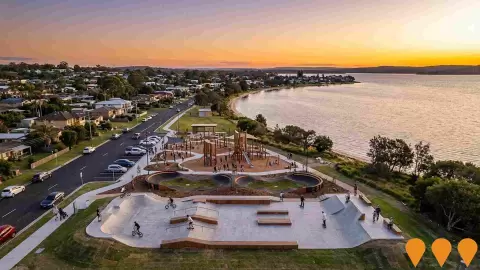
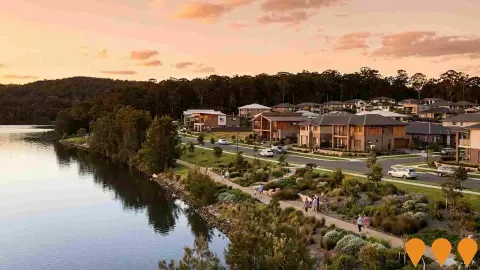
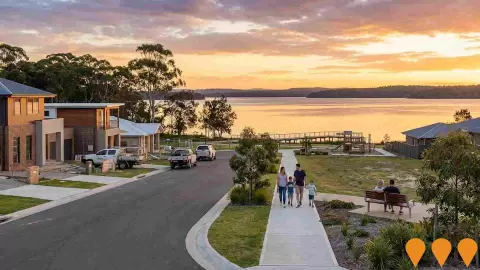
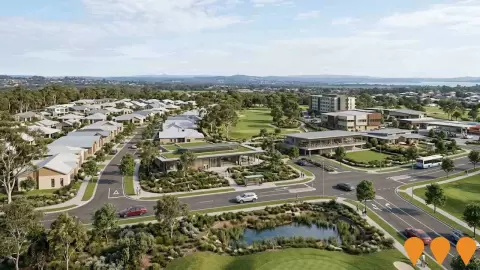
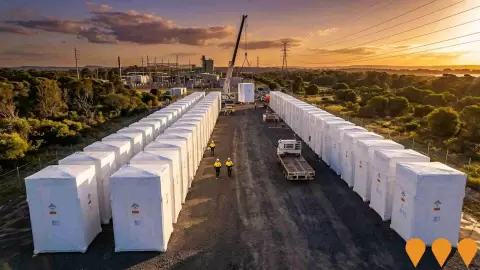
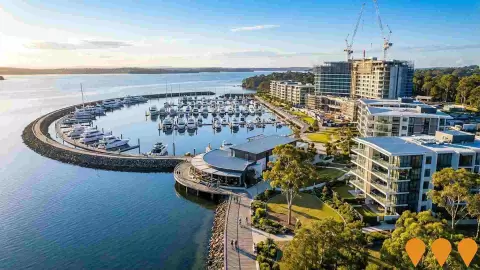
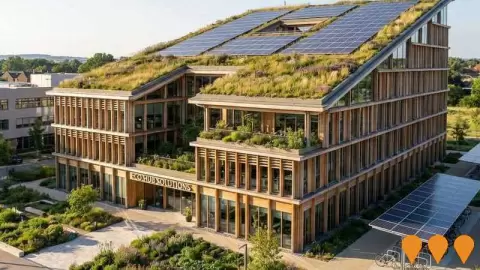
Denotes AI-based impression for illustrative purposes only, not to be taken as definitive under any circumstances. Please follow links and conduct other investigations from the project's source for actual imagery. Developers and project owners wishing us to use original imagery please Contact Us and we will do so.
Frequently Asked Questions - Infrastructure
Toukley Desalination Water Treatment Plant
A proposed 30 ML/day reverse osmosis desalination plant to be built adjacent to the existing Toukley Sewage Treatment Plant. The project is a key drought response initiative under the Central Coast Water Security Plan, designed to be 'plan ready' with approvals in place for rapid construction if dam levels fall below critical triggers (currently 45% storage). It features a direct ocean intake structure located offshore between Noraville and Magenta to minimize beach impact and will provide a climate-independent water supply for up to 250,000 residents.
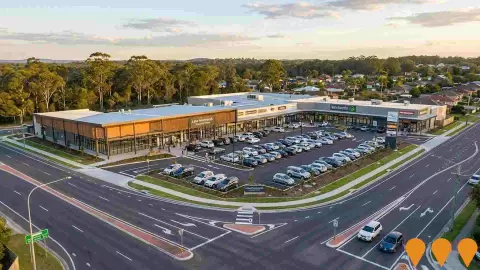
Lake Munmorah Shopping Centre Expansion
The expansion of the existing Lake Munmorah Shopping Centre (also known as Lake Munmorah Marketplace) involves the delivery of additional specialty retail space, increased parking capacity, and improved site access. Positioned on a prominent corner of the Pacific Highway, the project supports significant residential growth in the Greater Lake Munmorah and Northern Lakes area, including the nearby Lakes Ridge master-planned estate. The existing centre is anchored by a Woolworths supermarket and a petrol station, with the expansion adding more specialty tenancies to serve the local and tourist populations.
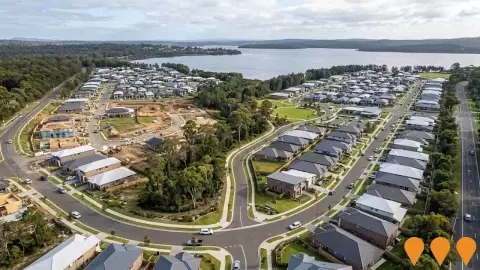
Crangan Bay Residential Estate
A 623 lot masterplanned environmentally inspired residential estate on the Central Coast, surrounded by National Parks and enjoying nearly 1 km of lakefront reserve on Lake Macquarie. The estate offers large, easy-to-build fully serviced home sites with stages being released progressively. Stages 1 and 2 are complete and registered. Stage 3/4 is completed with registration in progress, and Stage 5 is currently selling off the plan with registration due late 2026. The estate includes a children's playground, community spaces, and a lakeside boardwalk/pathway. Project updates are as current as July 2025.
Morisset Place Strategy
A long-term strategic plan by Lake Macquarie City Council to guide the future development and growth of Morisset as a regionally significant growth area. It includes a vision for the types, scale, and locations of development and services, supported by various studies (e.g., biodiversity, Aboriginal cultural heritage). A draft strategy is being prepared for public exhibition, which is expected to occur in 2026.
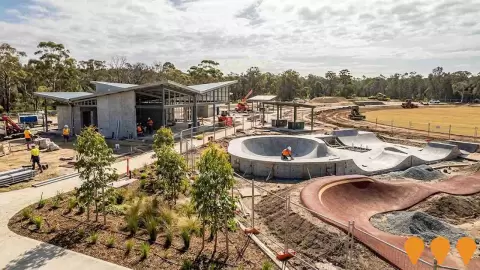
Colongra Sporting Complex
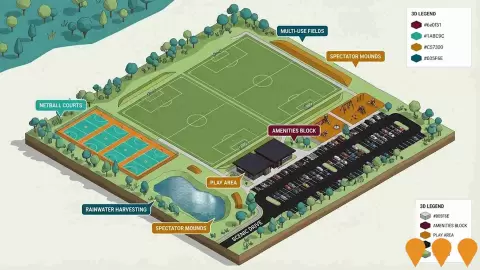
The Colongra Sporting Complex is a new sporting and recreation facility for the northern Central Coast, featuring two turfed sporting fields, three netball courts, a sporting amenities building with accessible toilets, a playspace, car parking, pathways, and an access road. It aims to provide opportunities for organized sports and family recreation, promoting physical and mental health benefits to the community.
Bawarramalang, Morisset Community Hub
A community hub combining versatile and adaptable community facilities, a new library, and commercial offerings in 4600 square metres of activated space to energise a new town square in Morisset. The concept design will inform the project's business case.
MYHQ Morisset - Industrial Unit Development
A modern industrial strata unit complex developed by GWH, branded as MYHQ Morisset. It comprises 11 premium, high-clearance industrial units ranging from approximately 69mý to 333mý. The units include automatic roller doors, glazed shopfront entry, private amenities, and NBN connectivity. The complex is strategically located in the Morisset Business Park, offering easy access to the M1 Pacific Motorway. Construction was completed in June 2025.
Alliance Avenue and Wyee Road Intersection Upgrade
Upgrade of the intersection to a new four-legged roundabout to improve safety for motorists, cyclists, and pedestrians, reduce congestion, support public transport, and manage increased traffic volumes due to residential and commercial growth in Morisset, including access to the Cedar Mill entertainment venue. The project is funded by Lake Macquarie City Council, NSW Government ($2.5 million through the State Voluntary Planning Agreement Funding Program), and development contributions/private investment.
Employment
Employment conditions in Lake Munmorah - Mannering Park remain below the national average according to AreaSearch analysis
Lake Munmorah - Mannering Park has a balanced workforce spanning white and blue collar employment, with essential services sectors well represented, an unemployment rate of 4.2%, and 3.2% in estimated employment growth over the past year. As of December 2025, 4,545 residents are in work while the unemployment rate is in line with Greater Sydney's rate of 4.2%, and workforce participation lags significantly (50.4% compared to Greater Sydney's 70.2%). Based on Census responses, a moderate 20.8% of residents were found to work from home, though Covid-19 lockdown impacts should be considered.
Employment among residents is concentrated in health care & social assistance, construction, and retail trade. The area shows particularly strong specialization in construction, with an employment share of 1.7 times the regional level. On the other hand, professional & technical services are under-represented, with only 3.4% of Lake Munmorah - Mannering Park's workforce compared to 11.5% in Greater Sydney. The area appears to offer limited employment opportunities locally, as indicated by the count of Census working population vs resident population.
Based on AreaSearch analysis of SALM and ABS data, over the 12 months to December 2025, employment increased by 3.2% while labour force increased by 3.6%, causing the unemployment rate to rise by 0.4 percentage points. In contrast, Greater Sydney experienced employment growth of 2.2% and labour force growth of 2.3%, with a marginal rise. Jobs and Skills Australia's national employment forecasts from May-25 can offer further insight into potential future demand within Lake Munmorah - Mannering Park. These projections, covering five and ten-year periods, have been mapped against the local employment profile to estimate growth patterns. While national employment is forecast to expand by 6.6% over five years and 13.7% over ten years, growth rates differ significantly between industry sectors. Applying these industry-specific projections to Lake Munmorah - Mannering Park's employment mix suggests local employment should increase by 6.4% over five years and 13.3% over ten years (please note this is a simple weighting extrapolation for illustrative purposes and does not take into account localised population projections).
Frequently Asked Questions - Employment
Income
Income figures position the area below 75% of locations analysed nationally by AreaSearch
AreaSearch's latest postcode level ATO data for FY-23 reveals that income in the Lake Munmorah - Mannering Park SA2 is lower than average on a national basis, with the median assessed at $53,436 while the average income stands at $63,442. This contrasts with Greater Sydney's figures of a median income of $60,817 and an average income of $83,003. Based on Wage Price Index growth of 8.86% since FY-23, current estimates would be approximately $58,170 (median) and $69,063 (average) as of September 2025. According to 2021 Census figures, household, family and personal incomes in Lake Munmorah - Mannering Park all fall between the 6th and 10th percentiles nationally. Distribution data shows the $400 - 799 bracket dominates with 31.2% of residents (3,499 people), contrasting with the metropolitan region where the $1,500 - 2,999 bracket leads at 30.9%. Housing affordability pressures are severe, with only 83.0% of income remaining, ranking at the 7th percentile.
Frequently Asked Questions - Income
Housing
Lake Munmorah - Mannering Park is characterized by a predominantly suburban housing profile, with above-average rates of outright home ownership
Dwelling structure within Lake Munmorah - Mannering Park, as evaluated at the latest Census, comprised 94.4% houses and 5.5% other dwellings (semi-detached, apartments, 'other' dwellings), in comparison to Sydney metro's 55.9% houses and 44.1% other dwellings. Meanwhile, the level of home ownership within Lake Munmorah - Mannering Park was well beyond that of Sydney metro, at 53.3%, with the remainder of dwellings either mortgaged (29.0%) or rented (17.7%). The median monthly mortgage repayment in the area was well below the Sydney metro average at $1,733, while the median weekly rent figure was recorded at $380, compared to Sydney metro's $2,427 and $470. Nationally, Lake Munmorah - Mannering Park's mortgage repayments are lower than the Australian average of $1,863, while rents are exceeding the national figure of $375.
Frequently Asked Questions - Housing
Household Composition
Lake Munmorah - Mannering Park features high concentrations of lone person households, with a lower-than-average median household size
Family households dominate at 65.6% of all households, comprising 20.3% couples with children, 32.8% couples without children, and 11.6% single parent families. Non-family households make up the remaining 34.4%, with lone person households at 31.9% and group households comprising 2.7% of the total. The median household size of 2.2 people is smaller than the Greater Sydney average of 2.7.
Frequently Asked Questions - Households
Local Schools & Education
Lake Munmorah - Mannering Park faces educational challenges, with performance metrics placing it in the bottom quartile of areas assessed nationally
The area faces educational challenges, with university qualification rates (10.6%) substantially below the Greater Sydney average of 38.0%. This represents both a challenge and an opportunity for targeted educational initiatives. Bachelor degrees lead at 8.0%, followed by postgraduate qualifications (1.5%) and graduate diplomas (1.1%). Trade and technical skills feature prominently, with 43.6% of residents aged 15+ holding vocational credentials, including advanced diplomas (9.0%) and certificates (34.6%).
A substantial 23.6% of the population actively pursues formal education. This includes 8.5% in primary education, 6.8% in secondary education, and 2.6% pursuing tertiary education.
Frequently Asked Questions - Education
Schools Detail
Nearby Services & Amenities
Transport
Transport servicing is low compared to other areas nationally based on assessment of service frequency, route connectivity and accessibility
Public transport analysis reveals 104 active transport stops operating within Lake Munmorah - Mannering Park, comprising a mix of buses. These stops are serviced by 58 individual routes, collectively providing 557 weekly passenger trips. Transport accessibility is rated as excellent, with residents typically located 165 meters from the nearest transport stop. As a primarily residential area, most residents commute outward; the car remains the dominant mode at 96%. Vehicle ownership averages 1.2 per dwelling. Some 20.8% of residents work from home (2021 Census; may reflect COVID-19 conditions).
Service frequency averages 79 trips per day across all routes, equating to approximately 5 weekly trips per individual stop. The accompanying map shows the 100 nearest stops to the location centrepoint.
Frequently Asked Questions - Transport
Transport Stops Detail
Health
Health performance in Lake Munmorah - Mannering Park is lower than average with common health conditions somewhat prevalent across the board, though to a considerably higher degree among older age cohorts
Lake Munmorah - Mannering Park faces significant health challenges, based on AreaSearch's assessment of mortality rates and chronic condition prevalence. Common health conditions are somewhat prevalent across the board, though to a considerably higher degree among older age cohorts, and the rate of private health cover is relatively low at approximately 50% of the total population (~5,664 people). This compares to 59.9% across Greater Sydney and a national average of 55.7%.
The most common medical conditions in the area are arthritis and mental health issues, impacting 14.4% and 9.5% of residents, respectively, while 53.9% declared themselves as completely clear of medical ailments compared to 74.6% across Greater Sydney. The working-age population faces notable health challenges with elevated chronic condition rates. The area has 36.0% of residents aged 65 and over (4,038 people), which is higher than the 15.4% in Greater Sydney. Health outcomes among seniors present some challenges, though ranking lower nationally than the broader population.
Frequently Asked Questions - Health
Cultural Diversity
Lake Munmorah - Mannering Park is considerably less culturally diverse than average when assessed alongside AreaSearch's national rankings for language and cultural background related metrics
Lake Munmorah - Mannering Park was found to be below average in terms of cultural diversity, with 87.5% of its population born in Australia, 91.6% being citizens, and 97.3% speaking English only at home. The main religion in Lake Munmorah - Mannering Park is Christianity, which makes up 61.0% of the population. This compares to 49.2% across Greater Sydney.
In terms of ancestry (country of birth of parents), the top three represented groups in Lake Munmorah - Mannering Park are English, comprising 33.7% of the population, which is substantially higher than the regional average of 19.0%, Australian, comprising 31.7% of the population, which is substantially higher than the regional average of 17.8%, and Irish, comprising 8.2% of the population. Additionally, there are notable divergences in the representation of certain other ethnic groups: Maltese is notably overrepresented at 1.0% of Lake Munmorah - Mannering Park (vs 1.0% regionally), Australian Aboriginal at 4.2% (vs 1.3%) and New Zealand at 0.7% (vs 0.5%).
Frequently Asked Questions - Diversity
Age
Lake Munmorah - Mannering Park ranks among the oldest 10% of areas nationwide
With a median age of 52, Lake Munmorah - Mannering Park is materially older than the Greater Sydney figure of 37 as well as significantly higher than the national norm of 38. The 75 - 84 age group shows strong representation at 15.7% compared to Greater Sydney, whereas the 25 - 34 cohort is less prevalent at 8.0%. This 75 - 84 concentration is well above the national 6.1%. Post-2021 Census data shows the 75 to 84 age group has grown from 13.4% to 15.7% of the population, while the 85+ cohort increased from 3.5% to 5.0%. Conversely, the 45 to 54 cohort has declined from 10.5% to 8.4% and the 65 to 74 group dropped from 16.7% to 15.3%. By 2041, Lake Munmorah - Mannering Park is expected to see notable shifts in its age composition. Leading the demographic shift, the 85+ group will grow by 84% (471 people), reaching 1,030 from 558. The aging population dynamic is clear, with those 65+ comprising 99% of projected growth. Conversely, population declines are projected for the 65 to 74 and 15 to 24 cohorts.