You are viewing the free Snapshot. Dashboard puts rankings, rents, projects and services on one screen, and Full adds every chapter with charts and maps. Dashboard and Full are included with AreaSearch Operator and Pro, or unlocked by the area's Area Expert. You need to log in to open them.
The analysis, national rankings and who lives there.
About Horsley - Kembla Grange
Horsley - Kembla Grange Statistical Area (Lv2) is located 80 kilometres south-southwest from Sydney CBD. AreaSearch estimates a population of approximately 15,419 as of Aug 2026, compared with 12,155 people at the 2021 Census. This represents an increase of 3,264 people (26.9%), inferred from the ABS estimated resident population of 14,750 as of June 2025 and 1,627 validated new addresses since the Census date.
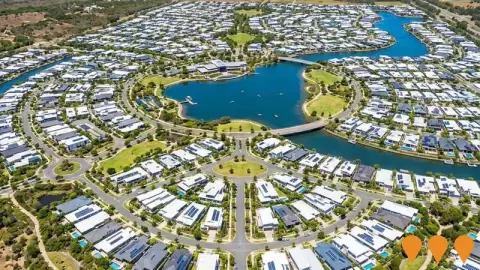
The area is characterised by strong development activity and population growth, a high representation of mortgage holders, above-average median household income, and a large share of married families. Its residents include a high proportion of children, many living in family households and couples with children, alongside a notable healthcare employment base and elevated representation of people aged 15 to 24. Population growth ranks in the top 10% of areas nationally. Horsley - Kembla Grange is described as having picturesque landscapes, parks and nature reserves, a thriving community with dining, shopping and recreational facilities, and high-quality educational institutions.
Read the analysisShow less
Estimated resident population by year (ABS, not Census counts): 6,136 in 2001 and 14,750 in 2025. The dashed segment ends at the AreaSearch estimate for Aug 2026: 15,419 (ABS June 2025 base).
Each bar and spoke is a national percentile; the dashed ring is the typical area. 99th = higher than 99 in every 100 neighbourhood-sized areas across Australia (ABS SA2 areas). Higher means more of the measure, not necessarily better. Orange marks the top three measures where a higher percentile is better; not Age, Housing or Housing Cost.
AreaSearch's development drivers ranking places residential development activity in Horsley - Kembla Grange higher than 98% of real estate markets across the country.
Horsley - Kembla Grange lies within the top 4% of areas nationally in terms of population growth performance according to AreaSearch analysis of short and medium-term trends.
Transport servicing is moderate compared to other areas nationally based on assessment of service frequency, route connectivity and accessibility.
Why Horsley - Kembla Grange stands out
Development activity and population drivers well above average
Strong mortgage holder representation
Above-average median household income
High proportion of married families
Notable healthcare employment base
Elevated proportion 15 to 24yo
02Market and pipeline
Rents, sale prices and what is being built.
Rents, prices and yield in Horsley - Kembla Grange
The median rent in Horsley - Kembla Grange is $849 a week, up 7.8% over 12 months to Jun 2026 and 46% above Regional NSW. The gross rental yield across all dwellings is 4.3%.
Lodged-bond median rent a week, with the area's own change on a year ago, to Jun 2026.
Horsley - Kembla Grange$849+7.8%
Dapto - Port Kembla$663+7.0%
Illawarra$689+6.8%
Regional NSW$580+6.6%
NSW$715+5.6%
46% above Regional NSW on median weekly rent
Median rent
$849 a week
Lodged-bond median (to Jun 2026), +7.8% over 12 months
Gross yield
4.3%
All dwellings
Median house price, 2026 to date
$1.05m
Median unit price, 2026 to date
$845k
Rent by dwelling type
Median weekly rent by year, lodged bonds. Houses: $577 in 2017, $880 in 2026. The latest is to Jun 2026.
Some rents are estimated from nearby areas.
Yield is indicative: rents and sales come from different property pools.
Latest recorded sales in Horsley - Kembla Grange
Address
Sale price
Settled
Address type
6 Polsson Street, Horsley NSW 2530
$1,090,000
30 Sep 2026
Street address
17 Schoolyard Place, Wongawilli NSW 2530
$990,000
25 Sep 2026
Street address
20 Rosina Street Stream Hill NSW 2526
$975,000
25 Sep 2026
Street address
25 Smiths Lane, Wongawilli NSW 2530
$1,200,000
24 Sep 2026
Street address
45 Alkira Circuit, Horsley NSW 2530
$1,300,000
22 Sep 2026
Street address
15 Sunnyside Avenue Huntley NSW 2530
$1,148,888
22 Sep 2026
Street address
71 Sierra Drive, Horsley NSW 2530
$1,025,000
17 Sep 2026
Street address
22 Red Grass Street Huntley NSW 2530
$1,370,000
15 Sep 2026
Street address
35 Lucas Drive, Horsley NSW 2530
$1,190,000
15 Sep 2026
Street address
1/6 Horsley Drive, Horsley NSW 2530
$733,000
15 Sep 2026
Unit
The 10 most recent of the 38 residential sales recorded since 31 Jul 2026 (the latest settled 30 Sep 2026), newest first. The median of these 38, houses and units together, was $1,012,500 (a different set from the medians above). Source: NSW Valuer General / AreaSearch, to September 2026. Commercial, vacant land and nominal sales are left out. Unit means the address has a unit number; a street address has none.
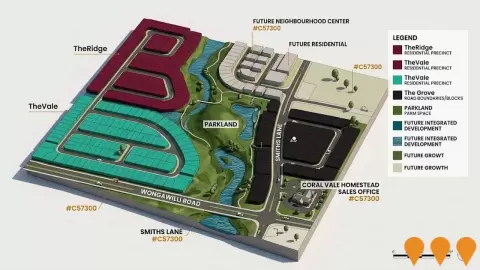
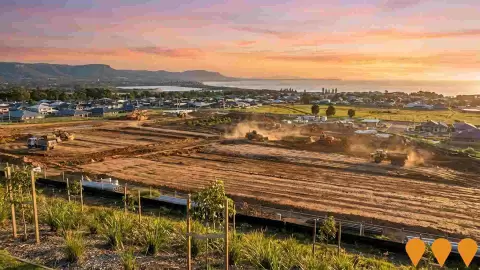
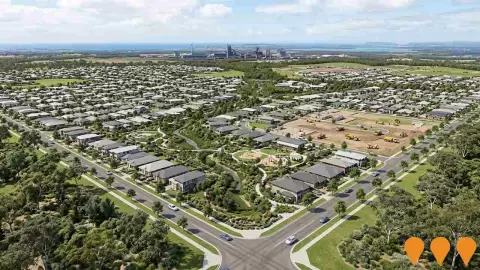
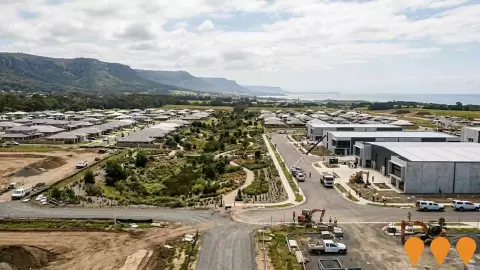
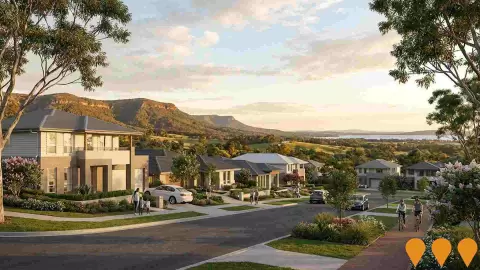
Est. value $320M · completion 2028 · Communities, Precincts & Urban Renewal
Forest Reach is a masterplanned community in Huntley at the foothills of the Illawarra Escarpment being delivered by AVID Property Group…
Planning
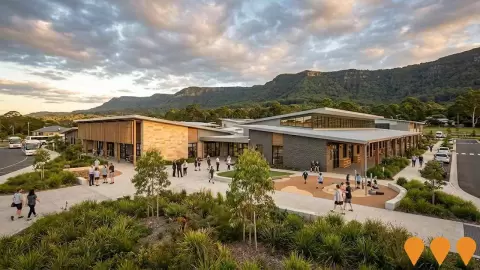
New West Dapto Primary School and Public Preschool
Est. value $50M · completion 2029 · Education & Training
A new public primary school and co-located preschool being delivered by the NSW Government on 63 Wongawilli Road to cater to the growing…
Projects around Horsley - Kembla Grange
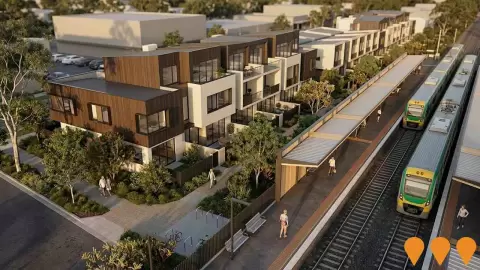
Images marked AI impression are illustrative only and not photographs of the project; follow the project links for actual imagery. Original imagery? Contact us.
Estimated completion year of the 93 projects in and around the area that are not yet completed and have one: 2024 2, 2025 4, 2026 23, 2027 27, 2028 16, 2029 5, 2030 8, 2031 0, 2032 4, 2033 0, 2034 0, 2035 3, 2036 1. 27 have no completion year.
Development applications
AreaSearch has tracked 248 substantial development applications lodged in and around Horsley - Kembla Grange over the past 5 years, 224 in the last 12 months; 49 are recorded as under assessment. Coverage varies by council.
Tracked applications by year
Applications per year (dashed: part year): 2021 (part year) 4, 2022 4, 2023 10, 2024 5, 2025 1, 2026 (to Oct) 224.
Key application231 Sheaffes Road, Stream HillMixed Use | $35mUnder Assessment
Development in Horsley - Kembla Grange: key figures
Measure
Value
Source and date
National percentile
Tracked applications
248
Tracked by AreaSearch, in and around the area, last 5 years
Tracked, last 12 months
224
Tracked by AreaSearch, in and around the area
ABS building approvals
19.6 per 1,000 people
ABS building approvals
94th percentile nationally
Average approvals a year
249
ABS building approvals
94th percentile nationally
Applications approved
144
Tracked by AreaSearch, in and around the area, last 5 years
Applications under assessment
49
Tracked by AreaSearch, in and around the area, last 5 years
Questions about infrastructure in Horsley - Kembla Grange
What are some of the major infrastructure and planning changes likely to influence the Horsley - Kembla Grange SA2?
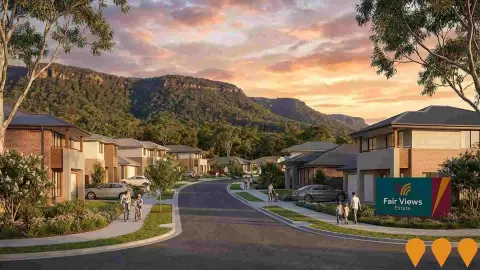
Key infrastructure and planning changes likely to influence the Horsley - Kembla Grange SA2 include: Fair Views Estate (Construction); The Vale at Vista Park (Construction); Stream Hill Masterplan (Approved); Vista Park Estate (Construction); and Brooks Reach Central Precinct (Construction). These projects represent significant developments that will shape the area's future infrastructure landscape.
What types of infrastructure projects are impacting the Horsley - Kembla Grange SA2?
Infrastructure development impacting the Horsley - Kembla Grange SA2 spans multiple sectors including Communities, Precincts & Urban Renewal, Residential Development, and Communities, among others.
Development in Horsley - Kembla Grange
AreaSearch's development drivers ranking places residential development activity in Horsley - Kembla Grange higher than 98% of real estate markets across the country.
Questions about development in Horsley - Kembla Grange
How many dwelling approvals have occurred in the Horsley - Kembla Grange SA2 recently?
Dwelling approval activity in the Horsley - Kembla Grange SA2 area has seen 562 residential approvals over the past two financial years, based on AreaSearch's SA2 aggregation method. The Horsley - Kembla Grange SA2's current population of 15,419 has been supported by 249 approvals on average over recent years.
How does the Horsley - Kembla Grange SA2's development activity compare to Regional NSW?
The Horsley - Kembla Grange SA2 has seen 19.6 approvals per 1,000 people in recent years, compared to 5.7 approvals in Regional NSW. This means that one dwelling has been approved for every 54 people in the Horsley - Kembla Grange SA2, compared to one for every 183 in Regional NSW.
What is the outlook for development in Horsley - Kembla Grange?
The long-run outlook for development is part of AreaSearch Operator and Pro. Log in to see the forecast detail in Full.
Show all 5 questionsShow fewerWhat has been the trend in development approvals over the past five years in the Horsley - Kembla Grange SA2?
Looking at development activity over the past five years, the Horsley - Kembla Grange SA2's approval levels have been slightly above the yearly average of 249, showing modest growth in recent years.
How does recent development compare to population growth in the Horsley - Kembla Grange SA2?
Over the past five years, the population in the Horsley - Kembla Grange SA2 has grown by approximately 3,558 people, while 1,244 residential approvals were recorded. This equates to a ratio of 2.9 people added for each new dwelling approval. This indicates solid population growth supported by housing development activity.
03People
Population, age, income, work, education and more.
99th = higher than 99 in every 100 neighbourhood-sized areas across Australia (ABS SA2 areas). Higher means more of the measure, not necessarily better.
Population in Horsley - Kembla Grange
Data: Aug 2026 estimate, from the ABS June 2025 base
Horsley - Kembla Grange lies within the top 4% of areas nationally in terms of population growth performance according to AreaSearch analysis of short and medium-term trends.
Population in Horsley - Kembla Grange: key figures
Measure
Value
Source and date
National percentile
Population
15,419
AreaSearch estimate, Aug 2026, from the ABS June 2025 base
Growth since 2021 Census
+26.9%
AreaSearch estimate, Aug 2026, against the 2021 Census
93rd percentile nationally
Population density
349 per km²
AreaSearch estimate, Aug 2026, from the ABS June 2025 base
39th percentile nationally
Average yearly growth, 2020 to 2025
+5.7%
ABS estimated resident population series to June 2025
Average yearly growth, 2015 to 2025
+5.5%
ABS estimated resident population series to June 2025
Show 5 more population figuresShow fewer
Population in Horsley - Kembla Grange: key figures, continued
Measure
Value
Source and date
National percentile
Population at the 2021 Census
12,155
2021 Census
Residents added since the 2021 Census
3,264
AreaSearch estimate, Aug 2026, against the 2021 Census
Average yearly growth, 2022 to 2025
+4.3%
ABS estimated resident population series to June 2025
Population growth, 2024 to 2025
+4.7%
ABS estimated resident population series to June 2025
Land area
44.24 km²
AreaSearch boundary analysis
Questions about population in Horsley - Kembla Grange
What is the latest population estimate for the Horsley - Kembla Grange SA2?
Total population for the Horsley - Kembla Grange SA2 was estimated to be approximately 15,419 as at Aug 2026. This is based upon an estimated resident population of 14,750 from the ABS up to June 2025.
How has the population in the Horsley - Kembla Grange SA2 changed since 2021?
The horsley - kembla grange sa2 has added approximately 3,264 people and shown a 26.85% increase from the 12,155 people recorded at the 2021 Census period.
What is the population density in the Horsley - Kembla Grange SA2?
The population density in the Horsley - Kembla Grange SA2 is estimated at 349 persons per square kilometre based on the latest population estimate.
Show all 5 questionsShow fewerHow much has the population grown over the past 10 years in the Horsley - Kembla Grange SA2?
Over the past 10 years, the population in the Horsley - Kembla Grange SA2 has shown a compound annual growth rate of 5.5% per annum.
What are the main drivers of population growth in the Horsley - Kembla Grange SA2?
Population growth in the Horsley - Kembla Grange SA2 is driven by: Interstate migration (74.1%), Natural increase (20.4%), Overseas migration (5.5%). The primary driver is Interstate migration, contributing 74.1% of overall population gains.
Age in Horsley - Kembla Grange
Data: Aug 2026 estimate, from the ABS June 2025 base
Horsley - Kembla Grange hosts a young demographic, positioning it in the bottom quartile nationwide.
Age in Horsley - Kembla Grange: key figures
Measure
Value
Source and date
National percentile
Median age
34 years
ABS estimated resident population age profile (June 2025), scaled to the Aug 2026 AreaSearch estimate
16th percentile nationally
Aged 65 and over
11.5%
ABS estimated resident population age profile (June 2025), scaled to the Aug 2026 AreaSearch estimate
Children under 15
22.4%
ABS estimated resident population age profile (June 2025), scaled to the Aug 2026 AreaSearch estimate
Aged 15 to 34
28.9%
ABS estimated resident population age profile (June 2025), scaled to the Aug 2026 AreaSearch estimate
Aged 25 to 64
51.6%
ABS estimated resident population age profile (June 2025), scaled to the Aug 2026 AreaSearch estimate
Show 11 more age figuresShow fewer
Age in Horsley - Kembla Grange: key figures, continued
Measure
Value
Source and date
National percentile
Median age at the 2021 Census
34 years
2021 Census
Aged 0 to 4
7.3%
ABS estimated resident population age profile (June 2025), scaled to the Aug 2026 AreaSearch estimate
Aged 5 to 14
15.1%
ABS estimated resident population age profile (June 2025), scaled to the Aug 2026 AreaSearch estimate
Aged 15 to 24
14.4%
ABS estimated resident population age profile (June 2025), scaled to the Aug 2026 AreaSearch estimate
Aged 25 to 34
14.5%
ABS estimated resident population age profile (June 2025), scaled to the Aug 2026 AreaSearch estimate
Aged 35 to 44
15.8%
ABS estimated resident population age profile (June 2025), scaled to the Aug 2026 AreaSearch estimate
Aged 45 to 54
12.5%
ABS estimated resident population age profile (June 2025), scaled to the Aug 2026 AreaSearch estimate
Aged 55 to 64
8.9%
ABS estimated resident population age profile (June 2025), scaled to the Aug 2026 AreaSearch estimate
Aged 65 to 74
7.3%
ABS estimated resident population age profile (June 2025), scaled to the Aug 2026 AreaSearch estimate
Aged 75 to 84
3.2%
ABS estimated resident population age profile (June 2025), scaled to the Aug 2026 AreaSearch estimate
Aged 85 and over
1.1%
ABS estimated resident population age profile (June 2025), scaled to the Aug 2026 AreaSearch estimate
Questions about age in Horsley - Kembla Grange
What is the median age in the Horsley - Kembla Grange SA2?
AreaSearch estimates the median age in the Horsley - Kembla Grange SA2 at 34 years as at August 2026. That is in line with the 2021 Census figure of 34 years, on an age profile AreaSearch re-estimates for population change recorded since the Census.
How does the Horsley - Kembla Grange SA2's median age compare to Regional NSW and Australia?
At an estimated 34 years as at August 2026, Horsley - Kembla Grange is 9 years younger than the Regional NSW 2021 Census average (43 years) and 4 years younger than the national Census average (38 years).
What age groups are over-represented in the Horsley - Kembla Grange SA2?
On AreaSearch estimates updated to August 2026, the most over-represented age group in the Horsley - Kembla Grange SA2 compared to the Regional NSW region is the 35 - 44 group, making up 15.8% of the population.
Show all 7 questionsShow fewerWhat age groups are under-represented in the Horsley - Kembla Grange SA2?
On AreaSearch estimates updated to August 2026, the most under-represented age group in the Horsley - Kembla Grange SA2 compared to the Regional NSW region is the 75 - 84 group, making up 3.2% of the population.
Are there age groups with notable population variances?
Yes, certain age groups in the Horsley - Kembla Grange SA2 show significant variance compared to Regional NSW. The most under-represented age groups are 85+ year-olds (1.1% vs 2.9%) and 75-84 year-olds (3.2% vs 8.2%).
What is the percentage of children (0-14 years) in the Horsley - Kembla Grange SA2?
AreaSearch estimates children aged 0-14 years at 22.4% of the population in the Horsley - Kembla Grange SA2 as at August 2026.
What is the percentage of older people (65+ years) in the Horsley - Kembla Grange SA2?
AreaSearch estimates people aged 65 and over at 11.5% of the population in the Horsley - Kembla Grange SA2 as at August 2026.
Income in Horsley - Kembla Grange
Data: ATO FY 2024 and 2021 Census
Income analysis reveals strong economic positioning, with the area outperforming 69% of locations assessed nationally by AreaSearch.
Income in Horsley - Kembla Grange: key figures from ATO taxation data (annual)
Measure
Value
Source and date
National percentile
Median taxable income (ATO)
$59,803 a year
ATO FY-24, annual
54th percentile nationally
Average taxable income
$70,851 a year
ATO FY-24, annual
Income in Horsley - Kembla Grange: key figures from the 2021 Census (weekly income)
Measure
Value
Source and date
National percentile
Census household income / week
$2,286
2021 Census, weekly
82nd percentile nationally
Census personal income / week
$893
2021 Census, weekly
65th percentile nationally
High-income households
30.9%
2021 Census
Census family income / week
$2,404
2021 Census, weekly
Low-income households
13.2%
2021 Census
Questions about income in Horsley - Kembla Grange
What is the median taxable income in the Horsley - Kembla Grange SA2?
Based on Wage Price Index adjustments to June 2026, the estimated median taxable income in the Horsley - Kembla Grange SA2 is approximately $63,618. The official ATO data from FY-24 recorded a median of $59,803.
What is the average taxable income in the Horsley - Kembla Grange SA2?
Based on Wage Price Index adjustments to June 2026, the estimated average taxable income in the Horsley - Kembla Grange SA2 is approximately $75,371. The official ATO data from FY-24 recorded an average of $70,851.
How does the median taxable income in the Horsley - Kembla Grange SA2 compare to Regional NSW?
Based on Wage Price Index adjustments to June 2026, the estimated median taxable income in the Horsley - Kembla Grange SA2 is approximately $63,618 compared to $59,289 in Regional NSW. The official ATO data from FY-24 shows $59,803 and $55,733 respectively.
Show all 12 questionsShow fewerHow does the average taxable income in the Horsley - Kembla Grange SA2 compare to Regional NSW?
Based on Wage Price Index adjustments to June 2026, the estimated average taxable income in the Horsley - Kembla Grange SA2 is approximately $75,371 compared to $73,521 in Regional NSW. The official ATO data from FY-24 shows $70,851 and $69,112 respectively.
What are the main income cohorts in the Horsley - Kembla Grange SA2 according to the 2021 Census?
As per the 2021 Census, the weekly household income bracket containing the largest proportion of the Horsley - Kembla Grange SA2's households (~39.3% / 1,529 households) is the $1,500 - 2,999 cohort.
How do the main income cohorts in the Horsley - Kembla Grange SA2 compare to Regional NSW?
The largest weekly household income cohort in the Horsley - Kembla Grange SA2 is the $1,500 - 2,999 group, representing about 39.3% of households. In comparison, Regional NSW's largest household income cohort is the $1,500 - 2,999 group, representing 29.9% of its households, according to the 2021 Census.
What is the median household income in the Horsley - Kembla Grange SA2 according to the 2021 Census?
The 2021 Census data indicates that the median household income in the Horsley - Kembla Grange SA2 is $2,286/wk.
What is the median family income in the Horsley - Kembla Grange SA2 according to the 2021 Census?
According to the 2021 Census, the median family income in the Horsley - Kembla Grange SA2 is $2,404/wk.
What is the median personal income in the Horsley - Kembla Grange SA2 according to the 2021 Census?
The 2021 Census shows that the median personal income in the Horsley - Kembla Grange SA2 is $893/wk.
How does the Horsley - Kembla Grange SA2's income rank nationally?
The Horsley - Kembla Grange SA2 shows a median taxpayer income of $59,803 and an average of $70,851 according to the latest postcode level ATO data aggregated by AreaSearch for FY-24. This is in line with the national averages, contrasting with Regional NSW's median income of $55,733 and average income of $69,112. Based on Wage Price Index growth of 6.38% since FY-24, current estimates would be approximately $63,618 (median) and $75,371 (average) as of June 2026.
What is the disposable income in the Horsley - Kembla Grange SA2?
The estimated disposable income in the Horsley - Kembla Grange SA2 is $8,307 per year according to AreaSearch analysis.
How does the Horsley - Kembla Grange SA2's disposable income compare to Regional NSW?
The horsley - kembla grange sa2's disposable income is $8,307 compared to $5,252 for Regional NSW, based on AreaSearch analysis.
Employment in Horsley - Kembla Grange
Employment conditions in Horsley - Kembla Grange demonstrate exceptional strength compared to most Australian markets.
Employment in Horsley - Kembla Grange: key figures
Measure
Value
Source and date
National percentile
Unemployment rate
2.4%
ABS and DEWR labour data, compiled by AreaSearch
Workforce participation
73.0%
ABS and DEWR labour data, compiled by AreaSearch
Employed residents
8,471
ABS and DEWR labour data, compiled by AreaSearch
Daytime population
12,146
AreaSearch estimate of residents and workers present on a weekday
Labour force
8,677
ABS and DEWR labour data, compiled by AreaSearch
Questions about employment in Horsley - Kembla Grange
What is the employment situation in the Horsley - Kembla Grange SA2?
As of June 2026, the Horsley - Kembla Grange SA2 has approximately 8,471 employed residents with an unemployment rate of 2.4%. This very low unemployment rate indicates a tight labour market with strong demand for workers. The area ranks in the top 25% nationally for employment performance, indicating a robust job market.
How does the Horsley - Kembla Grange SA2's unemployment rate compare to Regional NSW?
As of June 2026, the unemployment rate in the Horsley - Kembla Grange SA2 stands at 2.4%, which is 1.8 percentage points below Regional NSW's rate of 4.1%. This lower unemployment rate suggests stronger local employment conditions. For comparison, the national unemployment rate is 4.2%.
What are the major employment sectors in the Horsley - Kembla Grange SA2?
The employment landscape in the Horsley - Kembla Grange SA2 is dominated by several key sectors. The largest employers are health care & social assistance (19.6% of employment), construction (9.7%), and retail trade (9.7%). Other significant employers include education & training and public administration & safety.
Show all 8 questionsShow fewerHow has employment changed recently in the Horsley - Kembla Grange SA2?
Over the past year to June 2026, the Horsley - Kembla Grange SA2 has experienced employment growth, with total employment increasing while the labour force increased. As a result, the unemployment rate has fallen. By comparison, Regional NSW saw employment decreased and its unemployment rate rose.
What is the workforce participation rate in the Horsley - Kembla Grange SA2?
The workforce participation rate in the Horsley - Kembla Grange SA2 is 73.0%, which represents the proportion of working-age residents who are either employed or actively seeking work. This high participation rate indicates strong workforce engagement and economic vitality. The local rate leading the Regional NSW average of 60.6%, indicating stronger workforce attachment in the local area.
Which industries are over-represented in the Horsley - Kembla Grange SA2's employment market?
The horsley - kembla grange sa2 shows notable specialisation in finance & insurance, which employs 4.8% of the local workforce compared to 2.0% across Regional NSW. With a local vs regional employment ratio of 2.4, this represents a significant industry cluster that likely serves markets beyond the local area. The area also shows above-average employment in 1 other sectors, contributing to a distinctive economic profile.
What is the outlook for employment in Horsley - Kembla Grange?
The long-run outlook for employment is part of AreaSearch Operator and Pro. Log in to see the forecast detail in Full.
How does the job market in the Horsley - Kembla Grange SA2 compare nationally?
The horsley - kembla grange sa2's employment market shows strong performance nationally, ranking in the top 25% of areas assessed by AreaSearch. This indicates robust employment conditions and economic vitality compared to other regions. Recent job advertisement trends show the broader employment region experienced 2.2% growth, ranking 17th out of 37 regions nationally.
Education in Horsley - Kembla Grange
Data: 2021 Census
Educational attainment in Horsley - Kembla Grange sits close to the middle of locations nationally, based on AreaSearch's ranking of qualification and performance metrics.
Education in Horsley - Kembla Grange: key figures
Measure
Value
Source and date
National percentile
Bachelor qualifications
13.8%
2021 Census
36th percentile nationally
Postgraduate qualifications
4.3%
2021 Census
43rd percentile nationally
University qualifications
20.0%
2021 Census
Vocational qualifications
31.7%
2021 Census
83rd percentile nationally
Graduate diploma or certificate
1.9%
2021 Census
31st percentile nationally
Show 6 more education figuresShow fewer
Education in Horsley - Kembla Grange: key figures, continued
Measure
Value
Source and date
National percentile
Advanced diploma or diploma
11.8%
2021 Census
74th percentile nationally
No post-school qualification
36.5%
2021 Census
Residents attending an educational institution
31.5%
2021 Census
Residents attending university or other higher education
3.8%
2021 Census
39th percentile nationally
Residents attending primary school
11.9%
2021 Census
78th percentile nationally
Residents attending secondary school
8.6%
2021 Census
64th percentile nationally
Questions about education in Horsley - Kembla Grange
What percentage of people in the Horsley - Kembla Grange SA2 have university qualifications?
20.0% of people aged 15 and over in the Horsley - Kembla Grange SA2 have university qualifications, compared to 21.3% in Regional NSW.
What percentage of people in the Horsley - Kembla Grange SA2 have no formal qualifications?
36.5% of people aged 15 and over in the Horsley - Kembla Grange SA2 have no formal qualifications, compared to 39.1% in Regional NSW.
How does the Horsley - Kembla Grange SA2's education level compare to national averages?
The horsley - kembla grange sa2 ranks in the 50th percentile nationally for education based on AreaSearch's analysis of qualification and performance metrics.
Show all 8 questionsShow fewerWhat types of qualifications are most common in the Horsley - Kembla Grange SA2?
The most common qualifications in the Horsley - Kembla Grange SA2 are: Certificate (31.7%), Bachelor Degree (13.8%), Advanced Diploma (11.8%).
What proportion of the Horsley - Kembla Grange SA2's population is currently attending educational institutions?
31.5% of the population in the Horsley - Kembla Grange SA2 is currently engaged in formal education, including 11.9% in primary school, 8.6% in secondary school, 3.8% at university (all shares of total residents).
What is the ICSEA score for schools in the Horsley - Kembla Grange SA2?
The average ICSEA (Index of Community Socio-Educational Advantage) score for schools in the Horsley - Kembla Grange SA2 is 1004, indicating average socio-educational advantage (national average is 1000).
How many schools are located within the Horsley - Kembla Grange SA2?
There are 1 schools within the Horsley - Kembla Grange SA2, with a combined enrollment of approximately 775 students.
What types of schools are available in the Horsley - Kembla Grange SA2?
The horsley - kembla grange sa2 includes 1 primary school.
Households in Horsley - Kembla Grange
Data: 2021 Census
Horsley - Kembla Grange features high concentrations of family households and couples with children but relatively few lone person households, with a larger average household size than Regional NSW.
Households in Horsley - Kembla Grange: key figures
Measure
Value
Source and date
National percentile
Median household size
3.0 people
2021 Census
88th percentile nationally
Lone-person households
12.1%
2021 Census
6th percentile nationally
Couples with children
46.6%
2021 Census
91st percentile nationally
Couples without children
27.0%
2021 Census
50th percentile nationally
One-parent families
12.2%
2021 Census
68th percentile nationally
Show 5 more households figuresShow fewer
Households in Horsley - Kembla Grange: key figures, continued
Measure
Value
Source and date
National percentile
Group households
1.5%
2021 Census
11th percentile nationally
Households at the 2021 Census
3,895
2021 Census
Estimated households
4,941
AreaSearch estimate, Aug 2026
Family households
86.3%
2021 Census
94th percentile nationally
Average children per family
1.7 per family
2021 Census
53rd percentile nationally
Questions about households in Horsley - Kembla Grange
How many households are in the Horsley - Kembla Grange SA2?
As of the 2021 Census, the Horsley - Kembla Grange SA2 had 3,895 households. Based on population growth patterns, this has grown by approximately 26.9% to an estimated 4,941 households today.
What is the typical household size?
The average household size in the Horsley - Kembla Grange SA2 is 3.0 people. This compares to 2.4 in Regional NSW and reflects the area's household composition mix.
What types of households are most common?
Family households dominate at 86.3% of all households. Non-family households consist of lone person households (12.1%), group households (1.5%), and other household types (0.1%).
Show all 9 questionsShow fewerHow are families structured in the area?
Of the 3,361 family households, couples with children account for 46.6% of all households, couples without children at home 27.0%, and single parent families 12.2%. This mix shapes local demand for schools, family services, and housing types.
How does the Horsley - Kembla Grange SA2 compare to household patterns in Regional NSW?
Compared to Regional NSW, the Horsley - Kembla Grange SA2 shows distinct household patterns. Family households are notably over-represented at 86.3% (versus 68.8% in Regional NSW). Conversely, lone person households are under-represented at 12.1% compared to 27.9% in Regional NSW. This family-oriented profile influences local demand for family homes, schools, and children's services.
What is the average family size?
Families in the Horsley - Kembla Grange SA2 have an average of 1.7 children, slightly below the Regional NSW average of 1.8. This influences local demand for child-related services and larger family homes.
What are the marriage patterns in the Horsley - Kembla Grange SA2?
Marriage patterns reveal 54.0% of the adult population are currently married, while 32.8% have never married. This compares to 45.6% married and 34.3% never married across Regional NSW.
How significant are single-person households?
Single-person households represent 12.1% of all households in the Horsley - Kembla Grange SA2, notably lower than the average for Regional NSW of 27.9%. This affects demand for smaller dwellings and single-person accommodation.
Are shared living arrangements common?
Group households (unrelated people sharing) account for 1.5% of households, below the Regional NSW average of 3.3%. This lower rate suggests less student or young professional shared accommodation.
Cultural diversity in Horsley - Kembla Grange
Data: 2021 Census
In terms of cultural diversity, Horsley - Kembla Grange records figures broadly comparable to the national average, as found in AreaSearch's assessment of a number of language and cultural background related metrics.
Cultural diversity in Horsley - Kembla Grange: key figures
Measure
Value
Source and date
National percentile
Born overseas
17.0%
2021 Census
33rd percentile nationally
Speak another language at home
12.8%
2021 Census
49th percentile nationally
English only at home
87.2%
2021 Census
50th percentile nationally
Australian citizens
92.7%
2021 Census
93rd percentile nationally
Born in Australia
83.0%
2021 Census
66th percentile nationally
Aboriginal and Torres Strait Islander residents
2.6%
2021 Census
68th percentile nationally
Questions about cultural diversity in Horsley - Kembla Grange
What is the level of cultural diversity in the Horsley - Kembla Grange SA2?
Horsley - Kembla Grange was found to be roughly in line with the national average in terms of cultural diversity, with 83.0% of its population born in Australia, 92.7% being citizens, and 87.2% speaking English only at home.
What is the most common religion in the Horsley - Kembla Grange SA2?
The main religion in Horsley - Kembla Grange was found to be Christianity, which makes up 58.8% of people in Horsley - Kembla Grange. This compares to 55.9% across Regional NSW.
What are the top countries of origin in the Horsley - Kembla Grange SA2?
In terms of ancestry (country of birth of parents), the top three represented groups in Horsley - Kembla Grange are Australian, comprising 28.6% of the population, English, comprising 27.4% of the population, and Scottish, comprising 6.7% of the population. Additionally, there are notable divergences in the representation of certain other ethnic groups: Macedonian is notably overrepresented at 2.4% of Horsley - Kembla Grange (vs 0.4% across Regional NSW), Serbian at 0.8% (vs 0.2%) and Spanish at 0.8% (vs 0.3%).
Show all 7 questionsShow fewerHow does the percentage of people born overseas compare to Regional NSW?
17.0% of the Horsley - Kembla Grange SA2 population was born overseas, compared to 13.0% across Regional NSW.
What percentage of the Horsley - Kembla Grange SA2 population speaks a language other than English at home?
12.8% of the population in the Horsley - Kembla Grange SA2 speaks a language other than English at home, compared to 7.1% in Regional NSW.
How many people in the Horsley - Kembla Grange SA2 identify as Australian Aboriginal?
2.6% of the Horsley - Kembla Grange SA2 population identifies as Australian Aboriginal, compared to 4.6% in Regional NSW.
What is the citizenship status of the population in the Horsley - Kembla Grange SA2?
92.7% of the Horsley - Kembla Grange SA2 population holds citizenship, compared to 89.2% in Regional NSW.
04Place
Housing, health, transport, local services and the reports on them.
Housing in Horsley - Kembla Grange
Data: 2021 Census
Horsley - Kembla Grange is characterized by a predominantly suburban housing profile, with ownership patterns similar to Regional NSW.
Housing in Horsley - Kembla Grange: key figures
Measure
Value
Source and date
National percentile
Rented homes
16.8%
2021 Census
17th percentile nationally
Owned outright
26.6%
2021 Census
29th percentile nationally
Detached houses
93.9%
2021 Census
75th percentile nationally
Median mortgage repayment
$2,186 a month
2021 Census, monthly
79th percentile nationally
Owned with a mortgage
56.5%
2021 Census
94th percentile nationally
Show 5 more housing figuresShow fewer
Housing in Horsley - Kembla Grange: key figures, continued
Measure
Value
Source and date
National percentile
Semi-detached, terrace and townhouses
5.7%
2021 Census
38th percentile nationally
Median weekly rent paid, 2021 Census
$500
2021 Census, weekly
89th percentile nationally
Median rent as a share of median household income
21.9%
2021 Census, ratio calculated by AreaSearch
61st percentile nationally
Median mortgage repayment as a share of household income
22.1%
2021 Census, ratio calculated by AreaSearch
32nd percentile nationally
People per bedroom
0.8 per bedroom
2021 Census
47th percentile nationally
Questions about housing in Horsley - Kembla Grange
What percentage of homes are owned vs rented in the Horsley - Kembla Grange SA2?
In the Horsley - Kembla Grange SA2, 26.6% of homes are owned outright, 56.5% are owned with a mortgage, and 16.8% are rented.
What percentage of dwellings in the Horsley - Kembla Grange SA2 are houses?
According to the latest data, 93.9% of dwellings in the Horsley - Kembla Grange SA2 are houses.
What percentage of dwellings in the Horsley - Kembla Grange SA2 are apartments or units?
In the Horsley - Kembla Grange SA2, 0.3% of dwellings are apartments or units, with an additional 5.7% being semi-detached dwellings.
Show all 12 questionsShow fewerWhat is the level of outright home ownership in the Horsley - Kembla Grange SA2?
Outright home ownership in the Horsley - Kembla Grange SA2 stands at 26.6%, compared to 39.6% in Regional NSW.
What is the median monthly mortgage repayment in the Horsley - Kembla Grange SA2?
The median monthly mortgage repayment in the Horsley - Kembla Grange SA2 is $2,186, compared to $1,733 in Regional NSW.
What is the average monthly housing cost in the Horsley - Kembla Grange SA2?
The aggregate monthly housing cost in the Horsley - Kembla Grange SA2 is $1,599, which represents the average monthly cost across all housing types.
What percentage of income do residents spend on housing in the Horsley - Kembla Grange SA2?
In the Horsley - Kembla Grange SA2, households with mortgages typically spend 22.1% of their income on mortgage repayments, while renters spend 21.9% of their income on rent.
How crowded are homes in the Horsley - Kembla Grange SA2?
The average persons per bedroom ratio in the Horsley - Kembla Grange SA2 is 0.8, indicating the level of household density.
How does housing affordability in the Horsley - Kembla Grange SA2 compare to Regional NSW?
Housing affordability in the Horsley - Kembla Grange SA2 shows mortgage holders spending 22.1% of income on repayments (vs 27.9% in Regional NSW), while renters spend 21.9% of income on rent (vs 23.0% in Regional NSW).
What types of dwellings are most common in the Horsley - Kembla Grange SA2?
The dwelling mix in the Horsley - Kembla Grange SA2 consists of 93.9% detached houses, 5.7% semi-detached dwellings, 0.3% apartments, and 0.1% other dwelling types.
How affordable is housing in the Horsley - Kembla Grange SA2 relative to local incomes?
Housing in Horsley - Kembla Grange consumes approximately 16.2% of median household income ($9,898 monthly), indicating costs are highly affordable. The generally accepted benchmark is that housing should not exceed 30% of household income.
How do proposed developments compare to existing housing types in the Horsley - Kembla Grange SA2?
Recent development applications in Horsley - Kembla Grange show attached dwellings contributing 41% of approvals compared to 6% of existing stock, while detached houses represent 59% of applications versus 94% of current dwellings. This suggests increasing densification. Housing density growth is around the national average.
Health in Horsley - Kembla Grange
Data: ATO FY 2024 and 2021 Census
Health performance in Horsley - Kembla Grange is lower than the national average with common health conditions somewhat prevalent across both younger and older age cohorts.
Health in Horsley - Kembla Grange: key figures
Measure
Value
Source and date
National percentile
Private health cover
52.7%
ATO FY 2024, private health cover
44th percentile nationally
No long-term health condition
69.5%
2021 Census
51st percentile nationally
Need help with daily activities
5.6%
2021 Census
54th percentile nationally
No long-term health condition, under 65
74.4%
2021 Census
37th percentile nationally
Three or more long-term health conditions, under 65
1.5%
2021 Census
58th percentile nationally
Questions about health in Horsley - Kembla Grange
How many people in the Horsley - Kembla Grange SA2 have private health insurance?
Around 52.7% of people in the Horsley - Kembla Grange SA2 are covered by private health insurance, which compares to 52.2% in Regional NSW.
What percentage of the population requires ongoing medical assistance in the Horsley - Kembla Grange SA2?
In the Horsley - Kembla Grange SA2, 5.6% of the population is identified as requiring ongoing medical assistance. By comparison, 6.8% of people in Regional NSW require similar assistance.
How prevalent is asthma in the Horsley - Kembla Grange SA2?
8.7% of people in the Horsley - Kembla Grange SA2 are diagnosed with asthma. In comparison, 8.4% of the population across Regional NSW is affected by asthma.
Show all 6 questionsShow fewerWhat percentage of people have diabetes in the Horsley - Kembla Grange SA2?
Diabetes affects 4.3% of the Horsley - Kembla Grange SA2 population, while in Regional NSW, 4.7% of people are diagnosed with diabetes.
What is the percentage of people with heart disease in the Horsley - Kembla Grange SA2?
2.5% of people in the Horsley - Kembla Grange SA2 have heart disease. Across Regional NSW,4.4% of the population is affected by heart disease.
How does the Horsley - Kembla Grange SA2 compare to Regional NSW in terms of overall private health coverage?
In the Horsley - Kembla Grange SA2, 52.7% of the population are estimated to have private health insurance. Comparatively, Regional NSW sees an estimated private health coverage rate of 52.2%.
Transport in Horsley - Kembla Grange
Transport servicing is moderate compared to other areas nationally based on assessment of service frequency, route connectivity and accessibility.
Transport in Horsley - Kembla Grange: key figures
Measure
Value
Source and date
National percentile
Transport access
49 out of 100
AreaSearch transport analysis of timetable data
49th percentile nationally
Public transport stops
101
Public transport timetable (GTFS) data, compiled by AreaSearch
73rd percentile nationally
Weekly public transport trips
1,208
Public transport timetable (GTFS) data, compiled by AreaSearch
38th percentile nationally
People per public transport stop
148
Public transport timetable (GTFS) data, compiled by AreaSearch
Public transport routes
37
Public transport timetable (GTFS) data, compiled by AreaSearch
Show 2 more transport figuresShow fewer
Transport in Horsley - Kembla Grange: key figures, continued
Measure
Value
Source and date
National percentile
Vehicles per dwelling
1.9 per dwelling
2021 Census
Working residents who worked from home
26.5%
2021 Census, taken during COVID-19 restrictions
Questions about transport in Horsley - Kembla Grange
How many public transport stops are in Horsley - Kembla Grange?
There are 101 public transport stops within the Horsley - Kembla Grange SA2.
How frequent are the transport services in Horsley - Kembla Grange?
The Horsley - Kembla Grange SA2 has 1,208 weekly trips across 37 routes, averaging 172 trips per day.
How far are residents from public transport in Horsley - Kembla Grange?
On average, residential properties are 178 metres from the nearest transport stop.
Everyday services near Horsley - Kembla Grange
From the typical resident, the nearest child care centre is 622 m away and the nearest GP 1.5 km.
80percentile
National percentile for access to everyday services
Child care
622 m
GP
1.5 km
School
1.6 km
Pharmacy
2.5 km
Supermarket
2.6 km
Distance from the typical resident to the nearest of each service. Every bar starts at 0 m. The nearest is orange.
Public transport 101 stops nearby, 1,208 weekly trips, access rating 49 out of 100.
Amenities in Horsley - Kembla Grange: key figures (distances from the typical resident)
Measure
Value
Source and date
National percentile
Amenity score
80 out of 100
AreaSearch proximity analysis
80th percentile nationally
Nearest child care
622 m
AreaSearch proximity analysis, from the typical resident
Nearest GP
1.5 km
AreaSearch proximity analysis, from the typical resident
Nearest school
1.6 km
AreaSearch proximity analysis, from the typical resident
Nearest pharmacy
2.5 km
AreaSearch proximity analysis, from the typical resident
Show 7 more amenities figuresShow fewer
Amenities in Horsley - Kembla Grange: key figures (distances from the typical resident), continued
Measure
Value
Source and date
National percentile
Nearest dentist
2.6 km
AreaSearch proximity analysis, from the typical resident
Nearest supermarket
2.6 km
AreaSearch proximity analysis, from the typical resident
Nearest fitness centre
2.6 km
AreaSearch proximity analysis, from the typical resident
Nearest bank
2.7 km
AreaSearch proximity analysis, from the typical resident
Nearest shopping centre
2.8 km
AreaSearch proximity analysis, from the typical resident
Nearest government service
2.8 km
AreaSearch proximity analysis, from the typical resident
Nearest hospital
10.0 km
AreaSearch proximity analysis, from the typical resident
Sector reports for operators and developers in Horsley - Kembla Grange
Sector reports that go deeper on these services: child care, medical, retail, aged care and specialist disability accommodation (SDA). There are 4 long day care centres with 275 places in Horsley - Kembla Grange, about 4.1 children aged 0-4 per place.
Child care providers
4
Places
275
Children per place
4.1
Resident children aged 0-4 per long day care place (2021 Census). Australia: 2.1.
Where the figures come from, downloads and nearby areas.
Development
AreaSearch's development drivers ranking places residential development activity in Horsley - Kembla Grange higher than 98% of real estate markets across the country.
Tracked applications248in and around the area, last 5 years
Tracked, last 12 months224in and around the area
ABS building approvals19.6per 1,000 people94th
Infrastructure
Horsley - Kembla Grange ranks in the 58th percentile nationally for infrastructure.
No headline figures are reported for this area.
Sales & rents
Horsley - Kembla Grange's sought-after property market has recorded 376 sales in the 12 months to June 2026, comprising 76% residential, 1% commercial and 23% vacant land transactions.
Median rent$849a week+7.8% over 12 months to Jun 2026
Gross rental yield4.3%All dwellings, rent to Jun 2026
Median house price$1.05mUnits $845k, 2026 to date
Population
Horsley - Kembla Grange lies within the top 4% of areas nationally in terms of population growth performance according to AreaSearch analysis of short and medium-term trends.
Population15,419+26.9% since 2021 Census93rd
Average yearly growth, 2020 to 2025+5.7%ABS resident estimates
Population density349per km²AreaSearch estimate, Aug 202639th
Age
Horsley - Kembla Grange hosts a young demographic, positioning it in the bottom quartile nationwide.
Median age34yearsAreaSearch estimate, Aug 202616th
Children under 1522.4%AreaSearch estimate, Aug 2026
Aged 65 and over11.5%AreaSearch estimate, Aug 2026
Income
Income analysis reveals strong economic positioning, with the area outperforming 69% of locations assessed nationally by AreaSearch.
Median taxable income$59,803a yearATO FY-24, annual54th
Census household income / week$2,2862021 Census, weekly82nd
High-income households30.9%2021 Census
Employment
Employment conditions in Horsley - Kembla Grange demonstrate exceptional strength compared to most Australian markets.
Unemployment rate2.4%Labour force, Jun 2026
Workforce participation73.0%
Employed residents8,471Labour force, Jun 2026
Education
Educational attainment in Horsley - Kembla Grange sits close to the middle of locations nationally, based on AreaSearch's ranking of qualification and performance metrics.
University qualifications20.0%2021 Census
School advantage index (ICSEA)1,00447th
Households
Horsley - Kembla Grange features high concentrations of family households and couples with children but relatively few lone person households, with a larger average household size than Regional NSW.
Median household size3.0people2021 Census88th
Lone-person households12.1%2021 Census6th
Couples with children46.6%2021 Census91st
Cultural diversity
In terms of cultural diversity, Horsley - Kembla Grange records figures broadly comparable to the national average, as found in AreaSearch's assessment of a number of language and cultural background related metrics.
Born overseas17.0%2021 Census33rd
Speak another language at home12.8%2021 Census49th
Housing
Horsley - Kembla Grange is characterized by a predominantly suburban housing profile, with ownership patterns similar to Regional NSW.
Rented homes16.8%2021 Census17th
Owned outright26.6%2021 Census29th
Detached houses93.9%2021 Census75th
Health
Health performance in Horsley - Kembla Grange is lower than the national average with common health conditions somewhat prevalent across both younger and older age cohorts.
Private health cover52.7%ATO FY 202444th
No long-term health condition69.5%2021 Census51st
Need help with daily activities5.6%2021 Census54th
Transport
Transport servicing is moderate compared to other areas nationally based on assessment of service frequency, route connectivity and accessibility.
Transport access49out of 10049th
Public transport stops10173rd
Weekly public transport trips1,20838th
Amenities
Amenity provision was found to be above the typical area assessed nationally by AreaSearch, based on counts and proximity analysis.
Amenity score80out of 10080th
Sources and notes
Horsley - Kembla Grange has an estimated 15,419 residents, up 26.9% since the 2021 Census, with 18 projects tracked in Horsley - Kembla Grange.
Latest estimate as at Aug 2026; other figures from the 2021 Census, ATO FY-24 and AreaSearch estimates where labelled. Updated 14 Oct 2026.
Sources: ABS Census 2021, ABS estimated resident population, ATO taxation statistics, state rental bonds and property sales records where published, and AreaSearch analysis for Horsley - Kembla Grange.
Data and method for Horsley - Kembla Grange
Data currency
Refreshed . Sales to Sep 2026, rents to Jun 2026, population and age estimated to Aug 2026, taxable income FY 2024 and projects to Sep 2026. Housing, households and cultural diversity are from the 2021 Census (next update with the 2026 Census results).
Infrastructure projects and development applications also include sites in the surrounding area, and are labelled as such. Other sections were compiled 14 Oct 2026 from sources that update on their own cycles; "See the evidence" lists each source and its cycle.
3 dated for this area, within 12 months
1 dated for this area, older
3 2021 Census measures
7 compiled with this profile
Statistical area boundaryFigures are for the statistical area shown (ABS Statistical Areas Level 2, SA2). It can differ from a suburb of a similar name.Learn more
SA2 boundaries are defined by the Australian Bureau of Statistics and are designed to represent communities for statistical reporting (for example census and ERP).
Suburbs and Localities (SAL) represent commonly-used suburb or locality names (postal-style areas) and may use different geographic boundaries. For a complete picture, consider both boundary types where available.
See the evidencesources, cycles and method for all 14 sections
Main sources: ABS, Geoscience Australia, GNAF, ATO, State governments, Valuer General, Rental Board and Infrastructure Australia.
Cross-check us. The Census baseline for this boundary is at ABS 2021 Census QuickStats (107011132). QuickStats reports 2021 only; the figures on this page are more current wherever the ledger shows a later date.
Common questions about this page
Why can the Horsley - Kembla Grange SA2 boundary differ from the suburb boundary?
This page uses ABS Statistical Area Level 2 (SA2) boundaries for statistical reporting (for example census and ERP). SA2 areas can differ materially from Suburbs and Localities (SAL) boundaries, even when they share similar names, because they are defined for different purposes and often use different geographic boundaries.
Where does the data on this Horsley - Kembla Grange page come from?
AreaSearch compiles this page from official and industry sources, including ABS, Geoscience Australia, GNAF, ATO, State governments, Valuer General, Rental Board and Infrastructure Australia, then calculates statistics for the boundary shown, and ranks, growth rates and benchmarks itself. Property sales come from the state valuation authority, rents from state rental bond lodgements, development applications from council and state planning portals, school data from ACARA, and public transport from state transport departments. Infrastructure projects and development applications also include sites in the surrounding area, labelled as such.
Is the Horsley - Kembla Grange data on this page just from the 2021 Census?
No. Most of this page is built beyond the Census. Dated for this area: population (Aug 2026), age profile (Aug 2026), infrastructure projects (Sep 2026) and income (FY 2024). Compiled with this profile from sources that publish on their own cycles: development and approvals, property sales and rents, employment, education, transport, health and services and amenities. Only housing, households and cultural diversity remain wholly Census-based, because no more current small-area dataset exists for those measures.
Horsley - Kembla Grange statistics: population, income, housing and more
Key demographics and figures for Horsley - Kembla Grange from the 2021 Census, ATO taxpayer data and AreaSearch estimates and analysis. Each topic has its own table of key figures beside the section it belongs to, and each row names its source and date. The percentile compares Horsley - Kembla Grange with every neighbourhood-sized area across Australia (ABS SA2 areas): a higher percentile means more of that measure than most, not necessarily better.