Chart Color Schemes
This analysis uses Suburbs and Localities (SAL) boundaries, which can materially differ from Statistical Areas (SA2) even when sharing the same name.
SAL boundaries are defined by Australia Post and the Australian Bureau of Statistics to represent commonly-known suburb names used in postal addresses.
Statistical Areas (SA2) are designed for census data collection and may combine multiple suburbs or use different geographic boundaries. For comprehensive analysis, consider reviewing both boundary types if available.
est. as @ -- *
2021 Census | -- people







The median house price in Kanahooka is $1.02m, with units at $851k. House values have moved 5.7% a year compounded over five years.
Curious about local property values? Filter the chart to assess the volume and appreciation (including resales) trends and regional comparisons, or scroll to the map below view this information at an individual property level.
Find a Recent Sale

Sales Detail
Kanahooka has an estimated 5,829 residents, up from 5,698 at the 2021 Census — a change of 131 people, or 2.3%. 103 new addresses have been validated here since Census night. That puts 1,588 residents on each square kilometre. Population is estimated from ABS Estimated Resident Population releases and GNAF address data, re-based from the 2021 Census and updated annually.
Detail
According to AreaSearch's evaluation of regional ABS updates alongside newly validated post-Census addresses, the suburb of Kanahooka records an estimated population of 5,829 as of Aug 2026. This represents an addition of 131 people (2.3%) compared to the 5,698 people counted in the 2021 Census. AreaSearch established this shift by analyzing the ABS's recent ERP release (June 2025), which indicated a resident count of 5,746, complemented by 103 validated new addresses recorded following the Census date. With a density of 1,588 persons per square kilometer, the suburb of Kanahooka sits above the national benchmark evaluated by AreaSearch.
Furthermore, the 2.3% post-census expansion trails the Rest of NSW (5.1%) by just 2.8 percentage points, highlighting solid demographic momentum. Inbound interstate relocation served as the primary catalyst by generating roughly 40.0% of recent population additions, with natural increase and overseas arrivals also making positive contributions. For local modeling, AreaSearch applies the 2024 ABS/Geoscience Australia SA2 projections that use 2022 as their starting point, while relying on the NSW State Government's 2022 release (2021 base year) for any unmapped SA2 localities. These aggregated age-bracket growth trajectories are likewise extended across all locations for the 2032 to 2041 period. Looking ahead, the suburb of Kanahooka is slated for above-median expansion relative to non-metropolitan benchmarks, with aggregated SA2 figures projecting an uplift of 716 persons to 2041, representing a cumulative gain of 10.9% across the 16 years.
Frequently Asked Questions - Population
119 new dwellings have been approved in Kanahooka over the past five years, an average of 23 a year. That is 2.7 approvals per 1,000 residents. Approvals are currently running at an annualised 8, well below that longer-run average. Figures come from ABS building approvals aggregated to this Suburb (SAL) boundary and are updated monthly as the ABS releases them.
Detail
AreaSearch's compilation of ABS residential approval statistics indicates that Kanahooka averages approximately 23 approved dwellings per year. Across the previous 5 financial years (between FY-21 and FY-25), 119 homes were approved, with 8 recorded to date in FY-25. Because local headcount contracted during the preceding timeframe, residential supply has adequately met demand to preserve a balanced environment with healthy purchasing opportunities. New dwellings carry an average construction value of $310,000, sitting below regional norms and pointing to more accessible building price points. Non-residential activity remains modest, evidenced by $5.1 million in commercial approvals logged during the current financial year.
Relative to Rest of NSW, building activity in Kanahooka is considerably subdued, tracking 51.0% below the regional per-capita norm. While this restrained pipeline generally underpins established home values by limiting competition, it also trails national construction levels, highlighting the mature character of the suburb and potential zoning constraints. Recent building authorisations are evenly split between 50.0% standalone homes and 50.0% townhouses or apartments. This pivot toward medium-density housing introduces entry-level stock appealing to first-home buyers, investors, and downsizers. It also marks a departure from the established fabric (84.0% houses), signaling both a scarcity of greenfield parcels and evolving demand for diversified, cost-effective formats. An established footprint is further underscored by a ratio of roughly 606 people per dwelling approval. Demographic projections anticipate Kanahooka adding 633 residents through to 2041 relative to the most recent AreaSearch quarterly release. Prevailing construction volumes appear well matched with this anticipated demand, fostering balanced conditions without major pricing strain.
Frequently Asked Questions - Development
Development applications around Kanahooka
Loading development applications…
| Lodged | Address | Description | Type | Distance | Status |
|---|
SOURCE: Planning portals and council registers, compiled by AreaSearch. Distance & bearing measured from the suburb midpoint.
AreaSearch tracks 3 current infrastructure and development projects inside Kanahooka, worth an estimated $55 million. A further 37 sit in the immediately surrounding suburbs, taking the tracked pipeline within reach of the area to $2.79 billion. 11 are already under construction and 17 are due for completion within three years. The pipeline spans residential development, transport & logistics and communities. Records are compiled from Infrastructure Australia, state agencies, council planning portals and public announcements, reviewed and updated daily, then ranked by proximity, construction stage, completion horizon and project scale.
Detail
Local market performance is heavily shaped by major civic works, regional planning schemes, and infrastructure investments. AreaSearch has outlined 3 major initiatives positioned to influence the area, with key projects including M1 Princes Motorway South-Facing Ramps at Dapto, Cleveland Road Upgrade - West Dapto, West Dapto Urban Release Area, and Byamee Street, Dapto.
Professional plan users can use the search below to filter and access additional projects.
INFRASTRUCTURE SEARCH
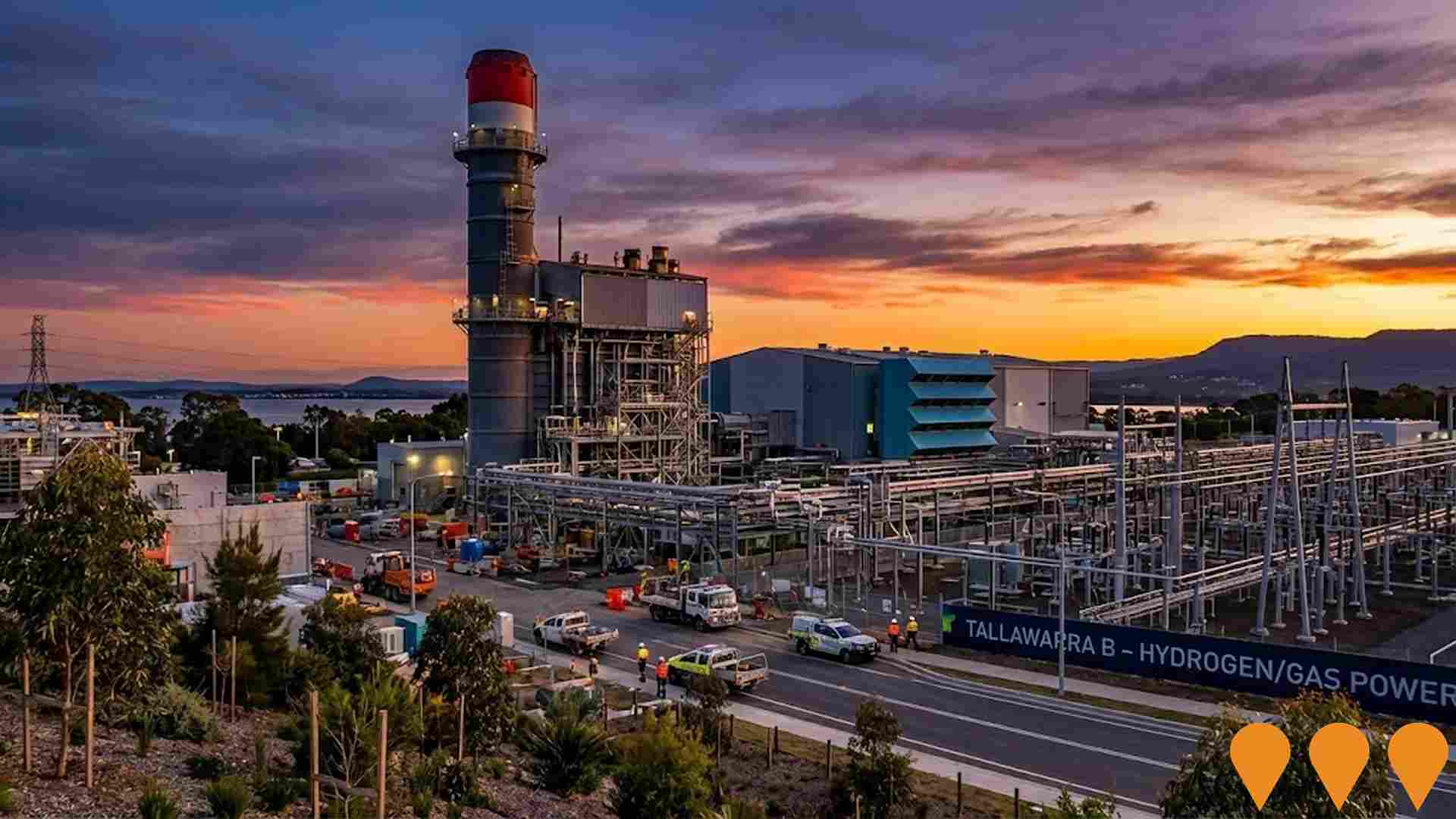
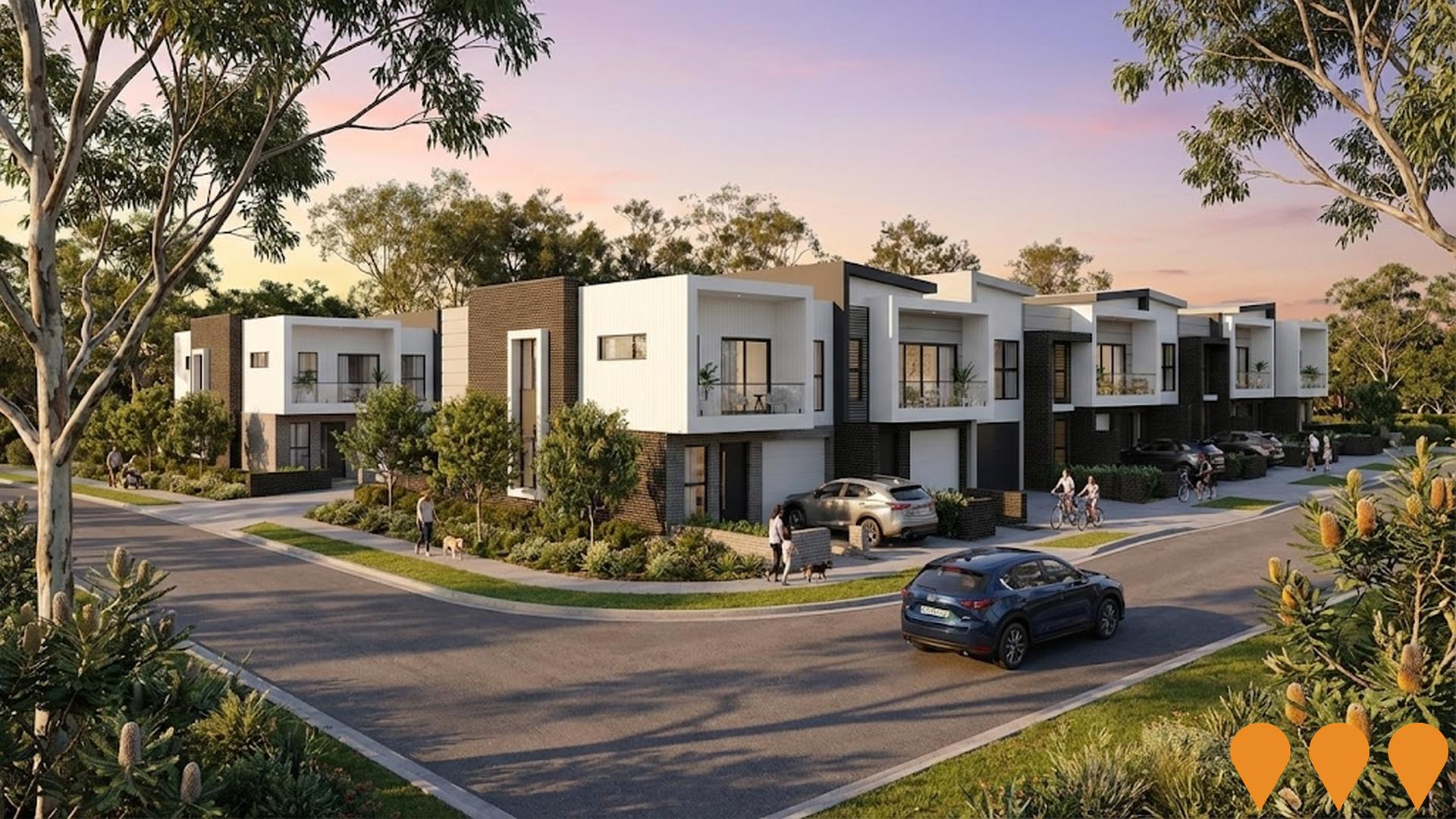
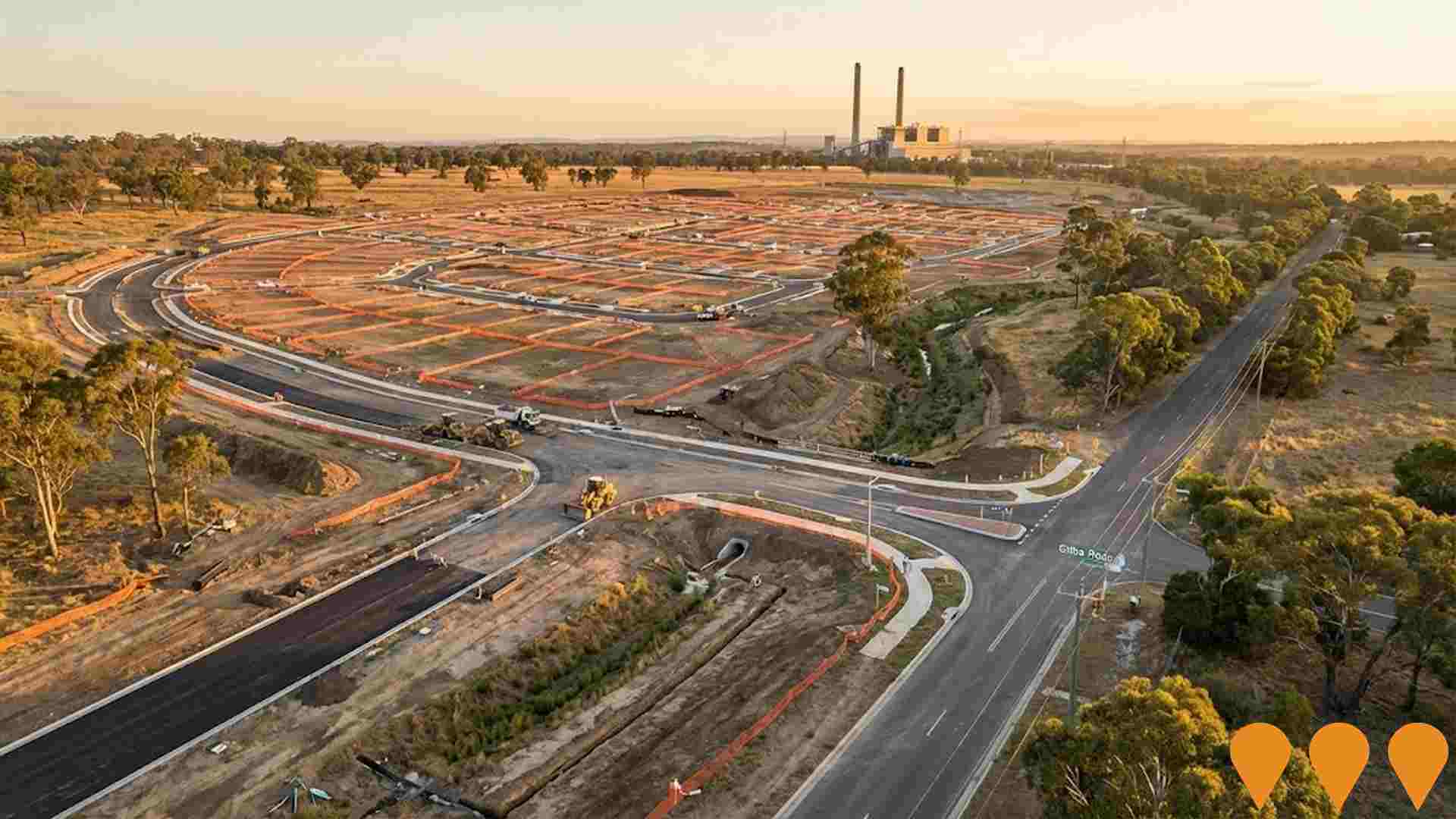
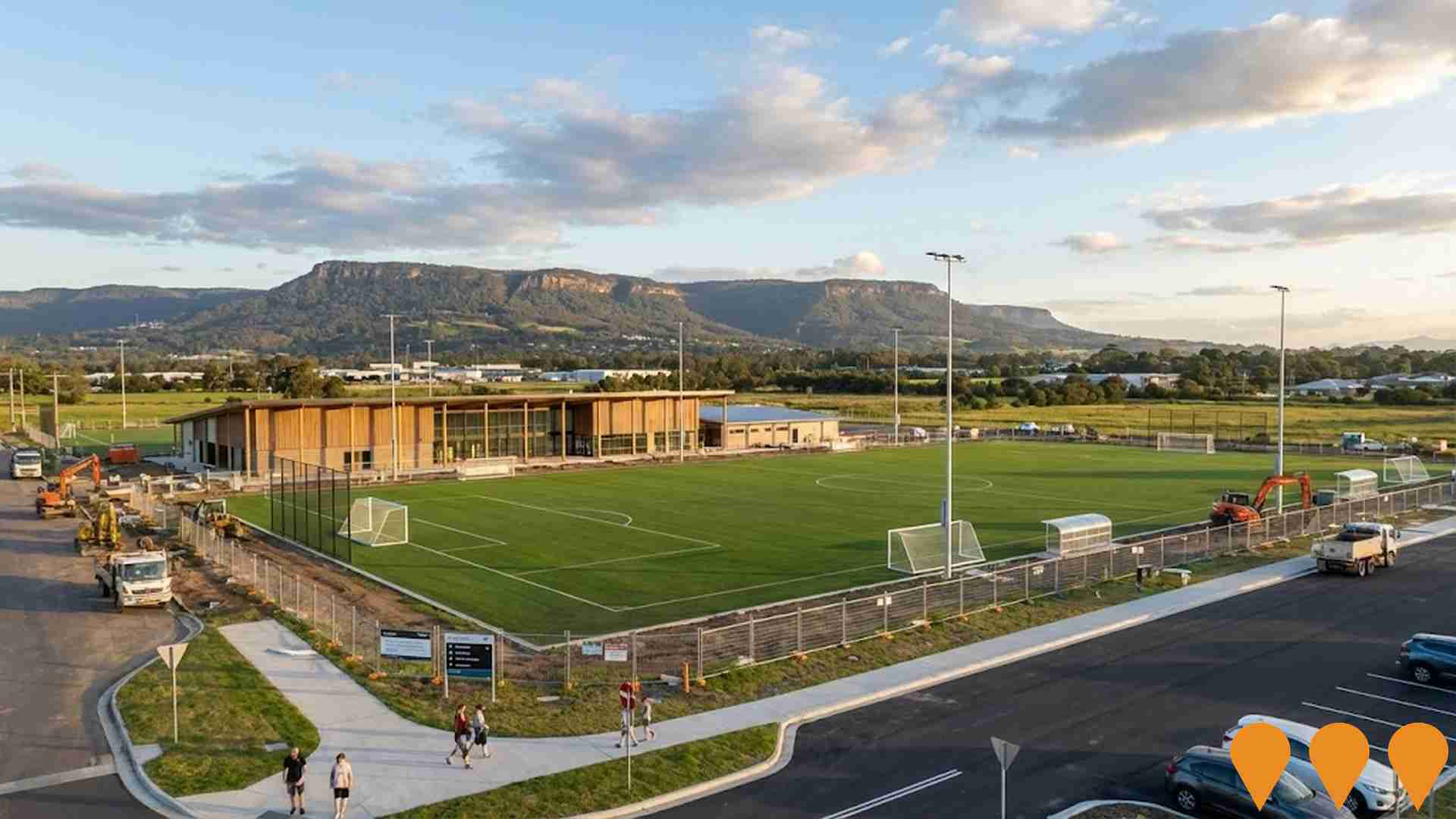
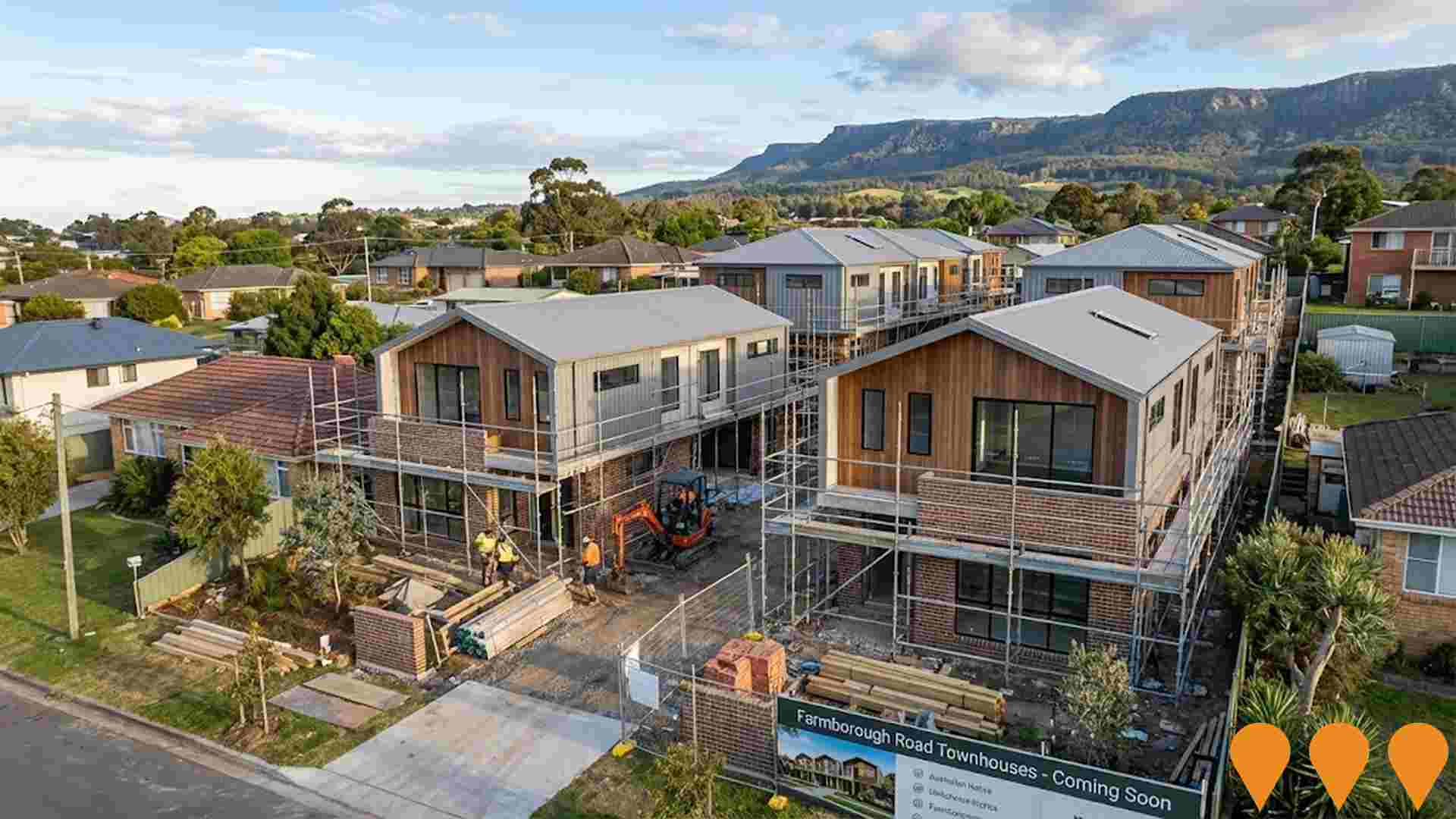
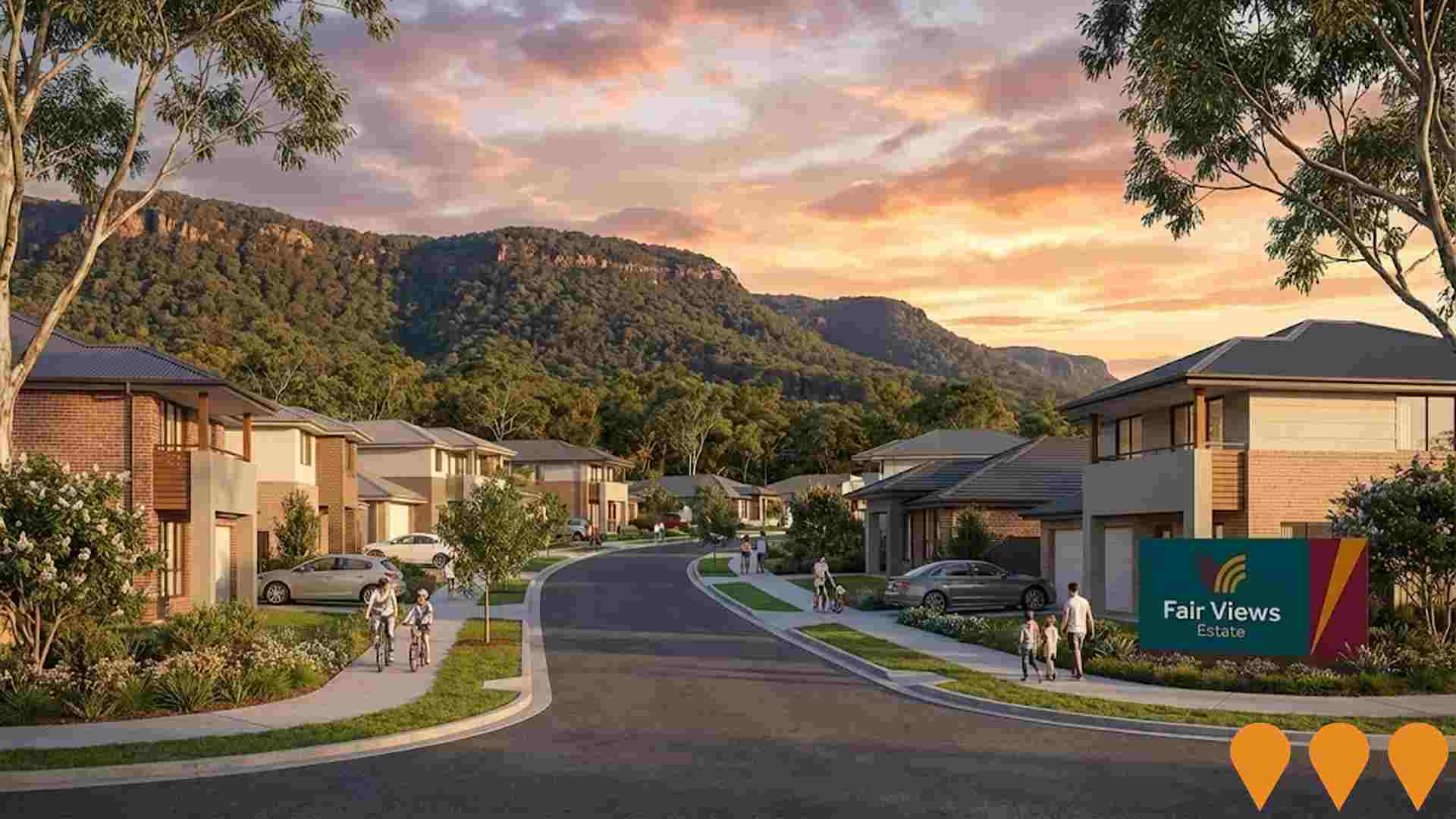
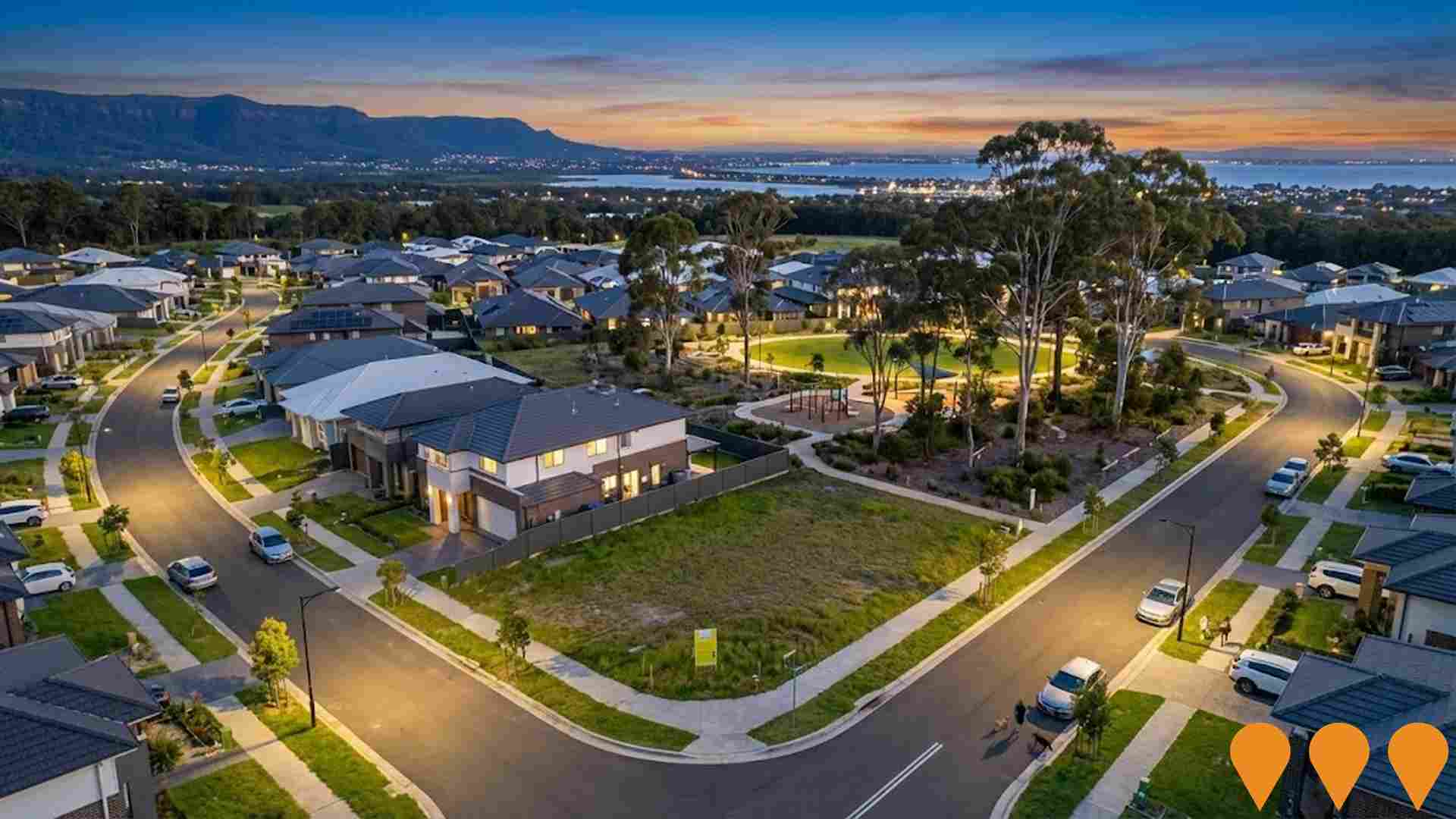
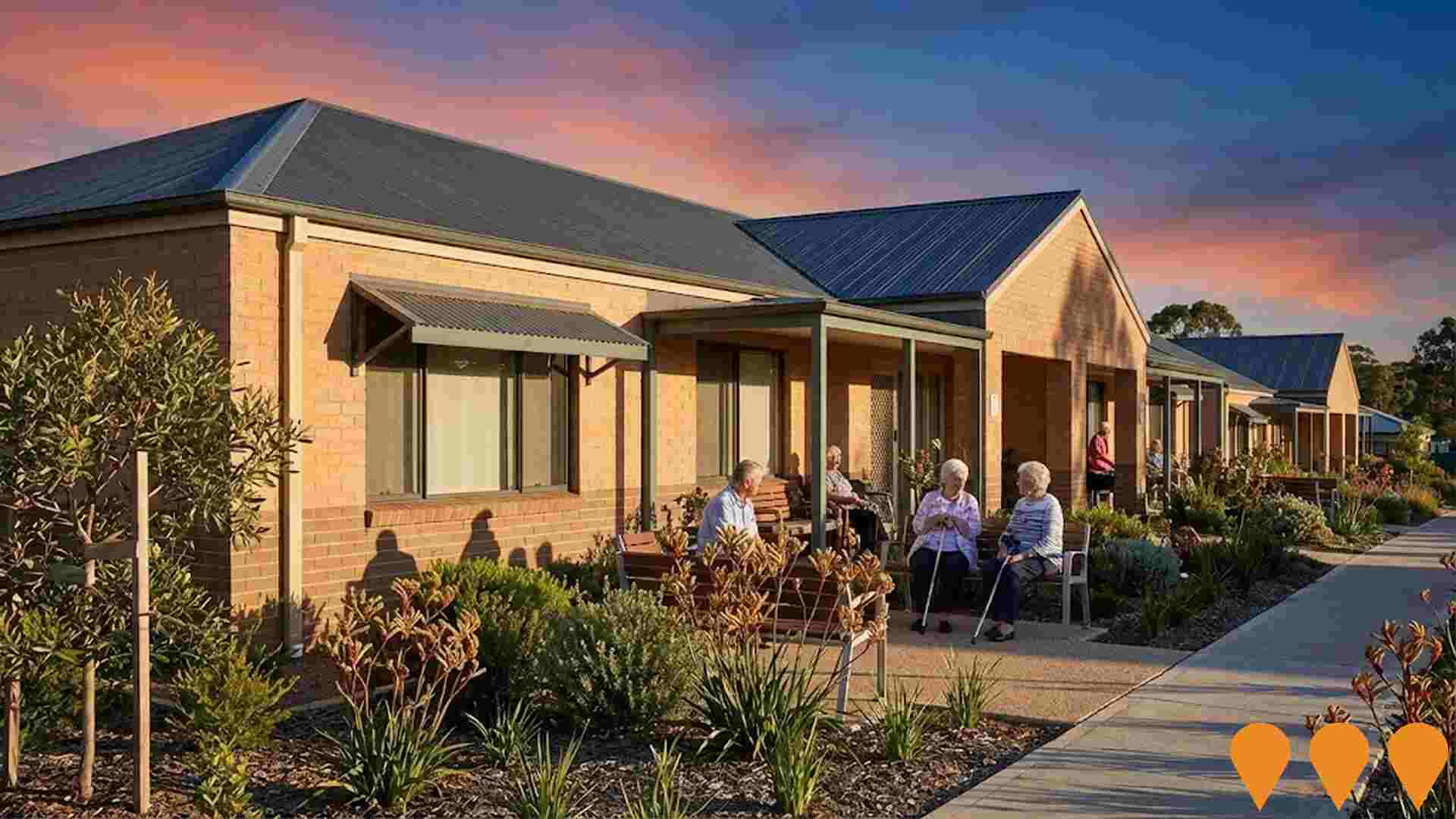
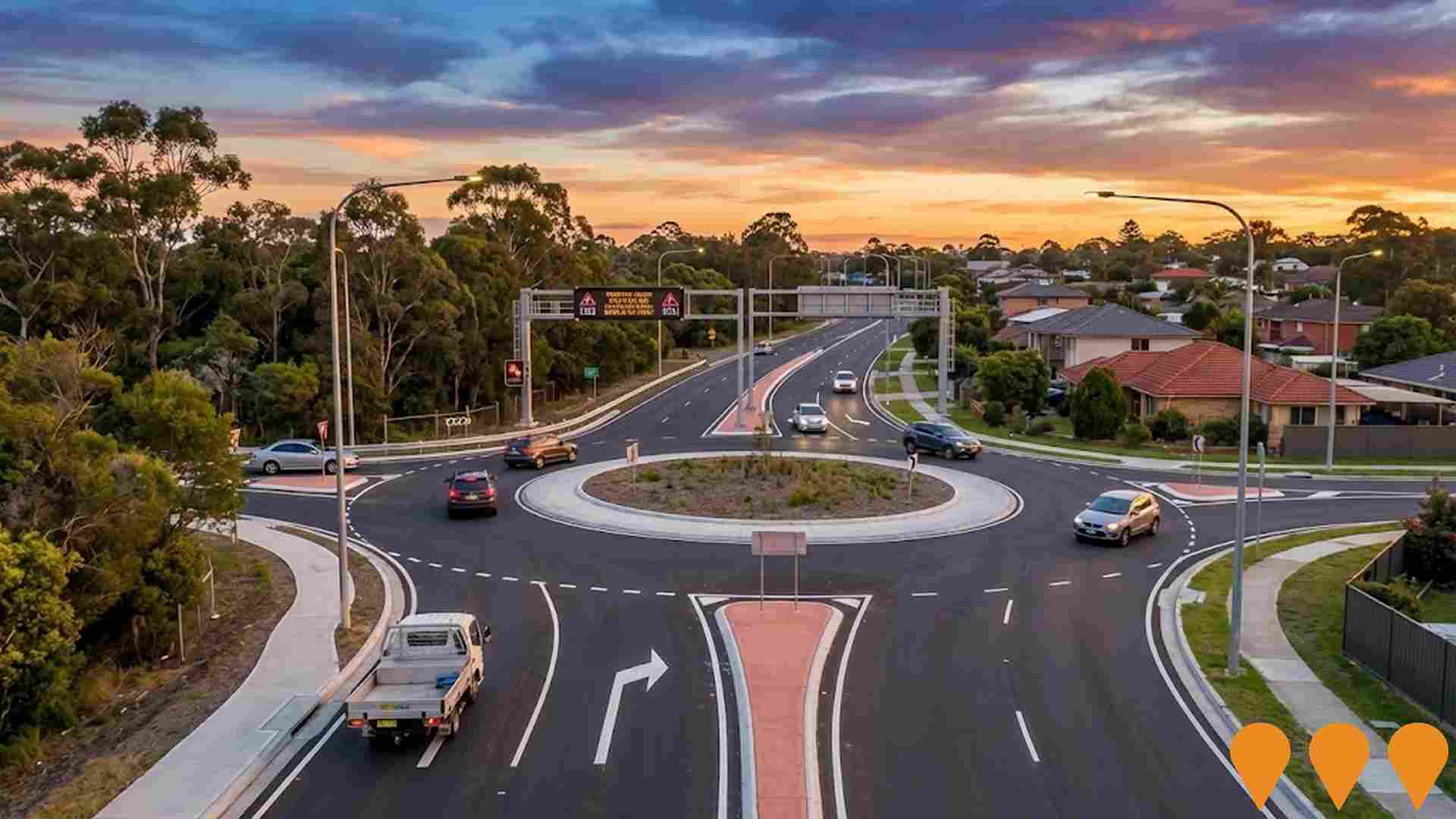
 Denotes AI-based impression for illustrative purposes only, not to be taken as definitive under any circumstances. Please follow links and conduct other investigations from the project's source for actual imagery. Developers and project owners wishing us to use original imagery please Contact Us and we will do so.
Frequently Asked Questions - Infrastructure
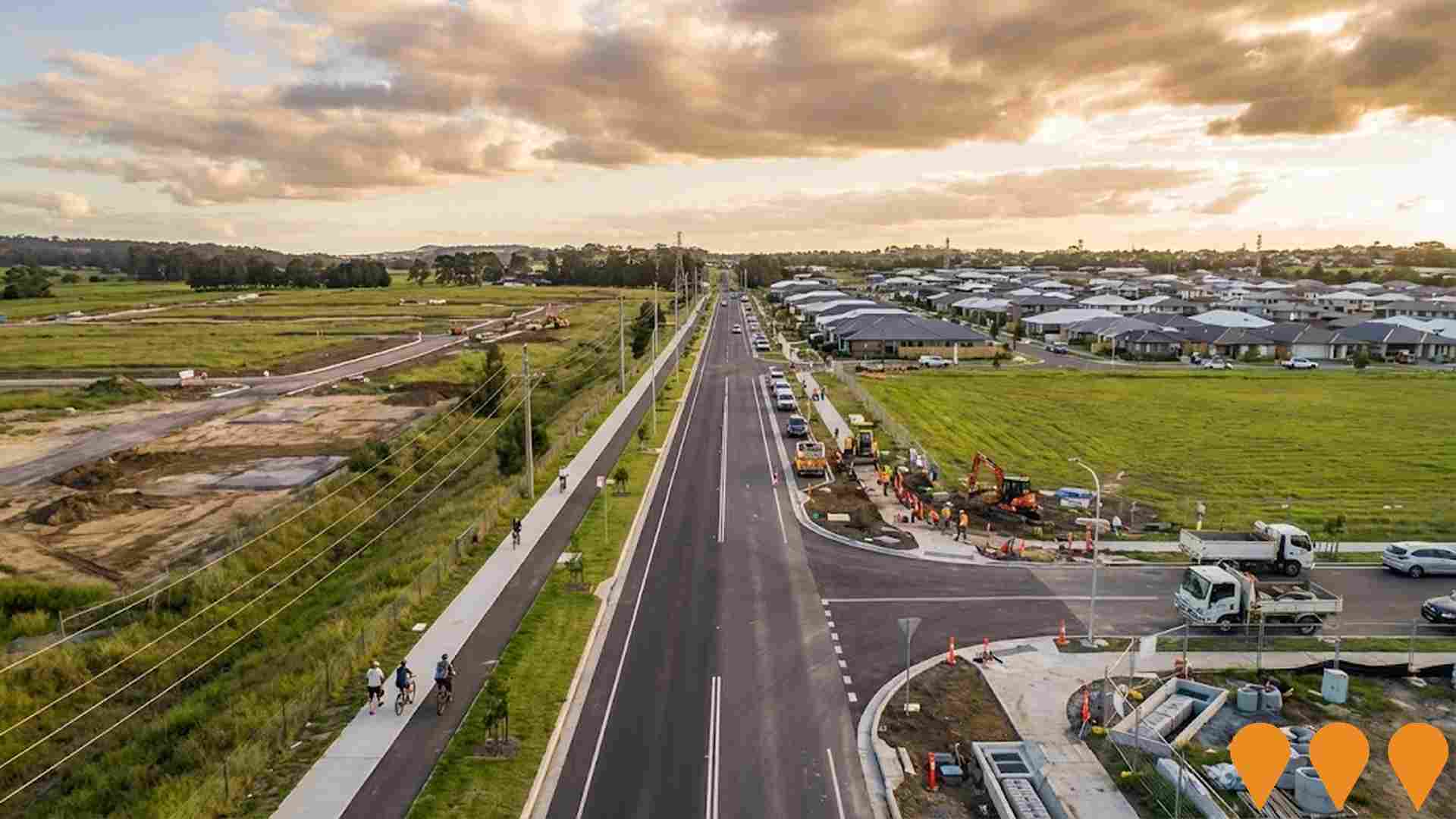
Cleveland Road Upgrade - West Dapto
Staged road upgrade in West Dapto to support delivery of thousands of new homes in the urban release area. Stage 1, the widening of Fowlers Road (South) from two to four travel lanes with kerb and gutter, stormwater drainage, street lighting and a shared path, was completed in early 2026. Stages 2 and 3 will regrade and widen approximately 2.5 km of Cleveland Road west of the Fowlers Road intersection, adding travel lanes, kerbside parking, shared paths and a signalised intersection at Fowlers Road and Cleveland Road, but remain pending land acquisition.The project is co-funded by Restart NSW and Wollongong City Council, with the NSW Government contributing $20.03 million.
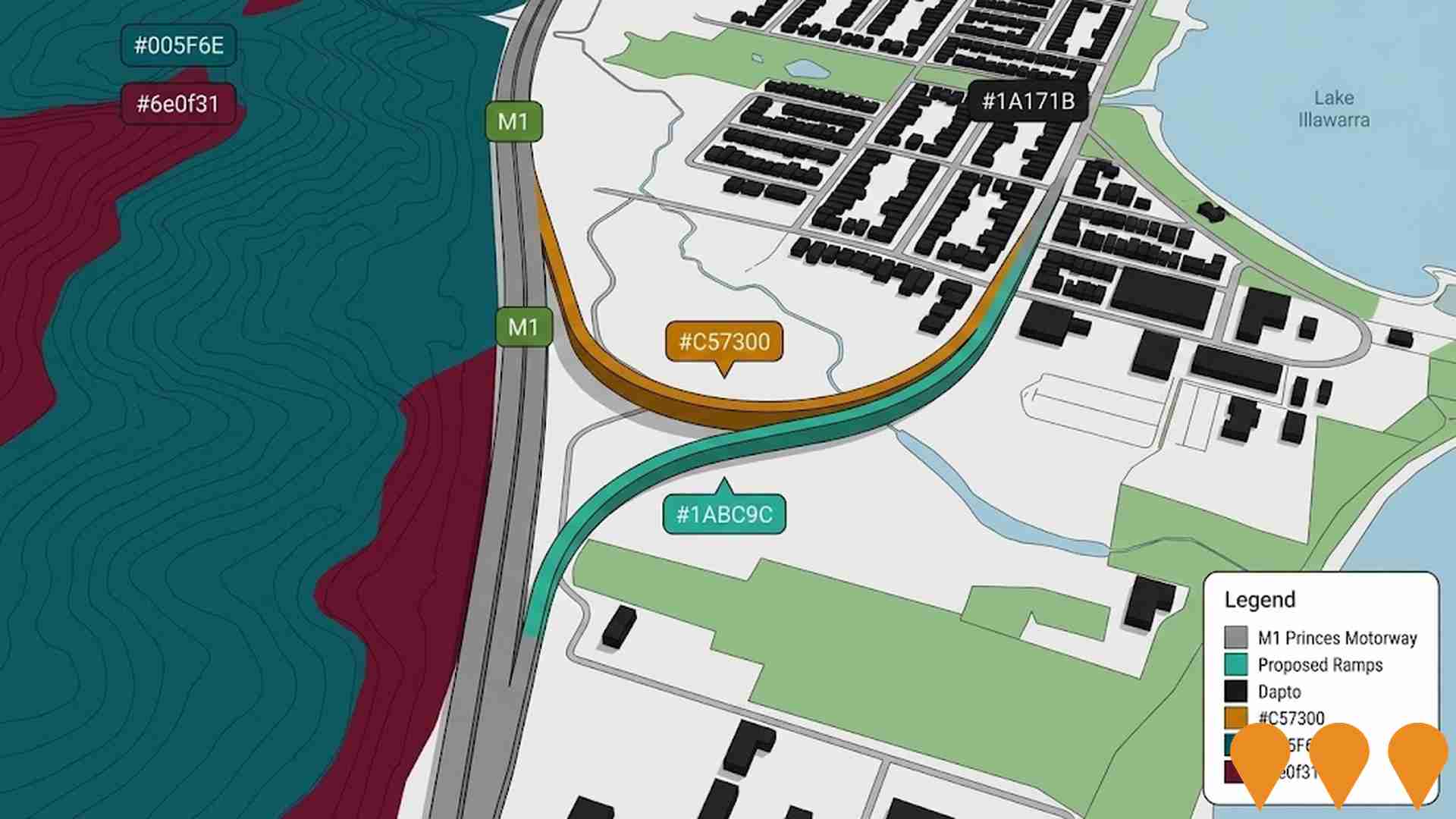
M1 Princes Motorway South-Facing Ramps at Dapto
Transport for NSW is planning new south-facing entry and exit ramps on the M1 Princes Motorway to better connect Dapto and surrounding suburbs. In May 2026, Fowlers Road was confirmed as the preferred location, with plans for a signalised northbound exit ramp and southbound entry ramp, plus upgrades to the Princes Highway and Fowlers Road intersection and active transport improvements. The NSW and Australian governments have jointly committed $30 million for planning. No construction funding has been confirmed; staging options will be considered as detailed design and environmental assessment work progresses.
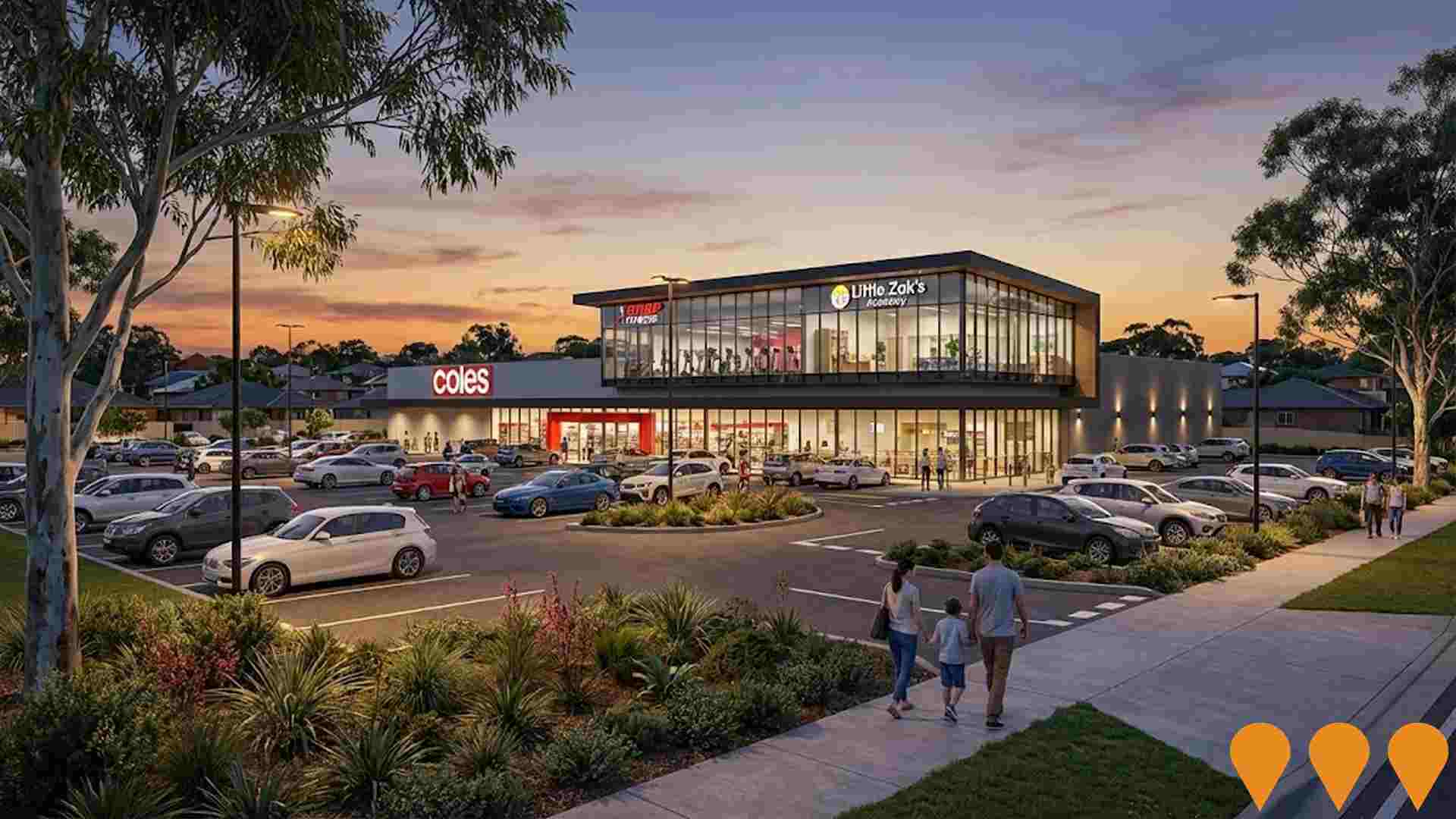
Berkeley Square (Berkeley Shopping Centre Upgrade)
A complete 11 million dollar transformation and expansion of the existing Berkeley shopping precinct into Berkeley Square. The project reimagines the 5,000+ sqm site, adding a second level to accommodate a new gym and a 121-place childcare centre. The redevelopment retains the existing Coles supermarket while significantly altering parking configurations to include two separate access points from Winnima Way and Bristol Street. The upgrade aims to create a modern lifestyle and dining destination with new retail spaces and improved pedestrian permeability.
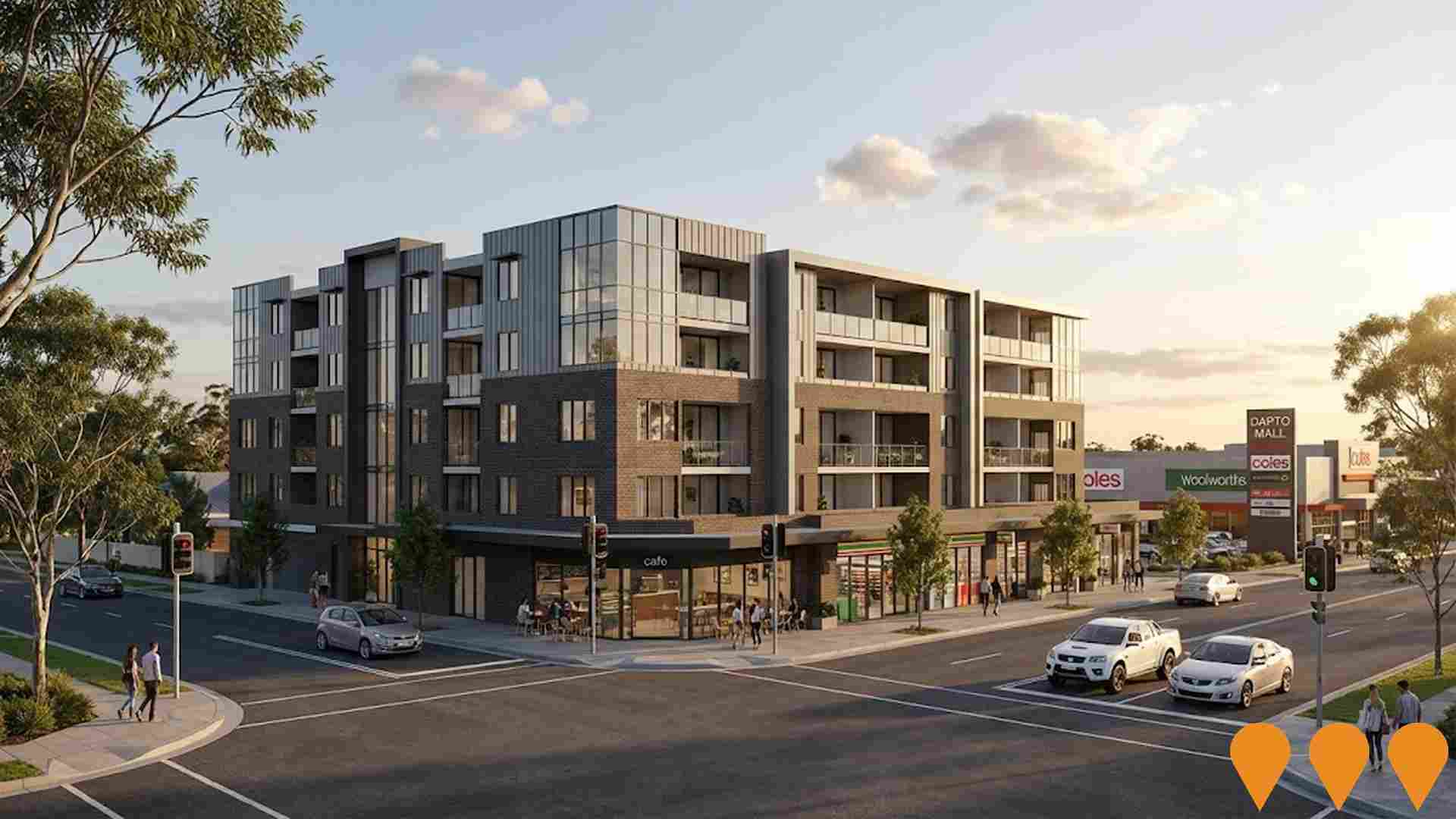
WestPoint Dapto
A DA-approved mixed-use development featuring 32 residential apartments (mix of 1, 2 and 3 bedroom units), 432 sqm of commercial space, and 533 sqm of retail space in a multi-storey building. Total approved building area of 3,309 sqm. The site is located at the intersection of Bong Bong Road and Princes Highway, adjacent to Dapto Mall with major retailers including Coles, Woolworths and BIG W, and within walking distance of Dapto Train Station.
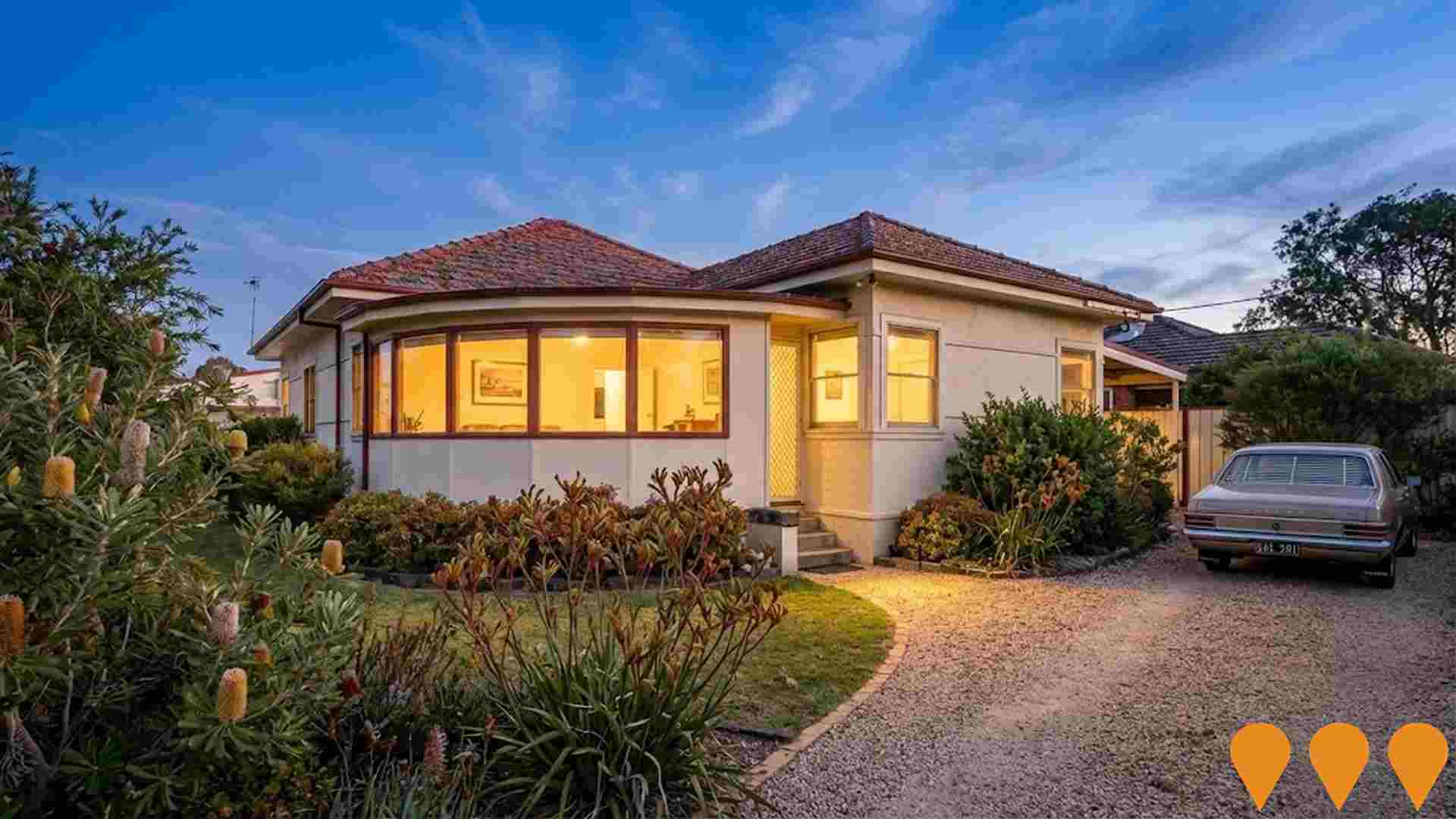
Byamee Street, Dapto
Housing Trust is planning a multi-storey residential community on the former Dapto Primary School site at 91A Byamee Street. The proposal delivers approximately 71 to 150 dwellings across a mix of social, affordable, and market rental homes to ease local housing demand in the Illawarra region.
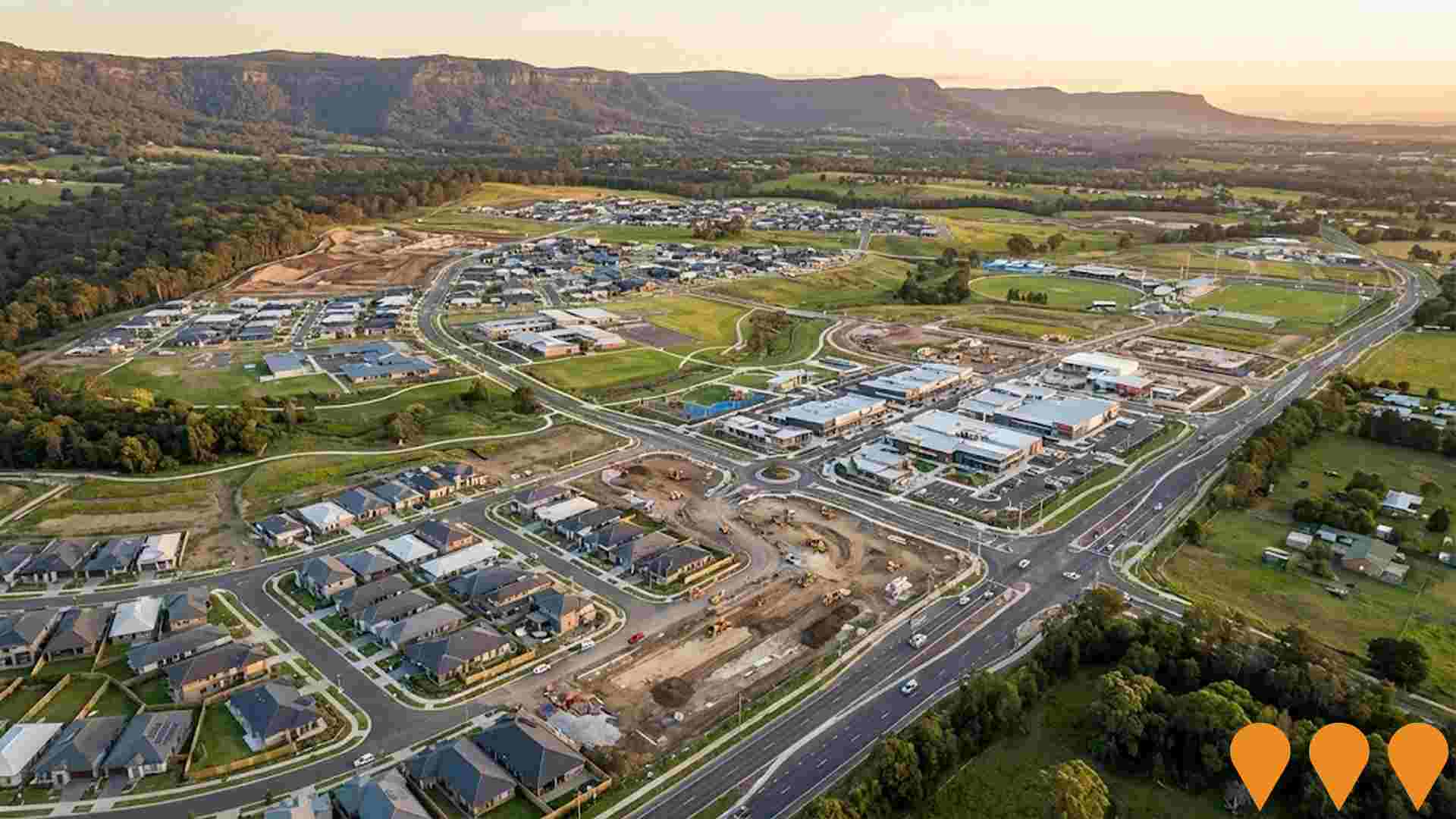
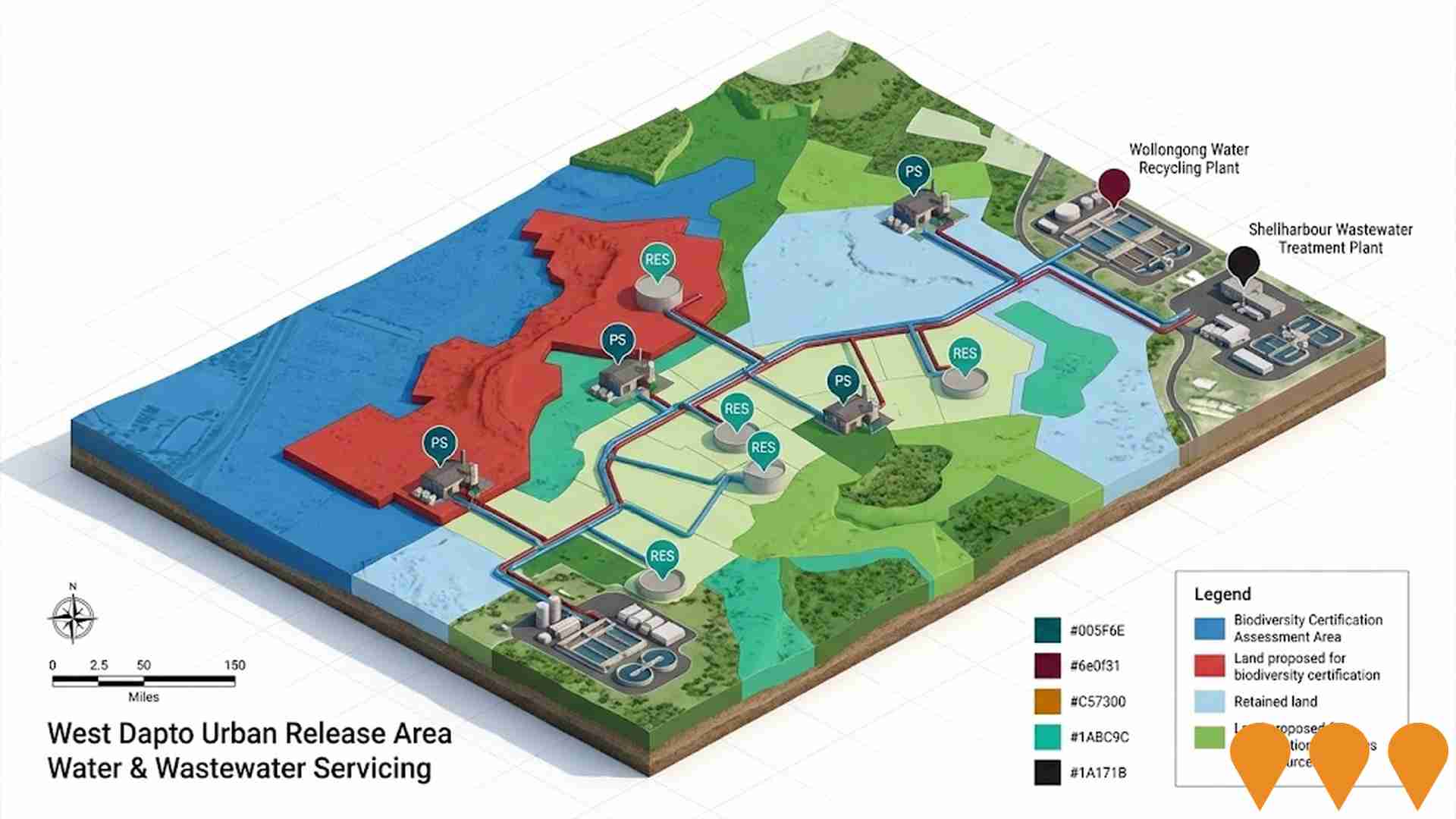
West Dapto Urban Release Area
The West Dapto Urban Release Area is a multi-decade growth project designed to deliver 19,500 new dwellings for approximately 60,000 residents. Spanning 4,700 hectares, the development includes eight future centers with major hubs at Bong Bong, Darkes, and Marshall Mount. As of May 2026, Stage 1 of the Cleveland Road upgrade (widening to four lanes) is complete. Major construction continues on West Dapto Road, which is undergoing extensive widening, culvert works, and utility relocation, with a scheduled reopening in mid-2026.The project is supported by a $1.57 billion infrastructure contribution plan focused on stormwater, transport, and community facilities.
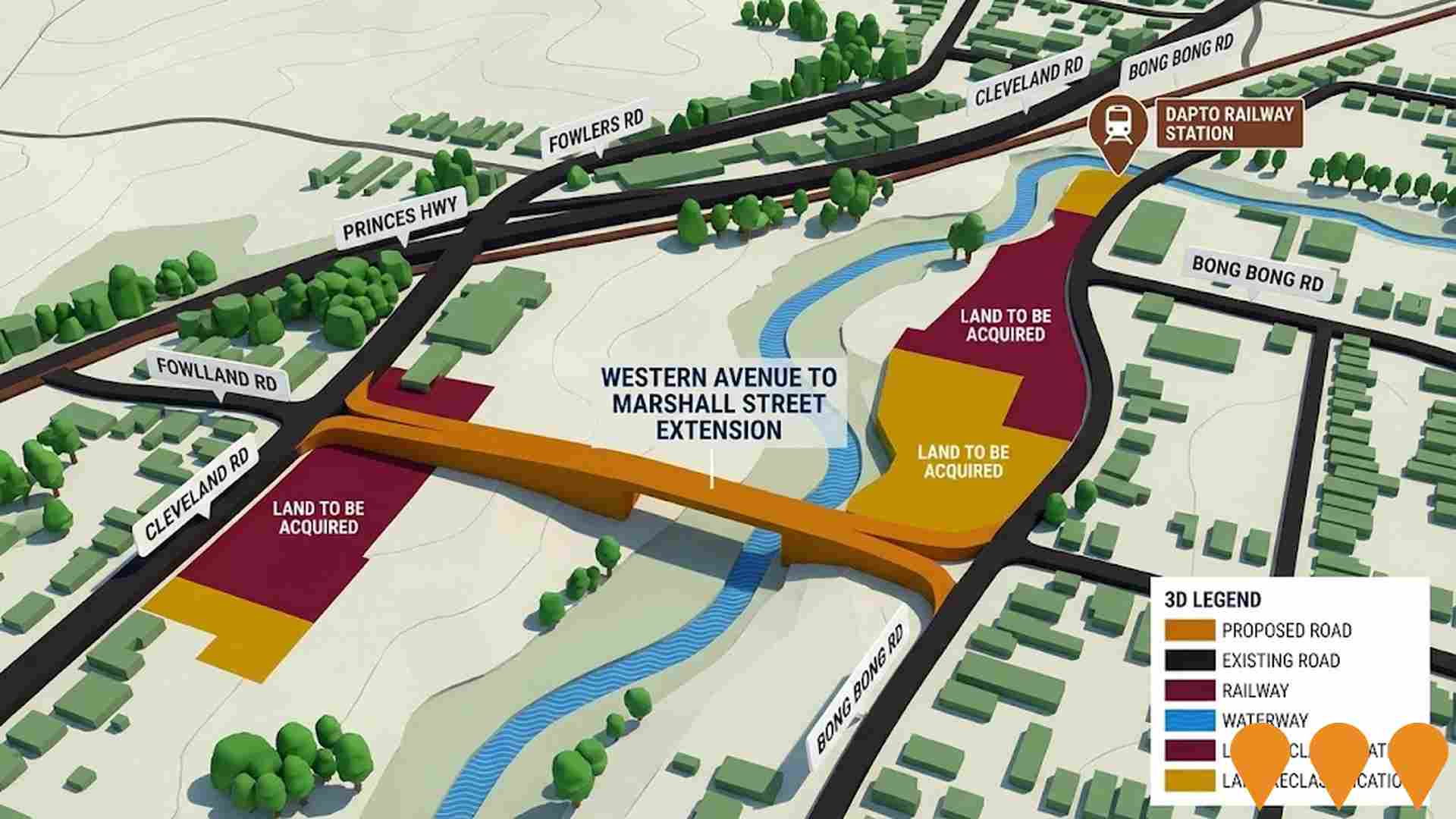
Western Avenue to Marshall Street Extension (West Dapto Access)
Wollongong City Council project facilitating road corridor connections linking Western Avenue to Marshall Street via Avondale Road as part of the West Dapto Access Strategy. The planning proposal reclassified community land at Lot 49 DP 247895 to operational land to enable road dedication and construction works.
West Dapto Urban Release Area Water & Wastewater Servicing
Sydney Water is delivering comprehensive drinking water and wastewater infrastructure to support the West Dapto Urban Release Area. The scope includes over 100 kilometres of distribution mains, sewage pumping stations, reservoirs, and network connections linking to regional treatment assets. The scheme provides essential utility capacity for approximately 19,500 new homes across West Dapto and adjacent growth corridors.

2,400 residents of Kanahooka are employed, from a labour force of 2,605. Unemployment sits at 7.8%, with participation at 54.0%. Weighted for its industry mix, the area's sectors are forecast to grow about 6.6% nationally over five years. That reflects industry composition only and makes no allowance for local population growth. The working-day population is estimated at 4,665, about 80% of the resident population, so more people leave the area for work than travel in. Unemployment and labour force come from ABS Small Area Labour Markets, updated quarterly; the industry and occupation profile is from the 2021 Census.
Detail
Kanahooka maintains a dual blue- and white-collar employment base with a notable presence in core service industries, registering an unemployment rate of 7.8% alongside a 1.4% annual employment rise according to AreaSearch's statistical area aggregation. As of March 2026, 2,400 residents are employed. However, the local jobless rate sits 3.7% above the 4.1% recorded for Regional NSW, and the participation rate of 54.0% trails the wider region's 60.6%. Census figures indicated that 22.8% of the local workforce operated from home, a metric subject to Covid-19 restrictions at that time. Local workers are concentrated most heavily in health care & social assistance, construction, and education & training.
The health care & social assistance sector demonstrates exceptional local prominence, commanding an employment share 1.2 times that of the broader region. Conversely, agriculture, forestry & fishing accounts for only 0.5% of local employment versus 5.3% across the region. With the area serving predominantly as a dormitory suburb, internal employment options remain limited as reflected in the ratio of Census workers to resident population. Analysis conducted by AreaSearch using SALM and ABS data, which were compiled from wider statistical regions, indicates that during the year to March 2026, employment rose by 1.4%, the labour force grew by 2.0%, and as a result, the unemployment rate climbed by 0.5 percentage points. In contrast, data for Regional NSW showed a 0.9% drop in employment, a 0.4% reduction in the labour force, and an increase in unemployment of 0.5 percentage points. Jobs and Skills Australia published forecasts for national employment starting from Mar-26 provide additional context regarding anticipated future demand in Kanahooka. These projections span five and ten year intervals and were overlaid with Kanahooka’s current employment composition to estimate future growth trends. Although national employment is projected to grow by 6.6% over five years and 13.7% over ten years, expansion varies considerably across different industry sectors. When these sector-specific forecasts are applied to Kanahooka’s employment structure, local employment is expected to rise by 6.6% over five years and 13.9% over ten years, though it is important to note that this simple weighting method is only for illustrative purposes and does not incorporate localized population forecasts.
Frequently Asked Questions - Employment
Median household income in Kanahooka is $1,399 a week (about $73,000 a year), with median personal income at $641 a week. ATO records put median taxable income at $49,846 a year against an average of $61,451. Household income is from the 2021 Census; taxable income is from ATO Taxation Statistics for the latest financial year available, indexed forward using the ABS Wage Price Index.
Detail
Taxpayer earnings in the suburb of Kanahooka trail countrywide benchmarks based on AreaSearch's compilation of ATO data for financial year 2023. The suburb of Kanahooka recorded a median taxpayer income of $49,846 and an average of $61,451, trailing the Regional NSW benchmarks of $52,390 and $65,215. Factoring in the 10.32% Wage Price Index increase since financial year 2023 brings estimated current figures to around $54,990 (median) and $67,793 (average) as of March 2026. Across personal, household, and family metrics, Census outcomes place local earnings between the 17th and 28th percentiles nationwide.
The $1,500 - 2,999 weekly bracket encompasses 28.4% of local residents (1,655 individuals), closely matching the wider metropolitan rate of 29.9%. Elevated housing expenses leave households with just 84.3% of income remaining (28th percentile nationally), placing the area within the 4th decile on the SEIFA income index.
Frequently Asked Questions - Income
Kanahooka had 2,195 occupied dwellings at the 2021 Census, 84% detached houses and 1% apartments. 35% are owned with a mortgage, 13% rented and 52% owned outright. At that Census the median rent was $450 a week and the median mortgage repayment $2,000 a month. Rent absorbs 32.2% of household income here and mortgage repayments 33.0%. Dwelling stock, tenure and housing costs are 2021 Census measures — the only source that counts dwellings at this boundary size.
Detail
According to Census findings, standalone houses made up 84.1% of Kanahooka's residential landscape, with the remaining 15.9% consisting of other dwellings such as apartments and semi-detached properties, whereas Regional NSW recorded 82.6% houses and 17.4% other dwellings. Outright property ownership in Kanahooka reached a substantial 52.3%, well above regional levels, while mortgaged properties accounted for 35.2% and rental dwellings comprised 12.6%. Monthly mortgage payments commanded a median of $2,000 and weekly rent stood at $450, exceeding the Regional NSW averages of $1,733 and $330 respectively. On a national scale, Kanahooka's mortgage costs outstrip the Australian benchmark of $1,863, with rental costs notably surpassing the nationwide figure of $375.
Frequently Asked Questions - Housing
Kanahooka counted 2,195 households at the 2021 Census, averaging 2.5 people each. 29% are couples with children, against 33% couples without children. 26% of households are people living alone, and families average 1.9 children. Household and family composition is measured only by the Census, so these are 2021 figures.
Detail
Families constitute the majority of local living arrangements at 72.6%, featuring couples without children (32.8%), couples with children (29.1%), and single parent households (10.4%). Non-family setups make up the other 27.4%, consisting of single-person households at 25.8% and share accommodations at 1.5%. An average of 2.5 persons per household slightly exceeds the Regional NSW standard of 2.4.
Frequently Asked Questions - Households
16.0% of adults in Kanahooka hold a university qualification, including 10.6% with a bachelor degree and 3.3% with postgraduate qualifications, lower than 78% of areas nationally. A further 31.2% hold a vocational qualification. 2 schools serve the area, with 1,196 enrolment places and an average ICSEA of 945 against a national benchmark of 1,000. Qualifications come from the 2021 Census; school enrolments, ICSEA and results come from ACARA's current release.
Detail
Attainment levels present challenges across the locality, with tertiary qualification rates sitting at 16.0% compared to the NSW statewide benchmark of 32.2%, highlighting key areas for educational development. Within higher education credentials, bachelor degrees account for 10.6%, postgraduate degrees comprise 3.3%, and graduate diplomas represent 2.1%. Non-university technical pathways are prevalent, with 41.4% of residents aged 15+ holding vocational qualifications, split between certificates (31.2%) and advanced diplomas (10.2%). Enrolment in structured learning encompasses 24.6% of local residents. Within this cohort, 8.0% attend primary school, 7.2% are in secondary education, and 3.2% are enrolled in higher education programs.
Frequently Asked Questions - Education
Schools Detail
Public transport in Kanahooka reaches 39 stops on 12 routes, timetabled for about 260 services a week. The typical home sits about 180 m from its nearest stop. Households keep an average of 1.5 vehicles. Stop and service counts are built from operators' published GTFS timetables and refresh with each timetable release; vehicle ownership is from the 2021 Census.
Detail
The local transit network in Kanahooka features 39 active transport stops dedicated to bus connections. Across 12 separate routes, the network delivers 258 weekly passenger trips. Access to transit is rated as excellent, with typical walking distances of 177 meters to the closest stop. Reflecting the area's residential profile, outward commuting is standard, with private vehicles accounting for 94% of trips and households maintaining an average of 1.5 vehicles. Furthermore, 22.8% of workers logged their duties from home at the 2021 Census, potentially influenced by COVID-19 settings. Transit services maintain an average volume of 36 trips per day across the collective network, translating to roughly 6 weekly trips per individual stop.
Frequently Asked Questions - Transport
Transport Stops Detail
60.9% of residents in Kanahooka report no long-term health condition. 9.8% need daily assistance with core activities, and 51.3% hold private health cover. The standardised death rate runs at 6.0 per 1,000 residents. Health conditions, assistance needs and insurance are 2021 Census measures; the death rate comes from current ABS releases.
Detail
AreaSearch evaluations of mortality statistics and long-term health trends indicate notable wellness hurdles in Kanahooka, with chronic illnesses observed across both older and younger demographics. Furthermore, private healthcare coverage remains constrained, encompassing roughly 51% of the population (~2,987 people). Arthritis and mental health conditions rank as the most prevalent health issues locally, affecting 11.6 and 8.0% of the community respectively. Meanwhile, 60.9% of residents reported no long-term medical conditions, slightly below the 63.3% figure across Regional NSW. Working-age cohorts display elevated rates of chronic illness. Seniors aged 65 and over constitute 30.9% of residents (1,801 people), outpacing the Regional NSW share of 23.3%, with elderly health indicators aligning closely with countrywide standards.
Frequently Asked Questions - Health
Kanahooka is largely Australian-born, at 80.0% of residents, with 8.5% speaking a language other than English at home. The largest reported ancestries are English (32.5%) and Australian (28.2%). Ancestry, language and country of birth are counted only by the Census, so these are 2021 figures.
Detail
Cultural diversity measures in Kanahooka sit below broader standards, with Australian-born citizens comprising 80.0% of residents, 92.3% holding citizenship, and 91.5% using only English at home. Christianity represents the primary faith, practiced by 62.9% of the local community compared to 55.9% across Regional NSW. English (32.5%), Australian (28.2%), and Irish (7.1%) represent the leading parental ancestry lines among Kanahooka residents. Additionally, several cultural heritages register higher concentrations than seen regionally, including Welsh at 0.9% (vs 0.5% regionally), Macedonian at 1.3% (vs 0.4%), and Hungarian at 0.4% (vs 0.2%).
Frequently Asked Questions - Diversity
The median resident of Kanahooka is 48, older than 88% of areas nationally. 20.1% of residents are aged 15 to 34. Age cohorts are not raw Census counts: the Census split is re-based to the latest ABS population estimates and state projections.
Detail
Kanahooka exhibits a comparatively mature demographic structure relative to Regional NSW. As at August 2026, seniors and retirees aged 65+ make up 30.9% of the local population versus 23.3% regionally, while youth cohorts aged 0 - 24 represent 25.5% against 29.3% in the wider region. The local median age of 48 matches its 2021 Census mark, sitting 5 years higher than Regional NSW's 43 at that Census and above Australia's Census median of 38. Since that time, the 25 - 44 cohort has expanded from 20.1% to an estimated 22.2%.
Looking out to 2041, this 25 - 44 demographic is projected to generate the largest numerical gain, expanding by 290 residents (22%) to reach 1,584.
Frequently Asked Questions - Age
Data & MethodBoundaries, Sources & Method for Kanahooka
9 of 14 data sections on this page were updated within the last 12 months — the newest current to Oct 2026.
Everything is aggregated to the Suburb (SAL) boundary shown above, on a 2021 Census baseline. Only 3 sections — housing, households and cultural diversity — still wait on the 2026 Census.
The ledger — source, cycle and currency by section
| Section | Source & update cycle | Currency |
|---|---|---|
| Updated within the last 12 months 9 sections | ||
| Population | ABS, GNAF, Geoscience Australia Annual (ABS ERP) | Aug 2026 2 months ago headline measures · 2021 Census baseline |
| Re-based to the ABS Estimated Resident Population (June 2025 release) and updated with new dwellings from GNAF address data. Current to Aug 2026, with the 2021 Census supplying the small-area baseline. | ||
| Age profile | ABS, Geoscience Australia, State governments Annual | Aug 2026 2 months ago headline measures · 2021 Census baseline |
| Age cohorts are re-based to the latest ABS population estimates and state projections, current to Aug 2026. Each cohort is held as a Census baseline and a current estimate. | ||
| Development & approvals | ABS, GNAF Monthly (ABS approvals) | Aug 2026 2 months ago headline measures · Jul 2026 baseline |
| Property sales & rents | Valuer General, Rental Board, ABS Weekly sales, quarterly rents | Oct 2026 this month headline measures · Sep 2026 baseline |
| Sales from the state Valuer General register, refreshed weekly, and rents from quarterly rental bond lodgements. Both are read live each time this page loads, current to Oct 2026. | ||
| Infrastructure projects | Infrastructure Australia, State agencies, Local governments Daily | Jul 2026 3 months ago all 3 projects tracked here |
| Project pipeline maintained continuously from Infrastructure Australia, state agencies, local government and public announcements. Records are added and revised daily; this area was last updated Jul 2026. | ||
| Employment | ABS, DEWR, JSA Quarterly (ABS SALM) | Mar 2026 7 months ago headline measures · 2021 Census baseline |
| Unemployment and labour force from ABS Small Area Labour Markets, current to Mar 2026. The growth outlook applies Department of Employment (now Jobs and Skills Australia) forecasts for all 19 industry divisions to the local industry mix, so it measures sector composition rather than local expansion and makes no allowance for population growth. Job demand comes from the same agency via its Internet Vacancy Index; industry and occupation structure from the 2021 Census. | ||
| Education | ABS, ACARA Annual (ACARA) | Sep 2026 last month headline measures · 2021 Census baseline |
| Transport | ABS, State Transport Departments Each timetable release | Jul 2026 3 months ago headline measures · 2021 Census baseline |
| Services & amenities | Provider directories, ACECQA Continuous | Sep 2026 last month all 14 measures |
| Annual and financial-year sources 2 sections | ||
| Income | ABS, ATO Annual (ATO) | FY 2023 3 years ago headline measures · 2021 Census baseline |
| ATO taxable income statistics for FY 2023, indexed forward using the Wage Price Index. Census household income provides the distribution detail. | ||
| Health | ABS, ATO Annual | 2024 2 years ago headline measures · 2021 Census baseline |
| Census-measured — next update: 2026 Census 3 sections No more current small-area source exists for these, so they are labelled as Census-measured rather than implied to be current. | ||
| Housing | ABS 5-yearly (Census) | 2021 Census next update 2026 all 30 measures |
| Households | ABS 5-yearly (Census) | 2021 Census next update 2026 all 18 measures |
| Cultural diversity | ABS, Geoscience Australia 5-yearly (Census) | 2021 Census next update 2026 all 44 measures |
"Currency" is the most recent release feeding that section. Where the Census supplies the structural baseline underneath a current headline figure, the row says so.
How the numbers are built
Population
The Census provides the small-area baseline, aggregated from mesh blocks to this boundary. It is then re-based to the ABS Estimated Resident Population (June 2025 release), and new dwellings built since Census night are counted from address data — 103 validated new addresses here. The headline figure is therefore a current estimate for Aug 2026, not a 2021 count (5,698 at the 2021 Census → 5,829 now). Annual growth rates are compound (CAGR), not simple averages.
Age profile
Cohort shares are not raw Census counts. Every cohort is held as a pair — the Census baseline and a current estimate — and the split is re-based using ERP and state population projections, current to Aug 2026. Median age is the Census median plus modelled change since. Charts that show both are labelled "2021 Census vs Current Estimate".
Property sales
Sourced from the state valuation authority's sales register — current, not Census, and refreshed weekly. Medians are calculated from settled transactions in the period shown; periods with very low transaction counts are flagged or suppressed, because a handful of sales can move a median substantially.
Rents
Derived from state rental bond lodgement data, by dwelling type and bedroom count. Bonds are lodged at the start of a new tenancy, so this reflects new lettings, not the whole rented stock.
Development & infrastructure
Building approvals come from current ABS releases; development applications are collected from council and state planning portals; the infrastructure pipeline is compiled from Infrastructure Australia and local government sources. Applications are matched to this boundary by address or coordinates, so very recent lodgements may not yet appear.
Employment & income
Industry and occupation structure comes from the Census, but the headline labour-market indicators do not. Unemployment and labour force are derived from ABS Small Area Labour Markets (quarterly). The employment outlook applies Department of Employment forecasts for all 19 industry divisions to this area's own industry mix (the agency is now Jobs and Skills Australia), as does the Internet Vacancy Index used for job demand. Because it is weighted on industry composition alone, that outlook carries no allowance for local population growth — in fast-growing areas the real rise in local jobs will typically be higher. Income combines Census household income with ATO taxable-income statistics for FY 2023, indexed forward using the Wage Price Index.
Education, transport & amenities
School enrolments, ICSEA and performance come from ACARA's current release, not the Census. Public transport stops and service frequency are derived from GTFS timetable feeds published by state transport departments. Services and amenities are proximity and count scores built from provider directories, refreshed on their own cycle. The Census contributes only the travel-to-work and qualification measures.
Rankings and benchmarks. Where we rank this area, the comparison set is every area of the same boundary type — suburbs against suburbs, SA2s against SA2s. Benchmarks compare this area against its greater capital city region and the national figure for the same measure and period.
Limits worth knowing. Small areas carry larger error margins, and the ABS introduces small random adjustments to Census counts to protect confidentiality — so totals may not sum exactly. Estimates re-based from regional data describe the area's expected trajectory, not a direct count of it. Figures are indicative for research and are not financial, planning or valuation advice.
Cross-check us. The Census baseline for this boundary is at ABS 2021 Census QuickStats (SAL12063). QuickStats reports 2021 only — the figures on this page are more current wherever the ledger shows a later date.