Chart Color Schemes
This analysis uses Suburbs and Localities (SAL) boundaries, which can materially differ from Statistical Areas (SA2) even when sharing the same name.
SAL boundaries are defined by Australia Post and the Australian Bureau of Statistics to represent commonly-known suburb names used in postal addresses.
Statistical Areas (SA2) are designed for census data collection and may combine multiple suburbs or use different geographic boundaries. For comprehensive analysis, consider reviewing both boundary types if available.
est. as @ -- *
2021 Census | -- people





Sales Activity


Curious about local property values? Filter the chart to assess the volume and appreciation (including resales) trends and regional comparisons, or scroll to the map below view this information at an individual property level.
Find a Recent Sale

Sales Detail
Population
Alawa is positioned among the lower quartile of areas assessed nationally for population growth based on AreaSearch's assessment of recent, and medium term trends
Analysis of ABS population updates for the wider region, alongside address checks conducted by AreaSearch since the Census, indicates that the suburb of Alawa has an estimated population of 2,267 as of May 2026. Compared to the 2,078 residents recorded in the 2021 Census, this represents a growth of 189 people (9.1%). This update is derived from the resident population of 2,267, which AreaSearch calculated by examining the ABS ERP dataset from June 2025 and validating new addresses post-Census. Such a population size results in a density of 1,828 persons per square kilometer, exceeding the typical ratio observed across national areas reviewed by AreaSearch. The post-Census expansion of 9.1% in the suburb of Alawa falls within 0.2 percentage points of the nationwide average (9.3%), indicating solid growth characteristics. The primary driver of these gains was overseas migration, which accounted for approximately 78.0% of the recent population growth.
For each SA2 region, AreaSearch incorporates the ABS/Geoscience Australia projections published in 2024 using 2022 as the base year. In instances where SA2 data is unavailable, or to project growth beyond 2032, growth rates by age group from the 2023 ABS Greater Capital Region projections (based on 2022 figures) are applied. Looking ahead at demographic trends, the suburb of Alawa is projected to experience a population rise slightly below the national median. Aggregated SA2 projections indicate an expansion of 207 residents by 2041, representing a total increase of 9.1% over the 16 years.
Frequently Asked Questions - Population
Development
Residential development activity is lower than average in Alawa according to AreaSearch's national comparison of local real estate markets
Based on AreaSearch's evaluation of ABS building approvals allocated from statistical areas, residential development in Alawa has been nearly non-existent lately, with an estimated 4 homes approved during the past 5 financial years (between FY-21 and FY-25) and only 1 approved so far in FY-26. With an average of 20.8 new residents for every home built over those past 5 financial years (between FY-21 and FY-25), the volume of new housing is lagging behind demand, which typically intensifies buyer competition and exerts upward pressure on prices. The average value of these new homes stands at $172,000, which is below regional standards and offers more budget-friendly housing choices for buyers. Additionally, commercial approvals registered at $24,000 for the current financial year, pointing to negligible commercial building activity.
Alawa exhibits a marked deficit in construction activity compared to Greater Darwin, running 80.0% below the regional average per capita. This lack of new residential supply generally bolsters demand and values for existing stock. The construction rate is also lower than the national average, highlighting the mature nature of the locality and pointing to potential zoning constraints. All recent residential approvals consisted of detached houses, maintaining the low-density suburban character of the area with large family properties suited to those wanting space. With approximately 4475 people for each dwelling approval, the local housing market shows a high degree of maturity.
Frequently Asked Questions - Development
Development applications around Alawa
Loading development applications…
| Lodged | Address | Description | Type | Distance | Status |
|---|
SOURCE: Planning portals and council registers, compiled by AreaSearch. Distance & bearing measured from the suburb midpoint.
Infrastructure
Alawa has limited levels of nearby infrastructure activity, ranking in the 14thth percentile nationally
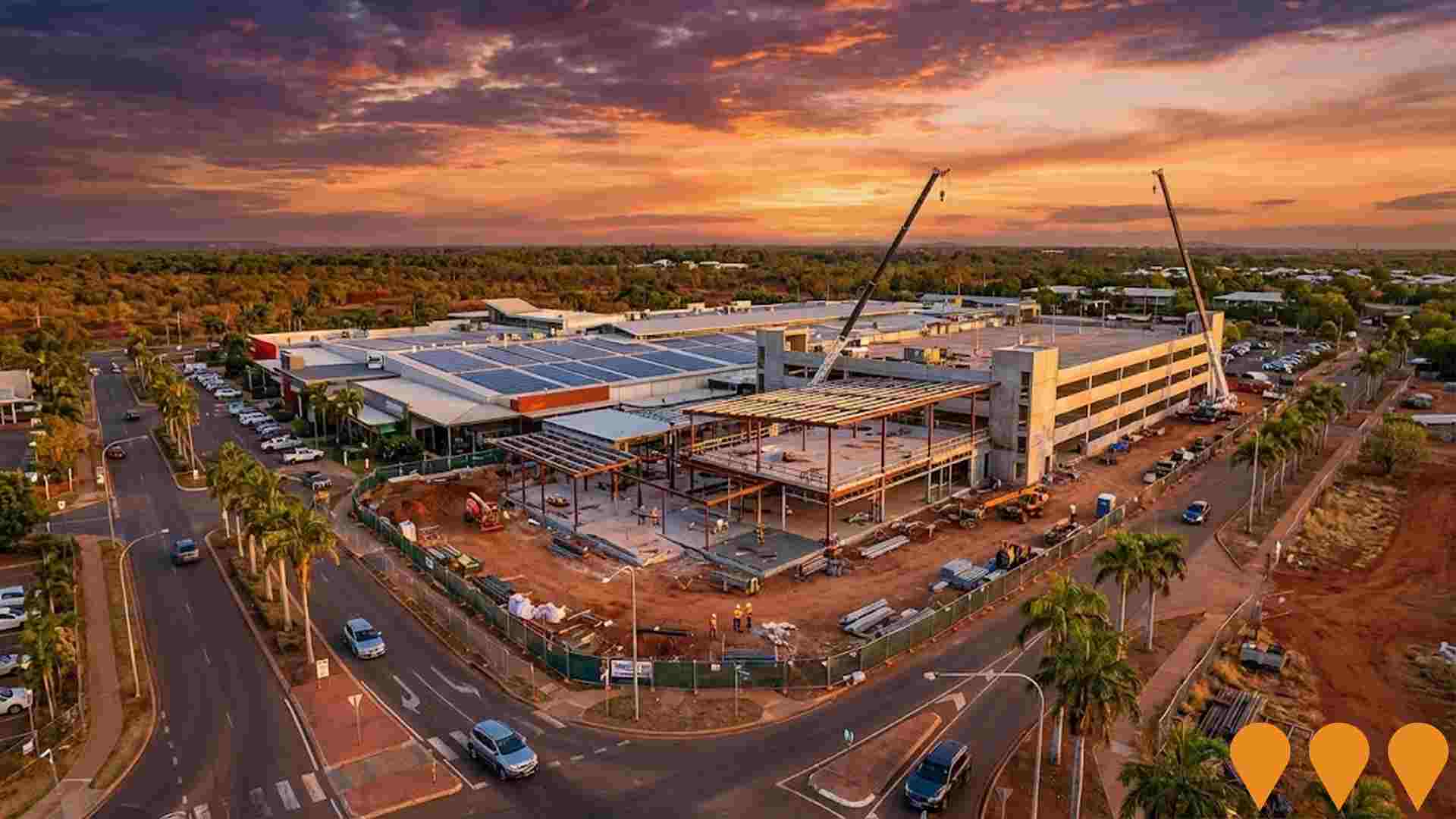
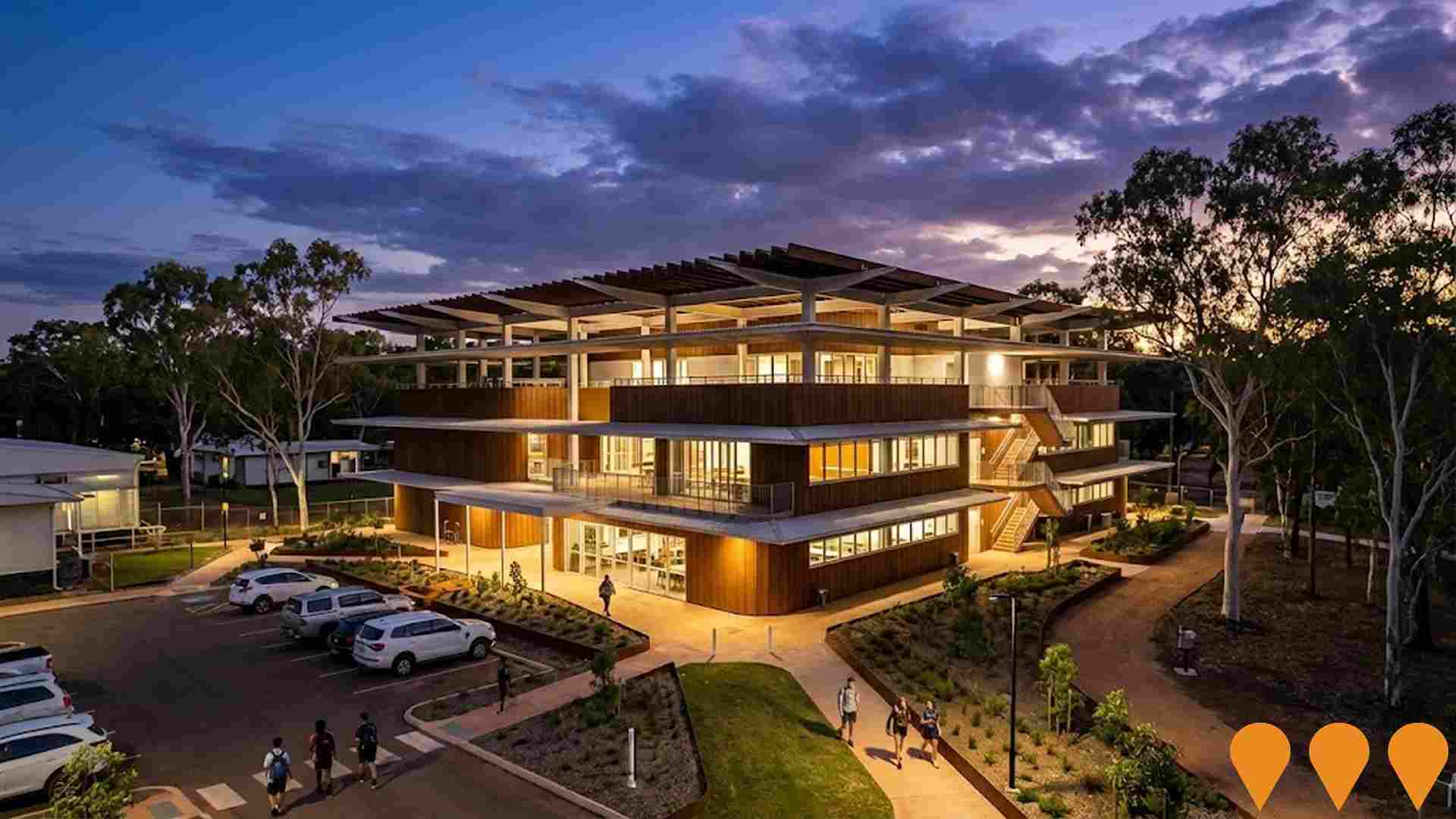
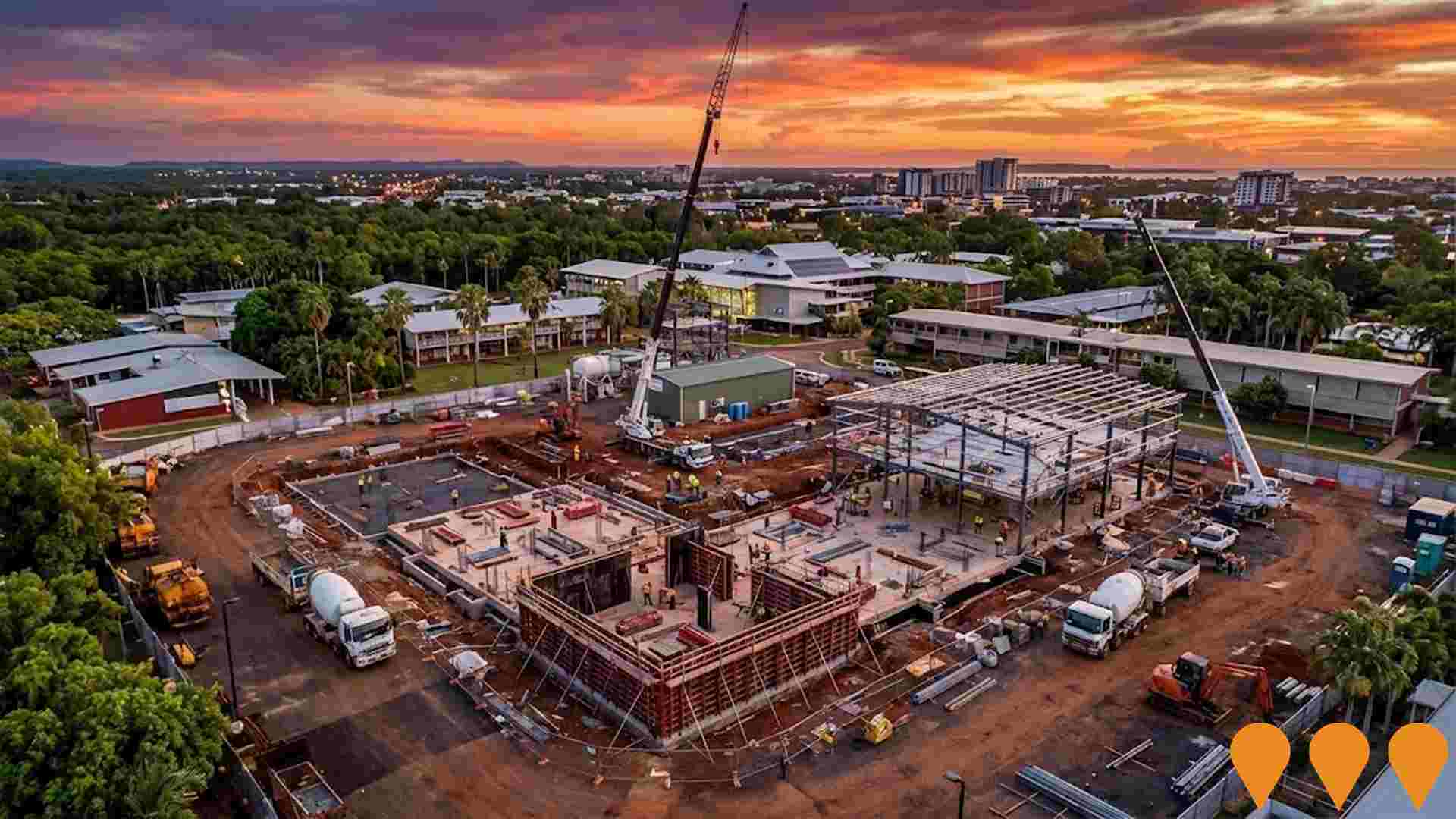
An area's long-term performance is heavily shaped by local infrastructure changes, major projects, and planning policies. AreaSearch has identified 4 key projects that are likely to influence the local area. Chief among these are the Royal Darwin Hospital Mental Health Inpatient Unit and CSSD Upgrade, the Casuarina Square Redevelopment, the CDU - Centre for Better Health Futures, and the Social Housing Accelerator Payment (SHAP) - Greater Darwin / Nightcliff, with details on the most relevant initiatives provided below.
Professional plan users can use the search below to filter and access additional projects.
INFRASTRUCTURE SEARCH
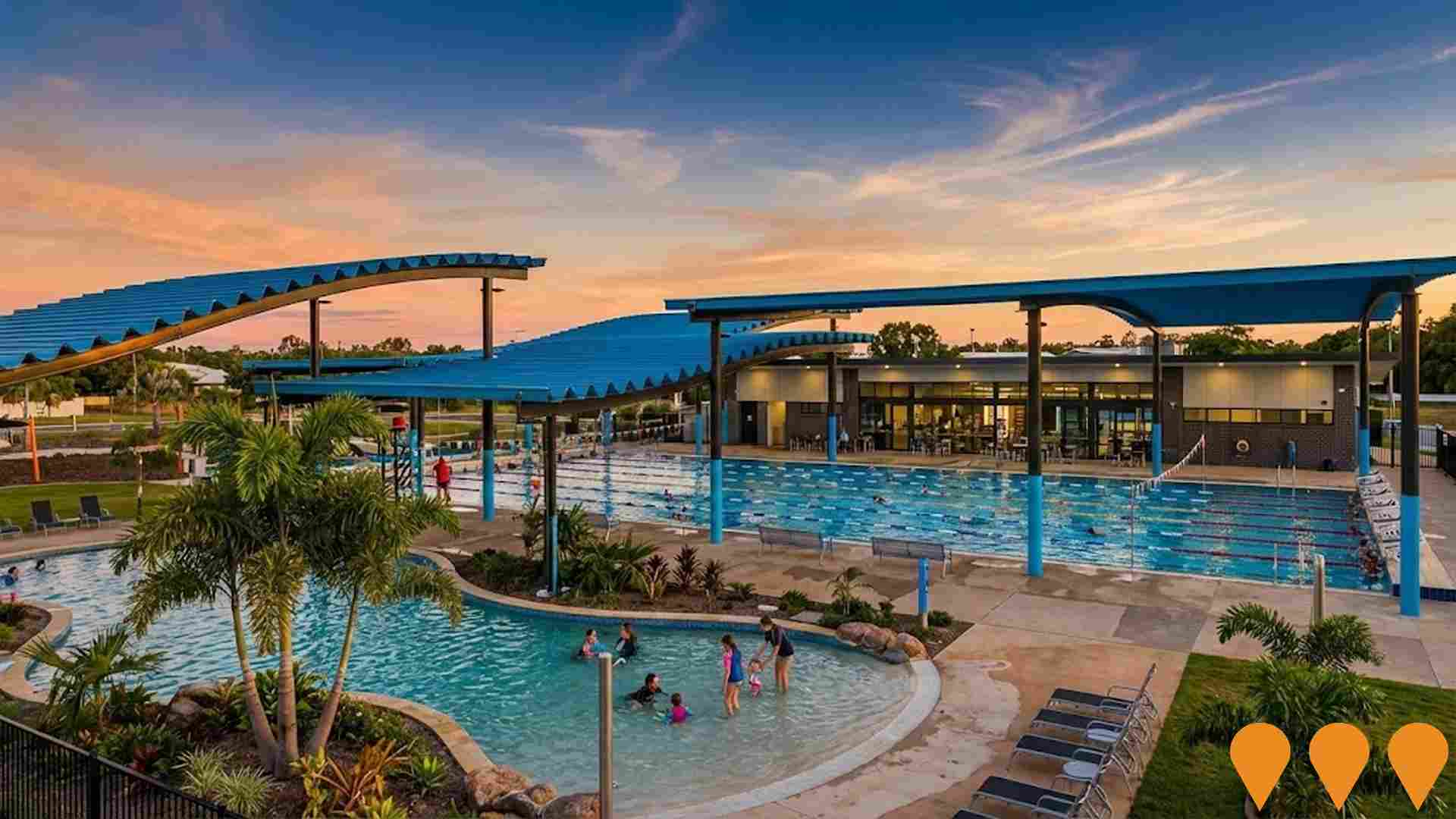
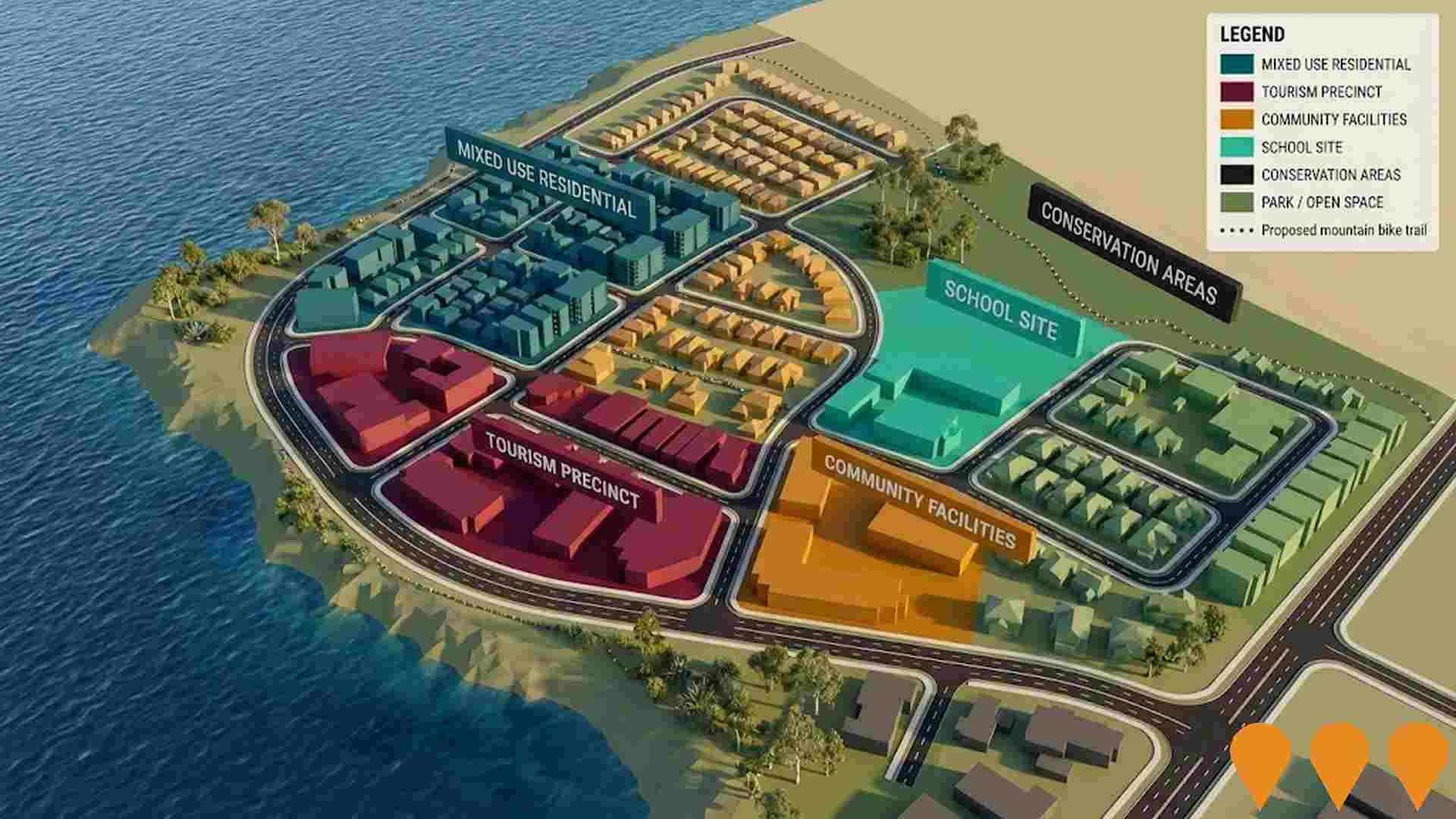
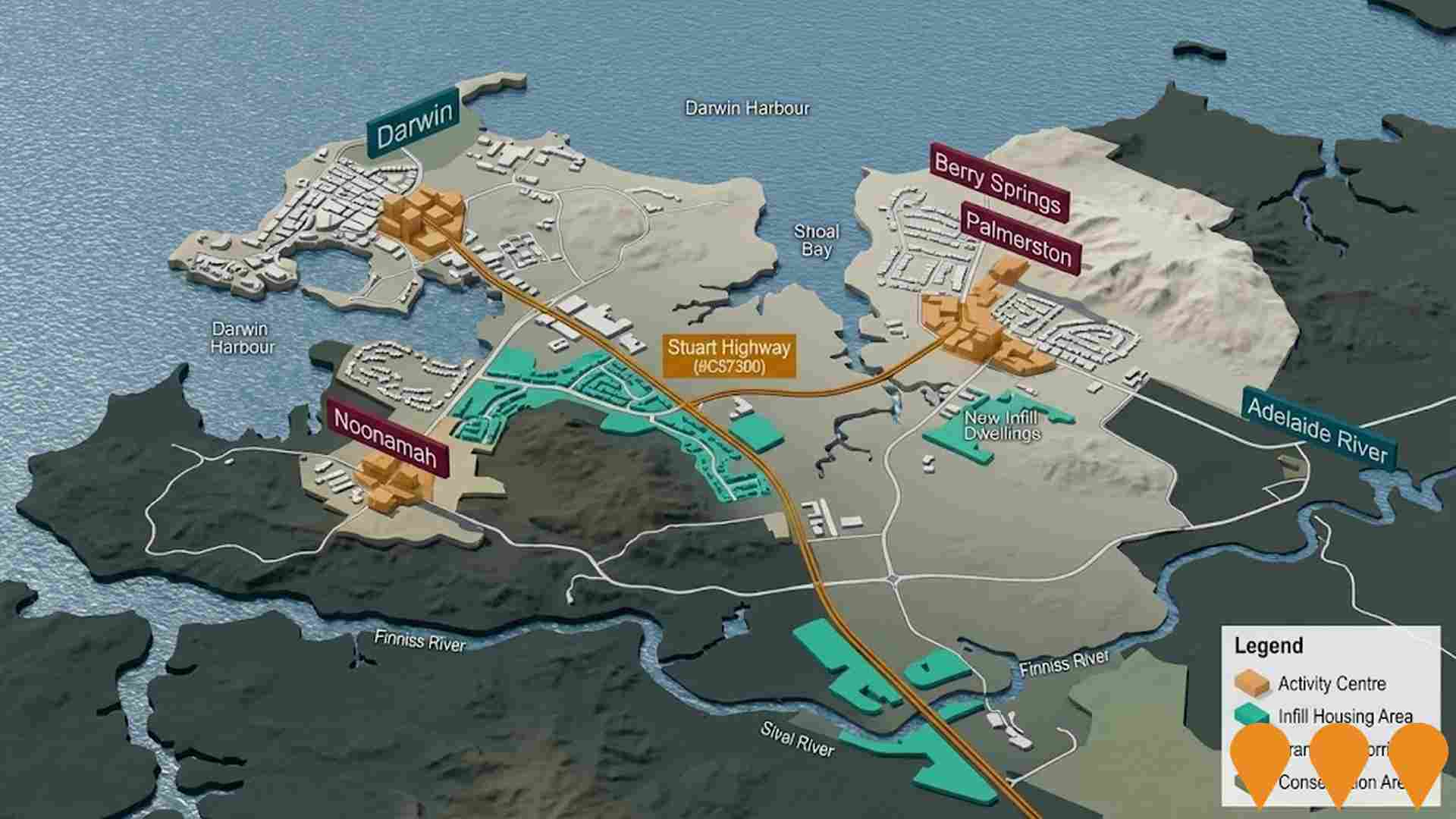
 Denotes AI-based impression for illustrative purposes only, not to be taken as definitive under any circumstances. Please follow links and conduct other investigations from the project's source for actual imagery. Developers and project owners wishing us to use original imagery please Contact Us and we will do so.
Frequently Asked Questions - Infrastructure
Australia-Asia PowerLink (AAPowerLink)
SunCable's AAPowerLink is a large renewable generation, battery storage and HVDC transmission project in the Northern Territory. The project has major environmental approvals from the Northern Territory and Australian governments, conditional Singapore approval to import 1.75 GW from 2035, Indonesian subsea permits, a Singapore-Australia cross-border electricity trade framework and a 70-year Indigenous Land Use Agreement for Powell Creek. It is being staged to supply industrial customers in the Barkly region from the late 2020s, Darwin from the early 2030s, and Southeast Asia from the mid-2030s, with final investment decision targeted for 2027.

Royal Darwin Hospital Mental Health Inpatient Unit and CSSD Upgrade
Construction of a new three-storey mental health inpatient facility providing 18 acute inpatient beds and a 6-bed Stabilisation Assessment and Referral Area (SARA). The unit connects to the Emergency Department via an elevated enclosed walkway across Nightingale Road. Internal fitout is currently underway as of May 2026. The project also encompasses upgrades to the Central Sterile Services Department (CSSD) to meet modern reprocessing standards and clinical safety requirements.

Desert Springs Octopus Renewable Energy Program
Majority Indigenous-owned developer pursuing a near-term pipeline of grid-connected solar and battery projects along the Darwin-Katherine Electricity System, with potential to expand into wind and green hydrogen. Partnership includes Octopus Australia with Larrakia Nation and Jawoyn Association to deliver utility-scale renewable energy and community benefit sharing.

Berrimah North Area Plan
Strategic area plan included in the NT Planning Scheme (since December 2014) guiding future land use west of Vanderlin Drive, enabling coordinated commercial, light industrial, employment and residential development with supporting infrastructure. Current NT Budget (2025) includes headworks funding to support implementation across the Greater Darwin region, including Berrimah North.
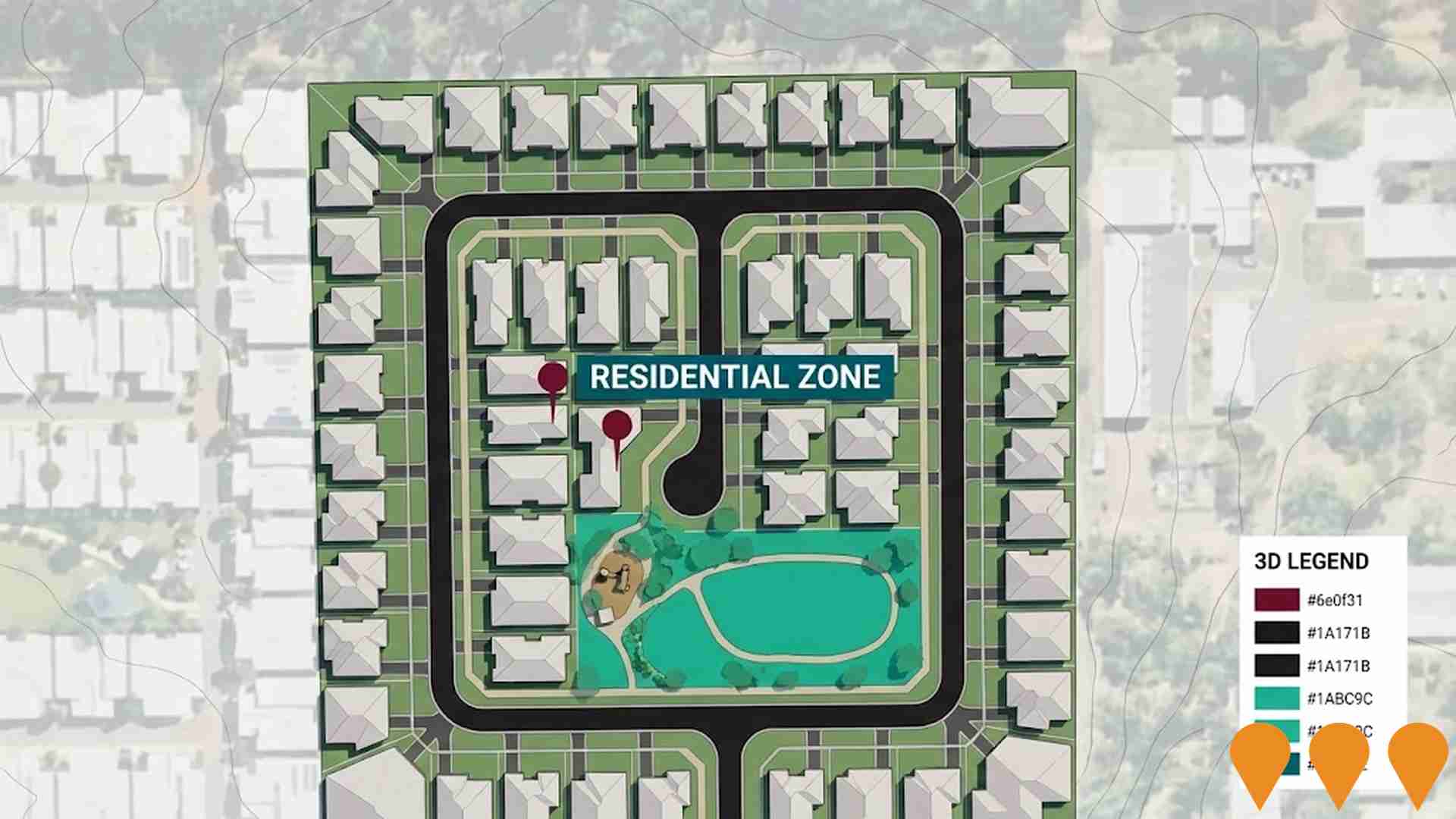
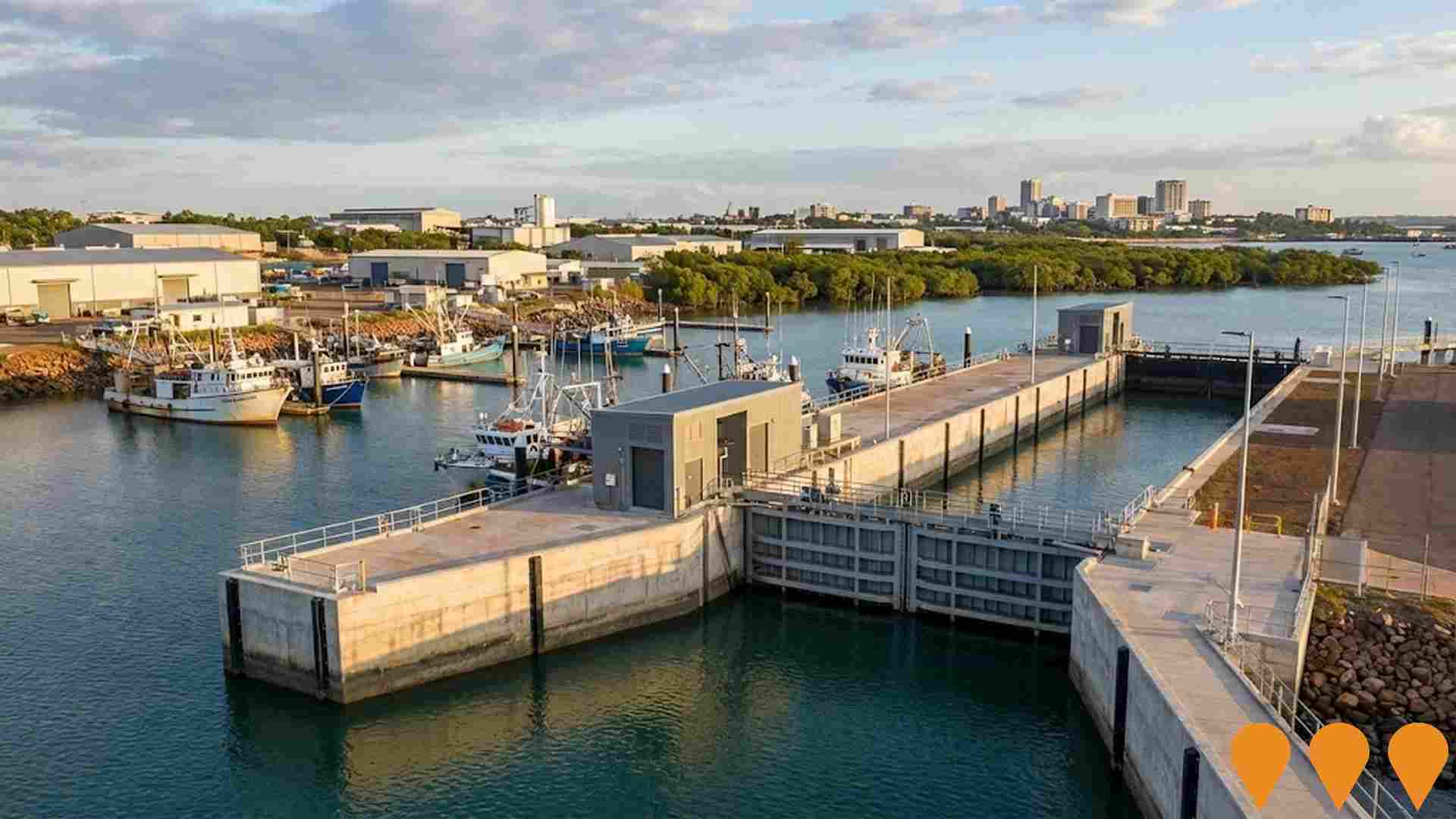
Marine Industry Park
Marine and offshore industries servicing hub at East Arm, Darwin. Stage 1 planning approval is secured for a purpose-built industrial subdivision near the new Darwin Ship Lift, with expressions of interest open for serviced lots. Existing common-user facilities include an all-tide barge ramp (first point of entry) and a secure hardstand supporting storage and fabrication activities.

Hudson Creek Power Station
12MW natural gas-fired power plant, NT's first privately owned grid-connected gas generation facility. Features 25% lower emissions than average NT gas generators. Part of dual project with Batchelor Solar Farm, creating 162 construction jobs and providing vital grid stability to Darwin-Katherine network.

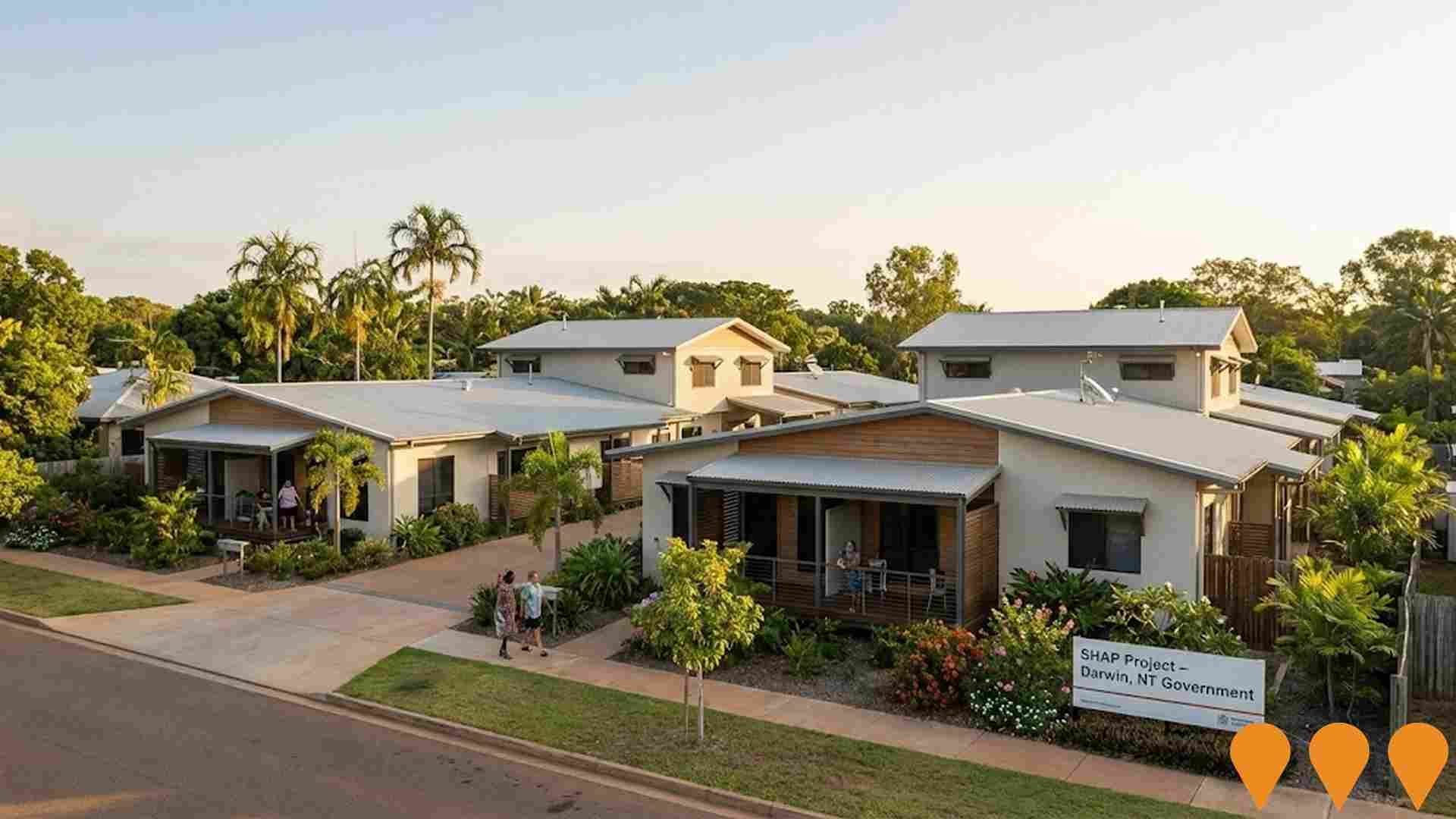
Social Housing Accelerator Payment (SHAP) - Greater Darwin / Nightcliff
Commonwealth-funded SHAP program delivering up to 100 new social and accessible homes across Greater Darwin, Katherine, Tennant Creek and Alice Springs. In Darwin's northern suburbs (including around Nightcliff), the NT Government commenced works in October 2024 with the first eight homes on vacant lots in Rapid Creek, Tiwi and Wanguri. Homes are being built to adaptable standards to better suit local climate and accessibility needs.
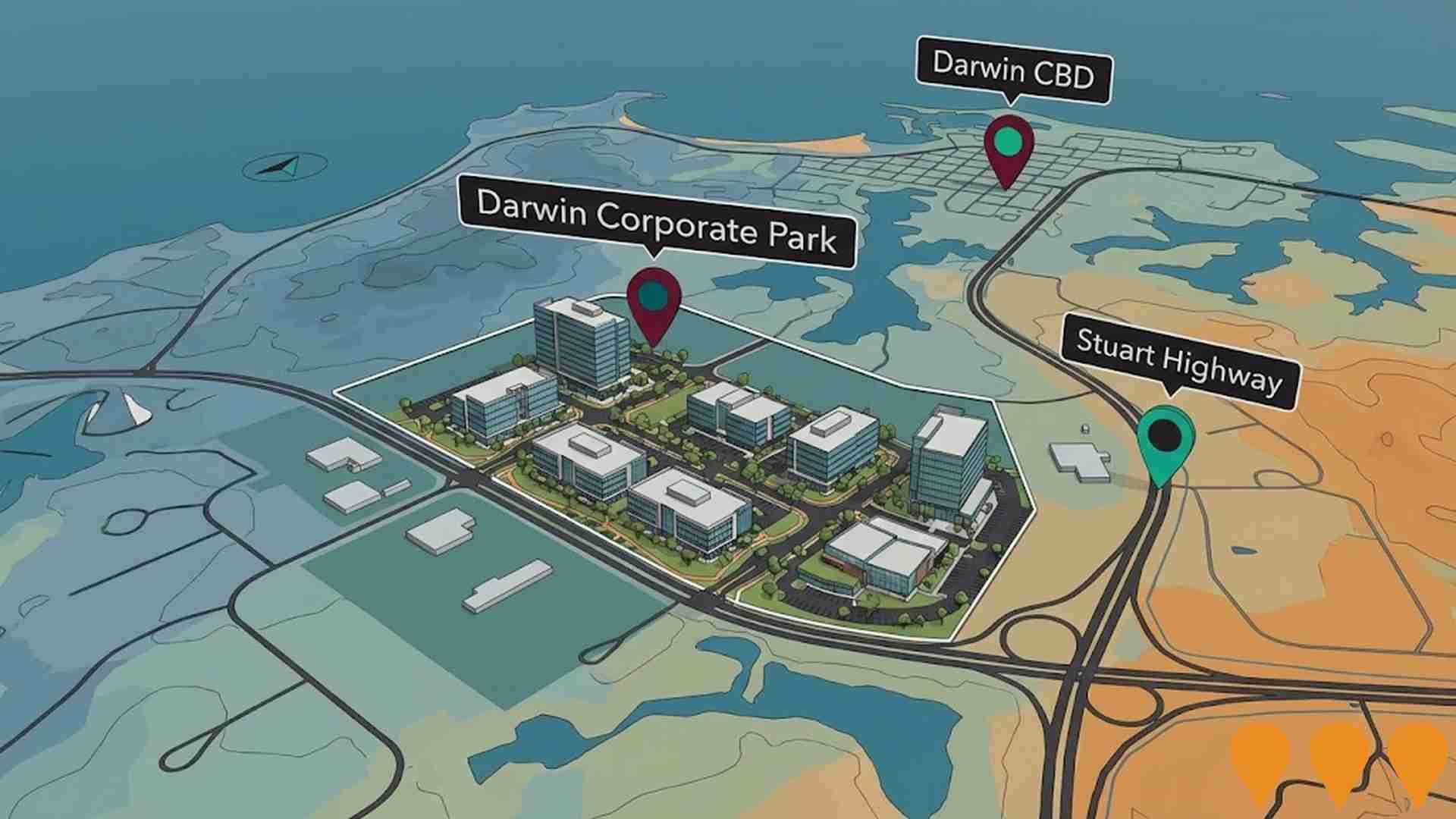
Darwin Corporate Park
Darwin Corporate Park is a premier business park for mixed use commercial office space located in what is now recognised as the centre of greater Darwin.
Employment
AreaSearch analysis reveals Alawa recording weaker employment conditions than most comparable areas nationwide
The suburb of Alawa features a highly educated workforce with strong representation in essential services, an unemployment rate of 5.3%, and steady employment levels over the prior year according to AreaSearch statistical area data. Employed residents numbered 1,149 as of March 2026, while the unemployment rate was 1.8% higher than the Greater Darwin average of 3.5%. The participation rate of 68.6% is somewhat lower than the Greater Darwin benchmark of 72.7%. Census records show that a minor 4.6% of residents worked from home, although this may have been influenced by COVID-19 lockdowns.
The primary employment sectors for local residents are health care & social assistance, public administration & safety, and accommodation & food. There is a notable concentration of workers in health care & social assistance, with representation reaching 1.2 times the regional average. Conversely, public administration & safety is underrepresented, employing 14.6% of the workforce compared to 19.5% across Greater Darwin. A comparison of the Census working population against resident figures suggests that this residential pocket offers limited local employment options.
According to AreaSearch's analysis of SALM and ABS data aggregated from broader statistical regions, the labour force expanded by 0.7% over the 12-month period, while employment dipped by 0.1%, leading to an increase of 0.8 percentage points in the unemployment rate. By comparison, Greater Darwin saw employment grow by 0.4% and the labour force expand by 0.8%, with the unemployment rate rising by 0.3 percentage points. Jobs and Skills Australia's national employment projections from May-25 offer additional context on future demand trends in Alawa. These projections, spanning five and ten-year horizons, have been applied to the local workforce mix to model future trends. Nationwide employment is projected to grow by 6.6% over five years and 13.7% over ten years, though rates vary significantly by sector. Applying these industry projections to the local employment structure suggests Alawa's employment base should grow by 6.6% over five years and 13.7% over ten years, noting that this is a simple weighted projection for illustration and does not incorporate local population forecasts.
Frequently Asked Questions - Employment
Income
Income analysis reveals strong economic positioning, with the area outperforming 60% of locations assessed nationally by AreaSearch
According to the latest ATO postcode statistics for the 2023 financial year, local incomes in Alawa fall below the national benchmark, with a median of $54,865 and an average of $63,896. This is lower than Greater Darwin, where the median income is $66,956 and the average is $77,199. Adjusting for Wage Price Index growth of 9.41% since the 2023 financial year, estimated incomes as of March 2026 would be around $60,028 for the median and $69,909 for the average. Data from the 2021 Census places household, family, and personal earnings in Alawa near the 70th percentile nationally. The largest income bracket is the $1,500 - 2,999 weekly range, accounting for 34.8% of the population (788 residents), which mirrors regional trends where 36.7% fall into this band. Housing costs consume 13.8% of earnings, while strong relative disposable income places residents in the 74th percentile, and the area ranks in the 5th decile of the SEIFA income index.
Frequently Asked Questions - Income
Housing
Alawa is characterized by a predominantly suburban housing profile, with above-average rates of outright home ownership
At the time of the most recent Census, the local housing mix consisted of 88.0% houses and 12.0% other dwellings (including townhouses, apartments, and alternative structures), compared to 63.5% houses and 36.5% other dwellings across metropolitan Darwin. Home ownership in Alawa was considerably higher than the Darwin metro average, sitting at 23.8%, while the remaining properties were held with a mortgage (39.4%) or rented (36.8%). The median monthly mortgage payment of $1,777 was well below the Darwin metro average, and the median weekly rent was $340, compared to metropolitan Darwin averages of $2,100 and $385. Nationally, mortgage repayments in Alawa are lower than the Australian average of $1,863, and rents are below the national figure of $375.
Frequently Asked Questions - Housing
Household Composition
Alawa features high concentrations of group households, with a higher-than-average median household size
Families make up the majority of households at 76.0%, consisting of couples with children at 33.6%, couples without children at 26.2%, and single parents at 13.8%. Non-family living arrangements account for the remaining 24.0%, with single-person households representing 17.4% and group households making up 7.1%. The average household size stands at 2.8 people, which is larger than the Greater Darwin average of 2.6.
Frequently Asked Questions - Households
Local Schools & Education
Educational attainment in Alawa aligns closely with national averages, showing typical qualification patterns and performance metrics
The educational profile of the area is distinct within the region, with university graduation rates at 35.7% of residents aged 15+, which is higher than both the NT average of 27.3% and the national figure of 30.4%, pointing to a strong focus on tertiary education. Bachelor degrees are the most common qualification at 20.5%, followed by postgraduate degrees at 11.5% and graduate diplomas at 3.7%. Technical and trade qualifications are also prominent, with 30.5% of residents aged 15+ holding vocational qualifications, split between advanced diplomas (10.3%) and certificates (20.2%).
The level of educational enrollment is quite high, with 35.5% of residents currently undertaking formal study. Within this group, 12.1% are attending primary school, 8.2% are in tertiary education, and 6.8% are enrolled in secondary education.
Frequently Asked Questions - Education
Schools Detail
Nearby Services & Amenities
Transport
Transport servicing is high compared to other areas nationally based on assessment of service frequency, route connectivity and accessibility
Analysis of transit options indicates 14 active transport stops operate in Alawa, consisting of various bus options. These stops connect to 29 routes, which combine to offer 2,162 weekly passenger trips. Transport access is classified as excellent, with typical resident dwellings situated 150 meters from the nearest stop. Because the area is mostly residential, many workers commute out of the suburb, with private cars being the primary mode of travel at 85% and cycling at 4%. Dwellings have an average of 1.6 vehicles. A low 4.6% of residents work from home, based on the 2021 Census, which may reflect the impact of pandemic conditions.
Across all routes, service frequency averages 308 trips per day, which translates to roughly 154 weekly trips for each transport stop.
Frequently Asked Questions - Transport
Transport Stops Detail
Health
Alawa's residents are healthier than average in comparison to broader Australia with a fairly standard level of common health conditions seen across both young and old age cohorts
Health indicators show favorable outcomes for Alawa residents, with AreaSearch's analysis of mortality and morbidity demonstrating outcomes that align closely with national averages. The prevalence of common health conditions is standard across both younger and older cohorts, while private health insurance coverage is slightly below the SA2 average at approximately 52% of the population (~1,180 people), compared to 57.8% in Greater Darwin.
Arthritis and asthma are the most prevalent chronic conditions in the locality, affecting 5.7 and 5.6% of residents respectively. Conversely, 76.5% of the population reported having no chronic medical conditions, compared to 77.1% in Greater Darwin. Residents under the age of 65 experience health outcomes that are better than average. Those aged 65 and older make up 12.8% of the population (290 people), which is higher than the 11.0% average for Greater Darwin. Seniors in the area exhibit above-average health profiles, with national rankings that exceed those of the overall local population.
Frequently Asked Questions - Health
Cultural Diversity
Alawa is among the most culturally diverse areas in the country based on AreaSearch assessment of a range of language and cultural background related metrics
Alawa exhibits high cultural diversity, with 38.1% of the population using a non-English language at home and 41.5% born outside Australia. Christianity is the dominant religion, representing 38.2% of the population. A notable divergence from regional patterns is seen in Buddhism, which accounts for 5.3% of local residents compared to 3.3% across Greater Darwin.
Looking at ancestral backgrounds, the three most common ancestries in Alawa are English at 19.6%, Other at 17.3%, and Australian at 17.2%, the latter being significantly lower than the regional average of 22.6%. There are also distinct variations in other ethnic backgrounds: Filipino residents make up 4.8% of the population (compared to 3.8% regionally), New Zealanders represent 1.2% (compared to 0.6%), and Greek ancestry stands at 4.1% (compared to 2.3%).
Frequently Asked Questions - Diversity
Age
Alawa's population is younger than the national pattern
The median age in Alawa is 35 years, which is close to the Greater Darwin average of 34 and slightly younger than the national average of 38. Compared to the broader Darwin area, Alawa features a larger share of residents aged 5 - 14 (15.6%) but a smaller proportion aged 25 - 34 (13.7%). Post-2021 Census updates show the 35 to 44 age cohort has grown from 15.5% to 17.9% of the population, and the 5 to 14 group increased from 13.8% to 15.6%. Meanwhile, the 25 to 34 cohort declined from 17.3% to 13.7%, and the 65 to 74 group fell from 8.6% to 6.9%. Demographic modeling points to significant shifts in the age structure of the suburb of Alawa by 2041. The 45 to 54 cohort is projected to experience the highest growth at 33%, adding 95 residents to reach 383, while the number of residents aged 65 to 74 is expected to decrease by 19.