Chart Color Schemes
This analysis uses Suburbs and Localities (SAL) boundaries, which can materially differ from Statistical Areas (SA2) even when sharing the same name.
SAL boundaries are defined by Australia Post and the Australian Bureau of Statistics to represent commonly-known suburb names used in postal addresses.
Statistical Areas (SA2) are designed for census data collection and may combine multiple suburbs or use different geographic boundaries. For comprehensive analysis, consider reviewing both boundary types if available.
est. as @ -- *
2021 Census | -- people





Sales Activity


Curious about local property values? Filter the chart to assess the volume and appreciation (including resales) trends and regional comparisons, or scroll to the map below view this information at an individual property level.
Find a Recent Sale

Sales Detail
Population
An assessment of population growth drivers in Bayview reveals an overall ranking slightly below national averages considering recent, and medium term trends
Based on evaluation of ABS demographic releases for the wider region, alongside newly validated addresses by AreaSearch since the Census, the suburb of Bayview (NT) has an estimated residency of 1,784 individuals as of May 2026. This indicates an expansion of 82 people (4.8%) relative to the 2021 Census, which recorded 1,702 individuals. The change is calculated from the resident population of 1,784, modeled by AreaSearch using the latest ERP dataset published by the ABS (June 2025) and subsequent address validation. This level of residency yields a density of 1,351 persons per square kilometer, exceeding the average across national locations evaluated by AreaSearch. Growth was driven mostly by overseas migration, which accounted for approximately 52.0% of the overall population gains recently.
AreaSearch implements ABS/Geoscience Australia projections for each SA2 region, published in 2024 using 2022 as the base year. For any SA2 regions lacking this coverage, and to calculate expansion in the years after 2032, AreaSearch applies growth rates by age cohort to each area, as supplied by the ABS in its latest Greater Capital Region projections (published in 2023, utilizing 2022 data). Observing ongoing demographic trends, a population increase just below the median of Australian statistical areas is anticipated, with the suburb of Bayview (NT) projected to add 182 persons by 2041 using aggregated SA2-level forecasts, representing an overall rise of 10.2% across the 16 years.
Frequently Asked Questions - Population
Development
The level of residential development activity in Bayview is very low in comparison to the average area assessed nationally by AreaSearch
Bayview has seen a mere 2 dwelling approvals over the last five years. This points to a suburb that is mostly completed, with very little vacant land left for new projects. Established areas like this typically experience steady demand for existing properties because buyers have almost no options for new builds.
In comparison to Greater Darwin, Bayview displays far lower levels of building activity (70.0% below the regional average per capita). This limited pipeline of new builds generally supports demand and prices for existing homes, even though building work has accelerated lately. This level of activity is also below the national average, highlighting the established profile of the suburb and hinting at potential planning restrictions.
Frequently Asked Questions - Development
Development applications around Bayview (NT)
Loading development applications…
| Lodged | Address | Description | Type | Distance | Status |
|---|
SOURCE: Planning portals and council registers, compiled by AreaSearch. Distance & bearing measured from the suburb midpoint.
Infrastructure
Bayview has emerging levels of nearby infrastructure activity, ranking in the 23rdth percentile nationally
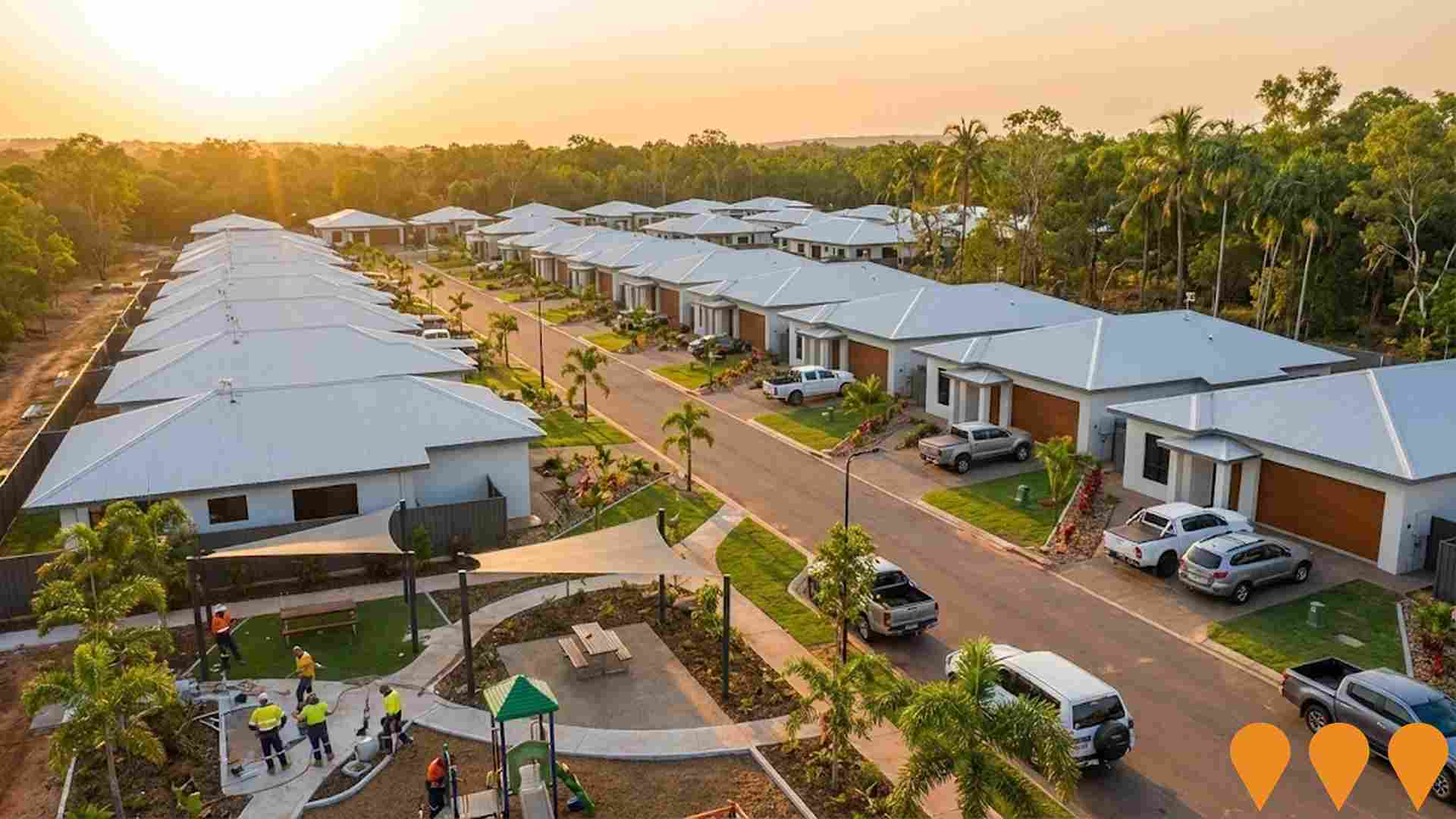
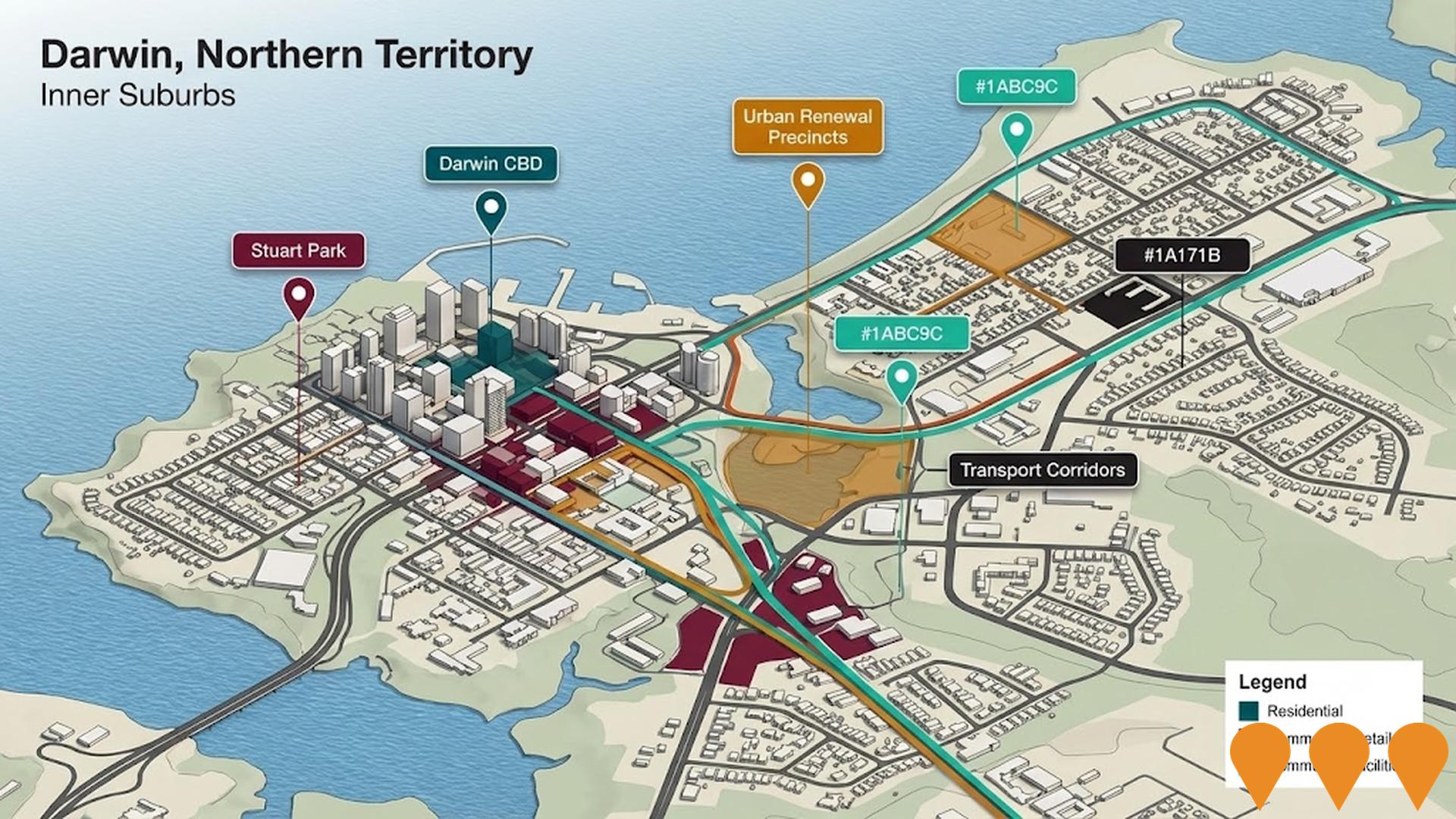
Local infrastructure projects, major developments, and urban planning changes have a significant effect on a suburb's performance. In total, 3 projects have been identified by AreaSearch that are expected to impact the local area. Main projects include the Royal Darwin Hospital Expansion, Darwin Residential Development - Berrimah, the Darwin Inner Suburbs Area Plan, and the Darwin City Stadium, with the listed items showing those of greatest local relevance.
Professional plan users can use the search below to filter and access additional projects.
INFRASTRUCTURE SEARCH
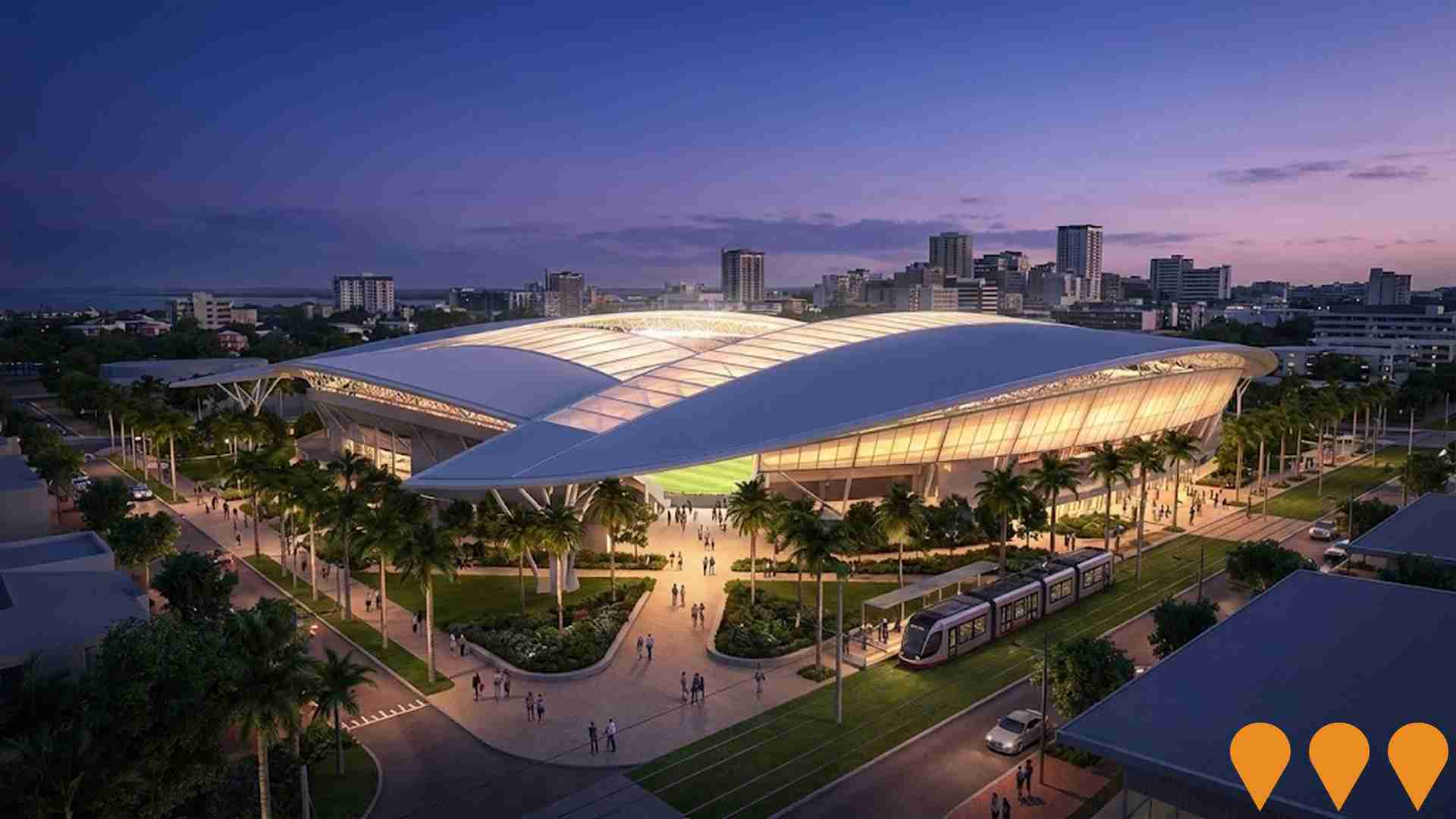
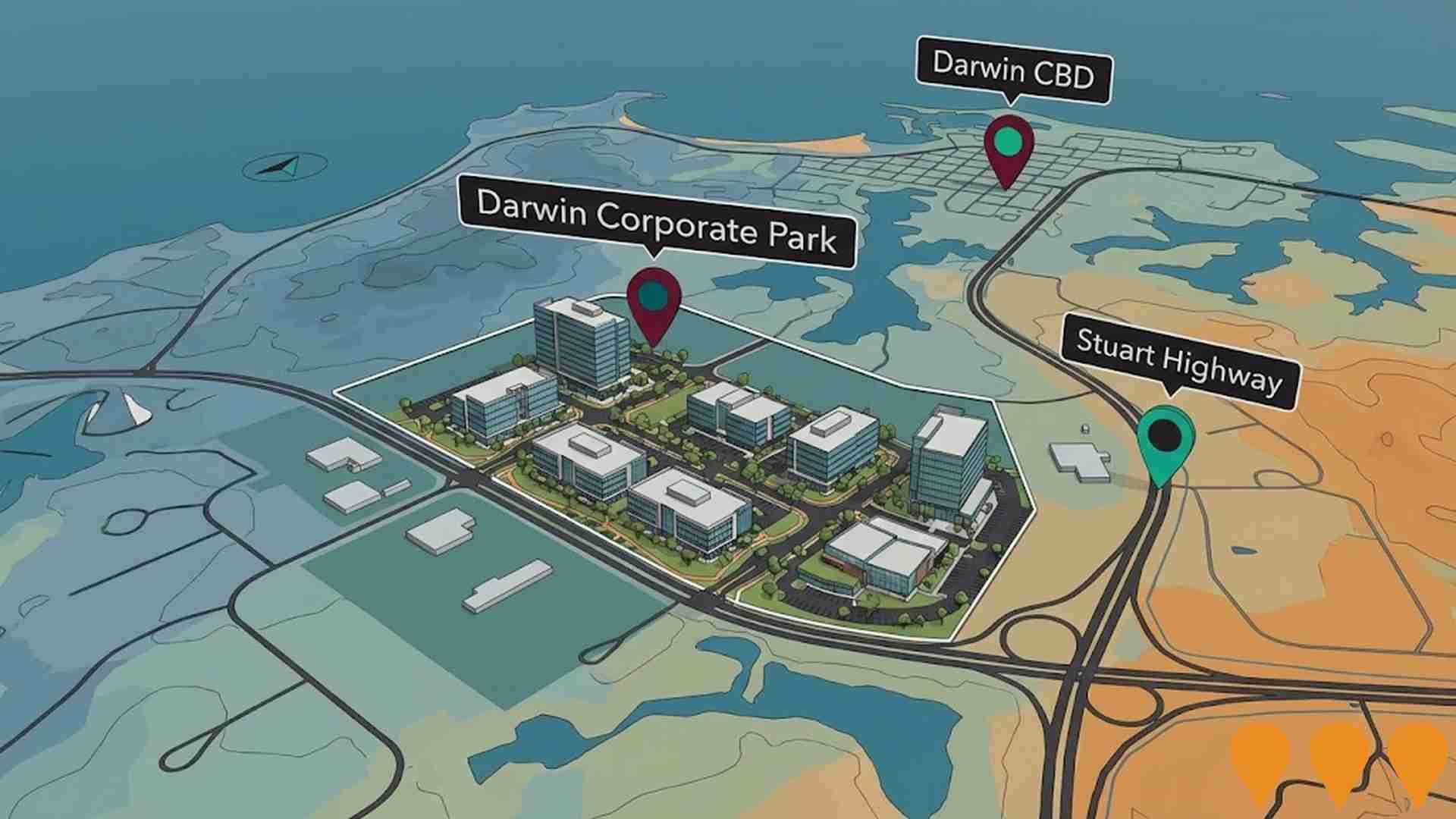
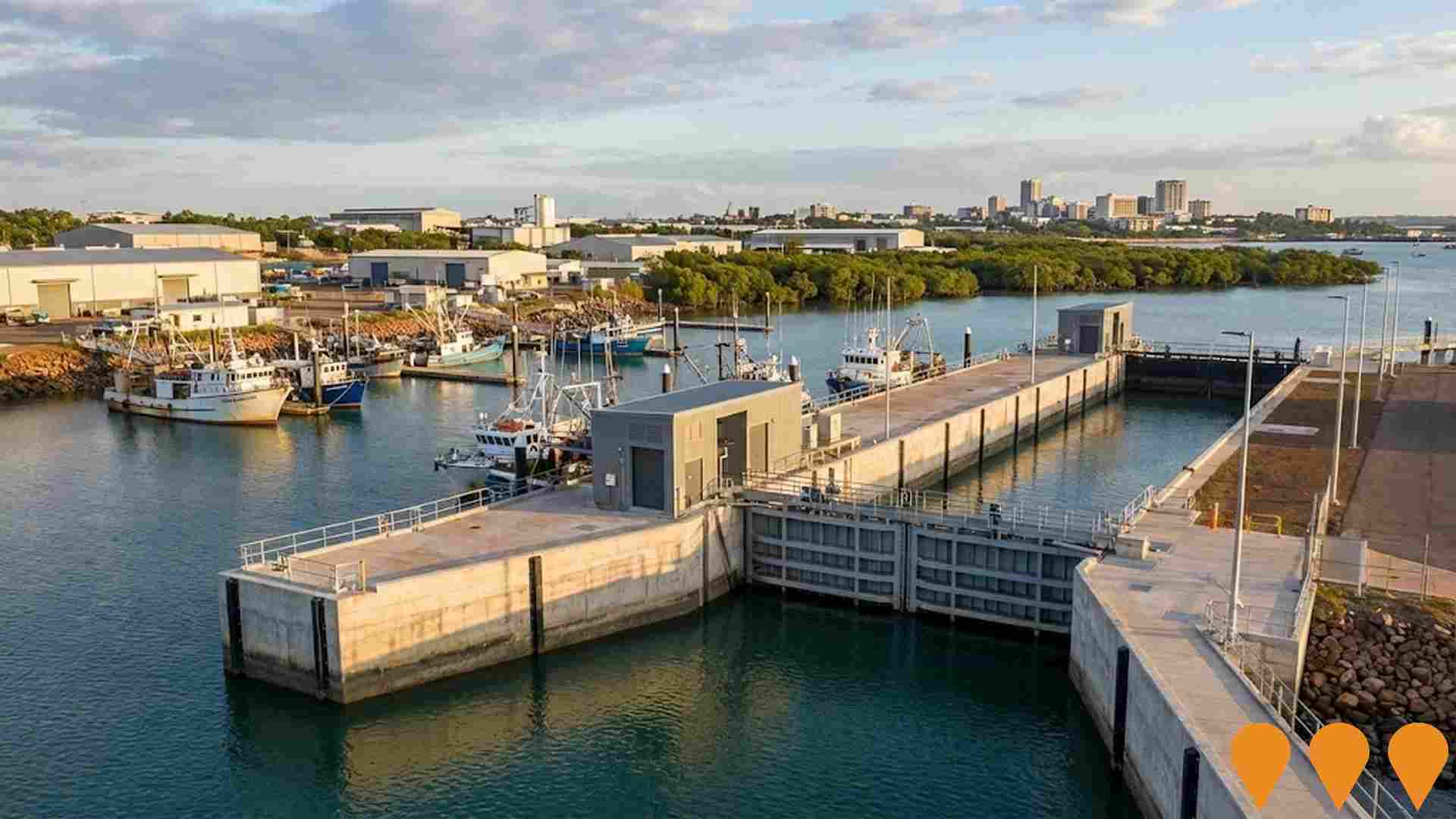
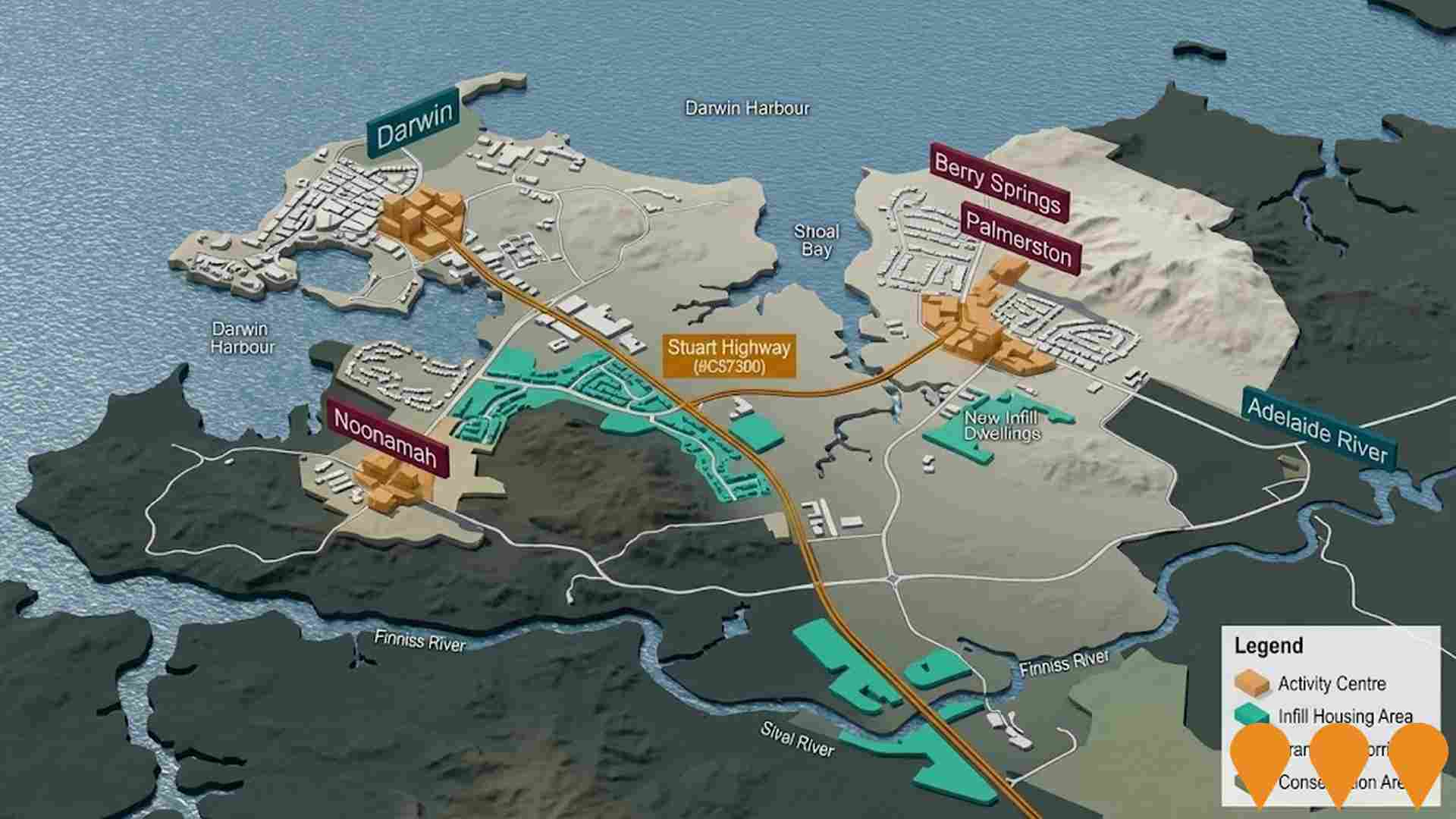
 Denotes AI-based impression for illustrative purposes only, not to be taken as definitive under any circumstances. Please follow links and conduct other investigations from the project's source for actual imagery. Developers and project owners wishing us to use original imagery please Contact Us and we will do so.
Frequently Asked Questions - Infrastructure
Middle Arm Sustainable Development Precinct
A 1,500-hectare industrial hub designed for low-carbon industries including green hydrogen, carbon capture and storage (CCS), and critical minerals processing. The precinct serves as a strategic location for advanced manufacturing and low-emission energy export. It features common-user infrastructure like shared shipping channels and modular offloading facilities. As of May 2026, the project remains in the planning phase with a draft Environmental Impact Statement (EIS) in progress and a $1.5 billion equity commitment from the Australian Government for enabling infrastructure.

Royal Darwin Hospital Mental Health Inpatient Unit and CSSD Upgrade
Construction of a new three-storey mental health inpatient facility providing 18 acute inpatient beds and a 6-bed Stabilisation Assessment and Referral Area (SARA). The unit connects to the Emergency Department via an elevated enclosed walkway across Nightingale Road. Internal fitout is currently underway as of May 2026. The project also encompasses upgrades to the Central Sterile Services Department (CSSD) to meet modern reprocessing standards and clinical safety requirements.

Australia-Asia PowerLink (AAPowerLink)
SunCable's AAPowerLink is a large renewable generation, battery storage and HVDC transmission project in the Northern Territory. The project has major environmental approvals from the Northern Territory and Australian governments, conditional Singapore approval to import 1.75 GW from 2035, Indonesian subsea permits, a Singapore-Australia cross-border electricity trade framework and a 70-year Indigenous Land Use Agreement for Powell Creek. It is being staged to supply industrial customers in the Barkly region from the late 2020s, Darwin from the early 2030s, and Southeast Asia from the mid-2030s, with final investment decision targeted for 2027.

Darwin City Stadium
The Darwin City Stadium is a proposed 25,000-seat multi-purpose venue designed to anchor the Northern Territory's bid for the 20th AFL license. Following the May 2024 release of the strategic business case by the AFL Team NT Taskforce, the project remains a centerpiece of a 10-year roadmap to establish a local AFL club. The stadium is planned for the former Shell fuel tank site and is intended to host AFL, Cricket, Rugby, and Soccer, while supporting the NT Government's 2030 population growth and liveability targets.
Darwin to Palmerston Mass Transit Corridor
A long-term strategic concept to reserve a rapid transit corridor between Darwin CBD and Palmerston, broadly along the Stuart Highway. The Darwin Regional Transport Plan 2018 identifies the potential for future bus rapid transit or light rail along established public transport routes as the region grows toward a longer term population of 250,000. There is no funded project, no business case, and no formal Stage 1 scope. The concept has been raised periodically in public debate (2014, 2017, 2020) but has not progressed beyond corridor preservation consideration. Current NT Government public transport activity is focused on bus network reform rather than rail. The notional valuation here is indicative only and based on comparable Australian light rail builds.

Desert Springs Octopus Renewable Energy Program
Majority Indigenous-owned developer pursuing a near-term pipeline of grid-connected solar and battery projects along the Darwin-Katherine Electricity System, with potential to expand into wind and green hydrogen. Partnership includes Octopus Australia with Larrakia Nation and Jawoyn Association to deliver utility-scale renewable energy and community benefit sharing.

Royal Darwin Hospital Expansion
$125 million hospital expansion adding 150 beds, new emergency department, and specialized cardiac and cancer treatment facilities to serve the growing Top End population.

Marine Industry Park
Marine and offshore industries servicing hub at East Arm, Darwin. Stage 1 planning approval is secured for a purpose-built industrial subdivision near the new Darwin Ship Lift, with expressions of interest open for serviced lots. Existing common-user facilities include an all-tide barge ramp (first point of entry) and a secure hardstand supporting storage and fabrication activities.



Employment
AreaSearch analysis of employment trends sees Bayview performing better than 90% of local markets assessed across Australia
Bayview has a highly qualified workforce, a strong representation of essential services industries, an unemployment rate of only 1.0%, and stable employment patterns over the past year, according to AreaSearch data compiled from statistical areas. As of March 2026, 1,194 local residents are employed, with the unemployment rate sitting 2.5% below the Greater Darwin rate of 3.5%, and the participation rate is exceptionally high (79.3% compared to 72.7% in Greater Darwin). According to Census records, a low 5.9% of the workforce worked from home, though the influence of Covid-19 restrictions should be kept in mind.
The primary employment sectors for local residents are public administration & safety, health care & social assistance, and education & training. There is a particularly high concentration of professionals in the professional & technical sector, where employment is 1.4 times the regional average. Conversely, health care & social assistance is under-represented, employing only 11.3% of Bayview's workforce compared to 14.2% in Greater Darwin. This mostly residential suburb seems to provide few jobs within its borders, as shown by comparing the count of Census working residents to the total resident population.
Based on AreaSearch's study of SALM and ABS statistics aggregated from broader regions, the 12 months leading to March 2026 saw employment expand by 0.3% while the labour force grew by 0.4%, leading to a 0.2 percentage point rise in the unemployment rate. In comparison, Greater Darwin recorded employment growth of 0.4%, a labor force expansion of 0.8%, and a 0.3 percentage point increase in unemployment. National employment forecasts from Jobs and Skills Australia released in May-25 provide extra context for potential future labor needs in Bayview. These projections, spanning five and ten-year horizons, have been matched with the local workforce structure to model future growth. While national employment is projected to grow by 6.6% over five years and 13.7% over ten years, the expected growth rates vary widely by industry. Applying these industry projections to Bayview's specific workforce suggests local jobs should grow by 6.4% over five years and 13.1% over ten years (note that this is a basic weighted projection for illustration and does not incorporate local population forecasts).
Frequently Asked Questions - Employment
Income
The economic profile demonstrates exceptional strength, placing the area among the top 10% nationally based on comprehensive AreaSearch income analysis
The most recent postcode-level ATO data from AreaSearch for financial year 2023 shows that personal earnings in Bayview rank in the top percentile nationally, with a median of $84,679 and an average of $104,535. This is significantly higher than the Greater Darwin median of $66,956 and average of $77,199. Adjusted for Wage Price Index growth of 9.41% since financial year 2023, current figures are estimated to be around $92,647 (median) and $114,372 (average) as of March 2026. Data from the 2021 Census indicates household, family, and individual incomes in Bayview are all highly ranked, placing between the 97th and 98th percentiles across the country. Income breakdown shows the $4000+ bracket is the largest, containing 36.1% of residents (644 people), whereas regionally the most common bracket is $1,500 - 2,999 with 36.7% of the population. High earners are highly prevalent, with 56.6% receiving more than $3,000 weekly, showing strong spending power. Housing costs take up 13.7% of income, while these strong earnings put residents in the 98th percentile for disposable income and the suburb's SEIFA income score is in the 10th decile.
Frequently Asked Questions - Income
Housing
Bayview features a more urban dwelling mix with significant apartment living, with above-average rates of outright home ownership
Residential structures in Bayview at the time of the latest Census consisted of 38.5% standalone houses and 61.4% other dwelling types (such as townhouses, apartments, and alternative housing), compared to Darwin metro's split of 63.5% houses and 36.5% other dwelling types. At the same time, home ownership in Bayview was significantly higher than the Darwin metro average, sitting at 22.5%, while the remaining homes were mortgaged (30.5%) or rented (47.0%). The median monthly mortgage payment was much higher than the Darwin metro average at $2,700, and the median weekly rent was recorded at $560, compared to regional figures of $2,100 and $385 respectively. On a national level, mortgage costs in Bayview are much higher than the Australian average of $1,863, and rents are also well above the national median of $375.
Frequently Asked Questions - Housing
Household Composition
Bayview features high concentrations of group households, with a higher-than-average median household size
Families make up the bulk of households at 75.6%, which consists of 34.5% couples with children, 30.2% couples without children, and 9.0% single parent households. The remaining 24.4% are non-family households, with single person households at 16.0% and group households making up 8.8%. The median household size of 2.7 people is slightly larger than the Greater Darwin average of 2.6.
Frequently Asked Questions - Households
Local Schools & Education
Bayview demonstrates exceptional educational outcomes, ranking among the top 5% of areas nationally based on AreaSearch's comprehensive analysis of qualification and performance metrics
Qualifications in Bayview are much higher than regional and national averages, with 40.9% of residents aged 15+ holding a university degree, compared to 27.3% in NT and 30.4% across Australia. This educational lead puts the suburb in a strong position for professional opportunities. Bachelor degrees are the most common at 28.7%, followed by postgraduate degrees (8.0%) and graduate diplomas (4.2%). Vocational and technical skills are also common, with 30.9% of residents aged 15+ holding vocational qualifications, split between advanced diplomas (10.7%) and certificates (20.2%).
Participation in study is very strong, with 31.0% of local residents currently studying in some form of structured education. This includes 9.4% in primary schools, 8.5% in high schools, and 7.8% enrolled in higher education.
Frequently Asked Questions - Education
Schools Detail
Nearby Services & Amenities
Transport
Transport servicing is good compared to other areas nationally based on assessment of service frequency, route connectivity and accessibility
Public transport data shows 5 active stops operating in Bayview, which are served by buses. These stops accommodate 12 distinct routes, which combine to provide 910 passenger trips each week. Transport access is rated as good, with residents living an average of 220 meters from their nearest stop. Because Bayview is mostly residential, the majority of residents travel elsewhere for work, with private cars remaining the primary choice for 93% of commuters. Households own an average of 1.8 vehicles, which is higher than the regional average. A relatively low 5.9% of residents work from home (2021 Census; potentially influenced by COVID-19 rules).
Service frequency averages 130 trips each day across all active routes, which translates to roughly 182 passenger trips per week at each individual stop.
Frequently Asked Questions - Transport
Transport Stops Detail
Health
Bayview's residents boast exceedingly positive health performance metrics with very low prevalence of common health conditions across all age groups
Health profiles are excellent in Bayview, according to AreaSearch's evaluation of mortality rates and the prevalence of long-term illnesses, which shows very low rates of common illnesses across all age brackets. Private health insurance coverage is exceptionally high, held by approximately 68% of the total population (1,211 people). This compares to 57.8% in Greater Darwin and a national average of 55.7%.
The most common chronic illnesses in the suburb are asthma and mental health conditions, affecting 5.1 and 5.0% of residents respectively. Conversely, 80.1% of the population reported having no chronic medical conditions, compared to 77.1% in Greater Darwin. The suburb has 7.8% of residents aged 65 and over (139 people), which is lower than the 11.0% recorded across Greater Darwin. Health outcomes for these older residents are very strong, matching the positive trends seen in the wider local population.
Frequently Asked Questions - Health
Cultural Diversity
The level of cultural diversity witnessed in Bayview was found to be above average when compared nationally for a number of language and cultural background related metrics
Bayview exhibits higher cultural diversity than most comparable areas, with 27.3% of residents born outside Australia and 25.1% speaking a non-English language at home. Christianity is the main religion, followed by 47.0% of the local population. However, the most distinct variation is in Buddhism, which is practiced by 2.7% of the population, compared to 3.3% across Greater Darwin.
Looking at parent countries of birth, the three largest ancestry groups in Bayview are English, representing 24.1% of the population, Australian at 19.5%, and Other at 10.5%. There are also notable differences in other ethnic backgrounds: Greek ancestry is highly represented at 6.5% of Bayview (compared to 2.3% regionally), South Australian ancestry is at 0.8% (compared to 0.3%), and Vietnamese ancestry is at 1.4% (compared to 0.8%).
Frequently Asked Questions - Diversity
Age
Bayview hosts a young demographic, positioning it in the bottom quartile nationwide
At 33 years, Bayview's median age matches the Greater Darwin average of 34 and is much lower than the Australian median of 38. Compared to Greater Darwin, Bayview has a larger proportion of young people aged 15 - 24 (15.4%) but fewer children aged 5 - 14 (9.9%). Post-2021 Census statistics show the 35 to 44 age cohort has expanded from 14.7% to 17.2% of the population, and the 15 to 24 cohort rose from 13.3% to 15.4%. In contrast, children aged 5 to 14 dropped from 12.1% to 9.9% and adults aged 55 to 64 declined from 11.5% to 9.7%. Age structure projections show Bayview changing considerably by 2041. The 45 to 54 cohort is expected to rise steadily, growing by 60 people (23%) from 265 to 326. Meanwhile, the 0 to 4 cohort is expected to experience no change, adding no new residents and remaining stable.