Moorak

Suburb

Rest of SA / Limestone Coast

Updated 9 Jan 2026
Chart Color Schemes
Loading map data ...
0 People

est. as @ -- *

2021 Census | -- people

Land Area
--
Land Area
Population Density
--
Density
Unemployment Rate
--
Unemployment
Development
--
Resi Approvals
Get My Report

Sales Activity

Table Chart PROFILE FAQ

Curious about local property values? Filter the chart to assess the volume and appreciation (including resales) trends and regional comparisons, or scroll to the map below view this information at an individual property level.

Find a Recent Sale
Type Specified (1) | Limit 50

Sales Detail

Population

Table Chart PROFILE FAQ

Population growth drivers in Moorak are strong compared to national averages based on AreaSearch's ranking of recent, and medium to long-term trends

As of November 2025, the estimated population of Moorak is around 1,521. This reflects an increase of 109 people since the 2021 Census, which reported a population of 1,412. The change was inferred from AreaSearch's estimate of the resident population at 1,515 following examination of the latest ERP data release by the ABS in June 2024, along with an additional three validated new addresses since the Census date. This level of population equates to a density ratio of 20 persons per square kilometer. Moorak's growth of 7.7% since the 2021 census exceeded the SA3 area (5.4%) and the non-metro area, marking it as a growth leader in the region. Overseas migration contributed approximately 56% of overall population gains during recent periods, although all drivers including natural growth and interstate migration were positive factors.

AreaSearch adopts ABS/Geoscience Australia projections for each SA2 area released in 2024 with 2022 as the base year. For areas not covered by this data and years post-2032, the SA State Government's Regional/LGA projections by age category are adopted with adjustments made employing a method of weighted aggregation of population growth from LGA to SA2 levels. Future population trends anticipate lower quartile growth for Australia's non-metropolitan areas, with Moorak expected to increase by 33 persons to 2041 based on aggregated SA2-level projections, reflecting a decrease of 2.0% in total over the 17 years.

Frequently Asked Questions - Population

What is the latest population estimate for Moorak?
Total population for Moorak was estimated to be approximately 1,521 as at Nov 25. This is based upon an estimated resident population of 1,515 from the ABS up to June 2024.
How has the population in Moorak changed since 2021?
Moorak has added approximately 109 people and shown a 7.72% increase from the 1,412 people recorded at the 2021 Census period.
What is the population density in Moorak?
The population density in Moorak is estimated at 20 persons per square kilometer based on the latest population estimate.
How much has the population grown over the past 10 years?
Over the past 10 years, the population has shown a compound annual growth rate of 0.8% per annum.
What are the main drivers of population growth in the area?
Population growth in Moorak is driven by: Overseas migration (56.00000000000001%), Natural increase (29.0%), Interstate migration (15.0%). The primary driver is Overseas migration, contributing 56.00000000000001% of overall population gains.

Development

Table Chart PROFILE FAQ

Residential development activity is lower than average in Moorak according to AreaSearch's national comparison of local real estate markets

Moorak averages three development approvals per year over the past five years, totalling 19. This low level of activity is typical in rural areas with modest housing needs and limited construction due to local demand and infrastructure capacity. Notably, the small number of approvals can significantly impact annual growth and relativity statistics.

Compared to Rest of SA and national patterns, Moorak's development activity is much lower. Recent building activity comprises solely detached houses, catering primarily to families seeking a rural lifestyle with space. Currently, Moorak reflects a transitioning market with approximately 242 people per approval. Given the expected stable or declining population, housing pressure in Moorak may ease, potentially presenting buying opportunities.

With population expected to remain stable or decline, Moorak should see reduced pressure on housing, potentially creating opportunities for buyers.

Frequently Asked Questions - Development

How many dwelling approvals have occurred in the Moorak area recently?
Dwelling approval activity in the Moorak area has seen 12 residential approvals over the past two financial years, based on AreaSearch's SA2 aggregation method. Moorak's current population of 1,521 has been supported by 3 approvals on average over recent years.
How does Moorak's development activity compare to the broader region?
Moorak has seen 0.26 approvals per 100 people in recent years, compared to 0.6 approvals in the broader region. This means that one dwelling has been approved for every 241 people in Moorak, compared to one for every 176 in the broader region.
Is the Moorak area keeping up with housing demand?
Population forecasts suggest stable or declining population, reducing pressure on housing supply in the Moorak area.
What has been the trend in development approvals over the past five years?
Looking at development activity over the past five years, Moorak's approval levels have been significantly above the yearly average of 3, indicating strong recent growth in development activity.
How does recent development compare to population growth in Moorak?
Over the past five years, the population in Moorak has grown by approximately 313 people, while 19 residential approvals were recorded. This equates to a ratio of 16.5 people added for each new dwelling approval. This high ratio suggests strong population growth relative to housing supply, potentially indicating unmet housing demand.
Are there opportunities for residential developers in Moorak?
With dwelling approval activity running at an average of 3 approvals per year and a population of 1,521, stable population forecasts suggest a mature market with selective development opportunities.

Infrastructure

PROFILE FAQ

Moorak has emerging levels of nearby infrastructure activity, ranking in the 23rdth percentile nationally

Changes in local infrastructure significantly affect an area's performance. AreaSearch has identified ten projects that could impact the region. Notable projects include Limestone Estate Residential Development, Blue Lake Solar Lighting Renewal Project, Springview Estate, and Blue Lake Sports Park Master Plan Implementation. The following list details those likely to be most relevant.

Professional plan users can use the search below to filter and access additional projects.

INFRASTRUCTURE SEARCH

All Selected

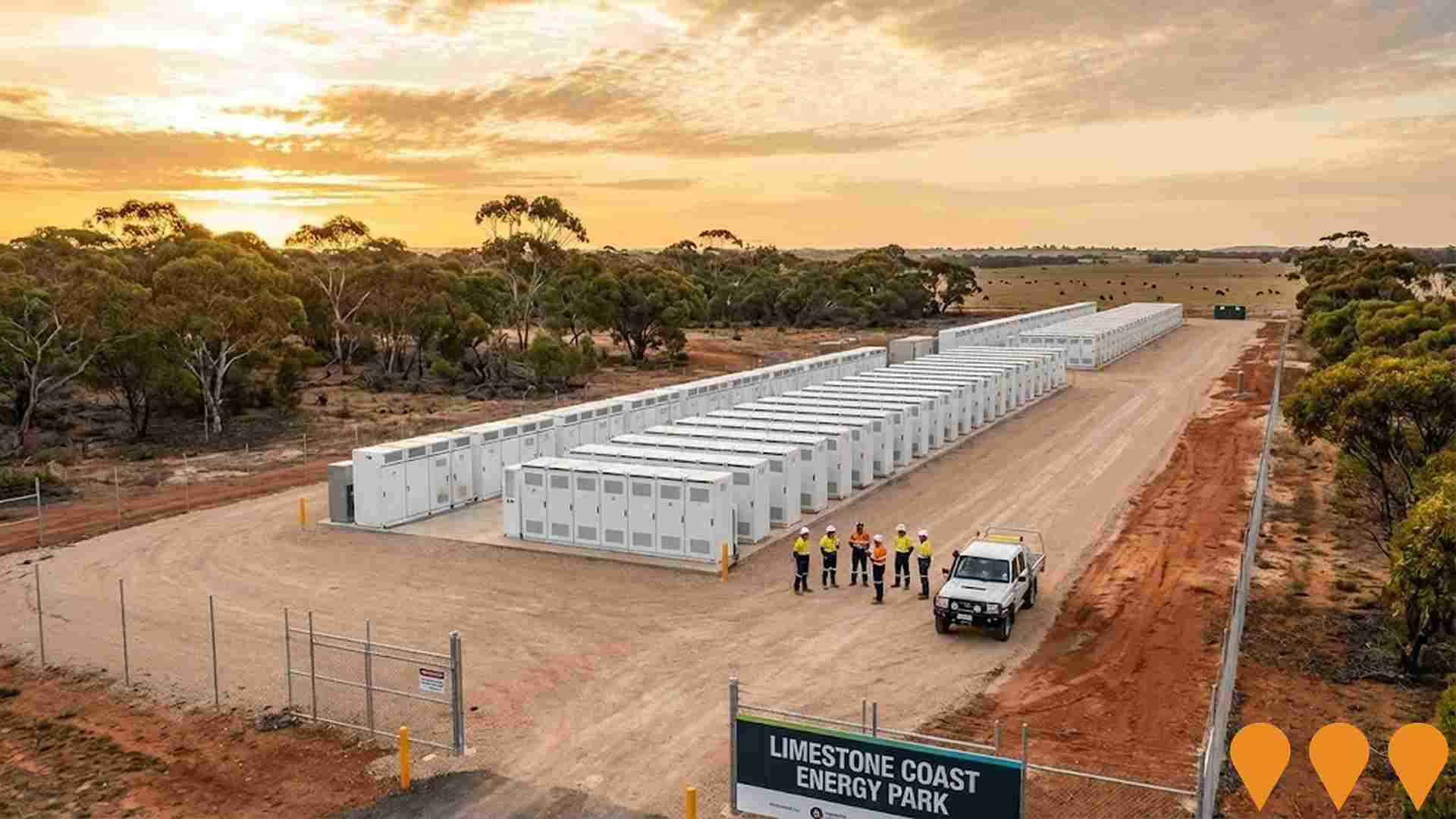
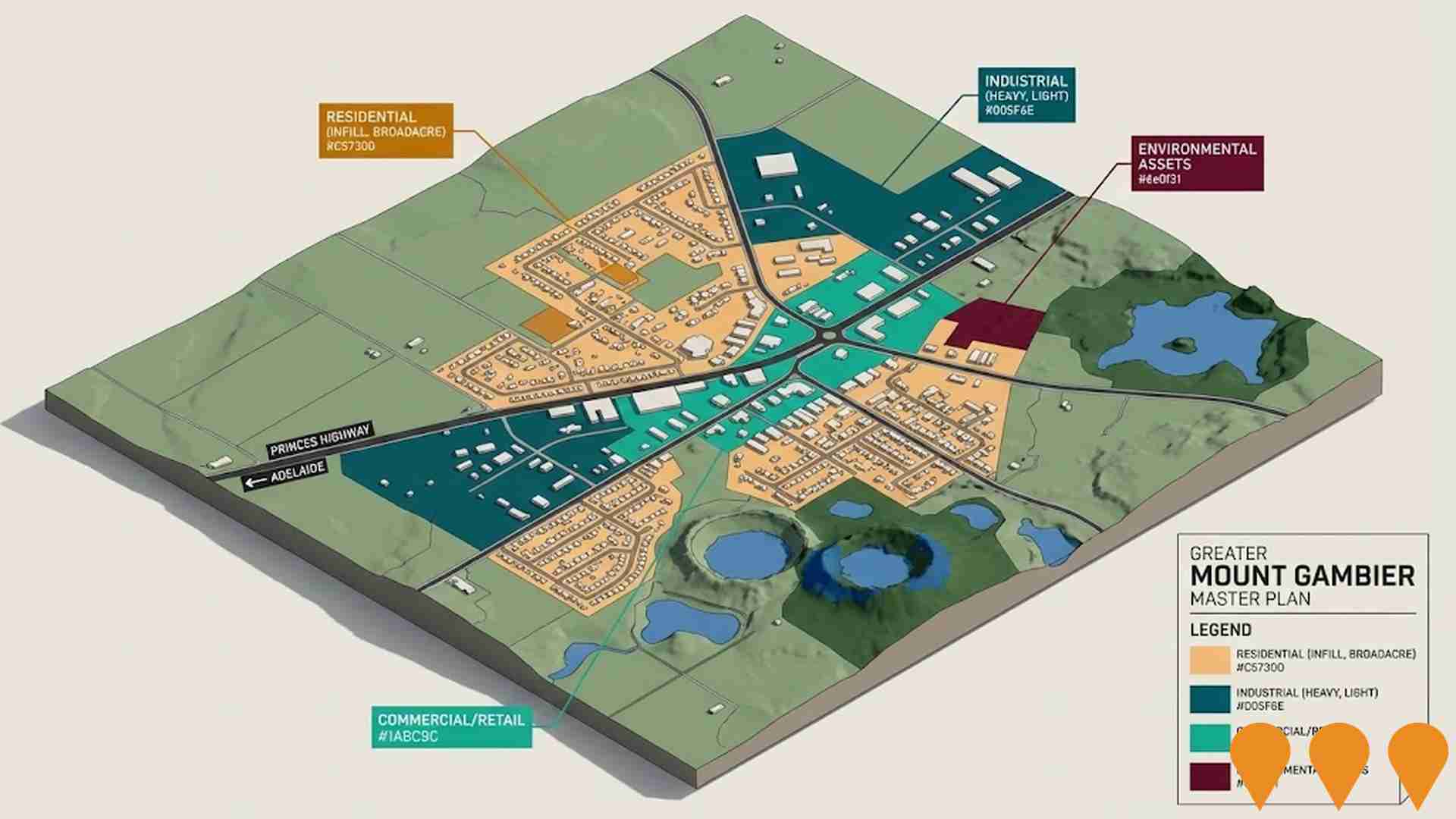
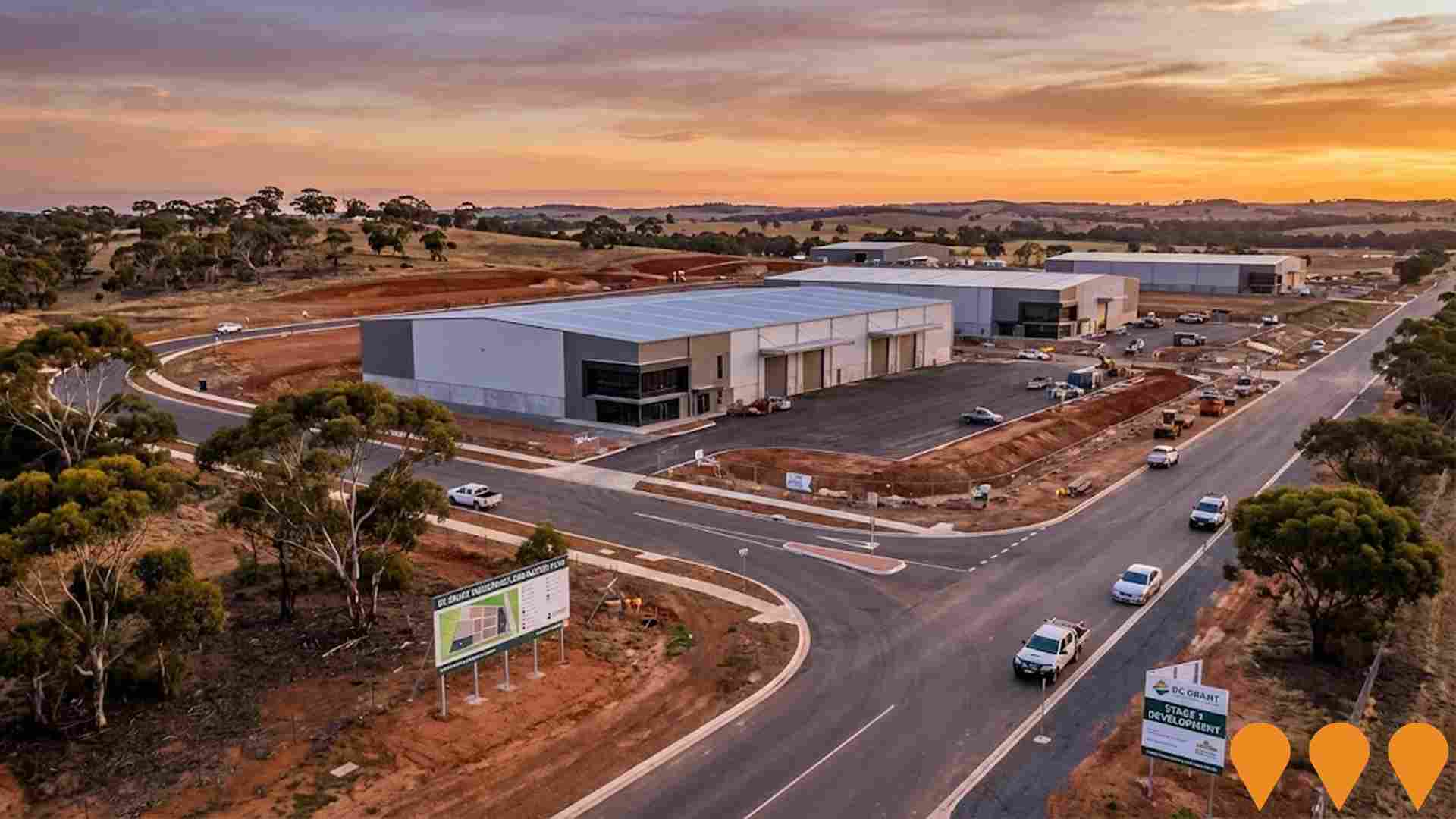
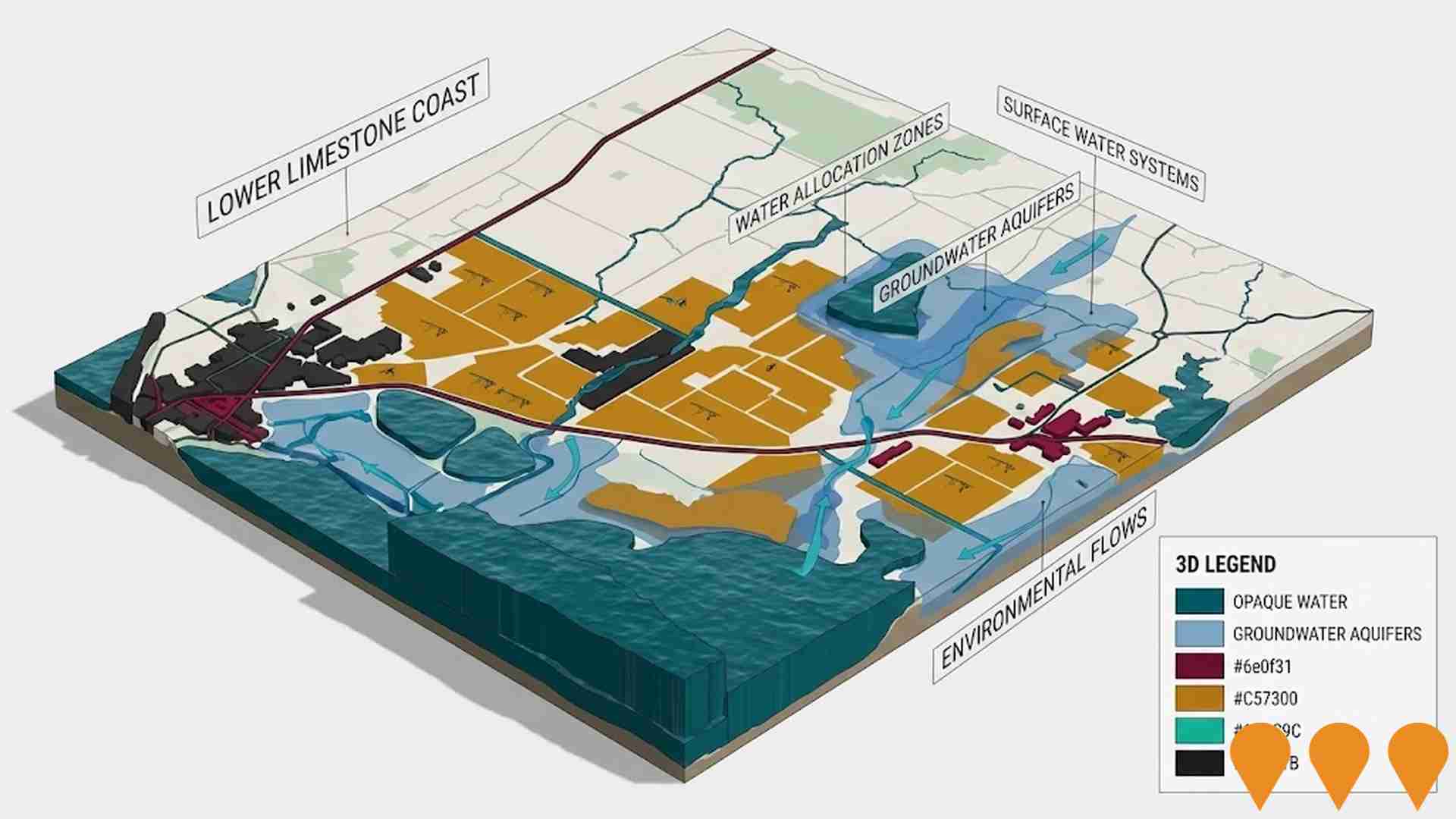
AI Generated Denotes AI-based impression for illustrative purposes only, not to be taken as definitive under any circumstances. Please follow links and conduct other investigations from the project's source for actual imagery. Developers and project owners wishing us to use original imagery please Contact Us and we will do so.

Frequently Asked Questions - Infrastructure

What are some of the major infrastructure and planning changes likely to influence Moorak?
Key infrastructure and planning changes likely to influence Moorak include: Limestone Estate Residential Development (Construction); Blue Lake Solar Lighting Renewal Project (Construction); Springview Estate (Construction); Blue Lake Sports Park Master Plan Implementation (Proposed); and Lakes Park Estate (Approved). These projects represent significant developments that will shape the area's future infrastructure landscape.
What types of infrastructure projects are impacting Moorak?
Infrastructure development impacting Moorak spans multiple sectors including Residential Development, Communities, Precincts & Urban Renewal, and Sports & Recreation, among others.
What is the scale of infrastructure investment impacting Moorak?
Infrastructure investment analysis indicates significant investment of approximately $439 million in infrastructure projects affecting the region.
How does Moorak's infrastructure development compare to other areas?
Infrastructure development activity impacting Moorak currently ranks below national averages at the 23rdth percentile.
Mount Gambier Hospital Redevelopment
Category: Health & Medical
Stage: Construction | Est. Comp: 2026
Source / Links: Link 1   Link 2  

A $24 million redevelopment of the Mount Gambier and Districts Health Service. The project includes a recently completed $8 million Emergency Department Short Stay Unit, a new six-bed Mental Health Sub-Acute and Rehabilitation Service (Wari-ngu), and a two-bed Drug and Alcohol Withdrawal Unit. The upgrade also features an expansion of the SA Pathology service and a new Cancer Care Centre.
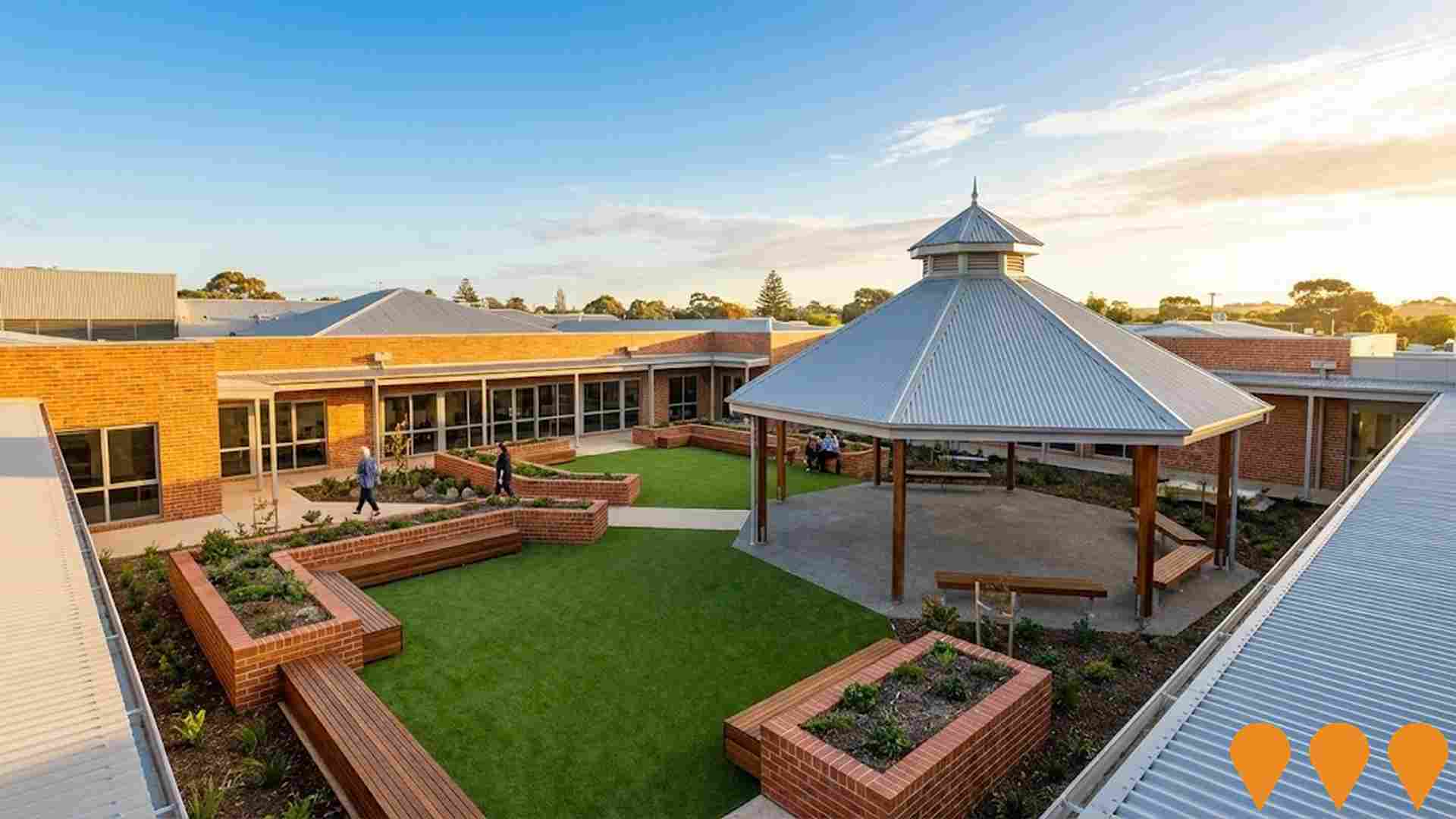
Health & Medical

Wulanda Recreation and Convention Centre
Category: Sports & Recreation
Stage: Completed | Est. Comp: 2023
Source / Links: Link 1   Link 2  

State-of-the-art multi-purpose sport, aquatic and conference facility featuring 25m indoor pool, 50m outdoor pool, six multi-purpose courts, convention facilities for 1000+ people, and health club. Council's largest ever infrastructure project valued at $57 million.
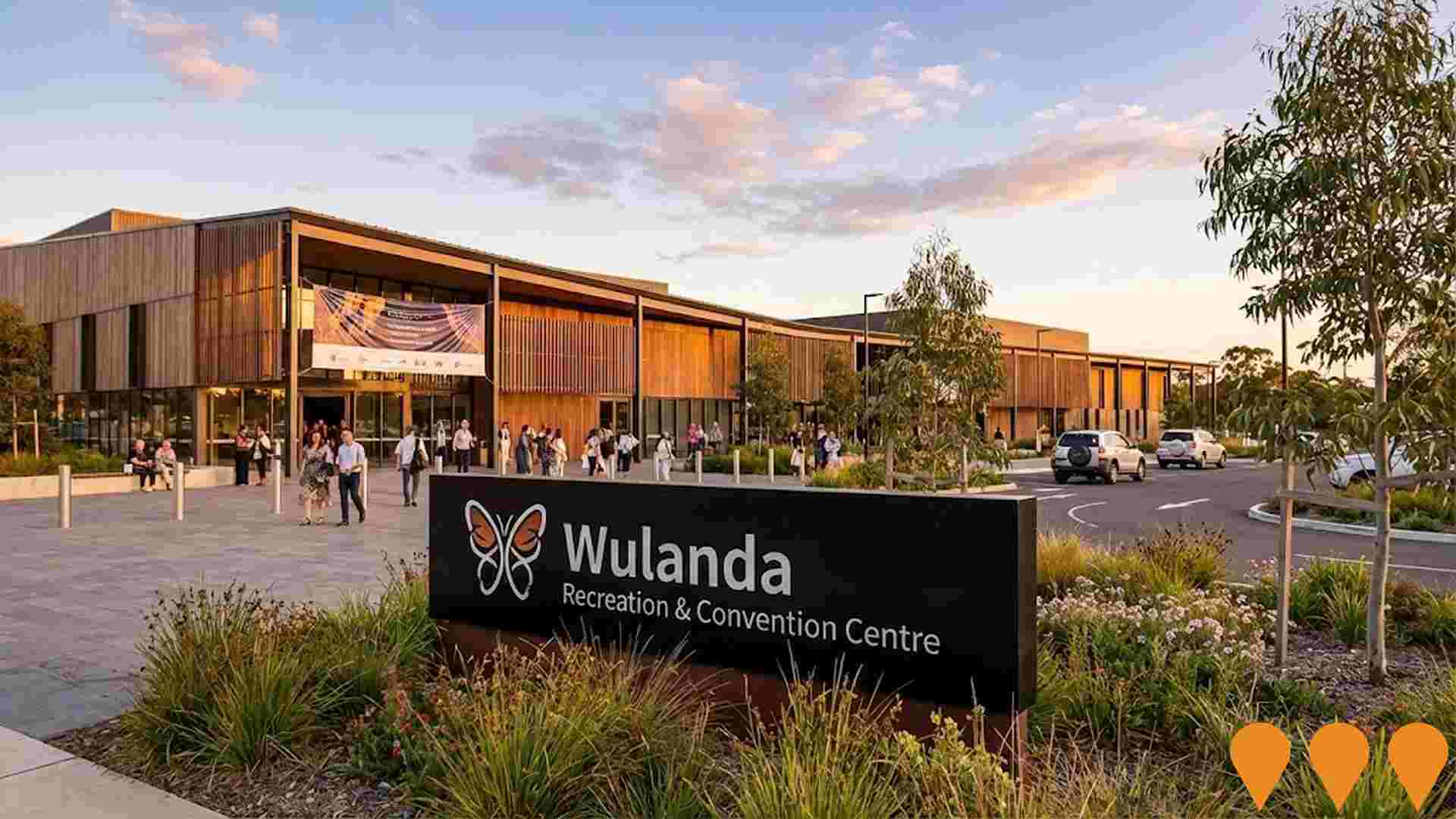
Sports & Recreation

CBD Master Planning and Activation
Category: Communities, Precincts & Urban Renewal
Stage: Planning | Est. Comp: 2028
Source / Links: Link 1   Link 2  

Strategic revitalisation of the Mount Gambier CBD aimed at activating the city centre through short-term initiatives and long-term infrastructure improvements. The project involves the completion of a detailed Master Plan, Commercial Street pedestrianisation concepts, and better integration with key precincts like the Railway Lands. It aligns with the 'Mount Gambier 2035' community vision and the Council's 2024-2028 Strategic Plan.
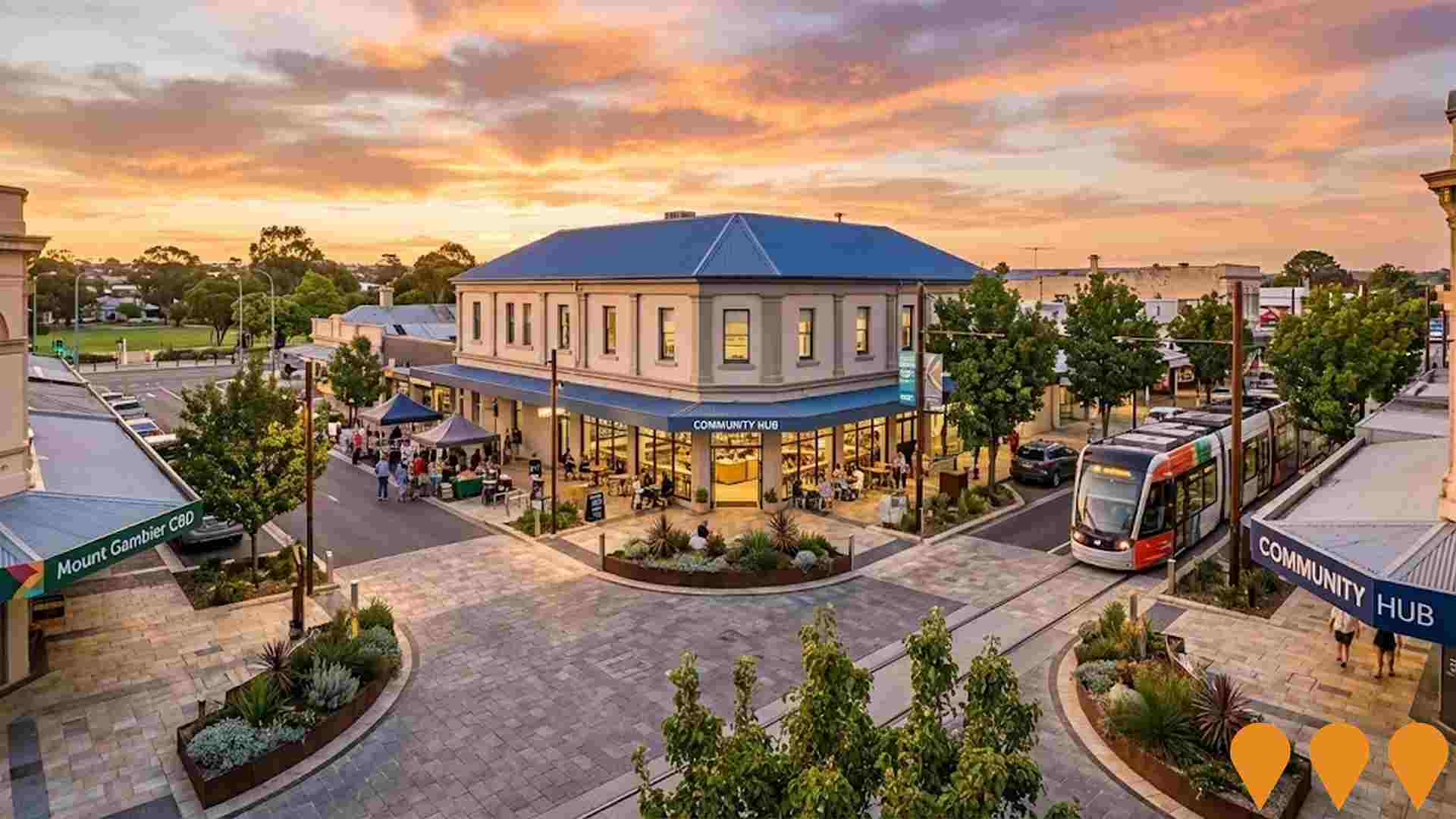
Communities, Precincts & Urban Renewal

Blue Lake Sports Park Master Plan Implementation
Category: Sports & Recreation
Stage: Proposed | Est. Comp: 2029
Source / Links: Link 1   Link 2  

Development of regional sports complex featuring multi-use oval, athletics track, netball courts, pavilion facilities, and spectator amenities. Designed to host regional and state-level sporting events and community programs.
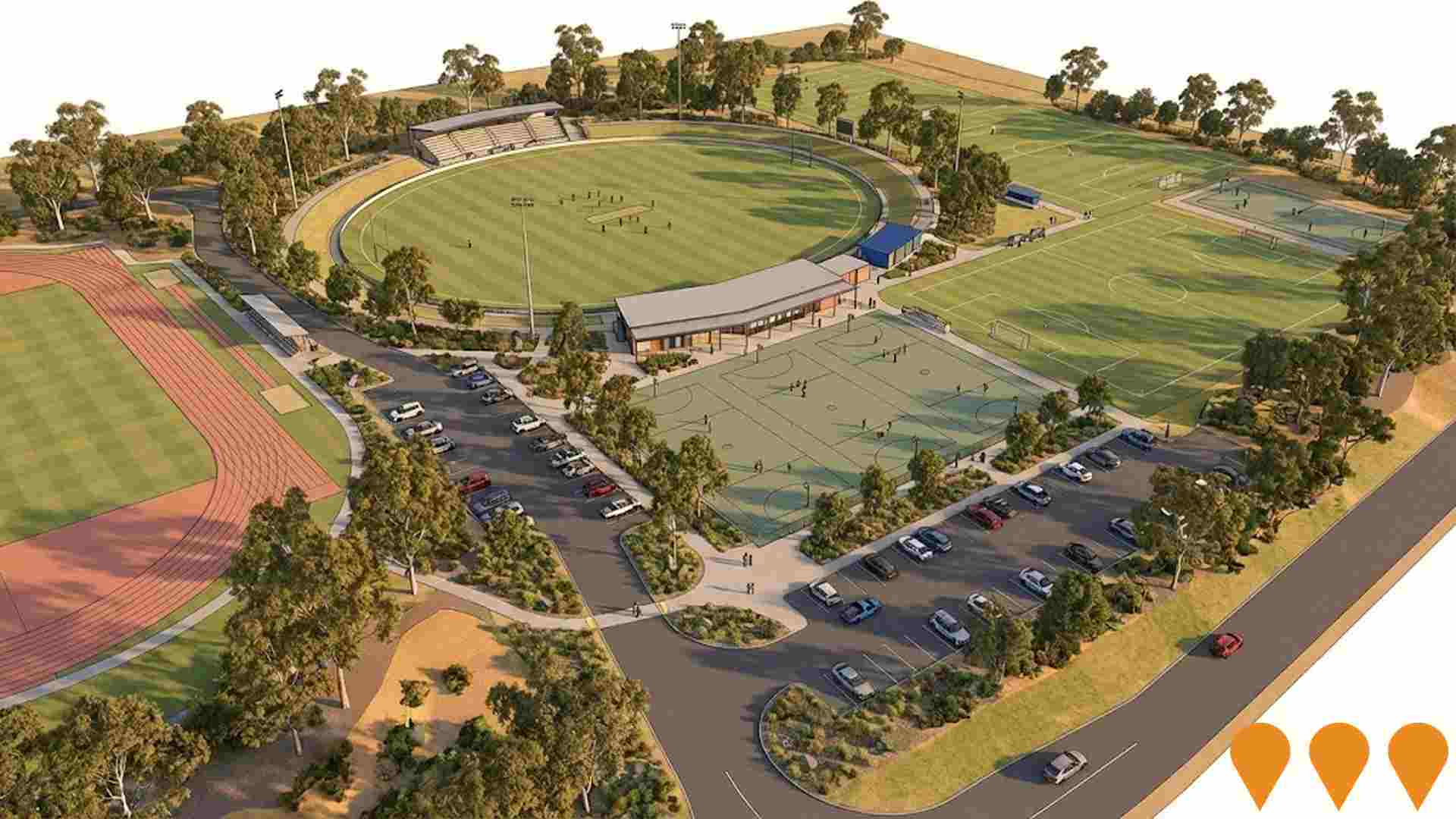
Sports & Recreation

Limestone Estate Residential Development
Category: Residential Development
Stage: Construction | Est. Comp: 2026
Source / Links: Link 1   Link 2  

One of the largest residential land division projects across Limestone Coast region, delivering 350+ residential allotments along with a commercial complex. Located on the western fringe of Mount Gambier, less than 5 minutes drive from CBD. Developed by Capital Investments & Developments (Melbourne).

Residential Development

Wattle Range Council General Code Amendment
Category: Precincts & Urban Renewal
Stage: Planning | Est. Comp: 2027
Source / Links: Link 1   Link 2  

Comprehensive rezoning initiative affecting 9 sites across Wattle Range Council area (originally 10, with Site 8 Beachport removed following community feedback). The amendment includes rezoning of the Railway Precinct, Southern Ports Highway, and Employment Zones on Mount Gambier Road in Millicent, plus sites in Penola, Beachport, and Glencoe. This code amendment aligns with the Council's 25-year Strategic Land Use Plan adopted in August 2022, designed to facilitate sustainable residential, employment, and neighbourhood development while protecting agricultural land. Public consultation opened on August 29, 2025, with community drop-in sessions held throughout September 2025.

Precincts & Urban Renewal

Princes Highway Corridor Upgrade - Mount Gambier Roundabouts
Category: Transport & Logistics
Stage: Completed | Est. Comp: 2024
Source / Links: Link 1   Link 2  

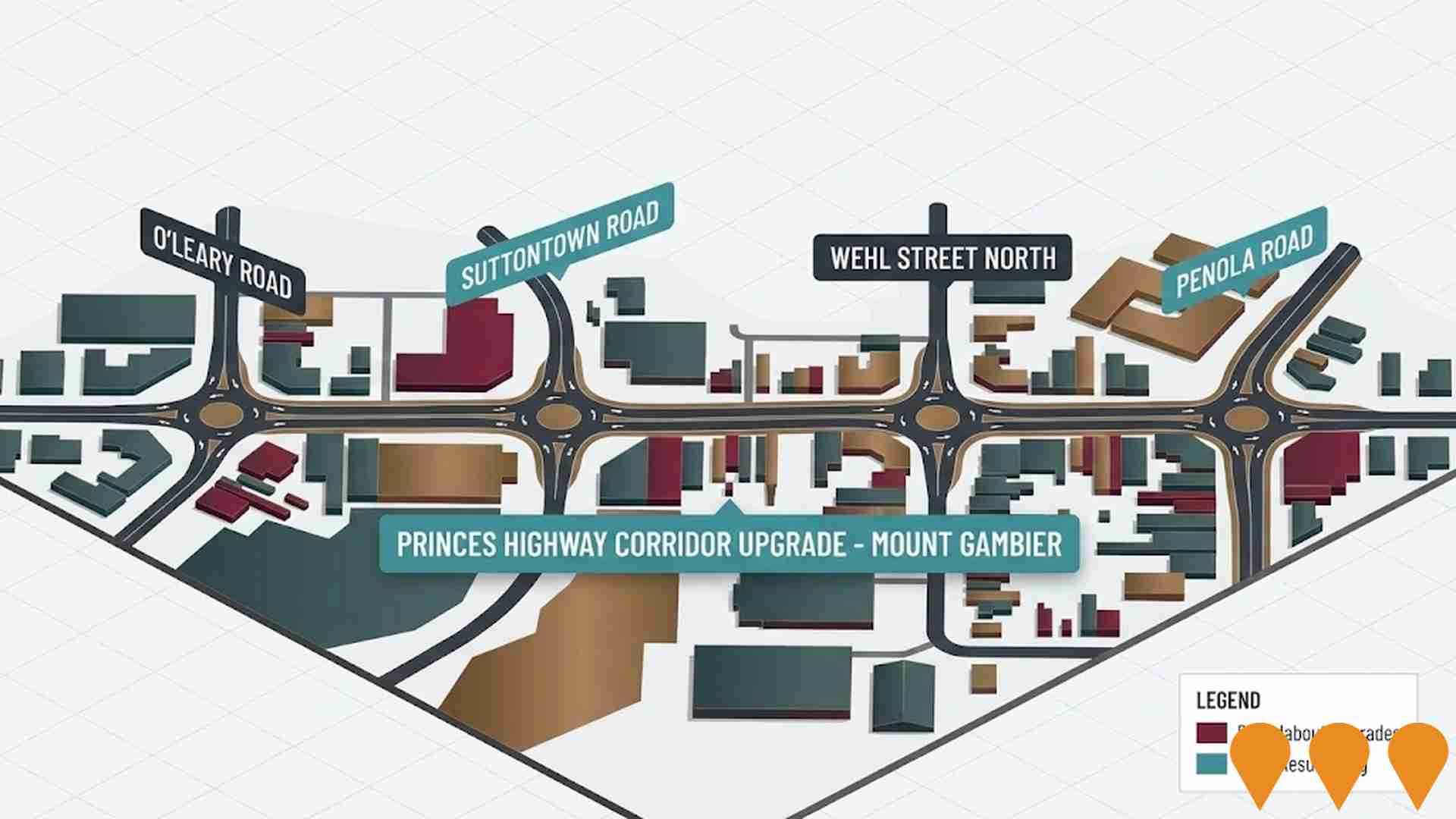
As part of the $190 million Princes Highway Corridor Upgrade, the Department for Infrastructure and Transport completed upgrades to four roundabouts on Jubilee Highway West in Mount Gambier at O'Leary Road, Suttontown Road, Wehl Street North, and Penola Road. The project included road surface improvements with removal of old concrete and installation of new asphalt to improve safety and traffic efficiency for local residents and heavy vehicle operators. The project supported approximately 20 full-time jobs during construction and was completed in September 2024.
Transport & Logistics

Springview Estate
Category: Residential Development
Stage: Construction | Est. Comp: 2025
Source / Links: Link 1   Link 2  

Mount Gambier's premier residential development currently in Stage 11 of its popular and thriving subdivision. Located on the western edge of Mount Gambier, this family-friendly estate offers allotment sizes ranging from 855m2 to 1,210m2. All allotments include essential infrastructure (power, water, sewer, NBN) and colorbond fencing. The estate features quality built homes and is positioned with close links to Mount Gambier's Rail Trail, Basketball Stadium and local amenities. Titles for Stage 11 to be issued July 2025.

Residential Development

Employment

Table Chart PROFILE FAQ

The employment environment in Moorak shows above-average strength when compared nationally

Moorak has a balanced workforce comprising white and blue-collar jobs, with manufacturing and industrial sectors prominently featured. Its unemployment rate is 2.0%, according to AreaSearch's aggregation of statistical area data.

As of June 2025, Moorak had 494 residents employed, with an unemployment rate of 2.6% below Rest of SA's rate of 4.6%. Workforce participation in Moorak was significantly lower at 33.3%, compared to Rest of SA's 54.1%. Key employment industries include agriculture, forestry & fishing, construction, and health care & social assistance. Construction stands out with employment levels at 1.5 times the regional average.

Conversely, health care & social assistance shows lower representation at 10.3% versus the regional average of 13.9%. Many residents commute elsewhere for work, indicated by the count of Census working population to local population. In the 12-month period ending in June 2025, Moorak's labour force decreased by 1.6%, employment declined by 2.4%, leading to a rise in unemployment by 0.8 percentage points. This contrasts with Rest of SA where employment fell by 1.2%, labour force expanded by 0.1%, and unemployment rose by 1.2 percentage points. Jobs and Skills Australia's national employment forecasts from Sep-22 project national employment growth at 6.6% over five years and 13.7% over ten years. Applying these projections to Moorak's employment mix suggests local employment should increase by 5.4% over five years and 11.7% over ten years, though this is a simple weighting extrapolation for illustrative purposes only.

Frequently Asked Questions - Employment

What is the employment situation in Moorak?
As of June 2025, Moorak has approximately 494 employed residents with an unemployment rate of 2.0%. This very low unemployment rate indicates a tight labour market with strong demand for workers. Employment performance is above the national median, showing positive labour market dynamics.
How does Moorak's unemployment rate compare to the broader region?
As of June 2025, the unemployment rate in Moorak stands at 2.0%, which is 2.6 percentage points below Rest of SA's rate of 4.6%. This lower unemployment rate suggests stronger local employment conditions. For comparison, the national unemployment rate is 4.1%.
What are the major employment sectors in Moorak?
The employment landscape in Moorak is dominated by several key sectors. The largest employers are agriculture, forestry & fishing (17.0% of employment), construction (11.9%), and health care & social assistance (10.3%). Other significant employers include manufacturing and retail trade.
How has employment changed recently in Moorak?
Over the past year to June 2025, Moorak has experienced a decline in employment, with total jobs decreasing while the labour force decreased. As a result, the unemployment rate has rise. By comparison, Rest of SA saw employment decreased and its unemployment rate rose.
What is the workforce participation rate in Moorak?
The workforce participation rate in Moorak is 33.3%, which represents the proportion of working-age residents who are either employed or actively seeking work. The relatively low participation rate may indicate limited job opportunities or demographic factors affecting workforce engagement. The local rate trailing the Rest of SA average of 54.1%, suggesting potential for increased workforce participation.
Which industries are over-represented in Moorak's employment market?
Moorak shows notable specialization in construction, which employs 11.9% of the local workforce compared to 8.1% regionally. This moderate specialization indicates some local strength in the sector. The area also shows above-average employment in 2 other sectors, contributing to a distinctive economic profile.
What are the employment growth prospects for Moorak?
Based on Jobs and Skills Australia projections applied to Moorak's industry mix, employment is expected to grow by 5.4% over the next five years and 11.7% over ten years. This compares to national growth expectations of 6.6% over five years. Steady growth is anticipated across multiple sectors, providing diverse employment opportunities.
How does the job market in Moorak compare nationally?
Moorak's employment market shows above-average performance nationally, placing in the top half of areas assessed. Employment indicators suggest healthy labour market conditions relative to other regions. Recent job advertisement trends show the broader employment region saw a 16.2% decline, ranking 25.0th out of 37 regions nationally.
What employment opportunities exist for skilled workers in Moorak?
Skilled workers will find selective opportunities in Moorak, with knowledge-based sectors representing 24.5% of local jobs. Key sectors for skilled workers include health care & social assistance (10.3%), education & training (7.5%), and professional & technical (4.9%). With projected employment growth of 5.4% over five years, demand for skilled workers is expected to remain strong.

Income

Table Chart PROFILE FAQ

Income analysis reveals strong economic positioning, with the area outperforming 60% of locations assessed nationally by AreaSearch

Moorak's median taxpayer income is $54,558 and average income is $66,984 according to latest postcode level ATO data aggregated by AreaSearch for financial year 2022. This is slightly above national averages, contrasting with Rest of SA's median income of $46,889 and average income of $56,582. Based on Wage Price Index growth of 12.83% since financial year 2022, current estimates for Moorak would be approximately $61,558 (median) and $75,578 (average) as of September 2025. According to 2021 Census figures, household, family and personal incomes in Moorak cluster around the 58th percentile nationally. The earnings profile shows 40.7% of the population fall within the $1,500 - 2,999 income range, consistent with broader trends across regional levels showing 27.5% in the same category. After housing costs, residents retain 91.3% of income, reflecting strong purchasing power and the area's SEIFA income ranking places it in the 4th decile.

Frequently Asked Questions - Income

What is the median taxable income in Moorak?
Based on Wage Price Index adjustments to September 2025, the estimated median taxable income in Moorak is approximately $61,558. The official ATO data from FY-22 recorded a median of $54,558.
What is the average taxable income in Moorak?
Based on Wage Price Index adjustments to September 2025, the estimated average taxable income in Moorak is approximately $75,578. The official ATO data from FY-22 recorded an average of $66,984.
How does the median taxable income in Moorak compare to the region?
Based on Wage Price Index adjustments to September 2025, the estimated median taxable income in Moorak is approximately $61,558 compared to $52,905 in Rest of SA. The official ATO data from FY-22 shows $54,558 and $46,889 respectively.
How does the average taxable income in Moorak compare to the region?
Based on Wage Price Index adjustments to September 2025, the estimated average taxable income in Moorak is approximately $75,578 compared to $63,841 in Rest of SA. The official ATO data from FY-22 shows $66,984 and $56,582 respectively.
What are the main income cohorts in Moorak according to the 2021 Census?
As per the 2021 Census, the income bracket containing the largest proportion (~40.7% / 619 persons) of Moorak's population is the $1,500 - 2,999 cohort.
How do the main income cohorts in Moorak compare to the region?
The largest income cohort in Moorak is the $1,500 - 2,999 group, representing about 40.7% of the population. In comparison, Rest of SA's largest income cohort is the $1,500 - 2,999 group, representing 27.5% of its population, according to the 2021 Census.
What is the median household income in Moorak according to the 2021 Census?
The 2021 Census data indicates that the median household income in Moorak is $2,006/wk.
What is the median family income in Moorak according to the 2021 Census?
According to the 2021 Census, the median family income in Moorak is $2,194/wk.
What is the median personal income in Moorak according to the 2021 Census?
The 2021 Census shows that the median personal income in Moorak is $817/wk.
How does Moorak's income rank nationally?
As per AreaSearch's latest postcode level ATO data released for FY-22, Moorak's median income among taxpayers is $54,558, with an average of $66,984. This is slightly above average nationally, and compares to Rest of SA's median of $46,889 and average of $56,582. Based on Wage Price Index growth of 12.83% since FY-22, current estimates would be approximately $61,558 (median) and $75,578 (average) as of September 2025.
What is the disposable income in Moorak?
The estimated disposable income in Moorak is $7,939 per year according to AreaSearch analysis.
How does Moorak's disposable income compare to the region?
Moorak's disposable income is $7,939 compared to $4,535 for Rest of SA, based on AreaSearch analysis.

Housing

Table Chart PROFILE FAQ

Moorak is characterized by a predominantly suburban housing profile, with above-average rates of outright home ownership

In Moorak, as per the latest Census, 91.8% of dwellings were houses with the remaining 8.2% being semi-detached homes, apartments, or other types. This compares to Non-Metro SA's 87.6% houses and 12.5% other dwellings. Home ownership in Moorak stood at 44.9%, with mortgaged dwellings at 49.0% and rented ones at 6.2%. The median monthly mortgage repayment was $1,400, higher than Non-Metro SA's average of $1,083 but significantly lower than the national average of $1,863. The median weekly rent in Moorak was $250, compared to Non-Metro SA's $205 and the national figure of $375.

Frequently Asked Questions - Housing

What percentage of homes are owned vs rented in Moorak?
In Moorak, 44.9% of homes are owned outright, 49.0% are owned with a mortgage, and 6.2% are rented.
What percentage of dwellings in Moorak are houses?
According to the latest data, 91.8% of dwellings in Moorak are houses.
What percentage of dwellings in Moorak are apartments or units?
In Moorak, 0.0% of dwellings are apartments or units, with an additional 0.0% being semi-detached dwellings.
What is the level of outright home ownership in Moorak?
Outright home ownership in Moorak stands at 44.9%, compared to 39.1% in Rest of SA.
What is the median monthly mortgage repayment in Moorak?
The median monthly mortgage repayment in Moorak is $1,400, compared to $1,083 in Rest of SA.
What is the median weekly rent in Moorak?
The median weekly rent in Moorak is $250, compared to $205 in Rest of SA.
What is the distribution of rental prices in Moorak?
In Moorak, 0.0% of rentals are $0-149/week, 76.9% are $150-349/week, 23.1% are $350-649/week, 0.0% are $650-949/week, and 0.0% are $950+/week.
What is the average monthly housing cost in Moorak?
The aggregate monthly housing cost in Moorak is $753, which represents the average monthly cost across all housing types.
What percentage of income do residents spend on housing?
In Moorak, households with mortgages typically spend 16.1% of their income on mortgage repayments, while renters spend 12.5% of their income on rent.
How crowded are homes in Moorak?
The average persons per bedroom ratio in Moorak is 0.8, indicating the level of household density.
How does housing affordability in Moorak compare to the region?
Housing affordability in Moorak shows mortgage holders spending 16.1% of income on repayments (vs 19.0% regionally), while renters spend 12.5% of income on rent (vs 15.6% regionally).
What types of dwellings are most common in Moorak?
The dwelling mix in Moorak consists of 91.8% detached houses, 0.0% semi-detached dwellings, 0.0% apartments, and 8.2% other dwelling types.
What is the weighted average housing cost based on tenure mix in Moorak?
Considering the housing occupancy patterns, the weighted average monthly housing cost is approximately $753. This accounts for outright owners paying no housing costs, mortgage holders paying $1,400/month, and renters paying $1,082/month.
How affordable is housing in Moorak relative to local incomes?
Housing in Moorak consumes approximately 8.7% of median household income ($8,686 monthly), indicating costs are highly affordable. The generally accepted benchmark is that housing should not exceed 30% of household income.
How do proposed developments compare to existing housing types in Moorak?
Recent development applications in Moorak show attached dwellings contributing 0% of approvals compared to 8% of existing stock, while detached houses represent 100% of applications versus 92% of current dwellings. This suggests development patterns consistent with existing housing mix. The area shows minimal growth in housing density compared to other Australian locations.

Household Composition

Table Chart PROFILE FAQ

Moorak features high concentrations of family households, with a higher-than-average median household size

Family households constitute 84.7% of all households, including 37.2% couples with children, 37.2% couples without children, and 7.3% single parent families. Non-family households account for the remaining 15.3%, with lone person households at 15.3% and group households comprising 1.5%. The median household size is 2.8 people, larger than the Rest of South Africa average of 2.3.

Frequently Asked Questions - Households

How many households are in Moorak?
As of the 2021 Census, Moorak had 261 households. Based on population growth patterns, this has grown by approximately 7.7% to an estimated 281 households today.
What is the typical household size?
The median household size in Moorak is 2.8 people. This compares to 2.3 in Rest of SA and reflects the area's household composition mix.
What types of households are most common?
Family households dominate at 84.7% of all households. The remaining households consist of lone person households (15.3%), group households (1.5%), and other household types (0.0%).
How are families structured in the area?
Among the 221 family households, 37.2% are couples with children, 37.2% are couples without children at home, and 7.3% are single parent families. This mix shapes local demand for schools, family services, and housing types.
How does Moorak compare to regional household patterns?
Compared to Rest of SA, Moorak shows distinct household patterns. Family households are notably over-represented at 84.7% (versus 67.1% regionally). Conversely, lone person households are under-represented at 15.3% compared to the regional 30.5%. This family-oriented profile influences local demand for family homes, schools, and children's services.
What is the average family size?
Families in Moorak have an average of 1.9 children, matching the Rest of SA average of 1.9. This influences local demand for child-related services and larger family homes.
What are the marriage patterns in Moorak?
Marriage patterns reveal 44.2% of the adult population are currently married, while 43.1% have never married. This compares to 48.5% married and 32.4% never married across Rest of SA.
How significant are single-person households?
Single-person households represent 15.3% of all households in Moorak, notably lower than the regional average of 30.5%. This affects demand for smaller dwellings and single-person accommodation.
Are shared living arrangements common?
Group households (unrelated people sharing) account for 1.5% of households, well below the Rest of SA average of 2.4%. This low rate suggests limited student or young professional shared accommodation.
Loading household composition data...

Local Schools & Education

Table Chart PROFILE FAQ

Moorak faces educational challenges, with performance metrics placing it in the bottom quartile of areas assessed nationally

The area's university qualification rate is 11.5%, significantly lower than the Australian average of 30.4%. This presents both a challenge and an opportunity for targeted educational initiatives. Bachelor degrees are the most common at 10.1%, followed by postgraduate qualifications (0.7%) and graduate diplomas (0.7%). Vocational credentials are prominent, with 27.5% of residents aged 15+ holding them - advanced diplomas at 5.3% and certificates at 22.2%.

Educational participation is high, with 63.0% of residents currently enrolled in formal education. This includes 28.1% in primary, 19.0% in secondary, and 4.7% in tertiary education. Moorak Primary School serves the local area, with an enrollment of 102 students as of a recent report. The school's ICSEA score is 957, indicating typical Australian school conditions with balanced educational opportunities. It caters exclusively to primary education, with secondary options available in nearby areas. Local school capacity is limited, with 6.7 places per 100 residents compared to the regional average of 14.9, resulting in many families traveling for schooling.

Frequently Asked Questions - Education

What percentage of people in Moorak have university qualifications?
11.5% of people aged 15 and over in Moorak have university qualifications, compared to 13.7% in the broader region.
What percentage of people in Moorak have no formal qualifications?
61.0% of people aged 15 and over in Moorak have no formal qualifications, compared to 48.3% regionally.
How does Moorak's education level compare to national averages?
Moorak ranks in the 18th percentile nationally for education based on AreaSearch's analysis of qualification and performance metrics.
What types of qualifications are most common in Moorak?
The most common qualifications in Moorak are: Certificate (22.2%), Bachelor Degree (10.1%), Advanced Diploma (5.3%).
What proportion of Moorak's population is currently attending educational institutions?
63.0% of the population in Moorak is currently engaged in formal education, with 28.1% in primary school, 19.0% in secondary school, 4.7% at university.
What is the ICSEA score for schools in Moorak?
The average ICSEA (Index of Community Socio-Educational Advantage) score for schools in Moorak is 957, indicating below-average socio-educational advantage compared to the national average of 1000.
How many schools are located within Moorak?
There are 1 schools within Moorak, with a combined enrollment of approximately 102 students.
What types of schools are available in Moorak?
Moorak includes 1 primary school.

Schools Detail

Nearby Services & Amenities

PROFILE FAQ

Transport

Table Chart PROFILE FAQ

No public transport data available for this catchment area.

Frequently Asked Questions - Transport

Is public transport available in Moorak?
Limited or no public transport data is available for Moorak.

Transport Stops Detail

Health

Table Chart PROFILE FAQ

Moorak's residents boast exceedingly positive health performance metrics with very low prevalence of common health conditions across all age groups

Moorak shows excellent health outcomes, with very low prevalence of common conditions across all ages. Approximately 53% (~813 people) have private health cover, higher than the 49.4% Rest of SA average.

The most prevalent conditions are arthritis (8.1%) and asthma (7.2%), while 73.7% report no medical ailments, compared to 65.5% in Rest of SA. Moorak has 15.8% (240 people) aged 65+, lower than the 23.3% in Rest of SA. Seniors' health outcomes align with the general population's profile.

Frequently Asked Questions - Health

How many people in Moorak have private health insurance?
Around 53.5% of people in Moorak are covered by private health insurance, which compares to 49.4% in the broader region of Rest of SA.
What percentage of the population requires ongoing medical assistance in Moorak?
In Moorak, 1.4% of the population is identified as requiring ongoing medical assistance. This figure is slightly different from the regional average, where 6.1% of people in Rest of SA require similar assistance.
How prevalent is asthma in Moorak?
7.2% of people in Moorak are diagnosed with asthma. In comparison, 8.3% of the population across Rest of SA is affected by asthma.
What percentage of people have diabetes in Moorak?
Diabetes affects 3.2% of the Moorak population, while in the surrounding region, 5.3% of people are diagnosed with diabetes.
What is the percentage of people with heart disease in Moorak?
4.4% of people in Moorak have heart disease. Across the region of Rest of SA, 4.5% of the population is affected by heart disease.
How does Moorak compare to the region in terms of overall private health coverage?
In Moorak, 53.5% of the population are estimated to have private health insurance. Comparatively, Rest of SA sees an estimated private health coverage rate of 49.4%.

Cultural Diversity

Table Chart PROFILE FAQ

The latest Census data sees Moorak placing among the least culturally diverse areas in the country when compared across a range of language and cultural background related metrics

Moorak had a cultural diversity level below average, with 49.6% citizens, 90.6% born in Australia, and 99.0% speaking English only at home. Christianity was the predominant religion, comprising 45.6%. Judaism's representation was overstated at 0.0%, compared to Rest of SA's 0.0%.

Ancestry-wise, Australian (34.4%), English (31.8%), and Scottish (10.7%) were top groups. Notably, German ethnicity was overrepresented at 7.4% (vs regional 6.4%), Macedonian at 0.3% (vs 0.0%), and New Zealand at 0.7% (vs 0.4%).

Frequently Asked Questions - Diversity

What is the level of cultural diversity in Moorak?
Moorak was found to be below average in terms of cultural diversity, with 49.6% of its population being citizens, 90.6% born in Australia, and 99.0% speaking English only at home.
What is the most common religion in Moorak?
The main religion in Moorak was found to be Christianity, which makes up 45.6% of people in Moorak. However, the most apparent overrepresentation was in Judaism, which comprises 0.0% of the population, compared to 0.0% across Rest of SA.
What are the top countries of origin in Moorak?
In terms of ancestry (country of birth of parents), the top three represented groups in Moorak are Australian, comprising 34.4% of the population, English, comprising 31.8% of the population, and Scottish, comprising 10.7% of the population. Additionally, there are notable divergences in the representation of certain other ethnic groups: German is notably overrepresented at 7.4% of Moorak (vs 6.4% regionally), Macedonian at 0.3% (vs 0.0%) and New Zealand at 0.7% (vs 0.4%).
How does the percentage of people born overseas compare to the regional average?
9.4% of the Moorak population was born overseas, compared to 11.8% regionally.
What percentage of the Moorak population speaks a language other than English at home?
1.0% of the population in Moorak speaks a language other than English at home, compared to 6.3% in the wider region.
How many people in Moorak identify as Australian Aboriginal?
2.1% of the Moorak population identifies as Australian Aboriginal, compared to 1.7% in the region.
What is the citizenship status of the population in Moorak?
49.6% of the Moorak population holds citizenship, compared to 88.1% in the wider region.

Age

Table Chart PROFILE FAQ

Moorak hosts an older demographic, ranking in the top quartile nationwide

Moorak has a median age of 42, which is younger than the Rest of SA figure of 47 but higher than the national norm of 38. The 35-44 age group makes up 21.1% of Moorak's population, compared to Rest of SA, while the 75-84 cohort is less prevalent at 4.9%. This concentration in the 35-44 age group is significantly higher than the national figure of 14.2%. According to post-2021 Census data, the 75 to 84 age group has grown from 3.6% to 4.9%, and the 55 to 64 cohort has increased from 12.7% to 13.9%. Conversely, the 35 to 44 cohort has declined from 22.1% to 21.1%. By 2041, Moorak is expected to see notable shifts in its age composition. The 75 to 84 group is projected to grow by 31%, reaching 98 from 74, with those aged 65 and above comprising 80% of the projected growth. Conversely, population declines are projected for the 0 to 4 and 5 to 14 age cohorts.

Frequently Asked Questions - Age

What is the median age in Moorak?
According to the latest data, the median age in Moorak is 42 years.
How does Moorak's median age compare to broader areas?
At 42 years, Moorak is 5 years younger than the Rest of SA average (47 years) yet 4 years older than the national average (38 years).
What age groups are over-represented in Moorak?
The most over-represented age group in Moorak compared to the Rest of SA region is the 35 - 44 group, making up 21.1% of the population.
What age groups are under-represented in Moorak?
The most under-represented age group in Moorak compared to the Rest of SA region is the 75 - 84 group, making up 4.9% of the population.
Are there age groups with notable population variances?
Yes, certain age groups in Moorak show significant variance compared to the Rest of SA region. The most over-represented age groups are 35-44 year-olds (21.1% vs 11.0%) and 45-54 year-olds (17.6% vs 11.4%). The most under-represented age groups are 85+ year-olds (0.7% vs 3.0%) and 0-4 year-olds (1.8% vs 4.9%).
What is the percentage of children (0-14 years) in Moorak?
The percentage of children aged 0-14 years in Moorak is 9.6%.
What is the percentage of older people (65+ years) in Moorak?
The percentage of people aged 65 and over in Moorak is 15.8%.

Nearby Areas