Chart Color Schemes
This analysis uses Suburbs and Localities (SAL) boundaries, which can materially differ from Statistical Areas (SA2) even when sharing the same name.
SAL boundaries are defined by Australia Post and the Australian Bureau of Statistics to represent commonly-known suburb names used in postal addresses.
Statistical Areas (SA2) are designed for census data collection and may combine multiple suburbs or use different geographic boundaries. For comprehensive analysis, consider reviewing both boundary types if available.
est. as @ -- *
2021 Census | -- people







The median house price in Kilaben Bay is $1.04m. House values have moved 3.9% a year compounded over five years.
Curious about local property values? Filter the chart to assess the volume and appreciation (including resales) trends and regional comparisons, or scroll to the map below view this information at an individual property level.
Find a Recent Sale

Sales Detail
Kilaben Bay has an estimated 1,691 residents, up from 1,516 at the 2021 Census — a change of 175 people, or 11.5%. Growth has averaged 2.0% a year over five years, faster than 75% of areas nationally. Interstate and internal migration accounts for 60.0% of that increase. That puts 1,050 residents on each square kilometre. Population is estimated from ABS Estimated Resident Population releases and GNAF address data, re-based from the 2021 Census and updated annually.
Detail
As of Feb 2026, the estimated population of the suburb of Kilaben Bay is around 1,691. This figure reflects an increase of 175 people since the 2021 Census, which recorded a population of 1,516. The current resident population estimate of 1,643 was derived from AreaSearch's analysis of the latest ERP data release by the ABS in June 2024 and address validation since the Census date. This results in a population density ratio of approximately 1,050 persons per square kilometer, comparable to averages seen across other locations assessed by AreaSearch. The suburb experienced an 11.5% growth rate between the 2021 Census and Feb 2026, surpassing the Rest of NSW's 5.9% growth during this period.
Interstate migration contributed approximately 60.0% to Kilaben Bay's overall population gains in recent periods. AreaSearch uses ABS/Geoscience Australia projections for each SA2 area released in 2024 with a base year of 2022, and NSW State Government's SA2-level projections released in 2022 with a base year of 2021 for areas not covered by the former data. Based on these aggregated projections, Kilaben Bay is expected to increase its population by 239 persons to reach 1,930 by 2041, reflecting an 11.3% total gain over the 17-year period.
Frequently Asked Questions - Population
37 new dwellings have been approved in Kilaben Bay over the past five years, an average of 7 a year. That is 4.9 approvals per 1,000 residents. Approvals are currently running at an annualised 6, broadly in line with that longer-run average. Figures come from ABS building approvals aggregated to this Suburb (SAL) boundary and are updated monthly as the ABS releases them.
Detail
AreaSearch analysis of ABS building approval numbers in Kilaben Bay indicates an average of around 7 new dwelling approvals per year. Between FY-21 and FY-25, approximately 37 homes were approved, with a further 4 approved so far in FY-26. The area has seen an average of 0.3 people moving in for each dwelling built over the past five financial years. This suggests that new construction is meeting or exceeding demand, providing more options for buyers and potentially driving population growth beyond current projections. The average value of new homes being built is $706,000, indicating a focus on the premium market by developers.
In FY-26, $1.4 million in commercial development approvals have been recorded, suggesting minimal commercial development activity in Kilaben Bay compared to residential construction. When compared to the Rest of NSW, Kilaben Bay has roughly half the building activity per person and ranks among the 39th percentile nationally, implying limited buyer options but strengthening demand for established properties. New building activity in Kilaben Bay consists of 60% standalone homes and 40% townhouses or apartments, reflecting an increased range of medium-density housing options. This shift from the current housing mix (currently 95% houses) is likely due to reduced availability of development sites and changing lifestyle demands and affordability requirements. Kilaben Bay has approximately 436 people per dwelling approval, indicating an established area with a stable population. According to AreaSearch's latest quarterly estimate, the location is forecasted to gain around 191 residents by 2041. Current development levels appear aligned with future requirements, maintaining stable market conditions without significant price pressures.
Frequently Asked Questions - Development
Development applications around Kilaben Bay
Loading development applications…
| Lodged | Address | Description | Type | Distance | Status |
|---|
SOURCE: Planning portals and council registers, compiled by AreaSearch. Distance & bearing measured from the suburb midpoint.
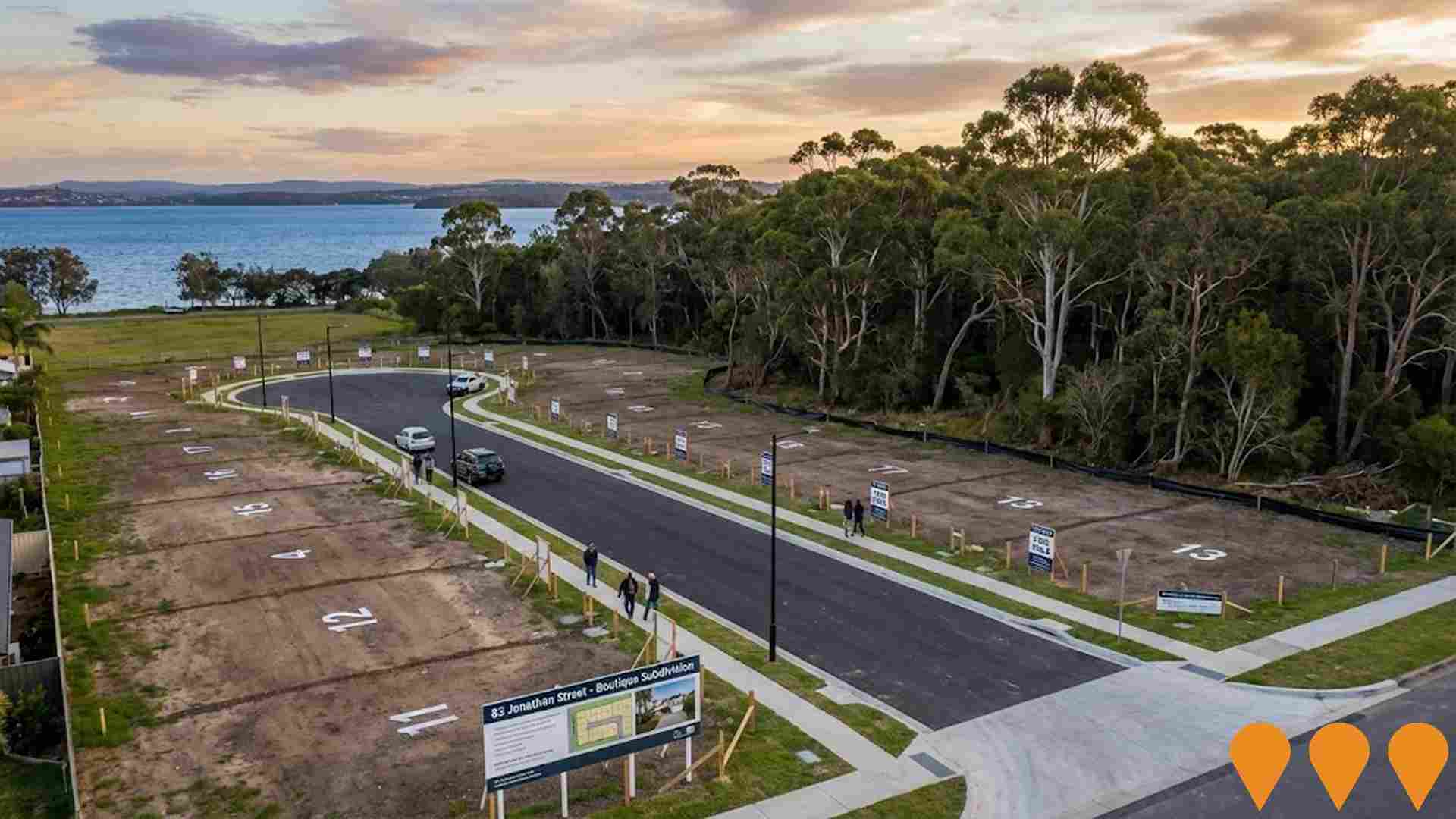
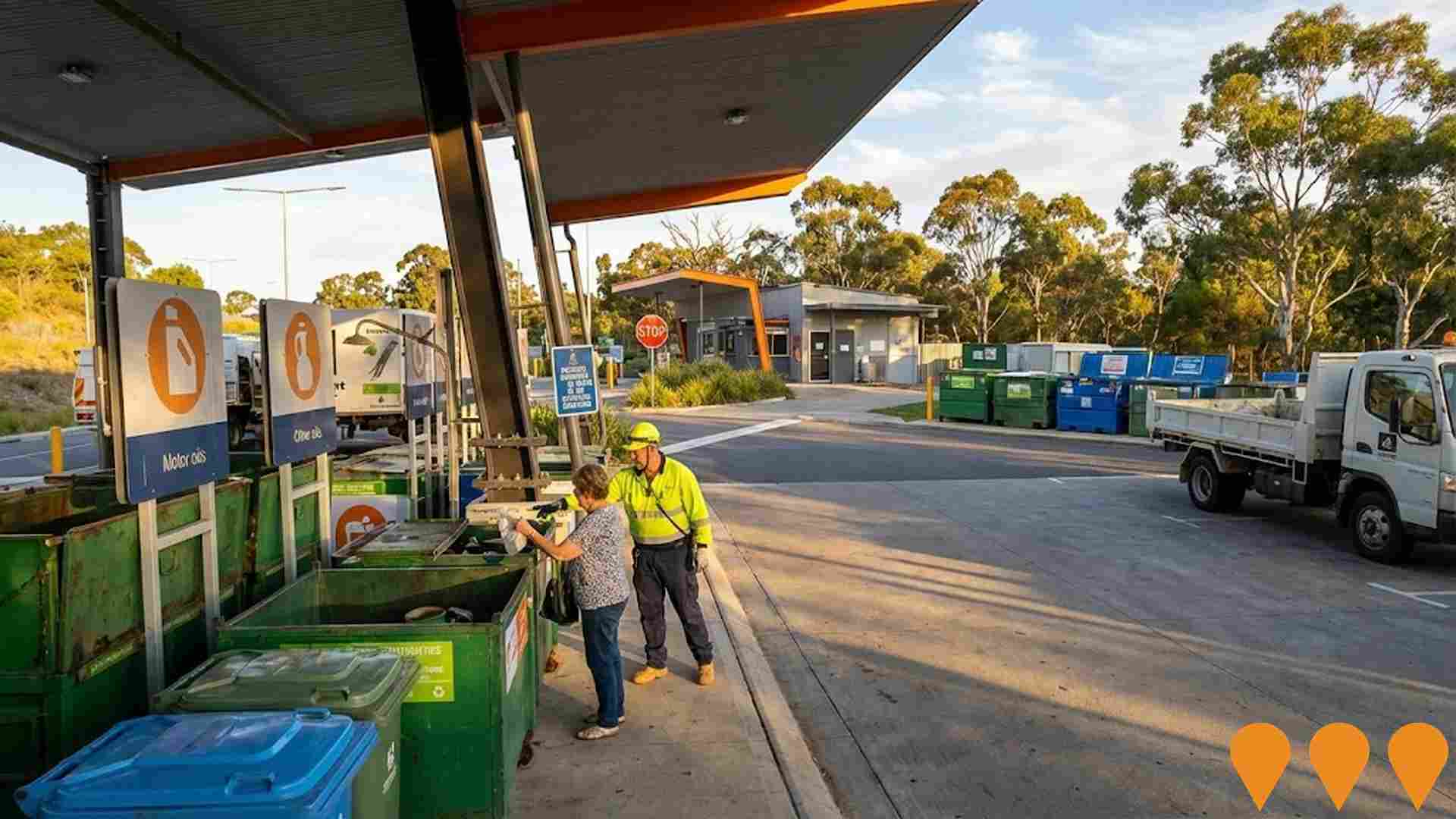
AreaSearch tracks one current infrastructure or development project inside Kilaben Bay, worth an estimated $2 million. A further 19 sit in the immediately surrounding suburbs, taking the tracked pipeline within reach of the area to $135 million. 6 are already under construction and 7 are due for completion within three years. The pipeline spans residential development, sports & recreation and communities, precincts & urban renewal. Records are compiled from Infrastructure Australia, state agencies, council planning portals and public announcements, reviewed and updated daily, then ranked by proximity, construction stage, completion horizon and project scale.
Detail
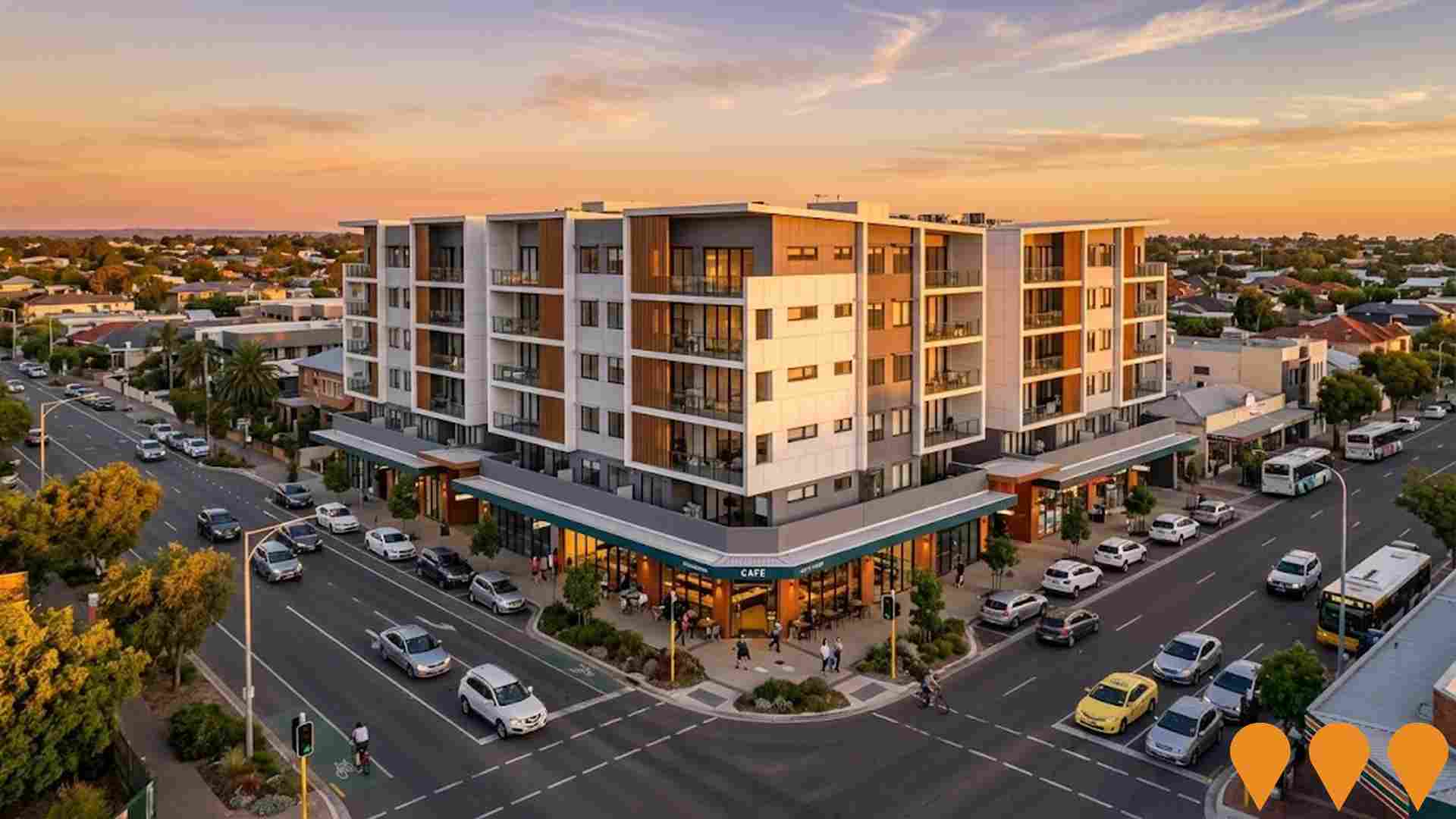
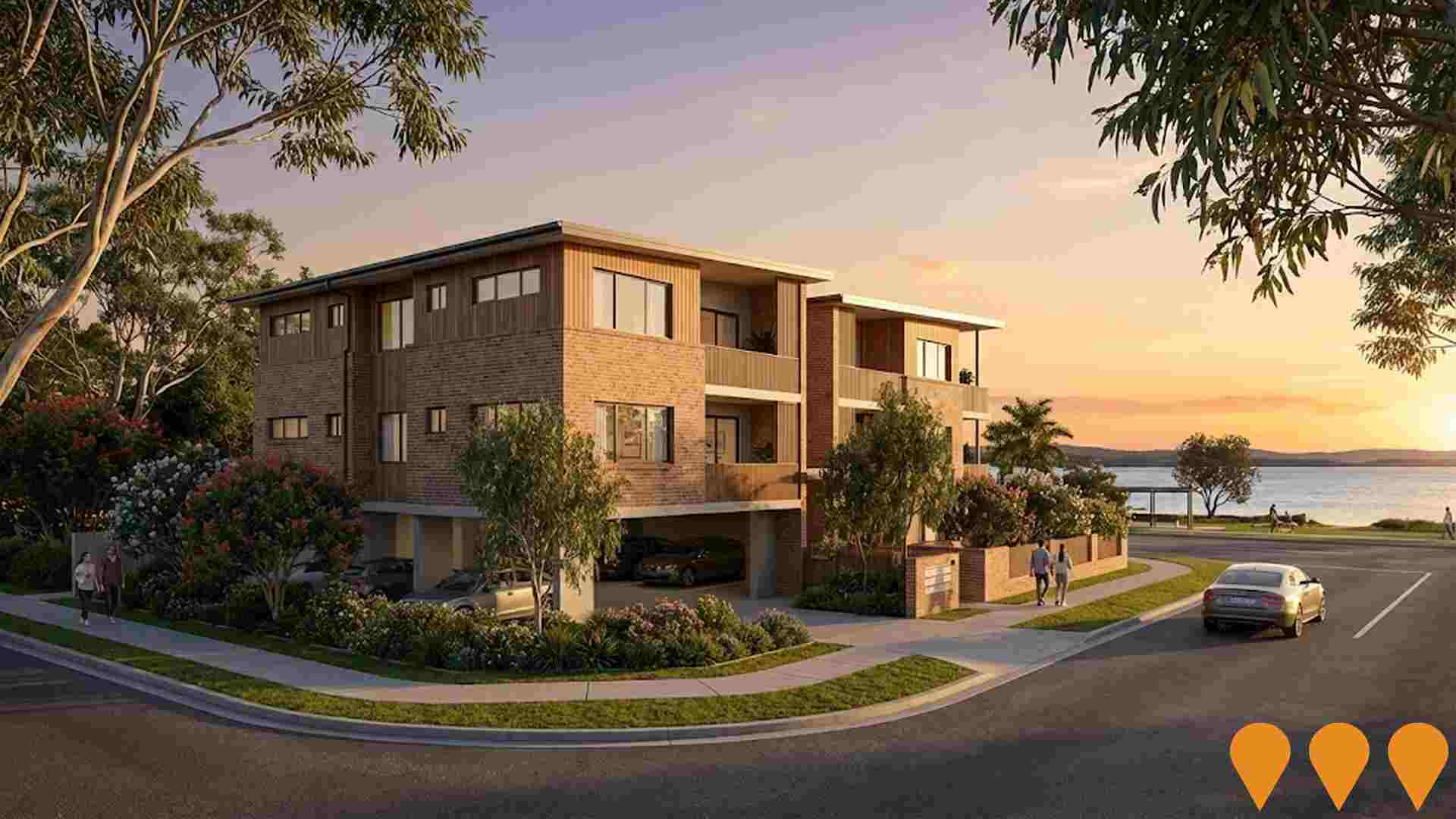
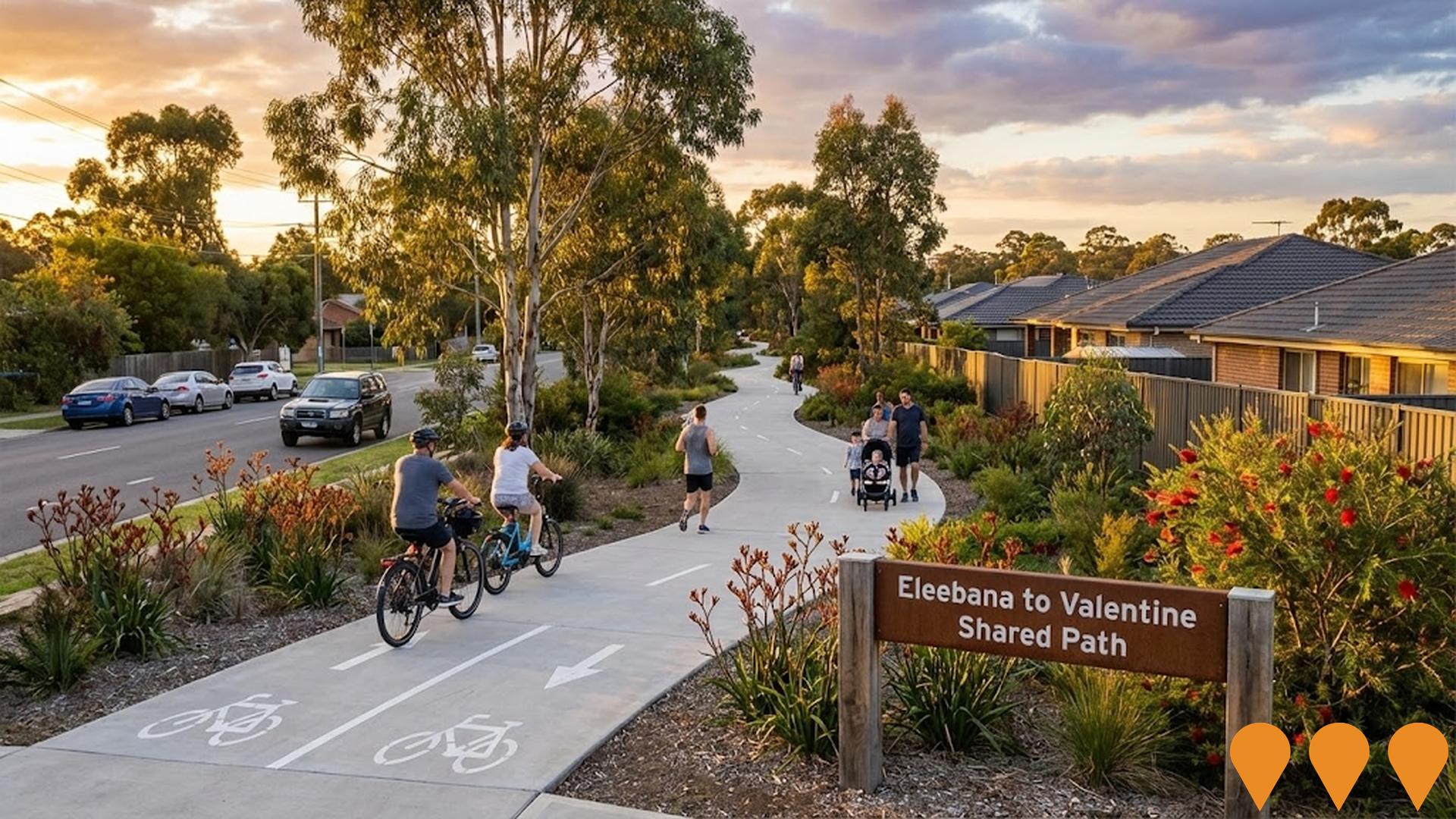
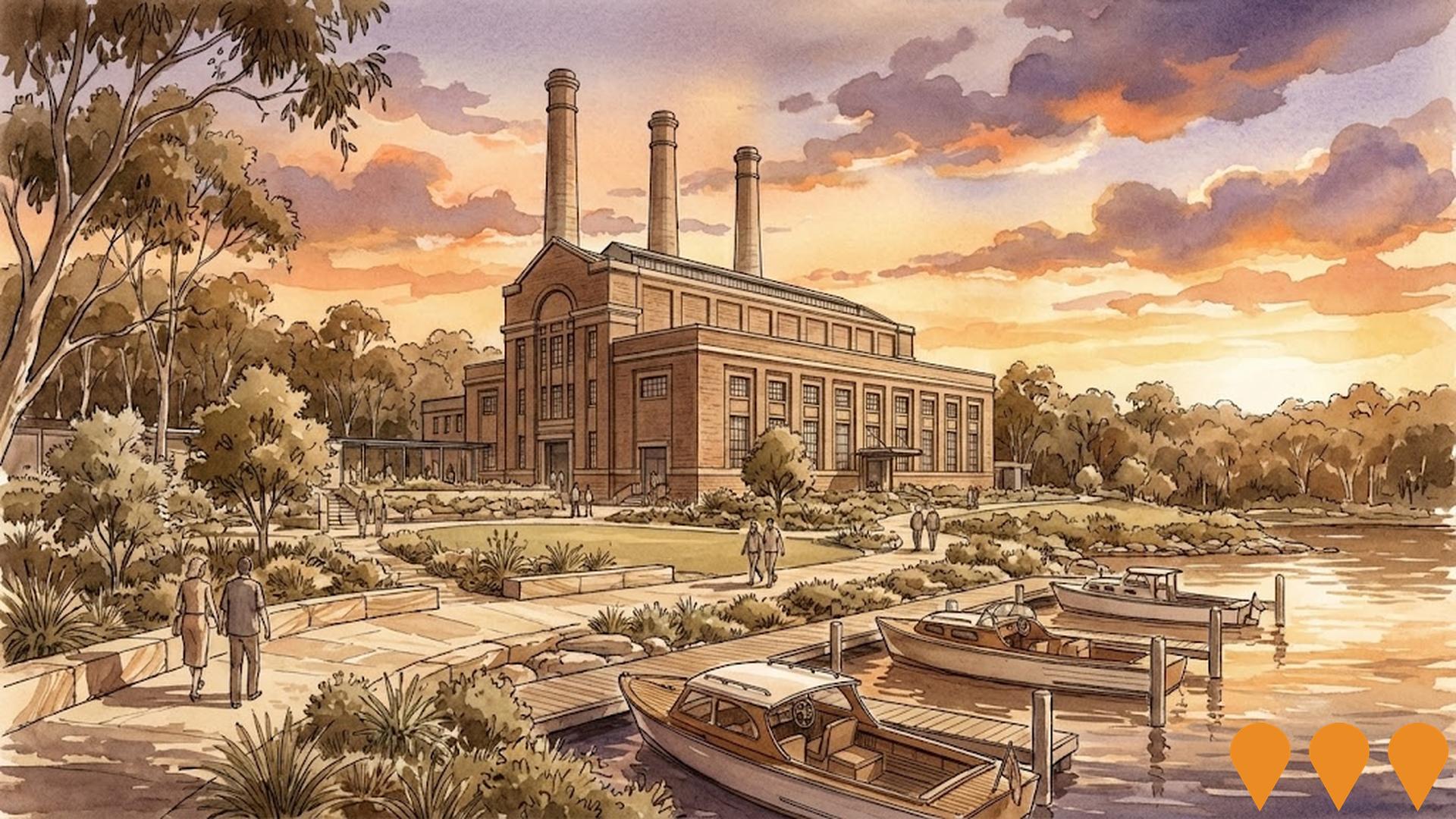
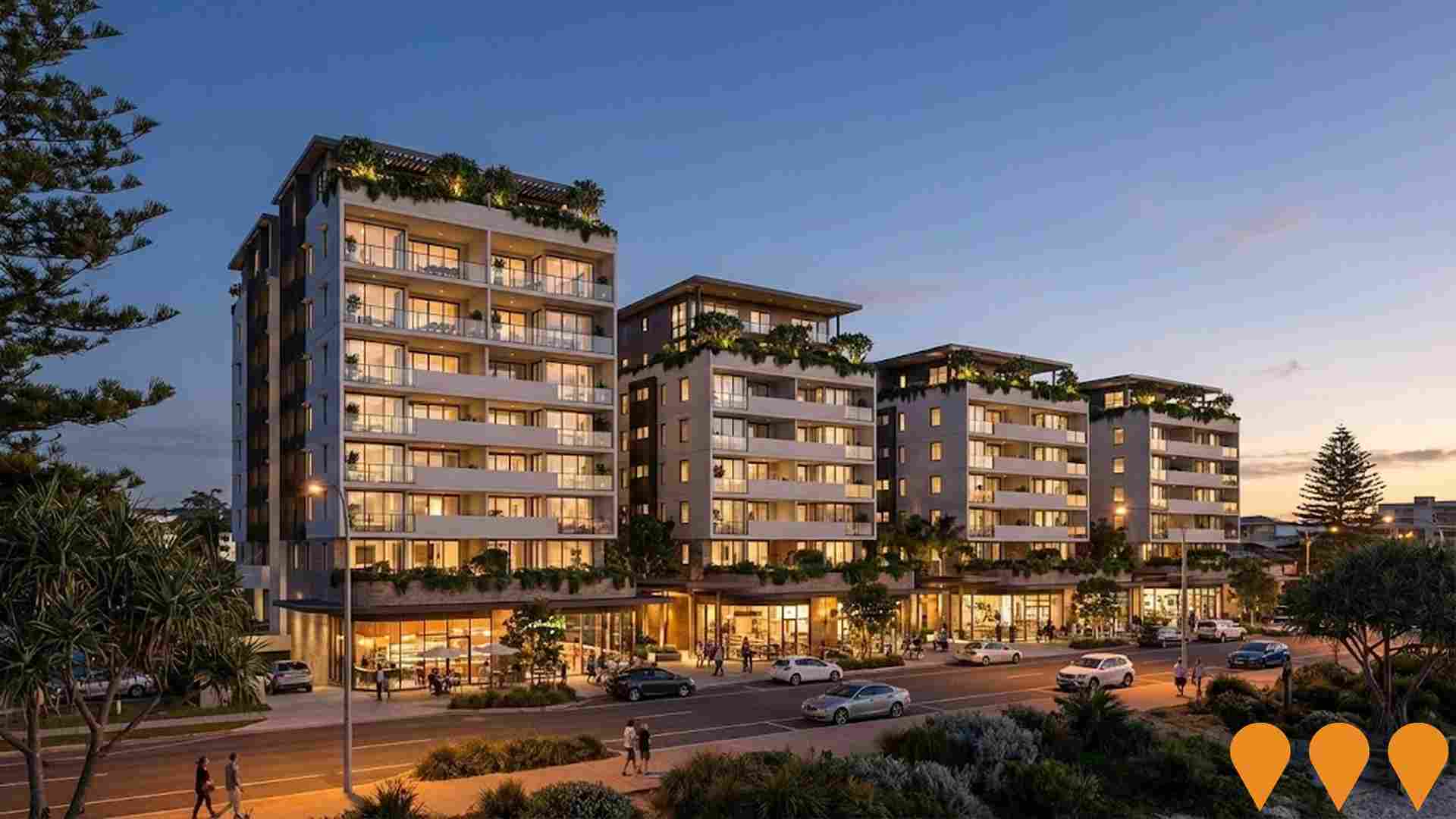
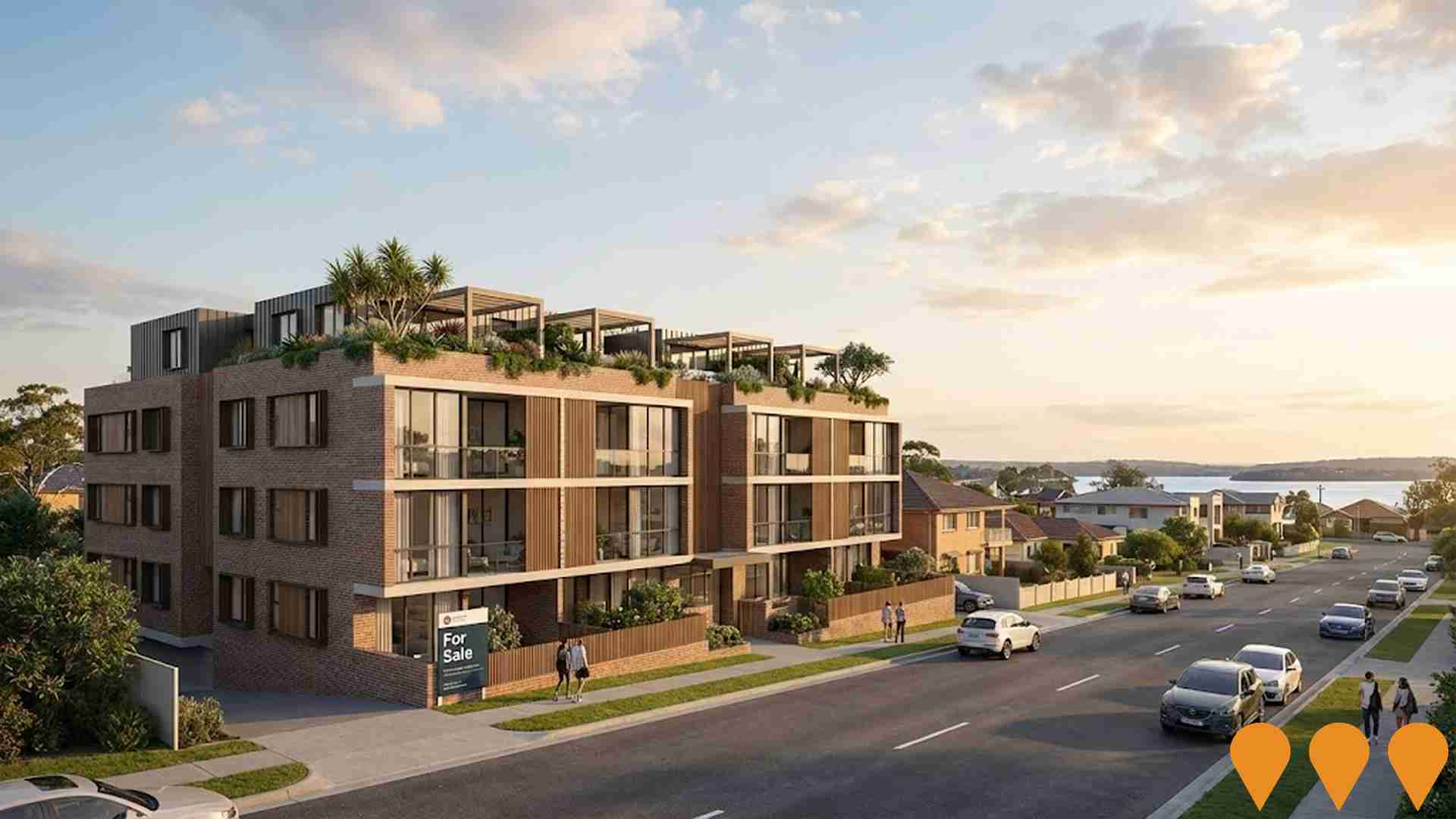
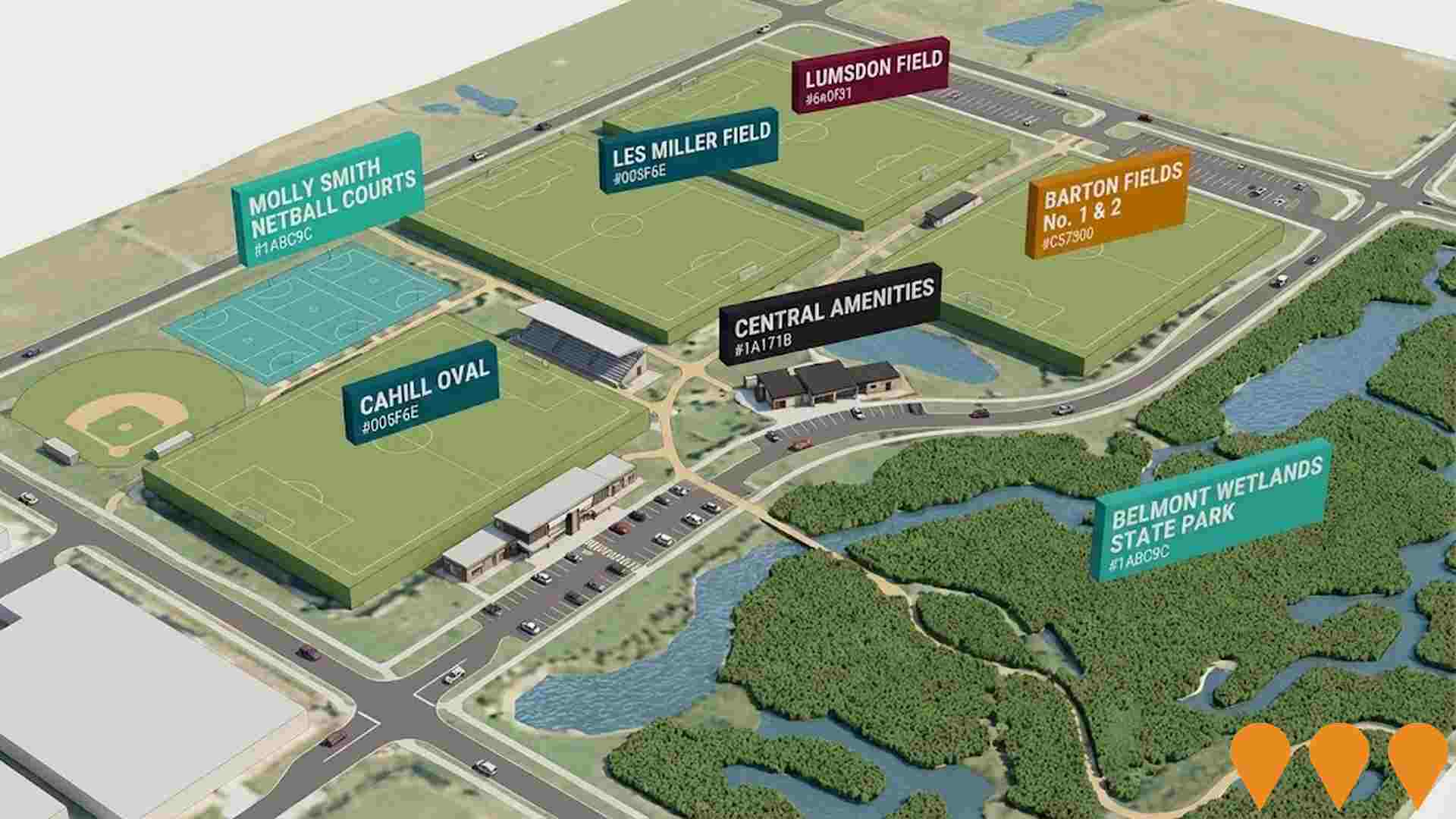
AreaSearch has identified two projects that could impact the area: Toronto Foreshore Revitalisation and Rathmines Park Transformation. Other notable projects include the mixed-use development at 114-120 Cary Street and the apartment development at 136-138 Brighton Avenue.
Professional plan users can use the search below to filter and access additional projects.
INFRASTRUCTURE SEARCH
 Denotes AI-based impression for illustrative purposes only, not to be taken as definitive under any circumstances. Please follow links and conduct other investigations from the project's source for actual imagery. Developers and project owners wishing us to use original imagery please Contact Us and we will do so.
Frequently Asked Questions - Infrastructure
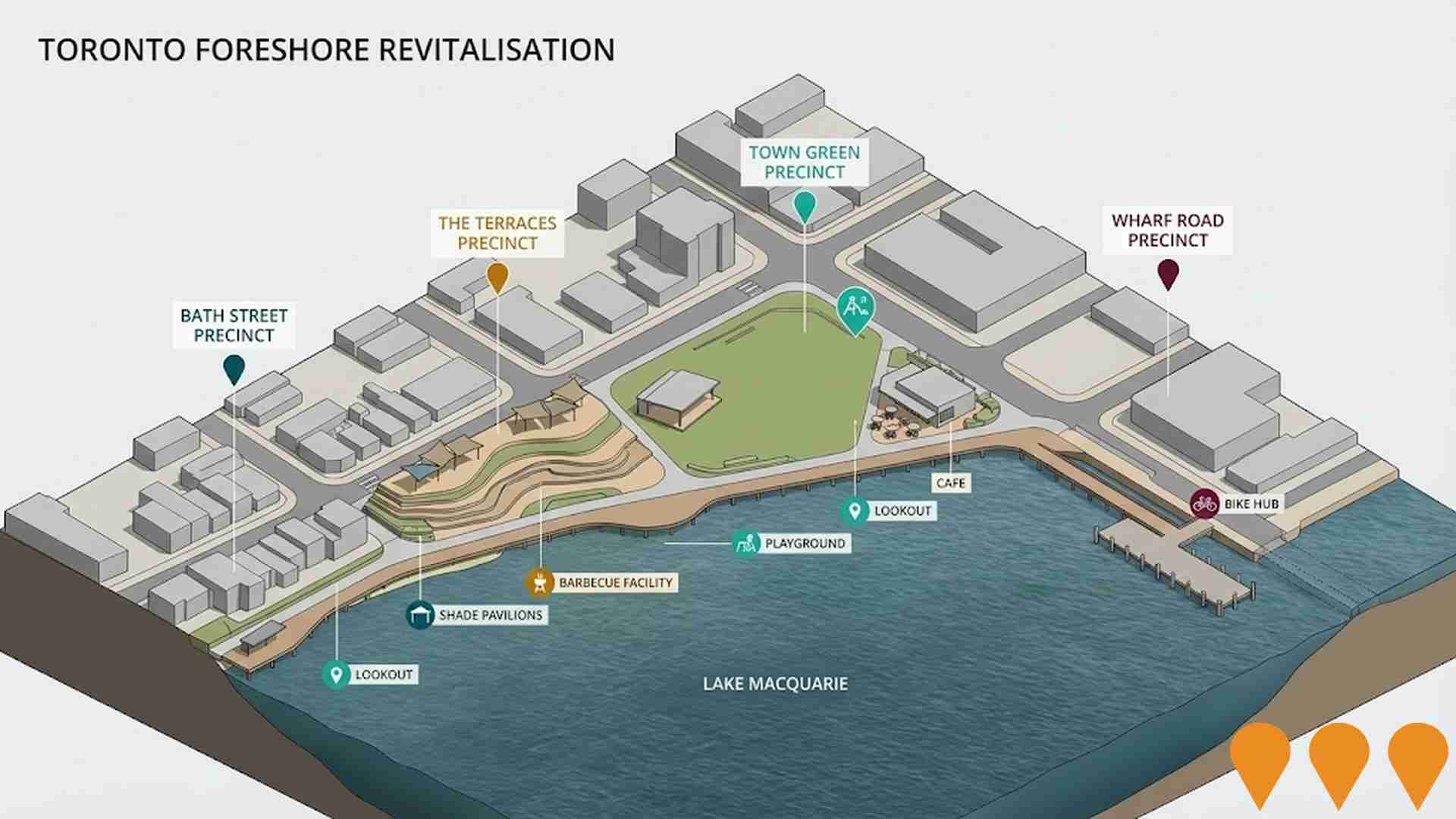
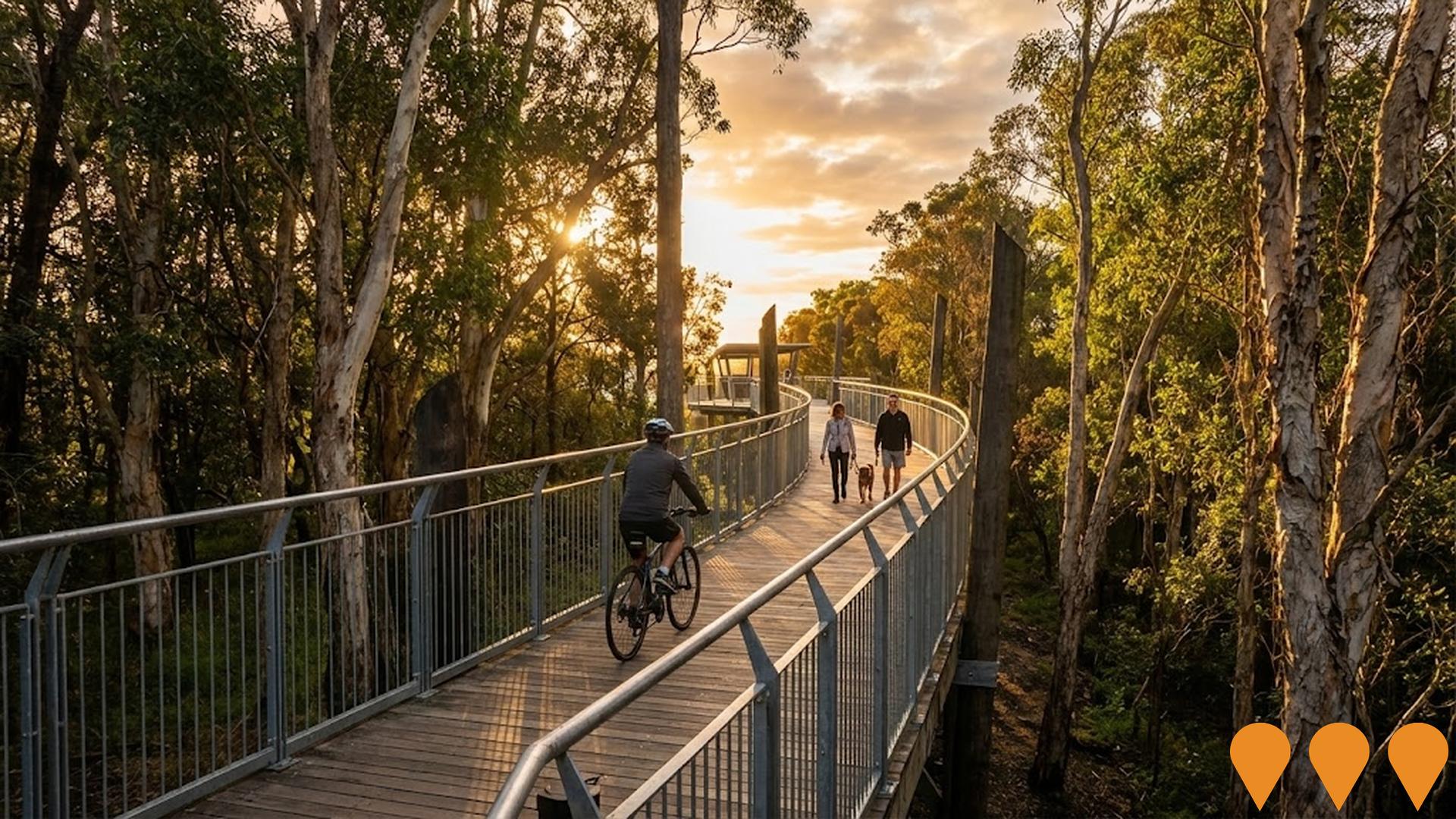
Toronto Foreshore Revitalisation
A $10 million transformation of the Toronto foreshore featuring continuous waterfront pathway, expanded playground, new town green, improved connections, expanded cafe area, boardwalk connections, extended shared pathway, bike hub, new lookout locations, shade pavilion and barbecue facilities. The project is being delivered across four precincts with Town Green Precinct completed in 2022.
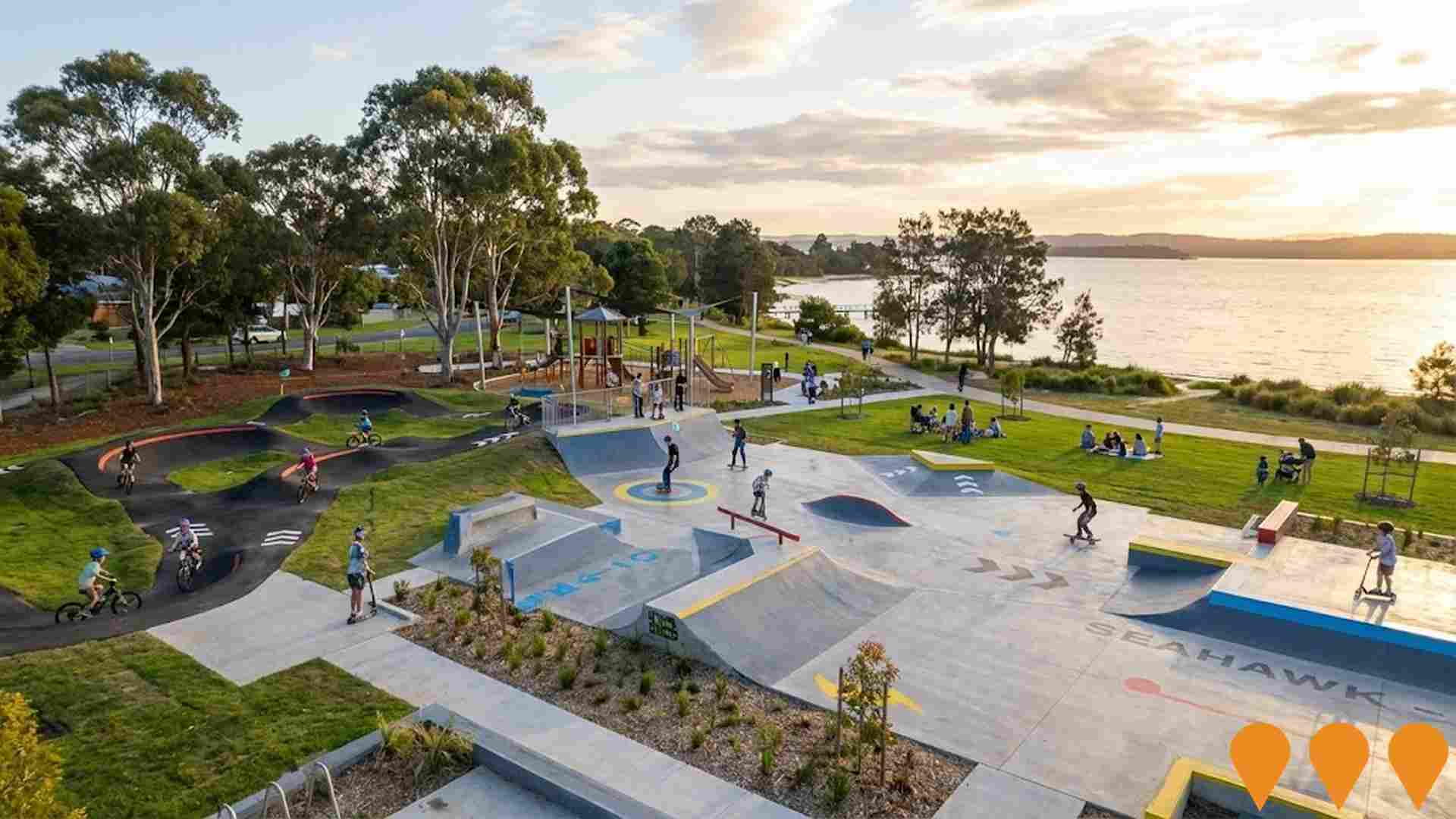
Rathmines Park Upgrade
Completed Lake Macquarie City Council upgrade of Rathmines Park, including a new youth hub, Lake Macquarie's largest skate park, pump track, multi-court, playground improvements and public recreation facilities. The upgrade strengthens Rathmines Park as a regional foreshore recreation destination while recognising the site's former RAAF seaplane base heritage.
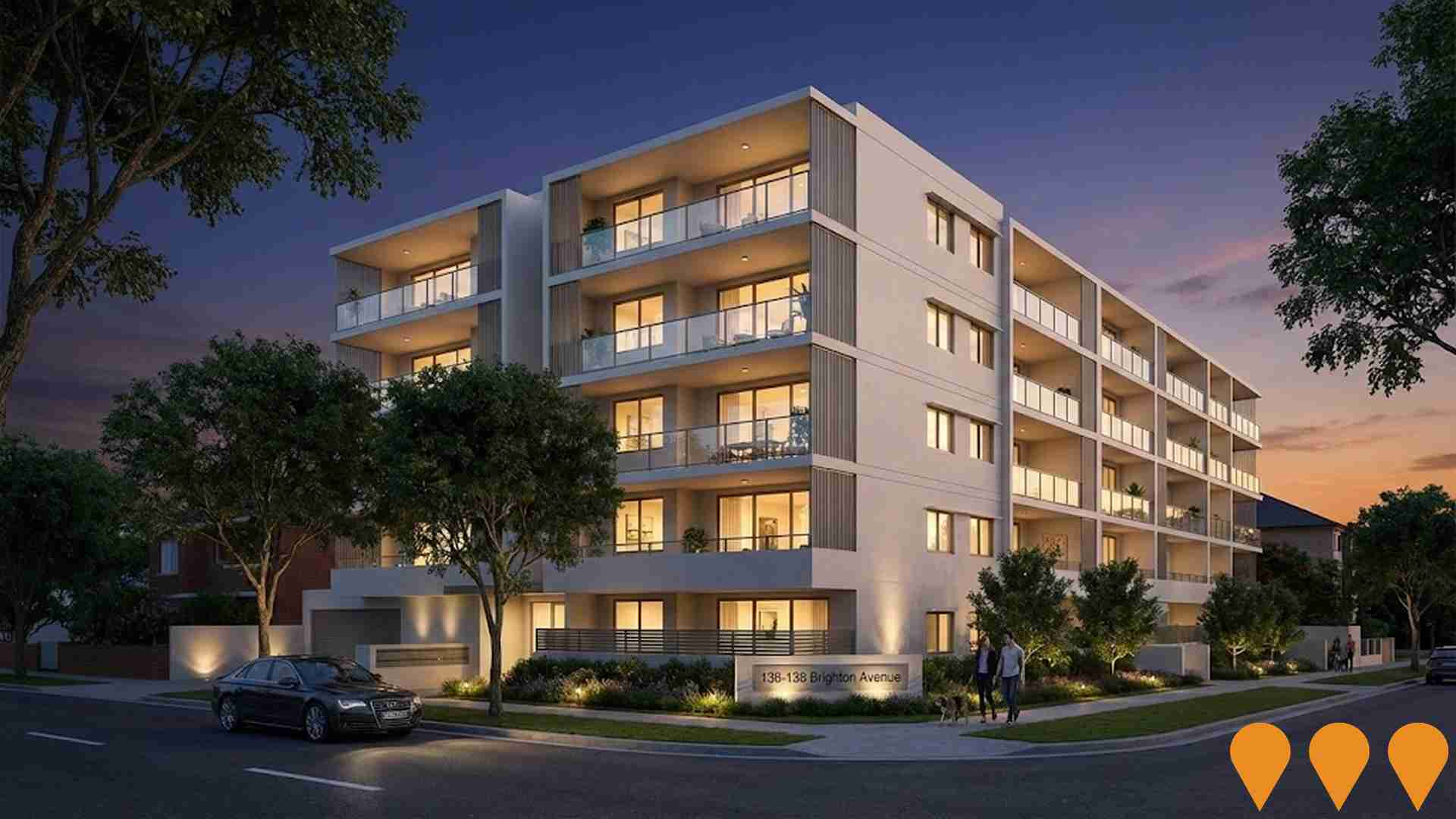
136-138 Brighton Avenue Apartment Development
A low-rise 5-floor apartment building with 28 residential units, 1 commercial unit, and 29 car spaces in Toronto.
114-120 Cary Street Mixed Use Development
Five-storey twin towers mixed-use development featuring 108 residential units, commercial premises, and basement parking.
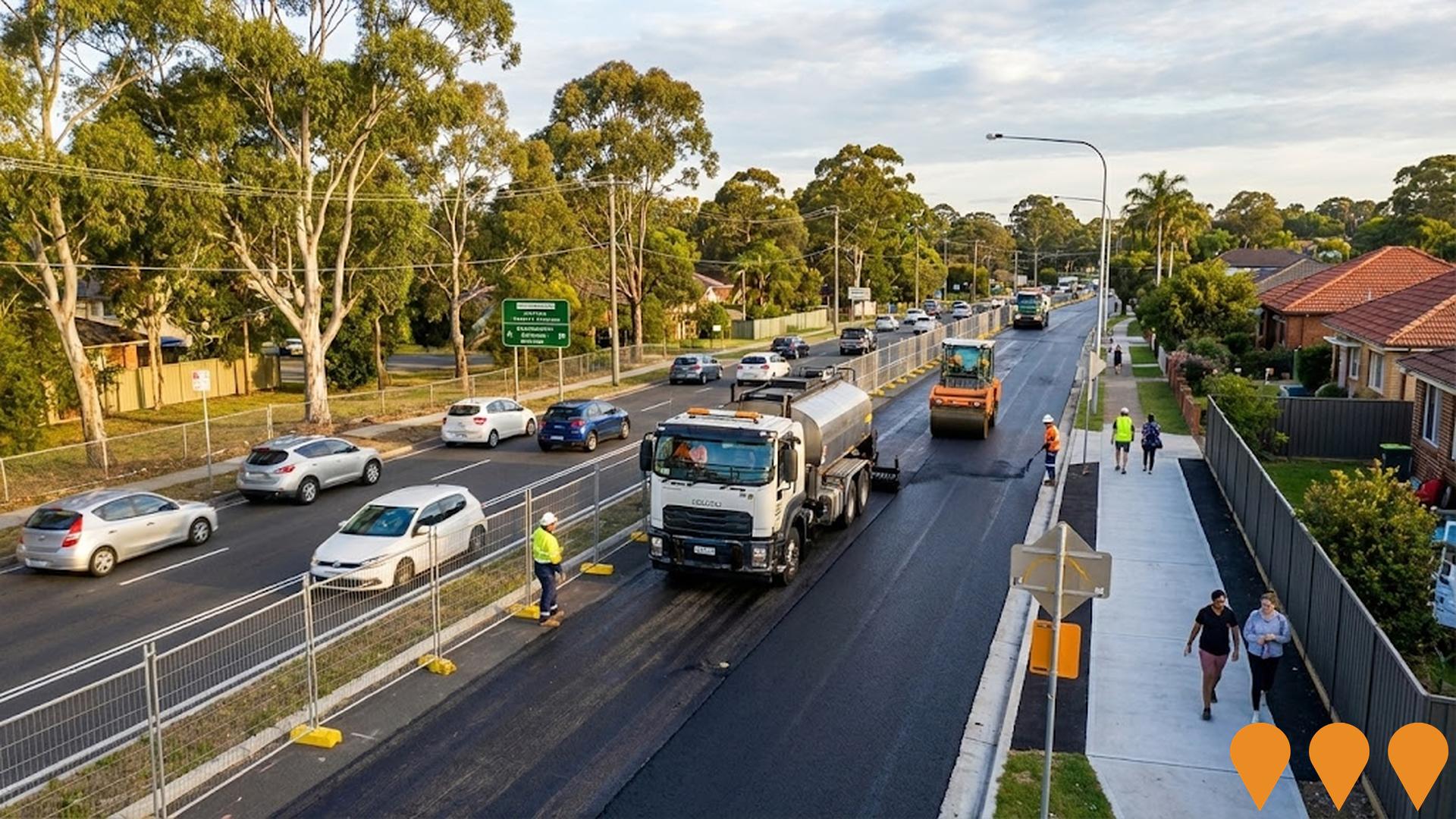
Road Rehabilitation - South Parade, Blackalls Park
Council is rehabilitating the section of South Parade between Fassifern Road and Centre Avenue in Blackalls Park to improve safety and amenity for pedestrians, cyclists and motorists. Works are funded as part of Lake Macquarie City Councils wider road improvements program and include resurfacing, drainage and footpath upgrades, as well as associated traffic and safety improvements. The project is valued at about $1.7 million and is expected to be completed by 2026.
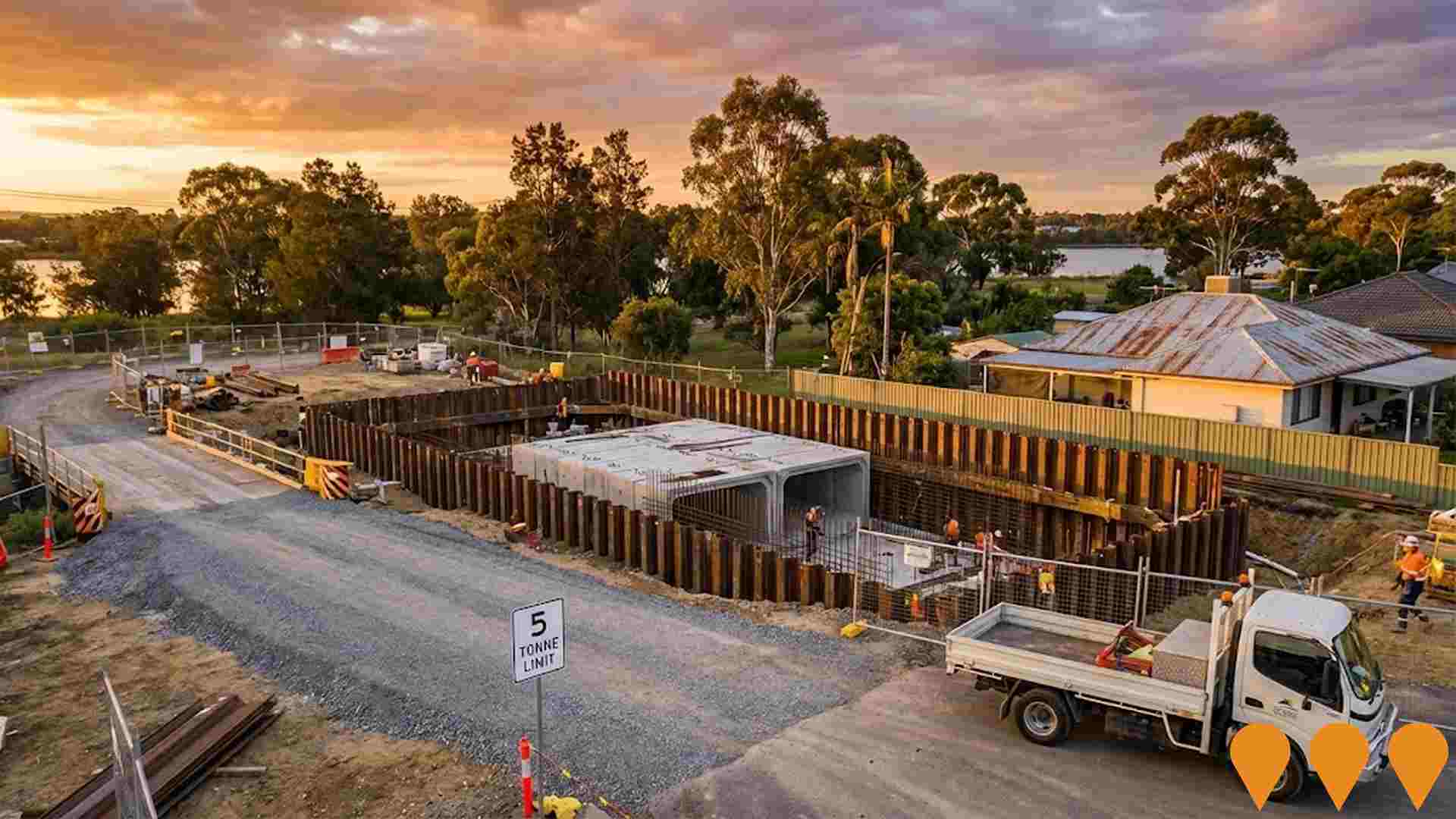
Temporary works to reopen Fennell Crescent culvert, Blackalls Park
Temporary works to remove the collapsed culvert, install a temporary replacement and resurface the road so Fennell Crescent can reopen to traffic. The road was closed from late July 2025 and is being reopened with a 5 tonne load limit and heavy vehicles detouring via Railway Parade. Council plans a full culvert replacement and broader road rehabilitation, with detailed design in the 2026-2027 financial year and construction in 2027-2028.
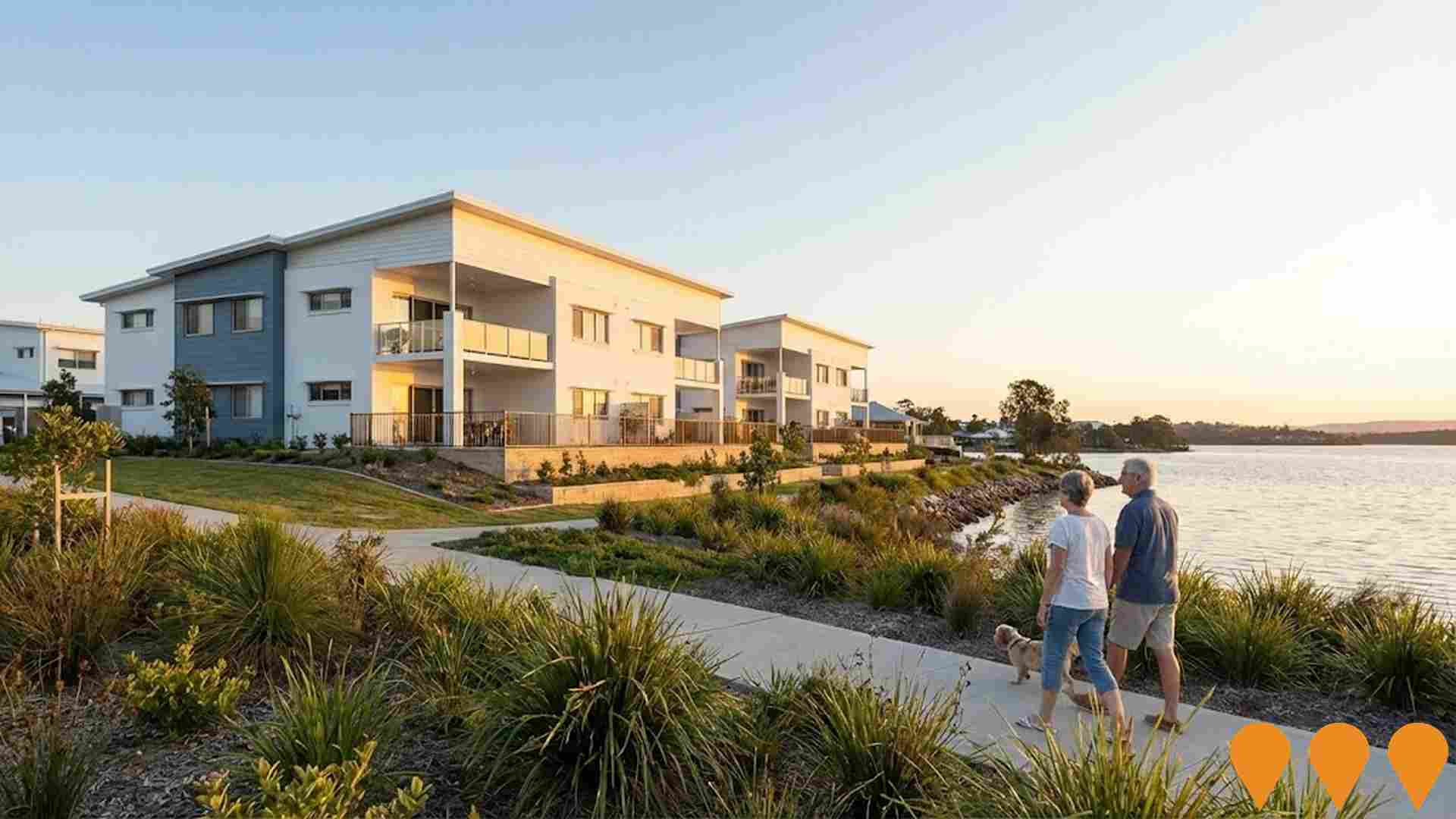
Wangi Shores Retirement Village - Stage 3B Block K
Stage 3B (Block K) at Wangi Shores Retirement Village is a new waterfront stage on Lake Macquarie, delivering eight over 55s villas (four upper and four lower) with two bedrooms, study, balconies and undercover parking, with residents enjoying access to the village pool, spa, community centre, gardens and other shared facilities; construction has commenced with completion expected in late 2026.
1 Kent Place, Wangi Wangi - 3 storey apartment building (13 residences)
A three storey residential building proposed at 1 Kent Place, Wangi Wangi in the Lake Macquarie City Council area. The project is planned to deliver 13 apartments above ground level parking, with 24 car spaces on a 933 square metre B1 Neighbourhood Centre corner site close to shops, services and the Wangi Wangi foreshore.


745 residents of Kilaben Bay are employed, from a labour force of 781. Unemployment sits at 4.6%, with participation at 58.3%. Weighted for its industry mix, the area's sectors are forecast to grow about 6.5% nationally over five years. That reflects industry composition only and makes no allowance for local population growth. The working-day population is estimated at 1,385, about 82% of the resident population, so more people leave the area for work than travel in. Unemployment and labour force come from ABS Small Area Labour Markets, updated quarterly; the industry and occupation profile is from the 2021 Census.
Detail
Kilaben Bay has a skilled workforce with essential services sectors well represented. The unemployment rate is 4.6%, according to AreaSearch's aggregation of statistical area data. As of December 2025745 residents are employed while the unemployment rate is 0.7% higher than Regional NSW's rate of 3.9%. Workforce participation in Kilaben Bay is lower at 58.3%, compared to Regional NSW's 61.3%. Census responses indicate that 31.6% of residents work from home, though Covid-19 lockdown impacts should be considered. The key industries of employment among residents are health care & social assistance, construction, and education & training.
Kilaben Bay specializes in construction with an employment share 1.4 times the regional level. Conversely, agriculture, forestry & fishing is under-represented at 0.9% compared to Regional NSW's 5.3%. The area appears to offer limited local employment opportunities based on Census data comparing working population and resident population. Between December 2024 and December 2025, Kilaben Bay's labour force increased by 0.8%, while employment declined by the same percentage, causing the unemployment rate to rise by 1.4 percentage points. In contrast, Regional NSW saw an employment decline of 1.2% and a labour force decline of 0.8%, with unemployment rising by 0.4 percentage points. Jobs and Skills Australia's national employment forecasts from May-25 suggest that national employment will expand by 6.6% over five years and 13.7% over ten years. Applying these projections to Kilaben Bay's employment mix indicates local employment should increase by 6.5% over five years and 13.6% over ten years, though this is a simple weighting extrapolation for illustrative purposes and does not account for localized population projections.
Frequently Asked Questions - Employment
Median household income in Kilaben Bay is $2,186 a week (about $114,000 a year), with median personal income at $859 a week. ATO records put median taxable income at $61,564 a year against an average of $87,507. The average runs 42% above the median, a wider spread than most areas and a sign of a concentrated group of high earners. Household income is from the 2021 Census; taxable income is from ATO Taxation Statistics for the latest financial year available, indexed forward using the ABS Wage Price Index.
Detail
The suburb of Kilaben Bay had one of Australia's highest incomes according to AreaSearch aggregated ATO data for financial year 2023. Its median taxpayer income was $61,564 and average income stood at $87,507, compared to Regional NSW's $52,390 and $65,215 respectively. Based on Wage Price Index growth of 8.86% since financial year 2023, median income would be approximately $67,019 and average $95,260 by September 2025. Census data showed household income ranked at the 77th percentile ($2,186 weekly) and personal income at the 60th percentile. Income analysis revealed that 28.5% of residents (481 people) fell into the $1,500 - 2,999 bracket, mirroring the broader area's 29.9%.
Higher earners made up a substantial presence with 33.7% exceeding $3,000 weekly. After housing costs, residents retained 88.9% of income. The suburb's SEIFA income ranking placed it in the 7th decile.
Frequently Asked Questions - Income
Kilaben Bay had 551 occupied dwellings at the 2021 Census, 95% detached houses and 1% apartments. 42% are owned with a mortgage, 12% rented and 47% owned outright. At that Census the median rent was $390 a week and the median mortgage repayment $2,036 a month. Rent absorbs 17.8% of household income here and mortgage repayments 21.5%. Dwelling stock, tenure and housing costs are 2021 Census measures — the only source that counts dwellings at this boundary size.
Detail
Kilaben Bay's dwelling structure, as per the latest Census, was 94.8% houses and 5.3% other dwellings (semi-detached, apartments, 'other' dwellings). This compares to Regional NSW's 82.6% houses and 17.4% other dwellings. Home ownership in Kilaben Bay stood at 46.5%, with mortgaged dwellings at 41.5% and rented ones at 12.0%. The median monthly mortgage repayment was $2,036, higher than Regional NSW's average of $1,733. Median weekly rent in Kilaben Bay was $390, compared to Regional NSW's $330. Nationally, Kilaben Bay's mortgage repayments exceeded the Australian average of $1,863, while rents were higher than the national figure of $375.
Frequently Asked Questions - Housing
Kilaben Bay counted 551 households at the 2021 Census, an estimated 615 today, averaging 2.6 people each. 35% are couples with children, against 38% couples without children. 17% of households are people living alone, and families average 1.8 children. Household and family composition is measured only by the Census, so these are 2021 figures.
Detail
Family households account for 81.3 percent of all households, consisting of 34.8 percent couples with children, 38.2 percent couples without children, and 7.4 percent single parent families. Non-family households constitute the remaining 18.7 percent, with lone person households at 17.2 percent and group households comprising 1.4 percent of the total. The median household size is 2.6 people, which is larger than the Regional NSW average of 2.4.
Frequently Asked Questions - Households
26.8% of adults in Kilaben Bay hold a university qualification, including 17.2% with a bachelor degree and 6.4% with postgraduate qualifications, higher than 99% of areas nationally. A further 29.9% hold a vocational qualification. Qualifications come from the 2021 Census.
Detail
The area's educational profile is notable regionally with university qualification rates at 26.8%, surpassing the SA3 area average of 18.1% and Rest of NSW's rate of 21.3%. Bachelor degrees are most prevalent at 17.2%, followed by postgraduate qualifications at 6.4% and graduate diplomas at 3.2%. Vocational credentials are prominent, with 43.1% of residents aged 15+ holding them, including advanced diplomas (13.2%) and certificates (29.9%). Educational participation is high, with 28.0% currently enrolled in formal education, comprising 10.2% in primary, 8.0% in secondary, and 3.8% in tertiary education.
Frequently Asked Questions - Education
Schools Detail
Public transport in Kilaben Bay reaches 20 stops on 20 routes, timetabled for about 160 services a week. The typical home sits about 140 m from its nearest stop. Households keep an average of 1.9 vehicles. Stop and service counts are built from operators' published GTFS timetables and refresh with each timetable release; vehicle ownership is from the 2021 Census.
Detail
Kilaben Bay has 20 active public transport stops operating within its boundaries, all of which are bus stops. These stops are serviced by 20 different routes that collectively provide 156 weekly passenger trips. The accessibility to these stops is rated as excellent, with residents typically located 139 meters from the nearest one. As a predominantly residential area, most residents commute outward. The car remains the primary mode of transport, used by 94% of residents. On average, there are 1.9 vehicles per dwelling in Kilaben Bay, which is higher than the regional average.
According to the 2021 Census, 31.6% of residents work from home, a figure that might be influenced by COVID-19 conditions. The service frequency averages 22 trips per day across all routes, resulting in approximately 7 weekly trips per individual stop.
Frequently Asked Questions - Transport
Transport Stops Detail
65.4% of residents in Kilaben Bay report no long-term health condition. 4.9% need daily assistance with core activities, and 61.5% hold private health cover. The standardised death rate runs at 4.5 per 1,000 residents. Health conditions, assistance needs and insurance are 2021 Census measures; the death rate comes from current ABS releases.
Detail
Kilaben Bay shows superior health outcomes, as assessed by AreaSearch using mortality rates and chronic condition prevalence. Both younger and older age groups exhibit low prevalence of common health conditions. Private health cover is exceptionally high at approximately 61% of the total population (1,039 people), compared to 51.9% in Regional NSW and 55.7% nationally. The most prevalent medical conditions are arthritis and asthma, affecting 9.3 and 8.6% of residents respectively, while 65.4% report being completely free of medical ailments, compared to 63.3% across Regional NSW. Working-age residents have an above-average prevalence of chronic health conditions.
The area has 23.6% of residents aged 65 and over (399 people). Health outcomes among seniors are particularly strong, aligning with national rankings for the general population.
Frequently Asked Questions - Health
Kilaben Bay is largely Australian-born, at 89.4% of residents, with 3.8% speaking a language other than English at home. The largest reported ancestries are English (34.1%) and Australian (29.0%). Ancestry, language and country of birth are counted only by the Census, so these are 2021 figures.
Detail
Kilaben Bay's cultural diversity was found to be below average, with 89.4% of its population born in Australia and 93.1% being citizens. English was spoken by 96.2% of residents at home. Christianity was the predominant religion, comprising 53.8% of Kilaben Bay's population, compared to 55.9% across Regional NSW. In terms of ancestry, the top three groups were English (34.1%), Australian (29.0%), and Scottish (9.5%). Notably, Welsh (1.6%) was overrepresented in Kilaben Bay compared to regional levels (0.5%), as were Hungarian (0.4% vs 0.2%) and Polish (0.8% vs 0.5%) residents.
Frequently Asked Questions - Diversity
The median resident of Kilaben Bay is 46, older than 85% of areas nationally. That is 1 year younger than at the 2021 Census. 18.9% of residents are aged 15 to 34. Age cohorts are not raw Census counts: the Census split is re-based to the latest ABS population estimates and state projections.
Detail
Kilaben Bay has a median age of 46, which is higher than Regional NSW's figure of 43 and significantly higher than the national norm of 38. The 65-74 age group constitutes 15.5% of Kilaben Bay's population, compared to Regional NSW, while the 25-34 cohort makes up only 8.0%. This concentration of the 65-74 age group is well above the national figure of 9.5%. Post-2021 Census data indicates a rejuvenation in Kilaben Bay's population, with the median age falling from 47 to 46 years. Notably, the 35-44 age group has grown from 11.2% to 13.9% of the population.
Conversely, the 45-54 cohort has declined from 14.6% to 12.2%. By 2041, Kilaben Bay's age composition is expected to shift significantly. The 35-44 age group is projected to grow steadily, increasing by 56 people (24%) from 235 to 292. In contrast, both the 65-74 and 55-64 age groups are expected to see reduced numbers.
Frequently Asked Questions - Age
Data & MethodBoundaries, Sources & Method for Kilaben Bay
9 of 14 data sections on this page were updated within the last 12 months — the newest current to Oct 2026.
Everything is aggregated to the Suburb (SAL) boundary shown above, on a 2021 Census baseline. Only 3 sections — housing, households and cultural diversity — still wait on the 2026 Census.
The ledger — source, cycle and currency by section
| Section | Source & update cycle | Currency |
|---|---|---|
| Updated within the last 12 months 9 sections | ||
| Population | ABS, GNAF, Geoscience Australia Annual (ABS ERP) | Aug 2026 2 months ago headline measures · 2021 Census baseline |
| Re-based to the ABS Estimated Resident Population (June 2024 release) and updated with new dwellings from GNAF address data. Current to Aug 2026, with the 2021 Census supplying the small-area baseline. | ||
| Age profile | ABS, Geoscience Australia, State governments Annual | Aug 2026 2 months ago headline measures · 2021 Census baseline |
| Age cohorts are re-based to the latest ABS population estimates and state projections, current to Aug 2026. Each cohort is held as a Census baseline and a current estimate. | ||
| Development & approvals | ABS, GNAF Monthly (ABS approvals) | Aug 2026 2 months ago headline measures · Jul 2026 baseline |
| Property sales & rents | Valuer General, Rental Board, ABS Weekly sales, quarterly rents | Oct 2026 this month headline measures · Sep 2026 baseline |
| Sales from the state Valuer General register, refreshed weekly, and rents from quarterly rental bond lodgements. Both are read live each time this page loads, current to Oct 2026. | ||
| Infrastructure projects | Infrastructure Australia, State agencies, Local governments Daily | May 2026 5 months ago all 1 projects tracked here |
| Project pipeline maintained continuously from Infrastructure Australia, state agencies, local government and public announcements. Records are added and revised daily; this area was last updated May 2026. | ||
| Employment | ABS, DEWR, JSA Quarterly (ABS SALM) | Mar 2026 7 months ago headline measures · 2021 Census baseline |
| Unemployment and labour force from ABS Small Area Labour Markets, current to Mar 2026. The growth outlook applies Department of Employment (now Jobs and Skills Australia) forecasts for all 19 industry divisions to the local industry mix, so it measures sector composition rather than local expansion and makes no allowance for population growth. Job demand comes from the same agency via its Internet Vacancy Index; industry and occupation structure from the 2021 Census. | ||
| Education | ABS, ACARA Annual (ACARA) | Sep 2026 last month headline measures · 2021 Census baseline |
| Transport | ABS, State Transport Departments Each timetable release | Jul 2026 3 months ago headline measures · 2021 Census baseline |
| Services & amenities | Provider directories, ACECQA Continuous | Sep 2026 last month all 14 measures |
| Annual and financial-year sources 2 sections | ||
| Income | ABS, ATO Annual (ATO) | FY 2023 3 years ago headline measures · 2021 Census baseline |
| ATO taxable income statistics for FY 2023, indexed forward using the Wage Price Index. Census household income provides the distribution detail. | ||
| Health | ABS, ATO Annual | 2024 2 years ago headline measures · 2021 Census baseline |
| Census-measured — next update: 2026 Census 3 sections No more current small-area source exists for these, so they are labelled as Census-measured rather than implied to be current. | ||
| Housing | ABS 5-yearly (Census) | 2021 Census next update 2026 all 30 measures |
| Households | ABS 5-yearly (Census) | 2021 Census next update 2026 all 18 measures |
| Cultural diversity | ABS, Geoscience Australia 5-yearly (Census) | 2021 Census next update 2026 all 44 measures |
"Currency" is the most recent release feeding that section. Where the Census supplies the structural baseline underneath a current headline figure, the row says so.
How the numbers are built
Population
The Census provides the small-area baseline, aggregated from mesh blocks to this boundary. It is then re-based to the ABS Estimated Resident Population (June 2024 release), and new dwellings built since Census night are counted from address data. The headline figure is therefore a current estimate for Feb 2026, not a 2021 count (1,513 at the 2021 Census → 1,691 now). Annual growth rates are compound (CAGR), not simple averages.
Age profile
Cohort shares are not raw Census counts. Every cohort is held as a pair — the Census baseline and a current estimate — and the split is re-based using ERP and state population projections, current to Feb 2026. Median age is the Census median plus modelled change since. Charts that show both are labelled "2021 Census vs Current Estimate".
Property sales
Sourced from the state valuation authority's sales register — current, not Census, and refreshed weekly. Medians are calculated from settled transactions in the period shown; periods with very low transaction counts are flagged or suppressed, because a handful of sales can move a median substantially.
Rents
Derived from state rental bond lodgement data, by dwelling type and bedroom count. Bonds are lodged at the start of a new tenancy, so this reflects new lettings, not the whole rented stock.
Development & infrastructure
Building approvals come from current ABS releases; development applications are collected from council and state planning portals; the infrastructure pipeline is compiled from Infrastructure Australia and local government sources. Applications are matched to this boundary by address or coordinates, so very recent lodgements may not yet appear.
Employment & income
Industry and occupation structure comes from the Census, but the headline labour-market indicators do not. Unemployment and labour force are derived from ABS Small Area Labour Markets (quarterly). The employment outlook applies Department of Employment forecasts for all 19 industry divisions to this area's own industry mix (the agency is now Jobs and Skills Australia), as does the Internet Vacancy Index used for job demand. Because it is weighted on industry composition alone, that outlook carries no allowance for local population growth — in fast-growing areas the real rise in local jobs will typically be higher. Income combines Census household income with ATO taxable-income statistics for FY 2023, indexed forward using the Wage Price Index.
Education, transport & amenities
School enrolments, ICSEA and performance come from ACARA's current release, not the Census. Public transport stops and service frequency are derived from GTFS timetable feeds published by state transport departments. Services and amenities are proximity and count scores built from provider directories, refreshed on their own cycle. The Census contributes only the travel-to-work and qualification measures.
Rankings and benchmarks. Where we rank this area, the comparison set is every area of the same boundary type — suburbs against suburbs, SA2s against SA2s. Benchmarks compare this area against its greater capital city region and the national figure for the same measure and period.
Limits worth knowing. Small areas carry larger error margins, and the ABS introduces small random adjustments to Census counts to protect confidentiality — so totals may not sum exactly. Estimates re-based from regional data describe the area's expected trajectory, not a direct count of it. Figures are indicative for research and are not financial, planning or valuation advice.
Cross-check us. The Census baseline for this boundary is at ABS 2021 Census QuickStats (SAL12133). QuickStats reports 2021 only — the figures on this page are more current wherever the ledger shows a later date.