Chart Color Schemes
This analysis uses Suburbs and Localities (SAL) boundaries, which can materially differ from Statistical Areas (SA2) even when sharing the same name.
SAL boundaries are defined by Australia Post and the Australian Bureau of Statistics to represent commonly-known suburb names used in postal addresses.
Statistical Areas (SA2) are designed for census data collection and may combine multiple suburbs or use different geographic boundaries. For comprehensive analysis, consider reviewing both boundary types if available.
est. as @ -- *
2021 Census | -- people







Curious about local property values? Filter the chart to assess the volume and appreciation (including resales) trends and regional comparisons, or scroll to the map below view this information at an individual property level.
Find a Recent Sale

Sales Detail
Gilston has an estimated 3,009 residents, up from 2,669 at the 2021 Census — a change of 340 people, or 12.7%. Growth has averaged 1.2% a year over five years, faster than 79% of areas nationally. Overseas migration accounts for 60.0% of that increase. That puts 233 residents on each square kilometre. Population is estimated from ABS Estimated Resident Population releases and GNAF address data, re-based from the 2021 Census and updated annually.
Detail
As of Aug 2026, the suburb of Gilston has an estimated population of around 3,009, according to AreaSearch's evaluation of wider ABS demographic releases alongside post-Census validated addresses. Compared to the 2021 Census count of 2,669 people, this represents an addition of 340 people (12.7%). This figure is calculated from an estimated resident population of 2,999 derived from the June 2025 ABS ERP figures, combined with 79 validated new addresses confirmed after the Census. With a density of 233 persons per square kilometer, the suburb of Gilston offers generous living space and capacity for additional building activity.
Outpacing both the national rate and the Rest of Qld (9.4%), the suburb of Gilston registered 12.7% growth since the 2021 census, establishing itself at the forefront of regional expansion. Overseas migration served as the primary growth engine, generating approximately 60.0% of recent population additions. Population projections for each SA2 area utilise the 2024 ABS/Geoscience Australia dataset with a 2022 baseline. For periods beyond 2032 or locations absent from this series, 2023 Queensland State Government SA2 figures based on 2021 data are used. Because these state forecasts lack age-specific breakdowns, AreaSearch applies proportional adjustments matching the 2023 ABS Greater Capital Region projections (using 2022 data) across individual age brackets. On the back of these demographic trends, the suburb of Gilston is projected to surpass the national regional median expansion, gaining 572 persons by 2041 across aggregated SA2 estimates, which equates to an overall 18.7% rise over the 16 years.
Frequently Asked Questions - Population
91 new dwellings have been approved in Gilston over the past five years, an average of 18 a year. That places the area in the 53rd percentile for residential development activity nationally, about 6 approvals per 1,000 residents a year. Of the 20 dwellings approved in the latest reporting year, 80% were detached houses and the rest townhouses or apartments. Approvals are currently running at an annualised 10, well below that longer-run average. Figures come from ABS building approvals aggregated to this Suburb (SAL) boundary and are updated monthly as the ABS releases them.
Detail
Building approvals from the ABS compiled by AreaSearch indicate an annual approval rate of roughly 18 new dwellings in the locality. Over the past 5 financial years (between FY-21 and FY-25), roughly 91 residential properties were approved, with 10 approved during FY-25 to date. An average construction cost of $603,000 accompanies new residential projects, while an influx of 1.8 new residents per year per dwelling constructed over the past 5 financial years (between FY-21 and FY-25) indicates steady market balance between building activity and buyer demand. Concurrently, commercial planning activity reached $9.5 million this financial year, pointing to a moderate volume of non-residential development.
Recent residential construction approvals are divided into 80.0% detached dwellings and 20.0% attached dwellings, preserving the community's spacious character while catering to buyers seeking freestanding homes. However, this differs noticeably from the current housing stock of 97.0% houses, signaling both a tightening supply of greenfield parcels and greater demand for accessible, diversified housing formats. With an approval intensity of roughly 161 people per approval, the district demonstrates ongoing residential expansion. According to the most recent AreaSearch quarterly update, future demographic expansion will introduce 562 residents up to 2041. The current trajectory of residential construction appears well positioned to satisfy upcoming buyer demand, creating favorable market conditions and possibly facilitating growth exceeding current demographic projections.
Frequently Asked Questions - Development
Development applications around Gilston
Loading development applications…
| Lodged | Address | Description | Type | Distance | Status |
|---|
SOURCE: Planning portals and council registers, compiled by AreaSearch. Distance & bearing measured from the suburb midpoint.
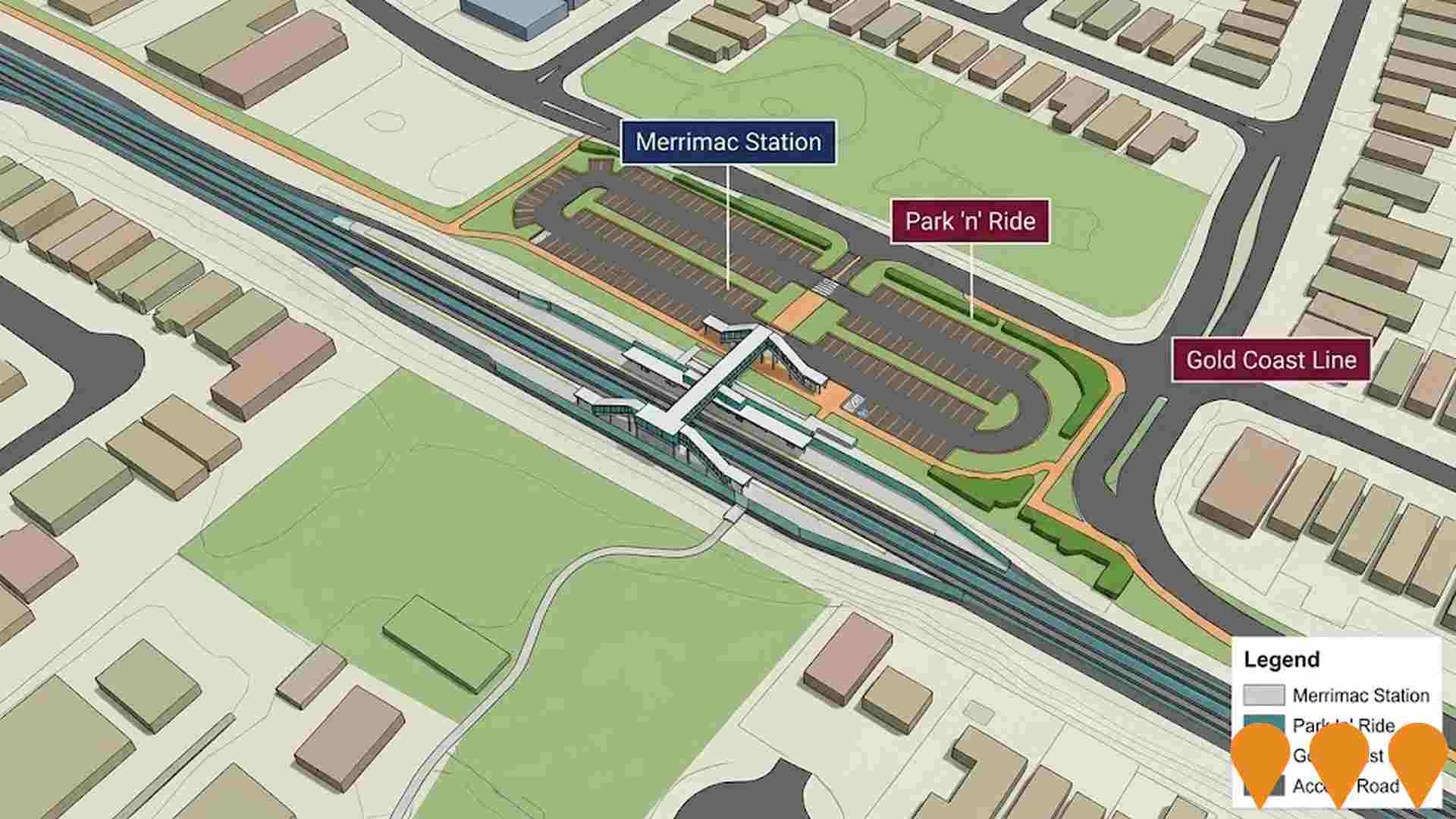
AreaSearch tracks one current infrastructure or development project inside Gilston, worth an estimated $25 million. A further 69 sit in the immediately surrounding suburbs, taking the tracked pipeline within reach of the area to $26.9 billion. 23 are already under construction and 28 are due for completion within three years. The pipeline spans residential development, transport & logistics and communities, precincts & urban renewal. Records are compiled from Infrastructure Australia, state agencies, council planning portals and public announcements, reviewed and updated daily, then ranked by proximity, construction stage, completion horizon and project scale.
Detail
Strategic infrastructure upgrades, planning schemes, and prominent regional developments exert a fundamental influence over local community performance. AreaSearch has pinpointed 5 major projects anticipated to shape the area. Key works include the Highland Park Investigation Area, the Hinkler Drive Retail Showroom Complex, the Mooyumbin Creek Riparian Restoration, and Serenity Estate, with detailed breakdowns provided below for the most significant undertakings.
Professional plan users can use the search below to filter and access additional projects.
INFRASTRUCTURE SEARCH
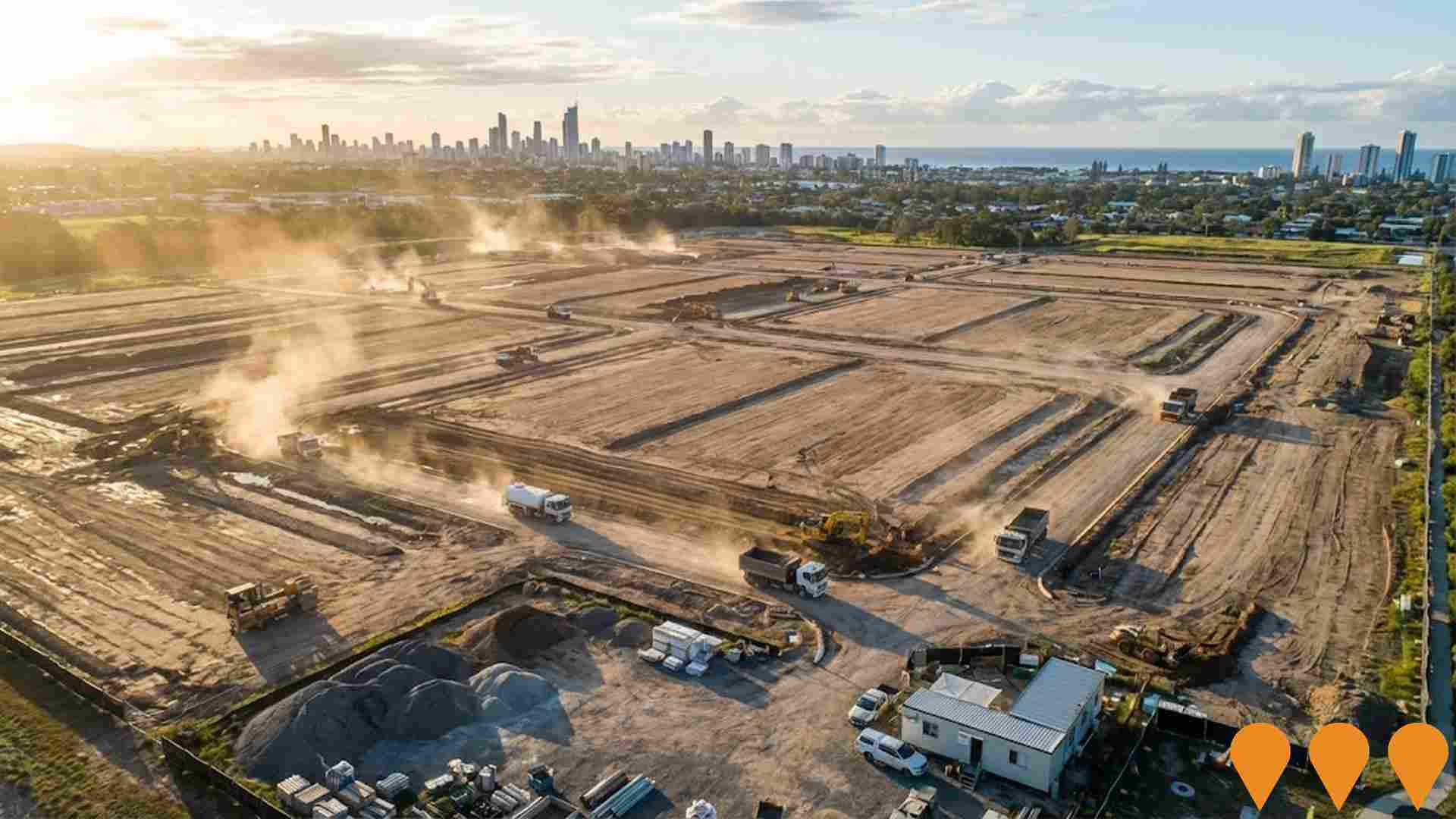
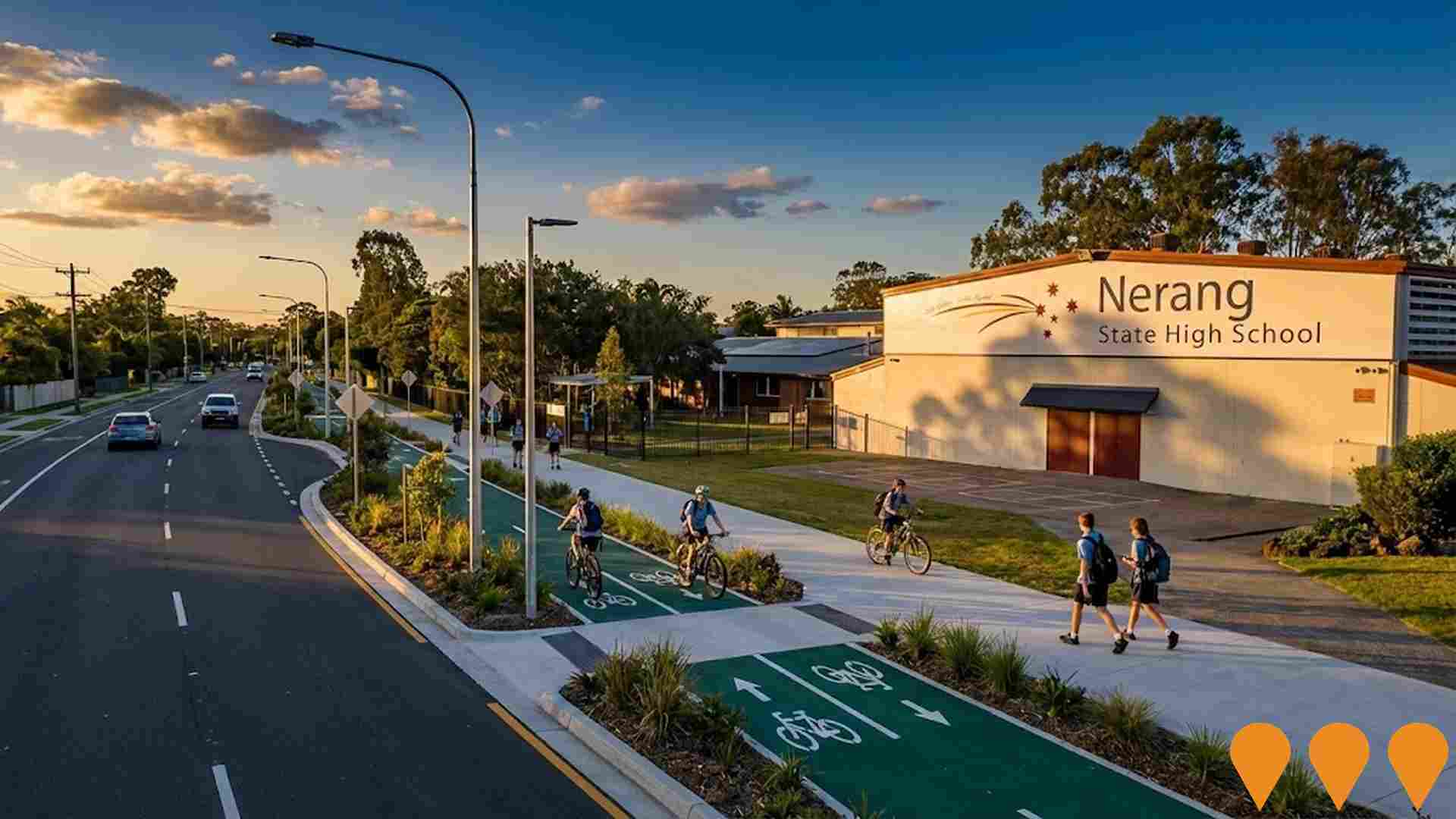
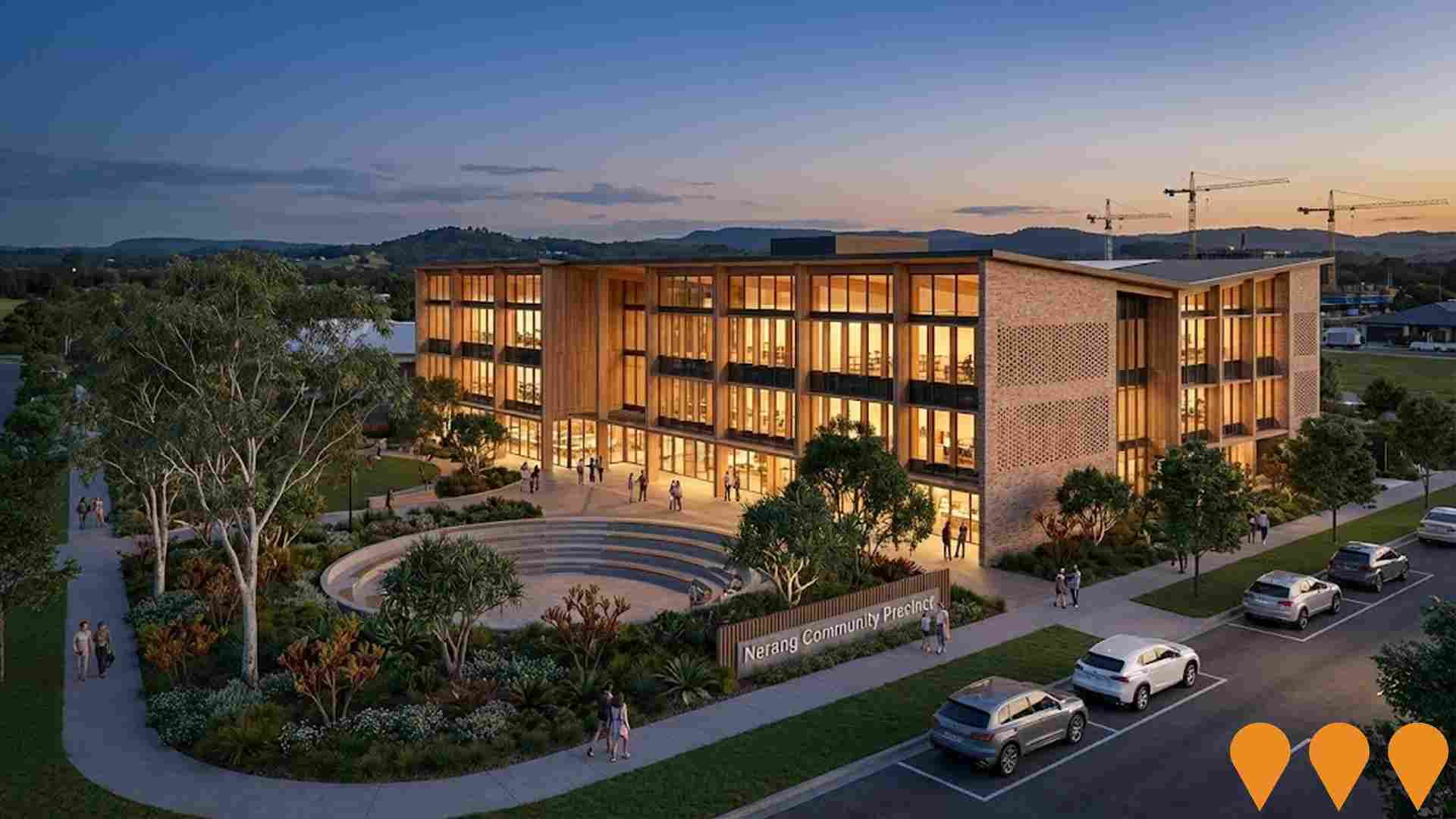
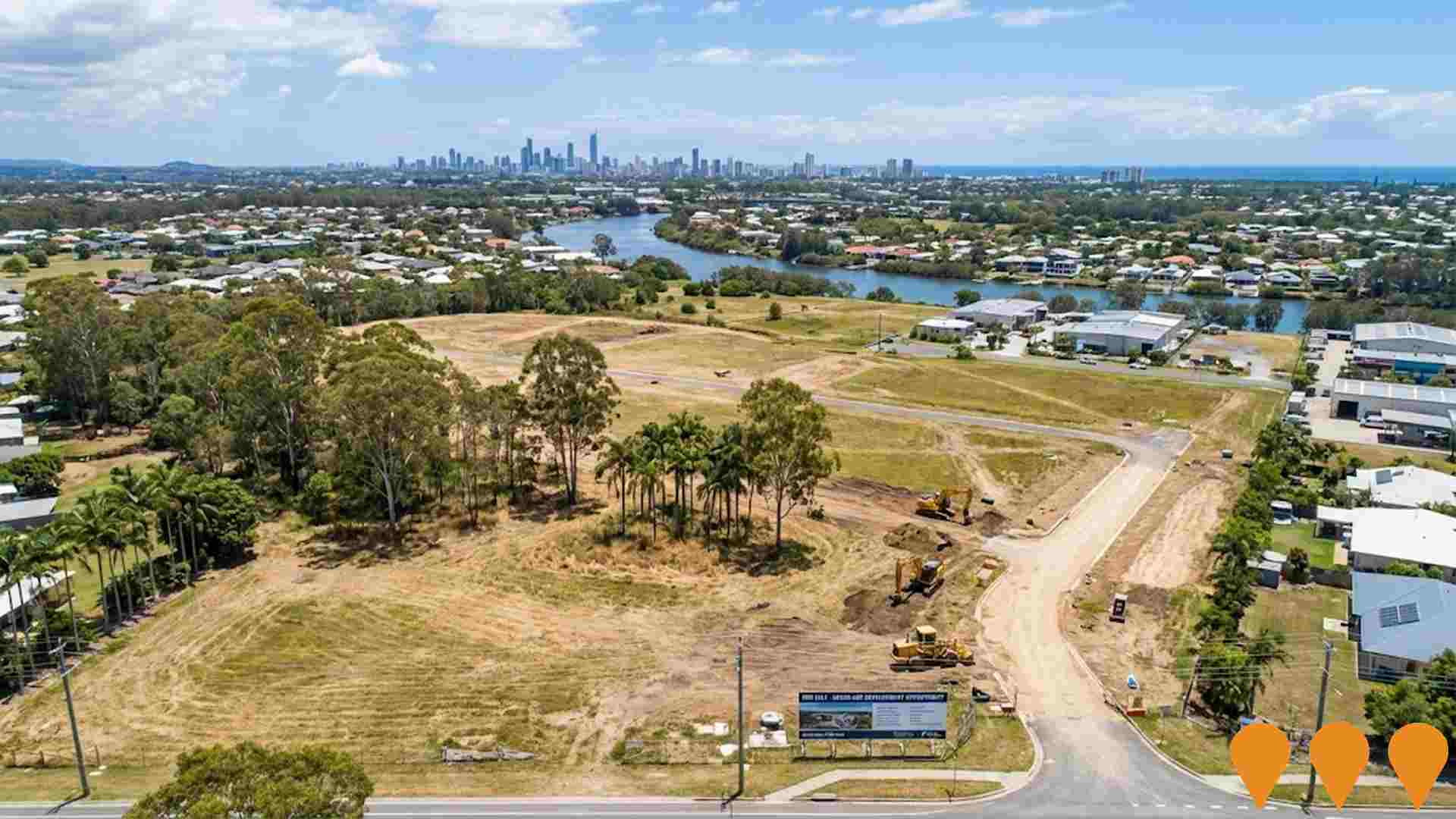
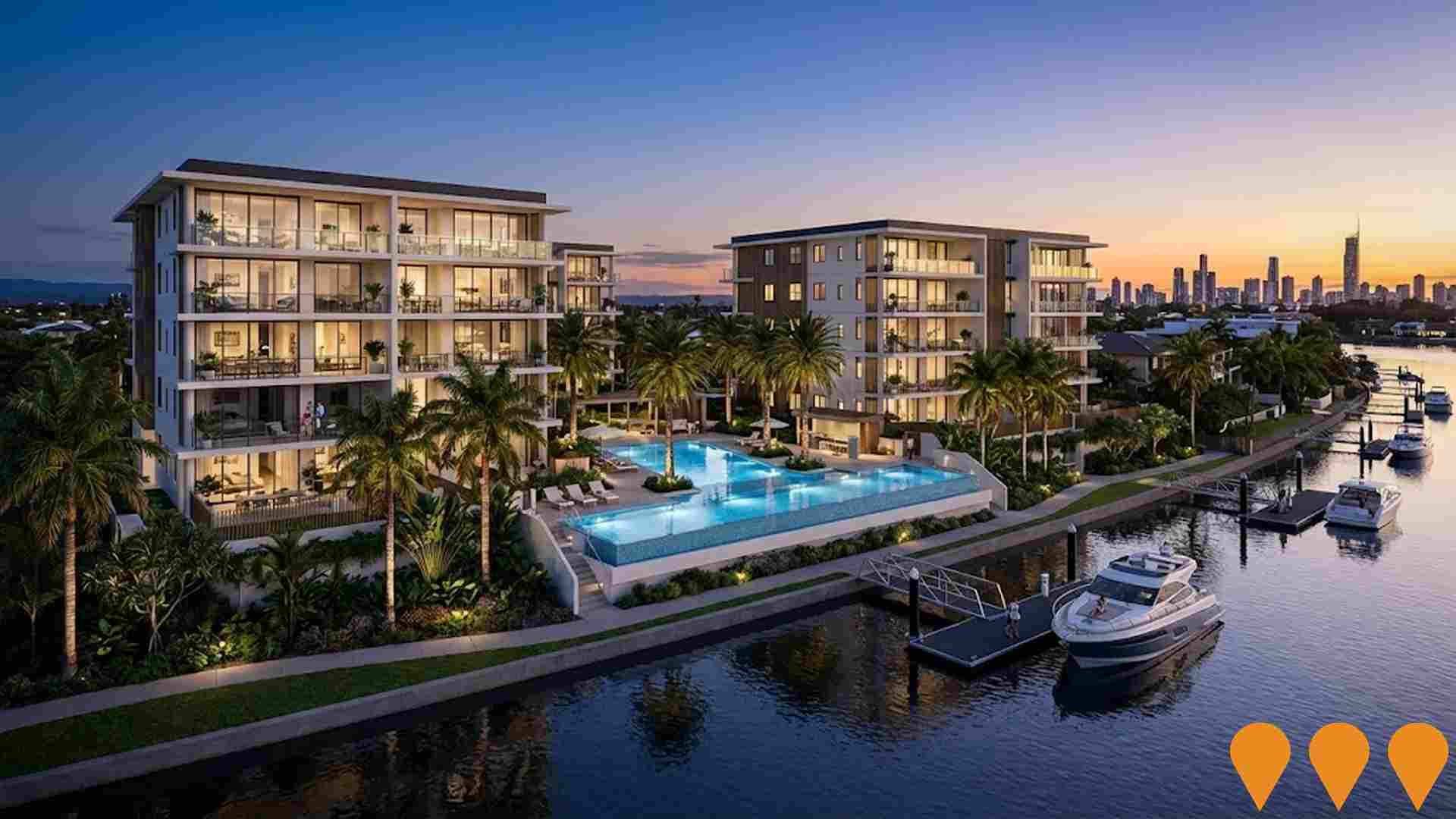
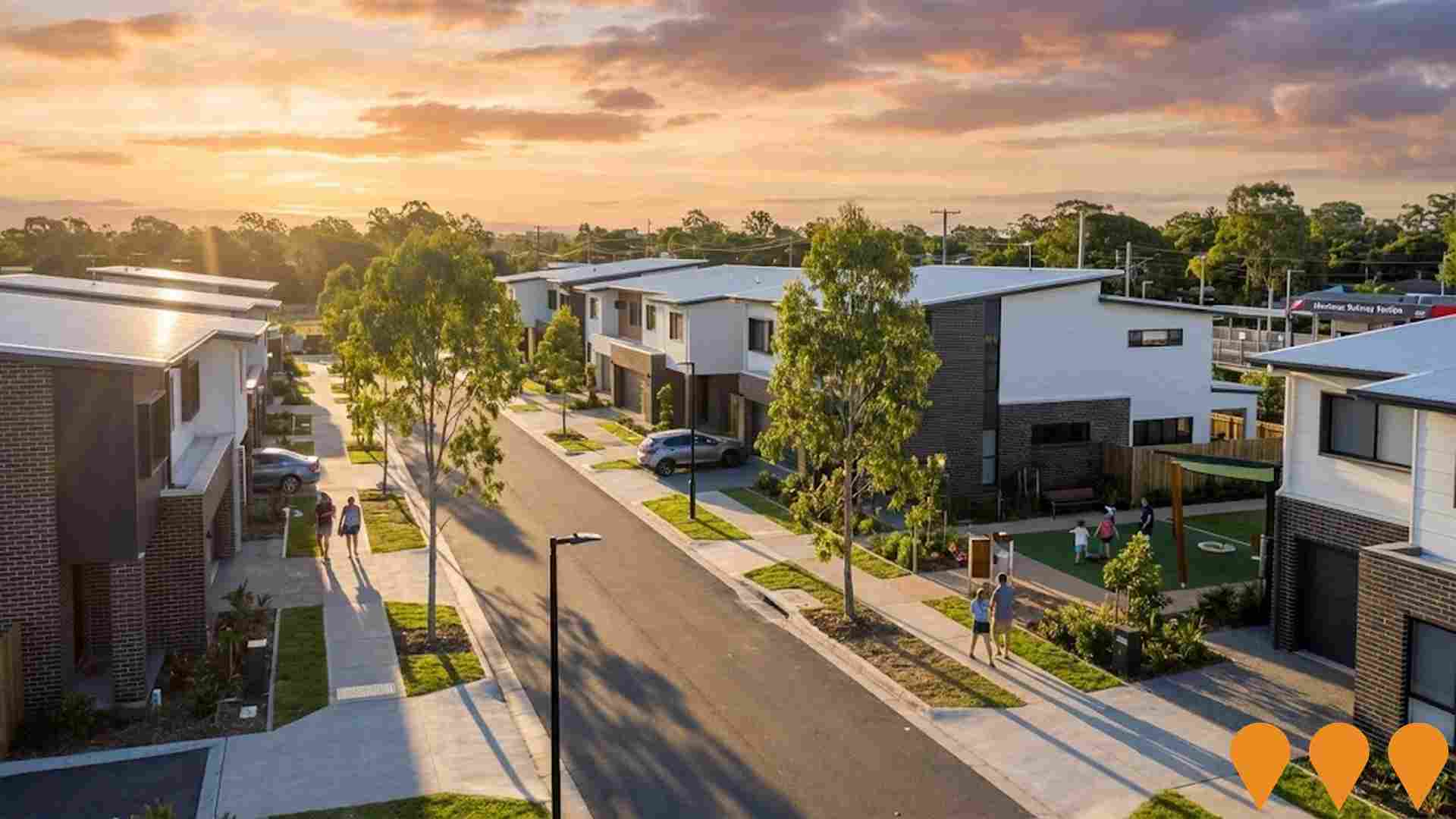
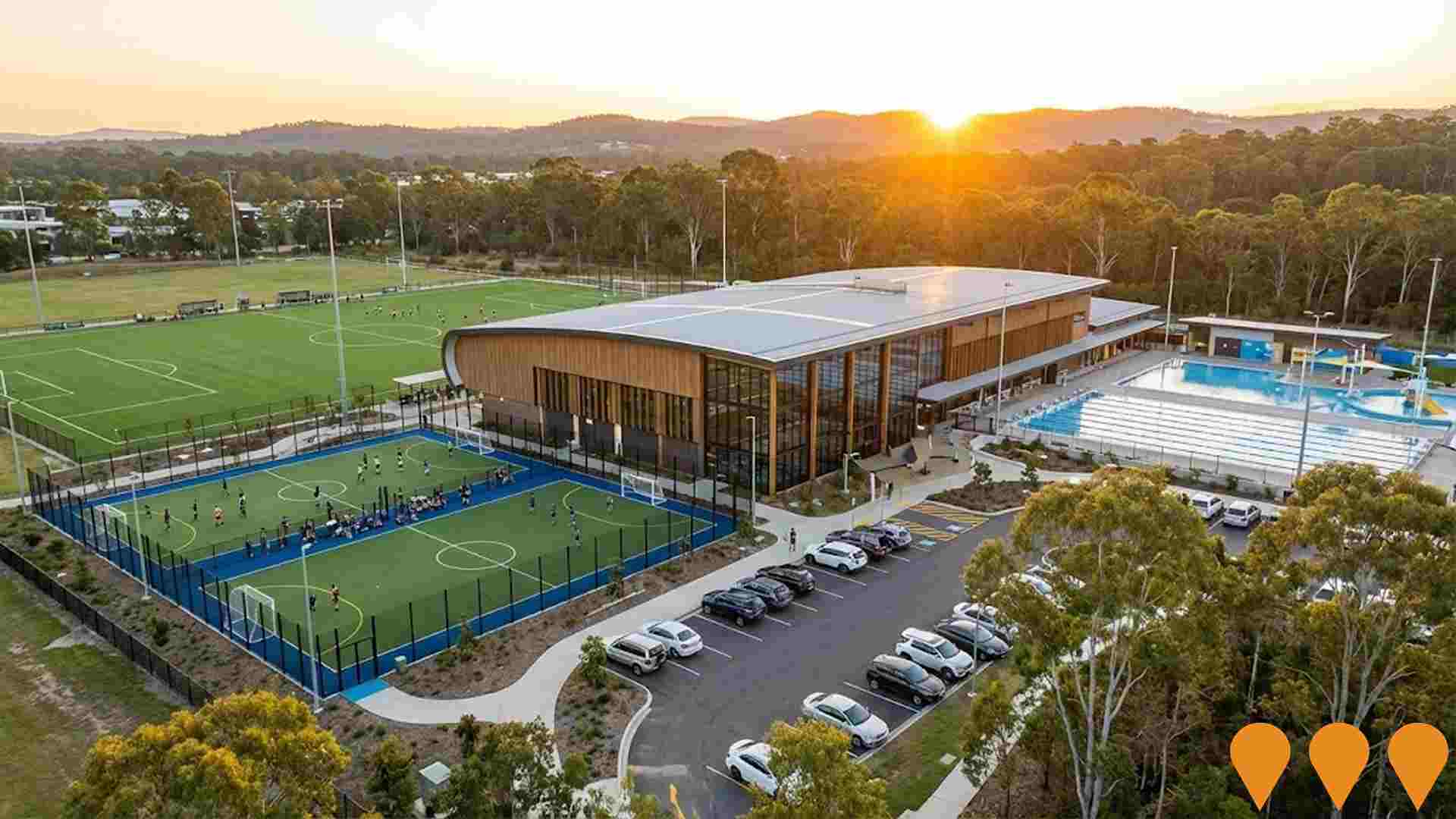
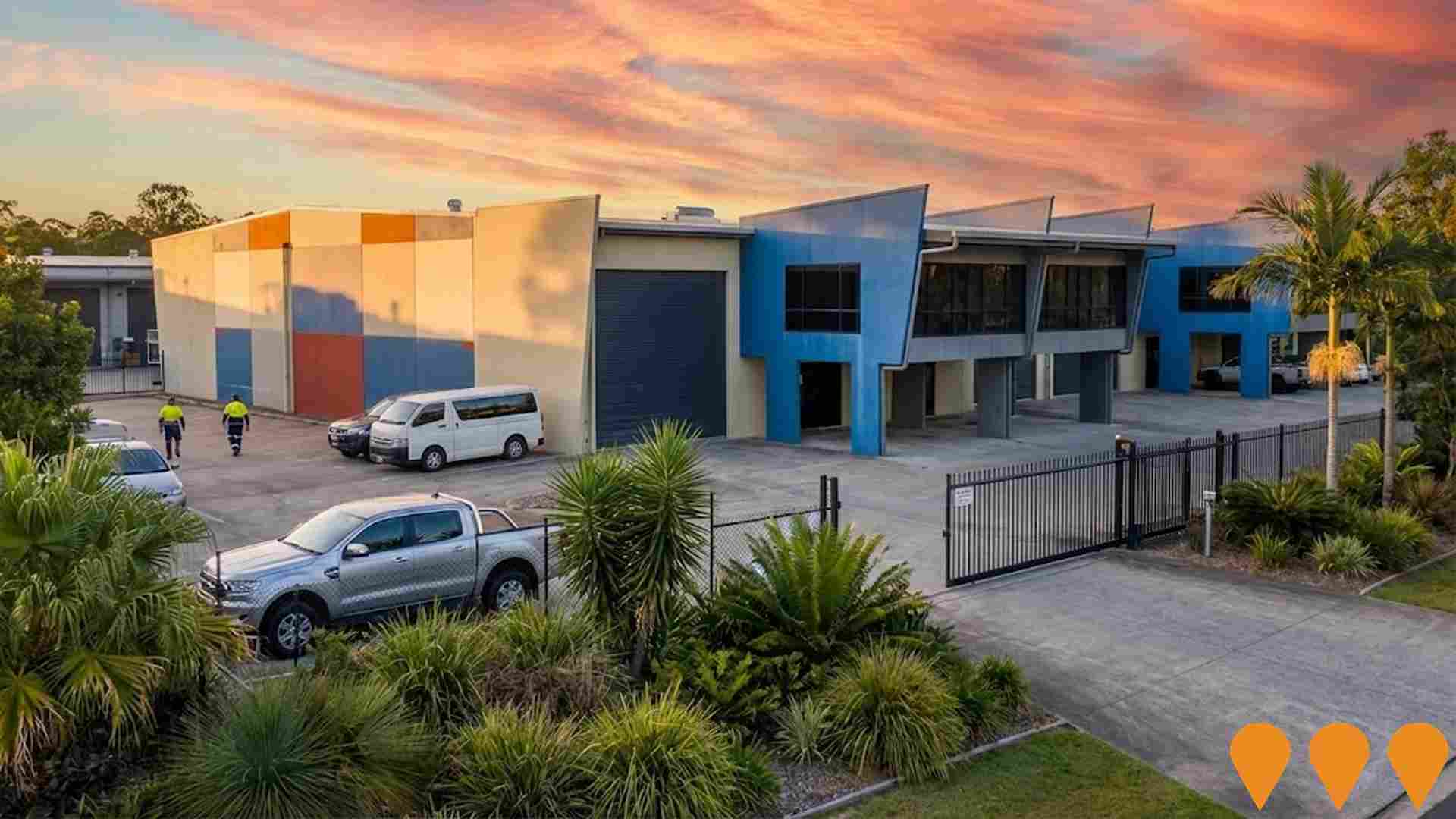
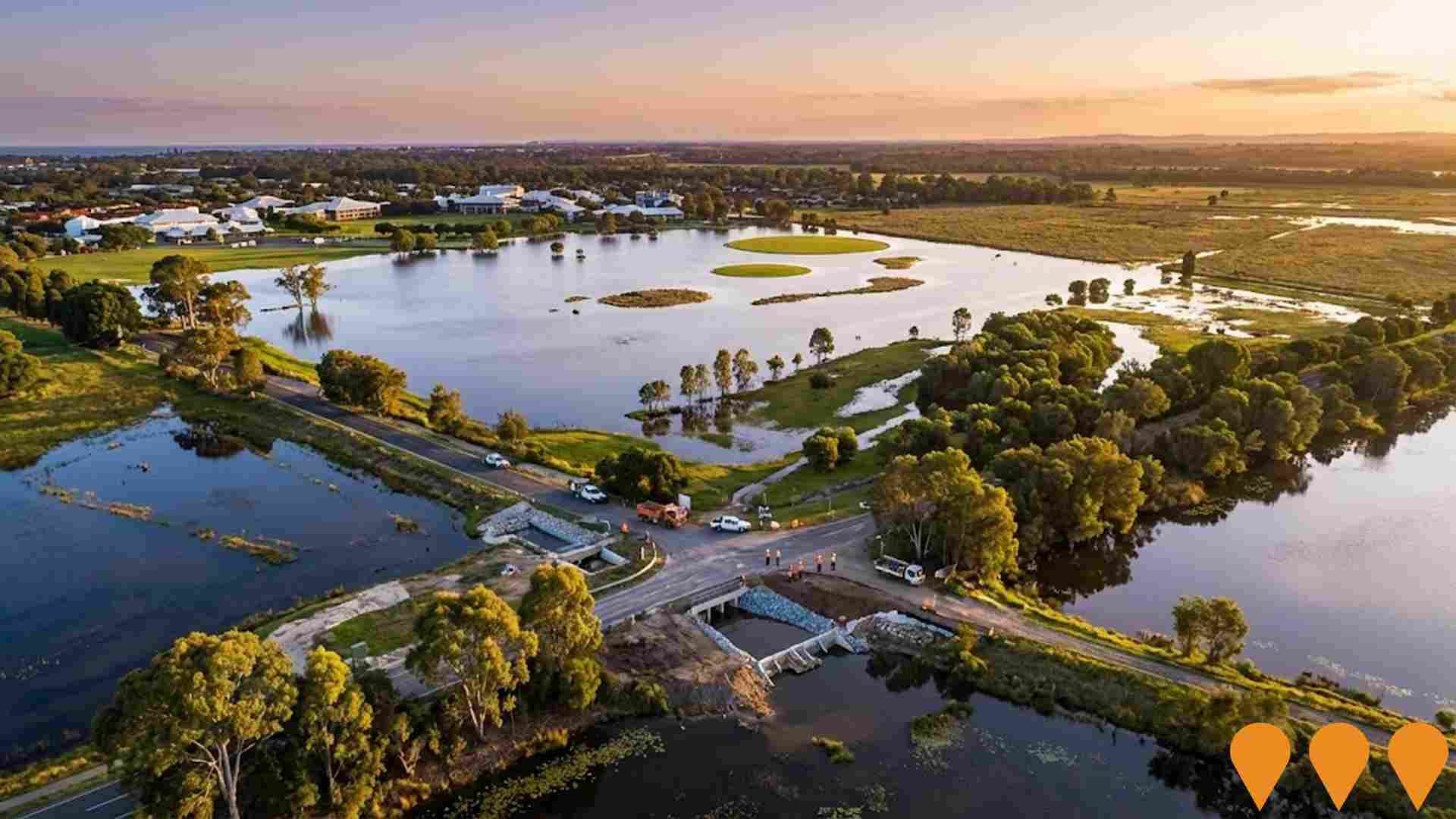
 Denotes AI-based impression for illustrative purposes only, not to be taken as definitive under any circumstances. Please follow links and conduct other investigations from the project's source for actual imagery. Developers and project owners wishing us to use original imagery please Contact Us and we will do so.
Frequently Asked Questions - Infrastructure
Serenity Estate
A brand-new subdivision nestled in one of the Gold Coast's most family-friendly suburbs, Gilston, offering 31 blocks of land with a variety of sizes for building spacious family homes or securing investments.
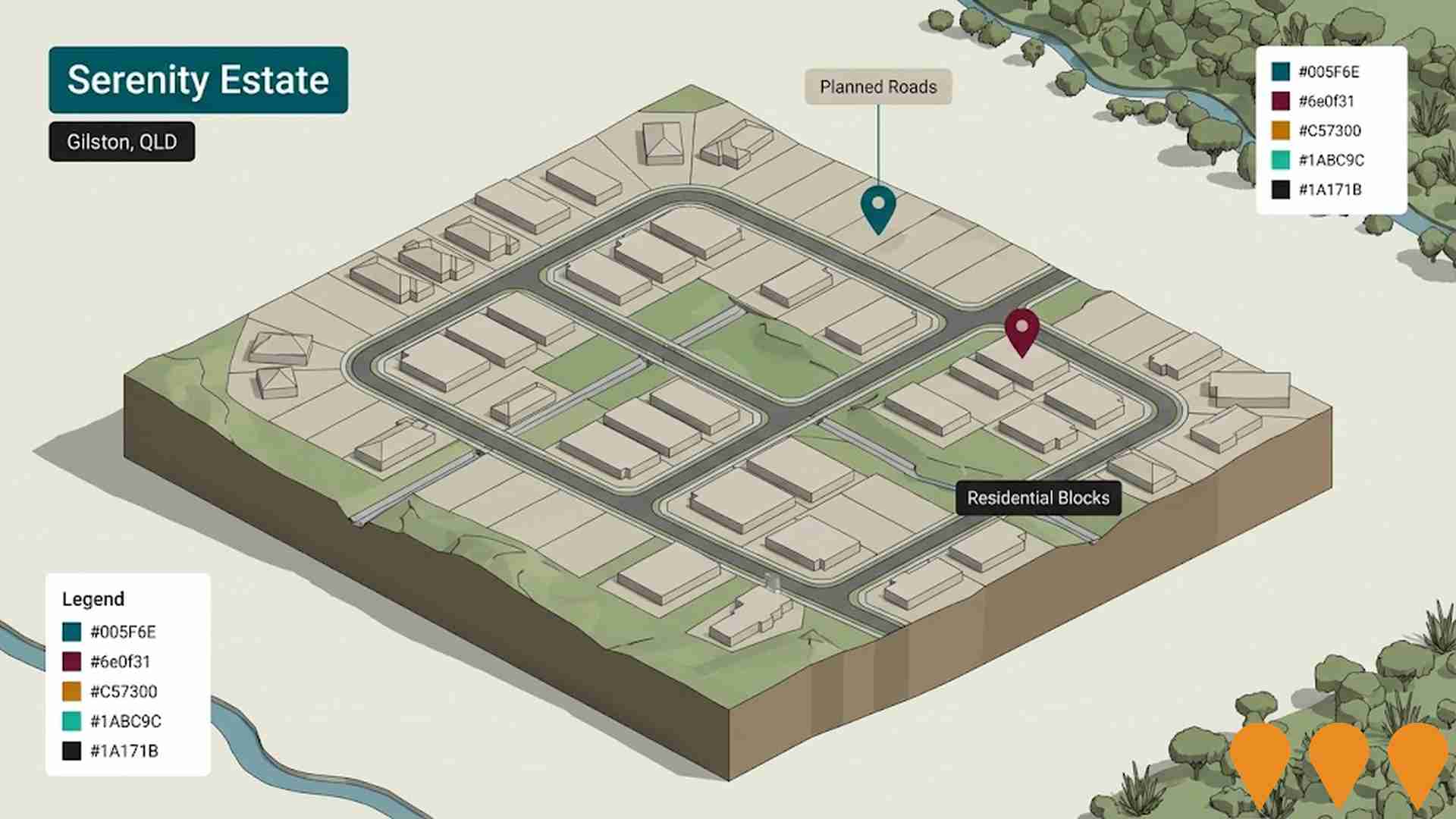
Serenity Estate - Gilston
Serenity Estate - Gilston is a 31 lot residential subdivision in the family friendly suburb of Gilston on the western Gold Coast. The project delivers flat, usable lots ranging from about 426 m2 to 1,282 m2, with civil works and roads completed and land now being sold for detached homes close to schools, shops and parks.
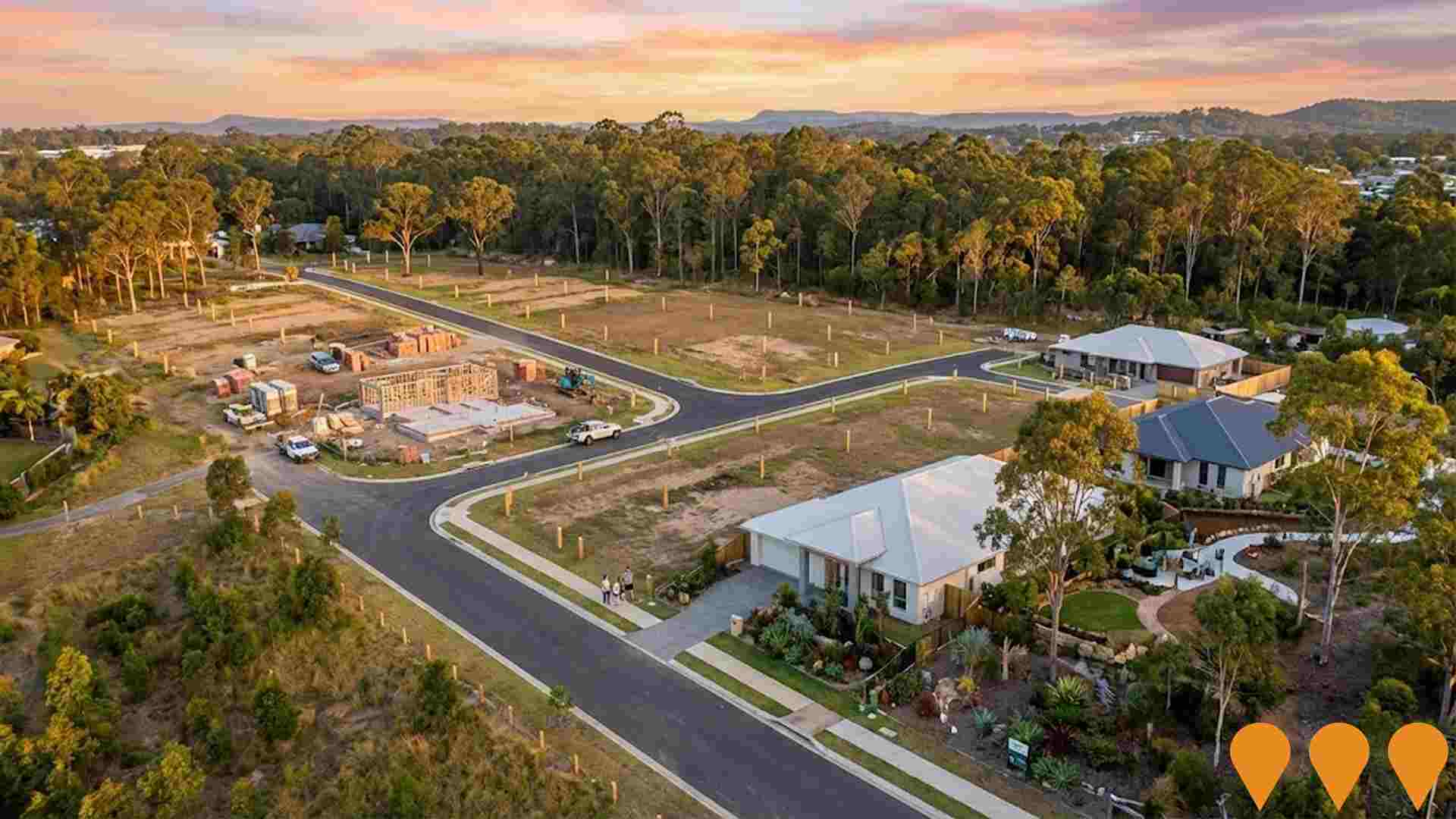
Hinkler Drive Retail Showroom Complex
Planned large-format retail and showroom complex on a prominent Hinkler Drive site beside the Pacific Motorway at Highland Park. Plans reported as lodged with Gold Coast City Council propose five buildings: three single-storey showroom or retail buildings with flexible tenancies, plus two two-level buildings for retail, office and cafe uses. The project is intended to expand the local commercial and bulky-goods retail offer near the SkyRidge growth area and generate local employment.
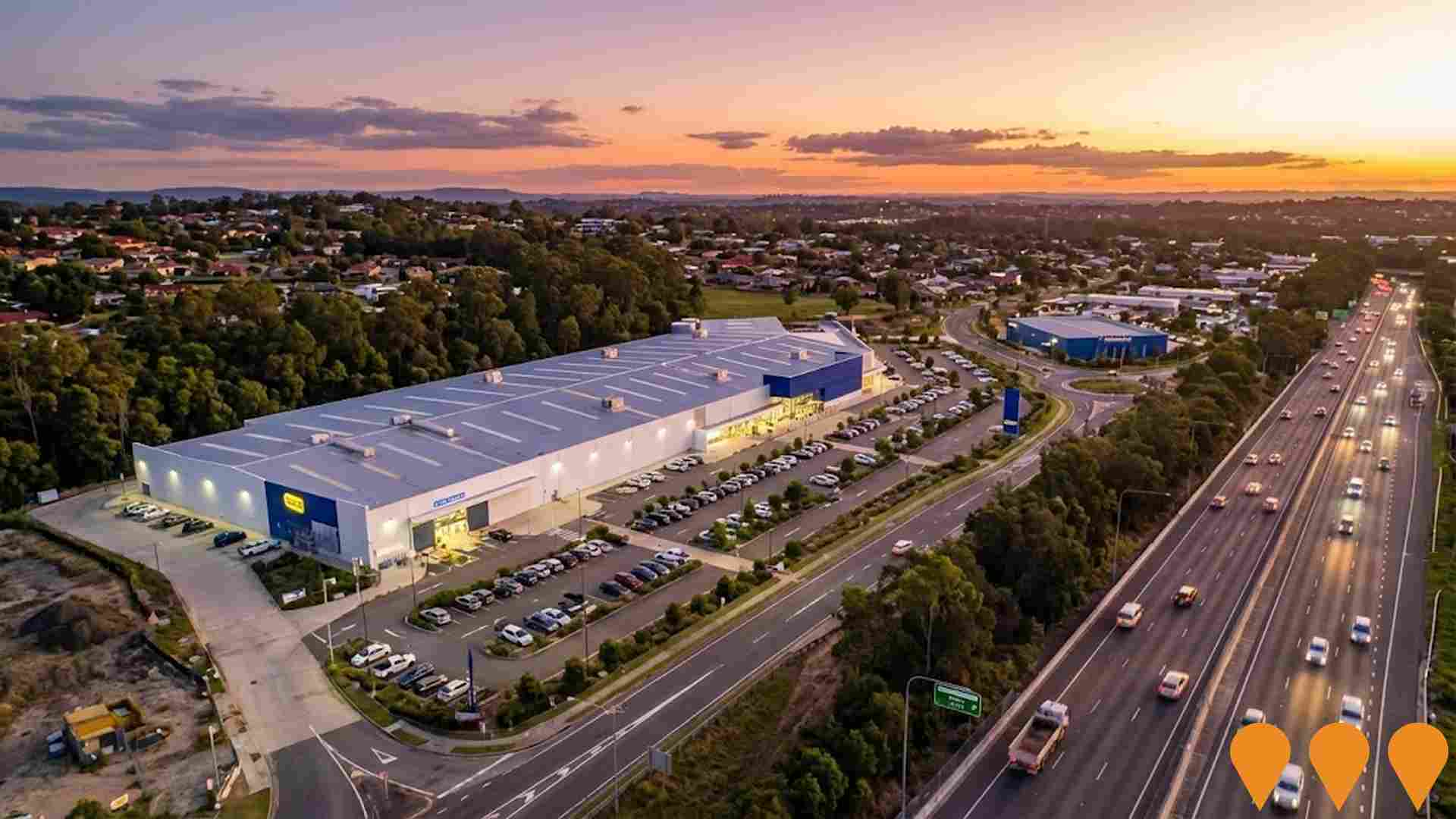
The Summit Highland Park
A prestigious gated community of 24 luxury homes with sweeping views from the Pacific Ocean to the hinterland, positioned on one of the Gold Coast's highest natural elevations.
New Street Social Housing Development
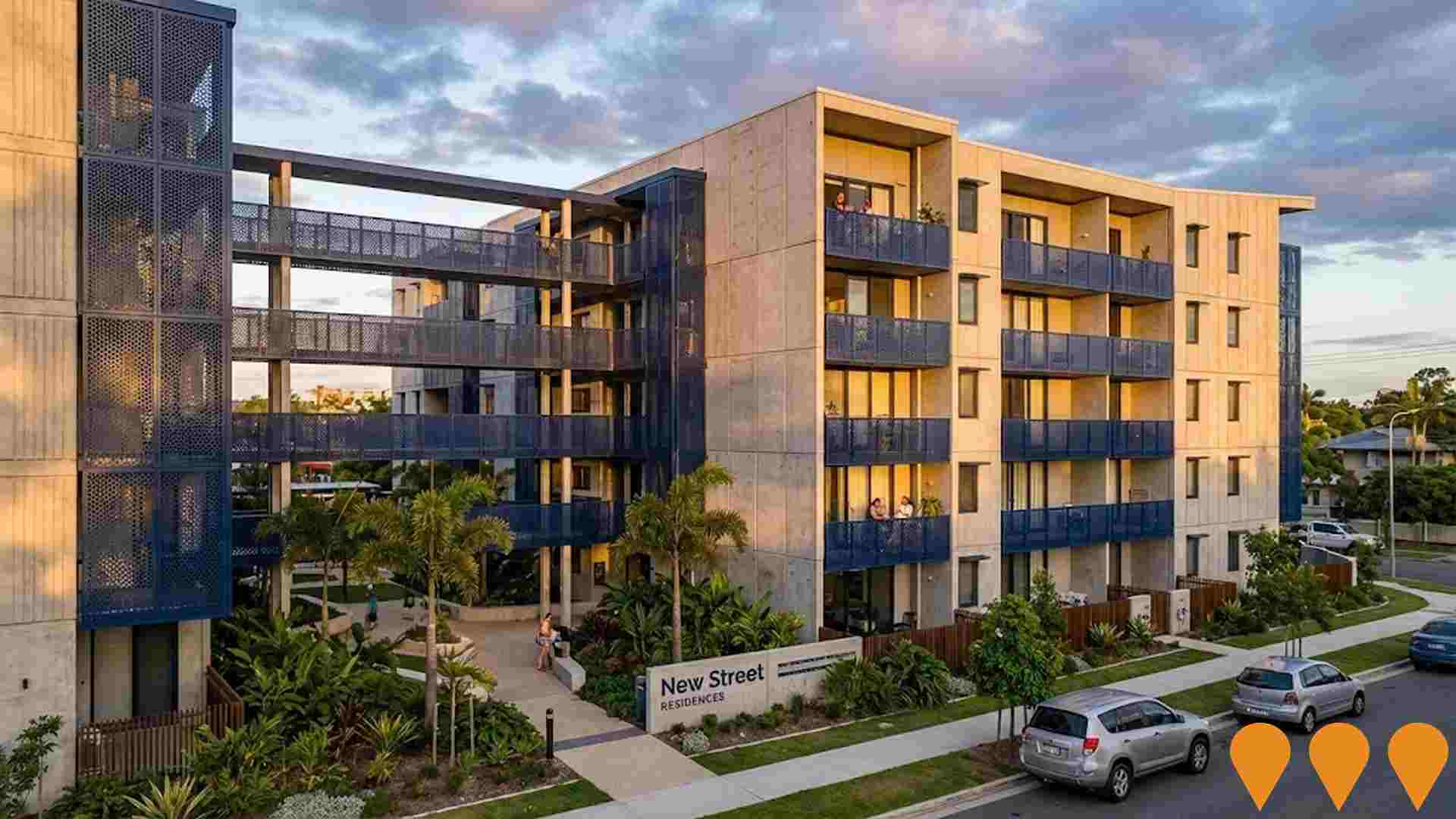
A 5-storey mid-rise development providing 60 apartments, comprising 53 social homes and 7 affordable homes. Designed by Plus Architecture, the project features multi-level breezeways, subtropical landscaping, and a durable material palette of precast concrete with navy blue screening. It is the flagship project of Vinnies Queensland's 500 Homes initiative, providing secure housing for vulnerable residents including those impacted by domestic violence or disability.
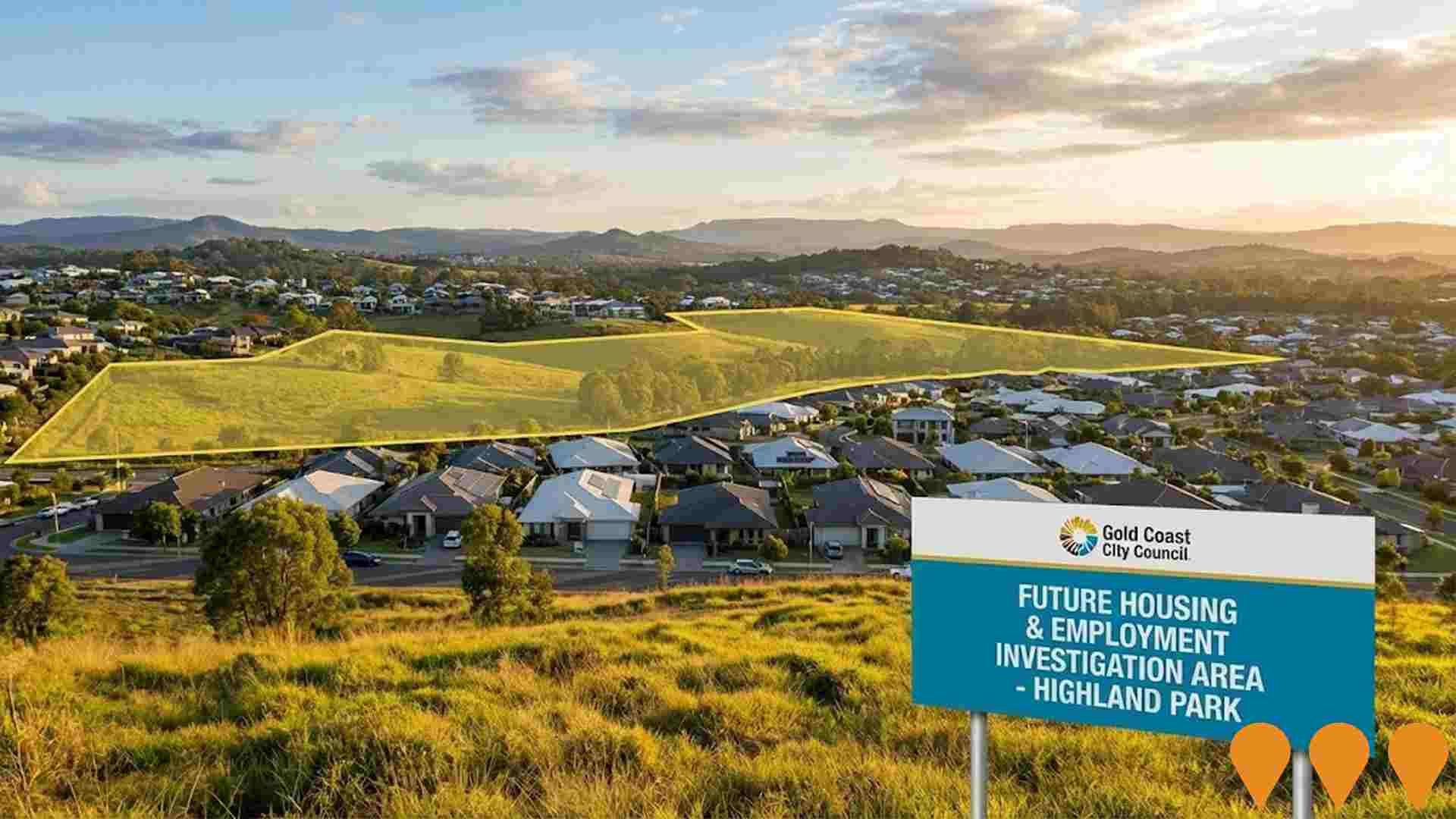
Highland Park Investigation Area
City of Gold Coast investigation area assessing suitability for future housing and employment around Central Winderadeen Drive. Stage 2 technical investigations including ecological, bushfire, and infrastructure assessments are complete. As of December 2024, the project is on hold pending the outcomes of the Local Growth Management Strategy.
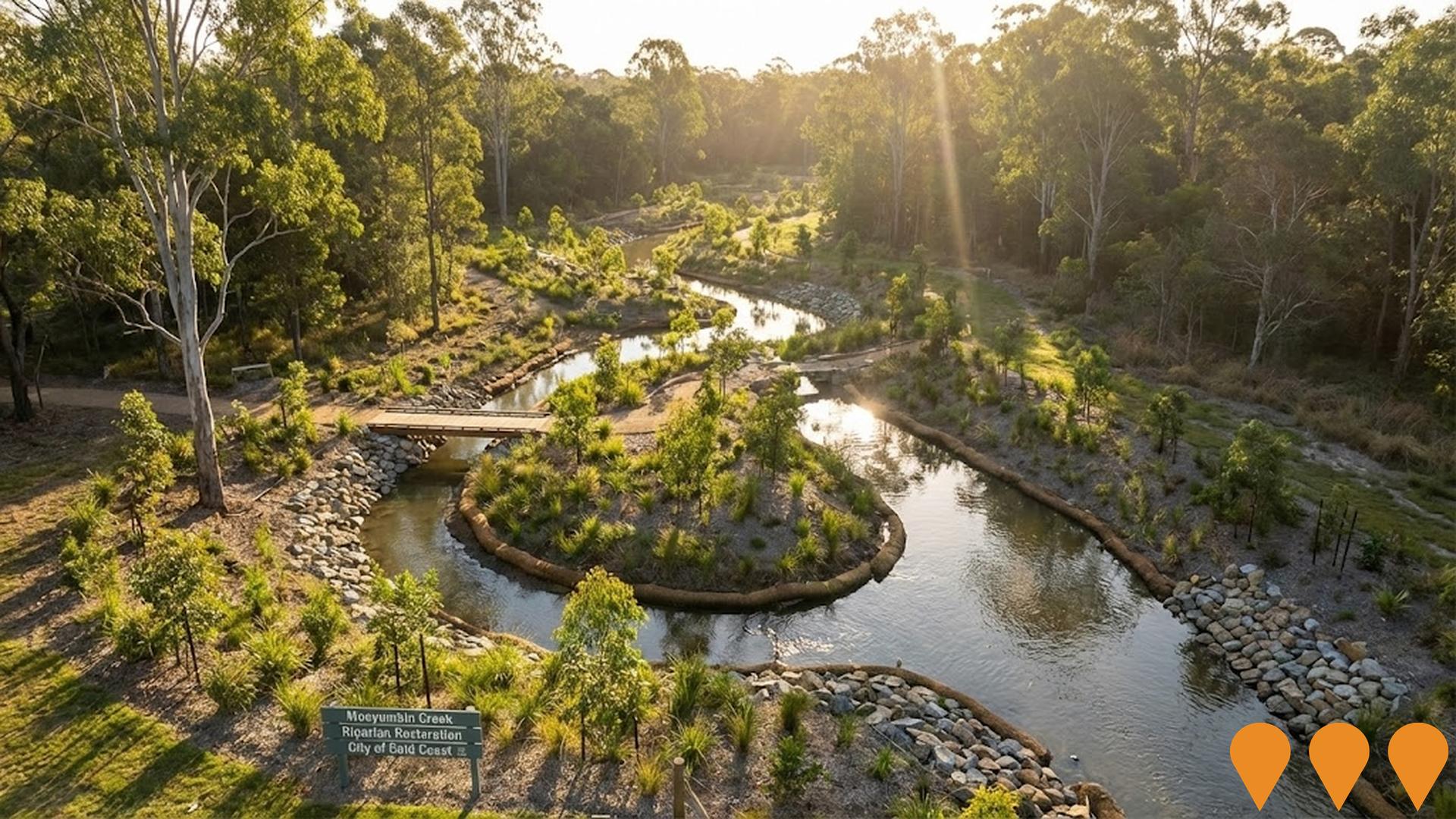
Mooyumbin Creek Riparian Restoration
Restoration of up to 2.5 hectares of riparian zones along Mooyumbin Creek within the lower Nerang River catchment. The project aims to improve water quality, stabilize banks, control environmental weeds such as Cats Claw Creeper, and enhance biodiversity. Initial works commenced in late 2021 with ongoing maintenance scheduled until 2027.
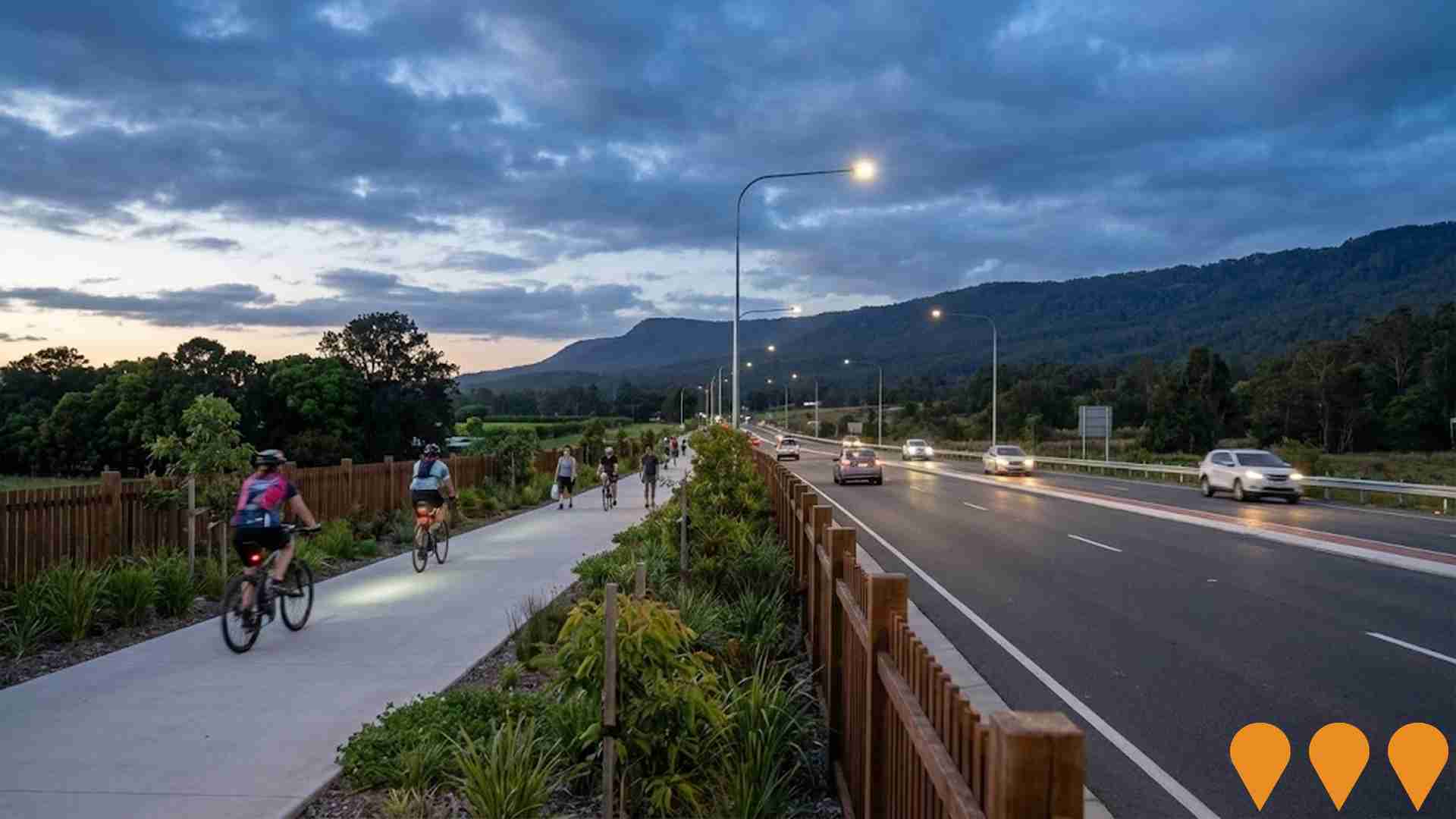
Beaudesert Nerang Road Shared Path
Construction of 780 metres of new or upgraded footpath on both sides of Beaudesert-Nerang Road to enhance pedestrian and cyclist safety and connectivity between Billabirra Crescent and Oak Street in Nerang.




1,729 residents of Gilston are employed, from a labour force of 1,758. Unemployment sits at 1.7%, with participation at 76.3%. Weighted for its industry mix, the area's sectors are forecast to grow about 6.4% nationally over five years. That reflects industry composition only and makes no allowance for local population growth. Unemployment and labour force come from ABS Small Area Labour Markets, updated quarterly; the industry and occupation profile is from the 2021 Census.
Detail
Locals participate actively in the workforce, supported by strong representation across building and trade disciplines, a low 1.7% unemployment rate, and a 3.9% annual rise in jobs based on statistical area aggregations by AreaSearch. In March 2026, 1,729 residents were employed, while local unemployment sat 2.2% below the Regional Qld benchmark of 3.9%. Labor force involvement is particularly elevated, reaching 76.3% compared to 64.2% across Regional Qld. Census records also show 15.9% of workers operating from home, noting the broader context of Covid-19 restrictions. Local employment is heavily centered around construction, health care & social assistance, alongside education & training.
The local labor market exhibits an exceptional concentration in construction, holding 1.6 times the employment proportion seen regionally. In contrast, agriculture, forestry & fishing accounts for only 0.8% of workers, compared to the regional figure of 4.5%. A comparison between resident worker tallies and localized positions indicates that many residents travel outside the area for employment. Employment levels rose by 3.9% and the labour force expanded by 3.5% during the year to March 2026, according to AreaSearch analysis of SALM and ABS data aggregated from broader statistical areas, which led to an unemployment decline of 0.4 percentage points. Meanwhile, Regional Qld saw employment grow by 0.1% and the labour force increase by 0.3%, accompanied by a 0.1 percentage point rise in unemployment. Jobs and Skills Australia's national employment forecasts from Mar-26 provide additional context regarding potential future demand within Gilston. These projections span five and ten-year periods and have been aligned with the local employment profile to estimate growth patterns. National employment is projected to expand by 6.6% over five years and 13.7% over ten years, though growth varies considerably across industry sectors. When these sector-specific projections are applied to Gilston's employment mix, local employment is expected to rise by 6.4% over five years and 13.3% over ten years, noting that this represents a simple weighting extrapolation for illustrative purposes and does not incorporate localised population projections.
Frequently Asked Questions - Employment
Median household income in Gilston is $2,446 a week (about $127,000 a year), with median personal income at $943 a week. ATO records put median taxable income at $63,877 a year against an average of $77,850. Household income is from the 2021 Census; taxable income is from ATO Taxation Statistics for the latest financial year available, indexed forward using the ABS Wage Price Index.
Detail
Postcode-level ATO statistics compiled by AreaSearch for financial year 2023 indicate a median taxpayer income of $63,877 and an average figure of $77,850. These results substantially exceed regional baselines, where Regional Qld recorded a median of $53,146 and an average of $66,593. Accounting for an 11.36% increase in the Wage Price Index since financial year 2023, updated estimates as of March 2026 stand at $71,133 for median earnings and $86,694 on average. The 2021 Census placed local household income at the 89th percentile ($2,446 weekly). In total, 43.3% of the population (1,302 individuals) earn within the $1,500 - 2,999 weekly bracket, compared to 31.7% across the broader region.
Additionally, 31.1% of households generate weekly earnings higher than $3,000, underpinning strong consumer capacity. Even with housing costs taking up 16.5% of income, net purchasing power sits at the 87th percentile, positioning the locality in the 7th decile on the SEIFA income index.
Frequently Asked Questions - Income
Gilston had 797 occupied dwellings at the 2021 Census, 97% detached houses and 0% apartments. 63% are owned with a mortgage, 17% rented and 21% owned outright. At that Census the median rent was $540 a week and the median mortgage repayment $2,172 a month, a total housing cost higher than 92% of areas nationally. Rent absorbs 22.1% of household income here and mortgage repayments 20.5%. Dwelling stock, tenure and housing costs are 2021 Census measures — the only source that counts dwellings at this boundary size.
Detail
According to the latest Census, residential dwellings were divided into 96.8% houses and 3.2% other dwellings (comprising semi-detached residences, units, and alternative dwelling types), whereas Regional Qld recorded 76.4% houses alongside 23.6% other dwellings. Outright property ownership stood at 20.6%, trailing broader regional levels, while mortgaged properties accounted for 62.5% and rental accommodation made up 16.9%. Local financing expenses are elevated, with median monthly mortgage payments reaching $2,172 compared to the Regional Qld benchmark of $1,655 and the national level of $1,863. Median weekly rents stood at $540, well above the Regional Qld figure of $345 and the Australian median of $375.
Frequently Asked Questions - Housing
Gilston counted 797 households at the 2021 Census, an estimated 899 today, averaging 3.2 people each. 53% are couples with children, more than in 96% of areas nationally, against 26% couples without children. 7% of households are people living alone, and families average 1.6 children. Household and family composition is measured only by the Census, so these are 2021 figures.
Detail
Family units constitute the vast majority of local residences at 90.8%, consisting of couples with children (53.1%), couples without children (25.8%), and single parent families (11.0%). Non-family living arrangements account for the remaining 9.2%, split between lone person households at 7.3% and group households at 2.1%. The typical household comprises 3.2 people, tracking above the Regional Qld average of 2.5.
Frequently Asked Questions - Households
22.3% of adults in Gilston hold a university qualification, including 15.6% with a bachelor degree and 4.1% with postgraduate qualifications. A further 31.2% hold a vocational qualification. 1 school serves the area, with 497 enrolment places and an average ICSEA of 1,026 against a national benchmark of 1,000. Qualifications come from the 2021 Census; school enrolments, ICSEA and results come from ACARA's current release.
Detail
Higher education completion rates sit below regional benchmarks, with 22.3% of individuals aged 15+ possessing a tertiary degree, compared to 30.4% across Australia. Attainment is led by bachelor degrees at 15.6%, followed by postgraduate qualifications at 4.1% and graduate diplomas at 2.6%. Meanwhile, technical and vocational training is strongly represented, with 44.3% of people aged 15+ holding trade credentials, divided between advanced diplomas (13.1%) and certificates (31.2%). Formal study engagement is substantial, encompassing 33.2% of the local population. Within this cohort, primary schooling accounts for 13.7%, secondary education represents 9.3%, and tertiary courses engage 3.7% of residents.
Frequently Asked Questions - Education
Schools Detail
Getting around Gilston means driving: households keep an average of 2.2 vehicles, and no scheduled public transport appears in the current timetable feeds. Service data is built from operators' published GTFS timetables; vehicle ownership is from the 2021 Census.
Frequently Asked Questions - Transport
Transport Stops Detail
74.3% of residents in Gilston report no long-term health condition, a healthier profile than 76% of areas nationally. 4.0% need daily assistance with core activities, and 58.1% hold private health cover. The standardised death rate runs at 4.8 per 1,000 residents. Health conditions, assistance needs and insurance are 2021 Census measures; the death rate comes from current ABS releases.
Detail
General health indicators remain positive across the community, with AreaSearch evaluations showing minimal prevalence of chronic ailments across age brackets and low mortality metrics. Furthermore, private health insurance coverage is extensive, taken up by approximately 58% of the total population (~1,746 people), outpacing the 52.5% rate observed throughout Regional Qld. Asthma and mental health issues represent the primary reported conditions, recorded among 8.4 and 6.5% of residents respectively, while 74.3% reported no medical conditions whatsoever, exceeding the Regional Qld benchmark of 67.6%. Working-age adults maintain particularly favorable health profiles, and while individuals aged 65 and over represent 12.4% of residents (373 people) compared to 20.3% in Regional Qld, older cohorts continue to record strong wellbeing outcomes aligned with national figures.
Frequently Asked Questions - Health
Gilston is largely Australian-born, at 79.1% of residents, with 6.3% speaking a language other than English at home. The largest reported ancestries are English (30.9%) and Australian (27.6%). Ancestry, language and country of birth are counted only by the Census, so these are 2021 figures.
Detail
The local profile reflects relatively uniform cultural demographics, with 86.8% holding citizenship, 79.1% born within Australia, and 93.7% speaking solely English at home. Christianity forms the dominant religious affiliation at 46.7% of the populace. Notably, Judaism demonstrates higher relative representation, accounting for 0.3% of community members compared to 0.1% across Regional Qld. English (30.9%), Australian (27.6%), and Scottish (8.2%) form the primary ancestral backgrounds among residents. Other distinct overseas representations include New Zealand at 2.2% (against 0.9% across the region), Russian at 0.7% (compared to 0.2%), and Hungarian at 0.6% (versus 0.2%).
Frequently Asked Questions - Diversity
The median resident of Gilston is 35, younger than 76% of areas nationally. 24.2% of residents are aged 15 to 34. Age cohorts are not raw Census counts: the Census split is re-based to the latest ABS population estimates and state projections.
Detail
The demographic structure of the suburb of Gilston centers heavily on households in their child-rearing stages. Updated figures to August 2026 show that 30.7% of residents belong to the 25 - 44 age cohort, compared to 25.5% across Regional Qld, whereas seniors aged 65+ account for 12.4% against a regional share of 20.4%. The median age within the suburb of Gilston is estimated at 35 as at August 2026, matching the 2021 Census level and sitting 6 years below the Regional Qld median of 41 from that Census. The most noticeable shift since the Census has occurred among retiree and elderly groups, expanding from 9.6% to an estimated 12.4% of the population.
Looking forward to 2041, young to middle aged adults are expected to lead overall growth, adding 278 residents (30%) to reach a total of 1,202.
Frequently Asked Questions - Age
Data & MethodBoundaries, Sources & Method for Gilston
8 of 14 data sections on this page were updated within the last 12 months — the newest current to Oct 2026.
Everything is aggregated to the Suburb (SAL) boundary shown above, on a 2021 Census baseline. Only 3 sections — housing, households and cultural diversity — still wait on the 2026 Census.
The ledger — source, cycle and currency by section
| Section | Source & update cycle | Currency |
|---|---|---|
| Updated within the last 12 months 8 sections | ||
| Population | ABS, GNAF, Geoscience Australia Annual (ABS ERP) | Aug 2026 2 months ago headline measures · 2021 Census baseline |
| Re-based to the ABS Estimated Resident Population (June 2025 release) and updated with new dwellings from GNAF address data. Current to Aug 2026, with the 2021 Census supplying the small-area baseline. | ||
| Age profile | ABS, Geoscience Australia, State governments Annual | Aug 2026 2 months ago headline measures · 2021 Census baseline |
| Age cohorts are re-based to the latest ABS population estimates and state projections, current to Aug 2026. Each cohort is held as a Census baseline and a current estimate. | ||
| Development & approvals | ABS, GNAF Monthly (ABS approvals) | Aug 2026 2 months ago headline measures · Jul 2026 baseline |
| Property sales & rents | Valuer General, Rental Board, ABS Weekly sales, quarterly rents | Oct 2026 this month headline measures · Sep 2026 baseline |
| Sales from the state Valuer General register, refreshed weekly, and rents from quarterly rental bond lodgements. Both are read live each time this page loads, current to Oct 2026. | ||
| Employment | ABS, DEWR, JSA Quarterly (ABS SALM) | Mar 2026 7 months ago headline measures · 2021 Census baseline |
| Unemployment and labour force from ABS Small Area Labour Markets, current to Mar 2026. The growth outlook applies Department of Employment (now Jobs and Skills Australia) forecasts for all 19 industry divisions to the local industry mix, so it measures sector composition rather than local expansion and makes no allowance for population growth. Job demand comes from the same agency via its Internet Vacancy Index; industry and occupation structure from the 2021 Census. | ||
| Education | ABS, ACARA Annual (ACARA) | Sep 2026 last month headline measures · 2021 Census baseline |
| Transport | ABS, State Transport Departments Each timetable release | Jul 2026 3 months ago headline measures · 2021 Census baseline |
| Services & amenities | Provider directories, ACECQA Continuous | Sep 2026 last month all 14 measures |
| Annual and financial-year sources 3 sections | ||
| Infrastructure projects | Infrastructure Australia, State agencies, Local governments Daily | Aug 2025 about a year ago all 1 projects tracked here |
| Project pipeline maintained continuously from Infrastructure Australia, state agencies, local government and public announcements. Records are added and revised daily; this area was last updated Aug 2025. | ||
| Income | ABS, ATO Annual (ATO) | FY 2023 3 years ago headline measures · 2021 Census baseline |
| ATO taxable income statistics for FY 2023, indexed forward using the Wage Price Index. Census household income provides the distribution detail. | ||
| Health | ABS, ATO Annual | 2024 2 years ago headline measures · 2021 Census baseline |
| Census-measured — next update: 2026 Census 3 sections No more current small-area source exists for these, so they are labelled as Census-measured rather than implied to be current. | ||
| Housing | ABS 5-yearly (Census) | 2021 Census next update 2026 all 30 measures |
| Households | ABS 5-yearly (Census) | 2021 Census next update 2026 all 18 measures |
| Cultural diversity | ABS, Geoscience Australia 5-yearly (Census) | 2021 Census next update 2026 all 44 measures |
"Currency" is the most recent release feeding that section. Where the Census supplies the structural baseline underneath a current headline figure, the row says so.
How the numbers are built
Population
The Census provides the small-area baseline, aggregated from mesh blocks to this boundary. It is then re-based to the ABS Estimated Resident Population (June 2025 release), and new dwellings built since Census night are counted from address data — 79 validated new addresses here. The headline figure is therefore a current estimate for Aug 2026, not a 2021 count (2,669 at the 2021 Census → 3,009 now). Annual growth rates are compound (CAGR), not simple averages.
Age profile
Cohort shares are not raw Census counts. Every cohort is held as a pair — the Census baseline and a current estimate — and the split is re-based using ERP and state population projections, current to Aug 2026. Median age is the Census median plus modelled change since. Charts that show both are labelled "2021 Census vs Current Estimate".
Property sales
Sourced from the state valuation authority's sales register — current, not Census, and refreshed weekly. Medians are calculated from settled transactions in the period shown; periods with very low transaction counts are flagged or suppressed, because a handful of sales can move a median substantially.
Rents
Derived from state rental bond lodgement data, by dwelling type and bedroom count. Bonds are lodged at the start of a new tenancy, so this reflects new lettings, not the whole rented stock.
Development & infrastructure
Building approvals come from current ABS releases; development applications are collected from council and state planning portals; the infrastructure pipeline is compiled from Infrastructure Australia and local government sources. Applications are matched to this boundary by address or coordinates, so very recent lodgements may not yet appear.
Employment & income
Industry and occupation structure comes from the Census, but the headline labour-market indicators do not. Unemployment and labour force are derived from ABS Small Area Labour Markets (quarterly). The employment outlook applies Department of Employment forecasts for all 19 industry divisions to this area's own industry mix (the agency is now Jobs and Skills Australia), as does the Internet Vacancy Index used for job demand. Because it is weighted on industry composition alone, that outlook carries no allowance for local population growth — in fast-growing areas the real rise in local jobs will typically be higher. Income combines Census household income with ATO taxable-income statistics for FY 2023, indexed forward using the Wage Price Index.
Education, transport & amenities
School enrolments, ICSEA and performance come from ACARA's current release, not the Census. Public transport stops and service frequency are derived from GTFS timetable feeds published by state transport departments. Services and amenities are proximity and count scores built from provider directories, refreshed on their own cycle. The Census contributes only the travel-to-work and qualification measures.
Rankings and benchmarks. Where we rank this area, the comparison set is every area of the same boundary type — suburbs against suburbs, SA2s against SA2s. Benchmarks compare this area against its greater capital city region and the national figure for the same measure and period.
Limits worth knowing. Small areas carry larger error margins, and the ABS introduces small random adjustments to Census counts to protect confidentiality — so totals may not sum exactly. Estimates re-based from regional data describe the area's expected trajectory, not a direct count of it. Figures are indicative for research and are not financial, planning or valuation advice.
Cross-check us. The Census baseline for this boundary is at ABS 2021 Census QuickStats (SAL31123). QuickStats reports 2021 only — the figures on this page are more current wherever the ledger shows a later date.