Chart Color Schemes
This analysis uses Suburbs and Localities (SAL) boundaries, which can materially differ from Statistical Areas (SA2) even when sharing the same name.
SAL boundaries are defined by Australia Post and the Australian Bureau of Statistics to represent commonly-known suburb names used in postal addresses.
Statistical Areas (SA2) are designed for census data collection and may combine multiple suburbs or use different geographic boundaries. For comprehensive analysis, consider reviewing both boundary types if available.
est. as @ -- *
2021 Census | -- people







The median house price in Blacksmiths is $1.33m, with units at $775k. House values have moved 10.0% a year compounded over five years.
Curious about local property values? Filter the chart to assess the volume and appreciation (including resales) trends and regional comparisons, or scroll to the map below view this information at an individual property level.
Find a Recent Sale

Sales Detail
Blacksmiths has an estimated 1,877 residents. That puts 963 residents on each square kilometre. Population is estimated from ABS Estimated Resident Population releases and GNAF address data, re-based from the 2021 Census and updated annually.
Detail
According to evaluations by AreaSearch combining broader ABS population updates and newly verified addresses since the Census, the suburb of Blacksmiths records an estimated population of 1,877 as of Aug 2026. Relative to the 1,881 people tallied at the 2021 Census, this demonstrates a slight loss of 4 people (0.2%). This trend is deduced from the June 2025 ABS ERP release indicating 1,876 residents alongside 13 validated new addresses confirmed subsequently. At 962 persons per square kilometer, population density sits comfortably around typical benchmark figures across locations assessed by AreaSearch.
Inbound overseas migration formed the core component of local population increases, contributing approximately 67.0% of recent gains. Projections for the suburb of Blacksmiths draw upon 2024 ABS/Geoscience Australia SA2 modeling with a 2022 baseline, supplemented where needed by NSW State Government 2022 releases anchored to 2021, with cohort growth rates applied across 2032 to 2041. Over the coming years, population expansion is anticipated to sit within the lower quartile of nationwide regional benchmarks, with aggregated SA2-level modeling anticipating a cumulative rise of 32 persons (1.6%) by 2041.
Frequently Asked Questions - Population
24 new dwellings have been approved in Blacksmiths over the past five years, an average of 4 a year. That is 2.4 approvals per 1,000 residents. Approvals are currently running at an annualised 1, well below that longer-run average. Figures come from ABS building approvals aggregated to this Suburb (SAL) boundary and are updated monthly as the ABS releases them.
Detail
Building approvals examined by AreaSearch reveal that residential development in Blacksmiths averages roughly 4 properties annually, totaling an estimated 24 dwellings across the 5 financial years spanning FY-21 to FY-25, alongside 1 approval recorded during FY-25. Amid recent population contraction, local housing supply has maintained balance against demand to ensure ample options for buyers, with average construction costs of $666,000 signaling a distinct focus among developers on higher-end, premium residences. Meanwhile, commercial construction activity accounted for $268,000 in approvals during this financial year, confirming a market driven primarily by residential projects.
Per-capita construction volumes in Blacksmiths track at approximately 64% of the Rest of NSW benchmark, ranking at the 9th percentile across Australia. This modest pipeline constrains new purchaser choices while bolstering demand across established dwellings, pointing to local market maturity and planning limitations. Recent residential approvals are split evenly, with 50.0% detached houses and 50.0% medium-to-high density townhouses or apartments. This pivot toward higher-density building introduces accessible price points for first-home buyers, investors, and downsizers, diverging from the prevailing stock of 89.0% standalone houses and reflecting changing lifestyle needs alongside reduced vacant land availability. A ratio of around 1884 people per approval underscores an established, mature locality. Looking forward, Blacksmiths is projected to expand by 31 residents up to 2041 according to the newest quarterly figures from AreaSearch. The prevailing pace of residential construction appears well positioned to satisfy anticipated demand, supporting balanced buying conditions and potentially accommodating demographic growth above current expectations.
Frequently Asked Questions - Development
Development applications around Blacksmiths
Loading development applications…
| Lodged | Address | Description | Type | Distance | Status |
|---|
SOURCE: Planning portals and council registers, compiled by AreaSearch. Distance & bearing measured from the suburb midpoint.
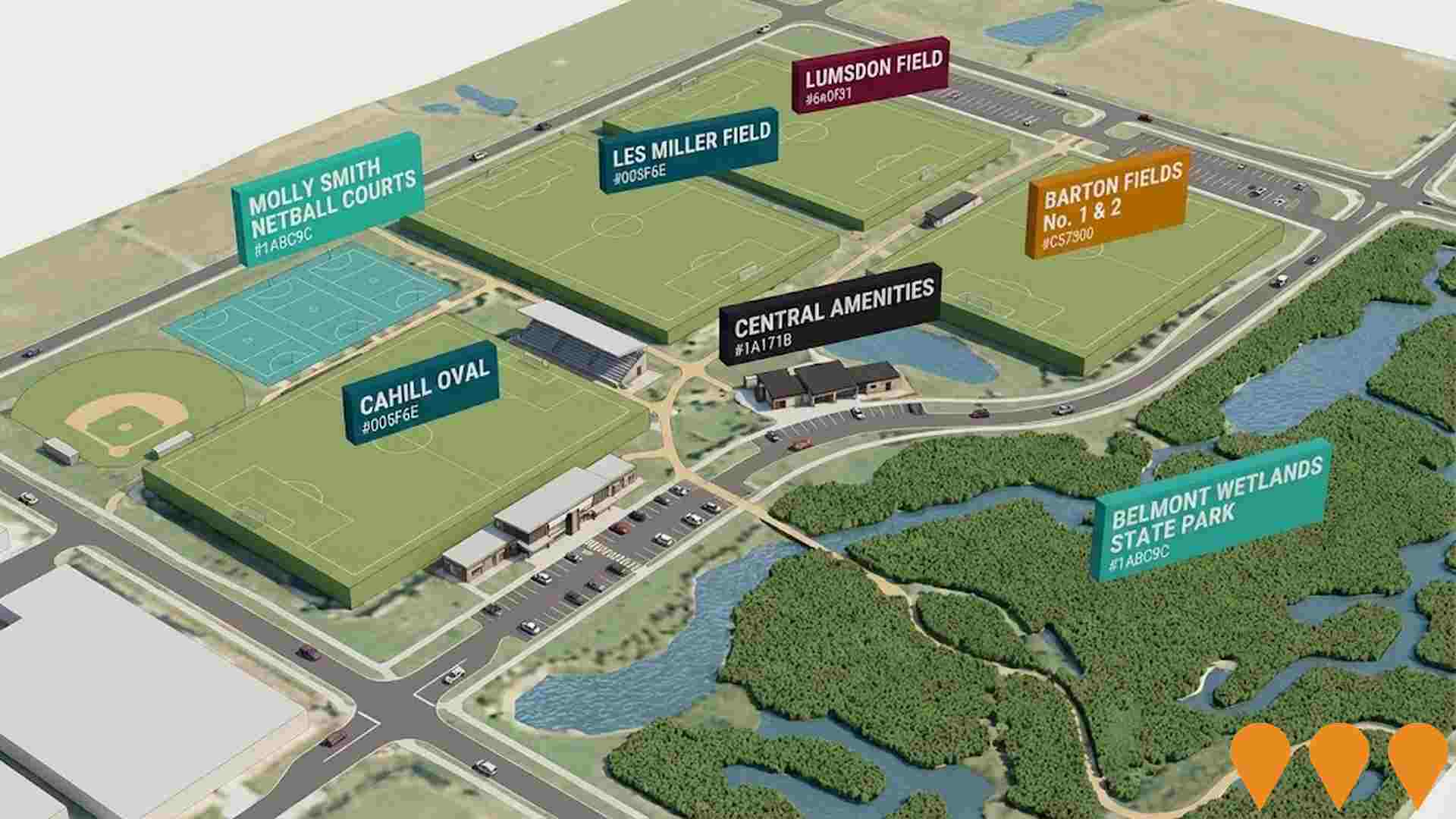
AreaSearch tracks 26 current infrastructure and development projects close to Blacksmiths, worth an estimated $688 million. 7 are already under construction and 10 are due for completion within three years. The pipeline spans residential development, sports & recreation and environmental & disaster management. Records are compiled from Infrastructure Australia, state agencies, council planning portals and public announcements, reviewed and updated daily, then ranked by proximity, construction stage, completion horizon and project scale.
Detail
Capital investments, public works, and planning frameworks play a central role in guiding community development. AreaSearch has pinpointed 2 major projects positioned to shape the local environment, highlighted by initiatives including the Swansea Channel Dredging and Sand Transfer System, the Pelican Foreshore Stabilisation Project, the Swansea Channel Permanent Dredging Solution, and the Swansea foreshore enhancement project.
Professional plan users can use the search below to filter and access additional projects.
INFRASTRUCTURE SEARCH
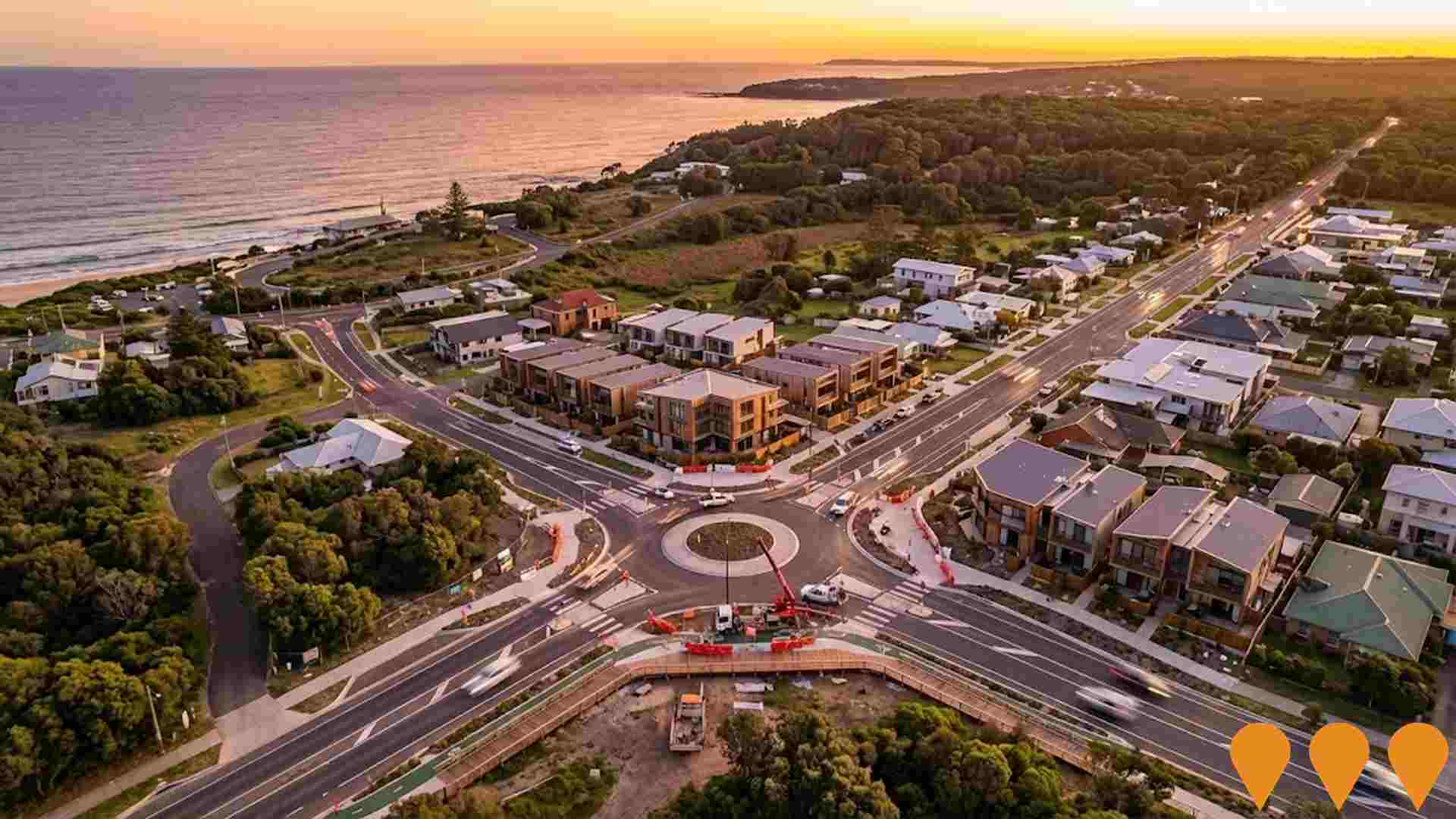
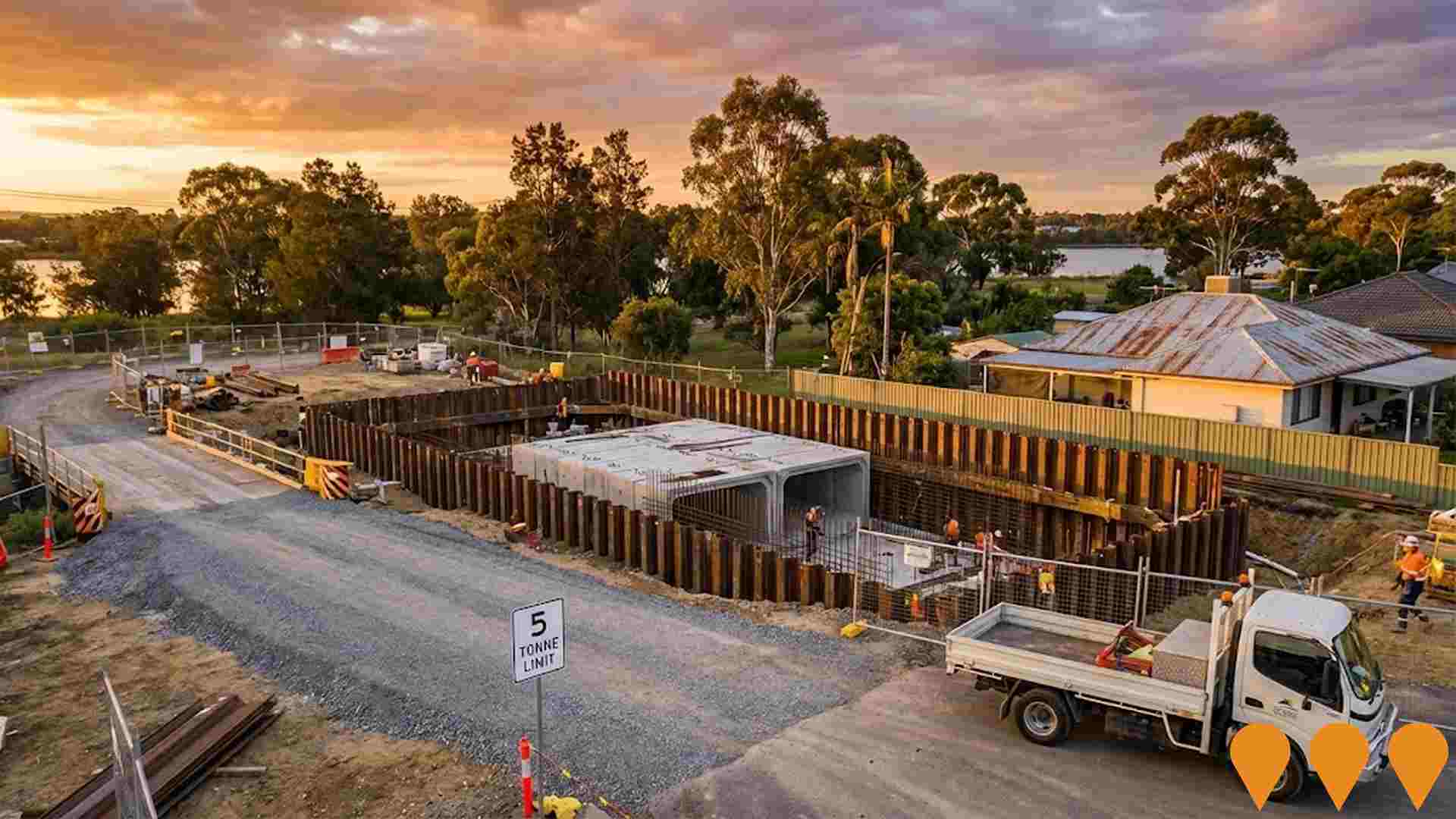
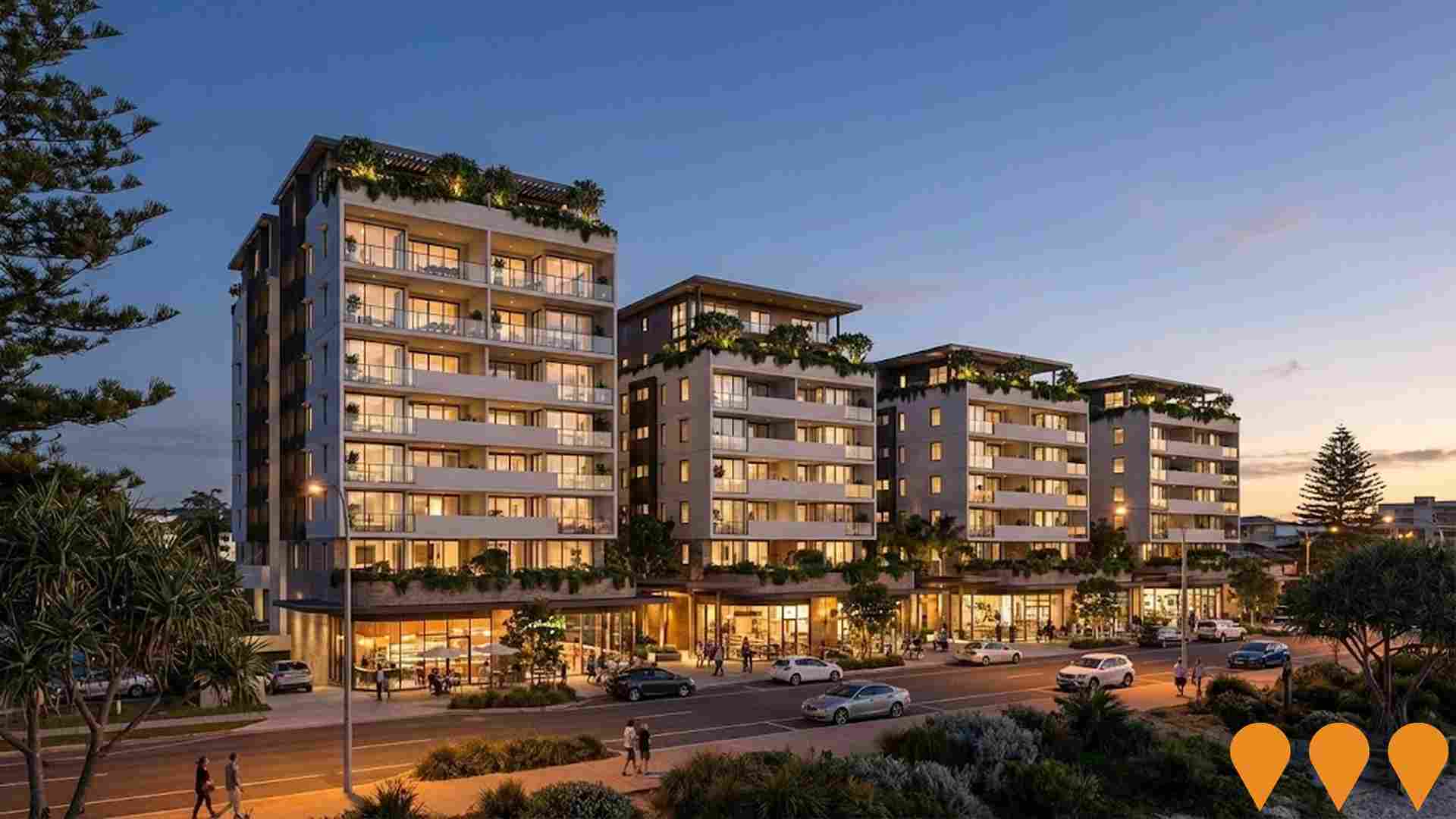
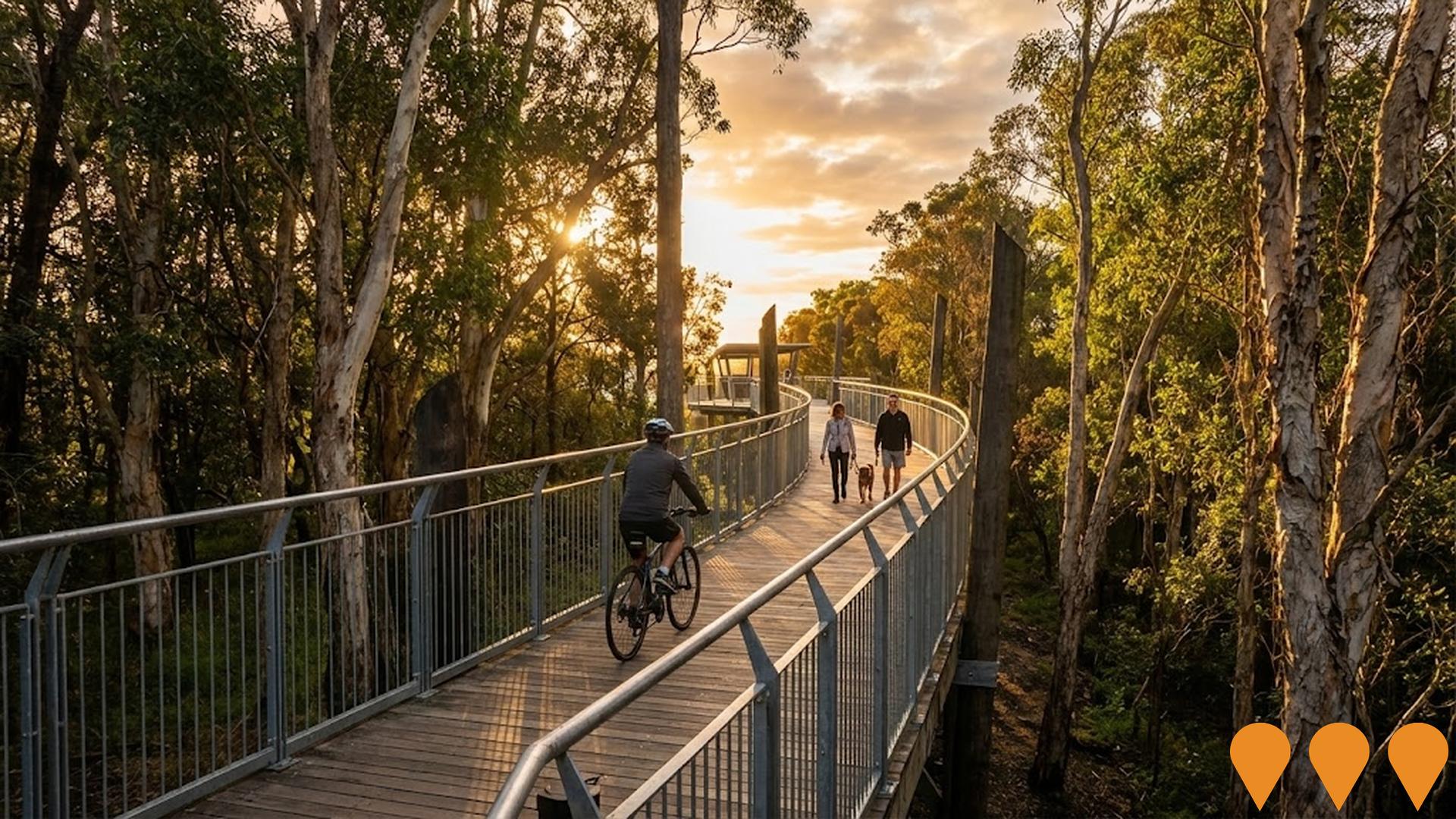
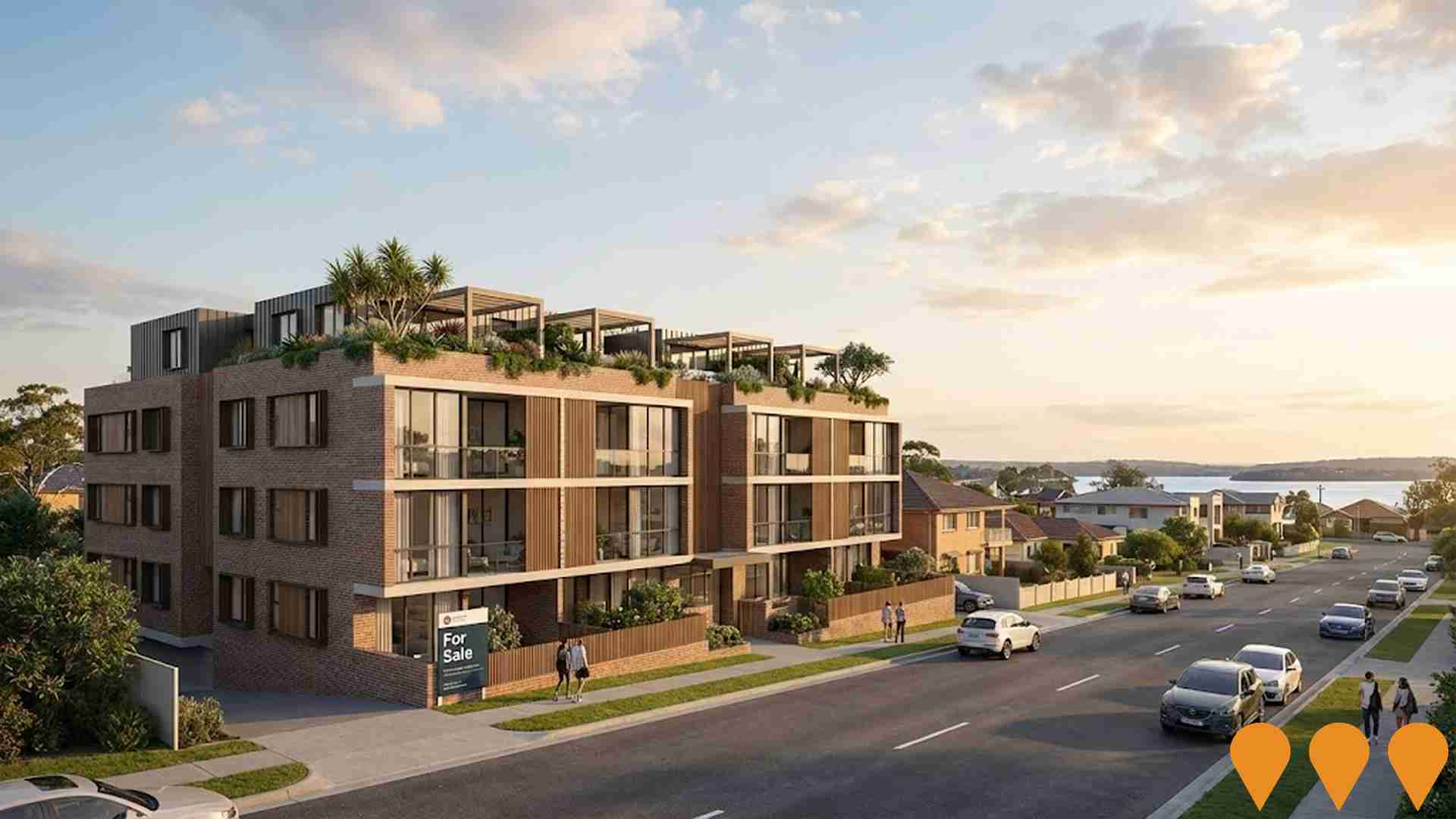
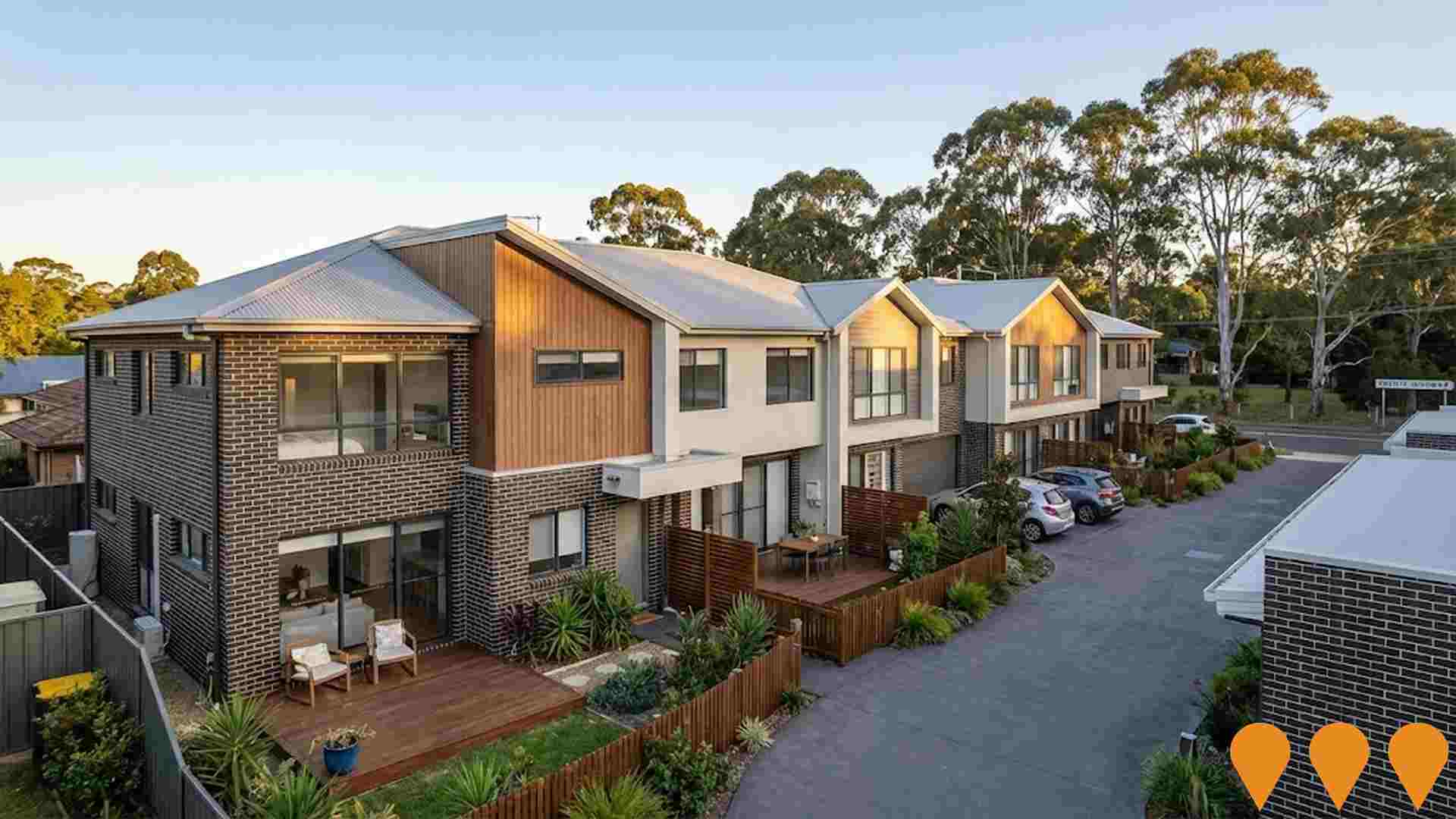
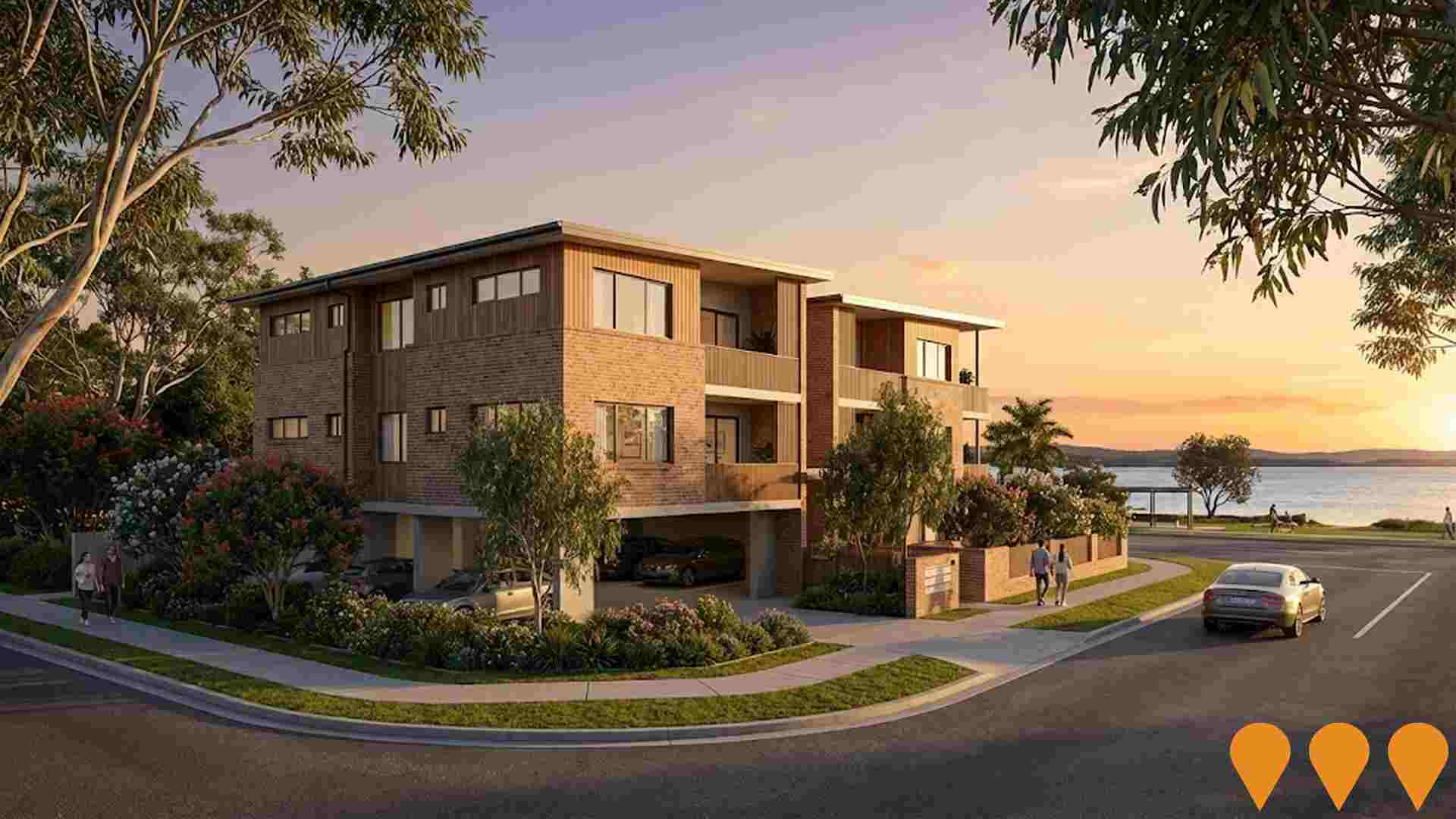
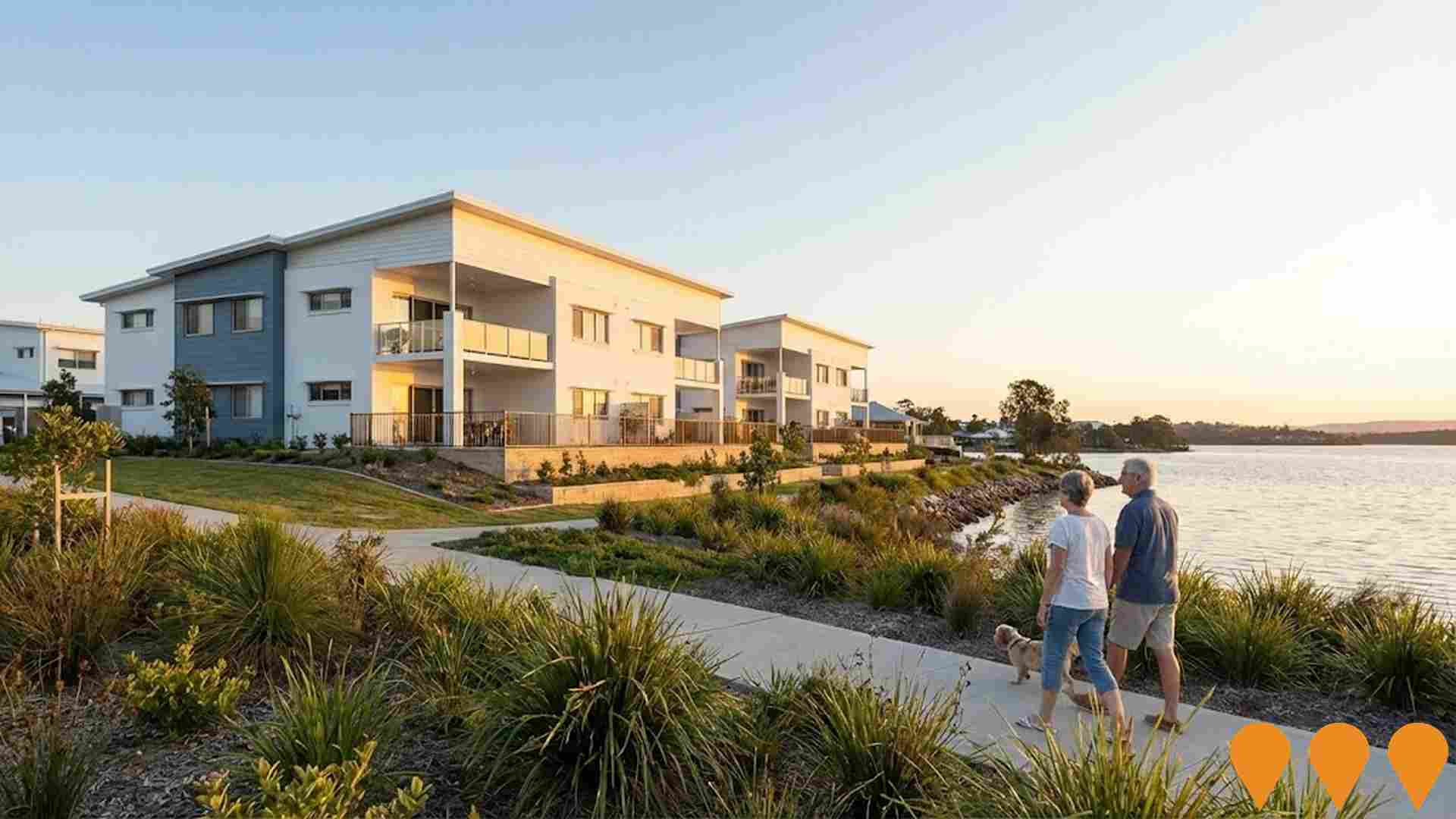
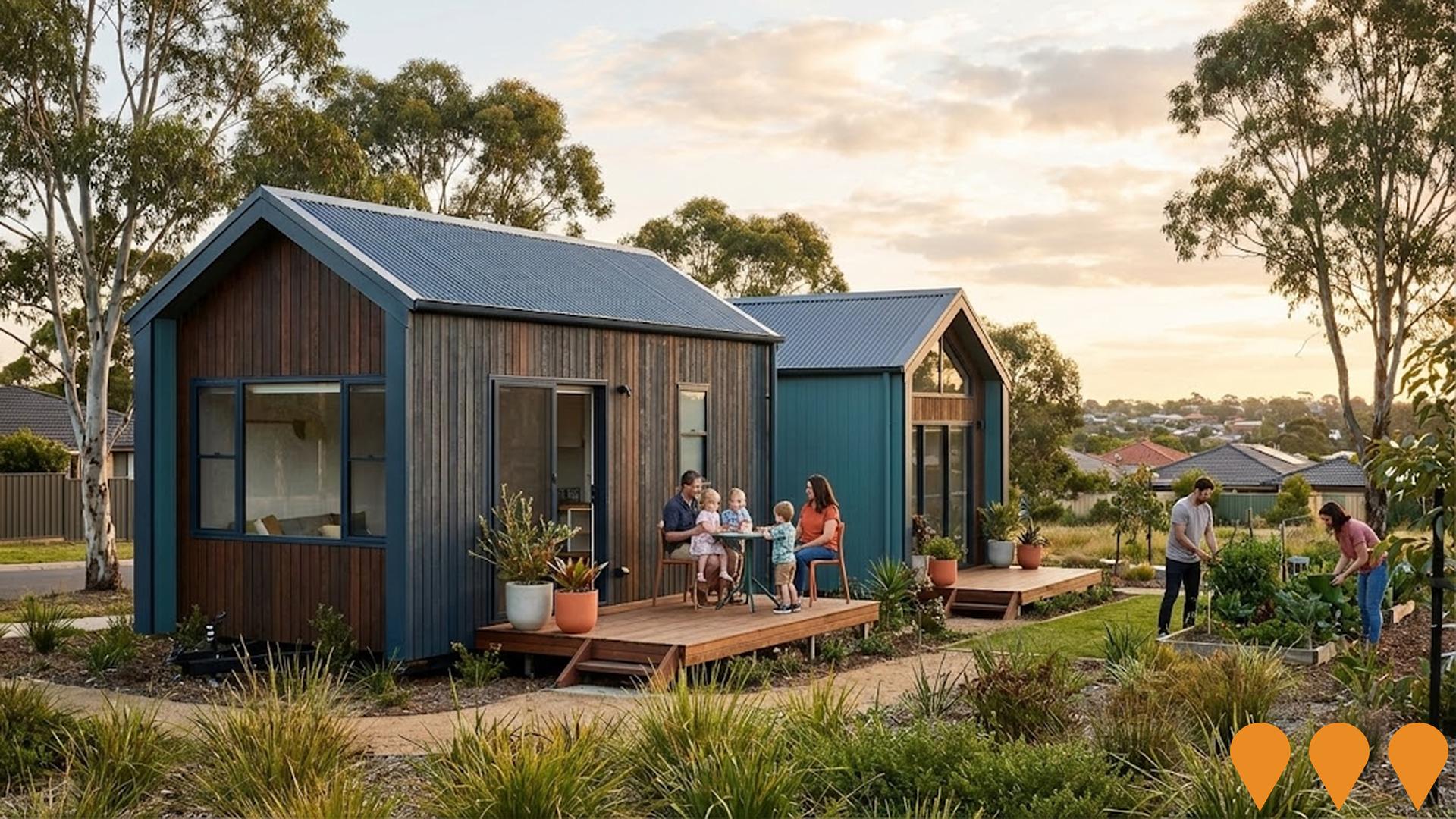
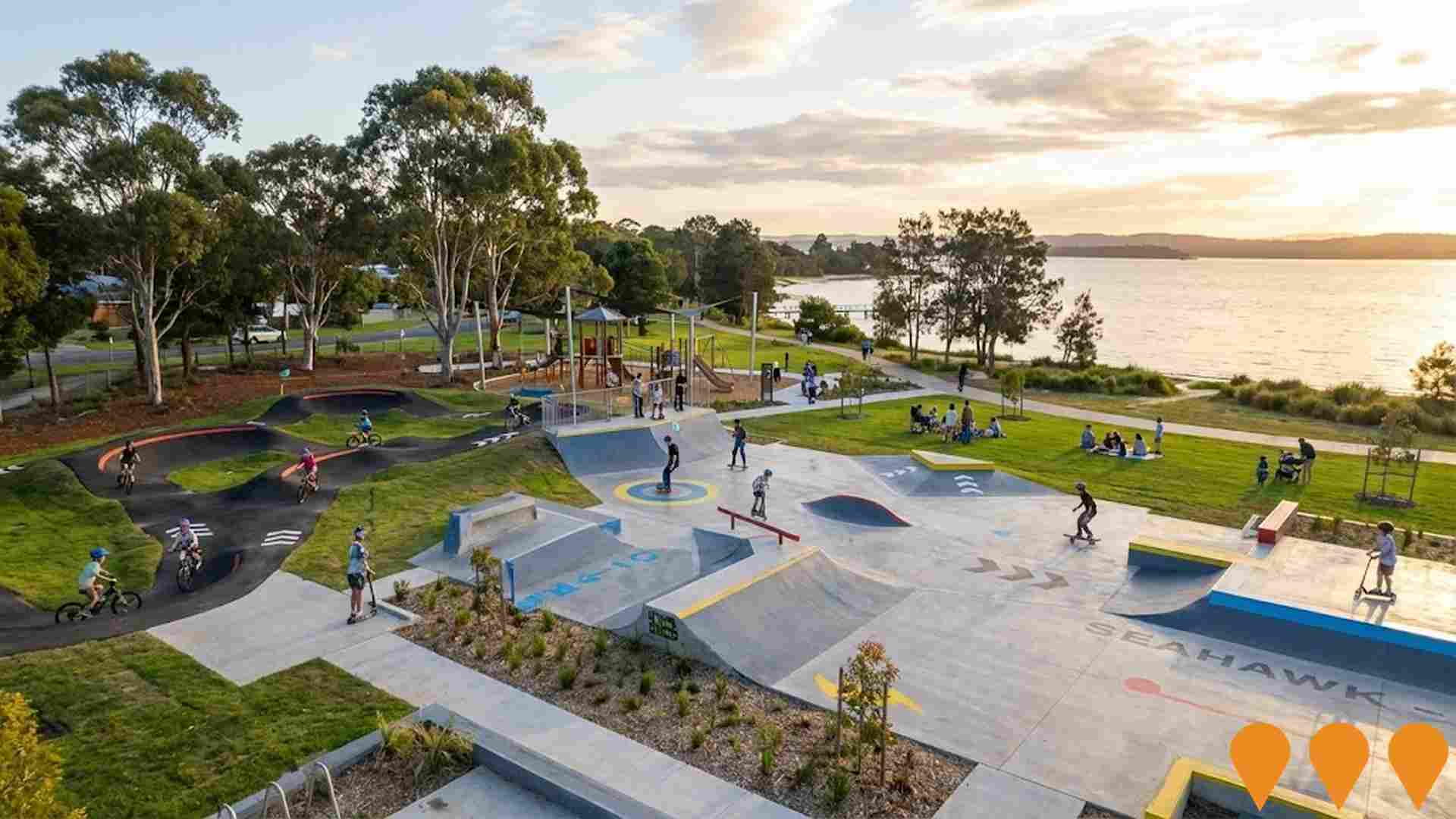
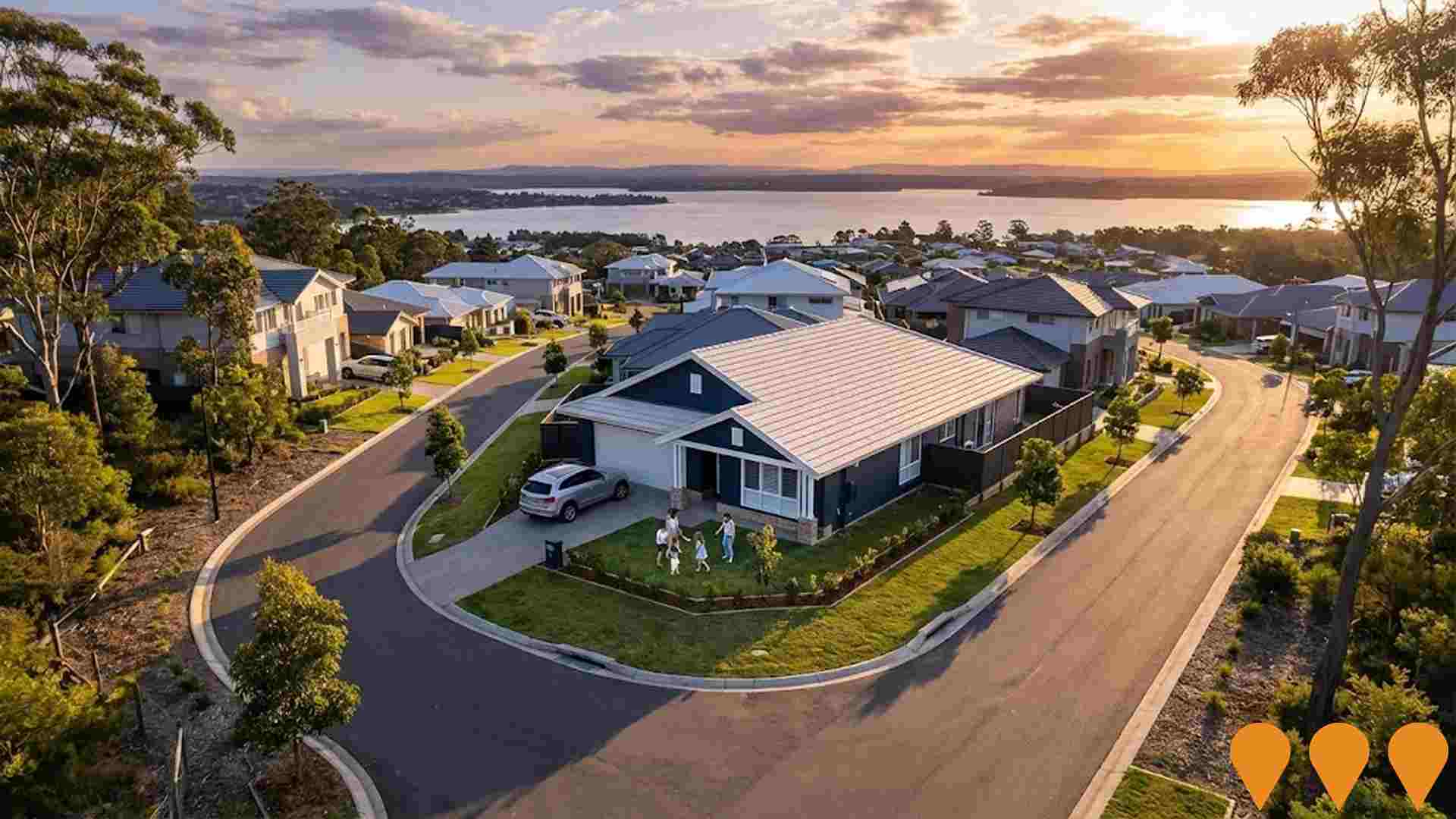
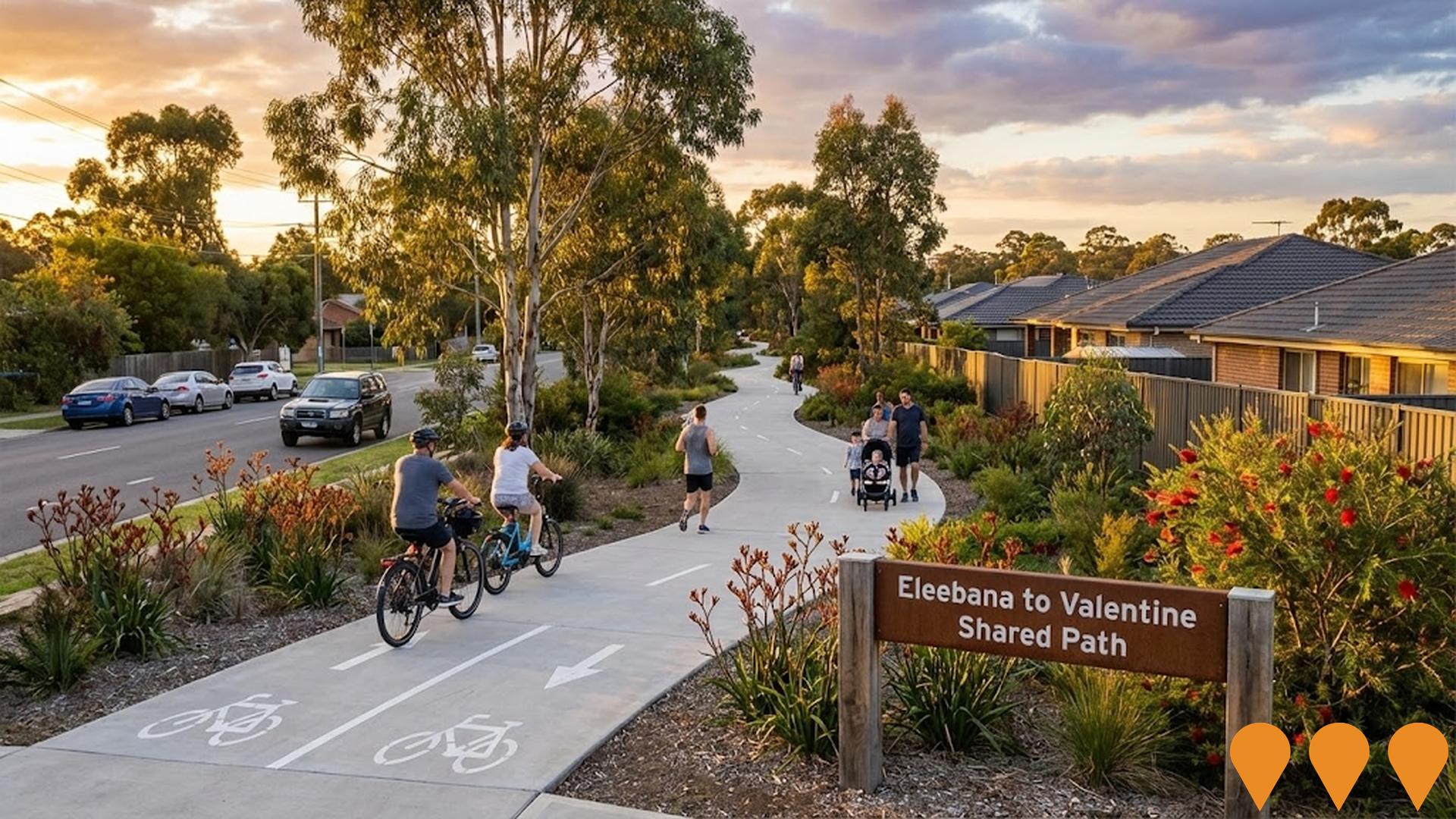
 Denotes AI-based impression for illustrative purposes only, not to be taken as definitive under any circumstances. Please follow links and conduct other investigations from the project's source for actual imagery. Developers and project owners wishing us to use original imagery please Contact Us and we will do so.
Frequently Asked Questions - Infrastructure
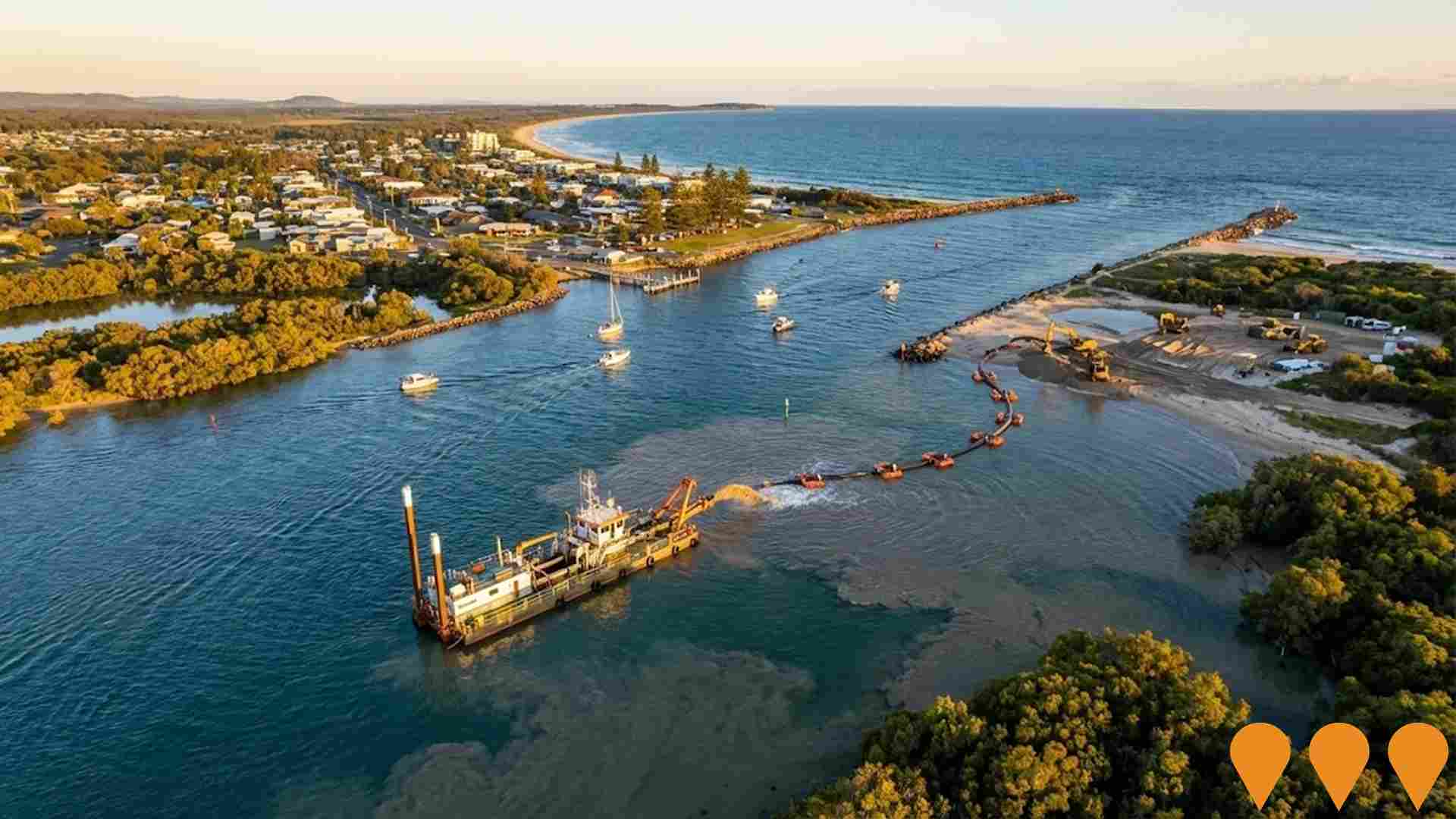
Swansea Channel Permanent Dredging Solution
A permanent dredging solution for Swansea Channel involving a Beaver 30 dredge vessel and a new sand transfer system to maintain safe navigation, pumping sand to Blacksmiths Beach. The project also includes upgrades to the Blacksmiths boat ramp.
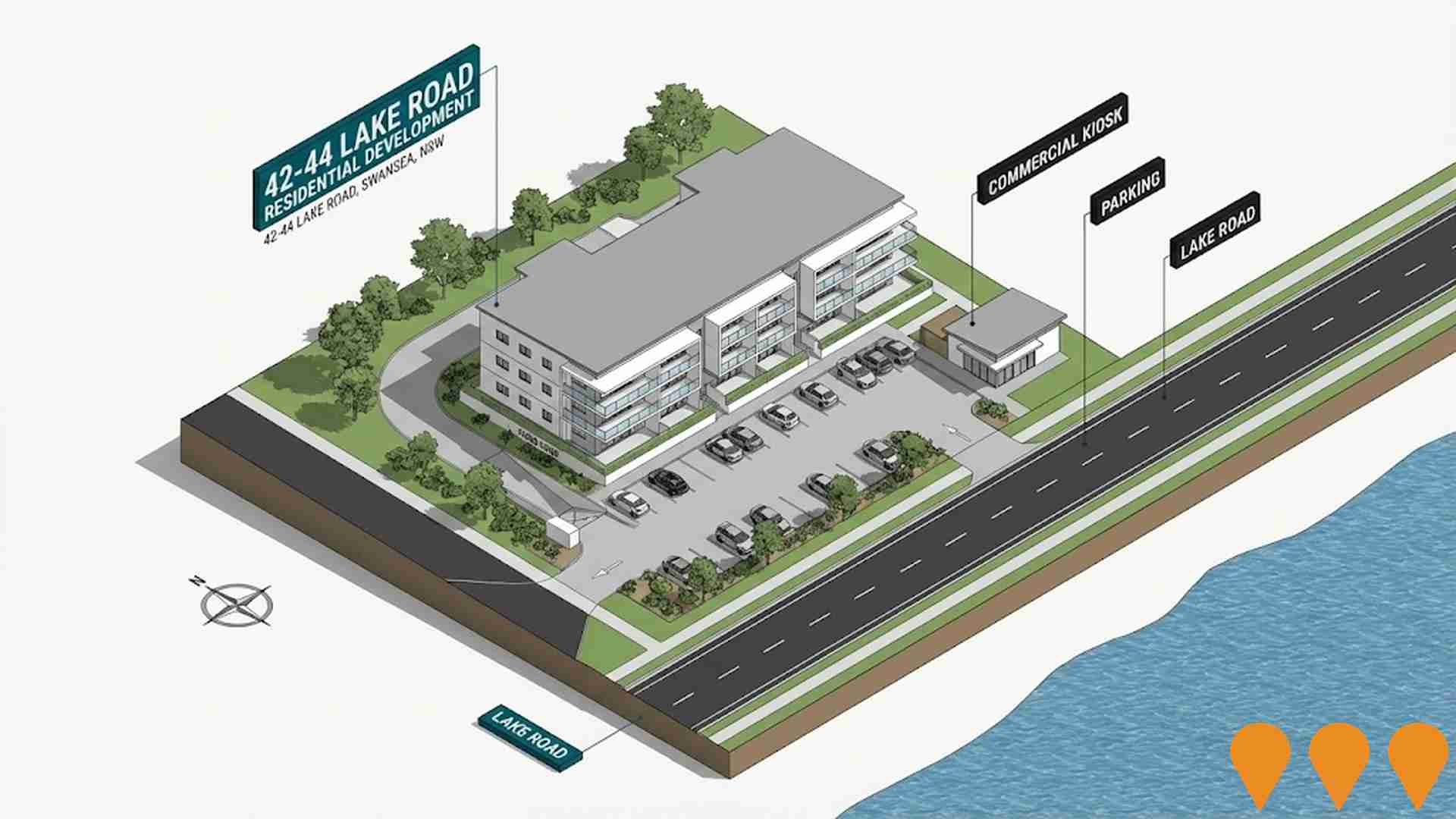
42-44 Lake Road Residential Development
A 3-storey residential building comprising 20 apartments (3 one-bedroom and 17 two-bedroom), a 27 square metre commercial kiosk, 21 car parking spaces, and 1,012 square metres of landscaping. The development received approval from Lake Macquarie Council in April 2024 despite community concerns regarding traffic, drainage, and overshadowing. The building height of 12.22 metres exceeds the development standard by 2.2 metres to accommodate flood-level requirements for ground-floor apartments. The project includes communal open space and additional setbacks to southern boundaries to maintain solar access and privacy for neighbouring properties.
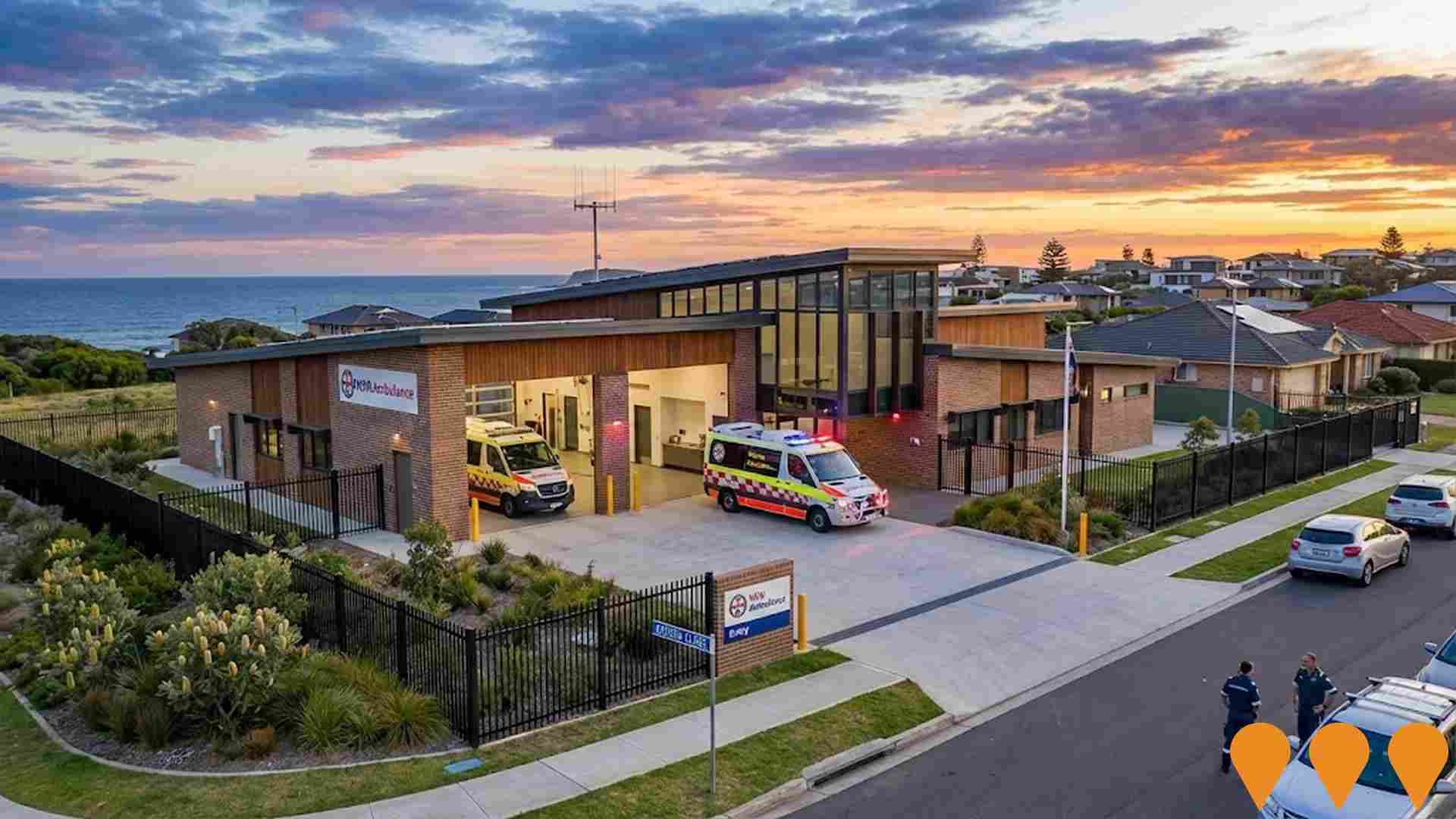
Caves Beach Ambulance Station
A new purpose-built ambulance station featuring internal parking for emergency vehicles, a dedicated wash bay, multipurpose paramedic areas, gym, and training rooms. It is part of the $615.5 million NSW Ambulance Infrastructure Program designed to optimize response times for the Caves Beach, Swansea, and Nords Wharf communities. Artist impressions were officially unveiled in January 2026, with construction expected to commence later in the year following contractor appointment.
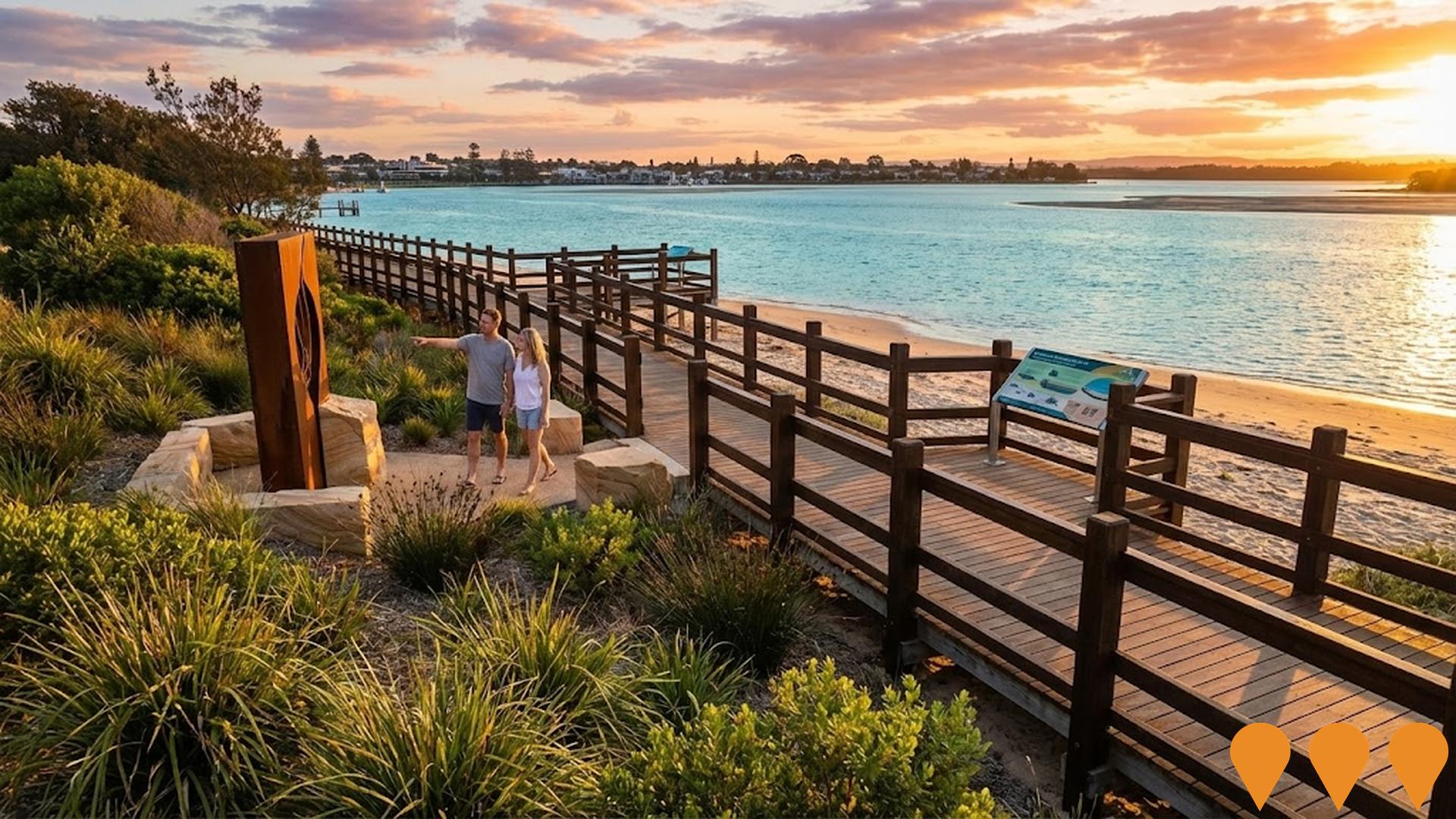
Swansea foreshore enhancement project
The construction of a new boardwalk, installation of public art, revegetation works, landscaping, new wayfinding and interpretive signage and an upgrade to the western car park.
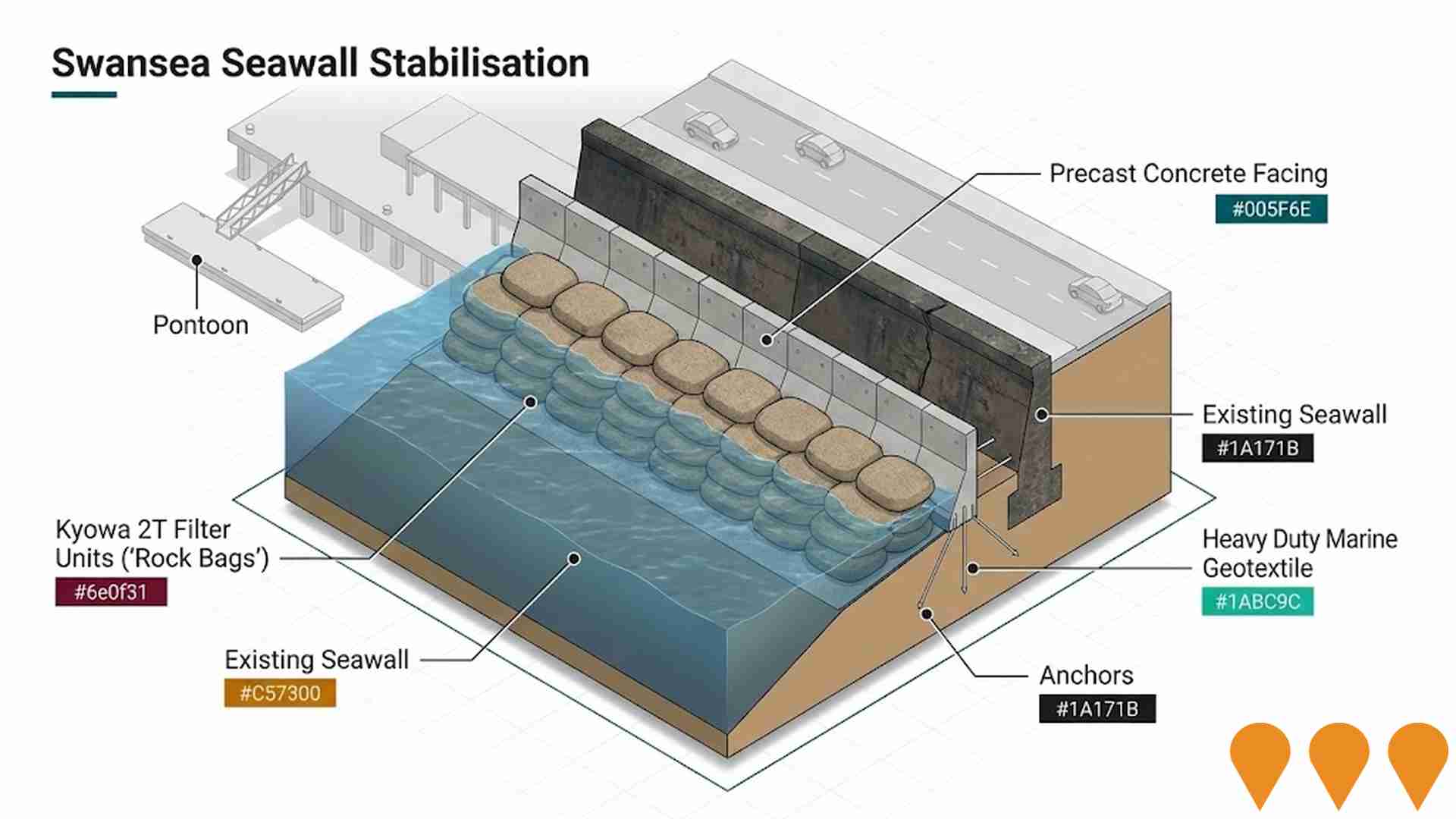
Swansea Seawall Stabilisation
Stabilisation and repair of a 50-metre section of seawall at Belmont Street, Swansea, near Swansea Wharf. The seawall has been closed since 2021 due to instability caused by over-steepening of the underwater slope in Swansea Channel, with water velocity scouring beneath the wall creating a safety risk. The wall was found to be cracked and slumping during wharf and pontoon replacement work. Lake Macquarie City Council has submitted a budget proposal to the NSW Government for the estimated 8 million dollar repair project.
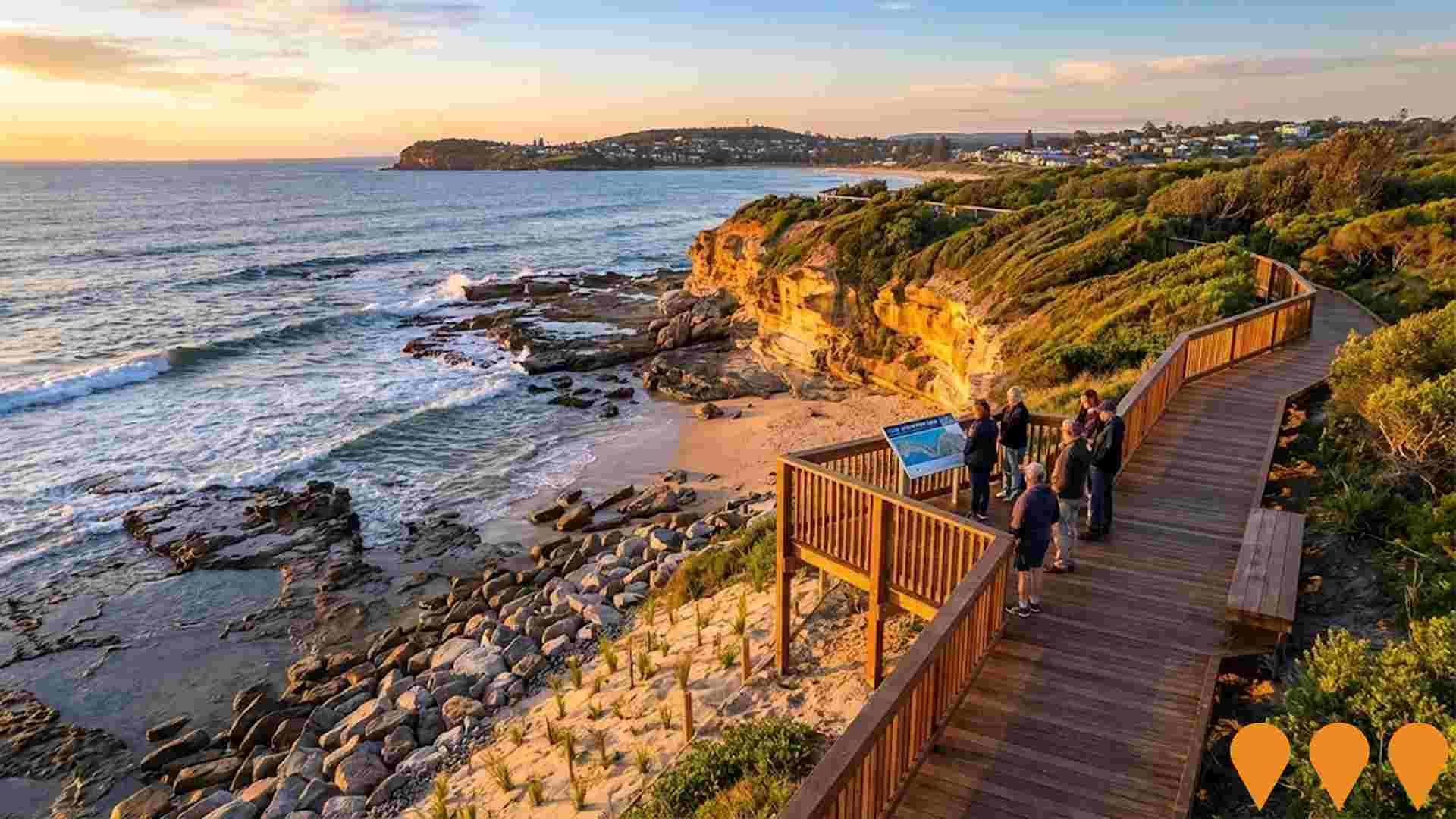
Pelican, Blacksmiths, Swansea, Swansea Heads and Caves Beach Local Adaptation Plan
A comprehensive plan developed by Lake Macquarie City Council in collaboration with the community to address the long-term impacts of climate change, specifically sea level rise and flooding. The plan outlines a series of actions and strategies to adapt and build resilience in these coastal suburbs.
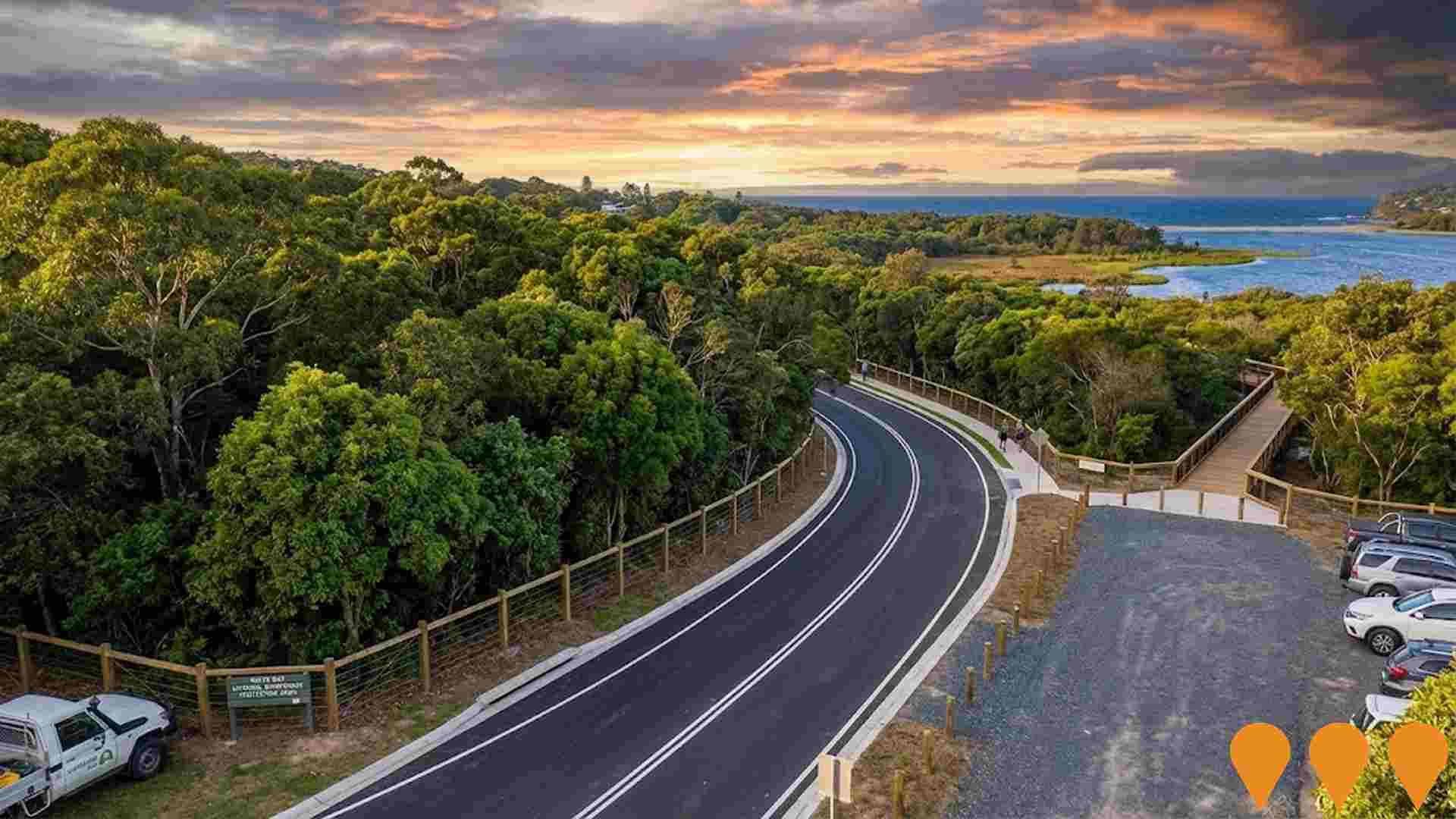
Salts Bay Littoral Rainforest Protection and Enhancement Works
Rehabilitation of endangered littoral rainforest ecosystem at Swansea Heads through targeted weed control, erosion management, and revegetation. The project addressed invasion of transformer weeds, urbanization impacts including rubbish dumping, and track erosion from unauthorized public access. Works included planting over 1,000 native species, installation of fencing to formalize access points, and comprehensive bush regeneration to protect this rare coastal ecological community. The project was supported by the NSW Coast and Estuary Grant Program and involved collaboration with OzFish Unlimited, Landcare NSW, and Bahtabah Local Aboriginal Land Council.Supporting infrastructure improvements included sealing of Salts Bay Road and construction of a car park to improve controlled access while protecting the sensitive ecosystem.
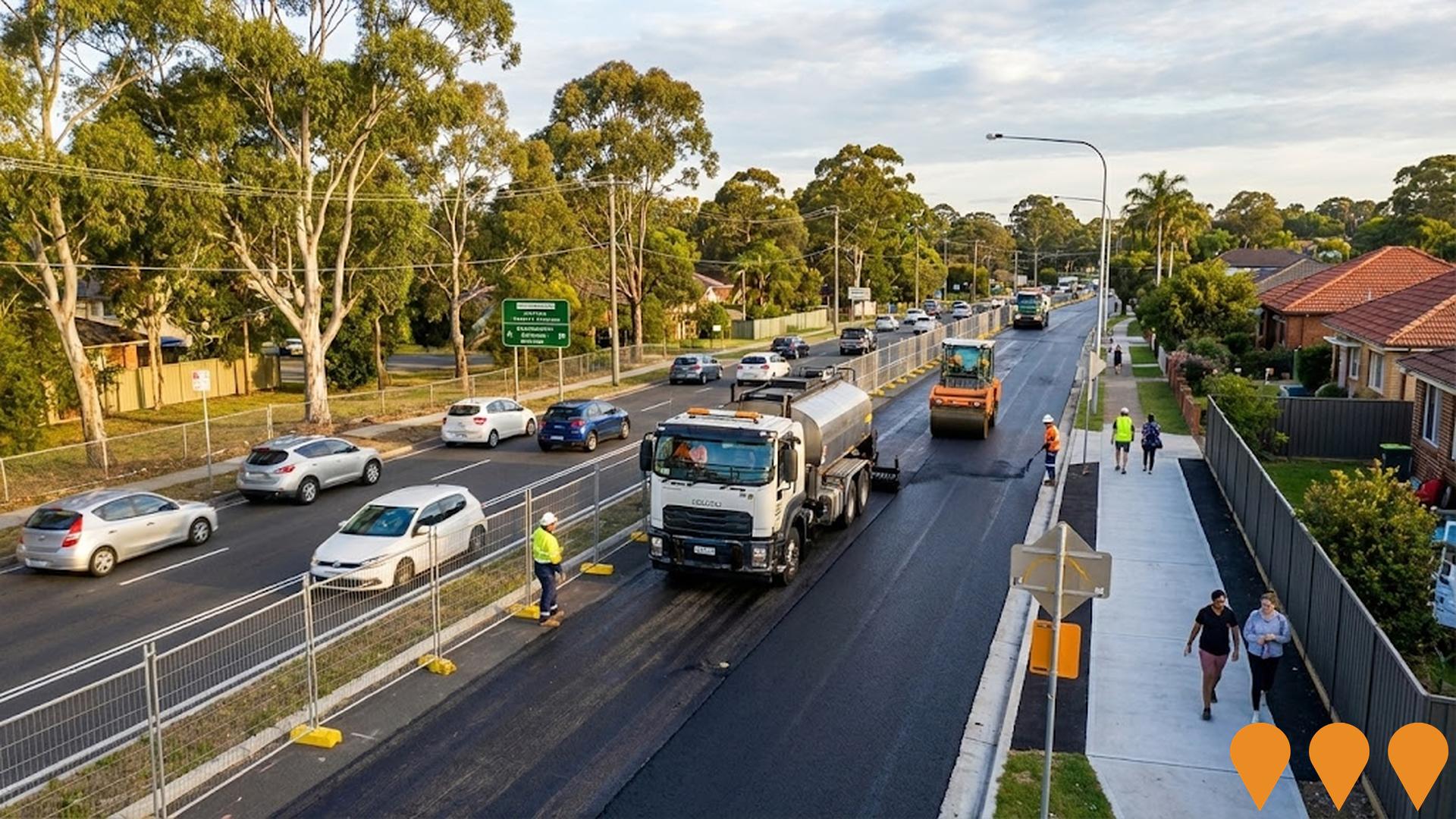
Road Rehabilitation - South Parade, Blackalls Park
Council is rehabilitating the section of South Parade between Fassifern Road and Centre Avenue in Blackalls Park to improve safety and amenity for pedestrians, cyclists and motorists. Works are funded as part of Lake Macquarie City Councils wider road improvements program and include resurfacing, drainage and footpath upgrades, as well as associated traffic and safety improvements. The project is valued at about $1.7 million and is expected to be completed by 2026.
904 residents of Blacksmiths are employed, from a labour force of 946. Unemployment sits at 4.5%, with participation at 57.6%. Weighted for its industry mix, the area's sectors are forecast to grow about 6.3% nationally over five years. That reflects industry composition only and makes no allowance for local population growth. The working-day population is estimated at 1,489, about 79% of the resident population, so more people leave the area for work than travel in. Unemployment and labour force come from ABS Small Area Labour Markets, updated quarterly; the industry and occupation profile is from the 2021 Census.
Detail
Blacksmiths maintains a well-distributed labour market covering both blue and white-collar occupations, supported by a healthy representation in essential services and an unemployment rate of 4.5% based on AreaSearch statistical aggregations. Across the locality, 904 residents are employed as of March 2026, with unemployment sitting 0.4% above the Regional NSW figure of 4.1% and workforce participation lagging regional averages at 57.6% versus 60.6%. Census findings showed 20.7% of employed locals working from home, though period-specific Covid-19 restrictions must be kept in mind. Health care & social assistance, construction, and retail trade represent the three largest employers of local residents.
Construction stands out as a distinct area of local specialisation, engaging workers at 1.4 times the regional proportion. Conversely, agriculture, forestry & fishing accounts for only 0.5% of the local workforce, well below the 5.3% observed throughout Regional NSW. Discrepancies between Census resident counts and local workplace numbers point to limited employment positions situated directly within this residential suburb. AreaSearch evaluations of ABS and SALM releases across the twelve months to March 2026 indicate that the local labour force shrank by 0.5% while employment fell by 2.0%, elevating the unemployment rate by 1.4 percentage points. Across Regional NSW, employment contracted by 0.9%, the labour force contracted by 0.4%, and unemployment rose by 0.5 percentage points. Mar-26 projections from Jobs and Skills Australia point to nationwide employment growth of 6.6% across five years and 13.7% over a decade, though outcomes vary substantially by sector. Weighting these sectoral trajectories against the local industry base suggests employment in Blacksmiths could expand by 6.3% over five years and 13.2% over ten years, representing an illustrative baseline that does not integrate local population adjustments.
Frequently Asked Questions - Employment
Median household income in Blacksmiths is $1,252 a week (about $65,000 a year), with median personal income at $636 a week. ATO records put median taxable income at $49,454 a year against an average of $65,931. Household income is from the 2021 Census; taxable income is from ATO Taxation Statistics for the latest financial year available, indexed forward using the ABS Wage Price Index.
Detail
According to postcode-level ATO records compiled by AreaSearch for financial year 2023, personal income in Blacksmiths sits slightly underneath national averages, with a median of $49,454 and a mean of $65,931, compared with $52,390 (median) and $65,215 (average) across Regional NSW. Factoring in Wage Price Index growth of 10.32% since financial year 2023 brings estimated values to approximately $54,558 for median income and $72,735 for average income as of March 2026. At the 2021 Census, personal, family, and household earnings placed between the 16th and 17th percentiles nationally. Weekly earnings of $400 - 799 form the primary income cohort, taking in 27.2% of locals (510 residents), in contrast to the broader region where the $1,500 - 2,999 bracket leads at 29.9%.
Significant cost-of-living constraints leave residents with 84.2% of disposable earnings, positioning the suburb at the 17th percentile.
Frequently Asked Questions - Income
Blacksmiths had 769 occupied dwellings at the 2021 Census, 89% detached houses and 2% apartments. 28% are owned with a mortgage, 22% rented and 50% owned outright. At that Census the median rent was $390 a week and the median mortgage repayment $1,733 a month. Rent absorbs 31.2% of household income here and mortgage repayments 31.9%. Dwelling stock, tenure and housing costs are 2021 Census measures — the only source that counts dwellings at this boundary size.
Detail
Census records indicate that standalone houses make up 88.6% of residential stock in Blacksmiths, with apartments, semi-detached, and other formats accounting for 11.5%, compared to 82.6% separate houses and 17.4% other dwellings in Regional NSW. Outright property ownership is notably high at 50.1%, outstripping regional benchmarks, while 27.6% of dwellings carry a mortgage and 22.4% are rented. Median monthly mortgage commitments mirror the Regional NSW benchmark at $1,733, whereas weekly median rents of $390 sit above the regional figure of $330. Compared against Australian benchmarks, local mortgages remain below the national $1,863 figure, though rent outpaces the broader average of $375.
Frequently Asked Questions - Housing
Blacksmiths counted 769 households at the 2021 Census, averaging 2.3 people each. 23% are couples with children, fewer than in 76% of areas nationally, against 28% couples without children. 30% of households are people living alone, and families average 1.9 children. Household and family composition is measured only by the Census, so these are 2021 figures.
Detail
Families constitute 67.6% of all local households, divided between couples without children (28.3%), couples with children (23.3%), and single parent families (14.3%). Non-family living arrangements account for the remaining 32.4%, consisting of single-person households at 29.8% and group households at 3.0%. The local average household size stands at 2.3 people, tracking slightly below the 2.4 person average seen across Regional NSW.
Frequently Asked Questions - Households
14.4% of adults in Blacksmiths hold a university qualification, including 10.9% with a bachelor degree and 1.9% with postgraduate qualifications. A further 31.7% hold a vocational qualification. 1 school serves the area, with 92 enrolment places and an average ICSEA of 991 against a national benchmark of 1,000. Qualifications come from the 2021 Census; school enrolments, ICSEA and results come from ACARA's current release.
Detail
Tertiary qualification levels present an area for development in Blacksmiths, with 14.4% of residents holding higher education degrees compared to the 32.2% NSW standard. Bachelor degrees form the primary credential at 10.9%, followed by postgraduate degrees at 1.9% and graduate diplomas at 1.6%. In contrast, vocational and technical expertise is strongly represented, with 41.9% of those aged 15+ possessing vocational credentials, including 10.2% with advanced diplomas and 31.7% with certificate qualifications. A significant 23.7% share of the local community is currently enrolled in formal studies. This cohort comprises 8.4% attending secondary school, 7.4% enrolled in primary education, and 2.9% engaged in higher education.
Frequently Asked Questions - Education
Schools Detail
Public transport in Blacksmiths reaches 28 stops on 17 routes, timetabled for about 480 services a week. The typical home sits about 130 m from its nearest stop. Households keep an average of 1.3 vehicles. Stop and service counts are built from operators' published GTFS timetables and refresh with each timetable release; vehicle ownership is from the 2021 Census.
Detail
Public transport connectivity across Blacksmiths encompasses 28 active bus stops supported by 17 routes that provide 477 weekly services. Stop accessibility is strong, with typical walking distances averaging 131 meters. As a commuter base, private motor vehicles represent the predominant mode of travel at 95%, with household vehicle ownership averaging 1.3 cars, below regional figures. Working from home engaged 20.7% of workers at the 2021 Census, subject to period health measures. Across the entire network, route frequencies average 68 daily trips, which translates to roughly 17 weekly trips for each transport stop.
Frequently Asked Questions - Transport
Transport Stops Detail
59.9% of residents in Blacksmiths report no long-term health condition, a less healthy profile than 83% of areas nationally. 7.5% need daily assistance with core activities, and 53.0% hold private health cover. The standardised death rate runs at 6.2 per 1,000 residents. Health conditions, assistance needs and insurance are 2021 Census measures; the death rate comes from current ABS releases.
Detail
Health and vitality measures compiled by AreaSearch indicate notable medical headwinds for Blacksmiths across both older and younger residents, characterized by elevated rates of chronic illness and mortality. Meanwhile, private health insurance coverage sits marginally above the typical SA2 benchmark, encompassing approximately 53% of residents (~994 people). Arthritis and mental health conditions are the most prevalent long-term diagnoses locally, affecting 12.3% and 8.9% of the population, respectively, while 59.9% of residents report no chronic health ailments compared to 63.3% across Regional NSW. Working-age cohorts exhibit noticeable vulnerability to chronic illnesses.
Furthermore, residents aged 65 and over represent 31.2% of the population (585 people), surpassing the 23.3% regional benchmark, with senior health indicators broadly aligning with national standards.
Frequently Asked Questions - Health
Blacksmiths is largely Australian-born, at 93.7% of residents, with 3.0% speaking a language other than English at home. The largest reported ancestries are English (33.4%) and Australian (32.0%). 5.2% of residents identify as Aboriginal and/or Torres Strait Islander. Ancestry, language and country of birth are counted only by the Census, so these are 2021 figures.
Detail
Cultural diversity in Blacksmiths sits below broader averages, with Australian citizens representing 92.1% of the community, 93.7% born domestically, and 97.0% speaking only English at home. Christianity forms the dominant religious affiliation, claimed by 51.6% of residents, in comparison to 55.9% across Regional NSW. English (33.4%), Australian (32.0%), and Scottish (8.6%) constitute the three largest ancestral backgrounds identified in Blacksmiths. Distinct variations appear in other backgrounds, with Welsh ancestry representing 1.1% locally (against 0.5% regionally), Australian Aboriginal heritage comprising 5.2% (compared to 4.6%), and Samoan ancestry accounting for 0.2% (versus 0.1%).
Frequently Asked Questions - Diversity
The median resident of Blacksmiths is 50, older than 91% of areas nationally. 19.9% of residents are aged 15 to 34. Age cohorts are not raw Census counts: the Census split is re-based to the latest ABS population estimates and state projections.
Detail
The demographic profile of Blacksmiths leans heavily toward mature age groups, with retirees and seniors aged 65+ making up 31.2% of the population as at August 2026 compared to 23.3% across Regional NSW, while adults aged 25 - 44 represent 17.9% versus 23.5% regionally. The estimated median age reaches 50 as at August 2026, matching the 2021 Census figure and sitting above both the Regional NSW level of 43 and the Australian median of 38 at that Census. Since then, the 65+ cohort has risen from 27.9% to an estimated 31.2%.
Through to 2041, senior demographics will see the largest expansion, adding 42 residents (7%) to reach 628, while child, young adult, middle-aged, and younger retiree segments are expected to shrink.
Frequently Asked Questions - Age
Data & MethodBoundaries, Sources & Method for Blacksmiths
9 of 14 data sections on this page were updated within the last 12 months — the newest current to Sep 2026.
Everything is aggregated to the Suburb (SAL) boundary shown above, on a 2021 Census baseline. Only 3 sections — housing, households and cultural diversity — still wait on the 2026 Census.
The ledger — source, cycle and currency by section
| Section | Source & update cycle | Currency |
|---|---|---|
| Updated within the last 12 months 9 sections | ||
| Population | ABS, GNAF, Geoscience Australia Annual (ABS ERP) | Aug 2026 last month headline measures · 2021 Census baseline |
| Re-based to the ABS Estimated Resident Population (June 2025 release) and updated with new dwellings from GNAF address data. Current to Aug 2026, with the 2021 Census supplying the small-area baseline. | ||
| Age profile | ABS, Geoscience Australia, State governments Annual | Aug 2026 last month headline measures · 2021 Census baseline |
| Age cohorts are re-based to the latest ABS population estimates and state projections, current to Aug 2026. Each cohort is held as a Census baseline and a current estimate. | ||
| Development & approvals | ABS, GNAF Monthly (ABS approvals) | Aug 2026 last month headline measures · Jul 2026 baseline |
| Property sales & rents | Valuer General, Rental Board, ABS Weekly sales, quarterly rents | Sep 2026 this month all 21 measures |
| Sales from the state Valuer General register, refreshed weekly, and rents from quarterly rental bond lodgements. Both are read live each time this page loads, current to Sep 2026. | ||
| Infrastructure projects | Infrastructure Australia, Local governments Daily | May 2026 4 months ago all 2 projects tracked here |
| Project pipeline maintained continuously from Infrastructure Australia, state agencies, local government and public announcements. Records are added and revised daily; this area was last updated May 2026. | ||
| Employment | ABS, DEWR, JSA Quarterly (ABS SALM) | Mar 2026 6 months ago headline measures · 2021 Census baseline |
| Unemployment and labour force from ABS Small Area Labour Markets, current to Mar 2026. The growth outlook applies Department of Employment (now Jobs and Skills Australia) forecasts for all 19 industry divisions to the local industry mix, so it measures sector composition rather than local expansion and makes no allowance for population growth. Job demand comes from the same agency via its Internet Vacancy Index; industry and occupation structure from the 2021 Census. | ||
| Education | ABS, ACARA Annual (ACARA) | Aug 2026 last month headline measures · 2021 Census baseline |
| Transport | ABS, State Transport Departments Each timetable release | Jul 2026 2 months ago headline measures · 2021 Census baseline |
| Services & amenities | Provider directories, ACECQA Continuous | Jul 2026 2 months ago all 14 measures |
| Annual and financial-year sources 2 sections | ||
| Income | ABS, ATO Annual (ATO) | FY 2023 3 years ago headline measures · 2021 Census baseline |
| ATO taxable income statistics for FY 2023, indexed forward using the Wage Price Index. Census household income provides the distribution detail. | ||
| Health | ABS, ATO Annual | 2024 2 years ago headline measures · 2021 Census baseline |
| Census-measured — next update: 2026 Census 3 sections No more current small-area source exists for these, so they are labelled as Census-measured rather than implied to be current. | ||
| Housing | ABS 5-yearly (Census) | 2021 Census next update 2026 all 30 measures |
| Households | ABS 5-yearly (Census) | 2021 Census next update 2026 all 18 measures |
| Cultural diversity | ABS, Geoscience Australia 5-yearly (Census) | 2021 Census next update 2026 all 44 measures |
"Currency" is the most recent release feeding that section. Where the Census supplies the structural baseline underneath a current headline figure, the row says so.
How the numbers are built
Population
The Census provides the small-area baseline, aggregated from mesh blocks to this boundary. It is then re-based to the ABS Estimated Resident Population (June 2025 release), and new dwellings built since Census night are counted from address data — 13 validated new addresses here. The headline figure is therefore a current estimate for Aug 2026, not a 2021 count (1,881 at the 2021 Census → 1,877 now). Annual growth rates are compound (CAGR), not simple averages.
Age profile
Cohort shares are not raw Census counts. Every cohort is held as a pair — the Census baseline and a current estimate — and the split is re-based using ERP and state population projections, current to Aug 2026. Median age is the Census median plus modelled change since. Charts that show both are labelled "2021 Census vs Current Estimate".
Property sales
Sourced from the state valuation authority's sales register — current, not Census, and refreshed weekly. Medians are calculated from settled transactions in the period shown; periods with very low transaction counts are flagged or suppressed, because a handful of sales can move a median substantially.
Rents
Derived from state rental bond lodgement data, by dwelling type and bedroom count. Bonds are lodged at the start of a new tenancy, so this reflects new lettings, not the whole rented stock.
Development & infrastructure
Building approvals come from current ABS releases; development applications are collected from council and state planning portals; the infrastructure pipeline is compiled from Infrastructure Australia and local government sources. Applications are matched to this boundary by address or coordinates, so very recent lodgements may not yet appear.
Employment & income
Industry and occupation structure comes from the Census, but the headline labour-market indicators do not. Unemployment and labour force are derived from ABS Small Area Labour Markets (quarterly). The employment outlook applies Department of Employment forecasts for all 19 industry divisions to this area's own industry mix (the agency is now Jobs and Skills Australia), as does the Internet Vacancy Index used for job demand. Because it is weighted on industry composition alone, that outlook carries no allowance for local population growth — in fast-growing areas the real rise in local jobs will typically be higher. Income combines Census household income with ATO taxable-income statistics for FY 2023, indexed forward using the Wage Price Index.
Education, transport & amenities
School enrolments, ICSEA and performance come from ACARA's current release, not the Census. Public transport stops and service frequency are derived from GTFS timetable feeds published by state transport departments. Services and amenities are proximity and count scores built from provider directories, refreshed on their own cycle. The Census contributes only the travel-to-work and qualification measures.
Rankings and benchmarks. Where we rank this area, the comparison set is every area of the same boundary type — suburbs against suburbs, SA2s against SA2s. Benchmarks compare this area against its greater capital city region and the national figure for the same measure and period.
Limits worth knowing. Small areas carry larger error margins, and the ABS introduces small random adjustments to Census counts to protect confidentiality — so totals may not sum exactly. Estimates re-based from regional data describe the area's expected trajectory, not a direct count of it. Figures are indicative for research and are not financial, planning or valuation advice.
Cross-check us. The Census baseline for this boundary is at ABS 2021 Census QuickStats (SAL10395). QuickStats reports 2021 only — the figures on this page are more current wherever the ledger shows a later date.