Forbes
Statistical Area - sa2

Chart Color Schemes
Loading map data ...
0 People

est. as @ -- *

ABS ERP | -- people | --

2021 Census | -- people

Land Area
--
Land Area
Population Density
--
Density
Unemployment Rate
--
Unemployment
Development
--
Resi Approvals
Get My Report

Sales Activity

Table Chart PROFILE FAQ

Curious about local property values? Filter the chart to assess the volume and appreciation (including resales) trends and regional comparisons, or scroll to the map below view this information at an individual property level.

House icon
Median Price
$0
Key icon
1yr Sales Volume
0
Find a Recent Sale
Type Specified (1) | Limit 50

Sales Detail

Population

Table Chart PROFILE FAQ

Forbes is positioned among the lower quartile of areas assessed nationally for population growth based on AreaSearch's assessment of recent, and medium term trends

Forbes' population, as per AreaSearch's analysis, was approximately 10,224 by August 2025. This figure represents an increase of 204 individuals (2.0%) since the 2021 Census, which recorded a population of 10,020. The change is inferred from the estimated resident population of 10,034 in June 2024 and an additional 209 validated new addresses since the Census date. This results in a density ratio of 2.2 persons per square kilometer. Forbes' growth of 2.0% since the 2021 census surpassed that of its SA3 area (0.3%), positioning it as a growth leader in the region. Natural growth contributed approximately 58.0% to overall population gains during recent periods.

AreaSearch adopts ABS/Geoscience Australia projections for each SA2 area, released in 2024 with a base year of 2022. For areas not covered by this data, AreaSearch uses NSW State Government's SA2 level projections, released in 2022 with a base year of 2021. Growth rates by age group from these aggregations are applied to all areas for the years 2032 to 2041. Future population trends project an above median growth for national regional areas, with Forbes expected to grow by 1,317 persons to 2041 based on latest numbers, reflecting a total increase of 10.6% over the 17-year period.

Frequently Asked Questions - Population

What is the latest population estimate for Forbes?
Total population for Forbes was estimated to be approximately 10,224 as at Aug 25. This is based upon an estimated resident population of 10,034 from the ABS up to June 2024.
How has the population in Forbes changed since 2021?
Forbes has added approximately 204 people and shown a 2.04% increase from the 10,020 people recorded at the 2021 Census period.
What is the population density in Forbes?
The population density in Forbes is estimated at 2 persons per square kilometer based on the latest population estimate.
How much has the population grown over the past 10 years?
Over the past 10 years, the population has shown a compound annual growth rate of -0.3% per annum.
What are the main drivers of population growth in the area?
Population growth in Forbes is driven by: Natural increase (58.0%), Overseas migration (42.0%), Interstate migration (0.0%). The primary driver is Natural increase, contributing 58.0% of overall population gains.

Development

Table Chart PROFILE FAQ

AreaSearch assessment of residential development drivers sees a low level of activity in Forbes, placing the area among the bottom 25% of areas assessed nationally

Forbes has recorded approximately 30 residential properties granted approval annually. Over the past five financial years, from FY21 to FY25, a total of 154 homes have been approved, with an additional 9 approved so far in FY26. The population has fallen during this period, suggesting that new supply has likely kept pace with demand, providing good choice for buyers.

The average expected construction cost value of new homes is $397,000, which aligns with regional trends. In terms of commercial development activity, Forbes has registered $27.0 million in approvals this financial year, indicating a balanced level of commercial development. Compared to the Rest of NSW, Forbes shows comparable development activity per person, maintaining market balance consistent with the broader area. However, this is lower than national levels, reflecting market maturity and suggesting possible development constraints.

New development consists of 85% standalone homes and 15% attached dwellings, maintaining the area's traditional low density character with a focus on family homes appealing to those seeking space. The location has approximately 286 people per dwelling approval, indicating a low density market. Looking ahead, Forbes is expected to grow by 1083 residents through to 2041. Building activity appears to be keeping pace with growth projections, though buyers may experience increased competition as the population grows.

Frequently Asked Questions - Development

How many dwelling approvals have occurred in the Forbes area recently?
Dwelling approval activity in the Forbes area has seen 70 residential approvals over the past two financial years, based on AreaSearch's SA2 aggregation method. Forbes's current population of 10,224 has been supported by 30 approvals on average over recent years.
How does Forbes's development activity compare to the broader region?
Forbes has seen 0.3 approvals per 100 people in recent years, compared to 0.58 approvals in the broader region. This means that one dwelling has been approved for every 286 people in Forbes, compared to one for every 190 in the broader region.
Is the Forbes area keeping up with housing demand?
With the population expected to increase by 1,083 people by 2041, around 542 new dwellings will be necessary. Recent approval levels appear more than sufficient to meet these forecasts, considering the census average of 2.0 persons per dwelling. This suggests that population growth may exceed trend projections in the coming years, supported by a robust housing supply.
What has been the trend in development approvals over the past five years?
Looking at development activity over the past five years, Forbes's approval levels have been slightly above the yearly average of 30, showing modest growth in recent years.
How many dwellings will be needed to accommodate future population growth?
The population in Forbes is expected to grow by 1,083 people by 2041, necessitating approximately 542 new dwellings. This calculation is based on the current census average of 2.0 persons per dwelling in the area.
How does recent development compare to population growth in Forbes?
Over the past five years, Forbes has seen 154 residential approvals while population has remained stable or declined, indicating potential market oversupply.
Are there opportunities for residential developers in Forbes?
With dwelling approval activity running at an average of 30 approvals per year and a population of 10,224, the market appears to be reasonably balanced between supply and demand, presenting moderate opportunities for well-positioned developments. With the population expected to increase by 1,083 people by 2041, around 542 new dwellings will be necessary. Recent approval levels appear more than sufficient to meet these forecasts, considering the census average of 2.0 persons per dwelling. This suggests that population growth may exceed trend projections in the coming years, supported by a robust housing supply.

Infrastructure

PROFILE FAQ

Forbes has limited levels of nearby infrastructure activity, ranking in the 16thth percentile nationally

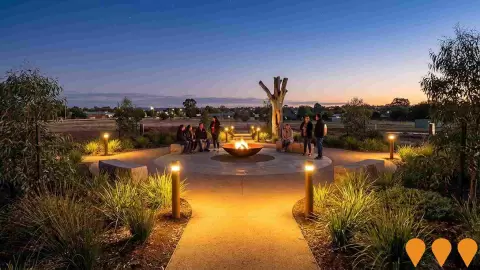
Changes to local infrastructure significantly impact an area's performance. AreaSearch has identified seven projects likely to affect the region. Notable ones are Forbes Development Project, Goldridge Estate, Homemakers Centre Stage 2, and Forbes Multipurpose Equestrian Centre. The following list details those most relevant.

Professional plan users can use the search below to filter and access additional projects.

INFRASTRUCTURE SEARCH
All Selected

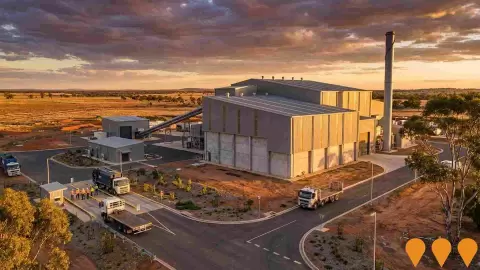
AI Generated Denotes AI-based impression for illustrative purposes only, not to be taken as definitive under any circumstances. Please follow links and conduct other investigations from the project's source for actual imagery. Developers and project owners wishing us to use original imagery please Contact Us and we will do so.

Frequently Asked Questions - Infrastructure

What are some of the major infrastructure and planning changes likely to influence Forbes?
Key infrastructure and planning changes likely to influence Forbes include: Forbes Development Project (Approved); Goldridge Estate (Construction); Homemakers Centre Stage 2 (Completed); Forbes Multipurpose Equestrian Centre (Completed); and Daroobalgie Solar Farm (Approved). These projects represent significant developments that will shape the area's future infrastructure landscape.
What types of infrastructure projects are impacting Forbes?
Infrastructure development impacting Forbes spans multiple sectors including Transport & Logistics, Residential Development, and Energy, among others.
What is the scale of infrastructure investment impacting Forbes?
Infrastructure investment analysis indicates targeted investment in infrastructure improvements that will benefit the local area, with a notable concentration of investment within the immediate Forbes vicinity.
How does Forbes's infrastructure development compare to other areas?
Infrastructure development activity impacting Forbes currently ranks below national averages at the 16thth percentile.
Central-West Orana Renewable Energy Zone
Category: Energy
Stage: Construction | Est. Comp: 2030
Source / Links: Link 1   Link 2  

NSW's first Renewable Energy Zone, a 20,000 sq km area centered around Dubbo and Dunedoo. The project involves a new high voltage transmission network and energy hubs, unlocking at least 4.5 GW of network capacity for up to 7.7 GW of renewable generation and storage projects. The project received NSW planning approval in June 2024, with construction continuing through to 2030. It is expected to power around 2 million homes, generate an estimated $20 billion in private investment, and support around 5,000 construction jobs at its peak.

Energy

Homemakers Centre Stage 2
Category: Retail
Stage: Completed | Est. Comp: 2020
Source / Links: Link 1   

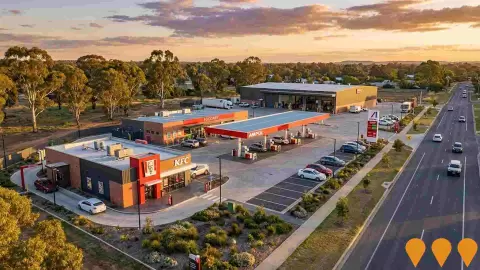
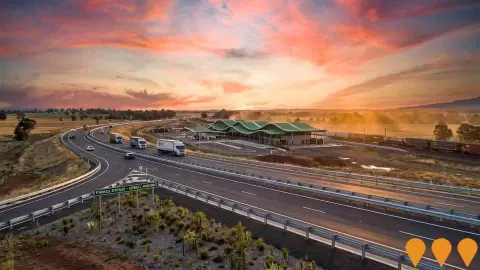
Stage two development of the Homemakers Centre featuring a 24/7 service station (Ampol Foodary), convenience store, fast food restaurant (KFC), and fuel service centre, with a $5.4 million investment.

Retail

Daroobalgie Solar Farm
Category: Energy
Stage: Approved | Est. Comp: N/A
Source / Links: Link 1   Link 2  

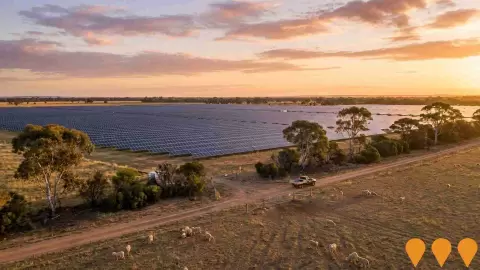
Daroobalgie Solar Farm is a renewable energy development with an expected generating capacity of approximately 100 Megawatts, enough to power roughly 34,000 homes every year. Key features include strong sunlight capture, high potential for connection to nearby substations and transmission lines for export to Australia's National Electricity Market, flat terrain currently used for livestock grazing and cropping, and excellent transport links for road and rail haulage.

Energy

Olympic Highway Safety Improvements
Category: Transport & Logistics
Stage: Construction | Est. Comp: 2026
Source / Links: Link 1   Link 2  

Comprehensive safety upgrade works along the Olympic Highway corridor from Cowra to Table Top, supported by a $26 million funding injection. The project involves overtaking lanes, intersection improvements, shoulder sealing, road widening, and the installation of flexible safety barriers. Recent works have focused on sections near Cowra and Young to reduce crash rates and improve regional traffic flow.

Transport & Logistics

Inland Rail - Stockinbingal to Parkes
Category: Transport & Logistics
Stage: Construction | Est. Comp: 2025
Source / Links: Link 1   Link 2  

The Stockinbingal to Parkes section of the Inland Rail project involves enhancement of the existing 170km rail corridor between Stockinbingal and Parkes to accommodate double-stacked freight trains. Works include upgrading bridges, tracks, installation of a new crossing loop at Daroobalgie, and modifications to structures and utilities. Major construction works by contractor Martinus Rail are nearing completion with handover scheduled for mid-2025.

Transport & Logistics

Cowra Drought Resilience Plan
Category: Environmental & Disaster Management
Stage: Approved | Est. Comp: 2025
Source / Links: Link 1   Link 2  

Comprehensive drought resilience planning initiative including water infrastructure upgrades, emergency water supply arrangements, and community preparedness programs. The plan aims to improve the region's capacity to manage and respond to drought conditions.

Environmental & Disaster Management

Forbes Multipurpose Equestrian Centre
Category: Sports & Recreation
Stage: Completed | Est. Comp: 2024
Source / Links: Link 1   Link 2  

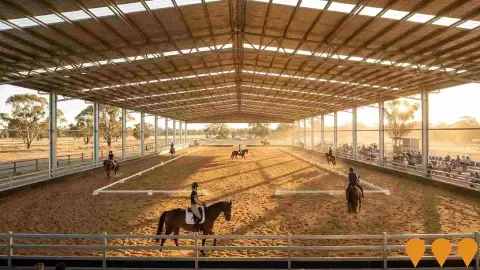
A $3.6 million multipurpose equestrian facility featuring an 80m x 60m undercover sand arena, designed to host various equestrian events from pony club sessions to rodeos, and other non-horse related events. Located near Forbes Racecourse, it serves at least 16 local user groups and boosts the local economy through sports tourism.

Sports & Recreation

Forbes Development Project
Category: Residential Development
Stage: Approved | Est. Comp: N/A
Source / Links: Link 1   Link 2  

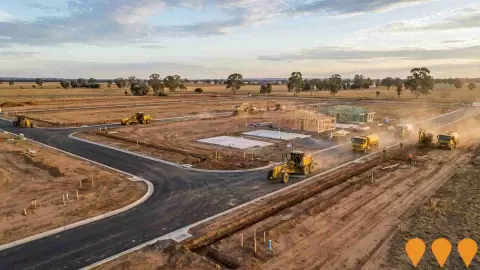
Homes NSW is subdividing 10 hectares of vacant government-owned land to create around 132 new homes in a mix of private, social, and affordable housing to meet growing housing demand in Central West NSW. The development is located just a 5-minute drive from the Forbes town centre.

Residential Development

Employment

Table Chart PROFILE FAQ

Employment performance in Forbes exceeds national averages across key labour market indicators

Forbes maintains a balanced workforce with diverse sector representation, featuring an unemployment rate of 2.3% as of June 2025. In this month, 5,270 residents were employed while the unemployment rate was 1.4 percentage points lower than Rest of NSW's rate of 3.7%.

Workforce participation in Forbes is similar to Rest of NSW's figure of 56.4%. The dominant employment sectors among residents include agriculture, forestry & fishing, health care & social assistance, and education & training. Forbes has a particular specialization in agriculture, forestry & fishing, with an employment share 3.6 times the regional level. Conversely, health care & social assistance employs only 13.2% of local workers, below Rest of NSW's rate of 16.9%.

Many residents commute elsewhere for work, indicated by the count of Census working population to local population. In the 12-month period ending June 2025, Forbes' labour force decreased by 2.4%, accompanied by a 3.2% decrease in employment, leading to an unemployment rate increase of 0.7 percentage points. By comparison, Rest of NSW recorded an employment decline of 0.1%, labour force growth of 0.3%, and an unemployment rise of 0.4 percentage points. Jobs and Skills Australia's national employment forecasts from May 2025 suggest potential future demand within Forbes. These projections estimate national employment growth of 6.6% over five years and 13.7% over ten years, with varying rates across industry sectors. Applying these projections to Forbes' employment mix indicates local growth of approximately 5.6% over five years and 12.1% over ten years.

Frequently Asked Questions - Employment

What is the employment situation in Forbes?
As of June 2025, Forbes has approximately 5,270 employed residents with an unemployment rate of 2.3%. This very low unemployment rate indicates a tight labour market with strong demand for workers. Employment performance is above the national median, showing positive labour market dynamics.
How does Forbes's unemployment rate compare to the broader region?
As of June 2025, the unemployment rate in Forbes stands at 2.3%, which is 1.4 percentage points below Rest of NSW's rate of 3.7%. This lower unemployment rate suggests stronger local employment conditions. For comparison, the national unemployment rate is 4.1%.
What are the major employment sectors in Forbes?
The employment landscape in Forbes is dominated by several key sectors. The largest employers are agriculture, forestry & fishing (18.9% of employment), health care & social assistance (13.2%), and education & training (11.1%). Other significant employers include retail trade and construction.
How has employment changed recently in Forbes?
Over the past year to June 2025, Forbes has experienced a decline in employment, with total jobs decreasing while the labour force decreased. As a result, the unemployment rate has rise. By comparison, Rest of NSW saw employment decreased and its unemployment rate rose.
What is the workforce participation rate in Forbes?
The workforce participation rate in Forbes is 57.0%, which represents the proportion of working-age residents who are either employed or actively seeking work. This moderate participation rate suggests some residents may face barriers to workforce entry. The local rate leading the Rest of NSW average of 56.4%, showing similar workforce dynamics to the broader region.
Which industries are over-represented in Forbes's employment market?
Forbes shows notable specialization in agriculture, forestry & fishing, which employs 18.9% of the local workforce compared to 5.3% regionally. With a local vs regional employment ratio of 3.6, this represents a significant industry cluster that likely serves markets beyond the local area.
What are the employment growth prospects for Forbes?
Based on Jobs and Skills Australia projections applied to Forbes's industry mix, employment is expected to grow by 5.6% over the next five years and 12.1% over ten years. This compares to national growth expectations of 6.6% over five years. Steady growth is anticipated across multiple sectors, providing diverse employment opportunities.
How does the job market in Forbes compare nationally?
Forbes's employment market shows above-average performance nationally, placing in the top half of areas assessed. Employment indicators suggest healthy labour market conditions relative to other regions. Recent job advertisement trends show the broader employment region saw a 15.8% decline, ranking 24.0th out of 37 regions nationally.
What employment opportunities exist for skilled workers in Forbes?
Skilled workers will find good opportunities in Forbes, with skilled sectors accounting for 29.0% of employment. Key sectors for skilled workers include health care & social assistance (13.2%), education & training (11.1%), and professional & technical (3.2%). With projected employment growth of 5.6% over five years, demand for skilled workers is expected to remain strong.

Income

Table Chart PROFILE FAQ

Income levels sit below national averages according to AreaSearch assessment

AreaSearch's latest postcode level ATO data for financial year 2022 shows that income in Forbes is lower than average on a national basis. The median income is $49,571 and the average income stands at $59,241. This contrasts with Rest of NSW's figures where the median income is $49,459 and the average income is $62,998. Based on Wage Price Index growth of 12.61% since financial year 2022, current estimates would be approximately $55,822 (median) and $66,711 (average) as of September 2025. Census 2021 income data shows that household, family and personal incomes in Forbes all fall between the 17th and 31st percentiles nationally. Income brackets indicate that the $1,500 - 2,999 earnings band captures 27.1% of the community (2,770 individuals), similar to the region where 29.9% occupy this bracket. While housing costs are modest with 87.7% of income retained, the total disposable income ranks at just the 22nd percentile nationally.

Frequently Asked Questions - Income

What is the median taxable income in Forbes?
Based on Wage Price Index adjustments to September 2025, the estimated median taxable income in Forbes is approximately $55,822. The official ATO data from FY-22 recorded a median of $49,571.
What is the average taxable income in Forbes?
Based on Wage Price Index adjustments to September 2025, the estimated average taxable income in Forbes is approximately $66,711. The official ATO data from FY-22 recorded an average of $59,241.
How does the median taxable income in Forbes compare to the region?
Based on Wage Price Index adjustments to September 2025, the estimated median taxable income in Forbes is approximately $55,822 compared to $55,696 in Rest of NSW. The official ATO data from FY-22 shows $49,571 and $49,459 respectively.
How does the average taxable income in Forbes compare to the region?
Based on Wage Price Index adjustments to September 2025, the estimated average taxable income in Forbes is approximately $66,711 compared to $70,942 in Rest of NSW. The official ATO data from FY-22 shows $59,241 and $62,998 respectively.
What are the main income cohorts in Forbes according to the 2021 Census?
As per the 2021 Census, the income bracket containing the largest proportion (~27.1% / 2,770 persons) of Forbes's population is the $1,500 - 2,999 cohort.
How do the main income cohorts in Forbes compare to the region?
The largest income cohort in Forbes is the $1,500 - 2,999 group, representing about 27.1% of the population. In comparison, Rest of NSW's largest income cohort is the $1,500 - 2,999 group, representing 29.9% of its population, according to the 2021 Census.
What is the median household income in Forbes according to the 2021 Census?
The 2021 Census data indicates that the median household income in Forbes is $1,257/wk.
What is the median family income in Forbes according to the 2021 Census?
According to the 2021 Census, the median family income in Forbes is $1,688/wk.
What is the median personal income in Forbes according to the 2021 Census?
The 2021 Census shows that the median personal income in Forbes is $714/wk.
How does Forbes's income rank nationally?
According to AreaSearch's aggregation of the latest postcode level ATO data released for FY-22, Forbes had a median income among taxpayers of $49,571 with the average level standing at $59,241. This is below the national average and compares to levels of $49,459 and $62,998 across Rest of NSW respectively. Based on Wage Price Index growth of 12.61% since FY-22, current estimates would be approximately $55,822 (median) and $66,711 (average) as of September 2025.
What is the disposable income in Forbes?
The estimated disposable income in Forbes is $4,778 per year according to AreaSearch analysis.
How does Forbes's disposable income compare to the region?
Forbes's disposable income is $4,778 compared to $5,252 for Rest of NSW, based on AreaSearch analysis.

Housing

Table Chart PROFILE FAQ

Forbes is characterized by a predominantly suburban housing profile, with a higher proportion of rental properties than the broader region

Forbes' dwelling structures, as per the latest Census, consisted of 90.2% houses and 9.8% other dwellings (semi-detached, apartments, 'other' dwellings), compared to Non-Metro NSW's 92.0% houses and 8.0% other dwellings. Home ownership in Forbes stood at 40.9%, with mortgaged dwellings at 31.2% and rented ones at 27.8%. The median monthly mortgage repayment was $1,257, exceeding Non-Metro NSW's average of $1,200. The median weekly rent in Forbes was $230, higher than Non-Metro NSW's figure of $220. Nationally, Forbes' mortgage repayments were lower at $1,257 compared to the Australian average of $1,863, and rents were substantially lower at $230 versus the national figure of $375.

Frequently Asked Questions - Housing

What percentage of homes are owned vs rented in Forbes?
In Forbes, 40.9% of homes are owned outright, 31.2% are owned with a mortgage, and 27.8% are rented.
What percentage of dwellings in Forbes are houses?
According to the latest data, 90.2% of dwellings in Forbes are houses.
What percentage of dwellings in Forbes are apartments or units?
In Forbes, 4.3% of dwellings are apartments or units, with an additional 4.3% being semi-detached dwellings.
What is the level of outright home ownership in Forbes?
Outright home ownership in Forbes stands at 40.9%, compared to 44.4% in Rest of NSW.
What is the median monthly mortgage repayment in Forbes?
The median monthly mortgage repayment in Forbes is $1,257, compared to $1,200 in Rest of NSW.
What is the median weekly rent in Forbes?
The median weekly rent in Forbes is $230, compared to $220 in Rest of NSW.
What is the distribution of rental prices in Forbes?
In Forbes, 18.0% of rentals are $0-149/week, 70.9% are $150-349/week, 10.8% are $350-649/week, 0.0% are $650-949/week, and 0.3% are $950+/week.
What is the average monthly housing cost in Forbes?
The aggregate monthly housing cost in Forbes is $669, which represents the average monthly cost across all housing types.
What percentage of income do residents spend on housing?
In Forbes, households with mortgages typically spend 23.1% of their income on mortgage repayments, while renters spend 18.3% of their income on rent.
How crowded are homes in Forbes?
The average persons per bedroom ratio in Forbes is 0.7, indicating the level of household density.
How does housing affordability in Forbes compare to the region?
Housing affordability in Forbes shows mortgage holders spending 23.1% of income on repayments (vs 22.8% regionally), while renters spend 18.3% of income on rent (vs 18.1% regionally).
What types of dwellings are most common in Forbes?
The dwelling mix in Forbes consists of 90.2% detached houses, 4.3% semi-detached dwellings, 4.3% apartments, and 1.3% other dwelling types.
What is the weighted average housing cost based on tenure mix in Forbes?
Factoring in the ownership distribution, the weighted average monthly housing cost is approximately $669. This accounts for outright owners paying no housing costs, mortgage holders paying $1,257.0/month, and renters paying $996/month.
How affordable is housing in Forbes relative to local incomes?
Housing in Forbes consumes approximately 12.3% of median household income ($5,443 monthly), indicating costs are highly affordable. The generally accepted benchmark is that housing should not exceed 30% of household income.
How do proposed developments compare to existing housing types in Forbes?
Recent development applications in Forbes show attached dwellings contributing 14% of approvals compared to 10% of existing stock, while detached houses represent 86% of applications versus 90% of current dwellings. This suggests development patterns consistent with existing housing mix. Density increases remain below national trends.

Household Composition

Table Chart PROFILE FAQ

Forbes features high concentrations of lone person households, with a fairly typical median household size

Family households constitute 66.7% of all households, including 23.7% couples with children, 30.4% couples without children, and 11.7% single parent families. Non-family households comprise the remaining 33.3%, with lone person households at 31.1% and group households making up 2.2% of the total. The median household size is 2.3 people, which aligns with the average in the Rest of NSW.

Frequently Asked Questions - Households

How many households are in Forbes?
As of the 2021 Census, Forbes had 3,805 households. Based on population growth patterns, this has grown by approximately 2.0% to an estimated 3,882 households today.
What is the typical household size?
The median household size in Forbes is 2.3 people. This compares to 2.3 in Rest of NSW and reflects the area's household composition mix.
What types of households are most common?
Family households dominate at 66.7% of all households. The remaining households consist of lone person households (31.1%), group households (2.2%), and other household types (0.0%).
How are families structured in the area?
Among the 2,537 family households, 23.7% are couples with children, 30.4% are couples without children at home, and 11.7% are single parent families. This mix shapes local demand for schools, family services, and housing types.
How does Forbes compare to regional household patterns?
Compared to Rest of NSW, Forbes shows distinct household patterns. This family-oriented profile influences local demand for family homes, schools, and children's services.
What is the average family size?
Families in Forbes have an average of 2.1 children, matching the Rest of NSW average of 2.1. This influences local demand for child-related services and larger family homes.
What are the marriage patterns in Forbes?
Marriage patterns reveal 46.7% of the adult population are currently married, while 33.1% have never married. This compares to 46.3% married and 32.8% never married across Rest of NSW.
How significant are single-person households?
Single-person households represent 31.1% of all households in Forbes, similar to the regional average of 31.7%. This affects demand for smaller dwellings and single-person accommodation.
Are shared living arrangements common?
Group households (unrelated people sharing) account for 2.2% of households, well below the Rest of NSW average of 2.3%. This low rate suggests limited student or young professional shared accommodation.
Loading household composition data...

Local Schools & Education

Table Chart PROFILE FAQ

Forbes faces educational challenges, with performance metrics placing it in the bottom quartile of areas assessed nationally

Forbes faces educational challenges, with its university qualification rate at 15.5%, significantly lower than NSW's average of 32.2%. Bachelor degrees are the most common at 11.7%, followed by postgraduate qualifications (2.3%) and graduate diplomas (1.5%). Vocational credentials are prominent, with 40.3% of residents aged 15+ holding them - advanced diplomas at 8.8% and certificates at 31.5%. Educational participation is high, with 30.4% of residents currently enrolled in formal education: 12.2% in primary, 8.6% in secondary, and 2.5% in tertiary education.

Forbes operates a robust network of 8 schools educating approximately 2,080 students. School capacity exceeds typical residential needs (20.3 places per 100 residents vs regional average of 16.0), indicating the area serves as an educational center for the broader region.

Frequently Asked Questions - Education

What percentage of people in Forbes have university qualifications?
15.5% of people aged 15 and over in Forbes have university qualifications, compared to 14.7% in the broader region.
What percentage of people in Forbes have no formal qualifications?
44.1% of people aged 15 and over in Forbes have no formal qualifications, compared to 45.6% regionally.
How does Forbes's education level compare to national averages?
Forbes ranks in the 17th percentile nationally for education based on AreaSearch's analysis of qualification and performance metrics.
What types of qualifications are most common in Forbes?
The most common qualifications in Forbes are: Certificate (31.5%), Bachelor Degree (11.7%), Advanced Diploma (8.8%).
What proportion of Forbes's population is currently attending educational institutions?
30.4% of the population in Forbes is currently engaged in formal education, with 12.2% in primary school, 8.6% in secondary school, 2.5% at university.
What is the ICSEA score for schools in Forbes?
The average ICSEA (Index of Community Socio-Educational Advantage) score for schools in Forbes is 936, indicating below-average socio-educational advantage compared to the national average of 1000.
How many schools are located within Forbes?
There are 8 schools within Forbes, with a combined enrollment of approximately 2,080 students.
What types of schools are available in Forbes?
Forbes includes 6 primary schools, 2 secondary schools.

Schools Detail

Nearby Services & Amenities

PROFILE FAQ

Transport

Table Chart PROFILE FAQ

Transport servicing is low compared to other areas nationally based on assessment of service frequency, route connectivity and accessibility

Forbes has 865 active public transport stops offering a mix of train and bus services. These stops are served by 45 individual routes that collectively provide 527 weekly passenger trips. Transport accessibility is rated excellent with residents typically located 115 meters from the nearest stop.

Service frequency averages 75 trips per day across all routes, equating to approximately 0 weekly trips per individual stop.

Frequently Asked Questions - Transport

How many public transport stops are in Forbes?
There are 865 public transport stops within Forbes.
How frequent are the transport services in Forbes?
Forbes has 527 weekly trips across 45 routes, averaging 75 trips per day.
How far are residents from public transport in Forbes?
On average, residential properties are 115 meters from the nearest transport stop.

Transport Stops Detail

Health

Table Chart PROFILE FAQ

Health performance in Forbes is well below average with prevalence of common health conditions notable across both younger and older age cohorts

Forbes faces significant health challenges, with common conditions prevalent among both younger and older age groups. Private health cover is relatively low at approximately 49% of Forbes' total population (~5,019 people), compared to the national average of 55.3%.

The most common medical conditions are arthritis (impacting 10.7% of residents) and mental health issues (8.3%), while 63.6% declare themselves completely clear of medical ailments, slightly higher than the Rest of NSW's 62.4%. Forbes has a high proportion of seniors aged 65 and over at 23.1% (2,364 people), with their health outcomes presenting challenges broadly in line with the general population's profile.

Frequently Asked Questions - Health

How many people in Forbes have private health insurance?
Around 49.1% of people in Forbes are covered by private health insurance, which compares to 48.3% in the broader region of Rest of NSW.
What percentage of the population requires ongoing medical assistance in Forbes?
In Forbes, 6.2% of the population is identified as requiring ongoing medical assistance. This figure is slightly different from the regional average, where 7.0% of people in Rest of NSW require similar assistance.
How prevalent is asthma in Forbes?
8.2% of people in Forbes are diagnosed with asthma. In comparison, 9.0% of the population across Rest of NSW is affected by asthma.
What percentage of people have diabetes in Forbes?
Diabetes affects 5.6% of the Forbes population, while in the surrounding region, 5.5% of people are diagnosed with diabetes.
What is the percentage of people with heart disease in Forbes?
4.7% of people in Forbes have heart disease. Across the region of Rest of NSW, 4.5% of the population is affected by heart disease.
How does Forbes compare to the region in terms of overall private health coverage?
In Forbes, 49.1% of the population are estimated to have private health insurance. Comparatively, Rest of NSW sees an estimated private health coverage rate of 48.3%.

Cultural Diversity

Table Chart PROFILE FAQ

The latest Census data sees Forbes placing among the least culturally diverse areas in the country when compared across a range of language and cultural background related metrics

Forbes had a lower than average cultural diversity, with 89.3% citizens, 95.2% born in Australia, and 97.6% speaking English only at home. Christianity was the predominant religion, making up 71.2%, compared to 70.4% across Rest of NSW. The top three ancestral groups were Australian (34.3%), English (30.7%), and Irish (9.5%).

Notably, Australian Aboriginal people were overrepresented at 9.0% in Forbes versus 7.9% regionally, while Macedonian was 0.1% versus 0%, and French was 0.4% versus 0.3%.

Frequently Asked Questions - Diversity

What is the level of cultural diversity in Forbes?
Forbes was found to be below average in terms of cultural diversity, with 89.3% of its population being citizens, 95.2% born in Australia, and 97.6% speaking English only at home.
What is the most common religion in Forbes?
The main religion in Forbes was found to be Christianity, which makes up 71.2% of people in Forbes. This compares to 70.4% across Rest of NSW.
What are the top countries of origin in Forbes?
In terms of ancestry (country of birth of parents), the top three represented groups in Forbes are Australian, comprising 34.3% of the population, English, comprising 30.7% of the population, and Irish, comprising 9.5% of the population. Additionally, there are notable divergences in the representation of certain other ethnic groups: Australian Aboriginal is notably overrepresented at 9.0% of Forbes (vs 7.9% regionally), Macedonian at 0.1% (vs 0.0%) and French at 0.4% (vs 0.3%).
How does the percentage of people born overseas compare to the regional average?
4.8% of the Forbes population was born overseas, compared to 6.3% regionally.
What percentage of the Forbes population speaks a language other than English at home?
2.4% of the population in Forbes speaks a language other than English at home, compared to 3.3% in the wider region.
How many people in Forbes identify as Australian Aboriginal?
9.0% of the Forbes population identifies as Australian Aboriginal, compared to 7.9% in the region.
What is the citizenship status of the population in Forbes?
89.3% of the Forbes population holds citizenship, compared to 89.3% in the wider region.

Age

Table Chart PROFILE FAQ

Forbes hosts an older demographic, ranking in the top quartile nationwide

Forbes has a median age of 43, which is equal to that of Rest of NSW and higher than the national average of 38. The age profile shows that those aged 5-14 years make up 13.4% of the population, while the 35-44 group constitutes 10.4%. Since the 2021 Census, the proportion of people aged 25 to 34 has increased from 10.7% to 11.5%, while the percentage of those aged 65 to 74 has decreased from 12.2% to 11.4%. By 2041, demographic projections indicate significant shifts in Forbes's age structure. The 45-54 group is expected to grow by 24%, reaching 1,412 people from the current 1,135. Conversely, population declines are projected for the 5-14 and 55-64 age groups.

Frequently Asked Questions - Age

What is the median age in Forbes?
According to the latest data, the median age in Forbes is 43 years.
How does Forbes's median age compare to broader areas?
At 43 years, Forbes is equal to the Rest of NSW average and 5 years older than the national average (38 years).
What age groups are over-represented in Forbes?
The most over-represented age group in Forbes compared to the Rest of NSW region is the 5 - 14 group, making up 13.4% of the population.
What age groups are under-represented in Forbes?
The most under-represented age group in Forbes compared to the Rest of NSW region is the 35 - 44 group, making up 10.4% of the population.
Are there age groups with notable population variances?
No, the age distribution in Forbes is broadly in line with the Rest of NSW region.
What is the percentage of children (0-14 years) in Forbes?
The percentage of children aged 0-14 years in Forbes is 19.7%.
What is the percentage of older people (65+ years) in Forbes?
The percentage of people aged 65 and over in Forbes is 23.1%.

Nearby Areas