Sinnamon Park

Suburb (SAL)

Greater Brisbane / Centenary


Data Sources ABSValuer GeneralRental BoardACARA Newest Aug 2026 · Refreshed ABS QuickStats SAL32573 How we calculate this
Chart Color Schemes
Loading map data ...
Suburb (SAL) Boundary Analysis

This analysis uses Suburbs and Localities (SAL) boundaries, which can materially differ from Statistical Areas (SA2) even when sharing the same name.

SAL boundaries are defined by Australia Post and the Australian Bureau of Statistics to represent commonly-known suburb names used in postal addresses.

Statistical Areas (SA2) are designed for census data collection and may combine multiple suburbs or use different geographic boundaries. For comprehensive analysis, consider reviewing both boundary types if available.

0 People

est. as @ -- *

2021 Census | -- people

Land Area
--
Land Area
Population Density
--
Density
Unemployment Rate
--
Unemployment
Development
--
Resi Approvals
Get My Report

Sales ActivityProperty Sales Trends in Sinnamon Park

Table Chart PROFILE FAQ

Curious about local property values? Filter the chart to assess the volume and appreciation (including resales) trends and regional comparisons, or scroll to the map below view this information at an individual property level.

Find a Recent Sale
Type Specified (1) | Limit 50

Sales Detail

Loading rental data…

DemographicsPopulation Growth in Sinnamon Park

Table Chart PROFILE FAQ

Sinnamon Park has an estimated 6,539 residents, down from 6,590 at the 2021 Census. The population has thinned by an average 0.5% a year over five years, slower than 95% of areas nationally. That puts 2,232 residents on each square kilometre. Population is estimated from ABS Estimated Resident Population releases and GNAF address data, re-based from the 2021 Census and updated annually.

Detail

Analyzing updates from the ABS for the surrounding region alongside post-Census address validation by AreaSearch, the suburb of Sinnamon Park has a projected population of approximately 6,539 in May 2026. This represents a reduction of 51 residents (0.8%) from the 2021 Census, which recorded 6,590 individuals. This shift is calculated from the resident population of 6,539, which was determined by AreaSearch using the June 2025 ABS ERP publication and 1 newly confirmed address since the Census. This population level translates to a density of 2,231 persons per square kilometer, exceeding the typical ratio found across the country by AreaSearch.

The primary driver of growth in the area was overseas migration, which accounted for roughly 54.0% of the total population increase recently. AreaSearch utilises projections from the ABS and Geoscience Australia for individual SA2 regions, which were published in 2024 using 2022 as a starting point. For any SA2 regions lacking this information, or for periods after 2032, projections from the Queensland State Government released in 2023 and based on 2021 numbers are used instead. Because these state-level figures do not detail age cohorts, AreaSearch distributes growth across age groups based on the 2023 ABS Greater Capital Region projections, which use 2022 data. Looking at future demographic patterns, expansion is projected to align with the bottom quartile of statistical areas nationally, with the suburb of Sinnamon Park forecast to add 41 residents by 2041 under consolidated SA2 projections, representing a total increase of 0.6% over the 16 years.

Frequently Asked Questions - Population

What is the latest population estimate for the suburb of Sinnamon Park?
Total population for the suburb of Sinnamon Park was estimated to be approximately 6,539 as at May 26. This is based upon an estimated resident population of 6,539 from the ABS up to June 2025.
How has the population in the suburb of Sinnamon Park changed since 2021?
The suburb of sinnamon park has lost approximately 51 people and shown a 0.77% decrease from the 6,590 people recorded at the 2021 Census period.
What is the population density in the suburb of Sinnamon Park?
The population density in the suburb of Sinnamon Park is estimated at 2,231 persons per square kilometer based on the latest population estimate.
How much has the population grown over the past 10 years in the suburb of Sinnamon Park?
Over the past 10 years, the population in the suburb of Sinnamon Park has shown a compound annual growth rate of -0.2% per annum.
What are the main drivers of population growth in the suburb of Sinnamon Park?
Population growth in the suburb of Sinnamon Park is driven by: Overseas migration (54.0%), Interstate migration (46.0%), Natural increase (0.0%). The primary driver is Overseas migration, contributing 54.0% of overall population gains.

Residential SupplyHousing Development & Building Approvals in Sinnamon Park

Table Chart PROFILE FAQ

62 new dwellings have been approved in Sinnamon Park over the past five years, an average of 12 a year. That is 1.9 approvals per 1,000 residents. Few approvals have been recorded in the most recent months, well below the longer-run average; the latest ABS periods are still being reported. Figures come from ABS building approvals aggregated to this Suburb (SAL) boundary and are updated monthly as the ABS releases them.

Detail

Based on AreaSearch's allocation of ABS building approval statistics, the suburb of Sinnamon Park averages approximately 12 residential approvals annually, totaling 62 dwellings authorized over the last 5 financial years (FY-21 to FY-25) and none recorded in FY-26. With the population declining recently, this volume of construction has been sufficient in relative terms, presenting a favorable scenario for buyers. Additionally, commercial approvals have reached $16.8 million this financial year, indicating a moderate level of business development. Compared to Greater Brisbane, the suburb of Sinnamon Park shows 102.0% higher residential construction per capita, giving purchasers more options despite a recent slowdown in activity.

However, this level remains below the national average, indicating a mature market and potential development limits. Current construction consists of 14.0% detached houses and 86.0% semi-detached properties or apartments. The preference for higher-density dwellings provides cheaper entry points and draws empty nesters, investors, and first-time buyers. This represents a major shift from the current housing stock (which is 86.0% standalone houses), indicating a lack of vacant land and matching changing lifestyle habits and housing cost constraints. Looking forward, the suburb of Sinnamon Park is projected to increase its population by 41 residents by 2041, according to the latest quarterly estimates from AreaSearch. Current building trends suggest that new housing supply will comfortably satisfy demand, maintaining favorable conditions for buyers and potentially supporting population growth above current forecasts.

Frequently Asked Questions - Development

How many dwelling approvals have occurred in the suburb of Sinnamon Park recently?
Dwelling approval activity in the the suburb of Sinnamon Park area has seen 0 residential approvals over the past two financial years, based on AreaSearch's SA2 aggregation method. The suburb of Sinnamon Park's current population of 6,539 has been supported by 12 approvals on average over recent years.
How does the suburb of Sinnamon Park's development activity compare to the broader region?
The suburb of Sinnamon Park has seen 0.19 approvals per 100 people in recent years, compared to 0.79 approvals in the broader region. This means that one dwelling has been approved for every 0 people in the suburb of Sinnamon Park, compared to one for every 143 in the broader region.
Is the suburb of Sinnamon Park keeping up with housing demand?
With the population expected to increase by 41 people by 2041, around 14 new dwellings will be necessary. Recent approval levels may be insufficient to meet these forecasts, considering the census average of 3.0 persons per dwelling. This indicates potential housing shortages if current approval trends continue.
What has been the trend in development approvals over the past five years in the suburb of Sinnamon Park?
Looking at development activity over the past five years, the suburb of Sinnamon Park's approval levels have been significantly below the yearly average of 12, showing a notable downturn in recent development.
How many dwellings will be needed to accommodate future population growth in the suburb of Sinnamon Park?
The population in the suburb of Sinnamon Park is expected to grow by 41 people by 2041, necessitating approximately 14 new dwellings. This calculation is based on the current census average of 3.0 persons per dwelling in the area.
How does recent development compare to population growth in the suburb of Sinnamon Park?
Over the past five years, the population in the suburb of Sinnamon Park has grown by approximately 336 people, while 62 residential approvals were recorded. This equates to a ratio of 5.4 people added for each new dwelling approval. This high ratio suggests strong population growth relative to housing supply, potentially indicating unmet housing demand.
Are there opportunities for residential developers in the suburb of Sinnamon Park?
With dwelling approval activity running at an average of 12 approvals per year and a population of 6,539
Approvals Pipeline Development applications near Sinnamon Park

Development applications around Sinnamon Park

Development approvals is a new addition to AreaSearch. We’re actively expanding council coverage and refining the dataset — details and statuses for some councils may be partial. Check back regularly for the latest pipeline.
Applications
In this area
Est. Value
Where disclosed
Under Assessment
Awaiting determination
Determined
Approved or decided
Approvals pipeline Status, location, timing and project scale
Search

Loading development applications…

Lodged Address Description Type Distance Status

SOURCE: Planning portals and council registers, compiled by AreaSearch. Distance & bearing measured from the suburb midpoint.

Project PipelineInfrastructure & Major Projects in Sinnamon Park

PROFILE FAQ

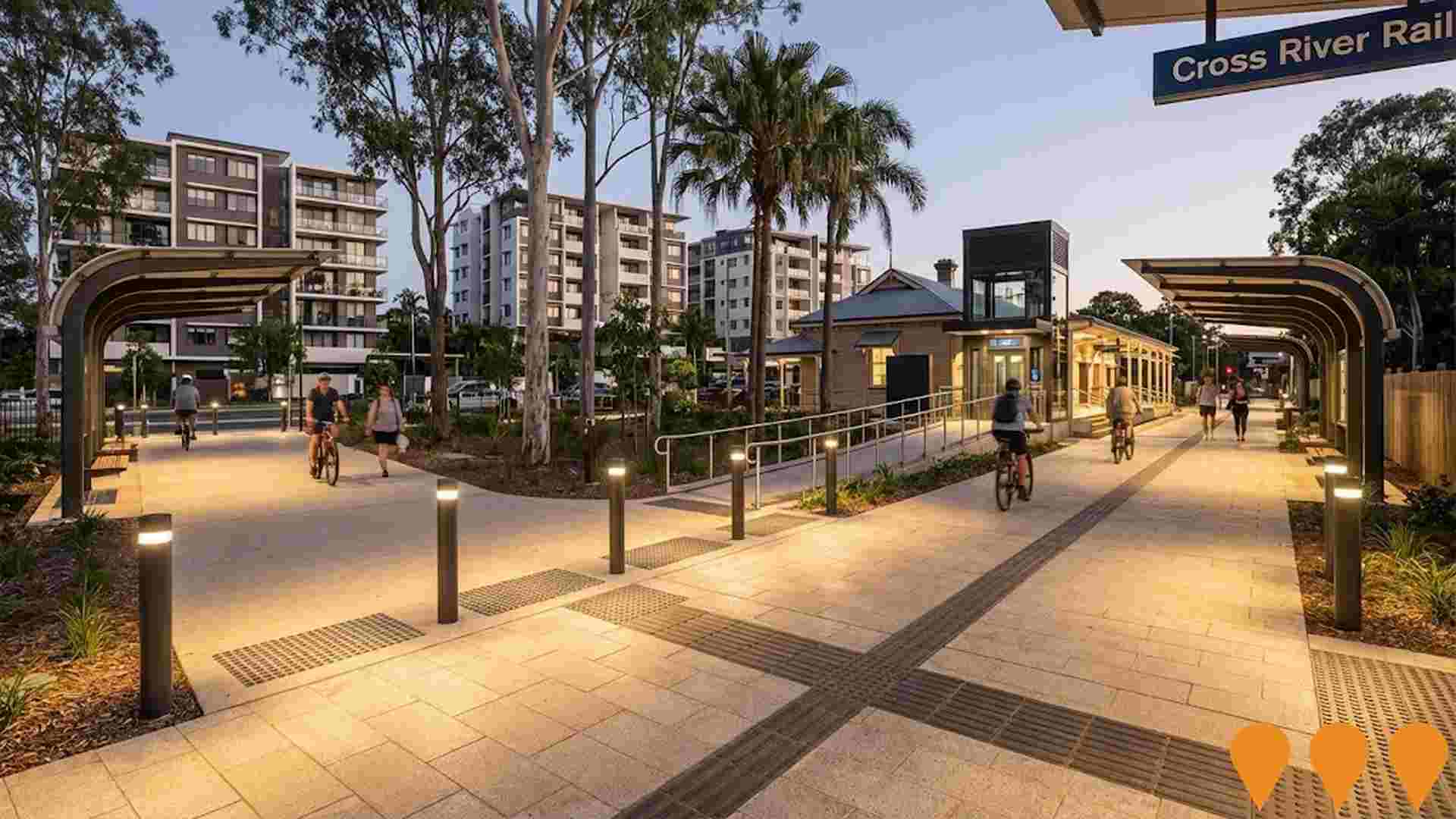
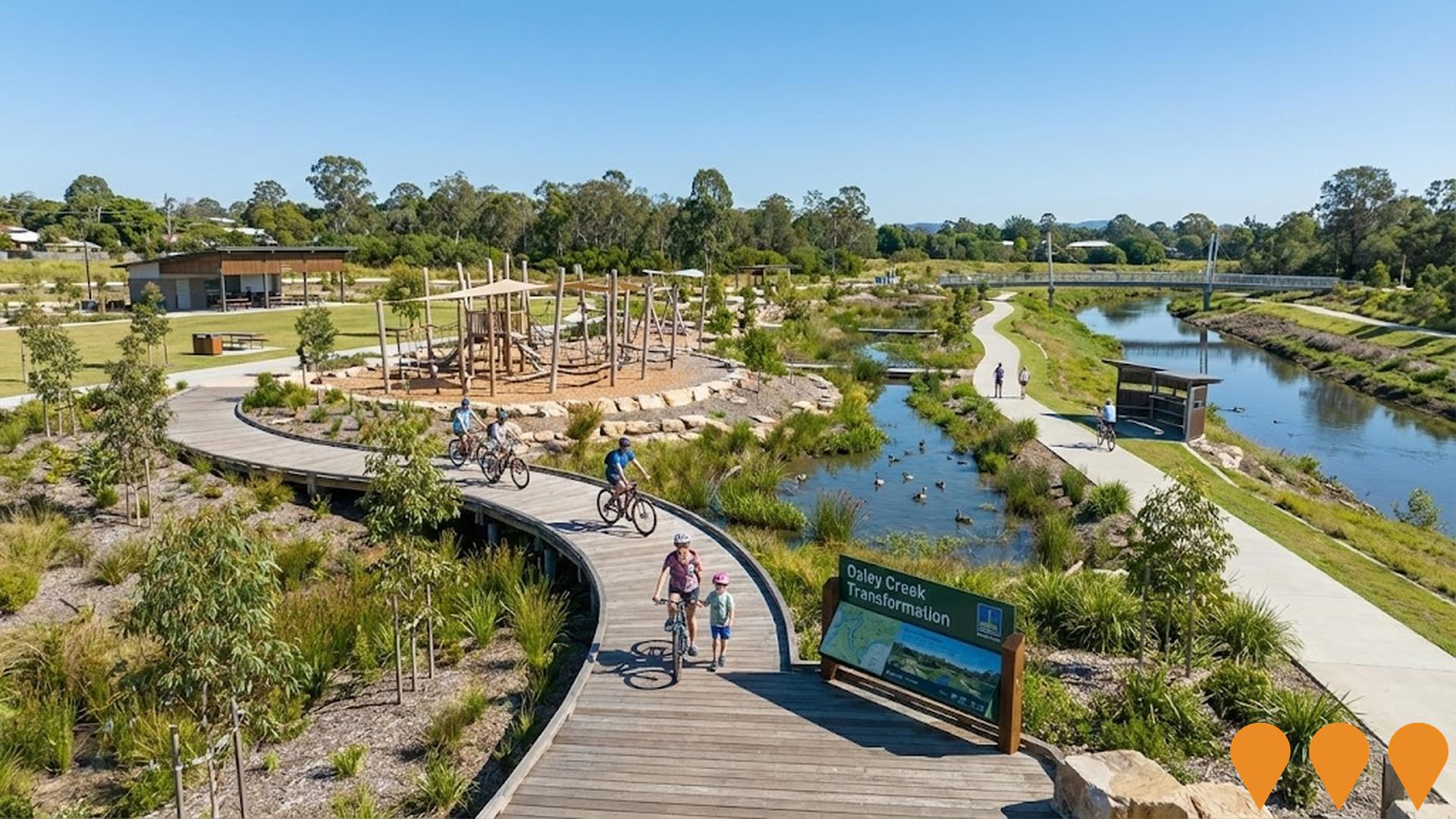
AreaSearch tracks 8 current infrastructure and development projects inside Sinnamon Park, worth an estimated $8.44 billion. A further 35 sit in the immediately surrounding suburbs, taking the tracked pipeline within reach of the area to $26.8 billion. 10 are already under construction and 10 are due for completion within three years. The pipeline spans transport & logistics, residential development and environmental & disaster management. Records are compiled from Infrastructure Australia, state agencies, council planning portals and public announcements, reviewed and updated daily, then ranked by proximity, construction stage, completion horizon and project scale.

Detail

Local infrastructure projects, major works, and urban planning decisions are key drivers of regional growth. AreaSearch has identified a total of 16 projects that are expected to influence the local area. Principal developments include Verandah Estate, Mt Ommaney Shopping Centre Entertainment Precinct, Sinnamon Village Precinct Expansion, and Darra Mixed-Use Commercial, with the most significant projects listed below.

Professional plan users can use the search below to filter and access additional projects.

INFRASTRUCTURE SEARCH
All Selected

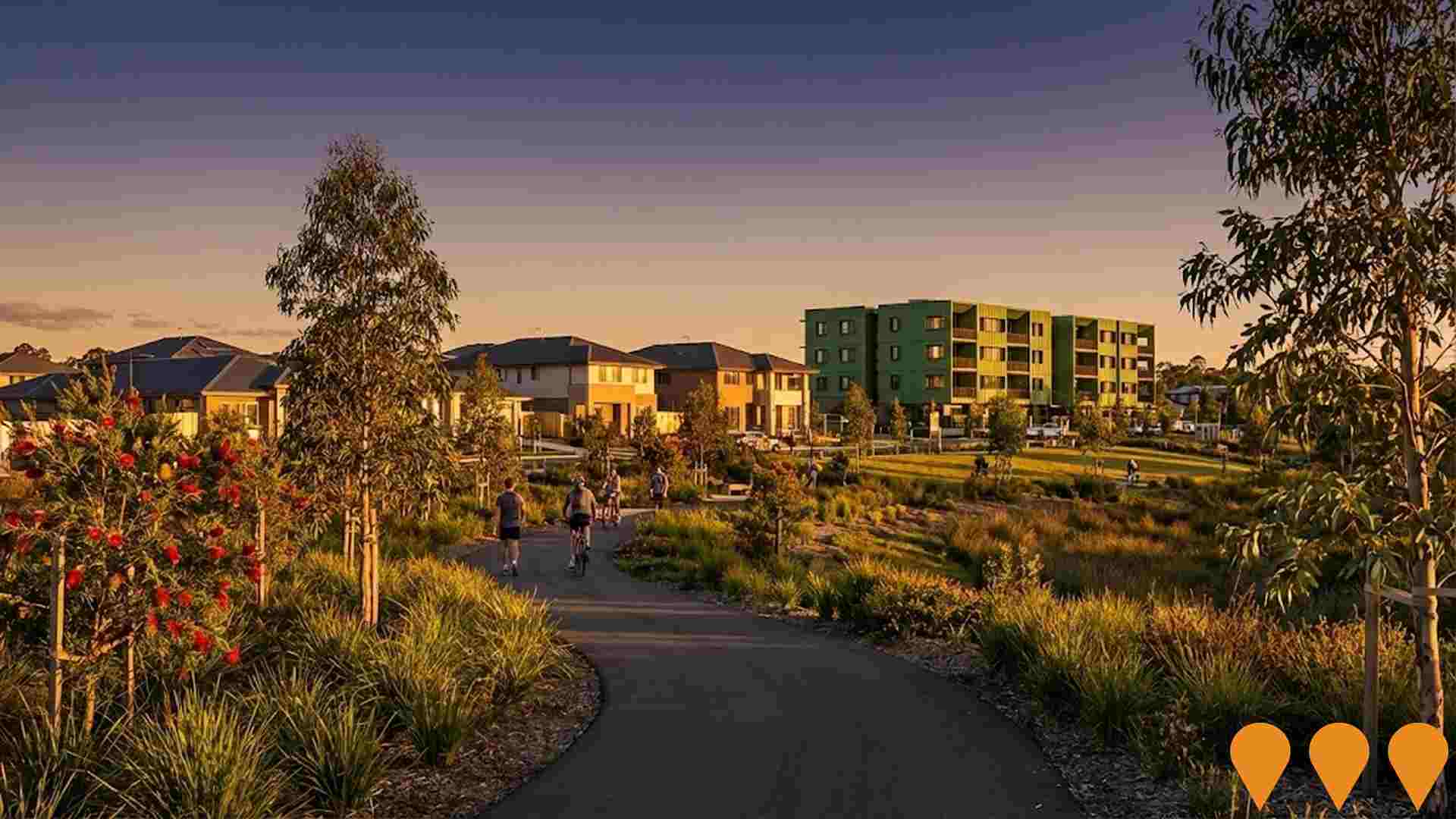
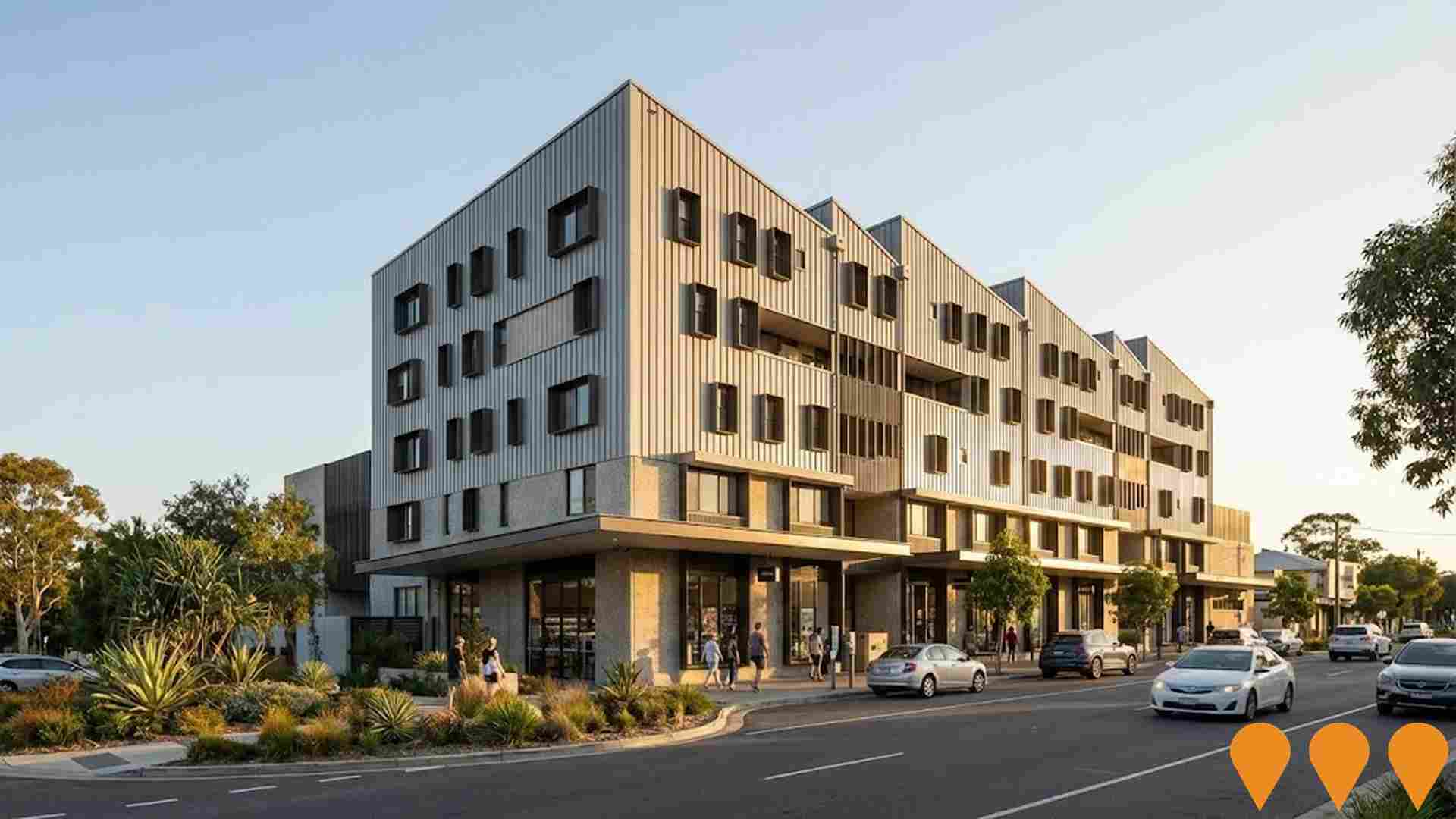
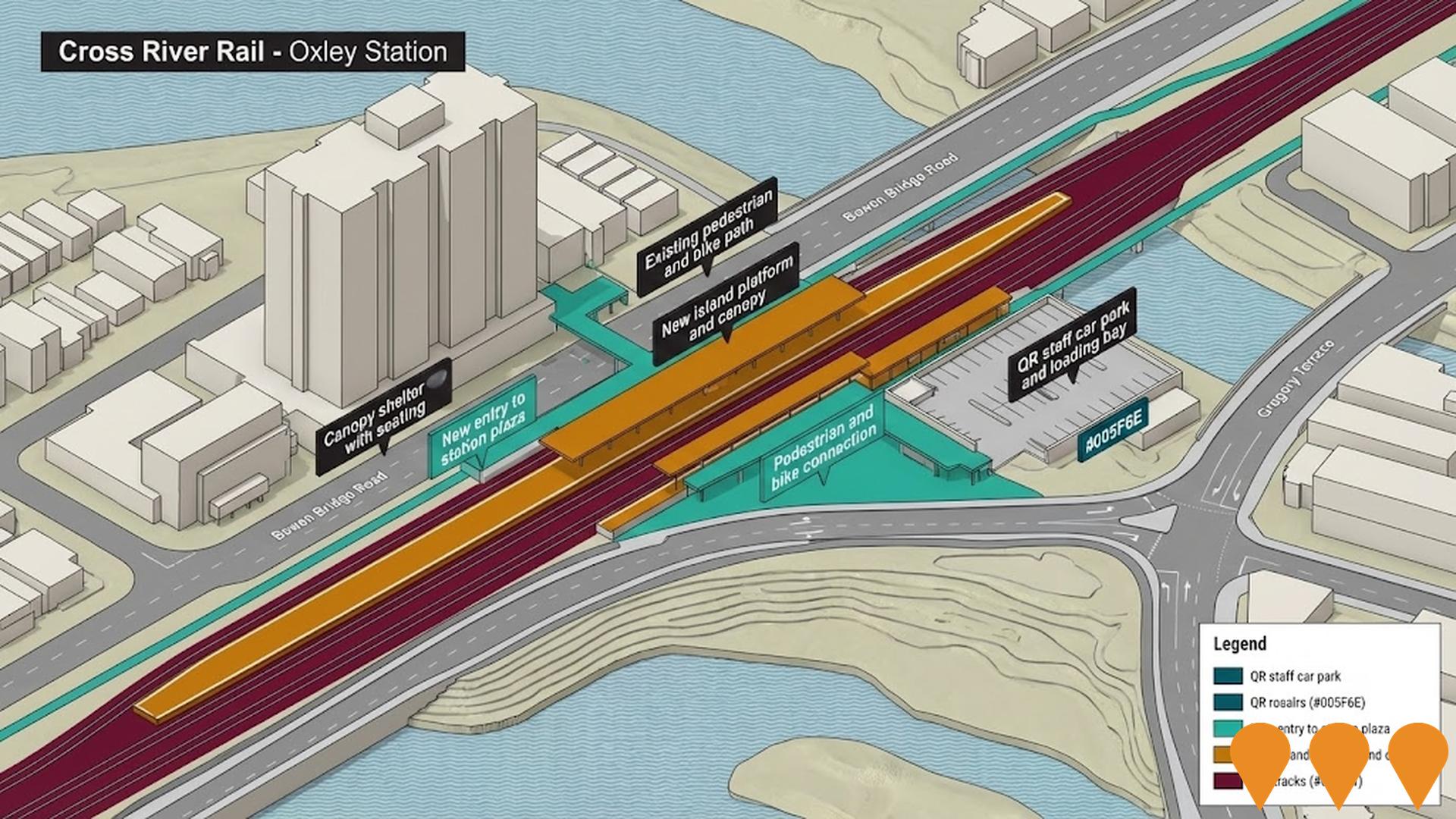
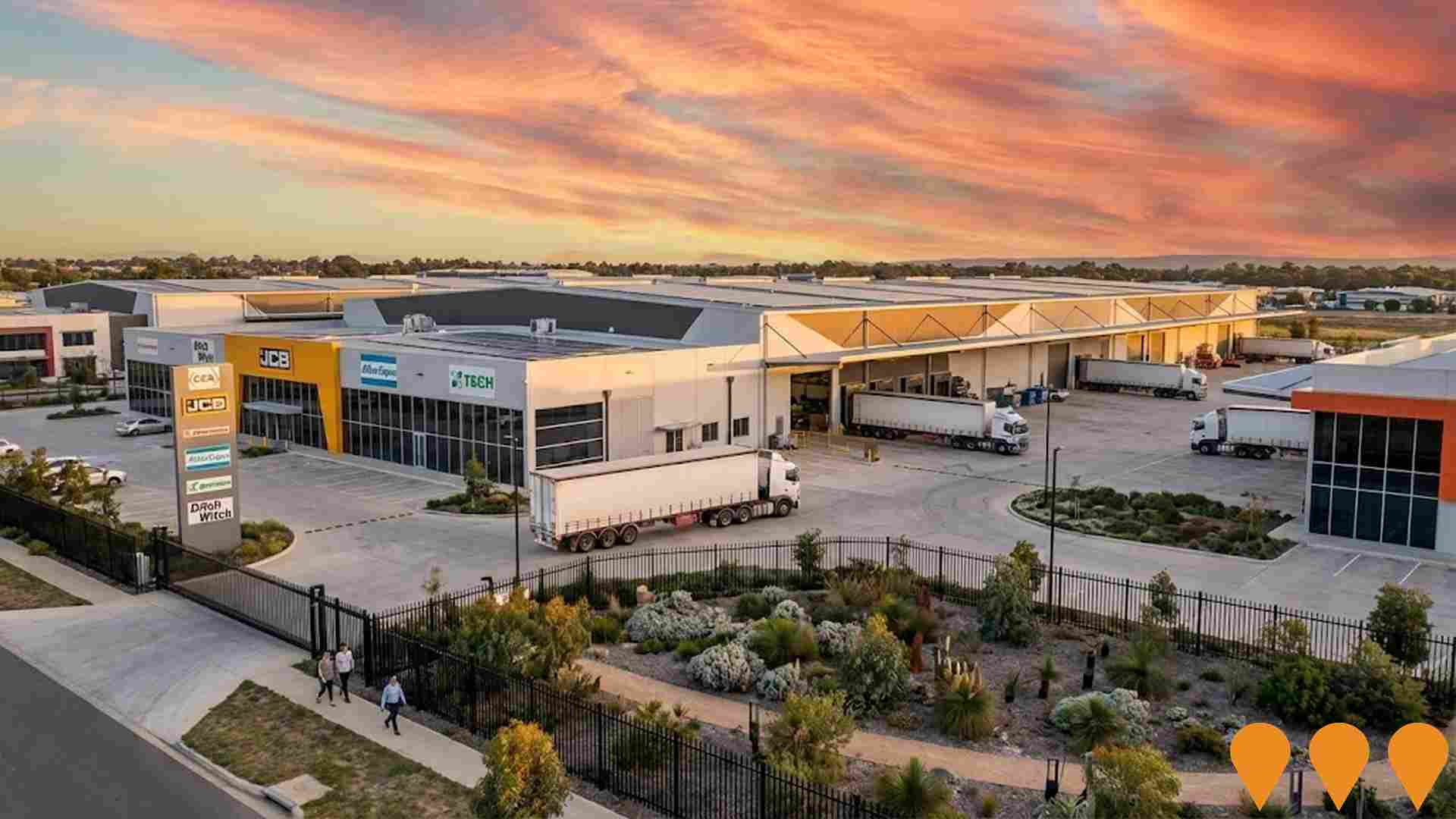
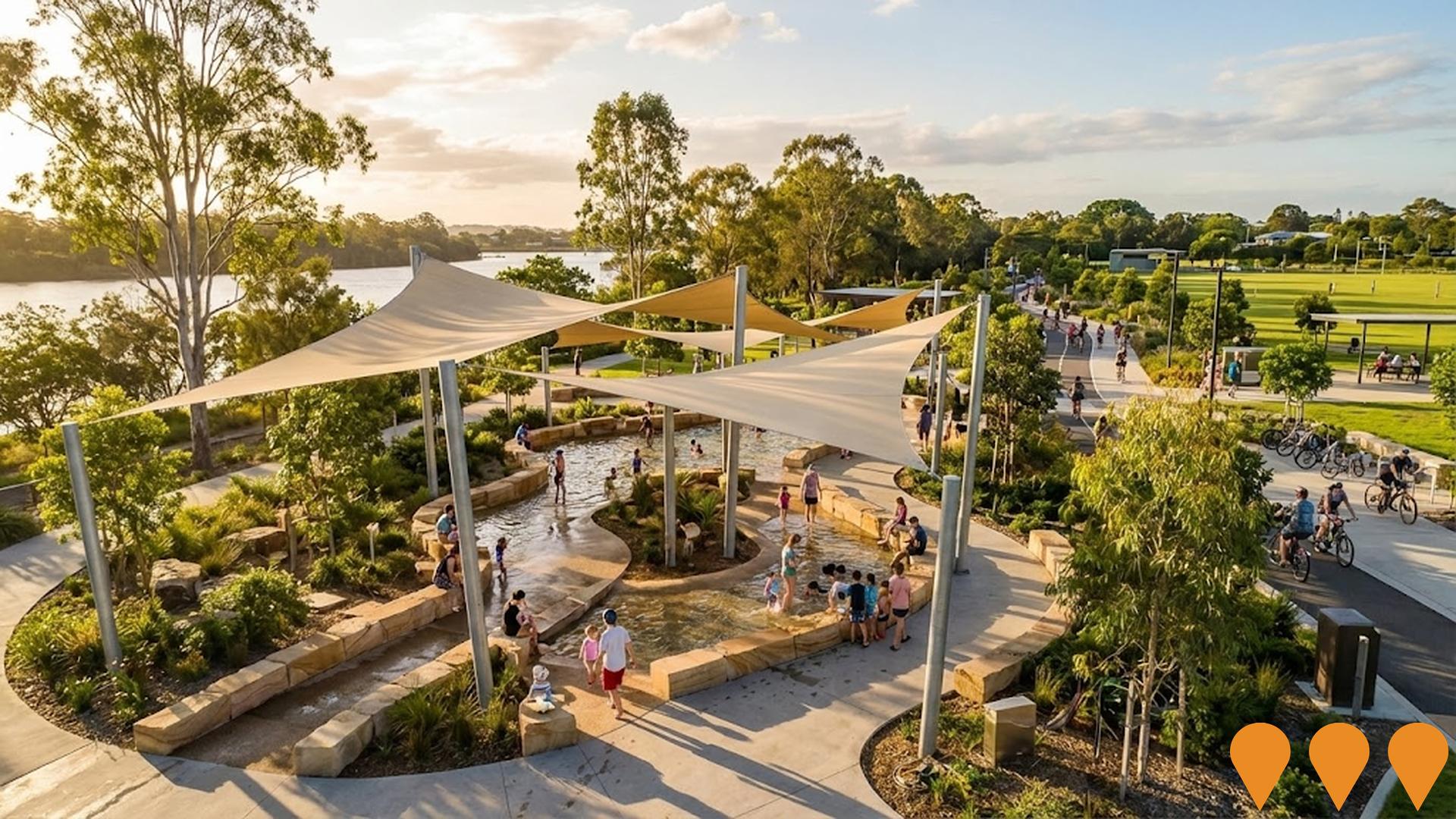
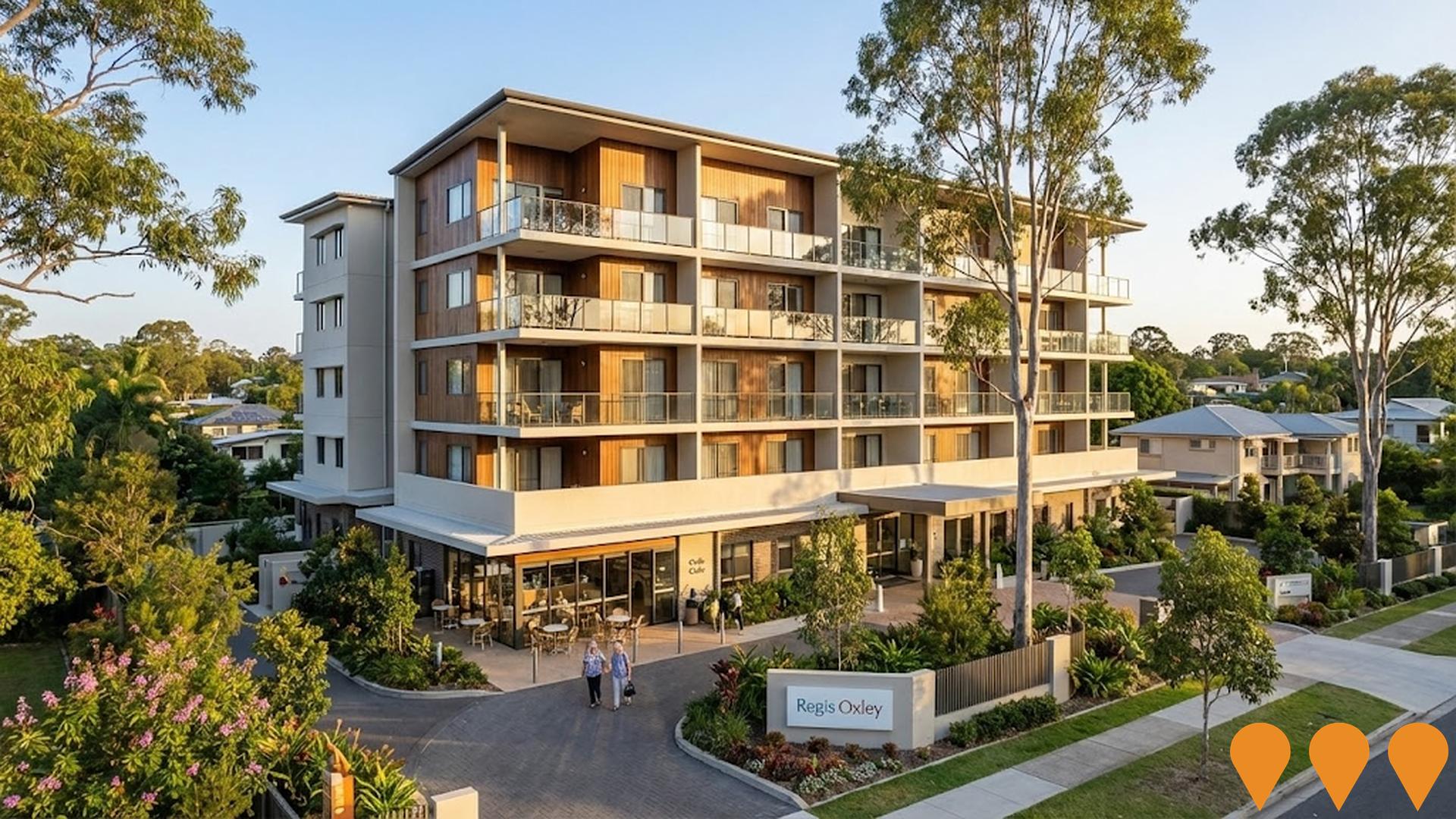
AI Generated Denotes AI-based impression for illustrative purposes only, not to be taken as definitive under any circumstances. Please follow links and conduct other investigations from the project's source for actual imagery. Developers and project owners wishing us to use original imagery please Contact Us and we will do so.

Frequently Asked Questions - Infrastructure

What are some of the major infrastructure and planning changes likely to influence the suburb of Sinnamon Park?
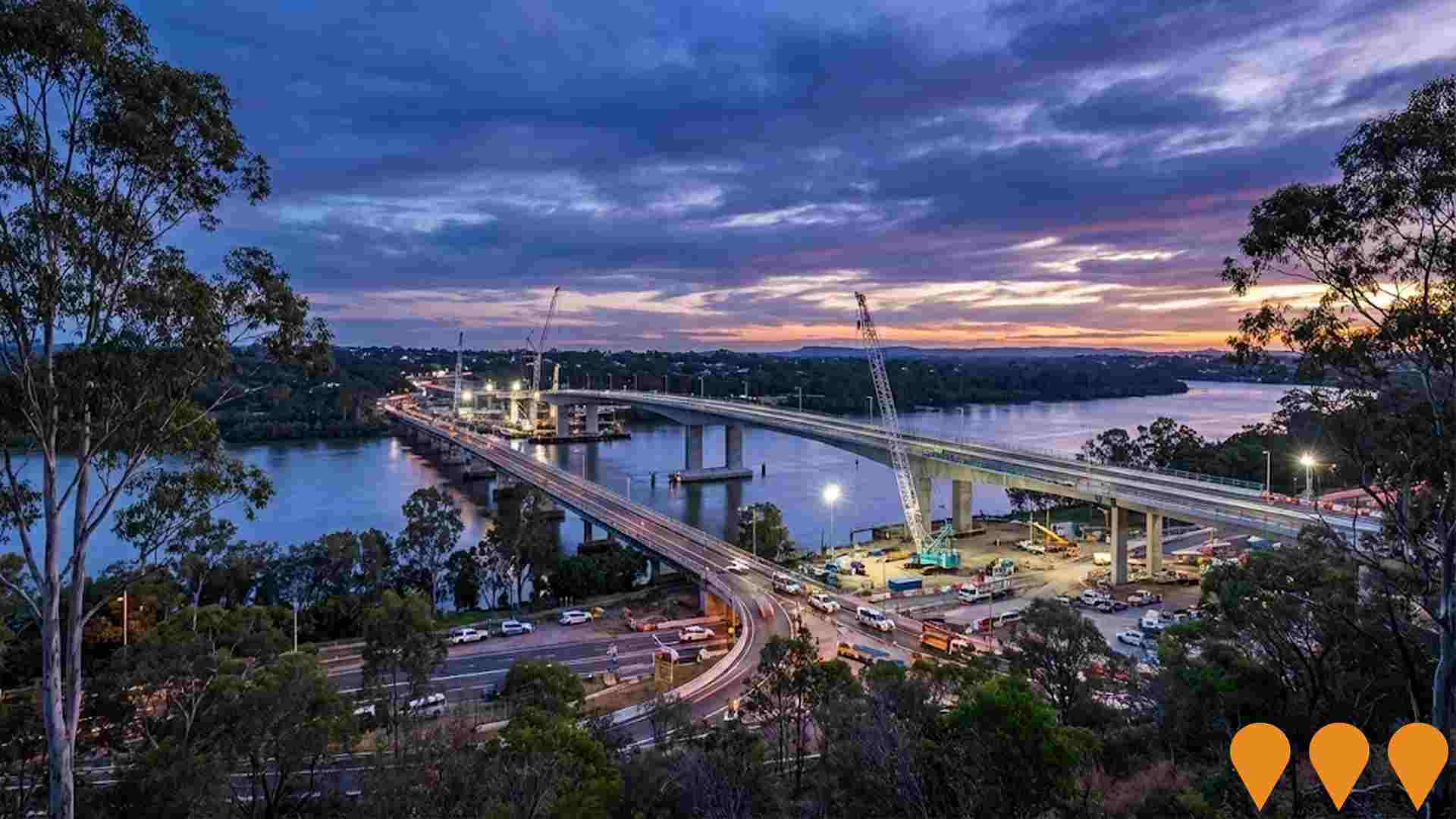
Key infrastructure and planning changes likely to influence the suburb of Sinnamon Park include: Verandah Estate (Construction); Mt Ommaney Shopping Centre Entertainment Precinct (Approved); Sinnamon Village Precinct Expansion (Approved); Darra Mixed-Use Commercial (Construction); and Centenary Bridge Upgrade (Construction). These projects represent significant developments that will shape the area's future infrastructure landscape.
What types of infrastructure projects are impacting the suburb of Sinnamon Park?
Infrastructure development impacting the suburb of Sinnamon Park spans multiple sectors including Residential Development, Transport & Logistics, and Retail, among others.
What is the scale of infrastructure investment impacting the suburb of Sinnamon Park?
Infrastructure investment analysis indicates substantial capital deployment exceeding $12.7 billion in projects that will impact the extended area, with a notable concentration of investment within the immediate the suburb of Sinnamon Park vicinity.
How does the suburb of Sinnamon Park's infrastructure development compare to other areas?
The suburb of Sinnamon Park ranks in the top 10% nationally for infrastructure development, reflecting exceptional investment activity compared to similar areas across the country.
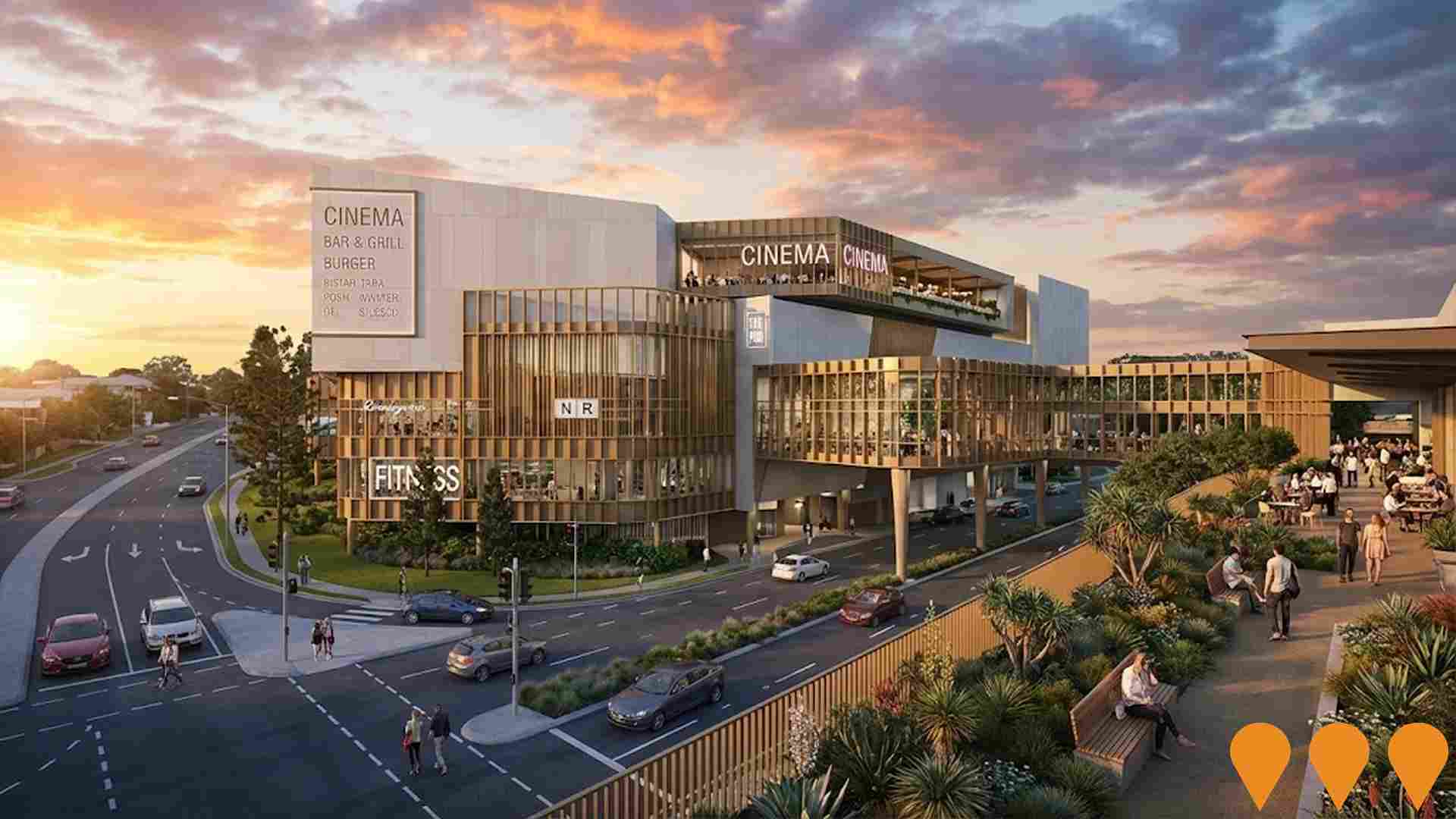
Mt Ommaney Shopping Centre Entertainment Precinct
Category: Retail
Stage: Approved | Est. Comp: 2026

Cinema, dining and entertainment precinct extension to Mt Ommaney Shopping Centre including 6-storey building with cinema, community use and retail tenancies. Features additional gross floor area including multi-screen cinema, gym, dining and entertainment precinct, and rebuilt community centre. Designed by Blight Raynor.
Retail

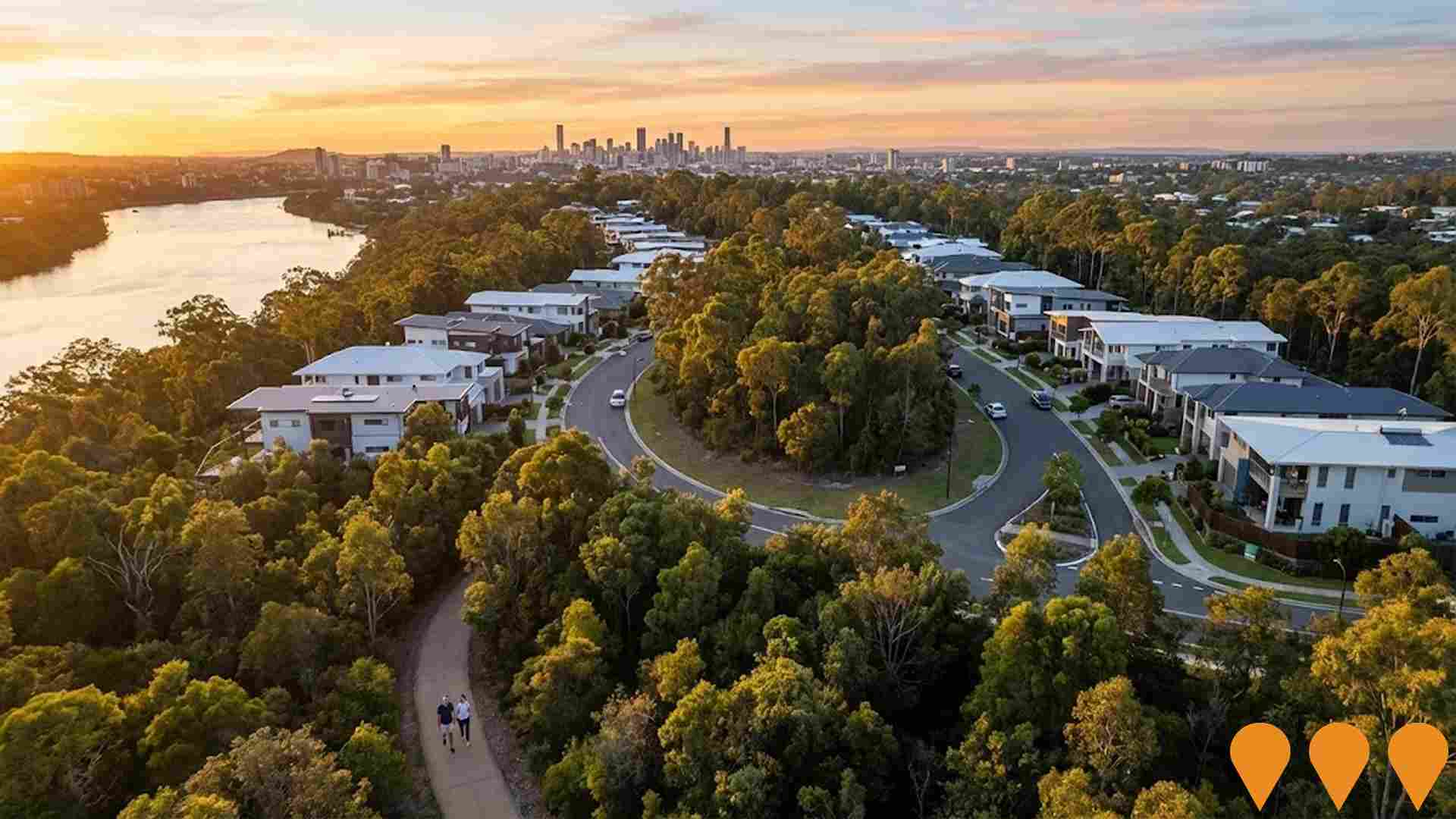
Verandah Estate
Category: Residential Development
Stage: Construction | Est. Comp: 2026
Source / Links: Link 1   Link 2  

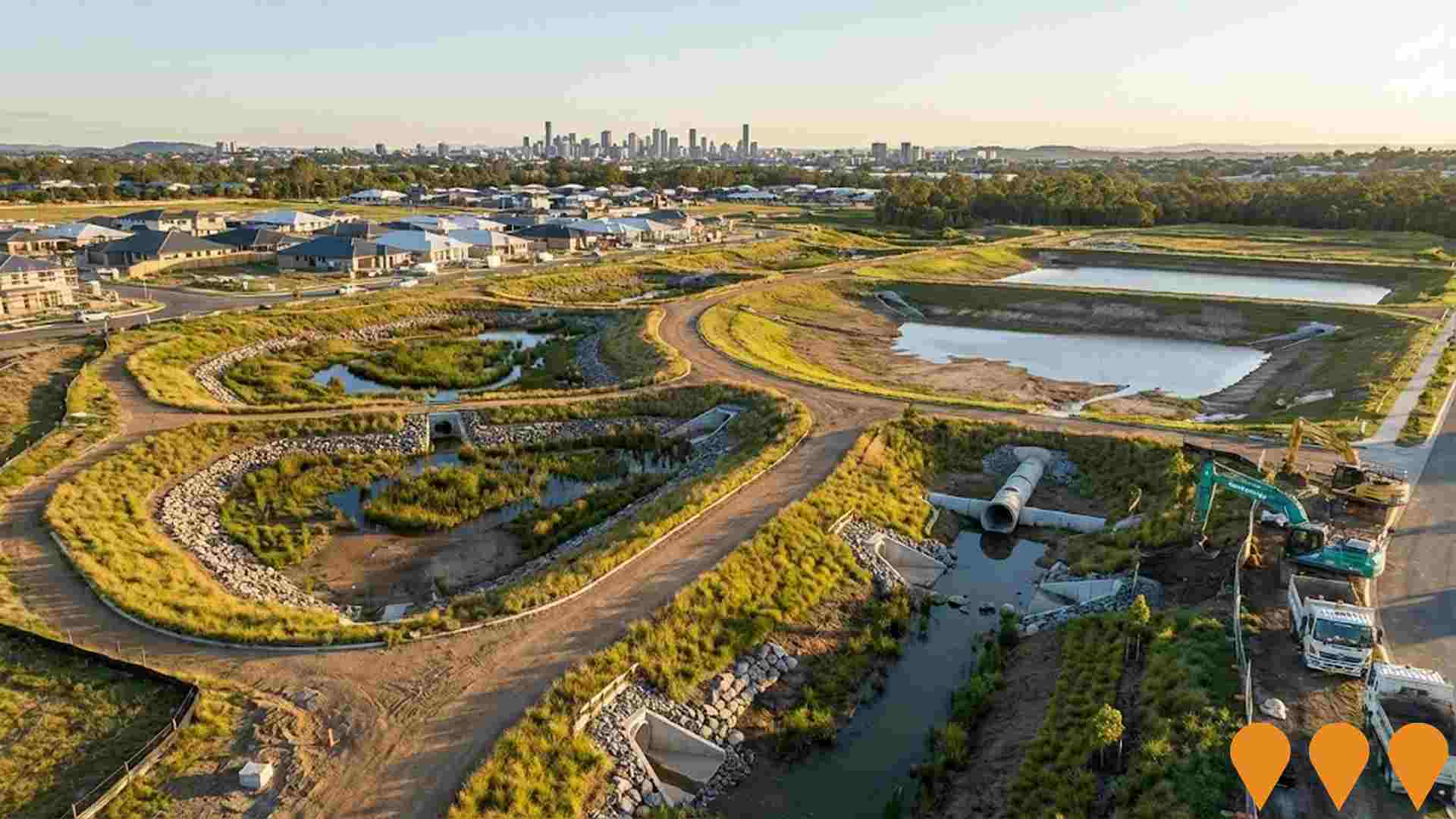
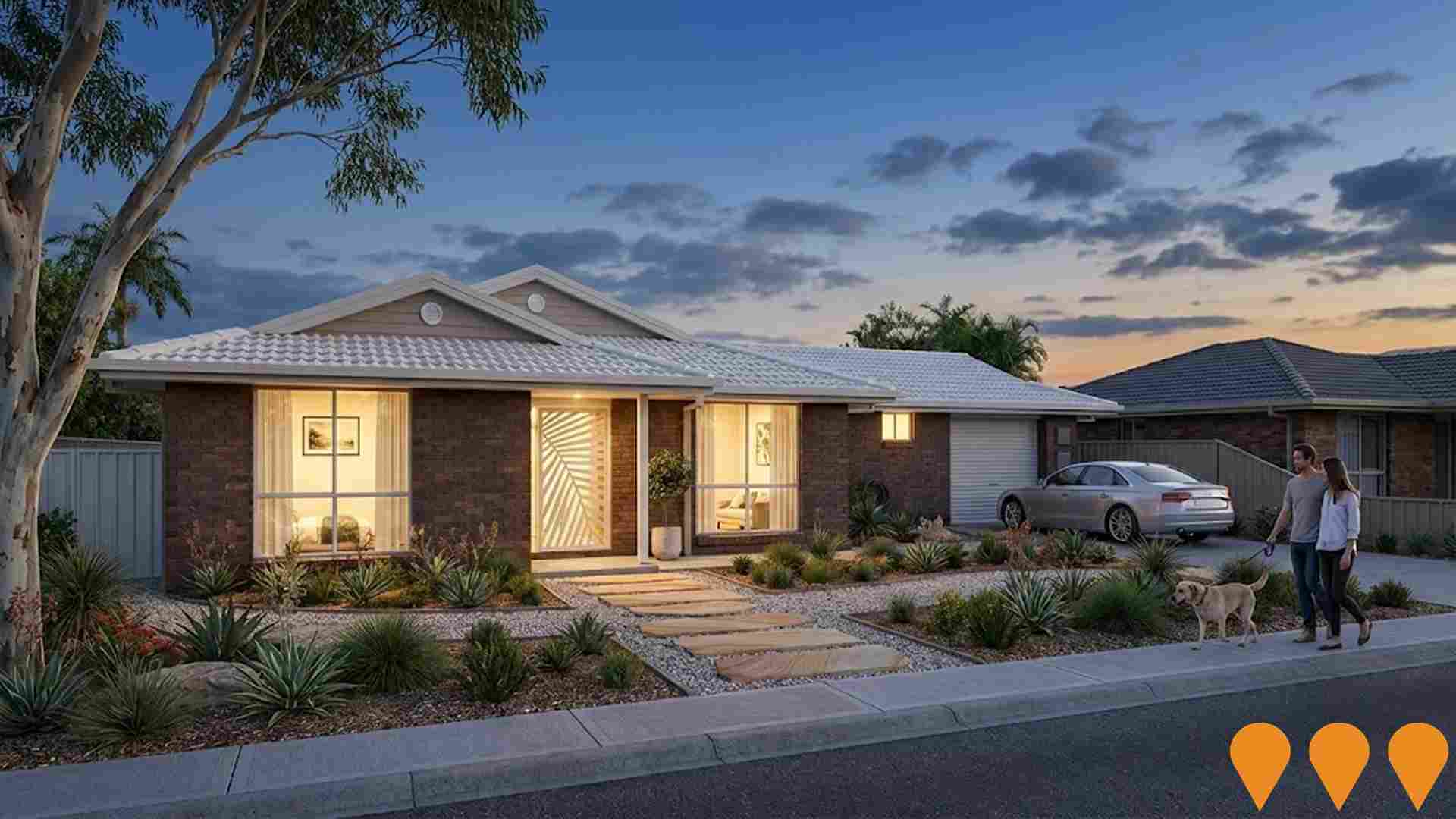
Newest residential estate in Seventeen Mile Rocks featuring contemporary homes on large blocks (875sqm+) surrounded by trees and nature. Estate includes building covenants ensuring homes are designed in harmony with natural environment. Features permanent ridge top reserve and bushwalking tracks to Rocks Riverside Park.
Residential Development

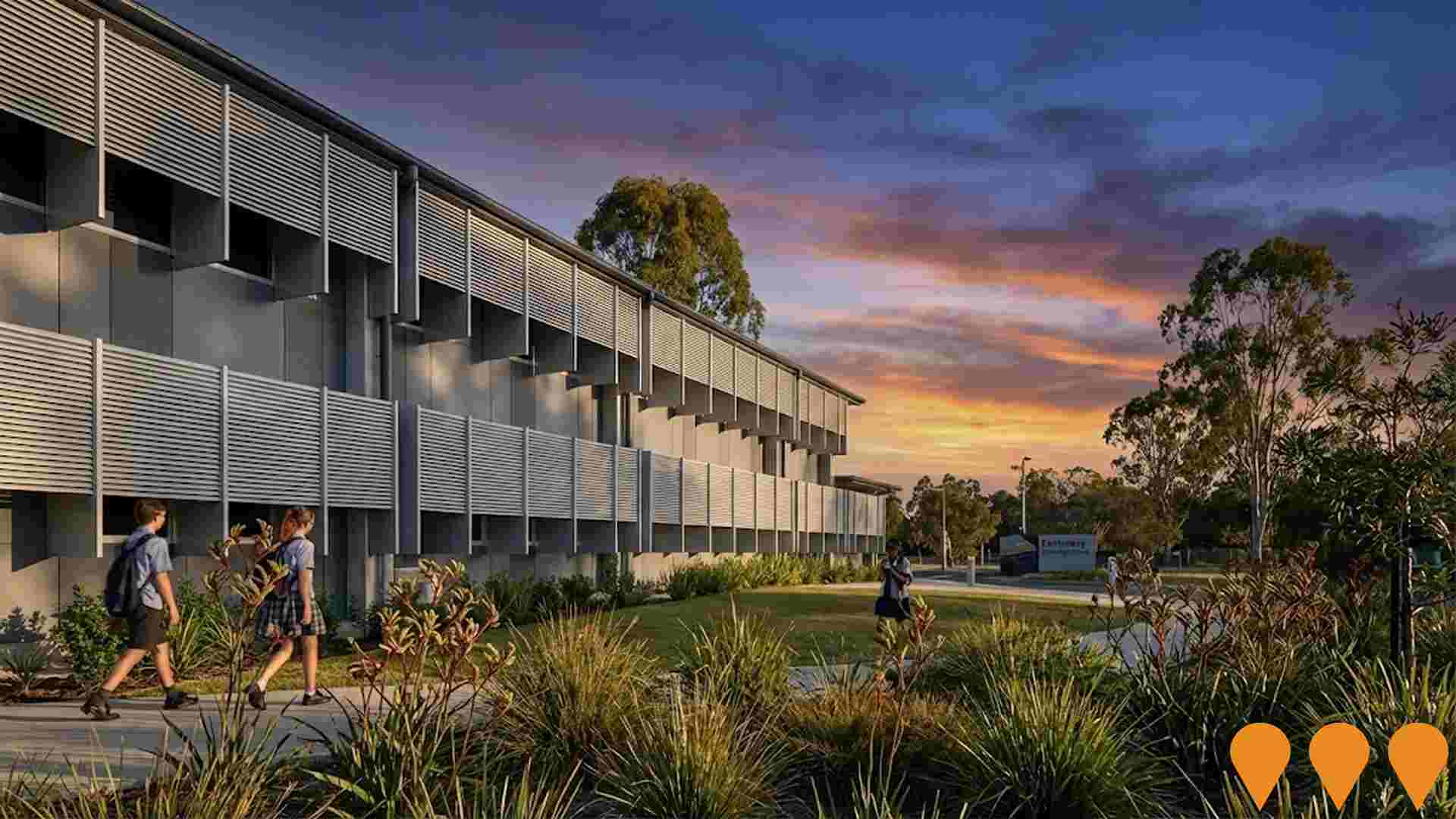
Centenary State High School
Category: Education & Training
Stage: Completed | Est. Comp: 1999
Source / Links: Link 1   Link 2  

High school serving the Centenary suburbs including Jindalee. Opened in 1999 to serve the growing population in the area with modern educational facilities.
Education & Training

Windermere Estate
Category: Residential Development
Stage: Completed | Est. Comp: 2010
Source / Links: Link 1   Link 2  

Exclusive riverside estate featuring premium residential properties with Brisbane River frontage. Part of heritage-listed Sinnamon Farm precinct with luxury homes and parkland access.
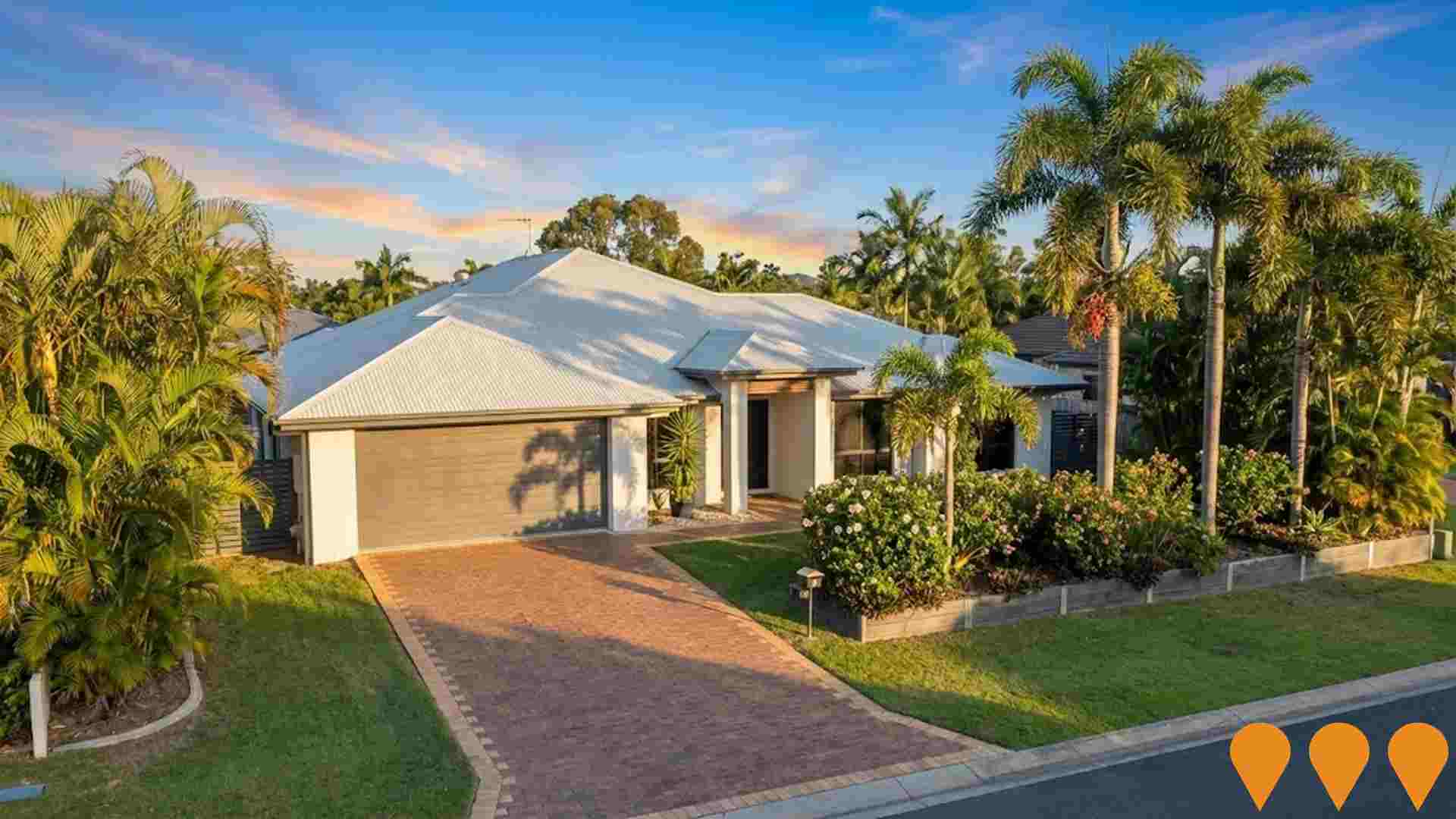
Residential Development

Mt Ommaney Shopping Centre Rebel Sport Extension
Category: Retail
Stage: Approved | Est. Comp: 2025
Source / Links: Link 1   

Internal amalgamation of existing retail tenancies and extension to accommodate new 1,418sqm Rebel Sport store. Involves removal of part of existing food court and repurposing of 9 tenancies with new loading dock and facade amendments.
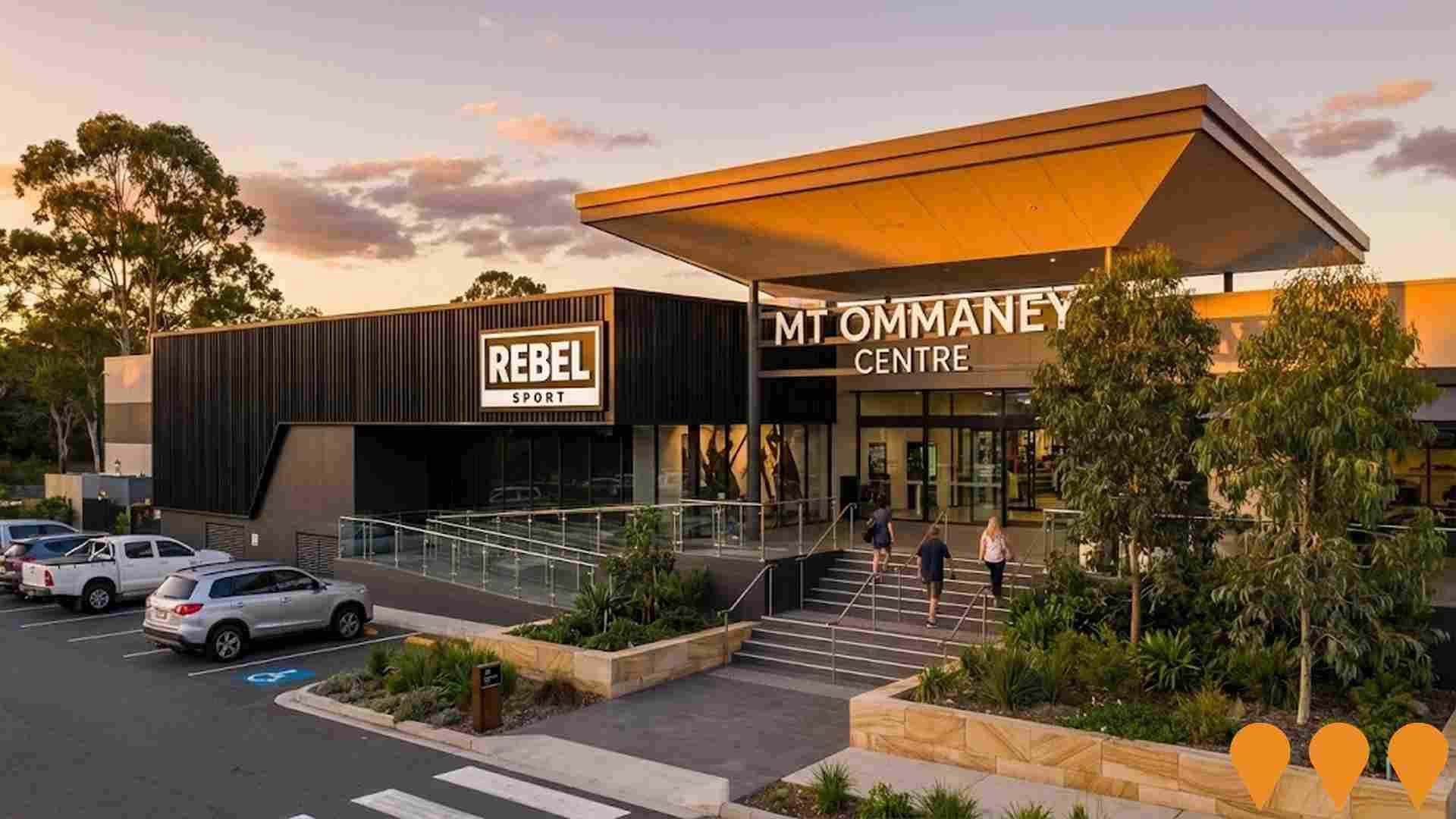
Retail

Songbird Terraces, Oxley
Category: Residential Development
Stage: Construction | Est. Comp: 2027

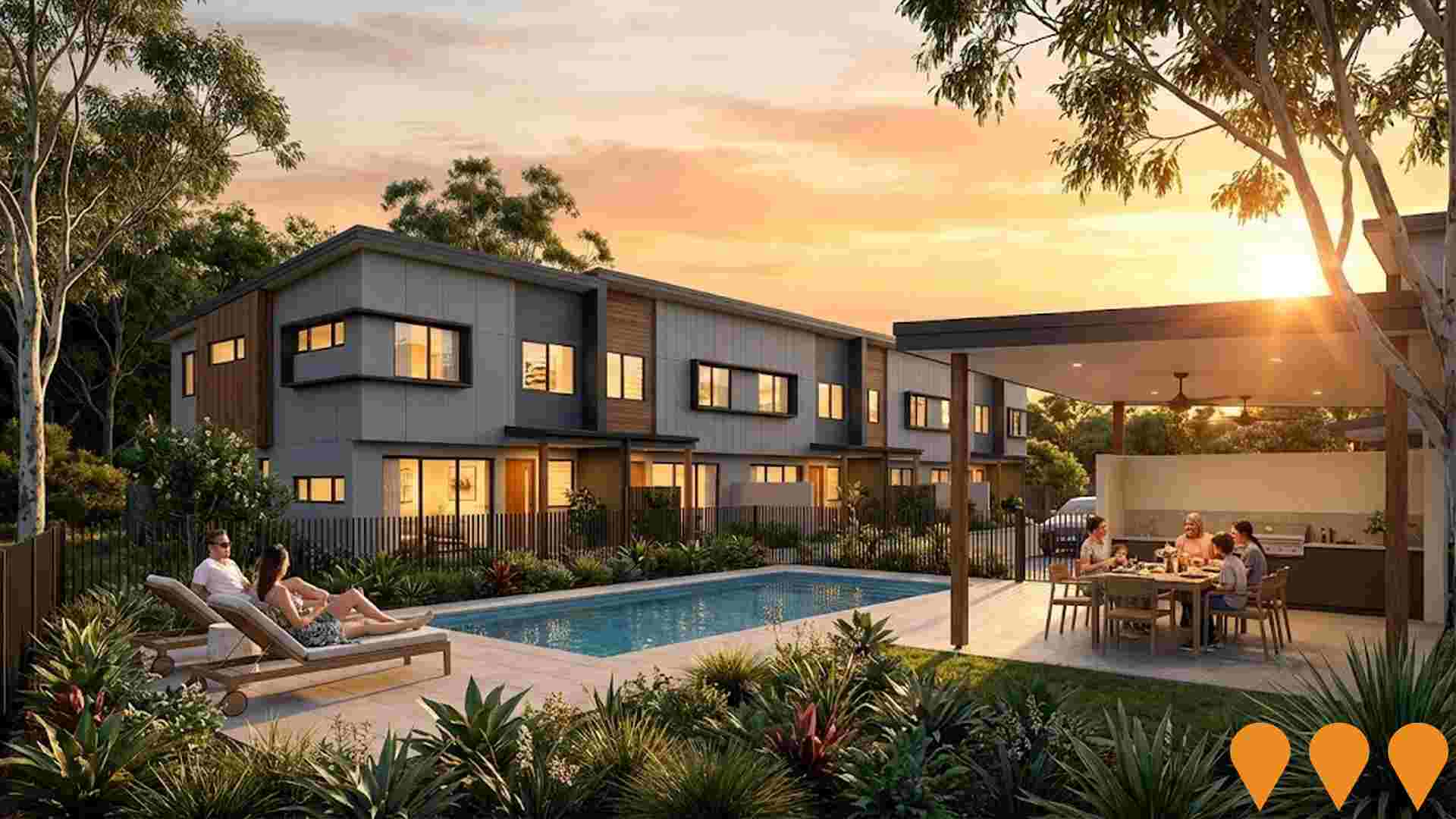
Songbird Terraces is the final residential precinct within the Songbird Oxley master plan, featuring a collection of 34 bespoke 3 and 4 bedroom townhouses. The project offers luxury amenities, including a heated swimming pool, landscaped gardens, and a cafe, creating a tranquil and connected village lifestyle in Oxley.
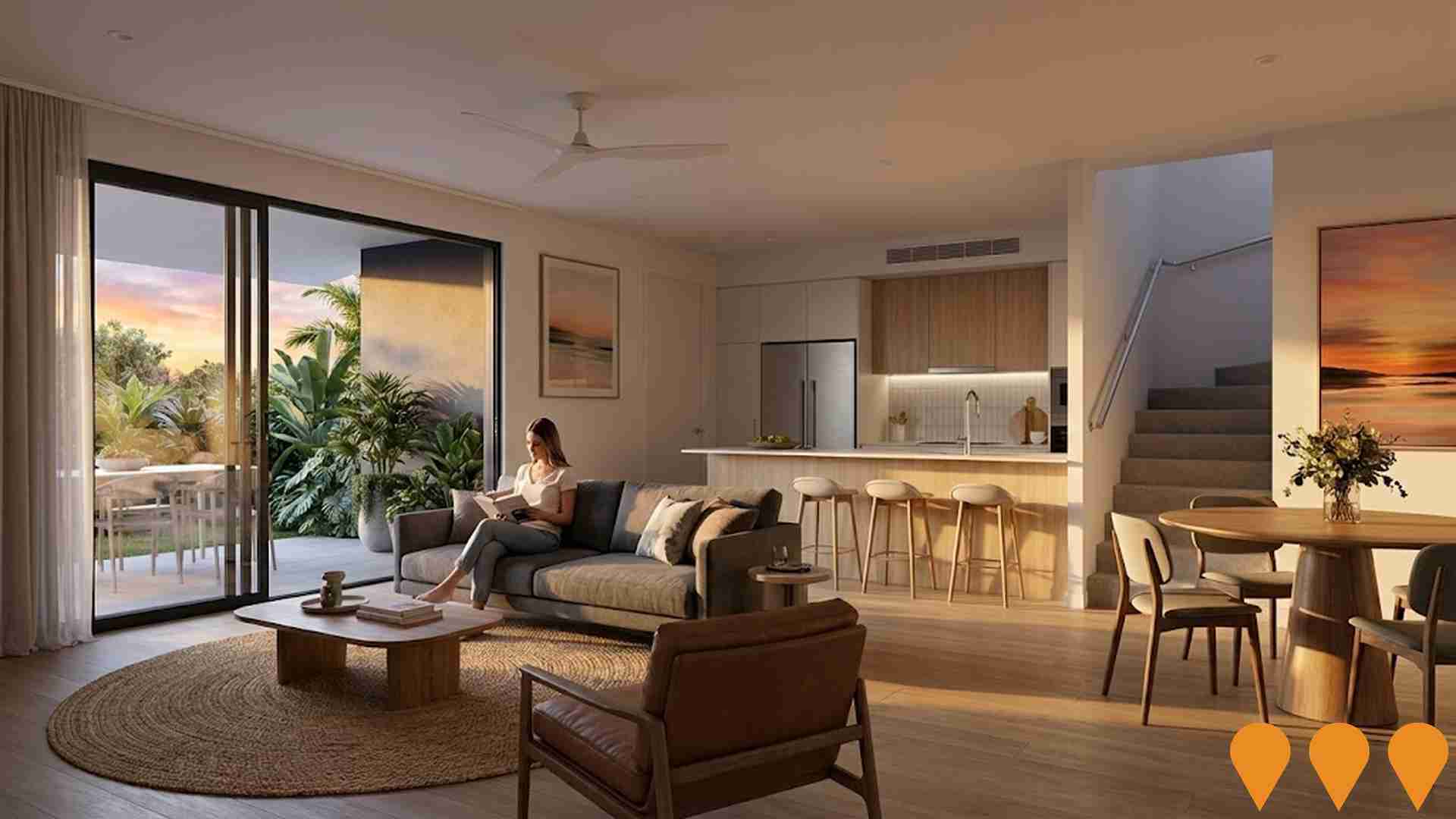
Residential Development

James Ommaney Retirement Community
Category: Health & Medical
Stage: Completed | Est. Comp: 2020
Source / Links: Link 1   

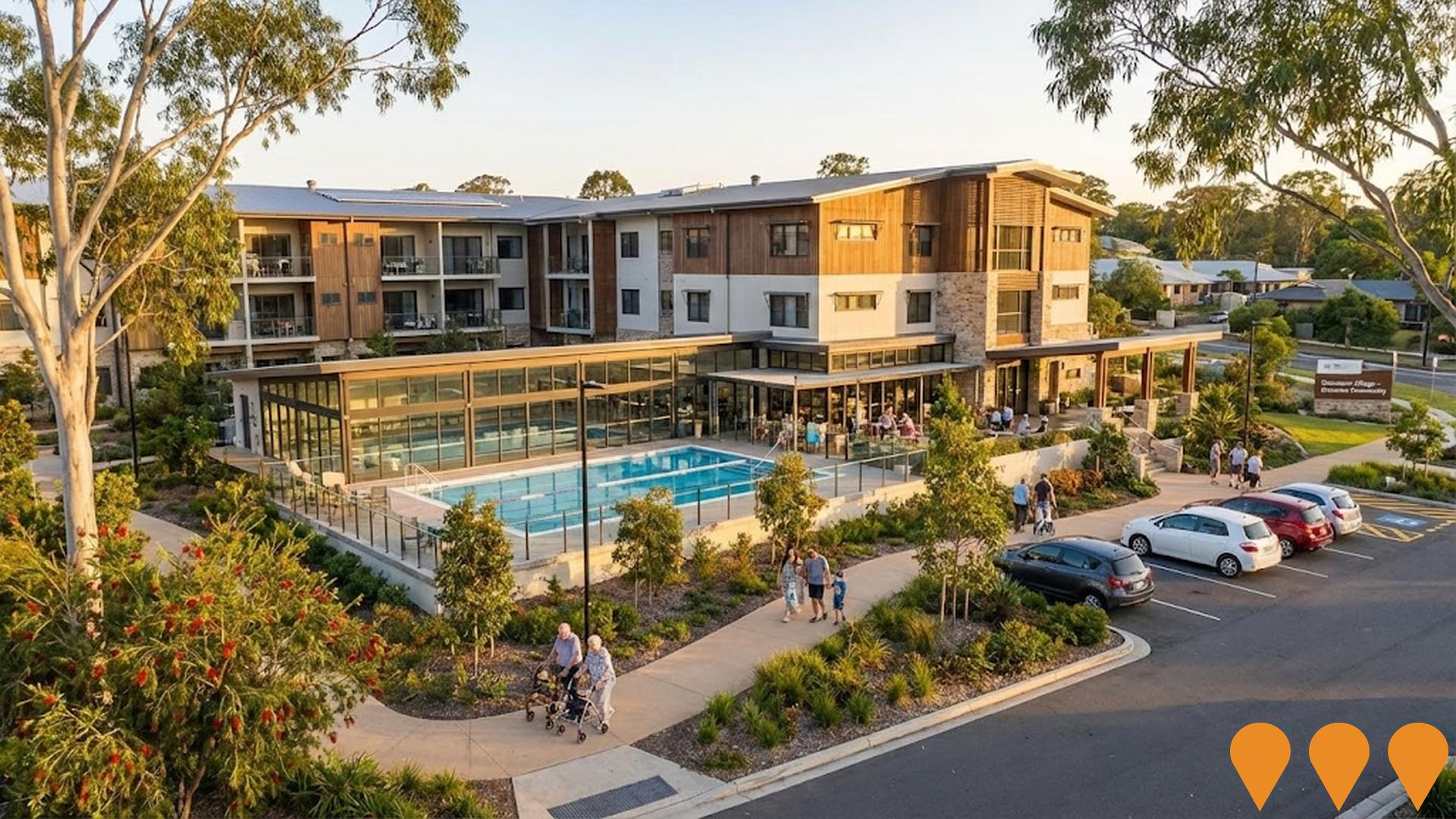
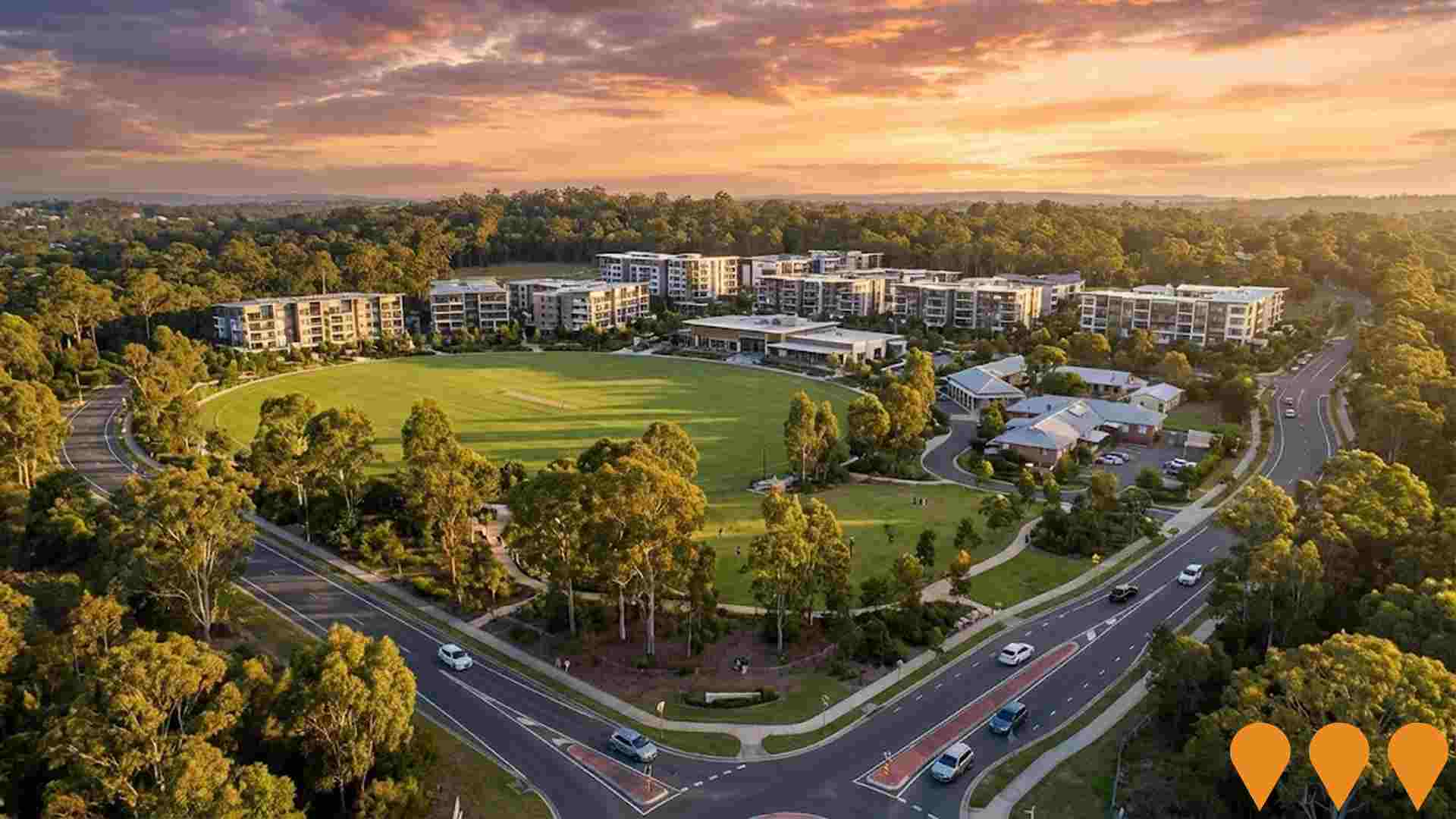
Boutique retirement community with 60 independent living units (studios to two bedrooms) in Mount Ommaney. Features pool, spa, gym, community bus, BBQ areas, and connects to Jindalee Aged Care Residence via covered walkway. Located near Mount Ommaney Shopping Centre and Jindalee Golf Course.
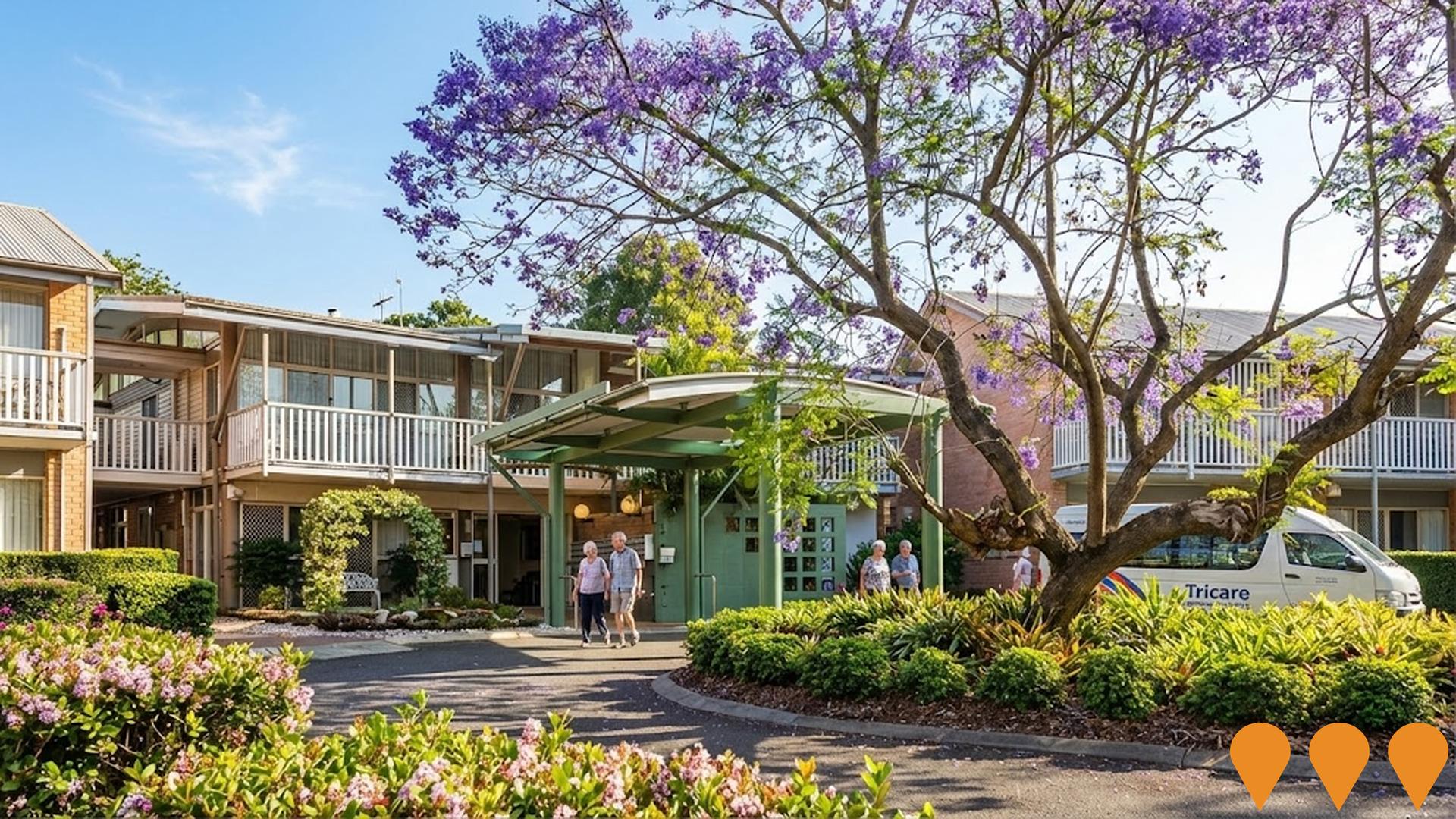
Health & Medical

Oxley Priority Development Area
Category: Communities
Stage: Construction | Est. Comp: 2028
Source / Links: Link 1   Link 2  

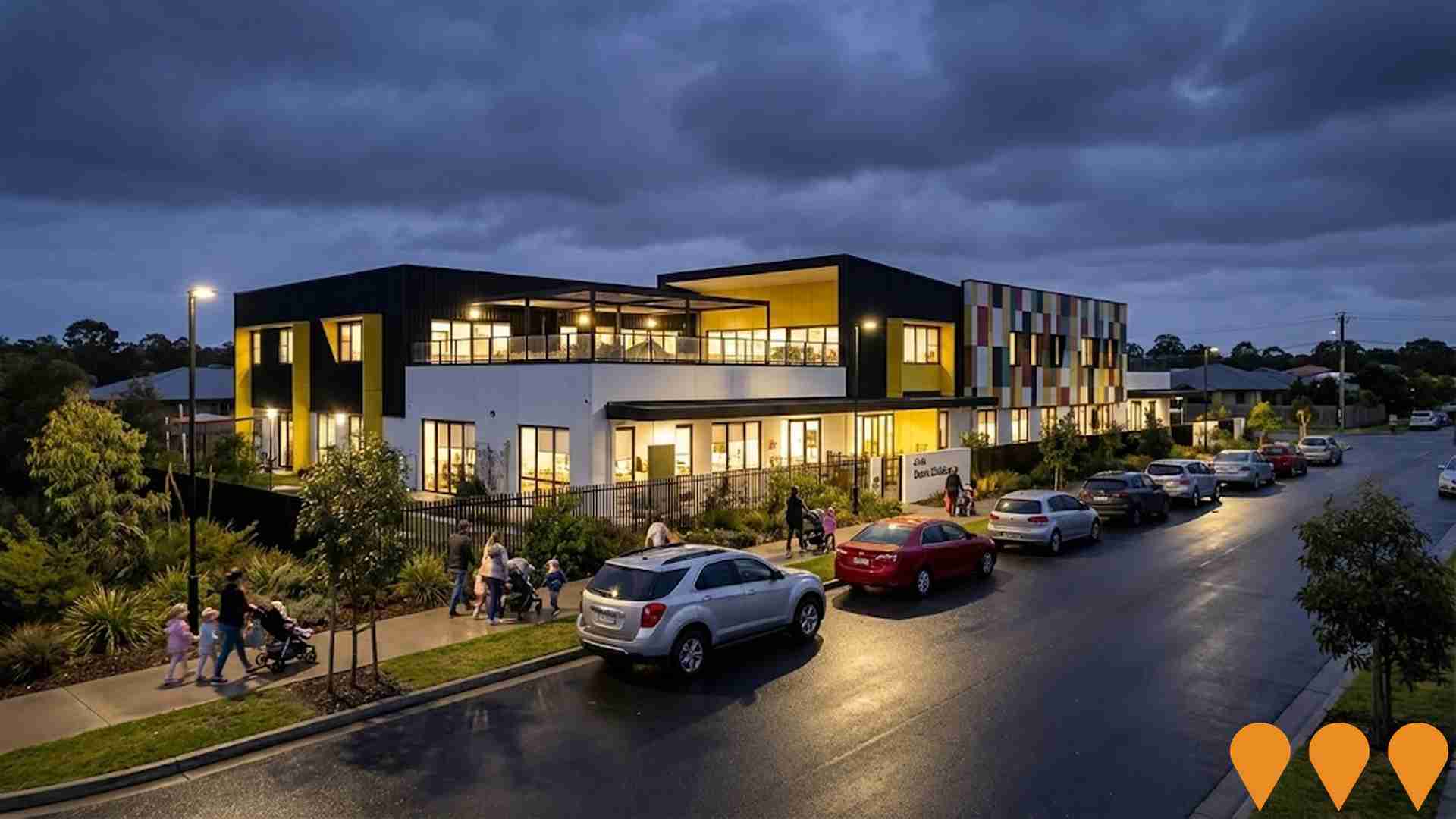
A 19-hectare Priority Development Area on the former Oxley Secondary College site, 11km southwest of Brisbane CBD. The Songbird Oxley estate delivers a residential community within a bushland setting, including detached house and land lots, terrace homes, retirement and ageing-in-place accommodation, a childcare centre and a community centre. The Rockpool aged care facility (150 beds) opened in early 2025, affordable housing lots are tenanted, and Honeycombes Property Group commenced construction of 34 terrace homes in December 2025.The community centre is targeted for construction commencement in July 2026.

Communities

Jobs & IndustryEmployment Trends in Sinnamon Park

Table Chart PROFILE FAQ

3,386 residents of Sinnamon Park are employed, from a labour force of 3,491. Unemployment sits at 3.0%, with participation at 61.9%. Weighted for its industry mix, the area's sectors are forecast to grow about 7.1% nationally over five years. That reflects industry composition only and makes no allowance for local population growth. The working-day population is estimated at 5,313, about 81% of the resident population, so more people leave the area for work than travel in. Unemployment and labour force come from ABS Small Area Labour Markets, updated quarterly; the industry and occupation profile is from the 2021 Census.

Detail

Data compiled by AreaSearch indicates that the suburb of Sinnamon Park has a highly qualified labor force with a strong concentration of professionals and an unemployment rate of only 3.0%. In March 2026, there are 3,386 employed residents, with the unemployment rate sitting 1.3% below the Greater Brisbane figure of 4.3%, while workforce participation is notably lower (61.9% compared to 70.4% in Greater Brisbane). According to Census data, a substantial 28.2% of the workforce operated from home, though this may have been influenced by pandemic containment measures. The primary employment fields for local residents are health care & social assistance, education & training, and professional & technical services.

The area exhibits a notable concentration in education & training, where the employment proportion is 1.4 times the regional standard. Conversely, construction is underrepresented, accounting for 6.6% compared to the regional benchmark of 9.0%. Comparing the Census working population against the total resident count suggests that local job opportunities within this mostly residential area are limited. An examination of SALM and ABS statistics for the wider region reveals that over the 12 months ending March 2026, the local workforce contracted by 2.2% and total employment fell by 3.2%, leading to a 1.0 percentage point rise in unemployment. Meanwhile, Greater Brisbane recorded a 3.2% rise in employment and a 3.4% expansion of the labor force, with unemployment ticking up by 0.1 percentage points. National employment projections from Jobs and Skills Australia published in May-25 offer additional context for future demand in the suburb of Sinnamon Park. These five and ten-year projections have been applied to the local workforce structure to model future growth. While total employment across the country is projected to rise by 6.6% over five years and 13.7% over ten years, trends vary by sector. Applying these industry projections to the local workforce mix suggests employment for the suburb of Sinnamon Park could grow by 7.1% over five years and 14.4% over ten years, representing a simple weighted extrapolation that does not incorporate local population forecasts.

Frequently Asked Questions - Employment

What is the employment situation in the suburb of Sinnamon Park?
As of March 2026, the suburb of Sinnamon Park has approximately 3,386 employed residents with an unemployment rate of 3.0%. This healthy unemployment rate suggests a well-functioning labour market. Employment performance is above the national median, showing positive labour market dynamics.
How does the suburb of Sinnamon Park's unemployment rate compare to the broader region?
As of March 2026, the unemployment rate in the suburb of Sinnamon Park stands at 3.0%, which is 1.3 percentage points below Greater Brisbane's rate of 4.3%. This lower unemployment rate suggests stronger local employment conditions. For comparison, the national unemployment rate is 4.2%.
What are the major employment sectors in the suburb of Sinnamon Park?
The employment landscape in the suburb of Sinnamon Park is dominated by several key sectors. The largest employers are health care & social assistance (17.2% of employment), education & training (13.1%), and professional & technical (11.9%). Other significant employers include retail trade and public administration & safety.
How has employment changed recently in the suburb of Sinnamon Park?
Over the past year to March 2026, the suburb of Sinnamon Park has experienced a decline in employment, with total jobs decreasing while the labour force decreased. As a result, the unemployment rate has rise. By comparison, Greater Brisbane saw employment increased and its unemployment rate rose.
What is the workforce participation rate in the suburb of Sinnamon Park?
The workforce participation rate in the suburb of Sinnamon Park is 61.9%, which represents the proportion of working-age residents who are either employed or actively seeking work. This healthy participation rate reflects good employment opportunities and workforce engagement. The local rate trailing the Greater Brisbane average of 70.4%, suggesting potential for increased workforce participation.
Which industries are over-represented in the suburb of Sinnamon Park's employment market?
The suburb of sinnamon park shows notable specialization in education & training, which employs 13.1% of the local workforce compared to 9.4% regionally. This moderate specialization indicates some local strength in the sector. The area also shows above-average employment in 1 other sectors, contributing to a distinctive economic profile.
What are the employment growth prospects for the suburb of Sinnamon Park?
Based on Jobs and Skills Australia projections applied to the suburb of Sinnamon Park's industry mix, employment is expected to grow by 7.1% over the next five years and 14.4% over ten years. This exceeds the national forecast of 6.6% over five years, suggesting the area's industry composition is well-positioned for future growth. Steady growth is anticipated across multiple sectors, providing diverse employment opportunities.
How does the job market in the suburb of Sinnamon Park compare nationally?
The suburb of sinnamon park's employment market shows above-average performance nationally, placing in the top half of areas assessed. Employment indicators suggest healthy labour market conditions relative to other regions. Recent job advertisement trends show the broader employment region saw a 4.6% decline, ranking 28.0th out of 37 regions nationally.
What employment opportunities exist for skilled workers in the suburb of Sinnamon Park?
Skilled workers will find excellent opportunities in the suburb of Sinnamon Park, with knowledge-intensive sectors comprising 47.9% of local employment. Key sectors for skilled workers include health care & social assistance (17.2%), education & training (13.1%), and professional & technical (11.9%). With projected employment growth of 7.1% over five years, demand for skilled workers is expected to remain strong.

EarningsHousehold Income in Sinnamon Park

Table Chart PROFILE FAQ

Median household income in Sinnamon Park is $2,510 a week (about $131,000 a year), with median personal income at $902 a week. ATO records put median taxable income at $60,634 a year against an average of $79,803. Household income is from the 2021 Census; taxable income is from ATO Taxation Statistics for the latest financial year available, indexed forward using the ABS Wage Price Index.

Detail

According to the latest postcode-level ATO statistics released for the 2023 financial year, taxpayers in the suburb of Sinnamon Park have a median income of $60,634 and an average income of $79,803. This ranks near the top nationally, comparing to a median of $58,236 and an average of $72,799 in Greater Brisbane. Factoring in Wage Price Index growth of 11.36% since the 2023 financial year, current estimates would stand at roughly $67,522 for the median and $88,869 for the average in March 2026. Census data from 2021 puts weekly household incomes at the 90th percentile, reaching $2,510.

Income distribution figures show that the largest segment, comprising 29.0% of local residents (1,896 people), falls into the $1,500 - 2,999 bracket, which is close to the metropolitan average of 33.3% in this bracket. High-income earners are prominent, with 41.5% earning more than $3,000 weekly, pointing to significant local purchasing power. Residents retain 88.4% of their earnings after housing expenses, and the area is positioned in the 9th decile for the SEIFA income index.

Frequently Asked Questions - Income

What is the median taxable income in the suburb of Sinnamon Park?
Based on Wage Price Index adjustments to March 2026, the estimated median taxable income in the suburb of Sinnamon Park is approximately $67,522. The official ATO data from FY-23 recorded a median of $60,634.
What is the average taxable income in the suburb of Sinnamon Park?
Based on Wage Price Index adjustments to March 2026, the estimated average taxable income in the suburb of Sinnamon Park is approximately $88,869. The official ATO data from FY-23 recorded an average of $79,803.
How does the median taxable income in the suburb of Sinnamon Park compare to the region?
Based on Wage Price Index adjustments to March 2026, the estimated median taxable income in the suburb of Sinnamon Park is approximately $67,522 compared to $64,852 in Greater Brisbane. The official ATO data from FY-23 shows $60,634 and $58,236 respectively.
How does the average taxable income in the suburb of Sinnamon Park compare to the region?
Based on Wage Price Index adjustments to March 2026, the estimated average taxable income in the suburb of Sinnamon Park is approximately $88,869 compared to $81,069 in Greater Brisbane. The official ATO data from FY-23 shows $79,803 and $72,799 respectively.
What are the main income cohorts in the suburb of Sinnamon Park according to the 2021 Census?
As per the 2021 Census, the income bracket containing the largest proportion (~29.0% / 1,896 persons) of the suburb of Sinnamon Park's population is the $1,500 - 2,999 cohort.
How do the main income cohorts in the suburb of Sinnamon Park compare to the region?
The largest income cohort in the suburb of Sinnamon Park is the $1,500 - 2,999 group, representing about 29.0% of the population. In comparison, Greater Brisbane's largest income cohort is the $1,500 - 2,999 group, representing 33.3% of its population, according to the 2021 Census.
What is the median household income in the suburb of Sinnamon Park according to the 2021 Census?
The 2021 Census data indicates that the median household income in the suburb of Sinnamon Park is $2,510/wk.
What is the median family income in the suburb of Sinnamon Park according to the 2021 Census?
According to the 2021 Census, the median family income in the suburb of Sinnamon Park is $2,834/wk.
What is the median personal income in the suburb of Sinnamon Park according to the 2021 Census?
The 2021 Census shows that the median personal income in the suburb of Sinnamon Park is $902/wk.
How does the suburb of Sinnamon Park's income rank nationally?
According to AreaSearch's aggregation of the latest postcode level ATO data released for FY-23, the suburb of Sinnamon Park had a median income among taxpayers of $60,634 with the average level standing at $79,803. This is among the highest in Australia and compares to levels of $58,236 and $72,799 across Greater Brisbane respectively. Based on Wage Price Index growth of 11.36% since FY-23, current estimates would be approximately $67,522 (median) and $88,869 (average) as of March 2026.
What is the disposable income in the suburb of Sinnamon Park?
The estimated disposable income in the suburb of Sinnamon Park is $9,616 per year according to AreaSearch analysis.
How does the suburb of Sinnamon Park's disposable income compare to the region?
The suburb of sinnamon park's disposable income is $9,616 compared to $6,725 for Greater Brisbane, based on AreaSearch analysis.

Housing StockHousing & Dwellings in Sinnamon Park

Table Chart PROFILE FAQ

Sinnamon Park had 2,199 occupied dwellings at the 2021 Census, 86% detached houses and 5% apartments. 44% are owned with a mortgage, 16% rented and 41% owned outright. At that Census the median rent was $460 a week and the median mortgage repayment $2,167 a month. Rent absorbs 18.3% of household income here and mortgage repayments 19.9%. Dwelling stock, tenure and housing costs are 2021 Census measures — the only source that counts dwellings at this boundary size.

Detail

At the time of the last Census, the housing mix in the suburb of Sinnamon Park consisted of 85.6% standalone houses and 14.4% alternative dwellings (such as townhouses and apartments), compared to 73.5% houses and 26.5% other dwellings across metropolitan Brisbane. Home ownership was significantly higher than the metropolitan average at 40.6%, with the remaining properties being mortgaged (43.8%) or rented (15.6%). The median monthly mortgage payment was $2,167, which was notably higher than the Brisbane metro average of $1,863, while the median weekly rent stood at $460, compared to $380 in metropolitan Brisbane.

Nationally, mortgage repayments in the suburb of Sinnamon Park are considerably higher than the Australian average of $1,863, and weekly rents are well above the national median of $375.

Frequently Asked Questions - Housing

What percentage of homes are owned vs rented in the suburb of Sinnamon Park?
In the suburb of Sinnamon Park, 40.6% of homes are owned outright, 43.8% are owned with a mortgage, and 15.6% are rented.
What percentage of dwellings in the suburb of Sinnamon Park are houses?
According to the latest data, 85.6% of dwellings in the suburb of Sinnamon Park are houses.
What percentage of dwellings in the suburb of Sinnamon Park are apartments or units?
In the suburb of Sinnamon Park, 4.7% of dwellings are apartments or units, with an additional 9.7% being semi-detached dwellings.
What is the level of outright home ownership in the suburb of Sinnamon Park?
Outright home ownership in the suburb of Sinnamon Park stands at 40.6%, compared to 26.7% in Greater Brisbane.
What is the median monthly mortgage repayment in the suburb of Sinnamon Park?
The median monthly mortgage repayment in the suburb of Sinnamon Park is $2,167, compared to $1,863 in Greater Brisbane.
What is the median weekly rent in the suburb of Sinnamon Park?
The median weekly rent in the suburb of Sinnamon Park is $460, compared to $380 in Greater Brisbane.
What is the distribution of rental prices in the suburb of Sinnamon Park?
In the suburb of Sinnamon Park, 1.8% of rentals are $0-149/week, 5.8% are $150-349/week, 77.9% are $350-649/week, 13.5% are $650-949/week, and 0.9% are $950+/week.
What is the average monthly housing cost in the suburb of Sinnamon Park?
The aggregate monthly housing cost in the suburb of Sinnamon Park is $1,260, which represents the average monthly cost across all housing types.
What percentage of income do residents spend on housing in the suburb of Sinnamon Park?
In the suburb of Sinnamon Park, households with mortgages typically spend 19.9% of their income on mortgage repayments, while renters spend 18.3% of their income on rent.
How crowded are homes in the suburb of Sinnamon Park?
The average persons per bedroom ratio in the suburb of Sinnamon Park is 0.7, indicating the level of household density.
How does housing affordability in the suburb of Sinnamon Park compare to the region?
Housing affordability in the suburb of Sinnamon Park shows mortgage holders spending 19.9% of income on repayments (vs 23.3% regionally), while renters spend 18.3% of income on rent (vs 20.6% regionally).
What types of dwellings are most common in the suburb of Sinnamon Park?
The dwelling mix in the suburb of Sinnamon Park consists of 85.6% detached houses, 9.7% semi-detached dwellings, 4.7% apartments, and 0.0% other dwelling types.
What is the weighted average housing cost based on tenure mix in the suburb of Sinnamon Park?
Based on the area's tenure composition, the weighted average monthly housing cost is approximately $1,260. This accounts for outright owners paying no housing costs, mortgage holders paying $2,167/month, and renters paying $1,992/month.
How affordable is housing in the suburb of Sinnamon Park relative to local incomes?
Housing in Sinnamon Park consumes approximately 11.6% of median household income ($10,868 monthly), indicating costs are highly affordable. The generally accepted benchmark is that housing should not exceed 30% of household income.
How do proposed developments compare to existing housing types in the suburb of Sinnamon Park?
No recent development applications are recorded for this area.

HouseholdsHousehold Composition in Sinnamon Park

Table Chart PROFILE FAQ

Sinnamon Park counted 2,199 households at the 2021 Census, averaging 2.8 people each. 44% are couples with children, more than in 87% of areas nationally, against 30% couples without children. 16% of households are people living alone, and families average 1.6 children. Household and family composition is measured only by the Census, so these are 2021 figures.

Detail

Families make up 82.8% of all households, consisting of 44.1% couples with children, 29.8% couples without children, and 8.2% single parents. The remaining 17.2% are non-family households, which are comprised of lone persons at 16.0% and group households at 1.4%. The median household occupancy is 2.8 people, which is higher than the Greater Brisbane average of 2.6.

Frequently Asked Questions - Households

How many households are in the suburb of Sinnamon Park?
As of the 2021 Census, the suburb of Sinnamon Park had 2,199 households. Based on population growth patterns, this has remained relatively stable to an estimated 2,182 households today.
What is the typical household size?
The median household size in the suburb of Sinnamon Park is 2.8 people. This compares to 2.6 in Greater Brisbane and reflects the area's household composition mix.
What types of households are most common?
Family households dominate at 82.8% of all households. The remaining households consist of lone person households (16.0%), group households (1.4%), and other household types (0.0%).
How are families structured in the area?
Among the 1,820 family households, 44.1% are couples with children, 29.8% are couples without children at home, and 8.2% are single parent families. This mix shapes local demand for schools, family services, and housing types.
How does the suburb of Sinnamon Park compare to regional household patterns?
Compared to Greater Brisbane, the suburb of Sinnamon Park shows distinct household patterns. Family households are notably over-represented at 82.8% (versus 71.7% regionally). Conversely, lone person households are under-represented at 16.0% compared to the regional 23.6%. This family-oriented profile influences local demand for family homes, schools, and children's services.
What is the average family size?
Families in the suburb of Sinnamon Park have an average of 1.6 children, slightly above the Greater Brisbane average of 1.5. This influences local demand for child-related services and larger family homes.
What are the marriage patterns in the suburb of Sinnamon Park?
Marriage patterns reveal 59.2% of the adult population are currently married, while 25.1% have never married. This compares to 45.0% married and 38.4% never married across Greater Brisbane.
How significant are single-person households?
Single-person households represent 16.0% of all households in the suburb of Sinnamon Park, notably lower than the regional average of 23.6%. This affects demand for smaller dwellings and single-person accommodation.
Are shared living arrangements common?
Group households (unrelated people sharing) account for 1.4% of households, well below the Greater Brisbane average of 4.7%. This low rate suggests limited student or young professional shared accommodation.
Loading household composition data...

EducationSchools & Education in Sinnamon Park

Table Chart PROFILE FAQ

44.6% of adults in Sinnamon Park hold a university qualification, including 27.9% with a bachelor degree and 12.5% with postgraduate qualifications, higher than 98% of areas nationally. A further 12.7% hold a vocational qualification. Qualifications come from the 2021 Census.

Detail

Residents in the suburb of Sinnamon Park show high levels of education compared to regional and national standards, with 44.6% of those aged 15+ holding a university degree, compared to 25.7% in QLD and 30.4% nationally. This educational profile leaves the suburb well placed for knowledge-sector employment. Undergraduate degrees are the most common at 27.9%, followed by postgraduate degrees (12.5%) and graduate diplomas (4.2%). Vocational training is held by 24.3% of residents aged 15+, which includes advanced diplomas (11.6%) and certificates (12.7%). Participation in study is high, with 28.1% of the population enrolled in an educational institution.

This is made up of 9.2% in high school, 8.7% in primary school, and 6.3% enrolled in higher education.

Frequently Asked Questions - Education

What percentage of people in the suburb of Sinnamon Park have university qualifications?
44.6% of people aged 15 and over in the suburb of Sinnamon Park have university qualifications, compared to 30.5% in the broader region.
What percentage of people in the suburb of Sinnamon Park have no formal qualifications?
31.2% of people aged 15 and over in the suburb of Sinnamon Park have no formal qualifications, compared to 35.8% regionally.
How does the suburb of Sinnamon Park's education level compare to national averages?
The suburb of sinnamon park ranks in the 98th percentile nationally for education based on AreaSearch's analysis of qualification and performance metrics.
What types of qualifications are most common in the suburb of Sinnamon Park?
The most common qualifications in the suburb of Sinnamon Park are: Bachelor Degree (27.9%), Certificate (12.7%), Postgraduate (12.5%).
What proportion of the suburb of Sinnamon Park's population is currently attending educational institutions?
28.1% of the population in the suburb of Sinnamon Park is currently engaged in formal education, with 8.7% in primary school, 9.2% in secondary school, 6.3% at university.
What is the ICSEA score for schools in the suburb of Sinnamon Park?
The average ICSEA (Index of Community Socio-Educational Advantage) score for schools in the suburb of Sinnamon Park is 0, indicating below-average socio-educational advantage compared to the national average of 1000.

Schools Detail

AmenitiesServices & Amenities in Sinnamon Park

PROFILE FAQ
Explore the surrounds Search this catchment for any place type — schools, cafés, supermarkets, transport — and drop your own custom points on the map.
Open

Getting AroundTransport & Commuting in Sinnamon Park

Table Chart PROFILE FAQ

Public transport in Sinnamon Park reaches 38 stops on 12 routes, timetabled for about 1,000 services a week. The typical home sits about 170 m from its nearest stop. Buses carry the largest share of public transport commuters. Households keep an average of 1.6 vehicles. Stop and service counts are built from operators' published GTFS timetables and refresh with each timetable release; vehicle ownership is from the 2021 Census.

Detail

Public transport infrastructure includes 38 active bus stops operating in the suburb of Sinnamon Park. These stops host 12 different routes, which support a total of 1,047 weekly passenger journeys. Accessibility is classified as excellent, with residents living an average of 169 meters from their closest transit stop. Because it is a residential area, most workers commute out of the suburb, with private vehicles remaining the primary choice at 84% and trains at 9%. Average car ownership is 1.6 vehicles per household, which is higher than the regional average. A significant 28.2% of residents worked from home, according to the 2021 Census, which may have been influenced by pandemic conditions.

Service frequency averages 149 journeys daily across all active routes, which represents approximately 27 weekly services at each individual transit stop.

Frequently Asked Questions - Transport

How many public transport stops are in Sinnamon Park?
There are 38 public transport stops within the suburb of Sinnamon Park.
How frequent are the transport services in Sinnamon Park?
the suburb of Sinnamon Park has 1,047 weekly trips across 12 routes, averaging 149 trips per day.
How far are residents from public transport in Sinnamon Park?
On average, residential properties are 169 meters from the nearest transport stop.

Transport Stops Detail

HealthcareHealth Services in Sinnamon Park

Table Chart PROFILE FAQ

69.1% of residents in Sinnamon Park report no long-term health condition. 9.6% need daily assistance with core activities, and 58.8% hold private health cover. The standardised death rate runs at 5.1 per 1,000 residents. Health conditions, assistance needs and insurance are 2021 Census measures; the death rate comes from current ABS releases.

Detail

Health outcomes in the suburb of Sinnamon Park are above average, according to AreaSearch's analysis of mortality and chronic disease data. The prevalence of common illnesses is low in the general community, though it is higher than the national standard for older, vulnerable groups, and private health coverage is very high at approximately 59% of the population (3,846 people), compared to 55.8% across Greater Brisbane. Mental health conditions and arthritis are the most frequent medical issues, affecting 8.3% and 7.6% of residents respectively. Conversely, 69.1% of the population reported no chronic health conditions, compared to 69.2% in Greater Brisbane.

The working-age population is healthy with a low rate of chronic illness. Residents aged 65 and over make up 26.1% of the population (1,706 people), which exceeds the Greater Brisbane average of 15.1%. While health trends among seniors present some difficulties, they rank lower nationally than the rest of the local community.

Frequently Asked Questions - Health

How many people in the suburb of Sinnamon Park have private health insurance?
Around 58.8% of people in the suburb of Sinnamon Park are covered by private health insurance, which compares to 55.8% in the broader region of Greater Brisbane.
What percentage of the population requires ongoing medical assistance in the suburb of Sinnamon Park?
In the suburb of Sinnamon Park, 9.6% of the population is identified as requiring ongoing medical assistance. This figure is slightly different from the regional average, where 5.7% of people in Greater Brisbane require similar assistance.
How prevalent is asthma in the suburb of Sinnamon Park?
5.9% of people in the suburb of Sinnamon Park are diagnosed with asthma. In comparison, 8.0% of the population across Greater Brisbane is affected by asthma.
What percentage of people have diabetes in the suburb of Sinnamon Park?
Diabetes affects 4.2% of the the suburb of Sinnamon Park population, while in the surrounding region, 4.0% of people are diagnosed with diabetes.
What is the percentage of people with heart disease in the suburb of Sinnamon Park?
4.4% of people in the suburb of Sinnamon Park have heart disease. Across the region of Greater Brisbane, 3.5% of the population is affected by heart disease.
How does the suburb of Sinnamon Park compare to the region in terms of overall private health coverage?
In the suburb of Sinnamon Park, 58.8% of the population are estimated to have private health insurance. Comparatively, Greater Brisbane sees an estimated private health coverage rate of 55.8%.

Ancestry & LanguageCultural Diversity in Sinnamon Park

Table Chart PROFILE FAQ

39.2% of Sinnamon Park residents were born overseas and 28.3% speak a language other than English at home, more culturally diverse than 79% of areas nationally. The largest reported ancestries are English (24.8%) and Australian (18.6%). Ancestry, language and country of birth are counted only by the Census, so these are 2021 figures.

Detail

The suburb of Sinnamon Park shows a high degree of cultural diversity, with 28.3% of residents speaking a language other than English at home and 39.2% born outside Australia. Christianity is the main religious affiliation, representing 53.5% of the population. The most notable religious overrepresentation is Judaism, which accounts for 0.3% of the community compared to 0.1% across Greater Brisbane. Regarding parental country of birth, the main ancestries represented in the suburb of Sinnamon Park are English at 24.8%, Australian at 18.6%, and Other at 11.1%. There are also notable differences in other backgrounds, with South Australian backgrounds representing 1.3% of the population (compared to 0.6% regionally), Vietnamese at 3.0% (compared to 0.8% regionally), and French at 0.8% (compared to 0.5% regionally).

Frequently Asked Questions - Diversity

What is the level of cultural diversity in the suburb of Sinnamon Park?
Sinnamon Park scores quite highly on cultural diversity, with 28.3% of its population speaking a language other than English at home and 39.2% born overseas.
What is the most common religion in the suburb of Sinnamon Park?
The main religion in Sinnamon Park was found to be Christianity, which makes up 53.5% of people in Sinnamon Park. However, the most apparent overrepresentation was in Judaism, which comprises 0.3% of the population, compared to 0.1% across Greater Brisbane.
What are the top countries of origin in the suburb of Sinnamon Park?
In terms of ancestry (country of birth of parents), the top three represented groups in Sinnamon Park are English, comprising 24.8% of the population, Australian, comprising 18.6% of the population, and Other, comprising 11.1% of the population. Additionally, there are notable divergences in the representation of certain other ethnic groups: South African is notably overrepresented at 1.3% of Sinnamon Park (vs 0.6% regionally), Vietnamese at 3.0% (vs 0.8%) and French at 0.8% (vs 0.5%).
How does the percentage of people born overseas compare to the regional average?
39.2% of the the suburb of Sinnamon Park population was born overseas, compared to 28.5% regionally.
What percentage of the the suburb of Sinnamon Park population speaks a language other than English at home?
28.3% of the population in the suburb of Sinnamon Park speaks a language other than English at home, compared to 18.7% in the wider region.
How many people in the suburb of Sinnamon Park identify as Australian Aboriginal?
0.4% of the the suburb of Sinnamon Park population identifies as Australian Aboriginal, compared to 2.1% in the region.
What is the citizenship status of the population in the suburb of Sinnamon Park?
89.7% of the the suburb of Sinnamon Park population holds citizenship, compared to 83.6% in the wider region.

Age StructureAge Profile of Sinnamon Park

Table Chart PROFILE FAQ

The median resident of Sinnamon Park is 45, older than 80% of areas nationally. 20.4% of residents are aged 15 to 34. Age cohorts are not raw Census counts: the Census split is re-based to the latest ABS population estimates and state projections.

Detail

With a median age of 45, the suburb of Sinnamon Park is older than the Greater Brisbane median of 36 and the national average of 38. The 75 - 84 age cohort is highly represented at 9.5% compared to the capital city, while the 25 - 34 cohort is lower at 5.8%. Since the 2021 Census, the proportion of residents aged 15 to 24 grew from 11.3% to 14.6%, and the 75 to 84 cohort rose from 7.2% to 9.5%. In contrast, the 25 to 34 age group fell from 8.0% to 5.8%, and the 5 to 14 group decreased from 12.4% to 11.2%.

Demographic projections indicate the age profile of the suburb of Sinnamon Park will change considerably by 2041. The 85+ cohort is expected to increase by 116% (333 people), growing from 287 to 621. This aging trend is highlighted by the fact that residents aged 65+ account for 98% of the projected population growth, while the 45 to 54 and 0 to 4 age groups are forecast to decline.

Frequently Asked Questions - Age

What is the median age in the suburb of Sinnamon Park?
According to the latest data, the median age in the suburb of Sinnamon Park is 45 years.
How does the suburb of Sinnamon Park's median age compare to broader areas?
At 45 years, Sinnamon Park is 9 years older than the Greater Brisbane average (36 years) and 7 years older than the national average (38 years).
What age groups are over-represented in the suburb of Sinnamon Park?
The most over-represented age group in the suburb of Sinnamon Park compared to the Greater Brisbane region is the 75 - 84 group, making up 9.5% of the population.
What age groups are under-represented in the suburb of Sinnamon Park?
The most under-represented age group in the suburb of Sinnamon Park compared to the Greater Brisbane region is the 25 - 34 group, making up 5.8% of the population.
Are there age groups with notable population variances?
Yes, certain age groups in the suburb of Sinnamon Park show significant variance compared to the Greater Brisbane region. The most over-represented age groups are 85+ year-olds (4.4% vs 1.8%) and 75-84 year-olds (9.5% vs 5.3%). The most under-represented age group is 25-34 year-olds (5.8% vs 15.5%).
What is the percentage of children (0-14 years) in the suburb of Sinnamon Park?
The percentage of children aged 0-14 years in the suburb of Sinnamon Park is 15.0%.
What is the percentage of older people (65+ years) in the suburb of Sinnamon Park?
The percentage of people aged 65 and over in the suburb of Sinnamon Park is 26.1%.

Data & MethodBoundaries, Sources & Method for Sinnamon Park

Data currency Refreshed

9 of 14 data sections on this page were updated within the last 12 months — the newest current to Aug 2026.

Everything is aggregated to the Suburb (SAL) boundary shown above, on a 2021 Census baseline. Only 3 sections — housing, households and cultural diversity — still wait on the 2026 Census.

The ledger — source, cycle and currency by section

Section Source & update cycle Currency
Updated within the last 12 months 9 sections
Population ABS, GNAF, Geoscience Australia Annual (ABS ERP) May 2026 3 months ago headline measures · 2021 Census baseline
Re-based to the ABS Estimated Resident Population (June 2025 release) and updated with new dwellings from GNAF address data. Current to May 2026, with the 2021 Census supplying the small-area baseline.
Age profile ABS, Geoscience Australia, State governments Annual May 2026 3 months ago headline measures · 2021 Census baseline
Age cohorts are re-based to the latest ABS population estimates and state projections, current to May 2026. Each cohort is held as a Census baseline and a current estimate.
Development & approvals ABS, GNAF Monthly (ABS approvals) Jun 2026 2 months ago headline measures · May 2026 baseline
Property sales & rents Valuer General, Rental Board, ABS Weekly sales, quarterly rents Aug 2026 this month all 21 measures
Sales from the state Valuer General register, refreshed weekly, and rents from quarterly rental bond lodgements. Both are read live each time this page loads, current to Aug 2026.
Infrastructure projects Infrastructure Australia, State agencies, Local governments Daily Jul 2026 last month all 8 projects tracked here
Project pipeline maintained continuously from Infrastructure Australia, state agencies, local government and public announcements. Records are added and revised daily; this area was last updated Jul 2026.
Employment ABS, DEWR, JSA Quarterly (ABS SALM) Mar 2026 5 months ago headline measures · 2021 Census baseline
Unemployment and labour force from ABS Small Area Labour Markets, current to Mar 2026. The growth outlook applies Department of Employment (now Jobs and Skills Australia) forecasts for all 19 industry divisions to the local industry mix, so it measures sector composition rather than local expansion and makes no allowance for population growth. Job demand comes from the same agency via its Internet Vacancy Index; industry and occupation structure from the 2021 Census.
Education ABS, ACARA Annual (ACARA) Jul 2026 last month headline measures · 2021 Census baseline
Transport ABS, State Transport Departments Each timetable release Jul 2026 last month headline measures · 2021 Census baseline
Services & amenities Provider directories, ACECQA Continuous Jul 2026 last month all 14 measures
Annual and financial-year sources 2 sections
Income ABS, ATO Annual (ATO) FY 2023 3 years ago headline measures · 2021 Census baseline
ATO taxable income statistics for FY 2023, indexed forward using the Wage Price Index. Census household income provides the distribution detail.
Health ABS, ATO Annual 2024 2 years ago headline measures · 2021 Census baseline
Census-measured — next update: 2026 Census 3 sections No more current small-area source exists for these, so they are labelled as Census-measured rather than implied to be current.
Housing ABS 5-yearly (Census) 2021 Census next update 2026 all 30 measures
Households ABS 5-yearly (Census) 2021 Census next update 2026 all 18 measures
Cultural diversity ABS, Geoscience Australia 5-yearly (Census) 2021 Census next update 2026 all 44 measures

"Currency" is the most recent release feeding that section. Where the Census supplies the structural baseline underneath a current headline figure, the row says so.

How the numbers are built

Population

The Census provides the small-area baseline, aggregated from mesh blocks to this boundary. It is then re-based to the ABS Estimated Resident Population (June 2025 release), and new dwellings built since Census night are counted from address data — 1 validated new addresses here. The headline figure is therefore a current estimate for May 2026, not a 2021 count (6,590 at the 2021 Census → 6,539 now). Annual growth rates are compound (CAGR), not simple averages.

Age profile

Cohort shares are not raw Census counts. Every cohort is held as a pair — the Census baseline and a current estimate — and the split is re-based using ERP and state population projections, current to May 2026. Median age is the Census median plus modelled change since. Charts that show both are labelled "2021 Census vs Current Estimate".

Property sales

Sourced from the state valuation authority's sales register — current, not Census, and refreshed weekly. Medians are calculated from settled transactions in the period shown; periods with very low transaction counts are flagged or suppressed, because a handful of sales can move a median substantially.

Rents

Derived from state rental bond lodgement data, by dwelling type and bedroom count. Bonds are lodged at the start of a new tenancy, so this reflects new lettings, not the whole rented stock.

Development & infrastructure

Building approvals come from current ABS releases; development applications are collected from council and state planning portals; the infrastructure pipeline is compiled from Infrastructure Australia and local government sources. Applications are matched to this boundary by address or coordinates, so very recent lodgements may not yet appear.

Employment & income

Industry and occupation structure comes from the Census, but the headline labour-market indicators do not. Unemployment and labour force are derived from ABS Small Area Labour Markets (quarterly). The employment outlook applies Department of Employment forecasts for all 19 industry divisions to this area's own industry mix (the agency is now Jobs and Skills Australia), as does the Internet Vacancy Index used for job demand. Because it is weighted on industry composition alone, that outlook carries no allowance for local population growth — in fast-growing areas the real rise in local jobs will typically be higher. Income combines Census household income with ATO taxable-income statistics for FY 2023, indexed forward using the Wage Price Index.

Education, transport & amenities

School enrolments, ICSEA and performance come from ACARA's current release, not the Census. Public transport stops and service frequency are derived from GTFS timetable feeds published by state transport departments. Services and amenities are proximity and count scores built from provider directories, refreshed on their own cycle. The Census contributes only the travel-to-work and qualification measures.

Rankings and benchmarks. Where we rank this area, the comparison set is every area of the same boundary type — suburbs against suburbs, SA2s against SA2s. Benchmarks compare this area against its greater capital city region and the national figure for the same measure and period.

Limits worth knowing. Small areas carry larger error margins, and the ABS introduces small random adjustments to Census counts to protect confidentiality — so totals may not sum exactly. Estimates re-based from regional data describe the area's expected trajectory, not a direct count of it. Figures are indicative for research and are not financial, planning or valuation advice.

Cross-check us. The Census baseline for this boundary is at ABS 2021 Census QuickStats (SAL32573). QuickStats reports 2021 only — the figures on this page are more current wherever the ledger shows a later date.

Common questions about this page

How do Sinnamon Park suburb boundaries differ from Statistical Areas?
This page uses Suburbs and Localities (SAL) boundaries (suburb-style geography). SAL represents commonly-known suburb names used in addresses, while Statistical Areas (SA2) are designed for census/statistical reporting. Even when sharing the same name, SAL and SA2 boundaries often cover different geographic areas with different populations.
Where does the data on this Sinnamon Park page come from?
AreaSearch compiles this page from official and industry sources — including ABS, Geoscience Australia, Valuer General, Provider directories, DEWR, JSA, State Transport Departments and ACARA — then aggregates them to the boundary shown and calculates the rankings, growth rates and benchmarks itself. Property sales come from the state valuation authority, rents from state rental bond lodgements, development applications from council and state planning portals, school data from ACARA, and public transport from state transport departments.
Is the Sinnamon Park data on this page just from the 2021 Census?
No. Most of this page is maintained well beyond the Census. Sourced entirely from current releases: development & approvals (Jun 2026), property sales & rents (Aug 2026), infrastructure projects (Jul 2026) and services & amenities (Jul 2026). Built on a Census baseline but carrying newer measures on top: population (to May 2026), age profile (to May 2026), employment (to Mar 2026), income (to FY 2023), education (to Jul 2026), transport (to Jul 2026) and health (to 2024). Population and age cohorts in particular are re-based to the latest ABS Estimated Resident Population rather than left at 2021 counts. Only housing, households and cultural diversity remain wholly Census-based, because no more current small-area dataset exists for those measures.

Nearby Areas