You are viewing the free Snapshot. Dashboard puts rankings, rents, projects and services on one screen, and Full adds every chapter with charts and maps. Dashboard and Full are included with AreaSearch Operator and Pro, or unlocked by the area's Area Expert. You need to log in to open them.
The suburb of Mount Ommaney is located 12 kilometres southwest from Brisbane CBD. Its population is estimated at around 2,621 as of Aug 2026, based on aggregated SA2-level ERP counts, released yearly, and national address file data updated each quarter. (ERP) means Estimated Resident Population. The estimate is 118 people (4.7%) above the 2,503 people recorded in the 2021 Census. Market characteristics include above-average median household income, strong outright home ownership, a high proportion of married families, a notable proportion aged 85 and over, an elevated education employment base, and a high share of residents born overseas.
Population trends indicate moderate expansion. The wider location of Jindalee - Mount Ommaney in QLD, Australia is known for its Brisbane River setting, suburban lifestyle, dining, shopping and entertainment amenities, educational facilities, parks and recreational spaces, and community events that contribute to a welcoming atmosphere for residents and visitors.
Read the analysisShow less
Download a free snapshot of Mount Ommaney or order the area report
Free with an AreaSearch account. Pro is not needed.Free. Built in your browser.
The analysis, national rankings and who lives there.
About Mount Ommaney
The suburb of Mount Ommaney is located 12 kilometres southwest from Brisbane CBD. Its population is estimated at around 2,621 as of Aug 2026, based on aggregated SA2-level ERP counts, released yearly, and national address file data updated each quarter. (ERP) means Estimated Resident Population. The estimate is 118 people (4.7%) above the 2,503 people recorded in the 2021 Census. Market characteristics include above-average median household income, strong outright home ownership, a high proportion of married families, a notable proportion aged 85 and over, an elevated education employment base, and a high share of residents born overseas.
Population trends indicate moderate expansion. The wider location of Jindalee - Mount Ommaney in QLD, Australia is known for its Brisbane River setting, suburban lifestyle, dining, shopping and entertainment amenities, educational facilities, parks and recreational spaces, and community events that contribute to a welcoming atmosphere for residents and visitors.
Read the analysisShow less
Estimated resident population by year (ABS, not Census counts): 2,471 in 2006 and 2,621 in 2025. The Aug 2026 estimate (ABS June 2025 base) is the same.
Each bar and spoke is a national percentile; the dashed ring is the typical area. 99th = higher than 99 in every 100 neighbourhood-sized areas across Australia (ABS SA2 areas). Higher means more of the measure, not necessarily better. Orange marks the top three measures where a higher percentile is better; not Age, Housing or Housing Cost.
An assessment of population growth drivers in Mount Ommaney reveals an overall ranking slightly below national averages considering recent, and medium term trends.
AreaSearch's development drivers ranking sees Mount Ommaney recording a relatively average level of approval activity when compared to local markets analysed countrywide.
Why Mount Ommaney stands out
Above-average median household income
Strong outright home ownership
High proportion of married families
Notable proportion 85 and over
Elevated education employment base
High population level born overseas
02Market and pipeline
Rents, sale prices and what is being built.
Rents in Mount Ommaney
The median rent in Mount Ommaney is $805 a week, for the 12 months to Jun 2026 and 19% above Greater Brisbane.
Lodged-bond median rent a week, to Jun 2026.
Mount Ommaney$805
Centenary$778
Brisbane - West$732
Greater Brisbane$674
QLD$672
19% above Greater Brisbane on median weekly rent
Median rent
$805 a week
Lodged-bond median (to Jun 2026)
Rent by dwelling type
Median weekly rent by year, lodged bonds. Houses: $490 in 2017, $805 in 2026. The latest is to Jun 2026.
The change over 12 months, by dwelling type, is charted in Full.
Sales and rents in Mount Ommaney: key figures
Measure
Value
Source and date
National percentile
Median rent
$805 a week
Rental bond lodgements, median for the 12 months to Jun 2026
Median rent, houses
$805 a week
Rental bond lodgements, median for the 12 months to Jun 2026
Median rent, Centenary
$778 a week
Rental bond lodgements, median for the 12 months to Jun 2026
Median rent, Brisbane - West
$732 a week
Rental bond lodgements, median for the 12 months to Jun 2026
Median rent, Greater Brisbane
$674 a week
Rental bond lodgements, median for the 12 months to Jun 2026
Median rent, QLD
$672 a week
Rental bond lodgements, median for the 12 months to Jun 2026
Development applications mapped around Mount Ommaney
See the development applications we track, then draw your own catchment and map retailers, health, schools and more.
Approved 4
Other 1
9tracked
Status of the 9 tracked applications: 7 approved, 0 under assessment, 2 other (refused, withdrawn or no status).
Newest tracked applications, period covered (about 3.4 years)
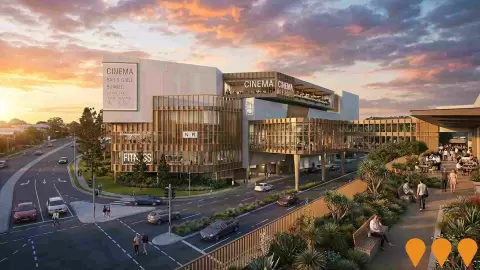
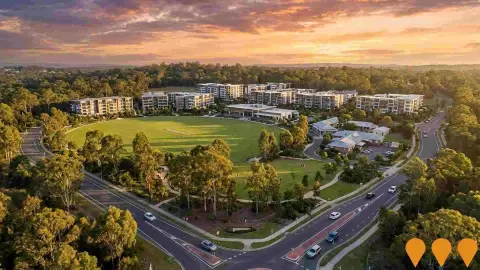
Cinema, dining and entertainment precinct extension to Mt Ommaney Shopping Centre including 6-storey building with cinema, community use and retail tenancies. Features additional gross floor area including multi-screen cinema, gym, dining and entertainment precinct, and rebuilt community centre. Designed by Blight Raynor.
Est. value $80M · completion 2026 · Residential Development
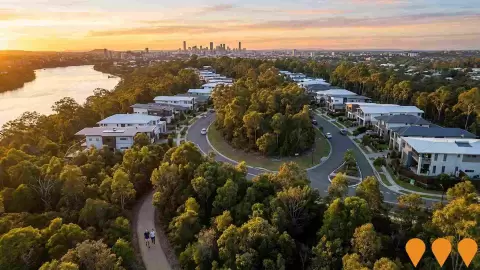
Newest residential estate in Seventeen Mile Rocks featuring contemporary homes on large blocks (875sqm+) surrounded by trees and nature. Estate includes building covenants ensuring homes are designed in harmony with natural environment. Features permanent ridge top reserve and bushwalking tracks to Rocks Riverside Park.
Est. value $28M · completion 2026 · Business Parks & Technology Hubs
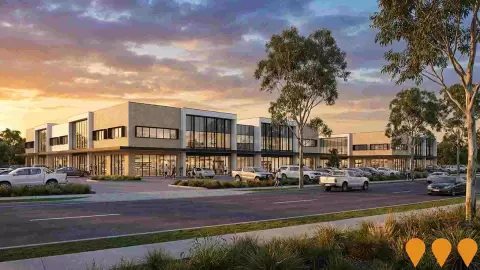
Darra Mixed-Use Commercial is a 56-unit strata industrial and business precinct spread across nine buildings. Delivered by Prekaro Projects, the development provides versatile warehouse, showroom, commercial office, and storage tenancies configured for light industrial and trade services.
Construction
Songbird Terraces, Oxley
Est. value $40M · completion 2027 · Residential Development
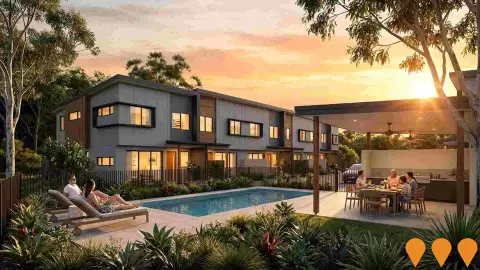
Songbird Terraces is the final residential precinct within the Songbird Oxley master plan, featuring a collection of 34 bespoke 3 and 4 bedroom townhouses. The project offers luxury amenities, including a heated swimming pool, landscaped gardens, and a cafe, creating a tranquil and connected village lifestyle in Oxley.
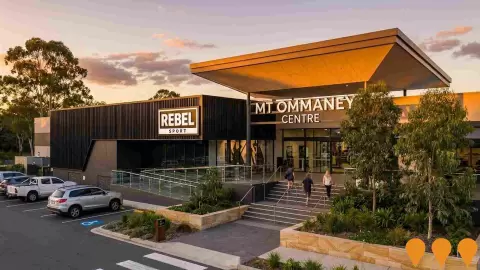
Internal amalgamation of existing retail tenancies and extension to accommodate new 1,418sqm Rebel Sport store. Involves removal of part of existing food court and repurposing of 9 tenancies with new loading dock and facade amendments.
Est. value $15M · completion 2027 · Communities, Precincts & Urban Renewal
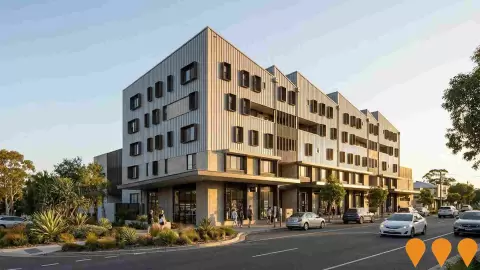
Five-storey mixed-use proposal across two buildings on a 1,707sqm triangular site. Ground floor for eight retail shops, two offices and a food and drink outlet, with caretaker accommodation above select shops. Upper levels include rooming accommodation and 12 residential units with a basement providing about 31 car spaces.
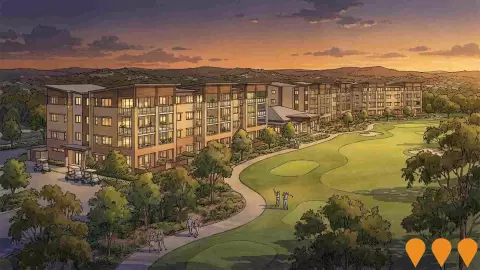
Aura Holdings to develop retirement living project at McLeod Country Golf Club with 126 apartments across four buildings over two stages. Designed to integrate with community, minimizing disruption to club operations.
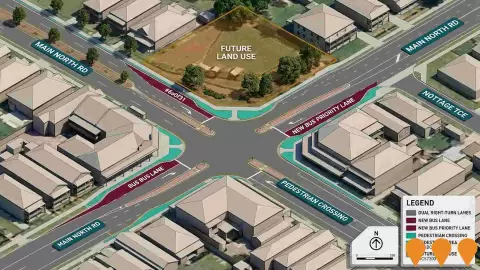
A $1.7 million project by Brisbane City Council to upgrade the intersection of Eumong Street and Riverhills Road to combat congestion and reduce travel times.
Construction
Arabella Townhomes
Est. value $52M · completion 2026 · Residential Development
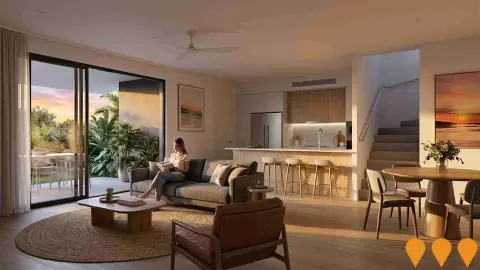
Arabella is a residential development of 170 three and four-bedroom double-storey townhomes adjacent to protected bushland in Oxley, Brisbane. The master-planned project features resort-style amenities including a swimming pool, barbecue area, and resident lounge.
Est. value $150M · Completed 2010 · Residential Development
Exclusive riverside estate featuring premium residential properties with Brisbane River frontage. Part of heritage-listed Sinnamon Farm precinct with luxury homes and parkland access.
A 19-hectare Priority Development Area on the former Oxley Secondary College site, 11km southwest of Brisbane CBD. The Songbird Oxley estate delivers a residential community within a bushland setting, including detached house and land lots, terrace homes, retirement and ageing-in-place accommodation, a childcare centre and a community centre.
Est. value $45M · Completed 2020 · Health & Medical
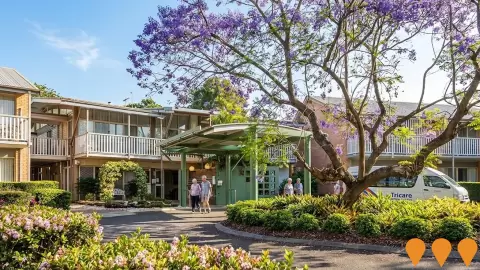
Boutique retirement community with 60 independent living units (studios to two bedrooms) in Mount Ommaney. Features pool, spa, gym, community bus, BBQ areas, and connects to Jindalee Aged Care Residence via covered walkway. Located near Mount Ommaney Shopping Centre and Jindalee Golf Course.
Projects around Mount Ommaney
Images marked AI impression are illustrative only and not photographs of the project; follow the project links for actual imagery. Original imagery? Contact us.
Estimated completion year of the 15 projects in and around the area that are not yet completed and have one: 2025 1, 2026 7, 2027 4, 2028 2, 2029 0, 2030 1. 10 have no completion year.
Development applications
AreaSearch has tracked 9 substantial development applications lodged in and around Mount Ommaney over the period covered (about 3.4 years), 2 in the last 12 months. Coverage varies by council.
Tracked applications by year
Applications per year (dashed: part year): 2023 (part year) 4, 2024 1, 2025 2, 2026 (to Oct) 2.
Tracked by AreaSearch, in and around the area, period covered (about 3.4 years)
Tracked, last 12 months
2
Tracked by AreaSearch, in and around the area
ABS building approvals
4.5 per 1,000 people
ABS building approvals
57th percentile nationally
Average approvals a year
12
ABS building approvals
23rd percentile nationally
Applications approved
7
Tracked by AreaSearch, in and around the area, period covered (about 3.4 years)
Questions about infrastructure in Mount Ommaney
What are some of the major infrastructure and planning changes likely to influence the suburb of Mount Ommaney?
Key infrastructure and planning changes likely to influence the suburb of Mount Ommaney include: Mt Ommaney Shopping Centre Entertainment Precinct (Approved); Centenary Motorway Upgrade Planning (Planning); Connectwest Industrial Park (Planning); Ipswich Motorway Upgrade: Rocklea to Darra (Remaining Sections) (Planning); and Centenary Motorway Bypass (Planning). These projects represent significant developments that will shape the area's future infrastructure landscape.
What types of infrastructure projects are impacting the suburb of Mount Ommaney?
Infrastructure development impacting the suburb of Mount Ommaney spans multiple sectors including Transport & Logistics, Retail, and Business Parks & Technology Hubs, among others.
How does the suburb of Mount Ommaney's infrastructure development compare to other areas?
The suburb of Mount Ommaney ranks in the top 10% nationally for infrastructure development, reflecting exceptional investment activity compared to similar areas across the country.
Development in Mount Ommaney
AreaSearch's development drivers ranking sees Mount Ommaney recording a relatively average level of approval activity when compared to local markets analysed countrywide.
Questions about development in Mount Ommaney
How many dwelling approvals have occurred in the suburb of Mount Ommaney recently?
Dwelling approval activity in the suburb of Mount Ommaney area has seen 45 residential approvals over the past two financial years, based on AreaSearch's SA2 aggregation method. The suburb of Mount Ommaney's current population of 2,621 has been supported by 12 approvals on average over recent years.
How does the suburb of Mount Ommaney's development activity compare to Greater Brisbane?
The suburb of Mount Ommaney has seen 4.5 approvals per 1,000 people in recent years, compared to 8.1 approval in Greater Brisbane. This means that one dwelling has been approved for every 116 people in the suburb of Mount Ommaney, compared to one for every 117 in Greater Brisbane.
What is the outlook for development in Mount Ommaney?
The long-run outlook for development is part of AreaSearch Operator and Pro. Log in to see the forecast detail in Full.
Show all 5 questionsShow fewerWhat has been the trend in development approvals over the past five years in the suburb of Mount Ommaney?
Looking at development activity over the past five years, the suburb of Mount Ommaney's approval levels have been significantly above the yearly average of 12, indicating strong recent growth in development activity.
How does recent development compare to population growth in the suburb of Mount Ommaney?
Over the past five years, the population in the suburb of Mount Ommaney has grown by approximately 63 people, while 58 residential approvals were recorded. This equates to a ratio of 1.1 people added for each new dwelling approval. This suggests a balanced relationship between population growth and housing supply.
03People
Population, age, income, work, education and more.
99th = higher than 99 in every 100 neighbourhood-sized areas across Australia (ABS SA2 areas). Higher means more of the measure, not necessarily better.
Population in Mount Ommaney
Data: Aug 2026 estimate, from the ABS June 2025 base
An assessment of population growth drivers in Mount Ommaney reveals an overall ranking slightly below national averages considering recent, and medium term trends.
Population in Mount Ommaney: key figures
Measure
Value
Source and date
National percentile
Population
2,621
AreaSearch estimate, Aug 2026, from the ABS June 2025 base
Growth since 2021 Census
+4.7%
AreaSearch estimate, Aug 2026, against the 2021 Census
37th percentile nationally
Population density
1,159 per km²
AreaSearch estimate, Aug 2026, from the ABS June 2025 base
54th percentile nationally
Average yearly growth, 2020 to 2025
+0.5%
ABS estimated resident population series to June 2025
Average yearly growth, 2015 to 2025
+0.6%
ABS estimated resident population series to June 2025
Show 5 more population figuresShow fewer
Population in Mount Ommaney: key figures, continued
Measure
Value
Source and date
National percentile
Population at the 2021 Census
2,503
2021 Census
Residents added since the 2021 Census
118
AreaSearch estimate, Aug 2026, against the 2021 Census
Average yearly growth, 2022 to 2025
+1.1%
ABS estimated resident population series to June 2025
Population growth, 2024 to 2025
+0.8%
ABS estimated resident population series to June 2025
Land area
2.26 km²
AreaSearch boundary analysis
Questions about population in Mount Ommaney
What is the latest population estimate for the suburb of Mount Ommaney?
Total population for the suburb of Mount Ommaney was estimated to be approximately 2,621 as at Aug 2026. This is based upon an estimated resident population of 2,621 from the ABS up to June 2025.
How has the population in the suburb of Mount Ommaney changed since 2021?
The suburb of Mount Ommaney has added approximately 118 people and shown a 4.71% increase from the 2,503 people recorded at the 2021 Census period.
What is the population density in the suburb of Mount Ommaney?
The population density in the suburb of Mount Ommaney is estimated at 1,160 persons per square kilometre based on the latest population estimate.
Show all 5 questionsShow fewerHow much has the population grown over the past 10 years in the suburb of Mount Ommaney?
Over the past 10 years, the population in the suburb of Mount Ommaney has shown a compound annual growth rate of 0.6% per annum.
What are the main drivers of population growth in the suburb of Mount Ommaney?
Population growth in the suburb of Mount Ommaney is driven by: Overseas migration (78.0%), Natural increase (22.0%), Interstate migration (0.0%). The primary driver is Overseas migration, contributing 78.0% of overall population gains.
Age in Mount Ommaney
Data: Aug 2026 estimate, from the ABS June 2025 base
Mount Ommaney hosts an older demographic, ranking in the top quartile nationwide.
Age in Mount Ommaney: key figures
Measure
Value
Source and date
National percentile
Median age
48 years
ABS estimated resident population age profile (June 2025), scaled to the Aug 2026 AreaSearch estimate
88th percentile nationally
Aged 65 and over
25.9%
ABS estimated resident population age profile (June 2025), scaled to the Aug 2026 AreaSearch estimate
Children under 15
16.8%
ABS estimated resident population age profile (June 2025), scaled to the Aug 2026 AreaSearch estimate
Aged 15 to 34
18.8%
ABS estimated resident population age profile (June 2025), scaled to the Aug 2026 AreaSearch estimate
Aged 25 to 64
44.3%
ABS estimated resident population age profile (June 2025), scaled to the Aug 2026 AreaSearch estimate
Show 11 more age figuresShow fewer
Age in Mount Ommaney: key figures, continued
Measure
Value
Source and date
National percentile
Median age at the 2021 Census
48 years
2021 Census
Aged 0 to 4
3.4%
ABS estimated resident population age profile (June 2025), scaled to the Aug 2026 AreaSearch estimate
Aged 5 to 14
13.4%
ABS estimated resident population age profile (June 2025), scaled to the Aug 2026 AreaSearch estimate
Aged 15 to 24
12.5%
ABS estimated resident population age profile (June 2025), scaled to the Aug 2026 AreaSearch estimate
Aged 25 to 34
6.3%
ABS estimated resident population age profile (June 2025), scaled to the Aug 2026 AreaSearch estimate
Aged 35 to 44
11.7%
ABS estimated resident population age profile (June 2025), scaled to the Aug 2026 AreaSearch estimate
Aged 45 to 54
12.3%
ABS estimated resident population age profile (June 2025), scaled to the Aug 2026 AreaSearch estimate
Aged 55 to 64
14.0%
ABS estimated resident population age profile (June 2025), scaled to the Aug 2026 AreaSearch estimate
Aged 65 to 74
12.9%
ABS estimated resident population age profile (June 2025), scaled to the Aug 2026 AreaSearch estimate
Aged 75 to 84
8.7%
ABS estimated resident population age profile (June 2025), scaled to the Aug 2026 AreaSearch estimate
Aged 85 and over
4.3%
ABS estimated resident population age profile (June 2025), scaled to the Aug 2026 AreaSearch estimate
Questions about age in Mount Ommaney
What is the median age in the suburb of Mount Ommaney?
AreaSearch estimates the median age in the suburb of Mount Ommaney at 48 years as at August 2026. That is in line with the 2021 Census figure of 48 years, on an age profile AreaSearch re-estimates for population change recorded since the Census.
How does the suburb of Mount Ommaney's median age compare to Greater Brisbane and Australia?
At an estimated 48 years as at August 2026, Mount Ommaney is 12 years older than the Greater Brisbane 2021 Census average (36 years) and 10 years older than the national Census average (38 years).
What age groups are over-represented in the suburb of Mount Ommaney?
On AreaSearch estimates updated to August 2026, the most over-represented age group in the suburb of Mount Ommaney compared to the Greater Brisbane region is the 65 - 74 group, making up 12.9% of the population.
Show all 7 questionsShow fewerWhat age groups are under-represented in the suburb of Mount Ommaney?
On AreaSearch estimates updated to August 2026, the most under-represented age group in the suburb of Mount Ommaney compared to the Greater Brisbane region is the 25 - 34 group, making up 6.3% of the population.
Are there age groups with notable population variances?
Yes, certain age groups in the suburb of Mount Ommaney show significant variance compared to Greater Brisbane. The most over-represented age groups are 85+ year-olds (4.3% vs 1.8%) and 75-84 year-olds (8.7% vs 5.3%). The most under-represented age groups are 25-34 year-olds (6.3% vs 15.8%) and 0-4 year-olds (3.4% vs 5.6%).
What is the percentage of children (0-14 years) in the suburb of Mount Ommaney?
AreaSearch estimates children aged 0-14 years at 16.8% of the population in the suburb of Mount Ommaney as at August 2026.
What is the percentage of older people (65+ years) in the suburb of Mount Ommaney?
AreaSearch estimates people aged 65 and over at 25.9% of the population in the suburb of Mount Ommaney as at August 2026.
Income in Mount Ommaney
Data: ATO FY 2024 and 2021 Census
The area exhibits notably strong income performance, ranking higher than 73% of areas assessed nationally through AreaSearch analysis.
Income in Mount Ommaney: key figures from ATO taxation data (annual)
Measure
Value
Source and date
National percentile
Median taxable income (ATO)
$60,262 a year
ATO FY-24, annual
56th percentile nationally
Average taxable income
$74,451 a year
ATO FY-24, annual
Income in Mount Ommaney: key figures from the 2021 Census (weekly income)
Measure
Value
Source and date
National percentile
Census household income / week
$2,361
2021 Census, weekly
86th percentile nationally
Census personal income / week
$853
2021 Census, weekly
59th percentile nationally
High-income households
40.3%
2021 Census
Census family income / week
$2,724
2021 Census, weekly
Low-income households
17.8%
2021 Census
Questions about income in Mount Ommaney
What is the median taxable income in the suburb of Mount Ommaney?
Based on Wage Price Index adjustments to June 2026, the estimated median taxable income in the suburb of Mount Ommaney is approximately $64,547. The official ATO data from FY-24 recorded a median of $60,262.
What is the average taxable income in the suburb of Mount Ommaney?
Based on Wage Price Index adjustments to June 2026, the estimated average taxable income in the suburb of Mount Ommaney is approximately $79,744. The official ATO data from FY-24 recorded an average of $74,451.
How does the median taxable income in the suburb of Mount Ommaney compare to Greater Brisbane?
Based on Wage Price Index adjustments to June 2026, the estimated median taxable income in the suburb of Mount Ommaney is approximately $64,547 compared to $66,053 in Greater Brisbane. The official ATO data from FY-24 shows $60,262 and $61,668 respectively.
Show all 12 questionsShow fewerHow does the average taxable income in the suburb of Mount Ommaney compare to Greater Brisbane?
Based on Wage Price Index adjustments to June 2026, the estimated average taxable income in the suburb of Mount Ommaney is approximately $79,744 compared to $82,596 in Greater Brisbane. The official ATO data from FY-24 shows $74,451 and $77,113 respectively.
What are the main income cohorts in the suburb of Mount Ommaney according to the 2021 Census?
As per the 2021 Census, the weekly household income bracket containing the largest proportion of the suburb of Mount Ommaney's households (~26.3% / 227 households) is the $4000+ cohort.
How do the main income cohorts in the suburb of Mount Ommaney compare to Greater Brisbane?
The largest weekly household income cohort in the suburb of Mount Ommaney is the $4000+ group, representing about 26.3% of households. In comparison, Greater Brisbane's largest household income cohort is the $1,500 - 2,999 group, representing 33.3% of its households, according to the 2021 Census.
What is the median household income in the suburb of Mount Ommaney according to the 2021 Census?
The 2021 Census data indicates that the median household income in the suburb of Mount Ommaney is $2,361/wk.
What is the median family income in the suburb of Mount Ommaney according to the 2021 Census?
According to the 2021 Census, the median family income in the suburb of Mount Ommaney is $2,724/wk.
What is the median personal income in the suburb of Mount Ommaney according to the 2021 Census?
The 2021 Census shows that the median personal income in the suburb of Mount Ommaney is $853/wk.
How does the suburb of Mount Ommaney's income rank nationally?
The suburb of Mount Ommaney's income level is above the national average according to the latest ATO data aggregated by AreaSearch for FY-24. The suburb of Mount Ommaney's median income among taxpayers is $60,262 and the average income stands at $74,451, which compares to figures for Greater Brisbane's of $61,668 and $77,113 respectively. Based on Wage Price Index growth of 7.11% since FY-24, current estimates would be approximately $64,547 (median) and $79,744 (average) as of June 2026.
What is the disposable income in the suburb of Mount Ommaney?
The estimated disposable income in the suburb of Mount Ommaney is $9,052 per year according to AreaSearch analysis.
How does the suburb of Mount Ommaney's disposable income compare to Greater Brisbane?
The suburb of Mount Ommaney's disposable income is $9,052 compared to $6,725 for Greater Brisbane, based on AreaSearch analysis.
Employment in Mount Ommaney
Despite maintaining a low unemployment rate of 3.6%, Mount Ommaney has experienced recent job losses, resulting in a below average employment performance ranking when compared nationally.
Employment in Mount Ommaney: key figures
Measure
Value
Source and date
National percentile
Unemployment rate
3.6%
ABS and DEWR labour data, compiled by AreaSearch
Workforce participation
55.6%
ABS and DEWR labour data, compiled by AreaSearch
Employed residents
1,160
ABS and DEWR labour data, compiled by AreaSearch
Daytime population
3,085
AreaSearch estimate of residents and workers present on a weekday
Labour force
1,203
ABS and DEWR labour data, compiled by AreaSearch
Questions about employment in Mount Ommaney
What is the employment situation in the suburb of Mount Ommaney?
As of March 2026, the suburb of Mount Ommaney has approximately 1,160 employed residents with an unemployment rate of 3.6%. This healthy unemployment rate suggests a well-functioning labour market. Employment indicators are below the national average, suggesting room for improvement, though the very low unemployment rate of 3.6% indicates the ranking primarily reflects recent job losses rather than underlying labor market weakness.
How does the suburb of Mount Ommaney's unemployment rate compare to Greater Brisbane?
As of March 2026, the unemployment rate in the suburb of Mount Ommaney stands at 3.6%, which is 0.8 percentage points below Greater Brisbane's rate of 4.3%. This lower unemployment rate suggests stronger local employment conditions. For comparison, the national unemployment rate is 4.2%.
What are the major employment sectors in the suburb of Mount Ommaney?
The employment landscape in the suburb of Mount Ommaney is dominated by several key sectors. The largest employers are health care & social assistance (15.7% of employment), education & training (12.8%), and professional & technical (12.1%). Other significant employers include retail trade and public administration & safety.
Show all 8 questionsShow fewerHow has employment changed recently in the suburb of Mount Ommaney?
Over the past year to March 2026, the suburb of Mount Ommaney has experienced a decline in employment, with total jobs decreasing while the labour force decreased. As a result, the unemployment rate has risen. By comparison, Greater Brisbane saw employment increased and its unemployment rate rose.
What is the workforce participation rate in the suburb of Mount Ommaney?
The workforce participation rate in the suburb of Mount Ommaney is 55.6%, which represents the proportion of working-age residents who are either employed or actively seeking work. This moderate participation rate suggests some residents may face barriers to workforce entry. The local rate trailing the Greater Brisbane average of 70.1%, suggesting potential for increased workforce participation.
Which industries are over-represented in the suburb of Mount Ommaney's employment market?
The suburb of Mount Ommaney shows notable specialisation in education & training, which employs 12.8% of the local workforce compared to 9.4% across Greater Brisbane. This moderate specialisation indicates some local strength in the sector. The area also shows above-average employment in 1 other sectors, contributing to a distinctive economic profile.
What is the outlook for employment in Mount Ommaney?
The long-run outlook for employment is part of AreaSearch Operator and Pro. Log in to see the forecast detail in Full.
How does the job market in the suburb of Mount Ommaney compare nationally?
The suburb of Mount Ommaney's employment market shows below-average performance in national comparisons. While employment opportunities exist, the area faces more challenges than many other regions. However, the low unemployment rate of 3.6% suggests the ranking is driven by recent job losses rather than structural weakness. Recent job advertisement trends show the broader employment region saw a 2.9% decline, ranking 29th out of 37 regions nationally.
Education in Mount Ommaney
Data: 2021 Census
The educational profile of Mount Ommaney ranks above average relative to locations nationally, based on AreaSearch's ranking of qualification and academic performance metrics.
Education in Mount Ommaney: key figures
Measure
Value
Source and date
National percentile
Bachelor qualifications
28.5%
2021 Census
83rd percentile nationally
Postgraduate qualifications
14.2%
2021 Census
87th percentile nationally
University qualifications
47.7%
2021 Census
Vocational qualifications
12.4%
2021 Census
14th percentile nationally
Graduate diploma or certificate
5.0%
2021 Census
94th percentile nationally
Show 6 more education figuresShow fewer
Education in Mount Ommaney: key figures, continued
Measure
Value
Source and date
National percentile
Advanced diploma or diploma
10.9%
2021 Census
55th percentile nationally
No post-school qualification
29.0%
2021 Census
Residents attending an educational institution
27.2%
2021 Census
Residents attending university or other higher education
6.2%
2021 Census
72nd percentile nationally
Residents attending primary school
9.2%
2021 Census
31st percentile nationally
Residents attending secondary school
8.5%
2021 Census
63rd percentile nationally
Questions about education in Mount Ommaney
What percentage of people in the suburb of Mount Ommaney have university qualifications?
47.7% of people aged 15 and over in the suburb of Mount Ommaney have university qualifications, compared to 30.5% in Greater Brisbane.
What percentage of people in the suburb of Mount Ommaney have no formal qualifications?
29.0% of people aged 15 and over in the suburb of Mount Ommaney have no formal qualifications, compared to 35.8% in Greater Brisbane.
How does the suburb of Mount Ommaney's education level compare to national averages?
The suburb of Mount Ommaney ranks in the 70th percentile nationally for education based on AreaSearch's analysis of qualification and performance metrics.
Show all 8 questionsShow fewerWhat types of qualifications are most common in the suburb of Mount Ommaney?
The most common qualifications in the suburb of Mount Ommaney are: Bachelor Degree (28.5%), Postgraduate (14.2%), Certificate (12.4%).
What proportion of the suburb of Mount Ommaney's population is currently attending educational institutions?
27.2% of the population in the suburb of Mount Ommaney is currently engaged in formal education, including 9.2% in primary school, 8.5% in secondary school, 6.2% at university (all shares of total residents).
What is the ICSEA score for schools in the suburb of Mount Ommaney?
The average ICSEA (Index of Community Socio-Educational Advantage) score for schools in the suburb of Mount Ommaney is 1059, indicating average socio-educational advantage (national average is 1000).
How many schools are located within the suburb of Mount Ommaney?
There are 1 schools within the suburb of Mount Ommaney, with a combined enrollment of approximately 147 students.
What types of schools are available in the suburb of Mount Ommaney?
The suburb of Mount Ommaney includes 1 combined school.
Households in Mount Ommaney
Data: 2021 Census
Mount Ommaney features high concentrations of family households and couples without children but relatively few group households, with a larger average household size than Greater Brisbane.
Households in Mount Ommaney: key figures
Measure
Value
Source and date
National percentile
Median household size
2.8 people
2021 Census
79th percentile nationally
Lone-person households
17.8%
2021 Census
20th percentile nationally
Couples with children
39.9%
2021 Census
79th percentile nationally
Couples without children
32.2%
2021 Census
80th percentile nationally
One-parent families
8.0%
2021 Census
19th percentile nationally
Show 5 more households figuresShow fewer
Households in Mount Ommaney: key figures, continued
Measure
Value
Source and date
National percentile
Group households
0.3%
2021 Census
2nd percentile nationally
Households at the 2021 Census
863
2021 Census
Estimated households
904
AreaSearch estimate, Aug 2026
Family households
80.9%
2021 Census
83rd percentile nationally
Average children per family
1.8 per family
2021 Census
74th percentile nationally
Questions about households in Mount Ommaney
How many households are in the suburb of Mount Ommaney?
As of the 2021 Census, the suburb of Mount Ommaney had 863 households. Based on population growth patterns, this has grown by approximately 4.8% to an estimated 904 households today.
What is the typical household size?
The average household size in the suburb of Mount Ommaney is 2.8 people. This compares to 2.6 in Greater Brisbane and reflects the area's household composition mix.
What types of households are most common?
Family households dominate at 80.9% of all households. Non-family households consist of lone person households (17.8%), group households (0.3%), and other household types (1.0%).
Show all 9 questionsShow fewerHow are families structured in the area?
Of the 698 family households, couples with children account for 39.9% of all households, couples without children at home 32.2%, and single parent families 8.0%. This mix shapes local demand for schools, family services, and housing types.
How does the suburb of Mount Ommaney compare to household patterns in Greater Brisbane?
Compared to Greater Brisbane, the suburb of Mount Ommaney shows distinct household patterns. Family households are notably over-represented at 80.9% (versus 71.7% in Greater Brisbane). Conversely, lone person households are under-represented at 17.8% compared to 23.6% in Greater Brisbane. This family-oriented profile influences local demand for family homes, schools, and children's services.
What is the average family size?
Families in the suburb of Mount Ommaney have an average of 1.8 children, slightly above the Greater Brisbane average of 1.5. This influences local demand for child-related services and larger family homes.
What are the marriage patterns in the suburb of Mount Ommaney?
Marriage patterns reveal 62.0% of the adult population are currently married, while 23.5% have never married. This compares to 45.0% married and 38.4% never married across Greater Brisbane.
How significant are single-person households?
Single-person households represent 17.8% of all households in the suburb of Mount Ommaney, notably lower than the average for Greater Brisbane of 23.6%. This affects demand for smaller dwellings and single-person accommodation.
Are shared living arrangements common?
Group households (unrelated people sharing) account for 0.3% of households, below the Greater Brisbane average of 4.7%. This lower rate suggests less student or young professional shared accommodation.
Cultural diversity in Mount Ommaney
Data: 2021 Census
Mount Ommaney is among the most culturally diverse areas in the country based on AreaSearch assessment of a range of language and cultural background related metrics.
Cultural diversity in Mount Ommaney: key figures
Measure
Value
Source and date
National percentile
Born overseas
41.3%
2021 Census
82nd percentile nationally
Speak another language at home
33.1%
2021 Census
78th percentile nationally
English only at home
66.9%
2021 Census
21st percentile nationally
Australian citizens
88.5%
2021 Census
63rd percentile nationally
Born in Australia
58.7%
2021 Census
17th percentile nationally
Aboriginal and Torres Strait Islander residents
0.5%
2021 Census
21st percentile nationally
Questions about cultural diversity in Mount Ommaney
What is the level of cultural diversity in the suburb of Mount Ommaney?
Mount Ommaney scores quite highly on cultural diversity, with 33.1% of its population speaking a language other than English at home and 41.3% born overseas.
What is the most common religion in the suburb of Mount Ommaney?
The main religion in Mount Ommaney was found to be Christianity, which makes up 50.7% of people in Mount Ommaney. However, the most apparent overrepresentation was in Buddhism, which comprises 5.1% of the population, compared to 2.0% across Greater Brisbane.
What are the top countries of origin in the suburb of Mount Ommaney?
In terms of ancestry (country of birth of parents), the top three represented groups in Mount Ommaney are English, comprising 22.8% of the population, Australian, comprising 18.8% of the population, and Other, comprising 10.8% of the population. Additionally, there are notable divergences in the representation of certain other ethnic groups: Vietnamese is notably overrepresented at 4.6% of Mount Ommaney (vs 0.8% across Greater Brisbane), Sri Lankan at 0.7% (vs 0.2%) and Korean at 0.9% (vs 0.5%).
Show all 7 questionsShow fewerHow does the percentage of people born overseas compare to Greater Brisbane?
41.3% of the suburb of Mount Ommaney population was born overseas, compared to 28.5% across Greater Brisbane.
What percentage of the suburb of Mount Ommaney population speaks a language other than English at home?
33.1% of the population in the suburb of Mount Ommaney speaks a language other than English at home, compared to 18.7% in Greater Brisbane.
How many people in the suburb of Mount Ommaney identify as Australian Aboriginal?
0.5% of the suburb of Mount Ommaney population identifies as Australian Aboriginal, compared to 2.1% in Greater Brisbane.
What is the citizenship status of the population in the suburb of Mount Ommaney?
88.5% of the suburb of Mount Ommaney population holds citizenship, compared to 83.6% in Greater Brisbane.
04Place
Housing, health, transport, local services and the reports on them.
Housing in Mount Ommaney
Data: 2021 Census
Mount Ommaney is characterized by a predominantly suburban housing profile, with above-average rates of outright home ownership.
Housing in Mount Ommaney: key figures
Measure
Value
Source and date
National percentile
Rented homes
12.5%
2021 Census
8th percentile nationally
Owned outright
49.2%
2021 Census
90th percentile nationally
Detached houses
77.2%
2021 Census
34th percentile nationally
Median mortgage repayment
$2,316 a month
2021 Census, monthly
83rd percentile nationally
Owned with a mortgage
38.3%
2021 Census
61st percentile nationally
Show 5 more housing figuresShow fewer
Housing in Mount Ommaney: key figures, continued
Measure
Value
Source and date
National percentile
Semi-detached, terrace and townhouses
18.2%
2021 Census
80th percentile nationally
Median weekly rent paid, 2021 Census
$540
2021 Census, weekly
93rd percentile nationally
Median rent as a share of median household income
22.9%
2021 Census, ratio calculated by AreaSearch
70th percentile nationally
Median mortgage repayment as a share of household income
22.6%
2021 Census, ratio calculated by AreaSearch
37th percentile nationally
People per bedroom
0.7 per bedroom
2021 Census
23rd percentile nationally
Questions about housing in Mount Ommaney
What percentage of homes are owned vs rented in the suburb of Mount Ommaney?
In the suburb of Mount Ommaney, 49.2% of homes are owned outright, 38.3% are owned with a mortgage, and 12.5% are rented.
What percentage of dwellings in the suburb of Mount Ommaney are houses?
According to the latest data, 77.2% of dwellings in the suburb of Mount Ommaney are houses.
What percentage of dwellings in the suburb of Mount Ommaney are apartments or units?
In the suburb of Mount Ommaney, 4.6% of dwellings are apartments or units, with an additional 18.2% being semi-detached dwellings.
Show all 12 questionsShow fewerWhat is the level of outright home ownership in the suburb of Mount Ommaney?
Outright home ownership in the suburb of Mount Ommaney stands at 49.2%, compared to 26.7% in Greater Brisbane.
What is the median monthly mortgage repayment in the suburb of Mount Ommaney?
The median monthly mortgage repayment in the suburb of Mount Ommaney is $2,316, compared to $1,863 in Greater Brisbane.
What is the average monthly housing cost in the suburb of Mount Ommaney?
The aggregate monthly housing cost in the suburb of Mount Ommaney is $1,179, which represents the average monthly cost across all housing types.
What percentage of income do residents spend on housing in the suburb of Mount Ommaney?
In the suburb of Mount Ommaney, households with mortgages typically spend 22.6% of their income on mortgage repayments, while renters spend 22.9% of their income on rent.
How crowded are homes in the suburb of Mount Ommaney?
The average persons per bedroom ratio in the suburb of Mount Ommaney is 0.7, indicating the level of household density.
How does housing affordability in the suburb of Mount Ommaney compare to Greater Brisbane?
Housing affordability in the suburb of Mount Ommaney shows mortgage holders spending 22.6% of income on repayments (vs 23.3% in Greater Brisbane), while renters spend 22.9% of income on rent (vs 20.6% in Greater Brisbane).
What types of dwellings are most common in the suburb of Mount Ommaney?
The dwelling mix in the suburb of Mount Ommaney consists of 77.2% detached houses, 18.2% semi-detached dwellings, 4.6% apartments, and 0.0% other dwelling types.
How affordable is housing in the suburb of Mount Ommaney relative to local incomes?
Housing in Mount Ommaney consumes approximately 11.5% of median household income ($10,223 monthly), indicating costs are highly affordable. The generally accepted benchmark is that housing should not exceed 30% of household income.
How do proposed developments compare to existing housing types in the suburb of Mount Ommaney?
Recent development applications in Mount Ommaney show attached dwellings contributing 83% of approvals compared to 23% of existing stock, while detached houses represent 17% of applications versus 77% of current dwellings. This suggests increasing densification. This area is seeing substantial increases in dwelling density compared to most Australian locations.
Health in Mount Ommaney
Data: ATO FY 2024 and 2021 Census
Mount Ommaney's residents boast exceedingly positive health performance metrics relative to locations nationally with younger cohorts in particular seeing very low prevalence of common health conditions.
Health in Mount Ommaney: key figures
Measure
Value
Source and date
National percentile
Private health cover
54.9%
ATO FY 2024, private health cover
58th percentile nationally
No long-term health condition
69.5%
2021 Census
51st percentile nationally
Need help with daily activities
7.8%
2021 Census
85th percentile nationally
No long-term health condition, under 65
81.0%
2021 Census
80th percentile nationally
Three or more long-term health conditions, under 65
0.4%
2021 Census
3rd percentile nationally
Questions about health in Mount Ommaney
How many people in the suburb of Mount Ommaney have private health insurance?
Around 54.9% of people in the suburb of Mount Ommaney are covered by private health insurance, which compares to 56.1% in Greater Brisbane.
What percentage of the population requires ongoing medical assistance in the suburb of Mount Ommaney?
In the suburb of Mount Ommaney, 7.8% of the population is identified as requiring ongoing medical assistance. By comparison, 5.7% of people in Greater Brisbane require similar assistance.
How prevalent is asthma in the suburb of Mount Ommaney?
5.4% of people in the suburb of Mount Ommaney are diagnosed with asthma. In comparison, 8.0% of the population across Greater Brisbane is affected by asthma.
Show all 6 questionsShow fewerWhat percentage of people have diabetes in the suburb of Mount Ommaney?
Diabetes affects 4.3% of the suburb of Mount Ommaney population, while in Greater Brisbane, 4.0% of people are diagnosed with diabetes.
What is the percentage of people with heart disease in the suburb of Mount Ommaney?
5.2% of people in the suburb of Mount Ommaney have heart disease. Across Greater Brisbane,3.5% of the population is affected by heart disease.
How does the suburb of Mount Ommaney compare to Greater Brisbane in terms of overall private health coverage?
In the suburb of Mount Ommaney, 54.9% of the population are estimated to have private health insurance. Comparatively, Greater Brisbane sees an estimated private health coverage rate of 56.1%.
Everyday services near Mount Ommaney
From the typical resident, the nearest supermarket is 668 m away and the nearest school 709 m.
42percentile
National percentile for access to everyday services
Supermarket
668 m
School
709 m
GP
769 m
Shopping centre
771 m
Pharmacy
786 m
Distance from the typical resident to the nearest of each service. Every bar starts at 0 m. The nearest is orange.
Amenities in Mount Ommaney: key figures (distances from the typical resident)
Measure
Value
Source and date
National percentile
Amenity score
42 out of 100
AreaSearch proximity analysis
42nd percentile nationally
Nearest dentist
568 m
AreaSearch proximity analysis, from the typical resident
Nearest supermarket
668 m
AreaSearch proximity analysis, from the typical resident
Nearest bank
696 m
AreaSearch proximity analysis, from the typical resident
Nearest school
709 m
AreaSearch proximity analysis, from the typical resident
Show 7 more amenities figuresShow fewer
Amenities in Mount Ommaney: key figures (distances from the typical resident), continued
Measure
Value
Source and date
National percentile
Nearest GP
769 m
AreaSearch proximity analysis, from the typical resident
Nearest shopping centre
771 m
AreaSearch proximity analysis, from the typical resident
Nearest pharmacy
786 m
AreaSearch proximity analysis, from the typical resident
Nearest fitness centre
801 m
AreaSearch proximity analysis, from the typical resident
Nearest child care
812 m
AreaSearch proximity analysis, from the typical resident
Nearest hospital
6.6 km
AreaSearch proximity analysis, from the typical resident
Nearest government service
7.4 km
AreaSearch proximity analysis, from the typical resident
Sector reports for operators and developers in Mount Ommaney
Sector reports that go deeper on these services: child care, medical, retail, aged care and specialist disability accommodation (SDA). There is 1 long day care centre with 225 places in Mount Ommaney, about 0.6 children aged 0-4 per place.
Child care providers
1
Places
225
Children per place
0.6
Resident children aged 0-4 per long day care place (2021 Census). Australia: 2.1.
Short silent previews of sample pages. Sector reports are ordered for a catchment you draw, not for the suburb as a whole.
05Reports and tools
Order a report and find more tools.
Order a report for Mount Ommaney
An area report on Mount Ommaney is built to order and emailed to you.
Ordered reports
Built to order, sent by email
Base report: a location analysis and demographic profile of Mount Ommaney, always included.
Child Care demand and supply, if you add it.
Your files: PDF, Word, Excel data or a PowerPoint presentation.
The other sector reports are ordered on a custom catchment: draw your own area to add them. The order window shows the estimate before you place the order.
Where the figures come from, downloads and nearby areas.
Development
AreaSearch's development drivers ranking sees Mount Ommaney recording a relatively average level of approval activity when compared to local markets analysed countrywide.
Tracked applications9in and around the area, period covered (about 3.4 years)
Tracked, last 12 months2in and around the area
ABS building approvals4.5per 1,000 people57th
Infrastructure
Mount Ommaney has exceptionally high levels of nearby infrastructure activity, ranking in the top 8% nationally.
No headline figures are reported for this area.
Sales & rents
Median rent in Mount Ommaney is $805 a week for the 12 months to Jun 2026.
Median rent$805a week12 months to Jun 2026
Population
An assessment of population growth drivers in Mount Ommaney reveals an overall ranking slightly below national averages considering recent, and medium term trends.
Population2,621+4.7% since 2021 Census37th
Average yearly growth, 2020 to 2025+0.5%ABS resident estimates
Population density1,159per km²AreaSearch estimate, Aug 202654th
Age
Mount Ommaney hosts an older demographic, ranking in the top quartile nationwide.
Median age48yearsAreaSearch estimate, Aug 202688th
Children under 1516.8%AreaSearch estimate, Aug 2026
Aged 65 and over25.9%AreaSearch estimate, Aug 2026
Income
The area exhibits notably strong income performance, ranking higher than 73% of areas assessed nationally through AreaSearch analysis.
Median taxable income$60,262a yearATO FY-24, annual56th
Census household income / week$2,3612021 Census, weekly86th
High-income households40.3%2021 Census
Employment
Despite maintaining a low unemployment rate of 3.6%, Mount Ommaney has experienced recent job losses, resulting in a below average employment performance ranking when compared nationally.
Unemployment rate3.6%Labour force, Mar 2026
Workforce participation55.6%
Employed residents1,160Labour force, Mar 2026
Education
The educational profile of Mount Ommaney ranks above average relative to locations nationally, based on AreaSearch's ranking of qualification and academic performance metrics.
University qualifications47.7%2021 Census
School advantage index (ICSEA)1,05970th
Households
Mount Ommaney features high concentrations of family households and couples without children but relatively few group households, with a larger average household size than Greater Brisbane.
Median household size2.8people2021 Census79th
Lone-person households17.8%2021 Census20th
Couples with children39.9%2021 Census79th
Cultural diversity
Mount Ommaney is among the most culturally diverse areas in the country based on AreaSearch assessment of a range of language and cultural background related metrics.
Born overseas41.3%2021 Census82nd
Speak another language at home33.1%2021 Census78th
Housing
Mount Ommaney is characterized by a predominantly suburban housing profile, with above-average rates of outright home ownership.
Rented homes12.5%2021 Census8th
Owned outright49.2%2021 Census90th
Detached houses77.2%2021 Census34th
Health
Mount Ommaney's residents boast exceedingly positive health performance metrics relative to locations nationally with younger cohorts in particular seeing very low prevalence of common health conditions.
Private health cover54.9%ATO FY 202458th
No long-term health condition69.5%2021 Census51st
Need help with daily activities7.8%2021 Census85th
Transport
Transport in Mount Ommaney: transport access 31/100.
Transport access31out of 10031st
Amenities
Amenity provision was found to be below the typical area assessed nationally by AreaSearch, based on counts and proximity analysis.
Amenity score42out of 10042nd
Sources and notes
Mount Ommaney has an estimated 2,621 residents, up 4.7% since the 2021 Census, with 42 projects tracked in the area around Mount Ommaney.
Latest estimate as at Aug 2026; other figures from the 2021 Census, ATO FY-24 and AreaSearch estimates where labelled. Updated 15 Oct 2026.
Sources: ABS Census 2021, ABS estimated resident population, ATO taxation statistics, state rental bonds and property sales records where published, and AreaSearch analysis for Mount Ommaney.
Data and method for Mount Ommaney
Data currency
Refreshed . Rents to Jun 2026, population and age estimated to Aug 2026 and taxable income FY 2024. Housing, households and cultural diversity are from the 2021 Census (next update with the 2026 Census results).
Infrastructure projects and development applications also include sites in the surrounding area, and are labelled as such. Other sections were compiled 15 Oct 2026 from sources that update on their own cycles; "See the evidence" lists each source and its cycle.
2 dated for this area, within 12 months
1 dated for this area, older
3 2021 Census measures
8 compiled with this profile
Suburb boundaryFigures are for the suburb boundary shown (ABS 'Suburbs and Localities'). Some sites report a larger statistical area with the same name.Learn more
SAL boundaries are defined by Australia Post and the Australian Bureau of Statistics to represent commonly-known suburb names used in postal addresses.
Statistical Areas (SA2) are designed for census data collection and may combine multiple suburbs or use different geographic boundaries. For a complete picture, consider both boundary types where available.
See the evidencesources, cycles and method for all 14 sections
Main sources: ABS, Geoscience Australia, GNAF, ATO, State governments, Valuer General, Rental Board and Infrastructure Australia.
Cross-check us. The Census baseline for this boundary is at ABS 2021 Census QuickStats (SAL32009). QuickStats reports 2021 only; the figures on this page are more current wherever the ledger shows a later date.
Common questions about this page
How do Mount Ommaney suburb boundaries differ from Statistical Areas?
This page uses Suburbs and Localities (SAL) boundaries (suburb-style geography). SAL represents commonly-known suburb names used in addresses, while Statistical Areas (SA2) are designed for census and statistical reporting. Even when sharing the same name, SAL and SA2 boundaries often cover different geographic areas with different populations.
Where does the data on this Mount Ommaney page come from?
AreaSearch compiles this page from official and industry sources, including ABS, Geoscience Australia, GNAF, ATO, State governments, Valuer General, Rental Board and Infrastructure Australia, then calculates statistics for the boundary shown, and ranks, growth rates and benchmarks itself. Property sales come from the state valuation authority, rents from state rental bond lodgements, development applications from council and state planning portals, school data from ACARA, and public transport from state transport departments. Infrastructure projects and development applications also include sites in the surrounding area, labelled as such.
Is the Mount Ommaney data on this page just from the 2021 Census?
No. Most of this page is built beyond the Census. Dated for this area: population (Aug 2026), age profile (Aug 2026) and income (FY 2024). Compiled with this profile from sources that publish on their own cycles: development and approvals, property sales and rents, infrastructure projects, employment, education, transport, health and services and amenities. Only housing, households and cultural diversity remain wholly Census-based, because no more current small-area dataset exists for those measures.
Mount Ommaney statistics: population, income, housing and more
Key demographics and figures for Mount Ommaney from the 2021 Census, ATO taxpayer data and AreaSearch estimates and analysis. Each topic has its own table of key figures beside the section it belongs to, and each row names its source and date. The percentile compares Mount Ommaney with every neighbourhood-sized area across Australia (ABS SA2 areas): a higher percentile means more of that measure than most, not necessarily better.