Chart Color Schemes
This analysis uses Suburbs and Localities (SAL) boundaries, which can materially differ from Statistical Areas (SA2) even when sharing the same name.
SAL boundaries are defined by Australia Post and the Australian Bureau of Statistics to represent commonly-known suburb names used in postal addresses.
Statistical Areas (SA2) are designed for census data collection and may combine multiple suburbs or use different geographic boundaries. For comprehensive analysis, consider reviewing both boundary types if available.
est. as @ -- *
2021 Census | -- people







Curious about local property values? Filter the chart to assess the volume and appreciation (including resales) trends and regional comparisons, or scroll to the map below view this information at an individual property level.
Find a Recent Sale

Sales Detail
Laverton (Vic.) has an estimated 5,107 residents, up from 4,760 at the 2021 Census — a change of 347 people, or 7.3%. 180 new addresses have been validated here since Census night. Overseas migration accounts for 69.0% of that increase. That puts 1,358 residents on each square kilometre. Population is estimated from ABS Estimated Resident Population releases and GNAF address data, re-based from the 2021 Census and updated annually.
Detail
According to AreaSearch's evaluation of regional ABS updates alongside validated post-Census address additions, the suburb of Laverton (Vic.) has a population of approximately 5,107 as of Aug 2026. This represents a gain of 347 residents (7.3%) compared to the 4,760 individuals recorded in the 2021 Census. Such figures are derived from an estimated 4,985 local inhabitants following the ABS's recent ERP figures (June 2025), coupled with 180 validated new addresses added post-Census. With 1,358 persons per square kilometer, the locality exhibits a density that surpasses the benchmark across AreaSearch's nationwide study locations.
Expanding by 7.3% post-census places the suburb within 2.2 percentage points of Victoria's overall 9.5% expansion, indicating solid local growth metrics. Inbound international migration served as the principal demographic driver, accounting for roughly 69.0% of recent population additions. Projections developed by Geoscience Australia and the ABS from 2024 (using 2022 as a base) form the foundation of AreaSearch's SA2 figures. Where gaps exist, figures rely on 2023 Victorian Government LGA and regional projections, applying weighted aggregation from LGA down to SA2 boundaries, alongside age-specific growth distributions mapped across 2032 to 2041. Over this forward timeline, the suburb of Laverton (Vic.) is anticipated to undergo top-decile national growth, expanding by 2,860 persons to 2041 under aggregated SA2 forecasting models, which translates to a total increase of 53.6% over the 16 years.
Frequently Asked Questions - Population
169 new dwellings have been approved in Laverton (Vic.) over the past five years, an average of 33 a year. That is 5.9 approvals per 1,000 residents. Of the 28 dwellings approved in the latest reporting year, 43% were detached houses and the rest townhouses or apartments. Approvals are currently running at an annualised 19, well below that longer-run average. Figures come from ABS building approvals aggregated to this Suburb (SAL) boundary and are updated monthly as the ABS releases them.
Detail
ABS building approval statistics examined by AreaSearch indicate an annual average of approximately 33 residential consents in Laverton. Across the past 5 financial years (from FY-21 through FY-25), roughly 169 dwellings were approved, with 19 sanctioned during FY-25 to date. Against recent population reductions, this incoming pipeline has maintained a balanced alignment with demand and provided solid options for purchasers, alongside an average anticipated build cost of $431,000 that aligns with broader area trends. Furthermore, commercial permits issued in the present financial year stand at $92.1 million, pointing to strong ongoing business capital expenditure locally.
Relative to Greater Melbourne, per-capita residential building activity in Laverton is significantly subdued, running 57.0% lower than the regional benchmark. Limited building volume typically acts as a stabilizing force for existing real estate valuations and buyer interest. Recent development approvals comprise 57.0% medium-to-high density attached residences and 43.0% detached houses. This emphasis on higher-density builds supplies attainable price points suited to first-time buyers, downsizers, and property investors. It also marks a clear departure from the prevailing established housing landscape (where houses currently account for 78.0%), reflecting land availability constraints, evolving lifestyle preferences, and the requirement for diversified housing choices. A metric of approximately 314 people per dwelling approval characterizes this evolving property landscape. Demographic projections suggest that Laverton will add 2,738 residents through to 2041 according to recent quarterly figures from AreaSearch. Should building approvals stay at prevailing levels, the volume of new residential supply could trail population expansion, potentially heightening competition for housing and fostering greater upward momentum in values.
Frequently Asked Questions - Development
Development applications around Laverton (Vic.)
SOURCE: Planning portals and council registers, compiled by AreaSearch. Distance & bearing measured from the suburb midpoint.
AreaSearch tracks 3 current infrastructure and development projects inside Laverton (Vic.), worth an estimated $72 million. A further 91 sit in the immediately surrounding suburbs, taking the tracked pipeline within reach of the area to $28.3 billion. 37 are already under construction and 31 are due for completion within three years. The pipeline spans transport & logistics, communities, precincts & urban renewal and business parks & technology hubs. Records are compiled from Infrastructure Australia, state agencies, council planning portals and public announcements, reviewed and updated daily, then ranked by proximity, construction stage, completion horizon and project scale.
Detail
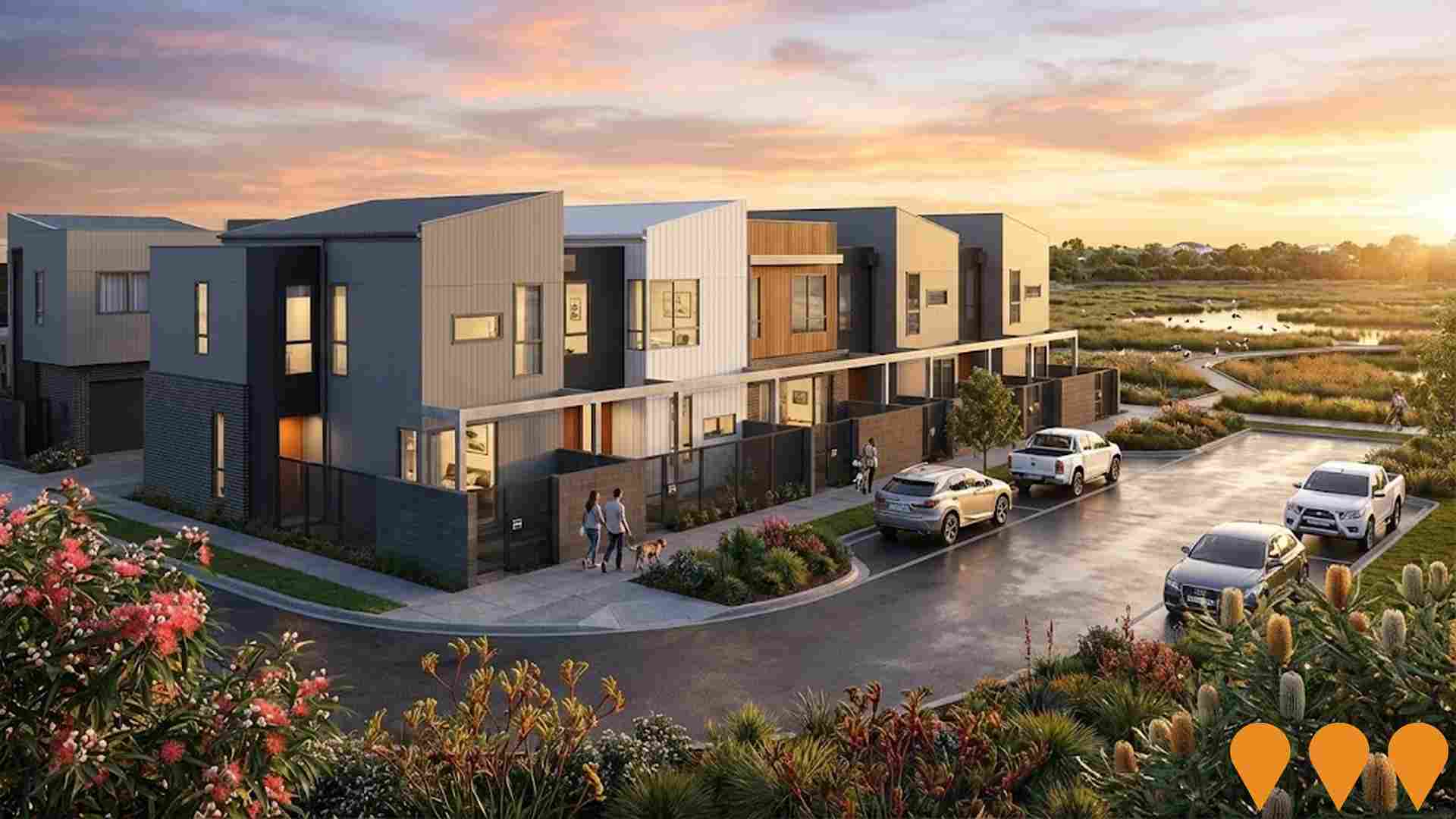
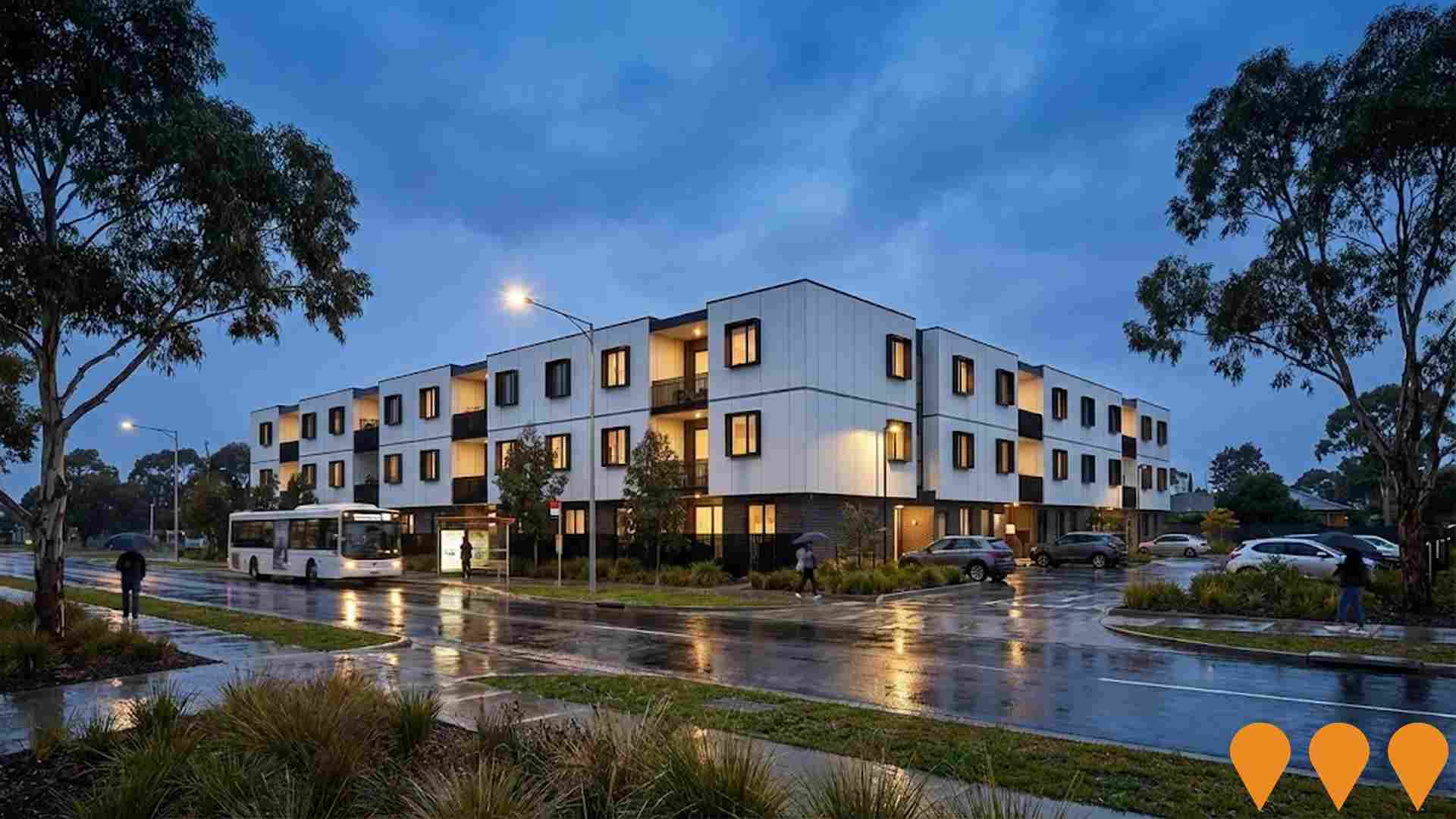
Community momentum and real estate conditions are heavily shaped by civil infrastructure works, strategic urban planning, and capital project spending. AreaSearch has pinpointed 6 key projects positioned to influence the area, prominently featuring Greening the Pipeline, the Williams Landing Town Centre Development, the Manor Lakes North Reserve Master Plan Implementation, and the Laverton Rail Upgrade.
Professional plan users can use the search below to filter and access additional projects.
INFRASTRUCTURE SEARCH
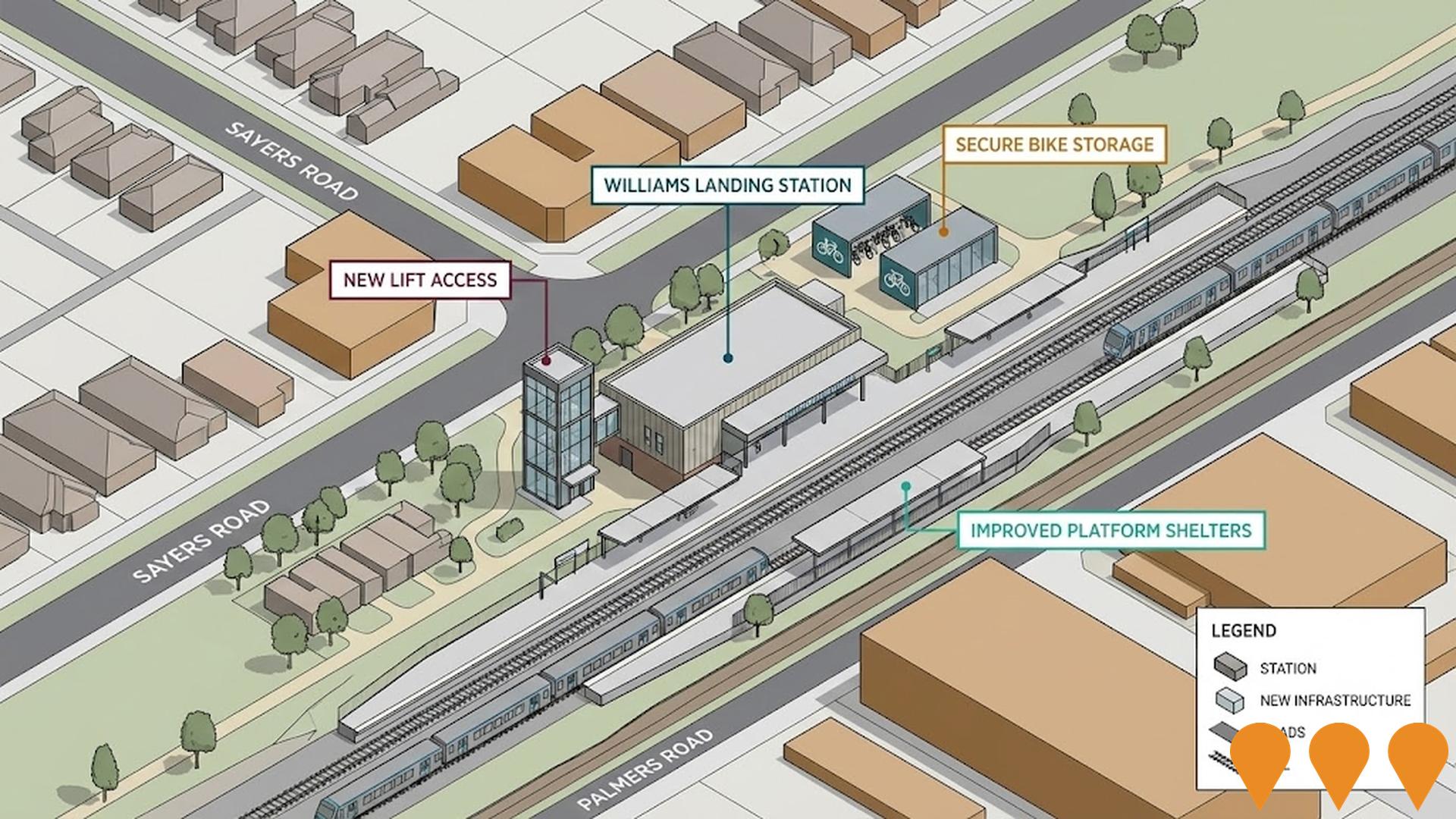
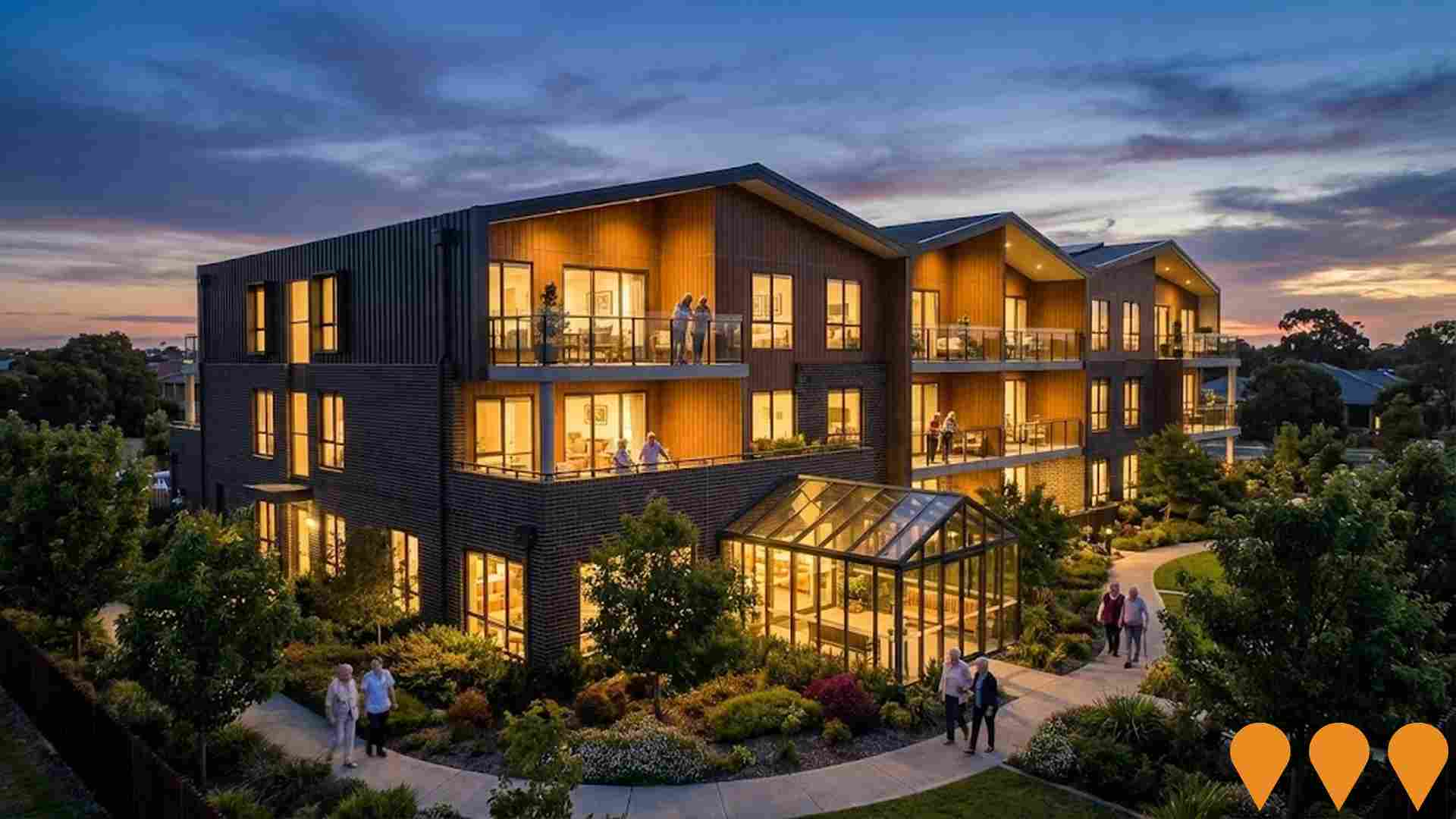
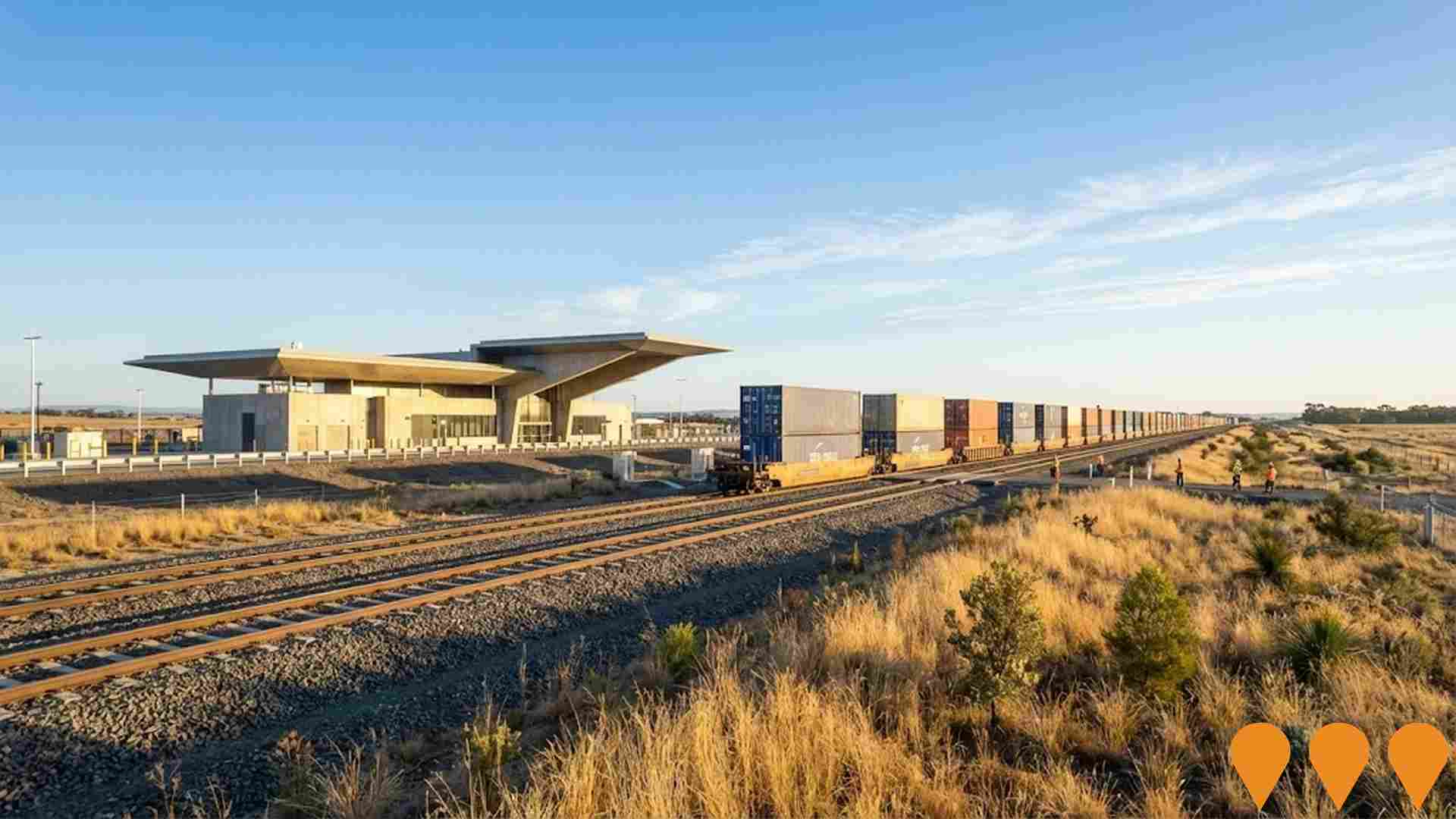
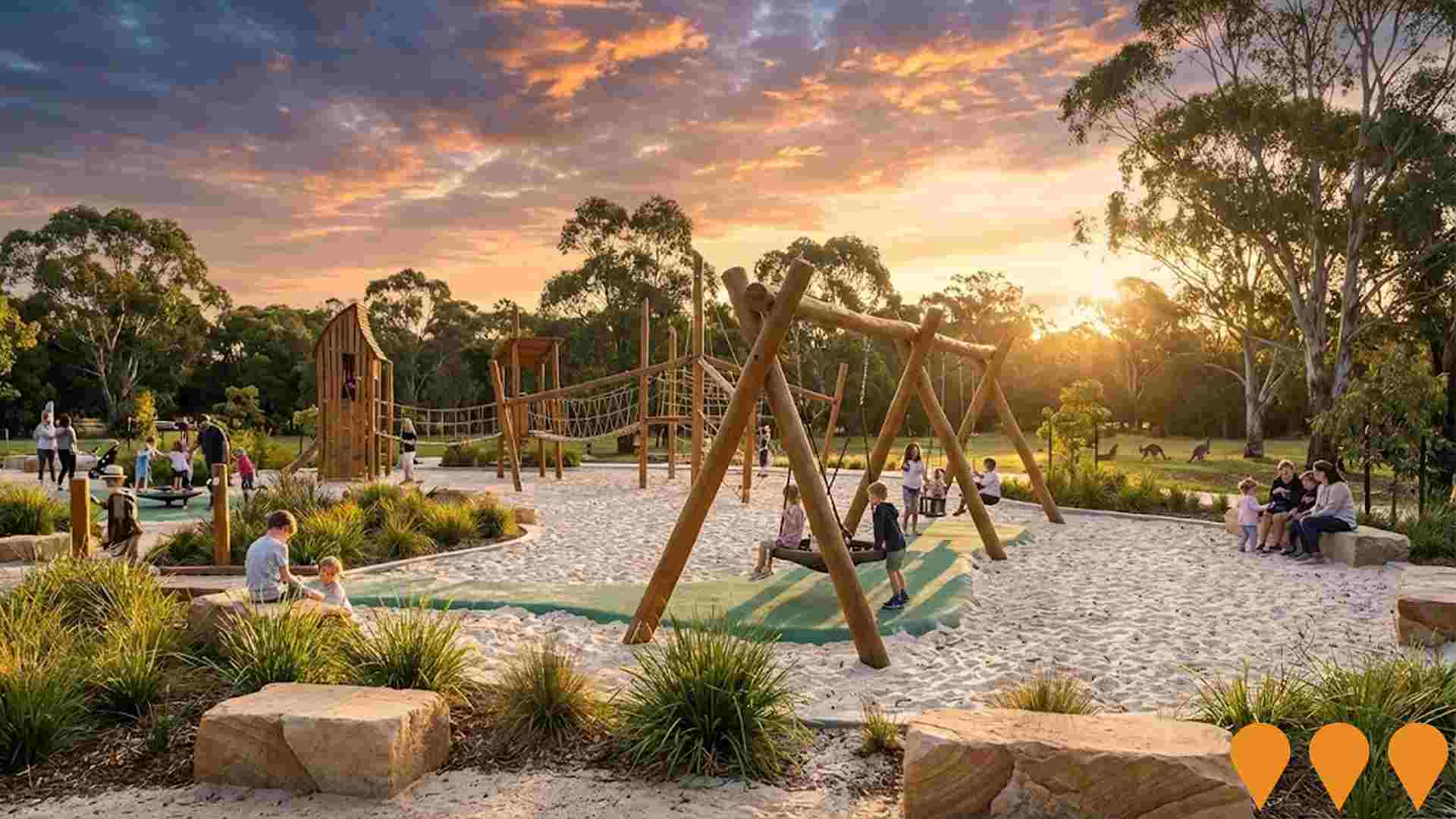
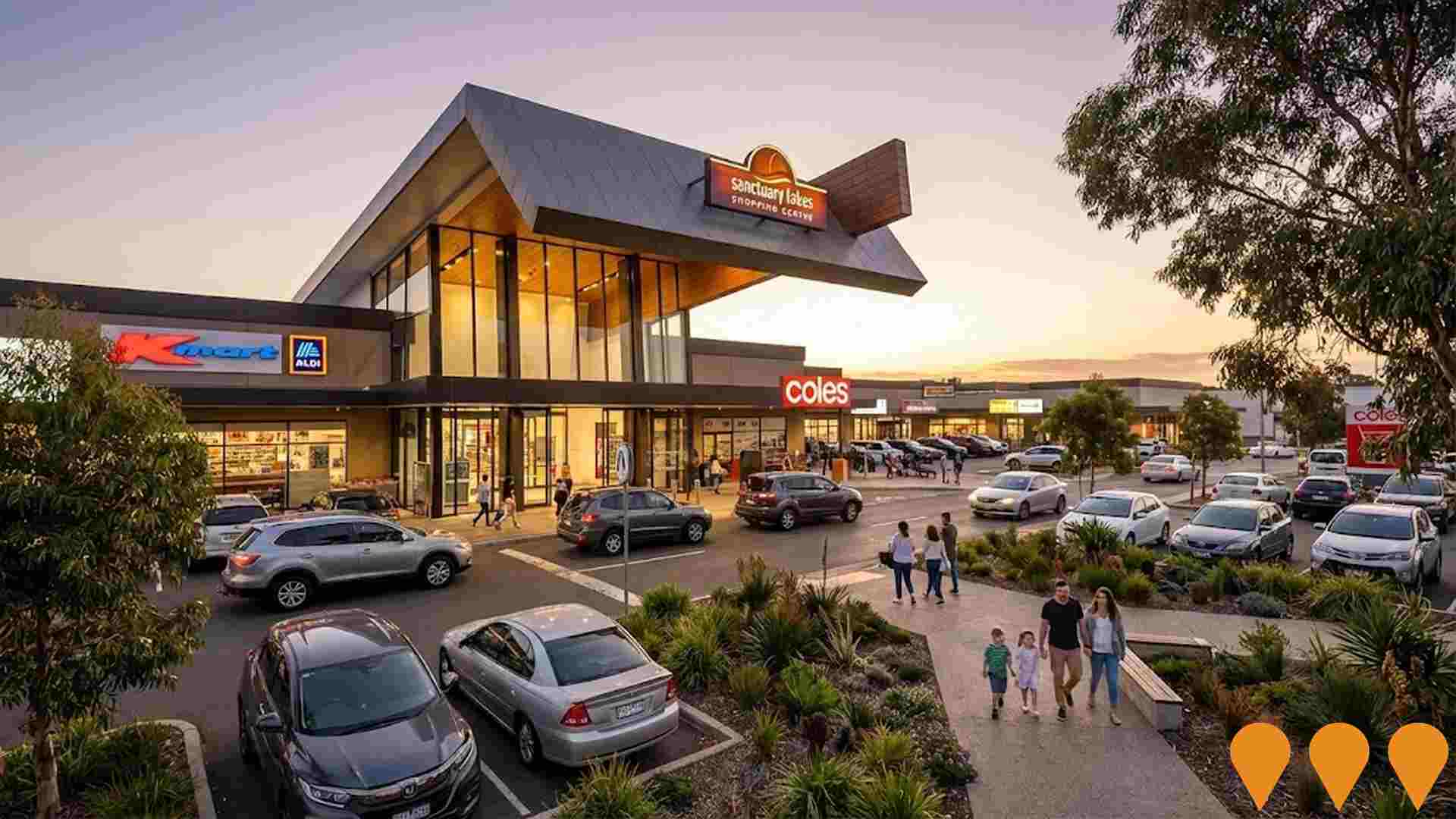
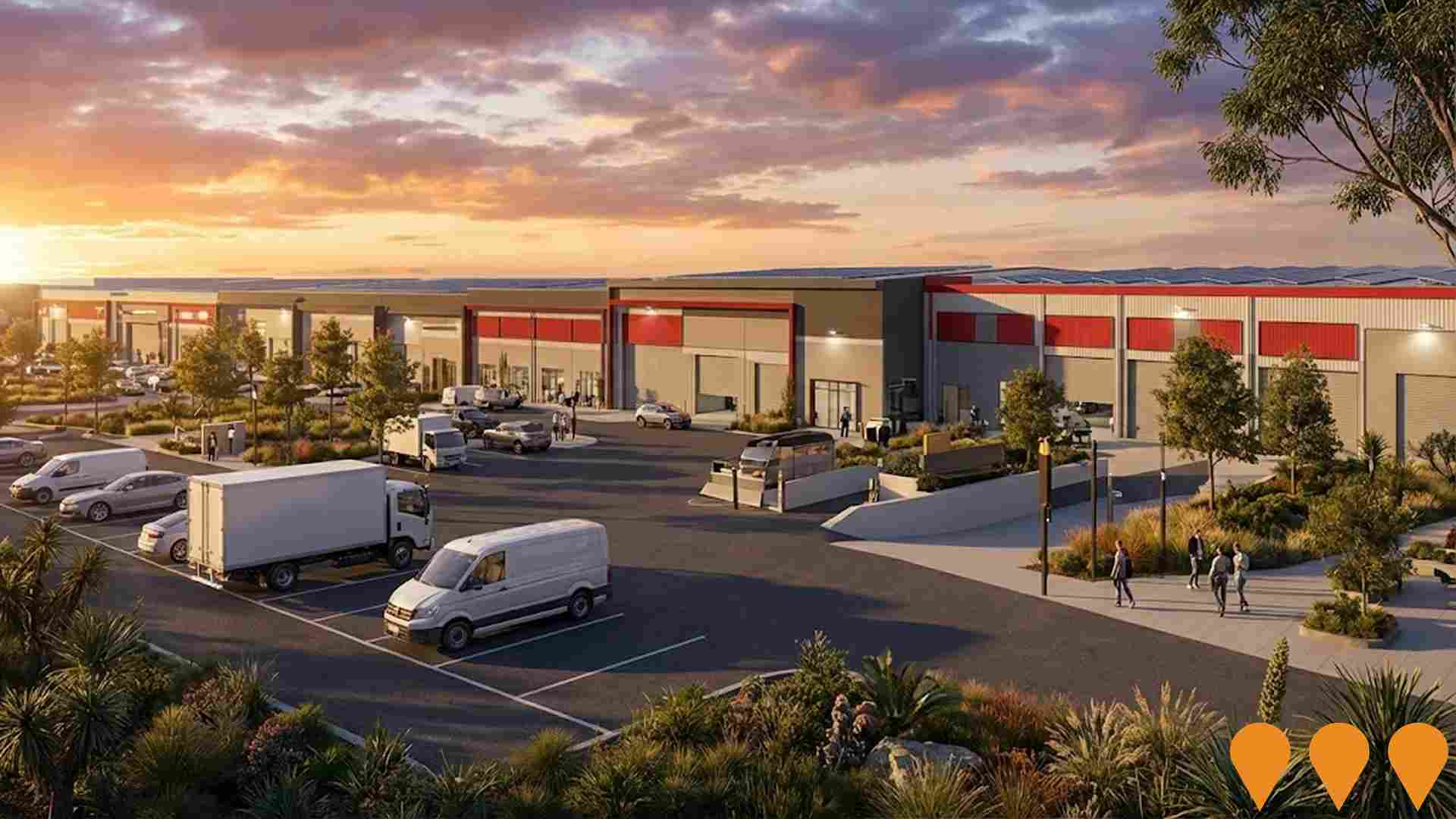
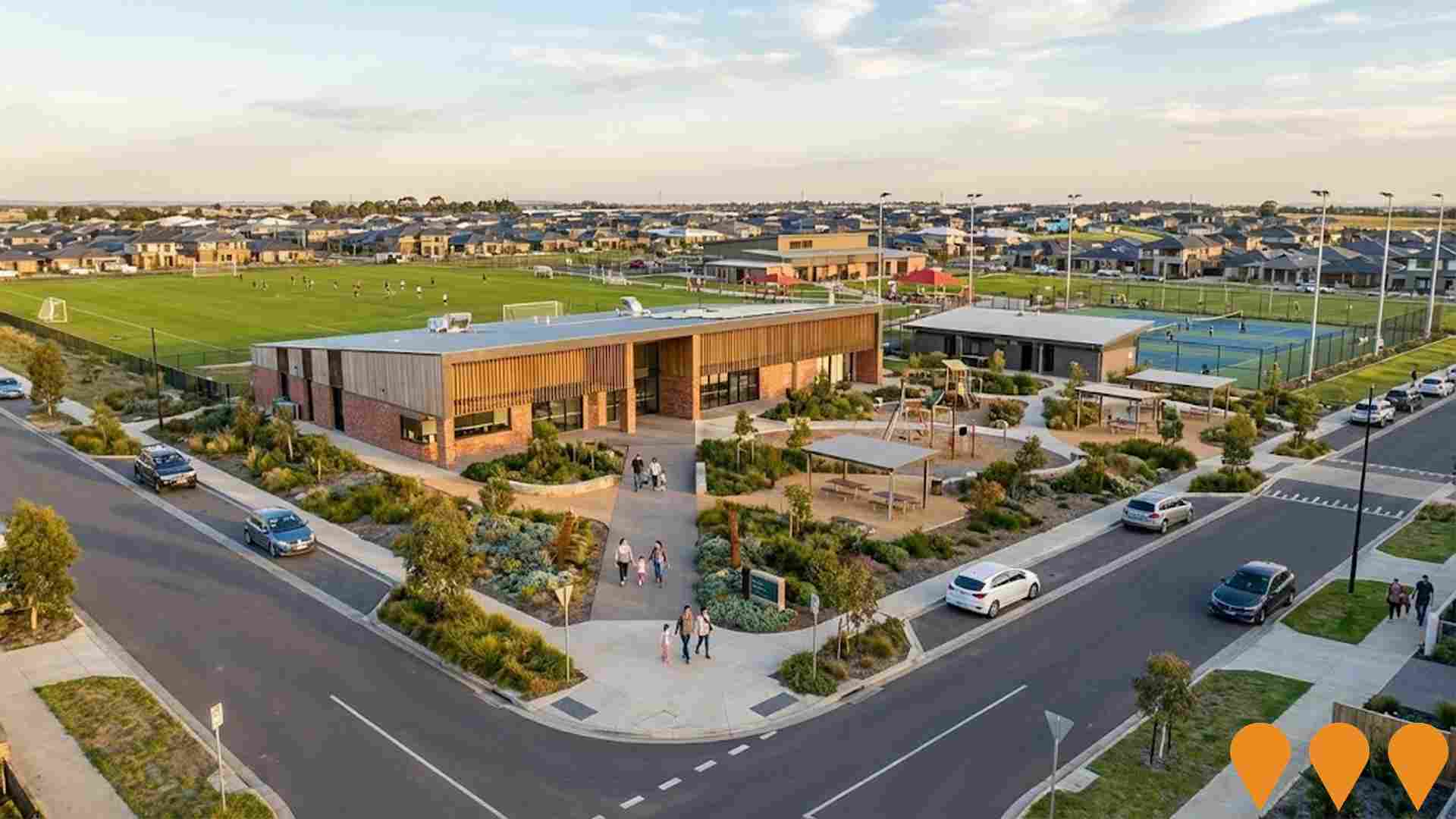
 Denotes AI-based impression for illustrative purposes only, not to be taken as definitive under any circumstances. Please follow links and conduct other investigations from the project's source for actual imagery. Developers and project owners wishing us to use original imagery please Contact Us and we will do so.
Frequently Asked Questions - Infrastructure
Greening the Pipeline
A 27km transformation of the heritage-listed Main Outfall Sewer reserve into a linear parkland. Recent milestones include the 2025 completion of Zone 5 West in Truganina, featuring an amphitheatre and education lookout. As of May 2026, minor maintenance and lighting upgrades are underway at the Williams Landing Pilot Park to integrate it with the new Arndell Park Stormwater Harvesting system.

Holyoake Parade Reserve, Manor Lakes
Completed active open space and sports reserve delivered by Wyndham City Council at Holyoake Parade, Manor Lakes. The facility includes a sports pavilion with community room, cricket and tennis changerooms, umpires room, accessible toilets, kiosk and kitchen, plus an oval with synthetic cricket wicket, cricket nets, six tennis/pickleball courts, playground, BBQ facilities, basketball court, multi-use court and public toilets. Stage one was still having finishing touches added in late 2025 and the reserve is now listed by Council as an operating hireable venue.

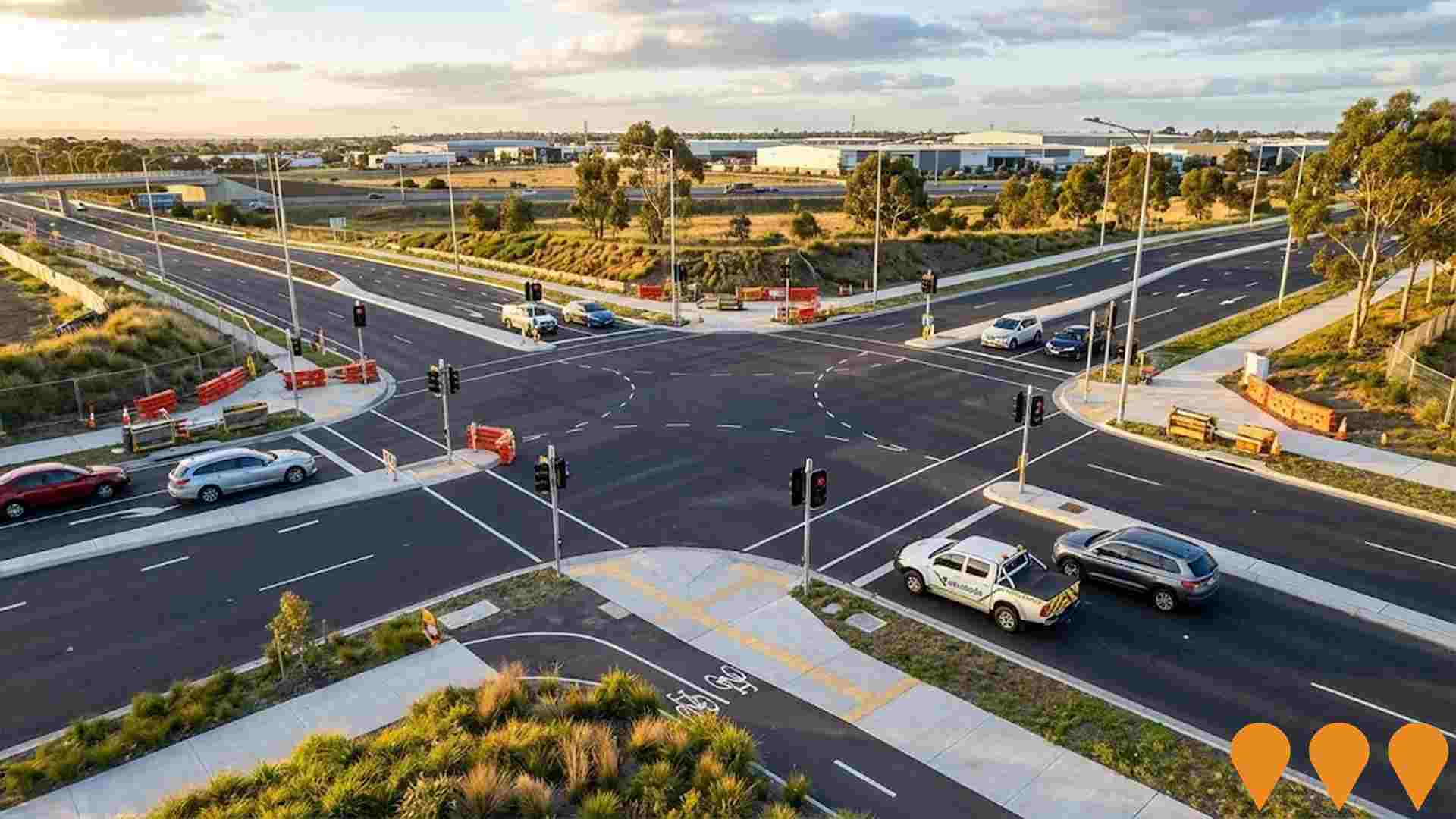
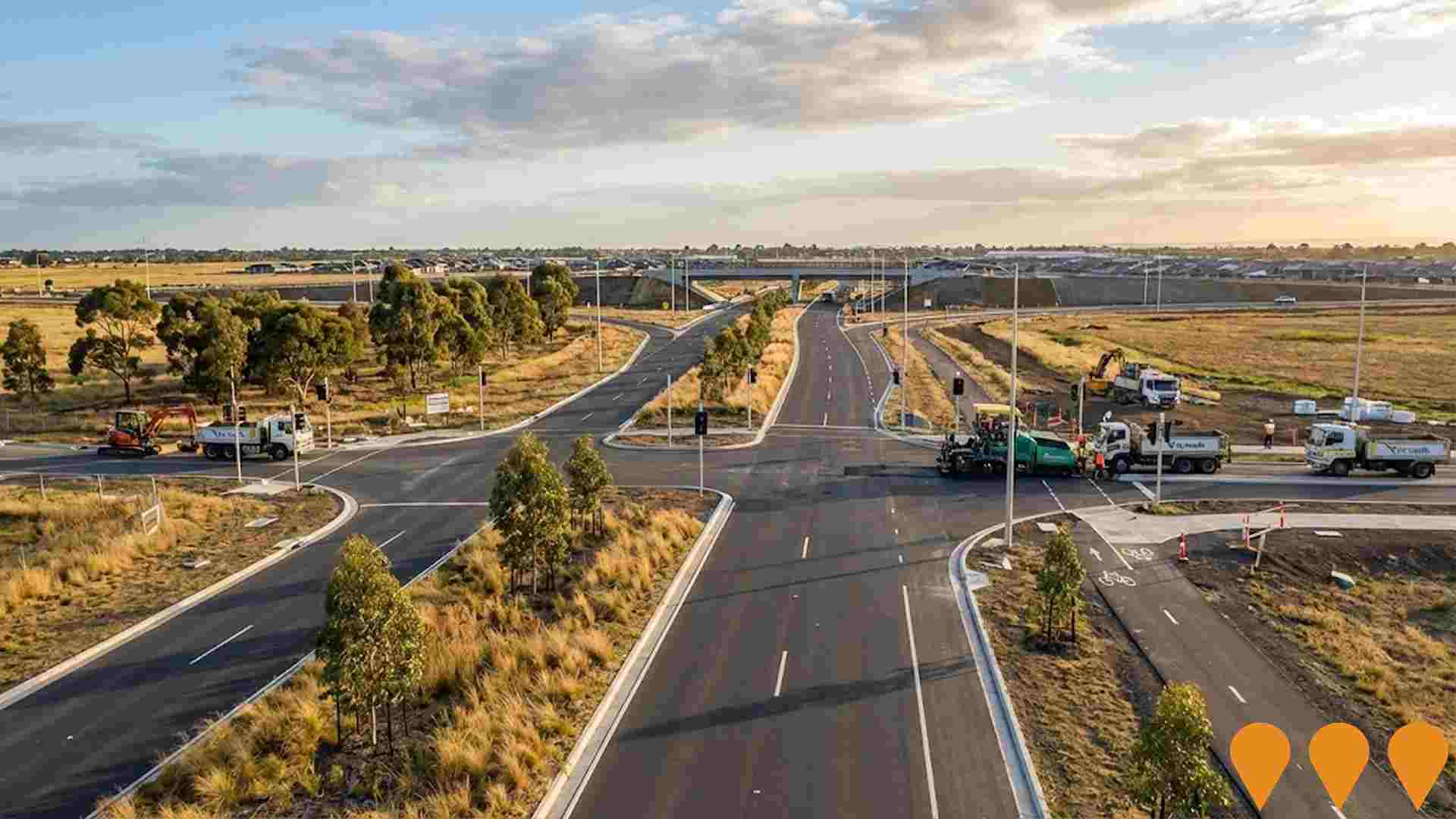
Point Cook Road and Central Avenue Intersection Upgrade
Major road upgrade replacing the existing roundabout with a signalised intersection, constructing a new outbound Princes Freeway exit ramp, adding extra traffic lanes on Point Cook Road and Central Avenue, improving pedestrian crossings and shared walking and cycling paths, and increasing capacity for around 28,000 vehicles each day. Construction is underway with completion targeted for mid-2027.
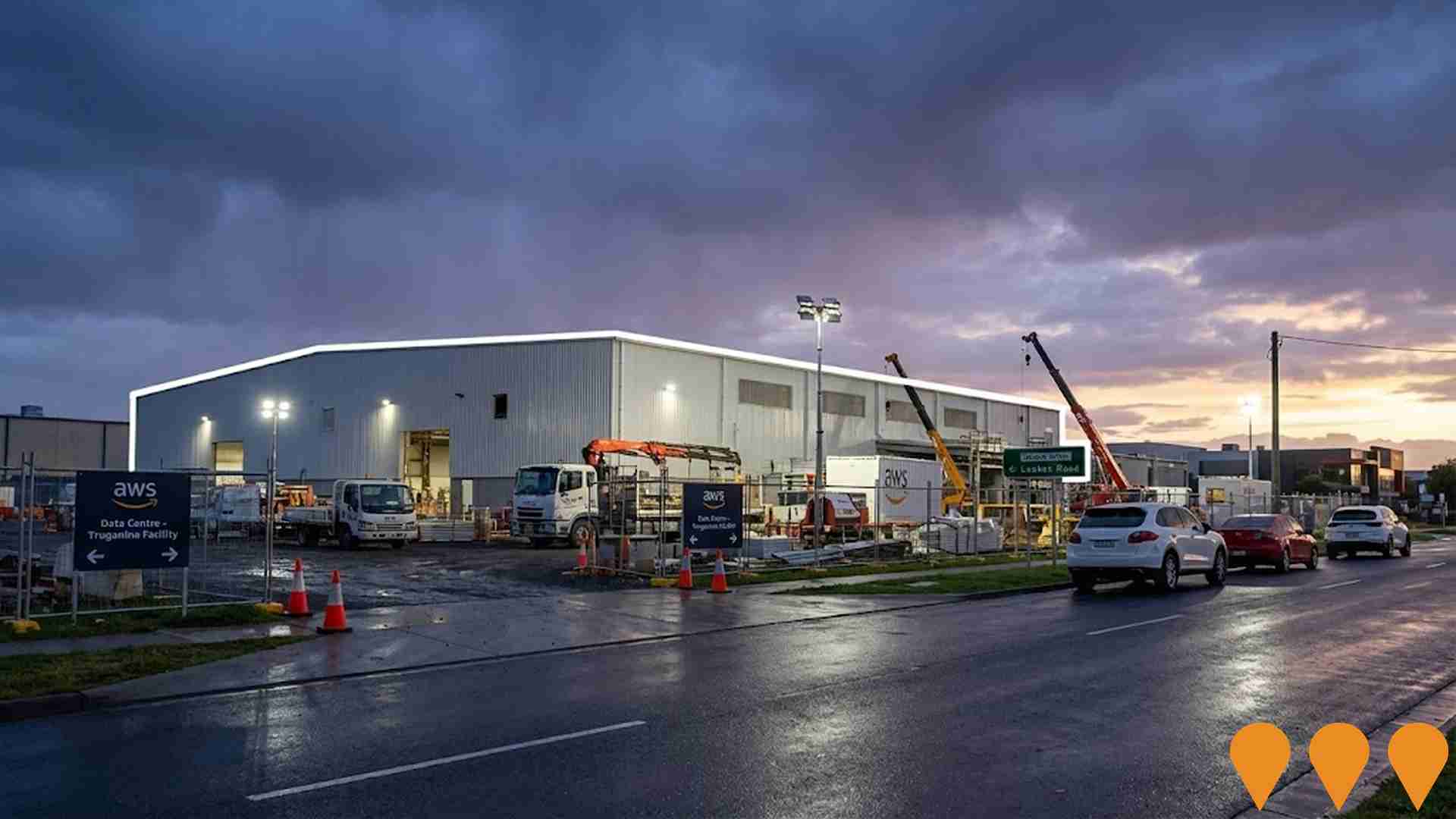
Leakes Road Data Centre
A major data centre facility for Amazon Web Services (AWS) within the AWS Asia Pacific Melbourne Region. The site was acquired for $137.5 million in 2023 and has recently commenced physical construction to support advanced AI applications, cloud storage, and networking services. The project is part of a broader $20 billion AWS investment in Australian digital infrastructure over five years.
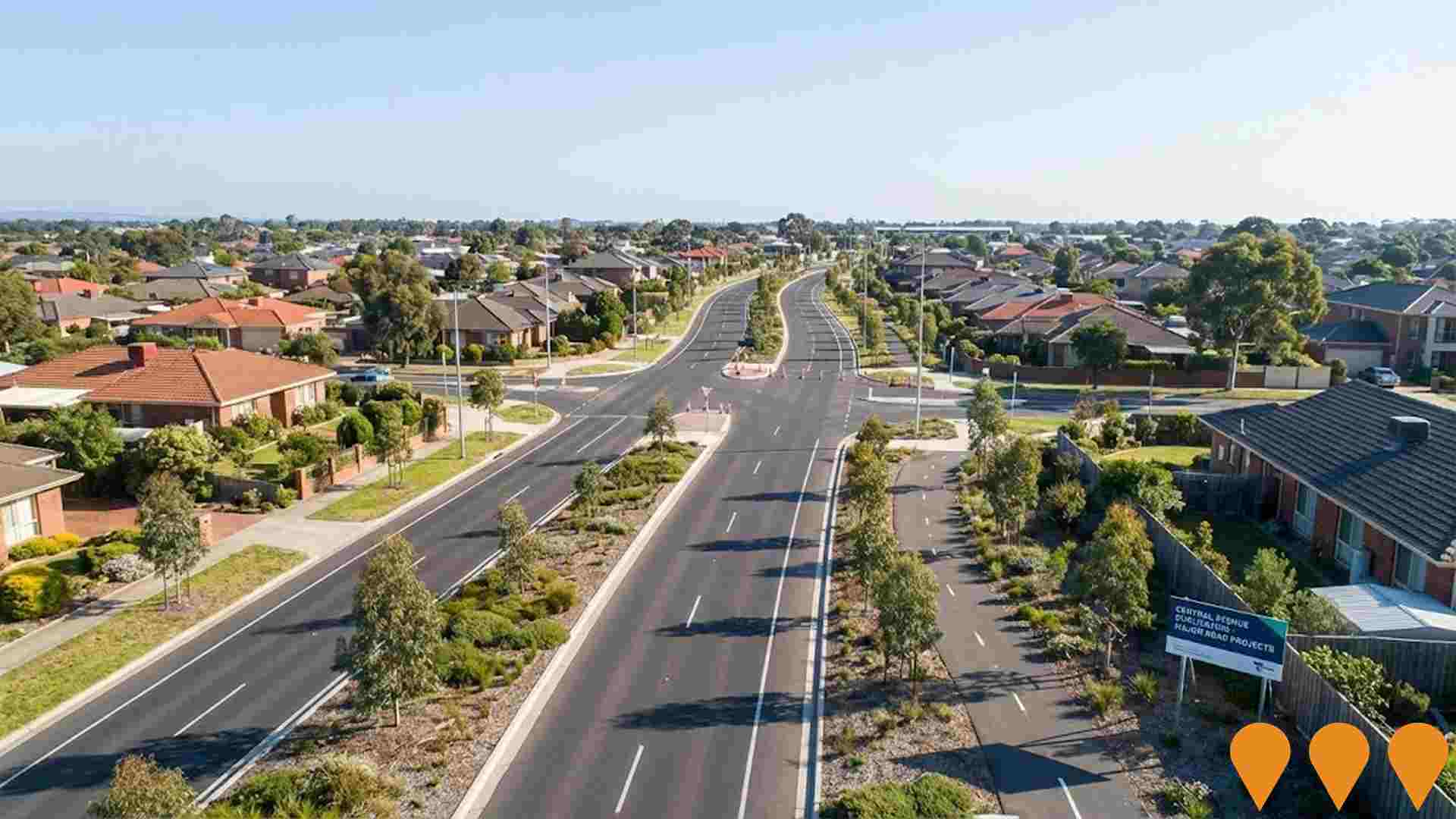
Central Avenue Duplication and Upgrade
The Central Avenue Duplication involves upgrading and duplicating Central Avenue between Lunn Court and Skehan Boulevard in Altona Meadows to improve capacity, traffic flow, and safety. The project also delivers upgraded intersections, enhanced shared walking and cycling paths, and improved public transport connections across Melbourne's western suburbs.
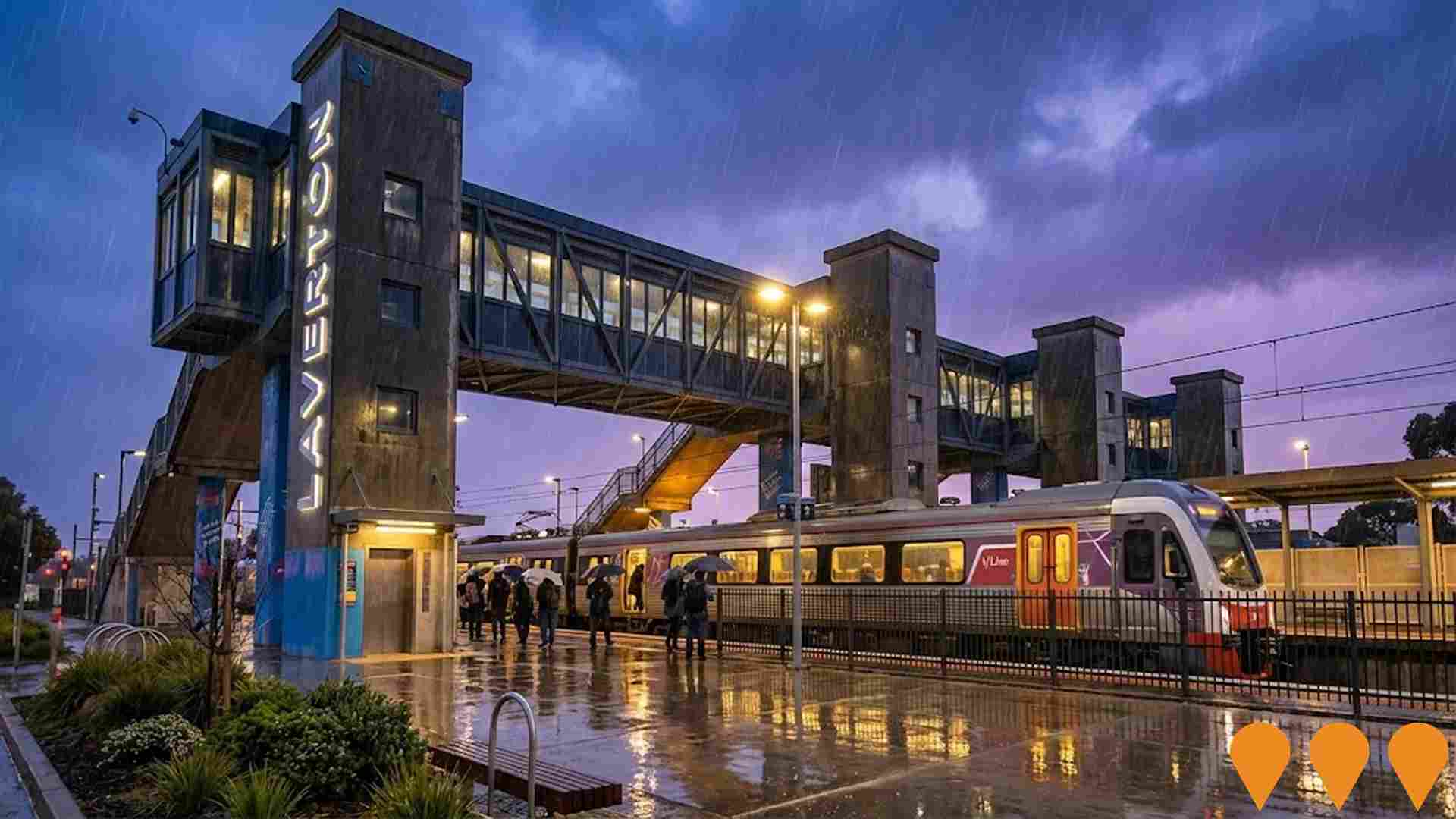
Laverton Rail Upgrade
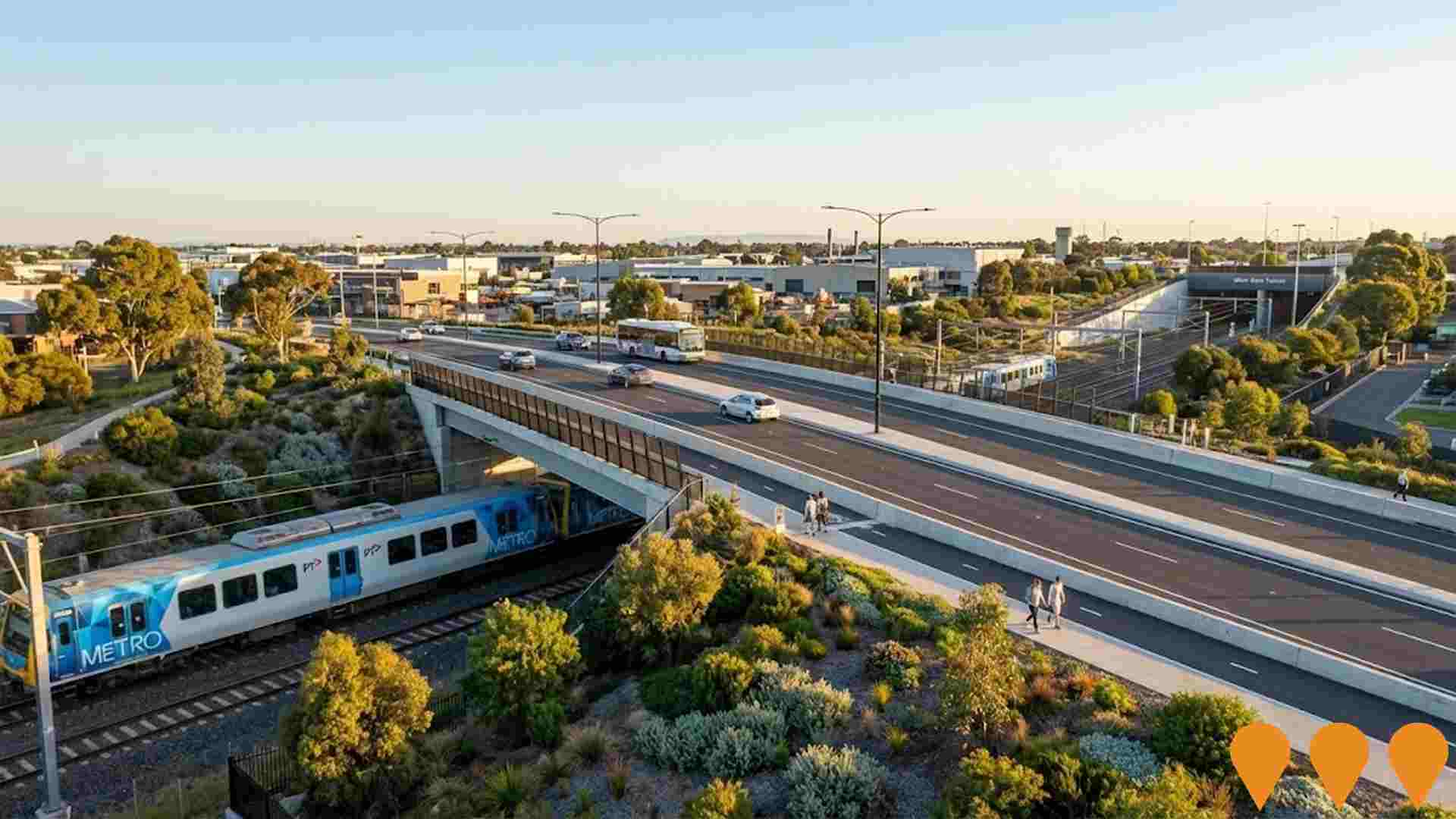
Infrastructure upgrade enabling additional services on Werribee line starting/finishing at Laverton instead of Flinders Street during peak periods. Project includes platform extensions, signalling improvements, and enhanced station facilities to support increased train frequency and passenger capacity for Melbourne's growing western suburbs.
Williams Landing Station Improvements
Station accessibility and amenity upgrade at Williams Landing Station including a new lift on the Wallace Avenue side, new Parkiteer secure bicycle storage, upgraded platform shelters and station amenity improvements. Minor works were completed in late 2025, with lift, shelter and bike storage construction continuing through 2026 under the Growth Areas Infrastructure Contribution program.
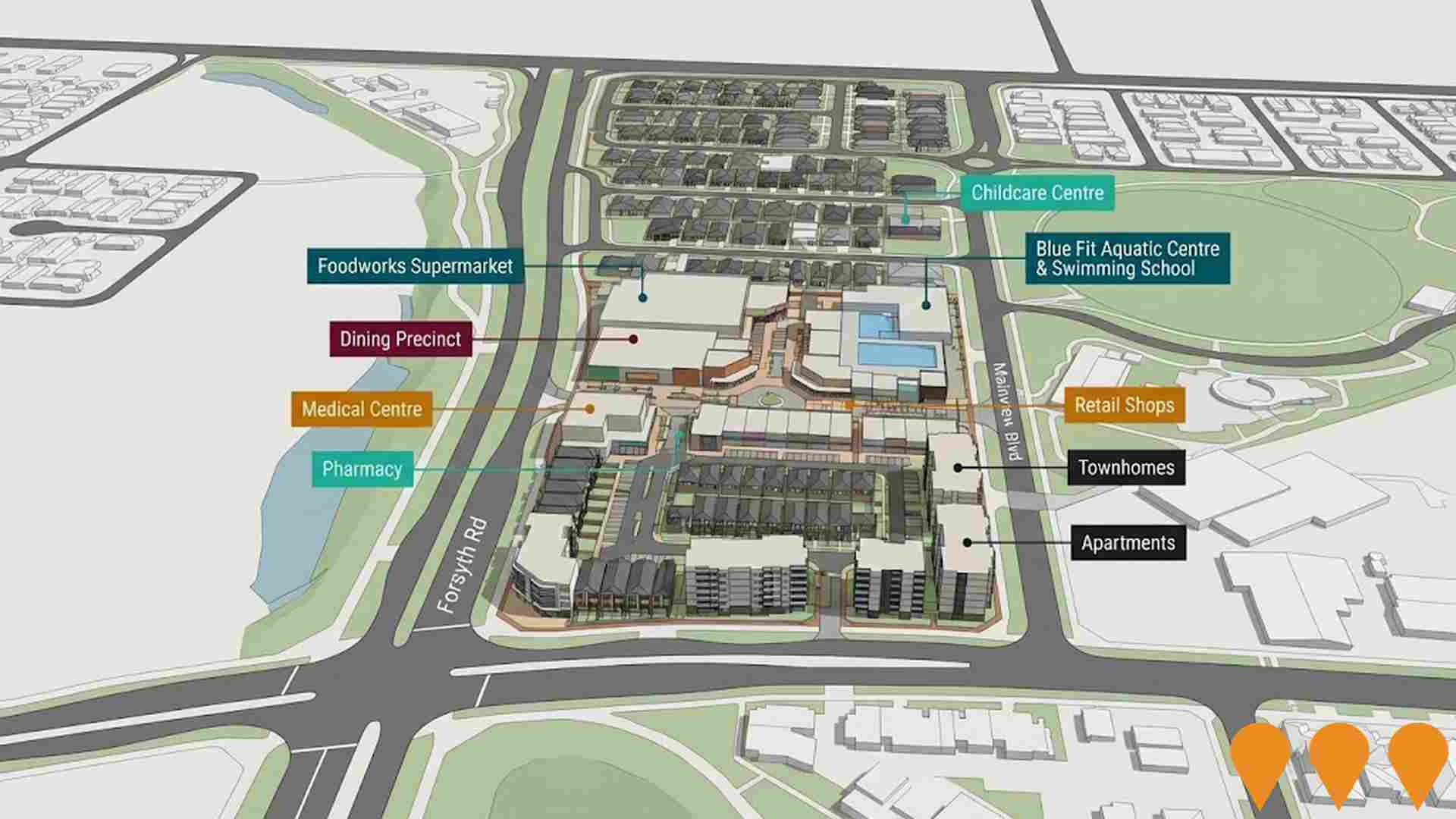
Williams Landing Town Centre Development
A 43-hectare master-planned Priority Development Zone being transformed into a major mixed-use superhub. The precinct integrates commercial, retail, and residential components including over 200,000sqm of office and retail space and a projected 3,800 dwellings upon completion. Key milestones include the Target Australia HQ, Emergency Services Telecommunications Authority, and the sixth strata office building, Hudson Hub. Recent approvals in May 2026 include a $15.04 million mixed-use business hub at 40 Kendall Street featuring warehouse and office spaces.The development is a transit-oriented hub featuring a dedicated train station and freeway interchange.



2,957 residents of Laverton (Vic.) are employed, from a labour force of 3,124. Unemployment sits at 5.3%, with participation at 73.3%. Weighted for its industry mix, the area's sectors are forecast to grow about 5.9% nationally over five years. That reflects industry composition only and makes no allowance for local population growth. Unemployment and labour force come from ABS Small Area Labour Markets, updated quarterly; the industry and occupation profile is from the 2021 Census.
Detail
Laverton possesses an educated resident labor force spread across diverse sectors, recording an unemployment rate of 5.3% and steady year-on-year job conditions based on aggregated AreaSearch data. By March 2026, employed residents numbered 2,957, with the local jobless rate tracking 0.6% higher than Greater Melbourne's 4.8% benchmark, while labor force participation reached a healthy 73.3% versus 70.1% across Greater Melbourne. Census records indicated that 18.8% of workers operated from home, though historical Covid-19 restrictions formed part of that operating environment. The dominant employment sectors for local residents include transport, postal & warehousing, accommodation & food, as well as health care & social assistance.
Workforce concentration is particularly pronounced in transport, postal & warehousing, where local representation stands at 2.1 times the wider regional baseline. Conversely, professional & technical roles account for only 5.7% of the resident workforce, trailing Greater Melbourne's 10.1%. At the time of the Census, a ratio of 0.7 jobs per resident pointed to an above-average volume of local employment opportunities. AreaSearch's review of ABS and SALM metrics shows that in the twelve months leading to March 2026, local employment grew by 0.3% while the labor pool expanded by 0.5%, resulting in a 0.1 percentage point uptick in the unemployment rate. Over the identical timeframe, Greater Melbourne saw employment climb by 2.1%, the labor pool rise by 2.3%, and unemployment lift by 0.2 percentage points. Forward-looking employment estimates published by Jobs and Skills Australia in Mar-26 provide additional context regarding future workforce requirements in Laverton. Mapped across five-year and ten-year horizons against the suburb's existing industry distribution, these forecasts project nationwide employment gains of 6.6% across five years and 13.7% across ten years, with performance varying by sector. When applied to Laverton's sectoral composition, local employment is modeled to rise by 5.9% across five years and 12.6% across ten years (serving as an illustrative weighted extrapolation that excludes localized population modeling).
Frequently Asked Questions - Employment
Median household income in Laverton (Vic.) is $1,512 a week (about $79,000 a year), with median personal income at $738 a week. ATO records put median taxable income at $46,289 a year against an average of $55,463. Household income is from the 2021 Census; taxable income is from ATO Taxation Statistics for the latest financial year available, indexed forward using the ABS Wage Price Index.
Detail
Aggregated ATO figures for financial year 2023 compiled by AreaSearch indicate that Laverton's median taxpayer earnings stood at $46,289, alongside an average figure of $55,463. These levels sit beneath national benchmarks and compare to a median of $57,688 and an average of $75,164 across Greater Melbourne. Accounting for a 9.62% increase in the Wage Price Index since financial year 2023, updated figures are modeled at roughly $50,742 for median earnings and $60,799 for average earnings as of March 2026. Data from the 2021 Census reveals modest positioning for individual, household, and family earnings, placing between the 36th and 36th percentiles.
The primary cohort is the $1,500 - 2,999 earnings tier, encompassing 35.2% of the local population (1,797 people), which closely aligns with the 32.8% regional proportion. Rental and mortgage affordability constraints are acute, with 82.1% of income remaining after housing costs, positioning the area in the 34th percentile.
Frequently Asked Questions - Income
Laverton (Vic.) had 1,745 occupied dwellings at the 2021 Census, 79% detached houses and 3% apartments. 27% are owned with a mortgage, 50% rented and 23% owned outright. At that Census the median rent was $330 a week and the median mortgage repayment $1,700 a month. Rent absorbs 21.8% of household income here and mortgage repayments 25.9%. Dwelling stock, tenure and housing costs are 2021 Census measures — the only source that counts dwellings at this boundary size.
Detail
According to the latest Census, Laverton's residential stock was comprised of 78.5% standalone houses and 21.6% attached dwellings, apartments, and alternative accommodation types, contrasting with metropolitan Melbourne's breakdown of 67.9% separate houses and 32.1% other dwelling formats. Outright home ownership trailed metropolitan benchmarks at 22.8%, while 26.7% of properties were held with a mortgage and 50.4% were tenanted. Monthly median mortgage obligations were notably lower than the Melbourne metro figure of $2,000, registering at $1,700, and weekly median rent was $330 compared to $390 across metropolitan Melbourne. On a national scale, local monthly mortgage repayments sit below Australia's $1,863 benchmark, while weekly rents remain well below the national average of $375.
Frequently Asked Questions - Housing
Laverton (Vic.) counted 1,745 households at the 2021 Census, an estimated 1,872 today, averaging 2.5 people each. 24% are couples with children, against 23% couples without children. 28% of households are people living alone, and families average 1.3 children. Household and family composition is measured only by the Census, so these are 2021 figures.
Detail
Families constitute the majority of local living arrangements at 63.0%, comprising 24.4% couples raising children, 22.8% couples without children, and 13.4% single-parent households. Non-family living structures make up the remaining 37.0%, divided between solitary residents at 27.8% and group households at 8.8%. With an average of 2.5 residents, typical household occupancy is slightly lower than Greater Melbourne's 2.6 person average.
Frequently Asked Questions - Households
31.7% of adults in Laverton (Vic.) hold a university qualification, including 18.6% with a bachelor degree and 11.4% with postgraduate qualifications. A further 19.6% hold a vocational qualification. 4 schools serve the area, with 1,363 enrolment places and an average ICSEA of 1,023 against a national benchmark of 1,000. Qualifications come from the 2021 Census; school enrolments, ICSEA and results come from ACARA's current release.
Detail
Attainment levels for higher education in Laverton sit beneath the broader SA3 benchmark, with 31.7% of residents aged 15 and above possessing university qualifications compared to 37.0% regionally, indicating headroom for tertiary upskilling. Bachelor-level degrees represent the largest segment at 18.6%, followed by postgraduate awards at 11.4% and graduate diplomas at 1.7%. Technical and trade qualifications are widely held, with vocational credentials held by 31.8% of individuals aged 15+, consisting of 19.6% at the certificate level and 12.2% holding advanced diplomas. A significant 33.5% of the local population is actively undertaking formal education.
Enrolments are distributed across primary education (8.5%), higher education institutions (6.9%), and secondary schools (5.1%).
Frequently Asked Questions - Education
Schools Detail
Public transport in Laverton (Vic.) reaches 29 stops on 15 routes, timetabled for about 6,400 services a week. The typical home sits about 200 m from its nearest stop. Buses carry the largest share of public transport commuters. Households keep an average of 1.0 vehicles. Stop and service counts are built from operators' published GTFS timetables and refresh with each timetable release; vehicle ownership is from the 2021 Census.
Detail
Laverton is supported by 29 active transit stops providing bus connections across the suburb. These locations are integrated into 15 unique transit routes that generate 6,429 scheduled trips per week. Transit connectivity is strong, with residents residing a median distance of 198 meters from their closest boarding point. Commuters predominantly travel outward, with private vehicles serving 70% of journeys and trains accommodating 21%. Vehicle ownership sits below regional standards at 1.0 vehicles per private dwelling, while 18.8% of workers worked from home according to the 2021 Census under pandemic-era settings.
Public transport operations generate an average of 918 scheduled trips per day across the network, translating to roughly 221 weekly departures per individual stop.
Frequently Asked Questions - Transport
Transport Stops Detail
75.5% of residents in Laverton (Vic.) report no long-term health condition. 5.9% need daily assistance with core activities, and 48.8% hold private health cover. The standardised death rate runs at 6.0 per 1,000 residents. Health conditions, assistance needs and insurance are 2021 Census measures; the death rate comes from current ABS releases.
Detail
Public health metrics compiled by AreaSearch indicate notable health challenges in Laverton across mortality indicators and long-term health issues, which appear across younger and older demographics alike. Private health insurance coverage is limited, with roughly 49% of residents (~2,493 people) holding private policies, trailing both Greater Melbourne (56.7%) and the national benchmark (55.7%). The primary reported chronic conditions in the locality are mental health disorders (7.7%) and asthma (6.5%), whereas 75.5% of inhabitants reported no diagnosed chronic conditions, outperforming Greater Melbourne's 72.6% rate. Health outcomes across the working-age cohort remain consistent with standard benchmarks.
Residents aged 65 and above account for 10.0% of the community (510 people), which is lower than Greater Melbourne's 15.1% share. Senior cohorts experience several health challenges, with overall health indicators matching broader national patterns.
Frequently Asked Questions - Health
55.2% of Laverton (Vic.) residents were born overseas and 53.5% speak a language other than English at home, more culturally diverse than 93% of areas nationally. The largest reported ancestries are English (15.7%) and Australian (13.2%). Ancestry, language and country of birth are counted only by the Census, so these are 2021 figures.
Detail
Cultural diversity in Laverton is exceptionally pronounced relative to national benchmarks, with 55.2% of residents born abroad and 53.5% speaking a language other than English in the home. Christianity represents the most common religious affiliation at 39.2% of the local population. However, Hinduism shows a major presence locally, accounting for 13.9% of residents compared to only 4.4% across Greater Melbourne. Evaluating parental country of birth reveals that Other ancestry accounts for the largest proportion in Laverton at 26.9%, substantially exceeding the 14.6% regional average, followed by English ancestry at 15.7% and Australian ancestry at 13.2% (lower than the wider metropolitan level of 18.4%).
Specific cultural communities also demonstrate distinct representation, including Indian backgrounds at 10.1% (compared to 4.2% regionally), Filipino at 5.0% (versus 1.3%), and Polish heritage at 1.0% (against 0.8%).
Frequently Asked Questions - Diversity
The median resident of Laverton (Vic.) is 32, younger than 90% of areas nationally. 38.1% of residents are aged 15 to 34. Age cohorts are not raw Census counts: the Census split is re-based to the latest ABS population estimates and state projections.
Detail
Laverton's age distribution displays a younger orientation than Greater Melbourne, particularly across upper age brackets. As of August 2026, AreaSearch estimates show 41.7% of the population situated between ages 25 - 44, compared to 32.1% regionally, while residents aged 65+ represent 10.0% versus 15.1% across Greater Melbourne. The median age remains steady at 32 as of August 2026, matching the 2021 Census reading, while sitting 5 years below Greater Melbourne's median of 37 and below the national median of 38 at that Census. Meanwhile, residents aged 0 - 24 have decreased from 29.0% at the Census to an estimated 26.7%.
Looking ahead to 2041, the largest numerical expansion will occur among those aged 45 - 64, rising by 862 residents (77%) to reach 1,980, while the 65+ cohort will record the fastest proportional expansion, increasing 106% to 1,053 residents.
Frequently Asked Questions - Age
Data & MethodBoundaries, Sources & Method for Laverton (Vic.)
9 of 14 data sections on this page were updated within the last 12 months — the newest current to Sep 2026.
Everything is aggregated to the Suburb (SAL) boundary shown above, on a 2021 Census baseline. Only 3 sections — housing, households and cultural diversity — still wait on the 2026 Census.
The ledger — source, cycle and currency by section
| Section | Source & update cycle | Currency |
|---|---|---|
| Updated within the last 12 months 9 sections | ||
| Population | ABS, GNAF, Geoscience Australia Annual (ABS ERP) | Aug 2026 2 months ago headline measures · 2021 Census baseline |
| Re-based to the ABS Estimated Resident Population (June 2025 release) and updated with new dwellings from GNAF address data. Current to Aug 2026, with the 2021 Census supplying the small-area baseline. | ||
| Age profile | ABS, Geoscience Australia, State governments Annual | Aug 2026 2 months ago headline measures · 2021 Census baseline |
| Age cohorts are re-based to the latest ABS population estimates and state projections, current to Aug 2026. Each cohort is held as a Census baseline and a current estimate. | ||
| Development & approvals | ABS, GNAF Monthly (ABS approvals) | Aug 2026 2 months ago headline measures · Jul 2026 baseline |
| Property sales & rents | Valuer General, Rental Board, ABS Weekly sales, quarterly rents | Sep 2026 last month all 21 measures |
| Sales from the state Valuer General register, refreshed weekly, and rents from quarterly rental bond lodgements. Both are read live each time this page loads, current to Sep 2026. | ||
| Infrastructure projects | Infrastructure Australia, State agencies, Local governments Daily | May 2026 5 months ago all 3 projects tracked here |
| Project pipeline maintained continuously from Infrastructure Australia, state agencies, local government and public announcements. Records are added and revised daily; this area was last updated May 2026. | ||
| Employment | ABS, DEWR, JSA Quarterly (ABS SALM) | Mar 2026 7 months ago headline measures · 2021 Census baseline |
| Unemployment and labour force from ABS Small Area Labour Markets, current to Mar 2026. The growth outlook applies Department of Employment (now Jobs and Skills Australia) forecasts for all 19 industry divisions to the local industry mix, so it measures sector composition rather than local expansion and makes no allowance for population growth. Job demand comes from the same agency via its Internet Vacancy Index; industry and occupation structure from the 2021 Census. | ||
| Education | ABS, ACARA Annual (ACARA) | Sep 2026 last month headline measures · 2021 Census baseline |
| Transport | ABS, State Transport Departments Each timetable release | Jul 2026 3 months ago headline measures · 2021 Census baseline |
| Services & amenities | Provider directories, ACECQA Continuous | Sep 2026 last month all 14 measures |
| Annual and financial-year sources 2 sections | ||
| Income | ABS, ATO Annual (ATO) | FY 2023 3 years ago headline measures · 2021 Census baseline |
| ATO taxable income statistics for FY 2023, indexed forward using the Wage Price Index. Census household income provides the distribution detail. | ||
| Health | ABS, ATO Annual | 2024 2 years ago headline measures · 2021 Census baseline |
| Census-measured — next update: 2026 Census 3 sections No more current small-area source exists for these, so they are labelled as Census-measured rather than implied to be current. | ||
| Housing | ABS 5-yearly (Census) | 2021 Census next update 2026 all 30 measures |
| Households | ABS 5-yearly (Census) | 2021 Census next update 2026 all 18 measures |
| Cultural diversity | ABS, Geoscience Australia 5-yearly (Census) | 2021 Census next update 2026 all 44 measures |
"Currency" is the most recent release feeding that section. Where the Census supplies the structural baseline underneath a current headline figure, the row says so.
How the numbers are built
Population
The Census provides the small-area baseline, aggregated from mesh blocks to this boundary. It is then re-based to the ABS Estimated Resident Population (June 2025 release), and new dwellings built since Census night are counted from address data — 180 validated new addresses here. The headline figure is therefore a current estimate for Aug 2026, not a 2021 count (4,760 at the 2021 Census → 5,107 now). Annual growth rates are compound (CAGR), not simple averages.
Age profile
Cohort shares are not raw Census counts. Every cohort is held as a pair — the Census baseline and a current estimate — and the split is re-based using ERP and state population projections, current to Aug 2026. Median age is the Census median plus modelled change since. Charts that show both are labelled "2021 Census vs Current Estimate".
Property sales
Sourced from the state valuation authority's sales register — current, not Census, and refreshed weekly. Medians are calculated from settled transactions in the period shown; periods with very low transaction counts are flagged or suppressed, because a handful of sales can move a median substantially.
Rents
Derived from state rental bond lodgement data, by dwelling type and bedroom count. Bonds are lodged at the start of a new tenancy, so this reflects new lettings, not the whole rented stock.
Development & infrastructure
Building approvals come from current ABS releases; development applications are collected from council and state planning portals; the infrastructure pipeline is compiled from Infrastructure Australia and local government sources. Applications are matched to this boundary by address or coordinates, so very recent lodgements may not yet appear.
Employment & income
Industry and occupation structure comes from the Census, but the headline labour-market indicators do not. Unemployment and labour force are derived from ABS Small Area Labour Markets (quarterly). The employment outlook applies Department of Employment forecasts for all 19 industry divisions to this area's own industry mix (the agency is now Jobs and Skills Australia), as does the Internet Vacancy Index used for job demand. Because it is weighted on industry composition alone, that outlook carries no allowance for local population growth — in fast-growing areas the real rise in local jobs will typically be higher. Income combines Census household income with ATO taxable-income statistics for FY 2023, indexed forward using the Wage Price Index.
Education, transport & amenities
School enrolments, ICSEA and performance come from ACARA's current release, not the Census. Public transport stops and service frequency are derived from GTFS timetable feeds published by state transport departments. Services and amenities are proximity and count scores built from provider directories, refreshed on their own cycle. The Census contributes only the travel-to-work and qualification measures.
Rankings and benchmarks. Where we rank this area, the comparison set is every area of the same boundary type — suburbs against suburbs, SA2s against SA2s. Benchmarks compare this area against its greater capital city region and the national figure for the same measure and period.
Limits worth knowing. Small areas carry larger error margins, and the ABS introduces small random adjustments to Census counts to protect confidentiality — so totals may not sum exactly. Estimates re-based from regional data describe the area's expected trajectory, not a direct count of it. Figures are indicative for research and are not financial, planning or valuation advice.
Cross-check us. The Census baseline for this boundary is at ABS 2021 Census QuickStats (SAL21476). QuickStats reports 2021 only — the figures on this page are more current wherever the ledger shows a later date.