Chart Color Schemes
est. as @ -- *
ABS ERP | -- people | --
2021 Census | -- people
Sales Activity
Curious about local property values? Filter the chart to assess the volume and appreciation (including resales) trends and regional comparisons, or scroll to the map below view this information at an individual property level.
Find a Recent Sale
Sales Detail
Population
An assessment of population growth drivers in Bexley - North reveals an overall ranking slightly below national averages considering recent, and medium term trends
Bexley - North's population, as per AreaSearch's analysis, is approximately 10,193 as of August 2025. This figure represents an increase of 48 people, a 0.5% rise from the 2021 Census which reported a population of 10,145. The change is inferred from the estimated resident population of 10,151 in June 2024 and an additional 93 validated new addresses since the Census date. This results in a population density ratio of 3,920 persons per square kilometer, placing it within the top 10% of national locations assessed by AreaSearch, indicating high demand for land in the area. Overseas migration was the primary driver of population growth in recent periods.
AreaSearch uses ABS/Geoscience Australia projections for each SA2 area, released in 2024 with a base year of 2022. For areas not covered by this data, NSW State Government's SA2 level projections released in 2022 with a base year of 2021 are used. Growth rates by age group from these aggregations are applied to all areas for the years 2032 to 2041. Future population dynamics anticipate lower quartile growth nationally, with Bexley - North expected to increase by 336 persons to 2041 based on the latest population numbers, reflecting a total increase of 2.9% over the 17 years.
Frequently Asked Questions - Population
Development
Residential development activity is lower than average in Bexley - North according to AreaSearch's national comparison of local real estate markets
Bexley - North averaged approximately 42 new dwelling approvals annually over the past five financial years, with a total of 214 homes approved between FY-21 and FY-25, and an additional 5 approved in FY-26. Despite recent population decline, development activity has been adequate relative to other areas, benefiting buyers while maintaining an average construction cost value of $590,000 per dwelling.
Compared to Greater Sydney, Bexley - North's new dwelling approvals rate is around three-quarters that of the city's overall rate, placing it at the 52nd percentile nationally among assessed areas. New development consists of 40.0% detached dwellings and 60.0% medium and high-density housing, marking a shift from the current 64.0% houses in the area, likely due to diminishing developable land availability and evolving lifestyle preferences. With around 317 people per approval, Bexley - North reflects low density compared to other areas. Population forecasts indicate an increase of 293 residents by 2041. At current development rates, new housing supply should comfortably meet demand, creating favorable conditions for buyers and potentially supporting population growth beyond current projections.
Population forecasts indicate Bexley - North will gain 293 residents through to 2041. At current development rates, new housing supply should comfortably meet demand, providing good conditions for buyers and potentially supporting growth beyond current population projections.
Frequently Asked Questions - Development
Infrastructure
Bexley - North has very high levels of nearby infrastructure activity, ranking in the top 20% nationally
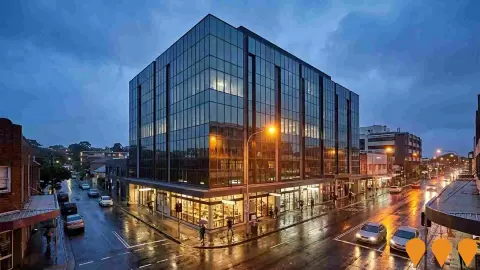
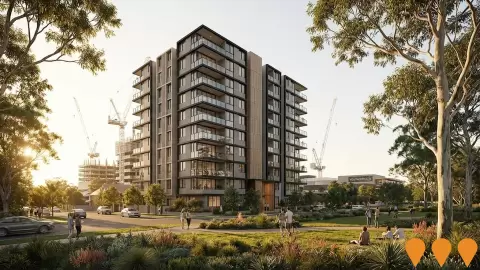
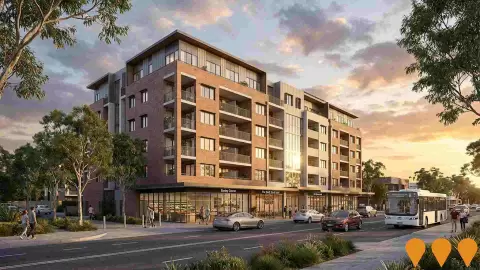
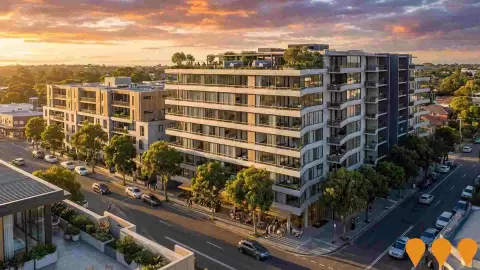
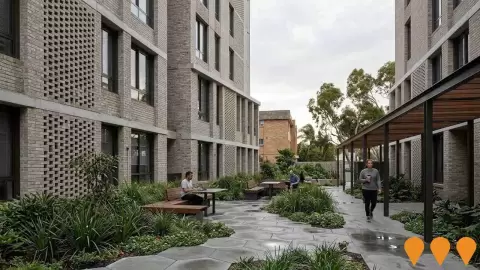
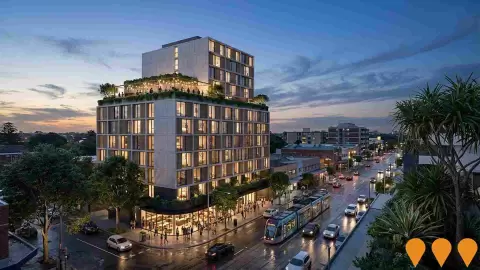
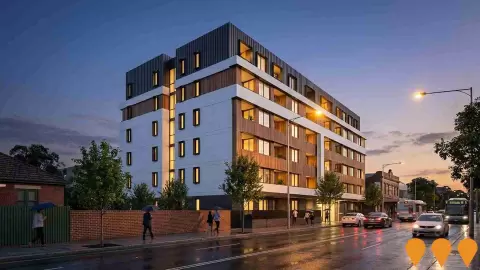
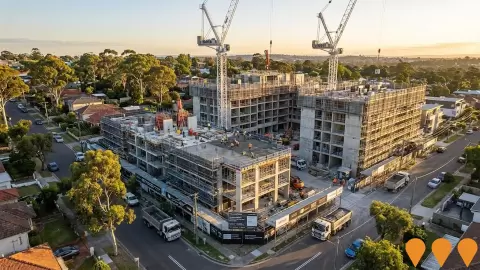
Changes to local infrastructure significantly impact an area's performance. AreaSearch identified 17 projects likely affecting the region. Notable initiatives include Georges River Low and Mid-Rise Housing Policy, Kogarah North Urban Design Strategy Implementation, The Parq, and Bexley North High Density Residential Development. Relevant projects are listed below for further detail.
Professional plan users can use the search below to filter and access additional projects.
INFRASTRUCTURE SEARCH
Frequently Asked Questions - Infrastructure
Sydney Metro West
Sydney Metro West is a new underground metro rail line connecting Greater Parramatta and the Sydney CBD. The 24-kilometre line includes new metro stations and will transform public transport access across Sydney, providing faster, more reliable connections.
Northern Georges River Submain Upgrade
Critical infrastructure upgrade to the Northern Georges River submain water infrastructure including new pipelines, pumping stations and storage facilities to improve water supply reliability, system resilience and quality for the Rockdale area and broader region.
9 Gloucester Road Mixed-Use Development
DA approved mixed-use development comprising 349 residential apartments across five buildings ranging from six to 18 storeys, plus 4,620 sqm of retail and commercial floor space. The development includes three basement levels with 453 car parking spaces and 117 bicycle spaces. Total gross floor area of 36,669 sqm on a 9,240 sqm corner site with frontages to both Gloucester Road and Forest Road. Currently for sale through Knight Frank and CBRE with Expressions of Interest campaign.
Kogarah North Urban Design Strategy Implementation
Strategic urban renewal project transforming 7.6-hectare Kogarah North precinct from low-density residential to high-density mixed-use development. Endorsed by Georges River Council in November 2017, the strategy facilitates coordinated redevelopment with new planning controls allowing buildings up to 33 metres height. Multiple developments approved and under construction including several 10-12 storey residential buildings delivering improved public spaces, enhanced connectivity, and housing diversity as part of Kogarah Strategic Centre.
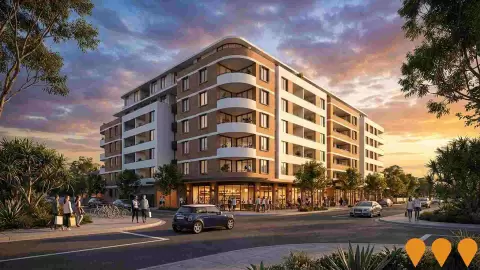
The Parq
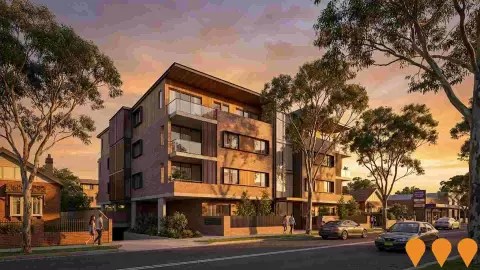
The Parq is Australia's first Latent Defects Insurance (LDI) building, featuring 67 premium apartments across 5 storeys with ground floor retail, childcare centre, gym, and rooftop communal garden in the heart of Bexley. Winner of 2024 Urban Taskforce Development Excellence Award in Medium Density and recipient of a 4-star Building Trustworthy Indicator rating from KPMG Origins.
Kogarah Public School Upgrade
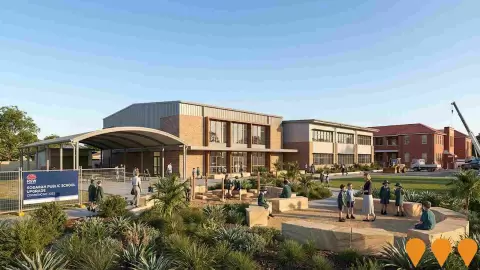
The Kogarah Public School upgrade involves constructing a new multipurpose hall, 24 new modern classrooms, outdoor spaces and play areas, a covered outdoor learning area (COLA), and the removal of temporary classrooms. This is part of the NSW Government's investment in public education infrastructure. Planning approval has been granted, the contractor has been appointed, and construction is set to commence in mid-to-late 2025, with an expected duration of 18 months.
Salvation Army Bexley North Subdivision
State Significant Development for subdivision of former Salvation Army officer training school site into 40 residential lots with potential for 49 townhouses. Project includes retention of heritage buildings, demolition of other structures, removal of 52 trees, and associated road and drainage works. Declared SSD on 12 June 2025.
Imperial Hurstville
Mixed-use residential development at 23-32 Treacy Street by Piety THP, designed by Stanisic Architects. Features apartment tower with retail spaces at ground level, sky gardens, and innovative split-tower design contributing to Hurstville's urban renewal.
Employment
Employment conditions in Bexley - North remain below the national average according to AreaSearch analysis
Bexley - North has an educated workforce with professional services well represented. The unemployment rate in June 2025 was 4.3%, with estimated employment growth of 2.1% over the past year.
There are 5,442 residents employed currently, matching Greater Sydney's unemployment rate of 4.2%. However, workforce participation is lower at 53.1%. Key industries include health care & social assistance, construction, and retail trade. The area has a strong specialization in transport, postal & warehousing (1.6 times the regional level).
Professional & technical services are under-represented with only 8.6% of Bexley - North's workforce compared to Greater Sydney's 11.5%. Limited local employment opportunities are indicated by Census data. Between June 2024 and June 2025, employment increased by 2.1%, labour force grew by 2.6%, leading to a slight rise in unemployment (0.4 percentage points). Comparing this with Greater Sydney's growth rates shows similar trends but slightly lower increases. State-level data from Sep-25 reveals NSW employment contracted by 0.41% (-19,270 jobs) while the state unemployment rate was 4.3%. Nationally, employment grew by 0.26%, with an unemployment rate of 4.5%. Jobs and Skills Australia forecasts national employment growth at 6.6% over five years and 13.7% over ten years. Applying these projections to Bexley - North's employment mix suggests local growth could be approximately 6.7% over five years and 13.6% over ten years.
Frequently Asked Questions - Employment
Income
The economic profile demonstrates above-average performance, with income metrics exceeding national benchmarks based on AreaSearch comparative assessment
AreaSearch's aggregation of ATO data released for financial year 2022 shows Bexley - North had a median taxpayer income of $52,590 and an average income of $68,113. These figures are higher than the national averages of $56,994 and $80,856 for Greater Sydney respectively. Based on Wage Price Index growth from financial year 2022 to March 2025, estimated median and average incomes would be approximately $58,165 and $75,333 respectively. According to the 2021 Census, household income ranks at the 62nd percentile ($1,949 weekly) and personal income at the 35th percentile in Bexley - North. Income distribution shows that 32.0% of locals (3,261 people) fall into the $1,500 - 2,999 category, similar to regional levels where this cohort represents 30.9%. High housing costs consume 17.8% of income, but strong earnings place disposable income at the 60th percentile. The area's SEIFA income ranking places it in the 6th decile.
Frequently Asked Questions - Income
Housing
Bexley - North displays a diverse mix of dwelling types, with above-average rates of outright home ownership
Bexley-North's dwelling structures, as per the latest Census, consisted of 63.7% houses and 36.3% other dwellings (semi-detached, apartments, 'other' dwellings). In comparison, Sydney metro had 39.8% houses and 60.3% other dwellings. Home ownership in Bexley-North stood at 37.7%, with mortgaged dwellings at 38.1% and rented ones at 24.3%. The median monthly mortgage repayment in the area was $2,500, exceeding Sydney metro's average of $2,383. The median weekly rent figure in Bexley-North was $520, compared to Sydney metro's $480. Nationally, Bexley-North's mortgage repayments were significantly higher than the Australian average of $1,863, and rents were substantially above the national figure of $375.
Frequently Asked Questions - Housing
Household Composition
Bexley - North features high concentrations of family households, with a higher-than-average median household size
Family households comprise 79.8% of all households, including 44.5% couples with children, 20.9% couples without children, and 13.1% single parent families. Non-family households account for the remaining 20.2%, with lone person households at 18.4% and group households making up 1.9%. The median household size is 3.0 people, which is larger than the Greater Sydney average of 2.6.
Frequently Asked Questions - Households
Local Schools & Education
Bexley - North shows strong educational performance, ranking in the upper quartile nationally when assessed across multiple qualification and achievement indicators
The area faces educational challenges, with university qualification rates at 28.4%, substantially below the SA3 area average of 38.7%. This presents both a challenge and an opportunity for targeted educational initiatives. Bachelor degrees are the most common at 20.2%, followed by postgraduate qualifications at 6.4% and graduate diplomas at 1.8%. Trade and technical skills are prominent, with 29.6% of residents aged 15+ holding vocational credentials - advanced diplomas at 11.8% and certificates at 17.8%.
Educational participation is notably high, with 31.5% of residents currently enrolled in formal education, including 10.9% in primary, 8.6% in secondary, and 5.9% pursuing tertiary education. Bexley - North's 5 schools have a combined enrollment reaching 2,110 students while the area demonstrates above-average socio-educational conditions (ICSEA: 1094). Education provision is balanced with 4 primary and 1 secondary school serving distinct age groups. The area functions as an education hub with 20.7 school places per 100 residents, significantly above the regional average of 11.4, attracting students from surrounding communities.
Frequently Asked Questions - Education
Schools Detail
Nearby Services & Amenities
Transport
Transport servicing is high compared to other areas nationally based on assessment of service frequency, route connectivity and accessibility
The analysis of public transport in Bexley - North shows that there are currently 64 active transport stops operating within the area. These stops serve a mix of bus routes, with a total of 26 individual routes providing service to these locations. The collective weekly passenger trips across all routes amount to 2,880.
Residents in Bexley - North have excellent accessibility to public transport, with an average distance of 141 meters to the nearest stop. On average, there are 411 trips per day across all routes, which equates to approximately 45 weekly trips per individual stop.
Frequently Asked Questions - Transport
Transport Stops Detail
Health
The level of general health in Bexley - North is notably higher than the national average with prevalence of common health conditions low among the general population across older, at risk cohorts
Bexley North shows superior health outcomes with low prevalence of common conditions among older, vulnerable groups.
Approximately 53% (~5,443 individuals) have private health insurance. The most prevalent medical conditions are arthritis (6.8%) and asthma (5.3%). Notably, 75.0% report no medical ailments, compared to 77.5% in Greater Sydney. Residents aged 65 and over comprise 19.1% (1,942 individuals), higher than the 16.4% in Greater Sydney.
Frequently Asked Questions - Health
Cultural Diversity
Bexley - North is among the most culturally diverse areas in the country based on AreaSearch assessment of a range of language and cultural background related metrics
Bexley-North has notable cultural diversity, with 40.9% of its population born overseas and 56.1% speaking a language other than English at home. Christianity is the main religion in Bexley-North, comprising 54.6% of the population. However, Islam is significantly overrepresented, making up 21.0%, compared to Greater Sydney's average of 10.3%.
In terms of ancestry, the top three groups are Other (14.5%), Lebanese (13.6%), and Australian (12.7%). Notably, Greek ethnicity is higher at 10.0% in Bexley-North than regionally at 8.8%, Macedonian at 4.8% versus regional average of 3.8%, and Serbian at 0.6% compared to 0.9%.
Frequently Asked Questions - Diversity
Age
Bexley - North's population is slightly older than the national pattern
The median age in Bexley - North is 39 years, which is higher than Greater Sydney's average of 37 years and close to the national average of 38 years. Compared to Greater Sydney, the 65-74 age group is notably over-represented at 10.2% locally, while the 25-34 age group is under-represented at 12.8%. Post-2021 Census data shows that the 15-24 age group has grown from 12.3% to 13.5%, and the 25-34 age group has increased from 11.8% to 12.8%. Conversely, the 5-14 age group has declined from 13.2% to 12.0%. Population forecasts for 2041 indicate substantial demographic changes in Bexley - North. The 75-84 age group is expected to grow by 61%, reaching 1,020 people from 634. Residents aged 65 and older represent 88% of the anticipated growth, while the 25-34 and 0-4 age groups are expected to experience population declines.