Chart Color Schemes
This analysis uses Suburbs and Localities (SAL) boundaries, which can materially differ from Statistical Areas (SA2) even when sharing the same name.
SAL boundaries are defined by Australia Post and the Australian Bureau of Statistics to represent commonly-known suburb names used in postal addresses.
Statistical Areas (SA2) are designed for census data collection and may combine multiple suburbs or use different geographic boundaries. For comprehensive analysis, consider reviewing both boundary types if available.
est. as @ -- *
2021 Census | -- people
Sales Activity
Curious about local property values? Filter the chart to assess the volume and appreciation (including resales) trends and regional comparisons, or scroll to the map below view this information at an individual property level.
Find a Recent Sale
Sales Detail
Population
Population growth drivers in Bulimba are strong compared to national averages based on AreaSearch's ranking of recent, and medium to long-term trends
Based on AreaSearch's analysis of ABS population updates, as of November 2025, the estimated population for the Bulimba statistical area (Lv2) is around 8,324. This reflects an increase of 701 people since the 2021 Census, which reported a population of 7,623. The change is inferred from AreaSearch's estimation of the resident population at 8,125 as of June 2024, based on examination of the latest ERP data release by the ABS, along with an additional 65 validated new addresses since the Census date. This level of population results in a density ratio of 3,908 persons per square kilometer, placing Bulimba (SA2) within the top 10% of national locations assessed by AreaSearch. The area's 9.2% growth since census is within 0.5 percentage points of the national average of 9.7%, indicating competitive growth fundamentals. Primary driver for population growth was overseas migration, contributing approximately 84.0% of overall population gains during recent periods.
AreaSearch adopts ABS/Geoscience Australia projections for each SA2 area, released in 2024 with a base year of 2022. For areas not covered by this data and years post-2032, Queensland State Government's SA2 area projections are used, released in 2023 based on 2021 data. However, these state projections do not provide age category splits, so AreaSearch applies proportional growth weightings from the ABS Greater Capital Region projections for each age cohort, released in 2023 with a base year of 2022. Projecting forward, an above median population growth is expected for national statistical areas, with Bulimba (SA2) projected to expand by 1,351 persons to the year 2041, reflecting an increase of 13.8% in total over the 17 years.
Frequently Asked Questions - Population
Development
Residential development activity is slightly higher than average within Bulimba when compared nationally
Bulimba averaged approximately 26 new dwelling approvals annually over the past five financial years, totalling an estimated 134 homes. So far in FY-2026, 28 approvals have been recorded. Each year, around 3.4 people moved to Bulimba for each dwelling built between FY-2021 and FY-2025, indicating significant demand exceeding new supply. Developers target the premium market segment with higher-end properties, as evidenced by an average construction value of $976,000 per dwelling.
In FY-2026, there have been $9.3 million in commercial approvals, suggesting Bulimba's residential character. Comparatively, Bulimba shows approximately 67% of the construction activity per person relative to Greater Brisbane and ranks among the 45th percentile nationally, indicating limited choices for buyers and supporting demand for existing homes. This level is also below the national average, suggesting the area's established nature and potential planning limitations. Recent construction in Bulimba comprises 36.0% detached dwellings and 64.0% townhouses or apartments, focusing on higher-density living which creates more affordable entry points for downsizers, investors, and first-home buyers. Currently, there are around 375 people per approval in Bulimba, indicating a mature market.
Based on the latest AreaSearch quarterly estimate, Bulimba is expected to grow by 1,147 residents through to 2041. At current development rates, housing supply may struggle to match population growth, potentially heightening buyer competition and supporting price increases.
Frequently Asked Questions - Development
Infrastructure
Bulimba has very high levels of nearby infrastructure activity, ranking in the top 10% nationally
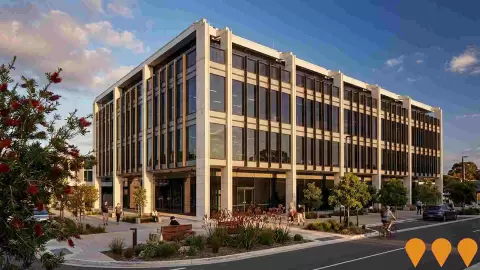
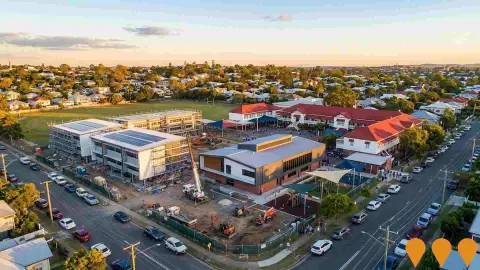
Changes to local infrastructure significantly impact an area's performance. AreaSearch has identified 35 projects likely affecting the region. Notable initiatives include Oxford & Princess - Bulimba Mixed-Use Development, QParks Group - 5 Riding Road Mixed-Use Development, Bulimba State School Infrastructure Upgrade, and Bulimba Memorial Park and Community Centre Upgrade. The following list details those most relevant.
Professional plan users can use the search below to filter and access additional projects.
INFRASTRUCTURE SEARCH
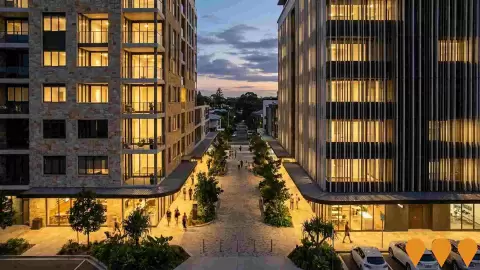
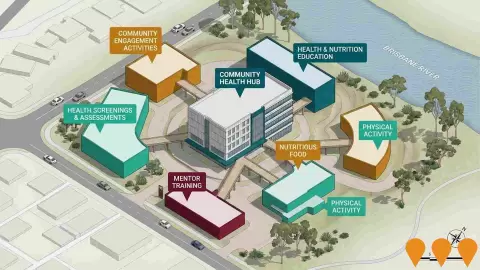
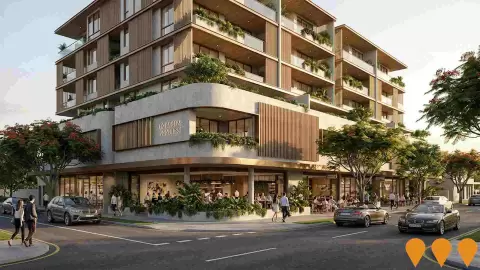
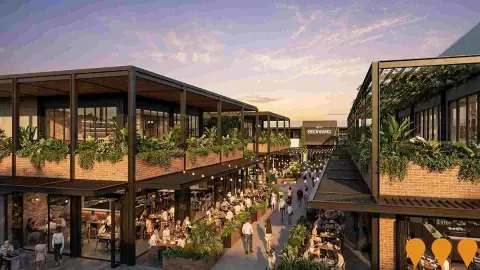
Denotes AI-based impression for illustrative purposes only, not to be taken as definitive under any circumstances. Please follow links and conduct other investigations from the project's source for actual imagery. Developers and project owners wishing us to use original imagery please Contact Us and we will do so.
Frequently Asked Questions - Infrastructure
Teneriffe Banks
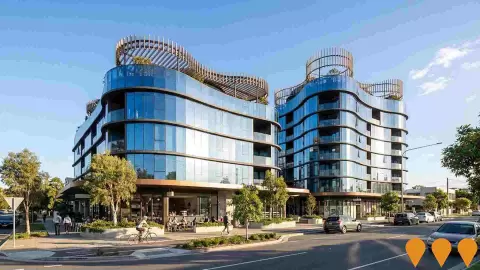
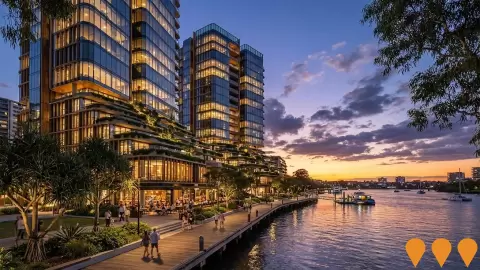
A 1.5 billion dollar riverfront mixed-use precinct on a 17,612 sqm site. The development features four architecturally distinct residential buildings (The Interloom, The Ferry Building, The Store Houses, and The Skyform) housing 213 luxury apartments. It includes Brisbane's first 5-star Kimpton Hotel (163 rooms), over 4,800 sqm of retail and dining, a 220-metre riverwalk extension, and the exclusive Canopy Club. Construction commenced in December 2025 following site settlement in July 2025.
Lua Bulimba - Oxford Street Lifestyle Precinct
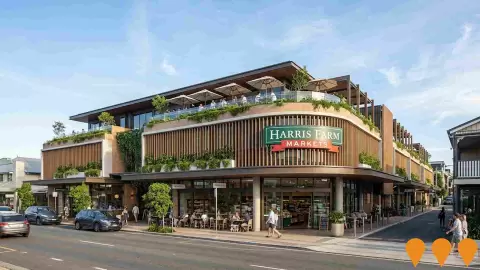
A completed three-level mixed-use lifestyle precinct on Oxford Street, Bulimba, anchored by a full-line Harris Farm Markets supermarket. Includes boutique food and beverage operators, wellness tenancies, specialty retail and a rooftop dining and entertainment venue. The project has revitalised the western end of the Oxford Street retail strip with upgraded streetscapes, laneway activation and new public realm improvements.
Bulimba Barracks Urban Renewal Project
Large scale masterplanned urban renewal of the former Bulimba Barracks defence site on about 20ha of Brisbane riverfront, delivering around 850 new homes, a mixed use lifestyle precinct in the refurbished WWII fabrication shed, retail and dining, a riverside pavilion, new riverfront parkland and community facilities, with remediation, bulk earthworks and civil works now underway.
Bulimba Barracks Master Plan
Major redevelopment of the 20-hectare former Bulimba Barracks site into a masterplanned community. The project includes approximately 855 residential dwellings (apartments and townhouses), a retail and dining precinct centred around the heritage fabrication workshop, and extensive riverfront parklands. Remediation and civil works are currently progressing.
Bulimba Memorial Park and Community Centre Upgrade
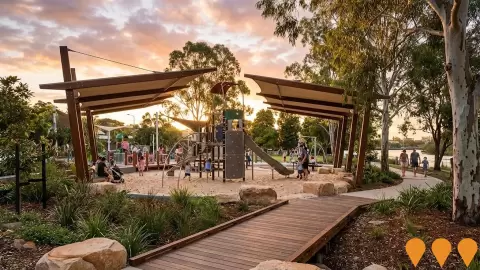
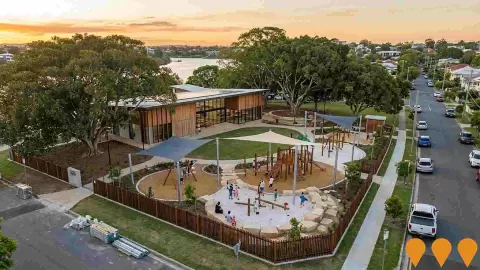
Staged upgrade of the heritage listed Bulimba Memorial Park to provide a safer, more modern family playground and improved community recreation facilities. Stage 1 replaces ageing equipment and damaged trees with a new toddler and young children play area, shade and seating. Stage 2 is funded and will deliver new play equipment for older children, additional fencing along Stuart Street, better drainage and refreshed park landscaping. The project protects the park's memorial character while supporting local sport, community events and everyday use.
Riverside Green - Bulimba Creek Parkland Enhancement
Parkland enhancement along Bulimba Creek focused on trail upgrades, native vegetation restoration, play space renewal, and improved stormwater treatment to strengthen the local creek corridor and community access.
Community Health Hub - Bulimba
Proposed community health facility providing primary care services, allied health, community health programs, and specialist outreach services to serve the growing Bulimba population.
QParks Group - 5 Riding Road Mixed-Use Development
Mixed-use development featuring 110 apartments across two towers (8 and 9 storeys), ground floor retail spaces, and basement parking for 137 vehicles. Includes landscaped communal areas and rooftop amenities.
Employment
The labour market strength in Bulimba positions it well ahead of most Australian regions
Bulimba has an educated workforce with professional services well represented. The unemployment rate was 2.1% in the past year, with estimated employment growth of 0.5%.
As of September 2025, 5,111 residents were employed, with an unemployment rate of 1.9%, below Greater Brisbane's 4.0%. Workforce participation was 71.2%, higher than Greater Brisbane's 64.5%. Leading industries included professional & technical (1.8 times the regional average), health care & social assistance (13.1% vs Greater Brisbane's 16.1%). Employment opportunities locally appeared limited, with Census working population lower than resident population.
Between September 2024 and September 2025, employment increased by 0.5%, labour force by 0.7%, unemployment rose by 0.2 percentage points. In contrast, Greater Brisbane saw employment rise by 3.8%, labour force grow by 3.3%, unemployment fall by 0.5%. State-level data to 25-Nov-25 showed Queensland employment contracted by 0.01% (losing 1,210 jobs), with an unemployment rate of 4.2%, close to the national rate of 4.3%. National employment forecasts from May-25 project growth of 6.6% over five years and 13.7% over ten years. Applying these projections to Bulimba's employment mix suggests local employment should increase by 7.1% over five years and 14.3% over ten years, though this is a simple extrapolation for illustrative purposes only.
Frequently Asked Questions - Employment
Income
The economic profile demonstrates exceptional strength, placing the area among the top 10% nationally based on comprehensive AreaSearch income analysis
AreaSearch released postcode-level ATO data for financial year 2023 on June 29, 2023. Bulimba's median income among taxpayers was $76,144 with an average of $132,060. Nationally, this places Bulimba in the top percentile. Comparing to Greater Brisbane, Bulimba's median is higher at $58,236 and average at $72,799. By September 2025, estimated incomes would be approximately $83,690 (median) and $145,147 (average), based on a 9.91% Wage Price Index growth since financial year 2023. The 2021 Census data shows Bulimba's household, family, and personal incomes rank between the 95th and 96th percentiles nationally. Income distribution indicates 35.6% of residents (2,963 individuals) earn $4000+ weekly, contrasting regional levels where $1,500 - 2,999 is dominant at 33.3%. Notably, 47.8% earn above $3,000 weekly. Housing accounts for 14.7% of income, with residents ranking in the 94th percentile for disposable income. The area's SEIFA income ranking places it in the 10th decile.
Frequently Asked Questions - Income
Housing
Bulimba displays a diverse mix of dwelling types, with above-average rates of outright home ownership
Bulimba's dwelling structure, as per the latest Census, consisted of 45.8% houses and 54.2% other dwellings (semi-detached, apartments, 'other' dwellings). Brisbane metro had 52.7% houses and 47.3% other dwellings. Bulimba's home ownership rate was 27.9%, with mortgaged dwellings at 34.7% and rented ones at 37.4%. The median monthly mortgage repayment in Bulimba was $2,800, compared to Brisbane metro's $2,500. The median weekly rent in Bulimba was $500, versus Brisbane metro's $440. Nationally, Bulimba's mortgage repayments were higher than the Australian average of $1,863, and rents were substantially above the national figure of $375.
Frequently Asked Questions - Housing
Household Composition
Bulimba has a typical household mix, with a fairly typical median household size
Family households constitute 70.7% of all households, including 31.3% couples with children, 30.0% couples without children, and 8.3% single parent families. Non-family households account for the remaining 29.3%, with lone person households at 25.9% and group households comprising 3.5%. The median household size is 2.4 people, which aligns with the Greater Brisbane average.
Frequently Asked Questions - Households
Local Schools & Education
Bulimba shows strong educational performance, ranking in the upper quartile nationally when assessed across multiple qualification and achievement indicators
Bulimba's educational attainment is notably higher than broader averages. Among residents aged 15 and above, 50.4% have university qualifications, compared to 25.7% in Queensland and 30.4% in Australia. This high level of educational attainment positions Bulimba favourably for knowledge-based opportunities. Bachelor degrees are the most prevalent at 33.0%, followed by postgraduate qualifications (12.5%) and graduate diplomas (4.9%).
Vocational pathways account for 23.3% of qualifications among those aged 15 and above, with advanced diplomas making up 10.0% and certificates accounting for 13.3%. Educational participation is significantly high in Bulimba, with 29.3% of residents currently enrolled in formal education. This includes 9.4% in primary education, 7.8% in secondary education, and 7.2% pursuing tertiary education.
Frequently Asked Questions - Education
Schools Detail
Nearby Services & Amenities
Transport
Transport servicing is good compared to other areas nationally based on assessment of service frequency, route connectivity and accessibility
Bulimba has 40 active public transport stops, offering a mix of ferry and bus services. These are covered by 9 different routes, serving a total of 2,700 weekly passenger trips. The average distance to the nearest stop for residents is 152 meters.
On average, there are 385 trips per day across all routes, which translates to about 67 weekly trips per individual stop.
Frequently Asked Questions - Transport
Transport Stops Detail
Health
Bulimba's residents boast exceedingly positive health performance metrics with very low prevalence of common health conditions across all age groups
Bulimba shows excellent health outcomes across all ages. The prevalence of common health conditions is very low. Approximately 80% of Bulimba's total population (6,619 people) has private health cover, compared to 73.8% in Greater Brisbane and the national average of 55.7%.
Mental health issues affect 7.7% of residents, while asthma impacts 6.6%. A total of 74.7% of residents report being completely clear of medical ailments, similar to the 74.9% rate in Greater Brisbane. Bulimba has a higher proportion of seniors aged 65 and over at 16.5% (1,373 people), compared to 11.3% in Greater Brisbane. Despite this, health outcomes among seniors are strong and align with the general population's health profile.
Frequently Asked Questions - Health
Cultural Diversity
The level of cultural diversity witnessed in Bulimba was found to be slightly above average when compared nationally for a number of language and cultural background related metrics
Bulimba's cultural diversity is above average, with 12.3% speaking a language other than English at home and 27.8% born overseas. Christianity dominates Bulimba's religious landscape at 50.5%. Judaism is overrepresented in Bulimba at 0.1%, compared to Greater Brisbane's 0.2%.
The top three ancestry groups are English (29.6%), Australian (22.0%), and Irish (10.5%). Welsh, Scottish, and French ethnicities are notably divergent: Welsh at 0.9% vs regional 0.7%, Scottish at 9.7% vs 8.7%, and French at 0.8% vs 0.8%.
Frequently Asked Questions - Diversity
Age
Bulimba's population is slightly older than the national pattern
Bulimba's median age is 41, which is higher than Greater Brisbane's figure of 36 and Australia's figure of 38. The 55-64 cohort is notably over-represented in Bulimba at 14.7%, compared to the Greater Brisbane average, while the 25-34 age group is under-represented at 12.5%. From 2021 to present, the 55-64 age group has grown from 12.8% to 14.7%, and the 75-84 cohort has increased from 3.9% to 5.7%. Conversely, the 35-44 cohort has declined from 16.3% to 14.6%, and the 45-54 group has dropped from 15.9% to 14.3%. Demographic modeling suggests that Bulimba's age profile will evolve significantly by 2041, with the 75-84 age cohort projected to grow significantly, expanding by 406 people (86%) from 474 to 881. Notably, the combined 65+ age groups are expected to account for 67% of total population growth. Meanwhile, the 5-14 and 0-4 cohorts are expected to experience population declines.