Chart Color Schemes
This analysis uses Suburbs and Localities (SAL) boundaries, which can materially differ from Statistical Areas (SA2) even when sharing the same name.
SAL boundaries are defined by Australia Post and the Australian Bureau of Statistics to represent commonly-known suburb names used in postal addresses.
Statistical Areas (SA2) are designed for census data collection and may combine multiple suburbs or use different geographic boundaries. For comprehensive analysis, consider reviewing both boundary types if available.
est. as @ -- *
2021 Census | -- people







The median house price in Ultimo is $1.73m, with units at $780k. House values have moved 0.8% a year compounded over five years.
Curious about local property values? Filter the chart to assess the volume and appreciation (including resales) trends and regional comparisons, or scroll to the map below view this information at an individual property level.
Find a Recent Sale

Sales Detail
Ultimo has an estimated 10,534 residents, up from 7,410 at the 2021 Census — a change of 3,124 people, or 42.2%. Growth has averaged 4.4% a year over five years, faster than 96% of areas nationally. Overseas migration accounts for 97.0% of that increase. That puts 18,811 residents on each square kilometre. Population is estimated from ABS Estimated Resident Population releases and GNAF address data, re-based from the 2021 Census and updated annually.
Detail
Evaluations by AreaSearch incorporating broader ABS demographic updates alongside validated new addresses indicate that the suburb of Ultimo reaches a population count of approximately 10,534 as of Aug 2026. This equates to an expansion of 3,124 people (42.2%) compared to the 7,410 people tallied during the 2021 Census. AreaSearch established this figure of 10,534 residents by reviewing the ABS ERP release from June 2025 in conjunction with post-Census address validations. With 18,810 persons per square kilometer, the locality places within the upper 10% across the country for density, generating intense competition for land.
The suburb of Ultimo recorded a 42.2% gain that substantially outstripped both the 7.3% state figure and Greater Sydney, establishing it at the forefront of regional expansion. Net overseas arrivals served as the primary demographic engine, supplying roughly 97.0% of all incoming residents in recent times. Projections generated by ABS/Geoscience Australia from 2024 using 2022 baseline figures have been utilized by AreaSearch across SA2 boundaries, supplemented where needed by 2022 NSW State Government models based on 2021 numbers. In addition, projected growth distributions by age cohort from these aggregated sets have been mapped across the years 2032 to 2041. Future demographic modelling places the suburb of Ultimo in the highest quarter nationally for gains, with an anticipated increase of 2,780 persons by 2041 according to consolidated SA2 calculations, delivering an overall expansion of 26.4% across the 16 years.
Frequently Asked Questions - Population
Detail
Building approval metrics from the ABS reviewed by AreaSearch indicate an extreme shortage of residential approvals across the local pipeline, registering only an estimated 3 homes over the course of the previous 5 financial years. Within FY-25 to date, 1 approvals have been documented. This imbalance is highlighted by a ratio of 513.5 new residents annually for each residence constructed between FY-21 and FY-25, creating intense buyer competition and upward pricing momentum. Newly approved properties carry an average construction valuation of $568,000, marginally exceeding regional benchmarks to reflect premium building standards.
Furthermore, commercial developments tallying $6.6 million have received approval during the current financial year, underlining the dominant residential orientation. Residential development volumes in the area fall drastically short of broader Greater Sydney activity, heightening demand and asset values across the existing dwelling pool. Construction activity also tracks beneath country-wide norms, reflecting an established urban footprint alongside strict planning constraints. Interestingly, all newly sanctioned builds have comprised detached houses, reinforcing family-friendly living spaces despite traditional houses representing no proportion of the housing stock at the Census (0.0% at Census). With a ratio of approximately 20573 people per dwelling approval, the local property sector demonstrates pronounced maturity.
Frequently Asked Questions - Development
Development applications around Ultimo
Loading development applications…
| Lodged | Address | Description | Type | Distance | Status |
|---|
SOURCE: Planning portals and council registers, compiled by AreaSearch. Distance & bearing measured from the suburb midpoint.
AreaSearch tracks 6 current infrastructure and development projects inside Ultimo, worth an estimated $1.44 billion. A further 144 sit in the immediately surrounding suburbs, taking the tracked pipeline within reach of the area to $165.7 billion. 40 are already under construction and 58 are due for completion within three years. The pipeline spans residential development, communities, precincts & urban renewal and transport & logistics. Records are compiled from Infrastructure Australia, state agencies, council planning portals and public announcements, reviewed and updated daily, then ranked by proximity, construction stage, completion horizon and project scale.
Detail
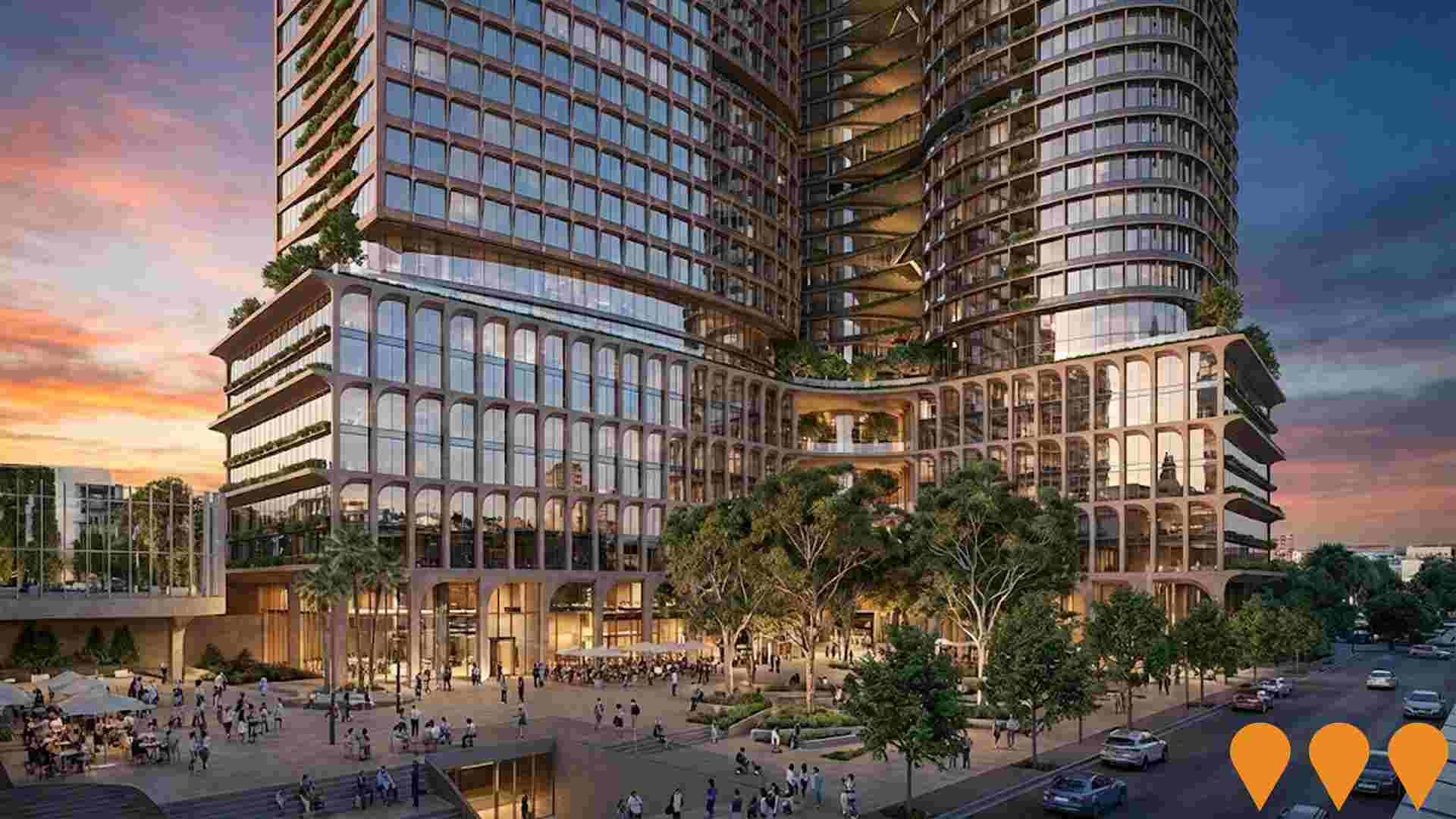
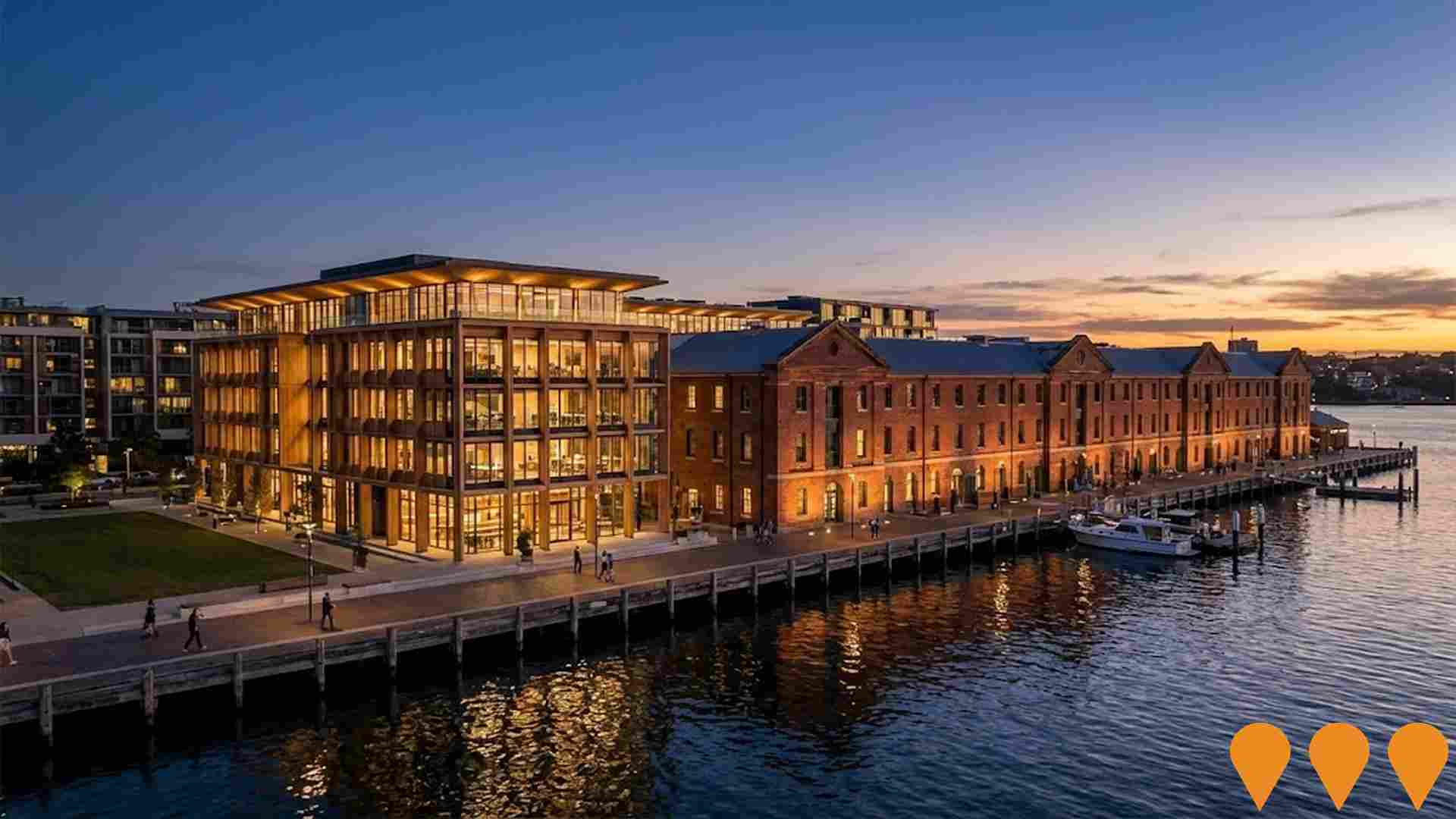
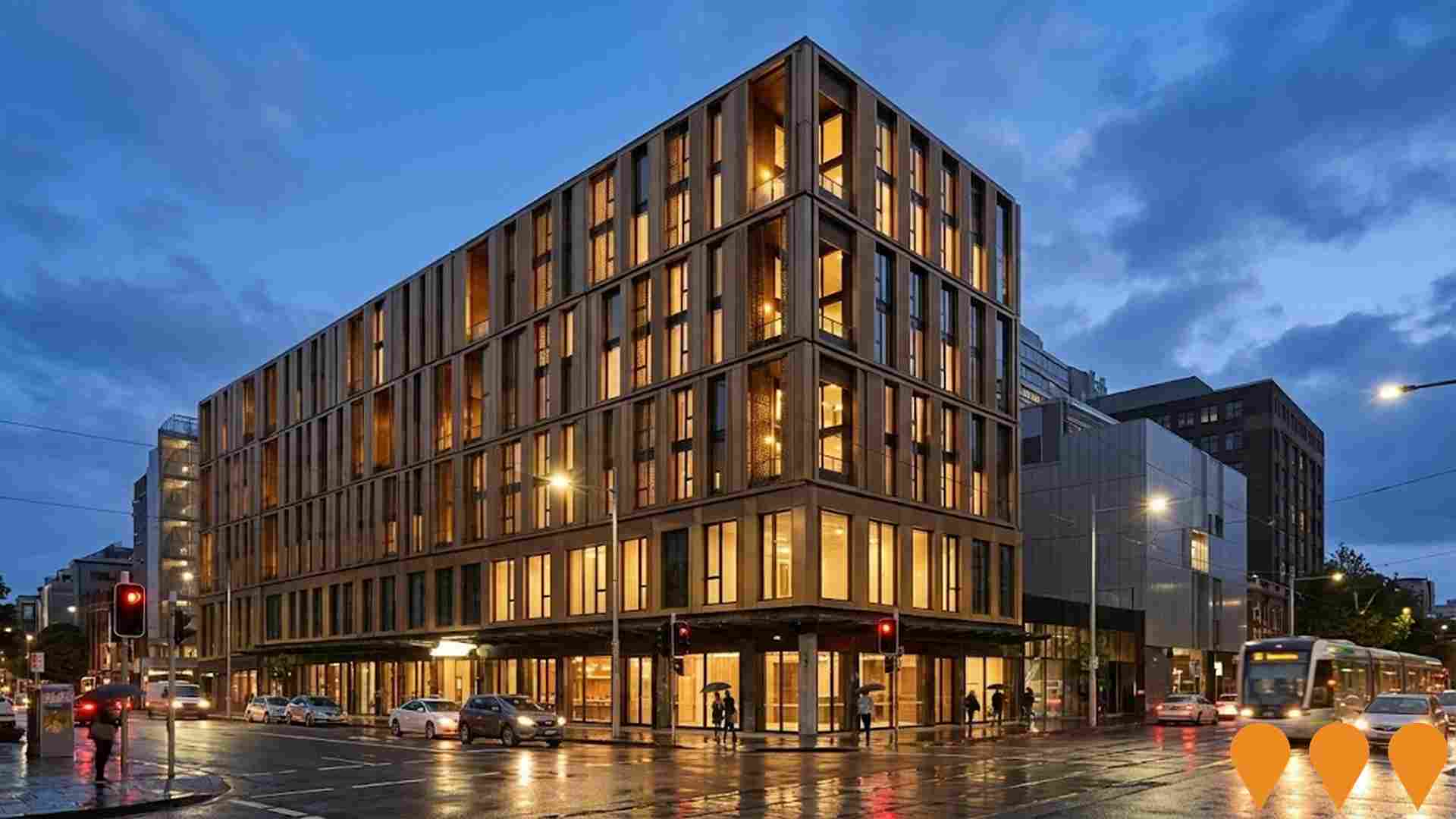
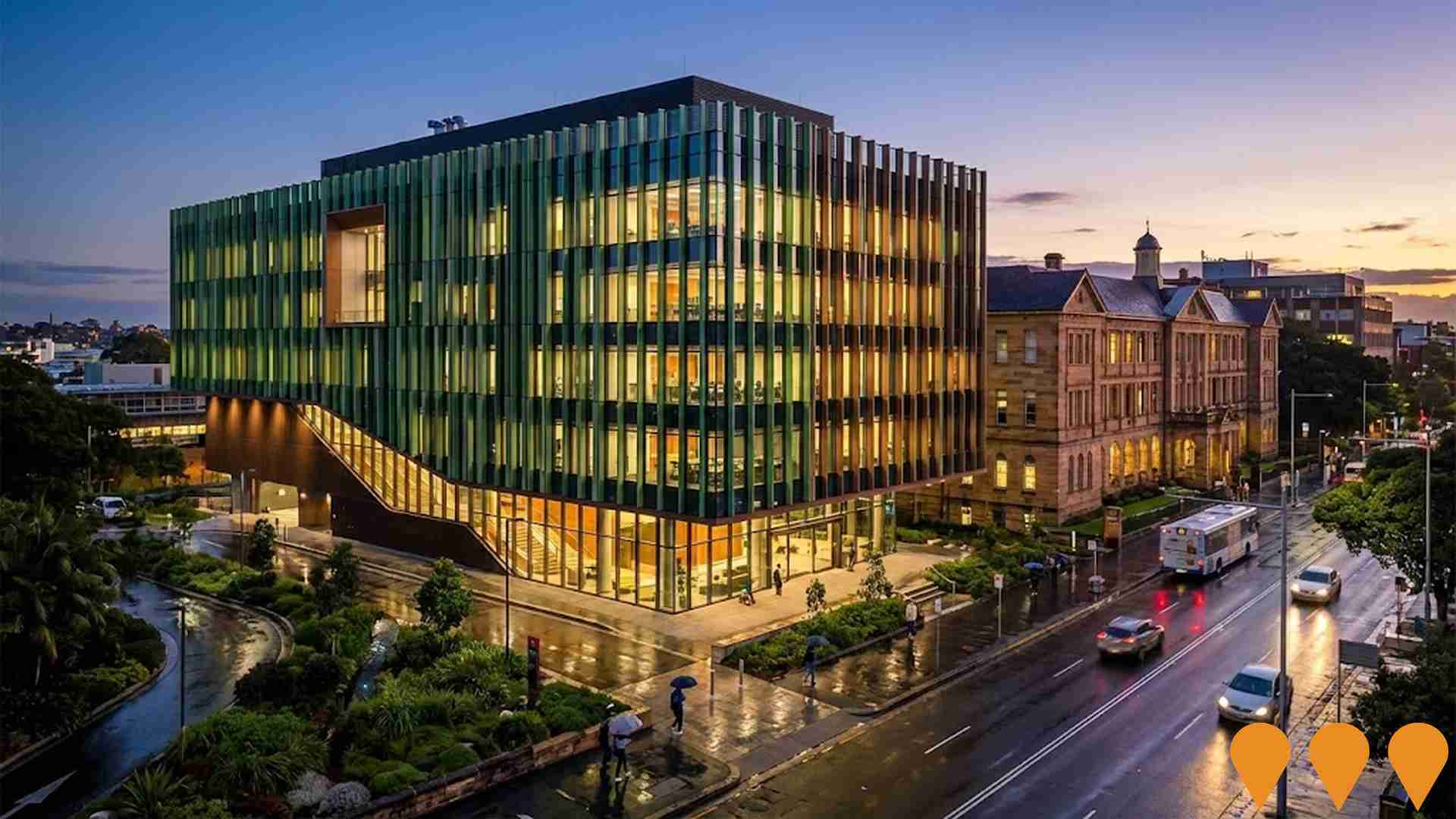
Major infrastructure deliveries, urban programs, and civic investments play a critical role in shaping local development patterns. AreaSearch has pinpointed 20 projects with direct relevance to the immediate vicinity, led by priority initiatives including Powerhouse Ultimo Revitalisation, apt.Broadway, DigiCo SYD1 Data Centre Expansion (88MW D&O Project), and Central Place Sydney.
Professional plan users can use the search below to filter and access additional projects.
INFRASTRUCTURE SEARCH
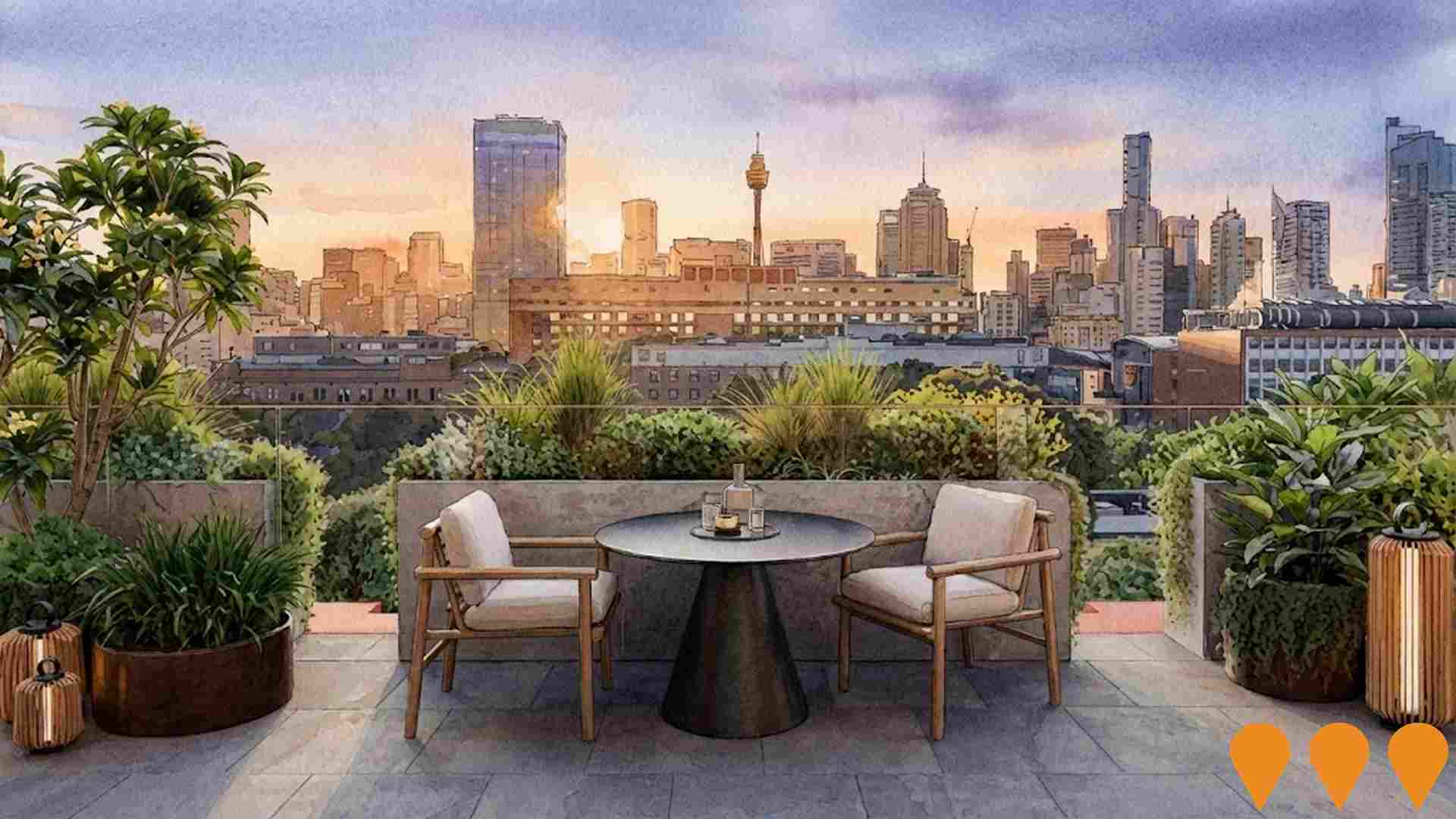
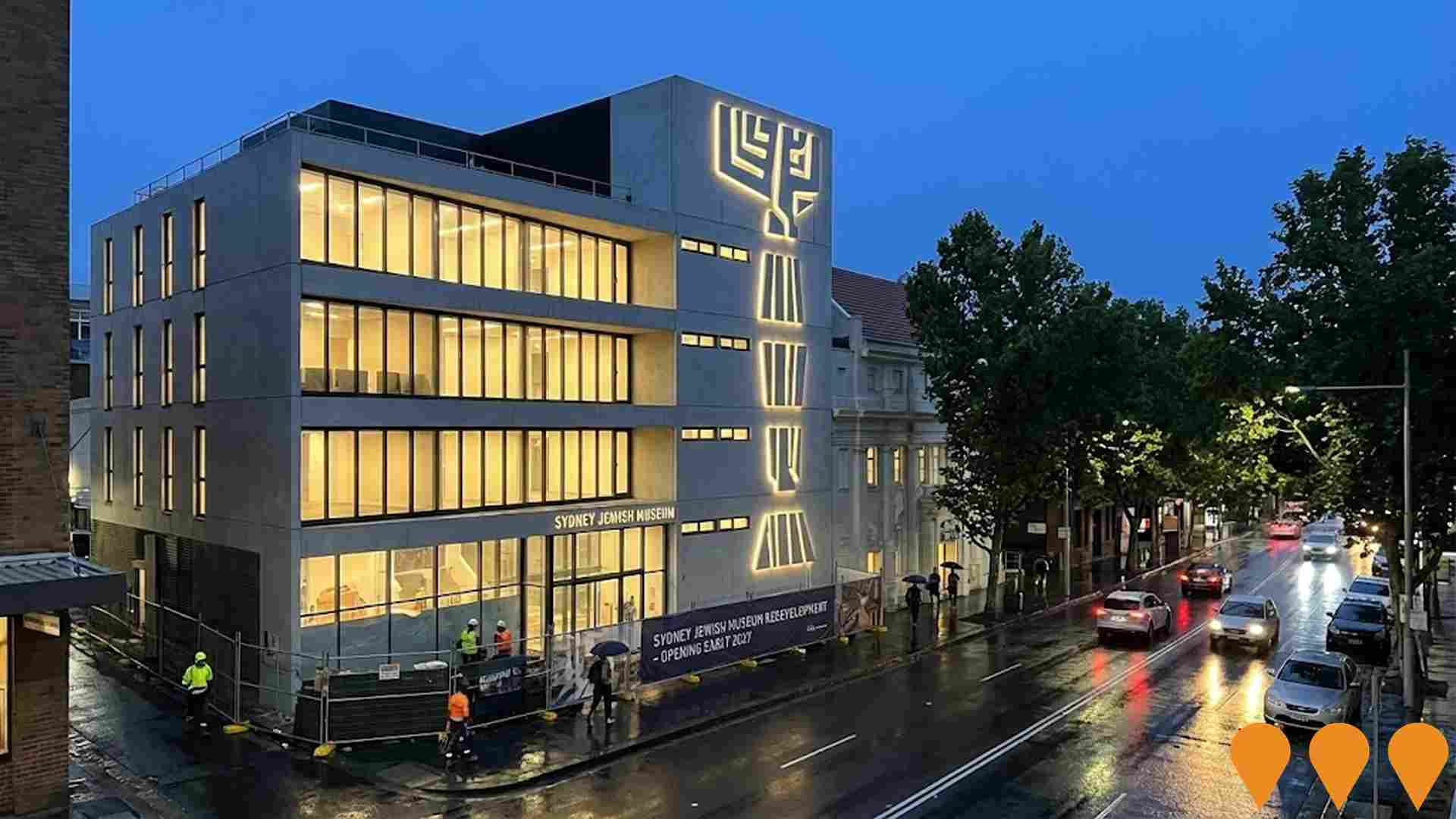
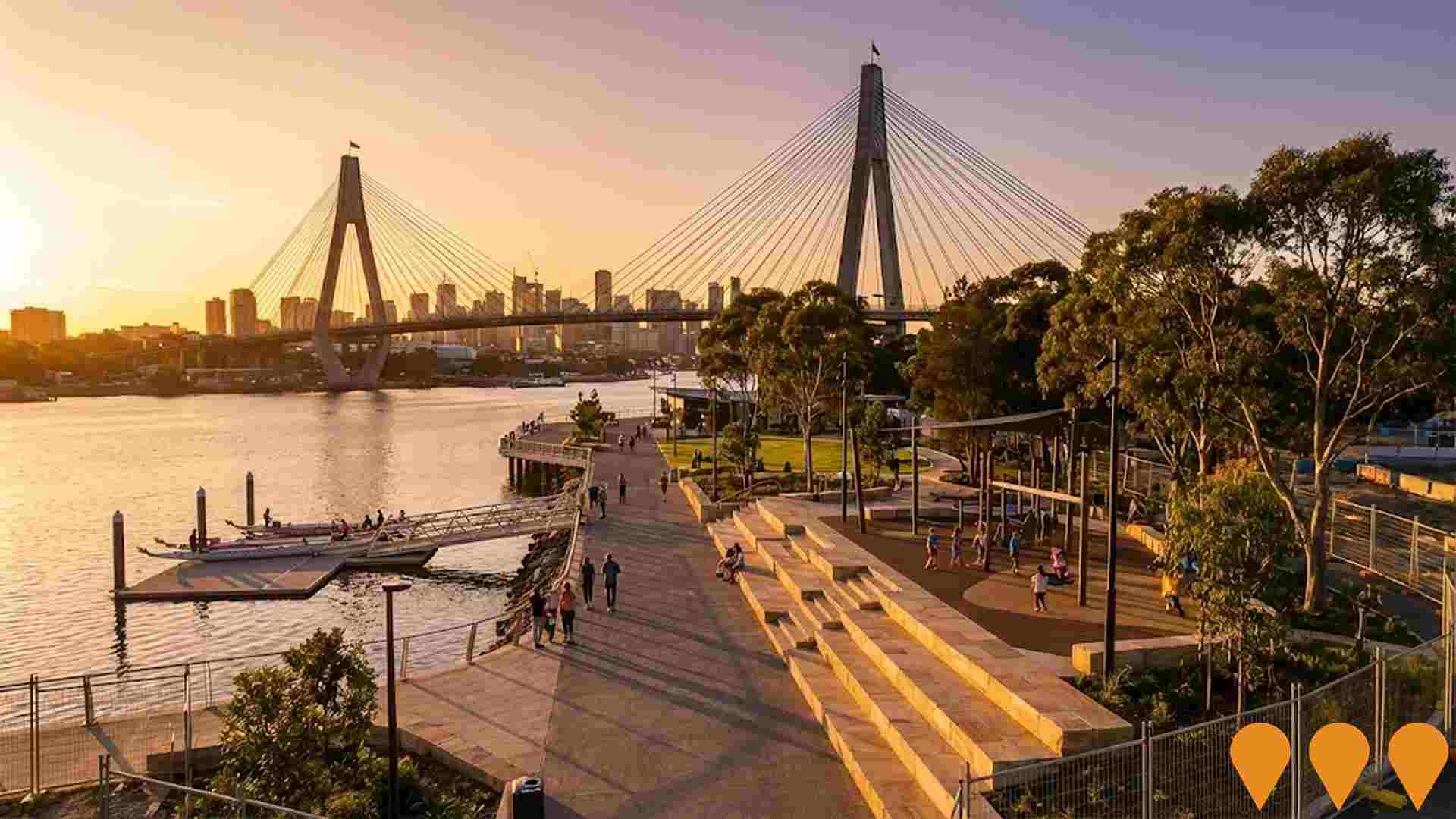
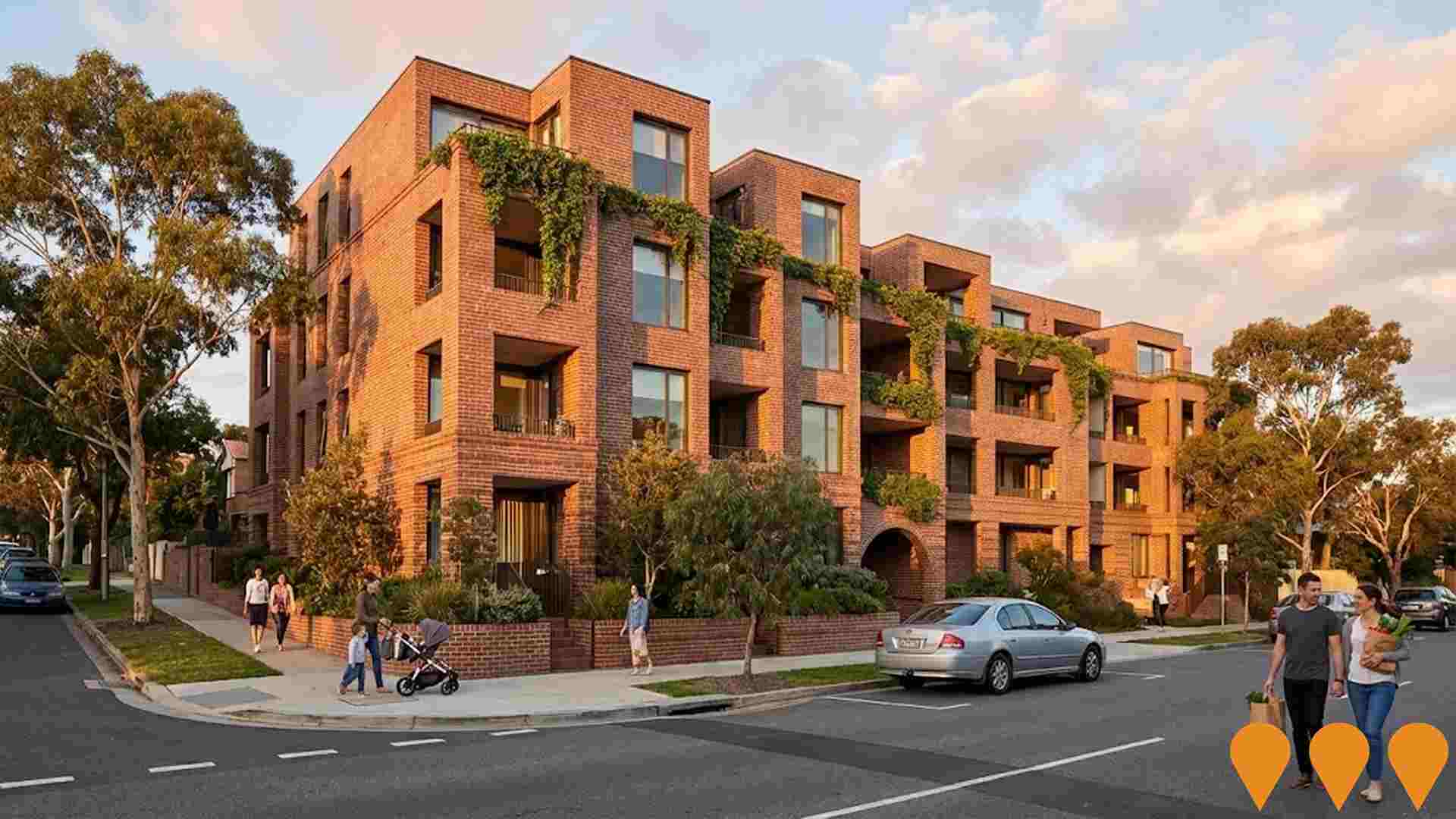
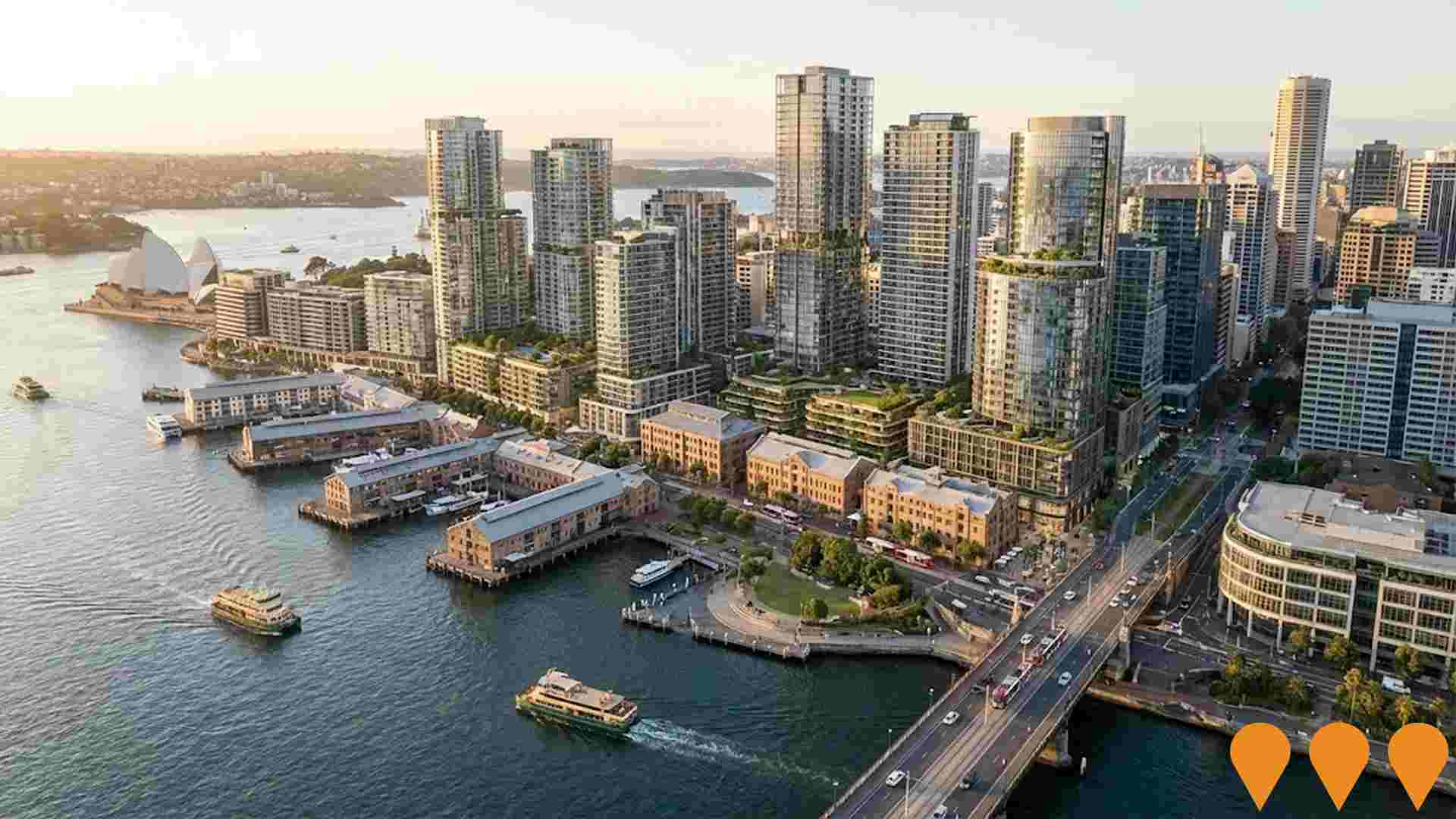
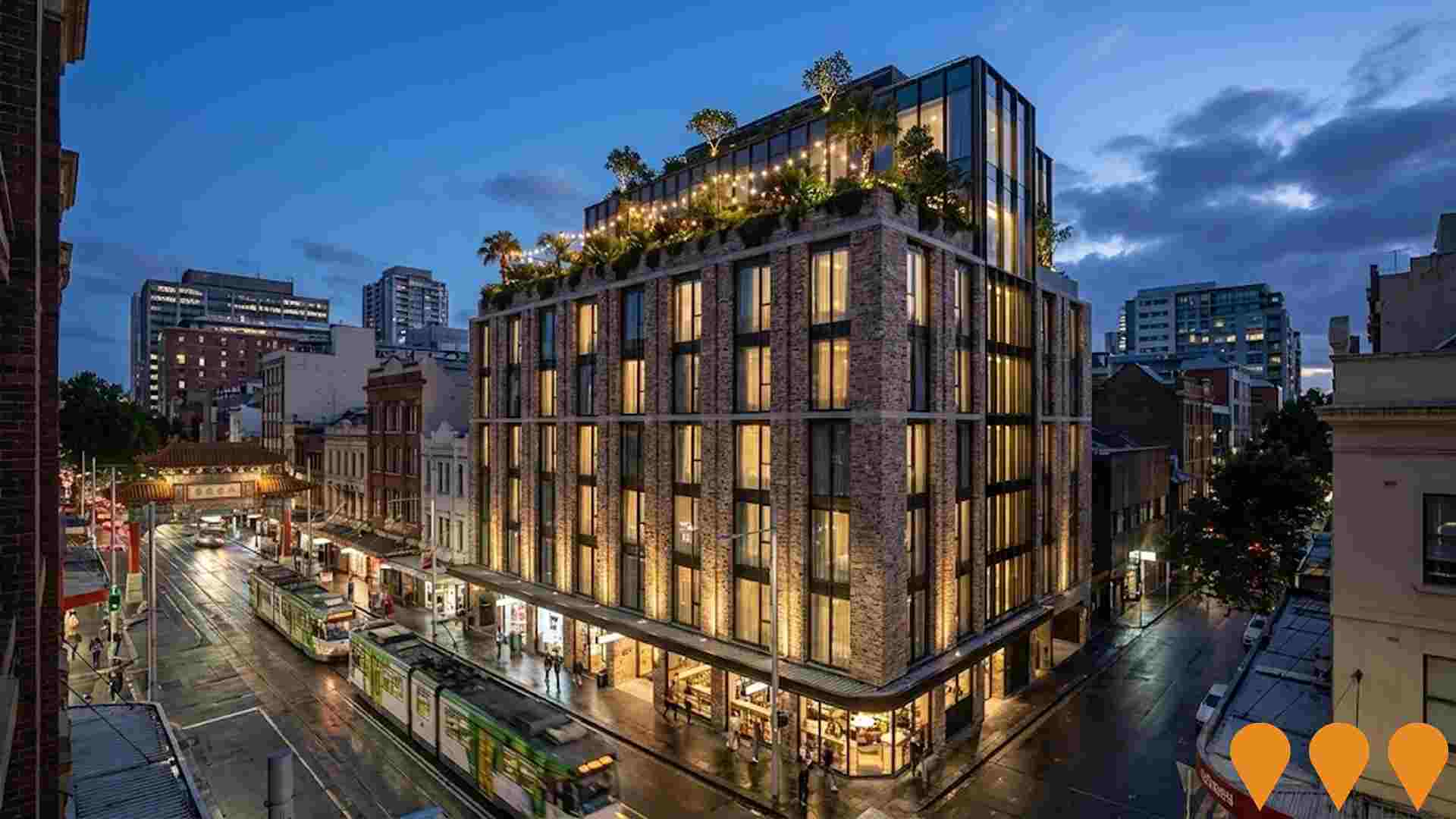
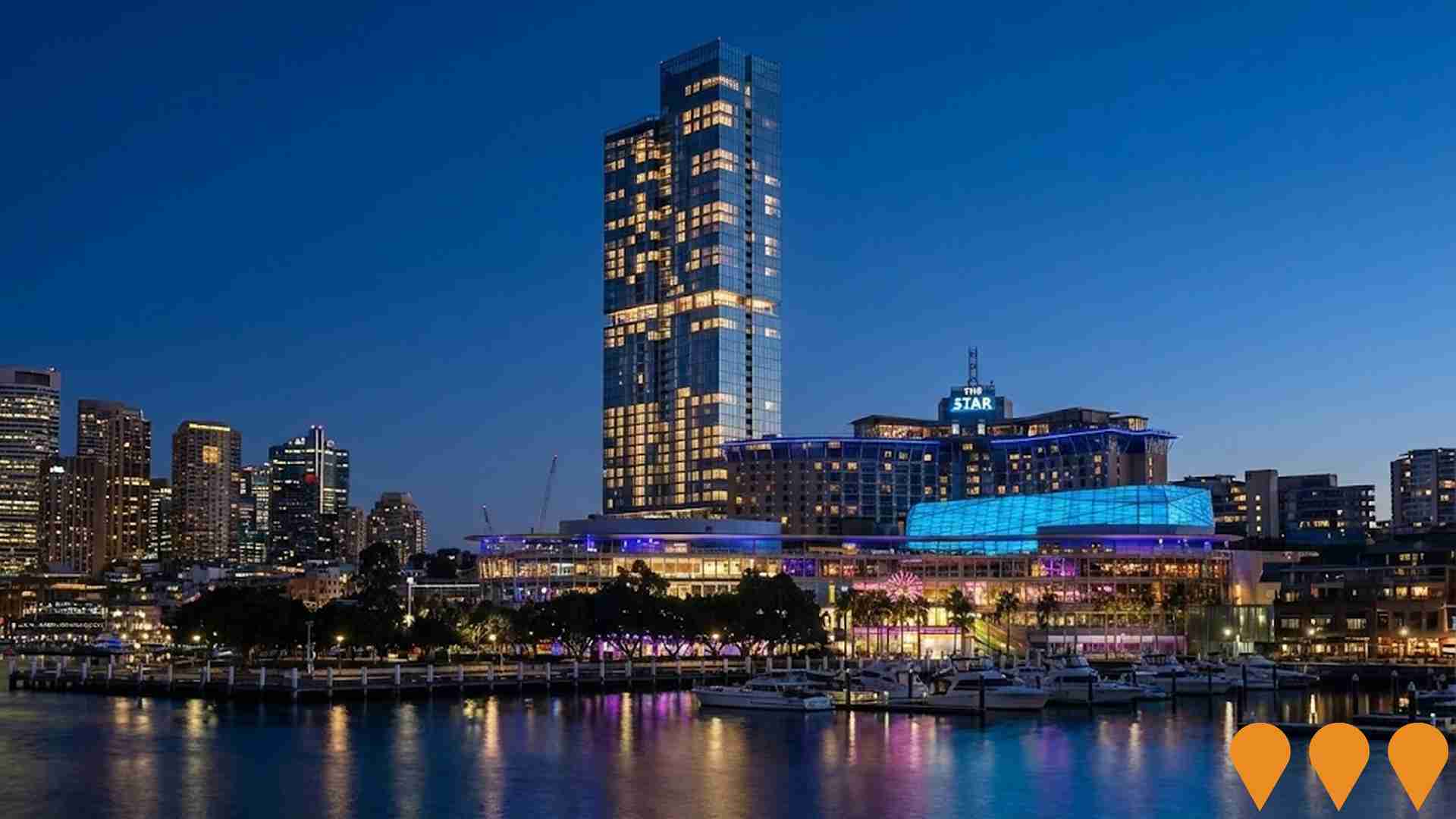
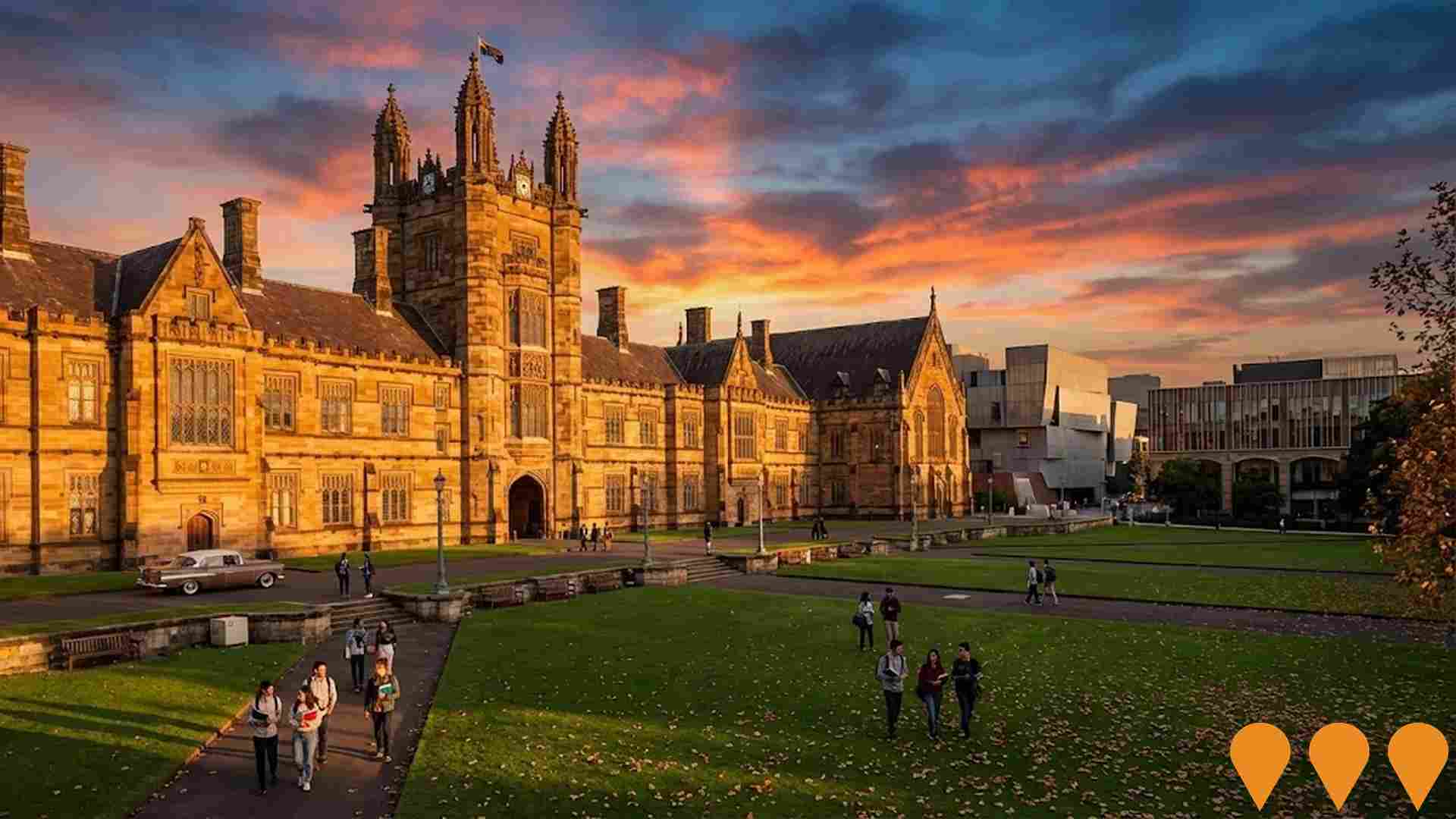
 Denotes AI-based impression for illustrative purposes only, not to be taken as definitive under any circumstances. Please follow links and conduct other investigations from the project's source for actual imagery. Developers and project owners wishing us to use original imagery please Contact Us and we will do so.
Frequently Asked Questions - Infrastructure
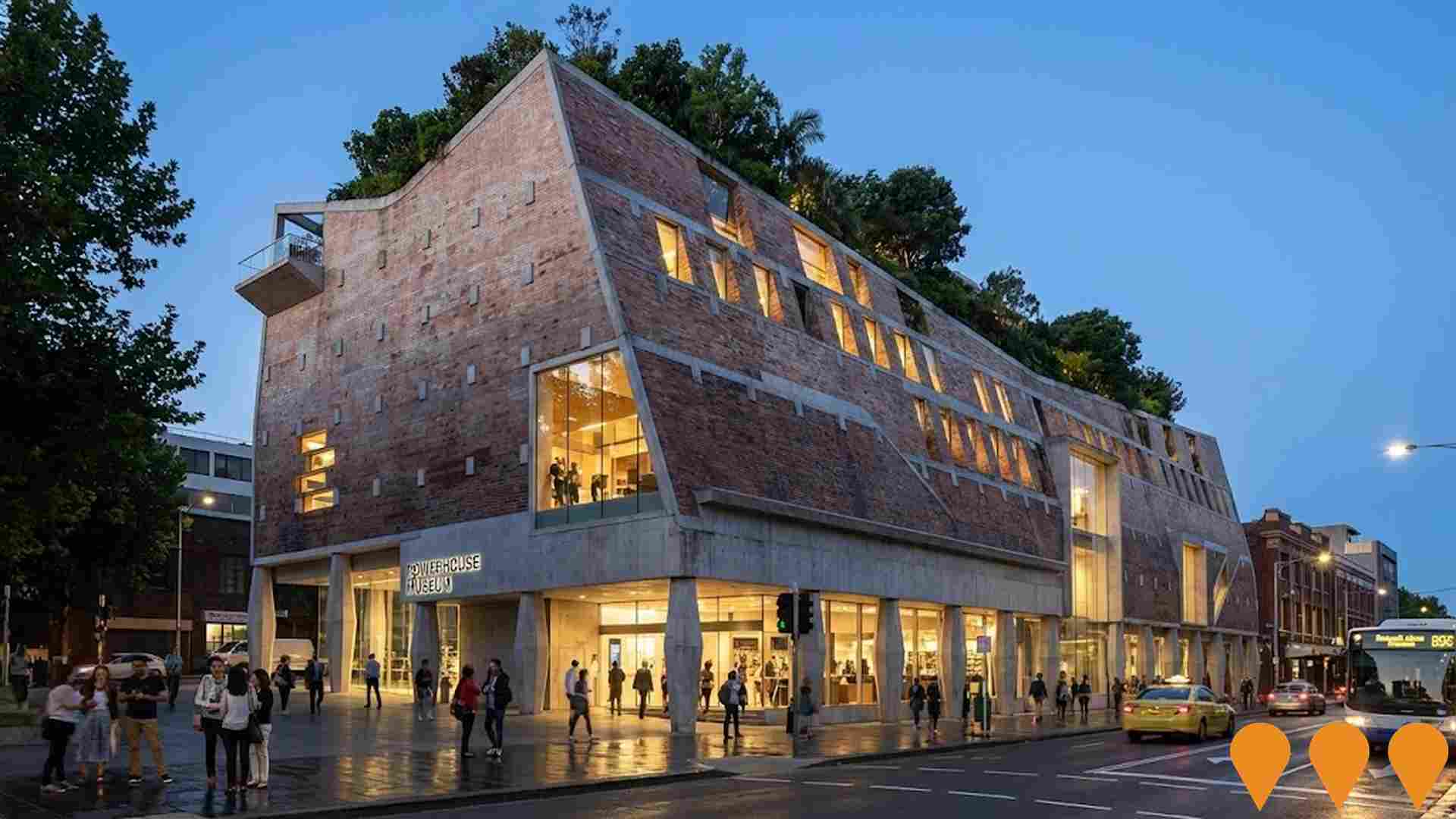
Powerhouse Ultimo Revitalisation
A 300 million dollar heritage revitalisation of the Powerhouse Museum at Ultimo. The project conserves and restores the original 1899 Ultimo Power Station, the 1902 Turbine Hall and the 1901 Post Office on Harris Street, while retaining the form and scale of the 1988 Wran building. The museum entrance will be reoriented to face The Goods Line, and a new 2,000 square metre landscaped public square will be created at the northern end of The Goods Line.The redevelopment delivers world-class exhibition spaces for applied arts and sciences, a dedicated Powerhouse Academy learning space, and upgraded Harris Street frontage with industry and recreation spaces. Designed by Durbach Block Jaggers with Architectus. Early works contractor DECC commenced site establishment in late 2024, planning approval was granted in March 2025, and main works contractor Richard Crookes Constructions commenced on site in March 2026. The Modification 1 to the State Significant Development Approval was determined on 14 November 2025.
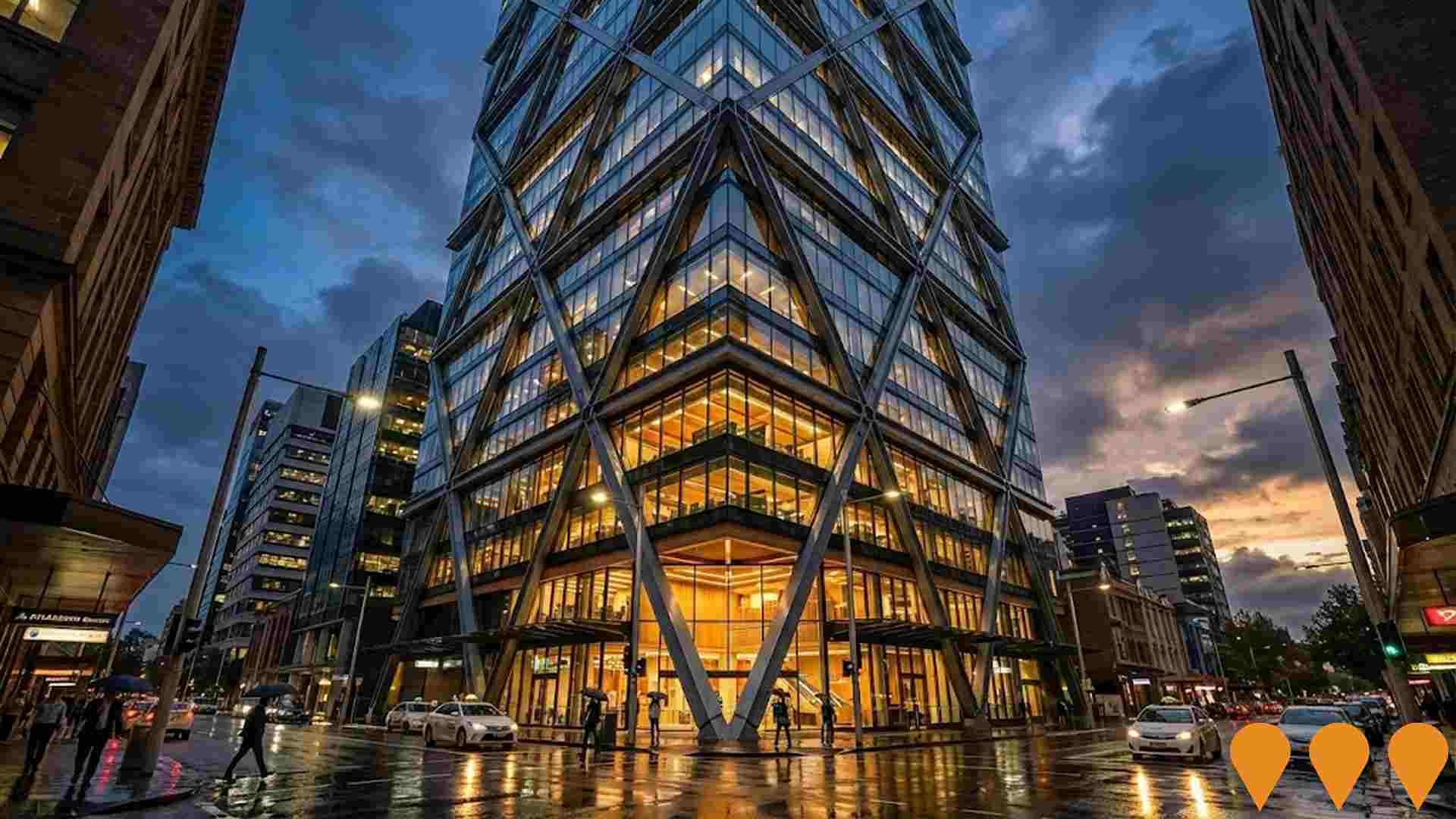
Atlassian Central
Atlassian Central is a 39-storey, 183-metre tower under construction at 8-10 Lee Street, Haymarket, anchoring the NSW Government's Tech Central innovation precinct adjacent to Central Station. Designed by SHoP Architects and BVN, the building combines a steel exoskeleton with a hybrid mass timber and concrete structure, featuring seven four-storey internal timber 'habitats' built using more than 30,000 cubic metres of cross-laminated timber and glulam. Once complete, it will be the world's tallest commercial hybrid timber building.The tower offers 75,000 square metres of gross floor area (around 59,100 square metres net lettable) and is co-owned by Dexus and Atlassian. The lower five levels integrate a 137-room YHA hostel and the heritage-listed Parcel Shed, which is being adaptively re-used as the building lobby. Sustainability targets include a 50 percent reduction in embodied carbon, 100 percent renewable energy operation, a 5.5-star NABERS Energy commitment and a 6-star Green Star target, supported by an electricity-generating photovoltaic facade. Built and Obayashi Corporation joint venture (BOJV) commenced construction in August 2022. As of mid-2026 the tower has surpassed Milwaukee's Ascent to become the world's tallest hybrid timber tower, with Level 39 top-out scheduled for June 2026 and practical completion targeted for November 2026. Atlassian is expected to occupy five of the seven habitats from late 2028 following fit-out.
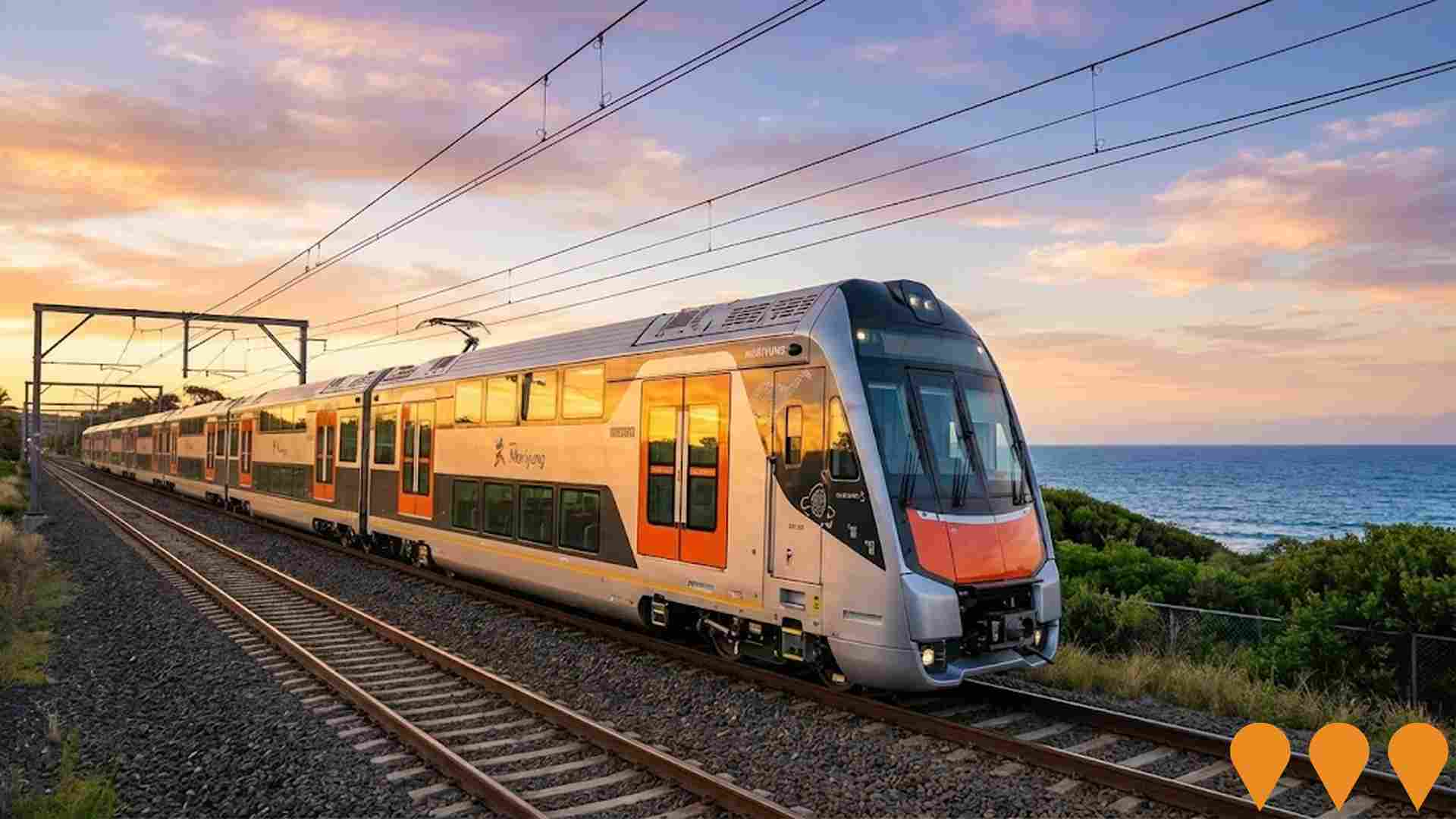
Mariyung Fleet (New Intercity Fleet)
The Mariyung Fleet is a 610-carriage double-deck electric train fleet (D sets) replacing the ageing V-set and Oscar fleets across the NSW intercity network. Delivered by the RailConnect NSW consortium (UGL, Hyundai Rotem, Mitsubishi Electric Australia), the trains feature wider 2x2 seating with arm rests, tray tables and cup holders, charging ports, dedicated luggage, pram and bicycle spaces, accessible toilets, dedicated wheelchair spaces, CCTV, digital information screens and Automatic Selective Door Operation. The fleet operates in 4, 6, 8 or 10-car formations.Passenger services commenced on the Central Coast & Newcastle Line on 3 December 2024, on the Blue Mountains Line on 13 October 2025, and on the South Coast Line on 14 April 2026. The South Coast Line rollout begins with seven 4 and 6-car sets, scaling to 16 trains by 2027 with 8-car sets later in 2026 and 10-car configurations in 2027. The project includes the Kangy Angy Maintenance Facility (operated by UGL on a 15-year contract) and extensive corridor upgrades including platform extensions, signalling modifications, balise installation and overhead wiring works.
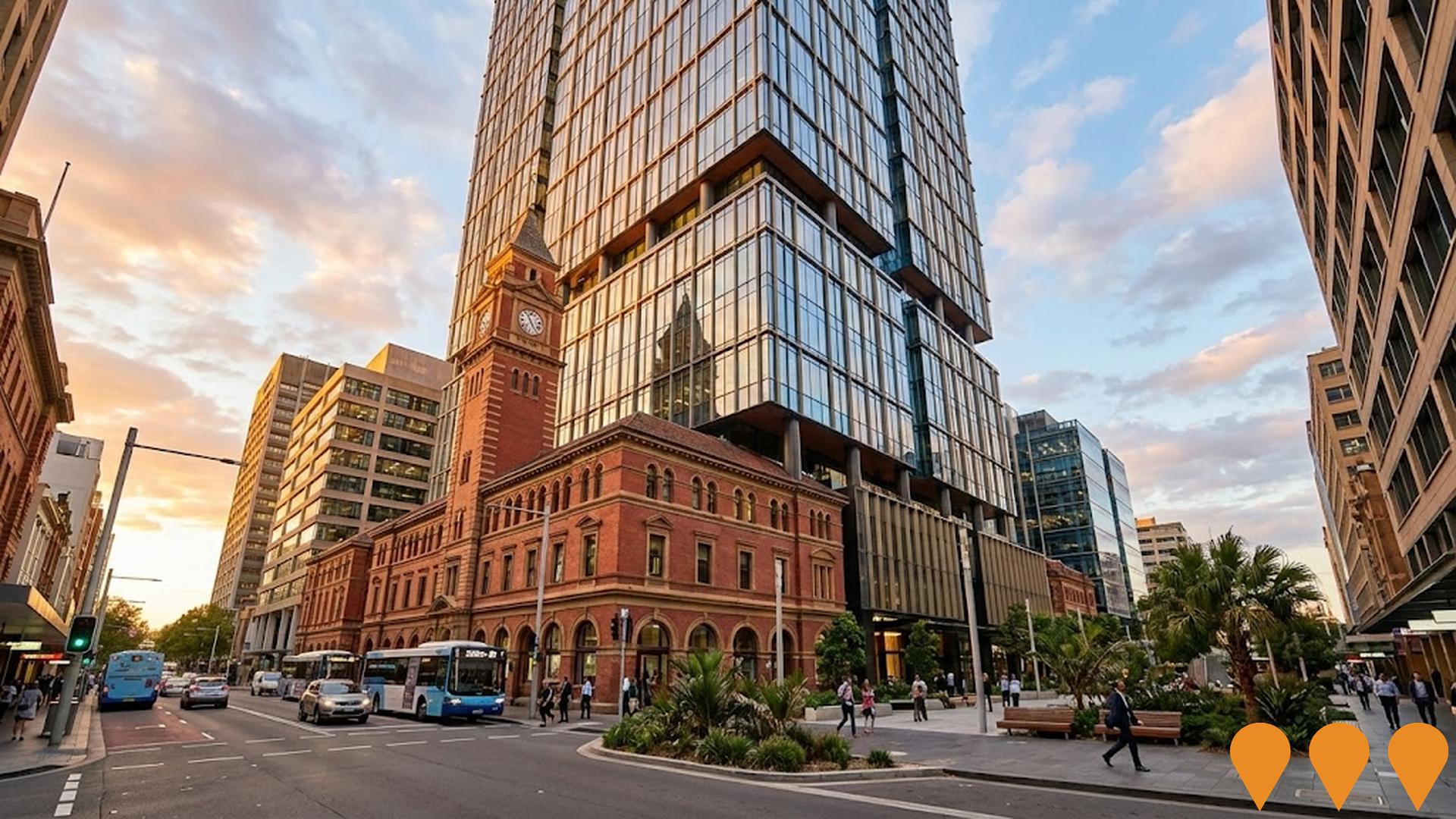
The Post House
A 45-storey mixed-use tower in the Tech Central precinct, also known as TOGA Central. The development integrates the heritage-listed former Parcels Post Office and delivers 29,228sqm of premium office space, a 204-key boutique hotel, and ground-floor/podium retail. Key features include a rooftop pool, day spa, gym, and the new public Henry Deane Plaza. The project targets a 6-star Green Star and 5.5-star NABERS Energy rating.
Harbourside Redevelopment by Mirvac
A $2 billion transformative mixed-use redevelopment of the former Harbourside Shopping Centre at Darling Harbour, delivered as a 50/50 joint venture between Mirvac and Mitsubishi Estate Co. The project delivers 87,000 sqm of gross floor area including 45,000 sqm of commercial and retail space and 42,000 sqm of residential in a 48-storey tower with approximately 260 luxury apartments and penthouses. The precinct features 10,000 sqm of public open space including a 3,500 sqm waterfront park, a widened promenade, a new laneway network, and 6,000 sqm of green roofs.A 4,000 sqm conference and events centre is also included. The tower core structure passed Level 20 as of late 2025 and the final major development application (SSDA No. 03 Public Domain) was approved by the Independent Planning Commission in June 2025. Staged completion is expected from 2026/2027. The precinct is designed by Snohetta and Hassell Studio.

apt.Broadway
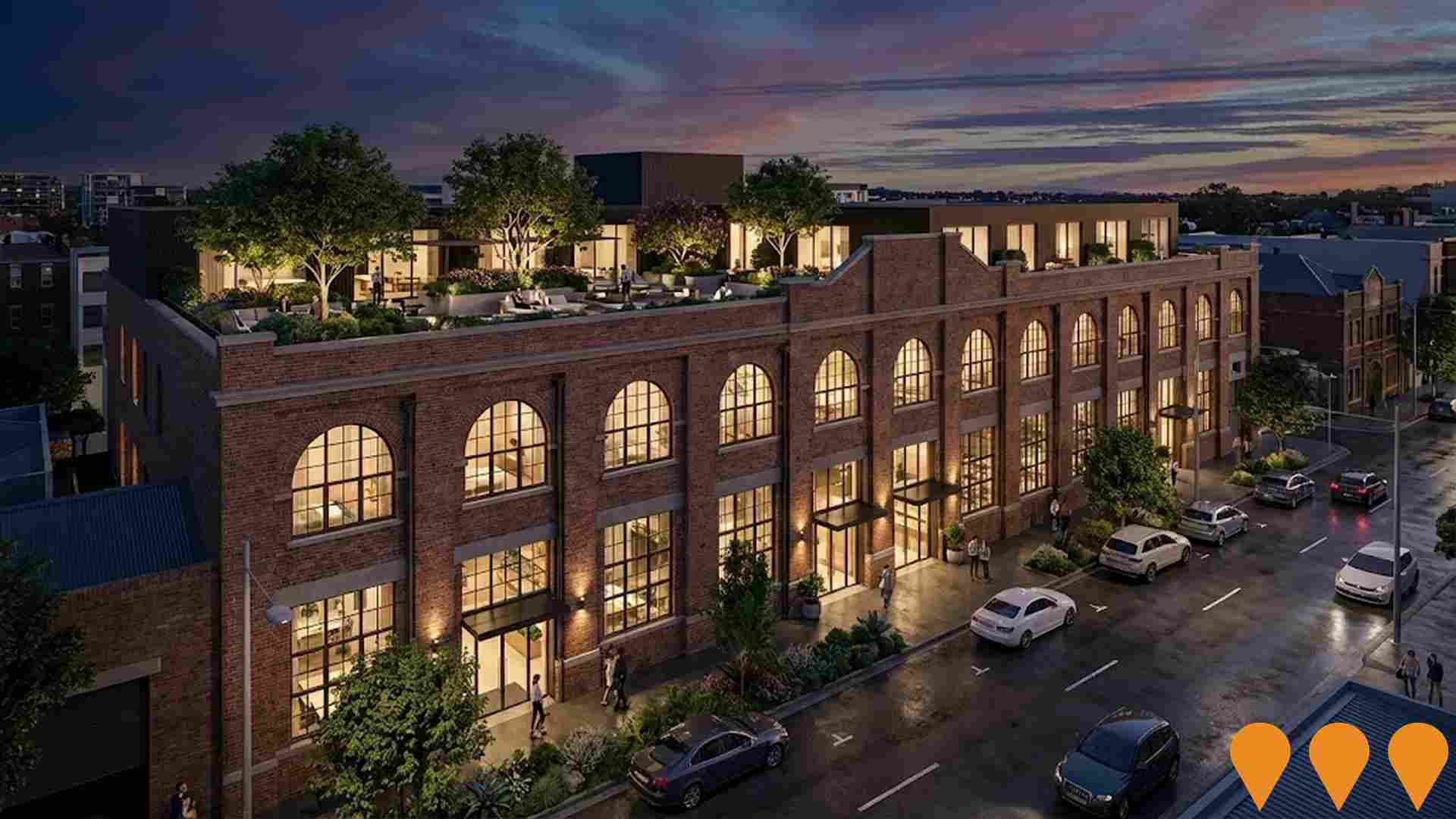
Adaptive reuse of a circa 1910 heritage Grace Brothers warehouse at 1-3 Smail Street, Ultimo, into 160 co-living rental rooms. Designed by AJC Architects with interiors by Alexander and Co, the development targets 5 Star Green Star and Gold WELL ratings and will operate on 100% renewable energy. Amenities include a wellness centre, co-working hub, communal dining areas, and a rooftop terrace. A portion of rooms are allocated to creative and performing arts workers, with 15 permanently affordable homes for low-income earners.Part of a broader $240m+ Ultimo precinct with an adjoining Mountain Street site acquired by apt.Residential in May 2025.
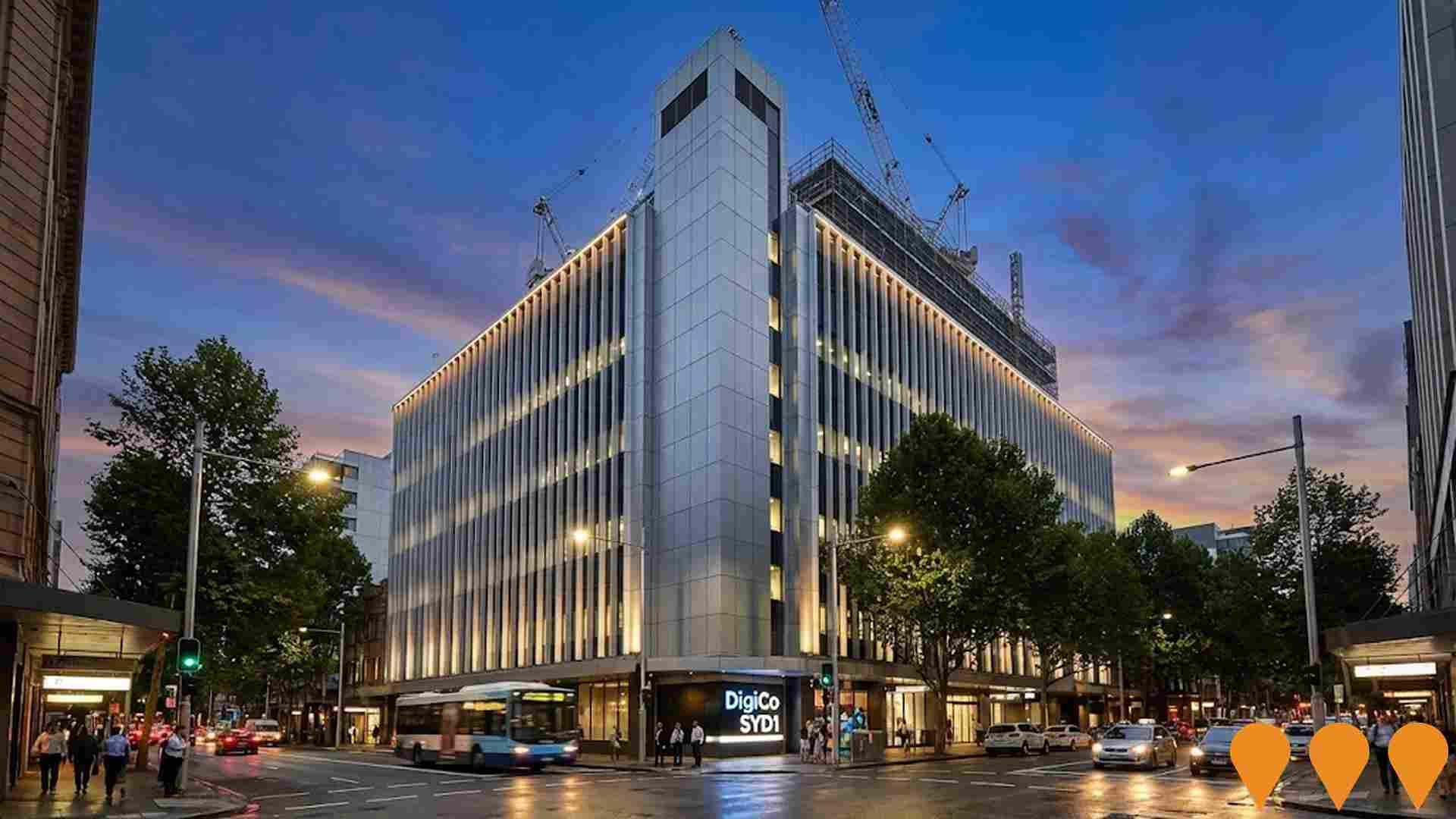
DigiCo SYD1 Data Centre Expansion (88MW D&O Project)
Expansion and optimisation of the existing DigiCo SYD1 (formerly Global Switch) data centre campus to increase total IT capacity to 88MW through vertical extensions and internal reconfigurations. The State Significant Development Application (SSD-69637456) for the 47.5MW capacity increase and two additional levels is under assessment. Separately, a 9MW expansion of liquid-cooled capacity is underway for delivery in early Q4 FY26 (mid-2026).
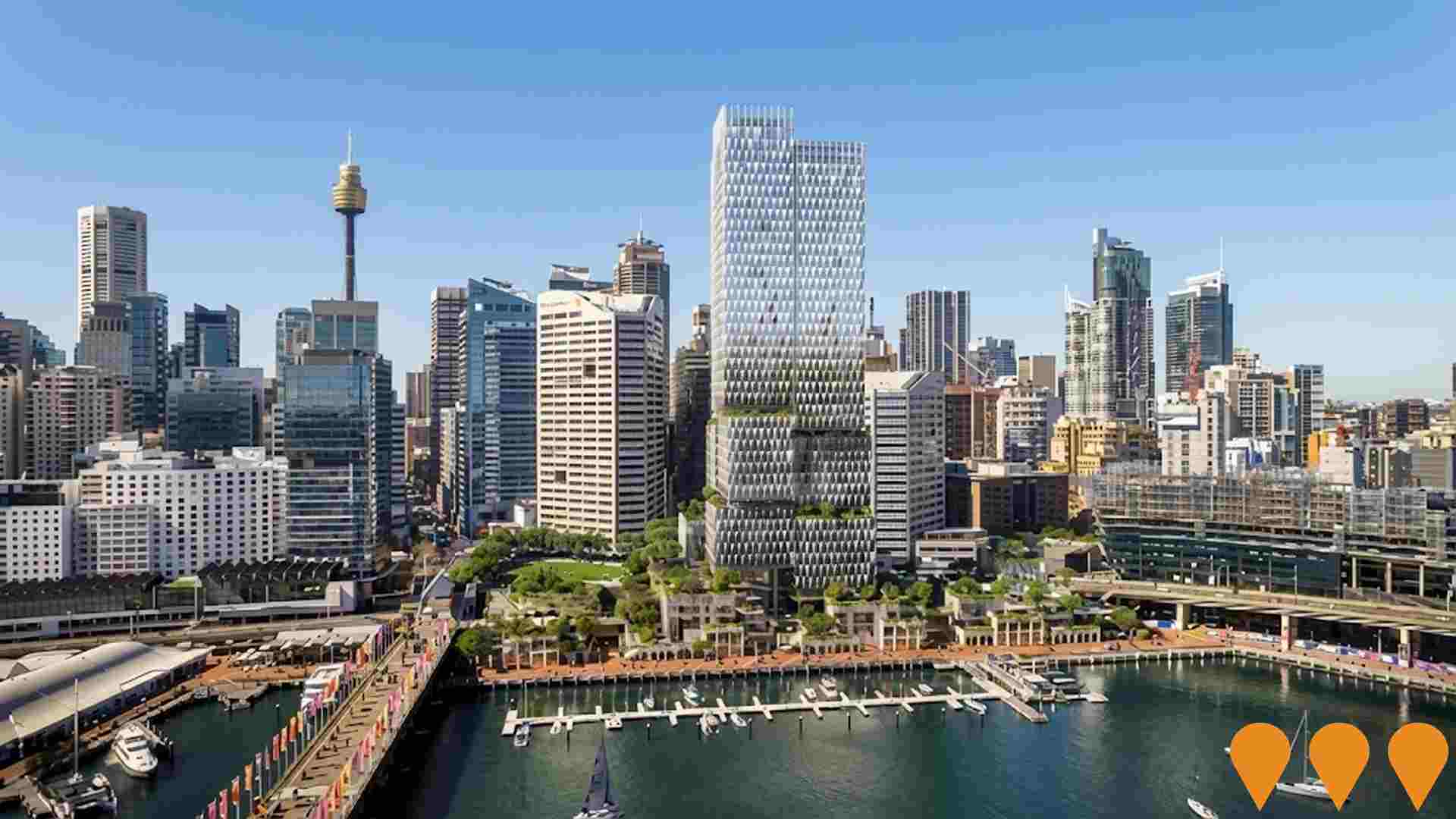
Cockle Bay Park (Cockle Bay Wharf Redevelopment)
A state-significant transformation of Cockle Bay Wharf into a vibrant mixed-use precinct. The project features a 183-metre commercial tower providing 75,000 sqm of premium office space, a 14,000 sqm retail and entertainment podium, and over 15,000 sqm of public open space, including a 5,500 sqm elevated park bridging the Western Distributor to reconnect the CBD with the waterfront.



6,237 residents of Ultimo are employed, from a labour force of 6,388. Unemployment sits at 2.4%, with participation at 63.8%. Weighted for its industry mix, the area's sectors are forecast to grow about 6.8% nationally over five years. That reflects industry composition only and makes no allowance for local population growth, so in an area growing as fast as this one it understates the likely rise in local jobs. The working-day population is estimated at 18,034, about 171% of the resident population, so the area draws in more workers than it sends out. Unemployment and labour force come from ABS Small Area Labour Markets, updated quarterly; the industry and occupation profile is from the 2021 Census.
Detail
The local talent pool is defined by advanced education, significant clustering in technical fields, a low jobless rate of 2.4%, and an estimated 1.7% expansion in employment over the preceding year according to AreaSearch regional aggregations. Working residents totaled 6,237 as of March 2026, while the local jobless rate sat 1.8% beneath the 4.1% recorded for Greater Sydney, alongside a labor force participation rate of 63.8% that trails the regional 68.9%. Census records showed that 47.8% of employed locals conducted their work from home, a metric influenced by prevailing Covid-19 restrictions at the time.
The primary employment sectors for local workers include professional & technical services, accommodation & food services, and education & training. Accommodation & food demonstrates exceptional concentration, capturing a market share 2.6 times the regional benchmark, whereas health care & social assistance accounts for 8.3%, well below the broader metropolitan level of 14.1%. Operating with 2.0 workers per resident at the time of the Census, the precinct serves as a major commercial center that draws in substantial commuter numbers from surrounding districts. Based on AreaSearch analysis of SALM and ABS data, aggregated from broader statistical areas, employment levels rose by 1.7% and the labour force grew by 0.9% during the year to March 2026, which led to a 0.8 percentage point decline in the unemployment rate. In contrast, Greater Sydney experienced employment growth of 1.9%, labour force growth of 1.9%, and only a marginal drop in unemployment. Jobs and Skills Australia's national employment forecasts from Mar-26 provide additional perspective on potential future demand within Ultimo. These projections, spanning five and ten-year periods, have been overlaid with the local employment profile to estimate future growth patterns. National employment is projected to expand by 6.6% over five years and 13.7% over ten years, though growth rates vary considerably across industry sectors. When these sector-specific forecasts are applied to Ultimo's employment composition, local employment is expected to increase by 6.8% over five years and 13.7% over ten years (please note this is a simple weighting extrapolation for illustrative purposes and does not take into account localised population projections).
Frequently Asked Questions - Employment
Median household income in Ultimo is $1,805 a week (about $94,000 a year), with median personal income at $772 a week. ATO records put median taxable income at $41,108 a year against an average of $61,333. The average runs 49% above the median, a wider spread than most areas and a sign of a concentrated group of high earners. Household income is from the 2021 Census; taxable income is from ATO Taxation Statistics for the latest financial year available, indexed forward using the ABS Wage Price Index.
Detail
Aggregated postcode figures from the ATO for financial year 2023 show median taxpayer earnings of $41,108 and an average of $61,333 in the suburb of Ultimo, placing it below national standards as well as the Greater Sydney comparators of $60,817 and $83,003. Applying Wage Price Index growth of 10.32% since financial year 2023 yields updated estimates of roughly $45,350 for median earnings and $67,663 for average earnings as of March 2026. Across personal, family, and household levels in the Census, income percentiles sit modestly between the 43rd and 53rd percentiles.
A substantial 32.7% of residents (3,444 individuals) fall into the $1,500 - 2,999 weekly bracket, closely tracking the 30.9% observed regionally. Discretionary financial capacity remains constrained, with only 75.4% of income remaining after housing obligations, ranking at the 43rd percentile, while the SEIFA income measure places the suburb in the 7th decile.
Frequently Asked Questions - Income
Ultimo had 2,926 occupied dwellings at the 2021 Census, 0% detached houses and 88% apartments. 13% are owned with a mortgage, 73% rented and 13% owned outright. At that Census the median rent was $500 a week and the median mortgage repayment $2,500 a month, a total housing cost higher than 96% of areas nationally. Rent absorbs 27.7% of household income here and mortgage repayments 32.0%. Dwelling stock, tenure and housing costs are 2021 Census measures — the only source that counts dwellings at this boundary size.
Detail
Census findings show that the local housing stock consists of 0.2% houses alongside 99.8% other dwellings such as apartments and townhouses, diverging sharply from the broader Sydney metro distribution of 55.9% houses and 44.1% other dwellings. Outright ownership remains low at 13.2% compared to the wider metropolitan area, with 13.4% carrying a mortgage and 73.4% of properties rented. The local median mortgage payment reached $2,500 per month, exceeding the Sydney metro figure of $2,427, while weekly median rents stood at $500 versus $470 across Sydney metro. When benchmarked against national averages, local monthly mortgage obligations exceed the Australian baseline of $1,863, and weekly rents surpass the $375 national figure.
Frequently Asked Questions - Housing
Ultimo counted 2,926 households at the 2021 Census, an estimated 4,160 today, averaging 2.1 people each. 11% are couples with children, fewer than in 97% of areas nationally, against 27% couples without children. 37% of households are people living alone, and families average 0.4 children. Household and family composition is measured only by the Census, so these are 2021 figures.
Detail
Family units account for 45.4% of all occupied residences, consisting of 27.1% couples without children, 10.5% couples with children, and 5.1% single parent families. The remaining 54.6% consists of non-family arrangements, led by lone person households at 36.6% and group living environments at 18.1%. The area records a median household size of 2.1 people, remaining below the Greater Sydney average of 2.7.
Frequently Asked Questions - Households
57.2% of adults in Ultimo hold a university qualification, including 36.1% with a bachelor degree and 18.9% with postgraduate qualifications, higher than 96% of areas nationally. A further 7.6% hold a vocational qualification. 3 schools serve the area, with 1,790 enrolment places and an average ICSEA of 1,138 against a national benchmark of 1,000. Qualifications come from the 2021 Census; school enrolments, ICSEA and results come from ACARA's current release.
Detail
Attainment levels across the suburb are exceptionally high, with 57.2% of individuals aged 15+ possessing university credentials, surpassing the 30.4% national and 32.2% NSW benchmarks to reinforce the local knowledge economy. Bachelor degrees constitute 36.1% of qualifications, complemented by postgraduate degrees at 18.9% and graduate diplomas at 2.2%. Vocational education accounts for 19.6% of credentials among those aged 15+, divided between advanced diplomas (12.0%) and certificates (7.6%). A significant proportion of the population is actively engaged in study, with 45.6% participating in formal educational courses. Tertiary programs account for the vast majority at 24.0%, while primary schooling comprises 2.7% and secondary education represents 1.6%.
Frequently Asked Questions - Education
Schools Detail
Public transport in Ultimo reaches 15 stops on 34 routes, timetabled for about 9,300 services a week. The typical home sits about 140 m from its nearest stop. Buses carry the largest share of public transport commuters. Households keep an average of 0.2 vehicles. Stop and service counts are built from operators' published GTFS timetables and refresh with each timetable release; vehicle ownership is from the 2021 Census.
Detail
The local transit framework includes 15 active transport stops spanning bus services within the suburb of Ultimo. These transit points accommodate 34 individual routes that deliver 9,339 weekly passenger trips, offering high connectivity with an average walking distance of 136 meters to the nearest boarding point. Commuters predominantly travel outward, with walking representing 26% of commutes and train travel accounting for 22%. Vehicle ownership is low at an average of 0.2 per dwelling, trailing regional figures, while 47.8% worked from home at the 2021 Census under lockdown conditions. Transit schedules across all routes average 1,334 trips per day, which translates to roughly 622 weekly trips for each transport stop.
Frequently Asked Questions - Transport
Transport Stops Detail
85.5% of residents in Ultimo report no long-term health condition, a healthier profile than 87% of areas nationally. 2.0% need daily assistance with core activities, and 51.2% hold private health cover. The standardised death rate runs at 4.6 per 1,000 residents. Health conditions, assistance needs and insurance are 2021 Census measures; the death rate comes from current ABS releases.
Detail
AreaSearch evaluations of mortality metrics and chronic disease frequency indicate exceptional overall health results across the population, characterized by minimal incidence of standard health ailments across all age brackets. Private health insurance participation sits at approximately 51% of all residents (~5,394 people), trailing the Greater Sydney level of 59.9%. Mental health conditions and asthma represent the two most prevalent diagnosed issues locally, affecting 5.8 and 4.8% of the community respectively, while 85.5% of residents report no chronic medical conditions compared to 74.6% across Greater Sydney. Older residents aged 65 and over make up 4.3% of the populace (452 people), remaining well below the 15.5% share across Greater Sydney, with senior health indicators ranking higher than the national baseline.
Frequently Asked Questions - Health
71.2% of Ultimo residents were born overseas and 62.7% speak a language other than English at home, more culturally diverse than 97% of areas nationally. The largest reported ancestries are Chinese (27.7%) and English (11.9%). Ancestry, language and country of birth are counted only by the Census, so these are 2021 figures.
Detail
Demonstrating notable multiculturalism, 71.2% of residents were born abroad and 62.7% converse in a non-English language at home. Christianity constitutes the largest religious affiliation at 22.2% of the population, while Buddhism exhibits substantial concentration at 13.9%, well above the Greater Sydney proportion of 4.1%. The leading ancestral backgrounds across the suburb are Chinese at 27.7% of the populace (versus 8.4% across the region), Other backgrounds at 24.2% (versus 16.0% regionally), and English at 11.9% (versus 19.0% regionally). Other distinct cultural groups include Spanish at 1.1% (compared to 0.6% regionally), Korean at 1.7% (compared to 1.1% regionally), and Russian at 0.6% (compared to 0.4% regionally).
Frequently Asked Questions - Diversity
The median resident of Ultimo is 27, younger than 96% of areas nationally. That is 3 years younger than at the 2021 Census. 69.7% of residents are aged 15 to 34. Age cohorts are not raw Census counts: the Census split is re-based to the latest ABS population estimates and state projections.
Detail
The demographic profile is heavily weighted toward childless younger generations. August 2026 figures from AreaSearch show that 52.0% of the community comprises younger to middle-aged adults aged 25 - 44, compared to 31.4% across Greater Sydney, while mature adults and early retirees aged 45 - 64 represent 8.1% versus 22.6% regionally. The estimated median age is 27, down from 30 at the 2021 Census, sitting 10 years below the Greater Sydney median of 37 and below the national median of 38 from the same Census. Residents aged 0 - 24 have expanded their share from 27.2% at the Census to an estimated 35.6%.
By 2041, cohorts aged 45 - 64 are anticipated to experience the largest numerical increase, rising by 1,281 (150%) to 2,134, while senior cohorts aged 65+ will see the fastest rate of growth, climbing 165% to 1,202.
Frequently Asked Questions - Age
Data & MethodBoundaries, Sources & Method for Ultimo
9 of 14 data sections on this page were updated within the last 12 months — the newest current to Oct 2026.
Everything is aggregated to the Suburb (SAL) boundary shown above, on a 2021 Census baseline. Only 3 sections — housing, households and cultural diversity — still wait on the 2026 Census.
The ledger — source, cycle and currency by section
| Section | Source & update cycle | Currency |
|---|---|---|
| Updated within the last 12 months 9 sections | ||
| Population | ABS, GNAF, Geoscience Australia Annual (ABS ERP) | Aug 2026 2 months ago headline measures · 2021 Census baseline |
| Re-based to the ABS Estimated Resident Population (June 2025 release) and updated with new dwellings from GNAF address data. Current to Aug 2026, with the 2021 Census supplying the small-area baseline. | ||
| Age profile | ABS, Geoscience Australia, State governments Annual | Aug 2026 2 months ago headline measures · 2021 Census baseline |
| Age cohorts are re-based to the latest ABS population estimates and state projections, current to Aug 2026. Each cohort is held as a Census baseline and a current estimate. | ||
| Development & approvals | ABS, GNAF Monthly (ABS approvals) | Aug 2026 2 months ago headline measures · Jul 2026 baseline |
| Property sales & rents | Valuer General, Rental Board, ABS Weekly sales, quarterly rents | Oct 2026 this month headline measures · Sep 2026 baseline |
| Sales from the state Valuer General register, refreshed weekly, and rents from quarterly rental bond lodgements. Both are read live each time this page loads, current to Oct 2026. | ||
| Infrastructure projects | Infrastructure Australia, State agencies, Local governments Daily | Aug 2026 2 months ago all 6 projects tracked here |
| Project pipeline maintained continuously from Infrastructure Australia, state agencies, local government and public announcements. Records are added and revised daily; this area was last updated Aug 2026. | ||
| Employment | ABS, DEWR, JSA Quarterly (ABS SALM) | Mar 2026 7 months ago headline measures · 2021 Census baseline |
| Unemployment and labour force from ABS Small Area Labour Markets, current to Mar 2026. The growth outlook applies Department of Employment (now Jobs and Skills Australia) forecasts for all 19 industry divisions to the local industry mix, so it measures sector composition rather than local expansion and makes no allowance for population growth. Job demand comes from the same agency via its Internet Vacancy Index; industry and occupation structure from the 2021 Census. | ||
| Education | ABS, ACARA Annual (ACARA) | Sep 2026 last month headline measures · 2021 Census baseline |
| Transport | ABS, State Transport Departments Each timetable release | Jul 2026 3 months ago headline measures · 2021 Census baseline |
| Services & amenities | Provider directories, ACECQA Continuous | Sep 2026 last month all 14 measures |
| Annual and financial-year sources 2 sections | ||
| Income | ABS, ATO Annual (ATO) | FY 2023 3 years ago headline measures · 2021 Census baseline |
| ATO taxable income statistics for FY 2023, indexed forward using the Wage Price Index. Census household income provides the distribution detail. | ||
| Health | ABS, ATO Annual | 2024 2 years ago headline measures · 2021 Census baseline |
| Census-measured — next update: 2026 Census 3 sections No more current small-area source exists for these, so they are labelled as Census-measured rather than implied to be current. | ||
| Housing | ABS 5-yearly (Census) | 2021 Census next update 2026 all 30 measures |
| Households | ABS 5-yearly (Census) | 2021 Census next update 2026 all 18 measures |
| Cultural diversity | ABS, Geoscience Australia 5-yearly (Census) | 2021 Census next update 2026 all 44 measures |
"Currency" is the most recent release feeding that section. Where the Census supplies the structural baseline underneath a current headline figure, the row says so.
How the numbers are built
Population
The Census provides the small-area baseline, aggregated from mesh blocks to this boundary. It is then re-based to the ABS Estimated Resident Population (June 2025 release), and new dwellings built since Census night are counted from address data. The headline figure is therefore a current estimate for Aug 2026, not a 2021 count (7,410 at the 2021 Census → 10,534 now). Annual growth rates are compound (CAGR), not simple averages.
Age profile
Cohort shares are not raw Census counts. Every cohort is held as a pair — the Census baseline and a current estimate — and the split is re-based using ERP and state population projections, current to Aug 2026. Median age is the Census median plus modelled change since. Charts that show both are labelled "2021 Census vs Current Estimate".
Property sales
Sourced from the state valuation authority's sales register — current, not Census, and refreshed weekly. Medians are calculated from settled transactions in the period shown; periods with very low transaction counts are flagged or suppressed, because a handful of sales can move a median substantially.
Rents
Derived from state rental bond lodgement data, by dwelling type and bedroom count. Bonds are lodged at the start of a new tenancy, so this reflects new lettings, not the whole rented stock.
Development & infrastructure
Building approvals come from current ABS releases; development applications are collected from council and state planning portals; the infrastructure pipeline is compiled from Infrastructure Australia and local government sources. Applications are matched to this boundary by address or coordinates, so very recent lodgements may not yet appear.
Employment & income
Industry and occupation structure comes from the Census, but the headline labour-market indicators do not. Unemployment and labour force are derived from ABS Small Area Labour Markets (quarterly). The employment outlook applies Department of Employment forecasts for all 19 industry divisions to this area's own industry mix (the agency is now Jobs and Skills Australia), as does the Internet Vacancy Index used for job demand. Because it is weighted on industry composition alone, that outlook carries no allowance for local population growth — in fast-growing areas the real rise in local jobs will typically be higher. Income combines Census household income with ATO taxable-income statistics for FY 2023, indexed forward using the Wage Price Index.
Education, transport & amenities
School enrolments, ICSEA and performance come from ACARA's current release, not the Census. Public transport stops and service frequency are derived from GTFS timetable feeds published by state transport departments. Services and amenities are proximity and count scores built from provider directories, refreshed on their own cycle. The Census contributes only the travel-to-work and qualification measures.
Rankings and benchmarks. Where we rank this area, the comparison set is every area of the same boundary type — suburbs against suburbs, SA2s against SA2s. Benchmarks compare this area against its greater capital city region and the national figure for the same measure and period.
Limits worth knowing. Small areas carry larger error margins, and the ABS introduces small random adjustments to Census counts to protect confidentiality — so totals may not sum exactly. Estimates re-based from regional data describe the area's expected trajectory, not a direct count of it. Figures are indicative for research and are not financial, planning or valuation advice.
Cross-check us. The Census baseline for this boundary is at ABS 2021 Census QuickStats (SAL14024). QuickStats reports 2021 only — the figures on this page are more current wherever the ledger shows a later date.