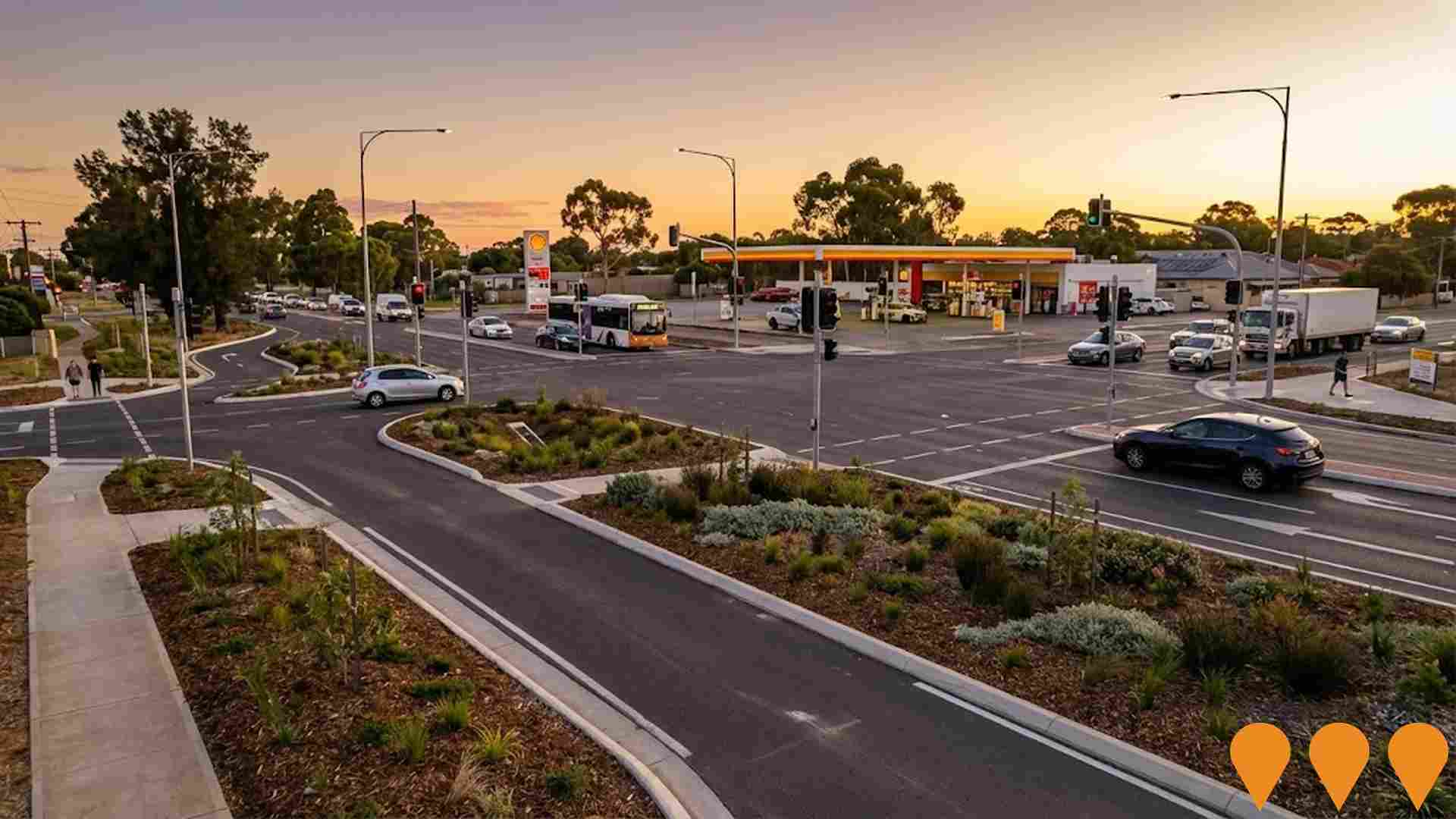
Modbury North

Suburb (SAL)

Greater Adelaide / Tea Tree Gully


Data Sources ABSValuer GeneralRental BoardACARA Newest Aug 2026 · Refreshed ABS QuickStats SAL40900 How we calculate this
Chart Color Schemes
Loading map data ...
Suburb (SAL) Boundary Analysis

This analysis uses Suburbs and Localities (SAL) boundaries, which can materially differ from Statistical Areas (SA2) even when sharing the same name.

SAL boundaries are defined by Australia Post and the Australian Bureau of Statistics to represent commonly-known suburb names used in postal addresses.

Statistical Areas (SA2) are designed for census data collection and may combine multiple suburbs or use different geographic boundaries. For comprehensive analysis, consider reviewing both boundary types if available.

0 People

est. as @ -- *

2021 Census | -- people

Land Area
--
Land Area
Population Density
--
Density
Unemployment Rate
--
Unemployment
Development
--
Resi Approvals
Get My Report

Sales ActivityProperty Sales Trends in Modbury North

Table Chart PROFILE FAQ

Curious about local property values? Filter the chart to assess the volume and appreciation (including resales) trends and regional comparisons, or scroll to the map below view this information at an individual property level.

Find a Recent Sale
Type Specified (1) | Limit 50

Sales Detail

Loading rental data…

DemographicsPopulation Growth in Modbury North

Table Chart PROFILE FAQ

Modbury North has an estimated 6,114 residents, up from 5,704 at the 2021 Census — a change of 410 people, or 7.2%. Growth has averaged 1.0% a year over five years. Overseas migration accounts for 60.0% of that increase. That puts 2,145 residents on each square kilometre. Population is estimated from ABS Estimated Resident Population releases and GNAF address data, re-based from the 2021 Census and updated annually.

Detail

Based on analysis of ABS population updates for the broader area, and new addresses validated by AreaSearch since the Census the suburb of Modbury North has a population estimated at around 6,114 as of May 2026. This represents a growth of 410 people (7.2%) since the 2021 Census, which recorded a population of 5,704 people. The change is calculated from the resident population of 6,110, estimated by AreaSearch following analysis of the latest ERP data release by the ABS (June 2025) and an additional 29 validated new addresses since the Census date.

This level of population equates to a density ratio of 2,145 persons per square kilometer, which is above the average seen across national locations assessed by AreaSearch. In the suburb of Modbury North, the 7.2% growth since the 2021 census exceeded the SA3 area (4.1%), marking it as a growth leader in the region. Population growth for the area was primarily driven by overseas migration that contributed approximately 60.0% of overall population gains during recent periods. AreaSearch is adopting ABS/Geoscience Australia projections for each SA2 area, as released in 2024 with 2022 as the base year. For any SA2 areas not covered by this data, and for years post-2032, the SA State Government's Regional/LGA projections by age category, released in 2023 and based on 2021 data, are adopted with adjustments made employing a method of weighted aggregation of population growth from LGA to SA2 levels. As future demographic shifts are analysed in the suburb of Modbury North, a population increase just below the median of statistical areas across the nation is expected, with the area expected to increase by 376 persons to 2041 based on aggregated SA2-level projections, reflecting an increase of 6.1% in total over the 16 years.

Frequently Asked Questions - Population

What is the latest population estimate for the suburb of Modbury North?
Total population for the suburb of Modbury North was estimated to be approximately 6,114 as at May 26. This is based upon an estimated resident population of 6,110 from the ABS up to June 2025.
How has the population in the suburb of Modbury North changed since 2021?
The suburb of modbury north has added approximately 410 people and shown a 7.19% increase from the 5,704 people recorded at the 2021 Census period.
What is the population density in the suburb of Modbury North?
The population density in the suburb of Modbury North is estimated at 2,145 persons per square kilometer based on the latest population estimate.
How much has the population grown over the past 10 years in the suburb of Modbury North?
Over the past 10 years, the population in the suburb of Modbury North has shown a compound annual growth rate of 0.6% per annum.
What are the main drivers of population growth in the suburb of Modbury North?
Population growth in the suburb of Modbury North is driven by: Overseas migration (60.0%), Natural increase (40.0%), Interstate migration (0.0%). The primary driver is Overseas migration, contributing 60.0% of overall population gains.

Residential SupplyHousing Development & Building Approvals in Modbury North

Table Chart PROFILE FAQ

159 new dwellings have been approved in Modbury North over the past five years, an average of 31 a year. That places the area in the 58th percentile for residential development activity nationally, about 5 approvals per 1,000 residents a year. Of the 27 dwellings approved in the latest reporting year, 89% were detached houses and the rest townhouses or apartments. Approvals are currently running at an annualised 66, running ahead of that longer-run average. Figures come from ABS building approvals aggregated to this Suburb (SAL) boundary and are updated monthly as the ABS releases them.

Detail

According to AreaSearch evaluations of ABS building approval statistics distributed from regional data, approximately 31 new dwellings have been approved annually in the locality, yielding an estimated total of 159 residences over the preceding 5 financial years. Thus far in FY-26, 61 approvals have been registered. Assuming an average of 1.8 new occupants per year for each built dwelling over the 5 financial years between FY-21 and FY-25, demand matches supply closely to sustain a balanced market, with new residential projects built at a mean value of $299,000. Additionally, commercial approvals have reached $10.5 million this financial year, showing moderate commercial construction activity.

In comparison to Greater Adelaide, building activity is slightly higher (14.0% above the regional average per capita over the 5 year period), offering purchasers varied options while underpinning existing home valuations. Modern building projects consist of 89.0% separate houses and 11.0% townhouses or multi-unit dwellings, reinforcing the low-density residential character that appeals to households prioritizing space. The district has a ratio of about 196 people for each dwelling approval, suggesting a growing market. Looking forward, the population is projected to expand by 372 residents through to 2041 based on the most recent AreaSearch quarterly calculations. With the current pace of construction, new residential options should easily satisfy demand, creating favorable buying conditions and potentially driving expansion beyond projected estimates.

Frequently Asked Questions - Development

How many dwelling approvals have occurred in the suburb of Modbury North recently?
Dwelling approval activity in the the suburb of Modbury North area has seen 62 residential approvals over the past two financial years, based on AreaSearch's SA2 aggregation method. The suburb of Modbury North's current population of 6,114 has been supported by 31 approvals on average over recent years.
How does the suburb of Modbury North's development activity compare to the broader region?
The suburb of Modbury North has seen 0.54 approvals per 100 people in recent years, compared to 0.74 approvals in the broader region. This means that one dwelling has been approved for every 196 people in the suburb of Modbury North, compared to one for every 144 in the broader region.
Is the suburb of Modbury North keeping up with housing demand?
With the population expected to increase by 372 people by 2041, around 186 new dwellings will be necessary. Recent approval levels appear more than sufficient to meet these forecasts, considering the census average of 2.0 persons per dwelling. This suggests that population growth may exceed trend projections in the coming years, supported by a robust housing supply.
What has been the trend in development approvals over the past five years in the suburb of Modbury North?
Looking at development activity over the past five years, the suburb of Modbury North's approval levels have been significantly above the yearly average of 31, indicating strong recent growth in development activity.
How many dwellings will be needed to accommodate future population growth in the suburb of Modbury North?
The population in the suburb of Modbury North is expected to grow by 372 people by 2041, necessitating approximately 186 new dwellings. This calculation is based on the current census average of 2.0 persons per dwelling in the area.
How does recent development compare to population growth in the suburb of Modbury North?
Over the past five years, the population in the suburb of Modbury North has grown by approximately 315 people, while 159 residential approvals were recorded. This equates to a ratio of 2.0 people added for each new dwelling approval. This suggests a balanced relationship between population growth and housing supply.
Are there opportunities for residential developers in the suburb of Modbury North?
With dwelling approval activity running at an average of 31 approvals per year and a population of 6,114, the market appears to be adequately supplied relative to projected housing demand in recent years, suggesting that developers should have a longer-term approach when considering new projects. With the population expected to increase by 372 people by 2041, around 186 new dwellings will be necessary. Recent approval levels appear more than sufficient to meet these forecasts, considering the census average of 2.0 persons per dwelling. This suggests that population growth may exceed trend projections in the coming years, supported by a robust housing supply.
Approvals Pipeline Development applications near Modbury North

Development applications around Modbury North

Development approvals is a new addition to AreaSearch. We’re actively expanding council coverage and refining the dataset — details and statuses for some councils may be partial. Check back regularly for the latest pipeline.
Applications
In this area
Est. Value
Where disclosed
Under Assessment
Awaiting determination
Determined
Approved or decided
Approvals pipeline Status, location, timing and project scale
Search

Loading development applications…

Lodged Address Description Type Distance Status

SOURCE: Planning portals and council registers, compiled by AreaSearch. Distance & bearing measured from the suburb midpoint.

Project PipelineInfrastructure & Major Projects in Modbury North

PROFILE FAQ

AreaSearch tracks 2 current infrastructure and development projects inside Modbury North, worth an estimated $53 million. A further 30 sit in the immediately surrounding suburbs, taking the tracked pipeline within reach of the area to $3.32 billion. 6 are already under construction and 4 are due for completion within three years. The pipeline spans transport & logistics, residential development and health & medical. Records are compiled from Infrastructure Australia, state agencies, council planning portals and public announcements, reviewed and updated daily, then ranked by proximity, construction stage, completion horizon and project scale.

Detail

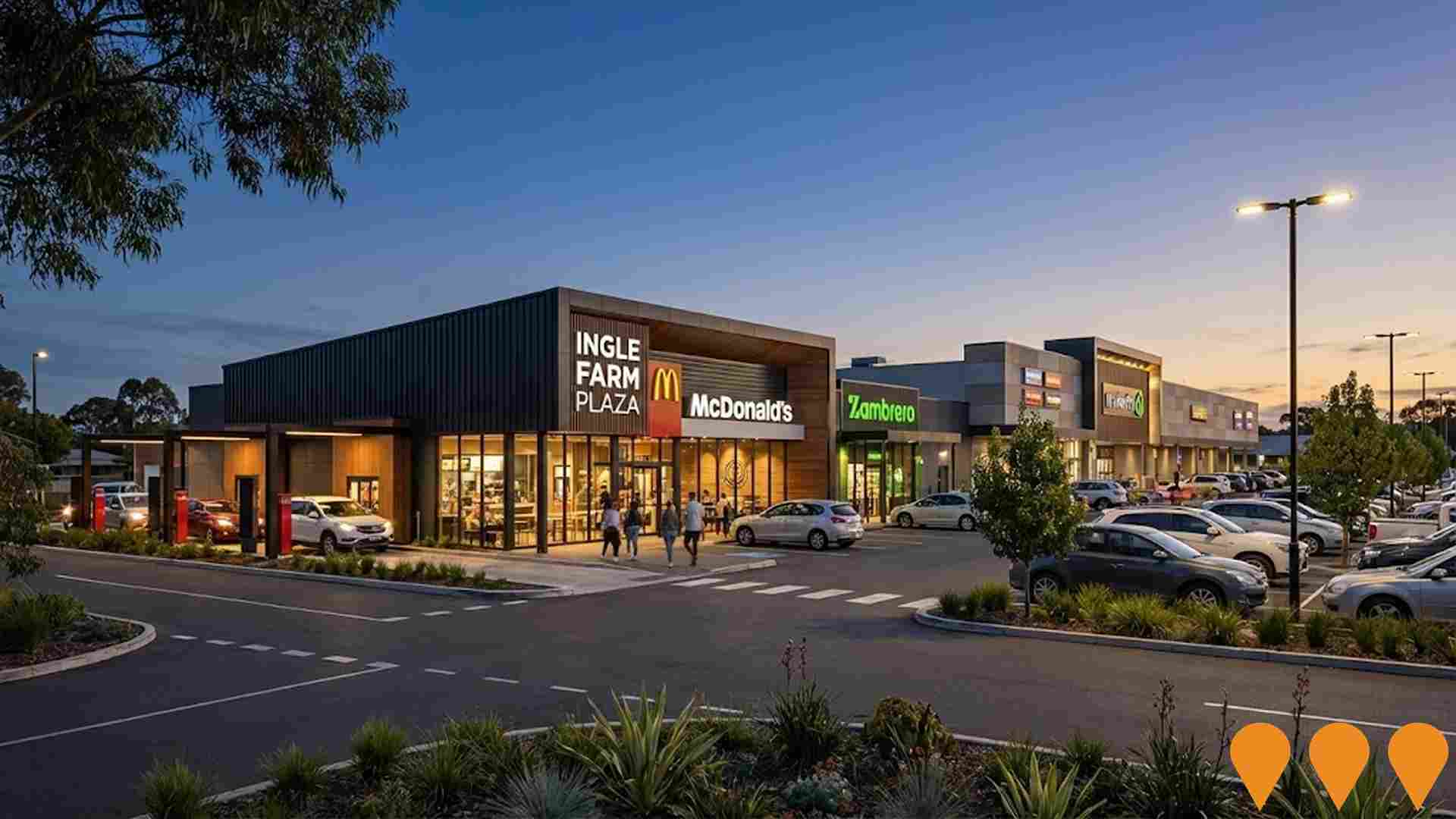
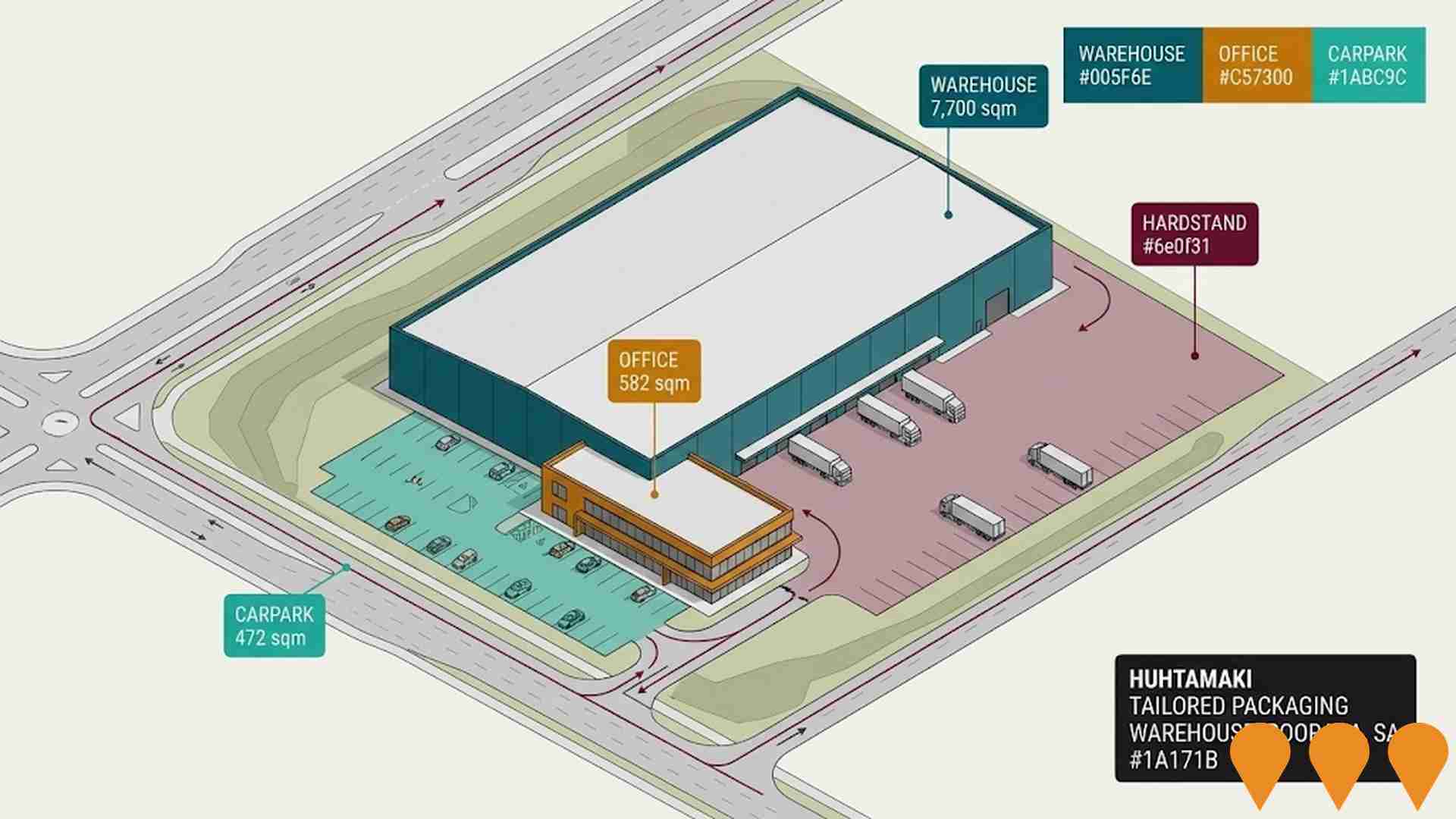
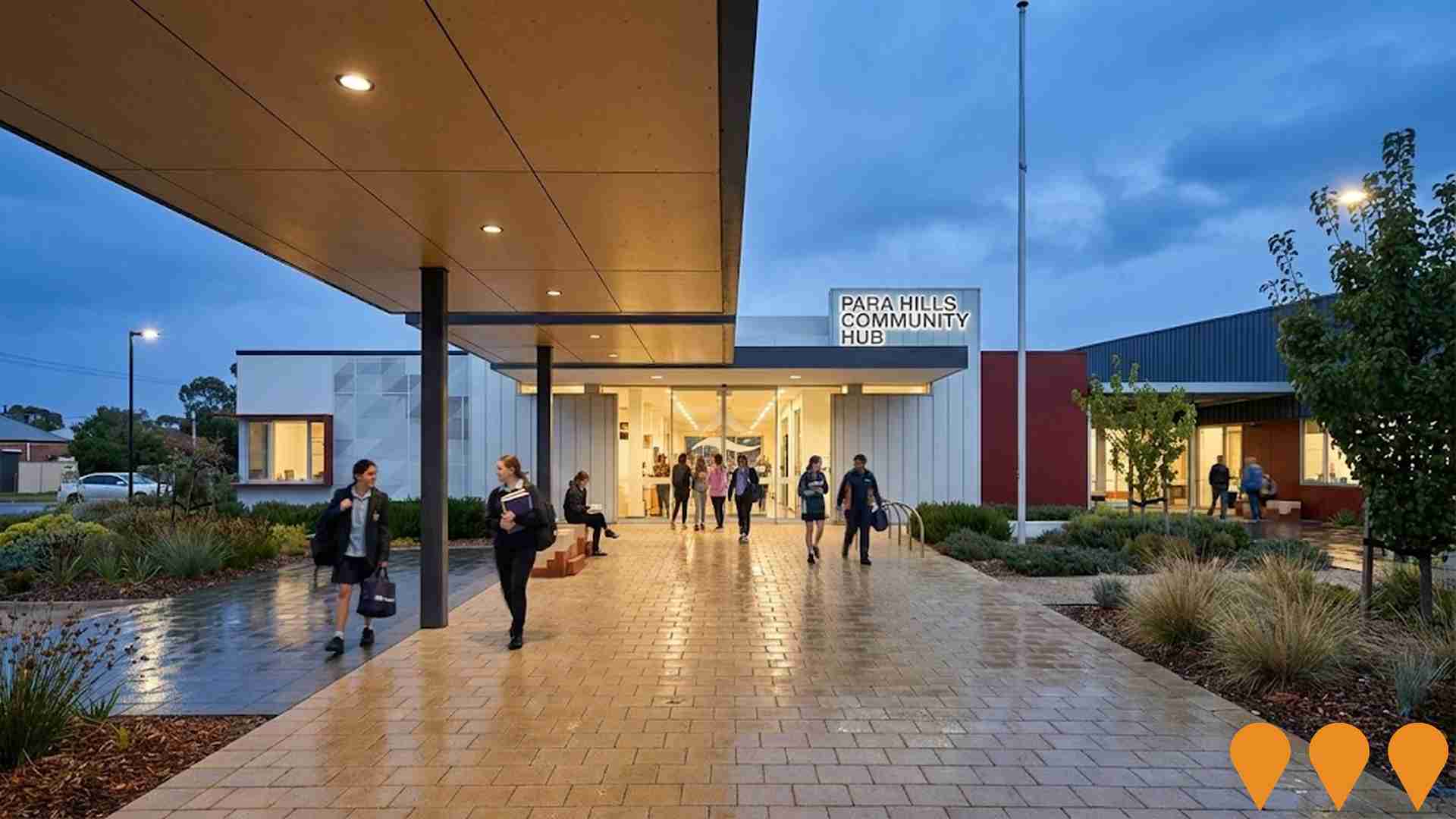
Local infrastructure projects, developments, and zoning updates are major drivers of neighborhood change. AreaSearch has tracked a total of 8 projects that are expected to influence the local area. Notable projects include the Modbury Sporting Club Building and Sportsfield Lighting, the Tilley Recreation Park Indoor Training Facility, the Valley View Golf Course Residential Release (Stage 3 & 4), and the ECH Encore Apartments Modbury, with details on the most significant initiatives provided in the following list.

Professional plan users can use the search below to filter and access additional projects.

INFRASTRUCTURE SEARCH
All Selected

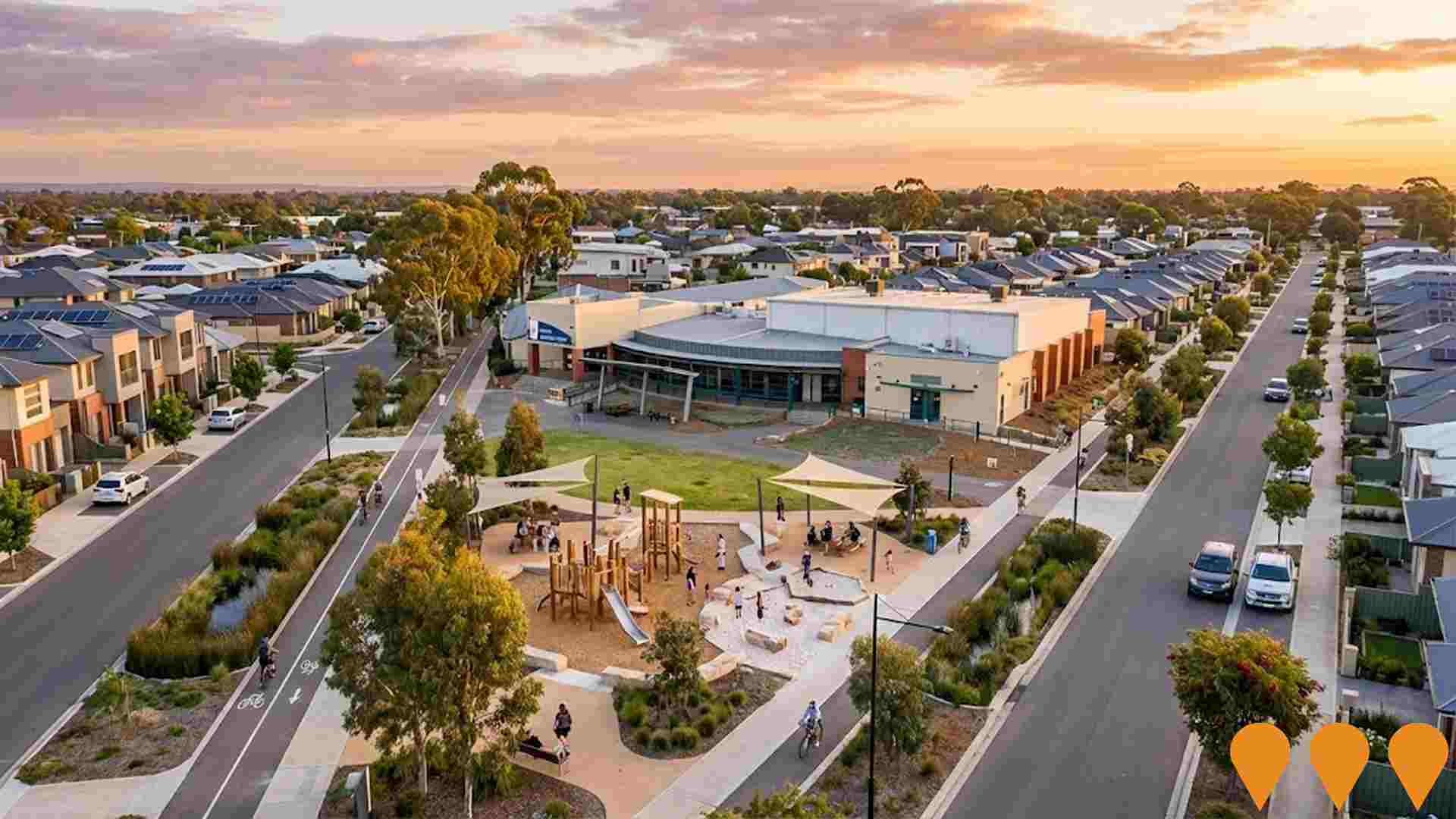
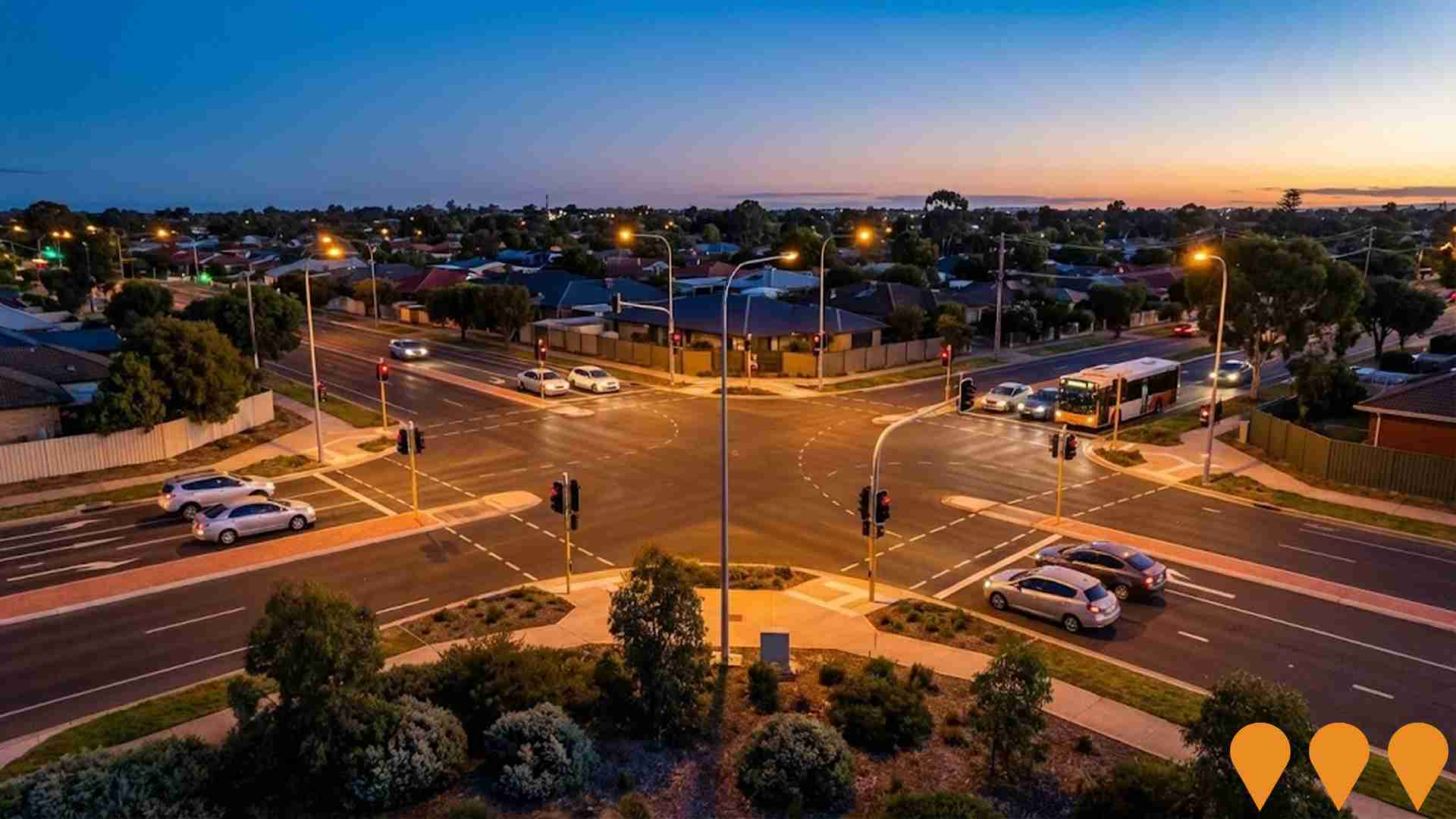
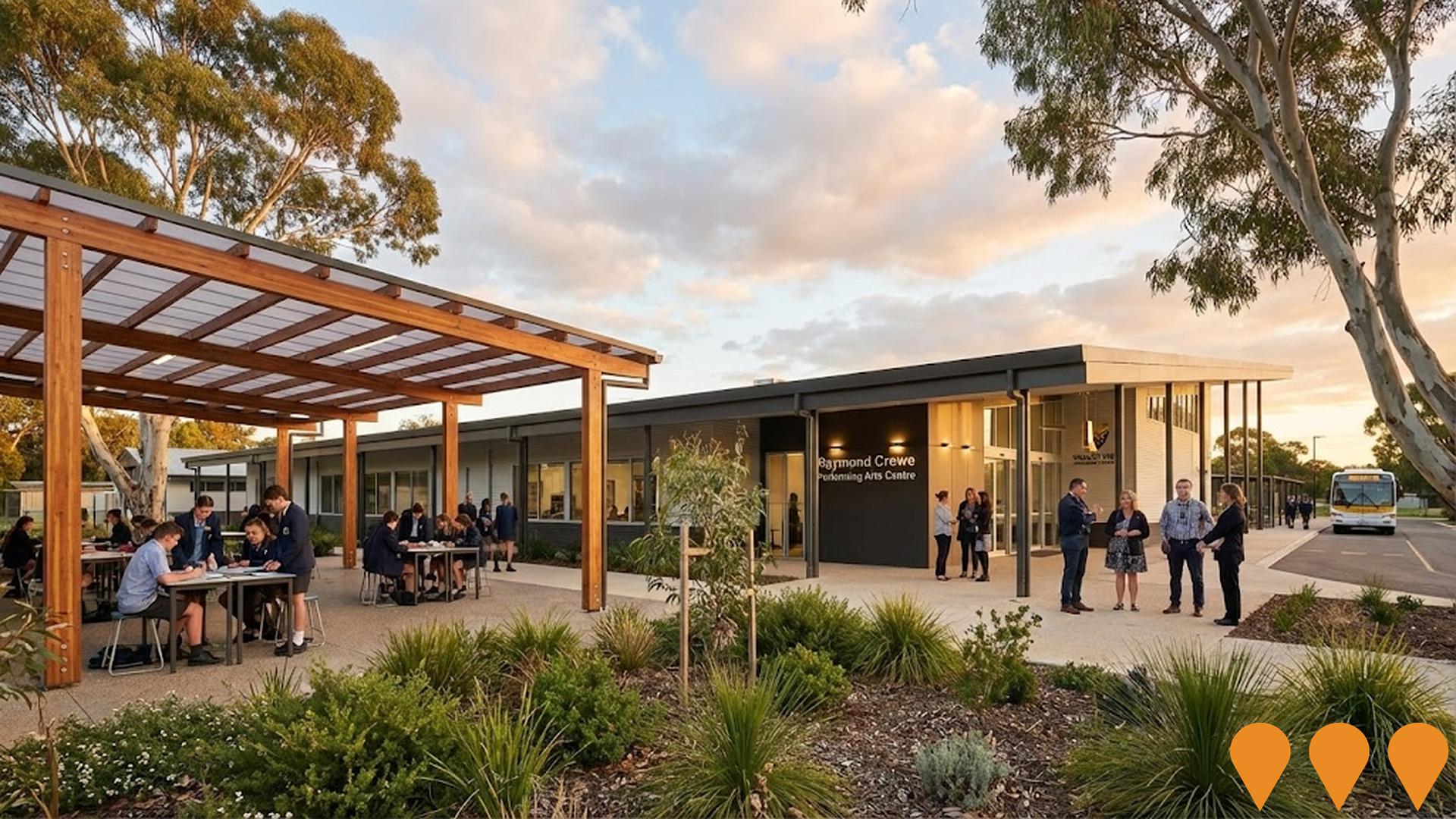
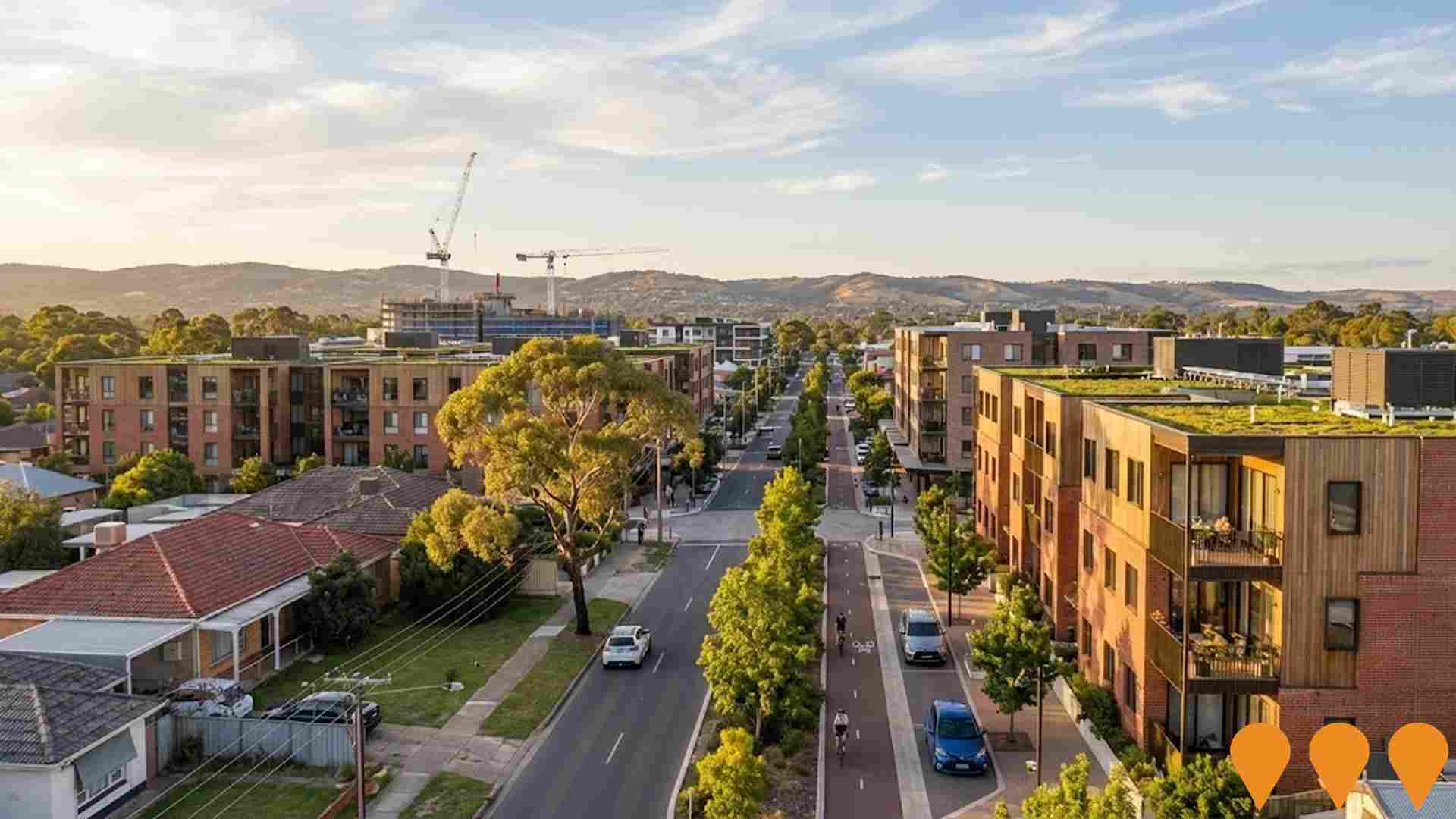
AI Generated Denotes AI-based impression for illustrative purposes only, not to be taken as definitive under any circumstances. Please follow links and conduct other investigations from the project's source for actual imagery. Developers and project owners wishing us to use original imagery please Contact Us and we will do so.

Frequently Asked Questions - Infrastructure

What are some of the major infrastructure and planning changes likely to influence the suburb of Modbury North?
Key infrastructure and planning changes likely to influence the suburb of Modbury North include: Modbury Sporting Club Building and Sportsfield Lighting (Construction); Tilley Recreation Park Indoor Training Facility (Construction); Valley View Golf Course Residential Release (Stage 3 & 4) (Construction); ECH Encore Apartments Modbury (Completed); and Modbury Hospital Redevelopment Project (Construction). These projects represent significant developments that will shape the area's future infrastructure landscape.
What types of infrastructure projects are impacting the suburb of Modbury North?
Infrastructure development impacting the suburb of Modbury North spans multiple sectors including Transport & Logistics, Sports & Recreation, and Health & Medical, among others.
What is the scale of infrastructure investment impacting the suburb of Modbury North?
Infrastructure investment analysis indicates substantial capital deployment exceeding $1.7 billion in projects that will impact the extended area, with a notable concentration of investment within the immediate the suburb of Modbury North vicinity.
How does the suburb of Modbury North's infrastructure development compare to other areas?
Infrastructure development activity impacting the suburb of Modbury North currently ranks below national averages at the 33rdth percentile.
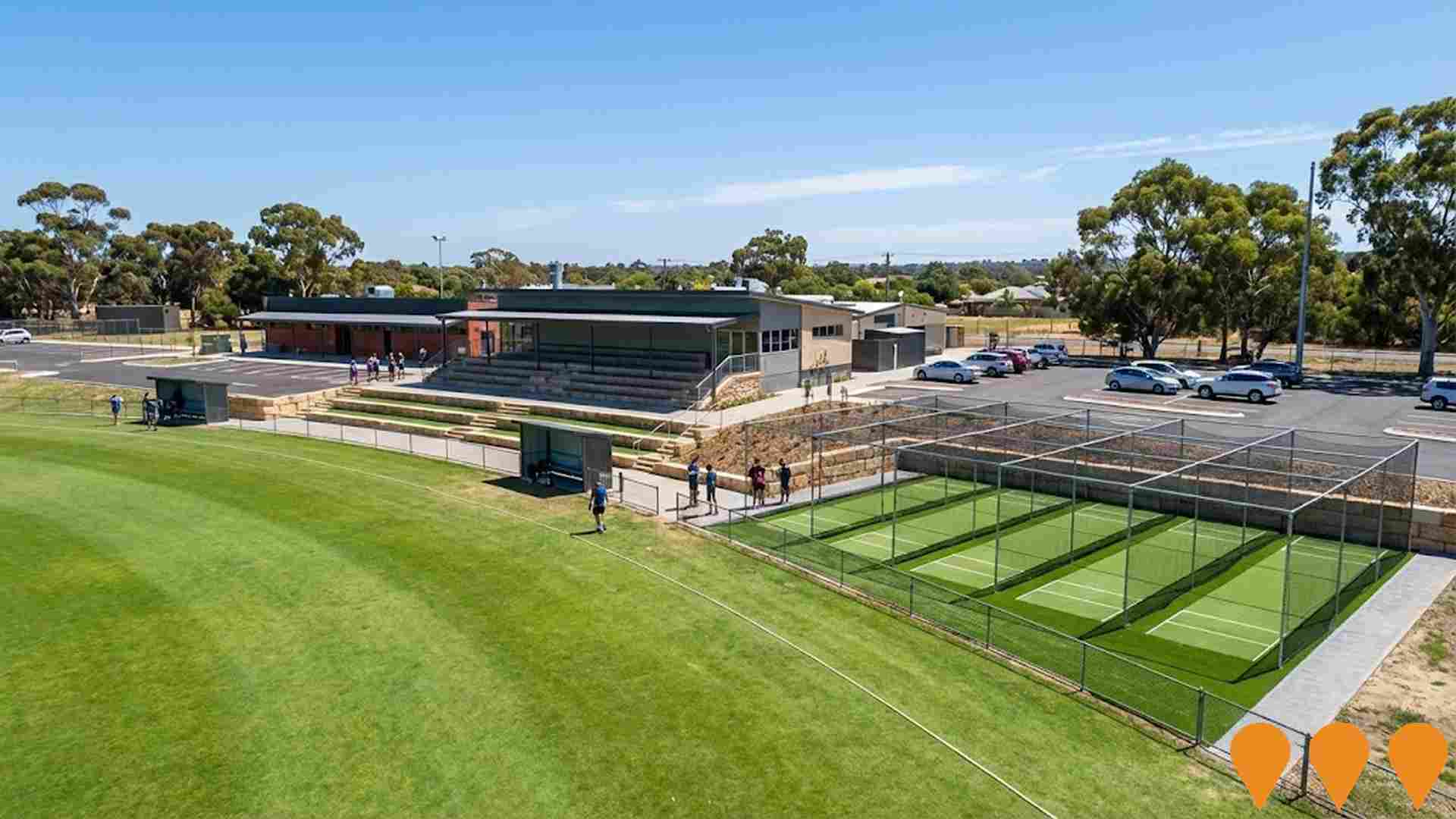
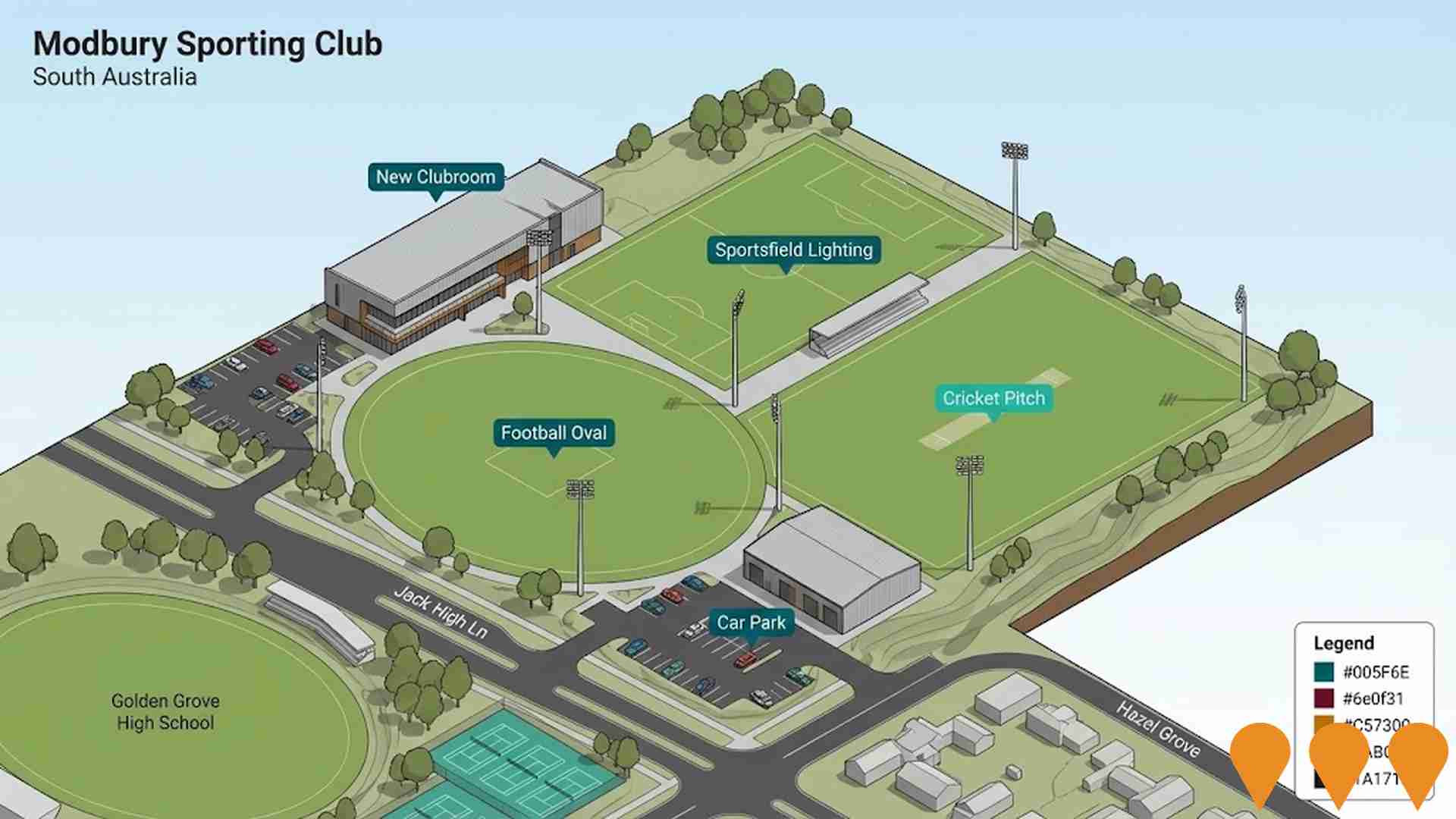
Modbury Sporting Club building project
Category: Sports & Recreation
Stage: Completed | Est. Comp: 2025
Source / Links: Link 1   Link 2  

Completed council-led redevelopment delivering a new two-storey clubroom facility for Modbury Sporting Club at Ridgehaven, jointly funded by the City of Tea Tree Gully and the State Government. The project delivered four unisex change rooms, umpire rooms, function space and amenities to support the Modbury Football and Cricket clubs and their 700-plus players and members.
Sports & Recreation

ECH Encore Apartments Modbury
Category: Health & Medical
Stage: Completed | Est. Comp: 2022
Source / Links: Link 1   

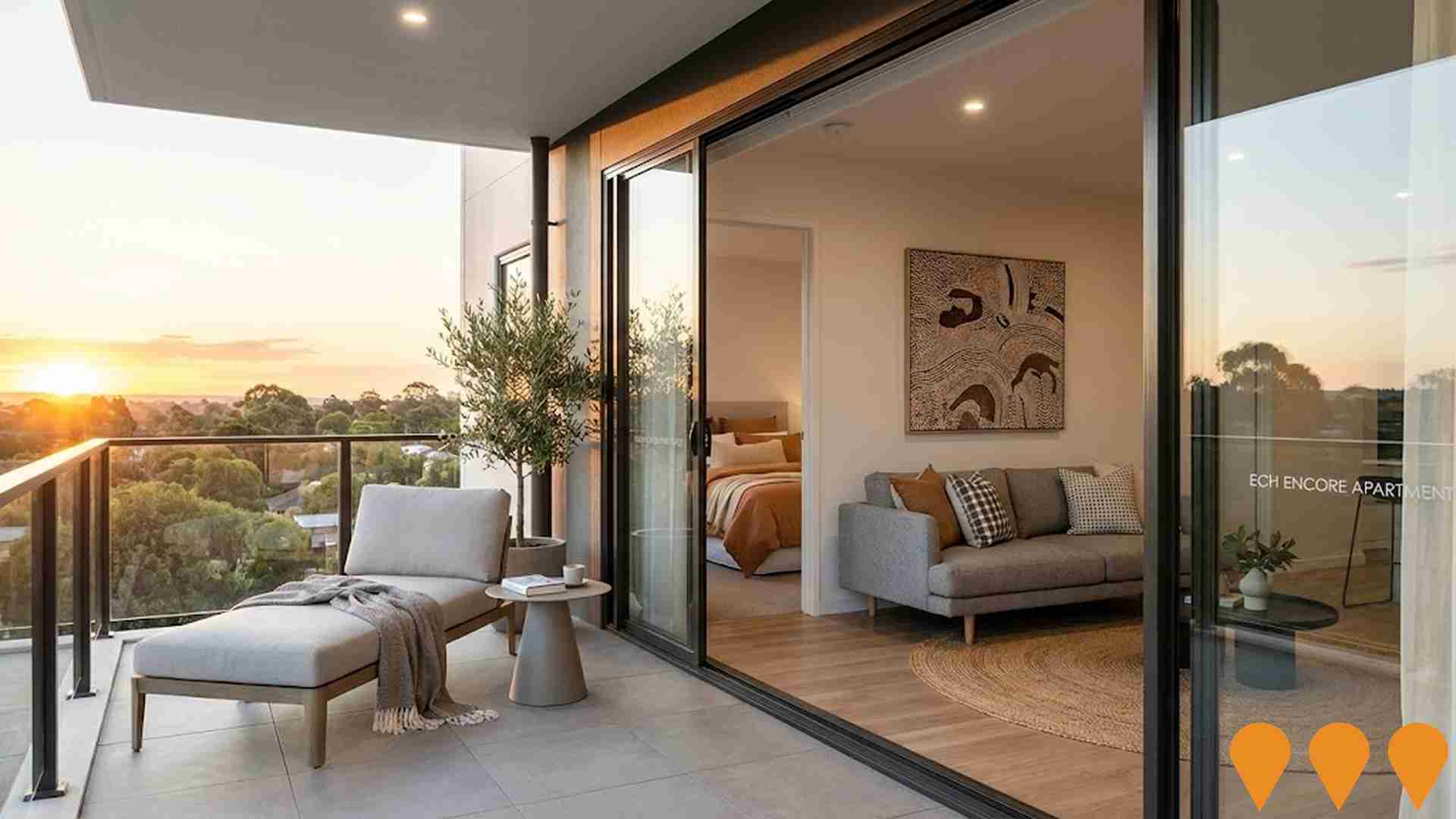
Modern retirement accommodation featuring Livable Housing Design Australia Gold Accreditation. 77 dwelling 4-8 level retirement living apartment and allied health services development featuring an integrated early childhood centre. Located within 5 minutes of local shops and public transport.
Health & Medical

Tea Tree Gully Sustainable Sewers Program
Category: Environmental & Disaster Management
Stage: Construction | Est. Comp: 2028
Source / Links: Link 1   Link 2  

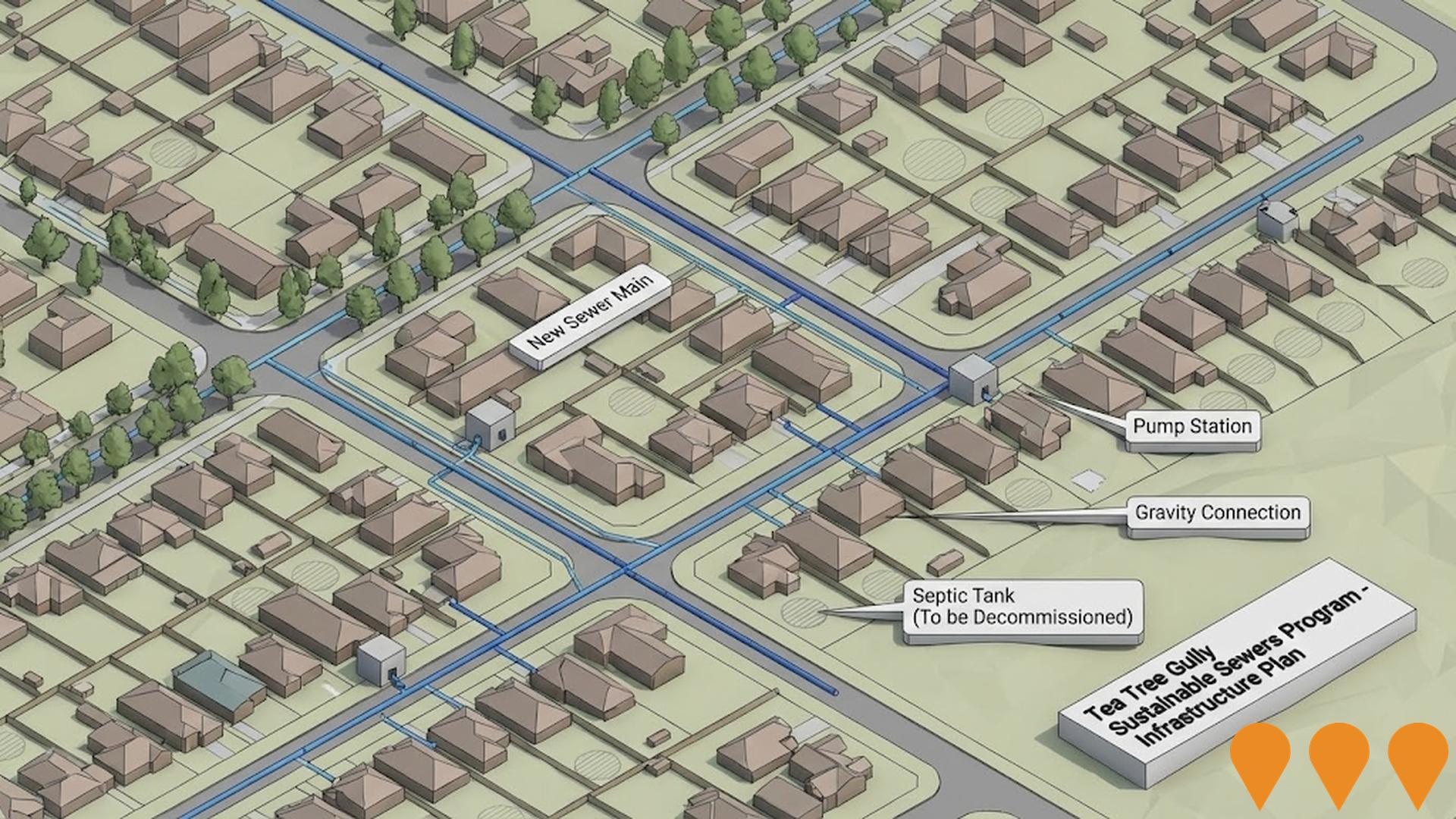
SA Water program to transfer approximately 4,700 properties in the City of Tea Tree Gully from a council run Community Wastewater Management System with on site septic tanks to a modern sewer network. Delivery is being rolled out in zones between 2022 and 2028 to improve service reliability and public health outcomes.
Environmental & Disaster Management

Modbury Hospital Redevelopment Project
Category: Health & Medical
Stage: Construction | Est. Comp: 2025
Source / Links: Link 1   Link 2  

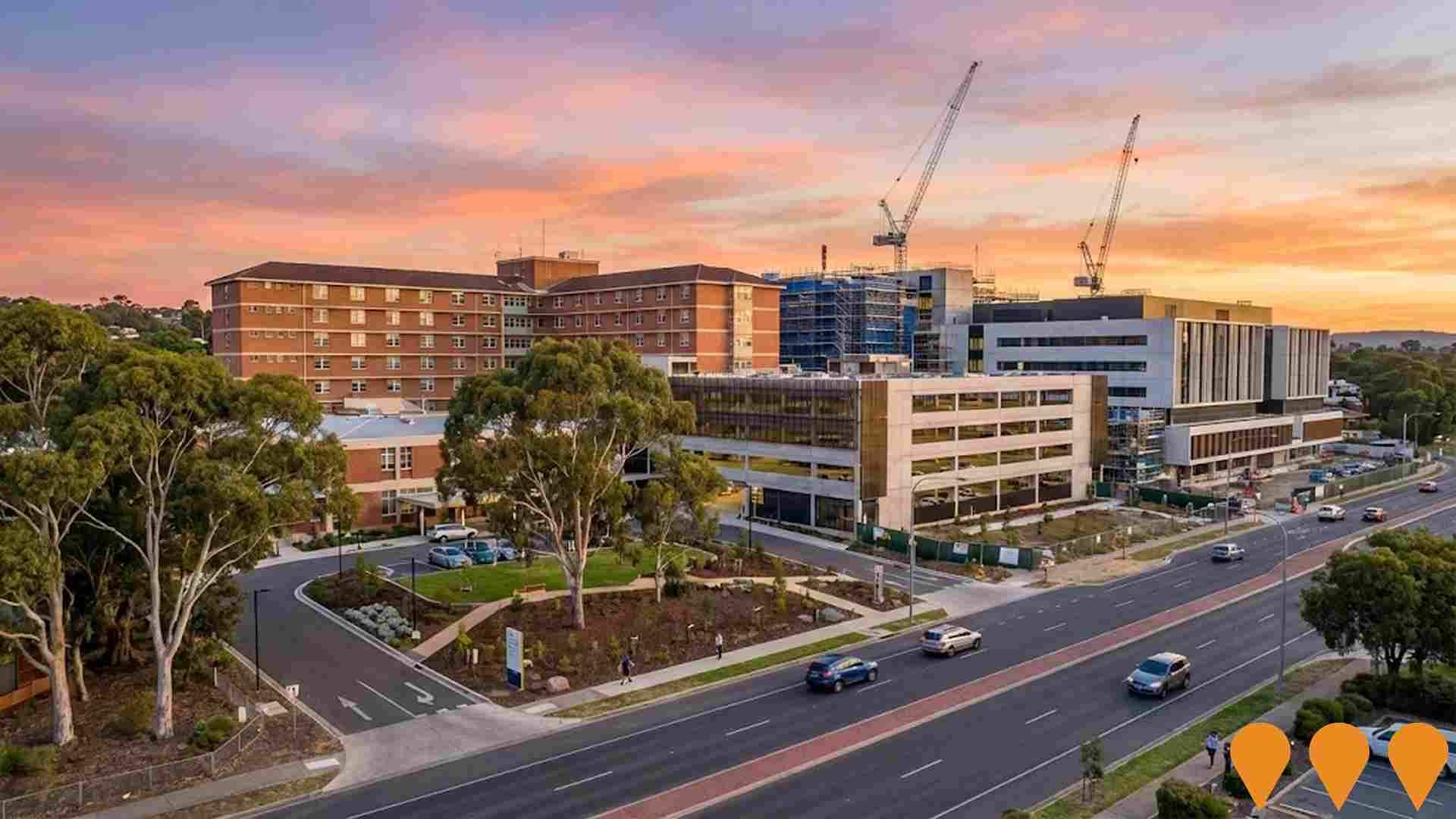
The $117 million major upgrade of Modbury Hospital includes a state-of-the-art Health Precinct with a brand-new Cancer Centre featuring 12 chemotherapy chairs, and a new Mental Health Precinct with 44 beds (24 mental health rehabilitation beds and a 20-bed older persons mental health unit). The project also delivers a new five-storey multi-deck car park with over 300 spaces, marking the re-introduction of cancer services to the hospital after a decade. Expected completion is December 2025.

Health & Medical

Springbank Waters Residential Estate
Category: Residential Development
Stage: Construction | Est. Comp: 2027
Source / Links: Link 1   Link 2  

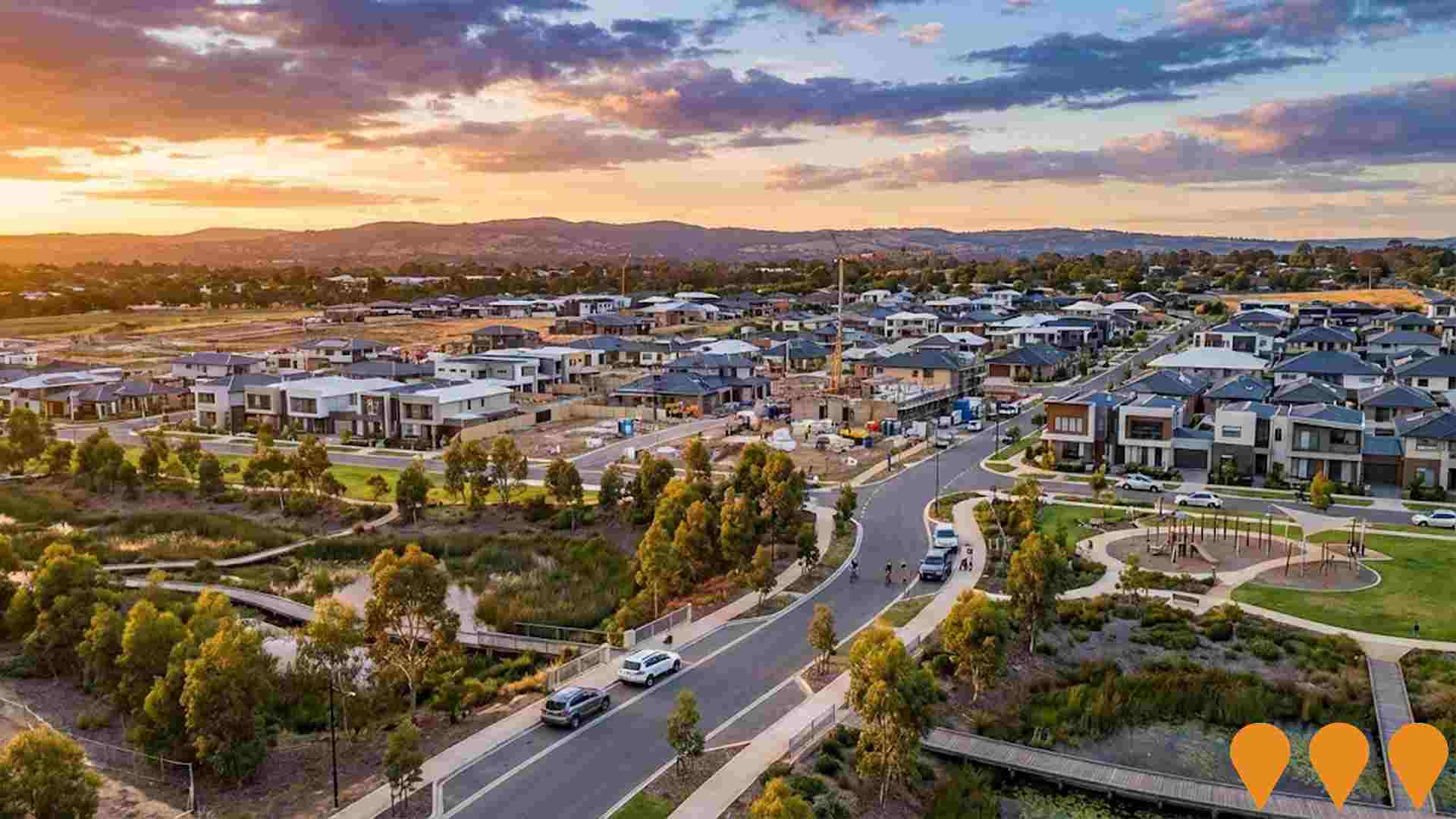
A large, master-planned residential community completed in stages over two decades, featuring over 1,100 homes, wetlands, and parks. The final stage is delivering over 400 new homes and is currently under construction.
Residential Development

Wynn Vale Grove Shopping Centre Redevelopment
Category: Retail
Stage: Planning | Est. Comp: 2027
Source / Links: Link 1   Link 2  

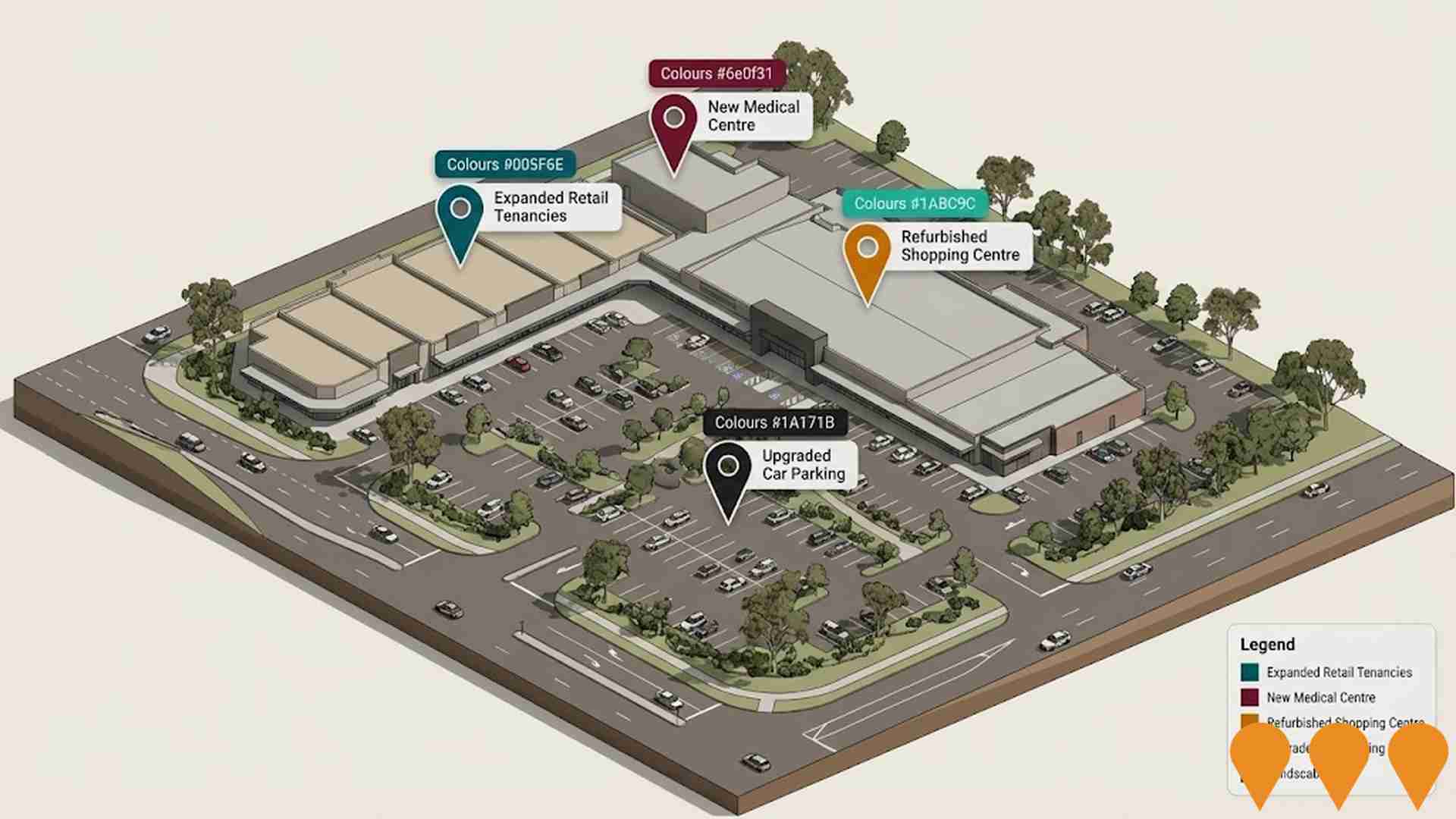
Proposed expansion and refurbishment of the Wynn Vale Grove Shopping Centre including upgraded retail tenancies, expansion of the existing medical centre, improved pedestrian access, landscaping and a reconfigured car park. As of mid-2026 the proposal remains in the planning phase with no confirmed construction commencement publicly announced.
Retail

Euca Modbury Townhomes
Category: Residential Development
Stage: Construction | Est. Comp: 2025
Source / Links: Link 1   

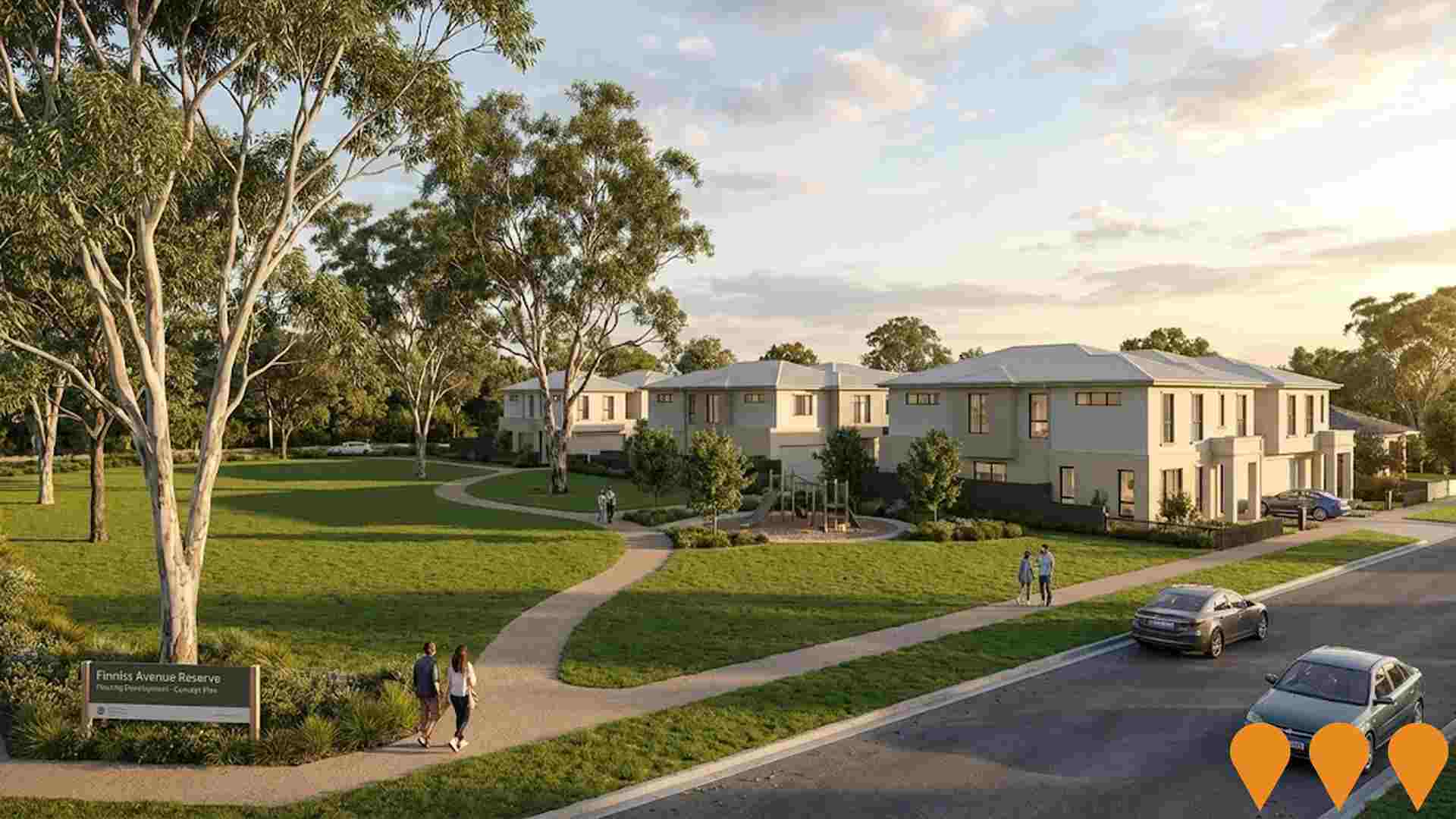
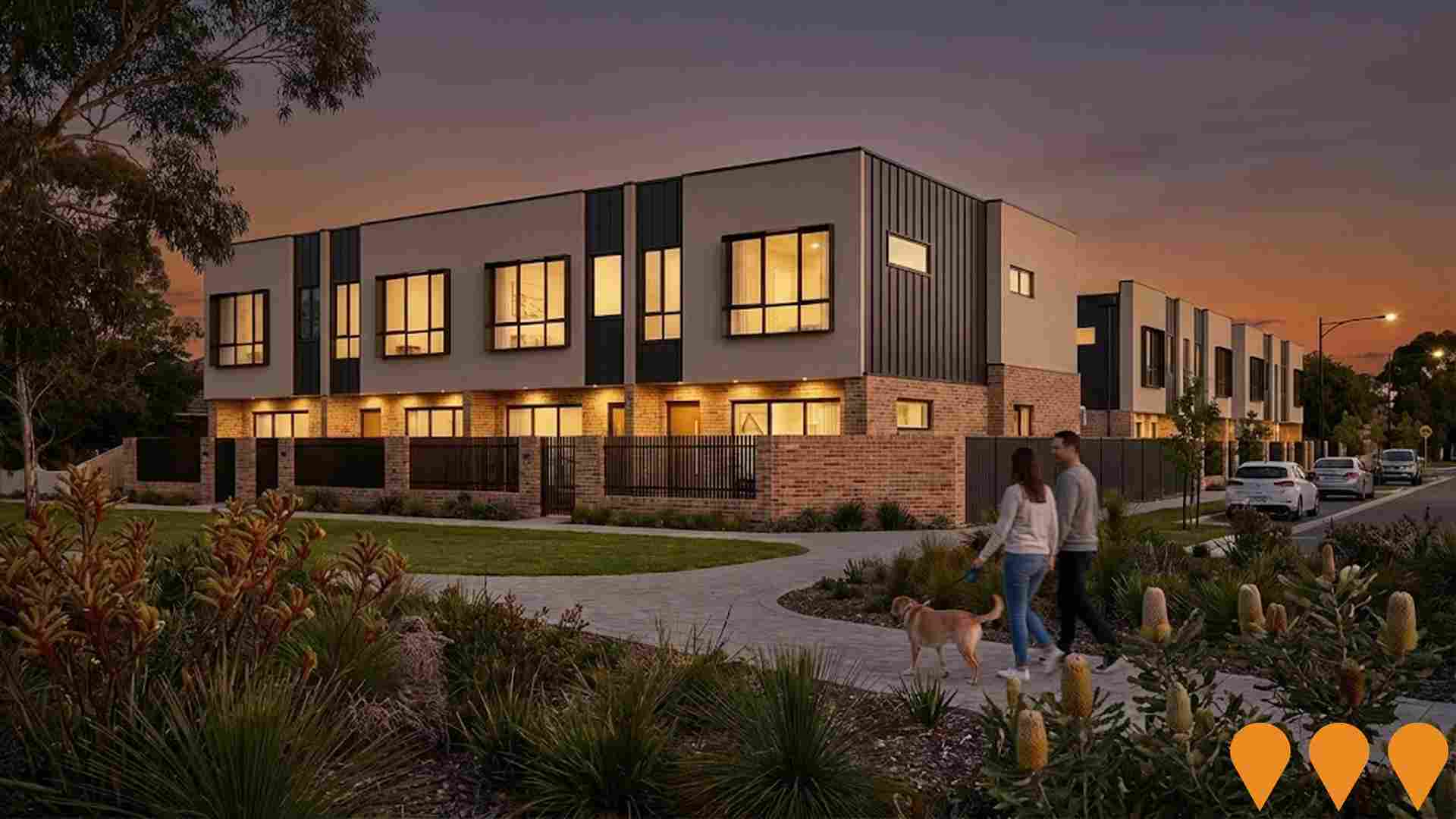
Boutique development of 25 contemporary park-facing townhomes overlooking Australia Reserve. Features architecturally designed two-storey homes with 7-star energy rating, developed by local consortium Centina, Kolabb and Greenstate. Located just 20 minutes from Adelaide CBD and 1km from Tea Tree Plaza.
Residential Development

Luminaire Estate - Residential Development
Category: Residential Development
Stage: Construction | Est. Comp: 2025
Source / Links: Link 1   Link 2  

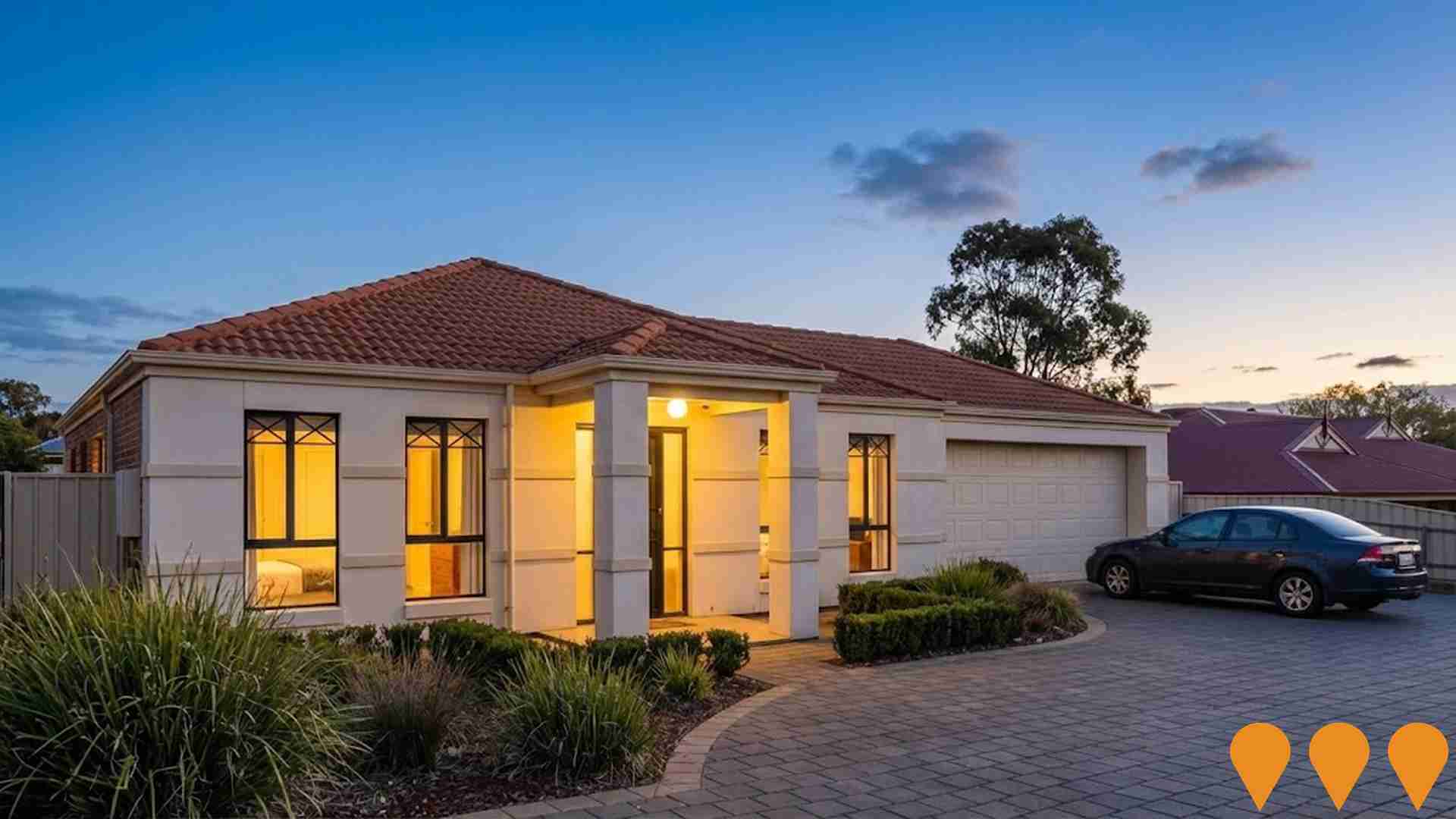
A 48-lot residential estate between Aristotle Close and Golden Grove Road, featuring the new Plato Place street. Land developed by Lendlease, with homes built by Metricon. Released late 2023, sold out November 2024, construction continuing into 2025. Metricon Homes, founded in 1976, is Australia's leading home builder with SA Builder's Licence BLD231776.
Residential Development

Jobs & IndustryEmployment Trends in Modbury North

Table Chart PROFILE FAQ

3,181 residents of Modbury North are employed, from a labour force of 3,266. Unemployment sits at 2.6%, with participation at 64.6%. Weighted for its industry mix, the area's sectors are forecast to grow about 6.4% nationally over five years. That reflects industry composition only and makes no allowance for local population growth. The working-day population is estimated at 4,849, about 79% of the resident population, so more people leave the area for work than travel in. Unemployment and labour force come from ABS Small Area Labour Markets, updated quarterly; the industry and occupation profile is from the 2021 Census.

Detail

Modbury North boasts a capable labor pool where essential service industries are well represented and unemployment stands at 2.6%, alongside an estimated 1.7% employment growth over the previous year according to AreaSearch aggregated data. By March 2026, 3,181 residents were employed, with an unemployment rate 1.2% lower than Greater Adelaide's 3.8% figure, while workforce participation sits slightly below the regional norm at 64.6% versus 66.6% in Greater Adelaide. Census data indicate that only 9.8% of residents worked from home, a statistic that should be interpreted with consideration of past Covid-19 lockdown effects.

Resident employment is primarily found in the fields of healthcare & social assistance, retail trade, and construction. By contrast, professional & technical roles account for only 5.8% of the local workforce, which is below the 7.3% average for Greater Adelaide. The highly residential character of the neighborhood means it provides relatively few local job opportunities, as shown by comparing the census working population to the resident population. Based on AreaSearch analysis of SALM and ABS statistics aggregated from regional levels, employment grew by 1.7% and the labor force grew by 2.0% over the 12 months leading to March 2026, resulting in a 0.2 percentage point rise in the unemployment rate. In contrast, Greater Adelaide experienced a 4.2% expansion in jobs, a 4.0% increase in the labor force, and a 0.2 percentage point reduction in unemployment. National employment forecasts from May-25 released by Jobs and Skills Australia provide further context on future demand trends. These projections, spanning five and ten-year horizons, have been aligned with the local occupation mix to model potential growth. Although the nationwide workforce is projected to grow by 6.6% over five years and 13.7% over ten years, the pace varies widely by industry. Projecting these industry trends onto the local employment distribution suggests employment numbers should rise by 6.4% over five years and 13.4% over ten years, though this serves as a basic weighted projection for illustration rather than a local demographic forecast.

Frequently Asked Questions - Employment

What is the employment situation in the suburb of Modbury North?
As of March 2026, the suburb of Modbury North has approximately 3,181 employed residents with an unemployment rate of 2.6%. This very low unemployment rate indicates a tight labour market with strong demand for workers. Employment performance is above the national median, showing positive labour market dynamics.
How does the suburb of Modbury North's unemployment rate compare to the broader region?
As of March 2026, the unemployment rate in the suburb of Modbury North stands at 2.6%, which is 1.2 percentage points below Greater Adelaide's rate of 3.8%. This lower unemployment rate suggests stronger local employment conditions. For comparison, the national unemployment rate is 4.2%.
What are the major employment sectors in the suburb of Modbury North?
The employment landscape in the suburb of Modbury North is dominated by several key sectors. The largest employers are health care & social assistance (16.8% of employment), retail trade (11.3%), and construction (9.5%). Other significant employers include education & training and manufacturing.
How has employment changed recently in the suburb of Modbury North?
Over the past year to March 2026, the suburb of Modbury North has experienced employment growth, with total employment increasing while the labour force increased. As a result, the unemployment rate has rise. By comparison, Greater Adelaide saw employment increased and its unemployment rate dropped.
What is the workforce participation rate in the suburb of Modbury North?
The workforce participation rate in the suburb of Modbury North is 64.6%, which represents the proportion of working-age residents who are either employed or actively seeking work. This healthy participation rate reflects good employment opportunities and workforce engagement. The local rate trailing the Greater Adelaide average of 66.6%, showing similar workforce dynamics to the broader region.
Which industries are over-represented in the suburb of Modbury North's employment market?
The suburb of modbury north shows notable specialization in retail trade, which employs 11.3% of the local workforce compared to 10.0% regionally. This moderate specialization indicates some local strength in the sector.
What are the employment growth prospects for the suburb of Modbury North?
Based on Jobs and Skills Australia projections applied to the suburb of Modbury North's industry mix, employment is expected to grow by 6.4% over the next five years and 13.4% over ten years. This compares to national growth expectations of 6.6% over five years. Steady growth is anticipated across multiple sectors, providing diverse employment opportunities.
How does the job market in the suburb of Modbury North compare nationally?
The suburb of modbury north's employment market shows above-average performance nationally, placing in the top half of areas assessed. Employment indicators suggest healthy labour market conditions relative to other regions. Recent job advertisement trends show the broader employment region experienced 0.7% growth, ranking 11.0th out of 37 regions nationally.
What employment opportunities exist for skilled workers in the suburb of Modbury North?
Skilled workers will find good opportunities in the suburb of Modbury North, with skilled sectors accounting for 36.7% of employment. Key sectors for skilled workers include health care & social assistance (16.8%), education & training (9.3%), and professional & technical (5.8%). With projected employment growth of 6.4% over five years, demand for skilled workers is expected to remain strong.

EarningsHousehold Income in Modbury North

Table Chart PROFILE FAQ

Median household income in Modbury North is $1,596 a week (about $83,000 a year), with median personal income at $743 a week. ATO records put median taxable income at $48,835 a year against an average of $54,573. Household income is from the 2021 Census; taxable income is from ATO Taxation Statistics for the latest financial year available, indexed forward using the ABS Wage Price Index.

Detail

The most recent postcode level ATO data for the financial year 2023 indicates that local earnings are below the national average, with a median income of $48,835 and an average of $54,573. This is lower than the Greater Adelaide median of $54,808 and average of $66,852. Adjusting for a Wage Price Index increase of 10.17% since the financial year 2023, current estimates correspond to approximately $53,802 for the median and $60,123 for the average as of March 2026. The 2021 Census records show household, family, and personal earnings are modest, placing between the 37th and 41st percentiles.

Income distribution data shows that the earnings bracket of $1,500 - 2,999 contains 37.2% of the population (2,274 individuals), which aligns with the metropolitan average of 31.8% in the same bracket. After accounting for housing costs, 86.4% of earnings are available for other household expenses, and the SEIFA index places the community in the 5th decile for income.

Frequently Asked Questions - Income

What is the median taxable income in the suburb of Modbury North?
Based on Wage Price Index adjustments to March 2026, the estimated median taxable income in the suburb of Modbury North is approximately $53,802. The official ATO data from FY-23 recorded a median of $48,835.
What is the average taxable income in the suburb of Modbury North?
Based on Wage Price Index adjustments to March 2026, the estimated average taxable income in the suburb of Modbury North is approximately $60,123. The official ATO data from FY-23 recorded an average of $54,573.
How does the median taxable income in the suburb of Modbury North compare to the region?
Based on Wage Price Index adjustments to March 2026, the estimated median taxable income in the suburb of Modbury North is approximately $53,802 compared to $60,382 in Greater Adelaide. The official ATO data from FY-23 shows $48,835 and $54,808 respectively.
How does the average taxable income in the suburb of Modbury North compare to the region?
Based on Wage Price Index adjustments to March 2026, the estimated average taxable income in the suburb of Modbury North is approximately $60,123 compared to $73,651 in Greater Adelaide. The official ATO data from FY-23 shows $54,573 and $66,852 respectively.
What are the main income cohorts in the suburb of Modbury North according to the 2021 Census?
As per the 2021 Census, the income bracket containing the largest proportion (~37.2% / 2,274 persons) of the suburb of Modbury North's population is the $1,500 - 2,999 cohort.
How do the main income cohorts in the suburb of Modbury North compare to the region?
The largest income cohort in the suburb of Modbury North is the $1,500 - 2,999 group, representing about 37.2% of the population. In comparison, Greater Adelaide's largest income cohort is the $1,500 - 2,999 group, representing 31.8% of its population, according to the 2021 Census.
What is the median household income in the suburb of Modbury North according to the 2021 Census?
The 2021 Census data indicates that the median household income in the suburb of Modbury North is $1,596/wk.
What is the median family income in the suburb of Modbury North according to the 2021 Census?
According to the 2021 Census, the median family income in the suburb of Modbury North is $1,860/wk.
What is the median personal income in the suburb of Modbury North according to the 2021 Census?
The 2021 Census shows that the median personal income in the suburb of Modbury North is $743/wk.
How does the suburb of Modbury North's income rank nationally?
According to AreaSearch's aggregation of the latest postcode level ATO data released for FY-23, the suburb of Modbury North had a median income among taxpayers of $48,835 with the average level standing at $54,573. This is lower than average on a national basis and compares to levels of $54,808 and $66,852 across Greater Adelaide respectively. Based on Wage Price Index growth of 10.17% since FY-23, current estimates would be approximately $53,802 (median) and $60,123 (average) as of March 2026.
What is the disposable income in the suburb of Modbury North?
The estimated disposable income in the suburb of Modbury North is $5,977 per year according to AreaSearch analysis.
How does the suburb of Modbury North's disposable income compare to the region?
The suburb of modbury north's disposable income is $5,977 compared to $5,698 for Greater Adelaide, based on AreaSearch analysis.

Housing StockHousing & Dwellings in Modbury North

Table Chart PROFILE FAQ

Modbury North had 2,160 occupied dwellings at the 2021 Census, 96% detached houses and 2% apartments. 44% are owned with a mortgage, 18% rented and 37% owned outright. At that Census the median rent was $360 a week and the median mortgage repayment $1,473 a month. Rent absorbs 22.6% of household income here and mortgage repayments 21.3%. Dwelling stock, tenure and housing costs are 2021 Census measures — the only source that counts dwellings at this boundary size.

Detail

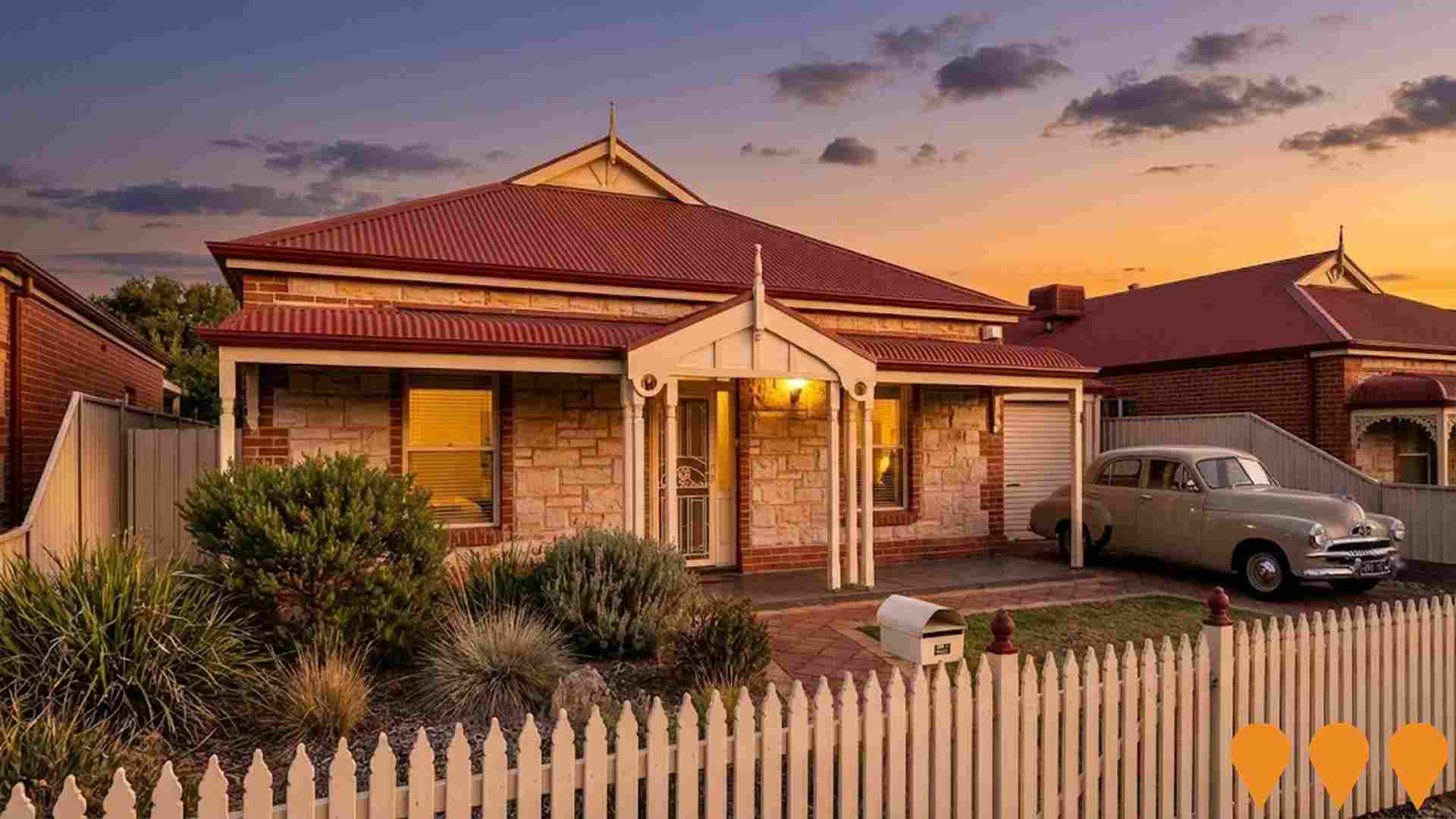
Residential configurations at the time of the most recent Census consisted of 95.6% separate houses and 4.5% other dwelling types such as townhouses and apartments, compared to 75.2% houses and 24.9% other dwellings across the Adelaide metro area. Home ownership rates were significantly higher than the Adelaide metropolitan average, standing at 37.4%, while the remaining properties were split between mortgaged homes (44.2%) and rentals (18.4%). The median monthly mortgage payment was below the metropolitan average at $1,473, and the median weekly rent was $360, compared to Adelaide metro averages of $1,562 and $320 respectively.

Nationally, mortgage costs are much lower than the Australian average of $1,863, and rent prices are lower than the national median of $375.

Frequently Asked Questions - Housing

What percentage of homes are owned vs rented in the suburb of Modbury North?
In the suburb of Modbury North, 37.4% of homes are owned outright, 44.2% are owned with a mortgage, and 18.4% are rented.
What percentage of dwellings in the suburb of Modbury North are houses?
According to the latest data, 95.6% of dwellings in the suburb of Modbury North are houses.
What percentage of dwellings in the suburb of Modbury North are apartments or units?
In the suburb of Modbury North, 1.7% of dwellings are apartments or units, with an additional 2.3% being semi-detached dwellings.
What is the level of outright home ownership in the suburb of Modbury North?
Outright home ownership in the suburb of Modbury North stands at 37.4%, compared to 32.1% in Greater Adelaide.
What is the median monthly mortgage repayment in the suburb of Modbury North?
The median monthly mortgage repayment in the suburb of Modbury North is $1,473, compared to $1,562 in Greater Adelaide.
What is the median weekly rent in the suburb of Modbury North?
The median weekly rent in the suburb of Modbury North is $360, compared to $320 in Greater Adelaide.
What is the distribution of rental prices in the suburb of Modbury North?
In the suburb of Modbury North, 1.1% of rentals are $0-149/week, 37.4% are $150-349/week, 60.3% are $350-649/week, 1.3% are $650-949/week, and 0.0% are $950+/week.
What is the average monthly housing cost in the suburb of Modbury North?
The aggregate monthly housing cost in the suburb of Modbury North is $938, which represents the average monthly cost across all housing types.
What percentage of income do residents spend on housing in the suburb of Modbury North?
In the suburb of Modbury North, households with mortgages typically spend 21.3% of their income on mortgage repayments, while renters spend 22.6% of their income on rent.
How crowded are homes in the suburb of Modbury North?
The average persons per bedroom ratio in the suburb of Modbury North is 0.8, indicating the level of household density.
How does housing affordability in the suburb of Modbury North compare to the region?
Housing affordability in the suburb of Modbury North shows mortgage holders spending 21.3% of income on repayments (vs 23.3% regionally), while renters spend 22.6% of income on rent (vs 20.7% regionally).
What types of dwellings are most common in the suburb of Modbury North?
The dwelling mix in the suburb of Modbury North consists of 95.6% detached houses, 2.3% semi-detached dwellings, 1.7% apartments, and 0.5% other dwelling types.
What is the weighted average housing cost based on tenure mix in the suburb of Modbury North?
Based on the area's tenure composition, the weighted average monthly housing cost is approximately $938. This accounts for outright owners paying no housing costs, mortgage holders paying $1,473/month, and renters paying $1,559/month.
How affordable is housing in the suburb of Modbury North relative to local incomes?
Housing in Modbury North consumes approximately 13.6% of median household income ($6,911 monthly), indicating costs are highly affordable. The generally accepted benchmark is that housing should not exceed 30% of household income.
How do proposed developments compare to existing housing types in the suburb of Modbury North?
Recent development applications in Modbury North show attached dwellings contributing 12% of approvals compared to 4% of existing stock, while detached houses represent 88% of applications versus 96% of current dwellings. This suggests increasing densification. Density increases remain below national trends.

HouseholdsHousehold Composition in Modbury North

Table Chart PROFILE FAQ

Modbury North counted 2,160 households at the 2021 Census, an estimated 2,315 today, averaging 2.6 people each. 34% are couples with children, against 29% couples without children. 21% of households are people living alone, and families average 1.6 children. Household and family composition is measured only by the Census, so these are 2021 figures.

Detail

Family households make up 76.8% of the local dwelling mix, consisting of 33.5% couples with children, 29.3% couples without children, and 12.8% single parent families. Non-family households account for the remaining 23.2%, with single person households representing 20.8% and group living situations comprising 2.5%. The median size of households is 2.6 people, which is slightly larger than the Greater Adelaide average of 2.5.

Frequently Asked Questions - Households

How many households are in the suburb of Modbury North?
As of the 2021 Census, the suburb of Modbury North had 2,160 households. Based on population growth patterns, this has grown by approximately 7.2% to an estimated 2,315 households today.
What is the typical household size?
The median household size in the suburb of Modbury North is 2.6 people. This compares to 2.5 in Greater Adelaide and reflects the area's household composition mix.
What types of households are most common?
Family households dominate at 76.8% of all households. The remaining households consist of lone person households (20.8%), group households (2.5%), and other household types (0.0%).
How are families structured in the area?
Among the 1,658 family households, 33.5% are couples with children, 29.3% are couples without children at home, and 12.8% are single parent families. This mix shapes local demand for schools, family services, and housing types.
How does the suburb of Modbury North compare to regional household patterns?
Compared to Greater Adelaide, the suburb of Modbury North shows distinct household patterns. Family households are notably over-represented at 76.8% (versus 68.6% regionally). Conversely, lone person households are under-represented at 20.8% compared to the regional 27.7%. This family-oriented profile influences local demand for family homes, schools, and children's services.
What is the average family size?
Families in the suburb of Modbury North have an average of 1.6 children, slightly above the Greater Adelaide average of 1.5. This influences local demand for child-related services and larger family homes.
What are the marriage patterns in the suburb of Modbury North?
Marriage patterns reveal 52.9% of the adult population are currently married, while 30.7% have never married. This compares to 45.7% married and 36.4% never married across Greater Adelaide.
How significant are single-person households?
Single-person households represent 20.8% of all households in the suburb of Modbury North, notably lower than the regional average of 27.7%. This affects demand for smaller dwellings and single-person accommodation.
Are shared living arrangements common?
Group households (unrelated people sharing) account for 2.5% of households, well below the Greater Adelaide average of 3.7%. This low rate suggests limited student or young professional shared accommodation.
Loading household composition data...

EducationSchools & Education in Modbury North

Table Chart PROFILE FAQ

22.9% of adults in Modbury North hold a university qualification, including 15.4% with a bachelor degree and 5.3% with postgraduate qualifications. A further 25.8% hold a vocational qualification. 1 school serves the area, with 175 enrolment places and an average ICSEA of 1,014 against a national benchmark of 1,000. Qualifications come from the 2021 Census; school enrolments, ICSEA and results come from ACARA's current release.

Detail

Educational attainment levels are lower than regional benchmarks, with 22.9% of residents aged 15+ holding university degrees, compared to 30.4% across Australia. This difference suggests opportunities for further academic and professional development. Bachelor degrees are the most common at 15.4%, followed by postgraduate degrees (5.3%) and graduate diplomas (2.2%). Vocational and technical training is highly represented, with 38.5% of residents aged 15+ holding qualifications, including advanced diplomas (12.7%) and certificates (25.8%). Active participation in schooling is high, with 26.7% of the population enrolled in an educational program. This group includes 9.8% in primary school, 6.8% in high school, and 4.6% in higher education.

Frequently Asked Questions - Education

What percentage of people in the suburb of Modbury North have university qualifications?
22.9% of people aged 15 and over in the suburb of Modbury North have university qualifications, compared to 28.9% in the broader region.
What percentage of people in the suburb of Modbury North have no formal qualifications?
38.6% of people aged 15 and over in the suburb of Modbury North have no formal qualifications, compared to 39.0% regionally.
How does the suburb of Modbury North's education level compare to national averages?
The suburb of modbury north ranks in the 51th percentile nationally for education based on AreaSearch's analysis of qualification and performance metrics.
What types of qualifications are most common in the suburb of Modbury North?
The most common qualifications in the suburb of Modbury North are: Certificate (25.8%), Bachelor Degree (15.4%), Advanced Diploma (12.7%).
What proportion of the suburb of Modbury North's population is currently attending educational institutions?
26.7% of the population in the suburb of Modbury North is currently engaged in formal education, with 9.8% in primary school, 6.8% in secondary school, 4.6% at university.
What is the ICSEA score for schools in the suburb of Modbury North?
The average ICSEA (Index of Community Socio-Educational Advantage) score for schools in the suburb of Modbury North is 1014, indicating average socio-educational advantage (national average is 1000).
How many schools are located within the suburb of Modbury North?
There are 1 schools within the suburb of Modbury North, with a combined enrollment of approximately 175 students.
What types of schools are available in the suburb of Modbury North?
The suburb of modbury north includes 1 primary school.

Schools Detail

AmenitiesServices & Amenities in Modbury North

PROFILE FAQ
Explore the surrounds Search this catchment for any place type — schools, cafés, supermarkets, transport — and drop your own custom points on the map.
Open

Getting AroundTransport & Commuting in Modbury North

Table Chart PROFILE FAQ

Public transport in Modbury North reaches 33 stops on 24 routes, timetabled for about 2,100 services a week. The typical home sits about 190 m from its nearest stop. Buses carry the largest share of public transport commuters. Households keep an average of 1.5 vehicles. Stop and service counts are built from operators' published GTFS timetables and refresh with each timetable release; vehicle ownership is from the 2021 Census.

Detail

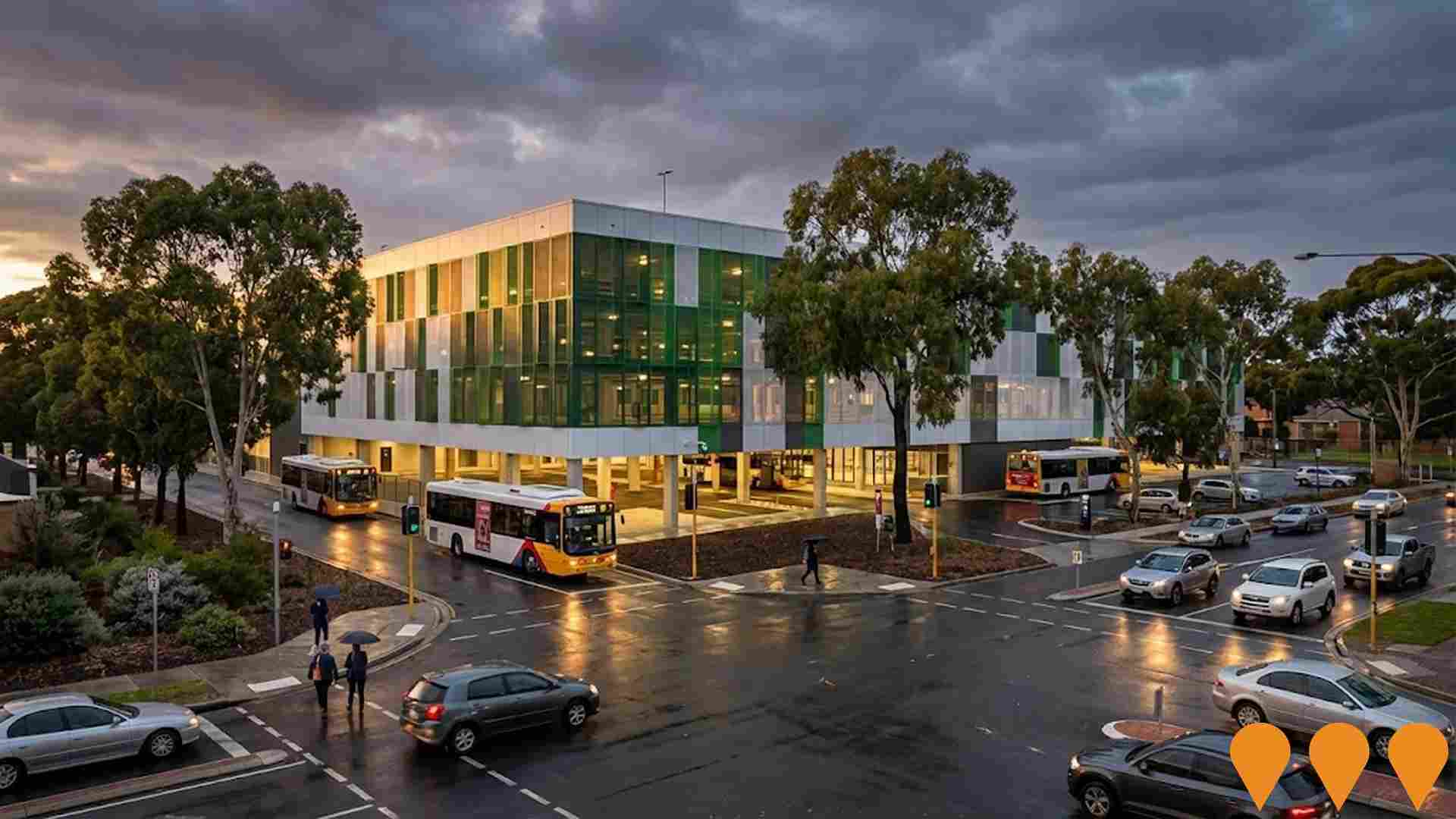
Public transit infrastructure includes 33 active stops within the suburb of Modbury North, featuring a variety of bus services. These stops are connected to 24 separate routes that provide a combined total of 2,091 weekly passenger trips. Transport convenience is high, with the typical resident living 194 meters from their nearest transit stop. Given the residential nature of the neighborhood, most workers travel out of the area for employment, with private cars being the primary mode of transport at 88% and buses at 10%. Household vehicle ownership stands at an average of 1.5 cars per residence.

A relatively low 9.8% of workers performed their duties from home (2021 Census; may reflect COVID-19 conditions). Transit service frequency averages 298 trips daily across all local routes, which translates to roughly 63 weekly trips for each individual stop.

Frequently Asked Questions - Transport

How many public transport stops are in Modbury North?
There are 33 public transport stops within the suburb of Modbury North.
How frequent are the transport services in Modbury North?
the suburb of Modbury North has 2,091 weekly trips across 24 routes, averaging 298 trips per day.
How far are residents from public transport in Modbury North?
On average, residential properties are 194 meters from the nearest transport stop.

Transport Stops Detail

HealthcareHealth Services in Modbury North

Table Chart PROFILE FAQ

66.7% of residents in Modbury North report no long-term health condition. 5.6% need daily assistance with core activities, and 48.6% hold private health cover. The standardised death rate runs at 5.0 per 1,000 residents. Health conditions, assistance needs and insurance are 2021 Census measures; the death rate comes from current ABS releases.

Detail

Health indicators show positive trends for local residents, with analysis of mortality rates and medical diagnoses demonstrating outcomes that align closely with national averages, showing typical rates of common illnesses across all age brackets. The proportion of residents with private health insurance is relatively low, representing approximately 49% of the population (~2,972 people). This compares to 52.7% in Greater Adelaide and a national average of 55.7%. Arthritis and asthma are the most prevalent health issues, affecting 9.0 and 7.9% of the community respectively, while 66.7% of residents reported having no long-term health conditions, compared to 67.9% across Greater Adelaide.

Health indicators for the working-age cohort are standard. Residents aged 65 and over make up 23.1% of the local population (1,412 people), which is higher than the 19.2% average in Greater Adelaide, with national health rankings remaining consistent with the wider population.

Frequently Asked Questions - Health

How many people in the suburb of Modbury North have private health insurance?
Around 48.6% of people in the suburb of Modbury North are covered by private health insurance, which compares to 52.7% in the broader region of Greater Adelaide.
What percentage of the population requires ongoing medical assistance in the suburb of Modbury North?
In the suburb of Modbury North, 5.6% of the population is identified as requiring ongoing medical assistance. This figure is slightly different from the regional average, where 6.6% of people in Greater Adelaide require similar assistance.
How prevalent is asthma in the suburb of Modbury North?
7.9% of people in the suburb of Modbury North are diagnosed with asthma. In comparison, 7.7% of the population across Greater Adelaide is affected by asthma.
What percentage of people have diabetes in the suburb of Modbury North?
Diabetes affects 5.8% of the the suburb of Modbury North population, while in the surrounding region, 4.8% of people are diagnosed with diabetes.
What is the percentage of people with heart disease in the suburb of Modbury North?
4.2% of people in the suburb of Modbury North have heart disease. Across the region of Greater Adelaide, 3.8% of the population is affected by heart disease.
How does the suburb of Modbury North compare to the region in terms of overall private health coverage?
In the suburb of Modbury North, 48.6% of the population are estimated to have private health insurance. Comparatively, Greater Adelaide sees an estimated private health coverage rate of 52.7%.

Ancestry & LanguageCultural Diversity in Modbury North

Table Chart PROFILE FAQ

30.2% of Modbury North residents were born overseas and 21.7% speak a language other than English at home. The largest reported ancestries are English (28.7%) and Australian (22.5%). Ancestry, language and country of birth are counted only by the Census, so these are 2021 figures.

Detail

Cultural diversity is higher than in most other local areas, with 30.2% of the population born outside Australia and 21.7% speaking a non-English language at home. Christianity is the primary religion, practiced by 41.9% of the community. The most notable difference from regional trends is in the Other category, which represents 3.7% of the population compared to 1.8% across Greater Adelaide. English ancestry is claimed by 28.7% of residents, followed by Australian ancestry at 22.5%, and Other at 9.3%. There are also specific differences in ethnic representation compared to the wider region, with Polish heritage showing higher concentrations at 1.4% (vs 1.0% regionally), German at 5.4% (vs 5.1%), and Welsh at 0.7% (vs 0.6%).

Frequently Asked Questions - Diversity

What is the level of cultural diversity in the suburb of Modbury North?
Modbury North was found to be more culturally diverse than the vast majority of local markets, with 30.2% of its population born overseas and 21.7% speaking a language other than English at home.
What is the most common religion in the suburb of Modbury North?
The main religion in Modbury North was found to be Christianity, which makes up 41.9% of people in Modbury North. However, the most apparent overrepresentation was in Other, which comprises 3.7% of the population, compared to 1.8% across Greater Adelaide.
What are the top countries of origin in the suburb of Modbury North?
In terms of ancestry (country of birth of parents), the top three represented groups in Modbury North are English, comprising 28.7% of the population, Australian, comprising 22.5% of the population, and Other, comprising 9.3% of the population. Additionally, there are notable divergences in the representation of certain other ethnic groups: Polish is notably overrepresented at 1.4% of Modbury North (vs 1.0% regionally), German at 5.4% (vs 5.1%) and Welsh at 0.7% (vs 0.6%).
How does the percentage of people born overseas compare to the regional average?
30.2% of the the suburb of Modbury North population was born overseas, compared to 28.7% regionally.
What percentage of the the suburb of Modbury North population speaks a language other than English at home?
21.7% of the population in the suburb of Modbury North speaks a language other than English at home, compared to 22.2% in the wider region.
How many people in the suburb of Modbury North identify as Australian Aboriginal?
1.2% of the the suburb of Modbury North population identifies as Australian Aboriginal, compared to 1.2% in the region.
What is the citizenship status of the population in the suburb of Modbury North?
88.4% of the the suburb of Modbury North population holds citizenship, compared to 86.3% in the wider region.

Age StructureAge Profile of Modbury North

Table Chart PROFILE FAQ

The median resident of Modbury North is 40. 22.3% of residents are aged 15 to 34. Age cohorts are not raw Census counts: the Census split is re-based to the latest ABS population estimates and state projections.

Detail

The median age of 40 years matches the regional profile of Greater Adelaide which is 39, and is slightly higher than the national median of 38 years. The 65 - 74 age bracket is highly represented at 12.5% compared to Greater Adelaide, while the 25 - 34 cohort is less common at 11.1%. Data compiled since the 2021 Census shows that residents aged 75 to 84 have increased from 5.5% to 8.1% of the population, while the 55 to 64 group has decreased from 11.1% to 9.1%. Projections for 2041 point to notable changes in age structure.

The 75 to 84 age group is expected to grow by 31% (153 people), increasing from 495 to 649. Combined, cohorts aged 65 and over will account for 54% of total population growth, showing the aging trend. Conversely, the 0 to 4 and 55 to 64 cohorts are projected to decrease in size.

Frequently Asked Questions - Age

What is the median age in the suburb of Modbury North?
According to the latest data, the median age in the suburb of Modbury North is 40 years.
How does the suburb of Modbury North's median age compare to broader areas?
At 40 years, Modbury North is comparable to the Greater Adelaide average (39 years) and 2 years older than the national average (38 years).
What age groups are over-represented in the suburb of Modbury North?
The most over-represented age group in the suburb of Modbury North compared to the Greater Adelaide region is the 65 - 74 group, making up 12.5% of the population.
What age groups are under-represented in the suburb of Modbury North?
The most under-represented age group in the suburb of Modbury North compared to the Greater Adelaide region is the 25 - 34 group, making up 11.1% of the population.
Are there age groups with notable population variances?
No, the age distribution in the suburb of Modbury North is broadly in line with the Greater Adelaide region.
What is the percentage of children (0-14 years) in the suburb of Modbury North?
The percentage of children aged 0-14 years in the suburb of Modbury North is 18.1%.
What is the percentage of older people (65+ years) in the suburb of Modbury North?
The percentage of people aged 65 and over in the suburb of Modbury North is 23.1%.

Data & MethodBoundaries, Sources & Method for Modbury North

Data currency Refreshed

9 of 14 data sections on this page were updated within the last 12 months — the newest current to Aug 2026.

Everything is aggregated to the Suburb (SAL) boundary shown above, on a 2021 Census baseline. Only 3 sections — housing, households and cultural diversity — still wait on the 2026 Census.

The ledger — source, cycle and currency by section

Section Source & update cycle Currency
Updated within the last 12 months 9 sections
Population ABS, GNAF, Geoscience Australia Annual (ABS ERP) May 2026 3 months ago headline measures · 2021 Census baseline
Re-based to the ABS Estimated Resident Population (June 2025 release) and updated with new dwellings from GNAF address data. Current to May 2026, with the 2021 Census supplying the small-area baseline.
Age profile ABS, Geoscience Australia, State governments Annual May 2026 3 months ago headline measures · 2021 Census baseline
Age cohorts are re-based to the latest ABS population estimates and state projections, current to May 2026. Each cohort is held as a Census baseline and a current estimate.
Development & approvals ABS, GNAF Monthly (ABS approvals) Jun 2026 2 months ago headline measures · May 2026 baseline
Property sales & rents Valuer General, Rental Board, ABS Weekly sales, quarterly rents Aug 2026 this month all 21 measures
Sales from the state Valuer General register, refreshed weekly, and rents from quarterly rental bond lodgements. Both are read live each time this page loads, current to Aug 2026.
Infrastructure projects Infrastructure Australia, State agencies, Local governments Daily May 2026 3 months ago all 2 projects tracked here
Project pipeline maintained continuously from Infrastructure Australia, state agencies, local government and public announcements. Records are added and revised daily; this area was last updated May 2026.
Employment ABS, DEWR, JSA Quarterly (ABS SALM) Mar 2026 5 months ago headline measures · 2021 Census baseline
Unemployment and labour force from ABS Small Area Labour Markets, current to Mar 2026. The growth outlook applies Department of Employment (now Jobs and Skills Australia) forecasts for all 19 industry divisions to the local industry mix, so it measures sector composition rather than local expansion and makes no allowance for population growth. Job demand comes from the same agency via its Internet Vacancy Index; industry and occupation structure from the 2021 Census.
Education ABS, ACARA Annual (ACARA) Aug 2026 this month headline measures · 2021 Census baseline
Transport ABS, State Transport Departments Each timetable release Jul 2026 last month headline measures · 2021 Census baseline
Services & amenities Provider directories, ACECQA Continuous Jul 2026 last month all 14 measures
Annual and financial-year sources 2 sections
Income ABS, ATO Annual (ATO) FY 2023 3 years ago headline measures · 2021 Census baseline
ATO taxable income statistics for FY 2023, indexed forward using the Wage Price Index. Census household income provides the distribution detail.
Health ABS, ATO Annual 2024 2 years ago headline measures · 2021 Census baseline
Census-measured — next update: 2026 Census 3 sections No more current small-area source exists for these, so they are labelled as Census-measured rather than implied to be current.
Housing ABS 5-yearly (Census) 2021 Census next update 2026 all 30 measures
Households ABS 5-yearly (Census) 2021 Census next update 2026 all 18 measures
Cultural diversity ABS, Geoscience Australia 5-yearly (Census) 2021 Census next update 2026 all 44 measures

"Currency" is the most recent release feeding that section. Where the Census supplies the structural baseline underneath a current headline figure, the row says so.

How the numbers are built

Population

The Census provides the small-area baseline, aggregated from mesh blocks to this boundary. It is then re-based to the ABS Estimated Resident Population (June 2025 release), and new dwellings built since Census night are counted from address data — 29 validated new addresses here. The headline figure is therefore a current estimate for May 2026, not a 2021 count (5,704 at the 2021 Census → 6,114 now). Annual growth rates are compound (CAGR), not simple averages.

Age profile

Cohort shares are not raw Census counts. Every cohort is held as a pair — the Census baseline and a current estimate — and the split is re-based using ERP and state population projections, current to May 2026. Median age is the Census median plus modelled change since. Charts that show both are labelled "2021 Census vs Current Estimate".

Property sales

Sourced from the state valuation authority's sales register — current, not Census, and refreshed weekly. Medians are calculated from settled transactions in the period shown; periods with very low transaction counts are flagged or suppressed, because a handful of sales can move a median substantially.

Rents

Derived from state rental bond lodgement data, by dwelling type and bedroom count. Bonds are lodged at the start of a new tenancy, so this reflects new lettings, not the whole rented stock.

Development & infrastructure

Building approvals come from current ABS releases; development applications are collected from council and state planning portals; the infrastructure pipeline is compiled from Infrastructure Australia and local government sources. Applications are matched to this boundary by address or coordinates, so very recent lodgements may not yet appear.

Employment & income

Industry and occupation structure comes from the Census, but the headline labour-market indicators do not. Unemployment and labour force are derived from ABS Small Area Labour Markets (quarterly). The employment outlook applies Department of Employment forecasts for all 19 industry divisions to this area's own industry mix (the agency is now Jobs and Skills Australia), as does the Internet Vacancy Index used for job demand. Because it is weighted on industry composition alone, that outlook carries no allowance for local population growth — in fast-growing areas the real rise in local jobs will typically be higher. Income combines Census household income with ATO taxable-income statistics for FY 2023, indexed forward using the Wage Price Index.

Education, transport & amenities

School enrolments, ICSEA and performance come from ACARA's current release, not the Census. Public transport stops and service frequency are derived from GTFS timetable feeds published by state transport departments. Services and amenities are proximity and count scores built from provider directories, refreshed on their own cycle. The Census contributes only the travel-to-work and qualification measures.

Rankings and benchmarks. Where we rank this area, the comparison set is every area of the same boundary type — suburbs against suburbs, SA2s against SA2s. Benchmarks compare this area against its greater capital city region and the national figure for the same measure and period.

Limits worth knowing. Small areas carry larger error margins, and the ABS introduces small random adjustments to Census counts to protect confidentiality — so totals may not sum exactly. Estimates re-based from regional data describe the area's expected trajectory, not a direct count of it. Figures are indicative for research and are not financial, planning or valuation advice.

Cross-check us. The Census baseline for this boundary is at ABS 2021 Census QuickStats (SAL40900). QuickStats reports 2021 only — the figures on this page are more current wherever the ledger shows a later date.

Common questions about this page

How do Modbury North suburb boundaries differ from Statistical Areas?
This page uses Suburbs and Localities (SAL) boundaries (suburb-style geography). SAL represents commonly-known suburb names used in addresses, while Statistical Areas (SA2) are designed for census/statistical reporting. Even when sharing the same name, SAL and SA2 boundaries often cover different geographic areas with different populations.
Where does the data on this Modbury North page come from?
AreaSearch compiles this page from official and industry sources — including ABS, Geoscience Australia, Valuer General, Provider directories, DEWR, JSA, State Transport Departments and ACARA — then aggregates them to the boundary shown and calculates the rankings, growth rates and benchmarks itself. Property sales come from the state valuation authority, rents from state rental bond lodgements, development applications from council and state planning portals, school data from ACARA, and public transport from state transport departments.
Is the Modbury North data on this page just from the 2021 Census?
No. Most of this page is maintained well beyond the Census. Sourced entirely from current releases: development & approvals (Jun 2026), property sales & rents (Aug 2026), infrastructure projects (May 2026) and services & amenities (Jul 2026). Built on a Census baseline but carrying newer measures on top: population (to May 2026), age profile (to May 2026), employment (to Mar 2026), income (to FY 2023), education (to Aug 2026), transport (to Jul 2026) and health (to 2024). Population and age cohorts in particular are re-based to the latest ABS Estimated Resident Population rather than left at 2021 counts. Only housing, households and cultural diversity remain wholly Census-based, because no more current small-area dataset exists for those measures.

Nearby Areas