Chart Color Schemes
This analysis uses Suburbs and Localities (SAL) boundaries, which can materially differ from Statistical Areas (SA2) even when sharing the same name.
SAL boundaries are defined by Australia Post and the Australian Bureau of Statistics to represent commonly-known suburb names used in postal addresses.
Statistical Areas (SA2) are designed for census data collection and may combine multiple suburbs or use different geographic boundaries. For comprehensive analysis, consider reviewing both boundary types if available.
est. as @ -- *
2021 Census | -- people





Sales Activity


Curious about local property values? Filter the chart to assess the volume and appreciation (including resales) trends and regional comparisons, or scroll to the map below view this information at an individual property level.
Find a Recent Sale

Sales Detail
Population
Cannon Valley lies within the top 10% of areas nationally in terms of population growth performance according to AreaSearch analysis of short and medium-term trends
As of November 2025, the estimated population of the Cannon Valley statistical area (Lv2) is around 1,534. This reflects an increase of 403 people since the 2021 Census, which reported a population of 1,131. The change is inferred from the resident population of 1,510 estimated by AreaSearch following examination of the latest ERP data release by the ABS in June 2024 and an additional 113 validated new addresses since the Census date. This level of population equates to a density ratio of 93 persons per square kilometer. The Cannon Valley (SA2) experienced a growth rate of 35.6% since the 2021 census, exceeding the SA4 region's growth rate of 7.5%. Overseas migration contributed approximately 57.99999999999999% of overall population gains during recent periods.
AreaSearch adopts ABS/Geoscience Australia projections for each SA2 area released in 2024 with a base year of 2022, and Queensland State Government's SA2 area projections released in 2023 based on 2021 data for areas not covered by ABS projections. Considering projected demographic shifts, the Cannon Valley (SA2) is forecast to grow by 446 persons to 2041, reflecting an increase of 11.7% over the 17-year period.
Frequently Asked Questions - Population
Development
Recent residential development output has been above average within Cannon Valley when compared nationally
Based on AreaSearch analysis using ABS building approval numbers from statistical area data, Cannon Valley averaged approximately 30 new dwelling approvals annually over the past five financial years, totalling an estimated 152 homes. As of FY-26, 13 approvals have been recorded. Between FY-21 and FY-25, an average of 0.9 people moved to the area per year for each dwelling built, suggesting that new supply is keeping pace with or exceeding demand. The average construction value of these dwellings was $1,982,000, indicating a focus on the premium market by developers.
This financial year has seen $22.0 million in commercial approvals registered, reflecting steady commercial investment activity. Compared to the Rest of Qld, Cannon Valley shows 272.0% higher development activity per person as of FY-26. While this offers buyers greater choice, recent periods have seen a moderation in development activity. Nationally, Cannon Valley's development activity is well above average and reflects strong developer confidence in the area. New development in Cannon Valley consists of 63.0% detached dwellings and 37.0% medium to high-density housing. This represents a shift from the area's existing housing stock, which is currently 100.0% houses.
This change may reflect decreasing availability of developable sites and changing lifestyles that require more diverse and affordable housing options. With approximately 52 people per approval, Cannon Valley reflects an area with developing population growth. According to AreaSearch's latest quarterly estimate, the area is expected to grow by 180 residents through to 2041. Based on current development patterns, new housing supply should readily meet demand, offering good conditions for buyers and potentially facilitating further population growth beyond current projections.
Frequently Asked Questions - Development
Infrastructure
Cannon Valley has strong levels of nearby infrastructure activity, ranking in the top 30% nationally
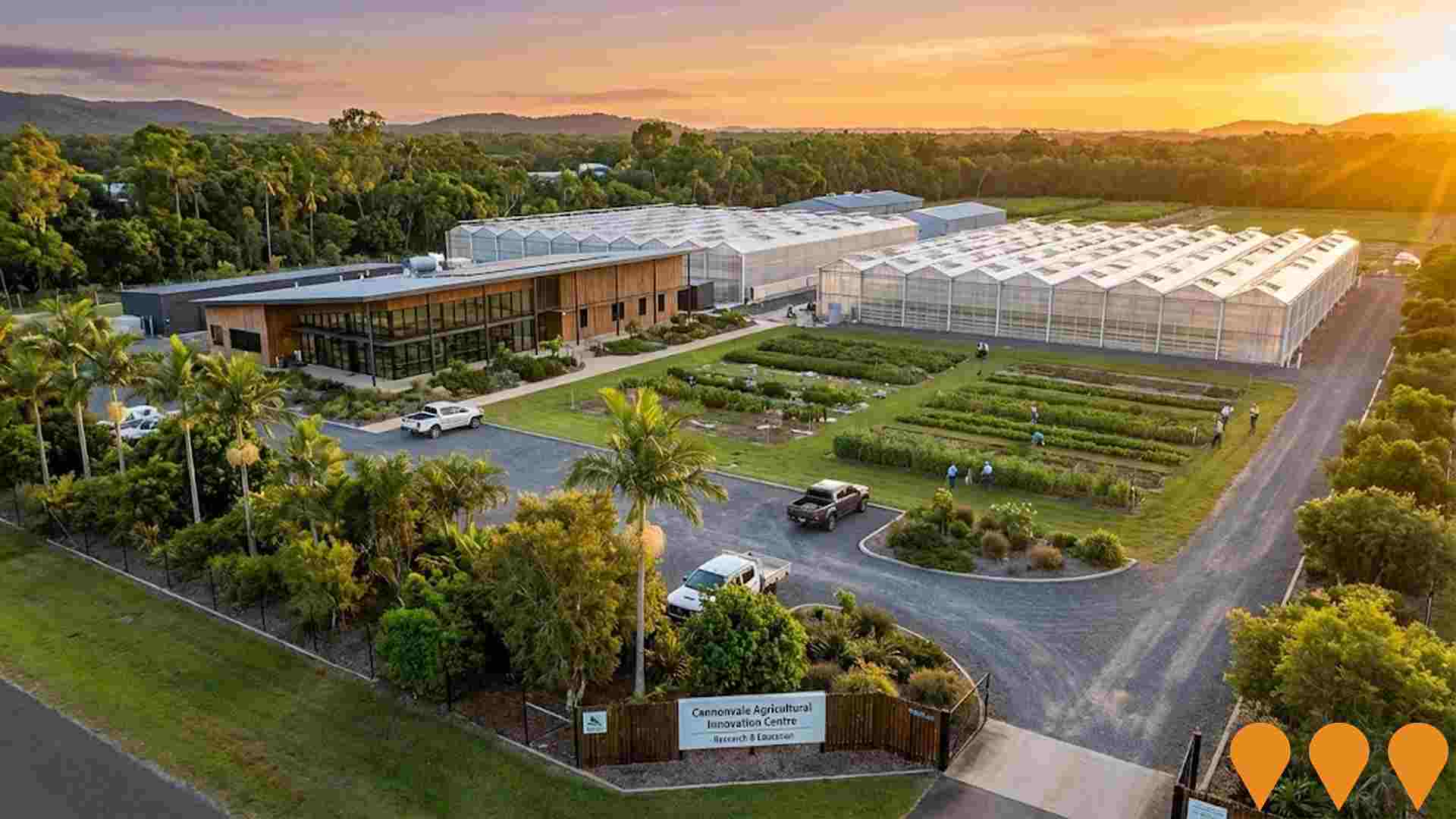
Changes to local infrastructure significantly affect an area's performance. AreaSearch has identified five projects that could impact this particular region. Notable projects include Cannonvale Community Hub, Cannonvale Agricultural Innovation Centre, Cannonvale Waste Management Facility, and Edenvale (Cannon Valley Master Planned Community). The following details those likely most relevant.
Professional plan users can use the search below to filter and access additional projects.
INFRASTRUCTURE SEARCH
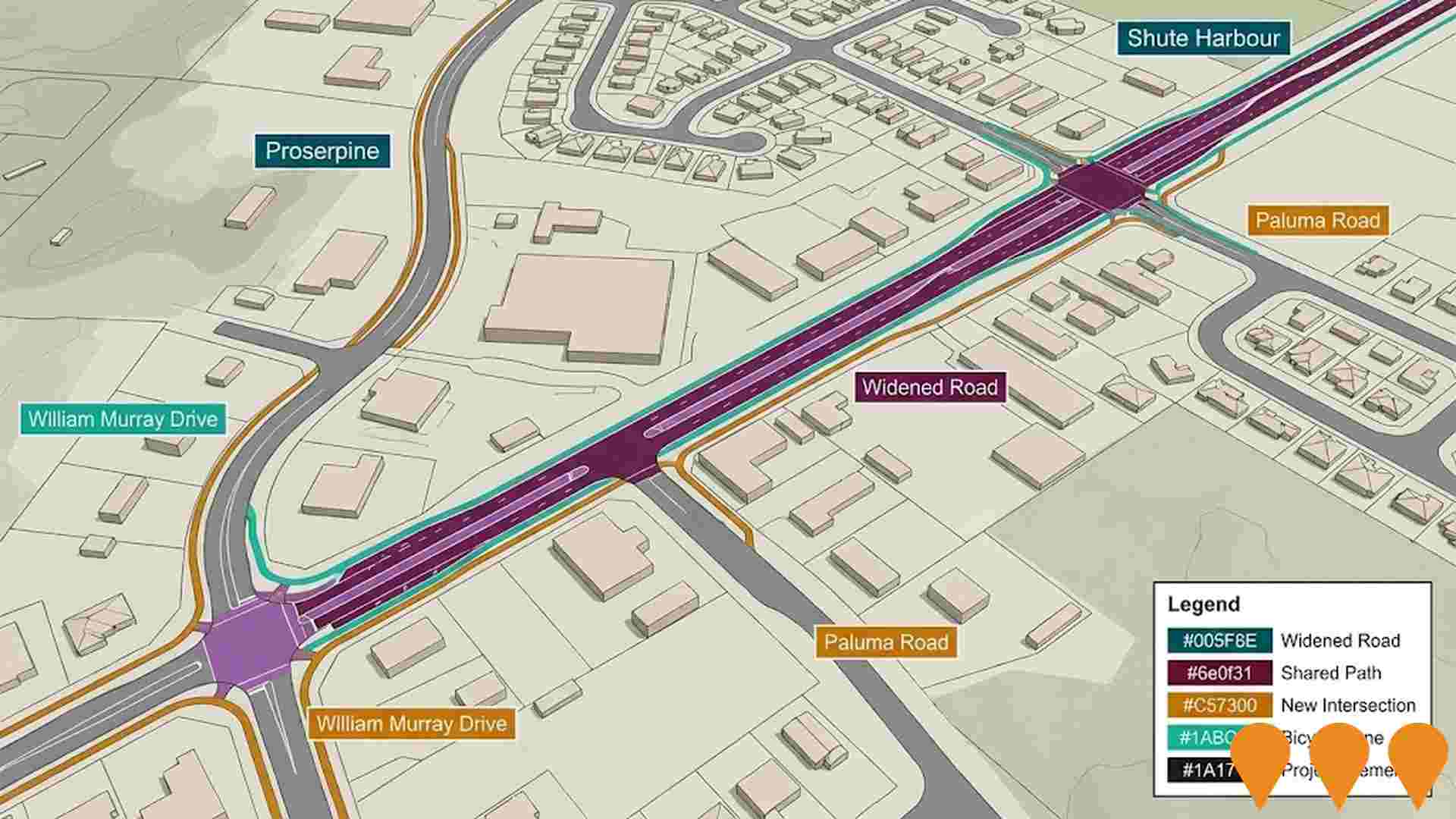
 Denotes AI-based impression for illustrative purposes only, not to be taken as definitive under any circumstances. Please follow links and conduct other investigations from the project's source for actual imagery. Developers and project owners wishing us to use original imagery please Contact Us and we will do so.
Frequently Asked Questions - Infrastructure
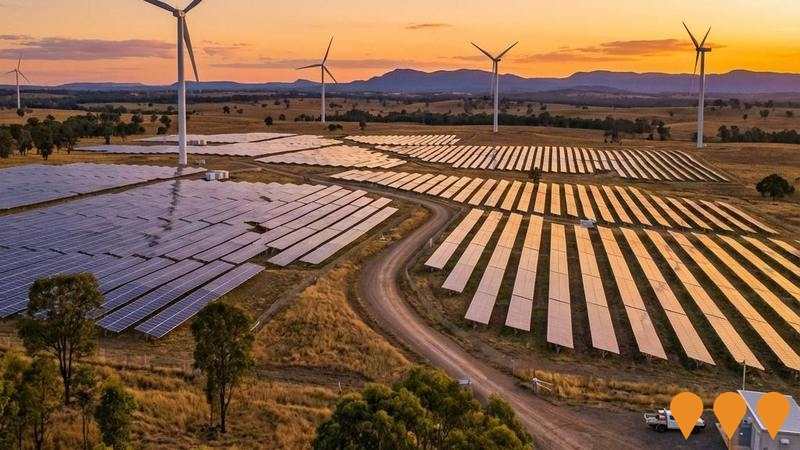
Queensland Energy and Jobs Plan
State-wide renewable energy transformation program delivering large-scale wind, solar, pumped hydro, battery storage and transmission infrastructure. Aims for 70% renewable energy by 2032 and 80% by 2035, supporting 100,000 jobs by 2040 across regional Queensland. Largest clean energy investment program in Australia.
Queensland Energy and Jobs Plan SuperGrid
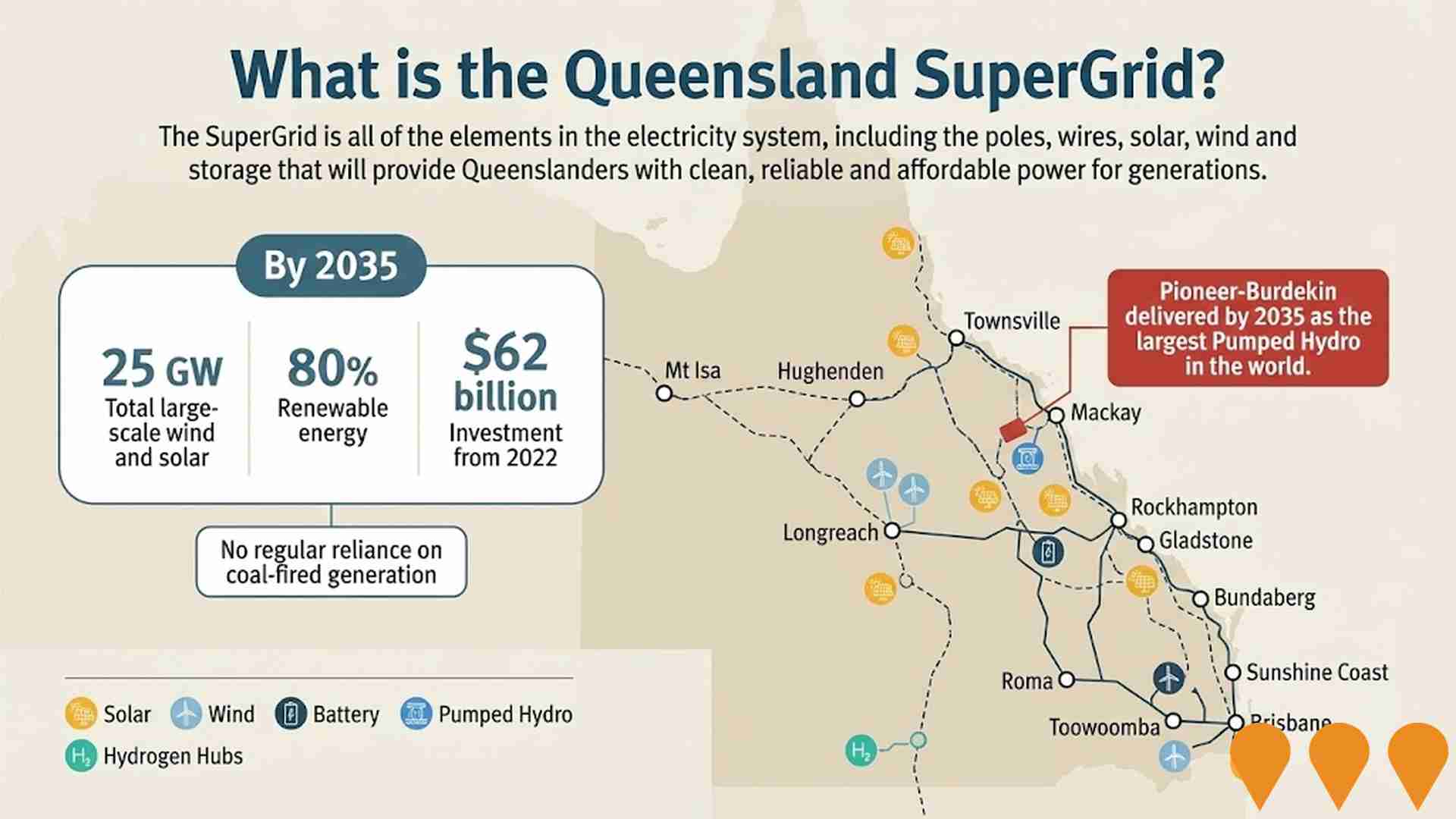
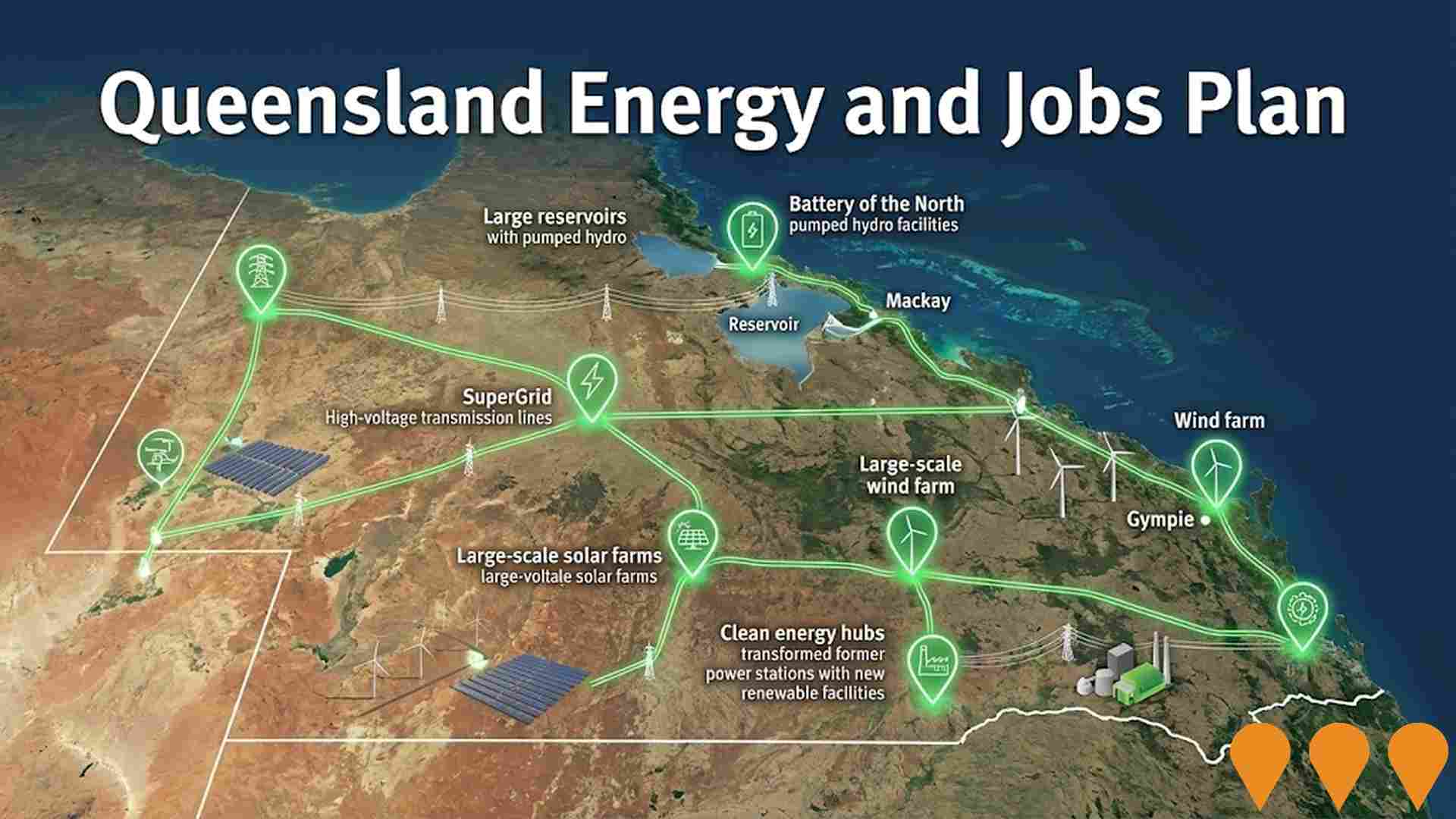
The Queensland Energy and Jobs Plan is delivering the Queensland SuperGrid and 22 GW of new renewable energy capacity through Renewable Energy Zones (REZs) across the state. Legislated targets are 50% renewables by 2030, 70% by 2032 and 80% by 2035. Key delivery mechanisms include the Energy (Renewable Transformation and Jobs) Act 2024, the SuperGrid Infrastructure Blueprint, the Queensland REZ Roadmap and the Priority Transmission Investments (PTI) framework. Multiple transmission projects are now in construction including CopperString 2032, Gladstone PTI (Central Queensland SuperGrid), Southern Queensland SuperGrid reinforcements, and numerous grid-scale batteries and pumped hydro projects under active development.
Queensland Energy and Jobs Plan
The Queensland Energy and Jobs Plan is a $62 billion+ statewide program to deliver publicly owned renewable energy generation, large-scale battery and pumped hydro storage, and the Queensland SuperGrid transmission backbone. Targets: 50% renewables by 2030, 70% by 2032, 80% by 2035. Multiple projects are now under construction including CopperString 2032, Pioneer-Burdekin Pumped Hydro, and numerous Renewable Energy Zones.
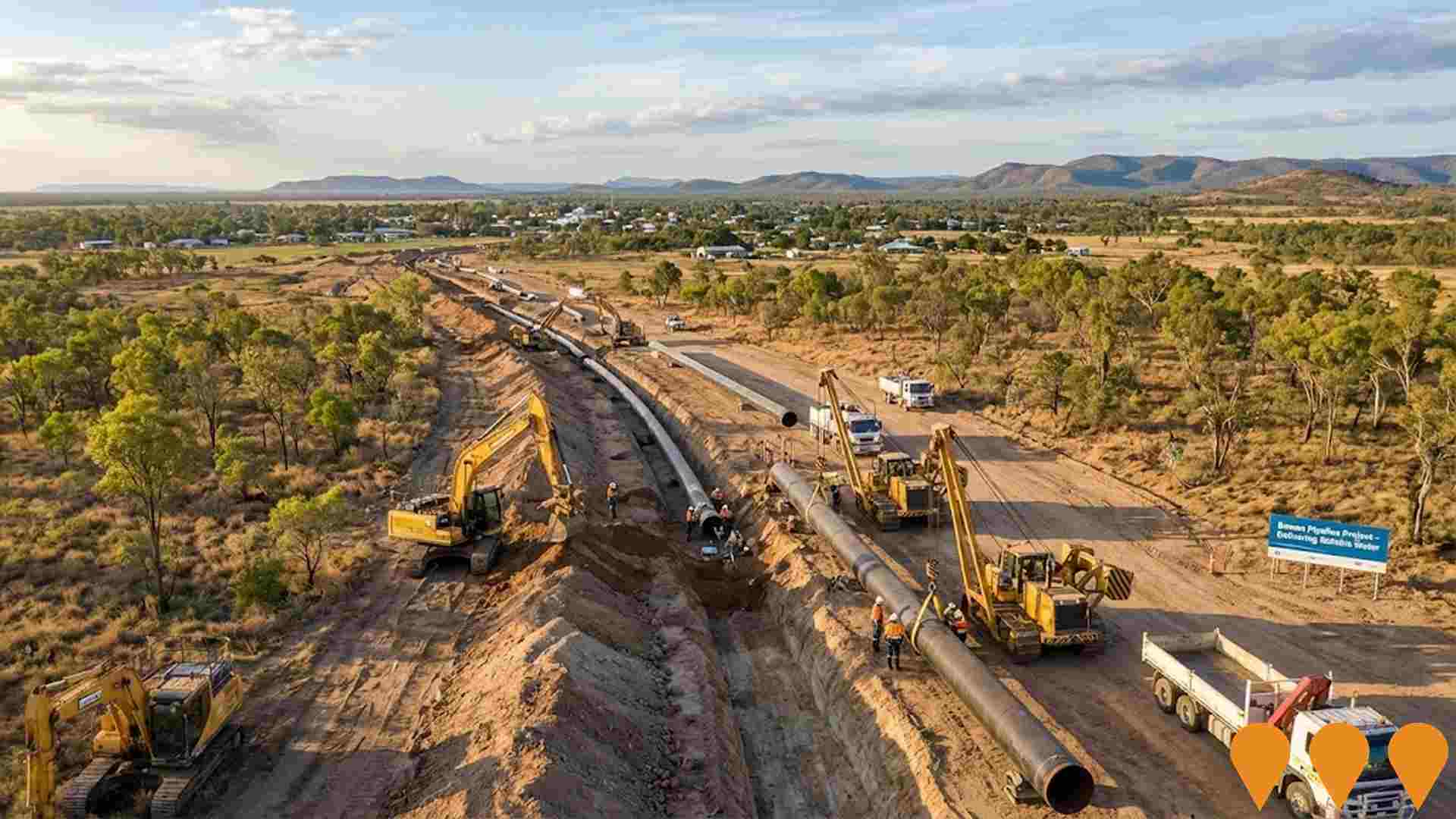
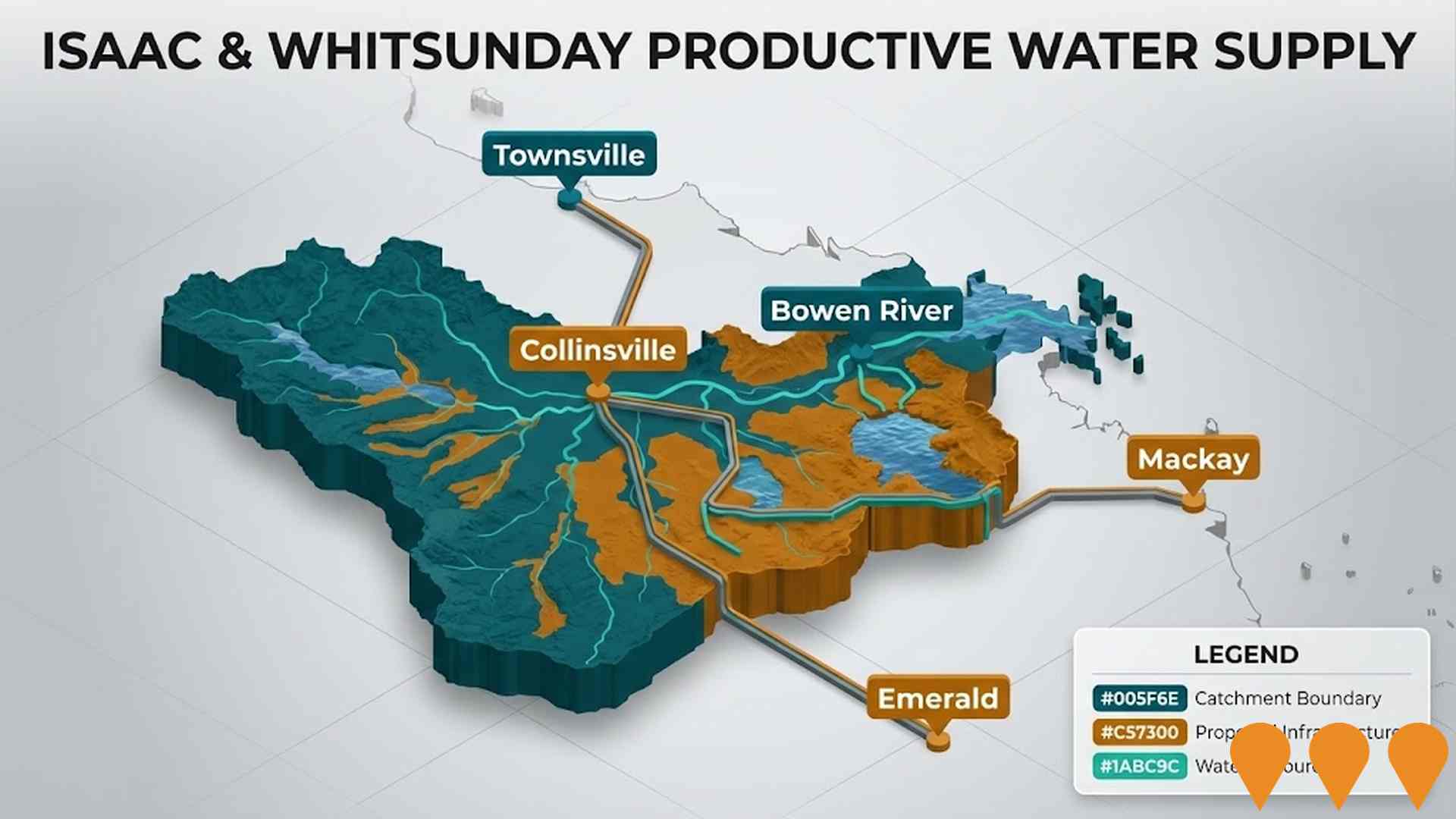
Bowen Pipeline Project
66 km underground water pipeline duplicating the existing Bowen to Collinsville pipeline to deliver reliable water supply from the Burdekin Basin to the Bowen and Collinsville region for agriculture, industry and urban use. Construction commenced early 2025 after final investment decision in December 2024.
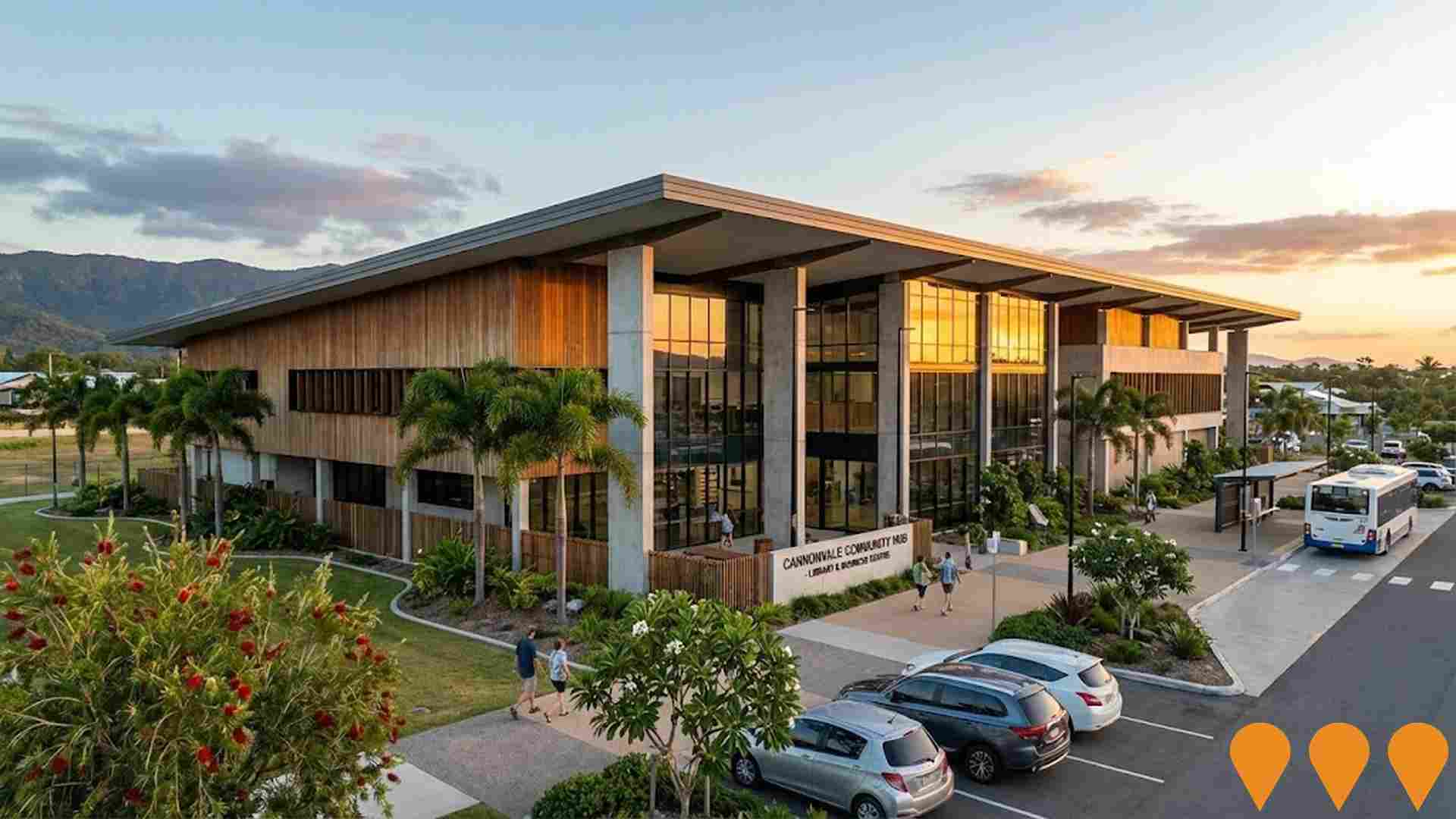
Cannonvale Community Hub
A 1,882m2 multi-purpose facility including a modern library, meeting rooms, business and education spaces, and disaster resilience infrastructure to support the growing population.
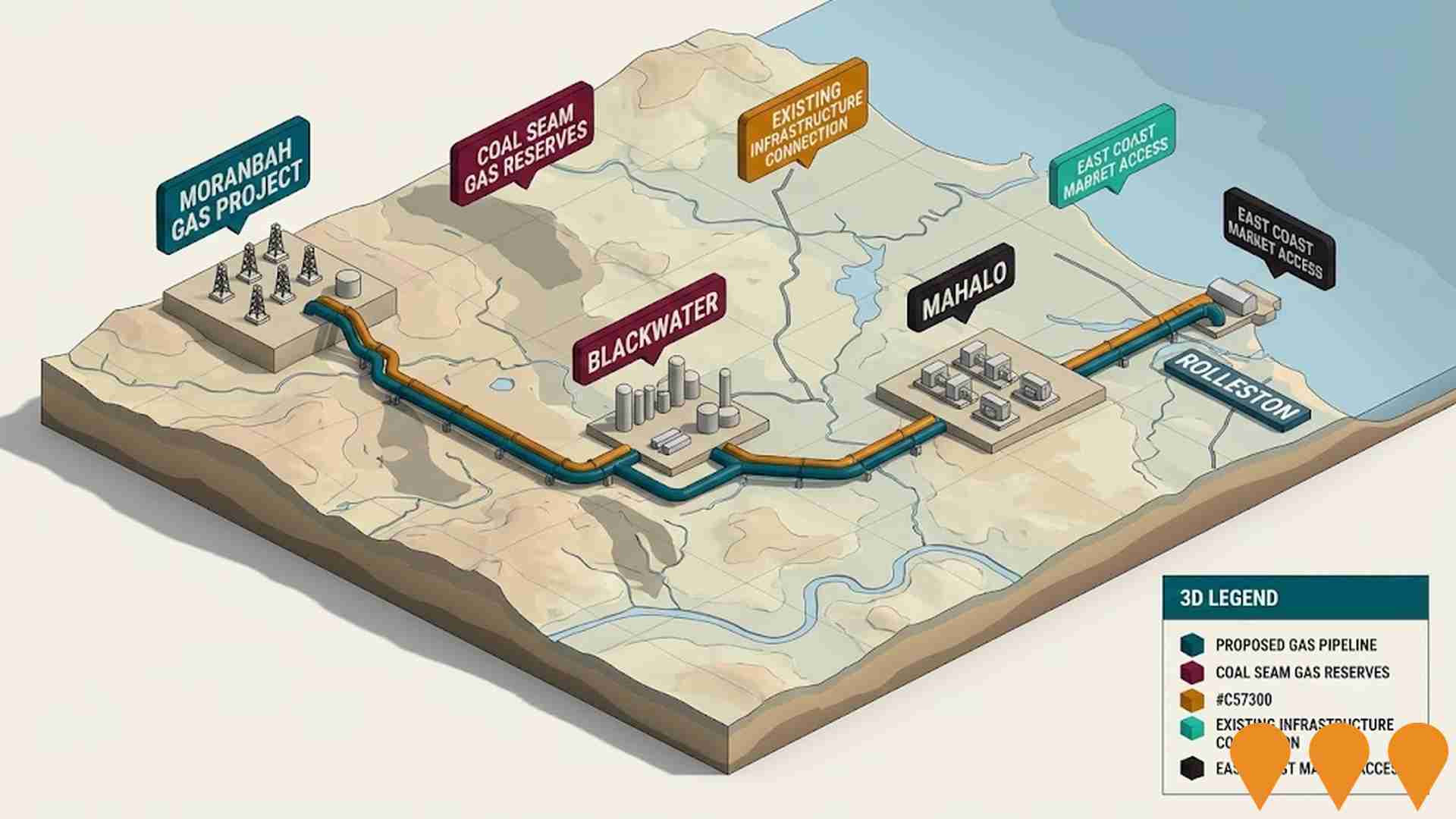
Bowen Basin Gas Pipeline
A proposed 500km gas transmission pipeline to connect coal seam gas reserves in the Bowen Basin to the east coast domestic market and overseas customers via existing pipeline infrastructure. The project completed Phase 1 concept study in December 2021 and Phase 2 market engagement in December 2022. Phase 2 findings showed market interest exists but timing is critical for investor confidence. The pipeline could potentially transport up to 457 TJ/d of gas from three main regions: Moranbah (200 TJ/d), Blackwater (77 TJ/d), and Mahalo (180 TJ/d). The preferred route (Option 2B) would run approximately 390km from the Bowen Basin to connect with existing infrastructure near Rolleston. The project also aims to capture coal mine methane emissions to reduce fugitive emissions and support Queensland's transition to a low-carbon economy.
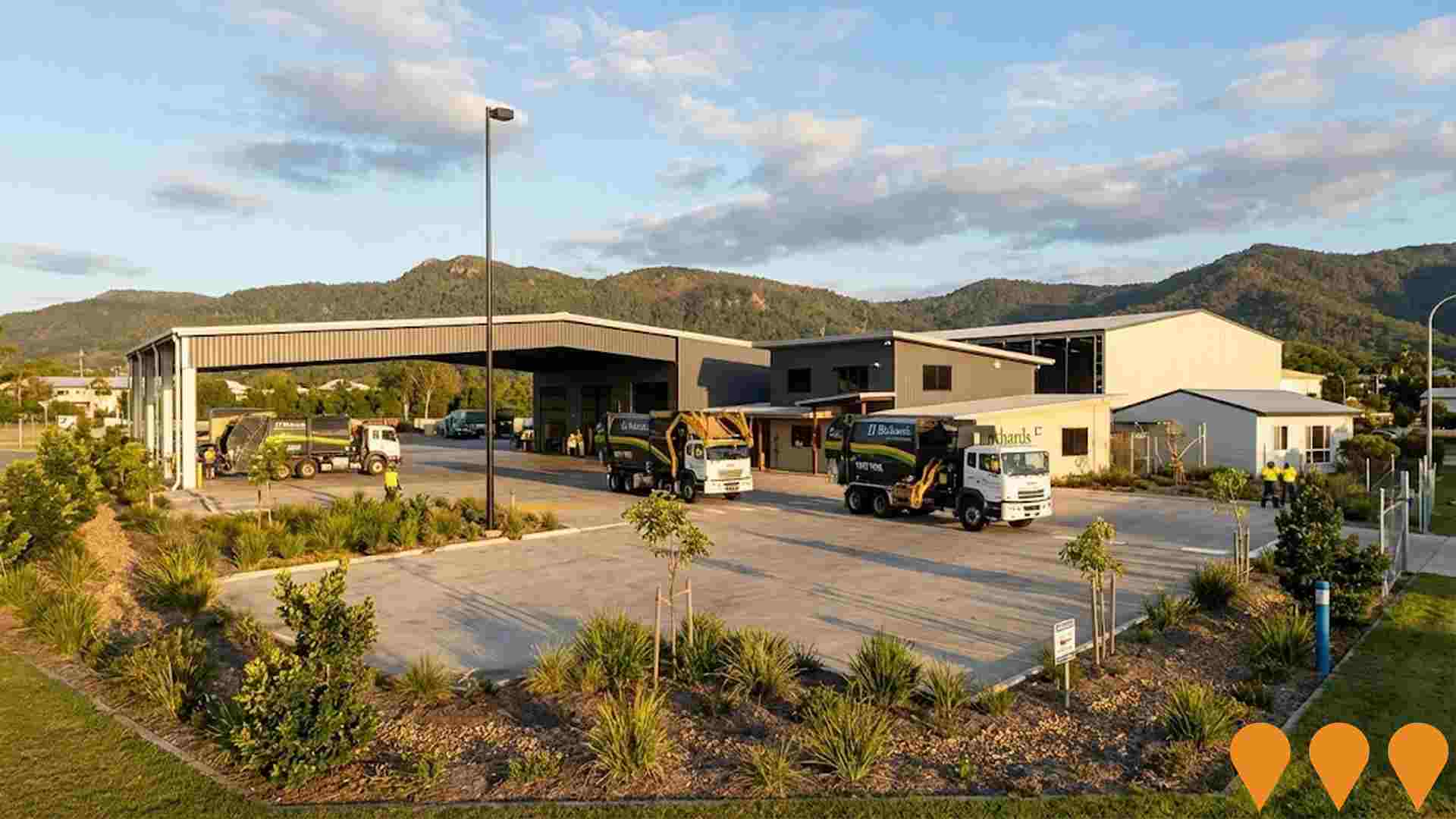
Cannonvale Waste Management Facility
Modern waste processing and recycling facility incorporating advanced sorting technology, composting systems, and waste-to-energy capabilities to serve the growing regional population sustainably.
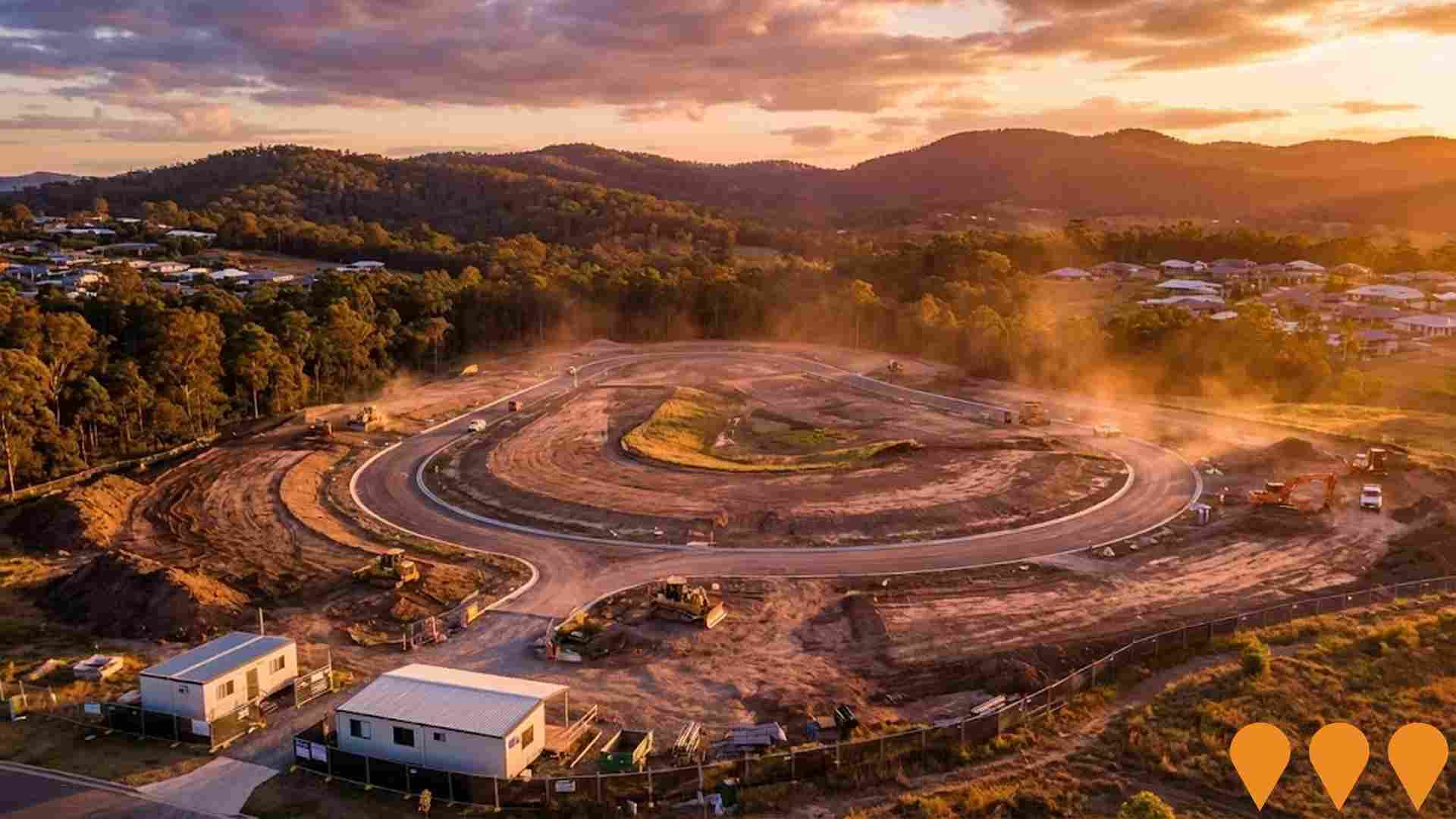
Edenvale (Cannon Valley Master Planned Community)
The Edenvale Cannon Valley Master Planned Community is a 102-hectare development by Alder Developments in Cannon Valley (adjacent to Cannonvale), designed to address the housing shortage in the Whitsundays region. It includes over 900 diverse dwellings such as apartments, townhouses, and residential lots, along with retail, commercial, and potential educational or medical facilities. Over 40% of the site is dedicated to green spaces, parks, wetlands, and pathways. The project will be delivered in more than 20 stages over approximately 10 years. Recent activity includes DA lodgements for preliminary approvals and operational works (bulk earthworks and waterway realignment), with ongoing community consultation under the Edenvale brand.
Employment
Error processing employment analysis
Income
Income metrics indicate excellent economic conditions, with the area achieving higher performance than 75% of national locations assessed by AreaSearch
AreaSearch's latest postcode level ATO data for financial year 2022 indicates Cannon Valley's median income among taxpayers is $56,496, with an average of $72,437. Nationally, these figures are high compared to the Rest of Qld's median of $50,780 and average of $64,844. Based on Wage Price Index growth of 13.99% since financial year 2022, current estimates for Cannon Valley would be approximately $64,400 (median) and $82,571 (average) as of September 2025. According to the 2021 Census, incomes in Cannon Valley rank highly nationally, between the 78th and 89th percentiles for household, family, and personal incomes. The largest income segment comprises 38.0% earning $1,500 - $2,999 weekly (582 residents), similar to surrounding regions where 31.7% fall into this range. Higher earners represent a substantial presence with 33.8% exceeding $3,000 weekly. After housing costs, residents retain 87.4% of income, reflecting strong purchasing power and the area's SEIFA income ranking places it in the 6th decile.
Frequently Asked Questions - Income
Housing
Cannon Valley is characterized by a predominantly suburban housing profile, with above-average rates of outright home ownership
Cannon Valley's dwellings, as per the latest Census, were all houses (100.0%) with no other types such as semi-detached homes, apartments, or 'other' dwellings. This is unlike Non-Metro Qld where 74.7% of dwellings are houses and 25.3% are other types. Home ownership in Cannon Valley was at 33.4%, with mortgaged dwellings at 54.1% and rented ones at 12.4%. The median monthly mortgage repayment was $2,000, higher than Non-Metro Qld's average of $1,700. Weekly rent in Cannon Valley was $470 compared to Non-Metro Qld's $350. Nationally, Cannon Valley's mortgage repayments were above the Australian average of $1,863 and rents were substantially higher than the national figure of $375.
Frequently Asked Questions - Housing
Household Composition
Cannon Valley features high concentrations of family households, with a higher-than-average median household size
Family households account for 85.0% of all households, including 44.0% couples with children, 31.8% couples without children, and 7.6% single parent families. Non-family households constitute the remaining 15.0%, with lone person households at 11.7% and group households comprising 2.6%. The median household size is 3.0 people, larger than the Rest of Qld average of 2.4.
Frequently Asked Questions - Households
Local Schools & Education
Cannon Valley demonstrates exceptional educational outcomes, ranking among the top 5% of areas nationally based on AreaSearch's comprehensive analysis of qualification and performance metrics
The area's university qualification rate is 18.6%, significantly lower than the Australian average of 30.4%. Bachelor degrees are most common at 12.9%, followed by graduate diplomas (3.0%) and postgraduate qualifications (2.7%). Vocational credentials are prevalent, with 47.5% of residents aged 15+ holding them, including advanced diplomas (12.2%) and certificates (35.3%). Educational participation is high at 32.5%, comprising primary education (15.5%), secondary education (8.6%), and tertiary education (2.0%).
Educational participation is notably high, with 32.5% of residents currently enrolled in formal education. This includes 15.5% in primary education, 8.6% in secondary education, and 2.0% pursuing tertiary education.
Frequently Asked Questions - Education
Schools Detail
Nearby Services & Amenities
Transport
Transport servicing is low compared to other areas nationally based on assessment of service frequency, route connectivity and accessibility
The analysis shows that there are currently twelve active public transport stops in operation within the Cannon Valley area. These stops serve a mix of bus routes, with one individual route providing service to these locations. Collectively, these stops facilitate 132 weekly passenger trips.
The accessibility of public transport is rated as limited, with residents typically residing 632 meters away from the nearest transport stop. On average, there are eighteen trips per day across all routes, which equates to approximately eleven weekly trips per individual stop.
Frequently Asked Questions - Transport
Transport Stops Detail
Health
Cannon Valley's residents boast exceedingly positive health performance metrics with very low prevalence of common health conditions across all age groups
Health outcomes data shows excellent results across Cannon Valley, with very low prevalence of common health conditions across all age groups. The rate of private health cover is very high at approximately 56% of the total population (857 people), compared to 52.1% across the rest of Queensland.
The most common medical conditions in the area are asthma and mental health issues, affecting 4.9% and 4.8% of residents respectively. A total of 80.0% of residents report being completely clear of medical ailments, compared to 73.3% across the rest of Queensland. The area has 12.4% of residents aged 65 and over (190 people), which is lower than the 15.4% in the rest of Queensland. Health outcomes among seniors are particularly strong, broadly aligning with the general population's health profile.
Frequently Asked Questions - Health
Cultural Diversity
Cannon Valley is considerably less culturally diverse than average when assessed alongside AreaSearch's national rankings for language and cultural background related metrics
Cannon Valley's cultural diversity was found to be below average, with 87.2% of its population being citizens, 83.8% born in Australia, and 96.0% speaking English only at home. The predominant religion in Cannon Valley is Christianity, comprising 48.3% of the population. Notably, the 'Other' religious category is overrepresented in Cannon Valley compared to the rest of Queensland, with 1.0% versus 0.6%.
In terms of ancestry, the top three groups are English (34.4%), Australian (27.9%), and Irish (8.6%). Some ethnic groups show notable differences: New Zealand is overrepresented at 1.2% compared to the regional average of 1.1%, Welsh at 0.8% versus 0.5%, and South African at 0.7% versus 0.4%.
Frequently Asked Questions - Diversity
Age
Cannon Valley's population aligns closely with national norms in age terms
The median age in Cannon Valley is 38 years, slightly below Rest of Queensland's average of 41 but inline with Australia's median age of 38. The age group of 35-44 has a strong representation at 16.9%, compared to Rest of Queensland, while the 75-84 cohort is less prevalent at 2.9%. Post-2021 Census data shows that the 25 to 34 age group grew from 11.2% to 14.5% of the population. Conversely, the 45 to 54 cohort declined from 14.5% to 13.1%, and the 5 to 14 group dropped from 16.7% to 15.3%. Population forecasts for 2041 indicate significant demographic changes in Cannon Valley. Leading this shift, the 25 to 34 age group is expected to grow by 29% (63 people), reaching 286 from 222. Conversely, the 5 to 14 and 15 to 24 cohorts are projected to experience population declines.