Chart Color Schemes
This analysis uses Suburbs and Localities (SAL) boundaries, which can materially differ from Statistical Areas (SA2) even when sharing the same name.
SAL boundaries are defined by Australia Post and the Australian Bureau of Statistics to represent commonly-known suburb names used in postal addresses.
Statistical Areas (SA2) are designed for census data collection and may combine multiple suburbs or use different geographic boundaries. For comprehensive analysis, consider reviewing both boundary types if available.
est. as @ -- *
2021 Census | -- people







Curious about local property values? Filter the chart to assess the volume and appreciation (including resales) trends and regional comparisons, or scroll to the map below view this information at an individual property level.
Find a Recent Sale

Sales Detail
Richmond (Vic.) has an estimated 31,419 residents, up from 28,587 at the 2021 Census — a change of 2,832 people, or 9.9%. 879 new addresses have been validated here since Census night. Overseas migration accounts for 85.0% of that increase. That puts 7,092 residents on each square kilometre. Population is estimated from ABS Estimated Resident Population releases and GNAF address data, re-based from the 2021 Census and updated annually.
Detail
According to AreaSearch evaluations combining ABS demographic releases for the wider region with post-Census address validations, the population of the suburb of Richmond (Vic.) stands at approximately 31,419 as of Aug 2026. This represents an addition of 2,832 residents (9.9%) relative to the 2021 Census tally of 28,587. Such figures are derived from an ERP baseline of 31,134 established via the ABS June 2025 data release, alongside 879 newly confirmed addresses logged post-Census. With a resultant density of 7,092 persons per square kilometer, the suburb ranks among the upper 10% of areas nationally, driving substantial demand for local real estate.
Outpacing both state (9.5%) and national averages, the 9.9% gain since the 2021 Census positions the suburb as a primary regional growth hub. Inbound overseas migration provided the main momentum, generating roughly 85.0% of recent population gains. Projections for each SA2 district rely on ABS/Geoscience Australia datasets published in 2024 using 2022 as a baseline, while VIC State Government 2023 Regional/LGA releases fill remaining gaps through weighted LGA-to-SA2 growth aggregations. These aggregated age-bracket growth trajectories are extended across all locations for 2032 to 2041. Over this 16-year horizon, demographic expansion in the suburb of Richmond (Vic.) is anticipated to rank within the highest quartile nationwide, gaining 12,060 persons by 2041 under SA2-level modeling to deliver overall cumulative growth of 37.5%.
Frequently Asked Questions - Population
629 new dwellings have been approved in Richmond (Vic.) over the past five years, an average of 125 a year. That places the area in the 73rd percentile for residential development activity nationally, about 4 approvals per 1,000 residents a year. Of the 180 dwellings approved in the latest reporting year, 4% were detached houses and the rest townhouses or apartments. Approvals are currently running at an annualised 497, running ahead of that longer-run average. Figures come from ABS building approvals aggregated to this Suburb (SAL) boundary and are updated monthly as the ABS releases them.
Detail
AreaSearch evaluations of ABS building data indicate that development approvals across Richmond have averaged roughly 125 dwellings per year, yielding approximately 629 approved homes over the preceding 5 financial years. The current count for FY-25 has reached 497 approvals. With an average addition of only 0.4 new residents annually per dwelling built across the past 5 financial years (from FY-21 to FY-25), building activity is fully meeting and outpacing local intake, providing prospective buyers with extensive choice and underpinning long-term expansion capacity. Expected construction costs average $564,000 per dwelling—moderately above regional norms—highlighting an emphasis on premium residential projects.
Concurrently, $267.5 million in commercial approvals throughout this financial year underlines substantial local business reinvestment. Relative to Greater Melbourne, per-capita residential approvals in Richmond sit at roughly three-quarters the broader metropolitan pace, though national benchmarks place the area in the 85th percentile amidst escalating construction activity. Approvals are heavily skewed toward high-density formats, with detached houses accounting for 4.0% and attached dwellings comprising 96.0%. This orientation toward denser housing offers accessible avenues for downsizers, first-time purchasers, and property investors. A ratio of approximately 98 people per approval underscores Richmond's ongoing urban evolution. Based on current quarterly projections from AreaSearch, Richmond's population is set to expand by 11,775 residents through to 2041. Should building volumes fail to accelerate in step with demographic growth, residential availability could tighten, generating heightened purchaser competition and placing upward pressure on property values.
Frequently Asked Questions - Development
Development applications around Richmond (Vic.)
SOURCE: Planning portals and council registers, compiled by AreaSearch. Distance & bearing measured from the suburb midpoint.
AreaSearch tracks 200 current infrastructure and development projects close to Richmond (Vic.), worth an estimated $100.5 billion. 72 are already under construction and 82 are due for completion within three years. The pipeline spans residential development, communities, precincts & urban renewal and transport & logistics. Records are compiled from Infrastructure Australia, state agencies, council planning portals and public announcements, reviewed and updated daily, then ranked by proximity, construction stage, completion horizon and project scale.
Detail
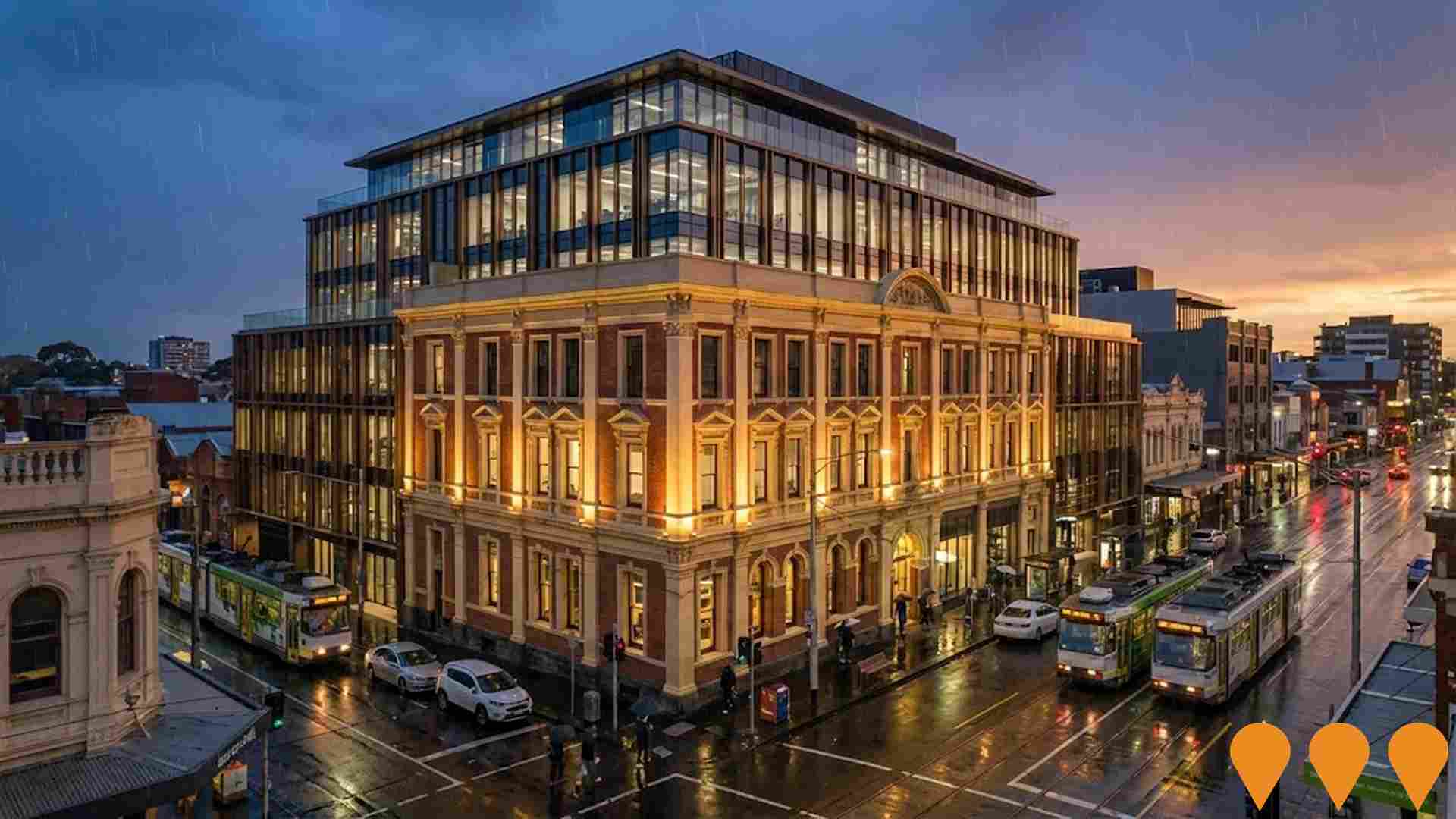
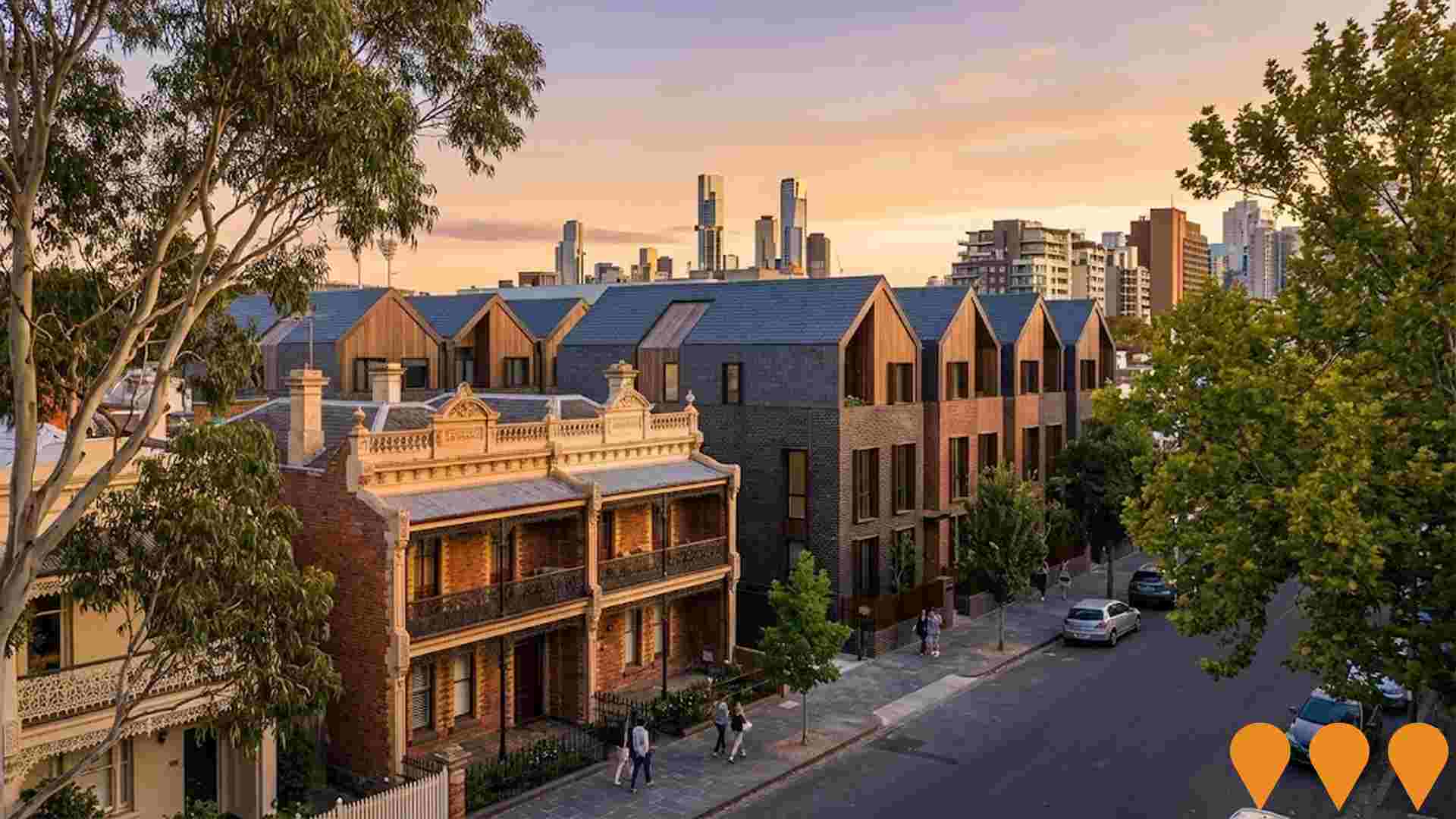
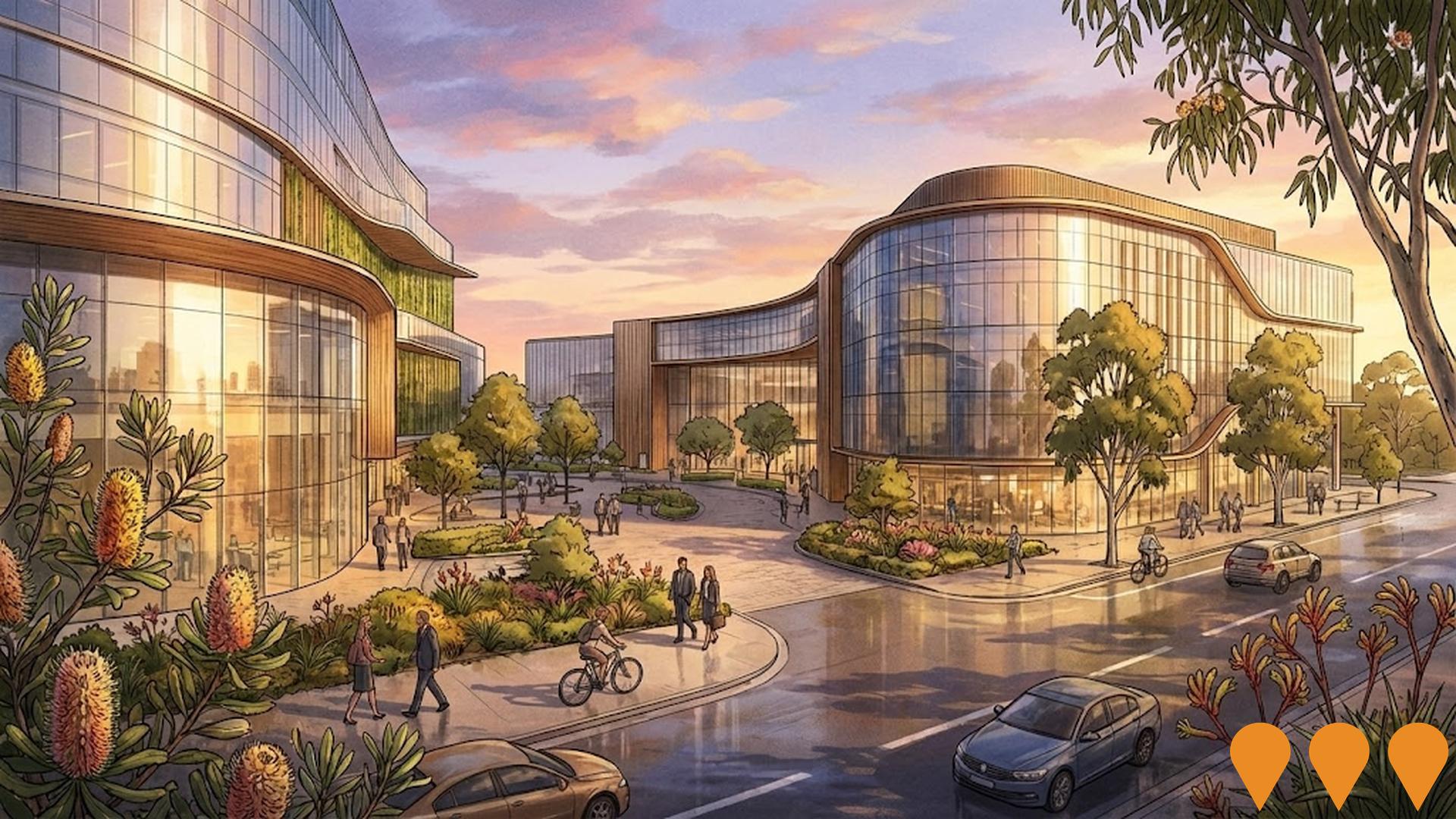
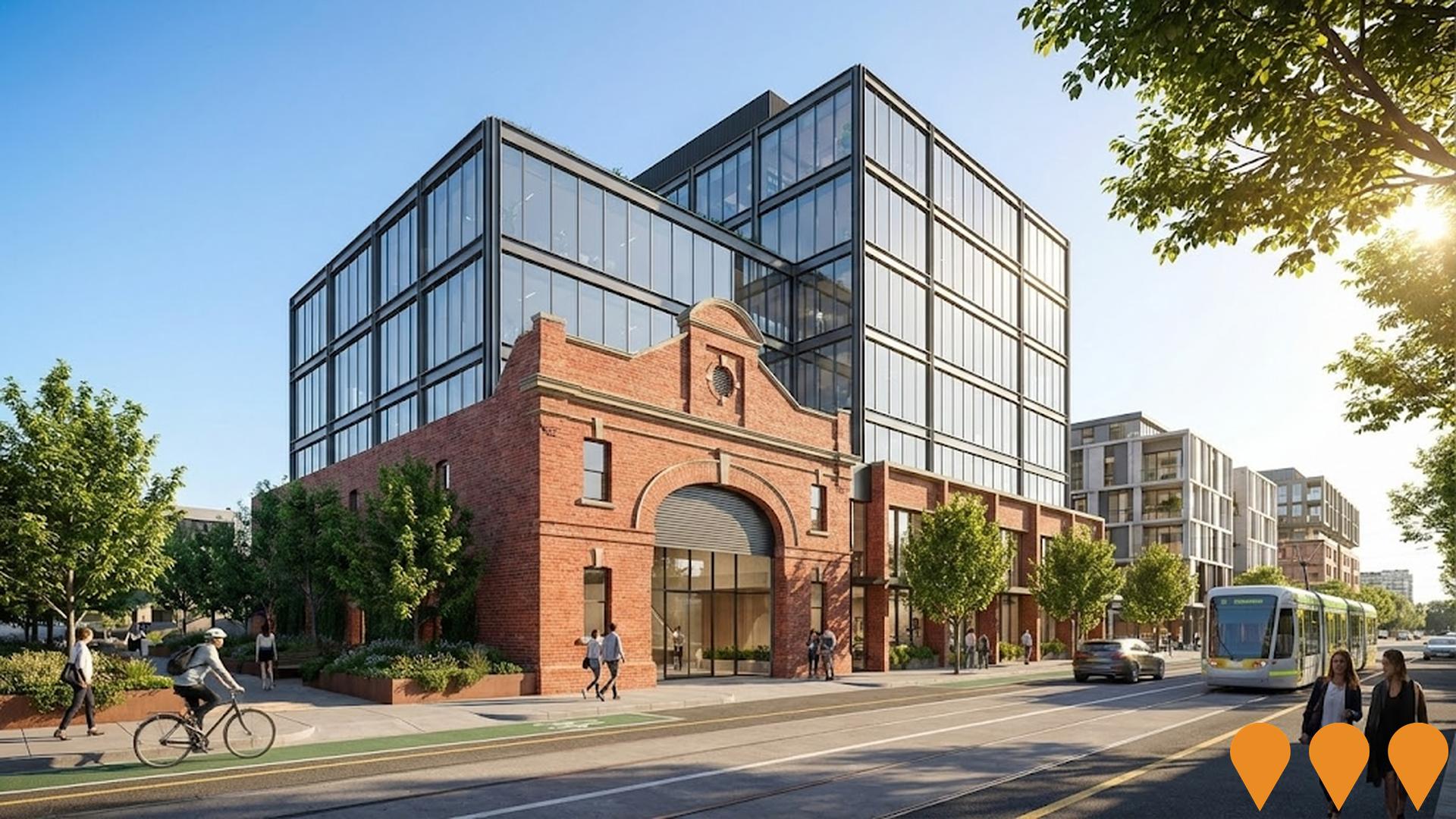
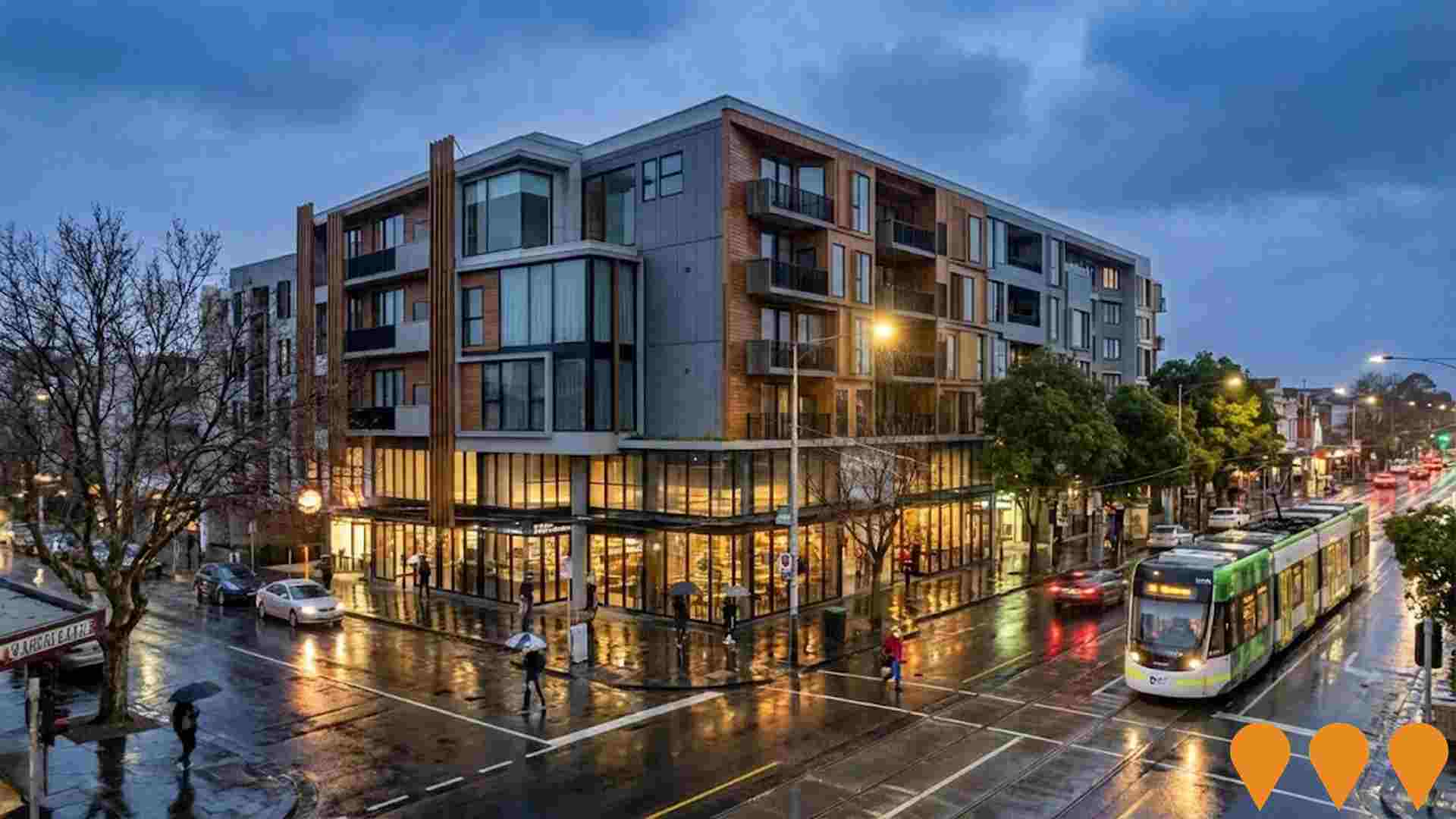
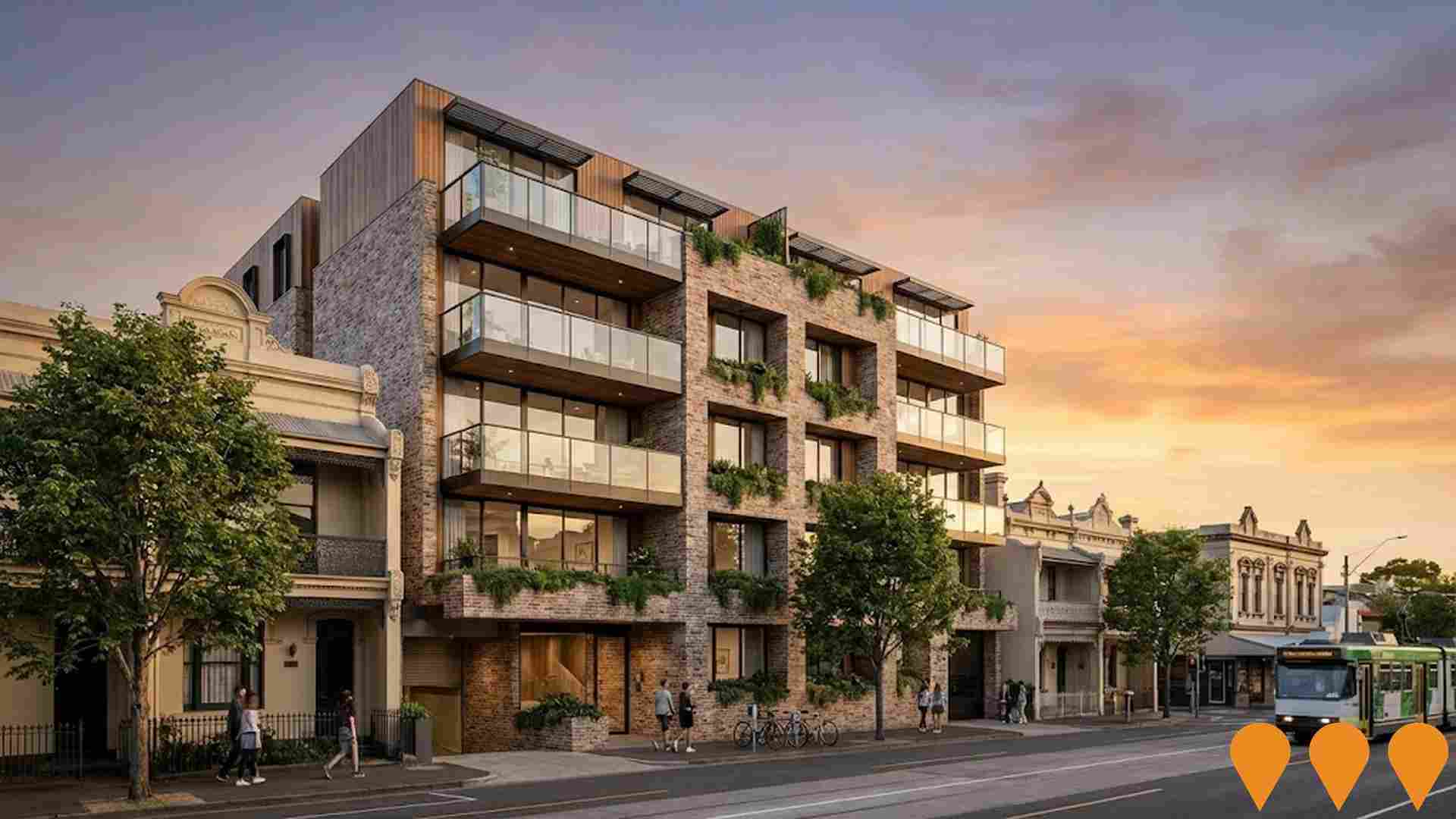
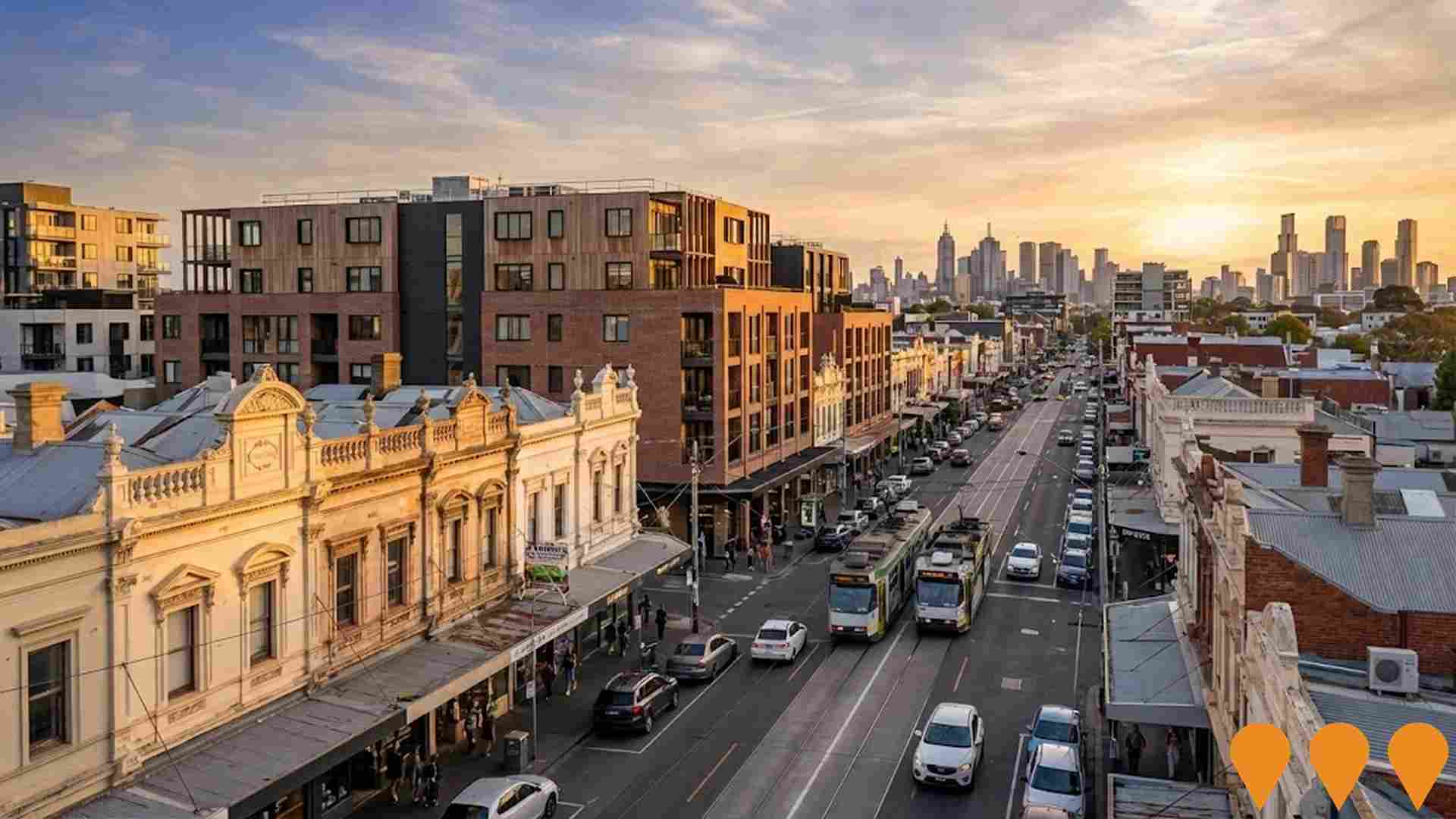
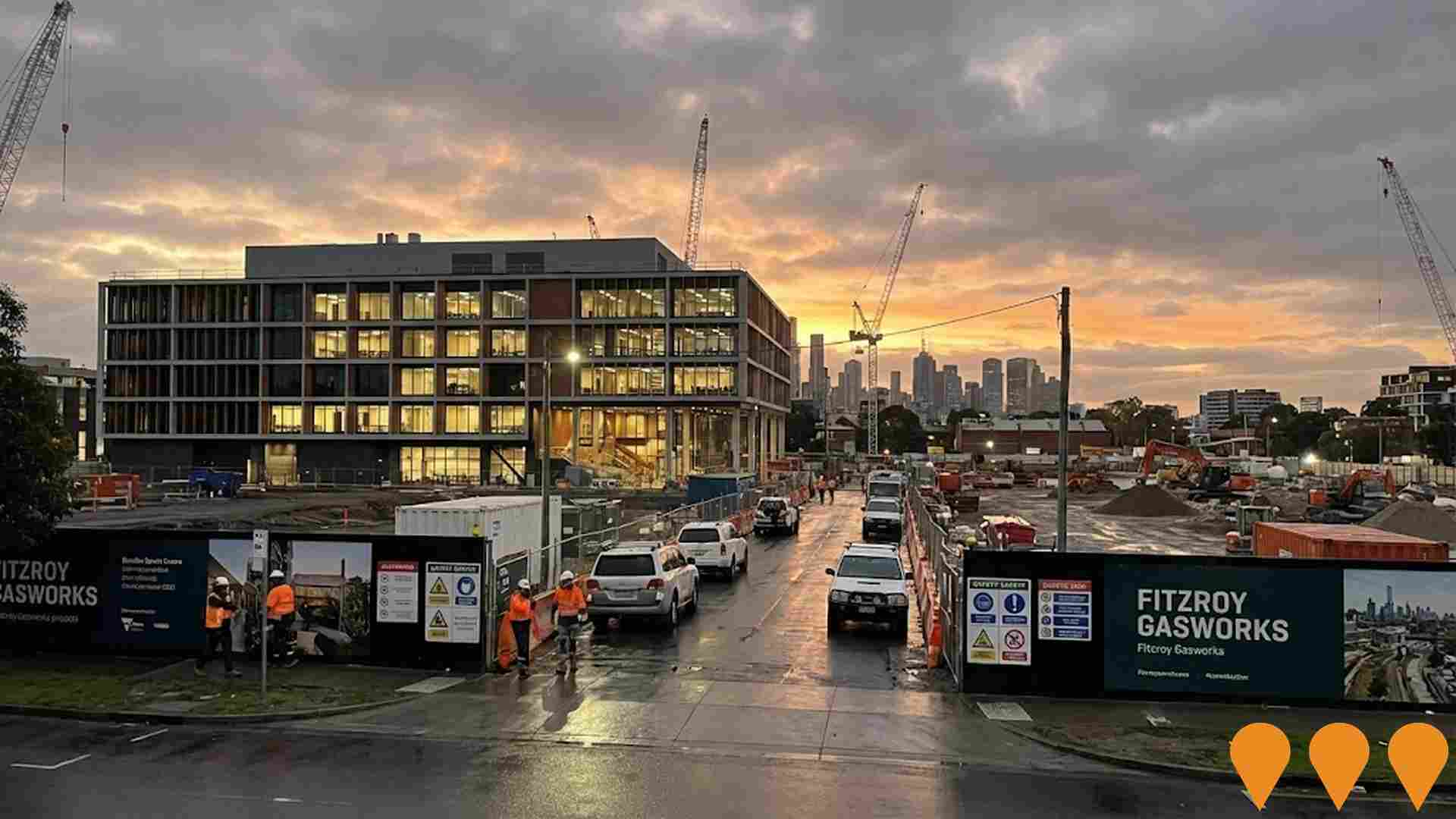
Capital works, major planning approvals, and civic upgrades exert a primary influence on local market dynamics. AreaSearch has logged 71 notable projects possessing direct implications for the surrounding area. Prominent schemes include Matchworks Cremorne, 75-119 Cubitt Street, 587-593 Church Street Hotel Development, and Fairfield by Marriott and Apartments by Marriott Bonvoy Richmond, with essential details outlined below.
Professional plan users can use the search below to filter and access additional projects.
INFRASTRUCTURE SEARCH
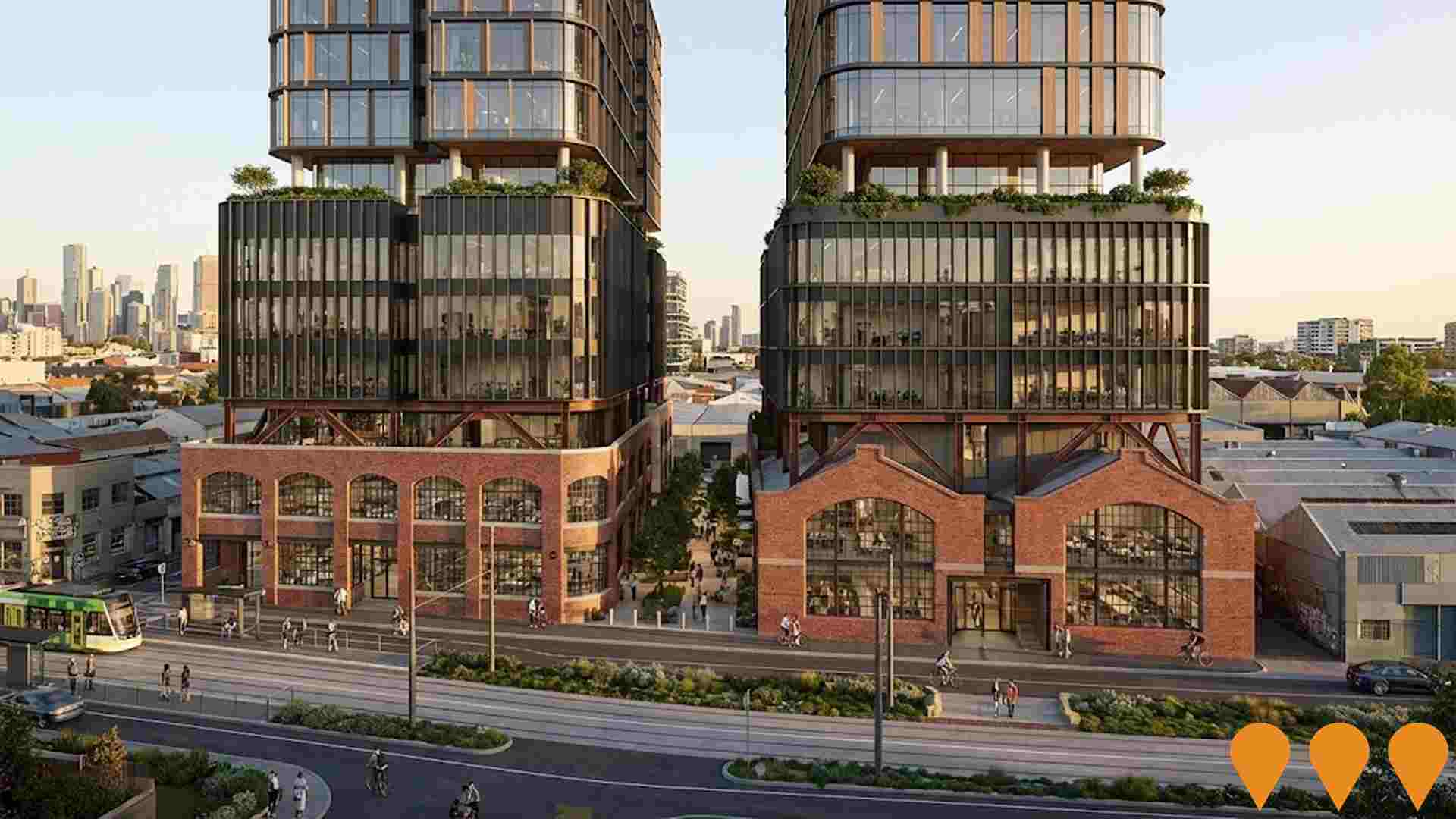
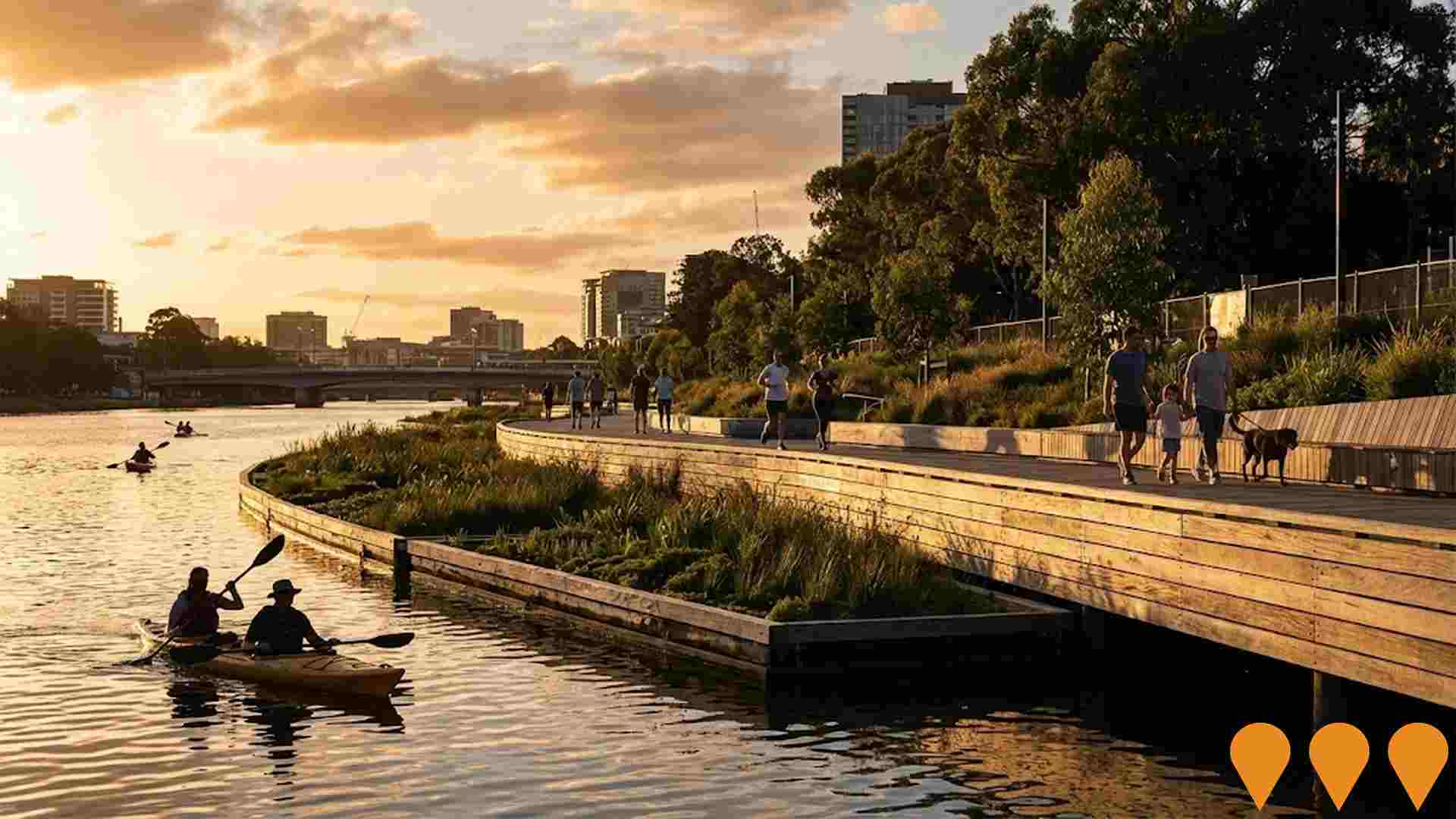
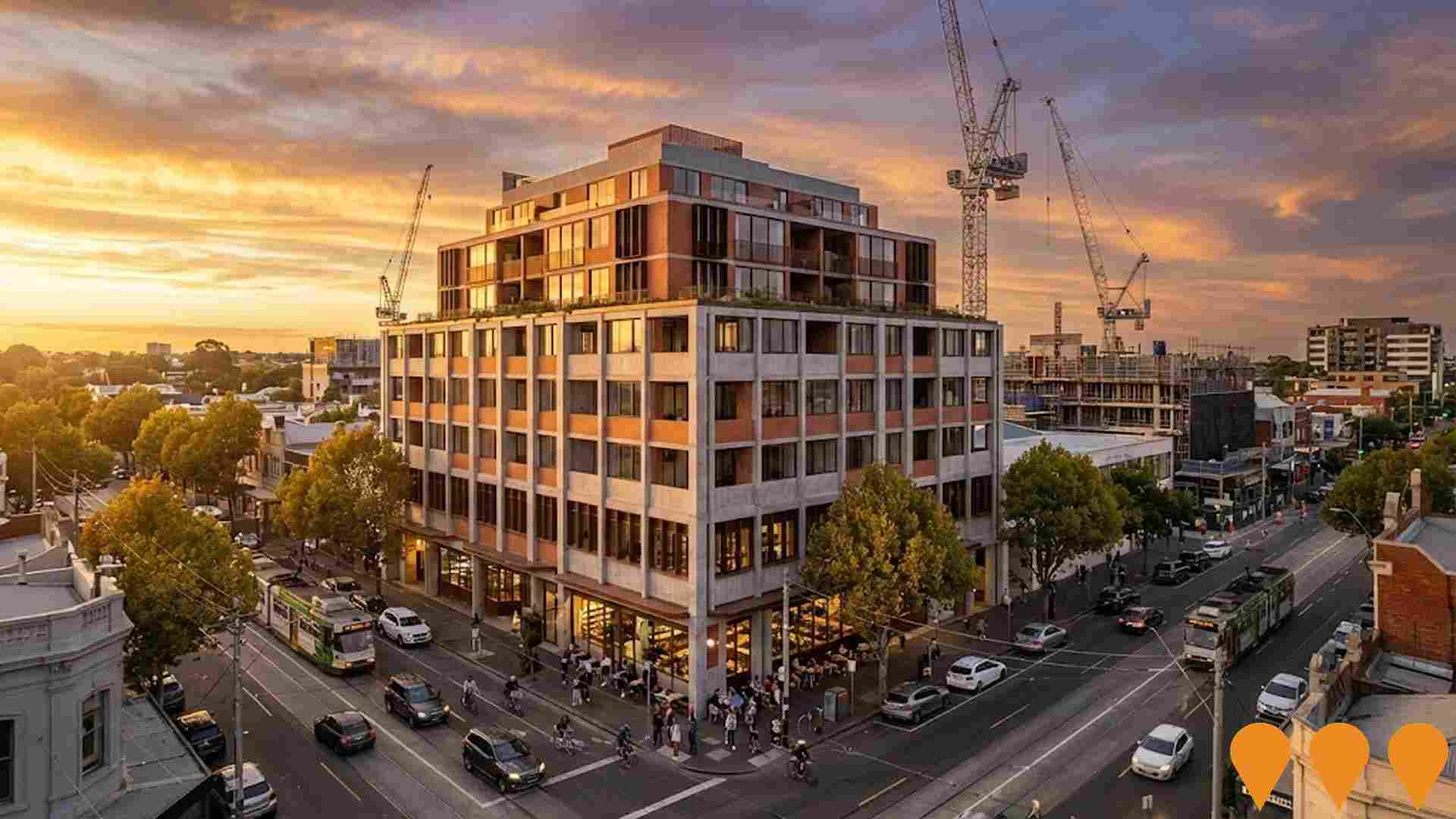
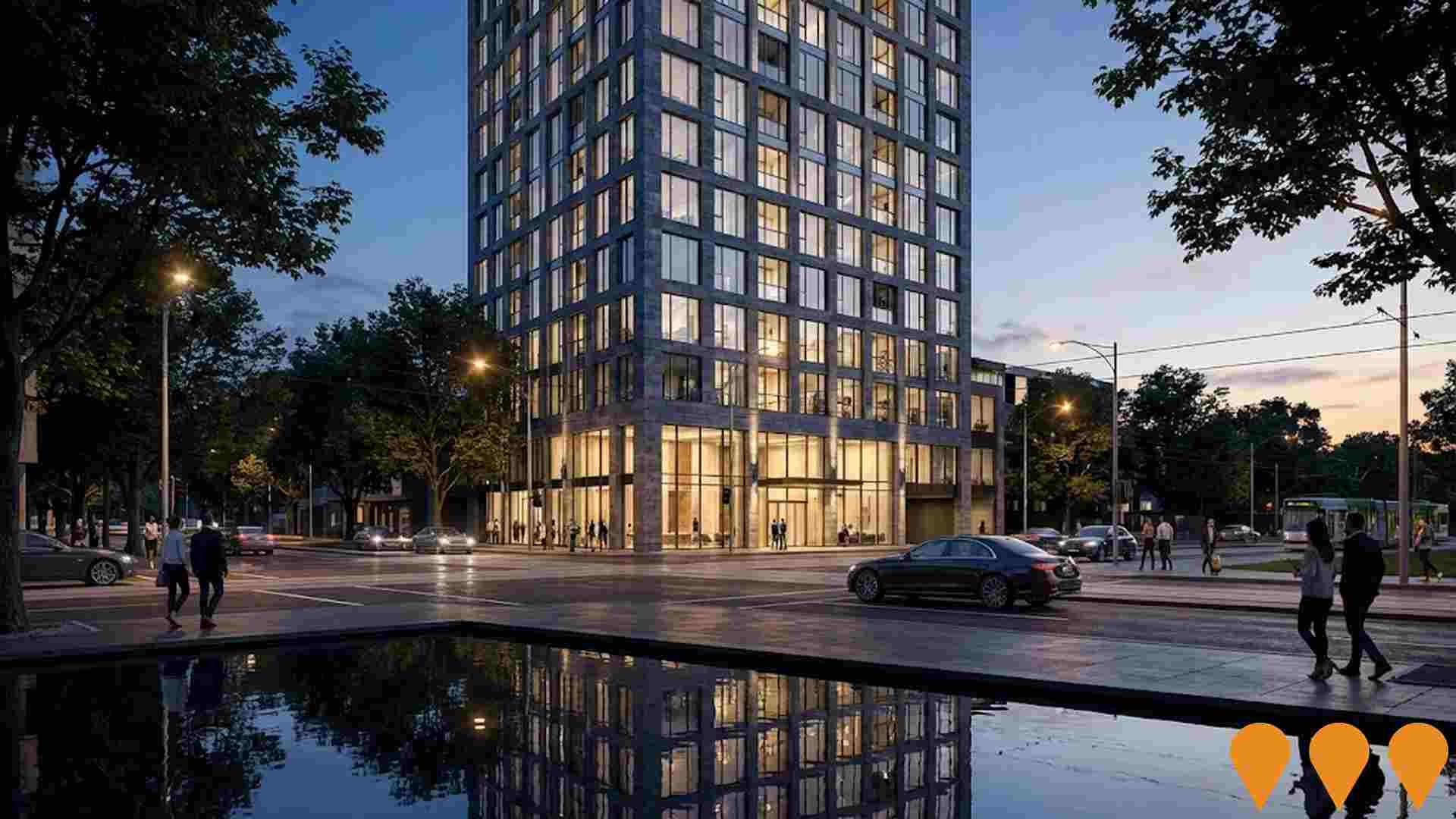
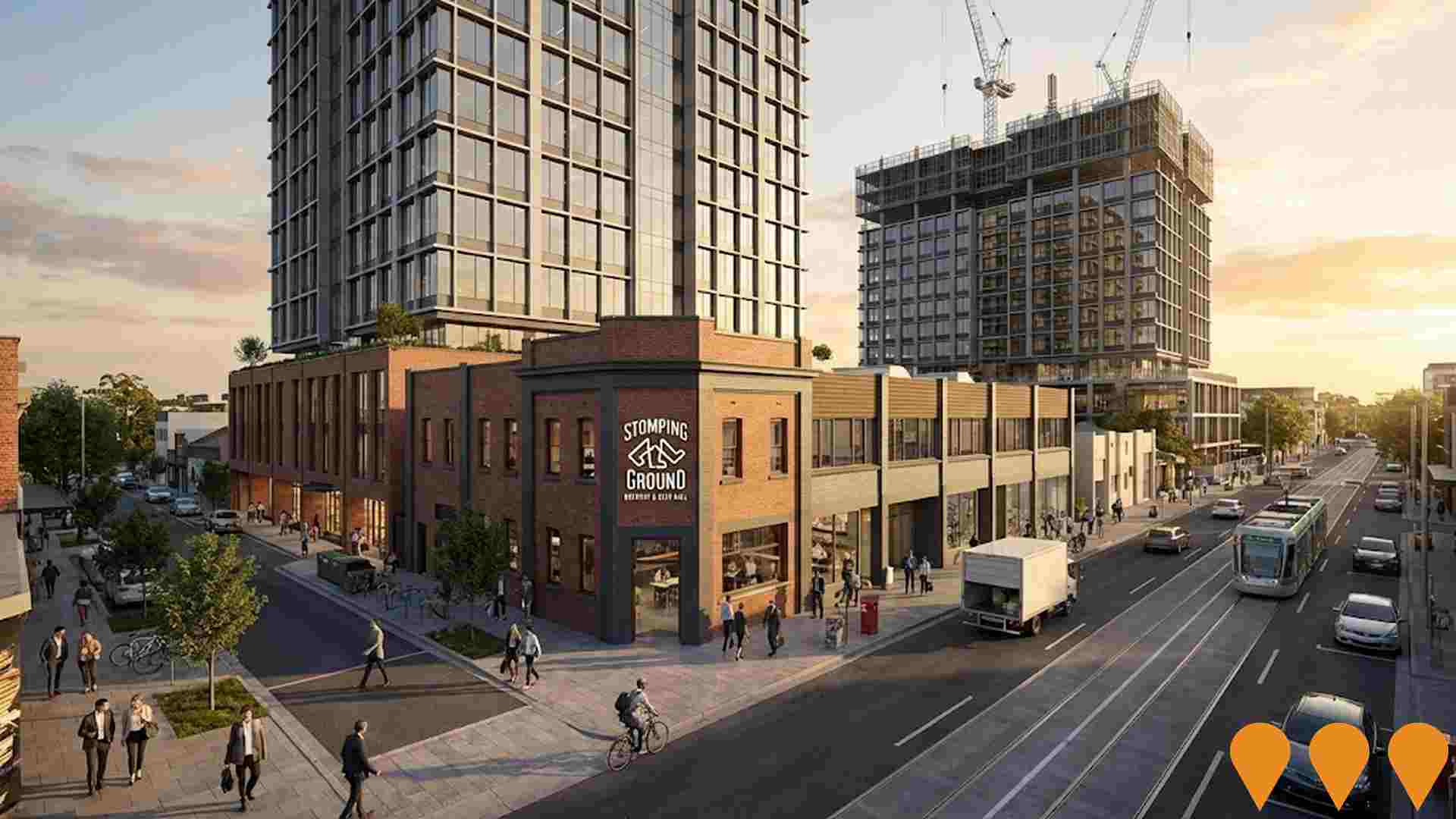
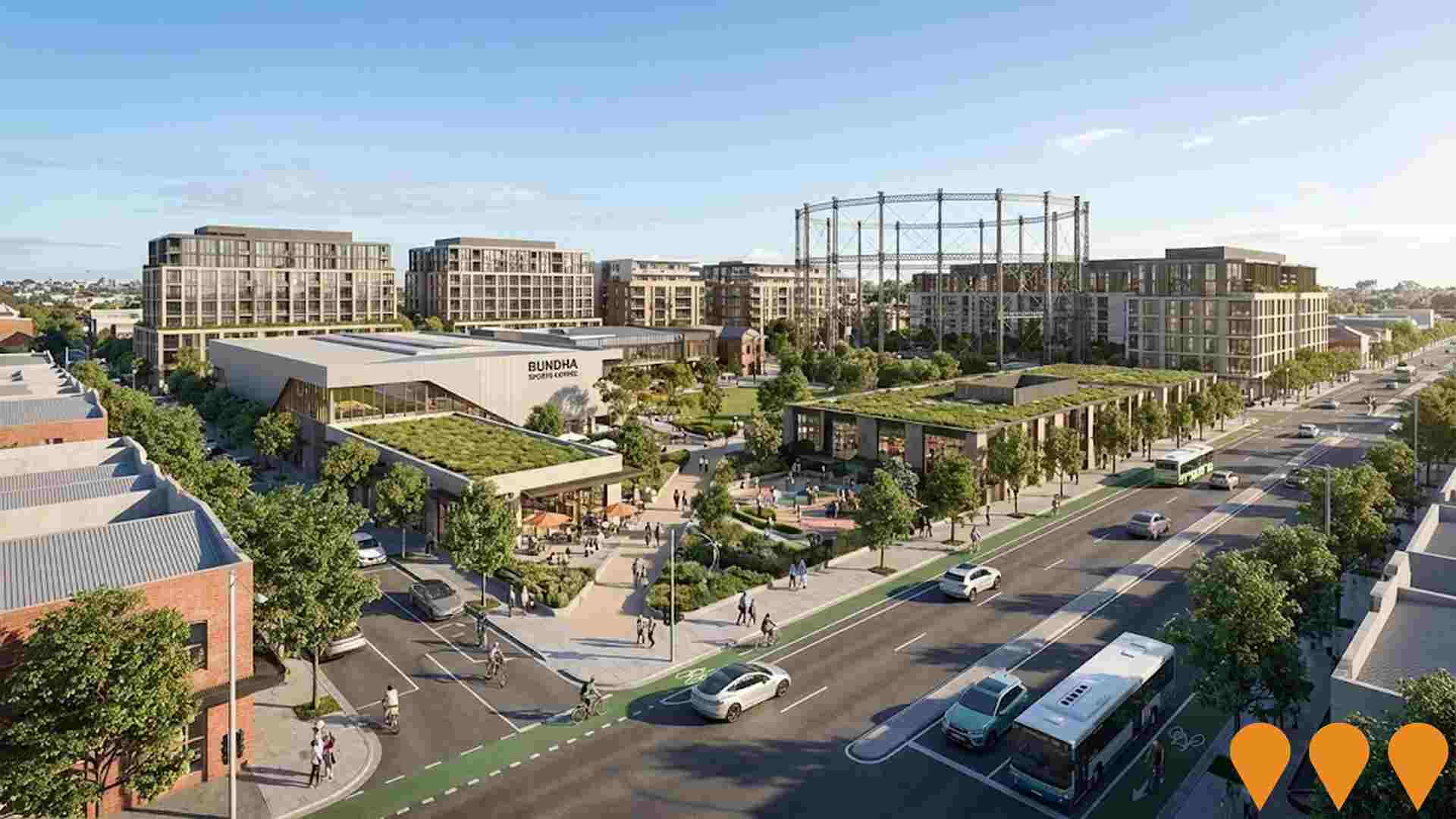
 Denotes AI-based impression for illustrative purposes only, not to be taken as definitive under any circumstances. Please follow links and conduct other investigations from the project's source for actual imagery. Developers and project owners wishing us to use original imagery please Contact Us and we will do so.
Frequently Asked Questions - Infrastructure
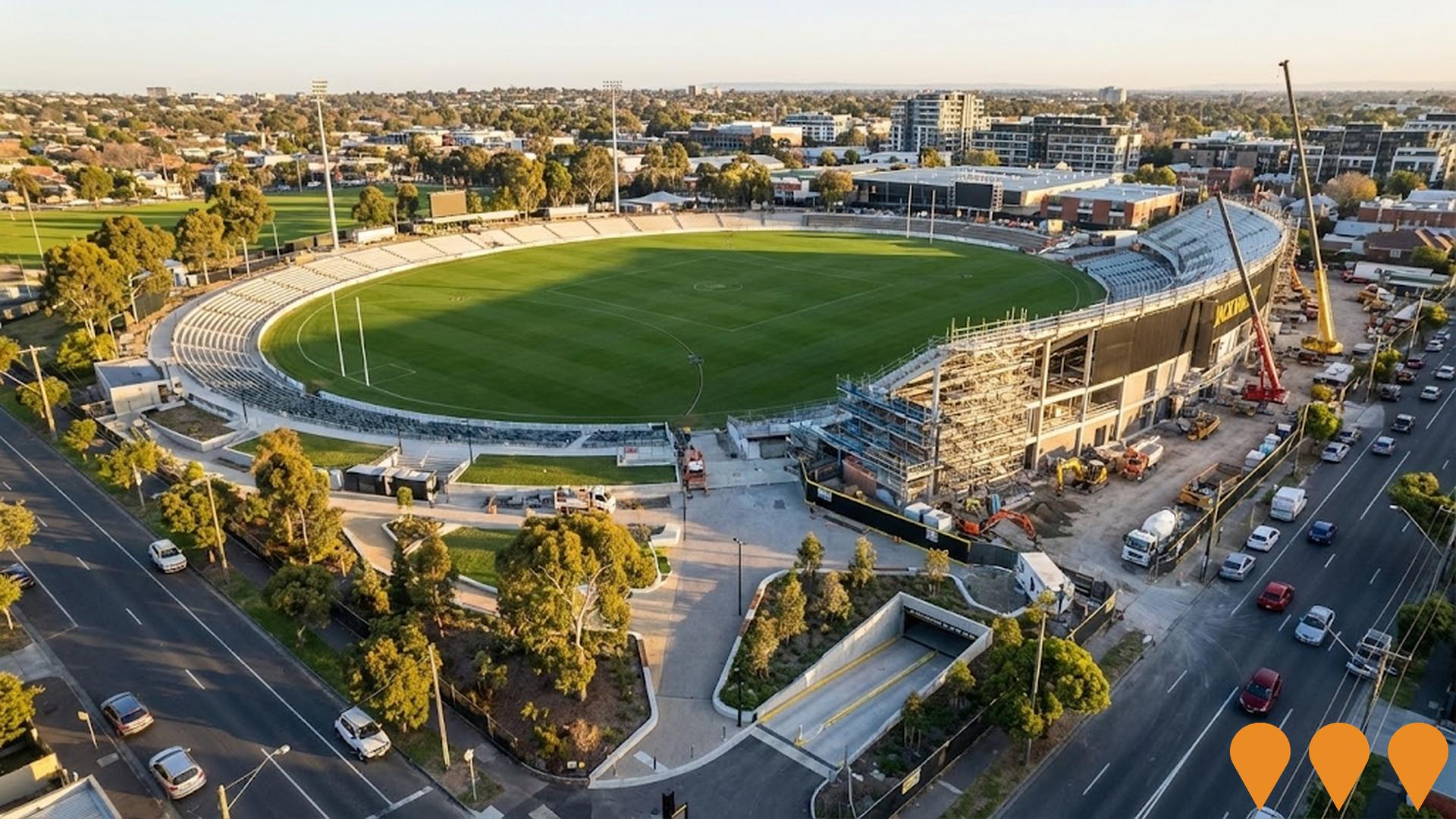
Punt Road Oval Redevelopment
A major transformation of the Richmond Football Club's home, featuring a new Jack Dyer Stand with a spectator capacity of 8,000. As of early 2026, construction is progressing with the car park structure nearing completion and the new stand footprint widening. The project includes elite training and administration facilities for AFL and AFLW teams, a realigned MCG-sized oval, and a three-level underground car park. It also houses the William Cooper Centre for community and indigenous programs, including the Korin Gamadji Institute and Melbourne Indigenous Transition School.The design incorporates salvaged bricks from the original historic stand to preserve the site's heritage.
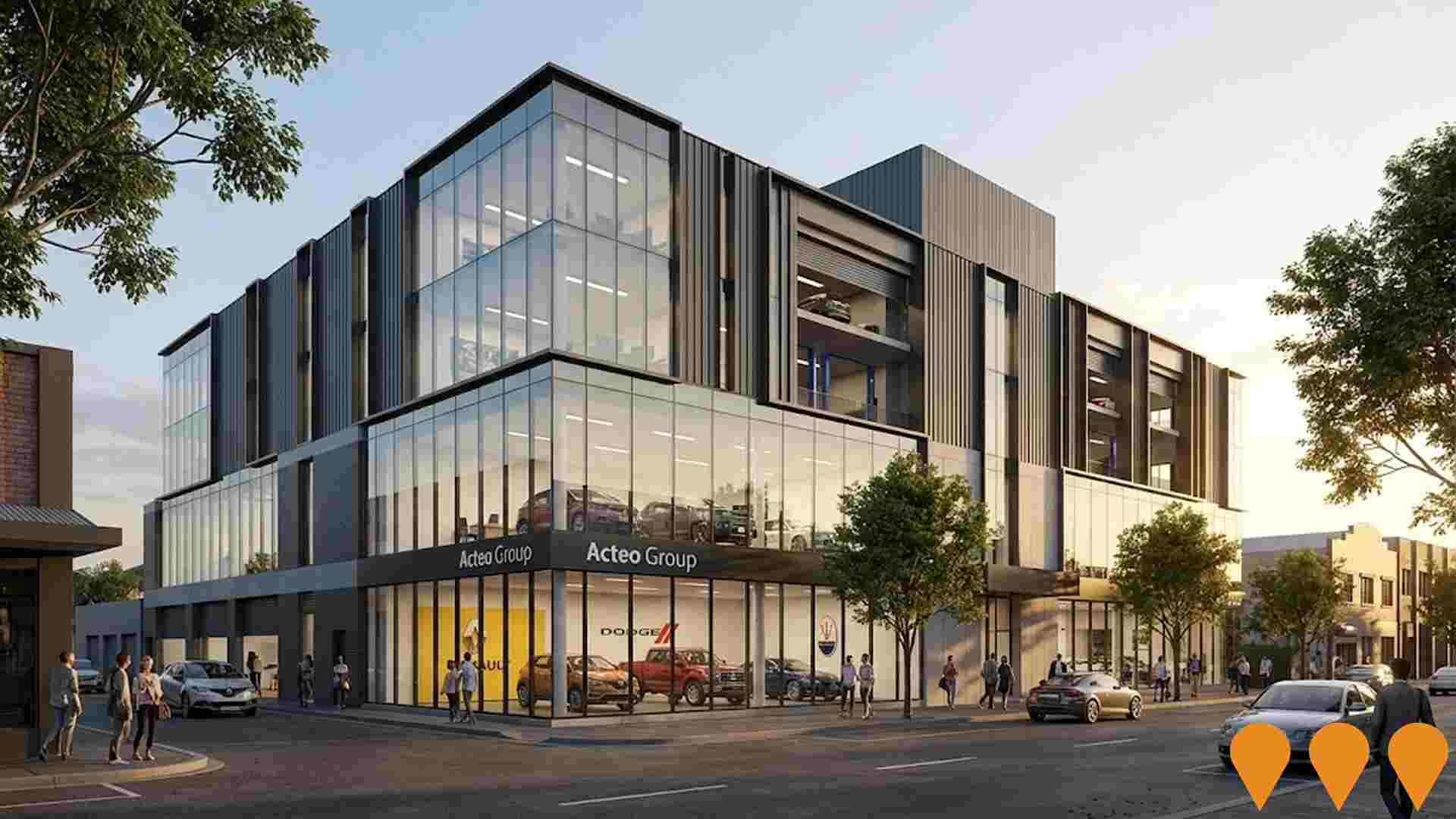
Acteo Group Collingwood Showroom
A four-storey automotive sales and service facility designed by David Earle Architects for Acteo Group (Ateco). The development involves the amalgamation of several sites to create a flagship showroom hub for brands including Maserati, Renault, and Dodge Ram. The facility features ground-floor vehicle displays, upper-level workshops and repair stations, and rooftop vehicle storage, replacing a former pharmacy and industrial warehouse buildings.
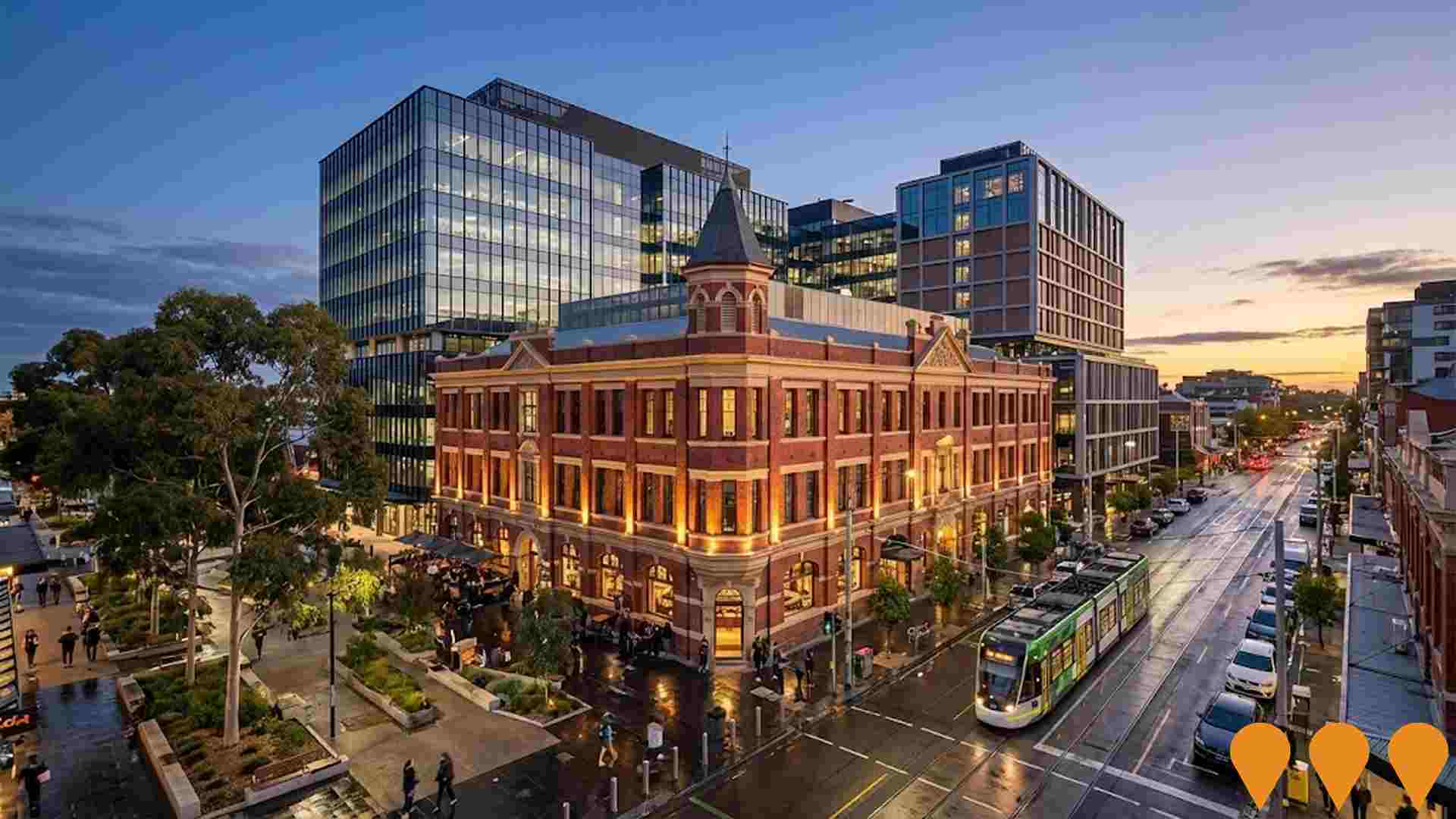
Matchworks Cremorne
Redevelopment of the former Bryant and May Match Factory site into a one-hectare mixed-use precinct with retained and adapted heritage buildings, public laneways and courtyards, retail and food and beverage tenancies, premium workplace space and The Hoxton Melbourne hotel. Heritage and planning approvals are in place, with Stage 1 construction underway for the hotel and retail components and opening targeted for 2027.
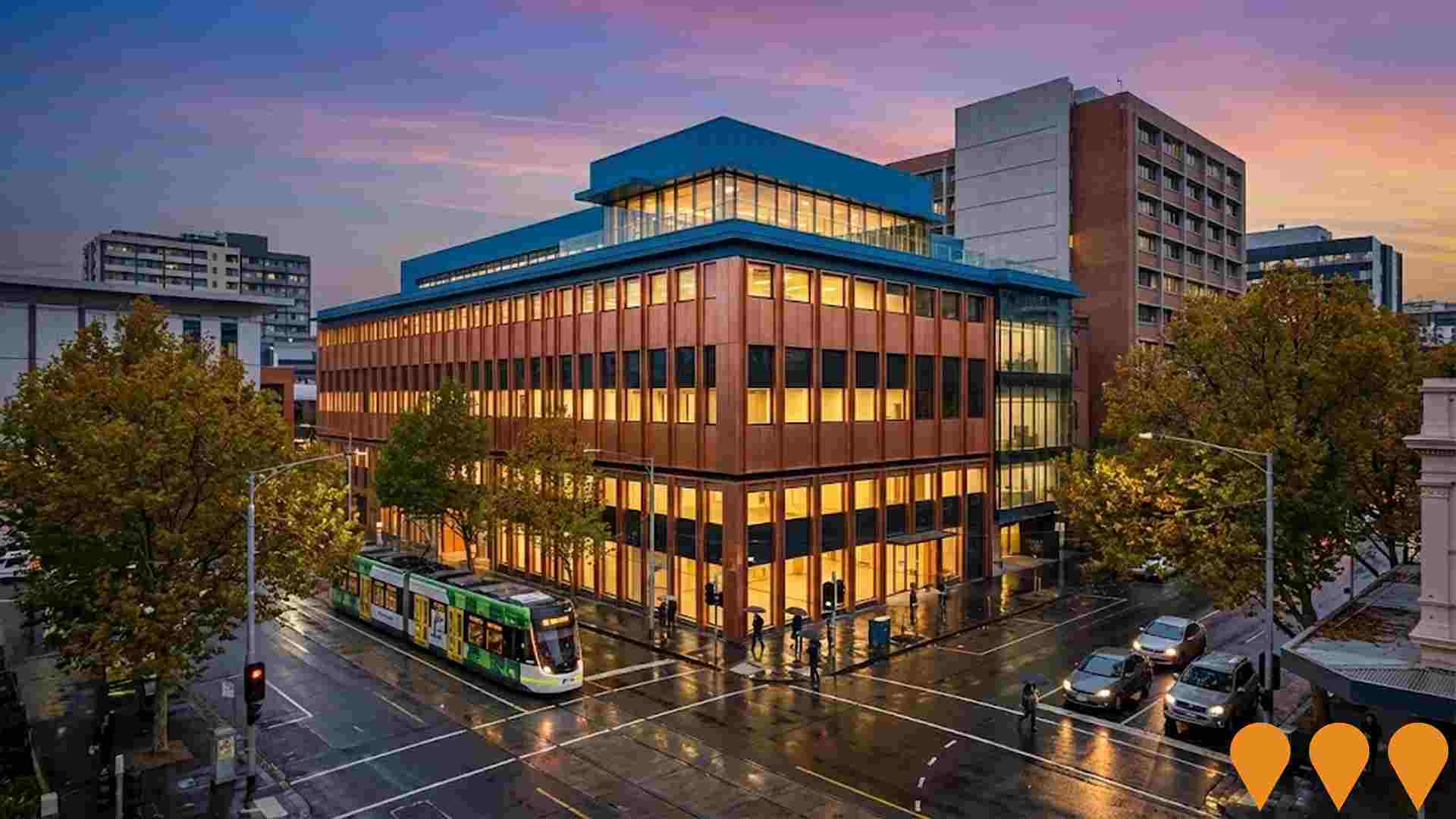
Kodak Headquarters Adaptive Reuse (Abbotsford Self Storage)
Adaptive reuse and expansion of the heritage-listed former Kodak Australasia headquarters and CUB office building. The project involves converting the 6,048sqm curved office/laboratory building into a high-tech self-storage facility. The development includes an adjoining nine-level commercial building on Duke and Bond Streets, providing a total of approximately 1,200 storage units while maintaining the historic facade and character of the 1928 structure.
75-119 Cubitt Street
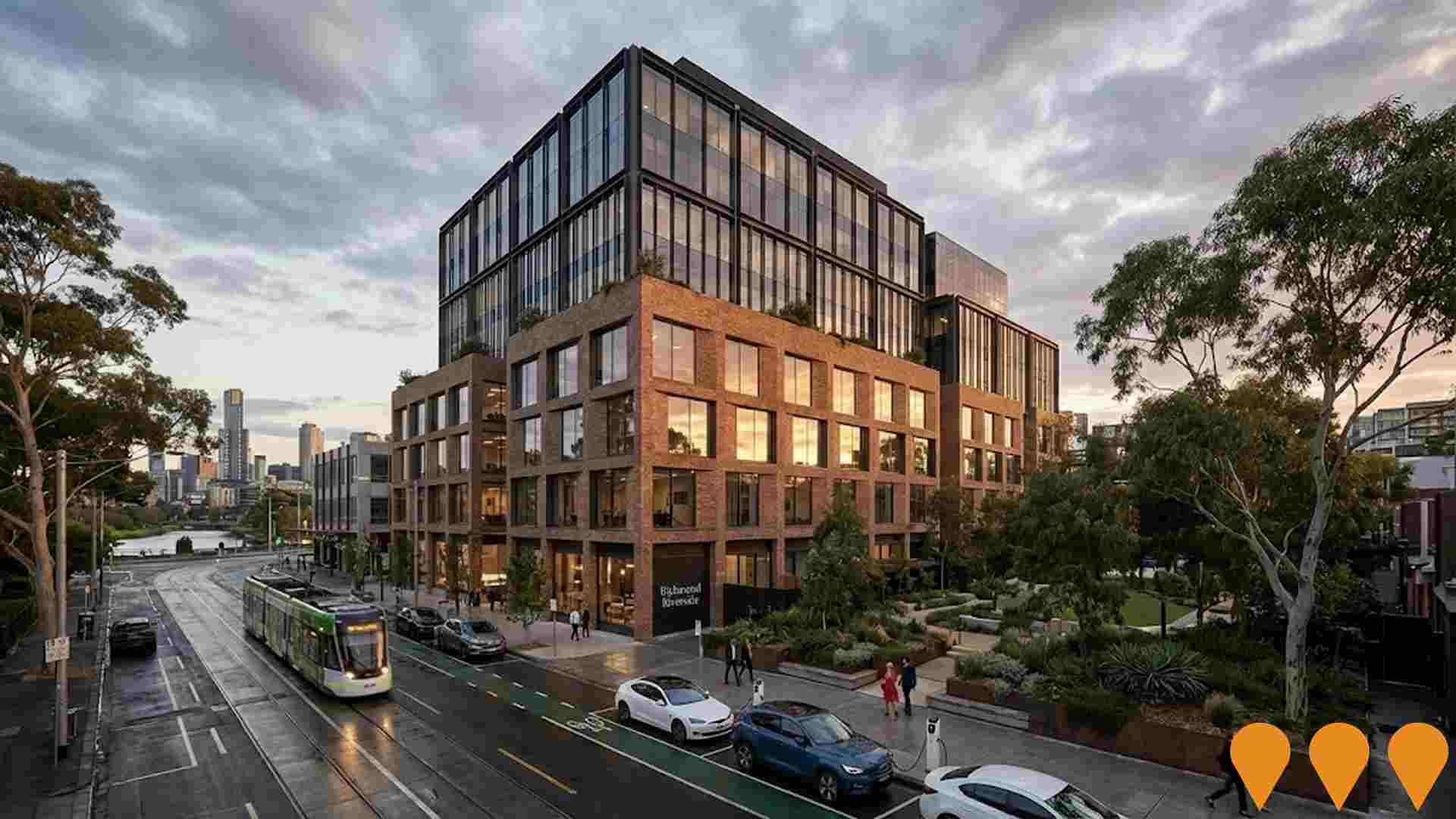
A premium nine-story commercial development in Cremorne's technology precinct, featuring 13,500 sqm of A-grade office space. Designed by fjcstudio, the project incorporates a ground-floor communal garden, diverse food and beverage offerings, wellness facilities, and significant rooftop garden space. The building focuses on sustainability and wellbeing, targeting a 6-star Green Star rating and featuring facade designs optimized for thermal comfort.

Walk Up Village
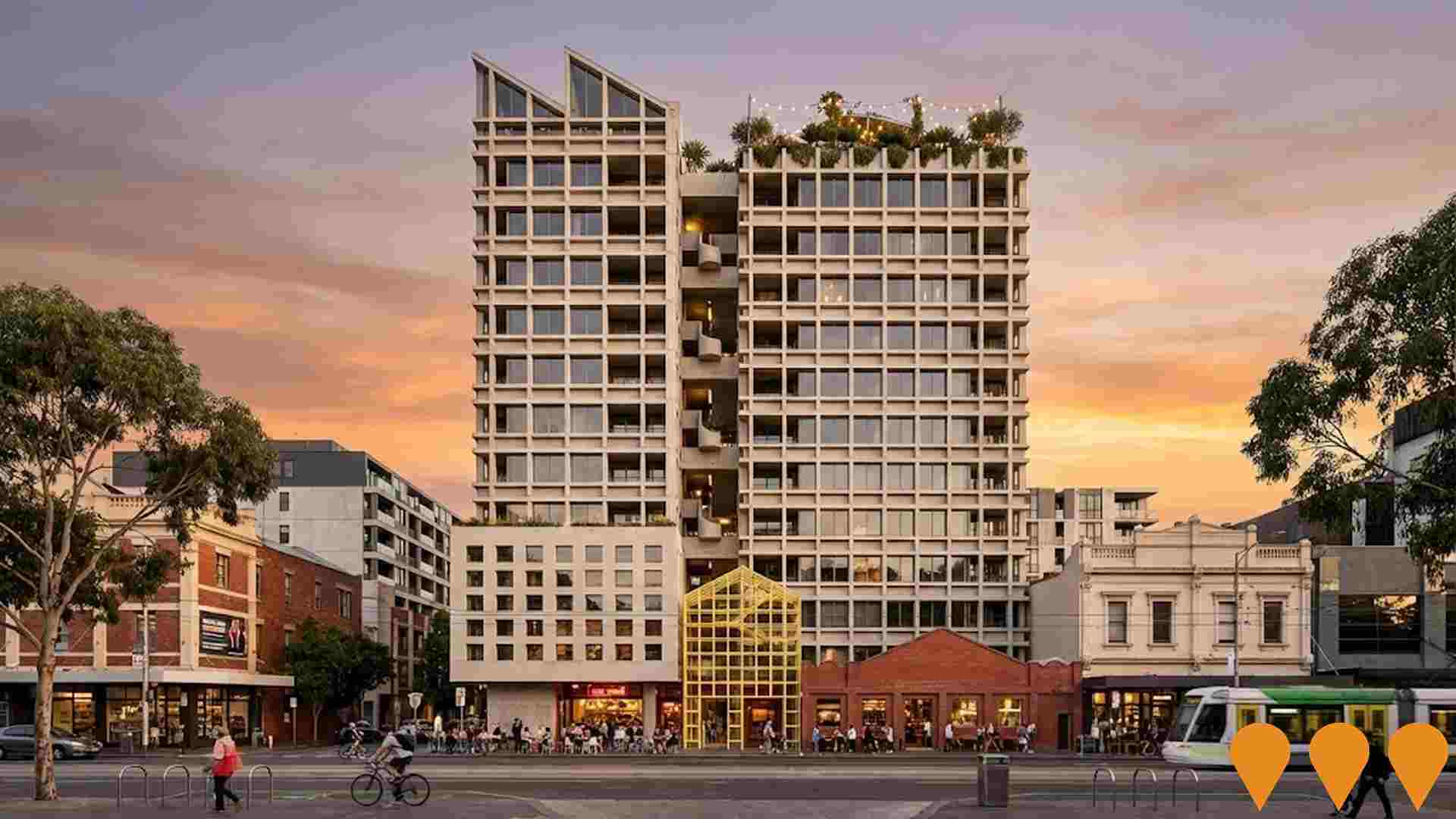
A 13-storey mixed-use development inspired by Mediterranean hilltop villages. Features twin interconnected towers with a 118-key hotel, creative co-working spaces, retail, artist studios, galleries, community spaces, cinema, restaurants and a rooftop garden. Designed by London-based 6a architects with Dan Pearson Studio landscaping. The project reinterprets local industrial vernacular to celebrate multiculturalism and an openness to the public.
25 River Boulevard
A 476-apartment build-to-rent development across six buildings in a resort-style precinct adjacent to the Yarra River. The $500 million project features mini-neighbourhoods, a 25-metre outdoor pool, wellness and fitness centre, co-working spaces, cinema, and a golf simulator. It targets 5 Star Green Star Buildings certification and will run on 100 percent renewable electricity.
Amber Abbotsford Mixed-Use Project
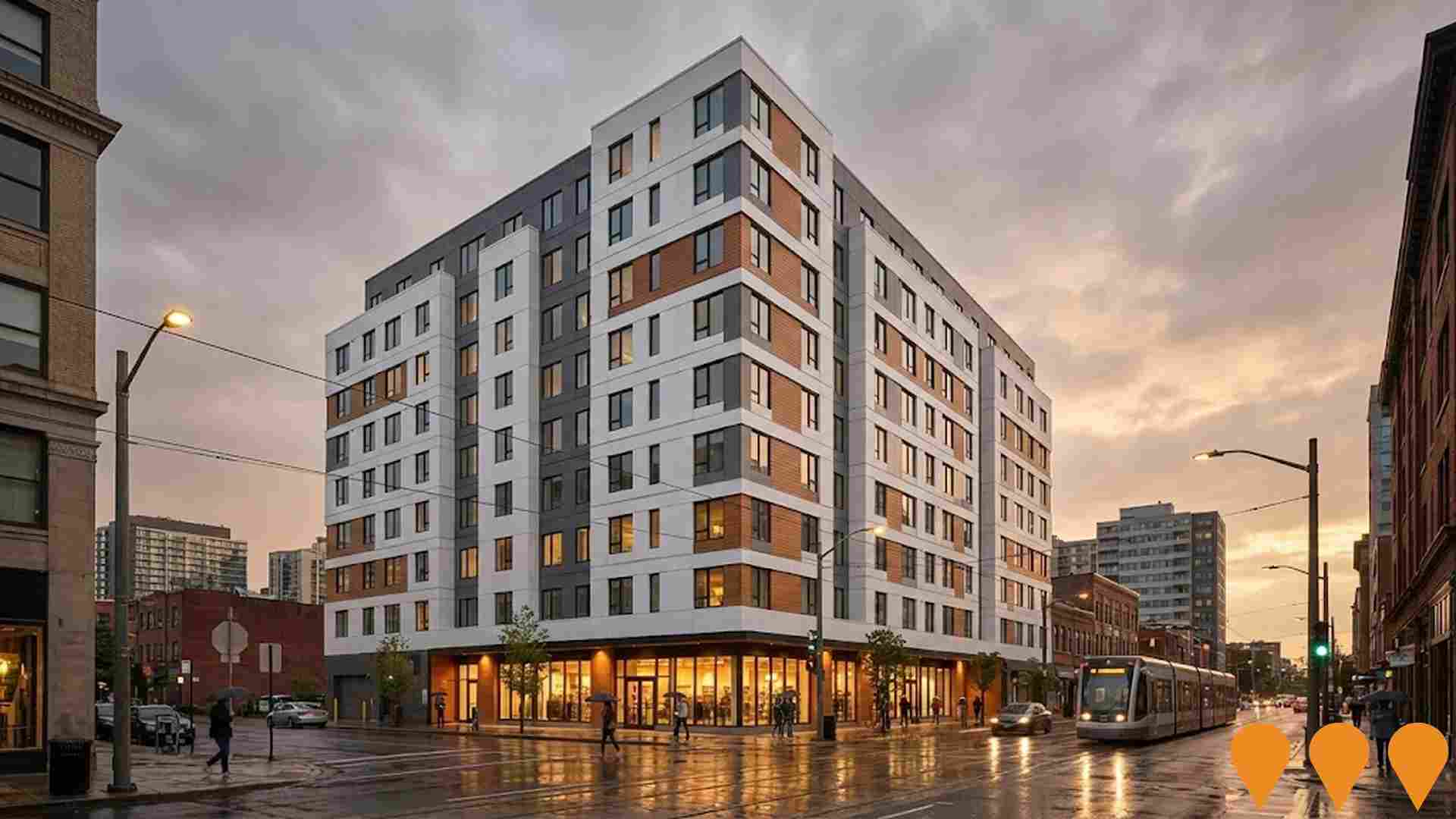
An eight-storey mixed-use development at 422-430 Johnston Street featuring 68 retirement-living apartments, 1,122 square metres of ground-floor retail, and 1,641 square metres of communal space. The project, designed by K2LD Architects, received planning approval in May 2024 and was subsequently offered for sale by Amber Property Group to allow capital allocation toward larger projects.
22,209 residents of Richmond (Vic.) are employed, from a labour force of 23,423. Unemployment sits at 5.2%, with participation at 81.9%. Weighted for its industry mix, the area's sectors are forecast to grow about 7.3% nationally over five years. That reflects industry composition only and makes no allowance for local population growth. The working-day population is estimated at 38,474, about 122% of the resident population, so the area draws in more workers than it sends out. Unemployment and labour force come from ABS Small Area Labour Markets, updated quarterly; the industry and occupation profile is from the 2021 Census.
Detail
Richmond maintains a well-credentialed labour force featuring significant concentration in professional services, an unemployment rate of 5.2%, and annual job growth estimated at 3.7% via AreaSearch area-level data. In March 2026, employed residents totaled 22,209, with unemployment sitting 0.4% higher than the 4.8% recorded across Greater Melbourne, while labour force participation remained exceptionally elevated at 81.9% compared to the regional figure of 70.1%. At the Census, 50.6% of local workers reported working remotely, a statistic influenced by prevailing Covid-19 restrictions. Local employment is predominantly distributed across professional & technical, health care & social assistance, and education & training sectors.
Concentration is notably pronounced within professional & technical roles, where local representation is 1.9 times the regional average. Conversely, manufacturing makes up a modest 4.0% of local jobs against 7.2% across the wider region. Hosting 1.2 workers for each resident at the Census, Richmond operates as a major commercial center that draws in substantial commuting labor from surrounding districts. AreaSearch evaluations of ABS and SALM metrics indicate that over the year ending March 2026, the area recorded a 3.7% rise in employment and a 3.6% expansion in the labour force, leaving unemployment virtually unchanged. In comparison, Greater Melbourne experienced a 2.1% increase in employment, a 2.3% gain in the labour pool, and a 0.2 percentage point uptick in unemployment. National employment projections released in Mar-26 by Jobs and Skills Australia point to broader employment expansion of 6.6% over five years and 13.7% over ten years across Australia. When mapped against Richmond's industry profile, these sector forecasts suggest local employment increases of 7.3% across five years and 14.6% across ten years (representing an unadjusted weighted extrapolation for context).
Frequently Asked Questions - Employment
Median household income in Richmond (Vic.) is $2,245 a week (about $117,000 a year), with median personal income at $1,356 a week. ATO records put median taxable income at $72,918 a year against an average of $97,385. Household income is from the 2021 Census; taxable income is from ATO Taxation Statistics for the latest financial year available, indexed forward using the ABS Wage Price Index.
Detail
ATO postcode statistics for financial year 2023 aggregated by AreaSearch reveal that taxpayers in Richmond registered a median income of $72,918 and an average of $97,385, ranking in the nation's highest percentile and surpassing Greater Melbourne benchmarks of $57,688 and $75,164. Factoring in Wage Price Index growth of 9.62% since financial year 2023, updated figures for March 2026 are modeled at approximately $79,933 for median income and $106,753 for average income. Data from the 2021 Census places individual earnings in the 96th percentile nationwide at $1,356 weekly. The primary individual earnings tier spans $1,500 - 2,999, capturing 31.3% of local residents (9,834 people), aligning with the metropolitan proportion of 32.8%.
Strong local purchasing power is evidenced by the 37.0% of households earning more than $3,000 per week. While accommodation expenses absorb 16.8% of income, disposable earnings sit in the 78th percentile, supporting a SEIFA income placement in the 9th decile.
Frequently Asked Questions - Income
Richmond (Vic.) had 13,301 occupied dwellings at the 2021 Census, 16% detached houses and 53% apartments. 25% are owned with a mortgage, 56% rented and 19% owned outright. At that Census the median rent was $441 a week and the median mortgage repayment $2,292 a month, a total housing cost higher than 88% of areas nationally. Rent absorbs 19.6% of household income here and mortgage repayments 23.6%. Dwelling stock, tenure and housing costs are 2021 Census measures — the only source that counts dwellings at this boundary size.
Detail
Residential stock in Richmond at the latest Census was heavily concentrated in medium-to-high-density formats, with semi-detached homes, units, and other dwellings making up 84.3% alongside 15.7% detached houses, in stark contrast to the 67.9% houses and 32.1% other dwellings observed across Melbourne metro. Outright home ownership accounted for 19.2% of residences, trailing the metropolitan benchmark, while mortgaged properties constituted 24.8% and rental accommodation comprised 56.0%. Typical monthly mortgage payments stood at $2,292 and weekly rent averaged $441, well above Melbourne metro equivalents of $2,000 and $390. On a national scale, local housing commitments significantly outpace the Australian average mortgage of $1,863 and median rent of $375.
Frequently Asked Questions - Housing
Richmond (Vic.) counted 13,301 households at the 2021 Census, an estimated 14,619 today, averaging 2.0 people each. 14% are couples with children, fewer than in 95% of areas nationally, against 27% couples without children. 39% of households are people living alone, and families average 0.7 children. Household and family composition is measured only by the Census, so these are 2021 figures.
Detail
Family units account for 49.7% of all residences, consisting of couples without offspring (27.1%), couples with children (14.4%), and single parent arrangements (6.4%). Non-family households represent the remaining 50.3%, comprising single-person dwellings (38.7%) and shared group arrangements (11.6%). Average household occupancy sits at 2.0 persons, lower than the Greater Melbourne standard of 2.6.
Frequently Asked Questions - Households
57.8% of adults in Richmond (Vic.) hold a university qualification, including 38.6% with a bachelor degree and 14.3% with postgraduate qualifications. A further 9.6% hold a vocational qualification. 13 schools serve the area, with 3,221 enrolment places and an average ICSEA of 1,051 against a national benchmark of 1,000. Qualifications come from the 2021 Census; school enrolments, ICSEA and results come from ACARA's current release.
Detail
Richmond demonstrates remarkable academic attainment, with university credentials held by 57.8% of the population aged 15+, comfortably exceeding Victorian (33.4%) and Australian (30.4%) figures. Bachelor degrees constitute the primary qualification at 38.6%, followed by postgraduate study at 14.3% and graduate diplomas at 4.9%. Vocational programs account for 18.6% of qualifications among residents aged 15+, divided between certificates (9.6%) and advanced diplomas (9.0%). Active participation in study engages 24.6% of local residents. Within this cohort, higher education enrollments represent 10.5%, primary schooling accounts for 4.9%, and secondary instruction encompasses 4.0%.
Frequently Asked Questions - Education
Schools Detail
Public transport in Richmond (Vic.) reaches 82 stops on 23 routes, timetabled for about 10,800 services a week. The typical home sits about 200 m from its nearest stop. Trams carry the largest share of public transport commuters. Households keep an average of 0.6 vehicles. Stop and service counts are built from operators' published GTFS timetables and refresh with each timetable release; vehicle ownership is from the 2021 Census.
Detail
A network of 82 public transport stops spans Richmond, incorporating rail, light rail, and bus services across 23 discrete routes that generate 10,758 scheduled passenger journeys weekly. Transit proximity is strong, with residents residing an average of 202 meters from their closest boarding point. Private motor vehicles remain the primary commuting choice for 55% of outbound travelers, alongside 14% walking and 11% using trains. Vehicle availability averages 0.6 cars per household, below metropolitan averages. Working from home accounted for 50.6% of residents during the 2021 Census, subject to prevailing pandemic conditions.
Transit services provide an average volume of 1,536 journeys daily across the complete transit network, representing roughly 131 departures per stop weekly.
Frequently Asked Questions - Transport
Transport Stops Detail
72.2% of residents in Richmond (Vic.) report no long-term health condition. 4.1% need daily assistance with core activities, and 65.2% hold private health cover. The standardised death rate runs at 4.7 per 1,000 residents. Health conditions, assistance needs and insurance are 2021 Census measures; the death rate comes from current ABS releases.
Detail
AreaSearch evaluations of mortality figures and health conditions show robust outcomes across Richmond, with minimal illness rates observed across younger and older demographics alike. Approximately 65% of residents (20,475 people) hold private health insurance, surpassing coverage levels across Greater Melbourne (56.7%) and Australia (55.7%). Asthma and mental health conditions represent the leading reported diagnoses, noted among 8.5% and 10.0% of the population, while 72.2% reported an absence of medical conditions, comparable to the 72.6% benchmark across Greater Melbourne. Residents aged under 65 exhibit superior health metrics, while seniors aged 65 and over make up 12.2% of the population (3,833 people)—below the Greater Melbourne proportion of 15.1%—and record health standings matching national patterns.
Frequently Asked Questions - Health
32.0% of Richmond (Vic.) residents were born overseas and 24.2% speak a language other than English at home. The largest reported ancestries are English (24.0%) and Australian (18.3%). Ancestry, language and country of birth are counted only by the Census, so these are 2021 figures.
Detail
Cultural diversity in Richmond exceeds most domestic regions, with overseas-born individuals representing 32.0% of the population and 24.2% speaking a non-English language in domestic settings. Christianity stands as the primary religious affiliation, accounting for 33.1% of community members. A distinct local overrepresentation is observed in Judaism, which encompasses 0.7% of residents relative to 1.0% across Greater Melbourne. English (24.0%), Australian (18.3%), and Irish (10.4%) comprise the three foremost ancestral backgrounds identified in Richmond. Distinct concentrations emerge among several other backgrounds, including Vietnamese ancestry at 3.9% (compared to 1.9% regionally), Greek ancestry at 3.8% (against 2.7%), and French ancestry at 0.7% (relative to 0.5%).
Frequently Asked Questions - Diversity
The median resident of Richmond (Vic.) is 33, younger than 82% of areas nationally. That is 1 year younger than at the 2021 Census. 43.0% of residents are aged 15 to 34. Age cohorts are not raw Census counts: the Census split is re-based to the latest ABS population estimates and state projections.
Detail
Richmond exhibits a youthful demographic weighted toward residents without children. As of August 2026, individuals aged 25 - 44 account for 51.9% of the population compared to 32.1% across Greater Melbourne, while the 0 - 24 age bracket represents 17.5% against 30.5% regionally. The median age is estimated at 33 as of August 2026, down from 34 at the 2021 Census, trailing Greater Melbourne (37) and Australia (38) at the Census. The proportion of adults aged 25 - 44 has expanded from 47.9% at the Census to 51.9%. Long-term forecasts to 2041 anticipate the greatest numerical increase in this 25 - 44 bracket, adding 4,587 people (28%) to reach 20,893, while the 45 - 64 cohort will see the fastest proportional growth, rising 62% to 9,593.
Frequently Asked Questions - Age
Data & MethodBoundaries, Sources & Method for Richmond (Vic.)
9 of 14 data sections on this page were updated within the last 12 months — the newest current to Oct 2026.
Everything is aggregated to the Suburb (SAL) boundary shown above, on a 2021 Census baseline. Only 3 sections — housing, households and cultural diversity — still wait on the 2026 Census.
The ledger — source, cycle and currency by section
| Section | Source & update cycle | Currency |
|---|---|---|
| Updated within the last 12 months 9 sections | ||
| Population | ABS, GNAF, Geoscience Australia Annual (ABS ERP) | Aug 2026 2 months ago headline measures · 2021 Census baseline |
| Re-based to the ABS Estimated Resident Population (June 2025 release) and updated with new dwellings from GNAF address data. Current to Aug 2026, with the 2021 Census supplying the small-area baseline. | ||
| Age profile | ABS, Geoscience Australia, State governments Annual | Aug 2026 2 months ago headline measures · 2021 Census baseline |
| Age cohorts are re-based to the latest ABS population estimates and state projections, current to Aug 2026. Each cohort is held as a Census baseline and a current estimate. | ||
| Development & approvals | ABS, GNAF Monthly (ABS approvals) | Aug 2026 2 months ago headline measures · Jul 2026 baseline |
| Property sales & rents | Valuer General, Rental Board, ABS Weekly sales, quarterly rents | Oct 2026 this month headline measures · Sep 2026 baseline |
| Sales from the state Valuer General register, refreshed weekly, and rents from quarterly rental bond lodgements. Both are read live each time this page loads, current to Oct 2026. | ||
| Infrastructure projects | Infrastructure Australia, State agencies, Local governments Daily | May 2026 5 months ago all 35 projects tracked here |
| Project pipeline maintained continuously from Infrastructure Australia, state agencies, local government and public announcements. Records are added and revised daily; this area was last updated May 2026. | ||
| Employment | ABS, DEWR, JSA Quarterly (ABS SALM) | Mar 2026 7 months ago headline measures · 2021 Census baseline |
| Unemployment and labour force from ABS Small Area Labour Markets, current to Mar 2026. The growth outlook applies Department of Employment (now Jobs and Skills Australia) forecasts for all 19 industry divisions to the local industry mix, so it measures sector composition rather than local expansion and makes no allowance for population growth. Job demand comes from the same agency via its Internet Vacancy Index; industry and occupation structure from the 2021 Census. | ||
| Education | ABS, ACARA Annual (ACARA) | Sep 2026 last month headline measures · 2021 Census baseline |
| Transport | ABS, State Transport Departments Each timetable release | Jul 2026 3 months ago headline measures · 2021 Census baseline |
| Services & amenities | Provider directories, ACECQA Continuous | Sep 2026 last month all 14 measures |
| Annual and financial-year sources 2 sections | ||
| Income | ABS, ATO Annual (ATO) | FY 2023 3 years ago headline measures · 2021 Census baseline |
| ATO taxable income statistics for FY 2023, indexed forward using the Wage Price Index. Census household income provides the distribution detail. | ||
| Health | ABS, ATO Annual | 2024 2 years ago headline measures · 2021 Census baseline |
| Census-measured — next update: 2026 Census 3 sections No more current small-area source exists for these, so they are labelled as Census-measured rather than implied to be current. | ||
| Housing | ABS 5-yearly (Census) | 2021 Census next update 2026 all 30 measures |
| Households | ABS 5-yearly (Census) | 2021 Census next update 2026 all 18 measures |
| Cultural diversity | ABS, Geoscience Australia 5-yearly (Census) | 2021 Census next update 2026 all 44 measures |
"Currency" is the most recent release feeding that section. Where the Census supplies the structural baseline underneath a current headline figure, the row says so.
How the numbers are built
Population
The Census provides the small-area baseline, aggregated from mesh blocks to this boundary. It is then re-based to the ABS Estimated Resident Population (June 2025 release), and new dwellings built since Census night are counted from address data — 879 validated new addresses here. The headline figure is therefore a current estimate for Aug 2026, not a 2021 count (28,587 at the 2021 Census → 31,419 now). Annual growth rates are compound (CAGR), not simple averages.
Age profile
Cohort shares are not raw Census counts. Every cohort is held as a pair — the Census baseline and a current estimate — and the split is re-based using ERP and state population projections, current to Aug 2026. Median age is the Census median plus modelled change since. Charts that show both are labelled "2021 Census vs Current Estimate".
Property sales
Sourced from the state valuation authority's sales register — current, not Census, and refreshed weekly. Medians are calculated from settled transactions in the period shown; periods with very low transaction counts are flagged or suppressed, because a handful of sales can move a median substantially.
Rents
Derived from state rental bond lodgement data, by dwelling type and bedroom count. Bonds are lodged at the start of a new tenancy, so this reflects new lettings, not the whole rented stock.
Development & infrastructure
Building approvals come from current ABS releases; development applications are collected from council and state planning portals; the infrastructure pipeline is compiled from Infrastructure Australia and local government sources. Applications are matched to this boundary by address or coordinates, so very recent lodgements may not yet appear.
Employment & income
Industry and occupation structure comes from the Census, but the headline labour-market indicators do not. Unemployment and labour force are derived from ABS Small Area Labour Markets (quarterly). The employment outlook applies Department of Employment forecasts for all 19 industry divisions to this area's own industry mix (the agency is now Jobs and Skills Australia), as does the Internet Vacancy Index used for job demand. Because it is weighted on industry composition alone, that outlook carries no allowance for local population growth — in fast-growing areas the real rise in local jobs will typically be higher. Income combines Census household income with ATO taxable-income statistics for FY 2023, indexed forward using the Wage Price Index.
Education, transport & amenities
School enrolments, ICSEA and performance come from ACARA's current release, not the Census. Public transport stops and service frequency are derived from GTFS timetable feeds published by state transport departments. Services and amenities are proximity and count scores built from provider directories, refreshed on their own cycle. The Census contributes only the travel-to-work and qualification measures.
Rankings and benchmarks. Where we rank this area, the comparison set is every area of the same boundary type — suburbs against suburbs, SA2s against SA2s. Benchmarks compare this area against its greater capital city region and the national figure for the same measure and period.
Limits worth knowing. Small areas carry larger error margins, and the ABS introduces small random adjustments to Census counts to protect confidentiality — so totals may not sum exactly. Estimates re-based from regional data describe the area's expected trajectory, not a direct count of it. Figures are indicative for research and are not financial, planning or valuation advice.
Cross-check us. The Census baseline for this boundary is at ABS 2021 Census QuickStats (SAL22170). QuickStats reports 2021 only — the figures on this page are more current wherever the ledger shows a later date.