Lake Macdonald

Suburb

Rest of Qld / Noosa Hinterland

Updated 9 Jan 2026
Chart Color Schemes
Loading map data ...
0 People

est. as @ -- *

2021 Census | -- people

Land Area
--
Land Area
Population Density
--
Density
Unemployment Rate
--
Unemployment
Development
--
Resi Approvals
Get My Report

Sales Activity

Table Chart PROFILE FAQ

Curious about local property values? Filter the chart to assess the volume and appreciation (including resales) trends and regional comparisons, or scroll to the map below view this information at an individual property level.

Find a Recent Sale
Type Specified (1) | Limit 50

Sales Detail

Population

Table Chart PROFILE FAQ

An assessment of population growth drivers in Lake Macdonald reveals an overall ranking slightly below national averages considering recent, and medium term trends

Based on analysis of ABS population updates for the broader area, and new addresses validated by AreaSearch, the estimated population of Lake Macdonald as of Nov 2025 is around 1,549. This reflects an increase of 197 people (14.6%) since the 2021 Census, which reported a population of 1,352 people. The change is inferred from the resident population of 1,543, estimated by AreaSearch following examination of the latest ERP data release by the ABS in June 2024 and address validation since the Census date. This level of population equates to a density ratio of 57 persons per square kilometer. Lake Macdonald's growth of 14.6% since the 2021 census exceeded the SA3 area (7.7%), along with the non-metro area, marking it as a growth leader in the region. Population growth for the area was primarily driven by interstate migration that contributed approximately 72.0% of overall population gains during recent periods.

AreaSearch is adopting ABS/Geoscience Australia projections for each SA2 area, released in 2024 with 2022 as the base year. For areas not covered and years post-2032, Queensland State Government's SA2 area projections are adopted, released in 2023 based on 2021 data. It should be noted that these state projections do not provide age category splits; hence where utilised, AreaSearch is applying proportional growth weightings in line with the ABS Greater Capital Region projections for each age cohort, released in 2023 and based on 2022 data. As we examine future population trends, a population increase just below the median of national regional areas is expected, with the area expected to expand by 195 persons to 2041 based on aggregated SA2-level projections, reflecting a gain of 13.3% in total over the 17 years.

Frequently Asked Questions - Population

What is the latest population estimate for Lake Macdonald?
Total population for Lake Macdonald was estimated to be approximately 1,549 as at Nov 25. This is based upon an estimated resident population of 1,543 from the ABS up to June 2024.
How has the population in Lake Macdonald changed since 2021?
Lake Macdonald has added approximately 197 people and shown a 14.57% increase from the 1,352 people recorded at the 2021 Census period.
What is the population density in Lake Macdonald?
The population density in Lake Macdonald is estimated at 57 persons per square kilometer based on the latest population estimate.
How much has the population grown over the past 10 years?
Over the past 10 years, the population has shown a compound annual growth rate of 1.9% per annum.
What are the main drivers of population growth in the area?
Population growth in Lake Macdonald is driven by: Interstate migration (72.0%), Overseas migration (26.0%), Natural increase (3.0%). The primary driver is Interstate migration, contributing 72.0% of overall population gains.

Development

Table Chart PROFILE FAQ

Recent residential development output has been above average within Lake Macdonald when compared nationally

Based on AreaSearch analysis of ABS building approval numbers from statistical area data, Lake Macdonald has experienced around 4 dwellings receiving development approval per year over the past 5 financial years. This totals an estimated 21 homes. So far in FY-26, 0 approvals have been recorded.

An average of 7.6 new residents arrives per year per dwelling constructed between FY-21 and FY-25, indicating demand significantly exceeds new supply, which typically results in price growth and increased buyer competition. Developers target the premium market segment with higher-end properties, as new dwellings are developed at an average value of $859,000. Compared to Rest of Qld, Lake Macdonald has around two-thirds the rate of new dwelling approvals per person while it places among the 62nd percentile of areas assessed nationally. Recent development activity is lower than the national average, reflecting market maturity and possible development constraints.

Building activity consists entirely of detached houses, preserving the area's low density nature with an emphasis on detached housing attracting space-seeking buyers. With around 239 people per dwelling approval, Lake Macdonald shows a developing market. According to the latest AreaSearch quarterly estimate, Lake Macdonald is expected to grow by 206 residents through to 2041. If current development rates continue, housing supply may not keep pace with population growth, potentially increasing competition among buyers and supporting stronger price growth.

Frequently Asked Questions - Development

How many dwelling approvals have occurred in the Lake Macdonald area recently?
Dwelling approval activity in the Lake Macdonald area has seen 13 residential approvals over the past two financial years, based on AreaSearch's SA2 aggregation method. Lake Macdonald's current population of 1,549 has been supported by 4 approvals on average over recent years.
How does Lake Macdonald's development activity compare to the broader region?
Lake Macdonald has seen 0.28 approvals per 100 people in recent years, compared to 0.62 approvals in the broader region. This means that one dwelling has been approved for every 238 people in Lake Macdonald, compared to one for every 180 in the broader region.
Is the Lake Macdonald area keeping up with housing demand?
With the population expected to increase by 206 people by 2041, around 103 new dwellings will be necessary. Recent approval levels may be insufficient to meet these forecasts, considering the census average of 2.0 persons per dwelling. This indicates potential housing shortages if current approval trends continue.
What has been the trend in development approvals over the past five years?
Looking at development activity over the past five years, Lake Macdonald's approval levels have been consistent with the yearly average of 4, showing stable development patterns.
How many dwellings will be needed to accommodate future population growth?
The population in Lake Macdonald is expected to grow by 206 people by 2041, necessitating approximately 103 new dwellings. This calculation is based on the current census average of 2.0 persons per dwelling in the area.
How does recent development compare to population growth in Lake Macdonald?
Over the past five years, the population in Lake Macdonald has grown by approximately 424 people, while 21 residential approvals were recorded. This equates to a ratio of 20.2 people added for each new dwelling approval. This high ratio suggests strong population growth relative to housing supply, potentially indicating unmet housing demand.
Are there opportunities for residential developers in Lake Macdonald?
With dwelling approval activity running at an average of 4 approvals per year and a population of 1,549, there appears to be a supply shortfall relative to projected demand, presenting strong opportunities for residential developers. With the population expected to increase by 206 people by 2041, around 103 new dwellings will be necessary. Current approval trends may be insufficient to meet forecast demand, indicating strong development opportunities.

Infrastructure

PROFILE FAQ

Lake Macdonald has moderate levels of nearby infrastructure activity, ranking in the top 50% nationally

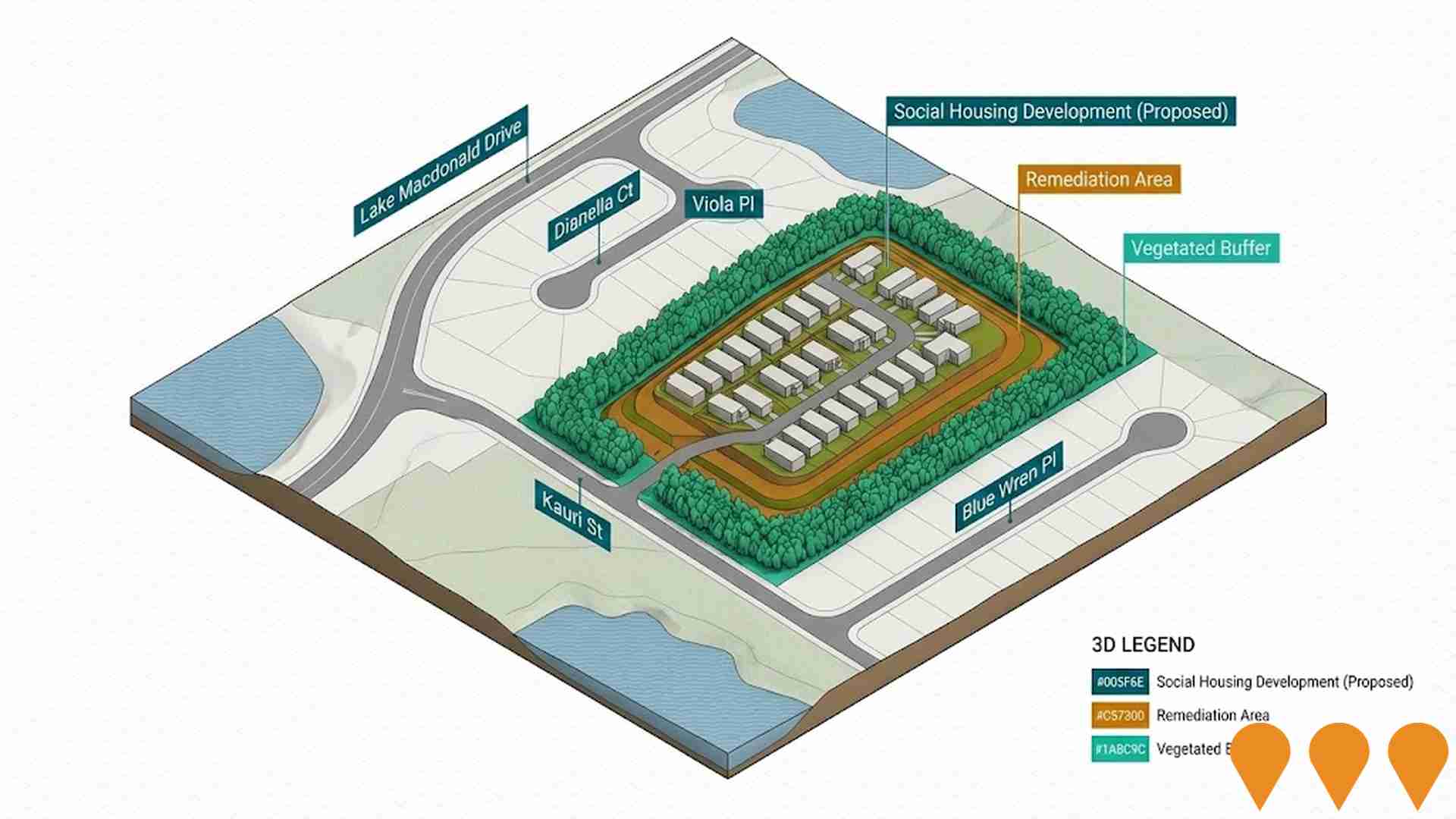
The performance of an area can significantly be influenced by changes in local infrastructure, major projects, and planning initiatives. AreaSearch has identified a total of 8 projects that are expected to impact the area. Notable among these are the Lake Macdonald Dam Improvement Project, Noosa Wastewater Treatment Plant Works, Cooroy Woolworths Neighbourhood Shopping Centre, and the 62 Lake Macdonald Drive Social Housing Development. The following list details those projects likely to be most relevant.

Professional plan users can use the search below to filter and access additional projects.

INFRASTRUCTURE SEARCH

All Selected

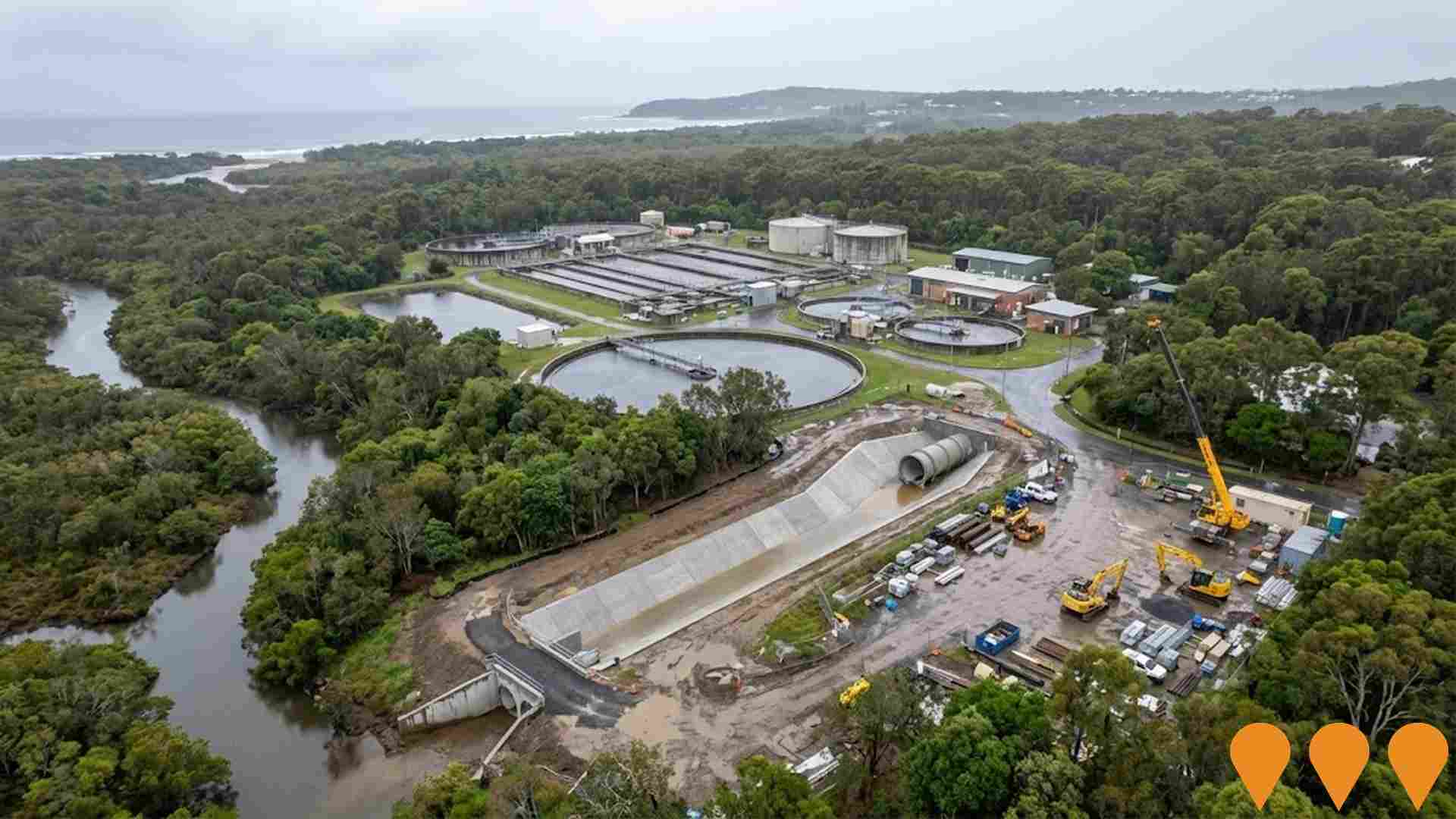
AI Generated Denotes AI-based impression for illustrative purposes only, not to be taken as definitive under any circumstances. Please follow links and conduct other investigations from the project's source for actual imagery. Developers and project owners wishing us to use original imagery please Contact Us and we will do so.

Frequently Asked Questions - Infrastructure

What are some of the major infrastructure and planning changes likely to influence Lake Macdonald?
Key infrastructure and planning changes likely to influence Lake Macdonald include: Lake Macdonald Dam Improvement Project (Construction); Noosa Wastewater Treatment Plant Works (Construction); Cooroy Woolworths Neighbourhood Shopping Centre (Under Assessment); 62 Lake Macdonald Drive Social Housing Development (Approved); and Noosa Biosphere Trails Upgrade Program (Construction). These projects represent significant developments that will shape the area's future infrastructure landscape.
What types of infrastructure projects are impacting Lake Macdonald?
Infrastructure development impacting Lake Macdonald spans multiple sectors including Sports & Recreation, Environmental & Disaster Management, and Energy, among others.
What is the scale of infrastructure investment impacting Lake Macdonald?
Infrastructure investment analysis indicates significant investment of approximately $703 million in infrastructure projects affecting the region, with a notable concentration of investment within the immediate Lake Macdonald vicinity.
How does Lake Macdonald's infrastructure development compare to other areas?
Lake Macdonald shows moderate infrastructure development relative to national averages, with opportunities for future growth and investment.
UnityWater Infrastructure Program 2023-2027
Category: Environmental & Disaster Management
Stage: Construction | Est. Comp: 2027
Source / Links: Link 1   Link 2  

The major water and wastewater infrastructure investment program, valued at $1.8 billion over 2023-2027, covers the Sunshine Coast and Moreton Bay regions. It includes key components like the Aura and Harmony Program, focusing on treatment plants, pipeline upgrades, and water security to meet the needs of the growing population.
Environmental & Disaster Management

Brisbane 2032 Olympic and Paralympic Games Infrastructure Program
Category: Sports & Recreation
Stage: Planning | Est. Comp: 2032
Source / Links: Link 1   Link 2  

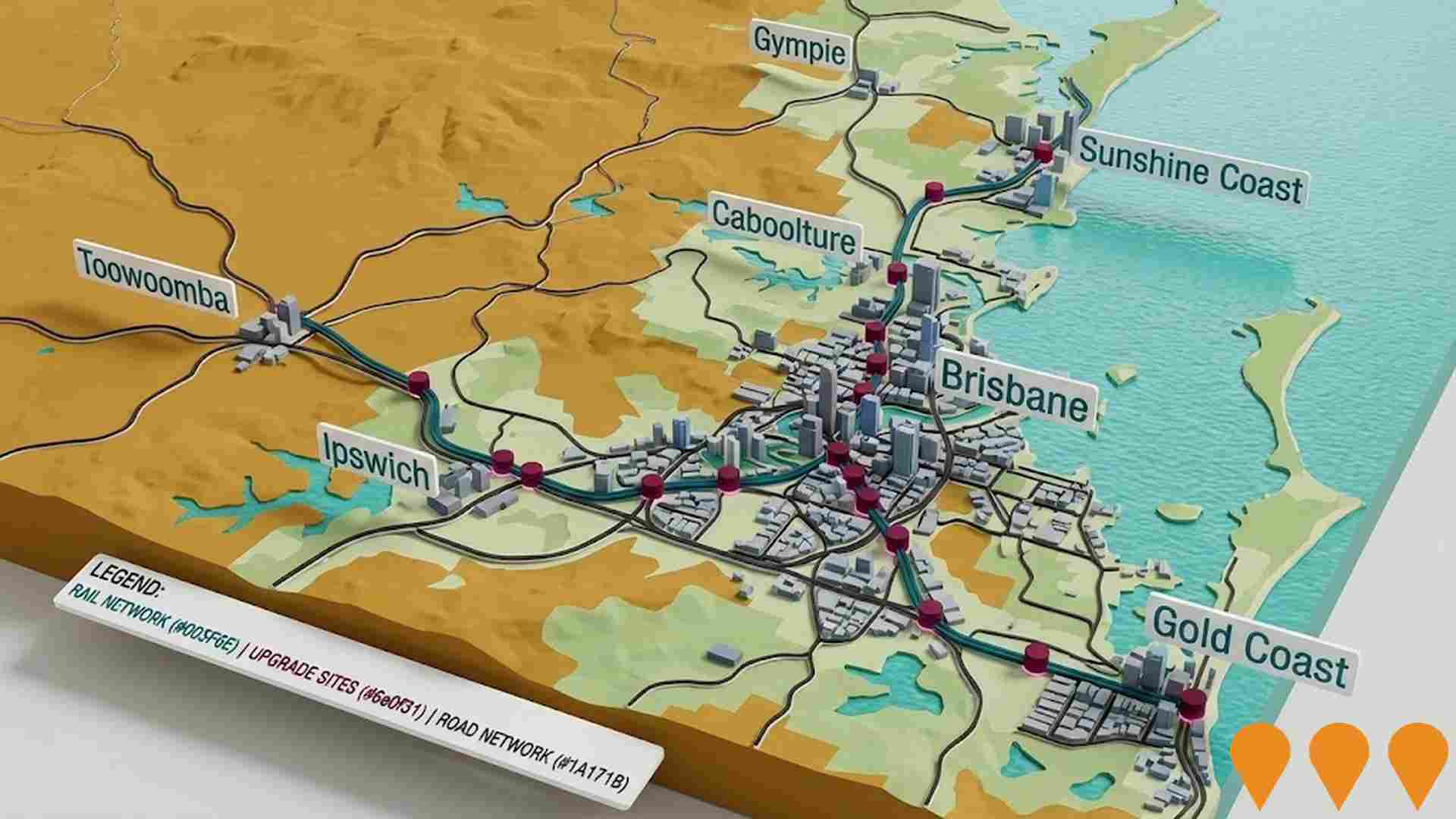
The $7.1 billion infrastructure program for the Brisbane 2032 Olympic and Paralympic Games includes a new ~60,000-seat main stadium at Victoria Park (hosting opening/closing ceremonies and athletics), a new Brisbane Arena (Roma Street or alternate location), venue upgrades to QSAC and Suncorp Stadium, new and upgraded aquatic centres, athletes' villages, and supporting transport improvements across South East Queensland. The program emphasises existing venues where possible with targeted new builds for legacy benefit.

Sports & Recreation

Noosa Health Precinct
Category: Health & Medical
Stage: Completed | Est. Comp: 2024
Source / Links: Link 1   Link 2  

A purpose-built specialist medical precinct delivering comprehensive oncology (radiation and medical), haematology, oncology pharmacy and allied health services for Noosa and the northern Sunshine Coast. The Noosa Specialist Medical Centre within the precinct opened in December 2024, with Cancer Care Noosa officially commencing services in March 2025.
Health & Medical

Cooroy Woolworths Neighbourhood Shopping Centre
Category: Precincts & Urban Renewal
Stage: Under Assessment | Est. Comp: 2027
Source / Links: Link 1   Link 2  

A $100 million mixed-use development on a 6.6-hectare site featuring a full-line Woolworths supermarket, 12 specialty retail tenancies, alfresco dining area, and a 120-bed residential aged care facility (expandable to 160 beds). The development includes over 250 shaded car parking spaces, 8 direct-to-boot pick-up bays, and sustainability features including rooftop solar and rainwater harvesting. Design incorporates village-style architecture with weatherboard, tin roof, and brick floor inlays to reflect Cooroy's hinterland heritage character. Public notification phase concluded August 1, 2025, with approximately 200 community submissions received. Project now in Council decision phase.
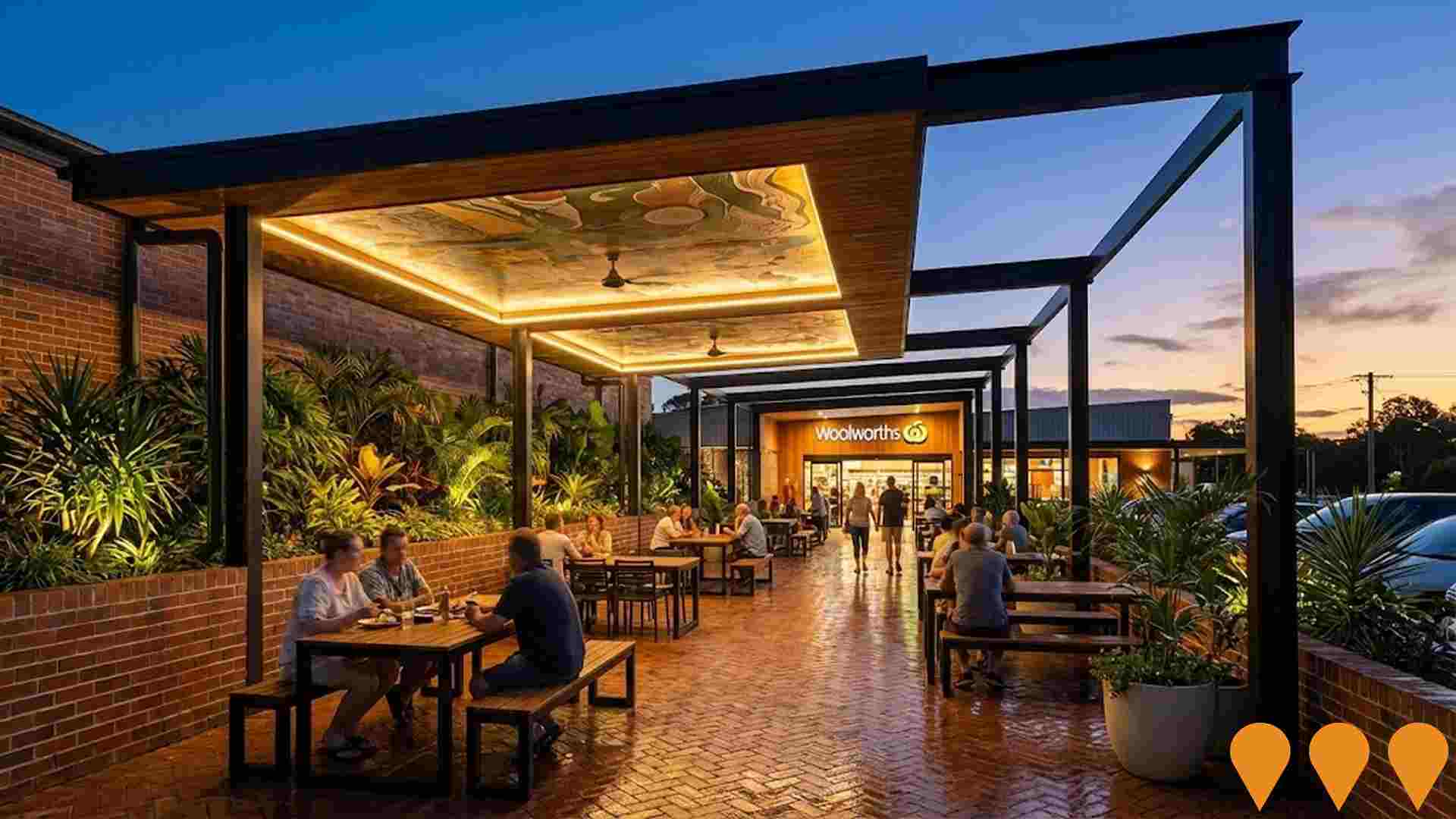
Precincts & Urban Renewal

Proposed Sunshine Coast Planning Scheme
Category: Communities, Precincts & Urban Renewal
Stage: Under Assessment | Est. Comp: 2026
Source / Links: Link 1   Link 2  

A comprehensive new Sunshine Coast Planning Scheme by Sunshine Coast Council to replace the 2014 scheme. It sets the planning vision for the region to 2046 (detailed planning to 2041), guiding sustainable growth, housing diversity and affordability, climate resilience, environmental protection, character maintenance, transport, and meeting regional growth targets. Includes 18 local plan areas (e.g., Buderim and Surrounds with constrained escarpment land and limited growth opportunities primarily along Wises Road/North Buderim Boulevard and parts of Forest Glen). Public consultation ran from 15 July to 19 September 2025 and is now closed; Council is currently reviewing submissions to determine required changes and whether to proceed with adoption.
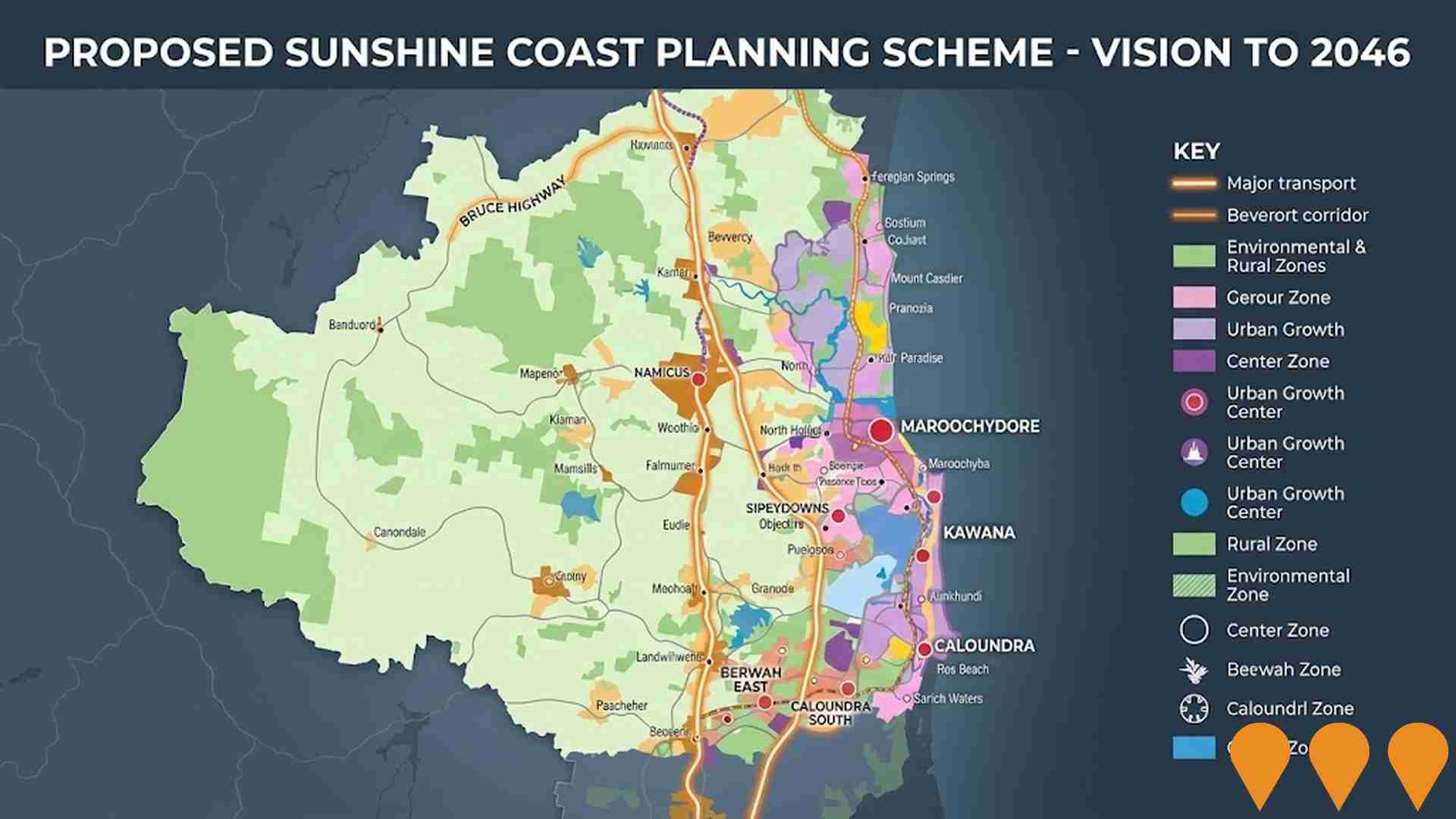
Communities, Precincts & Urban Renewal

Lake Macdonald Dam Improvement Project
Category: Environmental & Disaster Management
Stage: Construction | Est. Comp: 2029
Source / Links: Link 1   Link 2  

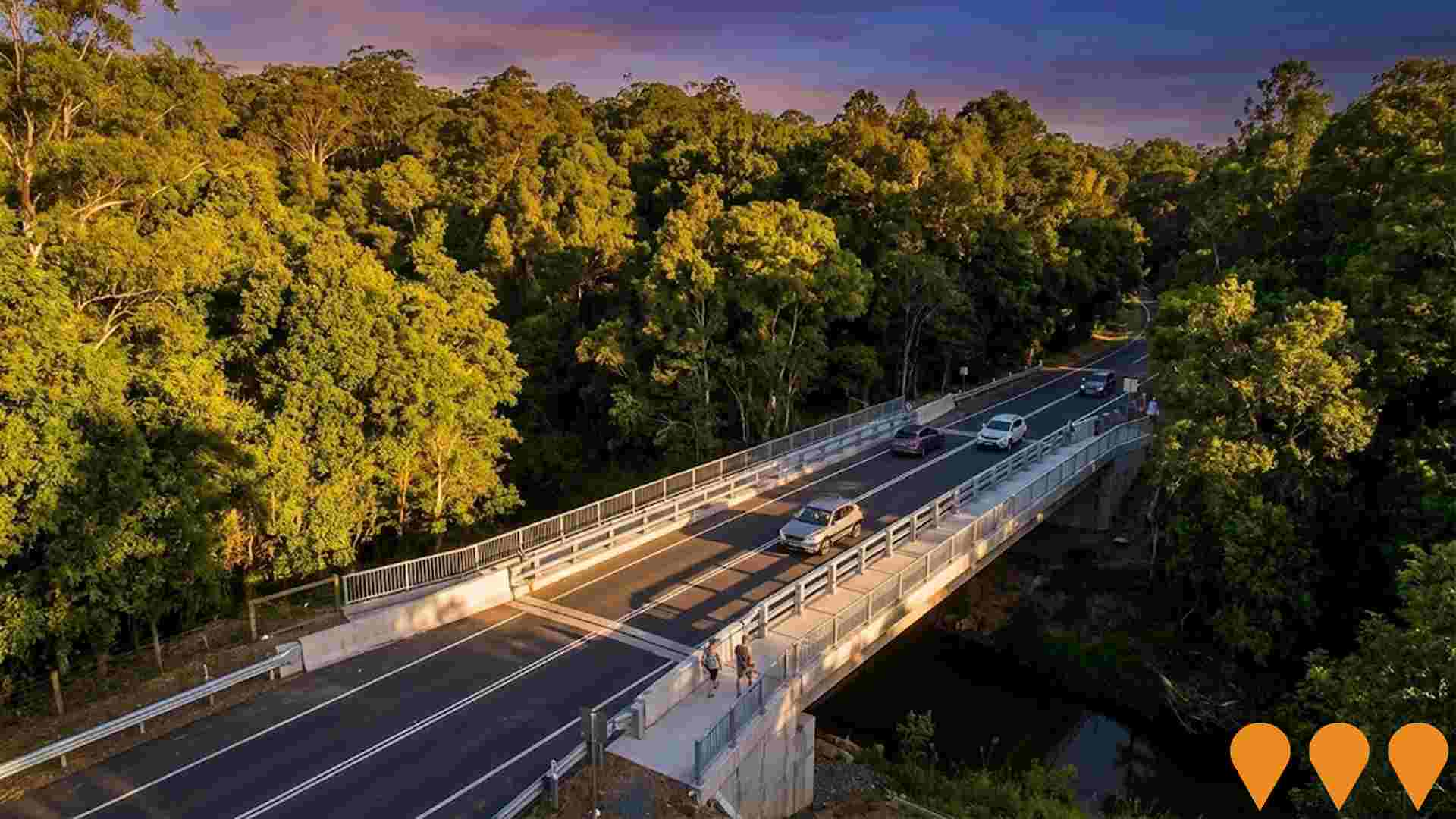
Seqwater's Lake Macdonald Dam Improvement Project (also known as Six Mile Creek Dam) is a major upgrade to meet current dam safety and extreme flood standards while preserving the dam's 8,000-megalitre storage capacity. Key works include a temporary upstream cofferdam, new split-level concrete spillway with upper labyrinth weir, reconstruction of earth embankments, ground improvement, scour protection, and a new outlet tower. The upgrade enhances flood resilience and long-term water security for the Sunshine Coast and Noosa regions. Delivered by Seqwater with John Holland as principal contractor. Main construction commenced mid-2025; expected completion 2029-2030.
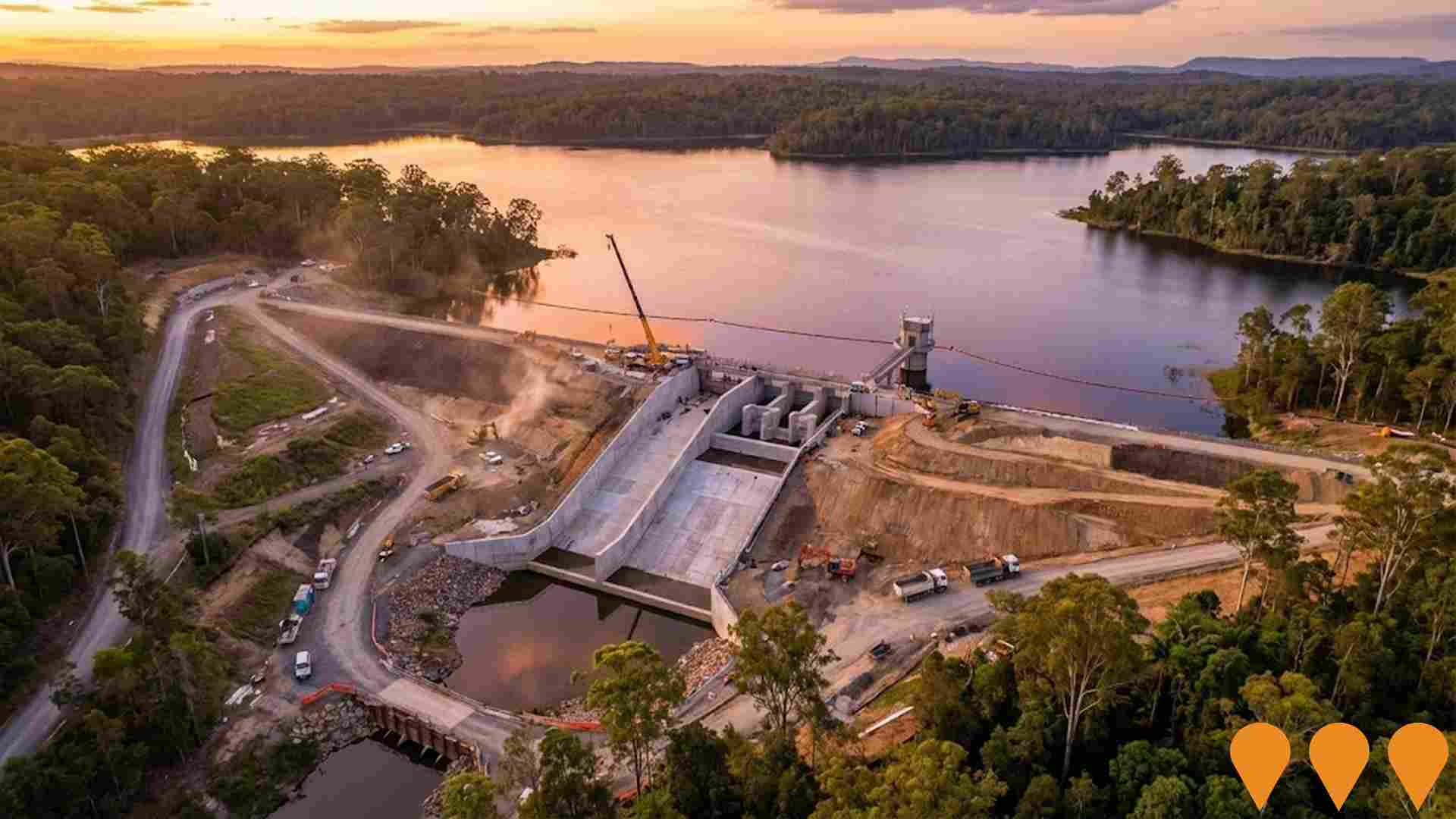
Environmental & Disaster Management

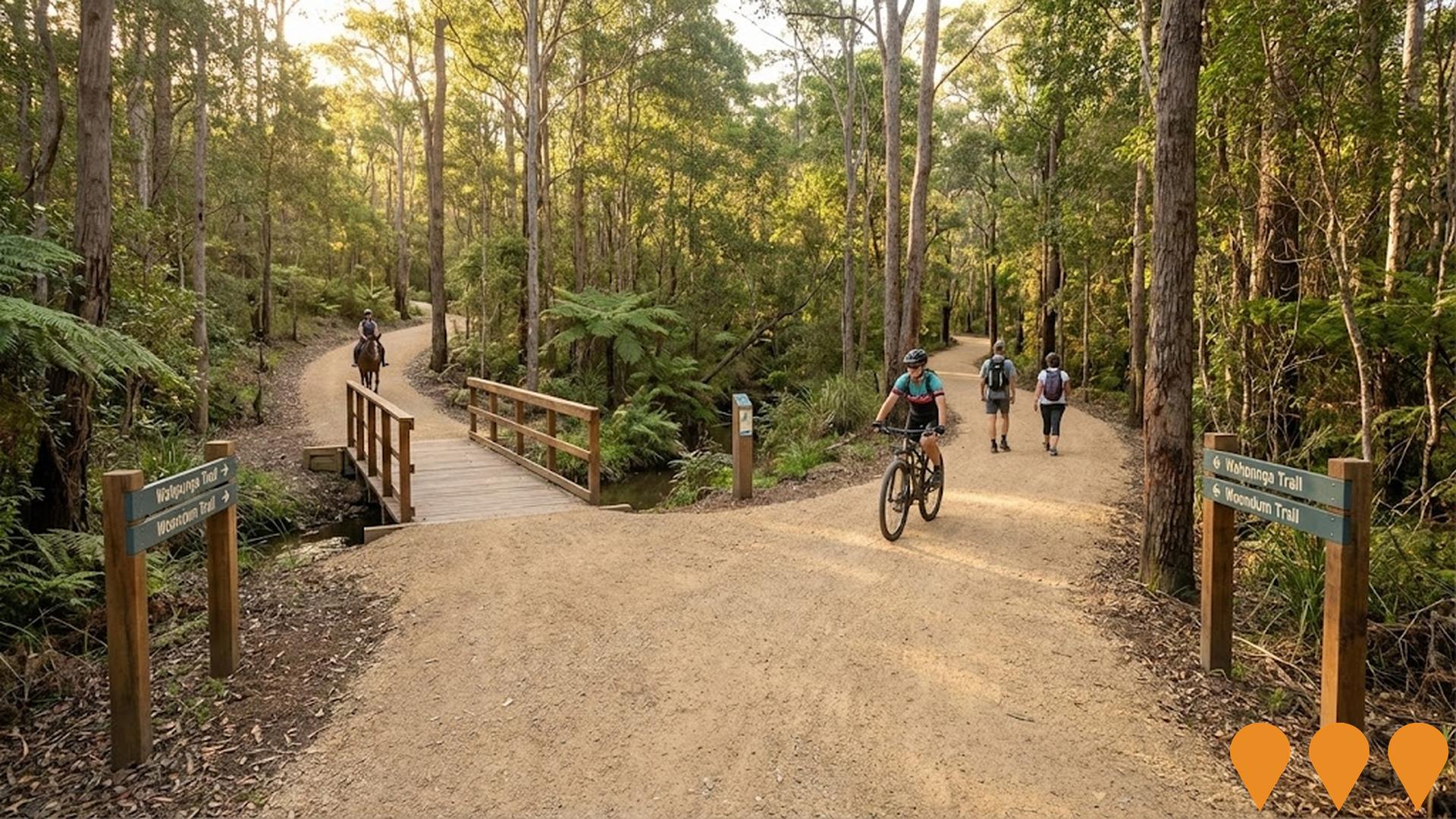
Noosa Biosphere Trails Upgrade Program
Category: Sports & Recreation
Stage: Construction | Est. Comp: 2026
Source / Links: Link 1   Link 2  

Ongoing comprehensive upgrade program of the Noosa Biosphere Trail Network spanning 130+ kilometers across eight interconnected trails in the Noosa hinterland. The program includes major works to the Woondum, Wahpunga, Cooroora, Yurol, Kurui, and Pinbarren trails, with improvements to drainage, resurfacing, trail realignments, selective widening, new wayfinding and interpretive signage, and construction of rock retaining walls and bridges. The trails pass through national parks, state forests, private property, and rural landscapes, offering experiences for walkers, cyclists, and horse riders. Recent completed works include the $1.68 million Cooroora Trail upgrade in 2023. Current active construction includes Woondum Trail upgrades until mid-October 2025 and Pinbarren Trail closure until December 2025.
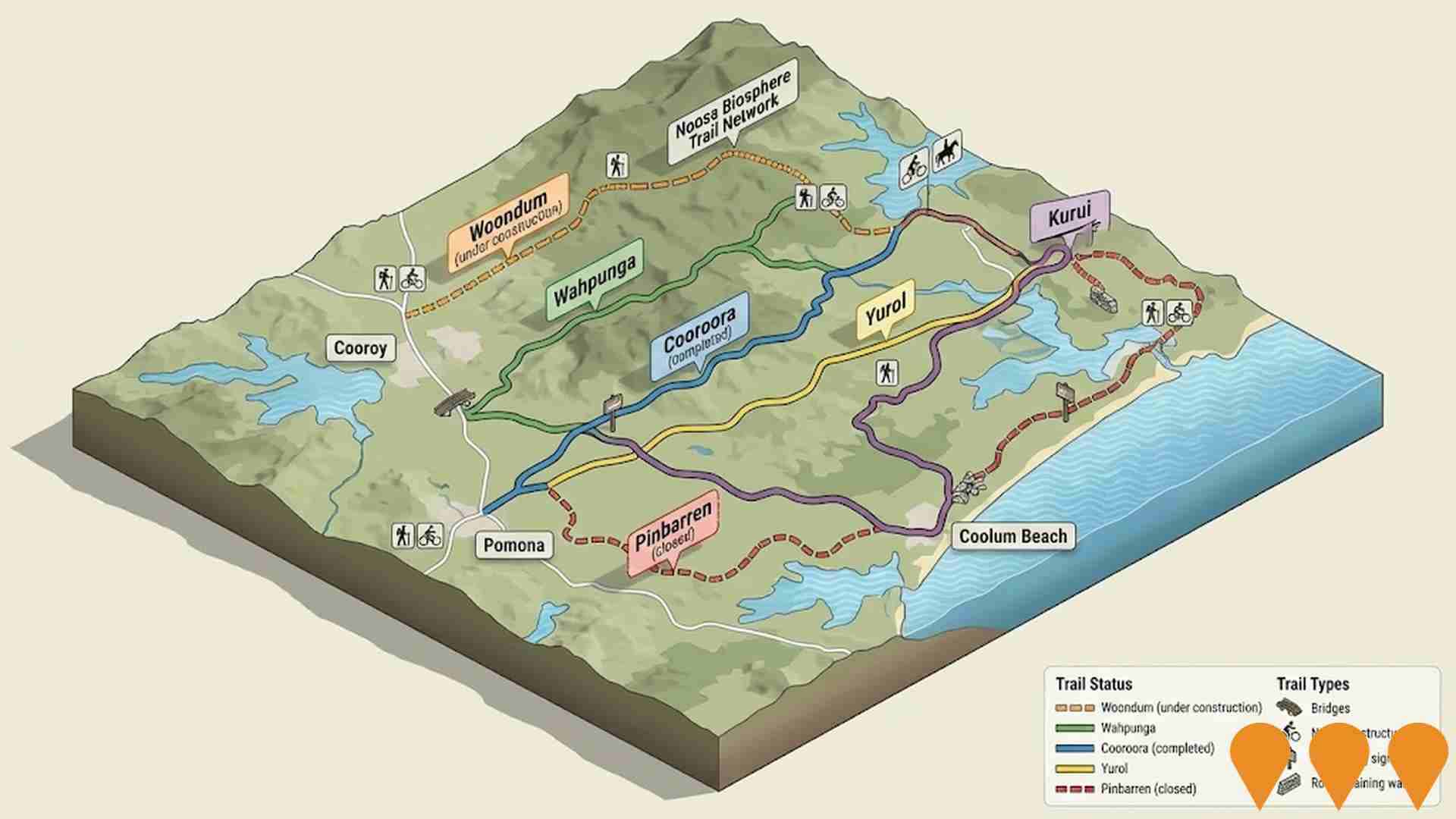
Sports & Recreation

Cooroy Sports Complex Master Plan 2020-2030 and Expansion
Category: Sports & Recreation
Stage: Approved | Est. Comp: 2026
Source / Links: Link 1   Link 2  

A 10-year master plan (2020-2030) guiding future development of the Cooroy Sports Complex, home to rugby league, gymnastics, soccer, cricket, pony club, and car club facilities. In September 2024, funding was secured through the SEQ Liveability Fund to deliver a 600 square meter extension providing an indoor all-weather multi-purpose training area and expanded gymnastics facility. The expansion will accommodate soccer, cricket, and rugby league, enabling the Cooroy Gymnastics Club to grow and supporting increased community participation in sport.
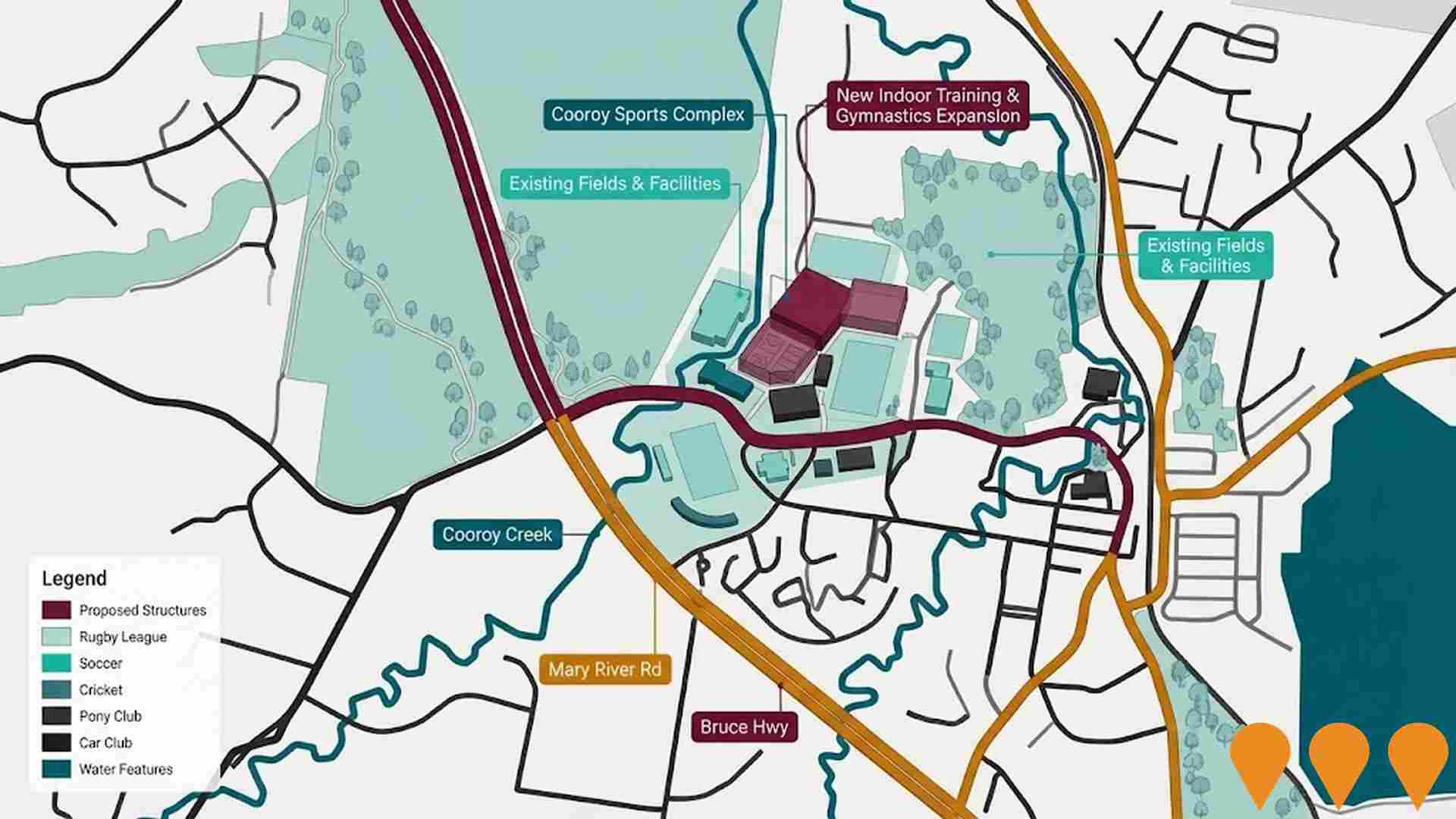
Sports & Recreation

Employment

Table Chart PROFILE FAQ

AreaSearch analysis reveals Lake Macdonald recording weaker employment conditions than most comparable areas nationwide

Lake Macdonald has a skilled workforce with the construction sector being prominently represented. The unemployment rate is 5.2%, according to AreaSearch's aggregation of statistical area data.

As of June 2025673 residents are employed while the unemployment rate is 1.3% higher than Rest of Qld's rate of 3.9%. Workforce participation in Lake Macdonald is lower at 56.3%, compared to Rest of Qld's 59.1%. Employment is concentrated in health care & social assistance, construction, and retail trade. The area shows strong specialization in professional & technical services, with an employment share 1.9 times the regional level.

Conversely, transport, postal & warehousing has lower representation at 2.4% compared to the regional average of 4.3%. Over the year to June 2025, labour force levels decreased by 2.9%, alongside a 1.0% employment decline, causing the unemployment rate to fall by 1.6 percentage points. In comparison, Rest of Qld recorded employment growth of 1.8% and labour force growth of 2.0%, with unemployment rising slightly by 0.2%. Jobs and Skills Australia's national employment forecasts from Sep-22 suggest potential future demand within Lake Macdonald. These projections estimate national employment to expand by 6.6% over five years and 13.7% over ten years, but growth rates vary significantly between industry sectors. Applying these industry-specific projections to Lake Macdonald's employment mix suggests local employment should increase by 6.5% over five years and 13.4% over ten years.

Frequently Asked Questions - Employment

What is the employment situation in Lake Macdonald?
As of June 2025, Lake Macdonald has approximately 673 employed residents with an unemployment rate of 5.2%. The unemployment rate is moderate, indicating some available workforce capacity. The area faces employment challenges compared to other regions nationally.
How does Lake Macdonald's unemployment rate compare to the broader region?
As of June 2025, the unemployment rate in Lake Macdonald stands at 5.2%, which is 1.3 percentage points above Rest of Qld's rate of 3.9%. This higher unemployment rate may indicate local labour market challenges. For comparison, the national unemployment rate is 4.1%.
What are the major employment sectors in Lake Macdonald?
The employment landscape in Lake Macdonald is dominated by several key sectors. The largest employers are health care & social assistance (14.6% of employment), construction (13.6%), and retail trade (10.4%). Other significant employers include professional & technical and education & training.
How has employment changed recently in Lake Macdonald?
Over the past year to June 2025, Lake Macdonald has experienced a decline in employment, with total jobs decreasing while the labour force decreased. As a result, the unemployment rate has fall. By comparison, Rest of Qld saw employment increased and its unemployment rate rose.
What is the workforce participation rate in Lake Macdonald?
The workforce participation rate in Lake Macdonald is 56.3%, which represents the proportion of working-age residents who are either employed or actively seeking work. This moderate participation rate suggests some residents may face barriers to workforce entry. The local rate trailing the Rest of Qld average of 59.1%, showing similar workforce dynamics to the broader region.
Which industries are over-represented in Lake Macdonald's employment market?
Lake Macdonald shows notable specialization in professional & technical, which employs 9.7% of the local workforce compared to 5.1% regionally. This concentration suggests the area has developed competitive advantages in this sector. The area also shows above-average employment in 1 other sectors, contributing to a distinctive economic profile.
What are the employment growth prospects for Lake Macdonald?
Based on Jobs and Skills Australia projections applied to Lake Macdonald's industry mix, employment is expected to grow by 6.5% over the next five years and 13.4% over ten years. This compares to national growth expectations of 6.6% over five years. Steady growth is anticipated across multiple sectors, providing diverse employment opportunities.
How does the job market in Lake Macdonald compare nationally?
Lake Macdonald's employment market shows weaker performance compared to most areas nationally. This suggests the need for targeted economic development initiatives. Recent job advertisement trends show the broader employment region saw a 4.7% decline, ranking 7.0th out of 37 regions nationally.
What employment opportunities exist for skilled workers in Lake Macdonald?
Skilled workers will find good opportunities in Lake Macdonald, with skilled sectors accounting for 36.0% of employment. Key sectors for skilled workers include health care & social assistance (14.6%), professional & technical (9.7%), and education & training (9.6%). With projected employment growth of 6.5% over five years, demand for skilled workers is expected to remain strong.

Income

Table Chart PROFILE FAQ

Income levels sit below national averages according to AreaSearch assessment

AreaSearch's latest postcode level ATO data for financial year 2022 shows that Lake Macdonald's median income is $46,913 and average income is $63,781. This contrasts with Rest of Qld's median income of $50,780 and average income of $64,844. Based on Wage Price Index growth of 13.99% since financial year 2022, current estimates for Lake Macdonald would be approximately $53,476 (median) and $72,704 (average) as of September 2025. Census 2021 income data shows household income ranks at the 51st percentile ($1,771 weekly), while personal income sits at the 32nd percentile. Income brackets indicate that 37.3% of residents earn $1,500 - 2,999 weekly (577 residents). After housing costs, residents retain 88.2% of their income. The area's SEIFA income ranking places it in the 5th decile.

Frequently Asked Questions - Income

What is the median taxable income in Lake Macdonald?
Based on Wage Price Index adjustments to September 2025, the estimated median taxable income in Lake Macdonald is approximately $53,476. The official ATO data from FY-22 recorded a median of $46,913.
What is the average taxable income in Lake Macdonald?
Based on Wage Price Index adjustments to September 2025, the estimated average taxable income in Lake Macdonald is approximately $72,704. The official ATO data from FY-22 recorded an average of $63,781.
How does the median taxable income in Lake Macdonald compare to the region?
Based on Wage Price Index adjustments to September 2025, the estimated median taxable income in Lake Macdonald is approximately $53,476 compared to $57,884 in Rest of Qld. The official ATO data from FY-22 shows $46,913 and $50,780 respectively.
How does the average taxable income in Lake Macdonald compare to the region?
Based on Wage Price Index adjustments to September 2025, the estimated average taxable income in Lake Macdonald is approximately $72,704 compared to $73,916 in Rest of Qld. The official ATO data from FY-22 shows $63,781 and $64,844 respectively.
What are the main income cohorts in Lake Macdonald according to the 2021 Census?
As per the 2021 Census, the income bracket containing the largest proportion (~37.3% / 577 persons) of Lake Macdonald's population is the $1,500 - 2,999 cohort.
How do the main income cohorts in Lake Macdonald compare to the region?
The largest income cohort in Lake Macdonald is the $1,500 - 2,999 group, representing about 37.3% of the population. In comparison, Rest of Qld's largest income cohort is the $1,500 - 2,999 group, representing 31.7% of its population, according to the 2021 Census.
What is the median household income in Lake Macdonald according to the 2021 Census?
The 2021 Census data indicates that the median household income in Lake Macdonald is $1,771/wk.
What is the median family income in Lake Macdonald according to the 2021 Census?
According to the 2021 Census, the median family income in Lake Macdonald is $1,883/wk.
What is the median personal income in Lake Macdonald according to the 2021 Census?
The 2021 Census shows that the median personal income in Lake Macdonald is $721/wk.
How does Lake Macdonald's income rank nationally?
Lake Macdonald's income level is slightly lower than average on a national basis according to the latest ATO data aggregated by AreaSearch for FY-22. Lake Macdonald's median income among taxpayers is $46,913 and the average income stands at $63,781, which compares to figures for Rest of Qld's of $50,780 and $64,844 respectively. Based on Wage Price Index growth of 13.99% since FY-22, current estimates would be approximately $53,476 (median) and $72,704 (average) as of September 2025.
What is the disposable income in Lake Macdonald?
The estimated disposable income in Lake Macdonald is $6,766 per year according to AreaSearch analysis.
How does Lake Macdonald's disposable income compare to the region?
Lake Macdonald's disposable income is $6,766 compared to $5,480 for Rest of Qld, based on AreaSearch analysis.

Housing

Table Chart PROFILE FAQ

Lake Macdonald is characterized by a predominantly suburban housing profile, with above-average rates of outright home ownership

Lake Macdonald's dwelling structures, as per the latest Census, comprised 97.7% houses and 2.3% other dwellings. In comparison, Non-Metro Qld had 96.1% houses and 4.0% other dwellings. Home ownership in Lake Macdonald was 48.1%, with mortgaged properties at 41.0% and rented ones at 10.9%. The median monthly mortgage repayment was $1,733, below Non-Metro Qld's average of $1,800. Median weekly rent in Lake Macdonald was $420, compared to Non-Metro Qld's $415. Nationally, Lake Macdonald's mortgage repayments were lower at $1,733 against the Australian average of $1,863, while rents were higher at $420 compared to the national figure of $375.

Frequently Asked Questions - Housing

What percentage of homes are owned vs rented in Lake Macdonald?
In Lake Macdonald, 48.1% of homes are owned outright, 41.0% are owned with a mortgage, and 10.9% are rented.
What percentage of dwellings in Lake Macdonald are houses?
According to the latest data, 97.7% of dwellings in Lake Macdonald are houses.
What percentage of dwellings in Lake Macdonald are apartments or units?
In Lake Macdonald, 1.5% of dwellings are apartments or units, with an additional 0.0% being semi-detached dwellings.
What is the level of outright home ownership in Lake Macdonald?
Outright home ownership in Lake Macdonald stands at 48.1%, compared to 46.2% in Rest of Qld.
What is the median monthly mortgage repayment in Lake Macdonald?
The median monthly mortgage repayment in Lake Macdonald is $1,733, compared to $1,800 in Rest of Qld.
What is the median weekly rent in Lake Macdonald?
The median weekly rent in Lake Macdonald is $420, compared to $415 in Rest of Qld.
What is the distribution of rental prices in Lake Macdonald?
In Lake Macdonald, 0.0% of rentals are $0-149/week, 24.0% are $150-349/week, 60.0% are $350-649/week, 16.0% are $650-949/week, and 0.0% are $950+/week.
What is the average monthly housing cost in Lake Macdonald?
The aggregate monthly housing cost in Lake Macdonald is $908, which represents the average monthly cost across all housing types.
What percentage of income do residents spend on housing?
In Lake Macdonald, households with mortgages typically spend 22.6% of their income on mortgage repayments, while renters spend 23.7% of their income on rent.
How crowded are homes in Lake Macdonald?
The average persons per bedroom ratio in Lake Macdonald is 0.8, indicating the level of household density.
How does housing affordability in Lake Macdonald compare to the region?
Housing affordability in Lake Macdonald shows mortgage holders spending 22.6% of income on repayments (vs 27.8% regionally), while renters spend 23.7% of income on rent (vs 27.7% regionally).
What types of dwellings are most common in Lake Macdonald?
The dwelling mix in Lake Macdonald consists of 97.7% detached houses, 0.0% semi-detached dwellings, 1.5% apartments, and 0.8% other dwelling types.
What is the weighted average housing cost based on tenure mix in Lake Macdonald?
Given the tenure profile of the area, the weighted average monthly housing cost is approximately $909. This accounts for outright owners paying no housing costs, mortgage holders paying $1,733/month, and renters paying $1,819/month.
How affordable is housing in Lake Macdonald relative to local incomes?
Housing in Lake Macdonald consumes approximately 11.9% of median household income ($7,668 monthly), indicating costs are highly affordable. The generally accepted benchmark is that housing should not exceed 30% of household income.
How do proposed developments compare to existing housing types in Lake Macdonald?
Recent development applications in Lake Macdonald show attached dwellings contributing 0% of approvals compared to 2% of existing stock, while detached houses represent 100% of applications versus 98% of current dwellings. This suggests development patterns consistent with existing housing mix. Density increases remain below national trends.

Household Composition

Table Chart PROFILE FAQ

Lake Macdonald features high concentrations of family households, with a fairly typical median household size

Family households comprise 82.2% of all households, including 30.7% couples with children, 43.4% couples without children, and 7.1% single parent families. Non-family households account for the remaining 17.8%, with lone person households at 16.4% and group households comprising 1.9%. The median household size is 2.6 people, which aligns with the average in the Rest of Qld.

Frequently Asked Questions - Households

How many households are in Lake Macdonald?
As of the 2021 Census, Lake Macdonald had 478 households. Based on population growth patterns, this has grown by approximately 14.6% to an estimated 548 households today.
What is the typical household size?
The median household size in Lake Macdonald is 2.6 people. This compares to 2.6 in Rest of Qld and reflects the area's household composition mix.
What types of households are most common?
Family households dominate at 82.2% of all households. The remaining households consist of lone person households (16.4%), group households (1.9%), and other household types (0.0%).
How are families structured in the area?
Among the 392 family households, 30.7% are couples with children, 43.4% are couples without children at home, and 7.1% are single parent families. This mix shapes local demand for schools, family services, and housing types.
How does Lake Macdonald compare to regional household patterns?
Compared to Rest of Qld, Lake Macdonald shows distinct household patterns. This family-oriented profile influences local demand for family homes, schools, and children's services.
What is the average family size?
Families in Lake Macdonald have an average of 1.8 children, matching the Rest of Qld average of 1.8. This influences local demand for child-related services and larger family homes.
What are the marriage patterns in Lake Macdonald?
Marriage patterns reveal 54.7% of the adult population are currently married, while 27.1% have never married. This compares to 51.9% married and 29.0% never married across Rest of Qld.
How significant are single-person households?
Single-person households represent 16.4% of all households in Lake Macdonald, similar to the regional average of 19.3%. This affects demand for smaller dwellings and single-person accommodation.
Are shared living arrangements common?
Group households (unrelated people sharing) account for 1.9% of households, well below the Rest of Qld average of 3.1%. This low rate suggests limited student or young professional shared accommodation.
Loading household composition data...

Local Schools & Education

Table Chart PROFILE FAQ

Educational achievement in Lake Macdonald places it within the top 10% nationally, reflecting strong academic performance and high qualification levels across the community

Educational qualifications in Lake Macdonald trail regional benchmarks. 23.7% of residents aged 15+ hold university degrees, compared to Australia's 30.4%. Bachelor degrees are the most common at 16.6%, followed by postgraduate qualifications (4.1%) and graduate diplomas (3.0%). Vocational credentials are prominent, with 45.1% of residents aged 15+ holding them - advanced diplomas at 14.1% and certificates at 31.0%.

Educational participation is high, with 25.1% of residents currently enrolled in formal education. This includes 10.1% in primary education, 8.0% in secondary education, and 3.1% pursuing tertiary education. Educational facilities appear to be located outside the immediate catchment boundaries, requiring families to access schools in neighboring areas.

Frequently Asked Questions - Education

What percentage of people in Lake Macdonald have university qualifications?
23.7% of people aged 15 and over in Lake Macdonald have university qualifications, compared to 23.0% in the broader region.
What percentage of people in Lake Macdonald have no formal qualifications?
31.0% of people aged 15 and over in Lake Macdonald have no formal qualifications, compared to 33.9% regionally.
How does Lake Macdonald's education level compare to national averages?
Lake Macdonald ranks in the 94th percentile nationally for education based on AreaSearch's analysis of qualification and performance metrics.
What types of qualifications are most common in Lake Macdonald?
The most common qualifications in Lake Macdonald are: Certificate (31.0%), Bachelor Degree (16.6%), Advanced Diploma (14.1%).
What proportion of Lake Macdonald's population is currently attending educational institutions?
25.1% of the population in Lake Macdonald is currently engaged in formal education, with 10.1% in primary school, 8.0% in secondary school, 3.1% at university.
What is the ICSEA score for schools in Lake Macdonald?
The average ICSEA (Index of Community Socio-Educational Advantage) score for schools in Lake Macdonald is 0, indicating below-average socio-educational advantage compared to the national average of 1000.

Schools Detail

Nearby Services & Amenities

PROFILE FAQ

Transport

Table Chart PROFILE FAQ

No public transport data available for this catchment area.

Frequently Asked Questions - Transport

Is public transport available in Lake Macdonald?
Limited or no public transport data is available for Lake Macdonald.

Transport Stops Detail

Health

Table Chart PROFILE FAQ

Health performance in Lake Macdonald is lower than average with common health conditions somewhat prevalent across both younger and older age cohorts

Lake Macdonald faces significant health challenges with common health conditions prevalent across both younger and older age cohorts. The rate of private health cover in Lake Macdonald is approximately 52%, which is higher than the average SA2 area's 49.5%.

This covers around 812 people compared to Rest of Qld's 49.5% coverage. The most common medical conditions are arthritis, impacting 10.4% of residents, and mental health issues, affecting 8.2%. Despite this, 65.0% of residents claim to be completely clear of medical ailments, compared to Rest of Qld's 68.1%. Lake Macdonald has a higher proportion of seniors aged 65 and over at 32.3%, or around 500 people, compared to Rest of Qld's 24.5%. Despite this, health outcomes among seniors in Lake Macdonald are strong and perform better than the general population in health metrics.

Frequently Asked Questions - Health

How many people in Lake Macdonald have private health insurance?
Around 52.5% of people in Lake Macdonald are covered by private health insurance, which compares to 49.5% in the broader region of Rest of Qld.
What percentage of the population requires ongoing medical assistance in Lake Macdonald?
In Lake Macdonald, 5.3% of the population is identified as requiring ongoing medical assistance. This figure is slightly different from the regional average, where 5.4% of people in Rest of Qld require similar assistance.
How prevalent is asthma in Lake Macdonald?
7.3% of people in Lake Macdonald are diagnosed with asthma. In comparison, 6.9% of the population across Rest of Qld is affected by asthma.
What percentage of people have diabetes in Lake Macdonald?
Diabetes affects 3.4% of the Lake Macdonald population, while in the surrounding region, 3.0% of people are diagnosed with diabetes.
What is the percentage of people with heart disease in Lake Macdonald?
4.0% of people in Lake Macdonald have heart disease. Across the region of Rest of Qld, 4.2% of the population is affected by heart disease.
How does Lake Macdonald compare to the region in terms of overall private health coverage?
In Lake Macdonald, 52.5% of the population are estimated to have private health insurance. Comparatively, Rest of Qld sees an estimated private health coverage rate of 49.5%.

Cultural Diversity

Table Chart PROFILE FAQ

Lake Macdonald is considerably less culturally diverse than average when assessed alongside AreaSearch's national rankings for language and cultural background related metrics

Lake Macdonald's cultural diversity was found to be below average, with 82.1% of its population born in Australia, 89.2% being citizens, and 96.6% speaking English only at home. Christianity was the predominant religion, comprising 40.7% of Lake Macdonald's population. Buddhism, however, showed an overrepresentation, making up 1.3% compared to the regional average of 1.3%.

The top three represented ancestry groups were English (36.0%), Australian (26.8%), and Scottish (10.5%). Notably, French (0.8%) was slightly overrepresented compared to the regional figure of 0.7%, as were New Zealanders (1.0% vs 0.8%) and Welsh people (0.7% vs 0.7%).

Frequently Asked Questions - Diversity

What is the level of cultural diversity in Lake Macdonald?
Lake Macdonald was found to be below average in terms of cultural diversity, with 82.1% of its population born in Australia, 89.2% being citizens, and 96.6% speaking English only at home.
What is the most common religion in Lake Macdonald?
The main religion in Lake Macdonald was found to be Christianity, which makes up 40.7% of people in Lake Macdonald. However, the most apparent overrepresentation was in Buddhism, which comprises 1.3% of the population, compared to 1.3% across Rest of Qld.
What are the top countries of origin in Lake Macdonald?
In terms of ancestry (country of birth of parents), the top three represented groups in Lake Macdonald are English, comprising 36.0% of the population, Australian, comprising 26.8% of the population, and Scottish, comprising 10.5% of the population. Additionally, there are notable divergences in the representation of certain other ethnic groups: French is notably overrepresented at 0.8% of Lake Macdonald (vs 0.7% regionally), New Zealand at 1.0% (vs 0.8%) and Welsh at 0.7% (vs 0.7%).
How does the percentage of people born overseas compare to the regional average?
17.9% of the Lake Macdonald population was born overseas, compared to 20.4% regionally.
What percentage of the Lake Macdonald population speaks a language other than English at home?
3.4% of the population in Lake Macdonald speaks a language other than English at home, compared to 4.0% in the wider region.
How many people in Lake Macdonald identify as Australian Aboriginal?
1.5% of the Lake Macdonald population identifies as Australian Aboriginal, compared to 1.4% in the region.
What is the citizenship status of the population in Lake Macdonald?
89.2% of the Lake Macdonald population holds citizenship, compared to 88.6% in the wider region.

Age

Table Chart PROFILE FAQ

Lake Macdonald hosts an older demographic, ranking in the top quartile nationwide

Lake Macdonald has a median age of 50 years, which is significantly older than Rest of Qld's 41 and higher than Australia's median age of 38. The age profile shows that those aged 65-74 are particularly prominent, making up 18.7% of the population, compared to the national average of 9.4%. Post-2021 Census data indicates that the 75-84 age group has grown from 5.7% to 11.3%, while the 65-74 cohort increased from 15.7% to 18.7%. Conversely, the 55-64 age group has declined from 20.4% to 16.8% and the 5-14 age group dropped from 13.2% to 10.3%. Demographic modeling suggests that Lake Macdonald's age profile will evolve significantly by 2041. The 75-84 age cohort is projected to grow steadily, increasing by 47 people (27%) from 175 to 223. Senior residents aged 65 and above will drive 55% of population growth, underscoring demographic aging trends. Meanwhile, the 15-24 age group is expected to contract by 7 residents.

Frequently Asked Questions - Age

What is the median age in Lake Macdonald?
According to the latest data, the median age in Lake Macdonald is 50 years.
How does Lake Macdonald's median age compare to broader areas?
At 50 years, Lake Macdonald is 9 years older than the Rest of Qld average (41 years) and 12 years older than the national average (38 years).
What age groups are over-represented in Lake Macdonald?
The most over-represented age group in Lake Macdonald compared to the Rest of Qld region is the 65 - 74 group, making up 18.7% of the population.
What age groups are under-represented in Lake Macdonald?
The most under-represented age group in Lake Macdonald compared to the Rest of Qld region is the 25 - 34 group, making up 5.2% of the population.
Are there age groups with notable population variances?
Yes, certain age groups in Lake Macdonald show significant variance compared to the Rest of Qld region. The most over-represented age groups are 65-74 year-olds (18.7% vs 10.9%) and 75-84 year-olds (11.3% vs 6.9%). The most under-represented age groups are 25-34 year-olds (5.2% vs 12.5%) and 0-4 year-olds (2.9% vs 5.5%).
What is the percentage of children (0-14 years) in Lake Macdonald?
The percentage of children aged 0-14 years in Lake Macdonald is 13.2%.
What is the percentage of older people (65+ years) in Lake Macdonald?
The percentage of people aged 65 and over in Lake Macdonald is 32.3%.

Nearby Areas