
Chart Color Schemes
est. as @ -- *
2021 Census | -- people
Sales Activity
Curious about local property values? Filter the chart to assess the volume and appreciation (including resales) trends and regional comparisons, or scroll to the map below view this information at an individual property level.
Find a Recent Sale
Sales Detail
Population
Population growth drivers in Riverside are strong compared to national averages based on AreaSearch's ranking of recent, and medium to long-term trends
Riverside's population, as of November 2025, is estimated at around 7,610. This reflects an increase of 3.9% since the 2021 Census which reported a population of 7,326. The change is inferred from AreaSearch's estimate of 7,545 residents following examination of ABS ERP data release in June 2024 and additional 185 validated new addresses since the Census date. This level of population equates to a density ratio of 154 persons per square kilometer. Over the past decade, Riverside has shown resilient growth patterns with a compound annual growth rate of 1.5%. Population growth was primarily driven by overseas migration.
AreaSearch adopts ABS/Geoscience Australia projections for each SA2 area, released in 2024 with 2022 as the base year. For areas not covered, Tasmania State Government's Regional/LGA projections are adopted with adjustments made employing a method of weighted aggregation from LGA to SA2 levels. Looking at population projections moving forward, Riverside is expected to increase by 582 persons to 2041 based on aggregated SA2-level projections, reflecting a gain of 6.9% in total over the 17 years.
Frequently Asked Questions - Population
Development
Recent residential development output has been above average within Riverside when compared nationally
Based on AreaSearch analysis of ABS building approval numbers, allocated from statistical area data, Riverside has averaged around 45 new dwelling approvals each year. Over the past five financial years, from FY-21 to FY-25, an estimated 225 homes were approved, with a further 11 approved so far in FY-26. On average, 1.7 new residents per year per dwelling constructed have been recorded over these five financial years. This has recently eased to zero people per dwelling over the past two financial years, indicating better supply availability and stable market conditions.
The average construction value of development projects is $429,000. Additionally, $2.6 million in commercial approvals have been registered this financial year, suggesting the area's residential character. Compared to the Rest of Tas., Riverside shows moderately higher new home approvals, with 38.0% above the regional average per person over the five-year period, preserving reasonable buyer options while sustaining existing property demand.
Recent building activity consists entirely of standalone homes, maintaining the area's traditional low density character with a focus on family homes appealing to those seeking space. With around 175 people per dwelling approval, Riverside shows characteristics of a low density area. Looking ahead, Riverside is expected to grow by 522 residents through to 2041, according to the latest AreaSearch quarterly estimate. At current development rates, new housing supply should comfortably meet demand, providing good conditions for buyers and potentially supporting growth beyond current population projections.
Frequently Asked Questions - Development
Infrastructure
Riverside has emerging levels of nearby infrastructure activity, ranking in the 22ndth percentile nationally
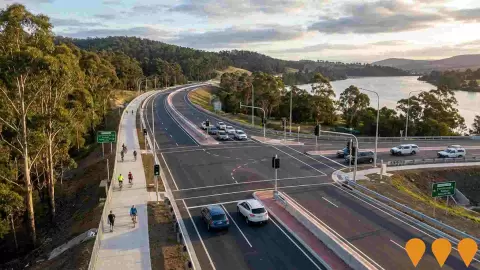
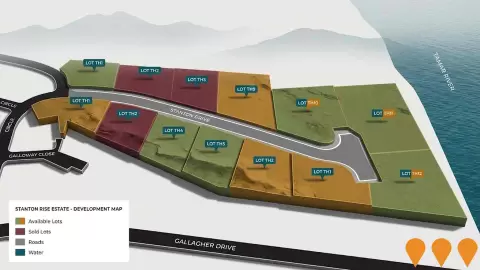
Changes to local infrastructure significantly impact an area's performance. AreaSearch has identified 35 projects likely to affect the area. Notable ones are West Tamar Highway upgrades from Trevallyn to Riverside, Stanton Rise Estate, a multiple dwelling project at 47 Orana Place, and another at 463 West Tamar Road, Riverside. The following list details those most relevant.
Professional plan users can use the search below to filter and access additional projects.
INFRASTRUCTURE SEARCH
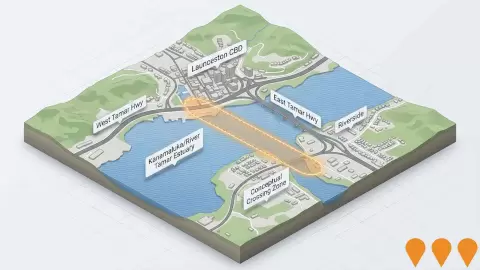
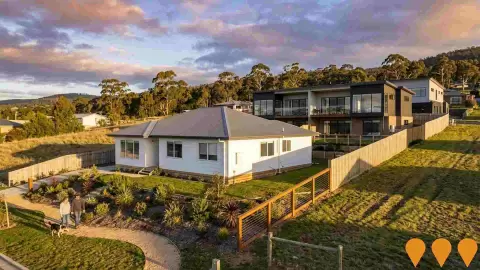
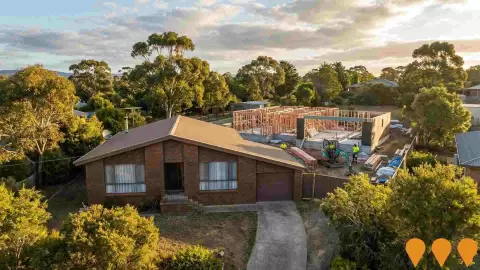
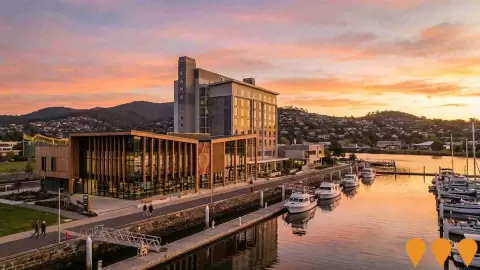
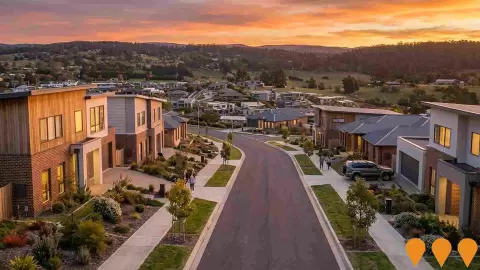
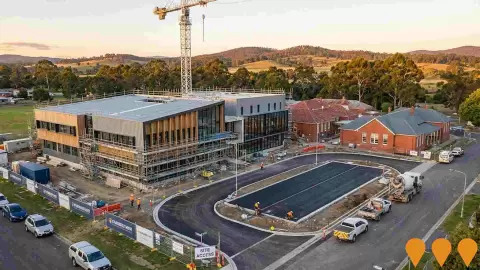
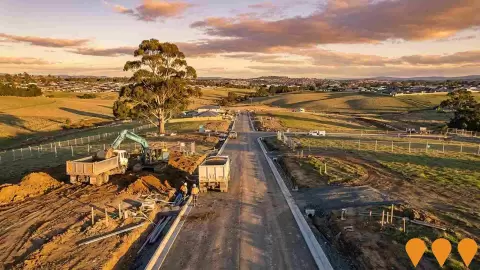
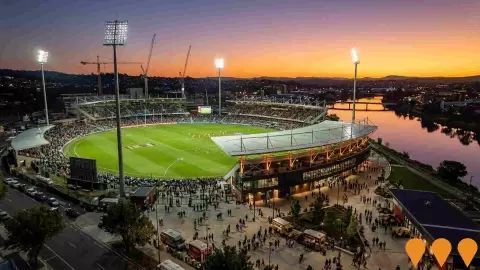
Denotes AI-based impression for illustrative purposes only, not to be taken as definitive under any circumstances. Please follow links and conduct other investigations from the project's source for actual imagery. Developers and project owners wishing us to use original imagery please Contact Us and we will do so.
Frequently Asked Questions - Infrastructure
kanamaluka Cultural Centre (Incorporating Conference & Exhibition Space)
Proposed $70 million cultural centre and conference facility, a joint venture between developer Errol Stewart (JMC) and the Tasmanian Symphony Orchestra. The centre is planned to include a 750-seat concert hall, a 1,000-seat conference and exhibition centre, a black-box theatre, and a First Nations cultural space. The project is awaiting state and federal funding commitments and a development application submission. The previous name, 'Silo Convention Entertainment Centre' appears to have evolved into this new, larger proposal.
Northern Suburbs Community Recreation Hub (The Hub)
A $43.6 million (Stage 2) multi-purpose community sport and recreation hub in Mowbray, Launceston. Stage 2 delivers over 10,000 sqm of indoor space with 7 courts (4 dedicated netball, 3 multi-use), rock climbing wall, gymnastics area, gym/dojo/boxing/weights, cafe, community rooms, youth space and spectator seating. As of October 2025, construction is approximately 85% complete by Vos Construction & Joinery, with practical completion expected mid-2026 (delayed from early 2026 due to supply chain and weather impacts). Stage 3 ($18.8 million, 4 additional courts) remains in concept/planning phase with no firm start date. Funded through the Launceston City Deal (Australian Government, Tasmanian Government, City of Launceston).
Flood Levee Protected Areas Specific Area Plan
This is a Planning Scheme Amendment (PSA-LLP0029) to the Tasmanian Planning Scheme - Launceston Local Provisions Schedule. It proposes to remove the Invermay/Inveresk Flood Inundation Specific Area Plan and related overlays, insert the Flood Levee Protected Areas Specific Area Plan and related overlays (LAU-S17), and modify the Flood-Prone Areas Hazard Code overlay map (C12.0). The purpose is to enhance flood management and protection for areas protected by the levee system, with a focus on future land use and development being managed to minimise flood risk. This specific plan is related to the broader Launceston Flood Protection Scheme.
Second Kanamaluka/River Tamar Crossing
A second multi-modal bridge crossing of the kanamaluka / River Tamar between the East and West Tamar Highways in Launceston to improve travel time reliability, reduce congestion through Riverside, Trevallyn and the Launceston CBD, enhance safety, and provide active transport pathways. Community consultation on five options closed in April 2025; feedback is informing the preferred option and business case development (as of November 2025, no preferred option yet selected).
Newnham Campus Development Strategy
The Newnham Campus Development Strategy aims to revitalize the UTAS Newnham Campus into a vibrant, inclusive, and sustainable hub with mixed uses including housing, community spaces, health services, and educational facilities, emphasizing cultural significance, sustainability, and community engagement through phased development over a 20-year horizon. Key features include expansion of the Australian Maritime College, a $30 million Defence and Maritime Innovation and Design Precinct, a $15 million Defence Cadet facility, and a new Tasmanian Agricultural Precinct.
Riverside High School Redevelopment
Major refurbishment and upgrade of Riverside High School to deliver contemporary teaching and learning spaces, safer vehicle movement and parking, and improved student services. Works included staged demolition and reinforcing within an operating school, safe asbestos removal after hours, and extensive internal and external fitout to modern standards.
Windsor Park Redevelopment
The redevelopment of Windsor Park, also known as Windsor Oval, home to the Launceston Football Club since 1968, included re-leveling the oval surface, new drainage systems, sand slitting, irrigation, a sand mattress, reseeding, perimeter fencing, and improved lighting. The project aimed to create the best value playing surface in Northern Tasmania with minimal environmental impact. It was officially opened in June 2025.
Newnham Subdivision (Fairlands Property)
A proposed 250-lot residential subdivision on the 68.8 hectare Fairlands property in Newnham, following its sale after 80 years in the same family. The property, located on Alanvale Road, has been listed for sale with strong interest from local and interstate developers. The subdivision would be in close proximity to the University of Tasmania, Australian Maritime College, and TasTAFE. The elevated land offers views over south and west Launceston and the Tamar River. No official development application has been submitted as of September 2024.
Employment
Riverside ranks among the top 25% of areas assessed nationally for overall employment performance
Riverside has a well-educated workforce with essential services sectors well represented. The unemployment rate was 1.9% as of June 2025, according to AreaSearch's aggregation of statistical area data.
In this period, 3,908 residents were employed while the unemployment rate was 2.1% lower than Rest of Tas.'s rate of 3.9%. Workforce participation in Riverside stood at 61.7%, exceeding Rest of Tas.'s rate of 55.7%. Employment is concentrated in health care & social assistance, education & training, and retail trade. Notably, education & training has a higher representation with an employment share of 1.4 times the regional level.
Conversely, agriculture, forestry & fishing shows lower representation at 2.5% compared to the regional average of 8.4%. The area appears to offer limited local employment opportunities, as indicated by the count of Census working population versus resident population. Between June 2024 and June 2025, the labour force decreased by 1.6% while employment declined by 1.4%, keeping the unemployment rate relatively stable. In comparison, Rest of Tas. recorded an employment decline of 0.5% and a labour force decline of 0.6%, with unemployment falling marginally. Jobs and Skills Australia's national employment forecasts from Sep-22 offer insight into potential future demand within Riverside. These projections estimate national employment growth at 6.6% over five years and 13.7% over ten years, with varying rates between industry sectors. Applying these projections to Riverside's employment mix suggests local employment should increase by 6.7% over five years and 14.0% over ten years, based on a simple weighting extrapolation for illustrative purposes.
Frequently Asked Questions - Employment
Income
Income levels align closely with national averages, indicating typical economic conditions for Australian communities according to AreaSearch analysis
Riverside's median taxpayer income was $53,900, with an average of $67,765, according to postcode level ATO data aggregated by AreaSearch for the financial year 2022. This is higher than the national average, contrasting with Rest of Tas.'s median income of $47,358 and average income of $57,384. By September 2025, based on Wage Price Index growth of 13.83%, current estimates suggest a median income of approximately $61,354 and an average income of $77,137 in Riverside. Census data indicates that household, family, and personal incomes all rank modestly, between the 36th and 44th percentiles. The $1,500 - $2,999 earnings band captures 31.4% of the community (2,389 individuals), which is consistent with broader trends across regional levels showing 28.5% in the same category. Housing costs are manageable, with 87.2% retained, but disposable income sits below average at the 40th percentile. The area's SEIFA income ranking places it in the 5th decile.
Frequently Asked Questions - Income
Housing
Riverside is characterized by a predominantly suburban housing profile, with above-average rates of outright home ownership
The latest Census in Riverside showed that 95.1% of dwellings were houses, with the remaining 4.9% being semi-detached, apartments, or other types. In comparison, Non-Metro Tas. had 82.1% houses and 17.9% other dwellings. Home ownership in Riverside was at 38.9%, while mortgaged dwellings were at 36.0% and rented ones at 25.1%. The median monthly mortgage repayment in Riverside was $1,440, compared to the Non-Metro Tas. average of $1,300. The median weekly rent figure in Riverside was $300, whereas it was $280 in Non-Metro Tas. Nationally, Riverside's mortgage repayments were lower than the Australian average of $1,863, and rents were substantially below the national figure of $375.
Frequently Asked Questions - Housing
Household Composition
Riverside has a typical household mix, with a higher-than-average median household size
Family households account for 70.3% of all households, including 28.9% couples with children, 29.7% couples without children, and 10.6% single parent families. Non-family households comprise the remaining 29.7%, with lone person households at 27.4% and group households making up 2.4% of the total. The median household size is 2.5 people, larger than the Rest of Tas. average of 2.3.
Frequently Asked Questions - Households
Local Schools & Education
The educational profile of Riverside exceeds national averages, with above-average qualification levels and academic performance metrics
Riverside's educational attainment is notably higher than broader benchmarks. Among residents aged 15 and above, 29.8% hold university qualifications, compared to 19.3% in the rest of Tasmania and 21.7% in the SA4 region. This educational advantage is led by bachelor degrees at 19.4%, followed by postgraduate qualifications (7.3%) and graduate diplomas (3.1%). Vocational credentials are also prominent, with 34.5% of residents holding such qualifications - advanced diplomas at 10.8% and certificates at 23.7%. Educational participation is high, with 27.9% of residents currently enrolled in formal education.
This includes 10.2% in primary education, 8.5% in secondary education, and 4.0% pursuing tertiary education. Riverside's four schools have a combined enrollment of 2,353 students, with typical Australian school conditions (ICSEA: 1033) providing balanced educational opportunities. The area functions as an education hub with 30.9 school places per 100 residents, significantly above the regional average of 18.3, attracting students from surrounding communities.
Frequently Asked Questions - Education
Schools Detail
Nearby Services & Amenities
Transport
Transport servicing is high compared to other areas nationally based on assessment of service frequency, route connectivity and accessibility
Riverside's public transport system operates 43 active stops, all of which service buses. These stops are connected by 115 routes that facilitate a total of 10,109 weekly passenger trips. The accessibility of these services is deemed good, with residents on average being located 279 meters from the nearest stop.
On a daily basis, an average of 1,444 trips are made across all routes, which translates to approximately 235 weekly trips per individual stop.
Frequently Asked Questions - Transport
Transport Stops Detail
Health
Health performance in Riverside is lower than average with common health conditions somewhat prevalent across both younger and older age cohorts
Riverside faces significant health challenges, with common health conditions prevalent across both younger and older age cohorts. The rate of private health cover is approximately 54%, covering about 4110 people, which is higher than the 50.6% average in Rest of Tas.
The most common medical conditions are arthritis (affecting 9.9% of residents) and mental health issues (9.4%), while 65.2% report having no medical ailments, compared to 63.9% in Rest of Tas. As of 2018, 22.7% of Riverside's population is aged 65 and over, totaling 1727 people, which is higher than the 19.9% average in Rest of Tas. Health outcomes among seniors present challenges broadly aligned with the general population's health profile.
Frequently Asked Questions - Health
Cultural Diversity
Riverside ranks below the Australian average when compared to other local markets across a number of language and cultural background related metrics
Riverside's cultural diversity was found to be below average. As of a certain date, 82.3% of its population were born in Australia, 89.1% were citizens, and 90.3% spoke English only at home. Christianity was the main religion, comprising 46.3% of Riverside's population.
Judaism, however, was notably overrepresented, making up 0.1% compared to the Rest of Tas.'s 0.1%. In terms of ancestry, the top three groups were English (31.7%), Australian (30.0%), and Scottish (7.6%). Some ethnic groups showed notable divergences: Dutch at 4.2% (vs regional 2.0%), Korean at 0.3% (vs 0.1%), and Sri Lankan at 0.2% (vs 0.1%).
Frequently Asked Questions - Diversity
Age
Riverside's median age exceeds the national pattern
Riverside's median age is 40 years, which is significantly below the Rest of Tas average of 45 but somewhat older than Australia's median age of 38 years. The age profile shows that those aged 15-24 are particularly prominent at 13.2%, while the 55-64 age group is comparatively smaller at 10.8% than in the Rest of Tas. Between 2021 and present, the 15 to 24 age group has grown from 11.8% to 13.2% of the population, while the 35 to 44 cohort increased from 12.3% to 13.7%. Conversely, the 25 to 34 cohort has declined from 12.7% to 11.2%, and the 55 to 64 age group dropped from 12.1% to 10.8%. Population forecasts for 2041 indicate substantial demographic changes in Riverside, with the 85+ cohort showing the strongest projected growth of 90%, adding 198 residents to reach 419. Senior residents aged 65 and above will drive 51% of population growth, underscoring trends towards demographic aging. However, population declines are projected for the 0 to 4 and 65 to 74 age cohorts.