Chart Color Schemes
This analysis uses Suburbs and Localities (SAL) boundaries, which can materially differ from Statistical Areas (SA2) even when sharing the same name.
SAL boundaries are defined by Australia Post and the Australian Bureau of Statistics to represent commonly-known suburb names used in postal addresses.
Statistical Areas (SA2) are designed for census data collection and may combine multiple suburbs or use different geographic boundaries. For comprehensive analysis, consider reviewing both boundary types if available.
est. as @ -- *
2021 Census | -- people







The median house price in East Ballina is $1.38m, with units at $858k. House values have moved 1.8% a year compounded over five years.
Curious about local property values? Filter the chart to assess the volume and appreciation (including resales) trends and regional comparisons, or scroll to the map below view this information at an individual property level.
Find a Recent Sale

Sales Detail
East Ballina has an estimated 5,843 residents, down from 5,882 at the 2021 Census. That puts 899 residents on each square kilometre. Population is estimated from ABS Estimated Resident Population releases and GNAF address data, re-based from the 2021 Census and updated annually.
Detail
According to AreaSearch evaluations combining broader ABS population revisions with 27 validated new addresses identified following the Census, the suburb of East Ballina records an estimated population of approximately 5,843 as of Aug 2026. This represents a contraction of 39 people (0.7%) compared to the 2021 Census tally of 5,882 people. Such adjustments stem from an estimated resident count of 5,833 established via the June 2025 ABS ERP release alongside post-Census address additions. The local population density stands at 898 persons per square kilometer, aligning closely with broader benchmarks tracked across AreaSearch study locations.
Population expansion across recent cycles was substantially underpinned by interstate migration, which accounted for roughly 56.00000000000001% of total population additions. Projections for the suburb of East Ballina utilize 2024 ABS/Geoscience Australia SA2 modeling anchored to 2022, supplemented where necessary by 2022 NSW State Government SA2 forecasts based on 2021. For the period spanning 2032 to 2041, cohort-specific growth rates derived from these datasets are projected across all segments. Forward-looking aggregated SA2 projections indicate an expansion outpacing the regional national median, with the suburb of East Ballina anticipated to gain 790 persons to 2041, representing a cumulative rise of 13.3% across the 16 years.
Frequently Asked Questions - Population
Detail
Residential construction across East Ballina remains subdued, averaging 3 new dwellings approved annually and totaling 16 approvals over five years. This restrained pace highlights the rural character of the locality, where building activity generally responds to tailored local requirements instead of broad market trends. Because of the limited total volume, single developments may create noticeable fluctuations in year-on-year growth and comparative measures. Building volumes in East Ballina track considerably lower than both the Rest of NSW and nationwide averages. Newly approved residential stock comprises 67.0% detached houses and 33.0% attached dwellings, reflecting a growing presence of medium-density formats that deliver varied price options, ranging from larger single homes to compact layouts.
Furthermore, the ratio of 1167 people in the area per dwelling approval underscores the calm, low-intensity construction pipeline. According to the most recent AreaSearch quarterly projections, East Ballina is set to expand by 780 residents by 2041. Should building delivery persist at current levels, housing supply could lag behind local population additions, potentially heightening competition among prospective buyers and driving upward momentum in asset values.
Frequently Asked Questions - Development
Development applications around East Ballina
Loading development applications…
| Lodged | Address | Description | Type | Distance | Status |
|---|
SOURCE: Planning portals and council registers, compiled by AreaSearch. Distance & bearing measured from the suburb midpoint.
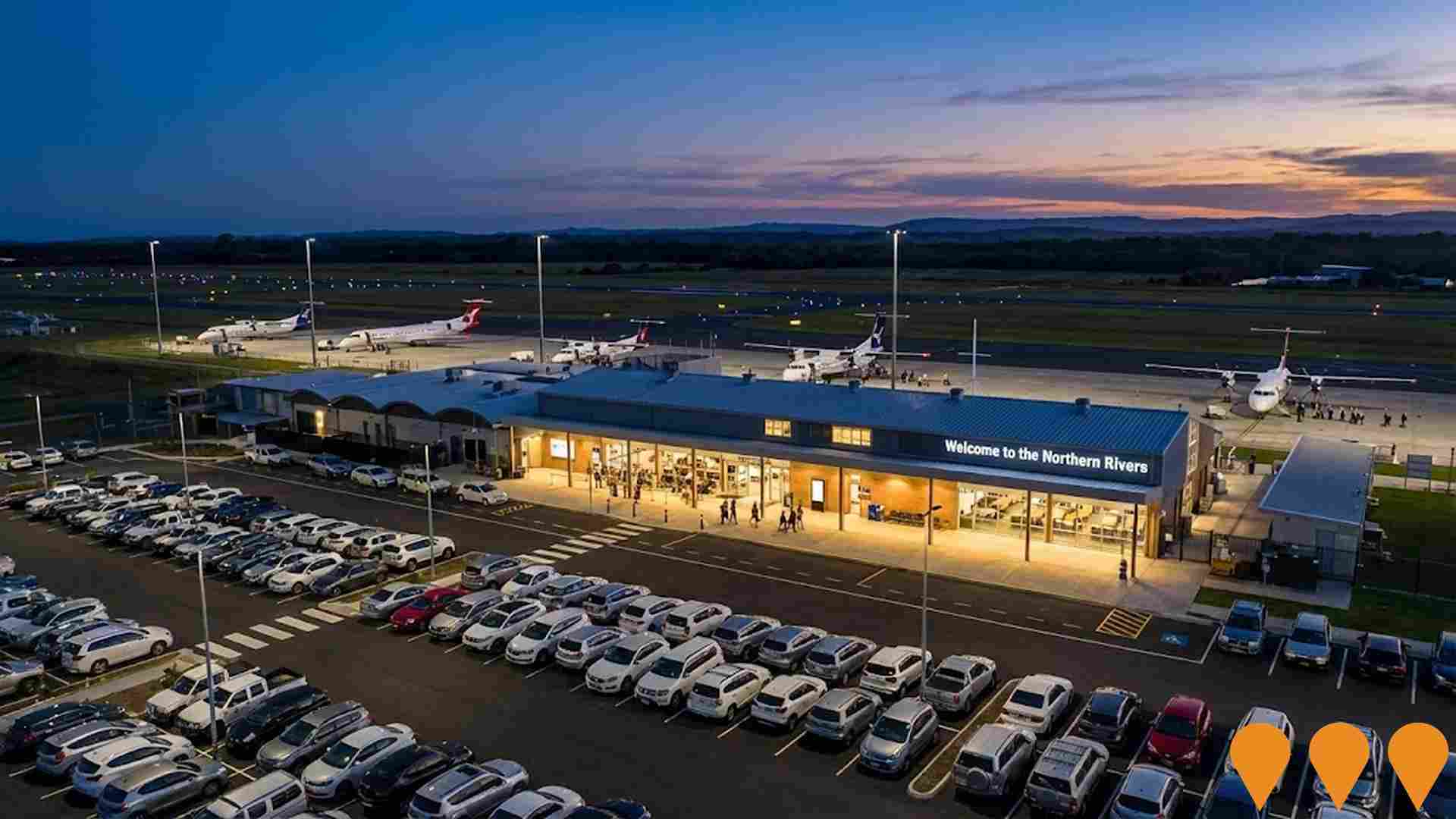
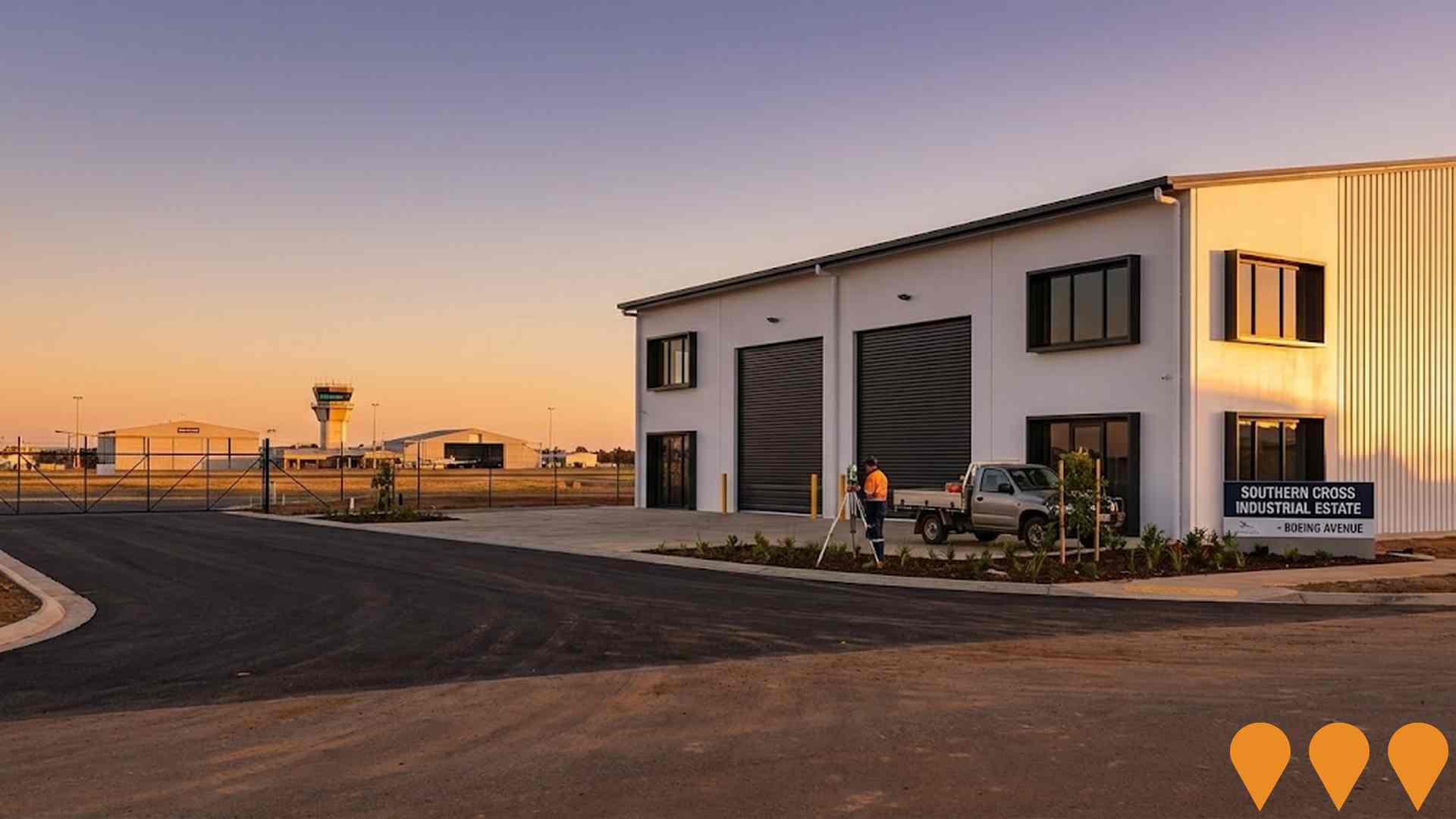
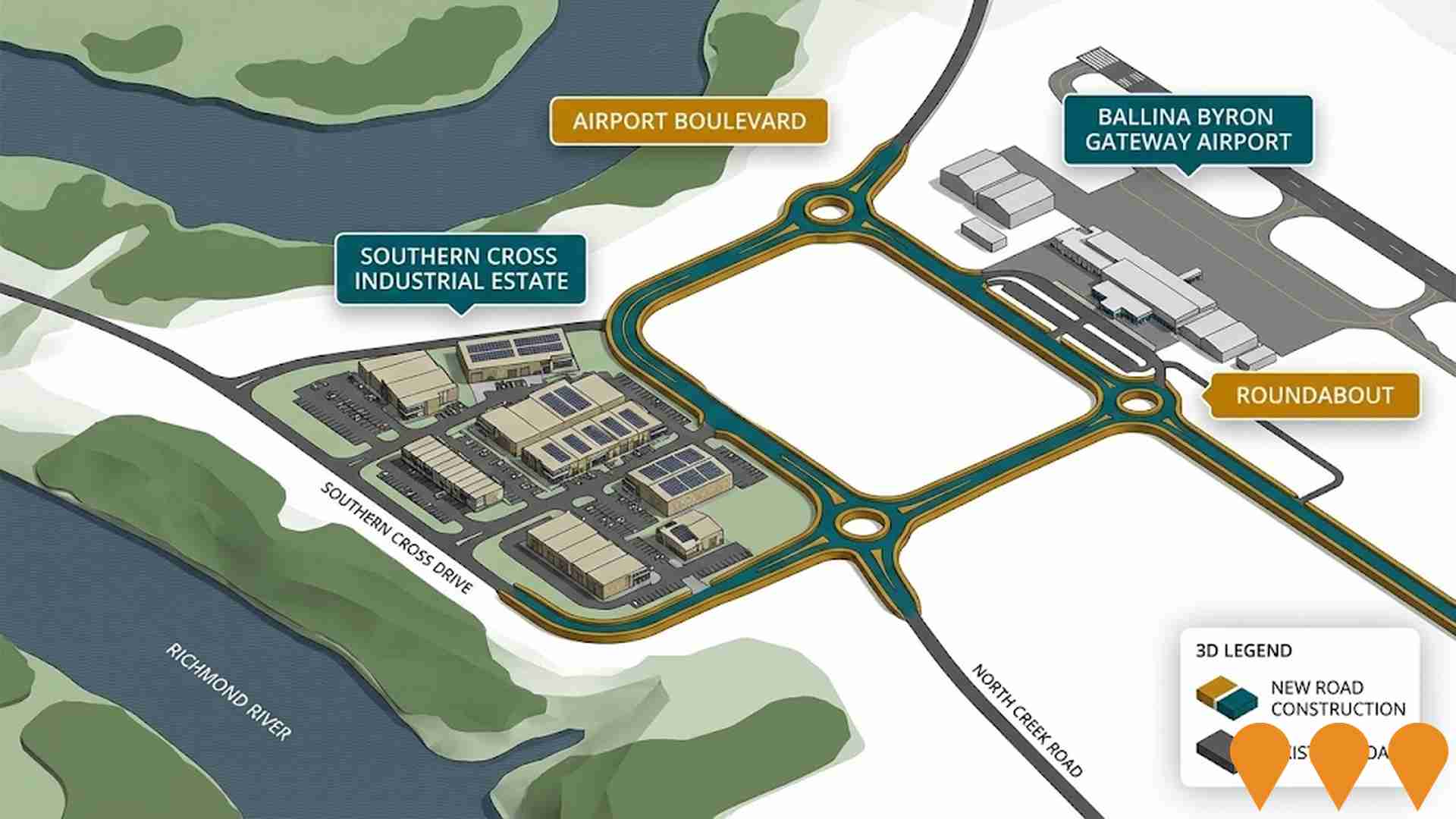
AreaSearch tracks 86 current infrastructure and development projects close to East Ballina, worth an estimated $3.04 billion. 18 are already under construction and 29 are due for completion within three years. The pipeline spans residential development, communities, precincts & urban renewal and transport & logistics. Records are compiled from Infrastructure Australia, state agencies, council planning portals and public announcements, reviewed and updated daily, then ranked by proximity, construction stage, completion horizon and project scale.
Detail
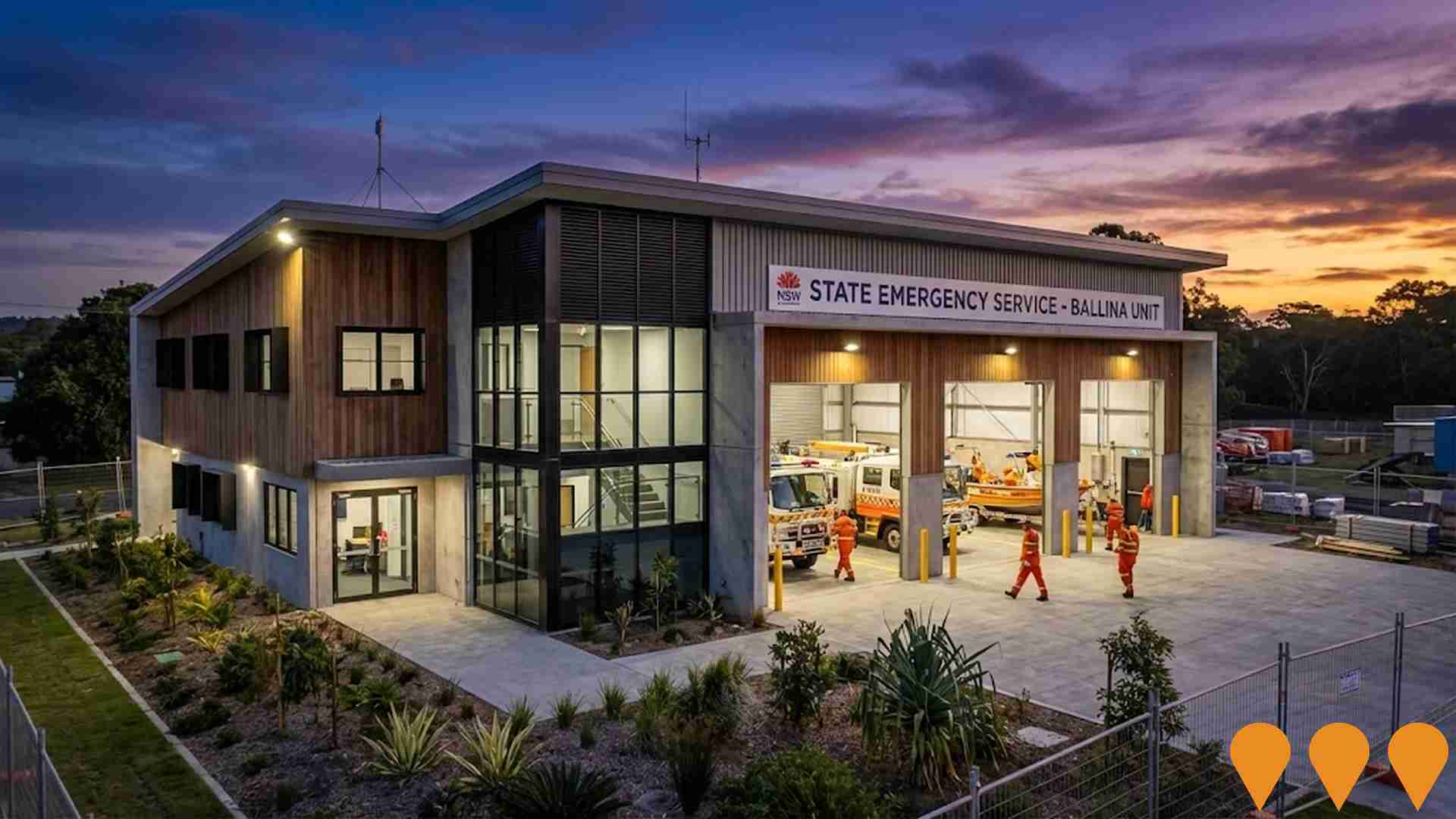
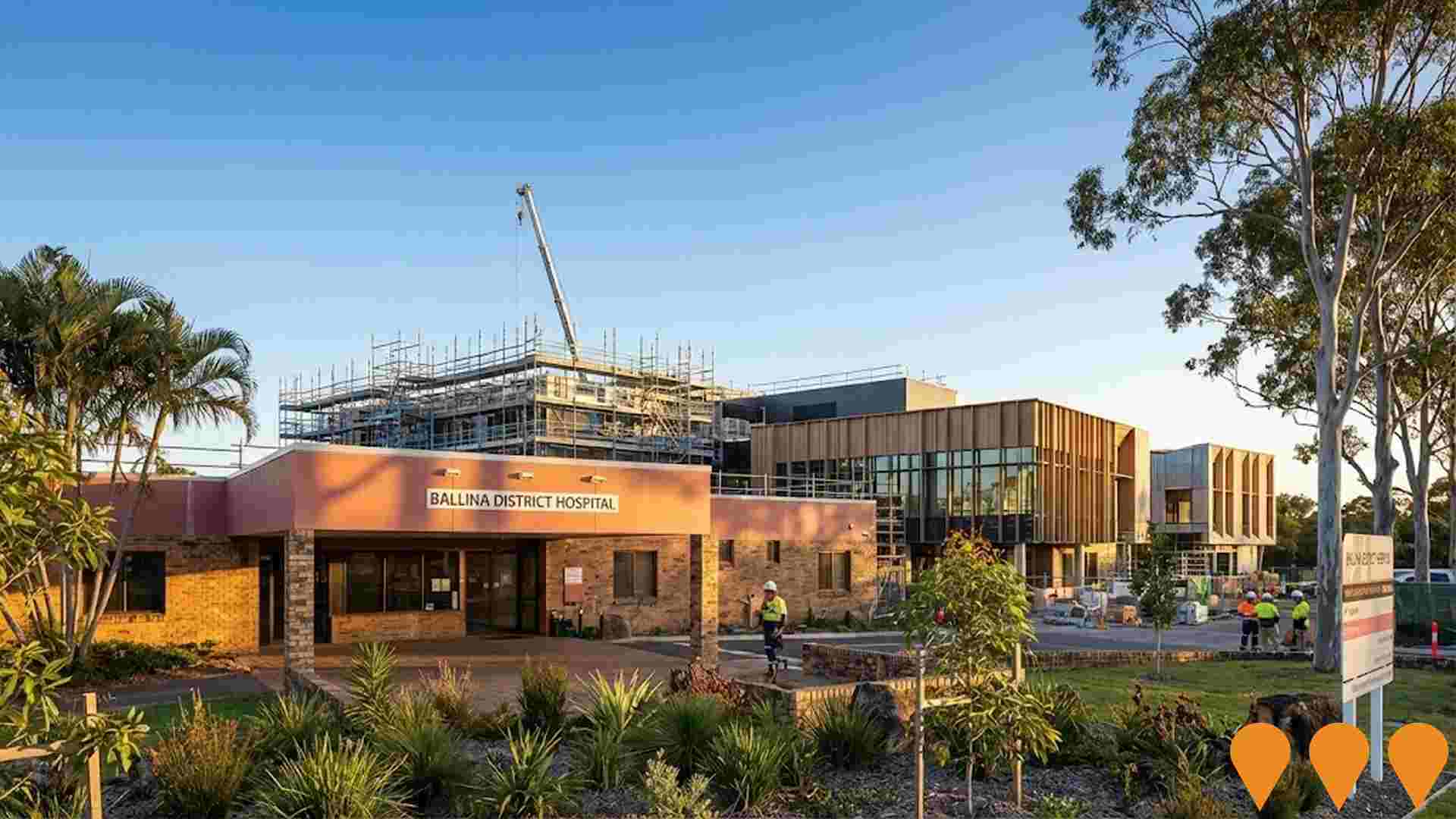
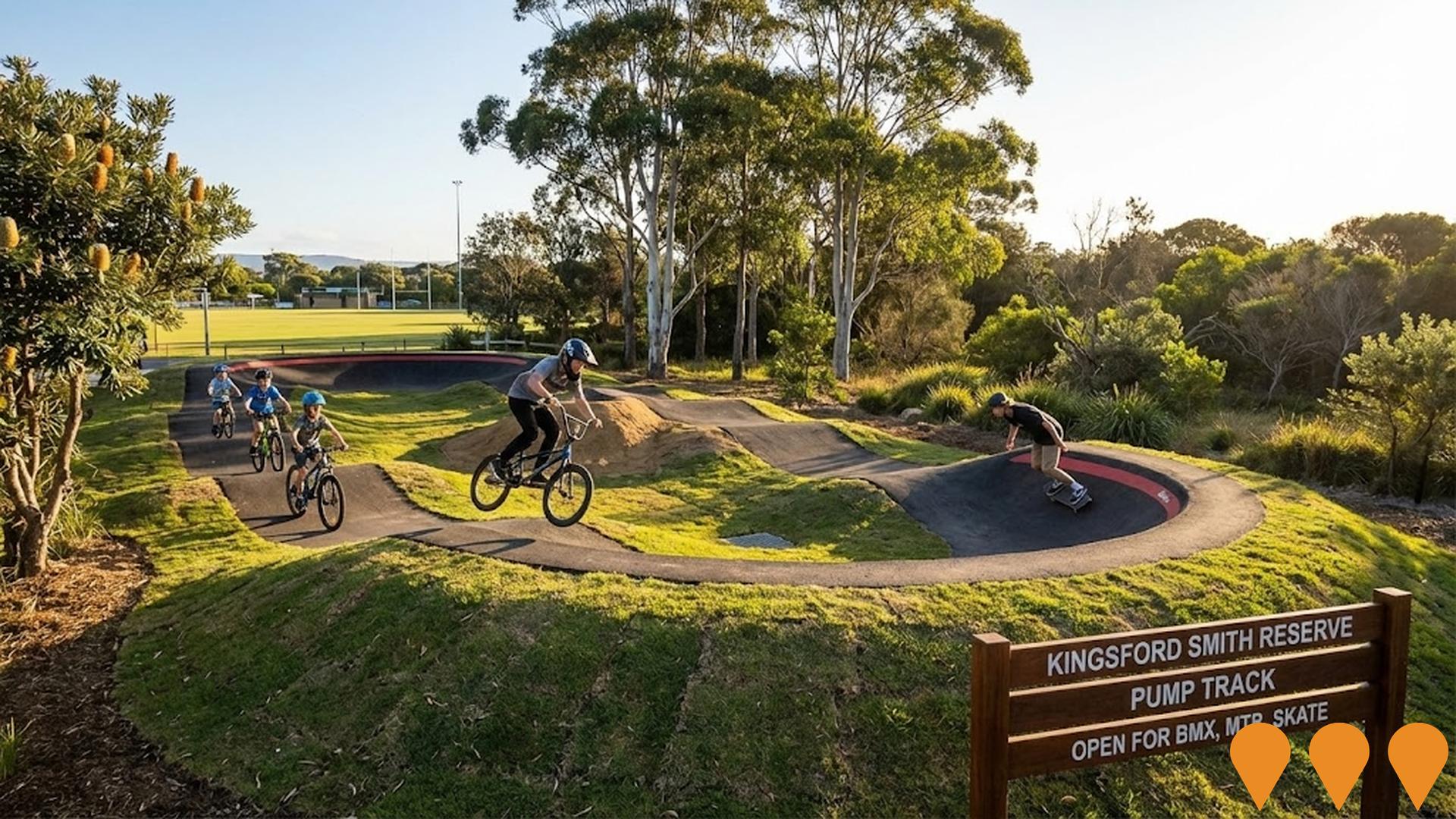
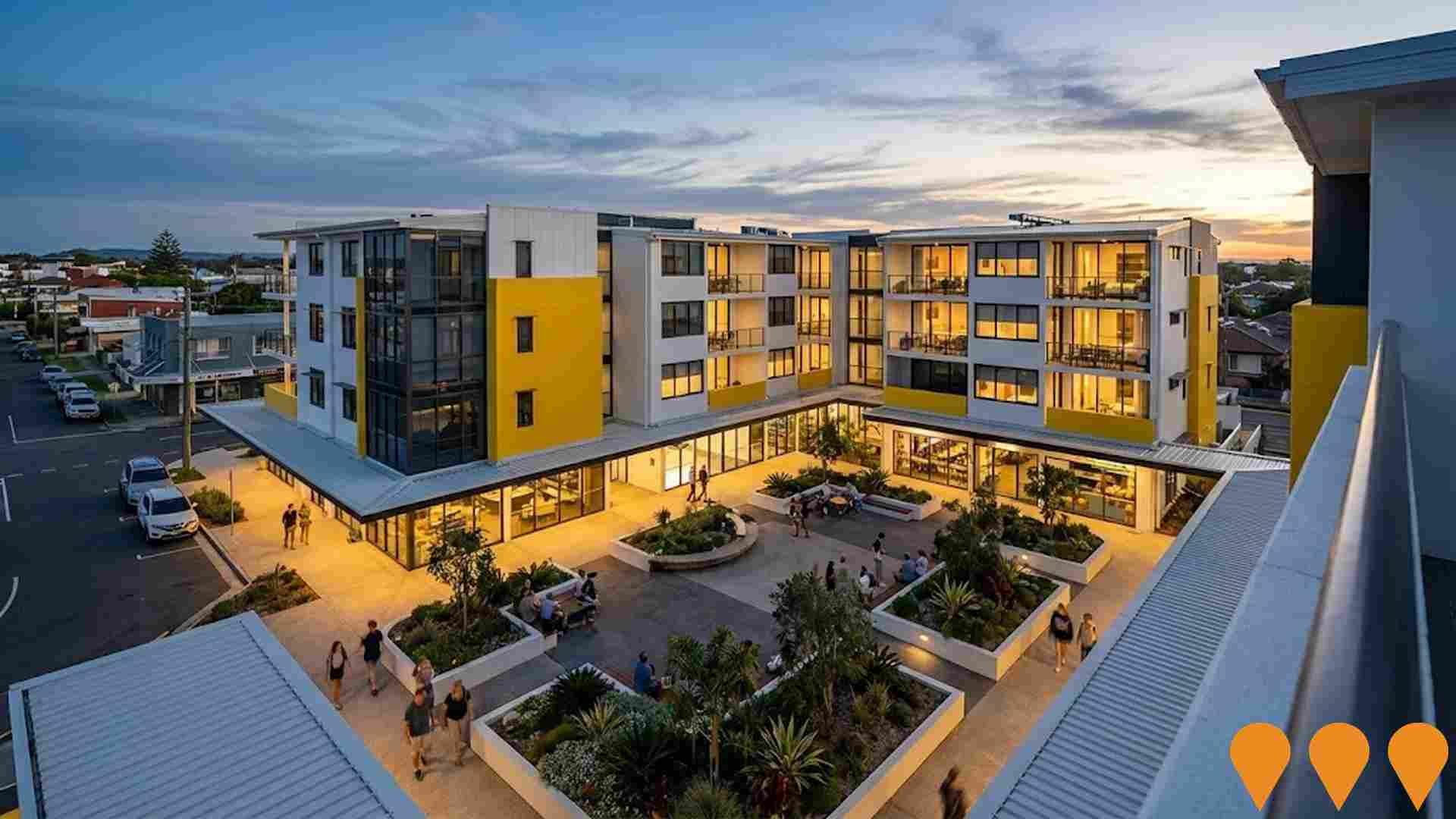
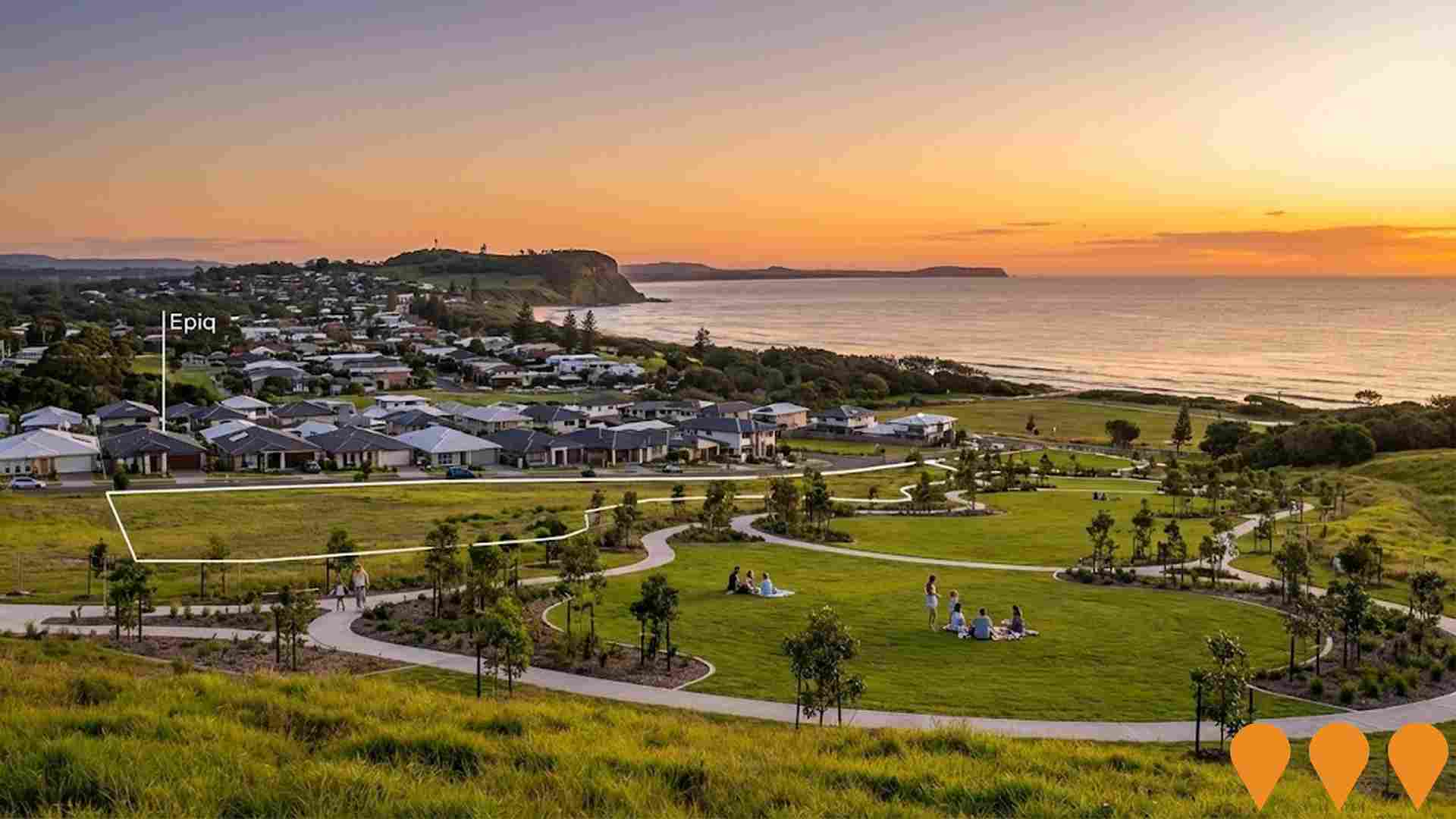
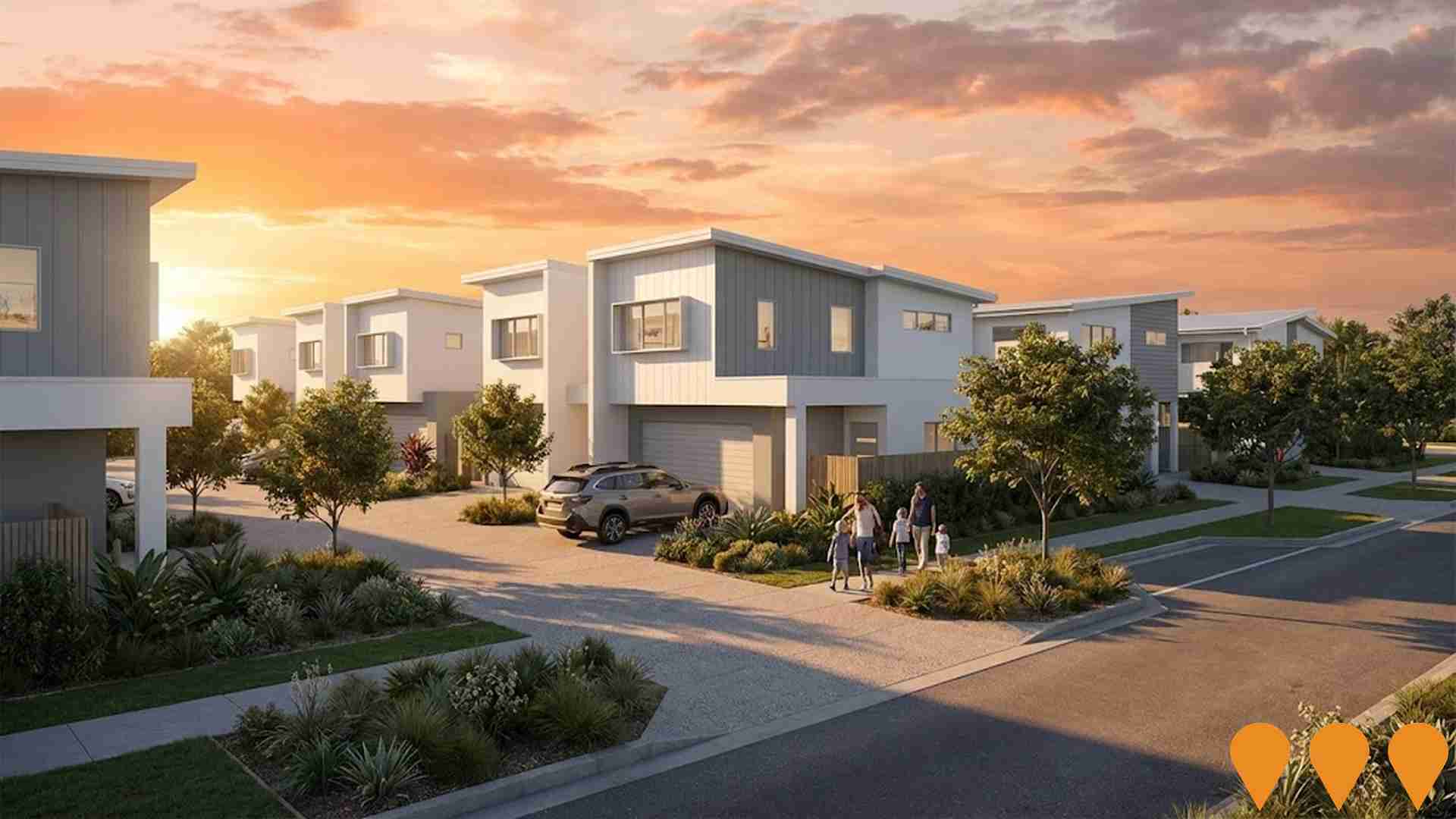
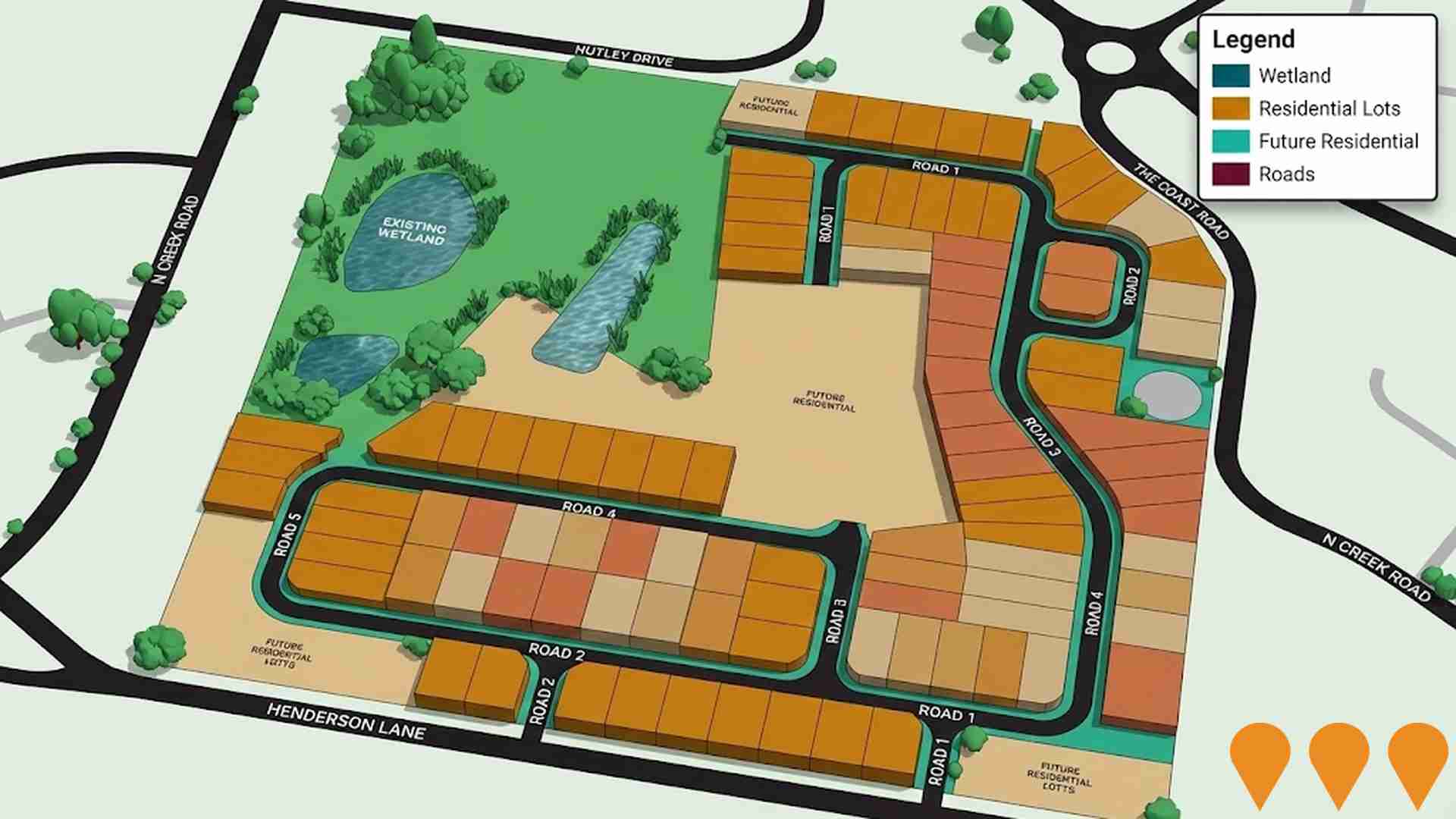
Community outcomes and development trajectory are heavily shaped by regional planning and public investment programs. AreaSearch has highlighted 5 significant undertakings poised to influence the locality, led by the New Ballina SES Headquarters, the Ballina District Hospital Redevelopment, the Kingsford Smith Reserve Pump Track, and Mana Ballina (Norton Street Villas).
Professional plan users can use the search below to filter and access additional projects.
INFRASTRUCTURE SEARCH
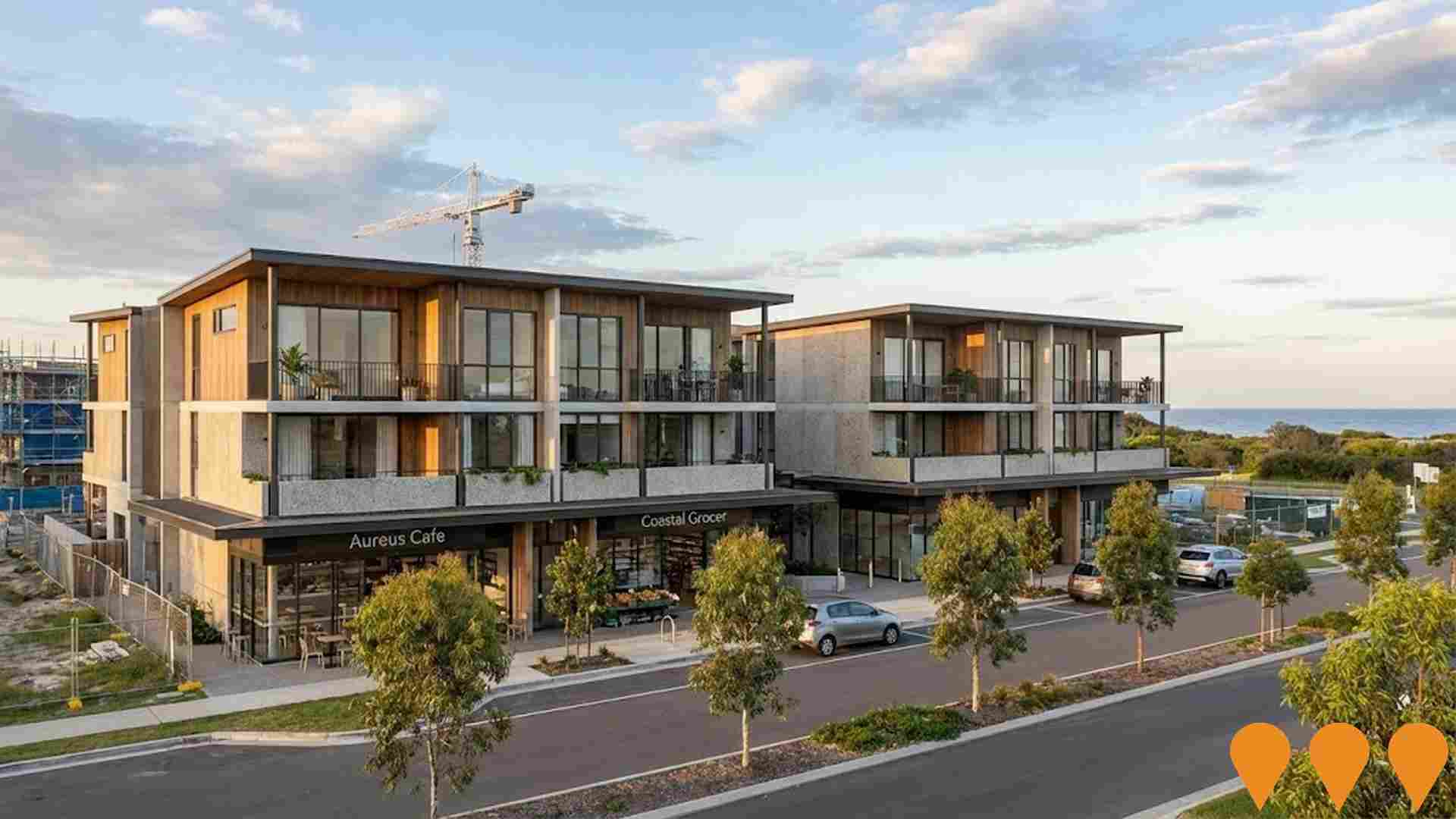
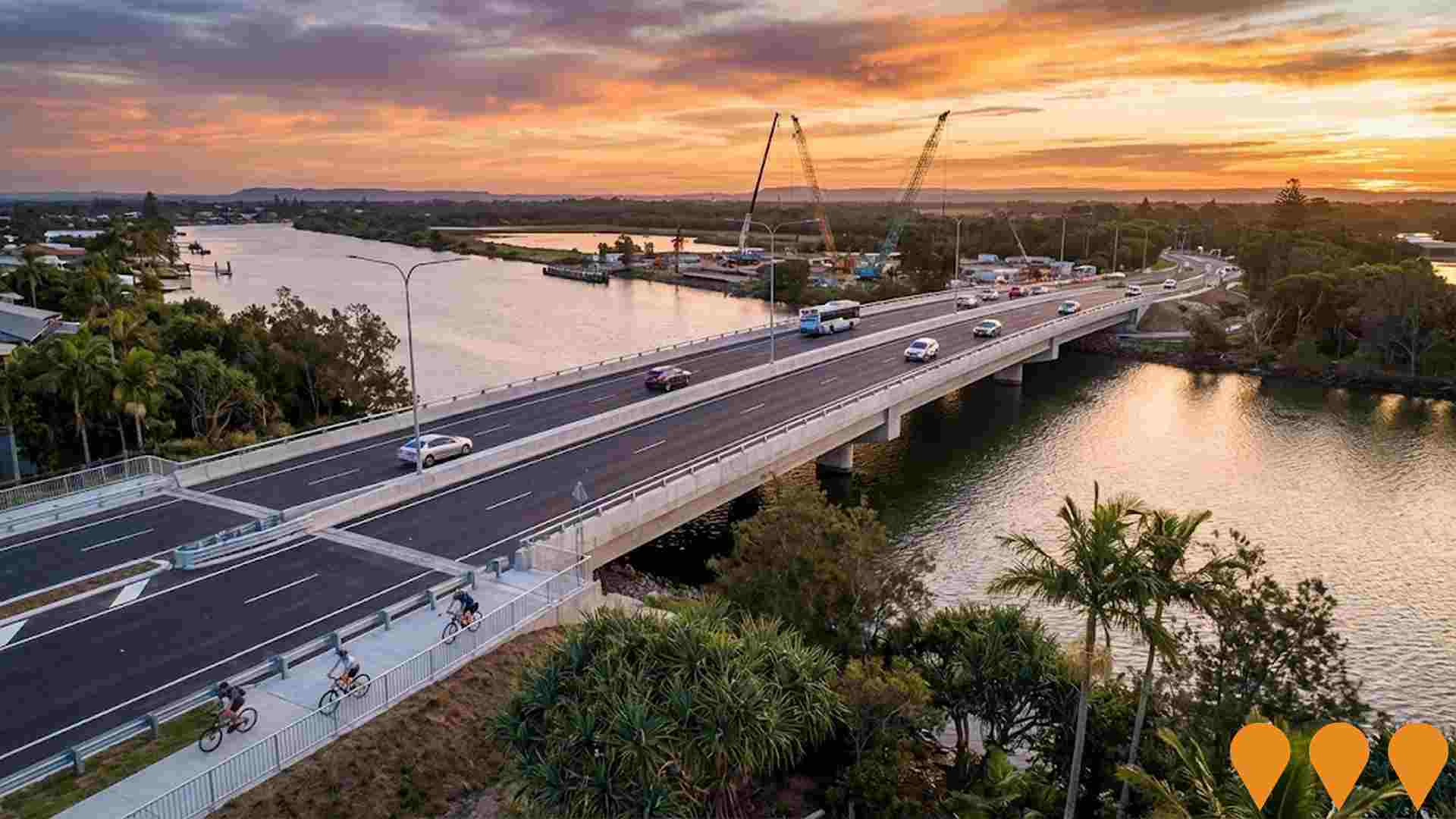
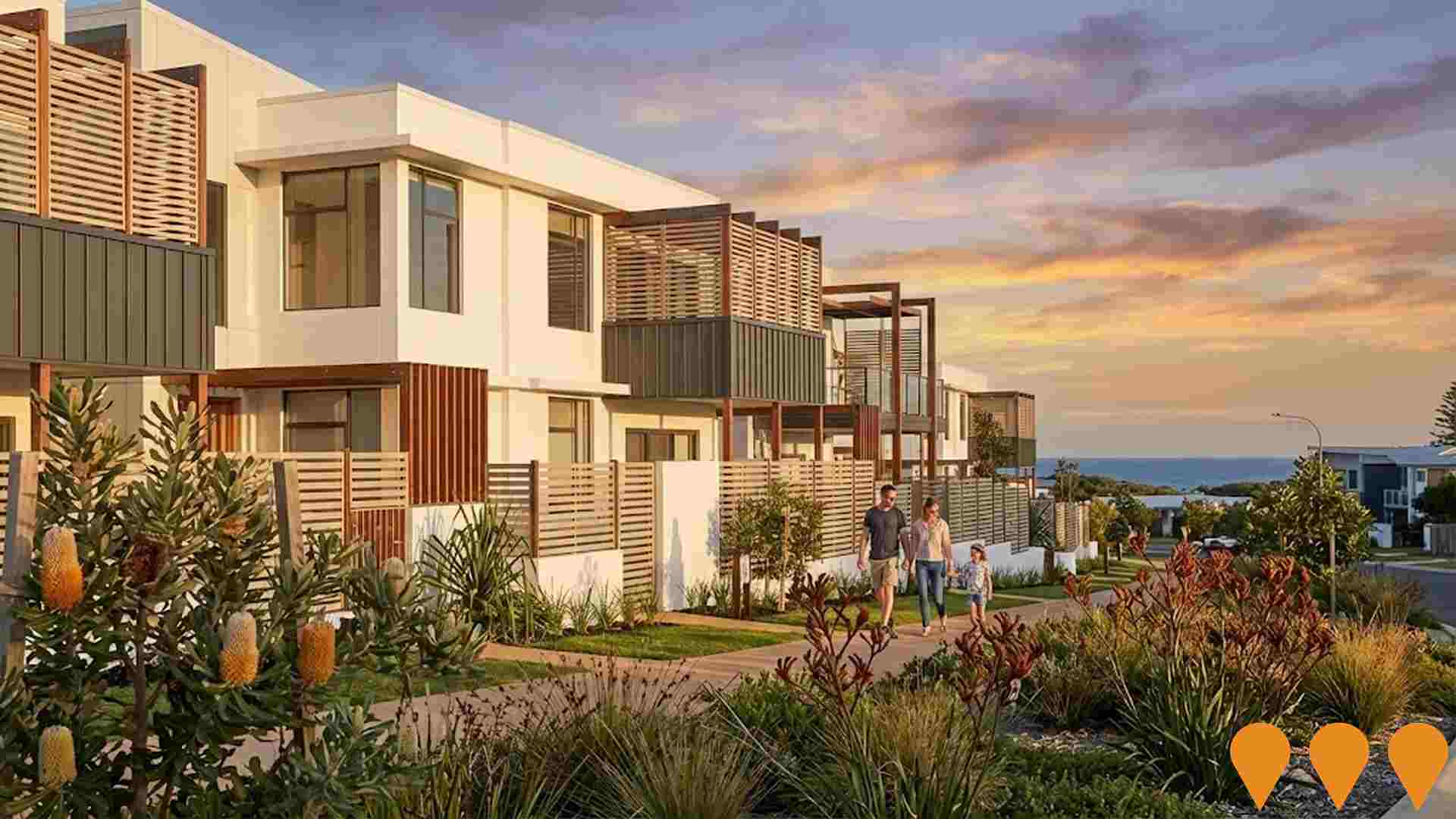
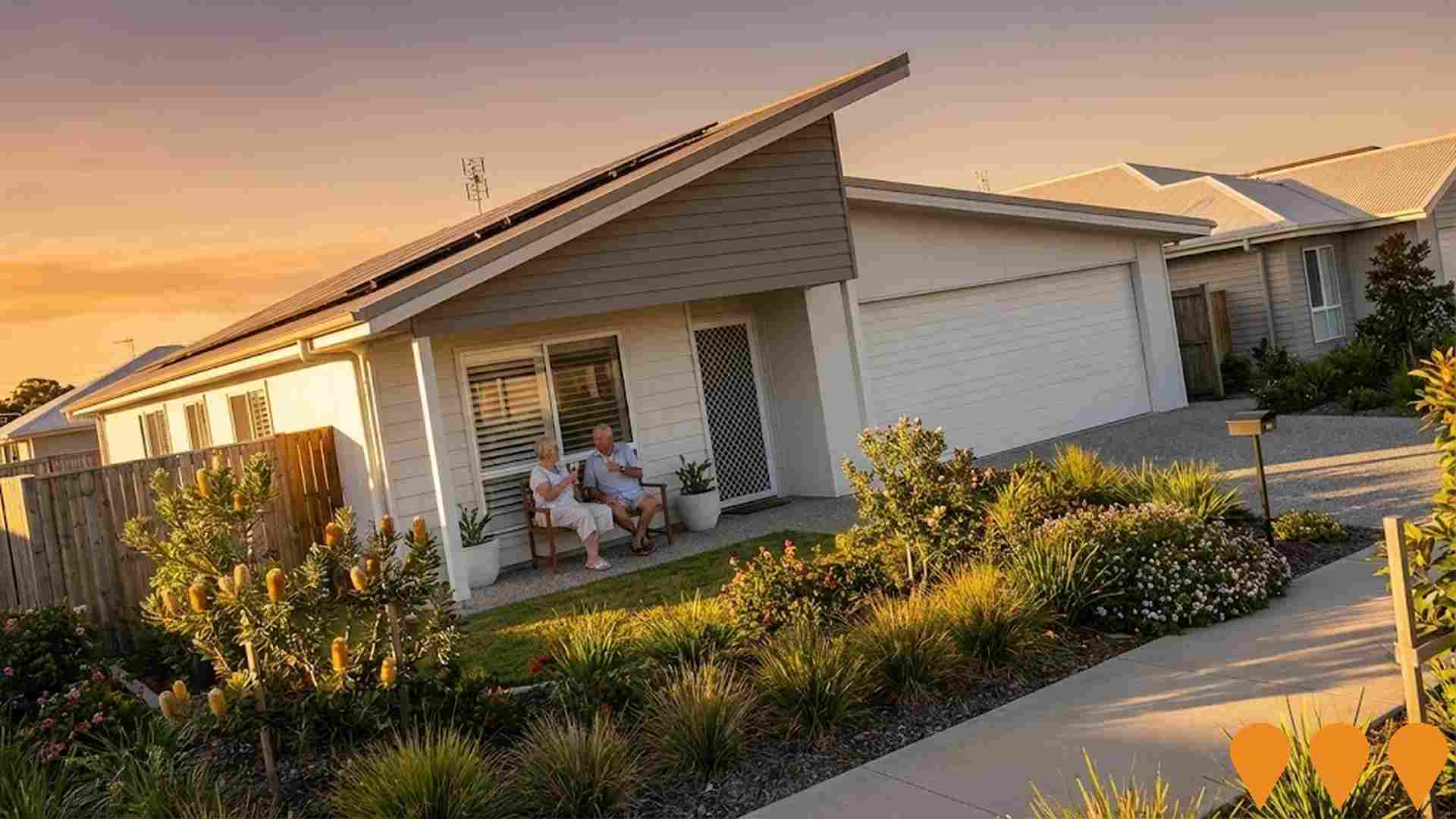
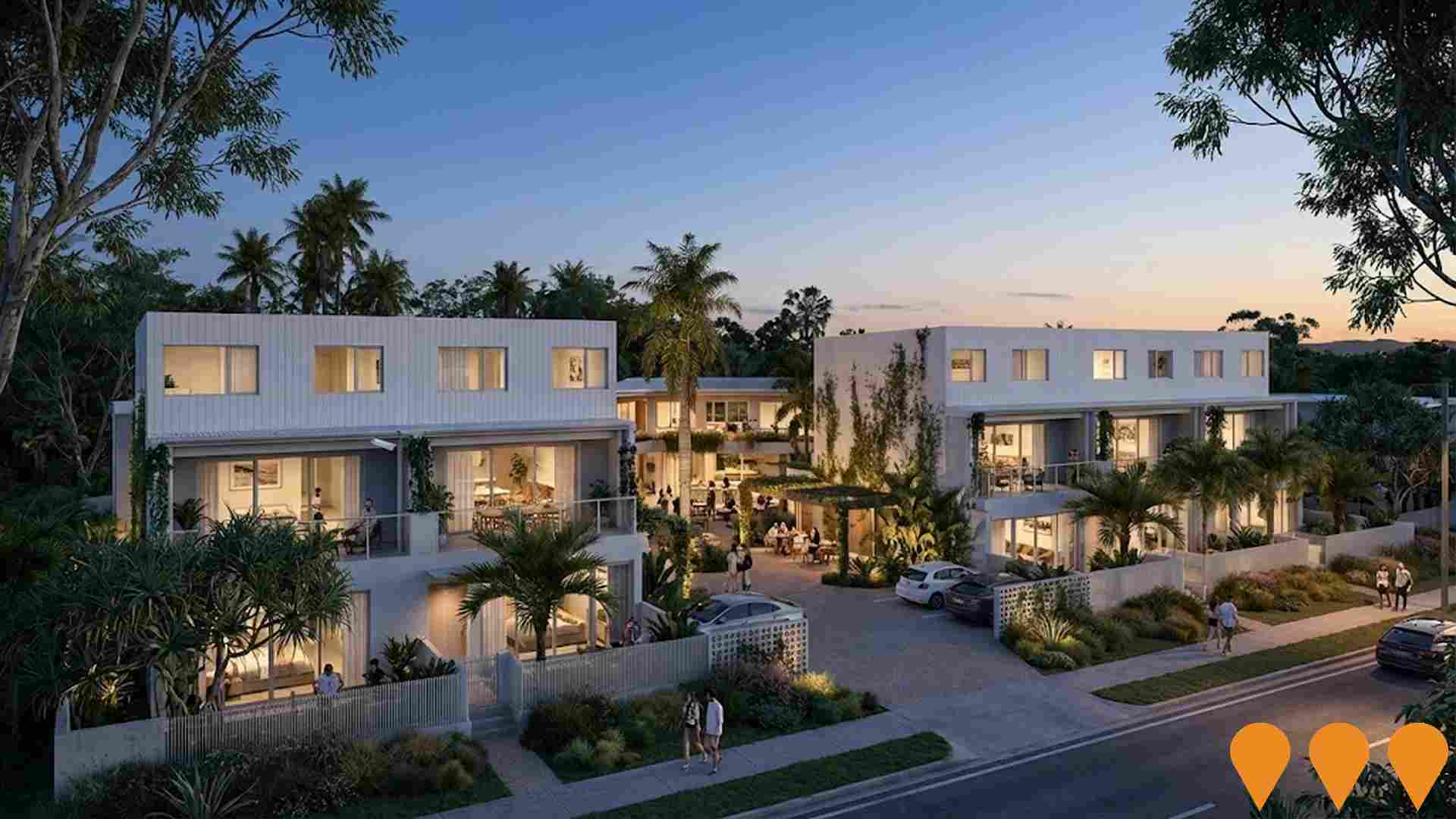
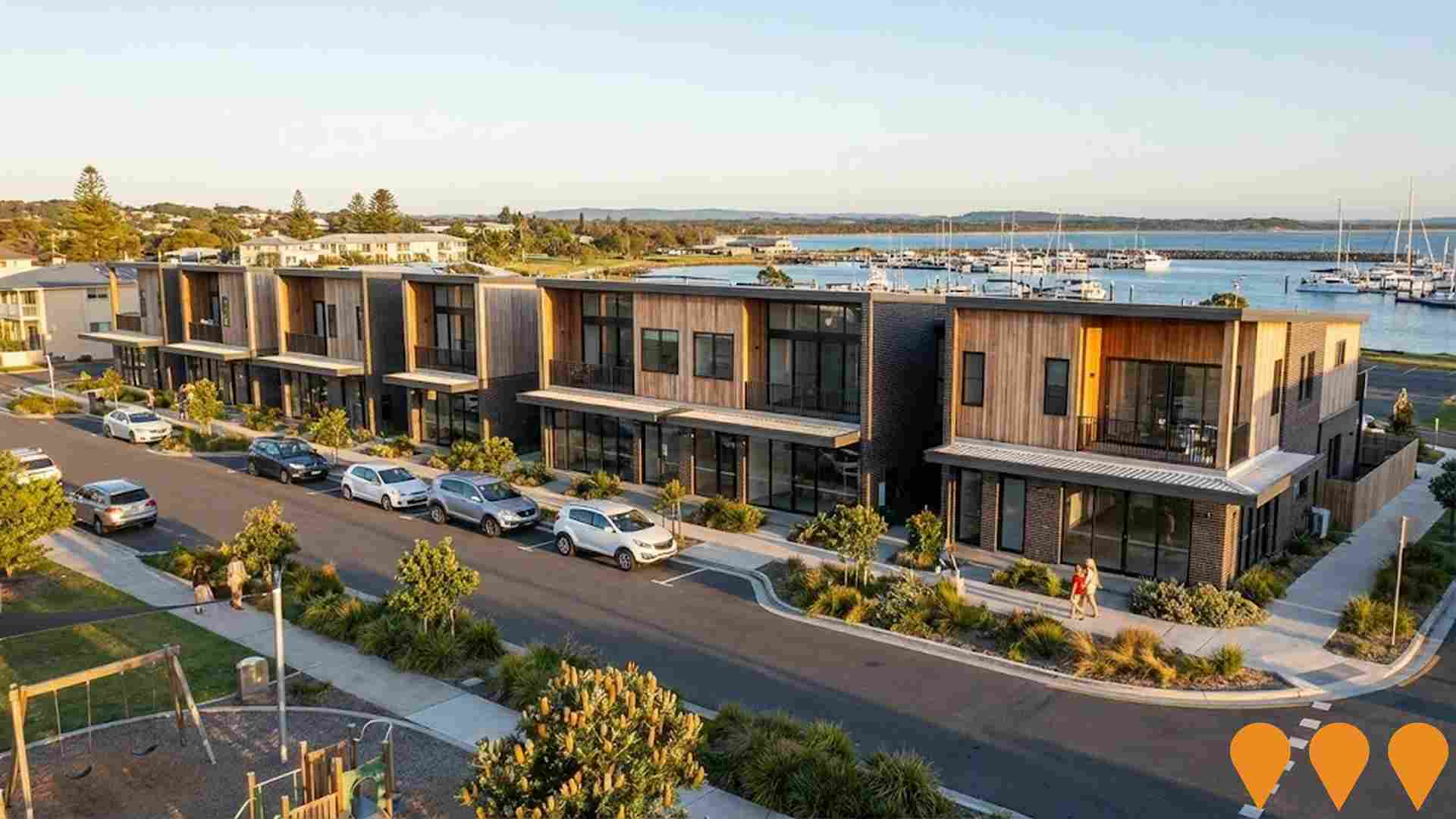
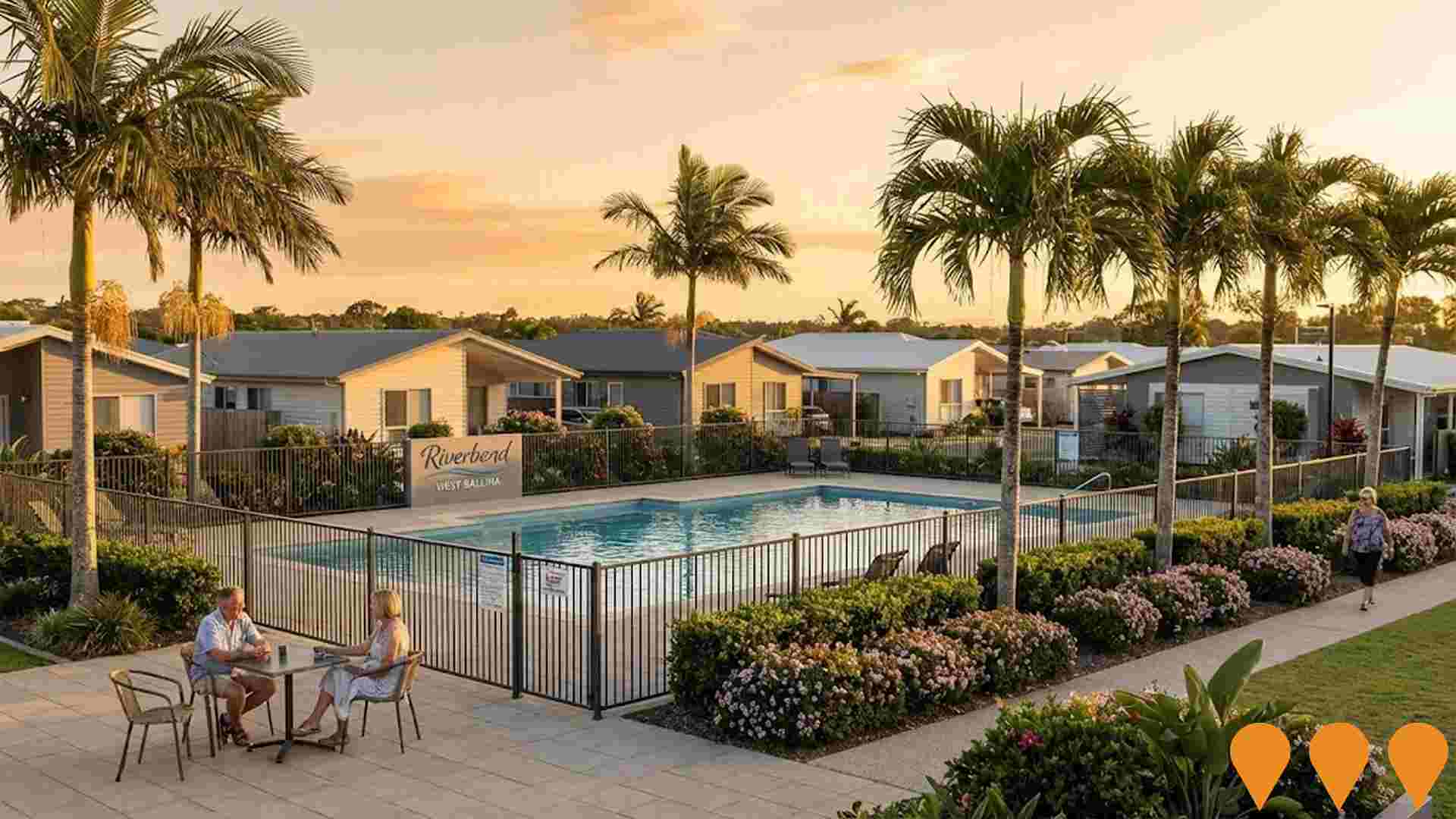
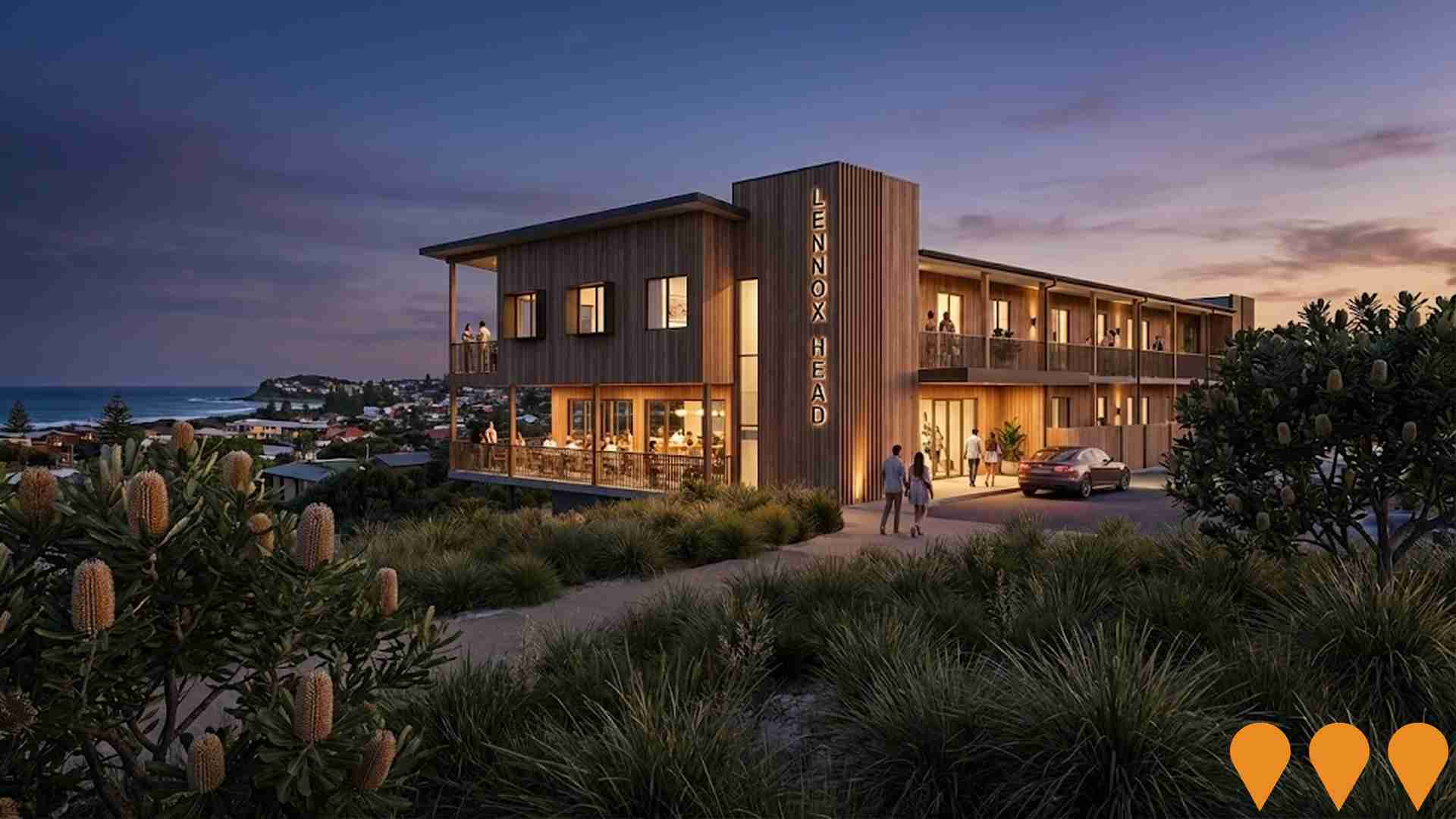
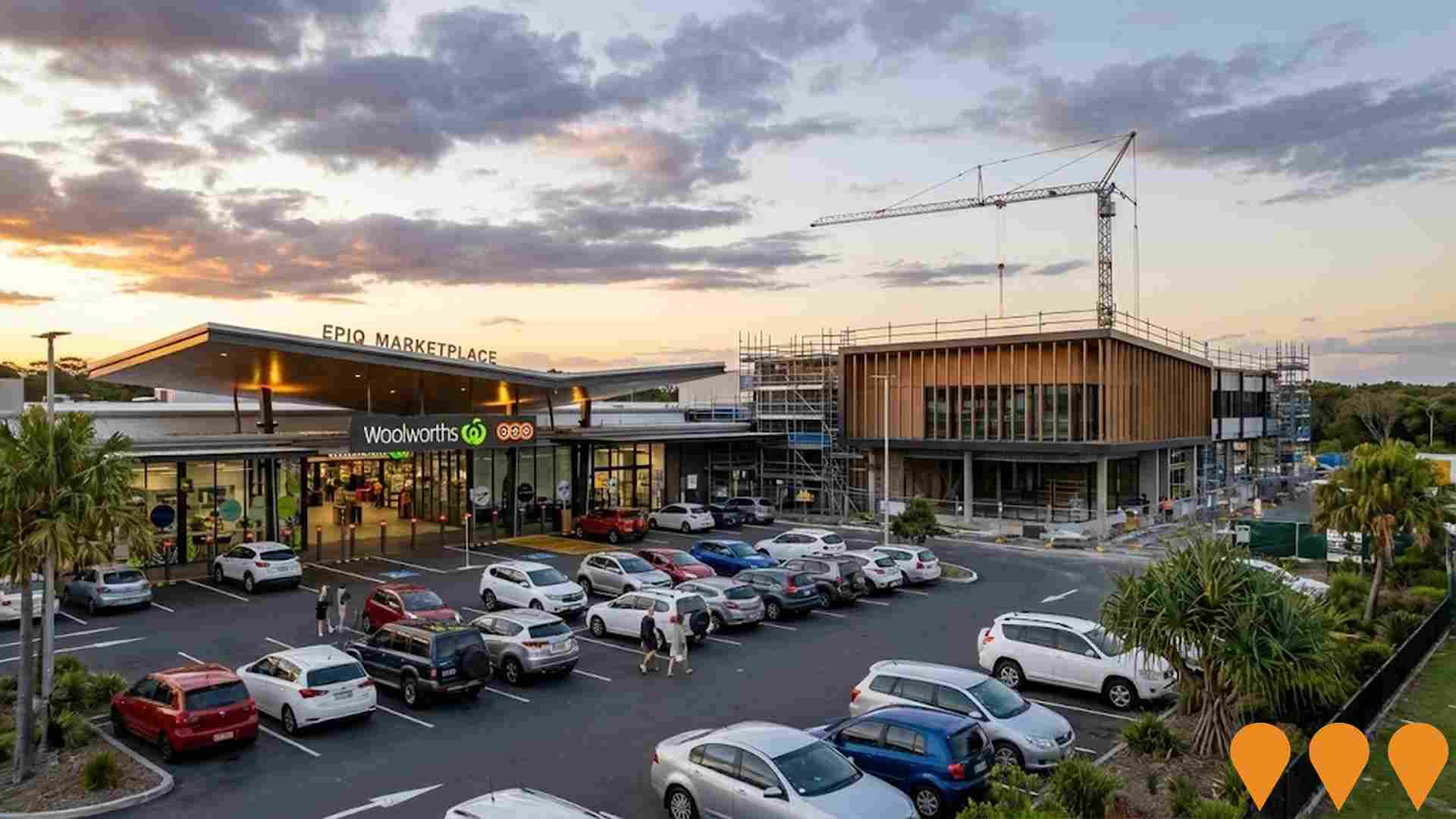
 Denotes AI-based impression for illustrative purposes only, not to be taken as definitive under any circumstances. Please follow links and conduct other investigations from the project's source for actual imagery. Developers and project owners wishing us to use original imagery please Contact Us and we will do so.
Frequently Asked Questions - Infrastructure
New Ballina SES Headquarters
A purpose-built NSW State Emergency Service (SES) Ballina Unit headquarters and Emergency Operations Centre. The $6.3 million facility replaces an outdated building with a six-bay vehicle shed, modern incident control area, training rooms, and administration offices. The project also features carparking, lighting upgrades, and significant landscaping including 80 new trees. Construction is being jointly funded by Ballina Shire Council and the NSW Government to enhance regional flood and disaster response capabilities.
Ballina District Hospital Redevelopment
Planning and site selection activities are underway for the future long-term clinical sustainability of Ballina District Hospital to serve the growing Northern Rivers region. Independent flood risk studies confirmed that the existing Cherry Street site is unsuitable for significant expansion due to new Probable Maximum Flood limits, shifting the project focus toward identifying a flood-safe greenfield site.
Kingsford Smith Reserve Pump Track
Construction of new pump track facility at Kingsford Smith Reserve for BMX, mountain biking, and skateboarding activities.
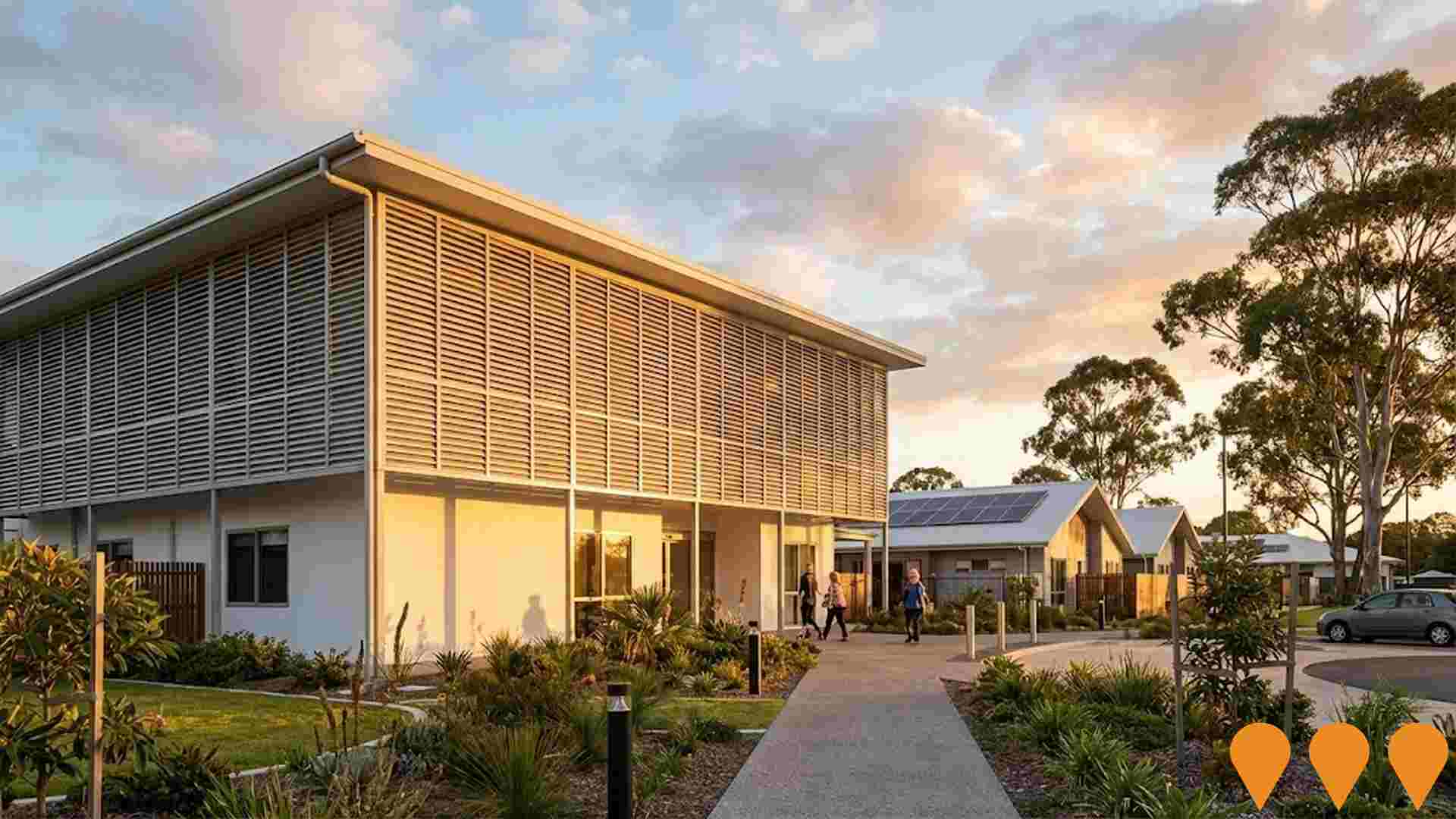
Crowley Aged Care Redevelopment
The $22 million multi-stage redevelopment and expansion of the Crowley aged care facility in Ballina, enhancing existing amenities and adding new facilities including a 42-room residential care building, two-story education centre with library and conference rooms, upgraded dining and entertainment areas, new administration building, cafe, and associated civil works to provide high-quality aged care services.
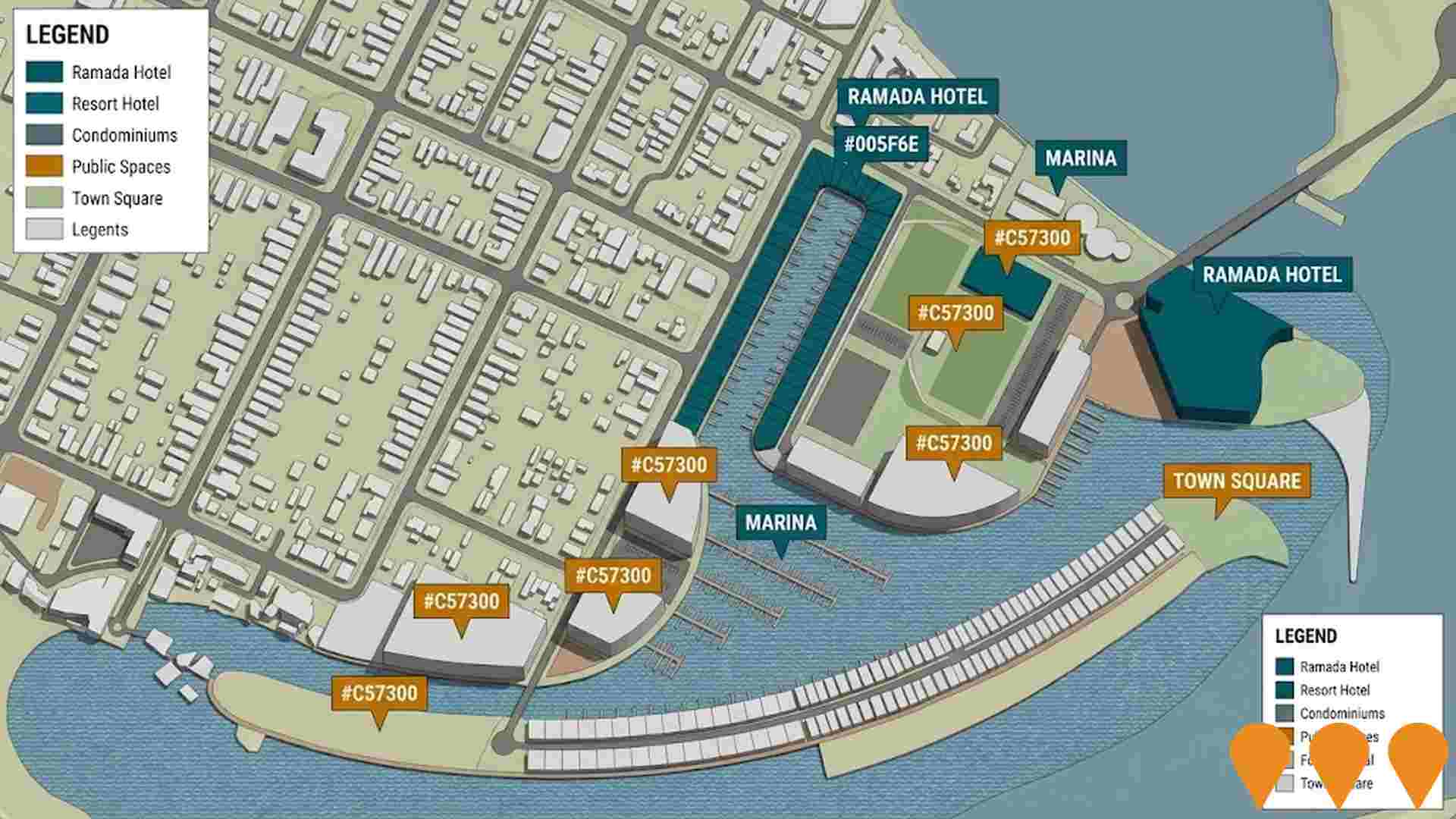
Ballina Marina Master Plan
Ballina Shire Council and Transport for NSW are developing a master plan to revitalise the West Ballina Trawler Harbour into a vibrant mixed-use waterfront marina precinct. The plan proposes upgraded commercial fishing berths, recreational marina moorings, public foreshore access, and complementary maritime commercial facilities. Strategic options testing and stakeholder consultation have informed preferred precinct configurations across crown and council-controlled parcels.
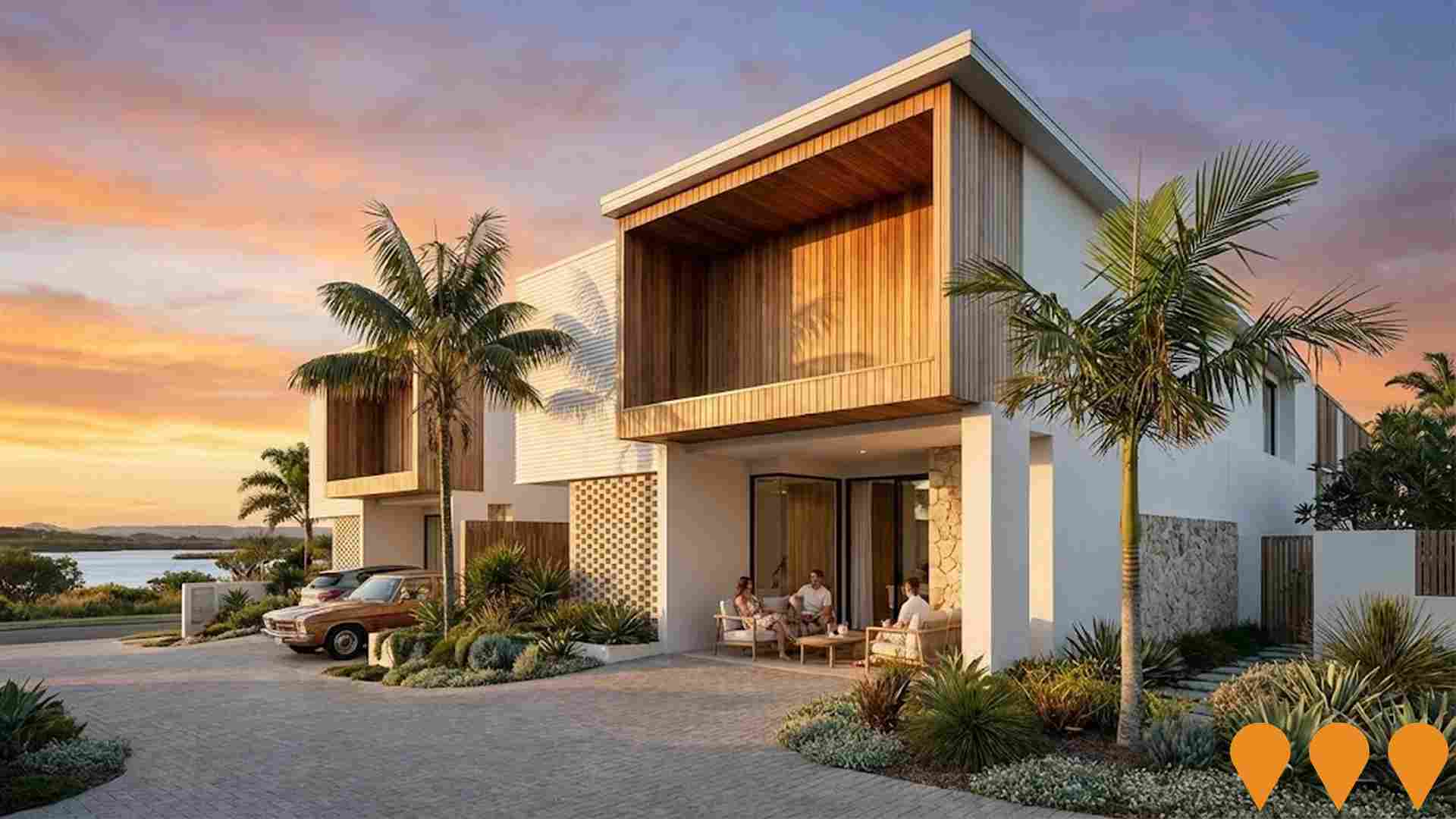
Mana Ballina (Norton Street Villas)
An exclusive development of 14 luxury three-bedroom villas inspired by Palm Springs architecture, designed by C2 Architecture with interiors by Mon Palmer from Bare Cabo. Located opposite North Creek, the development features organic colour palette, hit and miss brickwork, stone cladding, and timber-look panels. North-facing villas (1-7) offer 220sqm internal space with private terrace and day bed, while south-facing villas (8-14) provide 226sqm internal space with private balcony and first-floor living with 3.9m ceiling heights.
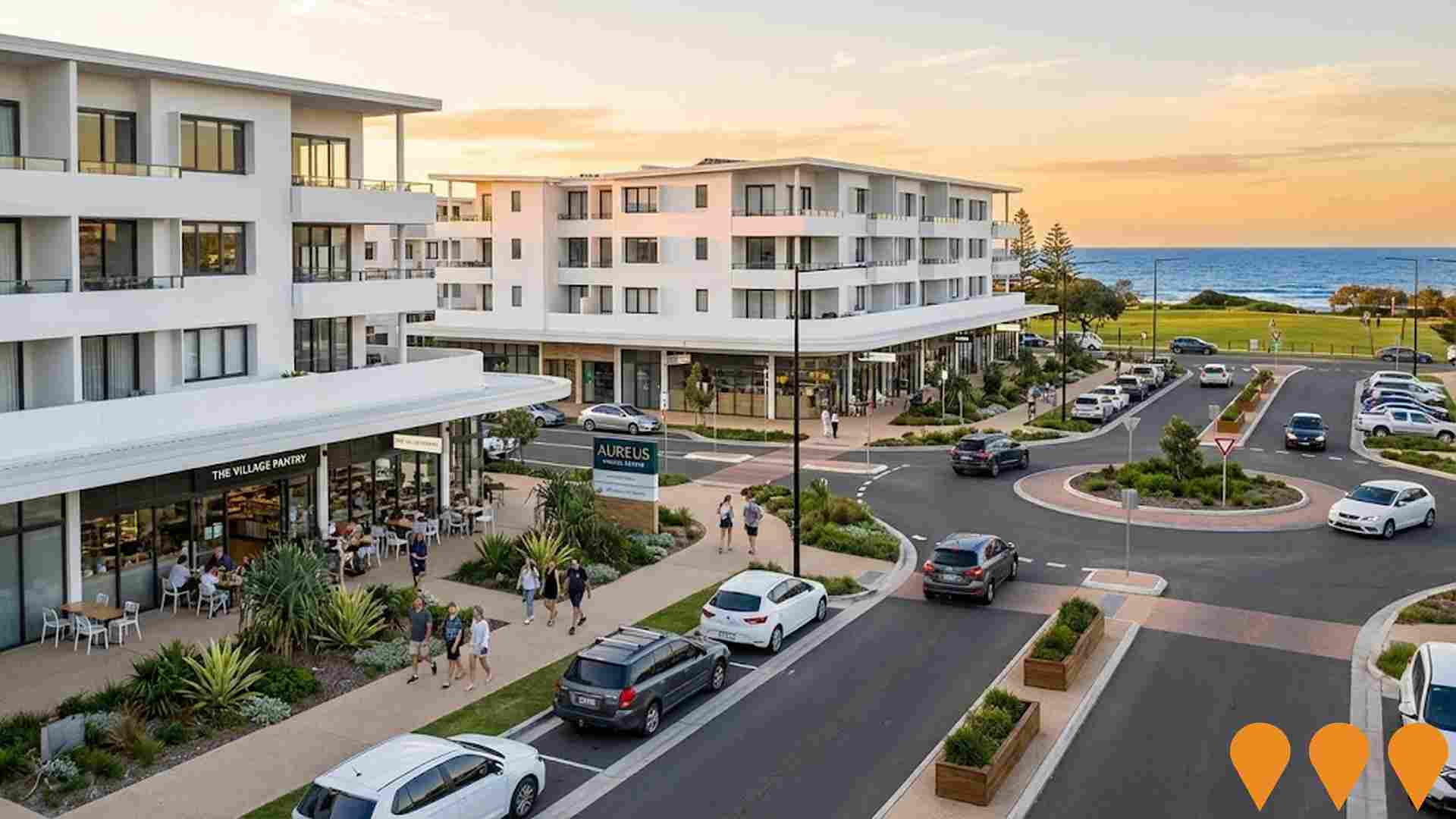
Aureus Village Centre - Skennars Head
Two lot Torrens Title subdivision to create 1 x 6,402m2 Lot (Proposed Lot 1) and 1 x 6,649m2 Lot (Proposed Lot 2). Construction of a mixed use development (Commercial/Residential) on Proposed Lot 1 comprising 3 retail premises, 5 food and drink premises and 17 shop top housing dwellings, and associated car parking, landscaping and infrastructure works, and subsequent Stratum subdivision and Strata Title subdivision.
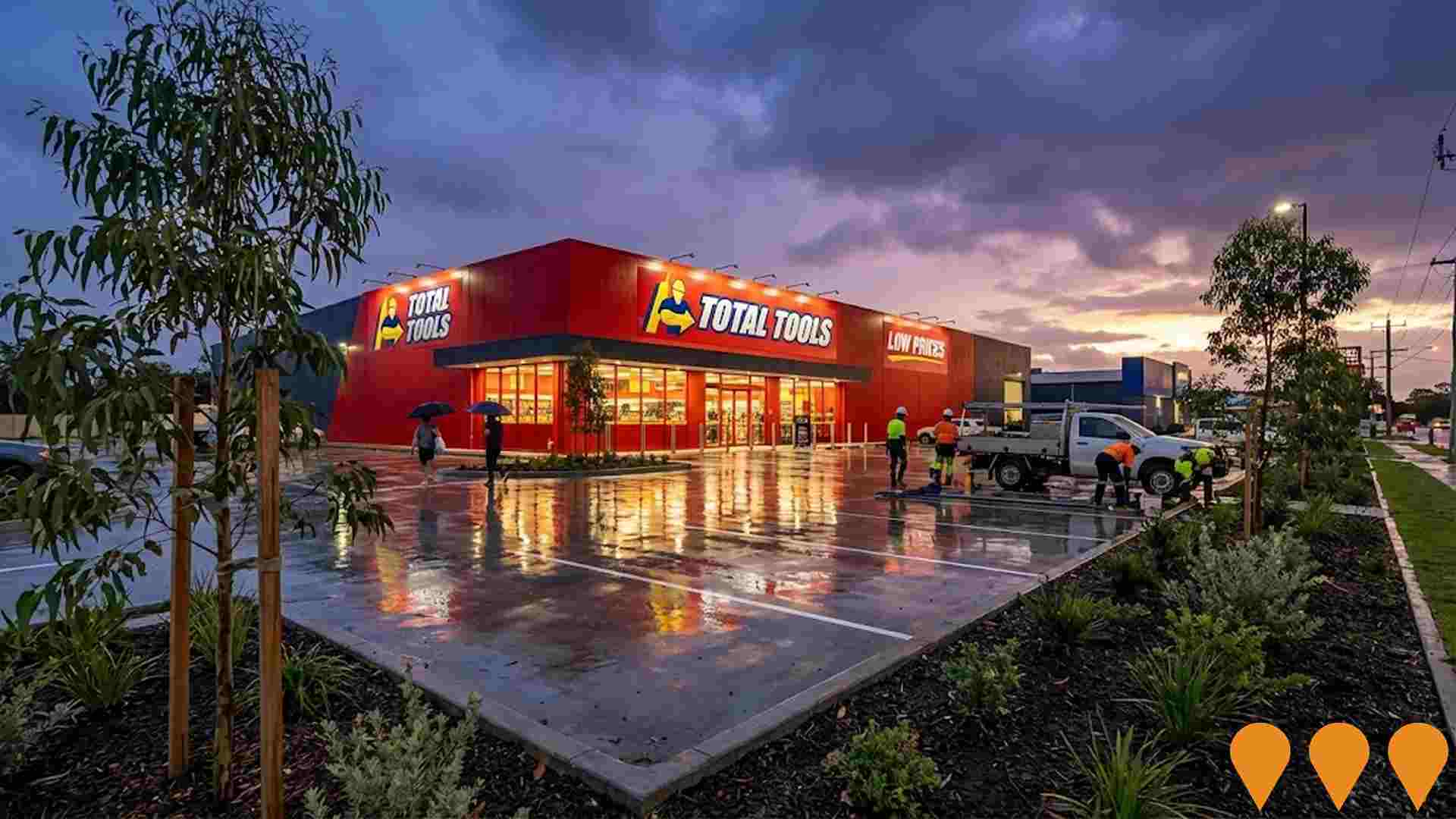
Total Tools Ballina
The Total Tools Ballina development is a large-format retail project featuring triple street frontage for enhanced visibility and accessibility. It aims to create a specialist trade and retail hub with Total Tools as the anchor tenant, emphasizing design excellence, customer experience, and sustainability.
2,767 residents of East Ballina are employed, from a labour force of 2,878. Unemployment sits at 3.9%, with participation at 57.6%. Weighted for its industry mix, the area's sectors are forecast to grow about 7.1% nationally over five years. That reflects industry composition only and makes no allowance for local population growth. The working-day population is estimated at 4,947, about 85% of the resident population, so more people leave the area for work than travel in. Unemployment and labour force come from ABS Small Area Labour Markets, updated quarterly; the industry and occupation profile is from the 2021 Census.
Detail
East Ballina features a qualified local labor pool centered in essential service industries, maintaining a low unemployment rate of 3.9% alongside an estimated 3.4% annual employment expansion according to statistical aggregations by AreaSearch. In March 2026, 2,767 residents were actively employed, with local unemployment tracking 0.2% below the 4.1% recorded for Regional NSW, while the participation rate registered at 57.6% compared to 60.6% across Regional NSW. Census records also indicate that 19.2% of workers operated from home, though pandemic containment measures may have influenced this outcome. Major employment sectors for local residents consist of health care & social assistance, education & training, and construction.
Notably, education & training shows strong local concentration, with workforce representation measuring 1.4 times the regional average. In contrast, agriculture, forestry & fishing accounts for only 1.7% of local workers relative to the 5.3% regional benchmark. Comparing resident numbers with local Census workplace figures suggests a constrained volume of local job opportunities within the immediate area. Synthesizing broader ABS and SALM statistical series, AreaSearch tracks a 3.4% rise in employment and a 4.2% expansion in the local labor force over the 12-month period, resulting in a 0.8 percentage point uptick in unemployment. By comparison, Regional NSW recorded a 0.9% decrease in employment, a 0.4% reduction in the labor force, and a 0.5 percentage point rise in unemployment. National employment outlooks published by Jobs and Skills Australia from Mar-26 provide additional context on future labor demand; applying these industry-level projections (which anticipate nationwide gains of 6.6% over five years and 13.7% over ten years) to the local industry composition yields an estimated local job increase of 7.1% over five years and 14.4% over ten years via simple proportional weighting, without incorporating localized demographic shifts.
Frequently Asked Questions - Employment
Median household income in East Ballina is $1,554 a week (about $81,000 a year), with median personal income at $814 a week. ATO records put median taxable income at $55,558 a year against an average of $74,660. Household income is from the 2021 Census; taxable income is from ATO Taxation Statistics for the latest financial year available, indexed forward using the ABS Wage Price Index.
Detail
AreaSearch postcode-level ATO aggregations for financial year 2023 show the suburb of East Ballina recording a median taxpayer income of $55,558 and an average of $74,660, both ranking notably high on a national scale and exceeding the Regional NSW median of $52,390 and average of $65,215. Incorporating a 10.32% Wage Price Index increase since financial year 2023 yields updated estimates of approximately $61,292 for median earnings and $82,365 for average earnings as of March 2026. Figures from the 2021 Census place household, family, and individual incomes moderately between the 38th and 52nd percentiles, with 32.1% of residents (1,875 individuals) earning between $1,500 - 2,999, mirroring the 29.9% share seen regionally.
Housing cost pressures are pronounced, with 84.7% of income remaining after shelter costs (40th percentile), while the area aligns with the 6th decile on the SEIFA income index.
Frequently Asked Questions - Income
East Ballina had 2,409 occupied dwellings at the 2021 Census, 61% detached houses and 7% apartments. 25% are owned with a mortgage, 29% rented and 46% owned outright. At that Census the median rent was $460 a week and the median mortgage repayment $1,800 a month. Rent absorbs 29.6% of household income here and mortgage repayments 26.7%. Dwelling stock, tenure and housing costs are 2021 Census measures — the only source that counts dwellings at this boundary size.
Detail
At the time of the latest Census, the housing inventory in East Ballina comprised 61.2% houses and 38.8% other dwellings, including apartments and semi-detached properties, whereas Regional NSW recorded 82.6% houses and 17.4% other dwellings. Outright ownership was high at 46.0%, surpassing the regional rate, alongside 25.3% of homes under a mortgage and 28.7% occupied by tenants. Median monthly mortgage commitments averaged $1,800 and weekly rent stood at $460, compared with Regional NSW figures of $1,733 and $330. Nationally, local mortgage obligations sit below the Australian average of $1,863, whereas rental costs remain considerably above the national benchmark of $375.
Frequently Asked Questions - Housing
East Ballina counted 2,409 households at the 2021 Census, averaging 2.3 people each. 24% are couples with children, against 34% couples without children. 26% of households are people living alone, and families average 1.8 children. Household and family composition is measured only by the Census, so these are 2021 figures.
Detail
Family units constitute 69.5% of households, comprising couples without children at 33.5%, couples with children at 23.9%, and single parent families at 11.5%. Non-family living arrangements account for the remaining 30.5%, consisting of single-person households at 26.1% and group homes at 4.2%. The typical household size stands at 2.3 people, tracking slightly below the 2.4 average for Regional NSW.
Frequently Asked Questions - Households
31.1% of adults in East Ballina hold a university qualification, including 22.0% with a bachelor degree and 5.3% with postgraduate qualifications. A further 24.8% hold a vocational qualification. 2 schools serve the area, with 603 enrolment places and an average ICSEA of 972 against a national benchmark of 1,000. Qualifications come from the 2021 Census; school enrolments, ICSEA and results come from ACARA's current release.
Detail
Attainment of higher education qualifications in the locality is substantial, with tertiary degree holders making up 31.1% of residents aged 15+, outperforming the 21.3% benchmark for Rest of NSW and the 24.3% recorded across the wider SA4 region. Bachelor degrees represent the primary credential at 22.0%, accompanied by postgraduate qualifications at 5.3% and graduate diplomas at 3.8%. In addition, technical and vocational skills are widely held, with 37.3% of residents aged 15+ possessing vocational credentials, consisting of advanced diplomas (12.5%) and certificates (24.8%). Community engagement in structured learning is substantial, with 26.1% of residents actively undertaking formal studies.
Within this student cohort, 8.7% are enrolled in primary education, 7.2% in secondary education, and 3.5% in tertiary courses.
Frequently Asked Questions - Education
Schools Detail
Public transport in East Ballina reaches 122 stops on 39 routes, timetabled for about 390 services a week. The typical home sits about 100 m from its nearest stop. Households keep an average of 1.4 vehicles. Stop and service counts are built from operators' published GTFS timetables and refresh with each timetable release; vehicle ownership is from the 2021 Census.
Detail
Public transport connectivity in East Ballina is supported by 122 active bus stops distributed across 39 distinct routes that deliver 394 weekly passenger trips. Service access is rated as excellent, with the typical distance from dwellings to the closest stop measuring 103 meters. Commuting patterns reflect an outward journey profile, where private motor vehicles comprise 94% of trips, cycling represents 2%, and vehicle ownership averages 1.4 per dwelling, with 19.2% of residents working remotely at the 2021 Census under potential pandemic influences. Across the complete transit network, services operate at an average rate of 56 trips per day, translating to roughly 3 weekly trips per individual stop.
The spatial mapping illustrates the 100 nearest transit points relative to the central coordinate.
Frequently Asked Questions - Transport
Transport Stops Detail
66.8% of residents in East Ballina report no long-term health condition, a healthier profile than 79% of areas nationally. 4.9% need daily assistance with core activities, and 56.4% hold private health cover. The standardised death rate runs at 3.9 per 1,000 residents. Health conditions, assistance needs and insurance are 2021 Census measures; the death rate comes from current ABS releases.
Detail
Evaluation of mortality statistics and chronic condition incidence by AreaSearch indicates favorable overall wellness in East Ballina, characterized by a low prevalence of widespread health ailments across age brackets. Furthermore, private healthcare coverage is widespread, encompassing approximately 56% of the population (~3,297 people), outperforming the 51.9% level observed across Regional NSW. The primary reported health conditions across the community are arthritis and mental health challenges, affecting 9.7 and 8.2% of residents, while 66.8% reported having no long-term medical issues, compared to 63.3% across Regional NSW. Favorable health outcomes are evident among residents under 65, and while individuals aged 65 and over represent 27.3% of the populace (1,595 people) compared to 23.3% regionally, senior wellness measures track positively alongside national standards.
Frequently Asked Questions - Health
East Ballina is largely Australian-born, at 87.3% of residents, with 4.4% speaking a language other than English at home. The largest reported ancestries are English (32.4%) and Australian (27.2%). Ancestry, language and country of birth are counted only by the Census, so these are 2021 figures.
Detail
Measures of cultural diversity in East Ballina track below standard benchmarks, with 87.3% of the resident base born in Australia, 91.6% holding citizenship, and 95.6% speaking exclusively English at home. Christianity forms the predominant religious affiliation, encompassing 50.8% of the community. In relative terms, the most distinct variation is observed in Judaism, representing 0.1% of residents, in line with the 0.1% recorded across Regional NSW. Examining parental countries of birth, the primary ancestries represented in East Ballina comprise English (32.4%), Australian (27.2%), and Irish (11.4%). Other specific cultural backgrounds show notable variation from regional averages, including Scottish at 9.6% (compared to 8.0% across the region), French at 0.7% (against 0.4%), and Welsh at 0.6% (against 0.5%).
Frequently Asked Questions - Diversity
The median resident of East Ballina is 48, older than 88% of areas nationally. 19.0% of residents are aged 15 to 34. Age cohorts are not raw Census counts: the Census split is re-based to the latest ABS population estimates and state projections.
Detail
The age distribution in the suburb of East Ballina aligns broadly with Regional NSW benchmarks, showing a maximum divergence of 4.6 percentage points across segments. AreaSearch projects the median age at 48 as at August 2026, matching the 2021 Census figure while sitting 5 years above the Regional NSW median of 43 and above the national Census median of 38. The 25 - 44 age cohort expanded from 21.2% at the Census to an estimated 22.9% currently, and is projected to absorb the bulk of growth through 2041 by adding 339 residents (25%) to reach a total of 1,677.
Frequently Asked Questions - Age
Data & MethodBoundaries, Sources & Method for East Ballina
9 of 14 data sections on this page were updated within the last 12 months — the newest current to Oct 2026.
Everything is aggregated to the Suburb (SAL) boundary shown above, on a 2021 Census baseline. Only 3 sections — housing, households and cultural diversity — still wait on the 2026 Census.
The ledger — source, cycle and currency by section
| Section | Source & update cycle | Currency |
|---|---|---|
| Updated within the last 12 months 9 sections | ||
| Population | ABS, GNAF, Geoscience Australia Annual (ABS ERP) | Aug 2026 2 months ago headline measures · 2021 Census baseline |
| Re-based to the ABS Estimated Resident Population (June 2025 release) and updated with new dwellings from GNAF address data. Current to Aug 2026, with the 2021 Census supplying the small-area baseline. | ||
| Age profile | ABS, Geoscience Australia, State governments Annual | Aug 2026 2 months ago headline measures · 2021 Census baseline |
| Age cohorts are re-based to the latest ABS population estimates and state projections, current to Aug 2026. Each cohort is held as a Census baseline and a current estimate. | ||
| Development & approvals | ABS, GNAF Monthly (ABS approvals) | Aug 2026 2 months ago headline measures · Jul 2026 baseline |
| Property sales & rents | Valuer General, Rental Board, ABS Weekly sales, quarterly rents | Oct 2026 this month headline measures · Sep 2026 baseline |
| Sales from the state Valuer General register, refreshed weekly, and rents from quarterly rental bond lodgements. Both are read live each time this page loads, current to Oct 2026. | ||
| Infrastructure projects | Infrastructure Australia, Local governments Daily | May 2026 5 months ago all 2 projects tracked here |
| Project pipeline maintained continuously from Infrastructure Australia, state agencies, local government and public announcements. Records are added and revised daily; this area was last updated May 2026. | ||
| Employment | ABS, DEWR, JSA Quarterly (ABS SALM) | Mar 2026 7 months ago headline measures · 2021 Census baseline |
| Unemployment and labour force from ABS Small Area Labour Markets, current to Mar 2026. The growth outlook applies Department of Employment (now Jobs and Skills Australia) forecasts for all 19 industry divisions to the local industry mix, so it measures sector composition rather than local expansion and makes no allowance for population growth. Job demand comes from the same agency via its Internet Vacancy Index; industry and occupation structure from the 2021 Census. | ||
| Education | ABS, ACARA Annual (ACARA) | Sep 2026 last month headline measures · 2021 Census baseline |
| Transport | ABS, State Transport Departments Each timetable release | Jul 2026 3 months ago headline measures · 2021 Census baseline |
| Services & amenities | Provider directories, ACECQA Continuous | Sep 2026 last month all 14 measures |
| Annual and financial-year sources 2 sections | ||
| Income | ABS, ATO Annual (ATO) | FY 2023 3 years ago headline measures · 2021 Census baseline |
| ATO taxable income statistics for FY 2023, indexed forward using the Wage Price Index. Census household income provides the distribution detail. | ||
| Health | ABS, ATO Annual | 2024 2 years ago headline measures · 2021 Census baseline |
| Census-measured — next update: 2026 Census 3 sections No more current small-area source exists for these, so they are labelled as Census-measured rather than implied to be current. | ||
| Housing | ABS 5-yearly (Census) | 2021 Census next update 2026 all 30 measures |
| Households | ABS 5-yearly (Census) | 2021 Census next update 2026 all 18 measures |
| Cultural diversity | ABS, Geoscience Australia 5-yearly (Census) | 2021 Census next update 2026 all 44 measures |
"Currency" is the most recent release feeding that section. Where the Census supplies the structural baseline underneath a current headline figure, the row says so.
How the numbers are built
Population
The Census provides the small-area baseline, aggregated from mesh blocks to this boundary. It is then re-based to the ABS Estimated Resident Population (June 2025 release), and new dwellings built since Census night are counted from address data — 27 validated new addresses here. The headline figure is therefore a current estimate for Aug 2026, not a 2021 count (5,882 at the 2021 Census → 5,843 now). Annual growth rates are compound (CAGR), not simple averages.
Age profile
Cohort shares are not raw Census counts. Every cohort is held as a pair — the Census baseline and a current estimate — and the split is re-based using ERP and state population projections, current to Aug 2026. Median age is the Census median plus modelled change since. Charts that show both are labelled "2021 Census vs Current Estimate".
Property sales
Sourced from the state valuation authority's sales register — current, not Census, and refreshed weekly. Medians are calculated from settled transactions in the period shown; periods with very low transaction counts are flagged or suppressed, because a handful of sales can move a median substantially.
Rents
Derived from state rental bond lodgement data, by dwelling type and bedroom count. Bonds are lodged at the start of a new tenancy, so this reflects new lettings, not the whole rented stock.
Development & infrastructure
Building approvals come from current ABS releases; development applications are collected from council and state planning portals; the infrastructure pipeline is compiled from Infrastructure Australia and local government sources. Applications are matched to this boundary by address or coordinates, so very recent lodgements may not yet appear.
Employment & income
Industry and occupation structure comes from the Census, but the headline labour-market indicators do not. Unemployment and labour force are derived from ABS Small Area Labour Markets (quarterly). The employment outlook applies Department of Employment forecasts for all 19 industry divisions to this area's own industry mix (the agency is now Jobs and Skills Australia), as does the Internet Vacancy Index used for job demand. Because it is weighted on industry composition alone, that outlook carries no allowance for local population growth — in fast-growing areas the real rise in local jobs will typically be higher. Income combines Census household income with ATO taxable-income statistics for FY 2023, indexed forward using the Wage Price Index.
Education, transport & amenities
School enrolments, ICSEA and performance come from ACARA's current release, not the Census. Public transport stops and service frequency are derived from GTFS timetable feeds published by state transport departments. Services and amenities are proximity and count scores built from provider directories, refreshed on their own cycle. The Census contributes only the travel-to-work and qualification measures.
Rankings and benchmarks. Where we rank this area, the comparison set is every area of the same boundary type — suburbs against suburbs, SA2s against SA2s. Benchmarks compare this area against its greater capital city region and the national figure for the same measure and period.
Limits worth knowing. Small areas carry larger error margins, and the ABS introduces small random adjustments to Census counts to protect confidentiality — so totals may not sum exactly. Estimates re-based from regional data describe the area's expected trajectory, not a direct count of it. Figures are indicative for research and are not financial, planning or valuation advice.
Cross-check us. The Census baseline for this boundary is at ABS 2021 Census QuickStats (SAL11348). QuickStats reports 2021 only — the figures on this page are more current wherever the ledger shows a later date.