Chart Color Schemes
est. as @ -- *
2021 Census | -- people
Sales Activity
Curious about local property values? Filter the chart to assess the volume and appreciation (including resales) trends and regional comparisons, or scroll to the map below view this information at an individual property level.
Find a Recent Sale
Sales Detail
Population
Error processing population analysis
Development
Residential dwelling approval activity has been practically non-existent in Bokarina
Development activity data is being compiled for this area.
Bokarina has substantially lower development levels than Greater Brisbane. This activity level is similarly below national patterns.
Frequently Asked Questions - Development
Infrastructure
Bokarina has limited levels of nearby infrastructure activity, ranking in the 0thth percentile nationally
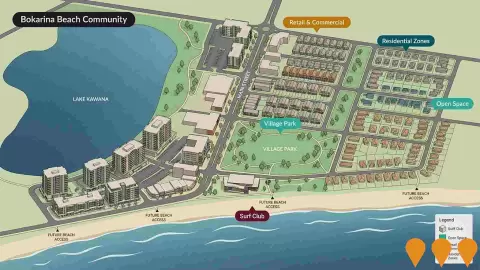
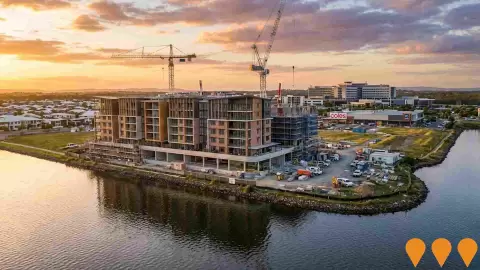
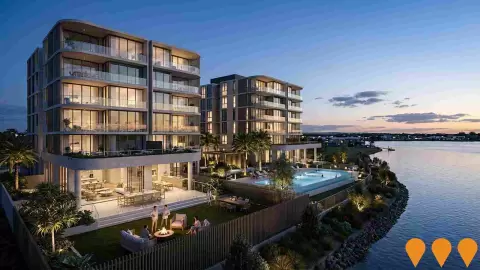
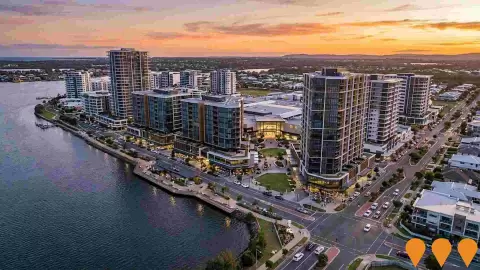
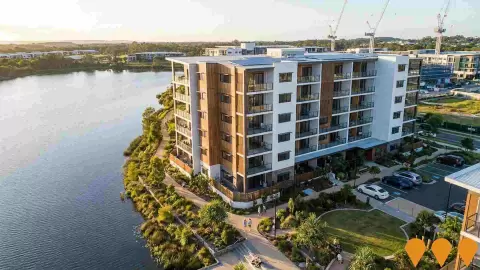
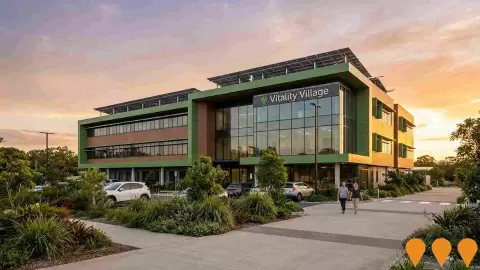
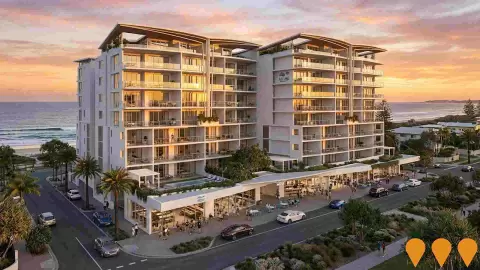
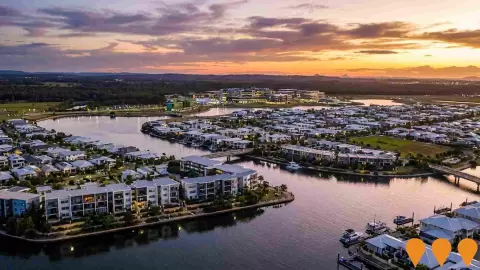
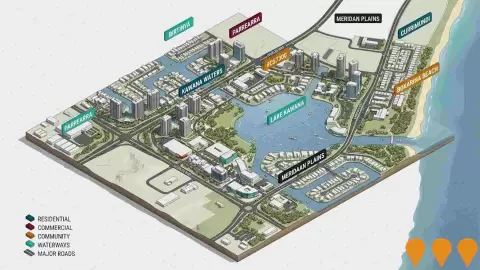
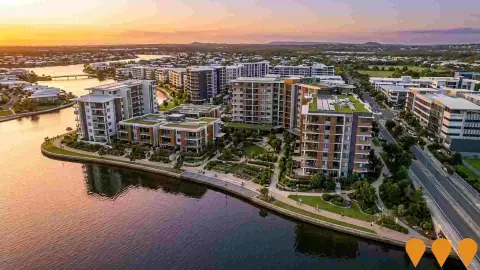
Infrastructure changes significantly influence an area's performance. AreaSearch has identified nine projects likely impacting the region. Notable projects include St Clair, Birtinya Town Centre, Birtinya Social Housing Project, and 16 Bright Place Affordable Housing. The following details projects expected to have the most relevance.
Professional plan users can use the search below to filter and access additional projects.
INFRASTRUCTURE SEARCH
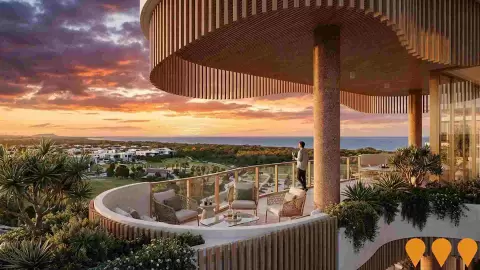
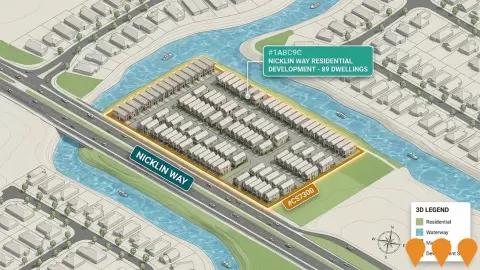
Denotes AI-based impression for illustrative purposes only, not to be taken as definitive under any circumstances. Please follow links and conduct other investigations from the project's source for actual imagery. Developers and project owners wishing us to use original imagery please Contact Us and we will do so.
Frequently Asked Questions - Infrastructure
The Wave - Sunshine Coast Rail and Public Transport Project
A multi-stage, integrated transport solution for the Sunshine Coast. This project includes 'The Wave - Stages 1 and 2 (Rail)', a new heavy passenger rail line from Beerwah to Birtinya, and 'The Wave Stage 3 (Metro)', a high-frequency, metro-style service from Birtinya to the Sunshine Coast Airport, via Maroochydore CBD. The project also includes the Mooloolah River Interchange Upgrade and an enhanced bus network. The total system aims to support population growth, reduce road congestion in the Caloundra-Maroochydore corridor, and provide faster connections to Brisbane. The Detailed Business Case for the rail line is complete, and pre-delivery activities for Stage 1 (Beerwah to Caloundra) are underway, with major construction expected to begin in late 2026. The proposed mass transit component (Stage 3) has identified Bus Rapid Transit as the preferred vehicle mode.
Sunshine Coast Health Precinct
The Sunshine Coast Health Precinct at Birtinya (also known as the Kawana Health Precinct) is one of Australia's largest integrated health and medical hubs, anchored by the Sunshine Coast University Hospital (opened 2017, expanded to ~728 beds by mid-2025), Sunshine Coast University Private Hospital, Sunshine Coast Health Institute (research and training), Vitality Village (community health and wellbeing centre opened 2021), Thompson Institute (mental health and neuroscience), and ongoing development of the Health Hub and Birtinya Town Centre. The precinct continues to grow with additional medical, research, education, and supporting infrastructure.
Sunshine Coast University Hospital
The Sunshine Coast University Hospital (SCUH) is a major tertiary teaching public hospital at Birtinya, opened in 2017 and delivered as a $1.8 billion Public-Private Partnership (Exemplar Health consortium). The original build provided 450 beds with capacity to expand to 738 beds (expansion completed 2021). It delivers acute, emergency, surgical, maternity, cancer care, mental health, rehabilitation, interventional and research services for the Sunshine Coast and Gympie regions. Ongoing upgrades continue (e.g., perinatal mental health hub announced 2025). Part of the broader Sunshine Coast Health Precinct including private hospital co-location and medical education facilities.
Birtinya Town Centre
A masterplanned town centre development designated as a Major Regional Activity Centre spanning 18 hectares. The project includes retail, offices, high-density residential, hotel accommodation, a civic plaza, walkable waterfront along Lake Kawana, and increased public open space by 60 percent. Building heights up to 15 storeys with three buildings up to 18 storeys are proposed to deliver diverse and affordable housing in response to the housing crisis and 2032 Olympic Games preparations. The first stage, an 87 million dollar shopping centre, opened in 2018.
Direct Sunshine Coast Rail Line - Birtinya Station
New heavy rail station at Birtinya forming part of the proposed 37 km Direct Sunshine Coast Rail Line (Beerwah to Maroochydore, via Caloundra and Kawana). The station will provide direct rail access to Sunshine Coast University Hospital, the Kawana Health Precinct and surrounding commercial areas.
Oceanside Birtinya
A large-scale master-planned community by Stockland, encompassing residential land, house and land packages, and townhomes. The community is designed around the Sunshine Coast Health Precinct and features extensive parks, waterways, and connections to retail and dining.
16 Bright Place Affordable Housing
An eight-storey waterfront development designed by Ellivo Architects providing 90 affordable apartments (12 studios, 66 one-bedroom, and 12 two-bedroom units) for local essential workers in the Sunshine Coast health and retail precincts. Features naturally cross-ventilated units, communal spaces with lake views, solar array, 82 car parks, and designed to achieve 7+ star NatHERS rating with livable housing standards. The project was approved via Ministerial Infrastructure Designation in September 2024 but that approval was repealed in March 2025, requiring the project to now seek Sunshine Coast Council approval through the standard development application process.
Birtinya Social Housing Project
A five-storey social housing development delivering 63 units with a mix of one, two, and three-bedroom options, designed to be fully accessible for seniors and people with disabilities. Located on a 2622sqm block near the Sunshine Coast University Hospital, the complex features communal areas to build community and includes at least 61 car parking spaces. The basement structure is now in place with completion due mid-2026.
Employment
The employment landscape in Bokarina presents a mixed picture: unemployment remains low at 2.0%, yet recent job losses have affected its comparative national standing
Bokarina has a balanced workforce consisting of both white and blue collar jobs, with diverse sector representation. The unemployment rate in Bokarina is 2.0%, as per AreaSearch's aggregation of statistical area data.
As of June 2025, there are 1,154 residents employed, with an unemployment rate of 2.1%, which is below Greater Brisbane's rate of 4.1%. The majority of jobs in Bokarina are in agriculture, forestry & fishing, mining, and manufacturing. Conversely, health care & social assistance employs none (0.0%) of local workers, significantly lower than Greater Brisbane's 16.1%.
There appears to be limited employment opportunities locally, as indicated by the difference between the Census working population and resident population. Between June 2024 and June 2025, Bokarina experienced a decrease in labour force (-2.2%) and employment (-1.7%), leading to a fall in unemployment (-0.5 percentage points). In contrast, Greater Brisbane saw employment growth of 4.4%, labour force growth of 4.0%, with unemployment falling by 0.4 percentage points during the same period. Jobs and Skills Australia's national employment forecasts from Sep-22 suggest that nationally, employment is expected to expand by 6.6% over five years and 13.7% over ten years. However, growth rates differ significantly between industry sectors. Applying these projections to Bokarina's current employment mix indicates potential local employment growth of over five years and over ten years (figures not provided for illustrative purposes).
Frequently Asked Questions - Employment
Income
Error processing income analysis
Housing
Bokarina displays a diverse mix of dwelling types, with ownership patterns similar to the broader region
Bokarina's dwelling structure, as per the latest Census, consisted entirely of houses (0.0%) with no other dwellings such as semi-detached homes, apartments, or 'other' dwellings. This is in contrast to Brisbane metro which had 70.4% houses and 29.6% other dwellings. Home ownership in Bokarina was at 0.0%, with all dwellings either mortgaged (0.0%) or rented (0.0%). The median monthly mortgage repayment in the area was $0, significantly lower than Brisbane metro's average of $1,950 and the national average of $1,863. The median weekly rent figure for Bokarina was recorded at $0, substantially below Brisbane metro's $450 and the national figure of $375.
Frequently Asked Questions - Housing
Household Composition
Bokarina has a typical household mix, with a lower-than-average median household size
Family households account for 0.0% of all households, including 0.0% couples with children, 0.0% couples without children, and 0.0% single parent families. Non-family households comprise the remaining 100.0%, with lone person households at 0.0% and group households making up 0.0%. The median household size is 0.0 people, which is smaller than the Greater Brisbane average of 2.5 people.
Frequently Asked Questions - Households
Local Schools & Education
Bokarina faces educational challenges, with performance metrics placing it in the bottom quartile of areas assessed nationally
The area faces educational challenges, with university qualification rates at 0.0%, significantly below the Greater Brisbane average of 30.5%. This presents both a challenge and an opportunity for targeted educational initiatives. Bachelor degrees lead at 0.0%, followed by postgraduate qualifications (0.0%) and graduate diplomas (0.0%). Technical qualifications represent 0.0% of educational achievements for residents aged 15+, with advanced diplomas at 0.0% and certificates at 0.0%.
Formal education enrollment stands at 0.0% of residents, including 0.0% in primary education, 0.0% in secondary education, and 0.0% pursuing tertiary education. Bokarina is anchored by Kawana Waters State College, serving 2,249 students as of a recent report. The area demonstrates typical Australian school conditions (ICSEA: 1039) with balanced educational opportunities. All 1 schools offer integrated K-12 education for academic continuity. With no schools located within Bokarina, residents must travel to neighboring areas for educational services.
Frequently Asked Questions - Education
Schools Detail
Nearby Services & Amenities
Transport
No public transport data available for this catchment area.
Frequently Asked Questions - Transport
Transport Stops Detail
Health
Health performance in Bokarina is a key challenge with a range of health conditions having marked impacts on both younger and older age cohorts
Critical health challenges are evident across Bokarina, with various health conditions affecting both younger and older age cohorts. The rate of private health cover is extremely low at approximately 0% of the total population (~0 people). This compares to 52.7% across Greater Brisbane, which has a national average of 55.3%.
The most common medical conditions in the area are arthritis and asthma, impacting 0.0% and 0.0% of residents respectively, while 0.0% declared themselves completely clear of medical ailments compared to 66.2% across Greater Brisbane. The area has 0.0% of residents aged 65 and over (0 people), which is lower than the 22.3% in Greater Brisbane.
Frequently Asked Questions - Health
Cultural Diversity
The latest Census data sees Bokarina placing among the least culturally diverse areas in the country when compared across a range of language and cultural background related metrics
Bokarina had no residents born in Australia (0.0%), none were citizens (0.0%), and no one spoke English exclusively at home (0.0%). Buddhism was the predominant religion in Bokarina, with 0.0% of people practicing it, compared to 0.8% across Greater Brisbane. The top three ancestry groups in Bokarina were Australian (0.0%), Australian Aboriginal (0.0%), and Chinese (0.0%), all notably lower than the regional averages of 26.0%, 1.5%, and 4.3% respectively.
In terms of ancestry (country of birth of parents), the top three represented groups in Bokarina are Australian, comprising 0.0% of the population, which is notably lower than the regional average of 26.0%, Australian Aboriginal, comprising 0.0% of the population, and Chinese, comprising 0.0% of the population.
Frequently Asked Questions - Diversity
Age
Bokarina hosts a very young demographic, ranking in the bottom 10% of areas nationwide
"No age data available for catchment as population equals zero. Demographic modeling suggests Bokarina's age profile will evolve significantly by the year 2041. Leading this demographic shift, the 25 to 34 group is projected to grow by 0%, reaching a total of 20,108 people from its current figure of 0. The 85+ group displays more modest growth at 0%, adding only 3,816 residents.".