Chart Color Schemes
This analysis uses Suburbs and Localities (SAL) boundaries, which can materially differ from Statistical Areas (SA2) even when sharing the same name.
SAL boundaries are defined by Australia Post and the Australian Bureau of Statistics to represent commonly-known suburb names used in postal addresses.
Statistical Areas (SA2) are designed for census data collection and may combine multiple suburbs or use different geographic boundaries. For comprehensive analysis, consider reviewing both boundary types if available.
est. as @ -- *
2021 Census | -- people







Curious about local property values? Filter the chart to assess the volume and appreciation (including resales) trends and regional comparisons, or scroll to the map below view this information at an individual property level.
Find a Recent Sale

Sales Detail
Pioneer (Qld) has an estimated 2,327 residents. The population has thinned by an average 0.5% a year over five years, slower than 95% of areas nationally. That puts 1,699 residents on each square kilometre. Population is estimated from ABS Estimated Resident Population releases and GNAF address data, re-based from the 2021 Census and updated annually.
Detail
In the suburb of Pioneer (Qld), the population stands at approximately 2,327 as of Aug 2026, according to AreaSearch evaluations combining broader ABS demographic updates with post-Census address validations. This indicates a contraction of 19 people (0.8%) relative to the 2,346 people counted during the 2021 Census. AreaSearch established this resident level of 2,327 by reviewing ABS Estimated Resident Population metrics from June 2025 alongside post-Census address verifications. The resulting population density is 1,698 persons per square kilometer, exceeding the nationwide norm recorded by AreaSearch. In contrast to the 0.8% reduction observed in the suburb of Pioneer (Qld) since the Census, the broader SA3 area expanded by 1.9%, demonstrating conflicting demographic paths.
Local expansion was largely underpinned by natural increase, accounting for roughly 65.0% of all population additions over recent timeframes. SA2 projections published in 2024 by Geoscience Australia and the ABS using a 2022 baseline are applied by AreaSearch across individual statistical locations. For periods after 2032 or areas omitted from that release, projections published in 2023 by the Queensland State Government using 2021 data serve as the benchmark. Because state figures lack age-specific breakdowns, AreaSearch incorporates age-cohort proportional growth weights from the 2023 Greater Capital Region dataset (2022 base). Looking ahead, these models project demographic contraction in the suburb of Pioneer (Qld), reducing the overall community by 114 persons by 2041. Nevertheless, certain demographics will expand, particularly the 25 to 34 age bracket, which is slated to gain 40 people. Detailed figures can be explored in the age analysis.
Frequently Asked Questions - Population
Detail
Residential construction in Pioneer is extremely quiet, averaging fewer than 1 new dwellings authorised per year and amounting to minimal additions across the preceding five-year span. Such subdued building activity aligns with rural settings where dwelling requirements are modest and restricted by local demand along with infrastructure limits. Because approval volumes are so low, annual percentage changes and comparative trends can shift dramatically due to single projects. Residential building volumes in Pioneer fall considerably short of levels recorded in Rest of Qld. Furthermore, local building patterns track substantially below figures observed nationwide.
Because demographic projections point toward a flat or shrinking local population, Pioneer could see reduced demand for housing, potentially creating advantageous conditions for property purchasers.
Frequently Asked Questions - Development
Development applications around Pioneer (Qld)
Loading development applications…
| Lodged | Address | Description | Type | Distance | Status |
|---|
SOURCE: Planning portals and council registers, compiled by AreaSearch. Distance & bearing measured from the suburb midpoint.
AreaSearch tracks 12 current infrastructure and development projects close to Pioneer (Qld), worth an estimated $1.09 billion. 2 are already under construction and 3 are due for completion within three years. The pipeline spans residential development, energy and health & medical. Records are compiled from Infrastructure Australia, state agencies, council planning portals and public announcements, reviewed and updated daily, then ranked by proximity, construction stage, completion horizon and project scale.
Detail
Local infrastructure investment, planning strategies, and capital works exert a profound effect on regional development. AreaSearch has highlighted 4 projects expected to shape local growth. Prominent undertakings comprise the Mount Isa Mines - Black Star Open Cut Project, Mount Isa Future Ready Economy Roadmap, Mount Isa Police Accommodation and Justice System Resourcing, and Essential Pipeline Works - City Low and high Systems, with key details summarized below.
Professional plan users can use the search below to filter and access additional projects.
INFRASTRUCTURE SEARCH
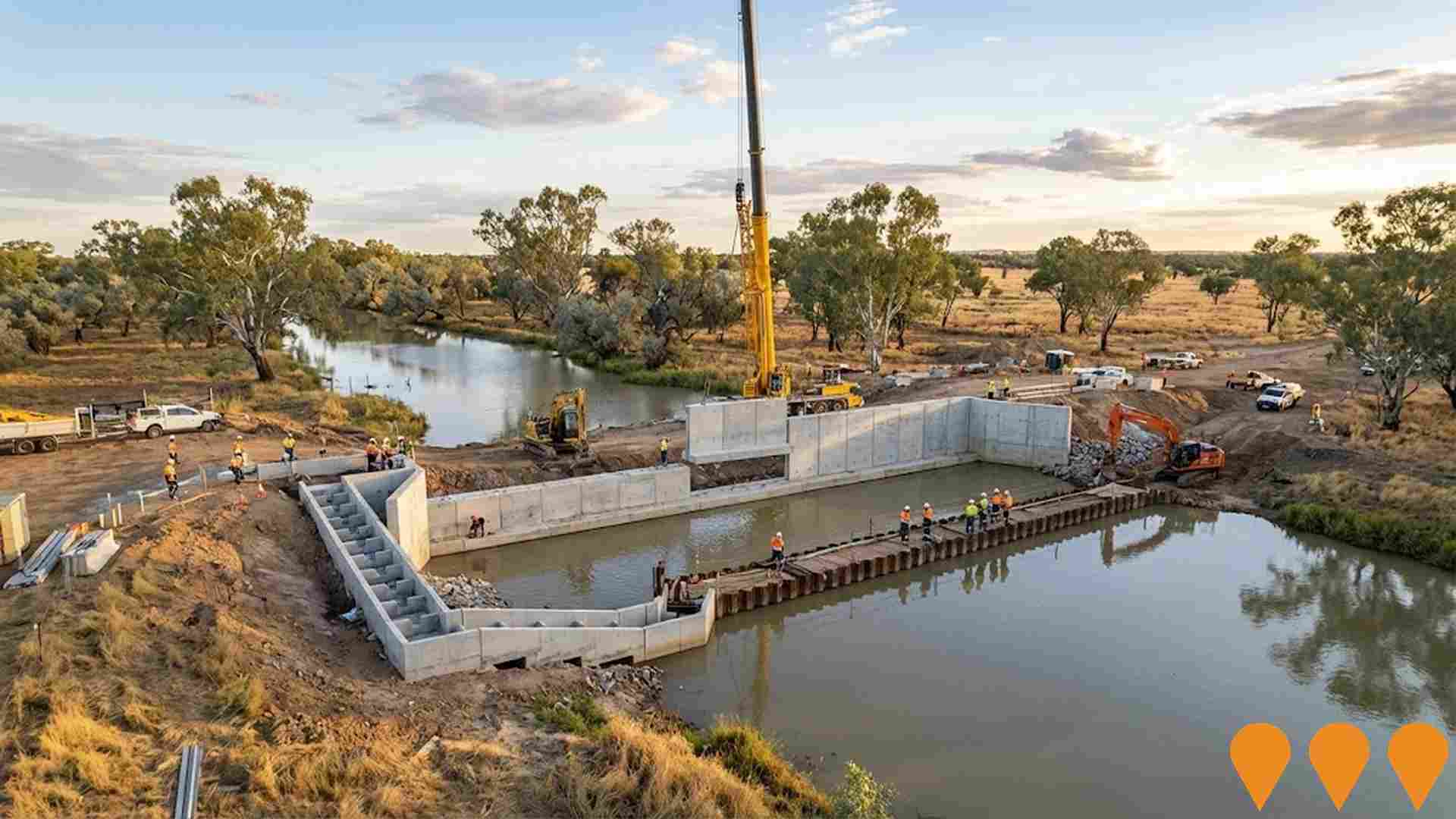
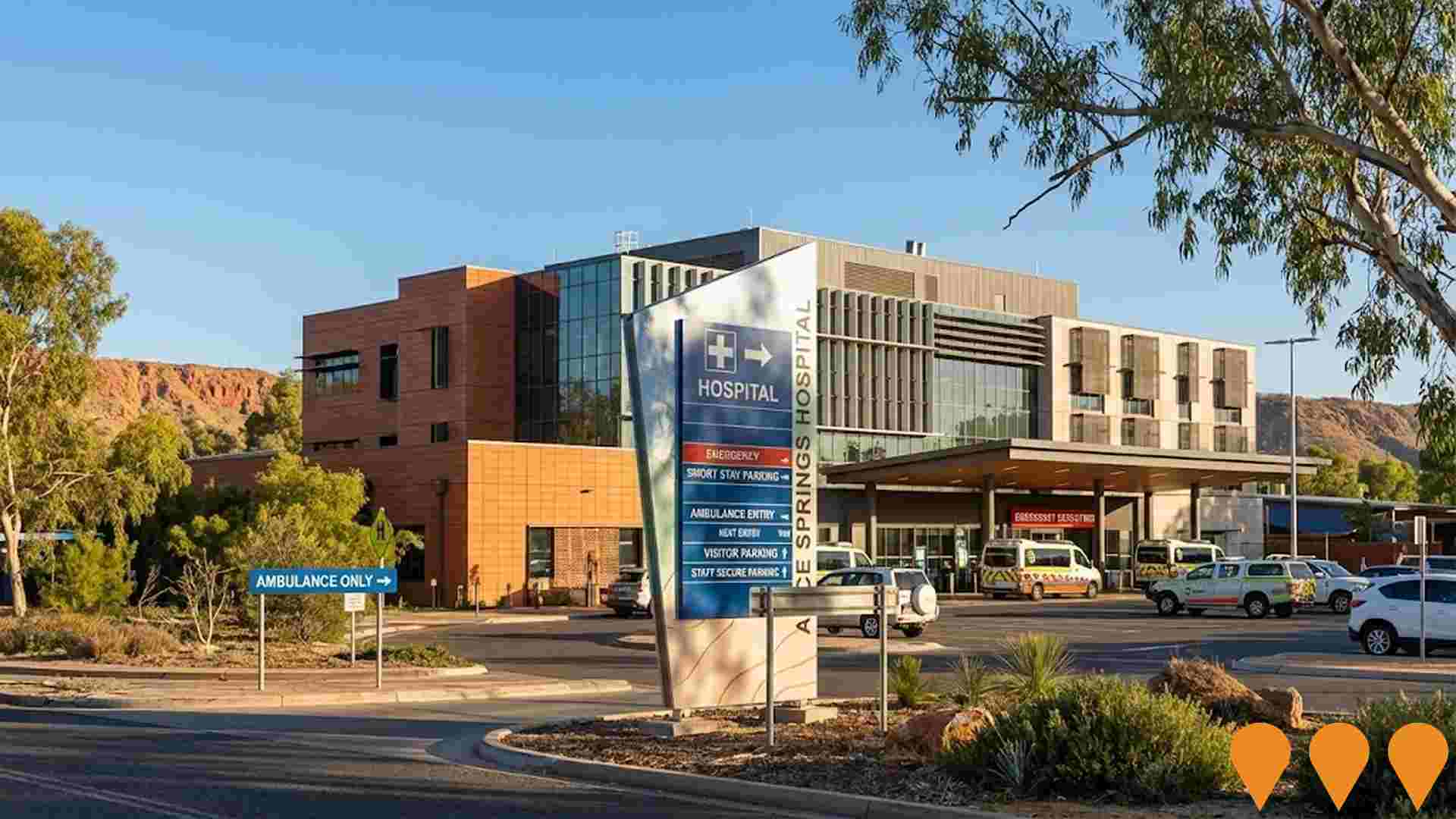
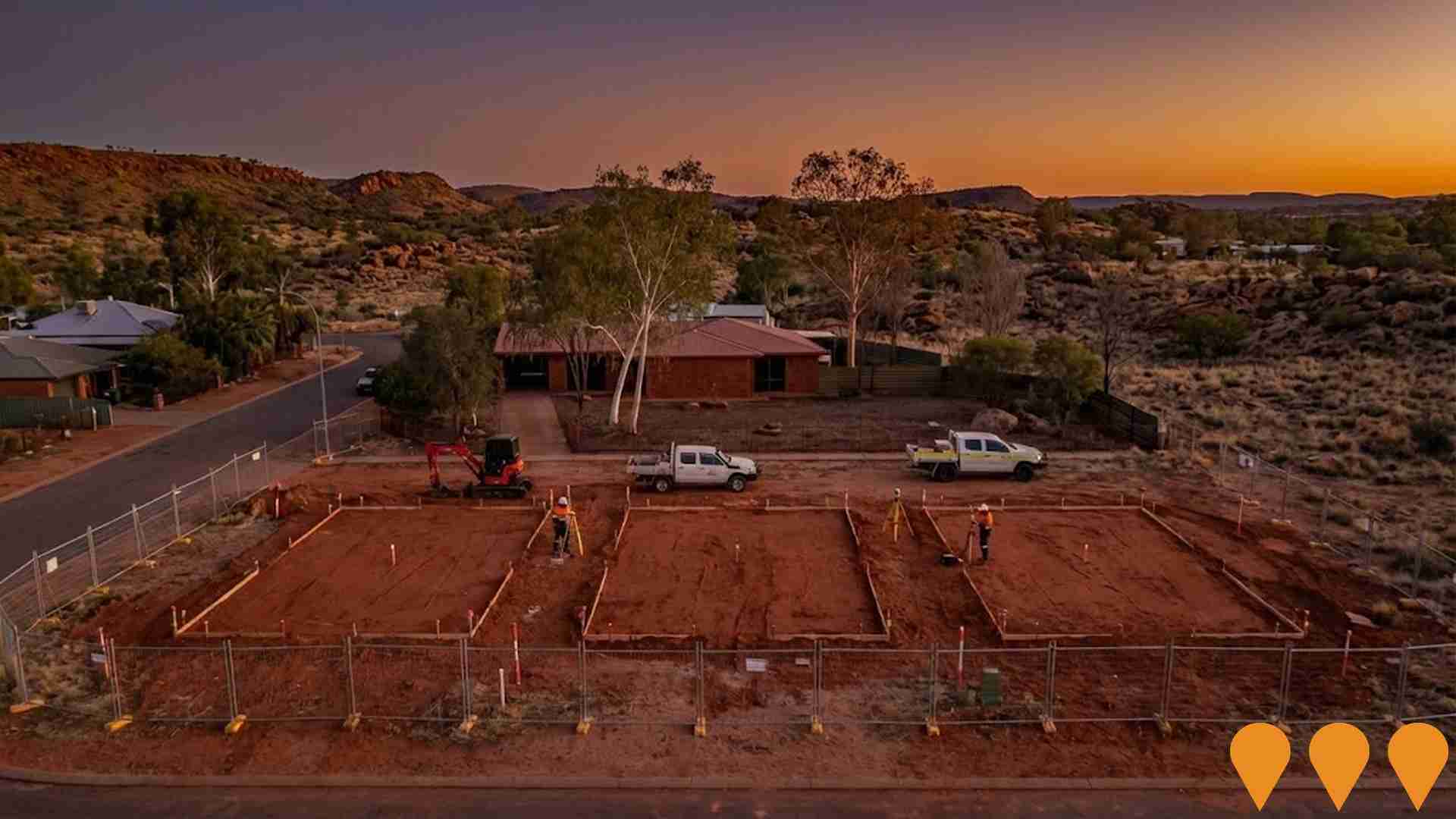
 Denotes AI-based impression for illustrative purposes only, not to be taken as definitive under any circumstances. Please follow links and conduct other investigations from the project's source for actual imagery. Developers and project owners wishing us to use original imagery please Contact Us and we will do so.
Frequently Asked Questions - Infrastructure
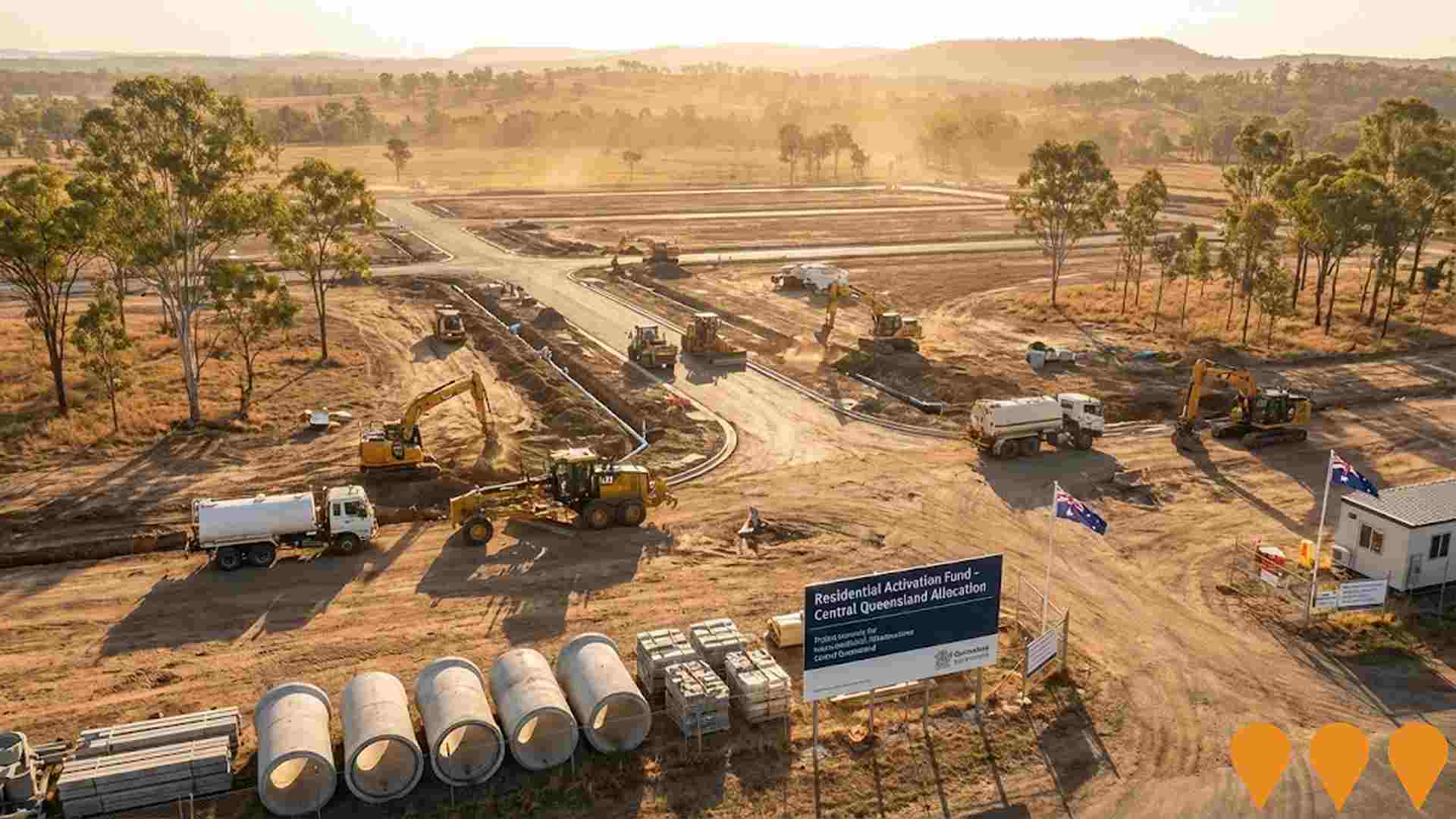
Residential Activation Fund - Central Queensland Allocation
The Residential Activation Fund is a 2 billion dollar program aimed at accelerating housing supply by funding critical trunk infrastructure such as water supply, sewerage, stormwater, and transport. At least 1 billion dollars is specifically earmarked for regional areas outside South East Queensland. Round 2 of the fund opened in early 2026, with funding announcements for successful projects expected from July 2026. The program targets construction-ready projects to fast-track the delivery of new homes.
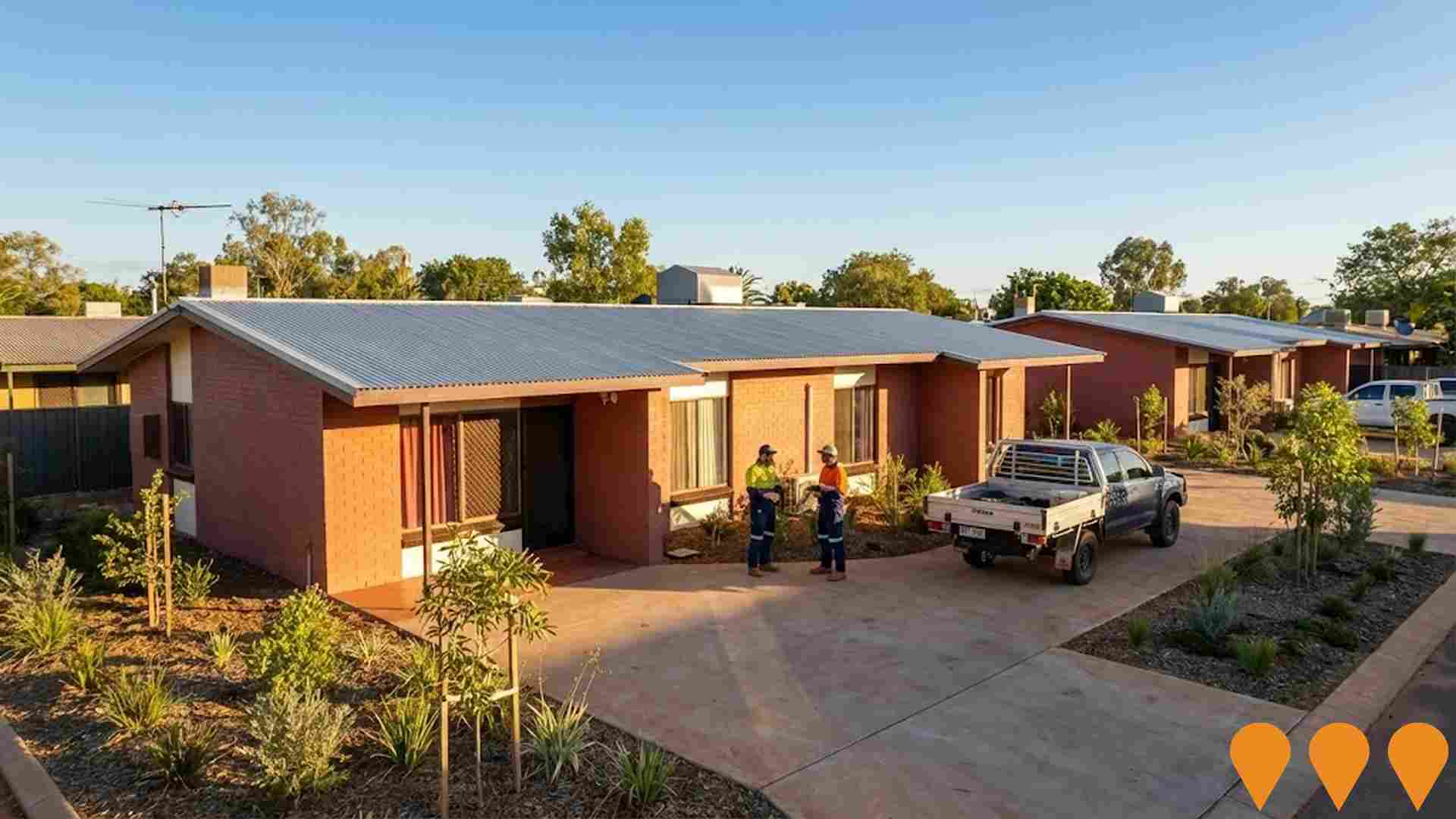
Urban Public Housing - Peko Road
A $3.4 million project, part of a larger program to increase public housing supply. The project saw the construction of six new 1-bedroom units for individuals on the Northern Territory's social housing waitlist.
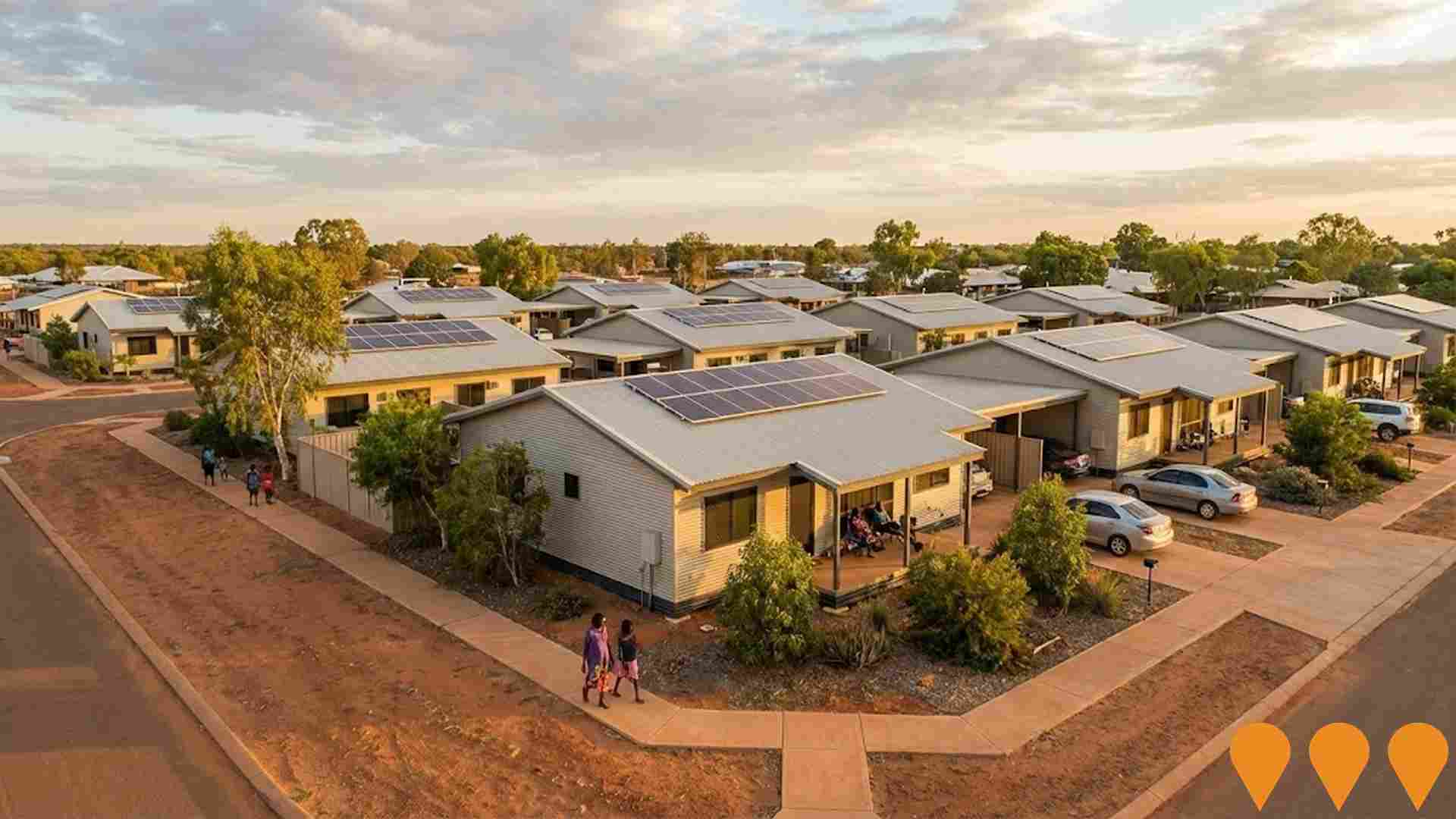
Venture Housing - Social and Affordable Homes
A $6.9 million partnership between Venture Housing, Housing Australia, the Northern Territory Government and the Australian Government delivered twelve new two-bedroom social and affordable homes across three adjoining sites in Tennant Creek. Venture Housing developed the homes and contributed land plus $1.5 million toward costs, supported by a $3 million Housing Australia grant, a $1.9 million joint Barkly Regional Deal grant, and a $500,000 NT Government capital grant. Habitat (NT) Pty Ltd was the building contractor.The development comprises five social and seven affordable homes, providing housing for older women at risk of homelessness, women and children fleeing domestic violence, and Aboriginal people eligible for social or affordable housing. Construction began in June 2024 and the project was confirmed completed by mid-2025.
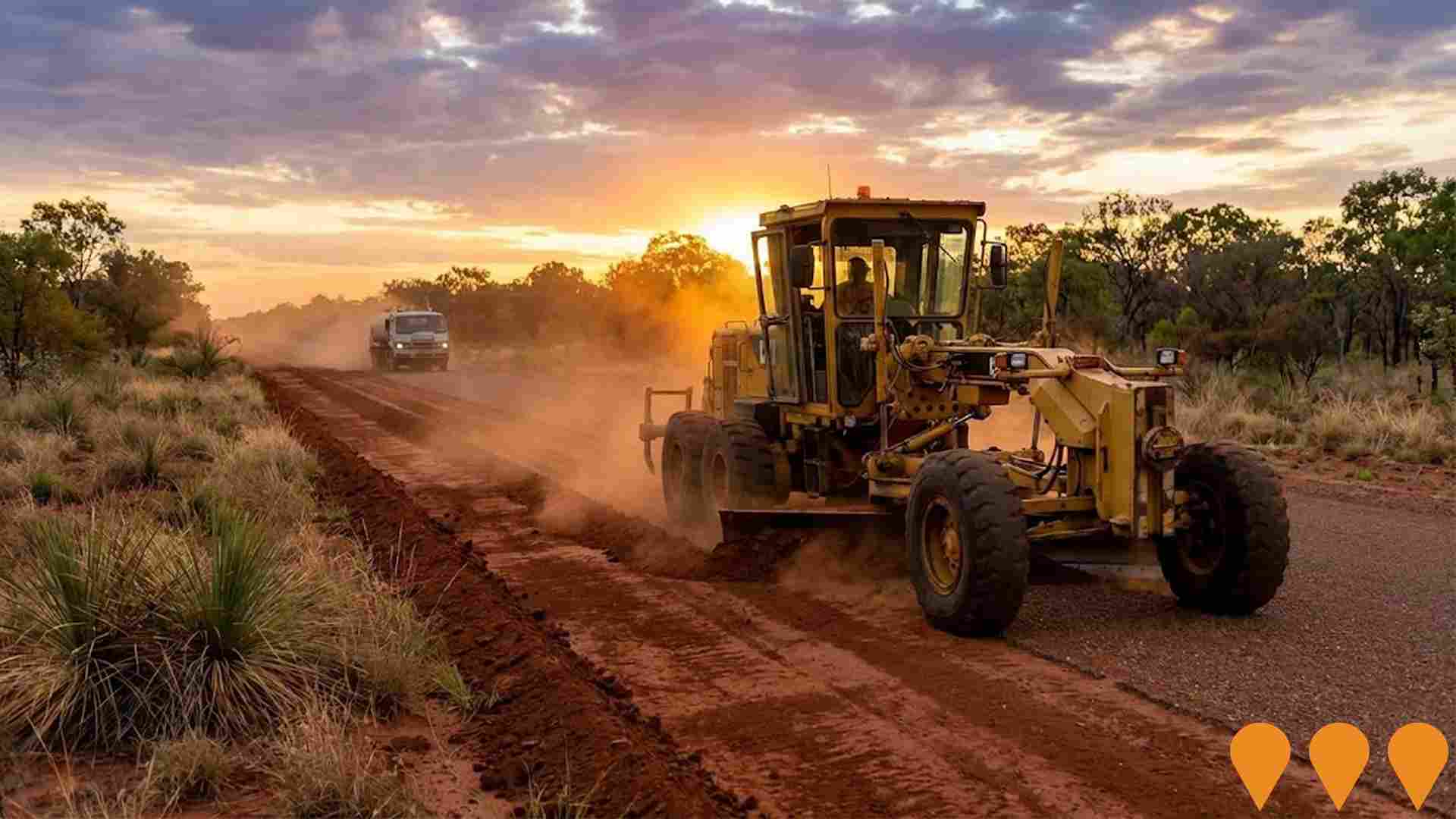
Territory Energy Link
A multi-user, multi-asset infrastructure corridor running approximately 670km from near Elliott to the Middle Arm Precinct in Darwin. Formerly known as the Tennant Creek to Darwin Infrastructure Corridor, the project is currently in Stage 2 (feasibility phase) of a four-stage program, following completion of a 2024 prefeasibility study that identified a preliminary alignment within a 530m wide study area. The final corridor is expected to be approximately 130m wide and will support buried services including gas, water, optical fibre and future hydrogen pipelines, connecting the Beetaloo Sub-basin to the Middle Arm Precinct and other strategic infrastructure in Darwin.The NT Government will plan, secure and manage the corridor land, while individual pipelines and utilities will be delivered by industry proponents under separate approvals. In 2025 the government awarded a tender to CNC Project Management Pty Ltd for specialist technical advisory services, targeting a development-ready 670km priority section by 2028.
Tennant Creek Aviation and Accommodation Hub
Airport Development Group (ADG) has released a draft concept plan for a staged $30-35 million upgrade of Tennant Creek Airport to support regional aviation and logistics growth in the Barkly region. The plan proposes extending and strengthening the main runway for regular jet operations, expanding the apron for fixed-wing and rotary FIFO connections, upgrading the terminal and car park, modernising electrical systems and signage, and delivering an Essential Key Worker Accommodation Precinct for up to 100 personnel to support government, defence and industry operations.The project targets capacity growth to 100,000 passengers annually and has the support of the Barkly Regional Council and NT Government agencies.

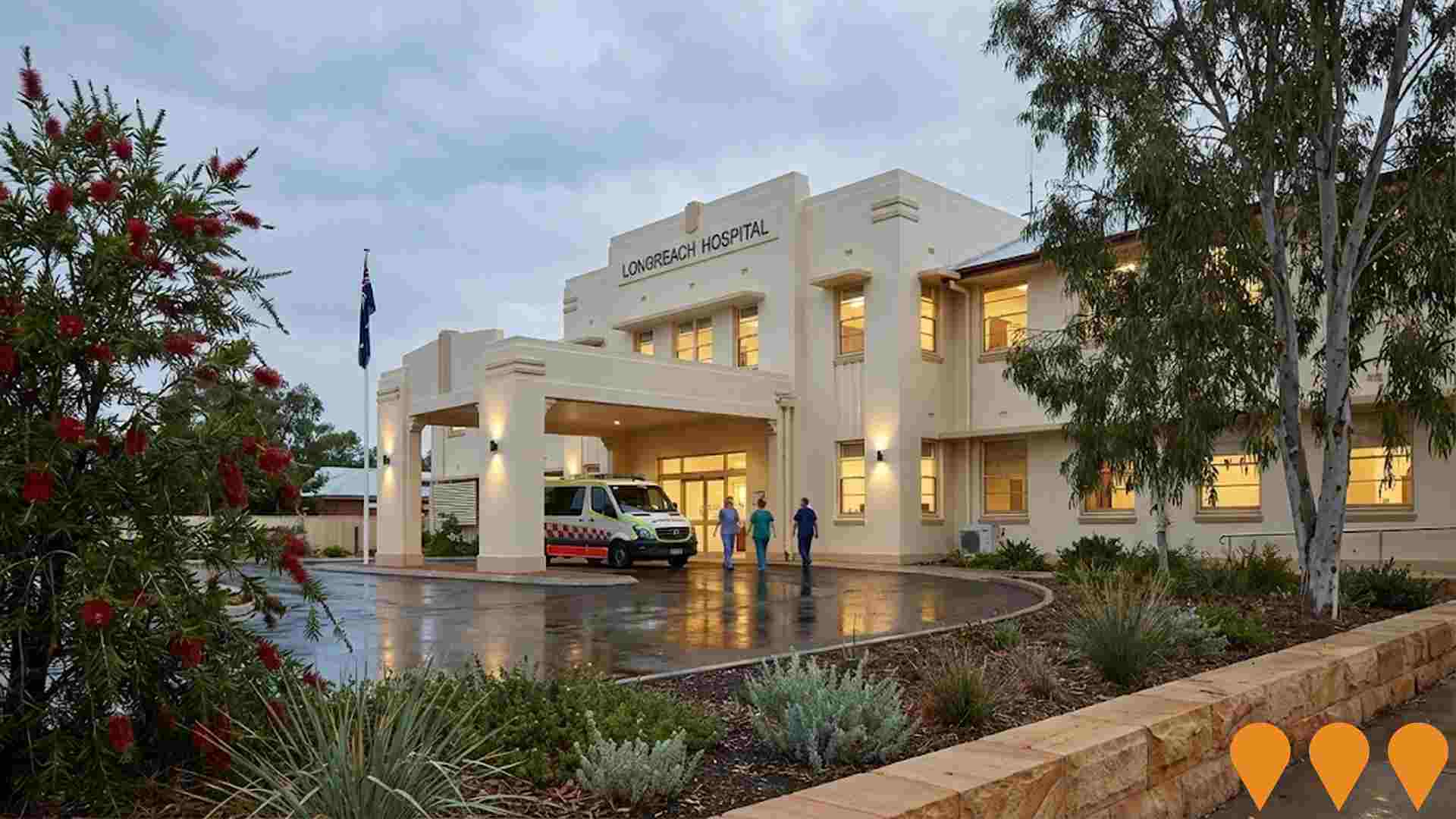
Longreach Hospital Upgrade
An AUD10 million upgrade of the Longreach Hospital, which included the redevelopment of half the hospital, a full mechanical services upgrade, and a new Aramac Primary Health Centre. The project was completed in 2019.
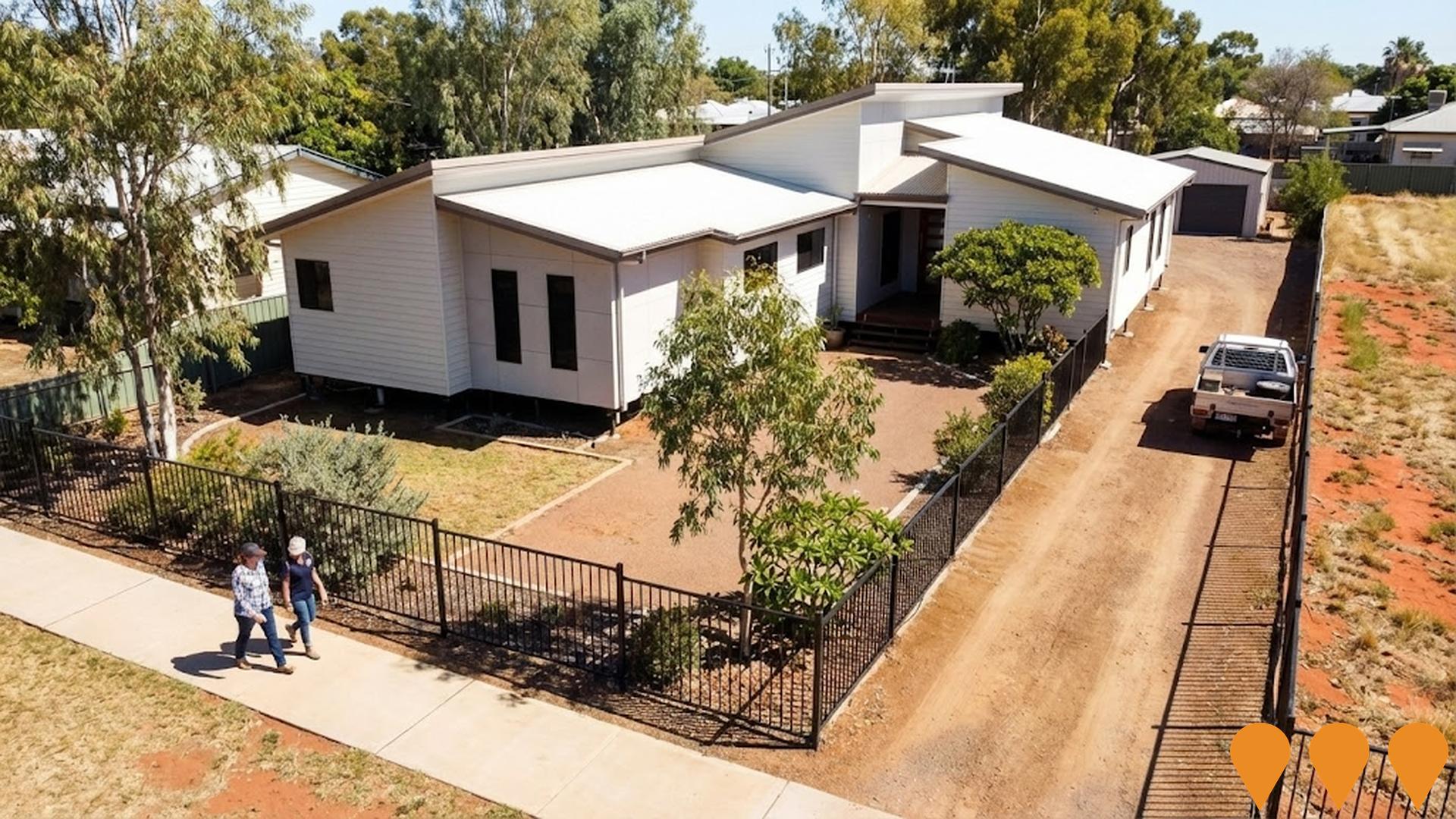
Longreach Recreational Precinct
A $2.25 million project funded by the Australian Government's Growing Regions Program. The project will include a new fenced dog park, a pump track, a half basketball court, a botanical walkway, and shaded playgrounds with all-abilities elements, complementing the existing skate park.

Longreach Solar Farm
A 17.4 MW solar photovoltaic project developed by Canadian Solar, which began commercial operation in May 2018. The project consists of 51,330 solar panels.

911 residents of Pioneer (Qld) are employed, from a labour force of 1,011. Unemployment sits at 9.9%, with participation at 60.8%. Weighted for its industry mix, the area's sectors are forecast to grow about 5.3% nationally over five years. That reflects industry composition only and makes no allowance for local population growth. The working-day population is estimated at 1,882, about 81% of the resident population, so more people leave the area for work than travel in. Unemployment and labour force come from ABS Small Area Labour Markets, updated quarterly; the industry and occupation profile is from the 2021 Census.
Detail
The local labour market in Pioneer features a diverse distribution across professional and manual roles, with substantial representation in industrial and manufacturing activities, alongside an unemployment rate of 9.9% according to aggregated AreaSearch metrics. By March 2026, employed residents numbered 911, whereas the unemployment rate stood 6.0% above the 3.9% recorded across Regional Qld, pointing to room for improvement. Additionally, the local participation rate trailed typical benchmarks at 60.8% compared to 64.2% across Regional Qld. Census data also indicated that only 1.7% of workers operated from home, though the influence of Covid-19 restrictions must be factored in.
Local workers are predominantly engaged in mining, health care & social assistance, as well as accommodation & food. Mining activity is exceptionally pronounced, capturing a local workforce share 8.1 times that of the wider region. In contrast, construction accounts for just 3.9% of employment locally compared to 10.1% across the region. As reflected by the disparity between the working population and resident counts in Census data, this largely residential locality offers relatively constrained employment opportunities internally. According to AreaSearch evaluations of aggregated ABS and SALM figures, the twelve months to March 2026 saw the local workforce contract by 2.6% while overall jobs fell by 2.5%, yielding a 0.1 percentage point decline in unemployment. Conversely, Regional Qld recorded a 0.1% rise in jobs alongside a 0.3% increase in its labour force, leading to a 0.1 percentage point uptick in unemployment. National outlooks published in Mar-26 by Jobs and Skills Australia provide further perspective on expected job generation in Pioneer over five-year and ten-year horizons when aligned with local industry representation. Nationwide employment is projected to expand by 6.6% across five years and 13.7% over ten years, though trajectories differ widely across sectors. Applying these sectoral forecasts to Pioneer's occupational base points to potential local job gains of 5.3% over five years and 12.3% over ten years, noting this weighted model serves illustrative goals and excludes local demographic forecasts.
Frequently Asked Questions - Employment
Median household income in Pioneer (Qld) is $1,664 a week (about $87,000 a year), with median personal income at $745 a week. ATO records put median taxable income at $45,966 a year against an average of $52,727. Household income is from the 2021 Census; taxable income is from ATO Taxation Statistics for the latest financial year available, indexed forward using the ABS Wage Price Index.
Detail
According to the latest postcode-level ATO records from AreaSearch for financial year 2023, taxpayers in Pioneer generate a median income of $45,966 alongside an average of $52,727. These figures sit below the nationwide baseline and compare against Regional Qld's median of $53,146 and average of $66,593. Incorporating the 11.36% increase in the Wage Price Index since financial year 2023 produces updated March 2026 estimates of roughly $51,188 for median earnings and $58,717 on average. Findings from the 2021 Census place local personal, family, and household earnings modestly between the 37th and 45th percentiles.
The primary earnings cohort includes 35.9% of residents (835 people) in the $1,500 - 2,999 band, matching regional patterns where 31.7% fall into the same bracket. Housing outlays remain manageable with households keeping 87.1% of their earnings, although overall disposable income places below average at the 49th percentile.
Frequently Asked Questions - Income
Pioneer (Qld) had 714 occupied dwellings at the 2021 Census, 79% detached houses and 2% apartments. 25% are owned with a mortgage, 60% rented and 15% owned outright. At that Census the median rent was $210 a week and the median mortgage repayment $1,500 a month. Rent absorbs 12.6% of household income here and mortgage repayments 20.8%. Dwelling stock, tenure and housing costs are 2021 Census measures — the only source that counts dwellings at this boundary size.
Detail
According to the most recent Census, the housing stock in Pioneer consists of 79.1% separate houses and 20.9% other dwelling types including flats and semi-detached properties, whereas Regional Qld records 76.4% houses and 23.6% other dwellings. Outright property ownership in Pioneer lags regional benchmarks at 14.5%, with the remainder being paying off a mortgage (25.4%) or living in rental accommodation (60.1%). Typical monthly mortgage payments stood below regional norms at $1,500, while median weekly rent was $210, contrasting with Regional Qld figures of $1,655 and $345 respectively. On a national scale, mortgage commitments in Pioneer are far below the Australian median of $1,863, and weekly rents are markedly lower than the nationwide average of $375.
Frequently Asked Questions - Housing
Pioneer (Qld) counted 714 households at the 2021 Census, averaging 2.9 people each. 28% are couples with children, against 16% couples without children. 25% of households are people living alone, and families average 2.1 children. Household and family composition is measured only by the Census, so these are 2021 figures.
Detail
Families constitute the clear majority of households at 73.2%, consisting of 27.7% couples with children, 27.2% single parent arrangements, and 16.3% childless couples. The remaining 26.8% comprises non-family living arrangements, primarily lone person dwellings at 25.2% and group households at 2.1%. The typical household size sits at 2.9 people, exceeding the 2.5 person average found across Regional Qld.
Frequently Asked Questions - Households
10.0% of adults in Pioneer (Qld) hold a university qualification, including 7.2% with a bachelor degree and 1.9% with postgraduate qualifications, lower than 93% of areas nationally. A further 31.2% hold a vocational qualification. 4 schools serve the area, with 361 enrolment places and an average ICSEA of 908 against a national benchmark of 1,000. Qualifications come from the 2021 Census; school enrolments, ICSEA and results come from ACARA's current release.
Detail
Educational attainment presents challenges locally, as university degree completion stands at 10.0%, substantially trailing the 30.4% Australian benchmark and highlighting opportunities for focused learning programs. Within tertiary achievements, bachelor degrees represent 7.2%, followed by 1.9% holding postgraduate qualifications and 0.9% with graduate diplomas. Meanwhile, vocational and technical credentials show strong prevalence, with 37.6% of residents aged 15 and over possessing trade certifications, comprising certificates (31.2%) and advanced diplomas (6.4%). Study engagement is remarkably strong throughout the locality, with 34.6% of the population currently attending educational institutions. This encompasses 17.7% enrolled in primary education, 10.0% in secondary schooling, and 1.6% undertaking tertiary qualifications.
Frequently Asked Questions - Education
Schools Detail
Getting around Pioneer (Qld) means driving: households keep an average of 1.1 vehicles, and no scheduled public transport appears in the current timetable feeds. Service data is built from operators' published GTFS timetables; vehicle ownership is from the 2021 Census.
Frequently Asked Questions - Transport
Transport Stops Detail
77.8% of residents in Pioneer (Qld) report no long-term health condition, a less healthy profile than 76% of areas nationally. 3.2% need daily assistance with core activities, and 48.1% hold private health cover. The standardised death rate runs at 9.2 per 1,000 residents. Health conditions, assistance needs and insurance are 2021 Census measures; the death rate comes from current ABS releases.
Detail
Assessment of mortality figures and chronic illness rates by AreaSearch underscores meaningful public health hurdles in Pioneer, with elevated health conditions apparent across older and younger demographics alike, while private health insurance uptake is constrained at approximately 48% of the community (~1,119 people). This tracks below the 52.5% recorded in Regional Qld and the national benchmark of 55.7%. Asthma and diabetes represent the leading health concerns locally, diagnosed in 5.7% and 5.8% of the population respectively, whereas 77.8% of individuals reported no chronic conditions, higher than the 67.6% seen in Regional Qld.
Working-age adults maintain strong general health with minimal chronic conditions. Residents aged 65 and over make up 6.9% of the population (160 people), well below the 20.3% regional level. Senior health presents distinct hurdles, aligning broadly with national rankings for the wider population.
Frequently Asked Questions - Health
Pioneer (Qld) is largely Australian-born, at 87.0% of residents, with 9.3% speaking a language other than English at home. The largest reported ancestries are Australian Aboriginal (33.6%) and Australian (22.1%). 33.6% of residents identify as Aboriginal and/or Torres Strait Islander. Ancestry, language and country of birth are counted only by the Census, so these are 2021 figures.
Detail
Cultural diversity metrics in Pioneer track below standard averages, with 83.5% holding Australian citizenship, 87.0% born domestically, and 90.7% speaking purely English at home. Christianity forms the predominant faith, accounting for 47.4% of the population. The most visible overrepresented category appears within Other religions at 0.7% of residents, compared to 0.8% across Regional Qld. Looking at parental heritage, the leading backgrounds in Pioneer are Australian Aboriginal at 33.6% (substantially exceeding the 3.9% regional rate), Australian at 22.1%, and English at 17.4% (markedly below the 29.6% regional benchmark). Divergences also emerge across other ancestries, with Filipino backgrounds representing 2.8% (against 0.9% regionally), Maori at 1.8% (versus 0.8% regionally), and Sri Lankan heritage accounting for 0.4% (compared to 0.1% across the region).
Frequently Asked Questions - Diversity
The median resident of Pioneer (Qld) is 27, younger than 99% of areas nationally. 34.1% of residents are aged 15 to 34. Age cohorts are not raw Census counts: the Census split is re-based to the latest ABS population estimates and state projections.
Detail
Pioneer displays a noticeably younger demographic distribution than Regional Qld at the senior tier. Based on updates to August 2026, children and youths aged 0 - 24 constitute 46.2% of the local population compared to 29.6% across Regional Qld, while retirees and seniors aged 65+ account for 6.9% against a 20.4% regional proportion. This establishes a median age of 27, matching the 2021 Census level and sitting 14 years younger than the Regional Qld figure of 41 from the same Census, while the Australian Census median was 38. Since the Census, the 45 - 64 bracket has receded from 19.7% to an estimated 18.5%.
Between now and 2041, adults aged 25 - 44 are projected to experience the strongest growth, adding 42 residents (6%) to reach 710, while younger cohorts aged 0 - 24 and older mature groups aged 45 - 64 are slated to contract.
Frequently Asked Questions - Age
Data & MethodBoundaries, Sources & Method for Pioneer (Qld)
9 of 14 data sections on this page were updated within the last 12 months — the newest current to Oct 2026.
Everything is aggregated to the Suburb (SAL) boundary shown above, on a 2021 Census baseline. Only 3 sections — housing, households and cultural diversity — still wait on the 2026 Census.
The ledger — source, cycle and currency by section
| Section | Source & update cycle | Currency |
|---|---|---|
| Updated within the last 12 months 9 sections | ||
| Population | ABS, GNAF, Geoscience Australia Annual (ABS ERP) | Aug 2026 2 months ago headline measures · 2021 Census baseline |
| Re-based to the ABS Estimated Resident Population (June 2025 release) and updated with new dwellings from GNAF address data. Current to Aug 2026, with the 2021 Census supplying the small-area baseline. | ||
| Age profile | ABS, Geoscience Australia, State governments Annual | Aug 2026 2 months ago headline measures · 2021 Census baseline |
| Age cohorts are re-based to the latest ABS population estimates and state projections, current to Aug 2026. Each cohort is held as a Census baseline and a current estimate. | ||
| Development & approvals | ABS, GNAF Monthly (ABS approvals) | Aug 2026 2 months ago headline measures · Jul 2026 baseline |
| Property sales & rents | Valuer General, Rental Board, ABS Weekly sales, quarterly rents | Oct 2026 this month headline measures · Sep 2026 baseline |
| Sales from the state Valuer General register, refreshed weekly, and rents from quarterly rental bond lodgements. Both are read live each time this page loads, current to Oct 2026. | ||
| Infrastructure projects | Infrastructure Australia, Local governments Daily | May 2026 5 months ago all 2 projects tracked here |
| Project pipeline maintained continuously from Infrastructure Australia, state agencies, local government and public announcements. Records are added and revised daily; this area was last updated May 2026. | ||
| Employment | ABS, DEWR, JSA Quarterly (ABS SALM) | Mar 2026 7 months ago headline measures · 2021 Census baseline |
| Unemployment and labour force from ABS Small Area Labour Markets, current to Mar 2026. The growth outlook applies Department of Employment (now Jobs and Skills Australia) forecasts for all 19 industry divisions to the local industry mix, so it measures sector composition rather than local expansion and makes no allowance for population growth. Job demand comes from the same agency via its Internet Vacancy Index; industry and occupation structure from the 2021 Census. | ||
| Education | ABS, ACARA Annual (ACARA) | Sep 2026 last month headline measures · 2021 Census baseline |
| Transport | ABS, State Transport Departments Each timetable release | Jul 2026 3 months ago headline measures · 2021 Census baseline |
| Services & amenities | Provider directories, ACECQA Continuous | Sep 2026 last month all 14 measures |
| Annual and financial-year sources 2 sections | ||
| Income | ABS, ATO Annual (ATO) | FY 2023 3 years ago headline measures · 2021 Census baseline |
| ATO taxable income statistics for FY 2023, indexed forward using the Wage Price Index. Census household income provides the distribution detail. | ||
| Health | ABS, ATO Annual | 2024 2 years ago headline measures · 2021 Census baseline |
| Census-measured — next update: 2026 Census 3 sections No more current small-area source exists for these, so they are labelled as Census-measured rather than implied to be current. | ||
| Housing | ABS 5-yearly (Census) | 2021 Census next update 2026 all 30 measures |
| Households | ABS 5-yearly (Census) | 2021 Census next update 2026 all 18 measures |
| Cultural diversity | ABS, Geoscience Australia 5-yearly (Census) | 2021 Census next update 2026 all 44 measures |
"Currency" is the most recent release feeding that section. Where the Census supplies the structural baseline underneath a current headline figure, the row says so.
How the numbers are built
Population
The Census provides the small-area baseline, aggregated from mesh blocks to this boundary. It is then re-based to the ABS Estimated Resident Population (June 2025 release), and new dwellings built since Census night are counted from address data. The headline figure is therefore a current estimate for Aug 2026, not a 2021 count (2,346 at the 2021 Census → 2,327 now). Annual growth rates are compound (CAGR), not simple averages.
Age profile
Cohort shares are not raw Census counts. Every cohort is held as a pair — the Census baseline and a current estimate — and the split is re-based using ERP and state population projections, current to Aug 2026. Median age is the Census median plus modelled change since. Charts that show both are labelled "2021 Census vs Current Estimate".
Property sales
Sourced from the state valuation authority's sales register — current, not Census, and refreshed weekly. Medians are calculated from settled transactions in the period shown; periods with very low transaction counts are flagged or suppressed, because a handful of sales can move a median substantially.
Rents
Derived from state rental bond lodgement data, by dwelling type and bedroom count. Bonds are lodged at the start of a new tenancy, so this reflects new lettings, not the whole rented stock.
Development & infrastructure
Building approvals come from current ABS releases; development applications are collected from council and state planning portals; the infrastructure pipeline is compiled from Infrastructure Australia and local government sources. Applications are matched to this boundary by address or coordinates, so very recent lodgements may not yet appear.
Employment & income
Industry and occupation structure comes from the Census, but the headline labour-market indicators do not. Unemployment and labour force are derived from ABS Small Area Labour Markets (quarterly). The employment outlook applies Department of Employment forecasts for all 19 industry divisions to this area's own industry mix (the agency is now Jobs and Skills Australia), as does the Internet Vacancy Index used for job demand. Because it is weighted on industry composition alone, that outlook carries no allowance for local population growth — in fast-growing areas the real rise in local jobs will typically be higher. Income combines Census household income with ATO taxable-income statistics for FY 2023, indexed forward using the Wage Price Index.
Education, transport & amenities
School enrolments, ICSEA and performance come from ACARA's current release, not the Census. Public transport stops and service frequency are derived from GTFS timetable feeds published by state transport departments. Services and amenities are proximity and count scores built from provider directories, refreshed on their own cycle. The Census contributes only the travel-to-work and qualification measures.
Rankings and benchmarks. Where we rank this area, the comparison set is every area of the same boundary type — suburbs against suburbs, SA2s against SA2s. Benchmarks compare this area against its greater capital city region and the national figure for the same measure and period.
Limits worth knowing. Small areas carry larger error margins, and the ABS introduces small random adjustments to Census counts to protect confidentiality — so totals may not sum exactly. Estimates re-based from regional data describe the area's expected trajectory, not a direct count of it. Figures are indicative for research and are not financial, planning or valuation advice.
Cross-check us. The Census baseline for this boundary is at ABS 2021 Census QuickStats (SAL32333). QuickStats reports 2021 only — the figures on this page are more current wherever the ledger shows a later date.